Horo proudly presents the long-awaited fourth studio album, Forces of Consciousness, by Ancestral Voices.
Following Liams first venture, 'Night of Visions,' a diary of a physical and life-changing journey to South America, he took a trip into seismic, dark, and heavy frequencies with his second LP, 'Divination,' which plunges into the notion of ritual. The third LP delved into the cosmic, devising custom tuning systems for the meditative 'Navagraha'.
Liam continues this conceptual approach that threads his work together with Forces of Consciousness - an exploratory dive into metaphysics, how consciousness creates reality, and how sound exists to bind and sustain our thoughtforms in harmony.
"I am fascinated by the intricate workings and unexplained phenomena beyond the physical. This has become a journey as I seek to understand the interconnectedness of all things. The threads that bind us to this experience.
Everything is consciousness; all things in existence are inherently conscious, including living and non-living entities. Consciousness is not merely a product of our brains and bodies but a fundamental universal aspect.
Consciousness creates reality; our consciousness shapes our perception of the world. Our thoughts and beliefs play a significant role in shaping the reality we experience.
While intangible thoughts cannot be measured physically, they shape our reality tremendously. Our thoughts significantly impact the world around us.
We are waveforms, and everything around us is sound. Sound plays a vital role in maintaining balance, whether the sound of a chirping bird, the whistles of dunes, or the resonance of the Earth.
As a collective, we make up chords that continuously merge and try to find a harmonious balance that sustains our consciousness. In essence, thought forms coexist to create harmonic structures, a lattice of electrical current that manifests as the lives we live every day."
The patterns change with the observer.
Matter is a limitation of consciousness.
That which was first was the immeasurable.
The harmonies remain.
quête:conceptual
2024 Repress
Electronic duo Atelier excel at riding chillwave to a cooler, moodier sound. Atelier was conceptualized by childhood friends Alexander Inggs and Jaś Miszewski whose love of analog synths, drum machines and effects pedals is revealed in a hardware-heavy live show. The project is a platform for combining their differing musical backgrounds – a blend of house, indie, folk and techno – and has an underlying maturity that emerges in their frank performances and honest productions.
Black Cassette Tape, handmade printed fabric case, riso printed paper cover, DL code.
Limited to 40 copies.
Tot Onyx is a solo project of Tommi Tokyo, who loves to work with sound and body. As the founder
of the experimental live act group A, Tommi has explored her ideas of breaking the preconceptions
of live performance by incorporating use of the body, live-painting, noise and poetry. Adept at
bending expectations, the band’s formative early work echoes the experiential vocabulary in which
Tommi continues to develop today. A practice in the rejection of tradition and cliché, which in Greil
Marcus's words, "Share the principles of negation, rebellion, destruction and détournement”.
Her rst self-released EP T.O.1 is a collection of fragments of Onyx's live performances from recent
years, recorded in her studio as part of her creative process during the preparations. While her
albums (1st album Senno I released in 2022 on iDEAL Recordings, and the forthcoming album in
2024, info tba) are highly conceptual and revolve around specic subjects, this EP serves more as her
diary, in which she aims to share with the public how her thoughts are shaped by time through the
practice of performing live.
Black Cassette Tape, handmade printed fabric case, riso printed paper cover, DL code.
Limited to 40 copies.
Tot Onyx is a solo project of Tommi Tokyo, who loves to work with sound and body. As the founder
of the experimental live act group A, Tommi has explored her ideas of breaking the preconceptions
of live performance by incorporating use of the body, live-painting, noise and poetry. Adept at
bending expectations, the band’s formative early work echoes the experiential vocabulary in which
Tommi continues to develop today. A practice in the rejection of tradition and cliché, which in Greil
Marcus's words, "Share the principles of negation, rebellion, destruction and détournement”.
Her rst self-released EP T.O.1 is a collection of fragments of Onyx's live performances from recent
years, recorded in her studio as part of her creative process during the preparations. While her
albums (1st album Senno I released in 2022 on iDEAL Recordings, and the forthcoming album in
2024, info tba) are highly conceptual and revolve around specic subjects, this EP serves more as her
diary, in which she aims to share with the public how her thoughts are shaped by time through the
practice of performing live.
This album compiles a series of sound pieces produced by the Peruvian artist Teresa Burga (Iquitos, 1933 - Lima, 2021) during the 1970s. It includes works that were part of various artistic projects, mainly sound installations, as well as pieces commissioned to musicians and inspired by her work. This album thus embodies an approach to a sound universe that has accompanied Burga's very personal work, which has transcended the limits of the artistic medium and disciplines. In the last decade, Teresa Burga's work has been present in numerous retrospectives and anthologies, as well as in various critical studies, which has cemented her standing in the art world, both in her home country and internationally. Indeed, she has come to be seen as one of the key figures of Peruvian conceptual and pop art of the 1960s and 1970s. This album includes the sound pieces Estructura Informe Corazón Structure Informe Corazón (1972) and 4 mensajes [4 Messages (1974)], composed of heart sounds and distorted television signals. It also includes the interpretation of the conceptual score Esctructura Propuesta Sonido [Structure Proposal Sound I (1978)], based on the poem "Cruz y Ficción" by Blanca Varela, in versions by the Peruvian Nicolás Wangeman, and by the Argentineans Alma Laprida and Alan Courtis. Also included is the piece Borges (2017), a commission by Burga to the Peruvian composer Jan Diego Malachowski, for the installation of the same name, here presented in a synthesizer version by Laprida and Courtis. Estructura Propuesta Sonido, by Teresa Burga is presented in vinyl format, in a limited edition of 300 copies. The publication includes a booklet with extensive notes by curator and researcher Luis Alvarado, as well as extensive visual documentation. Includes the participation of musicians Nicolás Wangeman, Lama Laprida and Alan Courtis (Reynols).
The phenomenal three-piece band includes members of Oranssi Pazuzu, K-X-P, Grave Pleasures and Aavikko
Svart Records is proud to release the debut album, I, from Haunted Plasma, a powerhouse of futuristic synth in symbiosis with the super violent atmospherics of kosmische Black Metal. Haunted Plasma is “man meets machine” in a cybernetic wasteland, set to a conceptual backdrop of William Gibson and Phillip K. Dick style mind-melt. The highly evolved creatives at the heart of Haunted Plasma’s sound, cite Terry Riley, Massive Attack, a contemporary take on Krautrock hypnosis, psychedelic Black Metal and 90s Techno, resulting in an orgy of mutant sound.
The phantoms at the beating nucleus of this unearthly machine are Juho Vanhanen (Oranssi Pazuzu, Grave Pleasures), Timo Kaukolampi (K-X-P, Op:l Bastards) and Tomi Leppänen (Circle, Aavikko, K-X-P), transmitting a music form evolved from a life of redefining sonic boundaries in their respective projects. Also featuring guest vocals from Mat McNerney (Hexvessel, Carpenter Brut, Grave Pleasures/Beastmilk), Pauliina Lindell (Vuono, Dust Mountain) and Ringa Manner (Ruusut, The Hearing). Haunted Plasma promises an extraterrestrial experience from some of the foremost contemporary musicians at the heart of the Finnish heavy and avant-garde musical underworld.
Haunted Plasma reveals:
“We are liberated futurists, embracing free-form and natural composition, mirroring the merciless forces of cosmic creation. We have a motto to stay true to our feelings, to spawn a sound that’s never been heard before. Servants of music. Energizing, radical and pure”
The first single from Haunted Plasma’s cascading debut, Reverse Engineer, is a creepy, slowly erupting, synthetic nightmare, of a downloaded being waking up in the wrong future. Ghostly vocals demand the listener to “give us what we want” in an Orwellian glimpse into the current dystopia we live in, where information is controlled, and thoughts are bought and sold. As McNerney intones the words “technology of power” he describes the threat of a malevolent and omnipresent artificial intelligence, as much as describing the oppressive and electromagnetic sonar pulse of Haunted Plasma’s sound itself. Psychedelic guitar hypnosis from Vanhanen snakes around Kaukolampi’s molten and morphing synths, while Leppänen’s uncanny man/machine rhythms pull our strings and animate their other-worldly mechanisms. Have a look at the official visualiser of "Reverse Engineer" on the Svart YouTube channel here
Culminating in the full-blown fast Krautrock of the final self-titled track, oozing with blistering noise elements and enigmatic vocals from Ringa Manner, the album's journey reaches its zenith, taking you to unknown territories on a Kubrikian space trip. I is a rare record of talented musicians coming together to create a completely new sound, which is entirely their own, boldly glowing, where no light has shone before. From the dreamy psychedelia of Echoes to the discombobulated Spectral Embrace, Haunted Plasma is a willful force of deliberate sound contortion.
Whether you want to give in to Haunted Plasma’s sound or not, you are being watched, you are being recorded and your every move is monitored. Haunted Plasma will enter your system on the 31st of May 2024. Turn on your phantom circuits and be prepared for an interdimensional excursion into Haunted Plasma’s alien dreams.
The debut album from Haunted Plasma will be packaged in a beautiful tip-on sleeve, swirling fog artwork, complete with 12” booklet and pressed on 3 exclusive vinyl colours: 300 copies on Standard Black Wax, 500 copies in Amber + Black Smoke and 200 copies of Svart exclusive Turquoise/Black Marble. The album will also be available on CD and digital platforms.
AAA Audiophile 200g 45rpm Triple Disc LP!
Sourced from First Generation Analogue Recordings without Any Digital Corruption!
2xHD Mastering on Nagra Equipment by René Laflamme!
Sound Restoration by George Klabin & Fran Gala!
Cut All Analogue at Bernie Grundman Mastering on Tube Cutting Equipment!
There have been many guitar gods, but there's never been an electric bassist as deified as Jaco Pastorius. – Michael J. Agovino
This live album by Jaco Pastorius and the Word-of-Mouth Big Band, featuring harmonica virtuoso Toots Thielemans as special guest, was recorded in analog 24 tracks by the Record Plant mobile truck at Avery Fisher Hall in NYC on June 27, 1982, as part of George Wein's Kool Jazz Festival. This Deluxe 45rpm 200g edition is the first one to be mastered from the original 2 track master tapes that were found some 30 years later (the previous digital download versions were released from a digital remix of the 24 tracks). What we have here is the direct copy of the original pure analogue 2 track mix.
The brightest star in the electric bass firmament, Jaco Pastorius burst onto the national scene in 1976 with his audacious self-titled album on Columbia Records, featuring a line-up of top jazz musicians. With his extraordinary fretless electric bass playing as the centerpiece, Jaco Pastorius created an immediate sensation with the public and the media. His signature approach employed Latin-influenced funk, lyrical solos on fretless bass, bass chords, and innovative use of harmonics. In Jaco's work with Weather Report and beyond, the self-described "greatest bass player in the world" (an assessment shared with virtually the entire music world) established a new identity and role for his instrument and became the torch-bearer for a new way of playing both technically and conceptually. But behind it all was an ever present R&B and Latin-influenced groove and a screaming rock-'n'-roll attitude that he refined and incorporated into sophisticated jazz harmonic structures.
In addition to his extraordinary virtuosity, Jaco was also developing into an accomplished and sophisticated composer and arranger and those talents are gloriously on display on this album. The 3-time Grammy Award nominee was inducted into the Down Beat Jazz Hall of Fame in 1988, one of only seven bassists so honored (and the only electric bassist). His legacy as a bass innovator continues to this day, more than 30 years after his untimely death in 1987.
The Slovak band Shallov releases their new track "Refrain" on the experimental label Weltschmerzen just one year after the release of "Coexist". Two tracks that both span more than 10 minutes in length, work together as one coherent audiovisual art piece and are out as an EP on 10" vinyl. Music videos do not only visually supplement both tracks but they are equally autonomous art pieces.
The visual feature of the music pieces is highlighted by the vinyl's cover painted by Slovak artist Michal Fízik. The previous back cover carries a photograph which served as an inspiration for the painting while the current back has been created via AI reinterpretation.
The musical component of Refrain is based on a repetition building into a hypnotic trance, gradually disintegrating so it eventually ends in a monumental climax. It contrasts the band's previous work as well as the track Coexist which uses rather neverending rhythmic variations, and a changeable vibe and atmosphere.
The concept of the visuals in Coexist is a result of a collective fusion between the theatre director Adam Dragun, Viktor Ori and dozens of other participating non-actors. The video depicts individualistic egoist actions shaping a contradicting and incomprehensible totality of the world which ultimately seems to be alienated to everybody.
Refrain is an introspective journey leading to the dissolution of the individualistic experience of human existence. The video's concept, direction and production was conducted by the visual artist and performer Jak Užovič who also tends to inter-media art and object installations.
As Shallov and Jak Užovič explain the track's conceptual background: "The idea of owning one's own body and mind is an unnatural way of looking at ourselves imposed by the dominant paradigm. It's a blind ideology - the view of a body as a machine or a commodity is incomplete and represents a materialistic utopia which is being systematically internalized. We're not a community that acts right or wrong, our intentions are determined by an ideology which pretends not to exist - our relations are relations of masters and slaves, of domination and exploitation. We are a society bound by these features and even though we refuse to admit it, the world presented to us is only a legend we're striving to keep alive at all costs, while believing that there is no alternative. Our quality doesn't stem magically from the inside, on the contrary, it's determined by the conditions within which we interpret it through collectively shared fictions. We don't get to know our consciousness through ourselves, but we recognize it through others as they create and form us."
"Listen to This." As the original working title for Bitches Brew, the instruction and invitation resonates to this day as the best way to approach a record that shattered conventions, altered music history, and, more than five decades after its original release, still sounds far ahead of its time. The aural Mount Rushmore of jazz fusion, Bitches Brew is rightly ranked by virtually every significant outlet among the 100 greatest albums ever made in any genre. Sewn together with vibrant colours, voodoo textures, and ethereal moods, the 1970 landmark emerges with supreme detail on Mobile Fidelity's definitive 180g 33RPM 2LP set.
Sourced from the original master tapes and pressed on 180g vinyl at RTI, this numbered-edition version of Bitches Brew joins the audiophile ranks of other essential Miles Davis sets reissued by Mobile Fidelity. Having established new possibilities for studio-recording techniques, the record can now be experienced to maximum degree by way of a pressing that widens and deepens the soundstage, opens up separation between instruments, and broadens the dynamic range. If ever a jazz album can be said to have gone to outer space and back, this is it.
Davis conceived Bitches Brew by having the musicians stand in a semi-circle, where he pointed at them with vague directions for tempo, solos, and cues. The collective improvisation and interplay spawned a galaxy of melodies and grooves later spliced together by producer Ted Macero. On this reissue, these creations take shape with utmost realism. Compositions stretch across black backgrounds and paint abstract canvasses on par with those of Axis: Bold As Love and Abraxas. Juxtaposed percussion, loose jams, and melodic segues explode with impressionistic verve.
And "verve" defines Bitches Brew. Gathering a Hall of Fame-worthy lineup of musicians and tweaking it according to his desires, Davis follows through on his idea to "put together the greatest rock and roll band you ever heard." Central to his proposition is the presence of two (and sometimes three) drummers and two bassists, a tactical move that thrusts rhythms into central focus. Akin to the futuristic album cover art, the drum-driven suites head toward distant universes and uncharted territories. At once hypnotizing and grooving, they chart maverick adventures with quixotic rock, funk, and R&B elements.
Conceptually, Davis described Bitches Brew as "a novel without words" and "an incredible journey of pain, joy, sorrow, hate, passion, and love." The vast psychedelic expanses of warped echoes, liquid reverb, and tape loops confirm such ambitious contrasts of light and dark, fear and hope. Yet the most absolute characteristic of this watershed effort lies in how it resists definitive interpretation and encourages free thought — the very principles with which Davis conceived the everlasting beauty and fascination that remain Bitches Brew.
ltd white LP[31,89 €]
Nadsvest is a black metal entity based in Serbia, comprised of Serbian native S and New Zealander A. S (Gorgoroth) and A (Barshesketh) crossed paths in 2015, and after a clear musical symbiosis had become evident, formed Nadsvest.
After an EP and a split with Portugal's Necrobode, Nadsvest crafted their definitive debut album. Musically, Nadsvest is a hellish combination of the first, second-wave and bestial black metal scenes, with unhealthy doses of heavy metal and nods to Serbian folk music, yet unmistakenly capturing that old school sound as only forged in Eastern Europe. Lyrical themes deal with the black arts through the lens of the darker aspects of Serbian folklore.
Conceptually, Slovo meseca i krvi is an epic poem exploring the stages in the process of awakening the primal werewolf force in the warrior, the triumph of the spirit and the ultimate sacrifice of the flesh.
black LP[31,89 €]
Nadsvest is a black metal entity based in Serbia, comprised of Serbian native S and New Zealander A. S (Gorgoroth) and A (Barshesketh) crossed paths in 2015, and after a clear musical symbiosis had become evident, formed Nadsvest.
After an EP and a split with Portugal's Necrobode, Nadsvest crafted their definitive debut album. Musically, Nadsvest is a hellish combination of the first, second-wave and bestial black metal scenes, with unhealthy doses of heavy metal and nods to Serbian folk music, yet unmistakenly capturing that old school sound as only forged in Eastern Europe. Lyrical themes deal with the black arts through the lens of the darker aspects of Serbian folklore.
Conceptually, Slovo meseca i krvi is an epic poem exploring the stages in the process of awakening the primal werewolf force in the warrior, the triumph of the spirit and the ultimate sacrifice of the flesh.
- A1: Searching I 00 00:10
- A2: Kilter 00 04:48
- A3: One Place 00 04:39
- A4: Searching Ii 00 00:04
- A5: Bottom Dweller 00 03:03
- A6: Searching Iii 00 00:04
- A7: No More No Less 00 03:28
- A8: Searching Iv 00 00:03
- B1: Vascai 00 03:42
- B2: Searching V 00 00:06
- B3: Maybe Tomorrow 00 04:40
- B4: Searching Vi 00 00:05
- B5: Last Strut 00 05:01
- B6: Lights Down Low 00 05:30
- B7: Searching Vii 00 00:14
- B8: Ending 00 04:16
James Devane returns with another adept investigation into minimal techno’s spaces in between. “Searching” serves as both companion to “Beauty is Useless” and the next logical step in James’ exploration of process as guiding compositional tool. Conceptually simple, technically robust, the end result elicits both an undeniable groove and a trove of detail for listeners willing to go deep. In his own words: “These recordings are the result of chance. Using hours of source material, everything was “chosen”, manipulated, and assembled at random via custom software without concern for key, tempo, measures, or rhythm. A search button and a save button.”
»Fluvius« is a conceptual album about water and its importance, in the form of rivers, in the birth and development of great civilizations throughout history. Civilizations that have worshiped water as a source of life to respect, care for, venerate, and fear. A work that probably surpasses everything that these two usual suspects of the label have previously produced - Hari Sima released »Fluido Tiempo« on Abstrakce and Mínim is a member of Mecánica Clásica.
Contemporary ambient, full of hypnotic sequences and organic developments, with meticulous and evocative arrangements. A myriad of textures and elegant details improve the album with each new listen. Eight exotic tracks sail through eight rivers which are crucial for the birth and development of great peoples and cultures around the globe. An excellent work that will hook fans of Bitchin Bajas, Fitoussi, Cortini, or the most ambient Dozzy...
Mastered by Rafael Anton Irisarri. Special limited edition of 250 copies, with die-cut kraft cardboard cover printed in white, and printed inner sleeve.
- A1: Love To All Doulas! 03 52
- A2: Some Rest For The Midwives
- A3: Real Vital Organs
- A4: Surges, Expansions
- A5: In Appreciation Of Chico Hamilton's Vast Influence On The West Coast Sound
- B1: Birthworkers Magic, And How We Get Hear
- B2: This "I" Was Not
- B3: Placenta, Nourishment, New Home, The Galaxy
- C1: Carla's Beads
- C2: Moonlight Watsu In Dub
- C3: Generous Pelvis
- C4: Bi-Location
- D1: Play Kerri Chandler's Rain
purple 2x12"[29,37 €]
Placenta is the fourth collection of broadly imaginative and highly collaborative Carlos Niño & Friends music released on International Anthem since 2021. But perhaps more notably for the zeitgeist of today, it is the first new music to be released by Carlos Niño & Friends following the November 2023 release of André 3000’s New Blue Sun – an album which Carlos produced alongside André, while co-writing, performing, and co-mixing every song. The announcement of Placenta also comes while Carlos is in the middle of tours with André to support New Blue Sun, where Carlos wields an immense presence as music director, bandleader, and percussionist, and performs alongside many of the same musicians that are present on his recent & Friends albums, including this new one.
Placenta is announced on the 1st solar return of Moss Niño, of whom Carlos and his partner Annelise are Earth parents. Their experience of pregnancy, labor and delivery were all profoundly impactful for Carlos. Becoming a father again (a whole 25 years after the birth of Azul Niño, who has become a regular artistic collaborator for Carlos) he felt total Inspiration for this set of recordings, and hence it is perhaps the most conceptually-grounded Carlos Niño & Friends album we've yet to present–fully connected to the spirit of family, birth, and "how we get here."
In Niño’s words, Placenta is “dedicated to Mothers, Children, Babies, Aunties, Doulas, Midwives, Birthworkers...,” and a short list of track titles includes: "Love to all Doulas!," "Some Rest for the Midwives," "Real Vital Organs," and "Generous Pelvis." The centerpiece of the album, the sprawling "Placenta, Nourishment, New Home, The Galaxy," is an unbelievably vivid immersion in the sonic architecture of Niño's memory-scape...like being present in his energy field...or being present in a birthing room, or maybe even being born yourself. And it just might be the most powerful, unique piece of music Niño has ever created.
Featured artists on Placenta, in order of their entry on the album, include: Nate Mercereau, Jamire Williams, Sam Gendel, Jamael Dean, Dexter Story, Brandon Eugene Owens, Maia, André 3000, Jesse Peterson, Ariel Kalma, Surya Botofasina, Annelise, Haize Hawke, Aaron Shaw, Devin Daniels, Tiffany de Leon, Michael Bolger, Michael Alvidrez, Moss, Iasos, Photay, Deantoni Parks, Adam Rudolph, Andres Renteria, and Cavana Lee.
Manchester’s multifarious sound organiser Andrew Hargreaves (Tape Loop Orchestra, The Boats, Beppu) channels key touchstones of Glenn Branca’s microtonal minimalism, the paranormal, and DIY amateur broadcasting with some of his most enigmatic, intuitive recordings to date.
‘Drones In The Air’ finds Hargreaves deep in a new phase of vibrational investigation where the sentimentality of prior eras gives way to more abstract conceptual processes. Utilising a bunch of oscillators and the Lyra-8, an “organismic analog synthesiser”, plus pedals, Hargreaves works within just intonation tuning systems - or more precisely “intuitive intonation” - to just-about harness a microtonal flux of clashing, beating frequencies, but the project is more about ceding a certain amount of freedom to the machines and allowing aural alchemy to occur, prompting a spectrum of harmonic colours and rich timbral overtones distinguished from previous tape loop-based works.
Comparative to “Glenn Branca’s micro-tonal workouts if he had worked with oscillators instead of guitars”, the result also variously evoke mysteries of The Conet Project, the oceanic feel of Éliane Radigue compositions, and early ambient works by Terre Thaemlitz in their sound sensitivity and scope. In ‘The Sun is Afraid’ he mesmerises with glistening microtones that develop a coarser traction, interrupted by shortwave radio comms and resolving into phantasmic noise gauze that speaks to his long-standing fascinations with entropic decay and the sounds between sounds. ‘Your Hands Are Shaking’ follows with a stealthier approach to coaxing a hallucinatory drone mass inflated by ether voices and thickening up into a sinister gloam redolent of NWW’s ’Soliloquy for Lilith’.
- 1: Mutilation Of The Human Race
- 2: Brood Of Evil
- 3: Wasteland Of Death
- 4: Maimed And Mutilated
- 5: Dr. Gore
- 6: Bonecrusher
- 7: The Hatchet Murders
- 8: Extra Uterine Pregnancy
- 9: Tenebrae
- 10: Extinction Of Mankind
- 11: Domain Of Death
- 12: Devastation
- 13: Necronomicon Exmortis
- 14: Cannibalized
- 15: Pulsating Protoplasma
- 16: Martin (The Vampire)
- 17: Telepathic Terror
Unrelentingly grim and gruesome death metal that fractures the speed of sound. Continuing to morph both stylistically and conceptually, mangling and overwhelming all they encounter.
- A1: Fink - Covering Your Tracks
- A2: Alfa Mist - Mulago
- A3: Charlotte Day Wilson - Mountains
- A4: Moreton - Count A Heart (Feat Jordan Rakei)
- B1: Puma Blue - Untitled 2
- B2: Connan Mockasin - Momo's
- B3: C Duncan - He Came From The Sun
- B4: Oso Leone - Virtual U
- B5: Joe Armon-Jones - Idiom (Feat Oscar Jerome)
- C1: Snowpoet - Eviternity
- C2: Maro - Forever & Always
- C3: Homay Schmitz - Speak Up
- C4: Bill Laurance - Singularity
- D1: Jordan Rakei - Lover, You Should've Come Over (Exclusive Jeff Buckley Cover Version)
- D2: Cubicolor - Counterpart
- D3: Jordan Rakei - Imagination (Exclusive Original Piece)
- D4: Alejandro Gonzalez Inarritu - Imagination (Exclusive Spoken Word Piece)
Original[27,69 €]
“I wanted to try and showcase as many people as I knew on this mix. My idea of Late Night Tales was to distil a series of relaxing moments; the whole conceptual sonic of relax- ation. So, I was trying to think of all the collaborators and friends that I knew, who’d recorded stuff with this horizontal vibe. Plus, I was also trying to help my friends' stuff get into the world. I know the story of Khruangbin blowing up after appearing on the series (in fact, I think that's how I discovered them). So, the main idea was to create a certain atmosphere, but also to help some of my favourite collaborators and bud- dies to give their songs a little push out into the world. Hope you like it” Jordan Rakei
Due for release on 9th April, Late Night Tales celebrate their 20th anniversary with the release of multi-instru- mentalist, vocalist and producer Jordan Rakei’s majestic compilation. The 28-year-old modern soul icon effortlessly stamps his own jazz and hip-hop driven sound all over this gorgeous array of handpicked tracks. A beautifully layered blend that is mirrored in the music he’s made, itcomes as no surprise that such a supremely gifted songwriter should deliver a mix that is all about the song.
Rakei, born in New Zealand, but raised in Australia, moved to the UK in 2015; he released his debut album, Cloak, with Oz label Soul Has No Tempo, but his two subsequentLPs, Wallflower and Origin, came out on Ninja Tune, the former#2 in Album Of The Year for Gilles Peterson’s Worldwide poll, while Origin was nominated for Best Album at the AIM Awards. Jordan had this to say on his upcoming mix:
As Jordan says,there’s so much more to the song selection on Late Night Tales’latest outing than a random collection of artists. Many have some sort of personal connection, so just as Bonobo provided a platform for the breakout of Khruangbin on a previous LNT, this may have the same ef- fect for Rakei’s friends. After a soothing opener from Fink, good friend and big influence Alfa Mist (part of the Are We Live collective) delivers ‘Mulago.’ “I want to champion their sound and show the world how good he is, and I thought it’d be fitting to start the mix with family,” says Jordan.
Next up is Charlotte Day Wilson with ‘Mountains,’ followed by ‘Count A Heart’ from Moreton, an exclusive collab- oration with Jordan, who grew up on the same street in Brisbane, Australia. “She was the first artist I ever collabo- rated with, and one of the first artists to be involved in mycareer,” he explains. Elsewhere we hear Scottish producer and multi-instrumentalist C Duncan’s haunting ‘He Came from the Sun,’ Barcelona collective Oso Leone deliver a dreamy ‘Virtual U’ and Bill Lauren’s ‘Singularity,’ which evokes a striking sense of time and place.
Snowpoet’s ethereal ‘Evitenity’ is a “long mediative nar- rative over a beautiful soundscape,” which at times seems chaotic, nicely juxtaposed with undeniable beauty, and Maro’s kooky songwriting shines on ‘Always And Forever.’ Long-time buddy Armon-Jones contributes ‘Idiom,’ and Jordan’s exclusive cover version is a two-for-one, Radio- head’s ‘Codex’ merging with ‘Lover, You Should’ve Come Home’ by Jeff Buckley and another exclusive,original com- position by Jordan, ‘Imagination.’ The latter works as a piece with the spoken (Spanish) word voiced by movie director Alejandro González Iñárritu (Babel, Birdman, and The Reve- nant,) who is a big fan of Jordan’s. “He messaged me when I went to L.A and asked to come to my show. I was in such shock and we hung out after. I thought it would be nice to get him to do this in his native tongue, because I don’t think that’s been done yet on the series.” It certainly is a familyaffair. Not theblood is thicker than water kind, but certainly musical kindred spirits.
Ice Cream Vinyl
Since the release of their debut studio album Do Hollywood (on 4AD) in 2016, The Lemon Twigs_the New York City rock band fronted by brothers Brian (27) and Michael D'Addario (25)_have waved the same revivalist torch as Alex Chilton and his Big Star crew, working to prove that archaic music from the `60s and `70s can still be relevant in digital world. Alongside peers like Foxygen and Drugdealer, The Lemon Twigs have explicitly documented a synchronistic blend of contemporary narrative motifs, old-school recording techniques, and flawless, consistent attitudes collaged from various crucial stages of rock 'n' roll. After a whirlwind 2023, the D'Addarios are continuing the momentum of their own evolving vision and voice, distilling a history lesson of baroque and power pop into A Dream Is All We Know (out May 3 on Captured Tracks). Garnering the top-to-bottom critical acclaim the brothers have long deserved, their 2023 LP Everything Harmony was spearheaded by an impressive string of singles, including "Corner Of My Eye" and "Any Time of Day." It was the kind of record that put all of Brian and Michael's talents on display, be it the former's multi-instrumentalist gifts or the latter's boyish, explosive pop-rock charisma and eye for engineering and vocal layering. But A Dream Is All We Know is not the acoustic, nylon string-based project that Everything Harmony was. Instead, it's a return to the form the Lemon Twigs first introduced on Do Hollywood_an electric guitar-centric, anthemic assemblage of, really, everything the band does great. These two companion records are an immediate example of a band capitalizing on their fire-in-the-belly appetite to make tunes that boast ubiquitous chemistry. A Dream Is All We Know is grandiose yet grounded; meticulous, yet wild and glowing. Made with analog precision, the album was finished in the immediate months after the band completed Everything Harmony during a vibrant, prolific period split between three studios on separate coasts. A Dream Is All We Know is a profoundly dense and charged album, rife with string arrangements and a sonic thesis statement that has quaked through phases of glam, conceptualism, baroque, and Mustang-loud, stone-cold rock `n' roll for more than half-a-century. A Dream Is All We Know sounds like it's lived a thousand lives already.
Sonic Behavior by Driftmachine & Ammer is an album exploring the origins of sound, noise, and various music genres. Alongside lyrical declarations of love for noise ("Song To Noise"), the album delves into sonic reflections on how beauty and emotion emerge from mundane vibrations in the air ("The Siren Is A Simple Device"). For the first time, the analog sound researchers of Driftmachine (Andreas Gerth, Florian Zimmer) incorporate spoken language and noise into their sound research. They have collaborated with word and sound artist Andreas Ammer, renowned for his radio plays with Acid Pauli, aka Console ("Spaceman 85"), or FM Einheit ("Radio Inferno," "Symphony of Sirens").
In "The Siren Is A Simple Device," the words are spoken by 81-year-old musician and poet legend Ted Milton (Blurt, Loopspool). Despite its simplicity and obvious ability to produce high volumes, the siren has led a marginal existence as a musical instrument. Yet, it is capable of evoking the most intense emotional states in the listener in the shortest possible time, like almost no other sound-producing mechanism. "Sonic Behavior" capitalizes on this fact. The familiar hypnotic sounds of Driftmachine are accompanied by a siren organ inspired by the revolutionary Russian futurist Arsenij Avranov and built by Andreas Ammer, while the lyrics talk about the simple physical reasons behind the sound chaos that has just been unleashed: A siren ... chops the air into sound.
The core of the album is "Song To Noise," an electro-acoustic mini-symphony about the beauties of noise and all its producers, which is based on a poem by the British poet Deryn Rees-Jones and spoken by the poet herself and Alexander Hacke (Einstürzende Neubauten, Hackedepicciotto). Driftmachine & Ammer develop a soundtrack that is as powerful as it is loud and danceable (which is why the LP also includes a textless version of the composition).
"Sonic Sculpture" is the zenith of the work: a text/music track spoken by Ted Milton, which creates the possibility of a sound sculpture that encompasses the universe: What if one could imagine the infernal sound that encompasses all conceivable harmonies at the same time? A piano does when you throw it down an earthly staircase (the epitome of music is a piano falling down the stairs) through silent space to the next theoretically life-filled, Earth-like planet, Proxima Centauri B. The radio makes it possible. Driftmachine & Ammer tried it. The result will be heard there in 4.24 light-years. On planet Earth, the time has come on May 2, 2024. On this day, Sonic Behavior will be released, a conceptual album by Driftmachine & Ammer exploring sound, its creation, and its power.
2024 repress
Melody As Truth founder Jonny Nash returns to action with his first solo album in four years.
Over the course of eleven mesmerising tracks, Nash points the compass gently inwards, casting aside any conceptual frameworks in favour of exploring an imaginative and idealised “personal folk music” that combines elements of traditional acoustic music with the producer’s richly immersive interpretation of ambient, a sound he has been developing for well over a decade.
From the smudged acid-folk bliss of ‘Theories’ and ‘Eternal Life’, to the layered acoustic guitars of ‘All I Ever Needed’ and the delay-soaked, Durutti Column-esque ‘Light From Three Sides’, a wide variety of musical textures weave their way throughout the album.
Point of Entry is much more than a mere ‘guitar album’ – it draws on a rich and diverse palette to achieve its purpose. The delicate saxophone work of ambient-jazz contemporary Joseph Shabason swells on ‘Ditto’ and ‘Light From Three Sides’. Cascading piano lines ripple through the crystal clear sonic waters of ‘Face of Another’, whilst echoes of Nash’s work with Gigi Masin and Young Marco as Gaussian Curve appear in the dancing synth sequences of ‘Ditto’ and ‘Golden Hour’. Nash’s reverb-laden voice also appears for the first time since 2016’s critically acclaimed Exit Strategies, used delicately throughout the album to conjure up a world of dusk and golden light.
Combining the delicate human touch and naivety of earlier Melody As Truth releases with widened scope and vision, Point Of Entry is arguably Nash’s most complete work to date – an album that’s as much a statement of his “personal folk” vision as a future ambient classic.
About 20 years ago, Carlos Giffoni quickly made a name for himself both as a noise guitarist and a laptop noisician upon arriving in New York (via Florida and Venezuela). His expertly curated annual No Fun Festival, as well as his No Fun label, further solidified him as a key figure in the international noise scene. The festival's success proved the formula for experimental and improvised music fests could work with the noise underground as well, but it also capitalized on the faster rate of connections being made between geographically disparate artists as a result of the (still relatively nascent) internet. Back then Carlos would play his laptop like a pinball machine, in contrast to the static stage presence of most laptop performers, and his solo music, like many others' at that time, expressed a less dark and dour vision of the implications of harsh noise. By the close of the 2000s, he had stopped doing the festival, switched gears musically to playing the lighter No Fun Acid sets, and moved to LA. Now he has re-emerged in a big way with Dream Walker, his first full-length since 2018's Vain (and only his second since 2010). Inspired by the masterful performances and diffusions he heard at the February 2023 GRM electronic music festival in Paris, particularly sets by old friends Lasse Marhaug, Jim O'Rourke, and Eiko Ishibashi, he began conceptualizing new music of his own in response, turning to synthesizers and other hardware to produce a work more firmly in the tradition of European electronic music than anything else he's done. Intended as a late night listen that evokes the edge of consciousness, with Carlos getting as close as possible to a trance state during the actual recording and mixing, each of the eleven tracks transition into one another rather than being standalone discrete pieces, forming two side-long suites that proceed like stages of a dream. Unabashedly tonal and repetitive, the glistening opener "Now Dream," the droning "Sleep Walker," and the closing triptych of "Lost in Descanso," "Sunrise," and "The Hidden Path" occupy a power electronics-ambient nexus that feels spiritually close to the Mego label. Elsewhere, "Ticking Clock" is reminiscent of Stereolab's non-easy listening vintage electronic side, while the two-part arpeggiated "Euphoria" recalls early Oneohtrix Point Never (which Carlos released on No Fun). The contrast between "One Breath"'s crackling opening and its remarkably fluid and soaring sustained synthesized chords is a distillation of the album's lingering tension between electronics' ability to project mechanical rupture as well as the organic and the infinite _or "walking between dreams," as Carlos himself puts it. Produced by Lasse Marhaug (who also mastered Carlos' first solo album, Welcome Home, back in 2005), released by Stephen O'Malley (who I remember DJing at the No Fun fest), with cover art and photos by personal friends, Carlos considers the album a family affair. But Dream Walker most of all heralds a maturation of the artist, and stands as a record that exists out of pure desire, rather than obligation or force of habit; a statement of reconnecting with music not by merely revisiting it, but by building on what's come before, both in his own work and in the music he loves. -Alan Licht, New York, December 2023
Melbourne/Naarm-based musician and curator Rama Parwata, known for being the backbone drummer in bands such as Kilat, Whitehorse and Rinuwat, releases his second major solo album titled ‘Ceases’ on Cassauna/Important Records.
Parwata's gripping new electro-acoustic work is a sonic exploration within the realms of post-free-jazz and experimental electronics. At its core, ‘Ceases’ navigates the liminal spaces between rhythm and noise, structure and chaos. The album traverses a vast emotional and conceptual landscape, touching upon themes of impermanence, transformation, and the cyclical nature of existence.
At the forefront of the album is Parwata's emotive compositional and performative approach, which serves as both anchor and catalyst for the album's journey. The percussion performance is cymbal heavy accompanied by deeply meditative drones and slow moving melodies. The wash of sound touches on a spiritualism akin to Coltrane’s “A Love Supreme Part 4: Psalm”, albeit with a modern electronic vision á la Tim Hecker. With a keen sense of textural intricacy Parwata favours the emotional expression of electro-acoustic composition, weaving complex poly-textures that ebb and flow with hypnotic, prayer-like intensity. Each performative gesture creates a visceral immediacy that draws the listener deeper into the celestial, otherworldly sonic framework.
The diverse array of electronic elements, meticulously crafted and seamlessly integrated into the fabric of the album are a testament of Parwata’s capacity for acousmatic composition. From pulsating synthesizers to glitched-out samples, the electronic timbres in "Ceases" serve as both sonic embellishments and structural foundations, blurring the boundaries between organic and synthetic, acoustic and digital. Honing in on the electronics, a listener could be convinced they were hearing anything from spiritual-jazz, 90s rave, dungeon synth or doom. Through judicious composition, Parwata imbues each sound with a sense of transcendental allure and paints a soundworld that has a distinct ‘outerness’. At times the narrative is pointedly bleak but over a few passages the sonic language often bends toward rejuvenation; finding respite in cadence. The title itself suggests a sense of cessation, of endings and beginnings intertwined—a motif that reverberates throughout the album.
Grain is the third Innode release following on from Gridshifter in 2013 and syn in 2021.
A new methodology to make the album is applied yet again from the trio of Bernhard Breuer, Steven Hess and Stefan Németh. The approach is more an anti approach where the trio let the process of creation itself steer the development of the recording, without any prior conceptual agenda.
Irregular rhythmic patterns often served as the initial springboard for each piece with Breuer creating a loop either by playing drums or with the aid of a modelling percussion synthesizer. The results often bypass existing formulaic grids. The outfit embraced these anti-precision steps building shapes around the tarnished templates.
The process of building upon the core structures laid forth alters throughout. In the case of "Splitter" you can hear an example of Bernhard´s core loops dominating a skeletal audio sphere. The title of the track "Impactopium" reflects the process of its construction being a conglomeration of individual titles meshed into a whole. The audio is a non-linear compendium of several fragments of individual elements. A conscious method of exploring a more decentralised architecture saw three disparate elements layered randomly on top of each other with some synths added as a sonic seasoning at the later stages.
Elsewhere sonic elements are restructured in unusual ways. One member's contribution is completely stripped away, quiet sounds captured with contact mics are highly amplified, the last track introduces twisted themes of the first track.
The title Grain refers to the roughness resulting from these explorations. It also takes note of the term grain as used in analogue photography or in the case of audio as a distorted signal, or "noise". All of these elements, normally eschewed, are here embraced as a thematic thread to instigate the exploratory proceedings.
This is a playbox of inventiveness, a hall of mirrors and an endless search for unusual tactics and fresh results.
Tackling the initial loop tracks from a wide variety of strategic approaches Innode has concocted a strangely cohesive work. From sparse source material to heavy overdubs of overdubs grain is a uplifting collection of works from this relentlessly curious and exploratory Austrian outfit. Humans make the work but the random embracing of unexpected processes means the gentleman of the outfit is not fully ruling what becomes of these works.
FUJI||||||||||TA returns to Hallow Ground with his second full-length for the label after we had released his international breakthrough album »iki« in early 2020. Active since 2006, the Japanese composer and sound artist has become prolific since the release of »iki,« releasing a slew of records while also touring the world. His new album »MMM« is Yosuke Fujita’s most complex so far. Changing the set-up of his pipe organ by switching to an electric air pump allowed him to activate new sonic and compositional potentials of the instrument, while he also expanded upon his experiments with his own voice. »MMM« is a masterpiece of conceptual and formal rigour—a testament to how multi-layered and versatile the music of FUJI||||||||||TA can be.
Previous releases had already showcased Fujita's interest in working with the rhythmic potentials of the organ he built himself in 2009. Replacing its hand-operated air pump with an electric one allowed him to work with it more freely and simultaneously record its sounds. This marked the starting point for the opener »M-1,« for which he recorded the pipes by waving a gun microphone close to it, thus creating shifting rhythmic patterns. The piece engages in a perpetual play of repetition and difference, balancing sonic intensity with compositional dramaturgy. For »M-2,« the artist uses his voice and works with a singing technique he has developed over more than a decade: constantly exhaling and inhaling, he puts a strain on his internal organs in order to create what he calls a »third voice.« The resulting piece is built on a throbbing rhythmic foundation topped by wordless melodies.
»M-3« closes the album as a synthesis of these two pieces, but is far more than the mere sum of its parts. The subtle tonal shifts of the organ take on a more subdued role this time, and Fujita’s scat growling and singing reappears in processed form. »M-3« combines the rhythms and melodies of the previous pieces to let something entirely new emerge out of them, much like the album is based on perpetual changes and recombinatory strategies. In fact, Fujita explains, the acronymic title can be read in many ways: this album is minimalistic, but freely mixes and mingles different materials in magical and even metaphorical ways while also paying its dues to his wife and daughter—M. and M. Just like its title can mean a lot of different things, »MMM« itself is ever-evolving, traversing different moods and opening itself up to a plethora of interpretations at each of its many turns.
Ruutu Poiss with his second album “II” after his 2021’s debut full length “Palav Aed“, a welcome return to Wake Dream. Recorded in a concentrated period of time during the dark winter days of late 2022 and early 2023, “II” now finds it’s way to the public’s ears in the brighter days of the year.
An album as conceptual as it is emotional, with feelings of transformation and dreaming, hope and arrival, and an aesthetic that is both cinematic and hypnagogic, nostalgic and futuristic, it turns contradictions into harmonies, brings together the dark and the light, spinning and whirling freely around a steady core.
Recorded mainly with one synth and a collection of old drumcomputers, Ruutu Poiss once again shows his futuristic sonic virtuosity within the boundaries of a compact studio setup.
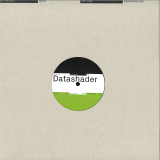
Datashader emerges from the shadows with a striking breaks- and bass-heavy debut release that challenges the fabric of our digital existence. Replete with a Dopplereffekt remix, it nods to the legacy of revered anonymous acts such as Scopex, Drexciya and Underground Resistance, pushing the boundaries of both electronic music exploration and its conceptual underpinnings. As a critique of the erosion of genuine human connection in the digital age, Datashader delivers a barrage of billowing subs, infectious electro, recontextualized jungle, and techno, serving as a poignant counterbalance to current dance floor-centric norms. It’s a contemporary anti-soundtrack that offers a haunting mirror to the societal costs of technological convenience.
In a world engulfed by the digital realm, where social media platforms thrive and dominate every aspect of our lives, the enigmatic project known as Datashader was founded to reflect on the pervasive erosion of authentic human connection through various virtual realities. Artistically, Datashader seeks to critique the impact of technology on human identity and relationships, breaking with an archetype of digital conformity and expressing a profound disillusionment with the superficiality of online interactions through music. Genuine human connection and art cannot be quantified by likes, comments, or followers but rather thrives in the visceral realm of shared sonic experience and human emotion. This idea is at the core idea of Datashader, whose artistic expression ranges from avant-garde composition and electronic experimentations to art, installation, film and more.
Expressed within the varied contexts of diverse artistic mediums, Datashader explores the concept of “technological gentrification”, which describes the gradual displacement of human interaction by technology. Just as gentrification alters the urban landscape, driving out communities and cultures, digital gentrification transforms the social landscape, replacing genuine connection with curated online personas.
Musically, Datashader’s practice confronts this dystopian reality, highlighting the alarming consequence of people becoming mere nodes in a network, reduced to a collection of data points. This is manifested sonically by a blistering assault of breaks, recontextualized IDM, abstract electronics and otherworldly synthscapes, conceived as the aesthetic counterbalance to much of contemporary electronic music’s dancefloor focus.
Datashader dives deep into genres and influences which stand for a form of sonic resistance: A contemporary anti- soundtrack – a sonic mirror of the price we pay for convenience and instant gratification. A self-image in constant flux. No false technological idols.
FYEAR is a Montréal-based ensemble led by composer Jason Sharp and poet/writer Kaie Kellough that fuses spoken word into genre-bending compositions for electronics, two voices, two drummers, and processed saxophone, pedal steel guitar, and violins. FYEAR incorporates drone, out-jazz, post-classical, ambient metal, avant-rock, and modular synthesis in a sonic and stylistic palette the opposite of collage or pastiche: the FYEAR ensemble integrates a unique and unified sound/aesthetic while traversing adventurous and variegated terrain. Kellough’s poetic materiality conveys acute political-existential themes, alternating between declarative, meditative, and cut-up/semiotic manifestations. This self-titled debut album is a supremely innovative 40-minute multi-movement work; an ardent mission statement that mines the interzone where Saul Williams, Moor Mother/Irreversible Entanglements, Shabazz Palaces, Zulu, Angel Bat Dawid, Damon Locks/Black Monument Ensemble, Shabaka Hutchings, and Matana Roberts are all iconoclastic neighbours. FYEAR melds improvisation and composition, traditional notation and graphic scoring, electronic and acoustic instrumentation, lucid recitation and abstract vocalization, balancing intensive structure with an expansive sense of exploration. Through several years of collaboration, development, workshops, commissions and performances conducted by Sharp and Kellough, their wordsound practice has culminated in this nine-piece group which also features poet/writer/activist Tawhida Tanya Evanson (present director of the Banff Centre Spoken Word program) violinists Josh Zubot and Jesse Zubot (Tanya Tagaq, Darius Jones, Joshua Hyslop), pedal steel player Joe Grass (Tim Hecker, Patrick Watson), drummers Stefan Schneider (Bell Orchestre) and Tommy Crane (The Mingus Big Band, Aaron Parks), with live visual typographics from Kevin Yuen-Kit Lo, who also designs the album art. Propelled by the vocal interactions of Kellough and Evanson, FYEAR interrogates our present and future post-capitalist polycrisis, invoking collective anxieties, emotions, and critiques. FYEAR re-poetizes our constructed, manipulated social/conceptual realities, re-inscribing questions about the future by setting them to a wildly dynamic and evocative temporal soundtrack: Who does it belong to? How will it be shared? How do we project a collective future into the contested challenges of climate change, global migration, wealth gaps, safety/precarity, identity/affinity, segmentation / segregation, all our seemingly irreconcilable histories and forward visions for the world we dream to inhabit

- A1: Thank You
- A2: Hello, Lakisha
- A3: Distractions I: The Opposite Sex
- A4: Age + Self Esteem: A Funhouse Mirror
- A5: Distraction Ii: The Dilemma Of Cool
- A6: Self Importance
- B1: Collected Views From Dinner
- B2: Fulfillment?
- B3: Taking Responsibility
- B4: Intermission
- C1: The Fears Of A Dilettante
- C2: Obsessing
- C3: Life, The Cruel Interlude (On God)
- C4: Frustrations + Solutions
- D1: Humans + Ants In Proportion
- D2: Existential Crisis Hour!
- D3: On The Mend
- D4: Relief!
- D5: Poem A
- D6: Outpatient Mentality
- D7: Memory Lane (Bonus)
Kilo Kish has always been in a league of her own. Constructing herself from the ground up, Kish’s career in music began over a decade ago, when she was relatively well-known for providing breathy, uninhibited guest appearances on songs with Childish Gambino, Vince Staples, and more.
Since then, she’s been equipped with creating her own multi-dimensional worlds. On her conceptually progressive 2014 EP Across, Kish took it one step further, taking a cross-country drive over dreamy, experimental soundscapes from producer Caleb Stone. Upon returning to New York City, Kish felt restricted by the environment that shaped her and looked to Los Angeles. Enter Reflections in Real Time, Kish’s debut album that acts as a sonic mood board where she is alone in her thoughts, whether probing her social media curiosities or meditating on her life’s purpose.
Immerse yourself into the psychedelic electronic pop of Talee, a rising Dutch artist weaving together the tapestry of contemporary indie dance with threads of early 90s British contaminated indie rock.
A multi-instrumentalist, previously championed by Disco Halal, Talee is set to unleash his debut EP “Waiting for Tomorrow” on the esteemed Californian label Underground Pacific, promising an unforgettable sonic journey.
Talee’s music transcends the boundaries of genre, seamlessly blending the warm rhythms and catchy melodies of Watherall’s Primal Scream and the lysergic groove of Happy Mondays with contemporary electronic textures.
This debut EP serves as a powerful statement of Talee’s artistic vision, showcasing his unique neo-romantic wave songwriting and great capturing riffs. The release also features an exciting collaboration with the acclaimed Irish Sullivan brothers SX2, who lend their signature touch to a captivating remix of “How High?” recalling the early irreverent and raving Underworld energy. Joining them is none other than Cantor, the musician and producer behind Underground Pacific himself, ensuring a Burning Man sunrise-inspired remix of “Be Here Now”.
The EP’s visual identity mirrors Talee’s artistic creativity with artwork conceptualized by the artist himself, complementing the music and offering a glimpse into Talee’s vibrant inner world.
In 2005, an 18-year-old Raphael Gimenes left the sunny shores of Brazil behind, embarking on a journey to a distant and wintry land. "Dinamarca," the Portuguese name for Denmark, became his new home, where he has lived for almost two decades. Today, he presents his third album, a deep exploration of his life in Scandinavia. Rather than being a nationalistic tribute, "DINAMARCA" tells chapters from Gimenes" life story as a Brazilian living in the northern corners of the world. It guides us through the enchanting nordic woods, the vast fields stretching to the horizon, and the timeless sea resting beneath an endless sky. The melodies of blackbirds, the dances of red deer, and the whispers of ancient oaks form the backdrop for his musical stories. Within his songs, we experience moments of deep solitude and boundless inspiration, moments where reflection and creative passion intertwine. Gimenes skillfully turns the power of love into harmonies, dedicating songs to both his companion and his closest friends. Beyond these experiences, he leads us on journeys to Denmark"s neighboring lands, Norway and Sweden, where revelations and encounters with the mystical found their way into the lyrical fabric of his songs. The album"s orchestration includes Gimenes" vocals and the resonant chords of his classical guitar. Accompanying him throughout the album are Jan Kadereit"s multilayered percussion, and Lucas Delacroix"s bass synth, who also plays the electric guitar at times. The music further unfolds with the nuances of a string quartet, and a brass quintet, both recorded in the tropical highlands of Minas Gerais. Other guest musicians feature on individual songs, such as pianist Sebastian Macchi, flautist Flavia Huarachi, cellist Lucas Almeida, and singers Gaby Echevarria, Cecilia Pahl, and Cris Ferro. Gimenes has garnered acclaim and accolades across continents. His debut release, "Raphael Gimenes & As Montanhas de Som," delved deep into the rhythms and traditions of Brazil. It rose to prominence as the top Brazilian release in 2016 in Holland and was hailed as a "conceptual masterpiece" in Japan. His second album, "A Tongue Full of Suns," co-produced with Faroese multi-artist Teitur, ventured into the English language, blending Gimenes" inspirations from the world of prog-rock. Danish rock legend TimChristensen praised it as "top-shelf neo-folk," while Brazilian website80minutos described it as "hypnotizing." The music within "DINAMARCA" delves deep into the soul of a man who embraced a new land with open arms, while staying true to his roots. It unites elements from both of Gimenes" prior works, embarking on a journey across new musical horizons. The result is music that transcends borders, weaving itself into an intricately beautiful tapestry - a soul that has learned to harmonize with two worlds.
Most audiophiles know Alan Parsons Project's I Robot by heart. Engineered by Parsons after he performed the same duties on Pink Floyd's Dark Side of the Moon, the 1977 record reigns as a disc whose taut bass, crisp highs, clean production, and seemingly limitless dynamic range are matched only by the sensational prog-rock fare helmed by the keyboardist and his creative partner, Eric Woolfson. Not surprisingly, it's been issued myriad times. Can it be improved? Relish Mobile Fidelity's stupendous UltraDisc One-Step 180g 33RPM box set and the question becomes moot.
Mastered from the original master tapes and pressed at RTI on MoFi SuperVinyl, I Robot comes to life with reference-setting realism on this numbered, limited-edition reissue. Boasting immaculate highs and lows, generous spaciousness, and see-through transparency that takes you into the studio with Parsons and Woolfson at Abbey Road, this definitive edition is designed to demonstrate the full-range capabilities of the world's best stereo systems while offering listeners the convenience of having all the music on one LP.
Featuring a nearly inaudible noise floor, this transcendent UD1S edition functions as a repeat invitation to savor reference-grade soundstages, immersive smoothness, sought-after instrumental separation, three-dimensional imaging, and consummate tonal balances. Able to be played back at high volumes without compromise or fatigue, it is a demonstration record for the ages – the likes of which are no longer being made. This is the very reason you own and invest in high-end audio gear.
The special characteristics of this UD1S version extend to the premium packaging. Housed in an elegant slipcase, the reissue features special foil-stamped jackets and faithful-to-the-original graphics. Aurally and visually, it is made for discerning listeners who prize sound quality and production, and who desire to fully immerse themselves in everything about this conceptual landmark. The Alan Parsons Project's most famous record deserves nothing less.
Inspired by and loosely based around the Isaac Asimov stories of the same name, I Robot delves into themes of artificial intelligence and technological dominance that make the record extremely relevant in the 21st century. Indeed, Parsons and Woolfson's pinnacle creation dovetailed with the ascendency of Star Wars, which itself is experiencing a rebirth in an age of self-driving cars, smart devices, and mindless automation. Lyrically, songs such as "The Voice" call into question human behavior – and their relationship to increasing robotic supremacy – in everyday life. Parsons and Woolfson reflect the associated paranoia, dichotomy, and transformation via shifting sci-fi arrangements steeped in drama and moodiness.
The absorbing tunes on I Robot also continue to fascinate due to their perfectionism and innovation. Borrowing from Pink Floyd's strategies, Parsons and Woolfson utilize a looped sequence on the title track to create new downbeats. "Some Other Time" employs two different lead vocalists and yet gives the illusion that only one is involved. Captivating strings, a piccolo trumpet, and bona fide pipe organ grace "Don't Let It Show." The origins of "Nucleus" stem from a unique analog keyboard concoction dubbed "the Projectron," devised by Parsons and electronic engineer Keith Johnson. Andrew Powell's orchestral and choral arrangements top it all off, with "Total Eclipse" arriving as a frightening track that presages the climactic "Genesis Ch. 1 V. 32."
Does man or machine win in the end? Decide as you get lost in Mobile Fidelity's UltraDisc 180g 33RPM LP pressing. Secure your numbered copy today!
More About Mobile Fidelity UltraDisc One-Step and Why It Is Superior
Mobile Fidelity Sound Lab's UltraDisc One-Step (UD1S) technique bypasses generational losses inherent to the traditional three-step plating process by removing two steps: the production of father and mother plates, which are created to yield numerous stampers from each lacquer that is cut. For UD1S plating, stampers (also called "converts") are made directly from the lacquers. Since each lacquer yields only one stamper, multiple lacquers need to be cut. Mobile Fidelity's UD1S process produces a final LP with the lowest-possible noise floor. The removal of two steps of the plating process also reveals musical details and dynamics that would otherwise be lost due to the standard multi-step process. With UD1S, every aspect of vinyl production is optimized to produce the best-sounding vinyl album available today.
MoFi SuperVinyl
Developed by NEOTECH and RTI, MoFi SuperVinyl is the most exacting-to-specification vinyl compound ever devised. Analogue lovers have never seen (or heard) anything like it. Extraordinarily expensive and extremely painstaking to produce, the special proprietary compound addresses two specific areas of improvement: noise floor reduction and enhanced groove definition. The vinyl composition features a new carbonless dye (hold the disc up to the light and see) and produces the world's quietest surfaces. This high-definition formula also allows for the creation of cleaner grooves that are indistinguishable from the original lacquer. MoFi SuperVinyl provides the closest approximation of what the label's engineers hear in the mastering lab.
Delivered via the manic pedalboard wizardry and sophisticated finger work of guitarist Tommy Meehan (Cancer Christ, Deaf Club, Cartoon Network) and the utterly brutal and savage drumming of Seth Carolina (Starcrawler), SQUID PISSER's tightly controlled, futuristic hardcore-onslaught of amped-up rainbow vomit is a thing of throbbing, mucous-laden beauty. Conceptualized and formed in 2022, SQUID PISSER decided to fully utilize planet Earth's viral slumber in order to gestate, write, and record - resulting in the opening salvo 'My Tadpole Legion' (Three One G / Sweatband) and a spattering of live shows, already the stuff of legend.
SQUID PISSER continue their live assault and make their SKiN GRAFT Records premiere with "Vaporize A Neighbor", a four-song EP packaged in a full-color 24-page comic book sleeve with comics from Johnny Ryan (Angry Youth Comix), Mike Diana (Boiled Angel), Kali Fontecchio (Maude Macher) and many more. The first 500 copies are pressed on translucent "Purple Bruise" vinyl, include a wraparound obi-strip and come packaged in a crystal clear resealable sleeve. Released alongside "Vaporize Your Neighbor" is the fifteen song CD companion "Vaporize A Tadpole", compiling the new EP, Squid Pisser's debut album "My Tadpole Legion" and additional unreleased bonus tracks. Both releases feature exclusive cover artwork from afro-surrealist A4RO.
"Something happened on No. The early EPs from Baltimore’s Tomato Flower were pretty, dreamy psychedelia. Warm to the touch, like looking up at the trees on a cloudless day. On No, the four-piece’s debut album, those trees, that cloudless sky, have become haunted, thorny, stormy. It takes Tomato Flower from buttoned-up, almost technically formalist psych pop to something more urgent, raw, emotionally immediate. No is messier, more expansive, and through all of its chaos, the band’s most rigorous artistic statement to date.
No is the band’s first effort made entirely in person, the first thing tracked in a studio instead of in a bedroom. It is a highly collaborative record written and recorded by everyone, partially made live. It is very much the byproduct of a band that has done some serious touring, following a coast-to-coast tour with Animal Collective in the summer of 2022.
Lead single “Destroyer,” has Jamison Murphy practically screaming over angular guitars, oscillating in a sonic space somewhere between the prettiness of Broadcast and the sludge of Jesus Lizard. It also presents an early entry point to one of No’s major conceptual underpinnings: that of the breakup between Murphy and fellow co-lead vocalist and guitarist Austyn Wohlers, which occurred during the composition of the album.
It wouldn’t be fair to just call No a break up album. It’s far more complicated with that. No is a record about negation: I will not do this, you cannot tell me what to do, we are not living in a utopia, don’t be delusional. No embraces a kind of brutal realism, a confrontation of life that only happens when you wizen up a little bit. All of it is a brutal delight, a departure from the past, a nod to a startling present."
More Than Ten Years Since He First Emerged On Skull Disco, Appleblim Presents His Debut Album. The Label He Co-founded With Shackleton Was The First The World Heard Of His Productions, But Laurie Osborne's Innate Relationship With Electronic Music Culture Reaches Back Much Further Than Those Groundbreaking Early Days Of Dubstep. Early Days Spent Soaking Up Hardcore, Jungle, Techno And Plenty More Besides Were Fundamental Foundations From Which To Spring Into The Then-unknown Realms Of Sub-low Half-step Club Music. At That Time Fwd>> And Dmz Were The Church For This Ritualistic Sound, And Appleblim Was A Regular Fixture At Both.
As Dubstep Matured, Magnified, Mutated And Meandered, So Appleblim Moved Beyond Skull Disco To Explore Different Avenues Of Expression In The New Many- Layered Club Music Landscape. His Own Apple Pips Imprint Was A Natural Vessel On Which To Explore The Emergent Fusions Of Hardcore-derived Sounds And The Us-born House, Techno And Electro, While Labels Such As Aus Music Equally Provided A Home For His Work (often Alongside Komonazmuk). Meanwhile Long-standing Collaborations With Alec Storey (al Tourettes / Second Storey) Finally Manifested In The Hyper-modern Mind-twist Of Also, Captured As An Album On Legendary Rave Label R&s.
More Recently It's Been Possible To Hear Appleblim Delve Into Electro-acoustic And Ambient Production Alongside Bassweight Sounds On Tempa, One Of The Original Bastions Of Dubstep Culture. As The Existing Boundaries Between Genres, Cultures, Eras And Scenes Continue To Dissolve, On His Debut Album Appleblim Offers Up A Fresh Approach That Brings Some Of The Foundational Sound Ethics Of Rave Culture Into A Modern Framework.
Hardcore Breaks Are Still A Regular Sound Source In Contemporary Club Tracks, But On Life In A Laser It's Instantly Apparent That Appleblim Has Moved Beyond Choosing Popular Drum Samples To Truly Tap Into The Elusive Feeling Engendered By The Music Of The Era. It's A Tricky Feat To Manage, But In The Pie-eyed Chords Of ignite', The Subby 808 Tom Basslines On nci' Or The Mr. Fingers Synth Flex On manta Key' The Sonic Finish Sports The Same Understated Grit And Grime That Made Those Early Records So Timeless. There's Still Space For Modernism, Not Least On Snaking 2-step Killer i Think We'll Let The Gas Sort This One Out', But It's Offset By A Layer Of Dust, Not To Mention An Inherent Moodiness That Can't Be Faked.
This Fine Balance Of Rave Romanticism And Future-minded Approaches Binds Together In A Cohesive Conceptual Statement. First And Foremost It's Appleblim's Personal Reflection On The Music That Has Moved Him On Countless Dancefloors Since His First Flirtations With Soundsystem Culture. At The Same Time The Canny Influx Of Modern Ideas Into The Soundworld Of The 90s Genuinely Results In A New Proposition, Making For A Perfect Fit On The Modern-day 'ardcore Fetishists Label Of Choice, Sneaker Social Club. Many May Claim To Draw On Old-skool Influences In Their Modern Trax, But Take One Listen To flows From Within' And You'll Feel The Same Time-slipping Surge Of Future-shock As The Ravers At Lost, Dreamscape, The Dungeons, Clink Street, Blue Note And All Those Other Iconic Spots.
For the first time, Brandt Brauer Frick’s seminal album Mr. Machine is being reissued on coloured vinyl.
‘Mr. Machine’ is a record that put them alongside names as Steve Reich and Philip Glass, but with considerably more groove. More than anything, Daniel, Jan and Paul are keen that the Brandt Brauer Frick Ensemble are not written off as a curiosity.
“Often people focus a lot on this whole "cross-over" aspect,” says Brauer. “We wish people would simply notice we have good chords, melodies etc. and take the music as it is. Because we make it the way we feel, and not for other, let's say purely conceptual reasons. Some only seem interested in how it’s made. Some reviewers perceive us as minimal techno, some as modern classical, some as nu jazz and so on. But we don’t divide the world into techno and nontechno.”
Limited Translucent Orange Vinyl[25,00 €]
Finnish heavy-hitting psych machine Craneium returns with "Point Of No Return". The band's fourth album is their most ambitious one yet, washing over you through a constant ebb and flow of fuzzy heaviness, complemented by melodies and atmospheric passages. With the songwriting expanding upon the Craneium sound with atmospheric guitar leads and heavy riffing, the dynamics have become more polished and clean. Conceptually, "Point Of No Return" deal with the climate catastrophe and the responsibility of mankind for planet Earth.
For fans of Lowrider, Skraeckoedlan, Lucifer, Mars Red Sky, Demonic Death Judge, and Alice In Chains.
"Point Of No Return" by Craneium includes the following tracks: "A Distant Shore", "Things Have Changed" and more.
Black Vinyl[23,11 €]
Finnish heavy-hitting psych machine Craneium returns with "Point Of No Return". The band's fourth album is their most ambitious one yet, washing over you through a constant ebb and flow of fuzzy heaviness, complemented by melodies and atmospheric passages. With the songwriting expanding upon the Craneium sound with atmospheric guitar leads and heavy riffing, the dynamics have become more polished and clean. Conceptually, "Point Of No Return" deal with the climate catastrophe and the responsibility of mankind for planet Earth.
For fans of Lowrider, Skraeckoedlan, Lucifer, Mars Red Sky, Demonic Death Judge, and Alice In Chains.
"Point Of No Return" by Craneium includes the following tracks: "A Distant Shore", "Things Have Changed" and more.
- Chance Is Her Opera
- Heatwave Pavement
- Green Ray
- Orange Zero
- Late July
- Darkness-Blue Glow
- Mono Valley
- Coastal Lagoon
- Alkaline Eye
- 3: Am Walking Smoking Talking
- Three Fires
- Disc 2
- She Smiled Mandarine Like
- Under The 3000 Foot Red Ceiling
- Orange Zero (Single)
- Chance Is Her Opera (Demo)
- Late July (Demo)
- Alkaline Eyed (Demo)
- She Smiled Mandarine Like (Demo)
World Of Echo are proud to announce the long-awaited reissue, on 17th February, of the self-titled debut album by Bristol’s Movietone. Originally released in 1995 by Planet Records and reissued on CD in 2003 by The Pastels’ Geographic Music imprint, this is the first time Movietone has been reissued on vinyl. An expanded double-LP edition, it includes the extra tracks from the 2003 CD (their first two singles, and an unreleased demo of “Chance Is Her Opera”), and adds three more unearthed gems: demos of “Alkaline Eye” and “She Smiled Mandarine Like”, and an early take of “Late July”, recorded in a garden by Dave Pearce (Flying Saucer Attack) in 1993. Taken together, this is the definitive collection of music from the first phase of one of Bristol’s most remarkable groups.
Movietone was the cumulation of a series of events, explorations, and discoveries, starting at secondary school – the group’s core membership of Kate Wright, Rachel Brook, Matt Elliott and Matt Jones met at Cotham School in Bristol. As for many other groups, their early years were all about experimenting, and finding ways to ‘make do’, a DIY sensibility that would inform Movietone through their decade-long lifespan. From formative rehearsals in a shed in the garden of Brook’s family home, to recording early material to four-track in Redland Library, and on into the Whitehouse and Mr Grin’s studio sessions for their debut album, Movietone’s music fell together in a creatively unpredictable, yet conceptually rigorous manner.
By the time they released Movietone, they’d found a home with Bristol’s Planet, run by author Richard King and James Webster, who had both released their first two singles, “She Smiled Mandarine Like” and “Mono Valley”. There was other music happening around them in Bristol, too, from the Jones brothers’ avant-rock outfit Crescent (who were Movietone’s closest conspirators), through Elliott’s jungle/electronica project Third Eye Foundation, and Brook and Elliott’s membership of Flying Saucer Attack. A closely knit community, Movietone are the centre of this nestling architecture of groups.
The vision in the music, mostly, belongs to Wright, but Movietone ran in democratic creative consort. Listening back to Movietone, you can hear this democracy in action through the wildness of the music, which is balanced by the poetics of Wright’s lyrics and melodies. Full of half-captured memories and entangled abstractions, there’s an elliptical, ruminative quality to much of the writing here that shows the deep influence of the Beat Generation writers, along with a twilight environment captured in the songs that’s pure third-album Velvets, Galaxie 500, early Tindersticks, Codeine. Unpredictable interventions – the crashing glass in “Mono Valley”, the sudden explosions of “Orange Zero” – point towards the noise blowouts of My Bloody Valentine, the unpredictability of Sonic Youth; Wright’s understated vocal cadence suggest a deep, embodied understanding of John Cage’s Indeterminacy.
Movietone would go on to make three fantastic albums for Domino – Night & Day (1997), The Blossom Filled Streets (2000) and The Sand & The Stars (2003) – and their Peel Sessions were released early in 2022 by Textile. Still held in high regard by artists like Steven R. Smith, and The Pastels, whose Stephen McRobbie once described them as “one of the great unknown English groups,” it’s an absolute thrill to listen to Movietone anew – still inspired, still seductive, still magic, still mysterious.
Musique Infinie is the collaborative project of Manuel Oberholzer a.k.a. Feldermelder and Noémi Büchi.Their album »Earth«, released through the Hallow Ground label, is based on a spontaneously composed live score for Alexander Dovzhenko’s groundbreaking 1930 silent movie »Zemlya« (»Earth«) created for the 24th edition of the VIDEOEX festival for experimental film.
Frequently cited as a masterpiece of early 20th century filmmaking, the movie deals with the collectivisation of Ukraine’s agriculture. The Swiss duo complemented it with atmospherically rich electronic soundscapes that are both deeply immersive and highly evocative. As a stand-alone music release, the two-piece »Earth« album captures the essence of Büchi and Oberholzer’s collaboration that is marked by mutual trust and musical versatility that puts them in a state of »togetherness trance,« as they call it.
Oberholzer has been highly productive as a composer, musician, sound designer, and installation artist in recent years, releasing a slew of solo albums as well as a variety of collaboration records with artists such as Sara Oswald and Julian Sartorius. Büchi has recently debuted as a solo composer and sound artist working with electroacoustic techniques to create a »symphonic maximalism for the end of the world,« as she dubs it.
Both are prolific and versatile artists with a penchant for working conceptually, however their collaboration as Musique Infinie is an improvisational and thus by design an intuitive one.
Their sessions start with an exchange on emotions and thoughts rather than theoretical questions or aesthetic debates. When they get to work—often for several hours—they rarely talk.
They approached »Earth« the same way, improvising freely together and using only a few select samples from the film’s original score in the process. Their open-ended approach is marked by an aesthetic ambivalence that perfectly corresponds with the movie’s own inherent contradictions.
Dovzhenko approached his socio-political subject with poetic imagery and philosophical rigour, juxtaposing notions of traditionality with the depiction of modernity.
Büchi and Oberholzer accordingly work with motives that at o ce seem anthemic and elegiac, working with sounds and musical motives that evoke a sense of familiarity in one moment before transforming into something futuristic and uncanny in the next. Their score for »Zemlya« is not to be understood as a mere interpretation of the movie, but rather a re-narration or even re-negotiation of its aesthetic and emotional qualities under their very own terms. »Earth« is an album that concisely depicts what is at the core of the duo’s musical partnership
On June 29th 2023, Jeremiah Chiu walked into the Vintage Synthesizer Museum (VSM) in Highland Park, Los Angeles, with no plan more specific than "let"s fire this stuff up and see what happens." Exploring the VSM"s vast collection of classic, rare and staple synthesizers, he would sequence, trigger, and layer the machines together with help from VSM founder/curator Lance Hill. The resulting album - In Electric Time - was recorded in just two days, and edited to completion in the two days following. It was captured fully analog by engineer Ben Lumsdaine, who contributes performances on a few tracks himself. Cooper Crain (of Bitchin Bajas) makes an appearance as well; but ultimately the collection is an intuitive expression of organic electronic conceptualized and created in-context by Chiu alone, as he calls on a lifetime of work in sound synthesis to pain a fulgent, refreshingly undercut sequence of cinematic sketches and in-process themes. In some ways, In Electric Time reflects the directness of Raymond Scott"s electronic studio recordings - with sharp cuts and room chatter - and, in others, it conjures the in-the moment- magic of Harmonia.