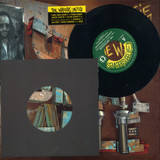
Roman Flügel needs no introduction, so lets not hammer on about his lengthy history as a kingpin of contemporary German dance music, his essential contributions to the musical evolution of Darmstadt and Frankfurt, his achievements as a virtuosic multi-instrumentalist traversing genres with remarkable grace, his sense of dynamism and urgency in the construction of big-room anthems or the meticulously woven textures of melancholy found throughout his minimalist work, his ability to pay homage to pioneers of his musical heritage without diverting to pastiche, his fearless combination of familiar melody with synthesized aberration and imperfection, his approach to instrumentation as Haiku poetry where the ordinary is made profound through simple isolation, his rejection of stylistic pretense and acceptance of comforts found in the constructs of folk and pop, his contrast of cold efficiency with a warm naivete´, his yearning to return down previously-forged paths with a new accumulation of experience, the confidence to paint the room blue when it was meant to be black, his belief that a beautifully executed idea will always transcend the need for incessant polishing, the way in which he leads arrangements to the edge and only implies a resolve, his framing of musical narratives as sketches, outlines, or skeletons where the listener's perception compliments the whole, or his notion that sometimes stories might not need a clear articulation but might only come through in hints of mood, pace, and color, a language which doesn't rely on words to communicate but which paints for us in Themes. Yes, rather than hearing our attempt to elaborate on Roman's Flu¨gel's debut album with the ESP Institute, lets just simply listen.
Sarah Davachi presents her masterpiece, Gave In Rest. Her most fully studio-recorded album ever, she collaborates with Montreal heavyweights to create an album that uses both modern minimalism and early church music as departure points.
Sarah Davachi has quickly risen in prominence since her first release five years ago, and Gave In Rest represents her highest artistic achievement. By infusing her compositional style within a predilection for medieval and Renaissance music, Davachi unearths a new realm of musical reverence, creating works both contemplative and beatific, eerie yet essentially human. Gave In Rest is a modern reading of early music, reforming sacred and secular sentiments to fit her purview and provide an exciting new way to hear the sounds that exist around us.
Between January and September of 2017, Sarah Davachi lived in flux; storing her belongings in Vancouver, she spent the summer in Europe, occasionally performing in churches and lapidariums and seeking respite from her transitional state while surrounded by such storied history. This latest album echoes that emotional state of solitude and ephemerality, reaching towards familiar musical landscapes but from oblique perspectives.
'I named each track after a particular time of day as a way of expressing my experiencing different moments of quietude, how morning and night are both independent and interconnected entities in this regard,' she says. Her titles evoke canonical phrases referring to morning or evening prayers, as well as Latin and German phrasings for metaphors about the time of day. 'From my perspective, there is a lot of loneliness on this record, and I think it is as much about beginnings as endings,' she continues. 'In a way, it's about the prospect of the unknown as it manifests alongside a very inward form of grieving—really the essence of what constitutes a period of transition.
Davachi has mined a bottomless landscape where listeners can witness music's participation in their solitudes. Gave In Rest lends a voice to her personal exploration with a firm, intuitive stance.
In a time when Jazz music is entering a contemporary renaissance and exciting the ears and minds of new audiences, Zombie Zombie's Étienne Jaumet offers us his unique, idiosyncratic take on the sound with the sprawling '8 Regards Obliques', his 3rd solo album with the Versatile label.
Jazz requires a certain freedom of technique, interpretation and improvisation that already matches Jaumet's own production style and sonic aesthetic as well as his playful approach towards music. The eight pieces that make up the new LP were very quickly recorded; Jaumet let himself be carried away by the atmosphere without focusing too much on fine details or the laborious aspects of the composition process. The finished article is a spontaneous collection that stands out, a true mirror image of the creative process adopted by the artist. Not surprisingly, spontaneity is one of the characteristics already present in his music, in both his recorded output and his live happenings, where he leaves much room for freedom and improvisation.
'8 Regards Obliques' was recorded at the Versatile studio in less than 3 weeks with quite a basic set up: TR 808, selected synthesizers, vocals and of course the saxophone, which is a constant presence also in his previous albums. For the mix Etienne has again appealed to the maestro I:Cube, a central figure of the Versatile story and a prdigious engineer and artist in his own right. He immediately understood that it was necessary to keep the spontaneous side alive and to not over-produce the pieces or over-edit them, being constantly mindful to retain the power in the sound and in the frequencies. From Sun Ra with 'Nuclear war', Miles Davis in 'Shhh / Peaceful' or 'Theme from a symphony' by Ornette Coleman to 'Caravan' (already quoted by many jazzmen), Etienne enjoyed revisiting classic masterpieces and paying tribute to his inspirations. He allowed himself only one personal and original composition, 'Ma révélation mystique'.
Standard Edition, Mastered at half speed, 140g vinyl, Sticker We Release Jazz (WRWTFWW Records' new sister-label) is thrilled to present the official reissue of criminally overlooked Japanese jazz gem Mellow Dream (1977) by Hokkaido pianist wunderkind Ryo Fukui, released in conjunction with the its legendary predecessor Scenery, sourced from the original masters and mastered at half speed. Firmly standing on the foundation he laid down with Scenery, Ryo Fukui continues his exploration of modal, bop and cool jazz sounds with meticulous grace and absolute mastery. As its title suggests, Mellow Dream ventures into slightly mellower, more soulful, and sometimes more contemplative territories (the Bill Evans-reminiscent 'Mellow Dream' and 'My Foolish Heart") while still packing the commanding punch Fukui's work is loved for, as heard on the amazingly bombastic 'Baron Potato Blues' or the gigantic McCoy Tyner/John Coltrane-influenced 'Horizon' which sees each member of the trio (Satoshi Denpo is on bass and Yoshinori Fukui is on drums) demonstrating their virtuosity for 9 exhilarating minutes. With his sophomore album, Ryo Fukui swings from melancholy to vibrant joy with ease, reminding us that jazz is best served with a pinch of blues, and displays an immensely rare combination of pure talent, unique personal approach and focused discipline. The man undeniably deserves a spot in the pantheon of all-time great jazz pianists. After releasing the outstanding Scenery and Mellow Dream back to back, Ryo Fukui worked on developing his live skills, often performing at Sapporo's Slowboat Jazz Club (which he co-founded with his wife Yasuko Fukui), and even releasing 2 live albums. He sadly passed away in March 2016, leaving behind a legacy of works that all jazz lovers should explore.
Soundway Records delivers a beautifully remastered reissue
of Brazilian duo Grupo Controle Digital's only album, 'A Festa
É Nossa'. First released in 1988, the album is now housed in a
tip-on heavyweight sleeve and restored artwork.
With the title track 'A Festa É Nossa' having circulated the
last few years in the DJ sets of influential tastemakers, the
album has become highly sought after by electronic fans
and collectors alike. Lo-f synths and cruising bass lines
permeate the record, influenced by the group's Brazilian
contemporaries at the time such as Tim Maia, Cláudio Zoli,
Secos E Molhados, and rock outft Made In Brazil.
Band members Billy Jaguar and Gel Valiery regularly
performed in various groups in São Paulo throughout the
80s and 90s, but after Gel passed away, Grupo Controle
Digital was no more - the band and the album faded into
obscurity and Billy became a priest, working with gospel
music. It remained that way until Brazilian DJ Millos Kaiser
(from label Selva Discos, and one half of Brazilian street party
organisers Selvagem) tracked down the remaining member
of the group to be able to include one of their tracks on the
highly anticipated Soundway compilation 'Onda De Amor:
Synthesized Brazilian Hits That Never Were (1984-94)',
released in July 2018.
Audio restored by Neal Birnie and re-mastered by Frank
Merritt at The Carvery, London. Artwork restored by Lewis
Heriz.
FOR FANS OF:
Soundway 'Onda De Amor' compilation, Music From Memory
'Outro Tempo' Brazil compilation, Spacetalk compilations,
Sabor Do Brasil
Beautiful contemporary African music. Deep percussion with great guitar playing and vocal chants on top. Driving basslines all over the album. Spiritual feel! Tip
.
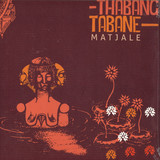
Son of the legendary Dr Philip Nchipi Tabane and heir to the malombo sound that he originated and pioneered in the early 1960s, Thabang Tabane has been touring the world playing with his father's band and other South African luminaries (such as Thandiswa Mazwai, Madala Kunene and Mabi Thobejane) since he was 8 years old.
Emerging into his own with his debut solo album, Matjale, this energetic percussionist carves a driving, joyous and worldly version of the malombo genre that takes in his continental travels. The album brims with ambition and an appetite for life. Employing brisk tempos, nimble basslines and intersecting polyrhythms, Thabang crafts songs cognisant of the hardships of life, but chooses to deliver them with an irrepressible optimism.
Expanding parameters of what is essentially an artform patented by his father, Thabang and his cohorts seem unburdened by pedigree, infusing the sound with a modern sensibility. His reverence for the vibrational resonance and drive of the bass guitar, not to mention his explosive bursts of hand drumming, gives the album an undeniable, cathartic exuberance.
Nothing is static. Music moves you places. And sometimes your machines follow you wherever you go. That's exactly what happened some moons ago during a nature retreat in Icelandic landscapes. The man. The machines. Water. Lots of water. Trees. Endless trees. And the horizon. Out of early mornings & contemplation come 3 tracks of sheer beauty ready to reunite with urban dancefloors.
Studio One Freedom Sounds Is The New Collection From Soul Jazz/studio One Focussing On The Intense Period In The Second Half Of The 1960s When Studio One's Vast And Unbeatable Output Of Ska, Soul, Rock Steady And Reggae Made It Literally One Of The Hottest Musical Empires In The World.
During This Highly Successful Period, Clement 'sir Coxsone' Dodd Released Hundreds And Hundreds Of Superlative Singles Seemingly On An Almost Daily Basis, In The Process Making Huge Stars Out Of Jamaican Singers Such As Alton Ellis, Delroy Wilson, The Wailers, Slim Smith, Jackie Opel And Many More.
Powered By The Finest In-house Musicians Working In Jamaica, Whether It Was The Skatalites, Jackie Mittoo's Soul Brothers, The Sounds Dimension Or The Soul Vendors, Studio One Functioned As Hit Factory On The Scale Of Motown In The Usa, Shaping And Defining Reggae Music For Decades To Come.
Singlehandedly Studio One's Founder Clement Dodd Was Able To Create The Most Successful Vertically-integrated Record Company That Jamaica Had Ever Known With Pressing Plant, Printers, Studio, Shops, And Sound Systems All Running At Once, With Over 50 Employees And Hundreds Of Artists Working With Studio One During This Time.
Studio One Freedom Sounds Tells The Story Of Studio One In The 1960s With A Stunning Set Of Ska, Soul, Rock Steady And Reggae Killer Tunes As Well As Informative Sleevenotes And Track-by-track Info By Noel Hawks. The Album Is Released As Heavyweight Double Vinyl (+ Free Download Code), Deluxe Cd And Digital Album.
Sao Paulo's acclaimed 10-piece instrumental collective return for their 4th album. Urban Afro-Brazilian grooves, empowered horn-driven melodicism and massive dance floor inspiration. One of South America's
most exhilarating musical propositions. Available on CD or Double 180gr Heavyweight Vinyl that includes a digital download. Quebra Cabe a is a very memorable set of hummable earworms, from the title
cut that opens up the album and continuing, sinewy and cool and relentless, all the way to the final note of 'Portal.' Throughout though, the heartbeat of everything remains utterly African, refracted through the prism of the band's
home in the Bixiga neighbourhood of Sao Paulo. And Bixiga 70 has always been a reflection of the streets where they live. The result still captures the incendiary excitement of Bixiga 70 live, but the
freedom of the studio brings more shade and subtlety than before. The rhythms are more sinuous than ever, snaking through the funk in way that looks more to Ghana or Nigeria than Memphis or Muscle Shoals, while the horns strut in
powerful harmonies. It's music that forges connections and retraces history while sounding absolutely contemporary. But for Bixiga 70, African will always be the root, and Brazil its beautiful, vibrant flower.
Moscow Is The City Full Of Posh Decorations. Like A Black Hole, It's Gorging Clouds Of Chaotic Ideas. Madly Fast, It's Flooded With Shallow Hippies, Jealous Dealers And Susceptible Artists. Everyone Desires To Have Its Own Piece Of Luck, Looking For The Shortest Way To Some Easy Life. Most Of The Nomads Arrive From The Capital Suburbs And Other Big Cities Of Immensely Corrupted Russia. Everyone Can Tell A Tale From Outskirt. Senseless Rivalry And Art Falsity Together Make The Special Demands: Your Tale Has To Amaze, To Inculcate, You Must Do Something Notable, Freaky One And Truthful. To Dare To Let It. There Are No Any Rules. Your Voice Has No Matter, The Only Important Is A Sales Skill. The Local Scene Is Tired Of Identical Copying Outside World's Standards. Thereby The More Your Approach Is Unacceptable, The More Valued Is It. But The More It's Valued, The Faster It Will Depreciate. The Glossy Shell With Cheap Content Is The Way To Survive In Such A Tight Plexus Of Cruel Love, Substance Abuse And Electronic Music.
Limited Edition. Triple Transparent Vinyl 180g Incl. Poster & Download Code. Box Will Be Opened For Shipping To Avoid Seam-split. Hinweis: Box Ist Verschweißt, Wird Aber Für Den Versand Geöffnet
On October 19th Kompakt presents a new LP and audiovisual venture by Danish producer Kasper Bjørke and close cohorts. Epic and in length but always captivating, 'The Fifty Eleven Project' is an entirely ambient concept album, that interprets and evokes the emotional rollercoaster Kasper experienced, from his cancer diagnosis and throughout the five years of regular check-ups. The week of album release marks his second anniversary of getting the all-clear.
The base of the album was composed on vintage analogue synthesizers, reverbs, echo and sequencers - using the computer solely as a recording device - by Kasper and synth wizard Claus Norreen, in the latter's Copenhagen studio.
The violins, violas and cellos are composed and played by the Italian composer Davide Rossi, who has also worked with Ennio Morricone, Jon Hopkins, Ro¨yksopp, The Verve and Goldfrapp.
The piano parts are composed and played by Danish musician Jakob Littauer (of Kompakt labelmates Jatoma) on an old upright piano in a studio, and on a Steinway Grand Piano in the concert hall at the Royal Danish Music Conservatorium. From Max Richter's 'SLEEP', Hannah Peel's 'Mary Casio: Journey To Cassiopeia', to much of Brian Eno's 'Music For Installations', 'The Fifty Eleven Project' continues in a rich vein of work by contemporary composers which explores a situation/condition, and is made with functionality and healing in mind.
The visual side of 'The Fifty Eleven Project' is made in collaboration with the culture laboratory Prxjects and acclaimed LA based artist/filmmaker/photographer Justin Tyler Close, who has created art films for each of the album's 11 tracks - plus one music video, including clips from all 11 films. The 11 films will be assimilated into a video exhibition at Klub in Copenhagen from 12th - 21st October. The ambition is that the installation will tour Europe and the US in 2019. Furnished in an exquisite fabric box, this 180 gram 3LP clear vinyl box is presented by cover art created by world-renowned artist Landon Metz, further cementing the release's multidisciplinary links to the art world.
Am 19. Oktober präsentiert Kompakt das neue Album und audiovisuelle Abenteuer von Kasper Bjørke und Freunden. - The Fifty Eleven Project' ist ein komplett ambientes Konzeptalbum, das die emotionale Achterbahn, die Kasper nach seiner Krebsdiagnose und während fünf Jahre regelmäßiger Untersuchungen erlebt hat, interpretiert und offenlegt. Die Woche der Veröffentlichung des Albums markiert den zweiten Jahrestag seit der Entwarnung.
Die Basis des Albums wurde von Kasper und synth wizard Claus Norreen in seinem Kopenhagener Studio auf analogen Vintage-Synthesizern, Reverbs, Echos und Sequencern komponiert - der Computer wurde ausschließlich als Aufnahmegerät gebraucht.
Die Geigen, Bratschen und Celli wurden vom italienischen Komponisten Davide Rossi komponiert und eingespielt, der auch mit Ennio Morricone, Jon Hopkins, Röyksopp, The Verve und Goldfrapp zusammengearbeitet hat.
Die Klavierparts wurden von dem dänischen Musiker Jakob Littauer (bekannt vom Kompakt-Projekt Jatoma) auf einem alten Klavier im Studio und auf einem Steinway-Flügel im Konzertsaal des Royal Danish Music Conservatorium komponiert und eingespielt.
Von Max Richters - SLEEP', Hannah Peels - Mary Casio: Journey To Cassiopeia' bis hin zu Brian Enos - Music For Installations' - - The Fifty Eleven Project' setzt die Arbeit zeitgenössischer Komponisten fort, die sich mit einer Situation/einem Zustand auseinandersetzten und die auf Funktionalität und Heilung ausgerichtet ist.
Die visuelle Seite von - The Fifty Eleven Project' entstand in Zusammenarbeit mit dem Kulturlabor Prxjects und dem renommierten Künstler/Filmemacher/Fotografen Justin Tyler Close aus LA, der für jeden der elf Tracks des Albums Kunstfilme erstellt hat - plus ein Musikvideo mit Clips von allen elf Filmen. Die elf Filme werden vom 12. bis 21. Oktober in einer Video-Ausstellung im Klub in Kopenhagen gezeigt. Ziel ist es, dass die Installation 2019 durch Europa und die USA tourt.
Verpackt in einer exquisiten Stoffbox, die vom weltberühmten Künstler Landon Metz entworfen ist, zementiert diese 180-Gramm schwere 3xLP-Klarsicht-Vinylbox seine multidisziplinäre Verbindung zur Kunstwelt.
ADULT. '20 years ODD.'
Over the course of the last two decades, Detroit-based duo ADULT. (Nicola Kuperus and Adam Lee Miller) have released six albums and nineteen EPs and singles across some of our favorite labels: Mute, Ghostly International, Thrill Jockey, Clone Records, Third Man Records, and their own label, the revered Ersatz Audio. November 1998 marked their first release: the five-song 12" 'Dispassionate Furniture'. This September, twenty years later, Dais Records is proud to announce ADULT.'s seventh full length album: THIS BEHAVIOR.
The album began as 23 demos written and recorded in a remote cabin in the woods of Northern Michigan during the dead of winter. In total isolation, and with a reduced amount of gear (a modified version of their live setup) on the cabin's kitchen table, the duo were completely immersed in an incessant inescapable studio of their own making - looping, repetitive analogue sequences grinding away day and night. At the end of the intense demo session, a handful of peers were enlisted by the band for the difficult task of paring down the demos into the final album.
The result is 10 tracks of uncompromising dark electronics, showcasing ADULT.'s return to aggressive and energetic dancefloor mastery. Album opener 'This Behavior' alongside the follow-up 'Violent Shakes' (which ascends into synths wailing like warning sirens over Kuperus's commanding vocals) set the stage for an on-edge listen, while the heartbreaking 'Silent Exchange' unfolds as a beautiful sad synth dirge. 'Perversions of Humankind' breaks the mood - driving the listener into a slow and low groove before the frantic album midpoint of 'Irregular Pleasure'. 'Does The Body Know' is the album's post-punk anthem, with irresistible singalong 'we're out of order - we're undefined!' The latter half of the album drives forward with 'On The Edge (You Put Me...)' and 'Lick Out The Content', refusing rest and demanding movement and response. 'Everything & Nothing' emerges slowly from sparkling synth textures, snowballing with nervous energy into an acid techno stomper before the album comes to a close on the icy landscape of 'In All The Debris', a goose-bump inducing slow electronic mantra that closes the curtain on a massive album.
Artist statement on the album's writing process:
'It's confounding how often we negate the importance of disconnecting, getting weird, getting lost. Discomfort and joy intertwined. Day to day, theatrical self-presentation set to rest in our frantic social world. Public becomes private, almost too private. Looking out into frozen woods as you deliver your vocals. For who For what Taking walks along icy shorelines as you try to overcome writer's block, as you try to overcome yourself. Not seeing anyone for days and weeks on end. Overwhelming thoughts and feelings come rushing in; anxiety, fear, purpose, banality, futility of task, power structures, power struggles, pointlessness, collapse.You're faced to face yourself. Your awareness is heightened. You are neither here nor there. You are in a liminal state As you work in this isolated cabin your windows become mirrors.'
"Are we distortions. Are we distortions, perversions of humankind.Are we distortions. Are we distortions, twisted somewhere in time."
ADULT. '20 years ODD.'
Over the course of the last two decades, Detroit-based duo ADULT. (Nicola Kuperus and Adam Lee Miller) have released six albums and nineteen EPs and singles across some of our favorite labels: Mute, Ghostly International, Thrill Jockey, Clone Records, Third Man Records, and their own label, the revered Ersatz Audio. November 1998 marked their first release: the five-song 12" 'Dispassionate Furniture'. This September, twenty years later, Dais Records is proud to announce ADULT.'s seventh full length album: THIS BEHAVIOR.
The album began as 23 demos written and recorded in a remote cabin in the woods of Northern Michigan during the dead of winter. In total isolation, and with a reduced amount of gear (a modified version of their live setup) on the cabin's kitchen table, the duo were completely immersed in an incessant inescapable studio of their own making - looping, repetitive analogue sequences grinding away day and night. At the end of the intense demo session, a handful of peers were enlisted by the band for the difficult task of paring down the demos into the final album.
The result is 10 tracks of uncompromising dark electronics, showcasing ADULT.'s return to aggressive and energetic dancefloor mastery. Album opener 'This Behavior' alongside the follow-up 'Violent Shakes' (which ascends into synths wailing like warning sirens over Kuperus's commanding vocals) set the stage for an on-edge listen, while the heartbreaking 'Silent Exchange' unfolds as a beautiful sad synth dirge. 'Perversions of Humankind' breaks the mood - driving the listener into a slow and low groove before the frantic album midpoint of 'Irregular Pleasure'. 'Does The Body Know' is the album's post-punk anthem, with irresistible singalong 'we're out of order - we're undefined!' The latter half of the album drives forward with 'On The Edge (You Put Me...)' and 'Lick Out The Content', refusing rest and demanding movement and response. 'Everything & Nothing' emerges slowly from sparkling synth textures, snowballing with nervous energy into an acid techno stomper before the album comes to a close on the icy landscape of 'In All The Debris', a goose-bump inducing slow electronic mantra that closes the curtain on a massive album.
Artist statement on the album's writing process:
'It's confounding how often we negate the importance of disconnecting, getting weird, getting lost. Discomfort and joy intertwined. Day to day, theatrical self-presentation set to rest in our frantic social world. Public becomes private, almost too private. Looking out into frozen woods as you deliver your vocals. For who For what Taking walks along icy shorelines as you try to overcome writer's block, as you try to overcome yourself. Not seeing anyone for days and weeks on end. Overwhelming thoughts and feelings come rushing in; anxiety, fear, purpose, banality, futility of task, power structures, power struggles, pointlessness, collapse.You're faced to face yourself. Your awareness is heightened. You are neither here nor there. You are in a liminal state As you work in this isolated cabin your windows become mirrors.'
"Are we distortions. Are we distortions, perversions of humankind.Are we distortions. Are we distortions, twisted somewhere in time."
Iraqi band Babylon Trio from Brussels plays an electrified ravey mix of contemporary Iraqi and Arabic music styles, such as choubi choubi, dabke, maqam and electronic hybrids that put the dancefloor on fire. Their debut album 'Habibi' features songs about their old life in Iraq and new life in Brussels, Belgium, with topics such as separation from loved ones, love, beauty, honour and pure Arabic party bangers. This year will mark the power of the contemporary Iraqi street sound of Babylon Trio throughout Belgium, Europe and beyond.
- Spectral Decay' is a collection of musical reflections about the paradoxical contemporary state of humankind, whereas its own technological, social, cultural and economical development seems to entrench the possible points of a structura downfall. The narrative of - Spectral Decay' starts with heavy, mesmerizing industrial vibes. Due to the notable sound design techniques of Japanese artist Tetsumasa, his hefty piece - Nex' evolves into a harsh but still amazingly cinematical music sculpture.
Subsequent mid-tempo composition - Onzour Shayatini' by Meer dynamically follows the dark, experimental path of drone and noisy structures. Violent accents smoothly lead to the deconstruction of drum & bass patterns and turn into strident 90s metal riffs. The track progressively penetrates obscure subterranean abysses and becomes a perfect introduction to the next theme by Yuji Kondo - - Hades'. In Greek mythology Hades was the ancient god of the underground kingdoms, darkness, death and metals. Therefore, Kondo's music piece turns into an infernal portrayal of the underworld where tenebrous layers of bass frequencies, raw textures and Drexciyan sounds build up an enormous and lasting tension.
Side B begins with the track - Anthropocene' produced by Arboretum co-founder - Mogano. The whole composition refers to the present geological epoch we live in, characterized by environmental pollutions, depletion of fossil fuels and accelerated urbaniza- tion of the world. It is a deeply conceptual soundscape of a powerful system, that incorporates both - the destructive forces of technology and the infinite energy of the whole universe, that interweave in a devilish dance of post-techno, breakbeat and dub tones.
Thereafter, ~Raw in his piece - Poly Bios' pictures the interference of human structures in the nature. Creating a mosaic from indus- trial and tribal, organic sounds, he tells a mystical story of fear, hope, escape and primeval instincts.
The narration concludes with an atmospheric composition of NWRMNTC - solo project of Ana Quiroga from experimental ambient duet LCC. - Beyond' is a boundless, spectral reflection on collective human consciousness, where haunting vocals evoke a recon- dite, ineffable pain, leaving the listeners in a profoundly meditative state.
Laura Polan´ska
After years of playing with the Moroccan community of Brussels, music maker and jazz musician Luc Mishalle knows every trick of the cross-fertilization of gnawa music, jazz & brass. Gnawa is the Northern African islamic sufi music with healing vibrations and spiritual lyrics, played by the descendants of African slaves. The album title 'Beats & Pieces' refers to the collaborations with Belgian percussionist Roel Poriau (Think of One, Antwerp Gipsy-Ska Orkestra), Tunisian electronic producer Sofyann Ben Youssef (Ammar808, Kel Assouf) and Moroccan-Belgian gnawa master Maalem Driss Filali. 'The album is significantly less 'jazz' than past collaborations with Byron Wallen and Trevor Watts,' explains Mishalle. 'It's based on gnawa songs I transcribed and arranged together. Half of the songs contain vocals, which makes it more radio-friendly.' There are also fragments of Beninese traditionals and which bring us to another thread through the album: trance. You can find it in gnawa music and even more in Benin, the cradle of voodoo. 'Trance music aims to create obsession through constant repetition. We kept the essence of that music, adding jazz and brass colours,' Mishalle finds these musicians in Brussels, and together they search for the sound of this city known for its hyper-diversity. 'Brussels' context is unique, in Belgium and beyond. Our metropole has quirky vibrations. To catch them, you have to fully submerge.'
Edizioni Mondo as a label, has the goal to produce music that is descriptive of concepts, images and environments. Inspired by library music, a genre frequently used as theme or background music in radio, film and television in that very same period, the name MONDO has its roots in 'MONDO MOVIES", an Italian movie genre born in the 60's. Mondo movies are characterized by documentary-like content that addresses several topics from around the world ("mondo"). Numero nove comes courtesy of ROTLA. Also known as Mario Pierro and Raiders of the Lost Arp, 'Waves' is his third contribution to Edizioni Mondo. Downtempo, trippy, playful and pardon us, balearic, it's the soundtrack to the fading summer or the one starting somewhere else in this universe. Accompanied by remix works from label head L.U.C.A. and balearic (again!) mastermind Mark Barrott with his Sketches form an Island Healing Hands, it's the most balearic (three's a charm) record you will hear this side of the summer (wherever you are).
is it the best jazz record from japan, as the french-born english disc jockey, record label owner and music collector gilles peterson once assumed or is it maybe the best jazz record of all jazz records
well, everybody needs to decide by himself and has to listen to 'watabase', the second solo piano album of the japanese jazz pianist fumio itabashi, that was originally released in 1982.
tokyo based mule music unearth it, remastered the original recordings and brings it back to the global stores in order to seduce all music lovers that embrace notes who come straight from the heart and soul.
while diving deep into the seven compositions on 'watarese', any sensible listener finds out, that the instrumental piano pieces are somehow soulfully connected to what keith jarret plays on his legendary 'the köln concert' live album for the munich based ecm record company.
like jarret, itabashi does not play his notes academic. he let them fly, gives them some kind a life of their own, hits the piano keys deeply emotional and injects his compositions and interpretations some kind of nervous human soul.
in terms of style some call his 'watarase' recordings post-bop, others contemporary jazz. none of such definitions fit really, as all is just that kind of agitating jazz that melts spirituality with humanity. three tunes, the epic 'someday my prince will come' as well as 'msunduza' and 'i can't get started', are interpretations of compositions by the us-american movie score pioneer frank churchill, south african pianist dollar brand and russian-american composer and songwriter vernon duke.
all other four compositions been written and recorded by the 1949 born itabashi who started to play the piano when he was eight years old. while studying at the tokyo based kunitachi college of music, he fell in love with jazz.
his love was so deep, that he starts to work in the 1970's with such legendary japanese jazz musicians like trumpet player terumasa hino, drummer takeo moriyama and saxophonist sadao watanabe.
till today fumio itabashi is a vital part of the japanese jazz culture as a live performer and film score composer. those who want to see how he makes love with his piano should check the world wide web for the french documentary 'jazzed out', that captured his unique way of playing in one episode.
but as music is always firstly for the ears, and not for the eyes, this little letter in-front of you would rather like to recommend to play the 'watarase' recordings loud to get hooked by the highly infectious piano gems that have been recorded at nippon columbia 1st studio in tokyo on 12th and 13th of octo-ber 1981.
they will haunt you. they will come for good. and they will force you to be a good friend with the repeat button - whatever medium you chose to surrender to the piano jazz music of fumio itabashi.
'Shlom Hatzibur' - 'Yanshuf al Anaf Gavoha' a repress of a long lost new wave single along with edits by 'The Models' and 'Mule Driver'.
'Shlom Hatzibur', a band formed by Yuval Banay and Oren Elazary, was active between 1984-1985. This was the year in which the band 'Mashina' paused their activity. ('Mashina' was established in 1983 - and is considered by many ones of the most influential rock bands in Israel). In 1984, they independently published two singles, one of which was 'Yanshuf al Anaf Gavoha'.'Yanshuf al Anaf Gavoha' (Owl on a High Branch) represents a rare moment in Israeli musical history and culture: a moment of disillusionment and expression of personal voice, contemporary sound, and rhythm which stood out during a turbulent political period.
During the First Lebanon War, in the 80s, a generation of young people traveled on the weekends from the battlefields of southern Lebanon and flocked to the rising nightclubs in Tel Aviv. From army discipline to individual freedom, from the threat of death to the city's vibrancy. It is a song of adolescence in a divided and alienated society, and its reissue is more relevant than ever.
The song mixes industrial rhythm with Post-Punk, Rock and Ska. The unusual musical production and the use of a drum machine were influenced prominently by the musical soundtrack played in Tel Aviv's record shops and alternative nightclubs (eg, 'Fuzz', 'Penguin').
Terence Fixmer's path through the changing techno landscape of the past 20 years has been anything but direct. Indeed, the French born producer, musician and Planete Rouge label founder has long been influenced by the periphery of continental European dance music subgenres from electronic body music, new beat and acid, before combining them into his own pioneering hybrid of futuristic, EBM-inflected techno with classic releases such as 2001's Muscle Machine or the collaborative Between The Devil LP with Nitzer Ebb's Douglas McCarthy as Fixmer/McCarthy. While the sound in recent years has been rediscovered and recast in diverse contexts by a new generation of producers, Through The Cortex sees Fixmer gravitating toward a different kind of industrial-tinged electronics, led as much (or more) by analogue sequencers, melodies and ultra-saturated sounds of synthesizers than drums and percussion. Across eight tracks at a compact but varied 40 minutes, the LP touches on an aesthetic hinted at in recent Ostgut Ton releases (2016's Beneath The Skin EP and 2017's Force EP), revealing a sonic narrative through noisy, screaming synth/vocal riffs with a jagged, guitar- like post-punk sensibility. Through The Cortex is techno with a voice - or rather multiple voices - guiding listeners through hypnotic, space- and social-themed terrain as a kind of dark soundtrack to darker days. The result ranges from the slow John Carpenter-inspired Escape From Precinct 13 funk of 'Expedition' and the patient yet muscular stomp of 'Fury' to the mesmerizing Suicide-like pop of single 'Accelerate', where Fixmer, using his voice as an instrument, chants the track's ambiguous title in an invocation of systemic change/collapse. Elsewhere, the story is told with more abstract and wailing vocals like on 'Shout in A Black Hole', or in the warm, entrancing chords floating across the stereo image in ostensibly changing time-signatures on 'A Halo Somewhere' - the LP's uncharacteristically kosmische musik come-down. The track, and Through The Cortex as a whole, reflect what can be described as Fixmer's idiosyncratic take on both techno subgenres as well as the larger pool of electronic music in general. This broad approach translates into a sound that is not only difficult to pin down, but also one that lends itself to multiple listens.
Former member of Dublin punk band The Threat, Stano released his debut LP on Scoff Records in 1983. Recorded in Alto Studios, the Irish artist eschewed live performances in favour of fusing collaborative, improvised, experimental music with spoken word-poetry. The LP featured contributions from fellow Irish musicians and artists such as Michael O'Shea, Roger Doyle, Donald Teskey, Vinnie Murphy, Detroit born Jerome Rimson and is a seminal document of Irish postpunk
It was like a bird of rarest-spun heaven metal or like silvery wine flowing in a spaceship, gravity all nonsense now - Anthony Burgess, A Clockwork Orange
After their LPs 'Ike Yard' (also known as 'A Fact A Second' Factory America, 1982) and Nord (Phisteria and Desire, 2010) Ike Yard delivers their last album 'Rejoy' on Noiztank, 2018 as the culmination of their recent years reinvented sound. As the perpetual flag bearers of the cutting-edge post-punk spirit, the NYC- based band shows muscle in a LP fully loaded with abrasive synth pads, scrap metal percussions, and whispered vocals. Following the previous criteria of 'Sacred Machine' 2017, it is worth to remark the inclusion of external vocals in the pieces 'Sister M' and 'Beyondersay', which feature Yuki Osaki and MAYa. The nine tracks move through different atmospheres, tensions and moods that would perfectly represent a new contemporary soundtrack of the S. Kubrick film 'A Clockwork Orange', a major influence and source of inspiration for the group this time around.
Bill Brown and Al Hall jr met around 1971, they were both in south central L.A and shared the same apartment building, also in the same building was Doug Carn and brownstone singer billy Wilson.
These studio sessions were don't at Paramount studios Hollywood where Al Hall jr was working for producer Art Smith a&c music.
The main distributor for A&C was Accent records. So the Soul Injections very first single "Stay off the moon" was released via Accent, as was Bill Browns "Bip Bam" The group wasn't that pleased with how Accent handle the releases so Bill took it upon himself to set up his own label called Brownstone records. Many musicians were called in for studio sessions these included
Doug Carn, organ; Kirk Lightsey, keyboards; Mel Bolton,
guitars; Mel Lee, drums; Al Hall jr (trombones), Willaim 'Bill'Henderson strings.
The label was met with some confrontation from other Hollywood labels and many of the Brownstone releases were told not to hit the shops by Mafia run labels. Later around 1975 Brownstone released a track by Everyday people feat Alexis "world full of people"....A now cult soul 45 ....But wait, we at Super disco edits have unearthed the original tapes with the very first incarnation of that song and music, different lyric content and sung by Bill Brown. Not just this you get the instrumental on the b side!!
Nadanna is extremely proud and excited to present TOBIAS BERNSTRUP's new album 'Technophobic'.
Bernstrup who works both as a visual artist and musician has been touring worldwide since the late 1990s and positioned himself as one of the leading re-inventors of Italo Disco with his unique mix of Italo, Synthpop and Gothic noir. He has created his own unmistakable stage persona wearing androgynous outfits in shiny latex and heavy make-up. Tobias has collaborated with seminal artists such as Trans-X, Apoptygma Berzerk, Martial Canterel, Xeno & Oaklander, Lebanon Hanover, and She Past Away.
'Technophobic' contains 10 smashing tracks including the recent single 'Utopia', and 'Metropolis of Tomorrow' featuring French dark synth wave artist HANTE. Combining influences from classic synthpop, minimal wave, dark wave in a retro futuristic manner TOBIAS BERNSTRUP has created an album reminiscent of the 80s but in a contemporary context of sound landscape.
Roberto Clementi delivers his 'Cadmio' EP on Echocord sub-label Echo Echo this October, containing four original tracks from the Italy-based artist. Kenneth Christiansen's Echo Echo imprint, offers up its fifth release here, accurately reflecting his appetite for the more celestial, dubbed out side of techno. This release sees the return of Roberto Clementi to the Echo platform after three releases on the parent imprint, Echocord plus 10 years worth of released music to his name, notably a number of EP's and an album on Soma. The EP kicks off with a fresh dub induced charmer entitled 'Conte', which in Italian translates to 'with you', and stands as an accurate tag for this warm and intimate opener. 'Irradi' follows, a more upbeat and industrious dance track - with euphoric synth lines sitting harmoniously in between the more uniform percussion before stimulating crashing symbols are introduced in the latter stages. Title-track 'Cadmio' is up next, a more dropped-tempo, electro tinged number, with off-kilter drum patterns gracefully balancing amongst the alluringly sedative melody. The B2 and final track 'Blue Growth' then provides a close to the EP with a lo fi 4/4 drum pattern together with hardened snares and crashes contrasted by delicate dub swells providing feelings of symmetry - a theme that is consistent throughout the whole EP.
Those of you who have followed Lucky Brown's tireless efforts since joining the Tramp family in 2007 can hear without a doubt the progress he and his various ensembles have made in almost every musical aspect. His songwriting skills amazed us right from the start of our relationship. What deserves much more respect is that during the past years he has proved to be probably one of the most authentic and steady but at the same time most innovative creative minds on the contemporary funk scene. Sure, many of today's funk bands are able to deliver a two-and-a-half minute funk killer, what distinguishes Lucky Brown, however, is his ability to create compositions which also employ the idiom as a means to deliver an artistic message, a hard-to describe feeling, or a conscious concept, just like James Brown and Fela Kuti mastered in the 1970s. Furthermore, Lucky has developed his own trademark production and sound whose depth and honesty form a basis from which his work will ever remain timeless.
But that's nothing new as you can hear on both of his first two albums for Tamp ("Lucky Brown's Space Dream, 2011 and "Mystery Road", 2015) On "Mesquite Suite" he is forging new paths by soaking up musical styles from all over the world to infuse with his own totally unique way of producing. Perfect examples are the Mulatu Astatke-ish tracks "Pauraque" and "Mother Corn Stalk" with its distinctive New Orleans Swamp-Jazz flavor. Fans of the Menahan Street Band or El Michels Affair may see in "Taterbug" and "Estrellas De La Tierra" their favourite tracks. But it's the entirety which makes this album standout.
It has been Lucky Brown's aim to paint for the world a picture of the vernacular jazz that America's neighborhoods once crafted as their own homegrown cultural heritage. Lucky Brown's music is a rejection of the elitism, classism, and status of the music industrial complex and is an antitoxin to it's resultant homogeneity. He wants with his heart and his art to transmit an everyday people's sound, made by everyday people, dedicated to the upliftment of all people.
Tobias Kirmayer, August 2018
key-selling points:
- limited to 500 hand-numbered copies
- incl. full album download code
- double vinyl LP with deluxe gatefold cover
An Invitation To Disappear is the debut LP by British electronic musician Inland aka Ed Davenport - and his first release for A-TON. Based on his soundtrack for a video installation by conceptual artist Julian Charrière, Davenport has recast the material and field recordings into eight tracks of rhythmically intricate electronics and spectral, ambient techno, inspired by Charrière's visually striking, 76-minute tracking shot through a palm plantation toward a totemic soundsystem on full blast.
Both the album and original soundtrack were created in response to the 200th anniversary of the eruption of Indonesia's Tambora volcano in 1815, which plunged the world into darkness and caused a series of extreme weather conditions. At the time, the natural climate change crisis resulted in numerous global famines and is known throughout the northern hemisphere as 'The Year Without Summer', with global communities forced to adapt to sudden radical changes in temperature and weather.
An Invitation To Disappear offers a contemporary parallel, leading viewers - and listeners - down a seemingly endless direct path of gridded palms from dawn to dusk; a bio-commercial monoculture where ancient jungle once flourished. Light flickers between rows of fruit-laden trees and a distant fire burns in the undergrowth where the border between natural image and computer simulation breaks down. At the same time, formerly incoherent rumblings of sub-frequencies begin to transform into the contours of rhythm. This is reflected sonically in eight perspectives on the lush, synthetic jungle, made of myriad buzzing fauna, morphing melody and colossal bassweight. All paths lead toward an apocalyptic dancefloor, though speeds vary widely; rhythms dissolve from straight to broken, synth tempos operate by their own internal clocks (and logic). Juxtaposing industrial agriculture with rave culture, the album explores the industrialization and refinement of nature, and the new strange forms emerging from the synthetic grids of both.
As Inland, Davenport has previously contributed soundtracks to other installations by the Swiss-born Charrière, whose artistic practice focuses on bridging environmental science and cultural history, often taking place in remote geophysical locations, including ice fields, volcanos and radioactive sites.
Julian Charrière is a French-Swiss artist based in Berlin. A former student of Olafur Eliasson at the Institut für Raumexperimente, Charrière's art explores post-romantic constructions of nature, staging tensions between deep or geological timescales and those relating to mankind. His work has previously been shown across the globe, including at the main exhibition of the Venice Biennale in 2017, a solo show at Kunsthalle Mainz this past Spring and an upcoming solo show at the Berlinische Galerie opening September 26.
Inland (real name Ed Davenport) is a British producer, DJ and founder of Counterchange Records based in Berlin. Known for his detailed and explorative house and techno releases on his own label, Infrastructure, Naïf and more, Davenport has recently gravitated toward the contemporary art world, finding inspiration in the cross-pollination between Berlin's art and music scenes. Previous sound design collaborations with Charrière have been exhibited in institutions such as the Musée des Beaux-Arts de Lausanne in 2014 and Thyssen- Bornemisza Contemporary in Vienna in 2017.
The gallery version of An Invitation To Disappear premiered this past April at the Kunsthalle Mainz and will be on display at the Berlinische Galerie as part of Charrière's solo exhibition As We Used to Float, opening September 26, 2018. The LP will premier live together with the video installation during a special presentation in Berghain the same day for Berlin Art Week.
Black Truffle is honoured to present the first reissue of a true underground masterpiece, Massimo Toniutti's Il Museo Selvatico (The Wild Museum), originally self-released on LP in 1991. Like his better-known brother Giancarlo (whose classic 1985 Broken Flag LP La Mutazione was reissued by Black Truffle in 2015), Massimo Toniutti was active in the vibrant underground industrial/noise scene of the 1980s, contributing to releases on legendary labels such as Broken Flag and RRR and self-releasing a series of cassettes between 1984 and 1988. Existing in a private world apart from the noise and dark industrial tropes of many of his contemporaries, Toniutti's Il Museo Selvatico is an entirely singular work of domestic electro-acoustic exploration. Made up primarily of what Toniutti calls 'small and rare noises' or sonic 'knick-knacks' recorded between 1987 and 1990, the five pieces that make up the original LP usher us into a crepuscular space populated by mysterious traces of everyday life. Toniutti weaves a loose net of distant clanks, dull thuds, metallic resonance and skittering percussive sounds, allowing the sounds to breathe against a backdrop of near-silent atmosphere. Although the haunted ambience recalls the work of contemporaries like Organum, Toniutti generally steers clear of long tones and drones, preferring to arrange brief, sometimes staccato sonic objects into patters of repeating figures and isolated events whose overall compositional shape remains somehow ungraspable. Although glimpses of recognisable location recordings and instrumental sounds can occasionally be made out, for most of the record the sources of the sounds we hear remain teasingly mysterious, an abstracted memory of everyday actions and atmospheres. l Museo Selvatico is accompanied here by an additional LP of material recorded at the same time, composed especially for this reissue into two side-long suites that inhabit the same haunted space as the original LP while occasionally making use of more maximal compositional strategies. Black Truffle is pleased to return this overlooked masterwork to the world. Essential listening for fans of Organum, Nurse With Wound, Christoph Heemann, and the tradition of outsider musique concrète. Lovingly presented as a double LP in a lavish gatefold with printed inner sleeves featuring archival images and notes. Remastered and cut at D&M, Berlin
"At the crux of American-born, Shanghai-based producer Eli Osheyack's debut album, Sadomodernism, is a question of agency. Borrowed from film theory, the album title was originally coined by writer Moira Weigel to describe a waning European art house tradition that vehemently rejects 'naïve pleasure'—the tranquilizing comfort of conventional cinematic narrative, like mainstream Hollywood—and opts for violence and pain, with the aim of shaking audiences out of cinematic manipulation and into their own position vis-à-vis the malaise of contemporary life. Echoing the work of sadomodernist auteurs, Osheyacks's Sadomodernism is a deeply political project with critical ambitions. The smashing and blending of genres, from techno, industrial, noise and gabber to ballroom and metal, even opera, and spontaneous percussion arrangements, sometimes mixed with distorted spoken word, do not mean to please, but provoke through disorder and chaos. Laden with Brechtian alienation affects, Sadomodernism interrogates the notion of autonomy in contemporary music, club culture, and social-political life."
"The next one is signed by one of my contemporary idols. His zero-f*cks-giving attitude and his aim to move forward make Ascion the perfect artist to keep telling this story which two years ago was started to write. It could have been nineteen ninety two or today. It could be acid, techno-trance or even 'ardcore (you know the score). Echoes from Belgian New Beat and UK's Intelligent Dance Music resound all along it. Call it how you want and no matter when or where. This rave instrument is going to fill many epic warehouse moments. There is no way to escape: welcome to Your Finest Nightmare."
»sichten« refers both to »opinions« as well as the »examination of material«. in lose sequence, we will invite friends and colleagues, but especially music lovers to share their opinions on music with us or to look through their collected materials in order to present music that tends to be out of the focus of current media channels. as a label for electronic music our focus is on examining exactly this genre. but in the context of the series, we are rather looking for more hidden, unknown, perhaps forgotten music. we want to present the yet undiscovered, and also offer a platform for other cultural environments with different musical approaches. each issue will be supervised and compiled by a curator. an introductory text shall explain the ar- tistic approach of the respective curator. in this sense, the format of a double lp can only provide a first insight and wants to invite to a more in-depth research. for the first issue of the series, »sichten 1«, we asked frank bretschneider to compile his own, very personal selection of current electronic music. his choice fell on six artists, whose different styles me- ander between accessible music on the one hand and very abstract compositions on the other hand.
"sichten" bezieht sich sowohl auf "Meinungen" als auch auf die "Auseinandersetzung mit dem Material". In loser Folge laden wir Freunde und Kollegen, vor allem aber Musikliebhaber ein, ihre Meinung zur Musik mit uns zu teilen oder ihre gesammelten Materialien durchzusehen, um Musik zu präsentieren, die nicht im Fokus der aktuellen Medienkanäle steht. als label für elektronische musik liegt unser schwerpunkt auf der untersuchung genau dieses genres. im rahmen der serie suchen wir aber eher nach verborgener, unbekannter, vielleicht vergessener musik. wir wollen das noch unentdeckte präsentieren und auch eine plattform für andere kulturelle umgebungen mit unterschiedlichen musikalischen ansätzen bieten. Jede Ausgabe wird von einem Kurator betreut und zusammengestellt. Ein einleitender Text soll den künstlerischen Ansatz des jeweiligen Kurators erläutern. In diesem Sinne kann das Format einer Doppel-LP nur einen ersten Einblick geben und will zu einer vertieften Recherche einladen. für die erste ausgabe der serie "sichten 1" haben wir frank bretschneider gebeten, seine eigene, sehr persönliche auswahl aktueller elektronischer musik zusammenzustellen. seine auswahl fiel auf sechs künstler, deren unterschiedliche stilrichtungen ich zwischen zugänglicher musik einerseits und sehr abstrakten kompositionen andererseits unterscheiden.
out of Stock
Last delivered 13 months ago available to reorder, subject to availability
'Bound to shake your walls and rattle your windows' Max Reinhardt, BBC RADIO 3 "The first bit of evidence that Elizabeth Bernholz's next album Pastoral - due out in September - could be her best to date". THE QUIETUS "Will likely be one of the year's very best records.' CLASH 'What species is this What century' Forged in a rural idyll in Middle-England, the new album Pastoral, by Gazelle Twin, exhumes England's rotten past, and shines a torch over its ever-darkening present. Told through a troupe of multi-gender voices, in vernaculars old and new; from the shrill echo of folksong to tabloid-tinged jaunts, the artist aka Elizabeth Bernholz, presents the notion that 'there is horror in every idyll, and danger lurking beyond the 'quaint' '. The village square - once host to centuries of public torture - becomes a floral framed postcard, dolled-up for the Summer Fête. A sunny, afternoon walk over the hills unsettles a cloud of angry flies feeding from unidentifiable remains. Bigoted vitriol gently murmurs amidst tearoom chatter, as the neatly framed pastoral picture dissolves into a solemn ennui. Four years in the making, amidst life-changing events, including a move far out of the city, Pastoral will be the first major release by the artist since her widely acclaimed LP UNFLESH (2014, Anti-Ghost Moon Ray) and is seamlessly on-theme, together with Bernholz's J.G. Ballard-inspired A/V show 'Kingdom Come' (soundtrack released November 2017, Anti-Ghost Moon Ray) - a fascism-infused hellscape, this time set in deepest Old England. As its sole creator, Gazelle Twin 'The Composer, Musician and Producer' has crafted an album overflowing with a frenzy of traditional and contemporary musical tropes; from early music instrumentation - the harpsichord and the humble recorder, fed through myriad electronics - to the compelling, ritualistic application of found sample-looping. Beyond Bernholz's signature choral-infusions, here reverberating like a warped Sunday Service, there are even shades of '90s house and the once-thriving rural rave scene, albeit recalled as a watery, second-hand memory. In its consummation it is an album that feels pan-century, even pan-species. Set against a verdant backdrop of hedgerows and steeples, Gazelle Twin 'The Artist and Performer', constructs an eccentric and commanding visual embodiment of all-of-the-above - a costume fit for a court Jester of the 21st Century. The colours of Neo-Nationalism. Coke cans, and DANGER. 'It' (not 'she') hints at folkloric traditions with a footy mascot twist. The 'Ye Olde' and 'The Everyman' of the English cliché. Brandishing a sneer and a hobby horse. A riddle and a recorder. A jeer and a square dance in red, Adidas Gazelle's, and a mad, fixed GRIN - first glimpsed in the single, 'Hobby Horse' (22 June, Anti-Ghost Moon Ray). A deranged, absurd reflection of deranged and absurd times.
'Bound to shake your walls and rattle your windows' Max Reinhardt, BBC RADIO 3 "The first bit of evidence that Elizabeth Bernholz's next album Pastoral - due out in September - could be her best to date". THE QUIETUS "Will likely be one of the year's very best records.' CLASH 'What species is this What century' Forged in a rural idyll in Middle-England, the new album Pastoral, by Gazelle Twin, exhumes England's rotten past, and shines a torch over its ever-darkening present. Told through a troupe of multi-gender voices, in vernaculars old and new; from the shrill echo of folksong to tabloid-tinged jaunts, the artist aka Elizabeth Bernholz, presents the notion that 'there is horror in every idyll, and danger lurking beyond the 'quaint' '. The village square - once host to centuries of public torture - becomes a floral framed postcard, dolled-up for the Summer Fête. A sunny, afternoon walk over the hills unsettles a cloud of angry flies feeding from unidentifiable remains. Bigoted vitriol gently murmurs amidst tearoom chatter, as the neatly framed pastoral picture dissolves into a solemn ennui. Four years in the making, amidst life-changing events, including a move far out of the city, Pastoral will be the first major release by the artist since her widely acclaimed LP UNFLESH (2014, Anti-Ghost Moon Ray) and is seamlessly on-theme, together with Bernholz's J.G. Ballard-inspired A/V show 'Kingdom Come' (soundtrack released November 2017, Anti-Ghost Moon Ray) - a fascism-infused hellscape, this time set in deepest Old England. As its sole creator, Gazelle Twin 'The Composer, Musician and Producer' has crafted an album overflowing with a frenzy of traditional and contemporary musical tropes; from early music instrumentation - the harpsichord and the humble recorder, fed through myriad electronics - to the compelling, ritualistic application of found sample-looping. Beyond Bernholz's signature choral-infusions, here reverberating like a warped Sunday Service, there are even shades of '90s house and the once-thriving rural rave scene, albeit recalled as a watery, second-hand memory. In its consummation it is an album that feels pan-century, even pan-species. Set against a verdant backdrop of hedgerows and steeples, Gazelle Twin 'The Artist and Performer', constructs an eccentric and commanding visual embodiment of all-of-the-above - a costume fit for a court Jester of the 21st Century. The colours of Neo-Nationalism. Coke cans, and DANGER. 'It' (not 'she') hints at folkloric traditions with a footy mascot twist. The 'Ye Olde' and 'The Everyman' of the English cliché. Brandishing a sneer and a hobby horse. A riddle and a recorder. A jeer and a square dance in red, Adidas Gazelle's, and a mad, fixed GRIN - first glimpsed in the single, 'Hobby Horse' (22 June, Anti-Ghost Moon Ray). A deranged, absurd reflection of deranged and absurd times.
Farrago created a name for himself in this short time taking back the real roots of techno and rave and putting them in a new context... we said new, not different. This is his 3rd record on the label, and this time he goes beyond the idea of reminiscing the past, 'Hard Light' shows how the rave can be alive in everyone of us, and absolutely not changing the formula he gives us this beautiful feeling of being back in the past, while you dig in a record shop and you find something that hits you, in our past was that record that gave us memories. In this case the work of this record is almost double, the record itself reminisces the past, but gives good hope for the future of genuine rave music without compromises.
On her debut EP, Brussels-based multi-instrumentalist Esinam gives us an entrancing insight into her eclectic world of jazztronica.
Released 21st September via Sdban Ultra, her self-titled EP carries influences from different worlds geographically, culturally and musically. Blending traditional and modern instruments with her soulful voice, the acoustic sounds of the instruments are allowed to evolve and take on new dimensions, opening up a kaleidoscopic spectrum of sound and colour.
Esinam Dogbatse is part of a new generation of musicians bringing forth a cultural blend of music. Having opened for the likes of Nakhane and Témé Tan at Les Nuits earlier this year, Belgian rapper Baloji invited her to guest on his latest critically acclaimed album '137 Avenue Kaniama'. She has also supported Alsarah & The Nubatones, Selah Sue and Melanie De Biasio on her sold-out shows at Ancienne Belgique.
For the recording of the EP, Esinam joined forces with Jules Fradet from Studio Planet (Damso, Afrikan Prötökol). Producing and playing most of the instruments herself, the EP was mastered by LA-based producer Kelly Hibbert aka Almachrome (J Dilla, Madlib, Little Dragon, Flying Lotus, Ebo Taylor, Mark de Clive-Lowe and Arca).
Lead track 'Birds Fly Under a Heavy Sky' is a mesmerising opener that smoulders effortlessly against a backdrop of subtle beats and sensual rhythms, with Esinam's soft vocals and hypnotic flute providing the groove.
On 'Do Not Go Into That Black Night', she is dark and direct. It's a magnetic take on jazz noire that doesn't distract from the sultry inflections of her voice, while 'Gavoé' recalls the spirit of her Ghanaian roots in a ballet of instruments that display a level of personal freedom and sensitivity. Through merging different genres of music, we are warmly welcomed into Esinam's musical universe.
Esinam teamed up with Senegalese DJ and producer Ibaaku on the highly charged 'Electric Lady', who provided some distinctive musical hues. A track drenched in afro-futurist colours, sonic samples and collages freely mix with electric and raw sounds, supporting the energetic playing of the flute. The structure of the song remains true to Esinam's signature sounds: surprising ruptures, poetic atmospheres and constant affirmation of groove.
When Esinam performs live, she juggles traditional instruments such as the tama, kalimba and pandeiro, which she loops and blends with the sound of her flute and voice. It sometimes triggers dance, sometimes contemplation
Alborosie is a dynamic talent on the contemporary reggae scene, a singer, songwriter, multi-instrumentalist, producer and engineer. Unbreakable' is his ninth album for the Greensleeves label. His choice of players and vocal features on the album have resulted in a product that amplifies his multiple talents on a new level, delivering strong reggae songs that are solidly commercial. Unbreakable features performances from Aston 'Family Man' Barrett, Tyrone Downie and Junior Marvin of the famed Bob Marley backing band, now called The Wailers United. Plus, vocal features from Beres Hammond, Chronixx, Jah Cure and J Boog
'Garage bands suddenly obtain cult status and become the antithesis of their initial appeal'
Garage Class were a group of reluctant outliers who produced one of the finest contributions to the wave of UK DIY music that emerged during the late 70s and early to mid-80s.
Hailing from Alsager in North West England and comprised of Tim Shutt (vocals) Phil Murphy (lead guitar) Clive Williams (guitar) Lynne Sanders (bass) and Phil Bourne (drums / bass on studio recordings) Garage Class originally went by the name of The Pits before their then manager Steve Hurt imposed an alias which, though unpopular within their ranks, would nevertheless reflect the shambolic art they would eventually capture on their first and only single.
As The Pits the group offered a loutish inflection on glam-punk flamboyance, evoking Johnny Thunder hitting the north and remaining disowned yet undeterred in a dreary old boozer. But as Garage Class the group distilled a roughcast and homespun primitivism that felt quintessentially their own. In this they proved too unruly to be assimilated into any wider scene. Early gigs descended into acrimony and recognition proved elusive. Yet what they managed to make back then now sounds like an extraordinary article of underdog ambition.
Released in 1984, four years after it was originally recorded, the Terminal Tokyo single is an unlikely triumph of exceptional messthetic punk. Though raw and unpolished the songs here are precariously pop-minded and indisputably anthemic. The titular A-side reveals the dry and detached drawl of Shutt aka The Subliminal Kid, a sharp, jaded and poetic voice that has some of the most iconic lines never heard in punk. Accompanied by second-hand guitars, on-the-fly handclaps and a chorus like a terrace chant this is the cult hit that never was, a heroically artless masterpiece that has all the ragged character and misfit euphoria of Swell Maps and The Buzzcocks if they were more impulsive and boisterous, and left to their own devices in the remote margins of a Cheshire town. The original B-side is here substituted for I Got Standards, a track that, until now, has somehow remained unreleased. An ideal twin to Terminal Tokyo there's the same brusque and dog-eared quality to the band's delivery, as well as the same upfront emphasis on strong hooks and insistent momentum. Yet again, Shutt is on impeccable form, perfecting an inflated, adolescent antagonism that has all the sardonic, malcontented charm of similarly 'shirty' buggers like Dan Treacy (Television Personalities), Patrik Fitzgerald and Mark Perry (Alternative TV).
Although never accepted in their own time both tracks represent a brief but inspired moment of fervent imperfection, one that epitomized the best of a diffuse and autonomous underground movement spearheaded by The Desperate Bicycles and built upon by the likes of Amos & Sara, The Homosexuals, The Cleaners From Venus and Family Fodder. Like them Garage Class were situated at a point where punk, art, humour and a sense of stubborn independence all intersected.
In the years since Terminal Tokyo has accumulated a retrospective appeal among certain trusted circles, with Jon Dale celebrating the single in his exhaustive and essential Story of UK DIY for Fact Magazine, and original copies regularly changing hands for a foolish forty quid or so. With this inaugural release on the Outer Reaches label Terminal Tokyo is not only restored for the very first time but given a worthy expansion courtesy of JD Twitch (Optimo).
Continuing his own fascination with the fringe history of UK DIY - documented on his own outstanding compilation Cease & Desist: DIY! (Cult Classics From The Post Punk Era 1978-1982) and in his re-edits of Crass Records classics for an early release on RVNG INTL - Twitch reinterprets I Got Standards as an incisive, dubwise outing that pictures Jaki Liebezeit and Muslimgauze on a bender in England's provinces, tasked with remixing the raw product of local punks. A new slant on Garage Class' crude magnificence, built to play loud on contemporary soundsystems.
Although the latter part of 1980 spelled the end for Garage Class with members moving on to other projects (Bourne fell in with The Colours Out of Time, Murphy went on to front The Regular Guys and Shutt eventually left to form Happy Refugees) this reissue attempts to give their fleeting time together and the unique single statement they made the treatment it deserves. If this means Garage Class have obtained cult status, their initial appeal remains. Just listen for yourself.
Walter Gibbons, a true master of the mix, a disco legend, a pioneer of dance music. There's literally very few who can lay claim to progressing the artform of studio mixing and technique than the late Gibbons. His contribution to contemporary music cannot be understated, first as a DJ where his drum laced experimentation captured the ears and minds of his peers and the dancers, then later as a mixer and studio genius where he continued on his quest. Often fixated on the percussion and breaks within records his versions would often dive into spaced out, dubby and stripped back territory that very few of his peers were even contemplating at that time, fervently reconstructing the tracks themselves and often the time, space and dancefloor within which the record was being played. A true original, Gibbons was behind many of the 'definitive' versions of the classics, his unique style often catapulting records that were just fine in their original form into brand new colourful, cosmic interpretations that flourished sonically and rhythmically with brand new sounds that bristled with vision.
Salsoul Records thought a well programmed and thought out retrospective of this legends output was in order and this incredible collection of tracks is where we find ourselves. A stellar compilation across 2 heavyweight slabs of wax featuring of some of Gibbons' finest works. Included you'll find genre defining cuts like his mixes of Double Exposure, Loleatta Holloway, Love Committee, First Choice and many more.
A truly essential package for the die-hard Disco aficionado or for those who are exploring this most important movement in dance music for the first time. Curated with the full input and backing of Salsoul Records and carefully selected to reflect the truly timeless nature of the music contained within. For listening, for dancing, for turning on a party!
Remastered by Optimum Mastering. Artwork & design by Million Dollar Disco. Fully authorised.
Into the Light is launching a parallel and limited series with contemporary material from both Greek and international artists. First stop is the album 'Postclub Prism' by the German producer Cass. offering ten gorgeous ambient pieces about light and romance.
.
Since 2012, Niklas Rehme-Schlüter aka Cass. has released albums of varying styles, from the rather organic and loop based ambient pieces on 'Loops & Farewell Sketches' and the 'Red Atlantic' EP on Throne of Blood in 2017, influenced by 80's pop sonics, to the more balearic and percussive recordings on 'The Sound of Glades' together with Wolf Müller in 2016. On his new record 'Postclub Prism' Cass. explores his affinity to calm and atmospheric ambient music at the threshold to the reverberant sound of club music.