Behind the finest and most moving pieces of contemporary-classical music lie deeply personal and poignant stories, and Simon Goff's new album Vale is no exception. The British violinist and composer's dazzling exploration of the interface between violin and technology and between the poles of intimacy and grandeur, as rich and deep and wide as the landscape that lies its heart, named after the Vale of York where Goff grew up. The album encapsulates not just a landscape but a place in time and an identity forged through youth and adulthood, all viewed from his current base in Berlin. Goff's artistic project is one which has been informed by his previous collaborations as both a performer and recording engineer, performing with artists such as Thor Harris (Swans, Amanda Palmer) and Federico Albanese, playing in concert halls across Europe. On his very first day working at the legendary Vox-Ton studios, Goff was introduced to Adam Wiltzie (half of the venerated post-classical/ ambient duo Stars Of The Lid/A Winged Victory for the Sullen), and over the next two years, he worked with post-classical and post-rock visionaries such as the late Jóhann Jóhannsson, Hildur Gudnadóttir (notably on the film soundtracks for Chernobyl and Joker), Dustin O'Halloran and Yair Elazar Glotman.
Sdban Records will reissue parts of the library serie 'A Special Radio ~ TV Record' released on the Belgian based Selection Records between 1976 and 1981 on vinyl. Sdban Records teams up with publisher Hans Kusters wo recently bought this catalog. Nonetheless, the first release will be a contemporary adaptation of the original concept by composer Reinhard Vanbergen (Das Pop, Rheinzand).
When Hans Kusters heard some music of Reinhard Vanbergen on the radio, he started dreaming of a new chapter. When asking Reinhard if he would be interested, Reinhard gladly accepted after finding out that one of the original composers from the Selection series, Rene Costy, had a very similar background, being a Belgian violinist and composer. It seemed like a perfect fit.
While respecting the concept of the past, Reinhard tried to give the record a modern touch, by simulating 10 geometric shapes, using immersive audio. With headphones on, you can detect the geometric shapes that move around your head in a little dance of their own. The mix of vintage and modern synths are an homage to the past while trying to give it something new and bring the concept into modern times. The new album, Selection 19 - Geometric Shapes opens the door to a new special radio and TV-records series, to continue in the same spirit from the past, but with an eye for the future.
PM Warson grew up in an English town, in a post 9/11 world, drifting into financial crisis, against the staple suburban musical landscape of heavy rock, the ghost of the New Wave, and the fading star of the Indie Boom of the Noughties. He found his own fit in the form of Rhythm & Blues from half-a-century before, drawn in by records in the family collection, engaging at a visceral level, abstract from any subcultural connotations. While an outlier stylistically, he found camaraderie and direction among musically inclined peers, saving up two summers straight for a Rickenbacker guitar, getting the taste for playing live with an archetypal teenage power trio. After a move to London to study, he was without a band for a while. The Rickenbacker was sold for an archtop, and he delved deeper into his musical vocabulary - delta blues, Americana, early jazz and Rock'n'Roll. Meanwhile, via the capital's blues clubs and soul nights, he discovered a new setting for the music that had enticed him the first place, existing, not in a vacuum, but alive and in the moment.
A chance audition thrust him into full-time work as a touring musician. He found himself, blissfully under-qualified, serving an apprenticeship alongside conservatoire-trained jazz musicians and session pros. Meanwhile, the inevitable downtime in new cities on the road allowed for significant crate-digging between coffee spots and sound checks, while feeding off the knowledge of the players around him. Becoming more and more interested in production, ever-drawn to the Golden Era of record-making, he befriended the proprietors of Soup Studio, then an all-analogue facility based on Cable Street. He started moonlighting on production projects and learning the inner workings of a studio environment. A network was building, and when it was time to break out on his own, everything was in place.
Shedding the construct of a 'band' or a 'singer-songwriter', and perhaps the monoculture of contemporary music-making, he started cutting sides with a band of friends and acquaintances found along the way. Without any wider ambition, it was as much about the process as the outcome, evoking the R'n'B records of the '50s and '60s in practice rather than emulation. His first effort, the ramshackle "You Gotta Tell Me" became a de facto single, and after being urged to press a few copies to vinyl by a friend, it began to cause a few ripples on the local DJ scene. Meanwhile, a wild, off-the-cuff cover of 'Hit The Road Jack' caught the attention of a London music agency, giving his lineup an outlet for playing out. This included house-band sets at London establishments such as the Blues Kitchen, Old Street Records and notably at the opening of the Mary Quant Fashion Exhibition at the V&A Museum.
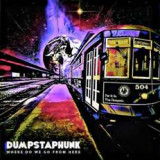
"Where Do We Go From Here" is Dumpstaphunk's first album in seven years. It will be released on April 23, 2021 on The Funk Garage, an imprint of Mascot Label Group.
Over its past 17 years, Dumpstaphunk has earned its reputation as the most well-regarded next-generation New Orleans live powerhouse, the type of band whose live shows attract sit-ins from legends like Carlos Santana, Bob Weir and Trombone Shorty. Alongside Hall, Daniels, Alex Wasily, Ryan Nyther and drummer Devin Trusclair, cousins Ivan and Ian Neville have built upon their family’s iconic NOLA legacy as they’ve transformed Dumpstaphunk into the city’s pre-eminent 21st-century funk-fusion export.
The band’s mix of classic and modern influences can be heard throughout the party-friendly mix of R&B, funk, rock, swamp-pop and blues of "Where Do We Go From Here," from the slap-bass rave "Make It After All" to the band's contemporary renderings of NOLA R&B rarities (the 1975 Blackmail gem "Let’s Get At It") and early Seventies classics (Sly and the Family Stone's "In Time”).
‘Where Do We Go From Here’ is perhaps the best evidence yet of Dumpstaphunk’s ability to strengthen and transform their singular NOLA roots in combination with the deeper outside musical and philosophical influences on which the band is founded.
A ground-breaking new collaboration for fans of African music (Ali Farka Touré, Oumou Sangaré) as well as contemporary orchestral music (Max Richter, Olafur Arnalds, the London Symphony Orchestra)
Kôrôlén is a very special collaboration between two titans in music: Toumani Diabaté, the Grammy-winning Malian kora virtuoso, and the London Symphony Orchestra, renowned worldwide for their performances of orchestral music on record, film and stage.
Diabaté, a griot whose musical lineage stretches back generations, is well known as one of the most creative musicians on the African continent, and is almost single-handedly responsible for bringing the iconic sound of the kora to worldwide audiences. No stranger to a genre-defying collaboration, he has recorded two Grammy-winning albums alongside desert blues pioneer Ali Farka Touré, as well as projects with Taj Mahal, Björk, Béla Fleck, Damon Albarn and Afrocubism.
Commissioned as a special project by the Barbican Centre in London and produced by World Circuit, these recordings feature Diabaté and his group of eminent Malian musicians (including Kasse Mady Diabaté and Lassana Diabaté), accompanied by the soaring presence of the LSO, in dedicated arrangements by Nico Muhly and Ian Gardiner and conducted by Clark Rundell.
The title bestowed by Diabaté on this unique and groundbreaking release, ‘Kôrôlén’, translates from the Mandinka language as ‘ancestral’ - a fitting theme for an album that brings together ancient griot melodies and Western orchestral arrangements, resulting in an achingly beautiful and fresh Afro-neo-classical sound that will appeal to admirers of African, traditional and new classical, and ambient music.
After NEF's album in 2019, Ici Bientôt is happy to present today the reissue of Comme Au Moulin by Nyssa Musique.
Paris 1985... ‘Extra-European’ Traditions meet Jazz and Minimal Music. An unusual array of instruments turn music into a dialogue. For a unique record ... vivid, full of texture, somewhere between Midori Takada, Don Cherry and Jon Hassell.
Beginning of the eighties, 5 musicians rehearse in a contemporary dance class hall, upstairs from the ‘’New Morning", renowned Music venue in Paris. Nyssa Musique is born. Passionate for a long time about traditional music, like those of the Middle East, India and East Asia, but also about African traditions, they throw a bridge between Jazz and ‘Extra-European’ traditions, resulting in what would be called "Spiritual Jazz" today, a little bit in the style of Don Cherry's Organic Music or Pharoah Sanders. With the notable difference, however, that their creations are strongly infused by contemporary classical and repetitive music, notably Steve Reich's work with whom they share a great interest for the traditional cultures of Southeast Asia, particularly Indonesia and its gamelans.
In the original group we have Armand Amar, Ballet Music composer and John Boswell. Both specialists of traditional hand percussion which they had been studying for a long time in India and the Middle East, they are also very fond of synthesizers. Three other talented musicians quickly join them: Jean-François Roger, percussionist, marimba and vibraphone specialist, Henri Tournier, multi-flutist and Renaud Garcia-Fons, double bass player, who has a passion for the Middle East and has developed a virtuosic play of the bow, reminding that of Cecil Mc Bee.
Each of them enriches the ensemble with their personality, originality and musical generosity. The rehearsal hall is rapidly invaded by the phenomenal instrumentarium put together by Armand Amar. A great opportunity for the musicians, for the dancers, to have access to an endless choice of instruments, offering infinite possibilities for mixing different colors and timbres. Their sense for being a group and their great capacity for improvising culminates, in 1986, in the composition of their first and only album Comme au Moulin (« As by the windmill"), testimony of years of creating without hidden agenda.
Authentic, free and vibrant, still today, this album has no real equivalent. Even though it recalls the Fourth World current by its combination of traditional instruments with a subtle use of synthesizers, Comme au moulin gives more space to improvisation. It may also recall those of Midori Takada, less the New Age esthetics. An album that should delight as well lovers of "Love Supreme" by John Coltrane, of "Vernal Equinox" by Jon Hassell, as those of Moondog, an artist who, like them, invented a music based on the use of untypical percussions, at the confluence of 'Extra-European' traditions, Jazz and Classical, all together complex and hypnotic.
out of Stock
Last delivered 4 years ago available to reorder, subject to availability
The established favourite Nicolas Laugier AKA. The Reflex has been a crucial name in the fabric of electronic music, and is widely praised for his masterful production style which has gained the seal of approval of heritage artists such as Nile Rodgers, Giorgio Moroder, Nina Simon, Kid Creole, Kathy Sledge, Noel Gallagher, Bono and Paul Weller - morphing some of the world classics into contemporary; certified rave anthems. Loved by tastemakers alike including Rob Da Bank, Gilles Peterson, Craig Charles and Mistajam, The Reflex is responsible for unleashing some of the best remixes to date.
Returning off the back of his latest revision of Norman Doray and Darren Crook's 'Sweet Freedom', which has so far gained nearly 150 worldwide radio spins since it's release on 6th November, The Reflex now puts forward an incredible 2021 revision of two time Grammy award winner Nile Rogers' 'Do What You Wanna Do'. A modern disco anthem, the track has since been remixed by producers like MK, Eats Everything and Rob Da Bank. With an already established repertoire of essential remixes and re-edits, the London based producer combines his unique Disco and Soul blend with his acclaimed musical initiative to create what will be an intricate and exceptional upgrade, and a key selection of an already impressive arsenal of releases.
A percentage of the royalties from this release will be donated to Nile Rodgers' 'We Are Family Foundation' - who collaborate with forward thinking organisation who believe in youth and together, build creative programming and content, empowering young people to take humanity forward.
out of Stock
Last delivered 7 months ago available to reorder, subject to availability
About:
As the first album from the legendary, Busta Rhymes in eleven years, Extinction Level Event 2: The Wrath of God, Rhymes enlisted Chris Rock to tease the album announcement. The art, done by world renowned contemporary artist, Chanelle Rose.
With 2 singles released so far; "The Don & The Boss" which features legendary Jamaican artist, Vybz Kartel; and YUUUU which features, and is produced ed by the musical savant, Anderson .Paak. The album also features many other heavyweight features that have not yet been revealed.
Extinction Level Event 2: The Wrath of God marks Rhymes' return with his star-studded follow up to the seminal 1998 three-time Grammy nominated, RIAA Certified Platinum album E.L.E. (Extinction Level Event): The Final World Front.
out of Stock
Last delivered 4 years ago available to reorder, subject to availability
Conceived at the heel of Italy's boot-shaped peninsula in Apulia, Patrick Belaga's Blutt makes music for the unruly imagination. The title is an old German word for 'naked', 'bare', but it can also mean 'blood' when spelt blut. Take away another letter and it makes 'butt'. None of these definitions and adaptations were what prompted the classically-trained composer and cellist to name his second album with a word simulating the sound of a punctured artery. That came later. Blutt's nine woozy compositions are inspired by a contemplative road trip with a friend, and the mysterious muffled music heard from an unidentified source. It was a combination of jazz and classical music that haunted Belaga's wanderings through the Byzantine town Gallipoli, and soon infected his dreams of long-gone civilizations. This record is its outcome, where organic instrumentals and electronic production merge into a sound that's both contemporary and ancient. Samples of mewing incantations and tape hiss sway atop the waltzing thud of piano chords on "Sigh". Composite layers of Belaga's cello play in downcast harmony on "Rust". There's a wistful sense for the romantic, in the eerie rhythm of a piece like "Momentum". The quarter tones of an Eastern European and Middle Eastern folk scale probe a profound melancholy via Kai Knight's violin. Its notes are haunted by a field recording of running water on "Unsoft", echoes of panpipes and a Jew's harp on opener "Lilt". As a consummate composer and performer known for his work with artists Wu Tsang, boychild, Josh Johnson and Asma Maroof, Belaga's Blutt is itself marked by flawless collaborations. Vocalist and instrumentalist Jazmin Romero sings and composes the surreal melodies of "Grey Eye". Multidisciplinary dance artist and producer Riley Watts contributes to the muted, motorik movement of "The Tunnel is a Tower". Together, the record plays as a stunning soundtrack to the strangeness of sleeping, and the heartbreaking transience of time. Like an intense dream half-remembered, the emotions persist after waking but for the sharp machinations just outside of the mind's reach. The album is mastered by Rashad Becker, featuring artwork by Giovanni Furlino & design by N MRE 08.
Next up on Falling Ethics' sublabel Moral Standards is the young and promising Uncrat. The "Exclaim EP" is a perfect example of how techno is constantly evolving and shows us where it's going. With touches of trance and a seriously hard remix by P.E.A.R.L. this slice of contemporary techno will surely find it's way into many a record bag.
out of Stock
Last delivered 4 months ago available to reorder, subject to availability
For volume 86 in the Brazil45 series, we return with a pair of stellar 1970s Brazilian-Funk / Black Rio nuggets by two of the greats of the genre, Toni Tornado & Zeca Do Trombone.
'Sou Negro' (I'm Black) is taken from Toni Tornado's (aka Antônio Viana Gomes) sought after 1970 four-track compacto EP on Odeon Records. Already having had some experience in show business as a dancer in the 1960s, Toni started his musical career in 1970 and adopted the stage name 'Toni Tornado'. The influence of James Brown flowed through his music, with Toni becoming one of the first Brazilian artists (alongside Tim Maia) to introduce the soul and funk sound into Brazilian music. Together with other contemporary musicians and bands such as Banda Black Rio, Gerson King Combo and Cassiano, this new sound led to DJ's throwing soul parties. This unique Brazilian take on soul and funk (and later on disco) became coined as 'Black Rio'. A movement that celebrated pride in its Black identity and consciousness.
Zeca Do Trombone has an impressive repertoire which has seen him releasing a handful of solo albums and working with some of the greats of Brazilian music, such as Tim Maia, Ivan Lins, Joyce, and Luis Vagner. The track 'Coluna Do Meio' is taken from his 1976 collaboration project 'Zé Do Trombone E Roberto Sax' with saxophonist Roberto Sax, which additionally features the heavyweight Wilson das Neves on percussion. This catchy Wah-Wah guitar-led dancer has become a favourite with DJ's over the years and will continue to be championed for years to come.
Limited edition of 12′ vinyl release. Presents its sixth vinyl release with an interesting collaboration between a contemporary project such as Dot Product, the tandem formed by Adam Winchester and Christopher Jarman, and the Japanese legend of experimental rock and noise Kazuyuki Kishino. Known as KK Null, this artist had a first stage as a guitarist in several bands, it is worth remembering that at that time he collaborated with Merzbow in several albums and that years later he changed the guitar for electronic devices. 404 Not Found opens side A with a first cut by the English duo. Error Message combines grainy, strummed textures with a humanized sonic profile in which a beautiful melody makes its way in the face of bleak adversity. The second cut of this side is by KK Null, in this track the Japanese artist shows a high dose of metallic sounds that travel at the free will of the author to end up yielding in front of a complex and disorderly structured rhythm. Unlike side A, side B of this EP shows a work created jointly by Dot Product and KK Null. Pause Frames is an industrial cut, with hard percussion and numerous sound patterns such as pads, strong resonances and highly saturated components. 10-4-10-409-Conflict is the fourth and final track on the release, again employing a hard-hitting rhythm with a series of crunchy textures and a harmonic conjugation of dissonant chords. Picture: Stefan Alt / Salt (Ant-Zen) Mastered: Daniele Antezza / Dadub Written: Kazuyuki Kishino, Adam Winchester and Chris Jarman
out of Stock
Last delivered 5 years ago available to reorder, subject to availability
Deepology presents the final EP of the ‘Four Seasons’ series. Four releases, vinyl only, each corresponding to a specific season of the year. Quality deep and underground house gems from past and present.
Mr. Fedor Velyaminov aka Cossway, a Russian producer currently based in Paris kicks things off. ‘Raw Feelings’ is an ethereal journey exploring the depths of deep and tech house whilst firmly placing its sights on the dancefloor appropriate.
Next up Andrey Djackonda & Minube, our friends from Moldova. These guys have got groove and style in abundance. ‘Softly’ is a modern minimal interpretation of deep house, ranging from more traditional house vibes to somewhat abstract deep and dreamy moods.
On the flip side, Erefaan Pearce, a legend of Cape Town house music in collaboration with Perspektif let loose ‘H O U S E’. The track originally appeared digitally back in 2010, but this is the first time it has been pressed to vinyl. True classic deeeeep-house gem.
Finally, a lovely tune by Dance Chance Romance, a contemporary dance music project by Kyoto DJ and producer Yusuke Yamamoto. Having released more than 20 vinyl albums on various labels around the world his work is not influenced by trends and is highly valued for its unique sound.
Limited Edition of 300 copies. Pressed on black vinyl with white disco bag.
out of Stock
Last delivered 2 years ago available to reorder, subject to availability
Reece Cox’s debut EP for Kulør is Emotion 1. The much anticipated Emotion 1 will be accompanied by remixes from Upsammy, Parris, Call Super, as well as Kulør regular, DJ Ibon. Kulør is a record label and multidisciplinary artistic platform that since 2018 has produced records, books, exhibitions, and programming across the music and contemporary art worlds.
out of Stock
Last delivered 16 months ago available to reorder, subject to availability
London-based record label Wisdom Teeth kicks off 2021 with something close to home: Blush - the playful, dynamic debut LP by label co-founder, Facta. Recorded unusually quickly over a short stint in early 2020, the record is the product of a period of refreshed and unfussy creativity. It’s an innovative and distinctly contemporary album that moves a good few steps beyond the artist’s work to date - loosely rooted in UK dance music but taking added influence from ambient, modern classical, dreampop, Balearic, folk music and beyond. The result is a lush, ornate record populated by aqueous pads, bleeping arps, wandering melodies and sparse broken rhythms; acoustic instruments that play out alongside FM synths, all processed with a pristine UV sheen inherited from modern pop music. The record opens with ‘Sistine (Plucks)’ - a crystalline synth piece with a stumbling, shifting metre revolving around an odd-ended MIDI harp loop, coloured through with washed-out pads and snatches of found sound. This breezy mood follows through to ‘On Deck’, where an FM vibraphone rings out on top of woozy, warping chords and a subby soca groove. Moving forward the record moves cohesively through a range of shifting moods and hues. The machine jazz of ‘Brushes’ is tense and coiled, with nods towards Burnt Friedman, Photek and Eli Keszler. ‘Iso Stream’ sees a rich, colourful sprawl of arpeggiated synths and dissociated vocal chops unspool slowly to form pooling, lowlit melodies. Title track ‘Blush’ is a forlorn Autonomic love song built from clicks-n-cuts - like dBridge & Instra:mental reduced and reinterpreted by SND. Throughout, bold, broad melodies take centre stage, and the tracks build like compositions rather than loops or club tools. There are echoes of the dancefloor - particularly in the slo-mo bruk of ‘Verge’ and the glacial subs underpinning ‘Diving Birds’ (a collaboration with friend and Trilogy Tapes regular Parris) - however the end results find us somewhere far off. ‘Blush’ is the second long-form release to come from Wisdom Teeth following K-LONE’s 2020 debut album, ‘Cape Cira’, which was widely ranked as one the best LPs of 2020.
out of Stock
Last delivered 4 years ago available to reorder, subject to availability
“This is the time. And this is the record of the time.”
Laurie Anderson’s 1982 debut album, Big Science, will return to vinyl for the first time in 30 years with a new red vinyl edition on Nonesuch Records. The release includes the re-mastered original album first released on CD for the 25thanniversary in 2007.
In the early 1980s, Laurie Anderson was already respected as a conceptual artist and composer, adept at employing gear both high-tech and homemade in her often violin-based pieces, and she was a familiar figure in the cross-pollinating, Lower Manhattan music-visual art-performance circles from which Philip Glass and David Byrne also emerged. While working on her now-legendary seven-hour performance art/theater piece United States, Part I–IV, she cut the spare ‘O Superman (For Massenet)’, an electronic-age update of 19th century French operatic composer Jules Massenet’s aria ‘O Souverain’, for the tiny New York City indie label 110 Records. In the UK, DJ John Peel picked up a copy of this very limited-edition 33⅓ RPM 7” and spun the eight-minute-plus track on BBC Radio 1. The exposure resulted in an unlikely #2 hit, lots of attention in the press, and a worldwide deal with Warner Bros. Records.
’Cause when love is gone, there's always justice.
And when justice is gone, there's always force.
And when force is gone, there's always Mom. Hi Mom!
At the time of its original release, the NME wrote of Big Science, ‘There’s a dream-like, subconscious quality about her songs which helps them work at deeper, secret levels of the psyche.’ With instrumentation ranging from tape loops to found sounds to bag pipes, Big Science anticipated the tech-savvy beats, anything-goes instrumentation and sample-based nature of much contemporary electronic and dance music. On the album’s 25th anniversary, Uncut noted, ‘The broader themes of alienation and disconnection still resonate, while Anderson’s use of loops and traditional/synthesized instrumentation is prescient.’
“In the ’70s I travelled a lot,” Anderson recounts. “I worked on a tobacco farm in Kentucky, hitchhiked to the North Pole, lived in a yurt in Chiapas, and worked on a media commune. I had my own romantic vision of the road. My plan was to make a portrait of the country. Big Science, the first part of the puzzle, eventually became part two of United States I–IV (Transportation, Politics, Money, Love). My goal was to be not just the narrator but also the outsider, the stranger. Although I wasfascinated by the United States, this portrait was also about how the country looked from a distance. I was performing a lot in Europe, where American culture was simultaneously booed and cheered. But the portrait was also a picture of a culture inventing a digital world and learning to live in it. Big Science was about technology, size, industrialization,shifting attitudes toward authority, and individuality. It was sometimes alarmist, picturing the country as a burning building, a plane crash. Alongside the techno was the apocalyptic. The absurd. The everyday. It was also a series of short stories about odd characters – hatcheck clerks and pilots, preachers, drifters and strangers. There was something about Massenet’s aria ‘O Souverain’ – which inspired ‘O Superman’ – that almost stopped my heart. The pauses, the melody. “O souverain, ô juge, ô père” (O Lord, o judge, o father). A prayer about empire, ambition, and loss.”
Laurie Anderson is one of America's most renowned – and daring – creative pioneers. Her work, which encompasses music, visual art, poetry, film, and photography, has challenged and delighted audiences around the world for over 40 years. Anderson released her first album with Nonesuch Records in 2001, the critically lauded Life on a String. Her subsequent releases on the label include Live in New York (2002), Homeland (2010), the soundtrack to Anderson’s acclaimed film Heart of a Dog (2015), and her Grammy-winning collaboration with Kronos Quartet, Landfall (2018). Additionally, Anderson’s virtual-reality film La Camera Insabbiata, with Hsin-Chien Huang, won the 2017 Venice Film Festival Award for Best VR Experience, and, in 2018, Skira Rizzoli published her book All the Things I Lost in the Flood: Essays on Pictures, Language and Code, the most comprehensive collection of her artwork to date.
out of Stock
Last delivered 5 years ago available to reorder, subject to availability
1994 by French artist Continental and backed by a remix from Cosmin TRG.
Amrboise Boret is a French engineer, mixer and producer located in Paris who released material under various guises from the nineties through to the early 2000’s. Here we see his Continental moniker brough back into the limelight, highlighting a selection of material from the Pushin' It Up EP on Alliance Records. Up first is ‘Flying Dub’, as the name would suggest a dub-infused excursion through gliding chord sequences, snaking bass licks and bright string sequences while swinging analogue drums dynamically evolve throughout. ‘Way U Jack’ follows, introducing a more Chicago leaning attitude rhythmically alongside low-pitched vocal murmurs, fluttering dub chords and a bumpy bass line. Title-track ‘Whispers’ follows on the b-side next, employing ethereal atmospherics, flute like synth melodies, organ bass tones and crunchy, shuffled percussion. Rounding out the EP Cosmin TRG reworks ‘Whispers’, offering a contemporary twist on the original with intricately programmed drums, subtly nuanced introductions of the originals atmospherics, winding low-end pulsations and an overall ornate, dynamic feel.
out of Stock
Last delivered 4 years ago available to reorder, subject to availability
LP on light blue marbled vinyl.Steiger eagerly explore the outer margins of jazz and dive into other universes (contemporary music, electronica, pop, free improvisation), yet remain faithful to the genre's long-standing core principle; that of a flexible transformation.
An array of lauded artists has collaborated across Coin Banks new Outside Looking In EP, from the WAAPA Gospel Choir on ‘Forgive Us’ and Brisbane based Ezra James providing vocals for ‘Pull Up’ and ‘Problems’ rounding out the songs with a smooth, R&B sound, to three-time World DMC Champion 20Syl who produced the latter. Atom lends his touch to ‘BreakBanks’, throwing it back to the late 80’s/early 90’s break-dance and Hip Hop scene, while James Chatburn’s silky, soulful chorus amplifies the tenderness on ‘Stay In Bed’, which along with the ‘Handlebars’ was produced by Cam O’bi who has collaborated with Chance The Rapper and Kendrick Lamar.
The vinyl version of the EP includes 2 bonus tracks ‘Be Real’ and ‘H.E.R.’ both featuring Atom and Danny Martin which were produced by Nottz and 20Syl respectively.
COIN BANKS
Perth rapper Coin Banks has quickly established his position as one of Australia’s most exciting voices in Hip Hop, since the release of his singles ‘Think of You’ and ‘Hatches’ in 2014, fusing classic and contemporary styling in his inventive storytelling.
His unparalleled run has charted local and international tours including supporting the likes of Cypress Hill, Macklemore & Ryan Lewis, Action Bronson and Illy, saw him round out 2015 as the Most Played Artist on triple j Unearthed and nominated as their Artist of the Year, plus a string of accolades including WAM Urban Artist of the Year in 2015 and WAM Song of the Year in 2015 and 2016.
‘The Bridge’ is Indubious’s debut album on Easy Star Records, but it is the culmination of nearly a decade of hard work and growth from the Oregon-based trio, led by the brothers Spencer and Evan Burton.
Their previous release, ‘Beleaf’, debuted at number one on Billboard’s Reggae Chart in 2019. ‘The Bridge’ combines their own contemporary take on reggae with more overt references to classic dancehall and new age spiritualism and features high profile guest appearances from Jamaican legends Sizzla, Capleton, and Anthony B, along with Mike Love, Jah9, Zion I, Skillinjah, Alcyon Massive, Ze-Ion, and the jam band Wookiefoot.
The album has extra poignancy with the song “I Can Breathe,” which was written following a double lung transplant for Evan; both of the Burton brothers were born with Cystic Fibrosis and were not expected to live past their teens, but have instead turned that around and established themselves as one of the new rising stars of the US reggae scene.
Superb unreleased soundtrack from British 1972 sex comedy starring Gabrielle Drake (Nick Drake’s sister) and Rchard O’Sullivan (Gilbert O’Sullivan’s brother!). Brilliant music on many levels, 17 sexy tracks of swinging jet-set jazz, groovy scatty vocals, hell it must be good because it’s on Trunk Records.
Take yourself back to the fleapit cinemas of the early 1970s. My home town of Aldershot had two - the ABC/123 (with three screens) and The Palace (just one screen, and anything but palatial). Au Pair Girls, released in 1972, was exactly the kind of soft porn “comedy” flick with a vague plot that would, without doubt, have been playing as part of a double bill to the regular “dirty mac brigade”. Such films and such establishments guaranteed the small crowd regular titillating wide screen visions of nude women in preposterous situations and fulfilling preposterous fantasies.
The title of Au Pair Girls suggests it all of course; yes, four young women fly into London from Europe and Asia, are sent to their new employers and find themselves in unexpected and unusual situations pretty fast. There is of course full nudity, crudity and a large slab of cheese on the menu.There is also no real comedy, a sprinkling of infamous character actors (Richard O’Sullivan, John Le Mesurier), and “UFO” actress Gabrielle Drake (sister of Nick Drake) wearing nothing at all. If anything, the film has maintained a vague middle aged male following because of Gabrielle.
But there’s little to save this film from contemporary criticism - its outdated view of life, rights, sex and taste sit uncomfortably today. But the jet set soundtrack by Roger Webb was worth saving.
By 1972 Roger Webb’s career in film and TV music was taking off. He was an established songwriter and live pianist with a jazz trio. He’d already penned a few British scores and was just starting on a formidable future with library companies including Chappell, de Wolfe and Capitol. His route to Au Pair Girls was accidentally through Norman Newell, one of the giants of the post war music industry.Actress and performer Dee / Deanne Shenderry had asked Newell to recommend an artist to arrange her up and coming album. New;ee recommended Roger Webb.The two worked together and some music was produced, but to my knowledge only got to acetate stage (possibly for Apple Records). Dee husband was Kenneth Shipman, a co-owner ofTwickenham film studios.And so when Kenneth Shipman started pre
production of Au Pair Girls, Roger Webb was an easy go-to for film music composition.
Many years ago there was an original reel / master for Au Pair Girls. It was transferred to CD, DAT and cassette circa 1990 and the rapidly degrading tape was subsequently misplaced, lost or just binned. So all we had to work with was a rather shaky transfer from nearly 30 years ago, one which included numerous wobbles as well as speeding up and slowing down moments.The job of rescuing all this was left to Jon Brooks, my hero for all such musical problems. The end result is what you hear on this album. It is by no means sonically perfect but it is all we will ever have.
It’s certainly not Roger Webb’s best ever score (I have more of his ace work coming) but it has a certain charm and relentlessness.The lyrics were written by Norman Newell, and I can imagine the pair having a huge amount of fun putting the score together and recording it, with - as you’d expect - a pretty tight band and lively vocal group.The main theme does, as one reviewer state, “go on a bit”, but there’s enough musically here for me to get excited about and really want to “stick it out”. So I have.
out of Stock
Last delivered 5 years ago available to reorder, subject to availability
Zwerm is a Belgian-Dutch electric guitar quartet (with a backyard rehearsal shed located in Antwerp) that operates along the borders between styles and traverses traditions that are typically not convergent. Zwerm rhymes Larry Polansky with Nadah El Shazly and are galvanized by the likes of guitars pioneers like The Velvet Underground and Sonic Youth, the microtonal DYI-er Harry Partch, Middle Eastern sonorities and the prog-madness of Kind Gizzard & the Lizard Wizard. ‘Musical adventure’ is not just a hollow cliché for this quartet, but a genuine commitment. Zwerm calls itself a ‘guitar quartet’, but that can be interpreted broadly as well as with a pinch of salt: “If we want to do something on instruments we don’t really master, we’ll just figure out a way to make it work.”
Toon Callier, Johannes Westendorp, Kobe van Cauwenberghe and Bruno Nelissen all met in 2007 while working on a project with Glenn Branca. A new guitar quartet was born and it became clear rather quickly that staying in the strictly contemporary compositions lane was not for this quartet-with-five-to-six-members (an organizational chart is available upon request).
An appetite for new and lasting collaborations has been a constant theme throughout their artistic parcours. The group has shared stages with theatrical producers like Walpurgis and Post uit Hessdalen, dancers such as Ecce and with the musicians Fred Frith, Stephen O’Malley, Shiva Feshareki, Rudy Trouvé, Mauro Pawlowski, Larry Polansky, Eric Thielemans, Yannis Kyriakides, François Sarhan, Serge Verstockt and Stefan Prins. These projects have not always translated into records, but they have been decisive in creating a unique musical approach. In 2015, when Zwerm was asked by De Handelsbeurs to collaborate with Fred Frith, they proceeded to pen a few new musical sketches over which Firth sublimely improvised. In 2018 ‘Badminton in Tehran’ was released, their first record that was made up completely of only the group’s compositions.
“a basket full of buttons here
and if you push the wrong one: fear
and if you push the right one: love
or maybe none of the above”
The route that Zwerm has taken is often defined by the question “What if... ?” - like a dart thrown at a musical map, not quite blindly, but naive enough to lead to unexpected endings.
“What if we play Renaissance pieces written by John Dowland, but instead of playing lutes we play these tunes with a Telecaster – and then jam it through effect pedals and an amplifier?”
“What if we connect one hundred guitar pedals and just leave our guitars at home?”
“What if we record a record with ten different one-page-pieces that we found on the Internet?”
In 2020 our metaphorical dart landed on “What if we tried microtonality?”.
‘Microtonality’ sounds a bit creepy, but actually there is nothing to be afraid of: there are no out-of- tune notes, just alternate notes. On the continents where Western musical theory is less stringently applied, microtonality is the rule, and has become the subject of many deep and thoughtfully written theories. However for Zwerm, this phenomenon occurs in many, often surprisingly lighthearted forms. A dilapidated piano that has settled into a beautiful microtonal tuning of its own accord, enthusiastic choral singing, a guitar whose three strings are tuned a quarter-tone higher, a saz (Turkishquarter-tone lute), a maddening guitar pedal, ...
"the dreams they were convicted for telling only lies reality came after for claiming to be wise what you don’t see is what you get just never light a spark I’m a crow in the dark”
“And… what if we work with a drummer?” Enter Karen Willems - dummer, extraordinaire, and ardent player in groups, projects and collaborations galore. One chance meeting and the deal was done. It was obvious before the start that Willems was the versatile and creative percussionist-in-a-toy-store necessary for this project. And in the studio, to our delight, she demonstrated an easy dexterity when switching quickly from one idea to the next.
At the reins behind the scenes was producer Rudy Trouvé, who – during previous sessions for ‘Badminton in Terhran’, when the classically trained guitarists went completely off the rails, staring deeply and forlornly into their scores, looking for answers – was able to pinpoint the problem and get the wagons rolling in the right direction again. Completing the team were Mark Dedecker (recording)and Joris Calluwaerts (mixing).
The results are in and it’s called ‘ Great Expectations’ – a title that, in several ways, fits perfectly with these strange times.‘Great Expectations’ goes wide! Zwerm is at its best when it can run along the borders between style and across traditions that otherwise would not necessarily intersect. The most straightforward rockers have a proggy tinge while the dreamy psychedelic songs lean more toward Richard Youngs. And if a nice melody dared come to close to becoming a ‘Kit-Katjingle’, then barbs-a-la-Pere-Ubu were trailed, tracked, found and promptly embedded. ‘Heavy Machinery’ sits neatly somewhere between Captain Beefheart and Richard Wagner, and ‘On My Way To Aguno’, set to an Iranian folk song chord progression, grew into a hyper-personal lullaby. Zwerm used the saz (Turkish lute) and the sinter (Moroccan gnawa bass instrument) without falling into pastiche psychedelia, but you can still sense the orient.
SUPERSAN is the brainchild of Panama Cardoon and Mister Kentro. The dedicated party starters of the greek nightlife came up with this genre bending project and ever since they performed in festivals and venues in Europe, Africa and Asia, had their music featured in documentaries and their tracks supported by BBC Radio among other stations worldwide. A fusion of dancefloor oriented – future electronic beats and earthly exotic rhythms from across the globe directly from Athens, Greece.
The duo started working together with the idea of uniting the Tropical spirit with the Caribbean and Jamaican styles, all blended with electronic contemporary beats.
Forthcoming on Galletas Calientes Records, “Enter The SAN” is a powerful opus, a deep and electronic journey to the high frontiers of North Africa, Southern Europe and Middle East; Undoubtedly the Greek duo’s best achievment so far.
Crafted with an ear towards contemporary appeal, “Enter The SAN” consists of 10 instrumental tracks with straightforward structures and sophisticated melodies. It typically uses heavy percussion to accent modern and diverse four-beat drum patterns, prominent and often melodic electric bass-lines and distinctive chord progressions. Pop and electronic production and mixing techniques are clearly audible throughout the whole album, harmonically uniting the traditional instruments with the modern string sections and vocal samples chops.
out of Stock
Last delivered 5 years ago available to reorder, subject to availability
Sam Gendel’s new album, DRM, is the follow-up to his Nonesuch debut, Satin Doll, released earlier this year. DRM features Gendel’s solo musical experiments with vintage instruments such as a forty-year-old Electro Harmonix DRM32 drum machine, antique synthesizers, and a sixty-year-old nylon-string guitar — accompanied by his voice. While Satin Doll was a futuristic homage to classic jazz, DRM includes just one cover song: Lil Nas X’s ‘Old Town Road’, which Gendel interprets as an instrumental, playing the melody on an old German analogue synthesizer. The album’s accompanying short films were directed by Marcella Cytrynowicz and filmed at various locations around Gendel’s home state of California during COVID lockdown.
“I’m imagining people listening to DRM and thinking, ‘What the hell is this?’, like they’d just encountered some sailing ship in the sky,” Gendel says of the new work. “I imagine it as if someone many years into the future listened to the popular music of today and then tried to recreate it, without any of the tools or the understanding. Stylistically, it’s not too far from so much contemporary pop-rap music that you hear on the radio. A lot of those electronic backgrounds and instrumentals you hear today are tending towards something really out-there and experimental. It’s rhythmic and pointillistic, collaging different, seemingly unfitting elements together in cool ways. The visuals aren’t necessarily dictated by the music, but they both share the same slightly surreal feel, like I’m a video game character, inhabiting all these different backgrounds,” says Gendel.
Gendel is best known as a world-class saxophonist — it’s the instrument with which he’s led most of his bands, as well as the instrument on which he’s guested with the likes of Vampire Weekend, Ry Cooder, Moses Sumney, Sam Amidon, and Louis Cole’s Knower — but DRM is saxophone-free. “There was no active effort on my part not to include it; it just wasn’t part of the equation when I started recording it,” he says. “I just found a formula, working around this DRM32 drum machine, and rolled with it. I don’t consider myself just a saxophonist, I’m just someone who works in music.”
DRM was recorded in one sixteen-hour session, and then manipulated by Gendel with electronic percussionist Philippe Melanson. It was mixed by Blake Mills, and mastered by Grammy-nominated engineer Mike Bozzi. Gendel’s previous discography includes 2018’s Music for Saxofone & Bass Guitar with bassist Sam Wilkes, 4444, and Satin Doll, which the Los Angeles Times called “a woozy, blissfully twisted album.” He also performs on two other Nonesuch releases this month: Joachim Cooder’s Over That Road I’m Bound and Sam Amidon’s new self-titled album.
out of Stock
Last delivered 5 years ago available to reorder, subject to availability
Over the course of four albums, Manchester based trumpeter, composer, arranger and band-leader Matthew Halsall has carved out a niche for himself on the UK music scene as one of it's brightest talents. His languid, soulful music has won friends from Jamie Cullum and Gilles Peterson to Jazz FM and Mojo as well as an ever-growing international following. His label Gondwana Records is home to GoGo Penguin and his own albums have found Halsall exploring the modal jazz of John and Alice Coltrane, paying tribute to the hard bop of the late '50s and early '60s or most recently on Fletcher Moss Park drawing on Eastern influences in his most personal statement yet. His latest album When The World Was One is something of a companion piece to Fletcher Moss Park (much of the music was written at the same time) but draws more explicitly on Halsall's love of spiritual jazz and Eastern music as well as his own studies in meditation and travels in Japan. Beautifully recorded at Hasall's favourite studio, 80 Hertz in Manchester, and engineered by Brendan Williams and George Atkins it features the recording debut of Halsall's large ensemble, The Gondwana Orchestra, which utilises the exotic flavours of harp, koto and bansuri flute and Eastern scales to create a global palate for Halsall's life-affirming sounds.
The Gondwana Orchestra features long time collaborators Nat Birchall, saxophone, Gavin Barras, bass and Rachael Gladwin, harp as well as Taz Modi on piano. Modi who also plays with Halsall in their more electronic trio shares his passion for spiritual jazz and plays the music with real feeling while the role of the harp here is to bring a touch of 'magical reality' a floating dreaminess that is a vital part of Halsall's elegiac and beautiful music. The drummer Luke Flowers is perhaps best known as part of Cinematic Orchestra, and Halsall describes him as 'one of the best drummers in the world' and hails him for 'playing the music exactly as I heard it in my head', Keiko Kitamura is a Japanese Koto player who is becoming an increasingly important part of the Gondwana Orchestra, her role is similar to Gladwin's in that the koto helps free up the music while also bringing a real sound of the East. Finally, flautist Lisa Mallett brings a love of Indian music to the orchestra, much travelled on the continent she brings all of her knowledge and experience to play offering a unique texture to Halsall's dreamy melodies.
The album opens with the title track, When The World Was One, an expansive ascending tune that nods to Art Blakey and McCoy Tyner and draws the listener in before giving way to the dreamy, meditative A Far Away Place which features great work from Gladwin on harp and draws on Eastern influences alongside the music of Alice Coltrane and Yusef Lateef. Falling Water which features the beautiful soprano of Nat Birchall nods to classic spiritual jazz as well, but mixes in the more contemporary influences of Nostalgia 77 and Cinematic Orchestra, while the hard-driving Patterns conjures an up-lifting celebratory vibe with fine work from pianist Modi to set the mood. The beautiful Kiyomizu-Dera is inspired by Halsall's travels in Japan and in particular his visit to the Buddhist temple of the same name. Likewise Sagano Bamboo Forest is named for another place that left a deep imprint on Halsall and aims to capture his feelings as he worked through the vast maze of bamboo trees. Finally the album closes with the self-explanatory Tribute To Alice Coltrane a grooving tribute to one of Halsall's key influences. Driven by a powerful bass line and featuring wonderful work from Mallet on bansuri flute and harpist Gladwin, the band all really find their way into Halsall's groove before the leader plays a beautiful wistful solo of his own and it is the oneness of the Gondwana Orchestra that makes it such a powerful vehicle for Halsall's music as the leader takes you on his very own journey through his musical and spiritual world.
out of Stock
Last delivered 4 years ago available to reorder, subject to availability
“Gyropedie,” Anne Guthrie’s third record for Students of Decay, takes us further into her hermetic practice, wherein expertly captured field recordings, French horn, and electronics are woven into potent and richly imagined electroacoustic environments. In Guthrie’s own words, “Quite literally a record of pilgrimage from East to West. Remnants of Midwest and East Coast soundmarks, instruments sold to lighten the travel load, sketched out and then buried under the new. Winter birds and crunching snow, frozen playgrounds, broken synths - I spent a year decoupaging over this, but of course it's still there. A second moon appears occasionally in the daytime, and there are frequent, murky transmissions. California has something alien about it I'm still trying to grasp. Primarily vintage, unabashed, corny, I find myself becoming an impressionist.”
Anne Guthrie is an acoustician, composer, and French horn player. She studied music composition and english at the University of Iowa and architectural acoustics at Rensselaer Polytechnic Institute, where she completed her Ph.D in 2014. Her music combines her knowledge of acoustics and contemporary composition/improvisation. Her electronic music has focused on exploiting the natural acoustic phenomena of unique architectural spaces through minimal processing of field recordings. Her composition has focused on the orchestration of non-musical sounds, speech in particular. Her French horn playing has focused on electronic processing and extended techniques used in improvisatory settings, as a soloist and with Fraufraulein and Delicate Sen, among others. Her acoustics research has focused on the use of ambisonics for stage acoustics.
out of Stock
Last delivered 5 years ago available to reorder, subject to availability
Saturations is a composition by Danish multidisciplinary artist Niels Lyhne Løkkegaard, and features a clarinet choir consisting of 19(!) clarinet players.
Niels Lyhne Løkkegaard (b. 1979) considers his work to be a basic research in realities working within the domains of imaginary & physical sound as well as other non-sonic media, and since 2012 Niels Lyhne Løkkegaard has experimented with creating music that lets the instruments transcend their inherent sonic norms and reappear in another form by way of multiplication of sound.
His work with multiplication of sound has led to numerous compositions in which one instrument is multiplied a number of times: One piece is written for 9 pianos, another for 10 hi-hats and yet another for countless triangles and so on.
The multiplication brings out bodily timbral phenomena, interference of sound waves and vibrations, and brings out what Niels Lyhne Løkkegaard calls the sound’s potential of transformation. He describes this as the quality in a musical piece, when you no longer hear recognizable instruments, but instead the individual sound, as well as the individual musician, is dissolved into the collective sound.
A sonic as well as human synthesis.
He explains the concept of this sound as follows:
“Imagine you enter a room with vibrant acoustics, such as a cafe full of people having conversations, and when you’re close to those conversations you hear the language and understand the words. If you step away from the tables, however, and stand in the doorway, you begin to loose the ability to distinguish the words from one another. Now instead of hearing the individual conversations, melts all the conversations together, and transform into a one new sound. A sound of people without words and language. Just as when you hear a group of geese squawk, or the wind in tree tops, a kind of nature given sound of people. Once the language is dissolved and the words stop making sense, what is left, is the sound."
The work of NLL has been presented at a variety of different venues and museums such as MoMA (NY - as a part of the René Magritte exhibition The Mystery of the Ordinary, 2013), Imaginary West Indies (Overgaden Copenhagen, 2017), ISCM (Vancouver, 2017), Radiophrenia (Glasgow’s Centre for Contemporary Arts, 2017), CPH:DOX (Copenhagen, 2017), Roskilde Festival (2017), Harpa (Reykjavik, 2017), G((o))ng Tomorrow Festival (Copenhagen 2016, 2018), Nordic Music Days (Norway, 2019), Akusmata (SF, 2020) and his works has been released on labels such as Topos (DK), Archive Officielle (CA) and Important Records (US). NLL is associate professor at RMC in Copenhagen, and has given lectures at the California Institute of the Arts (CalArts), Goldsmiths University of London a.o.p. NLL has been awarded with several prizes a.o. from the Danish Art Foundation and the Sonning Foundation.
Veronica Swift flips the script on This Bitter Earth, the captivating follow-up to her 2019 Mack Avenue Records debut, Confessions. Whereas Confessions played out like pages from her personal diary, on the new album, the 27-year-old singer and master song interpreter looks outward while addressing social ills that plague the world today.
This Bitter Earth takes on the song-cycle characteristics of such classic LPs as Marvin Gaye’s What’s Going On, Kate Bush’s Hounds of Love, and Mary J. Blige’s My Life. For her album, Swift tackles sexism “How Lovely to Be a Woman”, domestic abuse [“He Hit Me (And It Felt Like a Kiss)”], racism/ xenophobia [“You’ve Got to Be Carefully Taught”] and the dangers of fake news [“The Sports Page”].
Accompanied by a team of kindred spirts that includes pianist Emmet Cohen, guitarist Armand Hirsch and flutist Aaron Johnson, bassist Yasushi Nakamura, and drummer Bryan Carter, Swift curates material that covers multiple genres, including jazz, American musicals, vintage R&B and contemporary rock.
At the end of the '60s in Italy - but also abroad, especially in France and England - a very particular trend began to spread, that one known as 'Library music' or 'sonorization': as suggested by its name, those were real music libraries intended for the accompaniment of audiovisual productions such as
television programs, advertisements, documentaries and films. Since they were created in total artistic freedom condition, they are often difficult if not impossible to catalog, as they're not anchored to a specific musical genre; this freedom also allowed the authors to compose, sometimes in the most complete anonymity, experimental and avant-garde music, capable of anticipating the sounds that only many years later would have been widespread on a larger scale.
Egisto Macchi (1928-1992) was one of the most active composers of the sonorization and soundtrack genres together with artists such as Piero Umiliani, Alessandro Alessandroni and Ennio Morricone; he also collaborated with the latter in the experimental music project Gruppo di Improvvisazione Nuova Consonanza. "Fauna Marina" is among his most popular and sought-after by collectors titles: a set of eleven compositions intended to accompany the images of a hypothetical fish fauna documentary, an abstract hybrid of classical, contemporary and jazz music that is still fresh and surprising today.
"Fauna Marina" is part of a reissues series, made in collaboration with Edizioni Leonardi (Milan, Italy), of extremely rare library music LP's published between late '60s and early '70s, most of which have never been released again until today, and that are finally made available again for
Titanoboa's debut album is the first a-Musik release of 2021. Porphyr contains eight tracks of delicate Electroacoustic Noire and contemporary Post-Industrial that were produced in her Cologne based studio. Being equally into rumbling noise, experimental turntablism, angelic singing, organ improvisation and a lot of studio wizardry, these recordings somehow remind of a combination of Pharmakon's raw power, Maximim Bérangère's lyrical compositions and In Camera's nightmarish ambiance. Titanoboa delivers the perfect soundtrack for the early 2020s, Marcus Schmickler took care about the superb mastering.
Swedish producer and electronic enthusiast Rivet (Mika Hallbäck Vuorenpää, Malmö) joins the Editions Mego fold with a dynamic and diverse album that pivots between the punctuated pop of Ivan Pavlov's COH project, the chromatic slink of Chris and Cosey whilst also bearing a degree of fruit birthed from Hallbäck's home country Sweden in skewered pop such as The Knife.
This is electronic music born from the worship of machines and the spirit of punk, mood music brooding with sophistication and subversive twists all underscored with a deep industrial pulse. Are these songs? Are these lyrics? Words melt as beat perpetually takes us deeper into flight.
Interpretation is flung open as the audience are invited to gauge what on earth is going on here. Are Sooty Wing Flecks a minuscule species of half keyboard half vocoder chatter? Is Gleitende Liebe to be trusted or simply laying out a guide for disorientation? Pearling Woes is a queasy ballad sung by a robot on a very special comedown. Keloid knows exactly where the party can be now whereas Sodden Healer is an uber ride sans mask to destinations dark and unknown. Throughout this trip sharp snares punctuate ghost melodies as vocals rise and vaporise. Shadows hover the walls leaving holographic traces of the duality between fun and fear, the unexpected drifts diagonally across the audio plane teasing and taunting the listener in a unique blend of industrial, techno, pop and experimental forms.
On Feather and Wire album is a deep absorbing trip through multiple moods, genres and guises, as mysterious as it is engaging and one to ingest in a single sitting, lying back, sitting up, standing up and yes, even dancing. Let the angels and angles, the voices and distorted faces take shape before your mind. Who is Ordine Kadmia? What are they saying to me, here we go, on and on...
With it's haunted vocals, coded linguistics and dark sensual propulsive atmosphere On Feather and Wire is a sublime contemporary techno pop trip both psychedelic and subversive.
Written and produced by Mika Hallbäck Vuorenpää
Post-production by Mika Hallbäck Vuorenpää and Benny Liberg at Inkonst Studio Malmö
Mixed by Oscar Mulero at Dead Souls Studio Gijón
Mastered by Stephan Mathieu
Images by Dimitrios Bizios
Artwork by Nik Void
out of Stock
Last delivered 8 months ago available to reorder, subject to availability
They Say: “Contemporary scores for visual effect”.
We say: Synth-heavy, low-slung space-funk masterpiece.
The creator of the romping tunes that became the iconic themes to the BBC’s Grandstand programme and their televised Wimbledon Tennis Championship coverage, Keith Mansfield was perhaps KPM’s most prolific artist from the mid 1960s right the way through the 1980s. As well as the sort of pop orchestral sound that is all over these classic library records, he could also turn his hand to raw, edgy rock and funk. Quentin Tarantino is a big fan, going as far as including some of Keith’s work on the soundtracks to Kill Bill and Grindhouse.
This is it. This is THE ONE for us: Keith “The Man” Mansfield’s Vivid Underscores from 1977. A sample freak’s wet dream and one of Be With Rob’s favourite ever KPM records. A must for fans of Brian Bennett’s Voyage (yes, THAT good). And no, we’ve no idea either why it took us this long to get round to tackling this monster of a record. But then again some things are worth waiting for.
Attention! Calling all crate diggers, DJs, beat heads, Hip Hop junkies, MF DOOM fans! Behold! Vivid Underscores makes sampling easy. Prepare to be up all night, every night, chopping, looping and splicing these endless grooves and spacey synths. The highlights are too many and too mind-blowing so we’ll pull out a few particular highlights. Trust us, this library LP is just jaw-dropping.
“High Velocity” sets the tone with its aggressive horns, wah-wah guitars, funky baseline and wobbly synth refrain. So good and so hypnotic that Memphis Bleek just had to swipe the ominous, frazzled intro for “What You Think of That” featuring Jay-Z. Also, for real drama, the 1985 Lakers retrospective “Return to Glory” used it to soundtrack the footage from the legendary game five of the NBA finals at the Forum. Heady days. “Crash Course” - Stetsasonic horn refrain? Beautiful - jazzy chase-funk, amazing warm keys, percussion and funky horns - all action.
The more restrained “Matter Of Urgency” is an utterly amazing, brass-heavy underscore. The grandiose, uplifting “Dawn Of Aquarius” still sounds like the future with its tense, thundering drums, killer bassline and swirling synths. Version II loses the drums and percussion but is no less startling. “Staying Power” closes the first side with a relentless, pounding groove which *will* snap your neck. Be warned.
“Trucking Company” is a pacey, synth-and-string masterpiece and its accompanying parts (a–c) mess with the formula to great effect. Part (a) adds echo delay to really dazzle and part (c) plays the breezy, beautiful middle section without the tension. “Hot Cargo” and “Espionage” are both tense spy-funk themes par excellence. “Interplay” is a quiet killer, with flutes over a glistening piano refrain just waiting to be looped. The intro to the menacing “Omen” might’ve been sampled by 7L & Esoteric for their classic “So Glorious” but the entire 5 minute track is a mini-drama masterpiece, one only Mansfield could create.
Even though its a mix of short themes in-and-amongst longer, full-length tracks, Vivid Underscores is still thoroughly listenable from start to finish. That’s not something that can be said of all library records and it still manages to serve as rich resource to keep even the keenest samplers busy for a while.
As with all of our KPM re-issues, the audio for Vivid Underscores comes from the original analogue tapes and has been remastered for vinyl by Be With regular Simon Francis. And as usual, the sleeve reproduction duties were handed over to Richard Robinson, the current custodian of KPM’s brand ident
out of Stock
Last delivered 5 years ago available to reorder, subject to availability
They Say: “New directions in contemporary scoring”.
We say: Contempo is one of the best full album listens in the KPM 1000 library. Succinct smoking soul, super tight breaks and string-drenched sleaze composed by the library master, Keith Mansfield.
The creator of the romping tunes that became the iconic themes to the BBC’s Grandstand programme and their televised Wimbledon Tennis Championship coverage, Keith Mansfield was perhaps KPM’s most prolific artist from the mid 1960s right the way through the 1980s. As well as the sort of pop orchestral sound that is all over these classic library records, he could also turn his hand to raw, edgy rock and funk. Quentin Tarantino is a big fan, going as far as including some of Keith’s work on the soundtracks to Kill Bill and Grindhouse.
Many library records are a game of two halves and Contempo is certainly one of those. The first side cooks on a high funk breaks flame whilst the flip is something altogether more tranquil, yet no less groovy. It lays back with dreamier, post-coital grooves.
Rugged funk opener “The Fix” confidently displays its low slung languid grooves with heavy drums, horns and bass. Smokin’ in slow motion. The punchy “What’s Cooking” follows and has a lighter, more whimsical touch. But the drums still roll and the clavs wiggle in fascinating opposition to those horns. The dark and moody intro to “Cut To Music” gives way to a more inclusive, relaxed funk that’s all irresistible bass and stabbing horns. The mid-tempo “Man Alive” signals the time to really get down. A percussive monster jam. If you can’t strut to this then we really can’t help you! Closing out the A side, fresh guitar licks drip all over the slick drums of “Funky Footage”, with a New Orleans piano vibe coming on to really light a fire.
Whilst the dramatic crime funk of the A side is enough on its own to have earned this record its place in the great library record canon, it’s undoubtedly the more smoothed out B side for which Contempo is rightfully adored and celebrated. It’s so chilled and mellow, with beautifully arranged, sweeping strings, sax solos aplenty and a real 70s soundtrack feel. Think Love Boat, CTI label, Bob James, Grover Washington Jr.-type jams.
The super sleek and sexy jazz funk of “Breezin’” is as light and magical as you’d hope. An open-air masterpiece, its indulgent sound is just a taster of the sophisticated funk to follow. The elegant, romantic feels of “Good Vibrations” (used brilliantly by Odd Future’s Mike G for “Swiss Army”) is a string-drenched, wah-wah fuelled ode to living your best life. Nonchalantly. Whilst it keeps a very West Coast feel, the blaxploitation strut is certainly more Blackbyrds than Brian Wilson. “Sun Goddess” will blow your mind with the sensuous sound of glorious horns and beautiful keys. The luxurious “Love De Luxe” and its horizontal grooves have been much sampled, but here it proves that it doesn’t need any help to get you in an intimate mood. Closer “Snake Hips” is a cool mid-pace slouch. Just divine.
Originally released in 1976 but, like the very best KPM records, wonderfully timeless, Contempo is also no mere LP-length collection of loosely related tracks. This is a rare example of a library record that is a genuinely great listen from start to finish.
As with all of our KPM re-issues, the audio for Contempo comes from the original analogue tapes and has been remastered for vinyl by Be With regular Simon Francis. And as usual, the sleeve reproduction duties were handed over to Richard Robinson, the current custodian of KPM’s brand identity.
: Contempo (KPM) (LP)
out of Stock
Last delivered 5 years ago available to reorder, subject to availability
Multidimensional duo Divide and Dissolve release their third full length studio album ‘Gas Lit’ on Invada Records, produced by Ruban Neilson of Unknown Mortal Orchestra.
Divide and Dissolve members Takiaya Reed (saxophone, guitar, live effects) and Sylvie Nehill (drums, live effects) create instrumental music that is both heavy and beautiful, classically influenced yet thrillingly contemporary and powerfully expressive and communicative. Their music has the ability to speak without words and utilises frequencies to interact with the naturally occurring resonance.
The CD is presented as a digipack.
The vinyl is pressed on 180g Transparent Red vinyl and comes housed in a heavyweight spined sleeve with printed insert and digital download card.
‘We Are Really Worried About You’ presents a formidable saxophone sound giving way to a surge of crushing percussion and heavy guitar riffs. ‘Denial’ is a potent blend of Takiaya’s ominous and unsettling sax that blows wide open into riff city for almost eight glorious minutes. Both tracks encapsulate the message behind the music: to undermine and destroy the white supremacist colonial frameworks and to fight for indigenous sovereignty, black and indigenous liberation, water, earth and indigenous land given back.
For fans of James Baldwin, Osa Atoe, Adrienne Davies, the ocean and freshwater, breath/breathing, Toni Morrison, Octavia Butler, Afro futurism, indigenous futurism, indigenous sovereignty, slavery abolition, resistance, the forest, bodies of water, being submerged, the railroad and Ai Ogawa.
out of Stock
Last delivered 4 years ago available to reorder, subject to availability
Alto saxophonist, composer and producer Logan Richardson’s career has been marked by his deep engagement with the Black American improvised music tradition as much as by his fearlessly open-minded embrace of the contemporary sounds of the global diaspora and his keen gaze towards the future.
‘AfroFuturism’ (his fifth solo album) synthesises all those elements together into a stunningly audacious statement that is epic in its scope while providing a deep, intimately personal view into its creator’s inner life.
The core of the album is a series of towering alt-rock/trap/wonky beat soundscapes created Logan’s extensive range of keyboards, synthesizers and programming along with the latest iteration of his Blues People band - Igor Osypov
on guitar and Peter Schlamb on vibes and keys, with Dominique Sanders on bass and sharing production duties, and the thunderously virtuosic drumming of Ryan J. Lee and Corey Fonville rounding out the rhythm team.
Logan intersperses these with an array of diverse sonic interludes, scraps of found audio, unexpected, limpid pools of introspective strings performed by Ezgi Karakus and quiet glades of hushed balladry from long-time collaborator, vocalist Laura Taglialatela. Over all, his unmistakable keening voice on alto sax provides the constant narrative thread. “I was trying to get back deeper to the core of my artistic voice: using fresh production processes to mix in my interconnected influences and all the sounds I hear, while trying to find a sense of roots.”
As one of today’s most singular voices in contemporary music, with AfroFuturism Richardson delivers not only a hugely impressive statement, but one with a direct and urgent message for the future that is rooted in his own and the larger contemporary Black American state of affairs, while reminding us of his musical unpredictability. One can only imagine what he’ll do next.
Obviously is the new album from beloved band Lake Street Dive. It includes the new single ‘Nobody’s Stopping You Now’, a letter of encouragement from lead vocalist Rachael Price to her teenaged self, co-written with bassist Bridget Kearney. Lake Street Dive has figured out how to write tunes that reflect this particularly turbulent chapter in our shared history. The album track ‘Making Do’, which was released at the end of last year, speaks to the world that future generations are inheriting while exploring the lasting impacts of climate change and our responsibility to address it (featuring a cameo from Senator Ed Markey who co-sponsored the Green New Deal).
As Price puts it, “You’re trying to express your anxieties, your feelings, your sadness, your happiness, all of these things – your authentic state of being in a song. But you’re also trying to create something people will listen to over and over again. That’s the unique fun thing about music, putting these messages into three and a half minute snippets, dropping whatever truth we can and hoping it’s the type of thing that people want to ruminate on.”
Obviously was produced by Grammy Award-winning producer, songwriter, and multi-instrumentalist Mike Elizondo who is best known as a songwriting collaborator for Dr. Dre, Eminem, and 50 Cent and has also served as a record producer for Fiona Apple, Mary J. Blige, Carrie Underwood, and 21 Pilots, among many others. Utilizing Elizondo’s hip-hop record-making expertise coupled with the permanent addition of keyboardist Akie Bermiss, Lake Street Dive’s wide-ranging taste in pop, rock, R&B, and jazz have blended together to make an impressively cohesive sound, combining retro influences with a contemporary attitude. “We’ve been a band for so long that we didn’t want to just become a feedback loop of our own ideas,” recounts Kearney. “It felt like a really good time to bring another person like Mike Elizondo, and he really opened us up. He encouraged us to make bolder arrangement choices, take those chances and try those things. The record really is a success in what we set out to do: continue to challenge ourselves, continue to grow, and do things we’ve never done before.”
The members of Lake Street Dive founded the group in 2004 while attending the New England Conservatory of Music in Boston. The band features Rachael Price (lead vocals), Mike “McDuck” Olson (trumpet, guitar), Bridget Kearney (bass) and Mike Calabrese (drums) as well as their newest member Akie Bermiss (keyboards), who has been a touring member of the group since 2017. Since the band’s inception, they have released six studio albums. Their 2018 self-produced record, Free Yourself Up, debuted at #4 on the US’s Top Album Chart and charted #8 on the Billboard 200. In addition, the album’s hit single ‘Good Kisser’ peaked at #5 at Americana radio and appeared in the Top 20 at AAA radio, both career peaks for the band. The group has toured worldwide performing at major music festivals including Bonnaroo, New Orleans Jazz Festival and Newport Folk Festival while preforming alongside artists such as T Bone Burnett, The Avett Brothers, Robert Finley, Jack Johnson and Trombone Shorty.
Star Composer of the 1960s (Les Tontons Flingueurs, Fantômas, Angélique marquise des anges), Michel Magne was caught in 1974 in the bankruptcy of his recording studio in Hérouville. He then launches to the lyricist Boris Bergman: “Nothing works, let’s make a great religious record!”
The result will be a mystical-psychedelic bombshell, where Magne amalgamates Jewish, Arad and African music with pop rhythms. A year after their collaboration on Roger Vadim’s Don Juan 73, Bergman offers him texts that function like a modern tale, carried by the abrasive voice of New York bluesman Artie Kaplan, creator of the smashing Bensonhorst Blues. Released in indifference in late 74, Moshe Mouse Crucifixion is resurrected today, remastered up close. Its modernity is more contemporary than ever. “All the current
mergers, from north to south, east to west, already seem to be present” confirms Boris Bergman. Moshe Mouse Crucifixion is more than an album, it’s the missing link in French pop.
Montreal art pop group Freelove Fenner release their long-awaited album, The Punishment Zone, on Moone Records. The 14-song collection is an exercise in pleasing sounds, diaphanous textures, and concise song structure. The group listened to a century's worth of experimental, often cacophonous sounds and reshaped it into a mellow pop music.
The group’s workshop is the strictly analog Bottle Garden Studio, a small room full of tape machines and homemade equipment that is integral to the group’s sound and process. Avoiding 21st century technology not out of any sort of snobbery or nostalgia but rather a desire to avoid the work habits inherent with contemporary tools, the band embraces the different results that come with a slower, more tactile process: the happy accidents; the absence of visual stimuli (no screens); the difficulty in attaining high gloss finishes.
Freelove Fenner have released two EPs, In the Bottle Garden (2009), and Pineapple Hair EP (2012); as well as the full-length album Do Not Affect a Breezy Manner (2013), all on Montreal’s Fixture Records. The Punishment Zone will be released on Arizona’s minimal art label Moone Records, joining an eclectic roster featuring artists like Tori Kudo, John Dieterich, Little Wings, Lithics, and others.
British artist Robin Rimbaud (Scanner) traverses the experimental terrain between sound and space connecting a bewilderingly diverse array of genres. Since 1991 he has been intensely active in sonic art, producing concerts, installations and recordings, the albums Mass Observation (1994), Delivery (1997), and The Garden is Full of Metal (1998) hailed by critics innovative and inspirational works of contemporary electronic music. Committed to working with cutting edge practitioners he has collaborated with Bryan Ferry, Wayne McGregor, Mike Kelley, Carsten Nicolai, Michael Nyman, Steve McQueen, Laurie Anderson and Hussein Chalayan, amongst many others.
Rimbaud first met Belgian artist Hans Op de Beeck at Le Fresnoy Studio national des Arts Contemporains when they were both Visiting Professors in 2012. Op de Beeck lives and works in Brussels, Belgium and creates sculpture, installations, video, photography, animated films, drawing, painting, and writing. His various works show the viewer non-existent, but identifiable places, moments and characters that appear to have been taken from everyday life.
The artists found an immediate creative connection, and a year after meeting Staging Silence (2) was completed. In 2019, they returned to the theme and created Staging Silence (3).
Each of the films is realised through the same principles, as two pairs of anonymous hands construct and deconstruct fictional interiors and landscapes on a mini film set of just three-square metres in size. The films take the viewer on a visual journey through depopulated, enigmatic and often melancholic, but nonetheless playful, small-scaled places, which are built up and taken down before the eye of the camera.
Ranging from hyper-realistic fictional land and cityscapes to absurd, almost surreal, dreamscapes, the various locations are connected by the sense of mystery and melancholy that pervades them. And at every moment Rimbaud's score is amplifying and illustrating these moments, from tragedy to nostalgia, witty to optimistic.
Introspective and lyrical, Staging Silence offers us a world of mystery and intrigue, held together by nature and time. This is a very humane works experienced at a time when many of us feel disconnected from the world around us. The peculiar silence that permeates this hauntingly beautiful work is very much an illustration of our times, anticipating a future in the past. Staging Silence is an exquisite study in dreamlike abstract ambience, a kaleidoscope of sounds and tones that engage the head and the heart.
In the cinema, the composer must go to meet the filmmakers, enter their world, but without giving up his own. This is the difficulty or the paradox of music for the image. By collaborating with directors from a wide variety of backgrounds, I think I have indirectly discovered a lot about myself. It helped me to progress, to explore territories that were not naturally mine. Cinema is a laboratory where I have sought to construct original orchestral formulas combining Corsican polyphonies, musicians from jazz, variety, classical, or even rappers. Like the world today, a fragmented world where all cultures mingle. So said Bruno Coulais, one of the most innovative composers of contemporary cinema, during the tribute paid to him in 2011 at the Cinémathèque de Paris
In 1978, Bruno Coulais, a young composer of concert works, discovered in film music a new means of expression, a way of bringing the demands of his writing to the masses. François Reichenbach, then Josée Dayan, Jacques Davila, Souleymane Cissé or Laurent Heynemann, first on television and then in the cinema, lead him of his own accord in the discovery of this new world.
In 1995, he composed the music for Microcosmos. This centimeter-scale initiatory journey offers him the opportunity to reveal the full dimension of his writing. He injects into his score a strange lyricism, between wonder and fantasy, confirming the lesson learned from François Reichenbach: "to any documentary image, music brings a part of fiction".
The success of Microcosmos established the musician and made him the indispensable composer of other natural tales, notably alongside Jacques Perrin (Le Peuple migrateur, Oceans, Les Saisons, etc.). Other long-term relationships will be forged, in particular with Benoît Jacquot, with whom he has worked for more than a decade, not to mention Frédéric Schoendoerffer, James Huth or Jean-Paul Salomé.
In addition to great popular successes such as Les Choristes, Brice de Nice or Sur La Piste Du Marsipulami, it is hardly surprising that this insatiable curiosity has found in the animated cinema the most inspiring playgrounds, in particular through his collaboration with two exceptional designers, Henry Selick and Tomm Moore.
The first, American director of The Nightmare Before Christmas produced by Tim Burton, invites Bruno Coulais to sign in 2009 the magnificent score of Coraline (film nominated for the Oscars). 10 years later, he is about to find him for a new and beautiful Wendell & Wild adventure. For Irishman Tomm Moore, Bruno Coulais has already composed the music for two Oscar-nominated films, The Secret of Kells (2009) and Song Of the Sea (2014), and in 2020 he will sign the score for Wolfwalkers.
Whether it is about author's films or more mainstream films, Bruno Coulais maintains the same standards, always considering his art as a window open to the world. Much less wise than it seems, he reveals in it a gift of a modern alchemist and a very personal way of mixing the most diverse cultures in universal harmony at work.
out of Stock
Last delivered 4 years ago available to reorder, subject to availability