Following a period of theta wave and hemi-sync techniques, Le Sculpteur d’Esprit (the Mind Sculptor) arrived in this dimension to transport listeners through 4 portals of altered-consciousness into thought-worlds where interactive sculptures are revealed in their own minds, as the artist themselves.
‘Close your eyes. From the darkness, a transparent triangular pentagonal prism appears in the distance, with its soft outlines refracting all colours from the spectrum. As you gently glide closer, you notice an unfamiliar world through the other side of the prism, this is the portal to your thought sculpture (Pensée Sculpture) number 1’
Fomat: Limited edition of 300 carbon neutral ISCC-certified Bio-Vinyl by Deepgrooves, Amsterdam, NL. Includes an artwork insert with the English translation of the Pensée Sculptures.
Credits:
Field recording, clarinet, flute, guitar electronics and all artworks by Aboutface
Additional Violin by Taro. Cello by Abdelrahman Hariry (Cello).
Pensée Sculptures channelled by Aboutface, translated into French by Noemie Decaen. Bonus content & the digital version of this release is available via the included Bandcamp download code. All artworks and music by Aboutface.
Following on from his debut album ºs on AD93, conceptual artist Aboutface presents a new vaporous LP– a vital climate emergency-themed project which utilises poetry collected from his dreams alongside glaciology research and sound recordings captured during polar expeditions c/o the Alfred Wegener Institute – a centre for polar and marine research. Featuring long term Violin collaborator Taro and dream prose reciter Leyla Pillai, the album explores a surreal and abstract intersection between the collective dream realm and the disappearing polar cryosphere, evoking the interconnectivity between environmental change and the collective subconscious.
A self-release, all profits will go towards Extinction Rebellion’s legal fund to help provide counsel to those protesting against contributors to the climate emergency. Limited to 300 Eco renewable-energy recycled gatefold vinyl produced with Deepgrooves, NL. Downloads and streaming limited to one of Earth’s revolution of the Sun only– an ephemeral release for an ephemeral existence.
SWIFT005 brings you the latest from Dynamic Bones, the project of Romanian producers Georj & Obrini. Their EP, Coordinates of Silence, reveals a new direction in their sound, with all mixing done by the duo themselves. Vlad Caia handled the mastering at CAW, giving it a clean, precise finish. The record contains three original tracks that explore fresh soundscapes, accompanied by a remix from Kozo. The artwork was created by their friends Bog and Didier, with Didier taking care of the illustration. Grab your copy!
out of Stock
Last delivered 6 months ago available to reorder, subject to availability
During a month living with the Wampís in the Amazon Rainforest, Aboutface and the Wampís community collaboratively captured field recordings, music instrumentation and traditional Wampis Nampets – ancient songs sung from the perspective of animals living in their rainforest environment.
These recordings then informed 4 improvised performances to articulate the story of the 4 Nampet songs from within each animal's habitat, to depict nature and culture as inseparable, and to propose that humanity is not exclusive to humans but a multinaturalist characteristic available to all living organisms.
This is the first project of its kind in Wampís history and contains sound recordings of biodiversity that no longer exist due to deforestation.
Indigenous-managed Amazonian rainforests sequester around 340 million tonnes of CO₂ each year—equivalent to the UK’s annual fossil fuel emissions. In stark contrast, non-Indigenous-controlled forests have become sources of carbon emissions, therefore accelerating our global climate crises. Among the vital custodians of these precious ecosystems are the Wampís people, who protect 1.3 m ha of precious rainforest territory currently being decimated by mining for gold. This devastating practice is currently decimating Wampís territory, destroying their river habitats, leaving toxic methylmercury pollution that strips all biodiversity, contaminates the food chain, and causes widespread harm.
100% of all sales revenues from this release will directly go to the Wampís to protect their rainforest territory, to fund Wampís-led eco-initiatives against illegal mining, alongside ways to preserve Wampís cultural heritage– embedded in their songs, art and crafts, central to their conservation of their territory called The Iña Wampisti Nunke: A system of life that encompasses reciprocal relationships between humans, plants, animals, and spirits, central to the harmony of all its multi-dimensional ecology– which they term Tarimat Pujut.
For more project information, a short essay is provided alongside a nonstop-listening version of the album as part of the free Bandcamp download with every LP.
Credits
Nampet songs
Kutir, Wancha and Pinchichi by Elizabeth Huampankit Najamtai.
Manchi by Fernando Ijisam Tsakim.
Acoustic Percussion by Wampís band Guayabita
Fernando Ijisam Tsakim, Edilberto Ijisam Tello, Larry Tello Huampankit, Jose Luis Cahuata Pipa, Tedy Tello Cahuata, Heyner Tello Cahuata, Eli Artista Antonio, Never Tello Huampankit
Violin by Taro.
Peruvian bamboo quena, classical flute, acoustic guitar, electronics, composition and arrangement by Aboutface.
Original portrait painting of Fernando Ijisam Tsakim by Nyran Loomcal.
All other artworks, analogue photography and design by Aboutface.
Rainforest field recordings identified and collected by The Wampís of Guayabal and Aboutface.
Releases and several side projects and merges those early projects with hi-technology applications available for modern studio engineering. Re-issue from the DUB backcatalog with a remastered cut.
****COVER WITH AUGMENTED REALITY**** Argentinian producer Translate synthesises states of consciousness and perceptions into his semantics of sound, creating a distinct language of mental techno through hypnotic repetition, precision and deeply immersive atmospheres. His presence in this realm extends through his label Relativity, whose latest EP brings together tracks by Mike Parker and Oscar Mulero, while his own productions have appeared on Svreca’s Semantica Records. For his DIG release, Translate shifts into a broader spectrum, revealing a side of his production that has remained unexplored until now. DIG Curated captures this moment of a new sonic expansion between his signature hypnotic journeys and a stripped-down techno sound. Expansive opens the record with Translate’s distinct mental techno, pushed into an added psychedelic dimension. With a vast and trippy sound, the track steadily fills the space, inviting the dancers to go inward and simultaneously reach out into a collective morphic field. With Discursive, the coordinates shift, introducing a very stripped-down techno side of Translate’s production and a palette rarely heard from him before. Reduced to its essential elements, the track cuts directly through the floor with a functional groove, whilst retaining the tension embedded in his sonic DNA. On the B side, Fuse accelerates with fast-moving pads, mechanical drums and swerving loops that gradually lock the body into trance. Quirky textures spiral throughout, with robotic glitches sounding like organic beings. Coefficients closes the record by pulling the listener into rich bass and expanding loops over a cold melody that guides the final journey into a cosmic unfold. Hypnotic sci-fi vocals emerge from an interplanetary future, traversing space in search of earthly traces. The record ends suspended somewhere between the transmission and unknown, like a sonic threshold. Words by Lora Mateeva Animation/Artwork - Marcin Pospiech Master - Nihad Tule Graphist - Ferdinand Prat
Consummate selector DJ Sundae returns to Efficient Space with Nothing Ever Was, an immaculate compendium of phantom independent melancholia spanning '60s/'70s village green folk, outsider shoegaze and new millennium domestic pop. Each recording an emotional exorcism, Sundae breathes oxygen into music that was barely there in its own time, made in quiet places and crawl spaces, shared only with a precious few via private presses, hobby labels and now-decaying CD-Rs.
Free of any prescribed epoch, continent, scene or rarity, Noughties homemade indie pop opens both sides with the 4-track wonders of The Motifs and Betelmire, unlinked contemporaries finding their place alongside Andrew Jay's Crazy Horse rust, the regional-garage adolescence of Pauline Scribner and the anaesthetised Mancunian guitar-poetry of the late Quigley.
The remaining coordinates zigzag between the UK and US. Folk wayfarers John Strang & Valentine Lewis Lloyd, Virgin Insanity, Kusudo & Worth and Penny Wager's spartan Garden of Eden acoustica find their mirror in Empress and Slumber's close-quarters indie pangs. Chicago power pop fixture Phil Angotti is caught at his most tender, while Teri Rini takes the final bow with her universe-stopping hotel lounge torch song.
A deeper, more personal exploration of Sky Girl's sentimental songwriting, Sundae found himself amassing a cache of tracks too undeniable to remain confined to his anonymous mixtapes for TTT, P.A.M. and Good Morning Tapes, or bi-monthly hour on NTS Radio. Again his emotional sorcery draws together an unlikely cast, their unwritten narrative assembled from fragmented memories of past lives left behind by future horse trainers, ketamine therapists and Fab Four cover band careerists.
With not a second squandered across 1LP, it took a village to bring this new companion into being, with David Bergot's forensic audio restoration, dreamlike imagery from Matthieu Crozier, Ivan Liechti's elegant design and a perceptive foreword by kindred spirit Jessica Pratt.
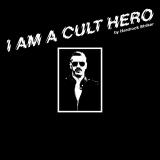
Some records are collections of tracks. Others are fragments of a life. I AM A CULT HERO is not a debut. It is a return to origin. Before Skylax Records. Before Los Angeles. Before the architecture of house music became clear. There was Sarcelles. Concrete towers. Invisible youth. Yet a coded multicultural energy where funk, soul, early hip-hop and primitive electronics coexisted before categories existed. Sarcelles was not Compton, but spiritually it was the same frontier.
95200 is not just a postcode. It is the birthplace of Hardrock Striker. 368 was the bus to the train station — the crossing line between isolation and possibility. Each journey toward Paris felt like entering another system. Those nights required discipline. Instinct. Strategy. Music was not distraction. It was structure.
Years later, Los Angeles revealed the hidden architecture behind those early intuitions. House music was not a genre but a living mechanism — built on vinyl culture, extended mixes, dubplates and repetition as language. That system had already been shaped and transmitted by pioneers such as Ron Hardy, Larry Levan, Frankie Knuckles, Electrifying Mojo, Hot Mix 5, Mark Kamins and Ron Murphy. Hardrock Striker did not imitate that language. He internalized it. The tracks on I AM A CULT HERO operate as transmissions.
Gospel For Dancers (95200 Mix / Dub) is vertical — ritual energy, lift and controlled expansion. Dance here is elevation. Erotic Loop (368 Mix / Dub) is horizontal — hypnotic repetition, circular bass motion and gradual immersion. Repetition becomes destination.
95200 and 368 are coordinates. Origin and transit. Memory and motion. Anchor and crossing.
From Sarcelles to Paris to Los Angeles to Skylax & now, back to the source.
This record closes the circle. Hardrock Striker has transformed origin into signal. Signal into structure. Structure into permanence.
A cult hero is not declared. A cult hero is revealed. Vinyl is the only truth.
Leuchtende Pop-Hymnen aus der diorama-Dunkelkammer. a substitute for light kreist um das Motiv des Lichts - als Verheißung, Orientierung und Täuschung. Es flackert in Monitoren, spiegelt sich in Oberflächen und lässt Erinnerungen im Schatten verschwimmen. Zwischen ausrangierter Liebe und digitaler Erstarrung suchen die Songs nach einem echten Funken - geboren aus Bewusstsein, nicht aus Strom. Auf ihrem elften Studioalbum zeigen diorama, dass weniger mehr sein kann: klare Arrangements, prägnante Melodien und Vocals mit ordentlich Punch. Zwischen clubtauglicher Wucht, hypnotischen Balladen und schwebender Melancholie entsteht ein Sound, der sofort zündet - und lange nachhallt. Trost in der Dunkelheit. Ein Ersatz für Licht.
Two years after he first appeared on Balmat with 1977, Mike Paradinas returns with 1979. The sense of continuity between the two records is clear, and not just from their titles. Both capture the Planet Mu head venturing into the wilderness, seeking something—half-formed memories, thoughts caught in midair—in some of the most abstract, searching music he has released.
Just like 1977, 1979 surveys a synth-heavy array of ethereal soundscapes, ominous crevasses, and strange, psychedelic fugues. Like its predecessor, the new album’s atmospheric cast sets it apart from much of the work Paradinas has released as μ-Ziq on Planet Mu. It’s not strictly an ambient record, but it’s close, as close as this famously mutable artist ever comes to inhabiting a particular genre.
Paradinas’ inspiration for the record began on visits to the Spanish cities of Ávila and Majadahona, where his family hails from. That might account for the sense that there are spirits flitting through this music, presences you can intuit if not quite grasp. But 1979 is also a record to meet on your own terms, and to find your own meanings in.
It’s a stunning record, every track a world unto itself: the mysterious contours of “Majadahonda at Dawn”; the playful melodic fillips of “Clari”; the airy melancholy of “Galletas”; the full-scale breakbeat abandon (yes, you read that right) of “Houzz 14,” the rarest of dancefloor detours for Balmat. There are echoes of classic braindance and isolationist ambient and golden-age IDM; there are easter eggs and recurring themes and hidden symmetries. Every time we listen, we discover something new. Despite what the title might suggest, it’s less a trip back in time than a portal to another universe, a destination for(to?) which only Mike Paradinas knows the exact coordinates. – Philip Sherburne, Balmat
A sense of destiny hangs over Sentir Que No Sabes, Mabe Fratti’s fourth solo-credited album released in a five year span. Her work has always possessed a finely tuned sense of drama capable of expressing a range of emotional states, and across this new album, she conveys the struggle to process various relationships or situations–and the actions that come next. Sentir Que No Sabes is urgent and clear, poppy, generous and approachable, while showcasing a considerable emotional hinterland. It is also, as Fratti is quick to mention, “groovy.”
Written and recorded with her partner, multi-instrumentalist, and co-composer Héctor Tosta (I.La Católica, Titanic), Sentir Que No Sabes is the result of an intense, detail-oriented process. Fueled by a new confidence gained in their collaborative project, Titanic, and its critically acclaimed 2023 LP, Vidrio, the two hunkered down in the familiarity of their studio (aka Tinho Studios) to bash out the initial sonic coordinates of her new record. “We talked and talked, and discussed ways of playing and recording, until things became inevitable,” Fratti explains. “We recorded a bunch of demos at our home studio and that meant we had a lot of time to re-edit and experiment. We really dug in. We were super focused on detail.” Tosta also took up the controls as producer and arranger-in-chief for all additional instruments. The album was later completed at Willem Twee Studios in Den Bosch in the Netherlands, and Pedro y el Lobo Studios and Soy Sauce Studios, in Mexico City.
For the final studio recordings, the pair were joined by drummer Gibran Andrade and trumpetist Jacob Wick to fill out and expand on Tosta’s percussion and brass arrangements. This small group of friends were able to work quickly and openly, and without fear: a testament to the exhaustive groundwork put in at Tinho Studios. This can be heard in three short, intermediary tracks that also manage to be the most aggressive on the record: “Kitana” (a scratch-laden instrumental that acts as a strange prelude for the last track, “Angel nuevo”) and a pair of two-minute instrumental interludes, “Elastica” I and II. None are throwaway mood pieces; rather they act as emotional cue cards, and hint at the way Fratti and Tosta created the overall atmosphere of Sentir Que No Sabes.
A strong sense of rhythm irrigates the sound from the jump, as heard on the glorious opening track, “Kravitz.” Here, the brilliant plucked cello line acts as a bassline and props up the steady thump of the kick drum. The cello’s growl serves as a conduit for a set of slightly paranoid lyrics that tell us “Quizás haya oídos en el techo” (“maybe there are ears in the ceiling”), while the song also introduces another staple of the record: the clever brass stabs, whistles, parps, and other interjections that paint a canvas of traffic in a city. It’s a postmodern, widescreen sound that for some might recall The Blue Nile’s Hats.
Sentir Que No Sabes is a record full to the brim with a modern pop sensibility, invoked by the sort of magpie spirit that ensnares anything it can find, repositioning sounds for the here and now. The keys and melody on the melancholy “Pantalla azul” (“Blue screen error”) transport us back to the glossy mid-1980s. “Oídos” (“Ears”) is a beautiful slice of contemporary, hybrid pop, in which Fratti’s vocal lines delicately spin themselves around the lean structures erected by the brass and drums, and the descending “plink” of a set of piano chords. Then we have a gloriously strong ending with the swell of “Angel nuevo” (“New angel”), another cinematic track full of gentle, instrument-rich swells and eddies that manages to be almost endless in its range–and yet intensely personal, as Fratti’s voice is close, almost whispering in your ear. A much needed lullaby for our fractious times.
The lyrics, for their part, have a stop-start quality to them, and hint at the small, incremental emotional taxes we pay through just living our lives. They circle around the music like birds waiting to swoop. There is something of the spiritual in all of Fratti’s work that expresses itself in a form of yearning: she looks to new horizons while personal dramas find themselves internalized, contextualized, and then dealt with through metaphor. Here, she was keen to mention Tosta’s constant encouragement in her finding a path to best sing or phrase her words to impart their maximum effect. “Hector was super inquisitive about my lyrics and asked me questions about what I meant, which sometimes is something you don't wonder so much about in isolation,” Fratti explains. “Besides, he is a great poet, and you can see that in what he did on the Titanic record. This made me go deeper into my lyric writing and definitely transformed it into something that I feel super happy about now.”
Take “Enfrente” (“In Front”), a track that initially comes across as a languid, glossy number, with plucked cello strings standing in for a bass line and brittle synth parts. Soon we catch on to a brilliant minor chord switch, which mirrors the fear and doubt expressed in the lyrics as someone “trembles up to the podium” in a “search for meaning.” There’s also the startling introduction of a vocoder in “Quieras o no” (“Whether you want it or not”); it comes precisely at the point Fratti sings “Quieras o no es un desastre” (“Whether you want it or not, it's a disaster”). Moments like these leave room for interpretation and, over time, create a strong bond between the listener and the record.
In fact, across Sentir Que No Sabes, each phrase–whether instrumental or vocal–becomes at some level emblematic of acts and moods that impart deep emotional significance. We see this best on “Intento fallido” (“Failed attempt”), which could be the score to feeling trapped in self-doubt, only to suddenly be sprung free by the song’s gloriously upbeat ending. On “Márgen del índice” (“Index margin”), the quicksilver switch between initial disharmony and a beautiful melody is breathtaking, all augmented by evocative arrangements, textured production, and the slightly playful, gnomic lyrics. The track’s emotional ecosystem allows another brilliant ending, which uses the simple repeated phrase, “Cómo lo va a ver?” (“How are you going to see it?”).
So what to make of Sentir Que No Sabes? High gloss Pastoralism? The sound of a city-bound, post-post modern soulscape? No matter the emotions evoked, it's the work of an artist coming into their own, and creating a benchmark record.
25 killer library music cuts by the German film music maestro on audiophile pressing in deluxe 2x10" set. Uberrare and never released before material from 1968-1976, sourced from Peter Thomas' personal reel-to-reel tape archive. Limited edition of 500 pieces.
From brassy big band funk, space jazz, krauty synth experiments to proto-hiphop, cosmic schlagers, heavy easy listening, soulful soundtrack moods and absurdly dreamy LSD ballads, this compilation encompasses the composer's most obscure and yet most transcendent work.
Peter Thomas is widely acknowledged as Germany's most inventive film music composer of the 1960s and 1970, best known for his iconic soundtrack work. He scored over 600 films and episodes, from the crime blockbusters of Jerry Cotton and Edgar Wallace to indie arthouse films like Playgirl, Bruce Lee's The Big Boss and the extraterrestrial Space Patrol and Chariot of the Gods.
His recordings for music libraries often provided an even more leftfield approach. Their visionary 'dope beats' appeal provoked a keen interest from vinyl aficionados, beatmakers and rare groove DJs alike. Unavailable for the public, the original "for professional usage only" albums are now sought-after collector's items that fetch astronomic prices on the 2ndhand market.
This double 10" album is the definite selection of Thomas' best library cues from the Golden Ring Records, KPM and DeWolfe catalogues, many of them available publicly for the first time - plus four recently unearthed "lost" tracks from Warner Chappell's CPM Archive series that have never been released on vinyl before. All music was carefully transferred from Peter Thomas' private master tapes and cut in full dynamics, housed in a beautiful fold-out cover with liner notes and private pictures. The compilation was realised in cooperation with Peter Thomas' son Philip who takes care of the Peter Thomas Sound Orchester catalogue after his father's death in 2020.
Operation_PPRCLP kicks off release SUB010 asking how far will we go in the race for technological advancement, and at what cost? Have we forgotten our humanity as a result? Should we be more focused on how to expand human consciousness rather than trying to command, control and obfuscate or is this just in our habitual nature?
41 Minutes Past Midnight investigates painful emotions around losing loved ones without being able to get any closure, how do we move forward without answers in the face of unexplained, heartbreaking tragedy.
6EQUJ5 aka the Wow! signal first detected on August 5th 1977 shifts the perspective out into the constellation of Sagittarius from where the signal is thought to have originated. In 2022 we learned that 3 distant Sun-like stars within the original antenna-pointed coordinates may provide the answer but at a vast distance of 1800 light years from earth, since then, it's all gone quiet... What world reached out from the cosmos, intentionally or mistakenly...
The final track Celestial Beings asks the age old question of what other life exists across the universe, how advanced are these civilizations that may already be exploring distant galaxies with our shared sense of curiosity and when will we be able to connect collectively with such conscious entities.
Diogo Silva, Nuno Fulgêncio and Rui Martins collectively go by the name Bardino. With their sound consisting of an inventive mix of
electronica, rock, jazz, the Porto-based trio are pushing their sound into unchartered waters. A feeling that will be reinforced after
experiencing their new album, ‘Memória da Pedra Mãe’.
Their enthralling music draws upon the imagery of the beautiful and rugged scenery of their home country. ‘Centelha’ , their previous
album (released by Saliva Diva in 2020) was recorded in Chaves,
in the very remote region of Trás-os-Montes. Their 207 EP of the same name was created in the rustic heart of Serra das Meadas. In this
latest offering, the mention of "Pedra Mãe" (Mother Stone), refers to a rare geological phenomenon popularly known as "breeder stones"
found in isolated, deserted, and inhospitable places. On the inspiration of the new album, they explain that they want to refer to "the
importance of collective memory in the cohesion and identity of communities and the process of creating new memories, a process that
is both natural and conflicting, since it mirrors a tension between past, present and future".
The album was recorded in the summer of 2023 at Arda Recorders in Porto and produced by João Brandão and Rui Martins. In this
new material, Bardino's resources expand: Nuno Fulgêncio's drums, Diogo Silva's bass and Rui Martins' veritable arsenal of keyboards
(acoustic and electric piano, various synthesisers) are augmented by the alto and tenor saxophones of Brian Blaker (who stands out in
"Memória" and "Black Mica"), the guitar of Leonardo Outeiro (who features on "Punctum No 2") and, already indicating their affiliation
with the Porto label Jazzego, Hugo Oliveira, who records as Minus & MRDolly (and is a guest on "Pedra Mãe") and Sérgio Alves, aka
AZAR AZAR (who plays piano and Moog on "Tília"). Bardino's entry into the increasingly unavoidable Jazzego catalogue also reinforces
their obvious links to a new wave of projects that have been experimenting with different tangents to the notion of "jazz", taking this
music as part of a wider set of coordinates.
Over the course of eight tracks, and clearly benefiting from the distinct imprint of the recognised quality work of João Brandão, one of
Portugal's current best producers, Bardino presents dense, deeply cinematic music of the highest definition, in which the different
instruments translate a broad emotional and visual landscape, with solos of enormous elegance arranged over grooves that induce the
idea of movement. All the musical coordinates mentioned earlier are present, but perhaps in this new material you can feel a greater
fluidity, certainly the result of honing the vision of the central trio through a vast experience collected on stages all over the country. And
there are even echoes of a decidedly Portuguese songbook, as is so clearly felt in "O Semeador", something new in the range of aesthetic
references embraced by Bardino. This is, in fact, music that thrives on a benign tension between past, present and future, in the sense
that it embraces traditions and history, seeks a new framework in this diverse now and dares to project itself forward. Because the future
is the best of all locations.
Dynamite Cuts begibt sich in den erstaunlichen Sound und die Welt der Library Music. Musik, die ein Gefühl oder Modus in einer einzigen Note oder Groove einfangen kann. Die 4-Track-Auswahl stammt aus der 'Sound Music' Albenreihe der Deutschen Bibliothek, deren Originale heute zu dreistelligen Summen gehandelt werden.
Transmitting after a short signal break, the Detroit operatives of Luke Hess and Brian Kage reactivate on Michigander with the Northward EP. Voltage modulations derived from intensive analog lab sessions, these four precision-engineered cuts yield high-density, sub-bass heavy propagations. Built to transport body, mind, and soul northward into a higher dimensional frequency, this is pure sonic utility for deep-space technicians across techno, house, and dub coordinates.
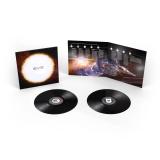
Die intergalaktische Musik von EVE Online erstmals auf Vinyl!
Diese Veröffentlichung erstreckt sich über das von Spielern gestaltete Universum von New Eden und vereint auf zwei LPs eine Auswahl herausragender Titel, die sowohl das Ausmaß interstellarer Konflikte als auch die stille Einsamkeit des Weltraums widerspiegeln.
Mit Musik von Kristian Ross und Real X spannt der Soundtrack einen Bogen von üppigen Ambient-Atmosphären bis hin zu cineastischen Orchesterklängen. Von der treibenden Intensität von „Uprising“, „Havoc“ und „Legion“ bis hin zu den kosmischen, meditativen Klängen von „Stellar Shadows“ und „Below the Asteroids“ bewegt sich die Trackliste zwischen Spannung und Ruhe und spiegelt das sich ständig verändernde Kräfteverhältnis im Universum von EVE Online wider.
Die Verpackung greift Hintergründe des Weltraums, Umlaufbahnschemata und markante himmlische Formen auf und ist auf silbernem Karton gedruckt, um den Glanz des Himmels besser einzufangen. Das Artwork auf der inneren Gatefold-Hülle ist eine Hommage an die von den Spielern bestimmte Erzählung des Spiels und zeichnet die Geschichte von New Eden mit einer Zeitleiste der wichtigsten Ereignisse nach, die das Universum geprägt haben.
Mit hochwertigen Materialien und durchdachten Details ist dies eine Veröffentlichung, die sich so weitläufig anfühlt wie das Universum, das sie repräsentiert. Geschaffen, um ausgestellt, gesammelt und immer wieder neu entdeckt zu werden … Genau wie EVE Online.
Mariá Portugal has been active in the music scenes of Brazil and Europe as a drummer, composer, singer, and music producer. After graduating in composition, she has focused her research on free improvisation and its possible intersections with popular song. This exploration resulted in her acclaimed album EROSÃO (2021) and in the formation of two groups: the EROSÃO Septet and the EROSÃO Percussion Trio, both based in Germany.
She is also a member of the group Quartabê and has toured and recorded around the world with various artists, moving between pop, free jazz, free improvisation, and Brazilian popular music. She has performed and recorded with artists such as Elza Soares, Anthony Braxton, Joe McPhee, Fred Frith, and Tomeka Reid. She is a member of Fire! Orchestra, Fire! Trio, Endless Breakfast and MONSTER.
In 2020, Portugal was the 13th Improviser in Residence at the Moers Festival. As a curator, she has participated in the Soundtrips-NRW in Duisburg and currently coordinates the concert series “TOMA CHOCOLATE!” in Berlin, besides being the guest curator for this year's unlimited Wels festival. She also composes music for dance, theater, and film, including the award-winning soundtrack for the film “1976”, which earned her the Chilean Film Academy Award in 2025. She was nominated for the 2025 and 2026 German Jazz Prize in the drums and percussion category.
Emilio Gordoa is a Mexican sound artist, percussionist, and composer whose work focuses on sound and performance as primary means of expresion. Based in Berlin since 2012, he has been an active contributor to the city’s Echtzeitmusik scene and is involved in the international avant-garde music community.
His projects include solo and ensemble performances, sound installations, and compositions for film, theater and dance. He has collaborated with a wide range of artists, including Jérôme Noetinger, Ingrid Schomliner, Yuko Kaseki, Burkhard Beins, Don Malfon, John Butcher and Sabiene Vogel. Gordoa’s approach combines experimental percussive techniques with electronic elements, leading to invitations to perform at events such as the Moers Festival, Meakusma Festival in Belgium, A’larme!, and Maerzmusik in Berlin.
He founded WildSonico, a platform for experimental music, and has been part of artist residencies at institutions like the Akademie der Künste and Kunststiftung NRW. He also worked as the Improviser in Residence for the Moers Festival. His discography includes albums such as Substantial Myths (2022), Balderi Variations (2019), and GRIFF (2021), which reflect his ongoing engagement with music. His work has been supported by organizations such as the Goethe-Institut, Musikfonds e.V., and INM - initiative neue musik berlin, and he has received recognition, including an Honorary Mention at the Prix Ars Electronica.
Burkhard Beins was born in 1964 in Lower Saxony and has been living in Berlin since 1995. He is considered a stylistically influential percussionist as a composer/performer, due to his individually developed playing techniques. Additionally, he works with analog synthesizers and live electronics, plays electric bass, and has created various sound installations.
He collaborates as a soloist, as well as with artists such as Chris Abrahams, Keith Rowe, Sven-Åke Johansson, Axel Dörner, Andrea Neumann, and many others. He is also a member of several ensembles including Sawt Out, Activity Center, Polwechsel, The Sealed Knot, Zone Null, Perlonex, Trio Sowari, Vertigo Transport, the NoWave/Krautrock band Slurge, and the Berlin Splitter Orchestra.
Since the late 1980s, he has performed concerts and participated in international festivals for experimental and contemporary music across Europe, America, Asia, and Australia. He has released more than 70 CDs and LPs in collaboration with various artists.
Burkhard Beins has been an Artist-In-Residence at the Künstlerhäuser Worpswede (2009), EMS Stockholm (2014), Muong Studios, Hoa Binh/Vietnam (2015), the Robert Rauschenberg Foundation, Captiva/Florida (2017), as well as at DAR, Drsukininkai/Lithuania (2018), and the Agosto Foundation, Prague (2019).
Craft Services 002 is a multipurpose toolkit. Two sides of tried and tested versatility, suitable throughout day and night.
11:68PM’s second EP on the label is somewhat of a prequel to the 001, a collection of material offering context to the genesis of his sound, set to further refine the coordinates Craft Services operates within.
out of Stock
Last delivered 61 days ago available to reorder, subject to availability
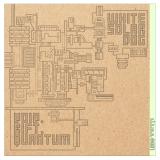
The new label R.I.T.M.O. launches its journey with a clear statement of intent: VOID RIFT QUANTUM, a six-episode cosmic voyage by WHITE SOLAR DOG, complemented by two premium remixes from UNIVAC and PROMISING YOUNGSTER. The EP opens with “VOID RIFT QUANTUM” a dark, expansive electro exercise where crushing basslines, syncopated rhythms, and a dialogue between vocoders and acid lines evoke an interplanetary landscape. On “I.N.S.I.D.E.” the intensity ramps up through driving percussion, tribal voices, razor-sharp breaks, and an almost ritual force that propels the body into physical and mental trance.
UNIVAC’s reinterpretation of the title track unleashes his full arsenal: a steely remix of relentless energy that pushes the original into a hard-edged industrial realm, stamped with the unmistakable signature of the Catalan producer. “MOVE YOUR BODY” showcases WHITE SOLAR DOG’s most direct side: classic electro with heavy bass, pads, and bright melodies, where the machine calls the dancefloor to action without compromise. The journey reaches its most ethereal point with “SING TO ME” where a female vocal intertwines with broken rhythms, crystalline atmospheres, and fresh acid incursions—cementing WSD’s personal hallmark: equal parts intensity and spirituality. The release closes with Promising Youngster’s remix, which takes the vocal elements of “SING TO ME” and guides them into a hypnotic state, suspended between the dreamlike and the club. With VOID RIFT QUANTUM, R.I.T.M.O. presents its inaugural catalog, distilling the power of contemporary electro and the otherworldly vision of WHITE SOLAR DOG. A debut that clearly establishes its coordinates: impact, exploration, and progressiveness, introduces itself to the world through an inaugural catalogue that distills the present and future of electro: mysticism, power, and precision.
All covers are handmade. They feature a fluorescent strip along the sides for easy identification, and under black light, the Spanish version of the cover is visible. Each disc contains three handmade inserts: a pop-up of R.I.T.M.O., a template, and a paper synthesizer model based on the actual synthesizers used to create the album (a different one on each disc). Each disc comes in a plastic sleeve.
All covers are handmade. They feature a fluorescent strip along the sides for easy identification, and under black light, the Spanish version of the cover is visible. Each disc contains three handmade inserts: a pop-up of R.I.T.M.O., a template, and a paper synthesizer model based on the actual synthesizers used to create the album (a different one on each disc). Each disc comes in a plastic sleeve.
out of Stock
Last delivered 3 months ago available to reorder, subject to availability
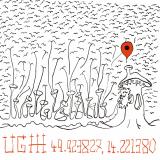
UGHH – Underground Hyper Hero is the moniker of Vítězslav Špalek — composer, multi-instrumentalist, and singular sonic architect hailing from Karviná, a gritty coal-mining town in industrial Silesia, now living out his days under the sundrenched skies of southern Corfu. He improvises across synthesizer, trumpet, and voice, weaving musical collages from poetic texts spanning genres and movements. His collages carry an unsettling depth and pull you somewhere you didn't plan to go. They are distant lands beyond the water — where the trumpet cuts through space and time lurches forward in a sudden rush, only to nearly freeze and turn inward, listening to the echo of a far-off voice calling out from nowhere. A flock of birds drifts over a vast landscape while a powerful, repetitive beat pulses through all matter — living and dead alike. EP 49.923827, 14.221380 takes its name from the coordinates of its creation, and marks the first released material from the artist's yet-to-be-unveiled catalog. Three original tracks are joined by an eclectic postpunk remix from Berlin-based Menqui, an ethereal minimalist take from fellow Berliner Nadia D'Aló aka DALO, and local scene staple Mike.H — a devoted digger of obscure trance.
World Of Echo announces the reissue of two remastered albums by Japanese guitarist and songwriter Naoki Zushi, 1988’s Paradise, and 2005’s III. Two classics of Japanese psychedelia, both Paradise and III were originally released on Org Records, the imprint of Shinji Shibayama of acid-folk group Nagisa Ni Te, with whom Zushi has guested on second guitar for decades. Both intimate and expansive, rich with revelatory songwriting and blasted, sky-scouring guitar, these reissues return these albums to print for the first time since the 2000s. It’s the first time III has been officially released on vinyl, with an extra, previously unreleased track, “Under The June Moonlight.”
Recorded in Kyoto’s Townhouse Studios in mid 1987 and released in limited-to-500 vinyl pressing in 1988, Paradise emerged from a scene in Kansai, Japan that was embracing the idiosyncracies of 1970s singer-songwriters, the soaring solos of early seventies psychedelia, and the DIY impulse of 1980s post-punk. While Zushi’s musical history stretched back to the early eighties – he was a founding member of Jojo Hiroshige’s noise outfit Hijokaidan – he found his feet with groups like Hallelujahs, whose dream-pop collection Niku O Kuraite Chikai Wo Tateyo was recently reissued by Black Editions, and Idiot O’Clock.
Paradise appeared two years after that Hallelujahs album and share much the same membership – Zushi’s backing band on several of the songs includes Shibayama on drums and Ken-Ichi Takayama (aka Idiot) on electric guitar, though just as often, Zushi plays all the instruments himself. The coordinates here are wide-reaching – you can hear the volume and intensity of Neil Young & Crazy Horse (on “Hallelujah: Left Side” and “Paradise: Midday”), the slow-motion magic of Galaxie 500, the idiosyncratic spirit of The Only Ones, all mixed up with tender guitar miniatures and stumbling garage-psych-pop moves.
Seven years later, after the transitional album Phenomenal Luciferin, Zushi released III. Perhaps his masterpiece, it’s already been bootlegged on vinyl, but this reissue is the real deal. The album was recorded at Studio Nemu over seven years, and sees Zushi backed by Shibayama (bass) and Masako Takeda (drums), his erstwhile bandmates in Nagisa Ni Te. By this stage, Zushi had started to really stretch out, and many of the songs on III swoon languorously, taking their sweet time to say what they need to say. It’s rich with lovely, melancholy songs, in a similar realm to bandmates Nagisa Ni Te, of course, but you can also hear traces of everything from Syd Barrett’s The Madcap Laughs, through seventies private press loner folk, to the slow-burn meanderings of the likes of early Low or Damon & Naomi.
When interviewed by Shibayama in the mid-nineties, Zushi said of Paradise, “it was a sort of collection of songs that had meant something to me up to that point… it was my paradise. I wanted to create paradise.” That’s something Zushi achieves on both of these albums – visionary Japanese psychedelia, en route to paradise. - Jon Dale
Waiting is the essence of travel. Patience is its own reward.
Two people. A Telecaster guitar with a few effect pedals. A drum machine. An audio interface is connected to a laptop. The ingredients are simple yet effective.
But any suggestion of four-track cassette machines and vintage bedsit productions is quickly dispelled by digital dubbiness and refined arrangements. A tail of reversed echos. The crystalline flourish of octave-pitched delays. Riddled hi-hats tickle and taunt. A bass drum asserts its space.
Winkler's guitar patterns have a fragmented, almost haphazard connotation. Searching in a shimmer of reverb. Until the beat, the framework, sets in to reveal structure. Intentionality. Reihse's programmed rhythms go just to the point of a groove, holding the moment of tension, knowingly delaying the gratification. Beats that have scratchy patina anda subtly playful edge; their crispness stands in contrast to the contemplative drift of the guitar. Is it a trance? Or a dance? Yes.
There are some apparent references here: a good portion of Les Disques du Crépuscule, some kraut-esque electronica, even a smidgen of Morricone / Spaghetti Western, blending into a kind of Musique Noir – yet these serve as a set of orientational coordinates, rather than quotations.
This is so far the most assured release by Periode, perhaps eschewing some of the naiveté that was wilfully cultivated in earlier output – there is no cheeky cover version this time. And no singing either. The nine pieces have the quality of a series, a variation on a mood, or a subset of moods. What emerges is an inviting swagger in the face of bleakness. There is a profound melancholy, but it is not the darker kind, and does not exclude humour.
First impressions may suggest that this is purely nocturnal music. Yet it equally evokes the harsh sunlight and baking summer heat. Or a rainy day. And transportation: the music suggests the motion of travel, even if that travel only happens within the mind. And waiting. Waiting while doing nothing much. Because that's all you can do. (Alexander Paulick)
World Of Echo announces the reissue of two remastered albums by Japanese guitarist and songwriter Naoki Zushi, 1988’s Paradise, and 2005’s III. Two classics of Japanese psychedelia, both Paradise and III were originally released on Org Records, the imprint of Shinji Shibayama of acid-folk group Nagisa Ni Te, with whom Zushi has guested on second guitar for decades. Both intimate and expansive, rich with revelatory songwriting and blasted, sky-scouring guitar, these reissues return these albums to print for the first time since the 2000s. It’s the first time III has been officially released on vinyl, with an extra, previously unreleased track, “Under The June Moonlight.”
Recorded in Kyoto’s Townhouse Studios in mid 1987 and released in limited-to-500 vinyl pressing in 1988, Paradise emerged from a scene in Kansai, Japan that was embracing the idiosyncracies of 1970s singer-songwriters, the soaring solos of early seventies psychedelia, and the DIY impulse of 1980s post-punk. While Zushi’s musical history stretched back to the early eighties – he was a founding member of Jojo Hiroshige’s noise outfit Hijokaidan – he found his feet with groups like Hallelujahs, whose dream-pop collection Niku O Kuraite Chikai Wo Tateyo was recently reissued by Black Editions, and Idiot O’Clock.
Paradise appeared two years after that Hallelujahs album and share much the same membership – Zushi’s backing band on several of the songs includes Shibayama on drums and Ken-Ichi Takayama (aka Idiot) on electric guitar, though just as often, Zushi plays all the instruments himself. The coordinates here are wide-reaching – you can hear the volume and intensity of Neil Young & Crazy Horse (on “Hallelujah: Left Side” and “Paradise: Midday”), the slow-motion magic of Galaxie 500, the idiosyncratic spirit of The Only Ones, all mixed up with tender guitar miniatures and stumbling garage-psych-pop moves.
Seven years later, after the transitional album Phenomenal Luciferin, Zushi released III. Perhaps his masterpiece, it’s already been bootlegged on vinyl, but this reissue is the real deal. The album was recorded at Studio Nemu over seven years, and sees Zushi backed by Shibayama (bass) and Masako Takeda (drums), his erstwhile bandmates in Nagisa Ni Te. By this stage, Zushi had started to really stretch out, and many of the songs on III swoon languorously, taking their sweet time to say what they need to say. It’s rich with lovely, melancholy songs, in a similar realm to bandmates Nagisa Ni Te, of course, but you can also hear traces of everything from Syd Barrett’s The Madcap Laughs, through seventies private press loner folk, to the slow-burn meanderings of the likes of early Low or Damon & Naomi.
When interviewed by Shibayama in the mid-nineties, Zushi said of Paradise, “it was a sort of collection of songs that had meant something to me up to that point… it was my paradise. I wanted to create paradise.” That’s something Zushi achieves on both of these albums – visionary Japanese psychedelia, en route to paradise. - Jon Dale
LA's Elbow Grease label takes a sharp left turn from dance floor-finessing singles to their first full-length
release via the elusive yet illustrious band KAMM, who return in extra fine form for their third and
presumably final album offering, following the sudden tragic death of core member Alland Byallo last
year. Surviving bandmates Marc Barrite aka Dave Aju, Kenneth Scott, and Marc Smith chose the
inspirational higher ground, finishing off what they had begun with Byallo prior to his passing, resulting in
this sublime musical love letter of an LP.
In keeping with the band’s broad influence canon, we are treated to a blend of sonic flavors from
across the genre spectrum with Barrite and Byallo’s jazz upbringings ringing true at the center, then
branching out through golden era hip-hop feels, phased-out psych funk, warm smokey soul, and of
course generous helpings of intricate electronic layers and innovative treatments, as all band members
have become notorious for in their respective solo bodies of work.
While highly personal by nature, including otherworldly cover art based on Byallo's last paintings, the
musical content contained on the album is also widely universal - from opener “Crystalline Dreams”
serpentine tones turned slo-mo funk bomb, to the triptych Bossa boom-bap of “No Deal”, the timely
political calls of uptempo jazz burner “Your Honor”, the intimate upright-led tribute tales of “Angels
Flight”, to the sleek electro rhythm changes of mid-set breather “How Long?”, a deeply felt take on our
mobile-reliant fate in “S.I.M.”, the expansively expressive depth of “Coordinates”, then closing it out with
the title track featuring a grand finale chorus of Byallo’s best friends and fam from around the world
joining in the “Let The Light In” chant, with as much uplifting intention as possible to capture on record.
A loving collective embrace and very welcome reminder to help lighten these darker days
out of Stock
Last delivered 17 months ago available to reorder, subject to availability
Every so often an album of such deceptive genius, of such aesthetic clarity, comes across our desk and transfixes us. Thought Leadership's III Of Pentacles is one such work of art. It's an instant classic and glides into the pantheon of timeless guitar-soul totems. Originally out on cassette only, we present the first ever vinyl issue. It's a hideously limited pressing of 300 for the world, so don't sleep on this.
Thought Leadership has already garnered big support from such tastemakers as Ruf Dug, Jason Boardman, Nathan Gregory Wilkins, J Walk, Evan Woodward, Justin Robertson and Heavenly's Jeff Barrett. The first time we heard III Of Pentacles, we nearly wept at the thought that something so beautiful, so bursting with real hope, could even exist in this brutal world. To quote the Quietus, "imagine if Stockport was situated somewhere along the Pacific Coast Highway rather than the M60, and you’ll have some idea of the coordinates to the post-industrial, sunburnt dream space opened up here."
So, who is Thought Leadership? What do we know about them? They reside in Stockport and are obsessed with ethereal guitar records. That’s about it. That and these X ideas shared with you, the listener.
Captured on a multitrack recorder in a terraced house in Stockport, this is as DIY as it gets. Glaringly obvious is a love for classic Factory and early 4AD. Perhaps it is the proximity to the River Mersey where the ideas arrived, and there being but three miles between where this and the Durutti Column’s classic “LC” was recorded, as the two operate across a familiar aural plain. Be it geographic or otherwise, limited by a true economy of means, namely guitar, pedals and drum machine, the fruit borne from these humble tools has been indelibly shaped by the perma-gloom that hangs low over the Manchester and Stockport environs.
Ushered in on 808 kicks, “I” opens the record as a beautiful Sketch for Stockport; a chiming maj7 chord dripping in chorus and delay sets us on our way. The Vini Reilly comparisons are unavoidable. “II” is all John McGeoch, with its trippy goth-psyche arpeggiated pattern cascading across the stereo image. Do those drums swing? But goths don’t swing?! They do here. We’re treated to a bit of crunch on the lead guitar part and some really lush reverb. We even step forth into shoegaze territory, albeit briefly, for the middle eight. “III”, a firm Be With favourite, continues the dreamy psyche leanings of the previous track, with an even bigger melody this time. We’re hearing The Teardrop Explodes on quaaludes here. A proto-dream pop cut soaked in melancholy. But watch out! The coda finds Johnny Marr has gotten into the ‘ludes and gatecrashed the final bars with some incredibly ignorant B minor pentatonic noodling.
“IV” ditches the drum machine for the first in a suite of three beatless electric guitar duets. The first of these semi-improvised rubato ideas is a striking departure from the earlier playful pieces, coming over emo and moody. Greyscale sulking for Stratocaster. Sign us up. “V” contains some really lyrical phrasing; a gorgeous conversation between two guitars. Real Stopfordian Primitive; meditative, crude, rain-soaked. We cycle through the same feels, then end on an alluring chord that breaks the pattern. Sometimes thoughts are like this. “VI” creeps in all plaintive, then a huge reverberating descending guitar line comes tumbling in like something off those classic Dif Juz 12”s. There’s some Maurice Deebank in there too, for sure, and the coda nods to early Meat Puppets.
“VII” rounds out the A Side, and succinctly presents a summary of all ideas explored thus far on our journey. The drum machine is back, this time with some wispy delay, before both guitars enter together playing interlocking lines. As we start, we end, with the delayed 808 guiding us out.
Opening Side B, “VIII” sees us embark on the other side of our journey as we slow down and space out. The drum machine is here, but the guitars are different now. Think Sensations Fix or Göttsching at his most peeled out. Drones, ambient drifts of broken chords and distorted lead lines all swirl round the mix. Side B is one for headphones for sure. “IX” is almost too exquisite for words. A New Age Mixolydian voyage through the cosmos. If you’re unmoved by the end you’ve probably got no pulse. We were left blunted ineffable by this one, such is the smudged elegance radiating from this idea. All hail the Thought Leader.
“X” is a full circle moment, and a fitting end. If you’ve not already elsewhere across the platter, you will be getting heavy Robin Guthrie vibes from this piece. Like the rest of Side B, this improvised jam sticks within a framework of related chords but the celestial energies channelled might invite us to wander “outside”, especially when the Tubescreamer is engaged.
RIYL Durutti Coulmn, Cocteau Twins, Dif Juz, Sensations Fix, Spike and adjacent guitar musicks – but, ultimately, this is just its own thing; such is the strength of ideas presented. "It’s good music to chill out to." (??)
Be With is honoured to present the first ever vinyl release of III Of Pentacles, carefully remastered by Be With's engineer Simon Francisco to ensure it sounds better than ever after its initial tape release. Cicely Balston's expert skills have made sure nothing is lost in the cut whilst the records have been pressed to the highest possible standard at Record Industry, in Holland. The original tape cover artwork, so crucial to Thought Leadership's striking visual aesthetic, has been rejigged for vinyl issue here at Be With. Its stark presentation befits the music contained within. They inform us that they shuffled their tarot deck to ask what the album should be called and the card you see on the cover popped out. The III Of Pentacles tarot card represents teamwork, shared vision and the ability to achieve goals through collaboration. We like to think Thought Leadership and Be With have nailed this one.
out of Stock
Last delivered 18 months ago available to reorder, subject to availability
An imperial phase Actress commits a lushly amorphous installation piece made for the Berliner Festspiele to vinyl, rendering a post-industrial symphony full of iridescent shifts in gyring, OOBE-like spatial coordinates landing somewhere between nutopian ambient, kankyō ongaku and sawn-off bass science.
‘Grey Interiors’ was made in collaboration with Actual Objects and is an absorbing animation and navigation of those post-human ideals that have prompted Darren J. Cunningham to his best work across the preceding two decades. In its hypnagogic symphony of the elements, he short-circuits distinctions of classical music’s metric freedoms and the hyperspatial sensuality of concrète/electro-acoustic and ambient musics with an artistic license that has come to distinguish his work in the contemporary field, and arguably identified him as this generation’s most vital electronic abstractionist.
The first half of the album is bewitchingly airless, materialised in a twinkling vacuum. Naturalistic environmental recordings and a half-heard piano swirl around nauseous airlock whooshes and eerie bass drones. It's all pulverised to a powdery, shimmering residue; if Actress's music is defined by its character and texture - that sweet spot between the bedroom and the soundsystem - then this one advances the narrative without losing its backbone. And like a lot of his best work, it comes into its own on the back of zonked eyelids, conjuring a play of shifting geometric patterns within its imaginary physics and nuanced narration of ephemeral melodic phrasing and vaporous textures.
At about the halfway point, that dissociated piano finds its groove, coalescing into a jerky drum machine rhythm popping like bubbles in the stifling atmosphere. We can draw some intersecting lines here thru electronic music lore - traces of vintage AE, Push Button Objects, UR - but Actress always leaves an indelible fingerprint on anything he touches. Even when he's rubbing against the gallery-industrial complex, he manages to fill a stagnant space with electricity and wit; look at the title itself: is it a reference to the "landscape beyond man" as the installation's press release might have us believe, or the institutions themselves?
out of Stock
Last delivered 72 days ago available to reorder, subject to availability
DOVS are the duo of Vienna’s Johannes Auvinen, aka Tin Man, and Mexico City’s Gabo Barranco, aka AAAA. Psychic Geography is their second album together, but it differs considerably from both their respective solo work and their 2019 debut LP together, Silent Cities: Where that album’s hardware-based acid kept its gaze focused squarely on the dancefloor, Psychic Geography is a strictly ambient affair.
The album has its roots in a trio of beatless tracks that peppered Silent Cities; this time, the duo decided to try making an entire album with no drums. “It opened up the chance to make a different, more narrative style of music with more complex structures,” Auvinen says. Ambiguity and uncertainty are key watchwords for their music, which moves with eerie, liquid grace. Untethered from 4/4 kicks, their music drifts and morphs; familiar acid sequences give way to surprising shifts in tone and mood. And with no drums to distract the ear, the seeming simplicity of their silvery synth lines opens up to reveal remarkable depth and dynamism.
Barranco and Auvinen recorded the album together in the studio utilizing machines like the Roland TB-303, Juno G, Prophet 5, Elektron Octatrack MKII, Make Noise DPO and René, Mutable Clouds, Roland SH-101, Behringer TD3, and Sherman Filterbank. Listen on good speakers or headphones, and you can tell: Their gear yields a tonal richness that recalls the ambient and cosmic music of decades earlier. You can practically feel the heat from their circuits warming the air.
The meaning behind the name DOVS is as ambiguous as the duo’s music. (Dig, if you will, the picture of Picasso’s dove of peace—or, perhaps, the outline of a bird pressed into a small white pill.) But Psychic Geography needs little explanation. DOVS’ album is a collection of mental maps of imaginary places. Set your coordinates for the mirage on the horizon and prepare to dissolve.
out of Stock
Last delivered 7 months ago available to reorder, subject to availability
Miki Yui is a musician, artist, and composer, originally from Tokyo, who has been based in Düsseldorf since 1994. Her whose work has long explored multiple forms of media, while documenting liminal zones of perception. On her latest album, As If, Yui creates a subtly connected suite of electronic music, drawn from improvisations and randomised processes that she has engaged with modular synthesis. Deeply poetic in its expression, even at its most minimal, the six pieces on As If have a curious tenor – they are, each of them, intensely sensuous, almost haptic listening experiences, as though the laser focus that Yui displays towards her compositions allows her to engage them as almost physical presences in the world.
One of the keys that unlocks the intimate complexity-in-simplicity of As If was Yui’s encounters with the Amazonian rainforest in Manaus, Brazil in 2018. Finding that the sounds in the rainforest both shadowed and echoed the music she had been making for two decades, she embraced the possibilities of modular synthesis, the sounds of which she discovered “have astonishing similarities to the sounds I experienced in the rainforest.” There is, indeed, something natural about the way these sounds bloom in real time; in their dedicated focus to the subtle development and mutation of several discrete parameters of sound, they grow slowly, gradually, their rhizomic structures suggesting that we are always situated within the middle of sound.
Sometimes, the material here has a kind of febrile energy, as on the ticking, clacking electronics of “Generativ”, a track that seems to rotate in the air in front of the listener, the light reflecting off its multiple surfaces as we catch the intricacies of its micro-patterns. Elsewhere, we slide into a cooled but welcoming environment, like the late-night fire-fly horizon of “Song 4”; there’s also the humid, dripping tropical sunset that’s documented on “Summernight”. It’s a music that’s hard to locate external coordinates for, though there are, perhaps, some parallels with the work of Laurie Spiegel, Eliane Radigue’s Vice Versa, and Pauline Oliveros’s “Roots of the Moment”. But As If is an extraordinary collection of naturally developing, rich studies for slowly mutating, enveloping, elemental electronics.
Tommaso Cappellato, the visionary behind Domanda Music and a respected figure in global jazz, leads Explorare - an ever-evolving ensemble of LA's finest jazz virtuosos. Launched in early 2022, Explorare's mission is to delve into music's rich landscape through improvisational performances, where persistent grooves are shaped by the unique vibes of the individual members in the present moment.
Their self-titled debut album, "Explorare" drops on October 13, 2023, on the homonymous record label Explorare, featuring pianist Diego Gaeta (Andre3000, Carlos Niño) and bassist Tony Martin (Brainstory). Explorare is more than just a musical project - it embodies the spirit of musical community through a transformative journey that invites listeners to delve into the depths of sonic exploration, guided by carefully crafted energy and passion.
out of Stock
Last delivered 20 months ago available to reorder, subject to availability
A pleasure to present the second ep of Purveyance, Galicia based record label.
A1 A2 Linear System, Return with Strong tracks hypnotic with raw vocals.
B1 B2 Soul Lazh, Forcefull winding synth lines focused for dancefloor.
Four weapons for proper big room Techno.
out of Stock
Last delivered 10 months ago available to reorder, subject to availability
Enjoy The Ride Records in conjunction with Lionsgate proudly present Cube Original Motion Picture Soundtrack. Composed by Mark Korven (The Witch, The Lighthouse), this is the first time Cube Original Motion Picture Soundtrack has been available on vinyl. Cube is a late 90s Sci-Fi Horror film that follows a group of people through cube-shaped rooms, and has become a cult classic since its release.
Cube Original Motion Picture Soundtrack has been pressed at 45 RPM and has a custom Cube Door B Side Label. This release also includes unreleased bonus tracks and comes housed in black poly-lined inner sleeves. The jacket features the iconic poster art on the cover, with back cover art designed by Steven Wild.
The Path is the latest album from Belbury Poly (aka Ghost Box records founder Jim Jupp). This time round Jupp has recruited a full band roster to expand his own unique electronica. He is joined by occasional Belbury Poly collaborator Christopher Budd on Bass and Guitar, Jesse Chandler (of Midlake, Mercury Rev & Pneumatic Tubes) on flute, clarinet and keyboards, Max Saidi on drums plus narration from author and poet, Justin Hopper.
Musically it takes as its starting point a particular moment of early 1970s British film soundtracks by the likes of Roy Budd and Roger Webb; a soundworld of easy-going jazz and funky rhythms gently coloured with pastoral strings and flutes. The Path, however, is unmoored from time or place thanks to Hopper’s narrative style, Chandler’s rustic flutes and keys, Budd’s soulful psychedelic guitars and Jupp’s production and electronics. The co-writers were all chosen for their unique abilities and an
intuitive understanding of the ongoing Belbury Poly project. The spoken word elements form a loose, open-ended narrative; very much an album with spoken word rather than a spoken word album.
The Band and Album Recording:
Christopher Budd: Electric Bass, Double Bass, Guitars, Electric Sitar
Jesse Chandler: Piano, Synths, Mellotron, Flute, Clarinet
Justin Hopper: Narration
Jim Jupp: Electric Piano, Synths, Mellotron, Percussion, Sound Effects
Max Saidi: Drums, Percussion
The project came together over two years, beginning with a conversation between Hopper and Jupp during a walk on the Sussex South Downs. Originally, it was to tell the tale of an American academic unravelling while adrift in an alienating English landscape. From the beginning, the pair wanted on a narration integrated lyrically into the piece, rather than dropped on top. The words gradually became more film-noir and open to interpretation; occasionally a little tongue-in-cheek. The final
texts explore a folklore of alienation; the way we impact the landscape and it impacts us.
Belbury Poly:
Jim Jupp has released EPs, singles and seven albums on Ghost Box as Belbury Poly. It’s generally a solo project, but he calls on a floating roster of like-minded musicians to extend the sound beyond studio based electronica. He is also one half of The Belbury Circle along with Cate Brooks (of The Advisory Circle) - occasional collaborators with John Foxx. He has recorded library tracks for KPM, BMG and Lo-Editions. He’s remixed tracks for several artists including Beautify Junkyards,
John Foxx and Bill Ryder-Jones (The Coral) and co-written a song with Paul Weller for his 2020 album On Sunset.
out of Stock
Last delivered 2 years ago available to reorder, subject to availability
Zweites Album der Art-Rock-Experimentalisten Drahla aus Leeds. Aufgenommen mit Matthew Benn und Jamie Lockhart im Jahr 2023, folgt angeltape dem von der Kritik gefeierten Debüt Useless Coordinates aus dem Jahr 2019 und ist ein avantgardistisches Dokument der Ereignisse, die sich in der fünfjährigen Pause zwischen den Alben entfaltet haben. Eine Vielzahl von Veränderungen - gute und schlechte - lenkten das berufliche und persönliche Leben der Bandmitglieder in unbekannte Bahnen. Doch anstatt sich den Widrigkeiten zu ergeben, tauchen Drahla mit angeltape wieder auf. Sängerin und Gitarristin Luciel Brown, Bassist Rob Riggs und Schlagzeuger Mike Ainsley erweiterten ihren Sound mit Gitarrist Ewan Barr und klingen nun wesentlich dunkler, komplexer und konzeptioneller. Drahla beschreiten neue klangliche Wege und experimentieren dabei mehr als je zuvor mit der Form der Musik. Das berauschende Zusammenspiel von treibenden Bass-Riffs und aufgeladenen Schlagzeugmustern bildet einen fesselnden Kontrast zu Browns melodischem Sprechgesang. Die einhüllende Atmosphäre, die von dem Quartett ausgeht, wird durch die eindringliche Saxophonbegleitung des langjährigen Mitstreiters Chris Duffin noch verstärkt. Die Band beschäftigt sich mit Themen wie Trauer und Trauma, während sie gleichzeitig Momente der Sentimentalität und Unterstützung in schwierigen Zeiten zelebriert. Eine unwiderstehliche und unerschütterliche Kraft durchzieht dieses meisterhafte zweite Album. angeltape ist eine herausfordernde, tröstliche und letztlich lohnende Platte für Künstler und Publikum.
Jakarta Records is proud to present “Les Grandes Vacances” courtesy of Beirut’s Cosmic Analog Ensemble, aka multi-instrumental phenom Charif Megarbane. The LP is an expansive musical odyssey, one that paints a melodic tapestry woven from an eclectic panorama of sonic tools. Funky beats, dreamy melodies + cinematic flair combine to create an experience that transcends time. From vibrant funky energy to introspective moods and library-inspired tunes, “Les Grandes Vacances” captures the essence of past and present, inviting you to indulge in the perfect balance of “groove-stalgia.” Out January 19, 2024.
Cosmic Analog Ensemble (1.6k Spotify Monthly Listeners – SML), the prolific one-man band helmed by Charif Megarbane (61.5k SML), the staggeringly prolific producer, instrumentalist, and all-around musical mastermind, returns to his “Ensemble” with LP “Les Grandes Vacances.” Megarbane's artistry has garnered widespread recognition, with notable placements in Spotify Editorial Playlists like "Global Groove" (679k) and "Folk Fabrique" (162k), along with coverage from esteemed platforms / publications such as BBC Radio, Bandcamp, The Vinyl Factory, Time Magazine, and Esquire, among others. Building on the success of his debut solo release “Marzipan” in 2023 via Habibi Funk, “Les Grandes Vacances” is a sonic journey that captures the full scope of Megarbane’s sonic habitus. As a composer and producer, Megarbane touts hugely versatile, sometimes volatile musicianship — his 100+ catalogue of projects (including legendary groups like the Cosmic Analog Ensemble, Free Association Syndicate, Monumental Detail, etc.) features a huge domain of sonic direction. Now, Jakarta Records presents a new expansion in the Megarbane sonic universe.
In the enchanting sonic world of “Les Grandes Vacances,” Cosmic Analog Ensemble expertly combines diverse musical elements to craft an immersive experience. From vibrant funky energy to introspective moments and library-inspired compositions, the album's sonic palette is rich and varied. The meticulously designed artwork by Simone Cihlar (known for collabs with Anderson Paak., Tom Misch, Ivan Ave, Tapioca and others) complements the album's thematic depth, enhancing the visual and auditory journey for listeners.
First single is the thrilling sonic escapade, “La Ligne Claire,” set to release on November 10th in conjunction with LP pre-order. The track immerses listeners in vintage spy movie ambiance, featuring groovy drums, warm keys, thematic guitars, and strings that create an unforgettable car chase scene. As part of the rollout schedule, this single offers a glimpse into the album's captivating fusion of nostalgia and innovation, promising a musical adventure that lingers and resonates in your ears. Second single, the lush and groovy “Le Dictionnaire des Sentiments,” follows in the sonic footsteps of Serge Gainsbourg (complete with beautifully poignant French lyricism), out December 8th to round out the year. The track jerks the listener towards a more meditative state and expanding, cinematic sound.
Kicking of 2024 will be the absolute funkified single 3 “Maritime Jazz,” out January 5th. The track transports you to a groovy marina where the movement of the sea and boats sways you along a Madlib / Yesterdays New Quintet-esque groove.
Reflecting on his creative process, Megarbane cites a stream of consciousness approach to the Cosmic Analog Ensemble: “It’s a very spontaneous, playful, and diary-like approach and workflow…I trust my instinct because instinct is based on experience.”
Berlin-based artist Avilynn fuses electro, breaks, rave and IDM on modular driven '6' EP for her own Taisha Records this October.
Avilynn has been slowly unveiling releases via her fledgling Taisha imprint, showcasing her unique sound which encapsulates a variety of influences, always laced with a dynamic feel, sonic hypnotism and gritty drive. Following on from 2021's acclaimed 'Five Million Sunsets', Avilynn returns to Taisha Records with her new '6' EP. Blending sonic experiences from the Berlin cityscape and coupling them with provocative and sophisticated instrumentation.
'Air and Bubbles' leads the release and lays down cinematic strings, tension building atmospherics, a vacillating rhythmic groove and murky bass grooves. '66 33'48.8' follows next, coordinates possibly, a hidden destination, a journey complete. This one sees Avilynn shift focus towards textural soundscapes layered with ethereal, billowing voices atop intricate off-kilter drums and swirling synth flutters.
Title-cut '6' then opens the flip-side, embracing a brighter aesthetic with cosseting pads and resonant bubbling synths delicately intertwined with a winding low-end groove and a combination of electronic and acoustic drums to create the composition's bumpy
breaks. 'Fobias' then rounds out the EP, edging back into darker realms bringing crunchy saturated bass stabs and shuffled percussion into the forefront while sweeping strings, intricate melodies and voice-like textures unfurl as the composition progresses.
out of Stock
Last delivered 2 years ago available to reorder, subject to availability
Rising up from the dark depths of the underworld, Toni Moralez presents his latest project, Echoes From The Grave, via Mutual Pleasure Records.
A four-track serving of truly devilish sounds, Echoes From The Grave brings the listener deep into the world of Toni Moralez; a world of high-flying dance floor deviousness. Within the EP, the Frankfurt based producer coordinates a masterful balance between sinister and groovy, with daring blends of funk-infused basslines, pulsating drum patterns and synths, resulting in an unmistakably mischievous sound.
From the infectiously old-skool nature of DON’T B SHY (TURN AROUND), to the equally infectious hypnosis of I WANNA SUCK UR DICK (LONG N HARD), to the bassline mastery of TAKE OFF UR CLOTHES, which is then propelled into total misbehaviour with (Partiboi69’s Cheek Spreading Rework), which features a contagiously brazen verse from YBM.
Exceeding and succeeding in utmost rebellion, Toni Moralez’s Echoes From The Grave EP is a uniquely daring project, full of devilish personality and character, and one that sees its creator reach newfound heights with his sound; a sound that continues to evolve and develop rapidly.
out of Stock
Last delivered 2 years ago available to reorder, subject to availability
Habibi Funk is excited to share “Marzipan” - our first full length contemporary release courtesy of Beirut’s multi-instrumental phenom Charif Megarbane, also known as the man behind prolific Cosmic Analog Ensemble. The LP is a journey into Charif’s styling, one he terms “Lebrary”: a vision of Lebanon + Mediterranean expressed through the kaleidoscopic sonics of library music. Drawing from artists that encapsulates the HF sound, such as Ziad Rahbani, Ahmed Malek and Issam Hajali, Charif translates these influences into an LP that is equally at home in ’23. We always wondered why Charif’s music stayed under the radar for so long, that all changes with “Marzipan”.
Charif Megarbane, the staggeringly prolific producer, instrumentalist, and all-around musical mastermind returns with full LP “Marzipan.” Following his previous release of EP “Tayara Warak” in 2022, “Marzipan” is a sonic journey that seeks to capture the full scope of Megarbane’s habitus. As a composer and producer, Megarbane touts hugely versatile, sometimes volatile musicianship — his 100+ catalogue of projects (including legendary groups like the Cosmic Analog Ensemble, Free Association Syndicate, Monumental Detail, etc.) features a huge domain of sonic direction. This collection was previously developed in Megarbane’s own Hisstology label which hosts a wealth of collaborative efforts. Now, Habibi Funk represents Megarbane under his own name. Megarbane finds a sonic through-line in his surrounding soundscapes as he draws on the chaotic energy of the crowded Beirut metropolis (“Souk El Ahad”), the warm atmosphere of the Lebanese countryside (“Chez Mounir”), or the lushness of a Mediterranean beach resort (“Portemilio”). Reflecting the aural composition of his direct surroundings into kaleidoscopic instrumentation provides a unique insight into how one musical phenomenon transposes sight into sound. Habibi Funk is thrilled to share “Marzipan” and finally throttle this under-theradar phenomenon into the solo spotlight. Despite the magnitude of his catalog, Megarbane’s LP sounds as fresh—as resolutely inspired—as a debut record. “Marzipan” continues down the winding path he trod on EP “Tayyara Warak” (released Decmber, 2022) which features solid footing in the hectic city sounds Megarbane hears as home. Despite his obvious musical acumen, Megarbane’s greatest talent seems to be his open ears. In many ways, “Marzipan” is a cartographic feat — it travels and traces a journey across many dimensions (both sonic and physical). Megarbane’s instrumental catalogue is vast: toy glockenspiel, harpsichord, pedal steel, a classic Wurlitzer, et al are used liberally on the record. The resultant sound is as sprawling as the musician’s instrumental dexterity. “Marzipan’s” closing track “Bala 3anouan” can be translated loosely to “without address” — a fitting final word. Despite the entire record being a sincere testament to Megarbane’s environmental approach to music-making, the record is not bound to any particular coordinates, or any particular sound for that matter. The vastness of his influences — beloved artists like Ahmed Malek and Issam Hajali (both Habibi Funk veterans); West African funk deep cuts; European cinematic scores; et al — result in a record of somewhat unparalleled expansiveness. Floating melodies and frantic rhythmic interludes both find natural homes across “Marzipan.” The record is tinged with psychedelic elements—fuzz-drenched guitar, sliding microtonal interludes, hypnotic rhythmic breakdowns. Reflecting on his creative process, Megarbane cites a stream of consciousness approach: “It’s a very spontaneous, playful, and diary-like approach and workflow…I trust my instinct because instinct is based on experience.” Lead single “Souk El Ahad” opens the roll-out with a raucous energy, out June 12. Megarbane abstracts busy city sounds into a psychedelic framework, casting technicolor hues on everyday experience. Following is second single “Pas de Dialogue” out June 23. The track jerks the listener towards a more meditative state with lulling harpsichord and expanding, cinematic sound. “Marzipan” will be available physically and digitally everywhere on July 14, 2023. Be sure to listen for focus track “Chez Mounir” that captures the warmth of community in a joyful, laidback groove.
Uncover greater insight into the world of Charif Megarbane in the booklet accompanying the LP
out of Stock
Last delivered 17 months ago available to reorder, subject to availability