“Come my lady/Come-Come my lady/ You’re my butterfly, sugar baby”…If there was a song-track to the turn of the millennium, Crazy Town’s “Butterfly” was it, starting with its appearance on the 1999 album Gift of Game and winding up with its reign at #1 in the charts in February 2001. Anchored by a sample of Red Hot Chili Peppers’ “Pretty Little Ditty,” it forever defined the term “nu-metal power ballad,” and was a rare-for-the-genre love song to boot! But the album from whence it came didn’t fly as high as it did, with over 2.5 million copies sold, just because of “Butterfly.” The Gift of Game brings the noise with an all-out alternative metal assault, and the band’s rappers—bolstered by guest appearances from KRS-One and Mad Lion—are markedly better than their rap/metal contemporaries. And then there’s the album art, created by member Shifty Shellshock’s father and uncle, which lends a vivid rendering to the fantasies of every teenage boy listening to “Lollipop Porn.” In short, this was a freakin’ HUGE record that somehow…somehow!...has NEVER been on vinyl. So how to handle its momentous debut on its 25th anniversary? Well, first, we’ve created an inner sleeve with all of the lyrics (and there are a lot of ‘em). Our sources also tell us that the very explicit hidden bonus track on the CD release has mysteriously made it on here. But when it comes to the vinyl, given what we anticipate is going to be, ahem, crazy demand, we have pressed the record in two different colors, one in “Red Devil Velvet” vinyl and the other in “Yellow Butterfly” vinyl. Come dance with us and Crazy Town…twice!
Search:crazy town
- 1: Fall In
- 2: Molly
- 3: Owe You Nothing
- 4: Sleep Through It
- 5: Seventeen
- 6: Maybe You're Crazy
- 7: Tea Leaves
- 8: Fsa
- 9: Super Stupid
- 10: Boys From Out Of Town
Deranged Records and Forward! Records will release Wildhoney's first LP, Sleep Through It. The group formed in late 2011, aiming to write pop songs with the energy and malcontent of hardcore punk, but without its entrenched masculinity. The five-piece has since become one of the loudest—and sweetest—bands in its hometown of Baltimore. Sleep Through It expands on two excellent 7-inches and one cassette EP, drawing influences from '60s girl groups, '80s post punk, indie pop, and shoegaze. New songs like first single "Fall In" showcase just how well Wildhoney combines wall-of-sound power with delicate passages and gorgeous vocal melodies. Older songs such as "Super Stupid" and "Seventeen" return on the LP, newly realized and sounding better than ever. Throughout the album, the group's blasts of distortion and use of dense textures are balanced with beautiful pop tunes and chiming guitar work. The swirl of noise surrounding singer Lauren Shusterich's voice is not unlike the best of the Cocteau Twins, or even Deerhunter, especially on the soaring title track. Sleep Through It was recorded at Beat Babies Studio in Woodstock, Md., with Chris Freeland (Lower Dens, Wye Oak). The album is Wildhoney's first with synthesizers and features liberal amp and pedal experimentation. The recording process was intense and fast, cramming lots of work into a small amount of time. That hectic schedule is impossible to hear on the LP, which unravels at its own dreamy pace.
- 1: Lake Walk
- 2: Lazy Daisy
- 3: Ups & Downs
- 4: Silently
- 5: There Was A Nice Sunset
- 6: Somewhere Good
- 7: Slow Island
- 8: Movin’ On
If – in some parallel universe (or perhaps a not-so-distant-future version of the one we’re already sentenced to living in) – the evil overloads of artificial intelligence were actually successful in their attempts to create convincingly enjoyable “original music,” more specifically tasked with wholly encapsulating my own personal tastes by data-chugging some cocktail of – oh, I don’t know – the posters on my wall, the records in my “most listened to” pile, the mixtapes I made for others, intensive physical scans of my auditory cortex, amygdala, hippocampus, heart strings, whatever else they have splayed out on their autopsy table with the intention of generating one all-encompassing “perfect band” based on the fruitful sum of their findings – that band, for me, would be (or would at least sound exactly like) the Tara Clerkin Trio. It is, quite simply, without exception, the music I wish to hear.
Formed in Bristol UK (where none of them are from yet all of whom are deeply engrained) in 2020, the Tara Clerkin Trio – as it somewhat democratically exists today, despite the singular authority implied by its name – consists of the titular Tara Clerkin, her partner Sunny Joe Paradisos, and Sunny’s brother, Patrick Benjamin. I’ll confess, I don’t know what their respective roles are within the operation and there’s only a very small part of me that cares to learn, as one of my favorite qualities in an objective listening experience is the mystery of who is playing what, which sounds are “authentic” versus synthesized, which chunks are performed “live” in a room together versus meticulously Frankenstein’ed from measure to measure, or how exactly the overall sound is so (seemingly) effortlessly achieved. Though, I suspect, if and when I do witness a live performance by this band at any point, my enjoyment of the music will not be lost in my better understanding of it.
With two extraordinary mini-albums – In Spring (2021) and On The Turning Ground (2023) – making a splash on London’s formidable World of Echo label in wake of their self-titled 2020 debut, this upcoming Somewhere Good LP is, in many ways, the band’s most realised work. In running their usual gauntlet of idiosyncratic (*an overused adjective for which here there is regrettably no sufficient alternative) approaches, Clerkin & co. colour in and outside of compositional lines over the course of 40+ celebratory minutes - never wallowing, despite inherently somber subject matters of self-defeat, disease, displacement, restlessness, gentrification - allowing their arrangements and improvisations ample space and time to situate, stretch out, breathe, cross-pollinate, and ultimately take deeper hold on the listener’s imagination – all while somehow sounding more like themselves than ever before.
Of course, there are traceable influences herein, if one felt that such comparisons were necessary to properly examine and enjoy this music (they aren’t)… Being the big dumb American from the small boring town that I am, cornfed on ‘90s alternative radio with the enchantingly exotic sounds of Maxinquaye and Mezzanine emanating from my chunky tube television, I can’t help but to make a blatantly obvious reference to a “Bristol sound”, ie the whole trip-hop trip, the pastoral crooning over the suggestive urban grime of cracked electro/piano treatments, the digitally-yet-primitively reconstructed James Bond soundtrack string-beats, etc.. But the Tara Clerkin Trio is so infinitely much more than that. There are elements of avant-pop, modern classical, kraut-folk, audio verité, dare I say indie rock (and not of the beer guzzling, masturbatory fuzz-flex variety but perhaps more like a Trish Keenan-fronted Faust, Adrian Sherwood at the mixing desk of If You’re Feeling Sinister, or – in expanding on our alternate reality – a world in which High Llamas cut a full-length for Warp Records with Andrew Weatherall on coffee duty).
The hazy, unmappable skyline-mirage of droning harmonium, upright bass, peculiarly accentuated wind instruments, acoustic guitar, hushed yet literally mighty keys combine to hypnotizing effect. The band may make underlying nods to jazz, sure, but it’s not appropriation, it’s that they have the actual chops to build it out. Beneath the janky samples and oddball percussive embellishment lies actually great drumming. Beyond the manipulated vocal witchery and woefully reflective plain-spoke moments are Tara’s subtly inspired melodies, sung with what might honestly be the glue to the whole crazy equation. A calming consistency throughout the otherwise unpredictably dynamic, boldly intuitive, uniquely British exploration of this (their own) universe in song. – Ryan Davis (Chicago, February 2026)
- A1: Downtown Club Owner
- A2: Hot And Steamy Sweatpants
- A3: No Need To Thank Meme
- A4: Second Rate Quality Good Stuff
- A5: Look What The Dog Bought In
- B1: Shakin Cat Stevens
- B2: Farmer Had A Farm Song Crazy Dog Lady
- B3: Ukulele House Of Worship Aka Casino Place
- B4: This Town Is Big Enough For You Two
- B5: Less Is More For My Baby
- B6: Unexpected Money Transfer
With Schokolino Choco Loco, Icelandic duo Stilluppsteypa brings a warped dispatch from the outside fringes of experimental sound--part valium-drenched dreamscape, part dadaistic radio hallucination. Like a nocturnal transmission from a parallel universe, the record drifts and mutates through layers of joyous abstraction, laced with a deadpan sense of humour, while at the same time it is strangely sensitive. This LP is less a collection of tracks than a slow-motion joyride through Stilluppsteypa's singular sonic universe--so hypnotic and absurd, it ends up warming your heart.
- A1: Montego Bay - Everything (Paradise Mix) 04 59
- A2: Atelier - Got To Live Together (Club Mix) 06 06
- A3: Golem - Music Sensations 04 56
- B1: The True Underground Sound Of Rome Feat. Stefano Di Carlo - Gladiators 05 26
- B2: Eagle Parade - I Believe 04 26
- C1: Dj Le Roi - Bocachica (Detroit Version) 05 28
- C2: Green Baize - Synthetic Rhythm 01 41
- C3: M.c.j. Feat. Sima - Sexitivity (Deep Mix) 05 30
- D1: Kwanzaa Posse Feat. Funk Master Sweat - Wicked Funk (Afro Ambient Mix) 06 31
- D2: Progetto Tribale - The Bird Of Paradise 06 29
- D3: Mbg - The Quite 06 59
Vol 1[28,99 €]
Googling “paradise house”, the first results to pop up are an endless list of European b&b’s with whitewashed lime façades, all of them promising “…an unmatched travel experience a few steps from the sea”. Next, a little further down, are the institutional websites of a few select semi-luxury retirement homes (no photos shown, but lots of stock images of smiling nurses with reassuring looks). To find the “paradise house” we’re after, we have to scroll even further down. Much further down.
It feels like yesterday, and at the same time it seems like a million years ago. The Eighties had just ended, and it was still unclear what to expect from the Nineties. Mobile phones that were not the size of a briefcase and did not cost as much as a car? A frightening economic crisis? The guitar-rock revival?! Certainly, the best place to observe that moment of transition was the dancefloor. Truly epochal transformations were happening there. From America, within a short distance one from the other, two revolutionary new musical styles had arrived: the first one sounded a bit like an “on a budget” version of the best Seventies disco-music – Philly sound made with a set of piano-bar keyboards! – the other was even more sparse, futuristic and extraterrestrial. It was a music with a quite distinct “physical” component, which at the same time, to be fully grasped, seemed to call for the knotty theories of certain French post-modern philosophers: Gilles Deleuze, Félix Guattari, Paul Virilio... Both those genres – we would learn shortly after – were born in the black communities of Chicago and Detroit, although listening to those vinyl 12” (often wrapped in generic white covers, and with little indication in the label) you could not easily guess whether behind them there was a black boy from somewhere in the Usa, or a girl from Berlin, or a pale kid from a Cornish coastal town.
Quickly, similar sounds began to show up from all corners of Europe. A thousand variations of the same intuition: leaner, less lean, happier, slightly less intoxicated, more broken, slower, faster, much faster... Boom! From the dancefloors – the London ones at least, whose chronicles we eagerly read every month in the pages of The Face and i-D – came tales of a new generation of clubbers who had completely stopped “dressing up” to go dancing; of hot tempered hooligans bursting into tears and hugging everyone under the strobe lights as the notes of Strings of Life rose up through the fumes of dry ice (certain “smiling” pills were also involved, sure). At this point, however, we must move on to Switzerland.
In Switzerland, in the quiet and diligent town of Lugano, between the 1980s and 1990s there was a club called “Morandi”. Its hot night was on Wednesdays, when the audience also came from Milan, Como, Varese and Zurich. Legend goes that, one night, none less than Prince and Sheila E were spotted hiding among the sofas, on a day-off of the Italian dates of the Nude Tour… The Wednesday resident and superstar was an Italian dj with an exotic name: Don Carlos. The soundtrack he devised was a mixture of Chicago, Detroit, the most progressive R&B and certain forgotten classics of old disco music: practically, what the Paradise Garage in New York might have sounded like had it not closed in 1987. In between, Don Carlos also managed to squeeze in some tracks he had worked on in his studio on Lago Maggiore. One in particular: a track that was rather slow compared to the BPM in fashion at the time, but which was a perfect bridge between house and R&B. The title was Alone: Don Carlos would explain years later that it had to be intended both in the English meaning of “by itself” and like the Italian word meaning “halo”. That wasn’t the only double entendre about the song, anyway. Its own very deep nature was, indeed, double. On the one hand, Alone was built around an angelic keyboard pattern and a romantic piano riff that took you straight to heaven; on the other, it showcased enough electronic squelches (plus a sax part that sounded like it had been dissolved by acid rain) to pigeonhole the tune into the “junk modernity” section, aka the hallmark of all the most innovative sounds of the time: music that sounded like it was hand-crafted from the scraps of glittering overground pop.
No one knows who was the first to call it “paradise house”, nor when it happened. Alternative definitions on the same topic one happened to hear included “ambient house”, “dream house”, “Mediterranean progressive”… but of course none were as good (and alluring) as “paradise house”. What is certain is that such inclination for sounds that were in equal measure angelic and neurotic, romantic and unaffective, quickly became the trademark of the second generation of Italian house. Music that seemed shyly equidistant from all the rhythmic and electronic revolutions that had happened up to that moment (“Music perfectly adept at going nowhere slowly” as noted by English journalist Craig McLean in a legendary field report for Blah Blah Blah magazine). Music that to a inattentive ear might have sounded as anonymous as a snapshot of a random group of passers-by at 10AM in the centre of any major city, but perfectly described the (slow) awakening in the real world after the universal love binge of the so-called Second Summer of Love.
For a brief but unforgettable season, in Italy “paradise house” was the official soundtrack of interminable weekends spent inside the car, darting from one club to another, cutting the peninsula from North to centre, from East to West coast in pursuit of the latest after-hours disco, trading kilometres per hour with beats per minute: practically, a new New Year’s Eve every Friday and Saturday night. This too was no small transformation, as well as a shock for an adult Italy that was encountering for the first time – thanks to its sons and daughters – the wild side of industrial modernity. The clubbers of the so-called “fuoriorario” scene were the balls gone mad in the pinball machine most feared by newspapers, magazines and TV pundits. What they did each and every weekend, apart from going crazy to the sound of the current white labels, was linking distant geographical points and non-places (thank you Marc Augé!) – old dance halls, farmhouses and business centres – transformed for one night into house music heaven. As Marco D’Eramo wrote in his 1995 essay on Chicago, Il maiale e il grattacielo: “Four-wheeled capitalism distorts our age-old image of the city, it allows the suburbs to be connected to each other, whereas before they were connected only by the centre (…) It makes possible a metropolitan area without a metropolis, without a city centre, without downtown. The periphery is no longer a periphery of any centre, but is self-centred”.
“Paradise house” perfectly understood all of this and turned it into a sort of cyber-blues that didn’t even need words, and unexpectedly brought back a drop of melancholic (post?)-humanity within a world that by then – as we would wholly realise in the decades to come – was fully inhuman and heartless. A world where we were all alone, and surrounded by a sinister yellowish halo, like a neon at the end of its life cycle. But, for one night at least, happy."

Welcome to Dazion’s Grooveboxxx – a maxi-sized love letter to The Hague’s 80s and 90s club scene crafted with minimal tools and loaded with vibe. It’s no coincidence it arrives on Dekmantel, a label with its own roots in the same Dutch city’s electronic music culture.
Dazion is The Hague’s Cris Kuhlen, previously spotted releasing on Second Circle, Safe Trip and Animals Dancing. He cut his teeth clubbing and working at long-since closed clubs like Eau, described in Kuhlen’s own words as, “clubs with blocks to dance on, lazers, decorations, crazy extravert sic parties.”
In capturing the spirit of Eau and the other formative parties of his youth, Kuhlen limited himself to just one machine to make his longest work to date – the Roland MC-303 Groovebox. While these entry level units from the mid-90s had stripped down functionality in the wider spectrum of studio gear, they contained all the iconic Roland sounds in a Rompler style, giving the user access to everything necessary to make raw, immediate club tracks without requiring an entire studio’s worth of hardware.
The brash gear of choice set the tone for a record of rough, ready and playful jams which end up more sophisticated than you’d expect from such limited means. ‘La DS’ jacks with a freaky, bleep techno intensity, while ‘Kimberly & Nance Backstage Rehearsal’ rides an angular groove tooled to inspire the weirdest dance moves of the night. Every track is named in reference to a particular nightspot, a hazy memory or moment from Kuhlen’s formative raving years.
This is the sound of Dazion having the time of his life. You might well hear a nod to the odd rock totem being given a re-version in irreverent new beat style or some gnarly US acid breaks vibes riding underneath helium rap licks. But for all the cheekiness, the tracks stand up both as nods to halcyon days and relevant workouts for the sweatiest parties in the here and now. As MC Paul T says in dramatic style heralding the intro of Grooveboxxx, “This movement will live on forever.”
- こびと
- ハレルヤ:左?
- 孤独のハープ弾き
- パラダイス:真昼
- Black Hole
- 紫の夕べ
- 目の前の天使達
- Another Lonely Harpist
- They’ve Gone, They Will Come
- パラダイス
- 童話
- Spirit In My Hair
World Of Echo announces the reissue of two remastered albums by Japanese guitarist and songwriter Naoki Zushi, 1988’s Paradise, and 2005’s III. Two classics of Japanese psychedelia, both Paradise and III were originally released on Org Records, the imprint of Shinji Shibayama of acid-folk group Nagisa Ni Te, with whom Zushi has guested on second guitar for decades. Both intimate and expansive, rich with revelatory songwriting and blasted, sky-scouring guitar, these reissues return these albums to print for the first time since the 2000s. It’s the first time III has been officially released on vinyl, with an extra, previously unreleased track, “Under The June Moonlight.”
Recorded in Kyoto’s Townhouse Studios in mid 1987 and released in limited-to-500 vinyl pressing in 1988, Paradise emerged from a scene in Kansai, Japan that was embracing the idiosyncracies of 1970s singer-songwriters, the soaring solos of early seventies psychedelia, and the DIY impulse of 1980s post-punk. While Zushi’s musical history stretched back to the early eighties – he was a founding member of Jojo Hiroshige’s noise outfit Hijokaidan – he found his feet with groups like Hallelujahs, whose dream-pop collection Niku O Kuraite Chikai Wo Tateyo was recently reissued by Black Editions, and Idiot O’Clock.
Paradise appeared two years after that Hallelujahs album and share much the same membership – Zushi’s backing band on several of the songs includes Shibayama on drums and Ken-Ichi Takayama (aka Idiot) on electric guitar, though just as often, Zushi plays all the instruments himself. The coordinates here are wide-reaching – you can hear the volume and intensity of Neil Young & Crazy Horse (on “Hallelujah: Left Side” and “Paradise: Midday”), the slow-motion magic of Galaxie 500, the idiosyncratic spirit of The Only Ones, all mixed up with tender guitar miniatures and stumbling garage-psych-pop moves.
Seven years later, after the transitional album Phenomenal Luciferin, Zushi released III. Perhaps his masterpiece, it’s already been bootlegged on vinyl, but this reissue is the real deal. The album was recorded at Studio Nemu over seven years, and sees Zushi backed by Shibayama (bass) and Masako Takeda (drums), his erstwhile bandmates in Nagisa Ni Te. By this stage, Zushi had started to really stretch out, and many of the songs on III swoon languorously, taking their sweet time to say what they need to say. It’s rich with lovely, melancholy songs, in a similar realm to bandmates Nagisa Ni Te, of course, but you can also hear traces of everything from Syd Barrett’s The Madcap Laughs, through seventies private press loner folk, to the slow-burn meanderings of the likes of early Low or Damon & Naomi.
When interviewed by Shibayama in the mid-nineties, Zushi said of Paradise, “it was a sort of collection of songs that had meant something to me up to that point… it was my paradise. I wanted to create paradise.” That’s something Zushi achieves on both of these albums – visionary Japanese psychedelia, en route to paradise. - Jon Dale
- A1: Come Over
- A2: Heartbreak Blues B1 Left Your Smile B2 My Baby Says
- B3: Southern Birds C1 Space
- C2: Grief
- D1: Basketball #1 D2 Ghost Town
MJ Lenderman is a songwriter born and raised in Asheville, North Carolina. The anatomy of an MJ record might go something like this: warped pedal steels and skuzzed out guitar; a voice reminiscent of the high-lonesome warble of a choirboy; the keen observations and reflections of a front stoop philosopher. Songs snake their way from a lo-fi home recording to something glossier made with longtime friends at Asheville's Drop of Sun studios, but the recording setting
doesn't seem to matter much - at its core, a Lenderman song rings true.
MJ Lenderman was recorded, mixed and mastered for digital in 2019 by Colin Miller in Asheville NC, and was self-released online to quiet but firm acclaim. Now available as a Double LP and remastered for vinyl by Heather Jones, it offers a glimpse into the formative steps of a style; focused and precise, yet expansive and rough around the edges, that remains consistent across MJ's catalogue to date.
Looking as firmly to the legacy of 90s slowcore as it does to the tenor of Magnolia Electric Co. and sound wall of Neil Young and Crazy Horse, these 9 songs clock in at just over an hour and offer warm, patient worlds of heavy colour that blow by breezily. These are songs that wrap mysterious and urgent feeling in layers of patience and clarity that unfold anew with each timeless listen.
- A1: Dead Or Alive - You Spin Me Round (3 19)
- A2: Buggles - Video Killed The Radio Star (3 17)
- A3: John Paul Young - Love Is In The Air (3 23)
- A4: Katrina - Walking On Sunshine (3 54)
- A5: Coolio - Gangster's Paradise (4 02)
- B1: Nik Kershaw - Wouldn't It Be Good (4 45)
- B2: William Pitt - City Lights (3 46)
- B3: Debbie Gibson - Lost In Your Eyes (3 35)
- B4: Robbie Dupree - Steal Away (3 16)
- B5: The Motels - Only The Lonely (3 13)
- C1: Wild Cherry - Play That Funky Music (3 45)
- C2: Limahl - Neverending Story (3 31)
- C3: Color Me Badd - I Wanna Sex You Up (3 53)
- C4: Sisqo - Thong Song (4 14)
- C5: Crazy Town - Butterfly (3 37)
- D1: Spagna - Call Me (4 06)
- D2: Wax - Right Between The Eyes (4 07)
- D3: Stories - Brother Lou (3 56)
- D4: Stevie B - Because I Love You (4 19)
- D5: Maria Muldaur - Midnight At The Oasis (3 33)
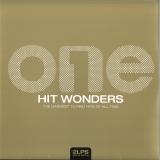
"One Hit Wonders" ist eine dynamische Doppel-LP-Zusammenstellung, die die unvergesslichen Songs feiert, die den Äther beherrschten und zu zeitlosen Klassikern wurden. Diese Sammlung vereint legendäre Hits aus verschiedenen Jahrzehnten und Genres, von den energiegeladenen Beats von "You Spin Me Round (Like a Record)" von Dead or Alive bis zum sanften Yacht-Rock von "Steal Away" von Robbie Dupree. Mit Tanzhymnen, gefühlvollen Balladen und genredefinierenden Titeln ist dieses Album eine nostalgische Reise durch Songs, die trotz der Tatsache, dass sie die einzigen großen Chartstürmer ihrer Künstler waren, in der Musikgeschichte unverzichtbar geblieben sind.
Diese sorgfältig zusammengestellte Auswahl umspannt die Welten von Pop, Rock, Funk, R&B und Hip-Hop. LP1 enthält Wohlfühl-Hits wie "Walking on Sunshine" von Katrina and the Waves, den Synthie-Pop-Charme von "Wouldn't It Be Good" von Nik Kershaw und die eindringliche Schönheit von "Only the Lonely" von The Motels. LP2 hält die Energie hoch mit funkgetriebenen Grooves wie "Play That Funky Music" von Wild Cherry, der filmischen Magie von "Neverending Story" von Limahl und sanften Balladen wie "Because I Love You" von Stevie B. Jeder Track auf dieser Compilation ist einkultureller Meilenstein, der von der ersten Note an erkennbar ist.
"One Hit Wonders", herausgegeben von MPO, ist ein Muss für Musikliebhaber, Sammler und Fans von klassischen Hits, die Generationen überdauern. Ob Sie diese Hymnen wiederentdecken oder zum ersten Mal erleben, dieses Album fängt die Magie von Songs ein, die Geschichte geschrieben haben, auch wenn ihre Schöpfer nie wieder denselben Erfolg in den Charts hatten. Sichern Sie sich noch heute Ihr Exemplar und lassen Sie sich von der Musik in die Momente zurückversetzen, in denen diese Titel die Charts beherrschten und und die Welt in ihren Bann zogen.
Tracklisting
- Travelogue
- Useless
- Change Of Heart
- One Million Rainy Days
- Wishing Well
- April Street
- Beyond The Sea
- Friday I'm In Love
- Holiday
- Downtown
- Tilt-A-Whirl
- Stars Above
- Crazy Town
- I Will Remember You
glo-worm produce chiming pop music of a nonbouncing variety that sounds pure, forlorn and unencumbered. Glo-Worm are at the heart of the `90s East Coast independent pop music scene that brought us Slumberland Records, Velocity Girl, Versus and chickfactor magazine. glimmer KLP054 brings all the various glo-worm 45s together under one roof. It's a real charmer, and now available for the first time as a long playing (LP) phonograph record. glo-worm formed in Washington D.C., summer 1993 and features the voice of Pam Berry ( cofounder of chickfactor magazine) accompanied by Dan Searing (drums, percussion) and Terry Banks (guitar). Previously, Pam had sung in Black Tambourine. Terry played in Tree Fort Angst and a stint in English underground combo St. Christopher. Dan had been in Whorl. During the course of glo-worm's two-and-a-halfish year lifespan, the band released three 7" EPs (issued by the Somersault, Slumberland and K labels) and had songs on a couple of compilations, all leading up to the glimmer [KLP054] album, which compiled the 7" EPs and added a cover of The Cure's `Friday I'm in Love' and was released by K in 1996.
World Of Echo announces the reissue of two remastered albums by Japanese guitarist and songwriter Naoki Zushi, 1988’s Paradise, and 2005’s III. Two classics of Japanese psychedelia, both Paradise and III were originally released on Org Records, the imprint of Shinji Shibayama of acid-folk group Nagisa Ni Te, with whom Zushi has guested on second guitar for decades. Both intimate and expansive, rich with revelatory songwriting and blasted, sky-scouring guitar, these reissues return these albums to print for the first time since the 2000s. It’s the first time III has been officially released on vinyl, with an extra, previously unreleased track, “Under The June Moonlight.”
Recorded in Kyoto’s Townhouse Studios in mid 1987 and released in limited-to-500 vinyl pressing in 1988, Paradise emerged from a scene in Kansai, Japan that was embracing the idiosyncracies of 1970s singer-songwriters, the soaring solos of early seventies psychedelia, and the DIY impulse of 1980s post-punk. While Zushi’s musical history stretched back to the early eighties – he was a founding member of Jojo Hiroshige’s noise outfit Hijokaidan – he found his feet with groups like Hallelujahs, whose dream-pop collection Niku O Kuraite Chikai Wo Tateyo was recently reissued by Black Editions, and Idiot O’Clock.
Paradise appeared two years after that Hallelujahs album and share much the same membership – Zushi’s backing band on several of the songs includes Shibayama on drums and Ken-Ichi Takayama (aka Idiot) on electric guitar, though just as often, Zushi plays all the instruments himself. The coordinates here are wide-reaching – you can hear the volume and intensity of Neil Young & Crazy Horse (on “Hallelujah: Left Side” and “Paradise: Midday”), the slow-motion magic of Galaxie 500, the idiosyncratic spirit of The Only Ones, all mixed up with tender guitar miniatures and stumbling garage-psych-pop moves.
Seven years later, after the transitional album Phenomenal Luciferin, Zushi released III. Perhaps his masterpiece, it’s already been bootlegged on vinyl, but this reissue is the real deal. The album was recorded at Studio Nemu over seven years, and sees Zushi backed by Shibayama (bass) and Masako Takeda (drums), his erstwhile bandmates in Nagisa Ni Te. By this stage, Zushi had started to really stretch out, and many of the songs on III swoon languorously, taking their sweet time to say what they need to say. It’s rich with lovely, melancholy songs, in a similar realm to bandmates Nagisa Ni Te, of course, but you can also hear traces of everything from Syd Barrett’s The Madcap Laughs, through seventies private press loner folk, to the slow-burn meanderings of the likes of early Low or Damon & Naomi.
When interviewed by Shibayama in the mid-nineties, Zushi said of Paradise, “it was a sort of collection of songs that had meant something to me up to that point… it was my paradise. I wanted to create paradise.” That’s something Zushi achieves on both of these albums – visionary Japanese psychedelia, en route to paradise. - Jon Dale
g Under The June Moonlight vinyl only bonus track
Wild and untamed Swedish teenage heavy metal from 1981-1985. Includes their ultra rare single plus previously unreleased studio recordings. The album includes a booklet with interviews and photos documenting TRP’s wild stage shows and the local Swedish hard rock youth gangs of the 1980s. Blood splattered vinyl - limited edition of 600 copies worldwide.
The teenage boys that formed TRP came together in the small town of Fjälkinge outside of Kristianstad in southern Sweden back in 1981. In 1982 they recorded and released their legendary after single. They immediately became very popular with the local hard rock you gang’s attracting wild and rowdy crowds.
TRP performed wild and loud shows gilded by the bands furious use of pyrotechnics, smoke bombs, leather, studs and gallons of fake blood.
Their stage show combined with their music got the band banned in Sweden and it was said that they were obscene and promoted satanism.
The band didn’t let that stop them and instead they went into a studio and recorded several tracks with their new lead guitarist. However, these amazing recordings were never released...until now that is. Then in 1985 TRP performed their last show. Their final stand was heavy metal mayhem supreme and the whole stage went up in flames.
“I had welded a guitar slide with one end closed and filled it with chimney test smoke, then I screwed it to the top of the neck of the bass. It burned constantly for two songs, but the effect was cool. We spat blood, as usual, and Peter just kept firing off bombs like crazy. He managed to shoot one right up into Fredrik’s ass during a guitar solo…”
- Bird On A Swing
- Joker
- I Love People
- I Don't Believe You
- Santa Claus Is Coming Back To Town
- Lou Reed
- Final Frontier
- Texas Weather
- Bad Miracles
- Old Policeman
- On The Rocks
Cassette[14,71 €]
With a room fulla fine pickers and a set of Hollywood orchestral cues to kill for, Cory Hanson proclaims I Love People! His 4th solo album drills down (baby) on a dryly parallax worldview, with songs about all those people he loves and all the crazy things they get up to. As ringmaster for a circus show of classic folk and rock tropes, Cory tugs at our heartstrings with expert misdirection, embracing tradition by throwing it out, into the wind.
- Miaux - 22H44 05:45
- Miaux - Bal(L)Ade Bucolique 04:47
- Miaux - Midnight Snack 02:12
- Miaux - Rêverie Parallèle 05:01
- Miaux - And The Nose 04:12
- Miaux - Ice Cream 05:12
- Miaux - Lunar Surface 03:59
- Miaux - Stare 02:24
- Miaux - Improvisatie 02:24
- Miaux - Nebulus 04:10
- Lieven Martens & Luc Dockx - The Bird Sings, Variations I 06:42
- Lieven Martens & Luc Dockx - The Bird Sings, Variations Ii 09:17
- Lieven Martens & Luc Dockx - The Bird Sings, Variations Iii 07:44
- Lieven Martens & Luc Dockx - The Bird Sings, Variations Iv 08:15
2025 cassette edition, originally released in 2023 on 2CD/digital.
Recordings + booklet of the unveiling of »Katharina AW«, a relational artwork by Joris Martens. The unveiling event took place at St. Catharine’s Church in Hoogstraten - a city in the northeast of Belgium - on two Saturdays in May 2021.
While beholding the artwork, a woven tapestry, you listen to organ music by Miaux. Outside the church, you hear the carillon gurgle with music by Lieven Martens and town carillonneur Luc Dockx, prolonging the event into the public space.
Joris Martens created »Katharina AW« for the city hall of Hoogstraten. The tapestry now serves as an informal conversation starter in the conference room. Joris Martens is a multi-disciplinary artist and works in the field where applied arts and fine arts meet.
Miaux played her own compositions on the church organ. The songs appeared on the albums Black Space White Cloud, Hideaway, Dive and Gigi - released by Ultra Eczema, Lal Lal Lal, and Alien Passengers - and were originally written for electronic keyboard. Mia demonstrates that the church organ, which is normally used as an underscore for sadness or compelling thoughts, is a fitting instrument of connection. Through its resonance, we communicate our sounds.
Lieven Martens invented sketches for the carillon—by loading bird sounds into the computer program Melodyne, varying them and converting them to musical notes. As a nod to the religion crazy Olivier Messiaen, who considered the birds to be God’s chosen singers and songstresses. The trifles were translated on the carillon by town carillonneur Luc Dockx. The playing comes into and out of focus. In this way, Lieven creates a dreamscape and breaks with the dreary carillon as an instrument of power.
Luc Dockx studied church music at the Lemmens Institute in Leuven and the carillon at the Royal Carillon School in Mechelen. He is the city carillonneur of Hoogstraten since 2002. Dockx is an active practitioner of the art of improvisation on the carillon.
- Come Over
- Heartbreak Blues
- Left Your Smile
- My Baby Says
- Southern Birds
- Space
- Grief
- Basketball No. 1
- Ghost Town
Dear Life Records is proud to present the physical reissue of the self titled debut of MJ Lenderman. MJ Lenderman is a songwriter born and raised in Asheville, North Carolina. The anatomy of an MJ record might go something like this: warped pedal steels and skuzzed out guitar; a voice reminiscent of the high-lonesome warble of a choirboy; the keen observations and reflections of a front stoop philosopher. Songs snake their way from a lo-fi home recording to something glossier made with longtime friends at Asheville's Drop of Sun studios, but the recording setting doesn't seem to matter much - at its core, a Lenderman song rings true. "MJ Lenderman" was recorded, mixed and mastered for digital in 2019 by Colin Miller in Asheville NC, and was self-released online to quiet but firm acclaim. Now available as a Double LP and remastered for vinyl by Heather Jones, it offers a glimpse into the formative steps of a style; focused and precise, yet expansive and rough around the edges, that remains consistent across MJ's catalogue to date (see also 2021's `Ghost of Your Guitar Solo' (DLR 016) and 2022's `Boat Songs' (DLR 031)). Looking as firmly to the legacy of 90s slowcore as it does to the tenor of Magnolia Electric Co. and sound wall of Neil Young and Crazy Horse, these 9 songs clock in at just over an hour and offer warm, patient worlds of heavy color that blow by breezily. These are songs that wrap mysterious and urgent feeling in layers of patience and clarity that unfold anew with each timeless listen.
- A1: Progetto Tribale - The Sweep
- A2: Onirico - Echo Giomini
- A3: Open Spaces - Artist In Wonderland
- B1: Alex Neri – The Wizard (Hot Funky Version)
- B2: M C.j. Feat. Sima - To Yourself Be Free - Instrumental Mix Energy Prod
- B3: Mato Grosso - Titanic Expande
- C1: Dreamatic - I Can Feel It (Part 1)
- C2: Carol Bailey - Understand Me Free Your Mind (Dream Piano Remix)
- C3: The True Underground Sound Of Rome - Secret Doctrine
- D1: Don Carlos - Boy
- D2: Lazy Bird – Jazzy Doll (Odyssey Dub)
Vol 2[28,99 €]
Volume 1 of this expertly curated project of 90s Italian House - put together by Don Carlos.
If Paradise was half as nice… by Fabio De Luca.
Googling “paradise house”, the first results to pop up are an endless list of European b&b’s with whitewashed lime façades, all of them promising “…an unmatched travel experience a few steps from the sea”. Next, a little further down, are the institutional websites of a few select semi-luxury retirement homes (no photos shown, but lots of stock images of smiling nurses with reassuring looks). To find the “paradise house” we’re after, we have to scroll even further down. Much further down.
It feels like yesterday, and at the same time it seems like a million years ago. The Eighties had just ended, and it was still unclear what to expect from the Nineties. Mobile phones that were not the size of a briefcase and did not cost as much as a car? A frightening economic crisis? The guitar-rock revival?! Certainly, the best place to observe that moment of transition was the dancefloor. Truly epochal transformations were happening there. From America, within a short distance one from the other, two revolutionary new musical styles had arrived: the first one sounded a bit like an “on a budget” version of the best Seventies disco-music – Philly sound made with a set of piano-bar keyboards! – the other was even more sparse, futuristic and extraterrestrial. It was a music with a quite distinct “physical” component, which at the same time, to be fully grasped, seemed to call for the knotty theories of certain French post-modern philosophers: Gilles Deleuze, Félix Guattari, Paul Virilio... Both those genres – we would learn shortly after – were born in the black communities of Chicago and Detroit, although listening to those vinyl 12” (often wrapped in generic white covers, and with little indication in the label) you could not easily guess whether behind them there was a black boy from somewhere in the Usa, or a girl from Berlin, or a pale kid from a Cornish coastal town.
Quickly, similar sounds began to show up from all corners of Europe. A thousand variations of the same intuition: leaner, less lean, happier, slightly less intoxicated, more broken, slower, faster, much faster... Boom! From the dancefloors – the London ones at least, whose chronicles we eagerly read every month in the pages of The Face and i-D – came tales of a new generation of clubbers who had completely stopped “dressing up” to go dancing; of hot tempered hooligans bursting into tears and hugging everyone under the strobe lights as the notes of Strings of Life rose up through the fumes of dry ice (certain “smiling” pills were also involved, sure). At this point, however, we must move on to Switzerland.
In Switzerland, in the quiet and diligent town of Lugano, between the 1980s and 1990s there was a club called “Morandi”. Its hot night was on Wednesdays, when the audience also came from Milan, Como, Varese and Zurich. Legend goes that, one night, none less than Prince and Sheila E were spotted hiding among the sofas, on a day-off of the Italian dates of the Nude Tour… The Wednesday resident and superstar was an Italian dj with an exotic name: Don Carlos. The soundtrack he devised was a mixture of Chicago, Detroit, the most progressive R&B and certain forgotten classics of old disco music: practically, what the Paradise Garage in New York might have sounded like had it not closed in 1987. In between, Don Carlos also managed to squeeze in some tracks he had worked on in his studio on Lago Maggiore. One in particular: a track that was rather slow compared to the BPM in fashion at the time, but which was a perfect bridge between house and R&B. The title was Alone: Don Carlos would explain years later that it had to be intended both in the English meaning of “by itself” and like the Italian word meaning “halo”. That wasn’t the only double entendre about the song, anyway. Its own very deep nature was, indeed, double. On the one hand, Alone was built around an angelic keyboard pattern and a romantic piano riff that took you straight to heaven; on the other, it showcased enough electronic squelches (plus a sax part that sounded like it had been dissolved by acid rain) to pigeonhole the tune into the “junk modernity” section, aka the hallmark of all the most innovative sounds of the time: music that sounded like it was hand-crafted from the scraps of glittering overground pop.
No one knows who was the first to call it “paradise house”, nor when it happened. Alternative definitions on the same topic one happened to hear included “ambient house”, “dream house”, “Mediterranean progressive”… but of course none were as good (and alluring) as “paradise house”. What is certain is that such inclination for sounds that were in equal measure angelic and neurotic, romantic and unaffective, quickly became the trademark of the second generation of Italian house. Music that seemed shyly equidistant from all the rhythmic and electronic revolutions that had happened up to that moment (“Music perfectly adept at going nowhere slowly” as noted by English journalist Craig McLean in a legendary field report for Blah Blah Blah magazine). Music that to a inattentive ear might have sounded as anonymous as a snapshot of a random group of passers-by at 10AM in the centre of any major city, but perfectly described the (slow) awakening in the real world after the universal love binge of the so-called Second Summer of Love.
For a brief but unforgettable season, in Italy “paradise house” was the official soundtrack of interminable weekends spent inside the car, darting from one club to another, cutting the peninsula from North to centre, from East to West coast in pursuit of the latest after-hours disco, trading kilometres per hour with beats per minute: practically, a new New Year’s Eve every Friday and Saturday night. This too was no small transformation, as well as a shock for an adult Italy that was encountering for the first time – thanks to its sons and daughters – the wild side of industrial modernity. The clubbers of the so-called “fuoriorario” scene were the balls gone mad in the pinball machine most feared by newspapers, magazines and TV pundits. What they did each and every weekend, apart from going crazy to the sound of the current white labels, was linking distant geographical points and non-places (thank you Marc Augé!) – old dance halls, farmhouses and business centres – transformed for one night into house music heaven. As Marco D’Eramo wrote in his 1995 essay on Chicago, Il maiale e il grattacielo: “Four-wheeled capitalism distorts our age-old image of the city, it allows the suburbs to be connected to each other, whereas before they were connected only by the centre (…) It makes possible a metropolitan area without a metropolis, without a city centre, without downtown. The periphery is no longer a periphery of any centre, but is self-centred”.
“Paradise house” perfectly understood all of this and turned it into a sort of cyber-blues that didn’t even need words, and unexpectedly brought back a drop of melancholic (post?)-humanity within a world that by then – as we would wholly realise in the decades to come – was fully inhuman and heartless. A world where we were all alone, and surrounded by a sinister yellowish halo, like a neon at the end of its life cycle. But, for one night at least, happy.
Red Vinyl. Since emerging in 2015, Sextile have been a party-provoking force on the LA underground, capable of kicking up a riot with the raw-edged squall of a synth or the sharp-elbowed jerk of a guitar. Sextile are now ready to rage with a serotonin-boosting new album, a new group dynamic, faster BPMs, and an even wilder new direction. Recorded in Yucca Valley, Push bounces and bops at the fringes of hardcore dance music, with the hallmarks of drum & bass, gabber and trance illuminating the record like glowsticks at a `90s Fantazia rave. "Contortion" introduces the album with shadowy vocals from Keehn and a `00s-ready twist of dirty electro bass, setting the tone for the dance-punk rave-up that unfolds across 11 attention-grabbing tracks. There's plenty of historic teen angst and biting social commentary written into the album's vivid tales and misadventures. Balancing storytelling with face- melting synths that turn the tune into an acid trance character study, "No Fun" is penned from the perspective of a teenager trying to flee their town. A punk spirit underscores the album. The clue's in the name with "Crassy Mel," which partly serves as a high-energy dedication to `70s anarcho-punk legends Crass . The track's headbang - ing heft, vocal yelping, and Prodigy -shaped breakbeats accentuate the album's overwhelming sense of fun. Plus, the dreamy ambient wash at the end of the song is the ultimate palate- cleanser. Push was inspired by the kind of pleasure-seeking music fans whose social calendar comprises both the punk show and the rave. Josh Wink, Iggy Pop, Goldie, and early XL Recordings have all been namechecked as influences on Push , and the dancefloor remains a constant pres - ence. Repping their place of origin, "New York" brings these musical touchstones off the page, guiding the album like an acid-soaked lodestar with its grinning nod to "Higher State of Consciousness" and a whirlygig of music-box synths. There are still nods and "hellos" to the caustic post-punk of Sextile's earlier work. Sextile haven't relinquished their punk credentials, they've just given them a smiley-faced revamp.
- A1: Gene Townsel – I'm Walking Away
- A2: Mary Mundy – You Put A Hurtin' On Me
- A3: Touch Of Class – I Love You Pretty Baby
- A4: 94 East – If We Don't
- A5: Brief Encounter – (Don't You See) I'm Crazy About You
- B1: Al Wilson – La La Peace Song
- B2: Teresa Graves – Every Day's A New Day
- B3: Al Jarreau – Look What You've Done For Me
- B4: Liberation – Take My Best Shot
- B5: The Harmonics – Be Your Man
- B6: Three Shades Of Soul – Smooth Sailing
- B7: Ohio Players – Here Today And Gone Tomorrow
- A1: Darlene Love - White Christmas
- A2: The Ronettes - Frosty The Snowman
- A3: Bob B Soxx & The Blue Jeans - The Bells Of St Mary
- A4: The Crystals - Santa Claus Is Comin' To Town
- A5: The Ronettes - Sleigh Ride
- A6: Darlene Love - (It's A) Marshmallow World (It's A)
- B1: The Ronettes - I Saw Mommy Kissing Santa Claus
- B2: The Crystals - Rudolph The Red-Nosed Reindeer
- B3: Darlene Love - Winter Wonderland
- B4: The Crystals - Parade Of The Wooden Soldiers
- B5: Darlene Love - Christmas (Baby Please Come Home) (Baby Please Come Home)
- B6: Bob B Soxx & The Blue Jeans - Here Comes Santa Claus
- B7: Phil Spector & Artists - Silent Night
At long last! Finally on vinyl! Can Fifteen Great Christmas Songs be collected together on one lovely 12-inch vinyl disc featuring bands and artists from the Damaged Goods archives? …you betcha bottom dollar they can! Each song has been recorded with the Christmas spirit in full flow and we’d guess the odd mince pie was consumed along the way as well. The full-on Christmas feeling that is flowing through these wonderful tracks is a joy to behold and we implore you to not just read these sleeve notes but to go crimble-crumble-crazy and actually buy this record and treasure it, not only this year but for many years to come. We are very proud to have put this album together as Christmas is our favourite time of the year. We love the feeling at special Christmas gigs - the over-inflated people and prices of things and the way everyone just has to go out and drink as much as they possibly can in the name of the good old lord Jesus. We did this for you, and only for you because we really, really care and want to share the joy that only Damaged Goods Records can bring you at this special time of the year. So enjoy some great music from the likes of Will Billy Childish, Miss Holly Golightly, Helen Love, Goldblade & Poly Styrene, The Courettes and so many more and remember, this LP is not just for Christmas it’s for LIFE! Ian Damaged, National Elf
- Glory Of True Love
- Crazy As A Loon
- Long Monday
- Taking A Walk
- Some Humans Ain't Human
- My Darlin' Hometown
- Morning Train
- The Moon Is Down
- Clay Pigeons
- She Is My Everything
- I Hate It When That Happens To Me
- Bear Creek Blues
- Other Side Of Town
- Safety Joe
Green Coloured Vinyl[32,35 €]
- 1: Crazy - Patsy Cline
- 2: Behind Closed Doors - Charlie Rich
- 3: Sea Of Heartbreak - Don Gibson
- 4: Walk On By - Leroy Van Dyke
- 5: Big Bad John - Jimmy Dean
- 6: I'm A Honky Tonk Girl - Loretta Lynn
- 7: Rawhide - Frankie Laine
- 8: Funny How Time Slips Away - Willie Nelson
- 1: Welcome To My World - Jim Reeves
- 2: It's Four In The Morning - Faron Young
- 3: I Walk The Line - Johnny Cash
- 4: Single Girl - Sandy Posey
- 5: Sixteen Tons - Tennessee Ernie Ford
- 6: Hey Good Lookin' - Hank Williams
- 7: Alabam - Cowboy Copas
- 8: It Wasn't God Who Made Honky Tonk Angels - Kitty Wells
- 1: Rose Garden - Lynn Anderson
- 2: My Special Angel - Bobby Helms
- 3: I'm Sorry - Brenda Lee
- 4: Oh Lonesome Me - Don Gibson
- 5: He'll Have To Go - Jim Reeves
- 6: Dark Moon - Bonnie Guitar
- 7: Big Iron - Marty Robbins
- 8: Your Cheatin' Heart - Hank Williams
- 3: Six Days On The Road - Dave Dudley
- 4: I Fall To Pieces - Patsy Cline
- 5: Crazy - Willie Nelson
- 6: Don't Take Your Guns To Town - Johnny Cash
- 7: Singing The Blues - Marty Robbins
- 8: I Can't Stop Loving You - Ray Charles
- Haper Valley P.t.a. - Jeannie C. Riley
- 2: From A Jack To A King - Ned Miller
The songs that grace this comprehensive double vinyl package all come from the golden age of country music. For nearly a century now, country music has been captured on cylinder, vinyl, tape and compact disc. In America during the 1950s, while rock & roll battled calypso as the nation’s favourite sound, meanwhile in the background, these classic country songs could be heard across the land - all the way from the Gulf of Mexico, right up to the frozen wastes of Minnesota. After the golden age of what might be called pure country, came country-rock, alt-country and Americana. But the century of songs gathered together here is plain and simple country music - at its best
Mit seiner nunmehr 10. Platte für Exile On Mainstream (die 'Suiciety' Single und das Trialogos-Album "Stroh zu Gold" einfach mal mitgezählt) braucht Conny wohl weder eine Einführung, noch eine oberflächliche Bejubelung. "Troubadour" würde das auch nicht gerecht, denn selten hat man den in Deutschland und Italien lebenden Künstler so reduziert, deep und nahbar erlebt. Die Platte ist eine Hinwendung zu seinen Wurzeln als Solokünstler, der mit spärlicher Instrumentierung und bedingungsloser Ehrlichkeit ganze Kathedralen mit Emotionen füllen kann. Nach eher experimentellen Ausflügen auf "Wahn und Sinn", seinem vielbeachteten deutschsprachigen Album aus 2023 und dem eher opulent instrumentierten "Doom Folk" von 2019 ist "Troubadour" nun wieder ein reines Singer/Songwriter-Album geworden. Eine Gitarre, eine Stimme - mehr braucht es nicht. Conny beschreibt es selbst wie folgt: "Meine Idee war, ein Album zu machen, das den minimalistischen Ansatz von Raw Love Songs und Black Happy aufgreift, aber zugleich das widerspiegelt, was ich heute erlebe. Konzerte sind für mich immer das Herz meiner Musik, deshalb wollte ich Stücke schreiben, die ich jederzeit und überall spielen kann - in Clubs, auf Festivals oder unterwegs, unter den geringsten Anforderungen. Ich hatte eine Platte im Kopf, die Raum zum Atmen und Zuhören bietet, damit man die Details der erzählten Bilder erkennen kann." Für Fans von Townes Van Zandt, Leonard Cohen, Elliott Smith
- A1: Fun 'N' Frenzy
- A2: Revelation
- A3: Crazy To Exist
- A4: It's Kinda Funny
- A5: The Angle
- B1: Forever Drone
- B1: Heart Of Song
- B2: 16 Years
- B4: Citizens
- B5: Sorry For Laughing
- C1: Radio Drill Time
- C2: Romance
- C3: Chance Meeting
- C4: Pictures
- C5: Final Request
- D1: The Missionary
- D2: Heaven Sent
- D3: Heart Of Song
- D4: Applebush
Rarely has there been a better album opener than Fun n' Frenzy, a shimmering yet abrasive mix of Subway Sect dustbin lid guitar, No Wave twitchiness, a hint of psychedelia and a crooning vocalist intoning poetic, abstract lyrics that conveyed existential menace. Continuing with Revelation, Crazy to Exist and single tracks like Sorry for Laughing, The Only Fun In Town was an extraordinary achievement - eclipsed by the groups split. It remains an early 80s high point. Those who haven't heard it should; those who have might tempted by this latest upgrade, which features remastered sound and different extras'. Josef K 'The Only Fun In Town' (Jon Savage - Mojo 2014)
Crepuscule presents a new limited coloured vinyl edition of The Only Fun In Town, the influential debut album by iconic Scottish guitar group Josef K, originally released on Postcard Records in July 1981.
500 copies only of TWI 052 have been pressed for release in 2019, with Disc 1 on black vinyl and Disc 2 on gold vinyl, matching the iconic sleeve artwork by Krysia Klasicki.
Speedily recorded in a small studio in Brussels, The Only Fun In Town was a defiantly abrasive, serrated long-player in the mould of the second Velvets album, Josef K having already shelved a more conventional recording. Sharp-edged pop singles abound - It's Kinda Funny, Sorry for Laughing, Revelation - along with rattling Haig/Ross twin guitar classics such as Fun 'n' Frenzy, Heart of Song, Forever Drone and The Angle.
The Only Fun In Town topped the independent charts on release and remains a canonical post-punk album. This remaster arrives housed in a handsome gatefold sleeve, and by way of bonus tracks also features several Postcard single A and B sides including Radio Drill Time and Chance Meeting. Side 4 features all four tracks from JoKay's celebrated John Peel Session in June 1981, including Heaven Sent and The Missionary.
'Josef K were The Sound of Young Scotland, together with Orange Juice ' (Paul Morley)
Die wohl kalifornischste aller deutschen Streetpunkbands kommt aus Stuttgart. Obwohl die Schwaben nicht mit Anleihen bei den Dead Kennedys geizen haben sie ihren eigenen, schnörkellosen Stil entwickelt. Nach nur 3 Tagen hatten die 4 Jungs das Album "Waterfront" im Kasten, so erfrischend rough und dreckig wie der Fluss der durch ihre Heimatstadt fließt. Das düstere Cover ist Programm: ein kloakiger Fluss vor nächtlicher Stadt voller Qualm und Rotz. "Fuck The World" ist ein bissig-ironischer Text über den Raubbau an unserer Mutter Erde, die sich verzweifelt wehrt. Wenn der texanische Sänger "Mother gets angry" raushaut erinnert er an die bitterbösen Zeilen etlicher Jello Biafra Songs. Bei "American Devolution" gehts weiter mit einem 100% DK-Intro. Desillusioniert stellt sich die Frage wieso Werte wie Toleranz und Freiheitsliebe verschwunden sind. Die Hommage an Cock Sparrer "Where Are They Now" haut in dieselbe Kerbe. Wo sind die geblieben, die mal von Anarchie, Kampf und Zusammenhalt geredet haben? Mit "Here We Go" wird bei hämmernden Drumsticks und toughen Gitarren der hauseigene Stil der Band blankgelegt. Das biestige "Crazy Axe Wife" erzählt von einem Typen der seinen Kopf verliert weil seine liebende Ex-Frau ihn davon per Beil befreit. Viel schaffen für nix ist Thema von "Ghost Lights", nochmal mit Anklängen an die toten Kennedys. Kurz und knüppelig darf der Leckt-mich-am-Arsch Saufsong nicht fehlen bevor am Ende nochmal abgehottet werden darf. Also Daumen raus und ab auf den Roadtrip nach Necka(r)lifornien.
- Pretty Sister
- Crazy Town
- Copacetic
- Here Comes
- Pop Loser
- Living Well
- A Chang
- Audrey's Eyes
- Lisa Librarian
- 57: Waltz
- Candy Apples
- Catching Squirrels
- Warm/Crawl
- Creepy
- Stupid Thing
- Even Die
- Here Comes (Peel Session Version)
- Always (Peel Session Version)
- Crazy Town (Peel Session Version)
- 57: Waltz (Peel Session Version)
- Copacetic (Peel Session Version)
Doppel-LP auf rotem Vinyl, limitiert auf 2000 Stück. Das lange vergriffene Debütalbum der beliebten Indie-Rock-Band Velocity Girl aus dem Jahr 1993 ist wieder erhältlich, mit einem neuen, von der Band genehmigten Mix und einem kompletten Album mit Bonustracks, das Singles, Outtakes und die Peel Session der Band von 1993 enthält. Velocity Girl gründeten sich etwa 1989 an der Universität von Maryland außerhalb von Washington DC und setzten sich kurz darauf aus Gitarrist Archie Moore (Black Tambourine), Gitarrist Brian Nelson (Black Tambourine), Schlagzeuger Jim Spellman (Starry Eyes, Foxhall Stacks, High Back Chairs, Julie Ocean, Piper Club), Bassist Kelly Riles (Starry Eyes) und Sängerin Sarah Shannon (Starry Eyes, The Not Its) zusammen. Die Band kombinierte englisch inspirierten lärmenden Shoegaze-Fuzz mit rauem US-Indie-Rock und klassischem 60er-Jahre-Pop-Songwriting. Eine Killer-Single auf Slumberland und pausenloses Touren erregten die Aufmerksamkeit der damaligen Indie-Rock-Kenner, und nach einem hitzigen Werben, das sowohl Abendessen als auch Nachtisch beinhaltete, unterzeichneten Velocity Girl in Hoboken, New Jersey einen Vertrag auf einer Motorhaube, und machten Sub Pop zu ihrer Heimat. 1992 begann die Band mit der Arbeit an ihrem Debütalbum "Copacetic" in den Easley Studios in Memphis - einst Heimat der Bar-Kays und anderer klassischer Soul-Bands - unter der Leitung von Bob Weston (Volcano Suns, Shellac), und mischte das Album anschließend mit Weston in Chicago. Obwohl das Album starke Songs enthielt - Popsongs wie "Audrey's Eyes", "Pop Loser" und "Living Well" neben ehrgeizigen Erkundungen wie "Pretty Sister" und "Here Comes" - hatte die Band wenig Erfahrung mit der Produktion und es fehlte ihr an den Fähigkeiten, im Studio "das Boot zu steuern". Infolgedessen war das Album eine eher schlichte Angelegenheit, der es an der Üppigkeit der früheren Aufnahmen mangelte. In den Ohren der Band war das ein Schock, und sie merkten bald, dass dies nicht die Platte war, die sie zu machen hofften. Bob Weston hatte genau das getan, was von ihm verlangt wurde, und die Klänge eingefangen, aber die Band hatte nicht ihren Teil dazu beigetragen, eine klare Vision zu formulieren. Aber die Zeit der Band im Studio war vorbei, und Polvo war gerade aufgetaucht, um an ihrem Album zu arbeiten, also machten sich Velocity Girl auf, um das Video zu Audrey's Eyes" zu drehen. "Copacetic" kam 1993 auf den Markt und die Leute schienen es zu mögen, aber innerhalb der Band gab es ein Gefühl der Enttäuschung bis zu dem Punkt, an dem die meisten Mitglieder es nicht mehr ertragen konnten, die Platte zu hören. Seitdem hat die Band viel über Aufnahmen gelernt, und Archie Moore eine Karriere als Tontechniker eingeschlagen, so dass die Band schließlich beschloss, sich mit "Copacetic" nochmal auseinanderzusetzen. Nach umfangreichen Ausgrabungen tauchten die 2"-Bandspulen im Haus der Mutter von Jims Ex-Frau auf, und im Frühjahr 2023 begann Archie mit der Arbeit an einem Remix. Song für Song entstanden die neuen Abmischungen genau so, wie die Band sie sich vorgestellt hatte. Der erhabene Gesang von Sarah (die am College Oper studiert hat), die klingende Leadgitarre, die saftigen, verwaschenen Rhythmusgitarren und das klare, stampfende Schlagzeug. Die Popsongs sind viel poppiger. Der Klang ist kraftvoller, und die Platte ist ein zusammenhängendes Werk, das von Song zu Song fließt. Der Ansatz war nicht, ein Album zu machen, das nach 2024 klingt, sondern sich auf das Jahr 1992 zurückzubesinnen und das Album zu machen, das die Band damals hätte machen sollen. Das Ergebnis, "UltraCopacetic (Copacetic Remixed and Expanded)", ist eine spannende alternative Geschichte von "Copacetic". Und während sie dabei waren, hat die Band den Rest ihres Studiomaterials aus dieser Zeit ausgegraben und aufgefrischt: "Ultracopacetic" enthält "Warm/Crawl" von der Velocity Girl/Tsunami Split 7", ,Creepy' von der Crazy Town 7", "Stupid Thing" von der Audrey's Eyes 7" und die unveröffentlichte Albumauskopplung ,Even Die'. Abgerundet wird das Ganze durch die komplette John-Peel-Session der Band aus dem Jahr 1993 mit fünf Liedern, darunter zwei Tracks, die seit der ursprünglichen Sendung nicht mehr zu hören waren. "UltraCopacetic" ist wirklich die definitive Version von Velocity Girls erstem Album.
KEYS has just completed their second album, “The Grand Seduction”. This all-keyboard band is the brainchild of singer Jake E (Cyhra, Amaranthe and others) and keyboardist Mark Mangold (Touch, Drive, She Said, Michael Bolton, Cher, Paul Rogers and others) with Emanuel Bagge (Sweden’s Got Talent Finalist) on additional vocals and keys, Irwan Fabrien (noted keyboard guitar sound designer) with help of drum gurus Alex Landenburg (Kamelot, Cyhra and others).
Featuring live performances with three keyboardists and a huge battery of keyboards, this ambitious band brings keyboard and instrumental prowess to new heights while playing songs that run the gamut from scathing progressive melodic forays to catchy and melodic rock anthems …and Jake’s award-winning voice (Burrn Vocalist of the year 2020). Previous KEYS album also featured guest keyboard additions by Charlie Calv of Angel and others.
Though songs are first and foremost, this band shows the versatility of keyboards in this day and age. These artfully crafted songs are ripe with scathing synth, organ and “guitar” pyrotechnics, dazzling time signatures and drumming, bombastic choruses and “guitar” riffs (played on keyboards with the now available plug in’s that perfectly emulate guitars). As Mark and Jake are first and foremost award winning songwriters, they never lose sight of the composition and melodies, though couched in the very signature and hard to pigeon hole sound (isn’t that the whole point?) of this band and Jake's 4 octave vocal range.
Rare debut LP by the eccentric Peruvian singer Jean Paul "El Troglodita", known for his wild performances and extreme way of life. Enrique Roberto Tellería made his Peruvian television debut in 1965 under the stage name Jean Paul El Troglodita and wearing an imitation leopard skin suit. He would switch from melodic calm to shouting wildly or suddenly drop to the floor on his knees and smash the furniture like crazy. At the age of 19, DisPerú signed him to the label on the strength of these early performances. His first single included a freely translated version of 'Secret Agent Man' in Spanish. He began to work on the eleven cover versions that would feature on his first LP immediately, writing all his own lyrics and accompanied by the beat band Los Steivos. Despite the predominance of English beat music in Peru, the album only included three songs directly related to the British invasion: 'Bus Stop' by The Hollies, also played in raga rock style; 'Paint it Black' by The Rolling Stones; and 'The House of the Rising Sun', which follows the arrangement recorded by The Animals. So most songs come the American songbook. Apart from 'Tema de El Troglodita' (a versión of 'Secret Agent' by The Challengers), we find the bluesy 'Mustang Sally' (Sir Mack Rice). Two other US numbers, originally performed with orchestral accompaniment, were adapted to fit the rock band format: 'Poor Side of Town' (Johnny Rivers) and 'Take Me to the Moon' (Kaye Ballard). 'El verdadero amor' ('True Love'), an uncredited version is in a similar vein. The Spanish song 'Negro es negro' (Los Bravos) and the Brazilian track 'Que todo se vaya al infierno' (Roberto Carlos) also feature on the LP. El Troglodita's association with the so-called nueva ola, indicated on the back cover, needs clarification. In Peru, nueva ola was a mixed bag rather than a specific musical style and encompassed slow rock, twist, bossa nova and all the styles that the record industry produced to tame the wild rock 'n' roll impulses of teenagers in the early sixties. The Peruvian artists that performed these inoffensive Spanish adaptations of Paul Anka, Neil Sedaka or Frankie Avalon, were presented as successful models of youth culture. This was until 1964, when the Beatles with their mop-top haircuts hit the charts, vindicating rock 'n' roll and imposing the group format over the soloist model. Meanwhile the press continued to call any youth music recorded during the rest of the decade nueva ola. Jean Paul noted these distinctions early on and distanced himself from it in several statements. He saw his performance more in a style as a solo artist as following in the footsteps of e.g. Los Saicos. His 'hippie' lifestyle got him arrested by the new de facto military government in 1968, who accused him of promoting drug consumption and corrupting the Peruvian youth. The charges were soon dropped but his reputation was tarnished, and he ended up emigrating to Central America. The album includes Spanish sung versions of British beat songs and covers of the American songbook as well as various international hits.
Escape Music are pleased to announce the release date for long awaited Turkish Delight studio album titled “Volume 1" with 500 limited edition double Vinyl “Side A+B Snowy White colour and side C+D Skull Gold colour” all will be numbered 1-500! ‘Turkish Delights Volume One’ celebrates the absolute joy that Escape Music co-owner Khalil Turk has for the kind of music he loves so much and has spent the last thirty and then some years championing. Indeed, his enthusiasm for a new band or a new song today is no different from when I first met him in the mid ‘80’s. I lost count of the number of phone calls he made to me when I was working for ‘Kerrang!’ magazine, where he would excitedly tell me ‘Dave, you just have to listen to this! It’s brilliant! You’ll love it!’ before playing me something over the phone – new and often obscure - he had picked up on his international record buying trips. Nine and a half times out of ten he’d be right!! Khalil’s quality control has been such that the record label he co-founded with fellow melodic rock enthusiast Barrie Kirtley in 1995 remains reliably and solidly in place all these years later. Escape continues to deliver monthly doses of quality hard rock, melodic rock and AOR to a very devoted following. Khalil had first entered the music business in the early ‘90’s, effectively as a talent scout for the German owned Long Island label. However, after the company folded, Turk felt that, rather than look at opportunities with other labels, he had the enthusiasm and now had rather more knowledge of the inner workings of the music business to put something together himself alongside the equally enthusiastic and astute Kirtley. We’ve seen hundreds of solid album releases from a huge variety of acts (including AXE, Steve Walsh (Kansas), John Elefante (Kansas), Lonerider, Shadowman, Alliance, Pinnacle Point, Mass, Heartland, Grand Illusion, Overland, Last Autumn’s Dream, Punky Meadows, ColdSpell, Chris Ousey, Ozone and Touch, to name just a few) as well as reissues (from Aviator, Sugarcreek, Jon Butcher Axis, Franke And The Knockouts, FM, Tantrum and Surrender, Zon, Hanover Fist etc) ever since. So here we are, over twenty-five years since that first Escape Music album appeared hot off the presses (Heartland’s ‘III’ album in November 1995, if you’re asking) and this collection of songs, personally chosen by Khalil, reiterates that pure joy he still possesses for the music he is utterly immersed by. With material from the pens of Steve Overland (FM), Chris Ousey (Heartland), Steve Morris (Export/Ian Gillan/Heartland), Mick Devine (Seven), Steve Newman (Newman/Compass) and Tommy Denander (Radioactive) there’s also a list of musicians culled from Khalil’s contact book that, quite frankly, is VERY impressive. Just a few names appearing on ‘Turkish Delights’ to throw at you include Ronnie Platt (Kansas), Billy Greer (Streets/Kansas), Billy Sheehan (Talas/David Lee Roth/Mr Big), Gary Pihl (Sammy Hagar/Boston/Alliance), Gene Black (Device), Jeff Pilson (Dokken), Jeff Scott Soto, Chris Childs (Thunder), Mike Slamer (City Boy/ Streets/Seventh Keys/ Steelhouse Lane) Joel Hoekstra (Whitesnake/Joel Hoekstra’s 13), Mark Mangold (American Tears/Touch/ Drive, She Said), Mark Stanway (Magnum), Mat Sinner (Sinner), Marco Mendoza (Thin Lizzy/Whitesnake/Journey), Ricky Phillips (The Babys/Bad English/Styx), Robin Beck, Robin Mc Auley (Grand Prix/MSG), James Christian (House Of Lords) Steve Overland (FM), Jerome Mazza (Pinnacle Point/solo), Terry Brock (Strangeways) and Vince DiCola (‘Transformers’/Thread/Storming Heaven). This is a cast of thousands. Well, it at least appears that way! It’s a very interesting package and, as Khalil would surely say, you’ll love it! - Dave Reynolds / August 2022. Produced by Khalil Turk for Turkish Delight Productions / Mixed and Mastered by Stephen DeAcutis at Sound Spa Studio, New Jersey, USA / *Mixed by Andy Zukerman / *Mastered by Fredrik Folkare / **Mixed and Mastered by Brian J Anthony (Vinyl Only) - Artwork Design by Hugh Syme (Rush/Bad English/Elton John) - Turkish Delights: The Musicians are: Ronnie Platt: Lead vocals (Kansas) / Billy Greer: Lead vocals (Kansas/Seventh Keys/Streets) / Jeff Scott Soto: Lead and backing vocals (Talisman/Yngwie Malmsteen/Trans-Siberian Orchestra) / Robin McAuley: Lead and backing vocals (Michael Schenker Group/Grand Prix/solo artist) / Chris Ousey: Lead vocals and Backing vocals (Heartland/Ousey-Mann/Virginia Wolf/Ozone)/ Jerome Mazza: vocals (Pinnacle Point/Steve Walsh) / James Christian: Lead and backing vocals (House Of Lords)Terry Brock: Lead vocals (Strangeways/Kansas) / Lee Small: Lead and backing vocals (Phenomena/Lionheart/Shy) / Mick Devine: Lead and Backing vocals (Devine Intervention/7/solo artist) / Ronnie Romero: Lead and backing vocals (Rainbow/Michael Schenker Group) / Tony Harnell: Lead vocals and backing vocals (TNT/Westworld/Starbreaker/Morning Wood) / Steve Overland: Lead and backing vocals (Lonerider/FM/Shadowman/solo artist) / Robin Beck: Backing vocals (solo artist) / Matt Sinner: Bass (Primal Fear/Sinner) / Joel Hoekstra: Guitars (Whitesnake/Trans-Siberian Orchestra/13) / Mike Slamer: Guitars (City Boy/Streets/Seventh Key/Steelhouse Lane) / Jeff Pilson: Bass (Foreigner/Dokken) / Gary Pihl: Guitars (Sammy Hagar/Boston) / Steve Morris: Guitars and Keyboards (Heartland/Lonerider/Ian Gillan Band/Shadowman) / Gene Black: Lead Guitars (Tina Turner/Rod Stewart/Device) / Billy Sheehan: Bass (Mr Big/The Flood/Talas) / Tracy Ferrie: Bass (Stryper/Boston) / Ricky Phillips: Bass (Baby’s/Styx/Bad English) / Rocky Newton: Bass (Michael Schenker Group/Lionheart) / Josh Devine: Drums (One Direction/Levara/Devine Intervention) / Takeaki Itoh: Bass (Pinnacle Point) / Jim Kirkpatrick: Slide guitar (FM/The Flood/Bernie Marsden Band) / Chris Childs: Bass (Thunder/Lonerider) / Steve Mann: Keyboards (Michael Schenker Group/Lionheart/Ousey/Mann) / Vince DiCola: Keyboards (Rocky4/Staying Alive/Transformers/Storming Heaven/Thread) / Mark Mangold: Keyboards (Touch/American Tears/Drive She Said) / Alessandro Del Vecchio: Keyboards (Revolution Saints/Edge Of Forever/Hardline) / Stevie D: Lead guitar / Marco Mendoza: Bass (Whitesnake/Thin Lizzy/Journey) / Jimmy Nicholas: B3 (Faith Hill/Kenny Loggins/Van Zant/Jim Peterik/Juice Newton) / Tommy Denander: Guitars and keyboards (Radioactive/Steve Walsh/Robert Hart)) / Brain J Anthony: Bass (Steve Walsh/Lonerider/Robert Heart/Robbie LeBlanc) / Brian Tichy: Drums (Whitesnake/Dead Daisies/ Foreigner) / Mark Stanway: Keyboards (Magnum/Grand Slam) / Robin Beck: Backing vocals (solo artist) / Nikolo Kotzev: Lead guitars (Brazen Abbot/Robin Gibb) / Fredrik Folkare: Guitars (Unleashed/Heartwind) / Mikael Rosengren: Keyboards (Heartwind) / Steve Newman: Guitars/keys/backing vocals (Newman/Compass) / Eric Ragno: Keyboards (Baby’s/Joe LynnTurner) / Fredrik Bergh: Keyboards (Talk Of Town/BloodBound) - CD Track listing: Intro; Live Again; Crazy Days; Bad Enough; Never Will Forget; Harder They Fall; Get Out Of Here; Believe; Hangman Blues; State Of Mind; Belly Of The Beast*; Holy Water; Sweet Serenity; Take It Away; Bad To Good. Vinyl Track listing: Intro; Live Again; Crazy Days; Bad Enough; Never Will Forget; Harder They Fall; Get Out Of Here; Believe; Hangman Blues; State Of Mind; Belly Of The Beast*; Holy Water; Sweet Serenity; Take It Away; Bad To Good; The Year 2000; Frozen Rose
Moustache records 050 ! TAFKAMP and David Vunk present: Frequent Flyers - Skypriority EP Jacking Chi-house electro acid techno project ouwe stijl. 3 fistpumping peaktime jams for the dancefloor. Recorded produced and mixed by 2 underground club djs from Rotterdam in the bunker downtown Rotterdam city center. A1 The Jacker. Jack Jack Jack Jack the house. A hard rocking banger for the floor and a tribute to the Chi-town. Expect a massive bassline and crazy rhythm section. B1 Acid Party. A jacking acidtechno oldskool-ish track with tb303 acid funk and some track muting fader action for the freaks. Hands in the air guaranteed. B2 Interzone. Raw Acid Electro, early rave steps. No fillers only killers. Skypriority red coloured 180 gram Vinyl. Don't sleep on this very limited pressing. A true collectors item for the KLM fans and fetishists.
- Dead Presidents (Instrumental)
- Aint No Nigga (Instrumental)
- A Million And One Question (Instrumental)
- Hard Knock Life (Instrumental)
- More Money More Cash More Hoes (Instrumental)
- Anithing (Instrumental)
- Big Pimpin (Instrumental)
- Song Cry (Instrumental)
- Girls Girls Girls (Instrumental)
- Change Clothes (Instrumental)
- Dirt Off Your Shoulder (Instrumental)
- 99: Problems (Instrumental)
- Izzo (H.o.v.a) (Instrumental)
- Show Me What You Got (Instrumental)
- Crazy In Love (Instrumental)
- Run This Town (Instrumental)
- Niggas In Paris (Instrumental)
- Encore (Acapella)
- Dirt Off Your Shoulder (Acapella)
- 99: Problems (Acapella)
- Empire State Of Mind (Acapella)
- Welcome To Ny City (Acapella)
- American Ganster (Acapella)
Shawn "Jay Z" Carter is one of the most influential Hip Hop figures of the 1990s and early 21st century. Raised in the dangerous Brooklyn projects, he soon gained street credibility and started his own label, Roc-A-Fella Records, to release a debut album that sold over a million copies. The rest is history. This African-American icon has topped the music charts for years, won dozens of Grammy Awards and was the first Hip Hop artist to be inducted into the Hall Of Fame.
- A1: Dolly Parton - "Jolene" (2 39)
- A2: John Denver - "Take Me Home, Country Roads" (3 12)
- A3: Glen Campbell - "Rhinestone Cowboy" (3 10)
- A4: The Bellamy Brothers - If I Said You Had A Beautiful Body Would You Hold Against Me (3 11)
- A5: Dr Hook - "When You're In Love With A Beautiful Woman" (2 49)
- A6: Kenny Rogers - "Lucille" (3 36)
- A7: Bobbie Gentry - "Ode To Billie Joe" (4 15)
- A8: Crystal Gayle - "Don't It Make My Brown Eyes Blue" (2 34)
- A9: Shania Twain - "You're Still The One" (3 35)
- B1: Lady Antebellum - "Need You Now" (4 12)
- B2: Lee Ann Womack - "I Hope You Dance" (4 12)
- B3: Trisha Yearwood - "How Do I Live" (4 12)
- B4: Mark Chesnutt - "I Don't Want To Miss A Thing" (4 12)
- B5: Keith Whitley - "When You Say Nothing At All" (4 12)
- B6: Lee Greenwood - "The Wind Beneath My Wings" (4 12)
- B7: Lonestar - "Amazed" (Captain Mix) (4 12)
- C1: Linda Ronstadt - "Desperado" (3 33)
- C2: Debby Boone - "You Light Up My Life" (3 31)
- C3: Juice Newton - "Angel Of The Morning" (4 08)
- C4: Anne Murray - "You Needed Me" (3 36)
- C5: Billie Jo Spears - "Blanket On The Ground" (3 31)
- C6: Lynn Anderson - "Rose Garden" (2 52)
- C7: Johnny Cash - "Ring Of Fire" (2 36)
- C8: Roy Orbison - "Blue Bayou" (2 26)
- D4: Chris Stapleton - "You Should Probably Leave" (3 30)
- D5: Lady Antebellum & Stevie Nicks - "Golden" (3 26)
- D6: Little Big Town - "Girl Crush" (3 14)
- D7: Kacey Musgraves - "Rainbow" (3 26)
- D8: Maren Morris - "The Bones" (3 19)
- E1: Dolly Parton & Kenny Rogers - "Islands In The Stream" (3 37)
- E2: The Charlie Daniels Band - "The Devil Went Down To Georgia" (3 37)
- E3: Shania Twain - "Man! I Feel Like A Woman!" (3 37)
- E4: Carrie Underwood - "Before He Cheats" (3 37)
- E5: Mark Ronson - "Nothing Breaks Like A Heart" (Feat Miley Cyrus) (3 37)
- E6: Kylie Minogue - "Dancing" (3 37)
- E7: Leann Rimes - "Blue" (3 37)
- E8: Eric Weissberg & Steve Mandell - "Dueling Banjos" (3 37)
- F1: Olivia Newton-John - "Take Me Home Country Roads
- F2: The Bellamy Brothers - "Let Your Love Flow
- F3: Eddie Rabbitt - "I Love A Rainy Night
- F4: Glen Campbell - "Wichita Lineman
- F5: Charlie Rich - "The Most Beautiful Girl
- F6: Tammy Wynette - "Stand By Your Man
- F7: Crystal Gayle - "Talking In Your Sleep
- F8: John Denver - "Rocky Mountain High
- F9: Willie Nelson - "Always On My Miind
- C9: Patsy Cline - "Crazy" (2 45)
- D1: Luke Combs - "Hurricane" (3 42)
- D2: Keith Urban - "Somebody Like You" (Movie Edit) (3 48)
- D3: Darius Rucker - "Wagon Wheel" (Radio Edit) (3 59)
NOW is proud to present the very best of Country music with NOW That’s What I Call Country. 4 CD’s jam-packed full of the biggest Country hits of all time! With 86 tracks and its mix of classic and modern hits, this collection is essential for any Country music and Pop fan! So, grab yours today, and get ready to enjoy the very best of Country also available on a Coloured Triple LP set with 50 tracks and its mix of classic and modern hits, this collection is essential for any vinyl collection! So, grab yours today, and get ready to enjoy the very best of Country across 3-LPs!
An original member of Soft Machine, Kevin Ayersd
embarked on a solo career following a US tour with the
Jimi Hendrix Experience in 1968. He was one of the first
signings to EMI’s Progressive imprint Harvest and recorded
his debut album in the Summer of 1969 at Abbey Road
studios.
‘Joy Of A Toy’ is a classic of psychedelic and progressive
rock, featuring contributions from his former Soft
Machine band mates, David Bedford and such wonderful
songs as ‘The Lady Rachel’, ‘Stop This Train (Again Doing
It)’, ‘Girl on a Swing’ and ‘All This Crazy Gift of Time’.
This official gatefold LP vinyl edition fully restores the
original LP artwork, has been remastered from the
original Harvest master tapes and has been cut at Abbey
Road studios.
- People In The Street
- Crazy Town
- My Place
- Day And Night
- Shameful Lady
- Janie's Tomb
- It's Raining
- Don't Try To Call Me
- The Other Sidewalk
- What's The Hurry
"Flower power psych pop that’ll blow you away! Exploring the jangly folk and garage sounds of the late ‘60s, the Superfine Dandelion picks a wide variety of colorful folk, country and jug band influences and puts a psychedelic tint on their all-original compositions. Our favored stereo mix, pressed on blue vinyl!
Formed in 1967, this Phoenix, AZ band would only last for a year before parting ways, leaving behind just one album – a fate many Mainstream artists ultimately faced, no matter how quality their style and sound was. The Superfine Dandelion features Mike McFadden (formerly of the garage rockin’ Mile Ends) and Rick Anderson (founding member of the Tubes) showcasing the sound of the Summer of Love – kaleidoscopic, sunny & groovy!
“While the cheeriest cuts have the sunny folk-pop/rock feel of, say, some of the L.A. folk-rock issued by the Dunhill label (‘Don't Try to Call Me’ recalls P.F. Sloan) or the Monkees, their self-titled LP had a good deal of sub-Jefferson Airplane folk-psych-rock, with plenty of minor chords, harmonies, and wistful lyrics. Then ‘Janie's Tomb’ and ‘It's Raining’ have a jokey jug band vibe, like a cross between the Charlatans and the Lovin' Spoonful.” – Richie Unterberger (AllMusic)"
.
- 1: Diana
- 2: Lonely Boy
- 3: Put Your Head On My Shoulder
- 4: I Love You, Baby
- 5: Tell Me That You Love Me
- 6: You Are My Destiny
- 7: Crazy Love
- 8: I Miss You So
- 9: Let The Bells Keep Ringing
- 10: (All Of A Sudden) My Heart Sings
- 1: The Teen Commandments Of Love
- 2: Puppy Love
- 3: My Home Town
- 4: It’s Time To Cry
- 5: Love Me Warm And Tender
- 6: A Steel Guitar And A Glass Of Wine
- 7: Tonight My Love, Tonight
- 8: Dance On Little Girl
- 9: Summer’s Gone
- 10: Hello Young Lovers
Paul Anka, born in Canada of Syrian parents in 1941, carved out a
career that’s so far spanned six decades, metamorphosing on the
way from teen heart-throb to seasoned performer. He enjoyed
success both as a singer and a songwriter, penning Put Your Head
On My Shoulder, You Are My Destiny, Diana and Puppy Love
along with the English lyrics to My Way, the signature song of
Frank Sinatra, as well as Tom Jones’ classic She’s A Lady. Enjoy
a touch of ‘Puppy Love’ and more from this master balladeer.
The sophomore album from NYC musician and singer-songwriter Kyle Avallone, is a collection of nostalgic meditations that take you out of the smoky bar and into the gray daylight of a seaside town. It is a cinematic dreamscape steeped in warm vocals, lush synthesizers, and sweeping steel guitars. Throughout the ten songs, tender narratives play like home movies on a living room wall, revealing little worlds and distilled memories.
Recorded at Studio G in Brooklyn with Jeff Berner (Psychic TV), Avallone reaches beyond the lo-fi sleaze of his 2020 debut, Last Minute Man, for a higher fidelity and grander sound palette. “After making a record by myself on an old four-track tape machine, it felt like a natural progression to go into a proper studio and play music with my friends". The core band consists of Mark Perro (The Men) on keys and Russell Hymowitz on bass, who both sing backing vocals, along with David Christian on drums. On several tunes, pedal steel played by Jon “Catfish” DeLorme (The Nude Party) dances around Avallone’s baritone voice, delivering a twang that is distinctively more New York than Nashville.
Inspired by the conversational storytelling of artists like Terry Allen and Lou Reed, Avallone was moved to capture the drama and mystery of his own life experiences. The characters we meet here are flawed. Mistakes are made and lies are told. Love is either lost or on the line. Dreams manifold as both echoes of the past and hopes for the future – the faded glow of childhood impressions in “Down the Hill”; the single mothers’ kitchen table reverie in “Going to the Beach”; the lament for summer’s end in “Vacant Sea”.