Have you heard of the Nurse With Wound List? If you are a fan of creative-experimental-unlikely music, certainly. You would therefore be aware that amongst the recommendations that Steven Stapleton slipped into the first album of his group Nurse With Wound, were to be found a few restless frogs: Jef Gilson, Luc Ferrari, Jacques Thollot, Urban Sax, Horde Catalytique and last but not least Jean-Jacques Birgé and Francis Gorgé. Stapleton admired their album Défense de. The two Frenchmen just had to conceive of a fabulous precursor to the channel tunnel (check out the inside of the record, you’ll see) to enable Stapleton to come to France in 1980. The Englishman was looking for contributions to a compilation to be released on his United Dairies label that he had created with John Fothergill, and he naturally called on Birgé and Gorgé, who were then playing with Bernard Vitet in ‘Un drame musical instantané’.
It was a done deal and the compilation would be named In Fractured Silence. Alongside Nurse With Wound and Un drame musical instantané, could be heard Hélène Sage (whom Birgé introduced to Stapleton) and Sema, a project from the experimental British musician Robert Haigh who had participated in key records in the Nurse With Wound discography, such as Homotopy to Marie and Spiral Insana.
The curtain is raised and it is Un drame musical instantané who start the ball rolling. Mystery abounds; synthesisers lurk, percussion clatters and the sounds (creaks, whistles, vocal insertions...) fire in all directions. For the piano, it’s a debacle, the Drame won, Hélène Sage can take over. Heading up a quintette including Gorgé and Vitet, she creates a cushioned chamber music with strings and many silences.
On the B side, it’s the other side of the channel. Sema’s piano first off, which dares everything, even melody, before spilling out its darkest ideas in a raucous requiem. Finally, Stapleton appears, delving into his collection of female voices to devote himself to an iconoclastic transformation and concoct a song which collapses under the assault like Marianne at Agincourt. After having listened to In Fractured Silence, you will simply have to choose sides.
Have you heard of the Nurse With Wound List? If you are a fan of creative-experimental-unlikely music, certainly. You would therefore be aware that amongst the recommendations that Steven Stapleton slipped into the first album of his group Nurse With Wound, were to be found a few restless frogs: Jef Gilson, Luc Ferrari, Jacques Thollot, Urban Sax, Horde Catalytique and last but not least Jean-Jacques Birgé and Francis Gorgé. Stapleton admired their album Défense de. The two Frenchmen just had to conceive of a fabulous precursor to the channel tunnel (check out the inside of the record, you’ll see) to enable Stapleton to come to France in 1980. The Englishman was looking for contributions to a compilation to be released on his United Dairies label that he had created with John Fothergill, and he naturally called on Birgé and Gorgé, who were then playing with Bernard Vitet in ‘Un drame musical instantané’.
It was a done deal and the compilation would be named In Fractured Silence. Alongside Nurse With Wound and Un drame musical instantané, could be heard Hélène Sage (whom Birgé introduced to Stapleton) and Sema, a project from the experimental British musician Robert Haigh who had participated in key records in the Nurse With Wound discography, such as Homotopy to Marie and Spiral Insana.
The curtain is raised and it is Un drame musical instantané who start the ball rolling. Mystery abounds; synthesisers lurk, percussion clatters and the sounds (creaks, whistles, vocal insertions...) fire in all directions. For the piano, it’s a debacle, the Drame won, Hélène Sage can take over. Heading up a quintette including Gorgé and Vitet, she creates a cushioned chamber music with strings and many silences.
On the B side, it’s the other side of the channel. Sema’s piano first off, which dares everything, even melody, before spilling out its darkest ideas in a raucous requiem. Finally, Stapleton appears, delving into his collection of female voices to devote himself to an iconoclastic transformation and concoct a song which collapses under the assault like Marianne at Agincourt. After having listened to In Fractured Silence, you will simply have to choose sides.
La Bibliothèque De La Bergerie is the new all-star project from producer Emmanuel Mario (Astrobal). 11 evocative and exhilarating instrumental tracks, ranging from synthetic to acoustic, from detailed pop writing to sonic experimentation. He is accompanied here by his companions Julien Gasc, Nina Savary and Vincent Guyot (as Ulysses' companions were known). Each contributes to the composition, arrangement and instrumentation of this colourful and enchanting odyssey. Mario and Savary have been living for years in an isolated former sheepfold in the South of France and have gradually gathered around them a band of artists and musicians who have come to escape their daily lives. The compositions in La Bibliotheque De La Bergerie were born of this timeless space of freedom. Each musician's musical obsessions can be found on the album, as they travel from one track to the next: soundtracks like the ones of De Roubaix or Alessandroni (Le Fleuve De La Nuit), experimental and classy pop like Stereolab/High Llamas (Loterie Solaire) or primary and repetitive electronic music (Tous A Zanzibar tome 3). The choirs and mixed voices of Nina Savary and Julien Gasc add a sunny, melancholy touch to the whole (En Attendant L'Année Dernière). The name Bibliothèque De La Bergerie is a double nod to Library Music, a trend in musical illustration for TV and radio that had its heyday in the 60s, 70s and 80s. And to the aforementioned bergerie, a living space and creative studio. The more observant may also have noticed the titles of the tracks, taken from the novels of the golden age of science fiction. Emmanuel Mario and his friends invite you to escape to another time. The album will be released on vinyl on the Freaksville label on October 6, 2023.Tracklisting: 1. L'homme qui n'existait pas 2. En attendant l'année dernière 3. Tous à Zanzibar (Tome 1) 4. Loterie Solaire 5. Une porte sur l'été 6. Le fleuve de la nuit 7. Le manuscrit Hopkins 8. Tous à Zanzibar (Tome 2) 9. Le Voyageur de l'inconnu 10. Terminus Tel-Aviv 11. Tous à Zanzibar (Tome 3) freedom. Each musician's musical obsessions can be found on the album, as they travel from one track to the next: soundtracks like the ones of De Roubaix or Alessandroni (Le Fleuve De La Nuit), experimental and classy pop like Stereolab/High Llamas (Loterie Solaire) or primary and repetitive electronic music (Tous A Zanzibar tome 3). The choirs and mixed voices of Nina Savary and Julien Gasc add a sunny, melancholy touch to the whole (En Attendant L'Année Dernière). The name Bibliothèque De La Bergerie is a double nod to Library Music, a trend in musical illustration for TV and radio that had its heyday in the 60s, 70s and 80s. And to the aforementioned bergerie, a living space and creative studio. The more observant may also have noticed the titles of the tracks, taken from the novels of the golden age of science fiction. Emmanuel Mario and his friends invite you to escape to another time. The album will be released on vinyl on the Freaksville label on October 6, 2023
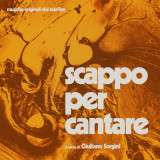
Another dream coming true! One of Giuliano Sorgini's finest and most sought-after titles is finally available as an official LP reissue – the first ever – remastered from the original tapes.
Originally released in 1971on the small library music imprint FAMA, which operated as a sub-label of RCA Italy, the record contains the original music written for Scappo per cantare, a small, pseudo-psychedelic 'musicarello' (musical comedy film) broadcast on RAI television and starring, among others, Italian singers Gianni Morandi and Mauro Lusini.
The only credited album artist is Sorgini, but it's impossible not to perceive, in this record, the hand of his close friend and colleague Alessandro Alessandroni.
This should not come as a surprise. In the early 70s, the two composers and multi-instrumentalists had a fruitful collaboration that saw them, under the monikers Braen (Alessandroni) and Raskovich (Sorgini), produce an abundance of works together, most of which have now gained the recognition they deserve. These include, among others, two 7" singles from their band The Pawnshop, three records in the series Alle sorgenti delle civiltà (Folkmusic), the crime/noir library albums Quarta pagina (Usignolo) and Inchiesta giudiziaria (Octopus Records), as well as the LP Tempo Libero (Panda Records), which was released shortly after the record presented here and in some ways drew rhythmic inspiration from it.
While their collaboration remained unacknowledged on the original release of Scappo per cantare (this was not uncommon at the time, especially in the field of library music), the record sounds perfectly in line with other works composed by Alessandroni in the early 70s, such as Complesso Gisteri's Mostra Collettiva (co-written with Oronzo De Filippi), or even a landmark album like Spontaneous, where Sorgini contributed to a handful of tracks.
So, yes, the sheer beauty of Scappo per cantare is the result of an incredible synergy between two heavyweights of Italian library music! Airy and sweeping melodies à la Zoo Folle, psychedelia à la Under Pompelmo, and various percussion instruments played by Sorgini seamlessly blend and fuse with elements and touches provided by Alessandroni.
More specifically, we find Alessandroni's signature, melancholy whistle in "Desolazione"; the peaceful and dreamy sound of his 12-string guitar in "Scogliere" and "Con Amore"; the trademark harmonies of his vocal ensemble Cantori Moderni in the last two tracks mentioned and in "Per cantare"; and his ingenious use of distortion on his Fender Stratocaster in the suspenseful transitions "Concentrazione" and "Fantocci", as well as in the frantic/hypnotic hippie numbers "Mordente" and "Fendente" (as a side note, it is worth remembering that Alessandroni experimented extensively with distortion in the rock-infused album Underground, co-written with De Filippi and released in 1971 under the moniker Braen's Machine, probably a reference to British psychedelic band Soft Machine).
The creative relationship between Sorgini and Alessandroni was so symbiotic that it would be useless to try to identify in more detail their respective contributions to the sound of Scappo per cantare. The alchemy between these two musical geniuses is the key to the album's exquisitely Italian mixture of cheerful lounge, sweet psychedelia and smooth easy listening.
To do justice to the quality of the music, this remastered reissue is enriched by a new artwork by Eric Adrian Lee, who drew inspiration from the psychedelic visual culture of the period in which the album was written and recorded.
Quartabê’s identity was built upon the metaphor of the classroom: the group sees itself as a school class, which chooses its own teachers from among great masters of Brazilian music. Assuming that the learning and creative processes have in common experimentation and play, the quartet is characterized by its bold versions coupled with irreverent performance.
In addition woto its sound, marked by the group’s various music references - from the São Paulo avant-garde movement to the free improvisation, passing through pop and electronic music - Quartabê also stands out for the formation composed mostly of women who, besides instrumentalists are also arrangers, composers, singers and improvisers - which is unusual in Brazil and it has high political relevance in a music scene where positions of creation and power are still held disproportionately by men. The band started its studies by recording a first album about the work of maestro Moacir Santos, “Lição # 1: Moacir” (2015). After performing this show in Brazil and Europe, the group took a break to record ‘Depê’ (2017), also dedicated to the oeuvre of Santos. In 2018 Quartabê released their third album, starting new studies: “Lição # 2: Dorival”, which was released by the Natura Musical / label RISCO
Wewantsounds is delighted to announce the release of Ryuichi Sakamoto's classic LP "Ongaku Zukan", originally issued in Japan on his own School label in 1984.
The reissue will replicate the original Japanese release which offered two versions: a normal edition featuring the LP with a bonus 2-track 7" EP (WWSLP71), and a limited edition which includes a 3-track 12" EP in place of the 7" (WWSLP72)
Remastered by Saidera Mastering in Tokyo the reissue boasts the original gatefold artwork plus an extra 2-page insert with new liner notes by Andy Beta
The early '80s were a turning point for Japanese musician Ryuichi Sakamoto. As a solo artist, the smash hit soundtrack he had composed for 1983's "Merry Christmas Mr. Lawrence" (a film in which he had also acted), had put him on the verge of becoming a global superstar. Meanwhile he had called a halt to his work with Yellow Magic Orchestra; the influential, globally successful pop trio calling it quits after the release of their 1983 album "Naughty Boys".
Against this backdrop, Sakamoto descended on Tokyo's Onkyo Haus Studio to record his fourth solo album, "Ongaku Zukan" ("Musical Encyclopedia") accompanied by a handful of musicians including his ex-YMO partners Haruomi Hosono and Yukihiro Takahashi, and the prolifically talented Yasuaki Shimizu, Tatsuro Yamashita and Toshinori Kondo. Sakamoto began with no particular plan in mind, recording 30 basic tracks over the best part of 1983. It was on his return to the studio the following year that the album truly began to take shape. Accompanied by a newly acquired Fairlight CMI sampler, the musician made extensive use of the revolutionary equipment to create a wide palette of sound textures which he added to the tracks, a creatively fertile process that was captured on film for the French documentary "Tokyo Melody, A Film about Ryuichi Sakamoto".)
Released in August 1984 the album "Ongaku Zukan" proved a huge success, providing Sakamoto with his first top 5 hit in Japan. Filled with inspired melodies that showcase his unique gift as a composer, it offers up a fascinating mix of styles. Asiatic electro pop nuggets ("Tibetan Dance") share space with futuristic ambient pieces ("Hane no Hayashi de"), and brilliantly creative fusions of jazz, funk, techno and reggae ("Etude" and "Tabi no Kyokuhoki.")
Two simultaneous editions of the album were released in Japan: the regular one featuring a bonus 7" EP with two extra tracks: "Replica" and "Ma Mère l'Oye" while a limited edition added a 12" EP (in lieu of the 7") which included a third track, "Tibetan Dance (Version)." An international version was released two years later in 1986 by 10 Records/Virgin under the title "Illustrated Musical Encyclopedia," but with a very different track list. Five tracks from "Ongaku Zukan" were dropped, namely "Self Portrait," "Tabi no kyokuhoku," "Mori no Hito," "A Tribute to N.J.P" and "Tibetan Dance (Version)", to be replaced by two non-album singles from 1985, "Stepping Into Asia" and "Field Work."
This is the very first time that the two 1984 Japanese editions of Ryuichi Sakamoto's classic album have been released internationally in collaboration with the artist's management and Midi Inc., with remastered audio and the original artwork faithfully reproduced, paying tribute to one of contemporary music's undisputed geniuses.
Wewantsounds is delighted to announce the release of Ryuichi Sakamoto's classic LP "Ongaku Zukan", originally issued in Japan on his own School label in 1984.
The reissue will replicate the original Japanese release which offered two versions: a normal edition featuring the LP with a bonus 2-track 7" EP (WWSLP71), and a limited edition which includes a 3-track 12" EP in place of the 7" (WWSLP72)
Remastered by Saidera Mastering in Tokyo the reissue boasts the original gatefold artwork plus an extra 2-page insert with new liner notes by Andy Beta
The early '80s were a turning point for Japanese musician Ryuichi Sakamoto. As a solo artist, the smash hit soundtrack he had composed for 1983's "Merry Christmas Mr. Lawrence" (a film in which he had also acted), had put him on the verge of becoming a global superstar. Meanwhile he had called a halt to his work with Yellow Magic Orchestra; the influential, globally successful pop trio calling it quits after the release of their 1983 album "Naughty Boys".
Against this backdrop, Sakamoto descended on Tokyo's Onkyo Haus Studio to record his fourth solo album, "Ongaku Zukan" ("Musical Encyclopedia") accompanied by a handful of musicians including his ex-YMO partners Haruomi Hosono and Yukihiro Takahashi, and the prolifically talented Yasuaki Shimizu, Tatsuro Yamashita and Toshinori Kondo. Sakamoto began with no particular plan in mind, recording 30 basic tracks over the best part of 1983. It was on his return to the studio the following year that the album truly began to take shape. Accompanied by a newly acquired Fairlight CMI sampler, the musician made extensive use of the revolutionary equipment to create a wide palette of sound textures which he added to the tracks, a creatively fertile process that was captured on film for the French documentary "Tokyo Melody, A Film about Ryuichi Sakamoto".)
Released in August 1984 the album "Ongaku Zukan" proved a huge success, providing Sakamoto with his first top 5 hit in Japan. Filled with inspired melodies that showcase his unique gift as a composer, it offers up a fascinating mix of styles. Asiatic electro pop nuggets ("Tibetan Dance") share space with futuristic ambient pieces ("Hane no Hayashi de"), and brilliantly creative fusions of jazz, funk, techno and reggae ("Etude" and "Tabi no Kyokuhoki.")
Two simultaneous editions of the album were released in Japan: the regular one featuring a bonus 7" EP with two extra tracks: "Replica" and "Ma Mère l'Oye" while a limited edition added a 12" EP (in lieu of the 7") which included a third track, "Tibetan Dance (Version)." An international version was released two years later in 1986 by 10 Records/Virgin under the title "Illustrated Musical Encyclopedia," but with a very different track list. Five tracks from "Ongaku Zukan" were dropped, namely "Self Portrait," "Tabi no kyokuhoku," "Mori no Hito," "A Tribute to N.J.P" and "Tibetan Dance (Version)", to be replaced by two non-album singles from 1985, "Stepping Into Asia" and "Field Work."
This is the very first time that the two 1984 Japanese editions of Ryuichi Sakamoto's classic album have been released internationally in collaboration with the artist's management and Midi Inc., with remastered audio and the original artwork faithfully reproduced, paying tribute to one of contemporary music's undisputed geniuses.
The influential Detroit pianist’s sole 1970s album. Remastered and lacquered by Bernie Grundman. Now-Again presents the de nitive Tribe Records reissues. Deep, Spiritual Jazz of the highest order. The Tribe label, one of the brightest lights of America’s 1970s jazz underground, receives the Now-Again reissue treatment. This is your chance to indulge in the music and story of one of the most meaningful, local movements of the 20th Century Black American experience, one that expanded outwards towards the cosmos. In the words of the collective themselves, “Music is the healing force of the universe.” Included in an extensive, oversized booklet, Larry Gabriel and Jeff “Chairman” Mao take us through the history of the Tribe, in a compelling story that delves not just into the history of the label and its principals, but into the story of Black American empowerment in the latter half of the 20th Century. The booklet features never-before-seen archival photos and rare ephemera from Tribe’s mid-1970s heyday.
Original self-released by Malik king this lp has been on many peoples lists of holly grail private-press jazz wants for years , very rarely turning up on ebay and the like.. selling for up to $500.
Malik King was an important part of the St Louis jazz scene of the 70's & 80's.
He studied under Albert Ayler in NY in the early 70s before returning to the Midwest. He was a member of; The Human Arts Ensemble, the Shirley Le Flore's ensemble "Free N' Concert". He also served as musical director of The Creative Arts & Expression Lab, The African Peoples Continuum, & The Black Arts Alliance, The worrier poets, as well as various Emerging Force Ensembles.
Zimbabwe Nkenya (1953-2022), a creative artist and innovative musician, was brought up on army bases in the USA and Spain. He spent 30 years traveling and performing in New York, New Mexico, Arizona and St Louis. playing with a who's who of jazz. In New Mexico he became an integral part of the scene, producing and hosting the KUNM'S radio show "THE HOUSE THAT JAZZ BUILT" .
Luckily Malik self-released "Time & Condition" in 1982, capturing his work together with Qaiyim Shabazz. It's not just a crate diggers Holy Grail, but an important artistic and historic document of the St Louis scene. Time & Condition stands alone as a (very) individual, spiritual jazz classic.
We hope this reissue will finally grant these musicians the wider acknowledgement & credit they deserved during their life time.
Original self-released by Malik king this lp has been on many peoples lists of holly grail private-press jazz wants for years , very rarely turning up on ebay and the like.. selling for up to $500.
Malik King was an important part of the St Louis jazz scene of the 70's & 80's.
He studied under Albert Ayler in NY in the early 70s before returning to the Midwest. He was a member of; The Human Arts Ensemble, the Shirley Le Flore's ensemble "Free N' Concert". He also served as musical director of The Creative Arts & Expression Lab, The African Peoples Continuum, & The Black Arts Alliance, The worrier poets, as well as various Emerging Force Ensembles.
Zimbabwe Nkenya (1953-2022), a creative artist and innovative musician, was brought up on army bases in the USA and Spain. He spent 30 years traveling and performing in New York, New Mexico, Arizona and St Louis. playing with a who's who of jazz. In New Mexico he became an integral part of the scene, producing and hosting the KUNM'S radio show "THE HOUSE THAT JAZZ BUILT" .
Luckily Malik self-released "Time & Condition" in 1982, capturing his work together with Qaiyim Shabazz. It's not just a crate diggers Holy Grail, but an important artistic and historic document of the St Louis scene. Time & Condition stands alone as a (very) individual, spiritual jazz classic.
We hope this reissue will finally grant these musicians the wider acknowledgement & credit they deserved during their life time.
Bertram debuts on Dutch cult label Pinkman Records.
Fueled by nostalgia, 'Lights Out' aims to execute industrial old school dancehall and dub within a raw electronics framework. It combines old drum machines, vintage synths, acid bass lines, Sherman-laced vocals by Bertram and the people in his life, and clever approaches to the creative process and production.
He believes in a ''it takes a village" approach and worked closely with label head Marsman to iterate the project. The release is blessed by remixes courtesy of C.L.A.W.S. and Chris Mitchell.
out of Stock
Last delivered 2 years ago available to reorder, subject to availability
The story of the invention of the term, 'deepfunk' is probably only known among fans and practitioners of this niche-genre. In short, it all started in the 1990s when DJs like Keb Darge, Mark 'Snowboy' Cotgrove and others began spinning obscure and feral Funk 45 RPM singles from local American bands, ostensibly generating another sub-category branch off of the mighty Northern Soul tree. The dance-club phenomenon inevitably spilled over to contemporary groups on the funk scene which immediately tried to record their music the way their idols did. The 'rare groove' and 'acid jazz' movements had run their course and there was a concerted effort to reinstate primitive idiomatic styles and techniques into the music, most notably by 90s funk collective The Poets of Rhythm. As more years passed by the number of bands steadily increased (although in tiny numbers, compared to the mainstream market). Almost every country had a representative with the majority of them coming from the United Kingdom. The deepfunk sound was still a niche, however a very few bands made it onto the mainstream charts, most notably Sharon Jones & the Dap Kings.
At the height of the retro-soul movement a questionable development took place. As more bands arrived on the scene, the production became more and more polished and pop-ish. Some of that squeaky-clean tidiness began to creep into the recordings, encouraged in part by the signature sounds of the digital recording technology available at that time. Some bands even tried to jump onto the possibility of promoting their music as 'deepfunk' although they were actually playing slick, funky pop music. This way some people who thought they were listening to raw, energetic funk actually felt quite ambushed when hit with real deepfunk. In fact, a certain percentage of funk music produced within the past 20 years does not deserve to be described as 'deepfunk' at all. Fortunately there were (and are) some pleasant exceptions which did not just imitate but actually rendered amazing funk music just like some of the finest funk combos of the 1960s and 70s.
One of those creative minds is without a doubt Joel Ricci aka Lucky Brown. Originally from Seattle, Washington, USA, he has enriched the deepfunk community since the mid-2000s with his stellar abilities. He is not only an amazing musician playing multiple instruments, but also a brilliant composer, arranger, and producer too. But for us here at Tramp he is much more, a close friend and remarkable human being. Whenever we were struggling, whether with the label or in private life, Joel and his musical work helped us to overcome everything and to keep going our path.
So here we are in 2023. The songs you are listening to right now are the complete Space Dream collection, split into two parts, representing the two living-room recording sessions from which his 2011 Tramp Records debut was compiled. Each fully remastered album contains unreleased material and comes with brand new, beautifully reimagined artwork by Ricci himself, housed in an authentic 1960s tip-on cover. A first class product from a first class musician for the discerning funk enthusiast.
out of Stock
Last delivered 3 years ago available to reorder, subject to availability
The story of the invention of the term, 'deepfunk' is probably only known among fans and practitioners of this niche-genre. In short, it all started in the 1990s when DJs like Keb Darge, Mark 'Snowboy' Cotgrove and others began spinning obscure and feral Funk 45 RPM singles from local American bands, ostensibly generating another sub-category branch off of the mighty Northern Soul tree. The dance-club phenomenon inevitably spilled over to contemporary groups on the funk scene which immediately tried to record their music the way their idols did. The 'rare groove' and 'acid jazz' movements had run their course and there was a concerted effort to reinstate primitive idiomatic styles and techniques into the music, most notably by 90s funk collective The Poets of Rhythm. As more years passed by the number of bands steadily increased (although in tiny numbers, compared to the mainstream market). Almost every country had a representative with the majority of them coming from the United Kingdom. The deepfunk sound was still a niche, however a very few bands made it onto the mainstream charts, most notably Sharon Jones & the Dap Kings.
At the height of the retro-soul movement a questionable development took place. As more bands arrived on the scene, the production became more and more polished and pop-ish. Some of that squeaky-clean tidiness began to creep into the recordings, encouraged in part by the signature sounds of the digital recording technology available at that time. Some bands even tried to jump onto the possibility of promoting their music as 'deepfunk' although they were actually playing slick, funky pop music. This way some people who thought they were listening to raw, energetic funk actually felt quite ambushed when hit with real deepfunk. In fact, a certain percentage of funk music produced within the past 20 years does not deserve to be described as 'deepfunk' at all. Fortunately there were (and are) some pleasant exceptions which did not just imitate but actually rendered amazing funk music just like some of the finest funk combos of the 1960s and 70s.
One of those creative minds is without a doubt Joel Ricci aka Lucky Brown. Originally from Seattle, Washington, USA, he has enriched the deepfunk community since the mid-2000s with his stellar abilities. He is not only an amazing musician playing multiple instruments, but also a brilliant composer, arranger, and producer too. But for us here at Tramp he is much more, a close friend and remarkable human being. Whenever we were struggling, whether with the label or in private life, Joel and his musical work helped us to overcome everything and to keep going our path.
So here we are in 2023. The songs you are listening to right now are the complete Space Dream collection, split into two parts, representing the two living-room recording sessions from which his 2011 Tramp Records debut was compiled. Each fully remastered album contains unreleased material and comes with brand new, beautifully reimagined artwork by Ricci himself, housed in an authentic 1960s tip-on cover. A first class product from a first class musician for the discerning funk enthusiast.
out of Stock
Last delivered 3 years ago available to reorder, subject to availability
Michael Mayer’s IMARA imprint is proud to announce a reissue of German electronica maestro Schlammpeitziger’s second album, Freundlichbaracudamelodieliedgut. Originally released in 1996 by Köln’s A-Musik label, it was the first Schlammpeitziger release to signal to a much wider audience that there was something very special going on in the music of Jo Zimmermann, the mastermind behind Schlammpeitziger. And while he’s subsequently gone on to release a further eight albums for labels like Sonig, Pingipung, and Bureau B, Freundlichbaracudamelodieliedgut is where it really all started for this most singular musician, illustrator and performance artist. Named after the ‘Schlammpeitzger’ or Weather Loach, a fish that breathes through its intestines, moves through substrate, and is surprisingly sensitive to changes in barometric pressure – hence its name – Schlammpeitziger is a similarly remarkable, singular creature.
Like all Schlammpeitziger’s music, Freundlichbaracudamelodieliedgut is overflowing with melody. Using the simplest of set-ups – much of his early music was made with Casio keyboards – Zimmermann magics entire worlds of joy and melancholy. The nine songs here are both rich tributes to the joys of the everyday, and surreal fantasias. “Cosmic Fick” sails out to sea on clouds of taffy and spindrift; “Winterschlafsüßbärentraum” slips and slides around a dream aviary of the mind; the closing “Mango und Papaja auf Tobago” is a diorama spun from springs and Slinkys. Sometimes there are echoes of more peaceable Kosmische music – think Cluster circa Sowiesoso – and both the pacing and the amorphous, tactile textures sometimes recall Chris & Cosey. But Zimmermann’s unique signature is everywhere on Freundlichbaracudamelodieliedgut – simply put, no one else makes music quite as lovely and incandescent as this.
The album’s initial release coincided with an explosion of interest in the music coming out of Köln. This was a unique moment – one where pop, techno, house, ambience, avant-gardism, musique concrete, heavy DSP, and all kinds of other creative phenomena got muddied up in the ‘general jelly’ of Köln’s fast-moving, spirited musical communities. Zimmermann was closely aligned with the music coming out of the A-Musik and Sonig labels – a tightly-knit collection of artists centred around the A-Musik record store, making all kinds of weird and wonderful music, from the electronica of Mouse On Mars to the compositions of Marcus Schmickler, from the electro-acoustics of C-Schulz and Hajsch to the digitalia of FX Randomiz. Zimmermann himself would collaborate with the latter on an album under the name Holosud; friends such as Mouse On Mars and Kompakt’s Reinhard Voigt turned up on Freundlichbaracudamelodieliedgut’s remix EP.
Here, then, is one of the loveliest albums of its era, a pop-electronics album of serious play, one as moistly melancholy as it is melodically riveting. Freundlichbaracudamelodieliedgut is rare beauty indeed.
Michael Mayers Label IMARA ist stolz darauf, eine Neuauflage des zweiten Albums des deutschen Electronica-Maestros Schlammpeitziger, “Freundlichbaracudamelodieliedgut”, bekannt zu geben. Ursprünglich 1996 vom Kölner Label A-Musik veröffentlicht, war es die erste Veröffentlichung von Schlammpeitziger, die einem viel breiteren Publikum signalisierte, dass in der Musik von Jo Zimmermann, dem Mastermind hinter Schlammpeitziger, etwas ganz Besonderes vor sich ging. Obwohl er seitdem weitere acht Alben für Labels wie Sonig, Pingipung und Bureau B veröffentlicht hat, ist “Freundlichbaracudamelodieliedgut” der Ort, an dem alles für diesen einzigartigen Musiker, Illustrator und Performance-Künstler begann. Schlammpeitziger, benannt nach dem “Schlammpeitzger” oder Wetterbarsch, einem Fisch, der durch seine Därme atmet, sich durch den Untergrund bewegt und erstaunlich empfindlich auf Veränderungen im Luftdruck reagiert – daher der Name – ist ebenfalls eine bemerkenswerte, einzigartige Kreatur.
Wie alle Musik von Schlammpeitziger ist auch “Freundlichbaracudamelodieliedgut” voller Melodien. Mit einfachsten Mitteln – ein Großteil seiner frühen Musik wurde mit Casio-Keyboards gemacht – zaubert Zimmermann ganze Welten voller Freude und Melancholie. Die neun Songs hier sind sowohl reiche Hommagen an die Freuden des Alltags als auch surreale Fantasien. “Cosmic Fick” segelt auf Wolken aus Karamell und Gischt hinaus aufs Meer; “Winterschlafsüßbärentraum” schlittert und gleitet durch einen Traum-Vogelkäfig im Geist; das abschließende “Mango und Papaja auf Tobago” ist ein Diorama aus Federn und Slinkys. Manchmal gibt es Echos von friedlicherer Kosmischer Musik – denke an Cluster circa “Sowiesoso” – und sowohl das Tempo als auch die amorphen, taktilen Texturen erinnern manchmal an Chris & Cosey. Aber Zimmermanns einzigartige Signatur ist überall auf “Freundlichbaracudamelodieliedgut” zu hören – ganz einfach, niemand sonst macht Musik so lieblich und leuchtend wie er.
Die ursprüngliche Veröffentlichung des Albums fiel mit einem Aufschwung des Interesses an der Musik aus Köln zusammen. Dies war ein einzigartiger Moment – einer, in dem Pop, Techno, House, Ambient, Avantgardismus, Musique Concrete, Heavy DSP und allerlei andere kreative Phänomene sich in der “Allgemeinen Gelee” der schnelllebigen, lebendigen musikalischen Gemeinschaften von Köln vermischten. Zimmermann stand in enger Verbindung mit der Musik der Labels A-Musik und Sonig – eine eng verbundene Gruppe von Künstlern rund um das A-Musik-Plattengeschäft, die alle möglichen seltsamen und wundervollen Musikrichtungen produzierten, von der Electronica von Mouse On Mars bis zu den Kompositionen von Marcus Schmickler, von der Elektroakustik von C-Schulz und Hajsch bis zur Digitalia von FX Randomiz. Zimmermann selbst würde mit letzterem an einem Album unter dem Namen Holosud zusammenarbeiten; Freunde wie Mouse On Mars und Reinhard Voigt von Kompakt tauchten in der Remix-EP von “Freundlichbaracudamelodieliedgut” auf.
Hier also eines der schönsten Alben seiner Zeit, ein Pop-Electronics-Album voller ernsthaftem Spiel, so feucht melancholisch wie melodisch fesselnd. “Freundlichbaracudamelodieliedgut” ist wahrlich eine seltene Schönheit.
out of Stock
Last delivered 3 years ago available to reorder, subject to availability
"If you can imagine a love child between MAC DEMARCO and SPAR-KLEHORSE, then this would be what you're left with." - SO YOUNG MAGA-ZINE
Raised in North Queensland, Australia, Jarrod Mahon is not one to shy away from bold new endeavors. Once parting ways with his previous record label in 2019, Mahon chose to go fully independent, relocating to Berlin in 2019 (where he still resides), despite having no contacts at all in the country. What’s more, having recorded/performed under the pseudonym Emerson Snowe for over a decade - during which time he home-recorded five albums and 13 EP’s, toured with the likes of King Krule or Ariel Pink, played showcases SXSW and the Great Escape, the works - Mahon took that brave, most uncommercial decision to release under his own name and start almost totally anew.
“There was never really a concept to that name Emerson Snowe other than having some kind of separation from who I was as a person,” Mahon explains, “using a moniker gave me that confidence to push myself further mentally and to give myself some kind of a freedom”. And through the process of creating what would become his debut album, Mahon saw that he had outgrown the need for this protective persona. ‘Everything Has A Life’ was meant to be the debut Snowe album”, he admits, “but after I finished mixing it with Syd Kemp, co-producer I realized that I had actually grown a lot and was much more comfort-able with who I am and what my personal beliefs are.”
The choice of ‘Everything Has A Life’ as the album title, pulled from beauteous opening track ‘All I Know’, neatly summarizes this new outlook: moving on from ‘self-pity’ of the past-self by becoming present for the loved ones around you, improving understanding of one’s own self, via the wider world at large.
That track marks the first written during a lockdown stint in LA where Mahon wrote and recorded every day for 2 months, produced nigh on 250 demos and birthed the bulk of the record. It also brought Mahon back to his all-time favorite, Sufjan Stevens’ Ilinois and its blend of widescreen orchestral landscapes and more candid, naked acoustic-leaning variations - an important influence for the album's stylistic contrasts. Another key inspiration for the record too brought Mahon back to his roots - those full-bloom strains of his Mum’s Beloved Neil Diamond, an annual Christmas irritant to Mahon as a child, yet an artist he’s come to respect in adulthood. “Whatever the reason, with age I came to love the big show band sounds,” he says, “the idea of a performer on stage with a mas-sive orchestra with strings was amazing to me.”
With the help of producer Syd Kemp (Ulrika Spacek, Vanishing Twin), such grand designs could be met. - “When we first met, he asked me if I would like real strings on it. I said of course.” Enter Magda Mclean on violin (Caroline/the Umlauts), and Gamaliel Rendle Traynor on Cello (Sweat, Fat White Family), whose strings helped lift the record to romantic new heights.
He continues: “I said to Syd that the only thing I wanted to achieve with this rec-ord was that I wanted it to make me cry at one point. And we got there eventual-ly.” The final culmination of all these strands, ’Everything Has A Life’ is indeed a treasure trove of emotive riches. Locking into that bittersweet, quintessentially ‘pop’ combination of triumphant rhythms and confessional, stream-of-consciousness lyrics plucked straight from the heart, Mahon faces up to years of substance abuse with a series of gorgeous, blushing melodies: “I was using, I was drinking, I was lying to my friends, I was messing up again, I was hiding from myself”, he joyously chants on ‘The Growing’.
A banquet fit for an indie king, Everything Has A Life is loaded with psych-pop lusciousness (‘All I Know’) and anthemic glam fuzz (‘Death Of The Ladies Man’, ‘Deadstar’, or ‘Sonny is my Best Friend’); recalling that foundational Sufjan Ste-vens influence too with shambling flecks of country (‘Charly (Romantic Heart)’). There’s also those lo-fi crepitations of ‘My Man’ and ‘I can’t’ harking back home-recorded demos that lie at the core of Mahon’s creative process.
AWEH is back to present Shukuma, the highly anticipated collaboration between label head Esa and South African Kwaito legend Kamazu from Soweto. This record, created between 2020 and 2022, is a testament to the power of musical synergy and South African cultural aweh-ness.
As part of Shukuma, the title track and the EP also lies the future Kwaito classic, Muntu. This dance floor banger not only showcases the creative prowess of Esa and Kamazu but also features a collaboration with Dirty Bungalow, adding a unique touch to the overall EP. Muntu has already been featured in the esteemed podcast series, The Invisible Hand.
To further enhance the experience, Esa has collaborated with talented artists Floating B_strd and Sanoy to create an exquisite art piece that perfectly captures the essence of Shukuma. The final artwork will be revealed on the official release day, adding an element of surprise and anticipation. This is a Kwaai Collab you don't want to miss.
out of Stock
Last delivered 23 months ago available to reorder, subject to availability
In 1972, a foursome of design students set out to make a record. This was, in many ways, a strictly creative endeavor. The quartet — composed of Dave Pescod, Alan Lewis, Phil Rawle, and Ted Rockley — were all trained, not as musicians, but as creatives. Art school heavyweights, the four were well-versed in the methodology of intentional experimentation, in the delicate balance of pushing the limits without completely unmooring oneself from a guiding creative intention. Emboldened by a high-brow familiarity with thoughtful experimentation and all the non-conviction of non-musicians, Bowes Road Band’s stint in the world of popular music yielded a record that is as much mind-melting as it is a direct product of its time. Their sprawling LP “Back in the HCA” embodies the exigence “art for art’s sake,” but it is for art’s sake that this record, however off the deep end it seems to travel (hear: “Doctor, Doctor”), remains a unified, and stunning, body of work. The LP’s do-ityourself garage rock noisemaking meets highfalutin creative processes. “Back in the HCA” is warbling psychedelic freakout (“Two Fingers,” “Doctor, Doctor”), Donovan-esque English countryside folk stylings (“Inside My Head,” “Goodbye to Rosie”), and avant-garde jazz improvisions (“Grass is Grass,” “Tomorrow’s Truth”) in one luminous release.
Originally an 9-track LP, Jakarta, Uno Loop, and Bowes Road Band decided to mine the six most cohesive tracks for the reissue, though the extras may be released somewhere down the line. Cohesion efforts aside, “Back in the HCA” stands alone in its singular conception of a genre-bending continuum — it evades definition. That said, the LP can easily be situated in the sonic environment in which it was conceived. By the end of the 60s, England was crawling with blues-based rock outfits that were starting to venture into prog rock territory. You can hear this popular dint cast over the folkier side of the LP. But Bowes Road Band was armed with their non-musicianship: they existed completely liberated from the motivating yet ultimately paralyzing lust for stardom. Enjoying this liberation, Bowes Road Band was utterly free to make noise. This freedom meant drawn out sax interludes amidst sweetly folk stylings (“Grass is Grass”) and Shaggs-like fuzzed-out freakouts that spiral into a void (Doctor, Doctor). This freedom also meant straight-forward tuneful cuts like “Goodbye Rosie” that conspicuously introduce heavily distorted auto-organ accompaniment mid-track amidst poignant lyricism. Bowes Road Band crafts a unified sound and then cracks it open.
With a completely off-the-radar status, Bowes Road Band could only press 50 copies of the record — 10 for each of them and 10 for the school. The band’s lifespan was to end there, or so they thought. “Back in the HCA” was the accidental fruit of a Berlin flea market treasure hunt by Jannis Stürtz, DJ and co-founder of Habibi Funk and Jakarta Records. After finding and sharing the LP with a few colleagues, Stürtz managed to get in touch with the band, get ahold of the master tapes collecting dust in Ted Rockley’s attic, and start the reissuing process. The record is still adorned with its original cover art designed by Alan Pescod, both reminiscent of bygone school days and the Zoom calls of yesterday — in short, reunion. Its re-discovery was happenstance and ought to be listened to as such. That is, “Back in the HCA” was not made to be listened to on a broad scale, or, at least, was not made with this goal in mind; it is neither in its time nor of its time. Of course, the group explicitly cites the folk tunes of the English countryside, the distorted rock groups that reigned during the record’s conception, and the fringes of psychedelic music that only the uber-underground might recognize (e.g., “Dreaming of Alice”). Yet still with these obvious influences, “Back in the HCA” always existed beyond the domain of both traditional musicianship and conventional commodification. Bowes Road Band’s DIY musicality beams through in technicolor across “Back in the HCA.” The vinyl includes an 8-page booklet detailing the albums creation and interviews with the band.
Lead single “Grass is Grass,” out July 14 along with album pre-order, encapsulates the record’s range: the track unfurls into a sprawling sax-driven trip following a sundrenched, Donovan-esque intro w/ lyrics “naively about parks and gardens, not marijuana!” The keyed-down folk cut “Goodbye to Rosie” is single 2 and elevates stripped-down acoustics with golden tinges, out August 4th. Focus track “Tomorrow’s Truth” constructs the fuzzed-out underbelly of acid folk. Listen for echoes of late Beatles, Mark Fry, and Donovan (if they were armed by an unshakabele willful naiveté). Like Sgt. Pepper’s on a shoestring budget—take a trip to the underground with LP “Back in the HCA,” available everywhere physically and digitally on September 1st via Jakarta Records and Uno Loop.
Besides online promotion from label profiles, the album will be further promoted by external agencies within the UK and US.
A group of five talented musicians from the northeast, led by the songwriting genius of Alan Hull. Lindisfarne were formed in 1968 when Hull joined Simon Cowe on guitar, Ray Jackson on mandolin and vocals, Rod Clements on bass and Ray Laidlaw on drums. Building a fearsome live reputation, by 1970 they had been signed to Tony Stratton Smith's Charisma label.
Their first album, Nicely Out Of Tune, contained Lady Eleanor and set up an eager audience for Fog On The Tyne, an album of tremendous light and shade. Known for the Rod Clements- written, Ray Jackson- sung Meet Me On The Corner, and Alan Hull's anthemic title track. The album succeeds in creating a mythical, twilight northeast, from the cover design inwards; of city lights, ragmen, sausage rolls, tattered tweeds and having a "wet on the wall." Fog On The Tyne is the sound of a band at both a commercial and creative peak. The musicianship is second to none, watertight, yet relaxed and freewheeling, recorded at London's Trident Studios by Bob Dylan and Leonard Cohen producer Bob Johnston and Bowie engineer Ken Scott.
First Word Records is very proud to welcome Ruby Wood to the label, with her debut solo EP 'Sincerely'.
Ruby is a vocalist & songwriter hailing from Huddersfield, West Yorkshire. Her soulful yet distinctive voice has enabled her to front numerous projects; perhaps best known as lead vocalist of the critically acclaimed Submotion Orchestra, since 2009.
She also toured as lead vocalist for Bonobo's live band, for Nubiyan Twist, and with hugely successful 1940's-esque vocal trio, The Sugar Sisters. There have also been features for dance outfits such as GLXY & Franky Wah, additionally to writing & recording for the likes of Krept & Konan, Alfa Mist, Roska, Hemai, Barney Artist and XOA, to name just a few.
In 2021, Ruby was awarded a DYCP Arts Council grant to fund her own creative project, which was taken as an opportunity to go back to the drawing board creatively, spending time working out how her own music would sound and what messages she wanted to convey.
After initial sketches on her Native Instruments Maschine, she began to work with fellow Submotion Orchestra member, Chris 'Fatty' Hargreaves; a long time friend and collaborator, and a revered musician in his own right, with his low-end theory science triumphantly stamped across his other projects, such as Pengshui and Outlook Orchestra. Ruby and Chris began bouncing ideas back and forth, and gradually this solo project started to take shape and form the bulk of this debut EP.
In Ruby's words "After years of working in big projects with lots of people, I often struggled to feel like my voice was being heard. Branching out on my own is an opportunity for me to make music that I would actually listen to myself! This process has been healing for me, and I'm so proud of myself for continuing to learn and develop my craft, whilst learning how to produce songs from scratch.
Becoming a mother also changed me for the better, and provided me with a wealth of experiences and challenges that have gone on to fuel my lyrics. I've grown a lot, and this EP gives a snippet of my life thus far".
'Sincerely' is comprised of five tracks, firmly based in the realms of hip hop soul and neo soul sonically, with an unashamedly '90s R&B vibe throughout. Throughout the EP, Ruby's story tells tales of motherhood, relationships, commitment, independence and inspirations. Further collaborations on the set come from vocalist Isaac Malibu (on 'Mr. Unavailable'), wind player Arran Kent (on 'My Favourite Song'), and assistance on a couple of beats from acclaimed hip hop producer, Pitch 92 and San Diego's Martel Howard, along with more Submotion alumni, Danny Templeman, Dom Howard and Bobby Beddoe and the debut performance from Ruby's daughter, Amber!
A truly triumphant body of work, this is just the start of a new chapter for Ruby Wood.
A year after its first edition, the Open Space series returns in order to keep exploring what ambient music might mean nowadays.
A breadth of fresh artists, some new to the label and others renowned for their more dance-centric works, the compilation aims to give each individual artist their creative freedom to explore the space.
Techno producers such as Arthur Robert or label head Len Faki himself keep the beats present but this time focus on evoking states of introspection rather than the shuffle of dancefloors.
On the other end of the spectrum, we find seasoned multi-instrumentalist Laraaji, who has been crafting deeply meditative soundscapes since the 80’s. Using the special opportunity, the label reaches outside its usual sphere, inviting artists like the modular synth expert Jeremy Wentorth or Jimmy LaValle’s band project The Album Leaf. All while still featuring some well known veteran producers the likes of John Beltran or Exos.
No matter their respective scene or background, all artists are using their unique approach to display something deeply emotive. Be it the warm, expansive electro of Future Beat Alliance or a bubbly cosmic arpride by Hamburg Duo Can Love Be Synth.
Truly living up to its name, the Open Space series aims to open up possibilities for artists to freely pursue their creativity in a completely undefined area, a space for exploration and connection.
out of Stock
Last delivered 3 years ago available to reorder, subject to availability
2024 BLACK VINYL REPRESS.
One can hardly imagine the genre-busting, culture-crossing musical magic of Outkast, Prince, Erykah Badu, Rick James, The Roots, or even the early Red Hot Chili Peppers without the influence of R&B pioneer Betty Davis. Her style of raw and revelatory punk-funk defies any notions that women can’t be visionaries in the worlds of rock and pop. In recent years, rappers from Ice Cube to Talib Kweli to Ludacris have rhymed over her intensely strong but sensual music.
There is one testimonial about Betty Davis that is universal: she was a woman ahead of her time. In our contemporary moment, this may not be as self-evident as it was thirty years ago – we live in an age that’s been profoundly changed by flamboyant flaunting of female sexuality: from Parlet to Madonna, Lil Kim to Kelis. Yet, back in 1973 when Betty Davis first showed up in her silver go-go boots, dazzling smile and towering Afro, who could you possibly have compared her to? Marva Whitney had the voice but not the independence. Labelle wouldn’t get sexy with their “Lady Marmalade” for another year while Millie Jackson wasn’t “Feelin’ Bitchy” until 1977. Even Tina Turner, the most obvious predecessor to Betty’s fierce style wasn’t completely out of Ike’s shadow until later in the decade.
Ms. Davis’s unique story, still sadly mostly unknown, is unlike any other in popular music. Betty wrote the song “Uptown” for the Chambers Brothers before marrying Miles Davis in the late ‘60s, influencing him with psychedelic rock, and introducing him to Jimi Hendrix — personally inspiring the classic album ’Bitches Brew.’
But her songwriting ability was way ahead of its time as well. Betty not only wrote every song she ever recorded and produced every album after her first, but the young woman penned the tunes that got The Commodores signed to Motown. The Detroit label soon came calling, pitching a Motown songwriting deal, which Betty turned down. Motown wanted to own everything. Heading to the UK, Marc Bolan of T. Rex urged the creative dynamo to start writing for herself. A common thread throughout Betty’s career would be her unbending Do-It-Yourself ethic, which made her quickly turn down anyone who didn’t fit with the vision. She would eventually say no to Eric Clapton as her album producer, seeing him as too banal.
In 1973, Davis would finally kick off her cosmic career with an amazingly progressive hard funk and sweet soul self-titled debut. Davis showcased her fiercely unique talent and features such gems as “If I’m In Luck I Might Get Picked Up” and “Game Is My Middle Name.” The album Betty Davis was recorded with Sly & The Family Stone’s rhythm section, sharply produced by Sly Stone drummer Greg Errico, and featured backing vocals from Sylvester and the Pointer Sisters.
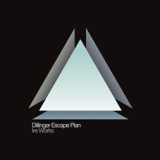
After Miss Machine, Dillinger Escape Plan fans were divided. Many of the folks who were attached to the screaming mathematical metal of Calculating Infinity bailed on the band, disapproving of the experimental musical direction and the meathead appearance of new singer/screamer Greg Puciato. Open-minded listeners were excited about the progressive journey they were taking and many critics hailed the group as a true innovator of metalcore. Ire Works succeeds in many of the same ways that their previous album did, while branching out creatively. They continue to toy with technical metal, blistering hardcore, jazz breaks, and post-punk, but here they evolve again by adding more twists and turns with additional electronic elements. While the merging of too many styles in hardcore can make for a convoluted result (see Avenged Sevenfold's self-titled release), the added instruments and genre changeups enhance the result rather than acting as ornamental distractions. Edgy Aphex Twin-style drill'n'bass drum breaks and stretched and squeezed electro blips feel strangely at home next to the psychotic time-signature changes and manic riffs, especially on the tracks "Sick on Sunday," "Dead as History," and "When Acting as a Wave." Violins, pianos, and trumpets sit nicely in the mix, and the group's willingness to take chances leads to stunning artistic endeavors rather than stale attempts at crossing genres just for the sake of being clever. Original vocalist Dimitri Minakakis makes an appearance, as does Mastodon guitarist Brent Hinds, but the most notable inclusion is drummer Gil Sharone, who proves himself an expert at picking up the slack after the departure of founding member Chris Pennie to play in Coheed and Cambria. Undoubtedly, this act added anger to fuel the fire of their heavier numbers. "82588," "Fix Your Face," and "Party Smasher" are as wicked and manic as their most difficult earlier stuff; conversely, the melodic hooks and falsetto of "Black Bubblegum" and the watery ambience of "Mouth of Ghosts" balance out the album nicely. It can be inaccessible and terrifying all at once, but in a genre overly saturated with formulaic groups, Ire Works is a true standout. If DEP aren't careful and continue down this innovative path, they could easily be labeled the Radiohead of metalcore
Deena Abdelwahed's first album is shifting the epicenter of contemporary electronic music south: 'Khonnar' will be released on November 16, 2018 by InFiné. Pronounced 'Ronnar' (an essential detail so as to avoid facile misinterpretation by French-speakers) it is a term that makes the most of Tunisia's cultural and linguistic spectrum. It evokes the dark, shameful and disturbing side of things, the one we usually seek to hide, but which Deena instead sticks our noses in with her debut. It is a testament to Deena's coming into her own as a world citizen, and as an artist. A self-construction made of frustrations and constraints, borne of retrograde mindsets, which are not the prerogative of either the East or the West, and which she tirelessly strives to expose and break. Throughout the 45 minutes of 'Khonnar", Deena breaks down the codes of bass, techno and experimental music, and writes the manifesto for a generation that does not seek to please or to conform, taking back control of its identity - with all the attendant losses and chaos. A new creative world order is taking shape, a new tilting point between north and south, the response of a connected and liberated youth who takes the control of the new decolonization. About Deena Abdelwahed A Tunisian producer and DJ, Deena Abdelwahed arrived in France at the age of 26 after earning her stripes on the Tunis scene and as part of the Arabstazy collective.
Das französische Label Infiné ist dafür bekannt, elektronische Musik jenseits ausgetretener Pfade zu veröffentlichen - hier wird Techno und House neu definiert. So passt es ganz gut, dass die aufstrebende tunesische DJ und Underground-Produzentin Deena Abdelwahed bei dem Lyoner Imprint eine Veröffentlichungsplattform gefunden hat. Abdelwahed performte in den letzten Jahren zwischen Boiler Room und Berghain in allen namhaften Clubs und hinterließ bei der globalen Dance-Gemeinde mehr als staunende Münder. Nach der im Frühjahr 2017 veröffentlichten EP "Klabb" präsentiert die Tunesierin mit "Khonnar" jetzt ihr sehnlichst erwartetes Debütalbum.
Was beide Tonträger vereint: sie verbinden nordafrikanische Klangelemente mit elektronischen Sounds, haben jedoch mit Weltmusik nichts am Hut.
PAURA explores the horror repertoire from the precious CAM Sugar archives taking us on a hypnotic journey into the labyrinths of fear, through the different variations that Italian horror took on from the esoteric and supernatural to the slasher films of the early 1970s; to reinterpretations of Romantic literature and gothic fiction to the splatter films of the ‘80s; and from witchcraft to metropolitan horror. This is not a real “best of” but an eclectic menu full of mysterious voices, childlike lullabies, sweet melodies, obsessive music boxes, obstinate harpsichords, crazy distortions and threatening synthesizers, conceived as a succession of sequences, as if a film edit. The new collection includes some of the most creative music ever written and strives to do justice not only to some of the best known composers in this genre, but also to many great unsung composers: From celebrated composers like Ennio Morricone, Riz Ortolani & Stelvio Cipriani to long-forgotten personalities who fed the industrial backbone of Italian cinema such as Daniele Patucchi, Marcelo Giombini & Berto Pisano. The collection includes 6 previously unreleased tracks plus 3 tracks released on vinyl for the first time and 5 tracks available commercially for the first time (originally released only as a limited promo item).
Daljit Kundi and Ludvig Cimbrelius have Indian and Swedish backgrounds but actually came together in the UK music scene and specifically ambient jungle. They set off to explore that world totters and did so with aplomb across several great albums and EPs.
This new album was actually nearly done many years ago but was shelved owing to struggles with record labels. When Past Inside The Present heard it though they encouraged the album to be finished and so here it is. It's an emotional work which "attempts to represent a psychic darkness that is as deeply restful as it is ripe with creative potential." It's absorbing, beautiful ambient from a pair of real dons.
out of Stock
Last delivered 14 months ago available to reorder, subject to availability
Dance music powerhouse Deeptrax follows up recent dispatches from Joey Anderson and Caim, with a label debut from fellow Dutch techno stalwart Robert Vosmeijer AKA De Sluwe Vos, who offers a 5-track collection that explores the depths of both music and sound.
Crafted during the pandemic, Vosmeijer, who had been experimenting with ambient music and sound design, found himself longing for the dancefloor and its ability to disconnect you from reality whilst reconnecting you with friends. As such he began digging into his record collection, absorbing sounds and reenergising his creative output.
"I loved making these records because it felt like I could express myself, within the 'De Sluwe Vos' project, again.”
The Patron Records boss’ new Terraforming EP opens with ‘Reeeese’, a heavyweight ode to the legendary bass sound that underpins the track with its thick layer of treacly warmth. Solar Prince turns our focus on percussion, with its xylophone melody dancing between vaporised synths and string-laced stabs, to create a soothing and yet urgent soundtrack.
On the flip, title track Terraforming, with its wonderful analogue crackles and hisses, lets the pulsing sub steal the show again as pressurised hats snappily punch holes in the atmosphere. Jupiter's Universe exudes a roughly cut techno 2step, layered with pulsing cosmic synths and bubbling melody.
Finally the EP is rounded off by Crawford. Another track that perfectly rides the intersection of music production and sound design. It’s cosmic keys and scything synths work almost at odds with the tribal roll of his drums, yet come together to create a mature and unique production.
out of Stock
Last delivered 2 years ago available to reorder, subject to availability
Betty Davis was a musical maverick with vision. Image, substance, sex, and grit combined with a badass band that could deliver the funk bed backbone to the sultry music between the sheets. After cutting two notorious discs for the Just Sunshine label (Betty Davis and They Say I’m Different), and Nasty Gal for Island Records, Davis went to work on her most personal and expressive record yet. After capturing 10 hard-hitting tracks in 1976 at the remote Studio In The Country (Louisiana), a creative difference with her then label caused the platter to be unexpectedly shelved. Davis would cut one final album and soon retreat from the music business, completely disappearing from the public eye.
Is It Love Or Desire is a little-known gem in the Davis catalog. Mastered from the original tapes, and untouched for over 30 years, this release features detailed liner notes, the originally intended artwork housed in a lavishly packaged digipak, rare photos, archival material, and recent interviews with Davis and her skin-tight band Funk House.
Never bootlegged, never released, never heard until now, the secret story of this lost album will finally enter the history books and cement this bold soul sisters contributions to music and popular culture. Its time to get down…
Three years after the original release date of Caterina Barbieri’s career defining album Ecstatic Computation, the Italian artist reissues the record on her newly found own label light-years.
Caterina Barbieri is an Italian composer who explores themes related to machine intelligence and object oriented perception in sound through a focus on minimalism. Ecstatic Computation revolves
around the creative use of complex sequencing techniques and pattern-based operations to explore the artefacts of human perception and memory processes by ultimately inducing a sense of ecstasy and contemplation. Computation is turned from being a formal, automatic writing technique into a creative, psychedelic practice to generate temporal hallucinations. A state of trance and wonder where the perception of time is distorted and challenged.
Equally nervous and ecstatic, the fast permutation of patterns can create a state where time stands still whilst simultaneously being in motion. Is this propulsive music moving forward or backward? As
long as the perception of the present is constantly enhanced and refreshed in an endless sense of loss, re-discovery and the search for self-orientation this question lies mute aside the thrilling and perplexing moment of the matter at hand.
out of Stock
Last delivered 3 years ago available to reorder, subject to availability
-15 year anniversary and first time on vinyl with brand new artwork, including previously unseen pieces from the Tame One archive.
-Remixed and remastered audio for a fresh listening experience. -Featuring guest appearances from Sean Price and Del Tha Funky Homosapien - One half of legendary graffiti rap group The Artifacts. -140 gram black vinyl, matte flood jacket with spot uv, 12x12 double sided insert with black poly lined inner sleeves. Rough, rugged and raw. Nothing better describes one's listening experience when they first heard Tame One & Parallel Thoughts, “Ol Jersey Bastard”. It was 15 years ago when Tame One came to "The Paradigm", the recording studio of Freehold's own Parallel Thought. One session turned into two, then quickly turned into three, resulting in a twice-weekly recording ritual that spanned three years. This ritual would give birth not only to this album, but three (Acid Tab Vocab & Parallel Uni-Verses w/ Del Tha Funky Homosapien) instilling a lifelong creative partnership. But let's focus on "Ol Jersey Bastard," Tame One's homage to the almighty and original OL Dirty Bastard. It was not the cleanest record to listen to, but it was true to Tame One's style and vision. He was not constrained by working with a group or having to answer to a label. As a side note, Amalgam Digital, the joke of a label who originally released this album wouldn't let us follow through with our original artwork concept. So the new cover and layout created by close friend Michael Interrante is Tame’s original concept. We also were able to include original scans of unseen artwork, tags & lyrics from Tames archive. This was unfiltered raw hip-hop, showcasing Tame One's unparalleled ability on the mic. Sometimes that called for no hook or maybe a 54 bar verse, traditional song structures were out the window. That being said, coming back to this album all these years later as producers, we wanted to elevate the album's listening experience. We cleaned up the mixes, so you might notice Tame sounds a little clearer, or those beats might knock a bit louder. It was what was needed to further elevate the music while not compromising our and Tame’s vision. Further demonstrating that music is a living, breathing piece of art. Always able to evolve. We hope you enjoy it!
Sometime in 1984, San Diego native Anthony "Antone" Williams found himself sitting alone at Pure Sound Studios, tinkering around with a drum machine. Eventually he landed on a "sinister groove" which would lay the propulsive foundation for his hauntingly melodic tour de force, "Windows of My Mind." Released the following year as a seven-inch single on his own Unity Records label, the song features Antone's otherworldly production. Some have referred to the result as "post punk soul," but we'll let you be the judge.
Coming up in San Diego in the Seventies, part of an extensive musical family, Antone's creative fuse was lit by the sounds of Stevie Wonder, Earth Wind & Fire, and the Jackson 5.. At the age of 13, he was performing in area clubs, making a name for himself. By age 22, he had opened his own recording studio, Pure Sound. The influence of Sly and the Family Stone was decisive for Antone, who took to wearing a star-shaped gold necklace, not unlike the one famously worn by Stone on his epochal 1975 LP High on You.
"Windows of My Mind" was Antone & The Underworld's sole release. Limited to 500 copies and handed out as a promotional tool for a purported album of the same name, the single didn't get much traction. (A story as old as time.) Perhaps the music was ahead of its time and Antone's visionary message will finally sink in 2023. "I didn't want to make a song like Shake Your Booty", he says now. And yet we think that this long-lost record with its "sinister groove" is eminently danceable, almost 40 years later. We challenge you to take a listen to this home-grown 1985 7", remastered directly from the original tape, and make an assessment of your own.
out of Stock
Last delivered 2 years ago available to reorder, subject to availability
Wisdom Teeth co-founder K-LONE returns with his second full length project, ‘Swells’: a kaleidoscopic and expansive record that looks to deep house, synthpop, leftfield R&B and beyond for a spellbinding masterwork of melodic electronica.
His debut LP ‘Cape Cira’ became the accidental soundtrack of the long strange summer of 2020 - its lush marimbas, hazy atmos and synthesised bird calls providing the ideal soundtrack for some much needed collective escapism. The record was widely deemed one of 2020’s standout electronic LPs, gaining glowing reviews in Pitchfork, DJ Mag, Mixmag and Resident Advisor, and ranking highly in end of year lists by Crack Magazine.
Approaching its follow up, the Brighton-based producer felt a fresh perspective was needed. Originally landing on the name ‘Swells’ as a secret pen-name to write the record under, the intention was to keep the project as separate as possible from ‘Cape Cira’ to avoid settling into familiar territories - but as the record took shape it became clear that it made perfect sense amongst his already diverse discography.
Like ‘Cape Cira’, there is a distinct and intentionally limited sound palette at play on ‘Swells’. Looping vocal cuts, rich cluster chords and undulating arpeggios sit front and centre here - as does the lo-fi plonk of of the CR78 drum machine. But while the record clearly takes influence from a range of vintage sound sources, its overall aesthetic is unmistakably contemporary. Sounds are not artificially degraded nor obscured under washes of sampled tape hiss. Rather, everything is processed with a gloss, hi-fidelity sheen. The record’s rhythms are bright, dry and snappy, and its melodies are processed with a neon poppy glow.
The producer’s unabashed love of contemporary pop music is most obviously exemplified by the appearance of British singer-songwriter Eliza Rose. The pair met for a session at a North London studio back in 2021, and the now Brit Award-nominated singer’s warm, emotive vocal takes became an immediate source of inspiration early in the record’s conception. As such, Rose’s voice is heard in various states of manipulation throughout its duration - initially as reduced and looped phrases, and then finally in full form on ‘With U’: a low-lit, dubbed-out slice of leftfield R&B that beckons comparisons with Tirzah, Little Dragon and even Erykah Badu.
Elsewhere, there are references to G-Funk (‘Oddball’), Autonomic drum and bass (‘Shimmer’), hip-house (‘Love Is’) and even Metronomy-era electro pop (‘Love Me A Little’).
As always, the true magic of K-LONE’s artistry is to present complex, subtle and original ideas in ways that feel familiar and immediate. Melodies are introduced as effortless earworms, only to be twisted out of shape into strange and unusual formulations. Looping rhythms unspool into washes of hazy, dubbed-out ambience before rebuilding themselves. Refined and endlessly creative, ‘Swells’ marks a captivating next step for a producer and record label that have both reliably positioned themselves at the very forefront of contemporary electronic music.
out of Stock
Last delivered 3 months ago available to reorder, subject to availability
Habibi Funk is excited to share “Marzipan” - our first full length contemporary release courtesy of Beirut’s multi-instrumental phenom Charif Megarbane, also known as the man behind prolific Cosmic Analog Ensemble. The LP is a journey into Charif’s styling, one he terms “Lebrary”: a vision of Lebanon + Mediterranean expressed through the kaleidoscopic sonics of library music. Drawing from artists that encapsulates the HF sound, such as Ziad Rahbani, Ahmed Malek and Issam Hajali, Charif translates these influences into an LP that is equally at home in ’23. We always wondered why Charif’s music stayed under the radar for so long, that all changes with “Marzipan”.
Charif Megarbane, the staggeringly prolific producer, instrumentalist, and all-around musical mastermind returns with full LP “Marzipan.” Following his previous release of EP “Tayara Warak” in 2022, “Marzipan” is a sonic journey that seeks to capture the full scope of Megarbane’s habitus. As a composer and producer, Megarbane touts hugely versatile, sometimes volatile musicianship — his 100+ catalogue of projects (including legendary groups like the Cosmic Analog Ensemble, Free Association Syndicate, Monumental Detail, etc.) features a huge domain of sonic direction. This collection was previously developed in Megarbane’s own Hisstology label which hosts a wealth of collaborative efforts. Now, Habibi Funk represents Megarbane under his own name. Megarbane finds a sonic through-line in his surrounding soundscapes as he draws on the chaotic energy of the crowded Beirut metropolis (“Souk El Ahad”), the warm atmosphere of the Lebanese countryside (“Chez Mounir”), or the lushness of a Mediterranean beach resort (“Portemilio”). Reflecting the aural composition of his direct surroundings into kaleidoscopic instrumentation provides a unique insight into how one musical phenomenon transposes sight into sound. Habibi Funk is thrilled to share “Marzipan” and finally throttle this under-theradar phenomenon into the solo spotlight. Despite the magnitude of his catalog, Megarbane’s LP sounds as fresh—as resolutely inspired—as a debut record. “Marzipan” continues down the winding path he trod on EP “Tayyara Warak” (released Decmber, 2022) which features solid footing in the hectic city sounds Megarbane hears as home. Despite his obvious musical acumen, Megarbane’s greatest talent seems to be his open ears. In many ways, “Marzipan” is a cartographic feat — it travels and traces a journey across many dimensions (both sonic and physical). Megarbane’s instrumental catalogue is vast: toy glockenspiel, harpsichord, pedal steel, a classic Wurlitzer, et al are used liberally on the record. The resultant sound is as sprawling as the musician’s instrumental dexterity. “Marzipan’s” closing track “Bala 3anouan” can be translated loosely to “without address” — a fitting final word. Despite the entire record being a sincere testament to Megarbane’s environmental approach to music-making, the record is not bound to any particular coordinates, or any particular sound for that matter. The vastness of his influences — beloved artists like Ahmed Malek and Issam Hajali (both Habibi Funk veterans); West African funk deep cuts; European cinematic scores; et al — result in a record of somewhat unparalleled expansiveness. Floating melodies and frantic rhythmic interludes both find natural homes across “Marzipan.” The record is tinged with psychedelic elements—fuzz-drenched guitar, sliding microtonal interludes, hypnotic rhythmic breakdowns. Reflecting on his creative process, Megarbane cites a stream of consciousness approach: “It’s a very spontaneous, playful, and diary-like approach and workflow…I trust my instinct because instinct is based on experience.” Lead single “Souk El Ahad” opens the roll-out with a raucous energy, out June 12. Megarbane abstracts busy city sounds into a psychedelic framework, casting technicolor hues on everyday experience. Following is second single “Pas de Dialogue” out June 23. The track jerks the listener towards a more meditative state with lulling harpsichord and expanding, cinematic sound. “Marzipan” will be available physically and digitally everywhere on July 14, 2023. Be sure to listen for focus track “Chez Mounir” that captures the warmth of community in a joyful, laidback groove.
Uncover greater insight into the world of Charif Megarbane in the booklet accompanying the LP
out of Stock
Last delivered 17 months ago available to reorder, subject to availability
"Existences" is the highly anticipated first album by Neurocore, a talented French artist known for his thought-provoking compositions. This album is a culmination of years of introspection and exploration into the complexities of human existence. During the Covid lockdown, Neurocore found himself with the precious gift of time, allowing him to delve deep into his creative process and tackle profound questions through music.
Each of the 13 tracks on the album tells a story, evoking emotions and painting vivid sonic landscapes. The cover art, meticulously crafted by URRU, captures the essence of the album's concept - a mesmerizing blue vortex symbolizing the unknown and the powerful energy that draws us towards it.
Neurocore breaks free from the confines of being labeled solely as a "speedcore producer." Instead, he presents a diverse array of electronic compositions that transcend trends and embrace the full spectrum of human emotions. Rejecting the notion that hardcore music is only dark and brutal, Neurocore sees it as a representation of the inner beauty within every human being.
"Existences" invites listeners to interpret and create their own stories, as music has the power to evoke personal experiences and emotions. With this remarkable album, Neurocore celebrates the diverse facets of existence and invites us to embark on a profound sonic journey.
3x12" album + digital release
Including an A5 insert with a personal note from Neurocore
out of Stock
Last delivered 2 years ago available to reorder, subject to availability
From Alehouse to Playhouse Bjarte Eike and his barnstorming Barokksolistene capture the vital spark of Restoration London’s entertainment scene with a captivating new recording for Rubicon Classics! The Playhouse Sessions will be released on 23 September 2022 to coincide with Barokksolistene’s concert double-bill at London’s Southbank Centre.
‘A smattering of Purcell, dances from Playford’s Dancing Master, shanties, reels and ballads succumb to a nine-piece ensemble drawing on Baroque, jazz and folk styles for a no holds barred hooley of riotous improvisatory give and take,’ (BBC Music Magazine review of The Alehouse Sessions, August 2019)
London’s musicians, pushed in the 1650s, to the margins of society by order of Oliver Cromwell, found room for new forms of entertainment in city-centre taverns and alehouses. They remained there long after the restoration of the monarchy, performing sets of dances, theatre songs and bawdy ballads to audiences glad to be free from Puritan constraints on pleasure.
Norwegian violinist Bjarte Eike and his Barokksolistene have restored the spirit and substance of those long-forgotten performances with their Alehouse Sessions, hailed by The Times as ‘irresistible’ and ‘fabulously unrestrained’ by The Guardian. Five years ago the Norwegian violinist and his band scored a best-selling album with The Alehouse Sessions on Rubicon Classics. They return to the label with another compelling collection of music and words of the kind on offer more than three centuries ago at Henry Purcell’s favourite Westminster watering holes. The Playhouse Sessions, set for release on Rubicon Classics on 23 September 2022, reflects the uplifting energy and engaging emotional contrasts of Barokksolistene’s Alehouse performances.
“The album contains a sort of inner narrative that runs through the recording,” says Bjarte Eike. “It has become like a play in its own right, with each track being a small tale within a larger story.” The recording’s tracklist includes Eike’s beguiling arrangements of music from Purcell’s semi-opera The Fairy Queen and his own original compositions on words from the play on which it is based, Shakespeare’s A Midsummer Night’s Dream; popular songs and ballads such as ‘The Irish Washerwoman’, ‘I often for my Jenny strove’ and ‘The Three Ravens’; tunes from Purcell’s welcome odes and stage shows, Come ye sons of art and Dido and Aeneas among them; the ‘Willow Song’ from Shakespeare’s Othello; Eike’s own voice in Puck’s monologue from Act 5 of A Midsummer Night’s Dream; and John Dowland’s sublime air ‘Can she excuse my wrongs’.
London’s theatres were closed at the start of the English Civil War in 1642 and remained shut until the Restoration. Alehouses offered redundant musicians, actors and dancers a place to scrape a precarious living and soon became their creative refuge. “Although a few surviving theatres reopened in 1660 with the return of Charles II, there was little money around to rebuild those that had been demolished,” observes Bjarte Eike. “And a generation of musicians had already found an audience in places like the Black Horse in Aldersgate Street. So popular were their alehouse sessions that Cromwell tried to abolish them! But they outlived him and became part of Restoration musical life.” The form of a Barokksolistene Alehouse, he adds, is like a creative room. “Within its framework I can frequently refurbish the show with new contents. The Playhouse project is likewise an extension of the ever-evolving Alehouse Sessions. Together they tell the story of music and theatre in London during Cromwell’s time and after the Restoration. Of course there’s an historical context to what we do. But there’s also the practical context – which is even more important to me – of connecting with a contemporary twenty-first century audience. An Alehouse / Playhouse performance is not something for the museum; it's about music made in the present moment, just as it was in the London alehouses of Purcell’s day -- with their playhouses annexed to the rear of the beer-drinking saloons. The encounter of musicians onstage and the audience in the hall is the real magic of it. We have to fuse the audience into the action of our performance!”
The Playhouse Sessions will be launched on Friday 23 September with a late-night concert at the Purcell Room and a post-concert Alehouse Session in the foyer of the Queen Elizabeth Hall. Soprano Mary Bevan is set to join Eike and his Alehouse Boys for the first half of their Southbank Centre double-bill, offering unique interpretations of songs from Purcell shows and other hits from the late seventeenth-century London stage. “The Southbank Centre is a direct descendant of concerts given in the 1650s in the alehouses of London,” notes Eike. “These alehouses after all staged some of the world’s first public concerts. Later, after the Restoration, it became common for promoters to advertise alehouse concerts in the press and offer subscription tickets. Purcell and his fellow musicians were thus just as at home performing there as they were in the chambers of the royal court or in London’s new theatres.”
Bjarte Eike launched his Alehouse Sessions in company with like-minded musicians 15 years ago. The ensemble comprises a core of regular performers, all of whom have committed to memory a huge setlist of up to four hours of music. Typically they meet a day or so before a concert tour to share a meal and make music together; then next day, re-grouping thirty minutes before the show, they discover Eike’s select-menu for the evening. “That ensures that every show is fresh,” he notes. “I make sure we never repeat the same programme twice. It’s therefore essential to work with people who share my outlook and dare to adventure. We’re into a high-risk sport, with lots of traps and places where the unexpected appears - for good or for ill. And so the audience knows we’re vulnerable. But our skill is seen in how we re-act on the hoof to the unpredictable. That’s authenticity and honesty - and above all it’s a performance that’s genuine.”
Armed with a classical training and a background in folk music and improvisation, Bjarte Eike was drawn naturally to Early Music in all its stylistic variety. “I never really felt at home with only one genre,” he recalls. “Early Music allowed me to study profound, complicated compositions, but performing it has also opened up the chance of rebellion and uproar! Early music offers wide, multi-faceted areas of musical exploration for me. You find, for instance, links to different types of music wherever you look in seventeenth-century English repertoire. And I am fascinated by all these connections. They offer a foundation for the Alehouse Sessions and for all Barokksolistene performance more generally. Every member of the group plays, sings, dances and improvises without limitation. We’re all interested in the many different fields of being a stage performer and pushing hard at the ‘normal’ boundaries of what it means to be a classical musician.”
Going past musical genres and instead straight towards something more elemental - Selvhenter’s music creates a strikingly direct, physical experience of sound composed of polyrhythms, acoustic and electric melodies, heavy music and improvised beauty.
Since forming in Copenhagen in 2010, drummers Jaleh Negari and Anja Jacobsen, saxophonist Sonja LaBianca and trombonist Maria Bertel have forged a unique approach to making music that starts with their instrumental setup: two drummers that interlock as frequently as they go their own way, a trombone put through a bass amplifier loud enough to rattle your chest and a saxophone put through a range of effects so that it often sounds unrecognisable. Selvhenter work within their own idiom, drawing from the individual players’ personalities and interests to make a highly collective music, where all four musicians are absorbed into a total sound where an improvised free jazz approach collides with experimental electronic music and avant-garde noise/post-punk sonorities.
Their new LP Mesmerizer - which marks their first physical album release in nearly a decade and their debut on the French label Hands in the Dark - carries forward this process of exploration, deploying original and complex patterns of rhythm through various percussive instruments and finely textured horns and synths. The attention to sonic details is also almost pushed to an extreme on this new offering, making the open auditory adventure suggested by the title of the album all the more captivating. These creative developments have brilliantly kept Selvhenter’s music alive to new uncharted moods and possibilities, while at the same time strengthening their core elements: a propulsive, dense and often ecstatic music.
Richie Culver had been waiting his whole life to record I was born by the sea. His debut album immediately and messily inscribed the artist into the canon of outsider music and experimental electronics, serving both as an arresting statement of intent and a painful reckoning with the difficult path that lead up to it, stealing one last glance back at a place he always knew he had to escape. Between grim lamentations, faded memories and anxiety attacks, all told with searing honesty and disarming openness, I was born by the sea excavates a space for hope, finding Culver digging through Humberside silt to find a world weary optimism, the raw material from which his visual and sound art is shaped. For this collection of expansions and inversions, Culver invites a collection of kindred spirits, contemporary inspirations and old heroes to wade into the salt water of his formative years spent living for impromptu raves and afterparties, connecting vivid memories of his birth place of Withernsea to artists hailing from as nearby as Preston and Bridlington, further afield, from Manchester and London, Berlin and Paris, before returning back to Hull, to where it all began.
For some, responding to I was born by the sea means diving even deeper into the record’s furthest reaches. Space Afrika clear away the pummelling loops of noise from ‘It’s hard to get to know you,’ revealing a cool and cavernous expanse in its wake. Distant chatter, previously heard as though through thin, plasterboard walls, now echoes from outside the maddening claustrophobia of the original’s Sisyphean sonics, illuminated as a dense storm cloud suspended amidst a more open scene, washed clean by a lighter rain, allowing the tender heart of the track to beat clear. London producer MOBBS stretches out ‘Pigeon Flesh’ into an epic, 10-minute, cold-sweat spiral, strung-out tension wrung from disconnected phone tones twisted in unexpected directions, snatches of Culver’s voice turned inside-out and deep fried bass threatening to tip the track over into oblivion, the build-and-release of a nervous breakdown experienced in real time. In an act of subversive self-reflection, Morgane Polanski switches one kind of ennui for another in her adaption of ‘I was born by the sea,’ swapping the sea for the city, English seaside towns in January for summer evenings in Paris and flashing lighthouses and sparkling oil rigs for the Eiffel Tower and the traffic around L’Arc de Triomphe. Even Culver finds time to revisit ‘Dream About Yourself,’ a track taken from his EP Post Traumatic Fantasy, breathing new words into its glacial drift, the half-remembered testimony of a shut-in: Woke up in the evening / Pray for me / Don’t trust anyone / Pray for algorithm. Reframed in a more melancholy light, the track’s reverberant keys even more clearly evoke a mournful nostalgia, fresh pain felt in old wounds.
Others find a parallel universe in Culver’s visceral world building. Rainy Miller flips the script with a scorched, avant-drill rework of ‘Daytime TV’, threading puncturing hi-hats and queasy low-end surge through the track’s steady ambient cascade, invoking the irresistible Preston beat magic of Miller’s own essential debut album, Desquamation. Aho Ssan melts away the crystalline textures of ‘Love Like an Abscess’ with the ominous crackle of a nascent fire, building through swathes of organic Max/MSP squelch and brittle, nails-down-chalkboard scrape, swelling and metastasising the original to spill over Culver’s desperate hymn to corporeal desire, at once flesh and not. Teresa Winter transports us an hour up the coast from Withernsea to her native Bridlington, replacing the sea wall of synthesis on ‘Nervous Energy’ with muffled ASMR murk and fever dream whispers, transforming Culver’s unflinching observations into a haunting call-and-response, filling in the blanks with her own eerie utterances, a fleeting conversation with a ghost. In a touching victory lap, Fila Brazillia, eccentric stalwarts of beloved ‘90s trip hop imprint Pork Recordings, whose performances at Hull institution The Lamp convinced a young Culver of the necessity to make his mark on club culture, resurface for their first remix in 20 years. Steve Cobby and David McSherry lead a low-slung, heartfelt stroll back through a suite of tracks from I was born by the sea, tracing a full circle saunter from Culver’s origins to his current musical practice, the sounds of his present repurposed by the sound of his youth. In a gesture that reflects the emotional complexity of the project, Fila Brazillia find joy at the end of Culver’s troubled reflection, picking out an undeniable groove in the stasis of feeling trapped in your hometown. Underlining Hull’s vital musical legacy, from Baby Mammoth to Throbbing Gristle, Cobby and McSherry demonstrate that, though there are certainly storms, by the sea there is also sun and through the fog, if you listen, you can hear a singular sound, a sound now carried by Richie Culver.
Participant is a record label and creative studio run by William Markarian-Martin and Richie Culver
out of Stock
Last delivered 3 years ago available to reorder, subject to availability
Following up on their acclaimed debut EP Yagana in 2022, the 5-piece band Pigeon return with a brand new offering: Backslider.
As Pigeon develop and hone their sound further, Afro-disco remains at the core while jazz and no-wave make way for new elements of electro, rock and synth pop.
With their debut Yagana EP gaining critical acclaim, each member has found themselves heavily in demand on top of their own individual pursuits – Falle Nioke is releasing his solo work as well as other projects, while Steve Pringle and Graham Godfrey play in various bands (Michael Kiwanuka and SAULT to name a few). Adding to the creative melting pot, Tom Dream pursues filmmaking and bespoke music composition via his own studio, and Josh Ludlow runs his own record label M.A.D. Records.
Lead single 'Backslider', a laid-back, 80s funk-rock bassline is backed by a deliberate, plodding drum kit - frontman Falle Nioke proceeds to sing in English and French - calling someone a 'backslider', for their dishonesty and bad behaviour.
Track 'Ikanabore', is a fast-paced, Afro-disco workout primed for the dancefloor, driven by a catchy chorus, guitar hooks, a heavy rollicking kick drum and plenty of modulated synth - highlighting the band's ability to effortlessly cross between tempos and genres.
out of Stock
Last delivered 2 years ago available to reorder, subject to availability
Born from the fractal innerworld of Vymethoxy Redspiders,
better known as Urocerus Gigas from Leeds-based xenofeminist
crisis energy rock duo Guttersnipe, The Ephemeron Loop's
debut is a synaesthetic acid bath that cracks open the doors of
perception to reveal a sonic landscape of ineffable beauty,
divine femininity and continual transformation.
"PsychonauticEscapism" sublimes Guttersnipe's teeth-gnashing spacegrindaesthetic leaving washes of dream pop ambience, dilated
speedcore fusillades and shapeshifting psychedelic dub effects.
It's an album that lodges itself creatively between Cocteau
Twins, Arca, Basic Channel and Napalm Death, lysergically
fluxing imperceptibly between seemingly contradictory sonics
and philosophies. Miss VR took 14 long, difficult years to write
the album, which developed cautiously as she broke through
the misery of her pre-transition life with shoegaze music, rave
and psychedelic drugs in Leeds' queer underground. An
existence languishing in negativity, soundtracked by extreme
music was replaced with the opportunity to experience
euphoria, elation and ecstatic freedom, emotions that coalesce
sensually on "Psychonautic Escapism".
These formativeexperiences are the album's initial building blocks, assembled between 2007 and 2018 as Miss VR came to grips with her
reality as an autistic/ADHD trans woman and the multidimensional psychotropic experiences that assisted that realization. And as V's worldview expanded and shifted as she lived a fresh life, the music itself developed spiritually. In 2018,after being impressed with producer Ross Halden's work with Guttersnipe, Miss VR asked him to assist her with developing The Ephemeron Loop's fragmented songs and visions. "I learned a lot about why people don't usually combine various kinds of sounds or styles in music," she admits. "It is very difficult to get it to all work together!" But after two-and-a-half years of the duo navigating a "labyrinth of fragmented Reason 5 and Logic
projects," re-recording and processing, and working tirelessly on
complex arrangements and compositions, they eventually found
a light at the end of the tunnel. The finished album is towering
and ambitious, Escher-like in its illusory reconstruction of
familiar elements into brain-altering forms. The album begins
with 'Psychonautic Escapism (Cold Alienation)', decorating Miss
VR's disembodied moans with throbbing dub techno synths,
insectoid digital percussion and disorientating high-BPM
electronics.
Her vocals hover weightlessly between My Bloody Valentine's Bilinda Butcher and Cocteau Twins' Elizabeth Fraser, and on 'Lattice Dysmorphism of Lysothymic Oneiroid Cytoterrain' drift against grinding industrial hardcore kicks, serrated bass and Lorenzo Senni-esque trance pointillism. On 'Trench Through Pink Death', Miss VR's voice mutates into a shrill scream as she directs the music from splattered freeflowing doom into harsh hyper-speed death metal and
breakcore. Woven together with both precision and delicacy, "Psychonautic Escapism" turns a rough patchwork of ideas,
experiences, feelings and vivid emotions into a glorious neon
tapestry. In living and exploring the realities of autism, ADHD
and trans identity, Vymethoxy Redspiders has masterminded a
sonic language that feels fresh, urgent and shockingly honest.
Psychedelic is a term that gets thrown around far too loosely at
the moment - in this case there's just no better way of
describing the album's scope.
out of Stock
Last delivered 20 months ago available to reorder, subject to availability
'Insight Into Mind And Space' is the latest full length project from techno producer and label owner 30drop. It's a 10 track collection compiled out tracks previously released on Jeff Mills' Axis imprint in digital formats. The original albums 'Soroban' and 'Photosynthetic Zone Manifesto' have been released in the years 2020 and 2021 and will now be available on vinyl in a limited edition for the first time. The compiled album includes pieces that, like the mind, evolve as a consequence of each other in an orderly way. Starting with the early origins represented by the track 'Dunkelblau' with which the album begins, going through 'Accepting The Future', which represent the complexity reached by the human brain. 'Insight Into Mind And Space' portrays those hypothetical and alternative molecular combinations in the form of songs. Exposed to different chemical elements, gravitational and environmental conditions, dormant genes and signaling pathways are activated and uncannily combined. And just like the molecular events, sounds are combined in different ways, whether simple or complex, to create songs that provide an artistic vision to that scientific concept that opens a hypothesis to other types of intelligence that are far from human and that could exist in the vast out there. About 30drop. In his formative years, the artist responsible for 30drop discovered new synthetic and electronic sounds that would later influence his work. From the year 1996, his activity as a DJ powered his link with music, focused on Detroit Techno and Techno sounds that held the transgressive references of Birmingham, UK. These impressions saw 30drop magnetize toward an industrial, experimental, noise-based sound, particularly in the mid-2000s. After a creative pause, 2014 brought his new project, '30drop', at this time his label 30D Records of which he is the Manager and joint A&R with Angel Molina, was also born. The conceptual part of this project has been done in collaboration and with the supervision of Meritxell Rosell, PhD in biochemistry and molecular biology.
out of Stock
Last delivered 10 months ago available to reorder, subject to availability
Exotica, ye-yé cumbia, guaracha infused twist, rock’n roll mambo, Spanish rumba, boogaloo beat, tropical garage and other unexpected bastard genres are featured in this festive compilation of bizarre hits taken from the glorious catalog of records released during the 60s and 70s on the Peruvian label Discos MAG. Some clearly unite genres, others are projects with creative names, but all are bold musical initiatives that got and will always get people onto the dance floor. “Sabroso Go Go” brings together fourteen musical mixes created in the recording studios of Manuel Antonio Guerrero (MAG), in which music directors combine rhythm with alchemy in a quest to find the philosopher's stone of the dance. Exotica, ye-yé cumbia, guaracha infused twist, rock’n roll mambo, Spanish rumba, boogaloo beat, tropical garage and other unexpected bastard genres are featured in this festive compilation. Although this compilation begins in 1957, experiments like this (some more memorable than others) were not new in Peru. The songs on this album were however much more successful hybrids. Some clearly unite genres, others are projects with creative names, but all are bold musical initiatives that got and will always get people onto the dance floor. At the end of the fifties, rock music shook the foundations of Peru, and orchestras rushed to cover hit songs and explore the possibilities of mixing them with tropical music. Lucho Macedo's orchestra took up the mantle and reinterpreted a well-known guaracha by Celia Cruz ('Rock and Roll') in mambo style, renaming it 'Rock and roll Mambo'. 'Maestro de Rock and Roll', a hit by the Cuban Conjunto Casino, received similar treatment. Another mix in this vein is the rock tune 'El Rock de los Chinos' by the Mexican Manolo Muñoz (author of 'Speedy González') recorded by the Chilean Choche Mérida for MAG in 1961. The following year, Chubby Checker’s 'The Twist' hit the scene and was immediately fused with guaracha by maestro Nelson Ferreyra. A legendary MAG musician, Carlos Pickling, composed 'La Charanga del Espacio' in 1963. The space sounds are produced by Pickling and his inseparable Hammond. He himself is the one who leads the orchestra that accompanies Benny Del Solar, Lita Branda and Pablo "Melcochita" Villanueva in the tropicalized version of Spanish Rumba, when the beats of the Iberian rumba were still exotic in South America. Around that time, the Chilean Willy Marambio was already living in Lima. In the track included on this album, the go-go style showcases his virtuosity on the trumpet. Another outstanding trumpet player, Roberto "Tito" Chicoma from Chiclayo, played as a session musician with MAG from 1959. A few years later, he became one of the most popular Colombian cumbia players, a talent he demonstrates in the song on this compilation, which blends the fun of go-go with yé-yé beats. 'Batijugando' was a hit from Mexico and was played in all the rhythms played across the Hispanic world since 1967. Inspired by the "Batman" series, it was performed at MAG by the Betico Salas orchestra, with vocals by the Panamanian lady crooner Nallye Fernández. 'Computador Electrónico' is another surprise on this album, performed by Panamanian vocalist Patty Pastel, it is the only known version in Spanish of 'Der Computer Nr. 3', originally sung in German by France Gall. Two other songs feature Edgar Zamudio. The versatility of Zamudio y Los Vikingos (originally a Chilean group) is demonstrated in the guitar-heavy song composed specifically for the late sixties skate fashion ('Go Go en Patines') and in his idiosyncratic protest song ('Día de Pago') performed in beat style. In the mid-seventies, Los Kintos, led by guitarist Francisco Acosta, developed different harmonic ideas in an instrumental track that veers from boogaloo to salsa, the fashionable rhythm of the day. Finally, in 1976, when the bumping hips dance craze swept the continent, Manuel Guerrero was quick to jump onto the bandwagon, composing a Bump song, together with his son Carlos. The Italian musician based in Lima, Luciano Luciani performed the song 'A Bailar Bump' backed by his band of local musicians Los Mulatos.
out of Stock
Last delivered 3 years ago available to reorder, subject to availability