BBE Music announces the first repress of the classic Roy Ayers albums ‘Virgin Ubiquity’ 1 and 2 since 2006, on luxurious 180g vinyl with brand new sleeve notes written by Sean P. The music on 'Virgin Ubiquity' was selected and mixed down from previously unreleased multi-tracks recorded between 1976 & 1981, which Roy had in storage. It's all unmistakably Ayers, but is diverse and fresh enough to be more than a mere adjunct to one of his most productive and popular periods - testament to his and his musicians' creative abilities, as much of most revered Ayers output stems from this time. These discoveries take their place beside some illustrious company in a timeline bookended by 'Everybody Loves The Sunshine' and 'Africa, Center Of The World', several solo and Ubiquity albums, collaborations with Wayne Henderson & Fela Kuti, as well as guesting on LPs by Buster Williams and Herbie Mann. Out of print on vinyl and CD for over a decade now, BBE is delighted to re- present these groundbreaking Roy Ayers titles, neatly coinciding with the 45th anniversary of his classic album ‘Mystic Voyage’ and a UK tour to commemorate it during April 2020.
out of Stock
Last delivered 6 months ago available to reorder, subject to availability
With the original UK 7” of this release now as rare as hen’s teeth, and with the group having recently ‘reformed’ for one last album together, the Mr Bongo replica re-release of this 1990 masterpiece by Gang Starr couldn’t be more timely.
The now-legendary duo of DJ Premier and Guru dropped this at the height of hip-hop’s sampling of jazz, which had led to a creative leap forward for the genre. Yet while others plundered in the dark, this instant classic wore its influences on its sleeve and paid verbal homage to the musicians they were sampling. The “melodious funk” of “Thelonious Monk” gets namechecked, while the track samples two of his records, including 1958’s Bop gem ‘Light Blue’.
While both versions presented here have common elements, the ‘Movie Mix’ – so-named for the song’s appearance on the soundtrack to Spike Lee’s mythic jazz biopic ‘Mo’ Better Blues’ – goes in a few different directions to the ‘Video Mix’. Rather than just drop in an instrumental for the B-side, DJ Premier instead shows his versatility by switching up the base track (Kool & The Gang’s 1971 ‘Dujii’) and layering in other samples. In more ways than one, his virtuosity here echoes the improvisation of a jazz musician, akin to Denzel Washington’s Bleak in the movie.
Of course, he’s not the only show in town. The late Guru’s voice is as mellifluous as an instrument itself here, his potted history of the genre and the artists of jazz delivered with his own unmistakable cadence. Without this record, would he have gone on to make his ‘Jazzmatazz’ projects.
out of Stock
Last delivered 4 years ago available to reorder, subject to availability
Luz Azul is a group started by LA-based vocal and performance artist Anna Homler (aka Breadwoman) together with musicians Marcos Fernandes and Robert Montoya in 2007. On this record they compose their own mesmerising cosmic universe where the hypnotic speaking in tongue voice of Anna Homler blends mesmerising together with the sound of her found toys intensified by the shamanistic percussion of Marcos and the pulsating electronics of Montoya.
As fellow percussionists and sound artists, Marcos Fernandes and Robert Montoya's collaborations began in 1983 and ran the gamut from ambient to noise, rock to electronica to improvisation. Both were founding members of Trummerflora, a collective of creative musicians based in San Diego from 1999 to 2009.
All three artists were active in the improvised music scene in Southern California and met at Spring Reverb 2006, an annual festival of experimental music curated by the Trummerflra Collective. At the time, Fernandes was experimenting with processed percussion as well as phonography and samples while Montoyawas exploring improvisational possibilities on the computer.
Fernandes and Homler expressed their mutual interest in collaborating but it was not until the fall of 2007 that they performed a series of concerts together. Pleased with the results, they performed together again in the spring of 2008 with the addition of Montoya. There was chemistry and the trio promptly decided to enter the studio to capture their collective magic. The session yielded the music found on Luz Azul.
Anna Homler - voice, pocket theremin, sample sticks, whistles, assorted dry and squeaky objects, greeting cards, wood devil, tiny metals and motors and potato slicer
Marcos Fernandes - percussion & electronics
Robert Montoya - electronics
out of Stock
Last delivered 6 years ago available to reorder, subject to availability
The compilation "Celestial Birds" reveals and focuses on the widely unkown electronic compositions of the AACM founder and jazz pianist MUHAL RICHARD ABRAMS. #5 in the Perihel Series, curated by zeitkratzer director REINHOLD FRIEDL.
Anybody interested in jazz knows that Chicago has always been an impressive hot spot for new talents – and still is. One essential landmark in the history and development of jazz was the founding of the AACM (Association for the Advancement of Creative Musicians) in May 1965. This non-profit organization was a melting pot (and starting point) for artists like ANTHONY BRAXTON, ROSCOE MITCHELL, GEORGE LEWIS or LESTER BOWIE and his ART ENSEMBLE OF CHICAGO but one of its actual founding members is known only to the deep connaisseurs: MUHAL RICHARD ABRAMS (1930 – 2017).
The autodidact pianist and composer left music school and university, deciding to learn music by himself.
From 1961 on, the EXPERIMENTAL BAND was his first ensemble, but it soon turned out that ABRAMS' interests went beyond jazz and that he was open to the avant-garde and new music and most of all: electronic music. Which led to a double problem: On the one hand, black musicians had almost no access to the rare electronic music studios located in and funded by universities or broadcasting corporations. On the other hand, there were strong reservations regarding electronic music in the black music community.
In his important book "A Power Stranger Than Itself – The AACM and American Experimental Music" GEORGE LEWIS writes that "the use of electronics … proved controversial and widely misunderstood in a world of jazz in which acoustic instruments became conflated with musical, and eventually, cultural and even racial authenticity." ABRAMS' response was to actually "hide" his electronic pieces on the B-sides of his albums, and this compilation focuses on some of his best electronic experiments: the 22-minute long epic "The Bird Song" from 1968 in its original version incl. the reverb that was removed on the later CD reissue on DELMARK, the synthesizer compositions "Conversations With The Three Of Me" (1989) and "Think All, Focus One"1995) plus " Spihumonesty" (1980) with a 2nd synthesizer played by GEORGE LEWIS and YOUSEF YANCEY on theremin.
"Celestial Birds" casts a new light on the underrated experimenter MUHAL RICHARD ABRAMS, his innovative approach to composition and pieces that lay dormant for way too long!
out of Stock
Last delivered 6 years ago available to reorder, subject to availability
First Word Records is incredibly proud to present 'Starts Again', the debut album from Tawiah.
The latest signing to the Worldwide Award-winning indie label, Tawiah is somewhat of a trailblazer in the world of alt-soul. Despite this being her debut album, she's long-established in the UK music scene, having previously self-released two EPs and a mixtape, as well as high-profile collaborations with Cinematic Orchestra, Blood Orange, Mark Ronson, Kindness, Cee-Lo, Wiley, Zed Bias and Eric Lau. Additionally being championed by the likes of Zane Lowe, Gilles Peterson and The Guardian, and supporting Moses Sumney on his recent EU tour, it's finally time to unleash a full solo project into the world.
'Starts Again' is an exploration of her identity as a queer woman of colour, raised in a pentecostal family, and a determination to express her musicianship in all its raw glory, free of the constraints of major label wrangles from before.
Co-produced with Sam Beste (Hejira), the album also features vocals from Sharlene Hector, Vula Malinga, Ladonna Young, Ade Omotayo and Rahel Debebe-Dessalegne, as well as glorious string arrangements composed by Miguel Atwood-Ferguson, with a series of field recordings from Ghana, amongst the varied components.
In Tawiah's words; "the process of creating this record independently has taken years!! From self-produced demos to live recording sessions with my good friends; Blue May, Sam Beste, Alex Reeve, Alex Bonfanti, Nathan Allen and Lewis Wright. Sam and I then had two years of long joyful studio sessions working on the post production. With no external deadlines or briefs we had the freedom to create whatever came. It was a privilege to collaborate in this way".
A triumphant 10-piece opus, the music seamlessly blends avant-garde sensibilities with low-slung beats and layered harmonies. The vestiges of Tawiah's early church vocal training contrast subtly against a distinctive South London accent, which has helped place her firmly at the vanguard of the British alternative soul movement, and establish a rep as one of the country's most exciting live performers. Time Out even saying "she slays so hard, you better hope there's a doctor in the house".
With a series of immersive live shows being planned in collaboration with spatial artist, Studio Myrrh, the latter half of 2019 headed into 2020 is looking to be a busy time for Tawiah. A decade on from her debut EP, 'Starts Again' is a creative reset of-sorts, though she is already highly revered within the music industry. A unique talent, this debut album should rightly cement her status as one of the UK's finest recording artists and songwriters.
out of Stock
Last delivered 6 years ago available to reorder, subject to availability
The 36 track 2CD album comes with 50-page book featuring text, biographies and photography. It also comes in a limited run two volume double-vinyl super-loud super-heavy gatefold sleeve editions. Compiled by Stuart Baker (Soul Jazz Records) and sleevenotes biographies by Jonny Trunk (Trunk Records).
TV Sound and Image features British composers who worked in television, film and music libraries the second half of the 20th century.
Aside from John Barry, whose work on the James Bond films made him a household name, or Tony Hatch and Laurie Johnson, the majority of composers featured here - Simon Park, Keith Mansfield, Reg Tilsley, Syd Dale, Keith Papworth – remain relatively unknown. And yet ironically they have created some of the most recognisable songs in British popular culture, their music widely disseminated on television.
A quick role call of these would include Neil Richardson (who composed the theme tune to Mastermind) and Barry Stoller (who wrote Match of the Day). The Simon Park Orchestra’s Eye Level, theme song to the BBC series Van der Valk, reached number one in 1973. CCS’s cover of Led Zeppelin’s Whole Lotta Love was the theme tune to Top of the Pops. And so on.
This album is not however a stroll through the TV memories of the mind, but an exploration of the serious contribution that these creative musicians have on the landscape of popular music in Britain.
Here then is a guide to the amazing music of many of the composers (both well-known and obscure) responsible for some of the most widely known music ever to come out of Britain in the second-half of the 20th century.
Reviews:
Quietus
Der Spiegel: "spannende Klänge ... die oft funky und immer lässig klingen"
"thrilling sounds.... often funky and always chilled"
New Zealand Herald: ***** "Every track is a killer... This is more than just music to mooch too."
Irish Times: **** "downright funky"
Volkskrant: "Ze leverden spanning op maat, die onbekende makers van fenomenale Britse film en tv-muziek. Door de cd TV Sound and Image opnieuw in de aandacht"
Evening Standard: "deeply funky"
Uncut Magazine "excellent 36 track set ... welcome additions to your collection"
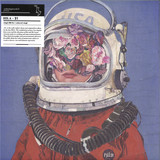
"21" is the well-crafted, sharp and original first album by the duo HILA, composed by American cellist Artyom Manukyan (who already worked with Kamasi Washington, Daedalus, Flying Lotus, Run DMC, Gretchen Parlato, Raphael Saadiq, Clive Lowe Mark...) and french producer Dawatile.
The combination of jazz, Los Angeles beat-scene and the vibrations of 80s and 90s Soviet Armenia make it a striking and unprecedented fusion. These kind of nostalgic and unconventional references forcefully shake the codes of mainstream culture to create a sincere, raw and intimate expression.
"HILA" was born from a spontaneous and intense creative impulse between Artyom Manukyan, a Los Angeles-based Armenian celloist and his partner in crime, David Kiledjian aka Dawatile, a French multi-instrumentist of Armenian descent. This project is proving to be a true master stroke given that it only took 21 days for the duo to make it a reality.
"HILA" was made in less a moon cycle but captivates and electrifies audiences upon its first outings. "H.I.L.A" colors the warmth of the Californian "High" with Armenian vibes. The artists chose this name for their creation since both have a close and valuable connection to these locales. This journey began in 2007, on the day Dawatile went to Yerevan, the capital of this small country in the Caucasus mountain to realize a first fusion project centered around local folkloric music genres.
There he was introduced to local musicians including the Armenian Navy Band, one of the country's foremost groups in which Artyom played the bass and cello. In this context, he also met many musicians such as Tigran Hamasyan and Norayr Kartashyan. This will be the beginning of connections between Lyon, Yerevan and Los Angeles. The following year, the two artists will be be seen performing next to Taylor Mc Ferrin at the Jazz à Vienne festival. More recently, they partnered up again when the cellist, who had freshly relocated in California, invited Dawatile to produce his album. As soon as the studio’s threshold was crossed, they decided to postpone this record and create a joint project: Hay (as the Armenians call themselves) / High In Los Angeles. HILA was born at the end of these 21 days of intense creation. The association of Artyom Manukyan and Dawatile is the combination of two visions, two versions of Armenia, two personalities, the reunion of the Eastern and Western blocs.
One grew up nurtured by the sounds of hip-hop and jazz in Europe and the other by art music and Russian-influenced 1980s Armenian folkloric music before moving to L. A., Ca. The cornerstone of it all, the glue that unites everything : Armenia and music. They generate a new identity synthesizing two perceptions, their complicity transcending these cultural discrepencies. To achieve this, they will scour through images of Artyom’s childhood, within the popular culture of Soviet Armenia. Together, they revisit this decidedly retro vibe, based on the work of Caucasian groups inspired by African American music. This background is rehashed and fused with ancestral Armenian sounds. The DNA of the album "21" is molded by these dear influences.
We can also hear the ancestral sounds of Armenia, a country at the edges of both Europe and Asia. The presence on two tracks of Armenian music Master Norayr Kartashyan, infuses the languor of past melodies and traditions. These purposeful anachronistic sounds offer a fantastic depth to this powerful opus. Listening to the album, one can appreciate the successful fusion of styles and influences. Those combinations, however, manage to preserve individual identities only to enhance the art through an adamant musical dialogue.
Being driven by the urge to transpose Armenian musical traditions into a unique universe, the daring artists, offer an innovative combination by blending, for the first time, these ancestral sounds with the world of Los Angeles beat-scene and jazz. An invention largely fueled by the magic strings of Artyom and maestro Miguel Atwood-Ferguson, a pillar of the genre in Los Angeles combined. These associations resonate with a triumphant equilibrium. HILA is musical uncharted territory in which Artyom's cello strings intertwine to ignite the harmonies of keyboards, the machines, the vocals and electronic layers Dawatile pieced together. HILA plays the soundtrack of an adventure set between Armenia around the end of the Soviet era and a mysterious near future.
Artyom Manukyan grew up in Armenia in the 90s. At the time, he studied Russian classical music while learning jazz with assistance by his father, a music journalist. Being an unconditional music lover, he went on to sharpen his skills at the prestigious Berkelee College of Music. Subsequently, he’s been lucky enough to travel the world touring with numerous acts and mainly with the Armenian Navy Band. The group has fostered alacritous success honored by a BBC Award as a crowning achievement. He moved on 10 years ago and made his way to L.A. with his cello on his back. In the City of Angels, he quickly became a popular figure of the jazz and hip-hop scenes thanks to his first album "Citizen". He’s accompanied prestigious musicians such as Kamasi Washington, Melody Gardot, Daedalus, Flying Lotus, Run DMC, Gretchen Parlato, Raphael Saadiq, Clive Lowe Mark, or Vulfpeck. He released his solo album on the cello, "Alone" in October 2019.
Dawatile is a bold producer and multi-instrumentist as well as a passionate and resolute musician molded by jazz. As a versatile artist, he handles and juggles the saxophone, the keys, the bass and composition. Simultaneously, Dawatile produces cross-over projects and soundtracks for the movie industry. He, as well, has had the opportunity to be a part of many tours, including with his electro hip-hop band, Fowatile and more recently with the "Future Kreyol" trio, Dowdelin. Being the ever workaholic, he has under his belt a string of prestigious collaborations with the likes of Talib Kweli, Foreign Beggars, Roy Ayers, Tigran Hamasyan, Mathieu Boogaerts, Voodoo Game and Piers Faccini. His taste for developing new musical recipes and his know-how in production make him a much sought-after album producer. In concert, the HILA duo offers a sober, precise and rhythmic performance. "21" is an aerial and lively album taking the audience on an at times joyous and sometimes melancholic dreamlike journey. The magic of "HILA" operates at the speed of light and positions it already as an avoidable group.
out of Stock
Last delivered 6 years ago available to reorder, subject to availability
Arandel's new opus, 'InBach', released 24th January 2020 by French label InFiné, pays a poetic, infinitely respectful and innovative homage to Bach's sacred workings.
Arandel was granted limitless access to the galerie of (sometime rare and ancient) instruments, as a well as a countless recordings of the prestigious Musée de la Musique in Paris with a view to sounddesign his brand new creation. He performed a few months after at Philharmonie Paris a hybrid live performance/DJ set 'Switched on Bach', named in acknowledgement to the legendary 1968 by American composer Wendy Carlos (Tron, A Clockwork Orange, The Shining).
From candles to LEDs, from DJ sets to museums, from historical instruments to machines, from Bach's themes that have entered the collective unconscious and inspired contemporary flesh and blood musicians… 'InBach' was a foregone conclusion.
In the immensity of Bach's oeuvre, in the company of his fellow wanderers, within the constraints of his-torical instruments, emboldened by the delightful, sometimes technically dangerous friction between acoustics and electronics: Without a net, Arandel walks a tightrope without a faux pas.
Vital Sales Points:
- Strong French environment including institutional support from Philharmonie / Musée de la Musique in Paris with a big shows' scheduled.
- A hybrid album with a mix of rare instrument sounds, synthesizers and innovative creative bias.
out of Stock
Last delivered 6 years ago available to reorder, subject to availability
21-year-old New Zealand musician Arjuna Oakes's debut EP,
The Watcher, is a showcase of his ability as a singer-songwriter, instrumentalist and producer, and a testament to his depth of engagement with music. The first two tracks on the EP fit neatly
within the jazz-infused soul music landscape he is quickly becoming part of, but the latter half of the EP is far harder to categorise.
Featuring instrumentation from some of New Zealand’s most exciting young jazz musicians, The Watcher explores a wide variety of themes and musical ideas, with Arjuna’s charismatic soul vocals and robust sonic palette serving as a connective thread. From big social issues to personal relationships and internal self-discoveries, across The Watcher, Arjuna takes his cue from the title track and exploration of mass surveillance, and it’s relevance within our everyday lives.
This watcher theme continues throughout the rest of the EP, with the stories told rendered as if being observed by an outside force. Decorated by cinematic soundscapes, hypnotic grooves, creative improvisation and catchy melodies, Arjuna's debut is a test palette for his future projects, one that makes his enthusiasm to develop and explore themes and style in song abundantly clear.
out of Stock
Last delivered 5 years ago available to reorder, subject to availability
Total Refreshment Centre is proud to present a brand new mini-LP from Neue Grafik Ensemble entitled 'Foulden Road'. French producer, instrumentalist and DJ, Neue Grafik, has been building a strong rep for himself over the past few years, releasing records previously on labels such as Rhythm Section, 22a, CoOp Presents and Wolf Music.
His sound is a hybrid of jazz, house and hip hop, all with his unique geographical flavours of African ethnicity, Parisian roots and a love for London sounds like broken beat & grime thrown into the mix. In his own words "this mini album has been conceived as a journey from Deptford to Dalston, right through Peckham. During a personal period of transition, I put this music forward at a crossroad of all my influences, taking the time to share and experiment with a band more than that, an ensemble. The idea is to incorporate musicians with their own sensibilities, collaborating together as a reflection of our society; unreal & rebellious, but with magic moments, and full of hope.
The best representation of that is Total Refreshment Centre. This building and its community were a perpetual source of inspiration for me over the past two years & gladly allowed the creation of this project". Having been first properly introduced to the community of the TRC during an after-hours jam, it came to TRC founder Lex Blondel's attention that New design had some exquisite compositions of his own. A few weeks later, it was decided that Neue Grafik would form a band and that they would do their first gig at TRC, a week after the first day of rehearsals. No pressure … Lex continued; "we paired him up with Emma-Jean Thackray, to arrange his compositions for a quartet, added Vels Trio's Dougal Taylor on drums, Matt Gedrych from MaddAddam on bass and Jordan Saintard on sax.
Then the band got to work…" Title track 'Foulden Road' commences the session in truly energetic fashion, named after the street in North London where TRC is based, and where these sessions were largely laid down. Keeping with the geographical vibe, next we have 'Dalston Junction', a two-part affair starting on a sci-fi boom-bap tip, before switching to the ethereal flute playing of Brussels musician Esinam, and the first outing on the collection for Brother Portrait.
'Voodoo Rain' is next, a sweet slice of afro-funk, featuring the incredible talents of London's own Nubya Garcia on sax, and the tempo picks up once again for 'Something Is Missing' - this live version comes from the afore-mentioned infamous first gig at TRC.
The goosebump-enducing vocals of Melbourne soulstress, Allysha Joy, set off the second half of the record with the beautiful downtempo track 'Hotel Laplace', recorded at a live session at Giant Steps, before kicking the energy levels back up with 'Hedgehog's Dilemma', once again featuring the vocals of Brother Portrait, as does the closing track, 'Dedicated to Marie Paule', a mid-tempo piece akin to 90's golden era jazz-hop, bringing the set to its conclusion.
This collection of tracks reflect the many moods and various genres indicative of Neue's creative approach illustrated above.
out of Stock
Last delivered 4 years ago available to reorder, subject to availability
... Medjool's story starts in 2010, at "Samar", it's a Kibbutz in the Arava valley in the far south of Israel, based on a unique, hippic and cooperative community. The band's four members met and lived there after their Military service. Being surrounded by musicians they started jamming together a lot, finding a joint creative language.
... In 2011, three of the band, – Ori, Nur & Aviram, moved to Tel-Aviv, trying their luck in the big city. 'Gilad' joined them in 2013 and the four friends became Medjool. The next three years were hectic with shows all over Israel, from small clubs to big festivals, gathering loyal crowd which followed the band everywhere. Nowadays, the band's members turned their energy to other musical projects, saying "we only took a short break which we're not sure when it'll end".
'Gbells' and 'Savana' are two energetic wild Afrobeat tunes.
The fact that the rhythm section comprises of a double base and percussion, grants 'Medjool' its unique highlife, groove color.
The guitar and saxophone travel through middle eastern to ethiopian melodies, suggesting the listeners the option either dancing or riding a camel in the desert, on your way to a flush oasis.
SOS: This two tracks on the 7", ... which were recorded in 2015, were the only music of 'Medjool', they had recorded professionally !!!!!
out of Stock
Last delivered 6 years ago available to reorder, subject to availability
Ism opens audaciously with the spiritual mic-check “You Are Free To Choose,” a track that features bassist Junius Paul alongside Vincent Davis (drums), Justin Dillard (piano), and Corey Wilkes (horns). This is by no accident. In many ways, “You Are Free To Choose” captures the spirit of Junius Paul’s artistic roots. Corey, Justin, and Vincent were among the multigenerational cadre of Chicago musicians present when Junius chose to follow his own path of creative discovery at the storied Velvet Lounge on the South Side of the city in 2002.
Though he began learning his craft playing in church, Junius’s creative voice really developed during jam sessions at clubs like The Velvet alongside members of the AACM. It was iron sharpening iron, the most natural form of knowledge transfer. He explained The Velvet’s vibe in 2018: “It’s like in Africa.... If you had this society of diviners or medicine people, or you know, sages… The Velvet stuff is not secret; but there are certain aspects of it… if you weren’t there, you weren’t there.” The Velvet Lounge closed in 2010. But, of course, the spirit of the Velvet Lounge is not dead. “Tune No. 6,” recorded live at the Co-Prosperity Sphere in Chicago, is a sweet interlude here to remind us that jazz is alive, bristling with what’s yet to come.
As Junius pushes forward as a creative musician, he is careful to carry with him the spirit and the knowledge he’s gathered from those who have come before him. He is very literally a bridge between generations of the Chicago vanguard, currently playing in a handful of combos with Makaya McCraven (who produced several of the tracks on Ism) as well as a few of Roscoe Mitchell’s working groups – most notably the Art Ensemble of Chicago – in addition to fronting his own band.
out of Stock
Last delivered 6 years ago available to reorder, subject to availability
When acclaimed South African musician Guy Buttery first sought out Dr. Kanada Narahari in late 2016, it was as his patient.
“It was a dark time.” Buttery recalls, “I had been bedridden for months and had been suffering from debilitating bouts of fatigue which no diagnosis or medication could help me get to the bottom of. When I first met Kanada, I was at the stage where even picking up my guitar to make music had become a joyless and taxing exercise.”
As Buttery’s searched for a cure, a family member recommended he see Kanada an Ayurvedic doctor who had relocated to South Africa from India and set up a practice in Durban. It was during this consultation, that the musician first experienced how Narahari infused the healing properties of Indian Classical music into his practice. Rather than treating him with a smorgasbord of pharmaceuticals, Narahari played his sitar and set Buttery on a strict daily diet of Raga’s to fast track his recovery.
Buttery was not only struck by his doctor’s musical talents but by the powerful healing properties inherent in his sitar compositions. When he left Narahari’s doctors room that afternoon, he asserts he was feeling decidedly clearer, lighter and stronger.
“Diving into Kanada’s music was definitely one of the reasons I'm still here today.” he admits. “The consistent tonal centre at the heart of Indian Classical Music, literally became my support pillar over this period. A central core of sorts in which to fall back on, strengthen and discover.”
Narahari as it turned out, was not only a prominent music therapist (and one of the only Ayurvedic doctors practicing in South Africa) but like Buttery, a highly accomplished musician with a devoted following back in his homeland.
Born in a small village along the Western Ghats in Karnataka, India, Narahari, at the age of nine, had enrolled to study Carnatic classical vocal and developed an interest in Hindustani Classical music with a particular passion for the sitar. While Buttery had secured his reputation as one of South Africa’s musical treasures, a multi-instrumentalist who commands sold-out performances both locally and internationally and more recently had been awarded the prestigious 2018 Standard Bank Young Artist for Music.
From this consultation, a friendship developed between the two musicians with Buttery soon inviting Narahari to join him in his studio. But it wasn’t all plain sailing in the beginning. While Buttery and Narahari’s sensibilities were very much aligned, there were a range of cultural and musical influences, nuances and inflections that first needed to be navigated and understood.
“I suppose we had to find a common ground.” Buttery says, before adding, “Which in the end turned out to be pretty "uncommon ground" for the both of us.”
It was after a few intensive sessions together that something exhilarating began to emerge. What began as a few idle improvisations soon evolved into feverish and lengthier jams. Whenever time permitted, the musicians would meet, descending deeper into the emerging sounds, while reimagining the realms that existed between their African and Indian heritages.
Over the next few months, the duo would rack up over fifteen hours of recordings in studio, and it was up to Buttery to shape the material into an album which they collectively titled Nāḍī, which Narahari translates from the Sanskrit as "The Channel" or "An Internal River".
During this period, Narahari bestowed upon Buttery, the moniker Guruji while Guy would refer to him, in affectionate return, as Panditji. Each time the musicians would meet, the studio space would be cleared by an impromptu ritual, with Guruji burning African Imphepho while Panditji would chant a Sanskrit mantra dusting Indian Agarbatti clouds over their instruments.
Once the room had been made hazy with this aromatic alchemy (with the ancestors welcomed in) the musicians would pick up their instruments and plunge into shimmering tides of sound. Reflecting on these sessions, Narahari recalls the immense creative freedom he felt throughout: “Guy and I tried to wander as much as possible, without any speculative, preoccupied ideologies or limitations. Love remained at the forefront of our journey together.”
“Those evenings we spent together in the studio” adds Buttery, “felt incredibly rich with purpose and a profound sense of freedom. While improvising, anything could happen and mostly did.”
On a first listen, the tracks on Nāḍī emerge as salty, humid invocations to the inscrutable depths and misty myths of the Indian ocean-- that vast body of water that stretches between, and laps the shorelines, of the artists’ respective homelands.
When asked to describe the sound him and Narahari refined, Buttery prefers to relay a series of evocative images.
“For me” he explains, “Nāḍī is a lighthouse, a beacon that resides at the bottom of the ocean.” As Buttery envisions it, “what once offered light to guide ships to safety, has been submerged and re-purposed by marine life as a coral-reef temple. Similarly, this sunken lighthouse exists as a concealed cenotaph, memorializing the ancient sea-routes and passages that once connected the two distant lands.”
On paper this may sound obscure but listening to the songs, it serves as an apt metaphor.
Across each meditative movement, listeners are able to relive the journey, immersing themselves in a series of incantations, replete with high dynamics, delicate African-Indian inflections and virtuoso string playing of an entirely new order. Further complimenting the fusion of musical dialects are a range of guest artists including Shane Cooper on bass, Thandi Ntuli on vocals, Chris Letcher on organ, Ronan Skillen on tabla and percussion and Julian Redpath on guitar, synth and backing vocals.
Now like the submerged lighthouse, the recordings stand as a monument, a marker and snapshot of this fortuitous meeting, a tribute to the healing gifts of Guruji and Panditji in performance. It’s a process that already, both musicians look back on with reverence and nostalgia.
Buttery ruminates in closing, that when he first met Kanada his illness correlated with the biggest drought South Africa had experienced in many years “…for whatever reason, whenever we would connect and make music together, the sky would tend to open. Even if it was just a few drops. This went on for months, until finally the drought dissipated and my health had been restored.”
By the time the heavens did open across the East Coast, a deep friendship had been forged and with it abundant musical offerings poured down. A treasured sample of which we able to share in every time we press play and immerse ourselves in the sacrosanct musical universe that is Nāḍī.
out of Stock
Last delivered 6 years ago available to reorder, subject to availability
One of the original catalysts of Latinx music in New York City, MAKU Soundsystem has been the connective tissue for several creative projects, bands and community roots for over a decade. As a group with a rotating membership, they've recorded multiple albums both DIY and for worldwide labels. Throughout their various iterations, the heart and mission of the ensemble has consistently built bridges, rather than tearing them down, remaining a remarkable beacon of positivity in a consistently competitive environment. The inspiring atmosphere has nurtured several notable musicians and acts over the years, including members of Combo Chimbita, Dilemastronauta, Bulla en el Barrio, Leon Brothers and Prince of Queens. Now down to a core group of three musicians, alongside percussionist Moris Cañate, MAKU and Names You Can Trust have finally teamed up for a vinyl edition after many years of collaborative shows and connections.
Perhaps their rawest and darkest recordings to date, this stripped down quartet is an ode to the creative source of their core members, lead singer & bassist Juan Ospina, drummer Andres Jimenez and guitarist Camilo Rodriguez. The A-side, "Culebra Coral" is a snakebitten taste ofla cumbia, played with an experience and restraint that only enhances the end result. It's a free driven approach born from familiar experimentation, rather than modern day trends — a singular jam, refined from years of playing together. Part psych, part cumbia, total MAKU. The B-side, "Contra Tambor," is emblematic of the group's roots in the traditional sounds of thetambora, a drum-forward percussive arrangement that follows Jimenez and Cañate on a free-driven approach to the ritualistic movements of the drums, this time drowned with an antidote of analog FX, synthesized glitches and atmospheric coros.
out of Stock
Last delivered 6 years ago available to reorder, subject to availability
Contagious is a solid blending of avant-garde experimentation and electronic music. Formed by two innovative voices from the Improvisation scene of Berlin (Andrea Neumann and Sabine Ercklentz) and Mieko Suzuki, a well-crafted and creative DJ and musician who’s operating in Berlin venues and festivals since a long time.
Contagious is one of the most forward thinking, mind-melting projects to hit the electronic music scene. Intense and powerful, yet rooted in a tradition of crafting and sculpturing of in the most creative ways, all this building up within a solid structure of instant composition and improvisation. The trio plunder each other’s musical spheres, appropriate them and switch roles. Andrea Neumann on her infamous Inside Piano, an instrument she pioneered and crafted, is applying the most creative feedback processing to simple piano strings and sending them occasionally to Mieko Suzuki’s processing rig, who also uses her own pre-recorded sounds and her skills on turntables, while Sabine Ercklentz’s trumpet sounds blast through her processing system and altogether the three musicians communicate into logics of composition and futuristic structures, where fragile sound textures and pulses become monumental.
Contagious is also the debut album recorded and produced by Rabih Beaini. The Trio wanders in new aesthetic areas, sound is a texture where the processing rigs are constantly developing new forms and evolutions. Structures and grooves implode in noisy fragments, growing into a deep trance state.
out of Stock
Last delivered 6 years ago available to reorder, subject to availability
Leifur James released his debut album A Louder Silence in October 2018 on Late Night Tales original artist label Night Time Stories; home to Texan trio Khruangbin and the iconic Late Night Tales series. The record attracted immediate support from Pitchfork, KEXP, XLR8R, Mixmag 8/10, Future Music UK 9/10, Electronic Sound 9/10. In April 2019 ‘Wurlitzer’ was the first piece of music he revealed from a new creative period after those sessions. The video was created by animator/director Balázs Simon, premiering on Boiler Room and was nominated for the BMVA Berlin Music Video Awards in the experimental music category, airing at the British Film Insitute BFI Southbank London.
Now in September 2019 he has prepared a remix EP 12" of the debut album A Louder Silence, featuring a slew of the finest musicians in electronic music today. Blueberry Records founder FaltyDL aka Drew Lustman comes first with a deep, skipping 2-stepping reversion of Mumma Don’t Tell. Bruce coming off the back of his hugely well received debut album for Hessle Audio has a “resymph” of Osho in typical mind-bending austere electronic style. Whities producer and Tirzah/Mica Levi collaborator Coby Sey reconstructs Suns of Gold with his sampler, and also accompanying it, is Leifur’s own remix of suns of Gold.
out of Stock
Last delivered 7 years ago available to reorder, subject to availability
"Portico Quartet stake claims to territory occupied by Radiohead, Cinematic Orchestra and Efterklang". The Guardian *****
Portico Quartet return with Memory Streams, their fifth studio album and one that continues the journey that first started with 2008's Mercury nominated debut Knee Deep in the North Sea. It's a creative path that has seen the band embrace new technology and explore ambient and electronic influences alongside minimalism, jazz and beyond. It is a process that has encouraged change. Each album has seen the band expand its palate or explore new trajectories. From the gentle charm of their breakthrough's inimitable mix of jazz, world and minimalist influences, to the tight-knit brilliance of Isla, the electronic infused eponymous Portico Quartet to 2016's return Art in the Age of Automation (the band's most electronic statement to date) they have never been a band to look backwards. Each record has been its own world, its own statement and offered its own meaning. It's the mark of a band that has always both stood apart from any scene and been prepared to challenge its self and find new things to say and to push the limits of what they could do.
It is an approach that has encouraged the band to plough their own furrow. Drummer Duncan Bellamy notes that "For better or worse I think we have always been quite an isolated band. Perhaps that comes from never feeling like we really belonged to or fit in to a scene when we first started making music" While for saxophonist Jack Wyllie " I feel more connected to other musicians these days and those relationships influence the sound we have in some way. But I wouldn't say we feel a part of scene, it still feels quite out on its own, which is cool, because it helps the music feel unique".
out of Stock
Last delivered 4 years ago available to reorder, subject to availability
Johnny Clarke is one of the great vocalists that ruled the Jamaican Dancehall scene from the mid – 1970’s to the early 1980’s. While Bob Marley was out conquering the world, Dennis Brown, Gregory Issacs and Johnny Clarke were winning the hearts of the Jamaican people .Johnny Clarke’s use of the ‘Flying Cymbal‘ sound took the Island by storm and produced a run of hit singles few could match.
Johnny Clarke (b.1955, Jamaica, West Indies) cut his first record ‘God Made The Sea and Sun’, after winning a local singing contest in the Bull Bay area of Jamaica. Although the single was not a hit, it led to two follow up tracks for producer Rupie Edwards, ’Everyday Wandering’ and ‘Julie’ that fared much better, both on the island and oversees in England and Canada. These tracks also brought the singer to the attention of producer Bunny Lee and a working relationship that would go on to produce a prolific catalogue of music. Johnny Clarke’s Dread Conscious / Love Song style were to grace many hits around this time in 1974. Such tunes as ‘None Shall Escape The Judgement’, ‘Move Out of Babylon’, ‘Rock With Me Baby’, ‘Enter The Gates With Praise’ to name but a few. All new songs added to a host of cover tunes, recommended by Bunny Lee, many taken from the singer John Holt’s catalogue, that suited Clarke’s vocal style. The rhythms were cut at various studios around the Island. Randy’s Studio 17, Channel 1, Treasure Isle, Dynamic Sounds and Harry J’s, by a group of musicians loosely called the Aggrovators and some tunes incorporating the ‘Flying Cymbal’ sound again introduced by Bunny Lee, working the Hi-Hat in fine style. The tracks were then taken to King Tubby’s studio where Johnny Clarke’s vocals would be voiced.
Another phenomenon that was happening in the early 1970’s, was the version cuts to vocal tracks. This is when the tunes were cut back to the bass and drums and the vocals were dropped in and out in a dubbed style, and reverb and echo and various effects were added to these tracks. The main exponent to this style was King Tubby himself, and as was the fashion at the time, each vocal track would carry a version as its B-Side. Producer Bunny Lee lead this style working closely with King Tubby and all of his singles from then on would carry a Dub cut on its flipside. As Johnny Clarke was one of Bunny’s main singers at the time, we would hear a great selection of popular songs getting the dub treatment and in many cases the single was purchased for its more exciting dub cut, again made popular at the various dances where the dubplates were played out. We have compiled some of the best of these dubs from the time and put them together for this release, hope you enjoy the great voice of Johnny Clarke alongside the productions of Bunny Lee and the creative genius of King Tubby, a great combination we hope you will agree….
out of Stock
Last delivered 3 years ago available to reorder, subject to availability
“Stop here!” exclaimed Robert Oumaou as we passed a mango tree on the side of the road just outside of Point-a-Pitre, the balmy capital of Guadeloupe. He filled a plastic bag with ripe fruit, and we set off on our journey across the small Caribbean island in search of musicians he hadn’t seen in years. On the way, we shared stories in broken French and English, stopping at truck stops to eat delicious fried fish. Robert took me to his hometown, and placed a mango and a flower on the grave of his teacher and mentor, a local poet. The seeds of Vwayajé (Traveller) were sewn on this trip, but shortly after returning home, I heard that Robert was ill, and he sadly passed away in 2018. This compilation was originally intended as a way to share Robert’s brazen work with a wider global audience, but it now also serves to immortalize his indomitable spirit.
Gwakasonné is the ecstatic articulation of Robert Oumaou’s artistic and political vision, a unified expression of his interests in American jazz, pre-colonial rhythms, Guadeloupian independence, and Créole poetics. Over the course of three albums, all released in the 80s, Robert piloted a revolving cast of musicians, a venerable who’s-who of Point-a-Pitre avant-jazz pioneers, to deftly intone his creative communal concepts. The songs on Vwayajé are compiled from these three releases, Gwakasonné, Temwen, and Moun, along with an electronic mantra taken from his 2007 solo album Sang Comment Taire. Viewed from our current artistic and cultural landscape, Robert’s work is exceptionally enduring, grounded in its declarations of freedom and foundational use of the Ka (drum) and voice, and prescient in its borderless explorations of protest folk, electronics, ambient atmosphere, music from the African diaspora, and spiritual jazz. The long-form hive-mind expression of the group has parallels with similar explorations by The Grateful Dead, electric
Miles, Pharaoh Sanders, and even the Boredoms, but these are only oblique references for a truly peerless sound. Like other conceptual children of Gérard Lockel, the group was part of a progressive movement of like-minded musicians, such as Serge Fabriano, Dao, Erick Cosaque, and Gaoulé Mizik, who embraced Lockel’s modernist ideals, fusing Gwo Ka drumming and tuning systems with contemporary jazz and vanguard recording technologies. Robert’s ecstatic phrasings, embrace of electronic instruments, and daring lyrics set the group apart as the beatific expression of a sagacious soul.
out of Stock
Last delivered 7 years ago available to reorder, subject to availability
Shimza, one of South-Africa’s shining talents, makes his return to Cadenza with ‘Eminence’, a burning compound of profound percussions and late-night rapturing synths. This Gauteng-born artist is one of the most celebrated African electronic musicians and has garnered the reputation of the “Effect Master” and “Vinyl Assassin” for his technical prowess and intricate mixing abilities. The vibrating drums and persistent arpeggios of ‘Eminence’ make for a captivating peak-time anthem, offering the nostalgic essence of Detroit’s late-nineties splendour. As the EP journeys to ‘Dancefloor Keeper’, the slick trance-inspired stabs and permeating bassline expose its ominous nature as it swells to a seismic drop. On the B-side, Shimza expresses his creative flare with ‘Kunye’; a hypnotic cut that blends the spirit of futuristic synthwave with the soul of African tribalism. ‘Warrant For Arrest’ is a charged number, driven by a snappy compressed kick drum and chiming sequences. As its percussive forces fall away to the second break, a monstrous siren and obscure vocal cuts take focus, guiding it to its summit. The penultimate offering ‘MSC’, is a euphoric gem that flows with expressive phrases and evolving synth pads. The EP’s digital-only bonus track ‘Mirrors’ shuffles effortlessly with a funk-tinged riff, maintaining a high voltage pace, closing the EP in an emphatic manner. Shimza has been on a mission to make 2019 his biggest year to date. Launching his One Man Show concept in Soweto in 2009 to help raise funds for underprivileged children, the project has now matured into an annual event that draws in over 25,000 people each year, hosting some of the country’s most in-demand artists, such as AKA, Black Coffee and Black Motion. The show has seen international editions in France, Spain and Portugal and has helped position Shimza as one o
out of Stock
Last delivered 18 months ago available to reorder, subject to availability
Celebrating its 25th anniversary, Far Out Recordings proudly presents two albums of previously unheard Azymuth demo recordings from 1973-75
Since their debut album release in 1975, Azymuth have risen to rank alongside the world’s greatest jazz, funk and fusion artists. As young men in Rio de Janeiro, they stood out for both their exceptional talent as musicians, and their wild rock ‘n’ roll antics in the predominantly middle-class worlds of bossa nova and jazz. Their signature ‘Samba Doido’ (crazy samba) sound ruptured the tried and tested musical structures of the day, resulting in what can only be described as an electric, psychedelic, samba jazz-funk hybrid.
Before they became Azymuth, José Roberto Bertrami (keyboards), Ivan ‘Mamão’ Conti (drums), Alex Malheiros (bass) and Ariovaldo Contesini (percussion) played backing band to just about every major artist in Brazil. Bertrami was also contracted as an arranger and songwriter at some the biggest labels of the era: Polydor, Philips, Som Livre, and EMI being just a few. Azymuth’s name can be found on record sleeves by the likes of Jorge Ben, Elis Regina, Marcos Valle, Ana Mazzotti and countless others. But at the dawn of the seventies, fascinated by developments in improvisational music - from jazz in the US, to progressive rock in the UK and of course samba, bossa and tropicália on home turf - the energetic young group were inspired and ready to move forward. Any spare moment in which they weren’t in sessions and writing music for other artists, they would be carving out their own sound.
These previously unheard recordings took place between 1973-75 at Bertrami’s home studio in the Laranjeiras district of Rio de Janeiro. At the time of recording, there was nothing in Brazil, less the world that sounded anything like them, so perhaps it’s unsurprising that when Bertrami presented his demos to the record companies he had been working for, he was turned away, and told in effect that the music was ‘wrong’.
One of the demos ‘Manhã’ would be picked up by Som Livre and Azymuth released their seminal debut album in 1975. Throughout the late seventies and eighties, the group released a series of now classic albums for Milestone Records, before taking an indefinite hiatus to pursue their individual careers.
When English producers Joe Davis and Roc Hunter arrived in Brazil in 1994 to record the first Azymuth album in over a decade, Bertrami dug out the demos which had sat virtually untouched for over twenty years. Joe recalls how he was “blown away by the freedom and intensity of the music, as well as the genius of the ideas musically.” Beginning a long and fruitful relationship, ‘Prefacio’ would be the first track Azymuth recorded for Far Out Recordings and was released on the Carnival album (1996).
Along with ‘Manhã’ and ‘Prefacio’, only a handful of these demos were ever professionally recorded and released, making this the first opportunity to hear many of these early Azymuth compositions in their raw, original form.
On every track the frenetic energy in the studio is palpable, giving the recordings a beautifully personal feel and a sense of the phenomenally creative vision Bertrami, Malheiros and Conti were realising at the time. Fifty years on, Azymuth’s earliest recorded music retains an ineffable, futuristic quality, standing amongst their most captivating and moving work.
Credits:
Keyboards: José Roberto Bertrami (Mini Moog Series One, Arp Omni, Arp 2600, Arp Solina Strings, Fender Rhodes 88, Hammond B3 with box speaker, Clavinet with Wah Wah)
Drums: Ivan ‘Mamão’ Conti
Bass: Alex Malheiros
Percussion: Ariovaldo Contesini
Produced by Azymuth and Jose Roberto Bertrami
Recorded at José Roberto Bertrami’s home studio in Laranjeiras, Rio De Janeiro, Brazil between 1973–1975.
Issue and project co-ordinator: Joe Davis
Tape transfers by Roc Hunter (thanks to Simon Hitner)
Mastered by Daniel Maunick at the Sugar Shack, Lanark, Scotland
Mastered by Frank at Carvery Cuts
All tracks published by Far Out Music Publishing/Westbury Music LTD
out of Stock
Last delivered 10 months ago available to reorder, subject to availability
Celebrating its 25th anniversary, Far Out Recordings proudly presents two albums of previously unheard Azymuth demo recordings from 1973-75
Since their debut album release in 1975, Azymuth have risen to rank alongside the world’s greatest jazz, funk and fusion artists. As young men in Rio de Janeiro, they stood out for both their exceptional talent as musicians, and their wild rock ‘n’ roll antics in the predominantly middle-class worlds of bossa nova and jazz. Their signature ‘Samba Doido’ (crazy samba) sound ruptured the tried and tested musical structures of the day, resulting in what can only be described as an electric, psychedelic, samba jazz-funk hybrid.
Before they became Azymuth, José Roberto Bertrami (keyboards), Ivan ‘Mamão’ Conti (drums), Alex Malheiros (bass) and Ariovaldo Contesini (percussion) played backing band to just about every major artist in Brazil. Bertrami was also contracted as an arranger and songwriter at some the biggest labels of the era: Polydor, Philips, Som Livre, and EMI being just a few. Azymuth’s name can be found on record sleeves by the likes of Jorge Ben, Elis Regina, Marcos Valle, Ana Mazzotti and countless others. But at the dawn of the seventies, fascinated by developments in improvisational music - from jazz in the US, to progressive rock in the UK and of course samba, bossa and tropicália on home turf - the energetic young group were inspired and ready to move forward. Any spare moment in which they weren’t in sessions and writing music for other artists, they would be carving out their own sound.
These previously unheard recordings took place between 1973-75 at Bertrami’s home studio in the Laranjeiras district of Rio de Janeiro. At the time of recording, there was nothing in Brazil, less the world that sounded anything like them, so perhaps it’s unsurprising that when Bertrami presented his demos to the record companies he had been working for, he was turned away, and told in effect that the music was ‘wrong’.
One of the demos ‘Manhã’ would be picked up by Som Livre and Azymuth released their seminal debut album in 1975. Throughout the late seventies and eighties, the group released a series of now classic albums for Milestone Records, before taking an indefinite hiatus to pursue their individual careers.
When English producers Joe Davis and Roc Hunter arrived in Brazil in 1994 to record the first Azymuth album in over a decade, Bertrami dug out the demos which had sat virtually untouched for over twenty years. Joe recalls how he was “blown away by the freedom and intensity of the music, as well as the genius of the ideas musically.” Beginning a long and fruitful relationship, ‘Prefacio’ would be the first track Azymuth recorded for Far Out Recordings and was released on the Carnival album (1996).
Along with ‘Manhã’ and ‘Prefacio’, only a handful of these demos were ever professionally recorded and released, making this the first opportunity to hear many of these early Azymuth compositions in their raw, original form.
On every track the frenetic energy in the studio is palpable, giving the recordings a beautifully personal feel and a sense of the phenomenally creative vision Bertrami, Malheiros and Conti were realising at the time. Fifty years on, Azymuth’s earliest recorded music retains an ineffable, futuristic quality, standing amongst their most captivating and moving work.
Credits:
Keyboards: José Roberto Bertrami (Mini Moog Series One, Arp Omni, Arp 2600, Arp Solina Strings, Fender Rhodes 88, Hammond B3 with box speaker, Clavinet with Wah Wah)
Drums: Ivan ‘Mamão’ Conti
Bass: Alex Malheiros
Percussion: Ariovaldo Contesini
Produced by Azymuth and Jose Roberto Bertrami
Recorded at José Roberto Bertrami’s home studio in Laranjeiras, Rio De Janeiro, Brazil between 1973–1975.
Issue and project co-ordinator: Joe Davis
Tape transfers by Roc Hunter (thanks to Simon Hitner)
Mastered by Daniel Maunick at the Sugar Shack, Lanark, Scotland
Mastered by Frank at Carvery Cuts
All tracks published by Far Out Music Publishing/Westbury Music LTD
out of Stock
Last delivered 10 months ago available to reorder, subject to availability
Dark Star Safari, a newly formed group featuring Samuel Rohrer, Jan Bang, Erik Honoré and Eivind Aarset, present its eponymous recording debut, an evocative song-driven album. These songs conjure shadows of memory, clouds of dreaming and silhouettes of foreboding through the album’s layered, many-textured fabrics and Jan Bang's silken delivery of Erik Honoré's acute lyrics. Dark Star Safari is the work of four kindred spirits, their open modus operandi, and a remarkably interconnected creative nerve system. Key to their collaboration is an organic freedom that enables the music “to fill itself in", to be self-actualizing via the musicians as medium. The music of the 10 songs resulted from a two-stage process: an initial phase of free flowing open improvi- sation, and a subsequent exploratory phase where hidden potenti- als were discovered and nurtured. The groundwork of the album’s music originates from a session initiated by Samuel Rohrer, who invited Jan Bang and Eivind Aarset to the renowned Candy Bomber studio in Berlin. The ses- sion was run under the imaginative craftsmanship of sound engi- neer Ingo Krauss, who worked in the famous Conny Plank stu- dio, and its recording and mixing employed sophisticated use of vintage analogue equipment alongside cutting edge digital pro- cesses. This meeting opened the door for something larger to emerge. The group did not settle for just the outcome of the initi- al open improvisation. They were driven to dig deeper, to atten- tively examine and manipulate the material, in order to discover what it had to offer. This caused a creational chain reaction, forcefully spreading across the group. During this second phase, Jan Bang, while meditating upon the possibilities and reach of the improvised material, felt a strong urge to give additional shape and colour to it by singing. Thus, he organically stepped into the role of vocalist, a role he had not pursued since the early days of his musical career. He sent the results to Erik Honoré, who immediately was inspired by its po- tential, quickly penning lyrics and providing the project with its name. Honoré composed two additional songs, Mordechai and Fault Line, and thus rounded the project out towards a fully reali- zed opus. The group continued this back and forth process, with Samuel Rohrer and Eivind Aarset bringing in fine-tuning and e nrichment to the song structures and textures.
out of Stock
Last delivered 7 years ago available to reorder, subject to availability
Penalties Of Love Is The Debut 12' From 21 Year Old Vocalist, Multi-instrumentalist And Producer Sequoyah Murray. It Is A Remarkable Debut, Striking In Its Maturity And Originality. Writing Deeply Confessional Lyrics And Creating Abstract Textured Song Structures, Sequoyah Is A Product Of His Time, Place And Borderless Generation, Making Music That Is Both Wildly Experimental And Unforgettably Accessible, His Lyrics Proudly Recasting His Vulnerabilities As Strengths. He Was Born Into A Musical Family Atlanta, Georgia, One Of The Music Capitals Of The World: His Mother Is A Singer, And His Father A Percussionist, Both Having Spent Their Lives As Creative Musicians. If His Frst Loves Were The East African Music Introduced To Him By His Father And His Mother's Sumptuous Falsetto, The Booming Baritone Of Arthur Russell Became One Of His Oldest Friends And Most Important Touchstones. Just Like Russell, His Music Is At Once A Self-created World And The Result Of Deeply Organic Collaboration. While Sequoyah Serves As His Own Producer, He Enlisted The Help Of Acclaimed Producer And Remixer James Ginzburg (empstyset, Ginz, Bleed Turquoise) & David Corney To Mix. His Family Also Contributed, With His Father's Drumming Throughout, And His Mother And Little Brother Singing On penalties Of Love', And second Born', Respectively. 12' Ep Pressed On Virgin Vinyl And Packaged With With Free Download Card
out of Stock
Last delivered 7 years ago available to reorder, subject to availability
serenitatem, the fifteenth installment of FRKWYS, RVNG Intl.'s collaboration series pairing intergenerational artists in creative conversation, joins Visible Cloaks with Yoshio Ojima and Satsuki Shibano, two trailblazers of the Japanese avantgarde music and visual arts scenes of the 1980s and 90s.
Yoshio Ojima began his career as a composer of environmental and ambient music, with a particular interest, and optimism, in the possibilities of generative software. His compositional pursuit of human synthesis with computerized forms was realized in its fullest potential alongside Satsuki Shibano, a pianist renowned for her interpretations of Erik Satie and Claude Debussy. Together, they were among a handful of influential Japanese artists whose innovations still resonate, if not more vibrantly than ever, well beyond the tightly-knit scene's original core. In the early 90s, Ojima was among the programmers of the influential satellite radio experiment St. Giga, a constantly-evolving sonic landscape that combined field recordings and sound collage with occasional readings of Japanese poetry. Satsuki was a regular reader for the station. This musical terrarium bloomed out of sight in a small Tokyo studio, a greenhouse of sound with no set start or finish time that audiences could tune into, absorb, and immerse.
The perpetual flow state of St. Giga — recordings of which Ojima shared with Visible Cloaks — would be highly influential to serenitatem's constitution. As Visible Cloaks, the Portland, Oregon duo of Spencer Doran and Ryan Carlile have developed their own set of creative strategies that form an aesthetic fuse point between human intention, aleatoric composition, and improvisation.
These are notions most recently reflected in 2017's Reassemblage and Lex, a respective album and EP in which the duo combined generative software and virtual representations of global instruments into lacy, interlocking patterns. Long time admirers of Ojima's work on albums like 1988's Une Collection Des Chainons, Doran and Carlile discovered after an online introduction that they shared with Yoshio and Satsuki an abiding interest in pre-classical composers, the Lovely Music, Ltd. label, and the British avant-garde, as well as a mutual respect for one another's techniques and processes.
The four musicians met in Tokyo, Japan at Sounduno Studios in December 2017, at the tail end of Visible Cloaks' first Japanese tour, to commence work on serenitatem. Leading up to the studio sessions, Doran and Carlile sent Ojima processed sound sketches recorded while on a European tour, which Yoshio would add to and return. Visible Cloaks would then fold Yoshio's edits back into the original compositions, which Doran and Carlile brought to the exploratory recording session. During that week together in Tokyo, the quartet made use of a number of creative strategies — 'echoing sound together,' as Yoshio puts it. Among the strategies, MIDI randomization gave the quartet melodic lines and what Doran calls 'randomized clouds,' or 'tightly grouped notes that become smeared tonal clusters functioning more like chords in themselves.' Carlile would also feed Ojima and Satsuki's text into Wotja, a generative music software which produced a MIDI language around which the quartet expanded their compositions.
'The aim,' Doran says of serenitatem, 'was to make a work that was not specifically ambient (or environmental), but something more multi-hued, weaving these deconstructive concepts into an album that has a deeper architecture underpinning it.' Accordingly, serenitatem is a marvelously sharp record, its sutures between human and machine virtually impossible to find but suggested everywhere you turn. The collaboration among Ojima, Satsuki, and Visible Cloaks is both musically and conceptually inseparable from the technology that made it possible. Throughout the album, Shibano's playing resonates like Satie's, her rhythms cascading like drops from leaves an hour after the rain. Overtones are stretched and warped like modeling clay, then spun around and shown off from multiple angles.
A single soaring note might seem to be suddenly plunged underwater, its richness of sound made shallow and its sharp edges blunted. Pittering chimes and rapidly warping vocal samples hang in the luxuriously glossy space, water trickles from ear-toear, familiar melodies rise from nothing and dissolve before they can be traced. With the depth of its emotional charge, serenitatem burns away the easy cynicism of the day, presenting itself as the kind of delocalized work of art the internet promised us decades ago — a synthesis of artistic visions, technological sophistication, futurist ambition, and, occasionally, ancient polyphony. Listening to it can feel a bit like tuning in to a 21st Century version of St. Giga: It's a place where the future still grows.
Visible Cloaks, Yoshio Ojima, and Satsuki Shibano's serenitatem, FRKWYS Vol. 15, will be available across LP, CD, and digital formats on April 5, 2019. The quartet will perform select live shows throughout 2019.
out of Stock
Last delivered 7 years ago available to reorder, subject to availability
With a celestial voice that's been streamed over 3 million times thanks to acclaimed features with The Kite String Tangle, Golden Vessel and label mate Sampology, Brisbane-based artist Tiana Khasi (Kah-see) shares her debut EP, 'MEGHALAYA', out 29 March via Soul Has No Tempo.
The Sampology-produced debut is a rich tapestry of styles and influence, with inspiration drawing from themes of self-empowerment, family and heritage, collaborating with contemporary musicians while studying jazz. ''Meghalaya' is both geographic and spiritual. It's a place I creatively resort to seeking affirmation of my identity and for true holistic inspiration. I wanted to create a body of work that honestly showed where I was at musically and personally. I felt the growing pains of being a young woman, mixed race/Australian born and studying jazz. I was neither here nor there.'
'Nuketown', the first single from the forthcoming release, is out now following global premieres with Complex UK & London's Worldwide FM. Upon hearing early mixes, Gilles Peterson handpicked the track to feature on his most recent compilation, Brownswood Bubblers Thirteen, via Brownswood Recordings. Touted by local tastemakers and HypeMachine blog Purple Sneakers as "the debut single we didn't know we needed", 'Nuketown' has found airplay with national stations triple j & Double J, placement in Spotify's Just Chill playlist, rotation with Sydney's FBi Radio, and enthusiastic support from community radio and online media around the country and beyond.
"A flawless example of the kind of music we can expect from Tiana going forward. [Nuketown] creates something completely original, drawing elements from jazz but never chasing a particular sound or vibe. Everything comes naturally, taking you on a journey with the instrumentation matching the ebbs and flows of Tiana Khasi's sweet vocals. It serves as an exemplary debut for the young artist, and can only mean better things are on the horizon." - Complex UK
A keystone artist in her hometown whose live reputation precedes her via her work fronting local jazz/hip-hop collective Astro Travellers, Tiana Khasi's voice has been praised as "elegant" (Life Without Andy), "most dope" (Audiosteez) and "as venomous as it is honey-sweet" (Happy). A trained jazz vocalist, Tiana's unique sound is heavily influenced by her Samoan and Indian heritage, and has seen her support Jamaican-American "TrapHouseJazz" sensation Masego, Swedish soul artist Fatima and acclaimed Australian collective 30/70.
As part of their 20th Anniversary celebrations, Strut present the first new volume in their pioneering 'Nigeria 70' series for over 8 years, bringing together rare highlife, Afro-funk and juju from the '70s and early '80s. Compiled by collector and DJ Duncan Brooker, this new selection of tracks is receiving its first international release outside of Nigeria.
The compilation returns to a fertile heyday in Nigerian music when established styles like highlife and juju became infused with elements of Western jazz, soul and funk and musicians brought a proud new message post-independence. Brooker places the spotlight particularly on some of the incredible Ukwuani musicians from the Delta State region as guitarist Rogana Ottah and Steady Arobby's International Brothers Band forged their own fluid brand of highlife and soulman Don Bruce drew on the US R&B greats for a series of great albums and explosive stage shows at his residency at Hilton Hotel in Abuja.
Elsewhere, the album explores the close connection between Nigeria and Benin's music, most famously through Sir Victor Uwaifo, appearing here with a killer mid'80s ekassa jam, as well as highlife hitmaker Osayamore Joseph on 'Obonogbozu' (Joseph made headlines in Nigeria for very different reasons in 2017, surviving a one month kidnapping ordeal).
Other tracks include 'Sickness' a 1979 lament on how all countries share troubles by Prince Nico Mbarga, the Nigerian / Camerounian star behind the smash hit 'Sweet Mother'; reggae singer Felixson Ngasia switches to funk and disco for a heavy workout with potent lyrics around black identity; another major highlife great Etubom Rex Williams unleashes a punchy psych funk gem with 'Psychedelic Shoes' and Africa 70 member Pax Nicholas vocals a simmering Afrobeat groove from Jacob Lee's Saxon Lee & The Shadows International Band.
'Nigeria 70: No Wahala' iis released on 29th March 2019 on CD, 2LP and digital. All tracks have been restored by See Why Audio and mastered by The Carvery. The package features comprehensive sleeve notes including exclusive interviews with some of the original artists.
Lakker Return To R&s With Their Stunning New Album, Época. Following 2016's Conceptual 8 Track Maxi-ep struggle And Emerge' (using Field Recordings Of Tv And Radio Broadcasts From The Dutch National Av Archive) Época Is A Bracing Return To Form, Combining Caustic Electronics With Fresh Inspiration From The Prepared Piano Of John Cage, Plaintive Folk Melodies, The Explorative Label Sublime Frequencies And The Raw Rhythms Of Kampala's Nyege Nyege Tapes.
Following A Restorative Creative Break To Pursue Their Own Solo Projects (as Arad And Eomac Respectively) The Duo Finally Returned To The Studio, Finding Themselves Working More Closely Than Ever Before. "we Wrote This Record Together, In The Studio As A Duo." Ian Explains "previous Records Involved A Lot Of Time Working On Tracks Individually, But Época Was Written Almost Entirely Together In The Studio - It Felt Much More Fun, More Organic And Democratic." We Allowed It To Happen Rather Than Push Or Pressure It" Dara Adds.
The Natural Evolution Of The Tracks And Their Rougher, Looser Production Sound Parallels The Duo's Interest In Two Separate Ideas: Ambient And Natural Sound, Especially The Background Noise - A Sense Of Time And Place - That Is Inherent In Old Recordings Of Folk And Classical Music, And An Interest In Herd Dynamics And Flock Patterns / Murmurations, Both In The Natural World And In Human Society. The Movements Which Affect The World At Large Through Cultural And Political Shifts. "like The First Starling That Causes A Wave In A Murmuration," Ian Explains "we Are Really Interested In How This Is Also Reflected In Human Society - A New Idea Appears And Then Reaches Critical Mass And Resonates Through Society As A Whole, And Change Happens (positive Or Negative)."
The Rich And Deep Work Of Época Finds The Duo Reinvigorated From Their Hiatus, Using Their Own Voices Extensively For The First Time, Alongsides Regular Vocal Collaborator Eileen Carpio. As Dara Explains "we Had Been Experimenting With Our Own Voices In Our Solo Music, So It Felt Like This Was The Moment To Step Out From Behind The Curtain And Put Our Own Vocals Front And Centre In A More Natural Way". This Leads To An At Times More Melodic And Poppier Feeling, Balanced Out By The Off Kilter Rhythms And Blasts Of Feedback And Weathered Reverbs That Intertwine Throughout The Record.
Once Again The Duo Look To The Outside World For Sonic Inspiration. Alongside The Use Of Physical Modelling Synths The Album Contains Recordings And Samples Of Violin, Guitar And Bodhrán, The Stringboard Of A Piano At Ems Stockholm, Phone Recordings Of Family Gatherings In Dublin And 1970's Dance Music From Jaipur.
'época' Is A Rich, Challenging Album Of Diverse And Intense Soundscapes That Expands On The Scope Of Lakker's Already Multifaceted Music That Finds Them At The Peak Of Their Artistic Powers.
'we Are Living Through Volatile Times, And As Musicians It Is Impossible To Avoid That Being Reflected In Our Work. Época Is A Our Personal Response To The Atmosphere Of These Times And The External Political And Cultural Events That Are Shaping Our World. Some Positive And Hopeful, Some Despondent And Angry, And Some Reflective And Introspective.'
Fifth part of the Strata-East Dolphy Series, Glass Bead Games is arguably the crown jewel of the Strata East movement, an amorphous genre that treads an unusual path between post-bop, 70's avant-garde and spiritual jazz, with a groove.
Glass Bead Games is full of revelations at many levels. First, the decade of the 1970s did produce genuinely creative, "human" new music flowing from the jazz mainstream; second, Bill Lee was more than Spike's dad: he was a superlative bassist, a team player of the first order, a powerful catalyst who, if anything, deserves to be better known than his son; third, Billy Higgins was, as so many musicians insist, a once-in-a-lifetime drummer—the bellows inspiriting the collective flame.
Most importantly, Clifford Jordan was an artist of the first order, his playing so effortless and unforced, unselfconscious and focused, mature and wise that, at a time when altissimo fury was all the rage, it's small wonder his authentic voice frequently went unheard. His musical rhetoric is so personally expressive, its substance so compelling, the listener couldn't care less about the extraordinary technique required to convey its captivating message. Compared to some of his more acclaimed peers he's a less aggressive yet paradoxically more directive and shaping influence. The climaxes, rather than spelled out, are merely suggested, registering with deep and lasting impact on the listener. It all comes down to learning the language, those precious little beads. Not every player, including Jordan or the listener, can use it like Shakespeare, but all can learn to read Shakespeare and understand its principles of arbitrariness and serendipity, of invariance and transformation.
Jordan, no less than Shakespeare, requires a like-minded cast of players—in this case four musicians of such redoubtable proficiency that each remains committed to keeping the beads in play. He's not a man content with a mere musical "dialogue" with his fellow musicians nor is he about to take the initiative in pulling his troops up to his level. Instead he begins to tell a musical story that's so compelling his three comrades are inspired equally to contribute to a collaborative narrative. This is brilliant music-making by a Coltrane- influenced successor who feels no obligation to mime the predecessor. It may be the most significant saxophone performance on record since Coltrane and, providing the listener stays with it for any length of time, the most deeply satisfying. Jordan's game—so effortless, unforced, and "level"—erases distinctions between composed and improvised, soloist and ensemble, narrator and narrative, the dancer and the dance. It seems incapable of wearing out its welcome.
Alt. folker Will Oldham - better known as Bonnie 'Prince' Billy - is set to drop a joint record with gently psychedelic crew Trembling Bells
Just four years after their debut album Carbeth, Trembling Bells are amassing a formidable body of work at a startling velocity. Just twelve months after the release of their critically acclaimed third album The Constant Pageant, the Glasgow quartet return to share the billing with a similarly restless creative spirit. A few thousand miles separate Will Oldham and Trembling Bells' drummer and principal songwriter Alex Neilson, but their stories intersect as far back as 2005, when the young Leeds-raised Neilson found himself playing drums on Alasdair Roberts' No Earthly Man, with Oldham producing. In time, a friendship between mentor and student became one between two kindred musicians. Neilson augmented his work with free-psych-drone practitioners Directing Hand by playing with the Bonnie 'Prince' Billy band. The drummer's eagerness to experience new epiphanies yielded unforgettable memories. In Big Sur, he recalls, 'we took mushrooms at midnight, then visited a natural hot spring built into the dramatic cliffs overlooking the Pacific Ocean. The stars were as vivid as frozen fireworks.' All of which is worth dwelling on, because without that background of mutual openness and empathy, it's hard to imagine The Marble Downs existing.
Neilson recalls a conversation about a 'collaboration' in the summer of 2010, though stresses that it 'was nothing too formal at first'. By the end of that year, a limited-edition seven-inch New Year's Eve Is The Loneliest Night of the Year showed what an inspired match the vocals of Trembling Bells singer Lavinia Blackwall and Will Oldham made. The cut-glass precision of the classically-trained student of medieval music and the worldly, careworn tones of Oldham created an unlikely chemistry. It must have seemed that way to Neilson too. He set about assembling a cache of songs with the purpose of further harnessing that chemistry. The result is an album that has, once again, redrafted the boundaries of what Trembling Bells can achieve together. Indeed, genre-lines aren't terribly helpful this time around. Yes, Trembling Bells' love affair with traditional music remains a constant — most emphatically so on the unaccompanied Blackwall/Oldham two-hander, My Husband's Got No Courage In Him. Then there is Blackwall's musical setting of Dorothy Parker's poem Excursion Into Assonance — and the thorough-going new-found classicism of Neilson's increasingly assured songwriting. Albeit delivered with Trembling Bells' rain-lashed sense of abandon, Love Is A Velvet Noose sounds like a standard of sorts — a warped consequence of Neilson's increasing fascination with the songbooks of Cole Porter and Hoagy Carmichael. 'I'm not saying I stand any chance of emulating them,' he adds, 'but the appreciation is definitely there.'
The knowledge that Oldham and Blackwall would be sharing centre-stage on The Marble Downs gave Neilson extra impetus to flex his songwriting muscles. I Can Tell You're Leaving finds both vocalists on irresistible form, dissecting their dying relationship with no heed to the other's feelings. 'You treat me like a child,' sings Oldham. 'I need a man,' she responds, barely catching breath. 'Now like Merle Haggard, you'll see the fighting side of me,' he later promises. 'I guess that's one of the lighter moments on the album,' ponders Neilson, 'I was trying to get a Planet Waves-era Bob Dylan feel there, with the piano and walking bassline.'
Here and elsewhere, the band — Blackwall, Neilson, bassist Simon Shaw and guitarist Mike Hastings — has never sounded more psychically attuned to one-other. On the slow-reveal sonic establishing shot of I Made A Date (With An Open Vein), two minutes of manic modal chaos elapses before Oldham takes the narrative reins of a majestic call-and-response folk-rock epic. The electrifying free-folk portent of Riding — a revival of the Palace Brothers classic — is no less compelling, calling to mind the words of broadcaster Stuart Maconie when he praised Trembling Bells for their ability to invoke simultaneously 'the charm of folk music and the power of rock.' Ditto Ain't Nothing Wrong With A Little Longing, in which Neilson slams down a four-to-the-floor beat over a synergy of demonic krautrock keys and a dialogue between Oldham and Blackwall that scales Nancy & Lee levels of romantic intrigue.
With nine songs gone and one remaining, the album's sonic undulations find an arresting denouement in the form of an inspired cover. Adapted from Robin Gibb's 1970 solo masterpiece Robin's Reign, Lord Bless All sees Trembling Bells tease out the hymnal qualities of Gibb's original with a slow volcanic upswell which — on four minutes — explodes into heavy psychedelic technicolour. What pleases Alex Neilson when he listens back is 'a sense of a common vocabulary and identity being forged.' If, by that, he means that there isn't another band on the planet that quite sounds like Trembling Bells, it would be hard to disagree. The evidence is right here.
'I didn't know anything about Trembling Bells. I just heard them and was knocked out. I instantly became a fan.' Paul Weller
'Trembling Bells are my kind of band.' Joe Boyd
"Jesus fucking shit! These jamz claw so hard at the tatties below methinks the Lord misnamed them, having intended to say Trembling BALLS." Will Oldham
'A poetic incantation of British identity far brighter than Michael Gove's GCSE syllabus.' Stewart Lee
'This time, I'm attempting to reclaim the art of songwriting from the charity shop bargain bin.' Alex Neilson
Johnny Clarke & King Tubby & Dillinger & Prince Jazzbo feat. Tommy McCook & The legendary Aggrovators & The Mighty Diamonds - Soul Jazz Records presents Bunny Lee: Dreads Enter the Gates with Praise - The Mighty Striker Shoots the Hits!
Soul Jazz Records presents this new collection featuring the heavy 70s roots reggae of Bunny
Lee - a living legend, one of the last of the great Jamaican record producers who helped shape
and define reggae music in the 1970s from a small island sound into an internationally
successful musical genre.
From teenage fan to young record plugger for Duke Reid, Sir Coxsone and other early
pioneering Jamaican musical entrepreneurs, Lee has spent his whole professional life inside the
Kingston music industry. In the 1970s he rose up to become one of the major record producers
in Jamaica alongside Lee 'Scratch' Perry and the other 'small axe' producers who broke the
dominance of the 'big tree' producers that had ruled Jamaican music in the 1960s.
Featuring some of the heaviest Jamaican artists, including Johnny Clarke, King Tubby, Dillinger,
Prince Jazzbo, Tommy McCook, The legendary Aggrovators (featuring Sly and Robbie), The
Mighty Diamonds and more, the album is a rollercoaster ride of rare, deep and classic 1970s
roots, dub and DJ sounds.
During this era, 'flying cymbals', crashing reverbs, dark echoing thunderclap gunshots and
other 'implements of sound' filled his record productions as Bunny Lee explored the outer limits
of dub with his friend King Tubby in the mix on wild versions that accompanied any 45. A
Bunny Lee record provides a creative and mysterious hidden guide to reggae music itself, a
double-sided three-minute intangible history lesson etched in wax.
Bunny Lee was one of the first Jamaican producers to travel to England in the late 1960s, at
the beginning of the nascent British reggae music industry as record companies such as
Trojan, Pama and others began licensing Jamaican music in the UK to supply the expanding
West Indian communities living up and down England. Lee encouraged other Jamaican
producers to do the same, including Lee Perry, Harry J and Niney The Observer and also
became a conduit between the British music industry and numerous younger Island-based
producers - a frequent flyer reggae ambassador, a musical courier exchanging tapes for
royalties.
Bunny Lee's first recordings in the late 1960s were mainly rock steady but as the 70s
approached the music soon began to mutate and slow down into 'reggae' as the sound became
heavier, more rootsy and the sound itself began to change with the explosion of dub.
Lee was at the forefront to this dramatic musical shift into roots reggae and by this time had
become a major producer, capable of working with whoever he chose as world-famous singers,
DJs and musicians lined up to work with the charismatic man. Lee also employed a fluid but
stable set of crack session musicians who he named The Aggrovators.
Most of the recordings featured here come from the mid 70s, a time when Bunny Lee was
definitely in the zone, releasing heavyweight singles at an almost unstoppable rate. Bunny
Lee's career stretches over five decades and he has upwards of 2,000 production credits on
vinyl.
This album comes with extensive sleevenotes, an interview with Bunny Lee and exclusive
photography. The album is available as a CD pack with 24-page booklet, massive triple LP vinyl
with digital download code, house inner and full notes, as well as digital album.
Mutima is the debut album led by bassist Cecil McBee recorded in 1974 and first released on the Strata-East label. In his review for Michael G. Nastos called it "A landmark recording in early creative improvised modern music" and states "McBee as a pure musician has staggering technique, rich harmonic ideas, and an indefatigable swing, but it is as a composer that he is set apart from other musicians of this mid-'70s era... Mutima (translated as "unseen forces") undoubtedly solidified his stature and brilliance as a major player". Dustygroove now calls it: 'A great bit of spiritual soul jazz - and one of the few albums as a leader recorded by the legendary bassist Cecil McBee! Cecil's joined here by a large group of players that includes Billy Hart on drums, George Adams on tenor, Onaje Allen Gumbs on piano, Jimmy Hopps on percussion, Art Webb on flute and Dee Dee Bridgewater on vocals - adding in just a touch of soulful color to the record as she did on a few other 70s sides like this.' Plus: 'The music's got that essential Strata East sound, with a rich and spiritual vibe on all tracks, and slight bits of funk hiding somewhere in the mix! Tracks are long and freely expressive - but never too outside, either.' A long lost classic we call it. And this latest reissue is the best vinyl version ever since it first appeared almost 45 years ago!
"It's been nearly five decades since Joe McPhee assembled a group of musicians to perform the weekend concerts that would become Nation Time, his debut LP. It was December 1970, thirty-one-year-old McPhee was inspired by Amiri Baraka's poem 'It's Nation Time,' and the students at Vassar College didn't know what hit them. 'What time is it?' shouted the bandleader. 'C'mon, you can do better than that. What time is it?!'
"The music on Nation Time came out of the fertile, but little-known creative jazz scene in Poughkeepsie, New York, McPhee's home base. Two bands were deployed, one with a funky free foundation featuring guitar and organ, the other consisting of a more standard jazz formation with two drummers and the brilliant Mike Kull at the piano. Across the concert and the next afternoon's audience-less recording session, the band was ignited by McPhee's passion and his gorgeous post-Coltrane / post-Pharoah tenor. On 'Shakey Jake,' they hit a James Brown groove filtered through Archie Shepp, while the sidelong title track is as searching and poignant today as it was during its heyday.
"Originally released in 1971 on CjR, an imprint started expressly to document McPhee's music, Nation Time has a sense of urgency and inspiration. Additional material from those December days would later appear on Black Magic Man, Hat Hut's first release. In fact, the first four records on this seminal Swiss label all featured McPhee.
"Nation Time was largely unknown a quarter century or so later, when it was first issued on CD through Atavistic's Unheard Music Series. On Corbett vs. Dempsey, we reissued the album along with all known tapes leading up to and around it as a deluxe box set, but the standalone LP has long remained incredibly rare. Now is the time for a new generation of freaks to lose their shit when settling into the cushy beat of 'Shakey Jake' and answer McPhee's call with the only appropriate response: It's NATION TIME."
Matteo (aka Zé Mateo), Musician, Script-writer, Director And One Of The Founding Member Of The Band Chinese Man, Will Release His First Solo Album In 2018. This Album Is Called Scaglia (« Scale » In Italian).
For Several Years, While Matteo Was Making Music, Touring With The Band Chinese Man, Through Life Crisis, Places He Crossed And People He Met, He Has Been Producing Music. On Summer 2017, Gathering All These Tracks Created From Those Different Places And Emotions He Experienced, Matteo Has Been Able To Create Various But Coherent Pieces Of Music That Can Match These Multiple Environments.
The Symbol Of Chameleon Seemed Like The Obvious Choice, As Adaptation Is Its Strength. The Creative Process Is Hybrid And Progressive, Sometimes Very Personal, Sometimes Collaborative, Fully Arranged Or Inspired By A Sample. We Might Add An Instrumental Piece Later With Maybe A Mc Or A Singer.
Matteo Usually Works With Musicians Who Bring Their Own Style Or Capture Themes He Worked On And Offered Them. For The Whole Creative Process,
Matteo Also Gathered Artistic Advices From His Friends From Chinese Man And People Of Talent Who Are Part Or Collaborate With The Record Label Chinese Man Records.
For the last 20 years London-based author and party organiser Tim Lawrence has dedicated himself to excavating the history of New York City party culture and bringing some of the most powerful aspects of that culture to London's dance scene, from where it has ricocheted around the world. Having conducted the first set of major interviews with David Mancuso, Lawrence started to put on Loft-style Lucky Cloud Sound System parties with David and friends in London in June 2003. In early 2004 he published Love Saves the Day: A History of American Dance Music Culture, 1970-79, which tracked the influence of the Loft on the wider New York DJ, dance and disco scene. In 2009 his biography of the iconic musician Arthur Russell became the first book to map the wider downtown music scene. These beautifully written and politically insightful histories have educated, inspired and celebrated the previously overlooked foundations of contemporary dance music.
Lawrence's most recent publication, Life & Death On The New York Dancefloor, 1980 - 1983, published in late 2016, shines a light on 'one of the most dynamic and creative periods in the history of New York City'. Falling between the more regularly celebrated sounds of disco, house and techno, the period produced a uniquely hybrid series of sounds that never acquired a settled name. This led them to be largely ignored by historians and even DJs, yet the power of the period's music and the scenes it birthed, Lawrence argues, remains undeniable. Met with a rapturous response, Life and Death On The New York Dance Floor saw Lawrence on the road for most of the next year as he spread the word about the characters, the records, the clubs and the bands that shaped the post-Disco, post-Punk, and burgeoning Hip Hop landscapes of New York City during the early 1980s—a period when freedom still ruled.
This, the first of a 2-part sonic tribute to the 1980 - 1983 era as well as a musical companion piece to Life & Death On The New York Dance Floor sees recognised musicians (David Byrne of Talking Heads) nestle up alongside the belatedly recognised (Arthur Russell's Dinosaur L and Loose Joints, and Suicide's Alan Vega) and the downright obscure (Gray, 2 Teens Kill 4 and Tuxedomoon). An indication of what's to follow, Dinosaur L's original album version of 'Go Bang' has been dramatically overshadowed by the definitive François Kevorkian remix yet received regular play by David Mancuso and remains an enthralling experimental Arthur Russell jam.
Lovingly curated across 2 slabs of vinyl, the album introduces listeners to a stunning array of sounds, styles, vibes and feelings that encapsulate this most fertile and forward-thinking era, when music, fashion, sound system innovations, leaps in music technology, a DIY attitude and a freedom from corporate politics combined with extraordinary expressivity. All music contained within this album has been hand-picked and programmed by Tim Lawrence. It represents a selective yet rich introduction to one of the most extraordinary periods in New York City's epic musical history.
This is the first release on Reappearing Records, a label led by Tim Lawrence and distributed worldwide by Above Board distribution. Licensing courtesy of Tracksuit Music. Mastering by Optimum Mastering, Bristol UK. Artwork & design courtesy of Atelier Superplus. 2018.
out of Stock
Last delivered 3 years ago available to reorder, subject to availability
Re-mastering by: Ray Staff at Air Mastering, Lyndhurst Hall, London
Four-and-a-half decades after the event, saxophonist Charles Lloyd's Love-In, recorded live at San Francisco's Fillmore Auditorium in 1967, the counterculture's West Coast music hub, endures as much as an archaeological artifact as a musical document. From sleeve designer Stanislaw Zagorski's treatment of Rolling Stone photographer Jim Marshall's cover shot, through the album title and some of the track titles ("Tribal Dance," "Temple Bells"), and the inclusion of John Lennon and Paul McCartney's "Here There and Everywhere," Love-In's semiology reeks of the acid-drenched zeitgeist of the mid 1960s, a time when creative music flourished, and rock fans were prepared to embrace jazz, provided the musicians did not come on like their parents: juicers dressed in sharp suits exuding cynicism.
It is likely that more joints were rolled on Love-In's cover than that of any other jazz LP of the era, with the possible exception of saxophonists John Coltrane's A Love Supreme (Impulse!, 1965) and Pharoah Sanders's Tauhid (Impulse!, 1967). Chet Helms, a key mover and shaker in the West Coast counterculture, spoke for many when he hailed the Lloyd quartet as "the first psychedelic jazz group."
It is to Lloyd's credit that, at least in the early stages of his adoption by the counterculture, he resisted dumbing down his music. The adoption stemmed from Lloyd's espoused attitude to society, his media savvy, his sartorial style and his sheer nerve in playing jazz in the temples of rock culture. He took the quartet into the Fillmore West three years before trumpeter Miles Davis took his into the Fillmore East—as documented on Live at the Fillmore East, March 6 1970: It's About That Time (Columbia)—by which time his pianist, Keith Jarrett, and drummer, Jack DeJohnette, were members of Davis' band (although Jarrett didn't appear at the 1970 gig).
Kalita Records and CC:EDITIONS (a new venture by
Australia's CC:DISCO) jointly announce a 12' EP
comprised of four of Nana Tuffour's greatest electronic
burger highlife tracks, accompanied by interview-based liner
notes. Here, in partnership with Nana, we select two highly
sought-after songs from his 1993 release 'Genesis', namely
'Sikyi Medley' and 'M'Anu Me Ho', and pair them his with two
lesser known yet equally deserving tracks 'Asamando' and
'Jesus' from his 1997 CD-only release 'Highlife Tropicana'.
Hailing from Kumasi, the capital of the Ashanti region in Ghana,
Nana Tuffour is by far one of the most important exponents of
modern highlife music. He studied piano at college and cut his
teeth in the '70s as an organist and vocalist for the incomparable
Kyeremanteng Atwede and Dr. K Gyasi's Noble Kings Band.
Fast forward to 1981 and Ghana was at the apex of its golden age
of music. This era was brought to an abrupt end by political
upheaval when the military took over the government and as a
result a restrictive dusk to dawn curfew was imposed between
1982 and 1984. This resulted in a total obliteration of the country's
night life, and Nana just like many other prominent musicians
including Pat Thomas and George Darko left Ghana for greener
pastures, the most popular destinations being Nigeria and
Germany. The Rheinklang Studio in Düsseldorf run by a young
inimitable German sound engineer Bodo Staiger and another
'exiled' Ghanaian musician Charles Amoah played a crucial role
for those musicians who had chosen Germany. This studio
became the focal point for Ghanaian musicians and the birthplace
of a new sound, now known as 'Burger highlife' - traditional
Ghanaian highlife infused with the more up to date electronic and
disco sounds of the West. It is arguable that Nana has played a
crucial role in Burger highlife and developing the sound of
traditional Ghanaian highlife more widely to what it is today, with
his innovative use of electronic accompaniment pushing its
boundaries to its creative extremes.
It is Burger highlife's transcendence of traditional musical
boundaries that helps make it so accessible to listeners,
appealing not only to Ghanaians back home but now highly
regarded and sought-after by those in the West interested in
more occidental disco and electronic sounds. We hope that you
enjoy the four songs offered here, each chosen to demonstrate
Nana's singular influence on the development of Burger highlife.
Roll the Dice is the Swedish duo consisting of Malcolm Pardon and Peder Mannerfelt. Pardon is a storied composer of film and television music. Mannerfelt's acclaimed third solo album 'Controlling Body' cemented him as in the top handful of creative forces working in experimental electronic music.
This theatrical, surprising, world premiere performance cemented the two musicians as spearheads of a fractured type of future basement jazz. For this record they selected extracts in 2017.
Having previously featured on Comb and Razor's popular compilation 'Brand New Wayo', Caribou's 'The Longest Mixtape: 1000 Songs For You' (twice) and remixed by numerous DJs including Kornél Kovács. It has long been over due that Nigerian synth-funk legend Dizzy K gets the reissue he deserves, teaming up with London based record label Sticky Buttons for a very special double LP compilation.
Dizzy K Falola is one of Nigeria's most adored disco funk artists form the early 80's. His career was propelled by EMI Nigeria who brought him to notoriety with his first album 'Excuse Me Baby', released in 1982. Excuse Me Baby became an instant success in Nigeria and within 3 months he was back in the studio recording his second album and touring with international superstars such as The Whispers. The success of his work came both from the creative collaboration of musicians and their progressive style of synth-funk and disco influenced heavily by western artists. The team included Nkono Teles, Felix Liberty and Dizzy K's mentor and manager Tony Okoroji amongst others who together formed the disco funk that infected the homes, streets and clubs of Lagos. Noted in 'Hip Hop Africa: New African Music in a Globalizing World', Dizzy K's song titled Saturday Night Raps which features on Excuse Me Baby is thought to have been on of the earliest examples of commercial African Rap music. It was examples like this that showed Dizzy K was bringing something new to the Nigerian boogie scene.
With careful restoration by Colin Young at See Why Audio, (who's expertise and talents have graced some of the most iconic reissues of recent years, including "Who Is William Onyeabor" and Charanjit Singh's "Synthesizing: Ten Raga's to a Disco Beat") and vinyl mastering conducted by The Carvery, cutting the masters on a Neumann VMS70 mastering lathe originally used in Nashville's CBS studio to cut Motown classics. This is an uncompromising vinyl package covering Dizzy K's first 3 albums from '82-'84. Compiled for the dance floor and offering Sticky Buttons take on the bright boogie goodness of Dizzy. With personal liner notes from the artist and fresh artwork by the team this is a record that cuts to the point.
In Sudan, the political and cultural are inseparable. In 1989, a coup brought a hardline religious government to power. Music was violently condemned. Many musicians and artists were persecuted, tortured, forced to flee into exile — and even murdered, ending one of the most beloved music eras in all of Africa and largely denying Sudan's gifted instrumentalists, singers, and poets, from strutting their creative heritage on the global stage.
What came before in a special era that protected and promoted the arts was one of the richest music scenes anywhere in the world. Although Sudanese styles are endlessly diverse, this compilation celebrates the golden sound of the capital, Khartoum. Each chapter of the cosmopolitan city's tumultuous musical story is covered through 16 tracks: from the hypnotic violin and accordion-driven orchestral music of the 1970s that captured the ears and hearts of Africa and the Arabic-speaking world, to the synthesizer and drum machine music of the 1980s, and the music produced in exile in the 1990s. The deep kicks of tum tum and Nubian rhythms keep the sound infectious.
Sudan of old had music everywhere: roving sound systems and ubiquitous bands and orchestras kept Khartoum's sharply dressed youth on their feet. Live music was integral to cultural life, producing a catalog of concert recordings. In small arenas and large outdoor venues, musical royalty of the day built Khartoum's reputation as ground zero for innovation and technique that inspired a continent.
Musicians in Ethiopia and Somalia frequently point to Sudan's biggest golden era stars as idols. Mention Mohammed Wardi — a legendary Sudanese singer and activist akin to Fela Kuti in stature and impact in his music and politics — and they often look to the heavens. A popular story is of one man from Mali who walked for three months across the Sahel to Sudan because the father of the woman he wanted to marry would only allow it if he got him a signed cassette from Wardi himself. Saied Khalifa is said to be the one of the few singers to make Ethiopian emperor Haile Selassie smile.
Such is the stature of Sudanese singers and the reputation of Sudanese music, particularly in the "Sudanic Belt," a cultural zone that stretches from Djibouti all the way west to Mauritania, covering much of the Sahara and the Sahel, lands where Sudanese artists are household names and Sudanese poems are regularly used as lyrics until today to produce the latest hits. Sudanese cassettes often sold more in Cameroon and Nigeria than at home.
But years of anti-music sentiment have made recordings in Sudan difficult to source. Ostinato's team traveled to Ethiopia, Somalia, Djibouti, and Egypt in search of the timeless cultural artifacts that hold the story of one of Africa's most mesmerizing cultures. That these cassette tape and vinyl recordings were mainly found in Sudan's neighbors is a testament to Sudanese music's widespread appeal.
With our Sudanese partner and co-compiler Tamador Sheikh Eldin Gibreel, a once famous poet and actress in '70s Khartoum, Ostinato's fifth album, following our Grammy-nominated "Sweet As Broken Dates," revives the enchanting harmonies, haunting melodies, and relentless rhythms of Sudan's brightest years, fully restored, remastered and packaged luxuriously in a triple LP gatefold and double CD bookcase to match the regal repute of Sudanese music.
A 20,000-word liner note booklet gives voice to the singers silenced by an oppressive regime.
Take a sail down the Blue and White Nile as they pass through Khartoum, carrying with them an ancient history and a never-ending stream of poems and songs. It takes two Niles to sing a melody.