Harm’s Way is Duck Ltd.’s most intuitive and organic album yet, the result of keen observation, self-possessed songwriting, and a collaborative spirit. Building on the successes of their previous releases, the deeply relatable album displays a band operating at a nuanced, lyrical and musical best.
Ducks Ltd. make inviting and frenetic guitar pop for when life feels overwhelming. While the band’s songs are ostensibly breezy, a palpable anxiety boils underneath that communicates something deeper about everyday existence. On their latest album Harm’s Way, the Toronto duo of Tom McGreevy and Evan Lewis hones in on interpersonal and societal collapses, urban decay, and the near-impossibility of keeping a level head when everything around you seems to be falling apart.
“They’re songs about struggling,” says singer and lyricist McGreevy (who also plays bass and rhythm guitar). “About watching people I care for suffer, and trying to figure out how to be there for them. And about the strain of living in the world when it feels like it's ready to collapse.”
Even with its often dark subject matter, Harm’s Way is Ducks Ltd.’s most vividly rendered and collaborative collection yet. It’s an undeniable evolution for the band, not just in how these songs soar, but in their entire writing and recording processes. Composed on tour while supporting acts like Nation of Language, Illuminati Hotties, and Archers of Loaf, the album displays the band’s finely tuned songcraft and well-earned, road-tested confidence. “When we got signed, we had played maybe five or six shows ever. After last year, it’s in the hundreds. That experience can change your perception of your own music and songwriting,” says McGreevy. “In the past when we got stuck on a song we had a tendency to look at our favourite records to see how they tackled it. But now, instead of asking ‘what would Orange Juice do?’, we’d ask, ‘what would we do?’.” Lewis adds, “We have this really great thing where every decision with the band is filtered through both of us. Here especially, we really figured out how to make something that truly sounds like us.”
The band, fortified by this strong sense of sonic identity and a self-assurance in their new material—and in contrast to their critically acclaimed 2021 debut Modern Fiction and 2019 EP Get Bleak, both self-recorded and self-produced in a Toronto basement—wanted to bring Harm’s Way to life in a new city, with an outside producer, and with some of their favourite musicians. “We realised that so many of our favourite bands who are making guitar music right now are from Chicago,” says McGreevy. Working with producer Dave Vettraino (Dehd, Deeper, Lala Lala), they enlisted a marquee cast of Windy City collaborators to round out the tracks on Harm’s Way, including: Finom’s Macie Stewart (violin, string arrangements); Ratboys’ Marcus Nuccio (drums on most tracks); Dehd’s Jason Balla (who helped arrange the backing vocals, to which he also contributed); and backing vocals from Julia Steiner (Ratboys), Nathan O’Dell (Dummy), Margaret McCarthy (Moontype), Rui De Magalhaes (Lawn), and Lindsey-Paige McCloy (Patio). The band’s touring drummer, Jonathan Pappo, and bassist Julia Wittman also appear on the LP.
Ducks Ltd. are a band that already thrives on skirting the edges of buoyant jangle pop and driving power pop, and the duo credits these collaborators with helping to push their sound even further. “Historically our process has been really tightly controlled and insular. On this record, we worked with people who we trusted with a pretty wide range of musical backgrounds and they had approaches and ideas that helped open up the record's sonic palette,” explains McGreevy. “Jason thinks about backing vocals in a totally different way than I do and is super intuitive with melodic ideas. Julia and Margaret have a really deeo understanding of harmony. Macie and Dave were comfortable with the idea of improvising string parts which took some of those layers in some surprising directions. Dave also has an amazing ability to create atmosphere on a recording, and encouraged us to use a bunch of different techniques, tones, and processes to achieve that.”
Harm’s Way’s lush, melodic swagger is clear from the first notes of opener “Hollowed Out.” A song about living with decline (inspired by a Toronto sinkhole), its bright, indelible catchiness serves in contrast to its lyrical unease. Anchored by Lewis’ shimmering electric guitar, “The Main Thing” laments growing apart from a person whose views you once shared while managing to toss in references to both the unglamorous lives of middle relief baseball pitchers and the occult. Other songs split the difference between country and krautrock, like the rollicking “Train Full of Gasoline,” which uses the 2013 Lac-Mégantic rail disaster in Quebec as a metaphor for self-destructive patterns. Meanwhile, “Deleted Scenes” mourns the absence of someone no longer in your life (even if for very good reasons) and recalls The Cure at their most direct, and closer “Heavy Bag” employs enveloping, mournful strings to evoke a sense of how misery frequently loves company.
Buscar:credit electric
EASYGOING PORTRAIT OF DOWN-HOME SOUL SINGER COMING INTO HIS OWN AND ESTABLISHING AN INDELIBLE BOND BETWEEN PERFORMER AND AUDIENCE
1/4" / 15 IPS / Dolby A analogue master to DSD 64 to analogue console to lathe
On par with the most treasured concert albums of the 60s and 70s, Bill Withers' transformative Live at Carnegie Hall is a forgotten classic – an easygoing portrait of a down-home soul artist coming into his own in front of an audience eager to share every moment of his brilliance. Soothing with subtlety, charming with calmness, and healing with a vocal timbre as relaxing as his grooves, Withers uses the stage to expand the range of favorites and engage in dialog with the crowd. Distinguished with sonics that restore the performances' balance and improve the sound-staging, this reissue takes you inside the venue.
Moreover, aspects that really make this concert document unique – the energetic crowd, Withers and his band's willingness to extend arrangements, and the undeniable communicative bond between the performer and his fans – are brought into fuller relief. While most live albums give you the sense of what transpired, our reissue allows it to seem that what you're hearing and sensing is happening right now, in the moment. You are as much a participant as listener. For this reason and more, Live at Carnegie Hall ranks with James Brown's Live at the Apollo and B.B. King's Live at the Regal. No small claims, but the proof is in the grooves.
The antithesis of the sweaty R&B shouter that prowls the edge of stages, Withers deals in mellowness and vulnerability, qualities that come to fore. The songs here span soul, blues, and folk and often times, contain elements of all three styles. Live at Carnegie Hall also deals with serious subject matter with unflinching honesty and simple directness. Companionship, poverty, war, maturity, family, and love all crop up within Withers' tunes, yet the messages are never overly cumbersome or preachy. Credit goes to his easygoing style and relatable lyrics, not to mention a tight-as-a-vice band that on this night is simply "on."
"One more time?" Withers asks in response to a request for another stanza during "Use Me," and like the snap of fingers, his musicians are right back on cue, the crowd clapping along on every beat. This classic, as well as the instantly familiar "Ain't No Sunshine," poignant "Grandma's Hands," and all-time favorite "Lean On Me" are delivered with utmost soulfulness, passion, and electricity. Few, if any, live albums demonstrate such a bond between the crowd and artist as Live at Carnegie Hall. You'll definitely want to be there.
In celebration of the 40th anniversary of U2s Under A Blood Red Sky (1983), the iconic live album has been newly remastered on 180g red vinyl exclusively for RSD Black Friday 2023. Consisting of live recordings from three shows on the bands War Tour, the album helped to cement U2s reputation globally as one of the greatest live acts of all time. Featuring legendary live versions of Gloria, I Will Follow and Sunday Bloody Sunday, the album remains faithful to the original track list but is newly remastered at the renowned studio Bernie Grundman Mastering. Includes double sided insert with credits and lyrics, plus a large 2-sided poster.
Balmat co-founders Philip Sherburne and Albert Salinas have been fans of Shy Layers’ lilting, Balearic pop for years, so when Shy Layers’ JD Walsh asked us to listen to a set of demos he was working up with fellow Atlanta multi-instrumentalist Jeff Crompton, we jumped at the chance. And once we heard their work in progress, the decision was almost immediate: We have to release this.
Together, Walsh and Crompton are Anagrams, and their debut album together, Blue Voices, might initially seem like a departure from Balmat’s habitually electronic terrain. It’s not ambient music, but it’s also not not ambient music, at least to listeners in the right frame of mind. The two musicians, who met when Walsh moved from Brooklyn to Atlanta in 2016 and began collaborating a few years later, see the music in similarly ambiguous terms. “I like it because it’s not jazz,” jokes Crompton, a veteran and credentialed jazz player. “And JD likes it because it’s jazz.”
Crompton is a musician (and former high-school band teacher) with deep roots in Georgia’s improvised and experimental music scenes; his credits include shows with Eugene Chadbourne, a guest appearance with Godspeed You! Black Emperor, and a collaboration with Duet for Theremin and Lap Steel’s 12-hour drone performance at Knoxville’s Big Ears. On Blue Voices he plays alto and tenor saxophone, clarinet, electric piano, and organ. Walsh has been releasing music as Shy Layers since 2015, when he started self-releasing on Bandcamp; the following year, Germany’s Growing Bin packaged his first two EPs as a self-titled album, and in 2018, Tim Sweeney’s Beats in Space label put out Shy Layers’ sophomore album, Midnight Marker. Where those records channeled Walsh’s playful harmonic instincts into wistful songwriting with tropical overtones, on Blue Voices he lets his experimental tendencies take the lead. Playing acoustic and electric guitars, electric lap steel, bass, Moog Matriarch, modular synth, and programmed drums, he concentrates his energies on richly textural layers and abstract assemblages of tone color.
Across the album’s 11 tracks, there are faint echoes of familiar touchstones: the atmospheric twang of Daniel Lanois’ pedal steel on Apollo: Atmospheres and Soundtracks; the mercurial modal runs of Ethio- jazz; the late-summer calm of Fuubutsushi; the versatility of players and composers like Patrick Shiroishi and Sam Gendel, who are asking similar questions about where jazz ends and some other, nameless territory begins. Mostly, though, what Blue Voices captures is the quixotic sound of two restless musical imaginations making it up as they go along, two voices discovering a shared language in a hitherto unexplored shade of blue.
Purple[41,98 €]
Kira Linn - baritone saxophone
Nino Wenger - alto saxophone, flute, alto flute
Christopher Kunz - tenor saxophone, soprano saxophone
Lukas Keller - electric bass
Johannes Koch - drums
Lukas Großmann - synthesizer, piano, Rhodes
ALBUM CREDITS
Fattoria Musica, Osnabrück, Germany (November 10th, 11th 2021)
Mixed by Patrik Zosso
Mastered by Patrik Zosso
Produced by Francesca Gaza
Executive Producer - Michael Janisch
Photography - Karl F. Degenhardt (Band Photo), Marina Rosa Weigl (Kira Linn)
Graphic Design by Maria Jarzyna
Black[33,19 €]
Kira Linn - baritone saxophone
Nino Wenger - alto saxophone, flute, alto flute
Christopher Kunz - tenor saxophone, soprano saxophone
Lukas Keller - electric bass
Johannes Koch - drums
Lukas Großmann - synthesizer, piano, Rhodes
ALBUM CREDITS
Fattoria Musica, Osnabrück, Germany (November 10th, 11th 2021)
Mixed by Patrik Zosso
Mastered by Patrik Zosso
Produced by Francesca Gaza
Executive Producer - Michael Janisch
Photography - Karl F. Degenhardt (Band Photo), Marina Rosa Weigl (Kira Linn)
Graphic Design by Maria Jarzyna
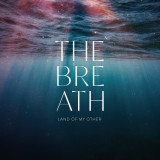
Land Of My Other is a place of memories and melodies, lyricism and lore. A place of sunlight, faerie-tales and rowan trees; of grief, incarceration and thunder in darkness. A place where ancestral trauma and colonial injustice meet blazing pride, romantic self-rule and hands held in a circle in the sea.
Where songs are sung with feeling, instruments are everywhere and music lives deep in the bones.
Land of My Other. The third studio album by The Breath.
Produced by renowned composer/pianist Thomas Bartlett, and with the wildly acclaimed duo that is singer Ríoghnach Ree-uh-na Connolly and guitarist Stuart McCallum at its core, it's a project that grabs you by the scruff from the off.
Ten original tracks. Raw, gorgeous, acoustic-minded music. Synths and effects so subtle they might be invisible. Negative space created, shaded, created again. Lyrics with meaning, power and an often terrible beauty. Songs that tell stories in ways that soothe, thrill and hit like a sucker punch.
credits
releases October 13, 2023
All tracks written by The Breath
Except ‘Don’t Rush It’ and ‘Without You in it’ written by The Breath and Thomas Bartlett
Produced and arranged by Thomas Bartlett
Ríoghnach Connolly - vocals, flute, shruti
Stuart McCallum - acoustic and electric guitars
Thomas Bartlett - piano, mellotron, op-1, rhodes bass, programming
The next chapter of the Natural Information Society is here. Since Time Is Gravity, credited to Natural Information Society Community Ensemble with Ari Brown, presents a newly expanded manifestation of acclaimed composer & multi-instrumentalist Joshua Abrams nearly 15 year, 7 albums &-counting flagship ensemble. Joining the core NIS of Abrams (guimbri & bass), Lisa Alvarado (harmonium) Mikel Patrick Avery (drums) & Jason Stein (bass clarinet) are Hamid Drake (percussion), Josh Berman & Ben Lamar Gay (cornets), Nick Mazzarella & Mai Sugimoto (alto saxophones & flute), Kara Bershad (harp) & Chicago living legend of the tenor saxophone Ari Brown. Recorded live to tape at Electrical Audio & The Graham Foundation, cover painting Vibratory Cartography: Nepantla, by Lisa Alvarado. 2xLP on Eremite USA, 2xLP & CD on Aguirre/Eremite Europe. Out 14-04.
Since first developing Natural Information Society in 2010, Joshua Abrams has been gradually expanding the group’s conceptual underpinnings, its musical references & the sheer number of the group’s members. Its music is, in a sense, an expansive form of minimalism, based in repeated & overlaid rhythmic patterns, ostinatos & modality. Its roots, its scale & its meaning become clearer in time. If time is gravity, it also allows us to carry more. Having begun as fundamentally a rhythm section with Abrams’ guimbri at its core, the version here can stretch to a tentet, including six horns.
Abrams has been expanding his minimalism gradually, but he has long understood a key to minimalism’s potential: the breadth of its roots in the late 1950s & early 1960s, ranging from the dissatisfaction of young European-stream composers with the limitations of serialism to the simultaneous dissatisfaction of jazz musicians with the dense harmonic vocabulary of bop & hard bop. The former began exploring rhythmic complexity & narrow tonal palates in place of harmonic abstraction (Steve Reich’s Drumming, Philip Glass’ Music with Changing Parts; perhaps above all Terry Riley’s In C & his late ‘60s all-night organ & loop concerts); the later reduced dense chord changes to scales (signally with Miles Davis' Kind of Blue, but rapidly expanding with John Coltrane’s vast project). In the 1950s the LP record opened the world with documentation of Asian & African musics, key influences on both minimalists & jazz musicians. If John Coltrane’s soprano saxophone suggested the keening shehnai of Bismillah Khan, the instrument was rapidly taken up by two key minimalists, LaMonte Young & Riley, similarly appreciative of its flexible intonation, the same thing that kept it out of big bands.
If the guimbri, the North African hide-covered lute that Abrams plays with NIS, involves a rich tradition of hypnotic healing music associated with the Gnawa people, Abrams’ music also touches on other musics as well — other depths, memories & healings, different drones, rhythms & modes. As the group expands on Since Time Is Gravity, he has made certain jazz traditions in the same stream more explicit as well. If there is a mystical & elastic quality involved in the experience of time, both in direction & duration, you will catch it here. The parts for the choir of winds expand on the roles of Abrams’ guimbri, Mikel Patrick Avery & Hamid Drake’s percussion & Lisa Alvarado’s harmonium: at times, the winds are almost looping in the tentet version, each hitting a repeating note in turn, at once drone & distinct inflection on temporal sequence. The brilliance of the work resides in Abrams’ compositions, the NIS’ intuitive execution & in Ari Brown’s singular embodiment of the great tenor saxophone tradition, including the oracular genius of Eddie “Lockjaw” Davis, & Yusef Lateef. The three pieces by the expanded NIS featuring Brown —the opening “Moontide Chorus” & “Is” & the ultimate “Gravity”— have an immediate impact, & togther might be considered a kind of concerto for tenor saxophone. Here Brown presses almost indistinguishably from composed melody to improvised speech, getting so close to language that he might have a text. Everything here is a sign. Note the tap of the Rhythm Ace that links “Moontide Chorus” to “Is”, the attentive heart always present, even when signed by a machine. There’s a link here to the methodologies & meanings of dub music & the linear & vertical collage of beats, textures & tongues: treated with reverence, a sample of a beat-box can be as soulful, as hypnotic, as a mbira or a tamboura. If those pieces with Brown are heard as a suspended concerto, the three embrace & enfold the other works, like the sepals of a flower. That placement will also touch on the mysteries of our perception of time.
Particularly in “Is”, but elsewhere as well, a phenomenon of transcendence arises in which time appears to be tripartite, at once moving backwards & forwards & standing still. This is an act of technical brilliance certainly, but also an illumination of music’s ability to represent temporal consciousness through polymetrics. This particular listener has only heard it before in a few places, including the horn shouts & bowed basses of Coltrane’s Africa, in moments of Charles Mingus’ The Black Saint & the Sinner Lady, in certain pieces where tapes were literally running backwards, & earlier still in Dizzy Gillespie’s Cubana Be, Cubana Bop, in which the composer George Russell & conguero Chano Pozo found a music that spoke at once in the voices of Stravinsky’s Rite of Spring & the vestigial rites, rhythms & songs of the Yoruba language & Santeria religion of inland Cuba.
In Joshua Abrams’ compositions & the realization of them by the NIS, in the time of one’s close listening & memory thereof, distinctions between the “natural” & the “social”, the “quotidian” & the “transcendent” are erased, suspended or perhaps irrelevant. Consider two of the ensemble pieces, one named for nature, the other social science. In “Murmuration” the repeated wind figures of flute & alto saxophone combine with the interlocking patterns of harp, guimbri & frame drum (tar) to create a perfect moving stillness, not an imitation but a witness to the miracle of the starlings’ astonishing collective art, a surfeit of beauty that might be the ultimate defense tactic.
“Stigmergy” takes its name & concept from the Occupy movement’s Heather Marsh, who proposes a social system based on a cooperative rather than competitive models, one in which ideas are freely contributed & developed as ideas rather than an individual’s property. In its form, Abrams’ “Stigmergy” is the closes thing to traditional jazz, a series of accompanied solos by each of the wind players. However, the composed accompaniment is a radically collectivist notion: a repeated rhythmic figure, call it ostinato or riff, in which the different winds each play only a note or two of the figure, a concept both more collectivist & individualistic in its conception than any typical unison figure. It suggests another of the underlying recognitions that propel the Natural Information Society, the group as social organism, the teleology of hypnotic anarchy, all parts in place, functioning systematically, evolving & expressing itself, its nature & society, as a transformative organism.
George Lewis has described music as “a space for reflection on the human condition”. This suggests that, rather than a “distraction”, at least some music might serve as a distraction from distraction. It’s a focus, a clarity, a awareness, an external invitation to interiority, as if music itself is a model for form & contemplation, an organism contemplating for us or as us. If that is a possibility, & I am sure I have heard such musics, than this music is among them. How many of our rhythms, melodies & harmonies (cultural, historical, biological, psychic) might such music carry, translate & transform in the particulate ecstasy of our own murmuration? (Stuart Broomer, April 2022)
NuNorthern Soul may be Ibiza-based, but the label’s connections with Nottingham run deep. Over the years, Phil Cooper’s imprint has offered up countless releases and remixes from some of the East Midlands’ city’s most Balearic-minded residents, including Crazy P’s Jim Baron, Is It Balearic? chiefs Coyote and, most recently, Constellations Workshop associates Brown Fang.
You can also add to that list Torn Sail, a collaboration between Brown Fang members Jon Thompson and Henry Scott, and another Notts-based NuNorthern Soul contributor, Huw Costin. The trio’s mesmerising ‘Disconnected’ recently featured on the label’s deluxe 10th anniversary vinyl box set and now they return with a single credited to both Brown Fang and Torn Sail – the first such occurrence of that happening.
Those who heard Brown Fang’s brilliant mini-album, Sherwood Pines, will immediately feel at home. Both ‘Exit’ and ‘Endless’, the two tracks showcased on this fine single release, feature the same gorgeous, slowly shifting fusion of sun-kissed electric guitar textures, ambient atmospherics and immersive, sunset-friendly sound design.
First up is ‘Exit’, an undulating, slow burning delight where rising and falling electronic melodies and yearning, gently jazzy electric guitar motifs rise above a sparse, shuffling, subtly Latin-tinged drum machine rhythm and warming bass. Endearing, enveloping and endlessly attractive, the track seemingly blossoms in slow motion throughout its’ three-and-a-half-minute duration, with additional musical elements presenting themselves as it progresses. Even by the trio’s high standards, it’s a magical composition.
On ‘Endless’, the long-time collaborators explore their love of mind-soothing ambient soundscapes. Doffing a cap to the 1970s new age ambience of Steve Hillage – whose distinctively languid, stretched out, effects-laden electric guitar solos were undoubtedly an inspiration –Thompson, Scott and Costin deliver a becalmed and brilliant dream-scape full of hazy aural textures, drifting chords and gentle, eyes-closed vocalisations. It feels like a loved-up, smile-inducing evocation of the most visually stunning dawn you’ve ever ushered in after a night dancing under the stars.
Green Vinyl
Föllakzoid are nearly unparalleled in the hypnotic lysergic drenched neo-psychedelic experience. On their debut it is mostly a rather bulky one, determined by the downright dirty, distorted electric guitar, which is also usually accompanied by a spacey, howling and herbaceous howling one. In addition, there is fat bass and powerful drums. During the prolific post-napster musical era dominated by myspace, the Chilean musical field opened up so that many bands could broaden their creative spectrum by taking global and timeless references as an aesthetic holy grail. This experimentation had the internet and specialized forums as a search engine, which not only provided the world parameters in trends, but also allowed to find true hidden gems, bands that were adored by a few connoisseurs of the real quality left behind by the record labels. In this context, a group of university students who have known each other from school began to rehearse in the Caracol Vip underground (Santiago, Chile), in a room owned by a local heavy-metal legend, Juanzer. Equipped with tube amplifiers, Marshall and other custom made, the members of that time: Gonzalo Laguna on vocals, Juan Pablo Rodriguez on bass, Domingo García-Huidobro on guitar, Diego Lorca on drums and Francisco Zenteno on second guitar, they began to play endless jams without a strict sense of songs or directed compositional notion. The rule was to follow the noise in a journey through valleys and peaks that allowed the spontaneous appearance of textures, lyrics, phrases and some invented chords that did not resemble anything that had been heard at that time. The rehearsals were transformed into true live performances without an audience, which were only seen by a few curious, among alcohol, smoke and deafening noise, which could only end when the owner of the room (Juanzer) entered to turn off the equipment. Over time he himself stayed as an auditor, witnessing how the musicians stripped themselves in their rehearsals. Considered at that time as play or fun, the idea of forming a band with a name came with the real live performances to which they were invited, without yet having songs made, at the end of 2006. The myth of their first live performance alludes to a numerical superstition, on July 7, 2007, in a small bar in Providencia (Santiago), which also provided the band with an upward recognition for the psychedelic-punk music they were doing, with a voracious vocalist who destroyed everything on stage and a band that stood firm on the endless songs they built. The name that was invented for that occasion was the result of a nonsense about the German word feuerzeug brought to the group by their close friend Alfredo Thiermann (who would later make the cover of the first album and become keyboardist), which the members of that time took and Spanishized at will. This neologism represents the second founding myth of the band since the interest in bands like Can, Neu! and AMON DUUL II and the characteristic motorik rhythm would soon arrive, in the form of kosmische musik. By 2008 the band had already added several live performances and some songs appeared, among which were Directo al Sol and Loop (nod to the English band), which allowed a greater deployment of ambient-noise resources, almost close to the 'concrete' music. The deconstructed rock of Spacemen 3 was also present in the form of repeated sequences on the bass and drums, as the layers of shrill guitars formed the foam of the tide bursting in the darkness of space. With the ideas and general feeling of the sound that they already had, the band made the decision to record their first album with the sound engineer and Juan Pablo's brother, Ignacio 'Nes' Rodríguez, who later together with JP would form the BYM label to make the first CDs of the forthcoming debut of Föllakzoid and other bands that Nes was recording. Sheltered that winter in the studio that Nes had built in an old house in Recoleta, the band recorded the bulk of the songs on the album with a new jam that emerged in that room composed of 1 note and moments of rising intensity: Sky Input I and II appeared to complete a set of songs that came from rock but were slowly passing to a level of trance and cacophony typical of orchestrated and atonal music. With three takes per song but only one take of the jam, the album was finished with a few extra takes and overdubs, some made in the house of Nes himself, who contributed a guitar to Loop, although it does not appear in the credits, and additional takes of "Pelao" Zenteno with delay and reverse for almost all songs. The names of the songs came from the lyrics that Laguna had worked from the live versions to the studio finals, except for Loop, Sky Input and El Humo. The cover of the album, which as mentioned was made by Thiermann, represents well the spirit of those days, when creative magma looked for an outlet through the instruments without any restriction or explicit direction from any of the members of the group. The image of the tree towards the sky speaks of the roots that rise towards the immensity, the nature projected towards the stratosphere. Ideas that the neo-psychedelia of those years seemed to capture well, echoing in the Chilean bands that at that time were gathering around the BYM label. Both the creative fluency and the lack of a musical director ensured that Föllakzoid was an original band that did not impose themselves a way of doing things or sounding, collective music took shape in the most wonderful way, without characters, without a record name, without faces. Just an instant in space. 2022 GALAXY GREEN coloured vinyl
Twisted and irreverent, The Rabbits combined ear-splitting guitar shrapnel with one of punk’s greatest-ever snot-nosed vocalists. With hints of PIL or Chrome, but beamed in from a parallel dimension and filtered through the warped lens of visionary loner Syoichi Miyazawa. First-ever vinyl release, fully remastered from the band’s original early ’80s cassette releases, and housed in a sturdy tip-on sleeve. Includes a double-sided, printed insert. Edition of 500
Singer-songwriter Syoichi Miyazawa’s tale is a confounding one.
He grew up in a small town in Yamagata Prefecture (in northern Japan), loved Dylan and The Beatles, and had very little exposure to, or interest in, underground music. And yet, shortly after 24-year-old Miyazawa arrived in Tokyo in 1978, he began performing solo shows at tiny clubs in the city, singing and playing guitar. His performances quicky devolved from brisk acoustic jaunts to lengthy, heavy dirges sung in a snot-nosed wail over a blown-out electric guitar detuned to produce a kind of sonic sludge.
At one of his earliest gigs, a mutual friend introduced him to Endo Michiro, who would soon become the legendary front man of Japanese punk icons The Stalin. It turned out Miyazawa and Endo had attended Yamagata University at the same time just a few years earlier, but hadn’t known each other at school. In Tokyo, they became fast friends, moved into the same apartment building, and for years were inseparable. Endo played guitar and drums on Miyazawa’s debut release, the “Christ Was Born in a Stable” flexi disc. But while Endo was social and outgoing, Miyazawa preferred to be alone, avoiding concerts unless he was performing.
Despite these antisocial tendencies, Miyazawa came to despise playing solo. In 1982, an eccentric high school student named Chika introduced herself at one of Miyazawa’s gigs, and Miyazawa asked if she’d play bass. She agreed and drafted two of her friends to play second guitar and drums. The Rabbits were born.
Miyazawa wrote the tunes, and had a clear vision for the group, but struggled to get the sound he wanted from the other members. His second guitarist was more of a fusion player, and Miyazawa took great pains to get him to tone down the shredding. The group quickly went through multiple line-up changes. Frustrated with the sound of their first proper recording (self-released as the “X1(x)” cassette), Miyazawa spent a full year mixing their second cassette, “Winter Songs,” on his own.
The hard work paid off — the sound of “Winter Songs” is striking, and unlike anything the band’s peers produced. There’s liberal use of delay on the vocals, giving the music a psychedelic feel, but the guitars are caustic, cutting through the mix like metal shrapnel. The rhythm section seems on the verge of teetering out of control throughout, an overdriven and pummeling current below abrasive slabs of guitar and vocals. Even at their most aggressive, though, The Rabbits had strong pop sensibilities, complete with cooing backing vocals and the occasional harmonica solo. Miyazawa delivers his borderline nonsensical lyrics with equal amounts of menace and gaiety, consistently riding that fine line as only a natural oddball can. At times, the band sounds like a distant cousin of PiL, Chrome or The Homosexuals, but beamed in from a parallel dimension and filtered through Miyazawa’s warped lens.
Although The Rabbits briskly sold all 500 copies of the "Winter Songs" tape, live audiences at the time seemed dumbfounded by the group, and would stare at them in silence. After two years together, The Rabbits called it quits in 1984.
When asked if any of the many legendary groups (Les Rallizes Desnudes, G.I.S.M., etc.) he shared stages with left an impression, Miyazawa recently revealed that he always left the venue as soon as he finished performing, so he never caught any of the other bands…
All of which is to say —
The Rabbits are one of the great punk bands of the early ’80s, but their leader had no interest in the punk scene and always thought he was making “normal” music. They rubbed shoulders with a slew of notable groups of the era, and their singer was best friends with arguably the most famous Japanese punk of all time, but Miyazawa shunned fraternization and purposefully distanced himself from his peers.
Could this be why so few underground music fans are familiar with the group, even in Japan? Why they seem to have been written out of the official history of Japanese punk? One can never know for sure, but Mesh-Key hopes to remedy this travesty by offering this compilation, the first-ever official LP by The Rabbits, to a new generation of punk and psychedelic music connoisseurs.
credits
Damian Schwartz makes a welcome return to Pulp for his third full-length album, La Sal De Tu Especie. The 11 track record was written over the last three years as a way of coping with some tough experiences and features remixes
from K15 and Gifted & Blessed. It once again finds the Madrid producer serving up the sort of richly musical house that has always stood him apart.
Schwartz has been away for a while but emerged in the early 2000s with an artful take on house music. As a student of jazz, composition and bass, his intricate grooves have always been embellished with real melodic craftsmanship. In the past, they have come on this label, Esperanza and A Harmless Deed which he co-runs with Jose Cabrera. He has put out two albums before now and also works under the Epiphany alias as a producer and live act. He is a real master of his analog machinery and someone who never fails to bring fresh ideas. This superbly adventurous and widescreen new album proves that once again and shows off diverse influences such as 90s broken beat by acts like Hanna and 4 Hero, the early IDM of LFO and Aphex Twin and the Detroit house and electro styles of greats such as Juan Atkins, Teknotika, Marcellus Pittman and Kyle Hall.
It kicks off with Renacido which is a cinematic synth opener that places you into orbit. La Elipa is expansive and jazzy house with cosmic chord work over the tight, punchy kicks and Lopp then gets physical with broken beat drums and funky bass dancing around each other to uplifting effect. The superb Zwei Danke is another masterclass in off-grid beat programming and soulful machine sounds that captures the essence of early Detroit house.
It is remixed by K15, a vital London beatmaker with credits on labels like Eglo and Wild Oats. His version showcases rugged, lo-fi and dusty drums softened by heart-melting chords and angelic vocal coos.
Schwartz's 'Morro Da Urca' is a suspensory ambient interlude that makes way for the crisp electro-funk and starry-eyed pads of 'Rufo,' then 'Meco' cuts loose
with boogie bass and glistening drums and perc that voyage through a whole eco-system of bright, nebulous synths. 'Mika' is another out of this world house composition with majestic leads and pixelated pads that bring warmth and future soul. There is real electricity in the freeform keys and corrugated drums of Coney Island that will ensure any dance floor takes off.
Final remixer Gabriel Reyes-Whittaker aka GB (Gifted & Blessed) is a composer and sound artist whose music is a constant exploration of the bridge between the technological and the ancestral. He flips 'Loop' into an Afro-future jazz dance with infectious percussion and expressive chords that never rest.
La Sal De Tu Especie is a timeless fusion of jazz freedom and house grooves that takes you into a magical new dimension.
Gazelle Twin, Lali Puna, This Mortal Coil, Slow Walkers, Atlas Sound, Bowery Electric, Broadcast Press Release: Snakeskin is an album of visionary electronic dream pop, shapeshifting above ambient and industrial undercurrents. It is moody, unsettling, luminous – the culmination of a decade of collaboration and friendship between Lebanese producer/musician/ engineer Fadi Tabbal and singer-songwriter Julia Sabra from Beirut-based indie trio Postcards. The duo began working on Snakeskin in the aftermath of the August 2020 Beirut port explosion, which killed at least 218 people, injured 7,000, and left over 300,000 people homeless. Indeed, Julia's home was destroyed by the explosion and her partner and bandmate Pascal badly injured. The first song that they wrote together afterwards was 'Roots', which closes out the album and was composed for the Ruptured-curated series The Drone Sessions in the fall of 2020. Snakeskin utilizes tape loops, synthesizers, vocals, and drum machines, combining Julia’s pop-inspired melodies and choral roots (an echo from her religious upbringing) with Fadi’s affinity for minimalism and musique concrète. The album seamlessly incorporates the melancholy electro-pop of 'All The Birds', the quiet menace of 'In Our Garden' (long-lost treasures, ancient lies / another buried paradise), and the beat-driven 'Signs'. The title track sums up their frame of mind, beginning as a lullaby and evolving into a glittering tapestry of distortion and feedback. As the artists write, Snakeskin is a product of "the disappearance of life as we know it, and with it the decay of nature and living creatures. There is no rebirth, no renewal. It’s about what it means to feel at home in such a place." Some tracks were also inspired by events happening in the surrounding region, such as the invasion of Armenia by Azerbaijan and the Palestinian uprising of May 2021 in Sheikh Jarrah - both events shedding light on relationships to home and land across the wider region. That such compelling art can emerge from unceasing tragedy may be the ultimate testament to human resilience and the pursuit of freedom and justice. "The moon speaks in tongues we can't discern / A plastic dove hangs from a cypress branch / Haven't you heard? / Nothing grows here anymore / The air is burnt / Nothing grows..." Highlights: – This is the second volume in the Corrosion Series, a collaborative effort by Beacon Sound and Ruptured, and the sixth collaboration between the two labels. – Fadi used samples of Julia's voice on his fifth solo album Subject to Potential Errors and Distortions (2020, Beacon Sound/Ruptured) – The Tunefork Studios team, led by Fadi, administered the Beirut Musician's Fund after the port explosion, as covered by Pitchfork, NME, and the Financial Times. – Julia's band Postcards released their third full-length album After The Fire, Before The End on Berlin label T3 Records in 2021 and are currently touring Europe. Credits: All music composed, performed and produced by Julia Sabra and Fadi Tabbal between November 2020 and December 2022. Lyrics by Julia Sabra. Drum samples by Pascal Semerdjian. Recorded by Fadi Tabbal, mixed by Sary Moussa and Fadi Tabbal at Tunefork Studios, Beirut. Cover photo by Lujain Jo. Design by Josette 'ZOoz' Khalil. Mastered by Rashad Becker. Bios: Julia Sabra is a Lebanese musician, songwriter and composer. She co-founded acclaimed Lebanese dream-pop outfit Postcards in 2013 and is the band’s multi-instrumentalist, lead singer and lyricist. Postcards have released two EPs (2013, 2015) and three albums (2018, 2020, 2021) and have been regularly touring Europe and the Middle East since 2015. She has been the manager of Tunefork Studios since 2017. Lebanese musician, producer, and sound engineer Fadi Tabbal’s work consist of minimalist pieces ranging from ambient and electronic to drone and contemporary classical. He has released six solo albums and has collaborated with various musicians, artists and filmmakers through the years. Often referred to as “the hardest-working person in Lebanon’s alternative music scene”, Tabbal established Tunefork Studios, a collective of producers, engineers and musicians, which has helped shape Beirut's contemporary music scene since 2006.
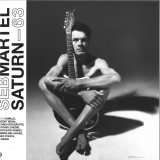
If the name Seb Martel is still unknown to you, the guitarist appears on the credits of classic albums from Tony Allen, Femi Kuti, Morcheeba or Blackalicious. Saturn 63, his new album on InFiné is dedicated to the exploration of the electric guitar in all its nuances. This new opus made from a selection of 9 guitars from the Musée de la Musique (a branch of the Philharmonie de Paris), and only enriched with the voices of his close collaborators (Camille, Sabrina Bellaouel...), unfolds on fourteen tracks a musical fresco faithful to the historical and geographical heritage of his instrument. The album includes fascinating reworks of Carl Perkins, Benjamin Britten, Chavela Vargas or Vincent Segal in addition to his own compositions. However, adopting a dogmatic approach, and dressing his compositions with sounds and effects collected during the recordings, Martel offers an abstract and experimental edge to Saturm 63, which transports the listener into an out of time experience. Two famous names of the French Chanson, -M- and Mathieu Boogaerts joined Martel to close the album with the snapshot of a speechless improvised session.
He may not have known it before, but Toronto-born, New York-based
guitarist Matthew Stevens, prized for his forceful, distinctive electric
sound was an ideal candidate to make an album fully devoted to solo
acoustic guitar: the intimate, unadorned, straightforwardly titled
'Pittsburgh'
September 2020, Stevens was hunkering down in his wife's family's hometown of
Pittsburgh, while navigating his way through the crisis. He had with him a vintage
Martin 00-17, a small- body mahogany guitar. Practicing daily on the Martin, he
began generating a series of short song "starts" - ideas and sketches he thought
might lead somewhere. Then one rainy Pittsburgh day, Stevens' bike slid out from
under him and he broke his right elbow. Rather than getting derailed musically, he
became immersed in a creative process that led straight to 'Pittsburgh': a
document of those short song "starts" from the notebook, now hatched as
completed compositions. "Playing this music became a big part of my rehab,"
Stevens recalls.
As the album took shape, it became clear to Stevens that he was headed in the
direction of a wholly unaccompanied recital, with no overdubs or sound layering
of any kind. Just him and this special Martin, two Neumann U89 mics and enough
peace of mind across two separate sessions to make 'Pittsburgh' the triumph that
it is.
In addition to his extensive high-profile work with Esperanza Spalding (serving as
co- producer on 'Exposure' and '12 Little Spells'), Stevens is also a member,
songwriter and co-producer of Terri Lyne Carrington's GRAMMY-nominated Social
Science band. He has made vital contributions to groups led by Dave Douglas,
Linda May Han Oh, Christian Scott aTunde Adjuah, Ben Williams and more. With
tenor saxophonist Walter Smith III he co-leads the In Common collective. Stevens
has also amassed many credits beyond the jazz world, collaborating on
forthcoming releases by Anna B Savage, Jamila Woods, Tyler Armes
(Murdagang) and Berlin-based electronic artist Robag Wruhme.
HIGHLIGHTS: 1984 Brazilian electro funk/early rap by Sao Paulo crew Electric Boogies, recorded under the influence of New York's B-Boy culture and local artists like Black Juniors, Villa Box_ First time vinyl reissue. DETAILS: Following the success of the early Brazilian rap artists Black Juniors, Villa Box, Buffalo Girls_ Electric Boogies emerged out of Sao Paulo, Brazil, as a crew devoted to breakdancing under the influence of New York's B-Boy culture. They would record "Break Mandrake" in 1984, originally released on RGE Records. This single has two fabulous electro-funk tracks, side A is vocal and on the flipside we find the instrumental version with some extra keys that give it a more jazzy touch. DJ Irai Campos would provide the scratches while the arrangements and keyboards were credited to Eduardo Assad, who also worked with Black Juniors, Sasha and others.
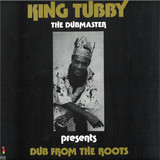
Tubby did three original dub albums, “Dub From The Roots, “The Roots Of Dub” and the third is “Brass Rockers” with Tommy McCook ’pon the flying cymbals. Where he mixed it with the horn going in and out in a dub way and one named “Shalom Dub” you can call Tubby’s too because he mixed the versions as they were off the forty fives.
King Tubby and Producer Bunny “Striker” Lee are intertwined in the birth of Dub Music. After discovering a mistake that made a “serious joke” (more of which later…) they went on to release the first pressings of this new musical genre namely “Dub Music”. Tubby’s vast knowledge of electronics and Bunny’s vast catalogue of rhythms would lay the foundations of what today is taken as a standard…. The Remix / Version cuts to an existing vocal tune.
Osborne “King Tubby” Ruddock was born in Kingston, Jamaican the 28th January 1941 and grew up in the High Holborn Street area of downtown Kingston. He studied electronics at Kingston’s National Technical College and also on two correspondence courses from the USA. When he had qualified, Tubby began repairing radios and other electrical appliances in a shack in the back yard of his mother’s home. His work in the early days included winding transformers and building amplifiers for Kingston’s Sound Systems. Tubby built his first Sound System in 1957 playing jazz and Rhythm and Blues at local weddings and birthday parties His reputation as a man who knew and understood both electronics and music grew steadily and as the sixties drew to a close. Tubby purchased his own basic two track equipment. He installed this alongside his dub cutting machine, a homemade mixing console and his impressive collection of Jazz albums in the back bedroom of his home at 18 Dromilly Avenue which he christened his music room.
Dynamic Sounds upgraded to sixteen track recording in 1972 and Tubby purchased, again with the help of a deal brokered by Bunny Lee. The old four track equipment and the MCI console from their Studio B. The four tracks now gave him far wider scope to work with and he began to create a new musical form where the bass and drum parts were brought up while the faders allowed Tubby to ease the vocal and rhythm in and out of the mix. It was only a matter of time before Tubby’s dub plate experiments began to make it on to vinyl and the first ever long playing King Tubby releases would feature a collection of his mixes to a selection of Striker’s rhythms. So please sit back and enjoy this historic set of sounds. Lovingly restored and with a few extra gems added to the CD editions. These releases were the first to carry the name of King Tubby and the first to credit the great musicians that contributed so much to the rhythms that made these albums possible.
Hope you enjoy the set……
Mattiel, the Atlanta based group made up of Mattiel Brown and Jonah Swilley, announce
the release of their third album, ‘Georgia Gothic’, on Heavenly Recordings. ‘Georgia
Gothic’, a magic third in Mattiel’s run of full-length albums, was shaped in the quiet
seclusion of a woodland cabin in the north of the Atlanta duo’s mother-state; “Some
faraway place that just Jonah and I could go where there would be no distractions,
nothing else going on, and we could turn everything off and only focus on writing songs,”
reflects Brown.
Where 2017’s self-titled debut and its 2019 follow-up Satis Factory were written with what
Swilley refers to as a “hands-off” approach - he arranging the music and Brown the lyrics
and vocals, the two working largely separately - the making of ‘Georgia Gothic’ was, for
the first time, a truly collaborative undertaking. “This was the first time we made a point to
just be together and work out ideas in the same room. That was the initial intention... it
was about learning what each other wanted to accomplish on a sonic level, and then just
trying different things out,” Swilley continues. “Everything happened backwards. Normally,
you’d have friends that make a band... with us, we started making music from the jump,
and then became homies.”
Cultivated by time spent together on the road touring the first two albums, it is this
newfound sense of intimacy between Mattiel’s members that enabled the writing of
‘Georgia Gothic’ not as two separate musicians, but rather as one creative entity. The
album remained within the four walls of Brown and Swilley’s private world for much of its
evolution - with recording taking place in a simple studio set up by the pair in the
borrowed room of a dialysis centre, Swilley in the producer’s seat - until, nearing
completion, it was transferred into the trusted hands of the Grammy award-winning John
Congleton (whose extensive list of credits includes artists as diverse as Angel Olsen, Earl
Sweatshirt, Erykah Badu and Sleater Kinney) for mixing.
Not only does the affinity between its creators translate into an electric synergy between
‘Georgia Gothic’s words and music - the brine-shock of Brown’s taut lyricism cut against
the bourbon-smoothness of Swilley’s instrumentation - but here too are the palpable
spoils of experimentation, each party trustful enough of the other to trial and error their
practices into new geometries. Swilley puts this wide palate, in part, down to the place
they call home. “I definitely feel like being from Georgia allows us to have a certain way of
approaching music.” Brown chimes in: “We haven’t really highlighted where we’re from in
the past two records, even though those were also written in Georgia. There’s so much
great art and great music that’s come from Georgia, from all different types of genres and
all over the state - but take R.E.M. and OutKast: there’s this weirdness that I can’t really
put my finger on.” Swilley concurs: “It’s the same with the B-52s, the Black Lips... it
doesn’t feel like L.A., it doesn’t feel like New York, it feels like another planet. We’re not
really in a ‘scene’ here in the same way. You have to make your own sound, create your
own identity.”
And it is precisely the forging of Mattiel’s distinct musical identity that ‘Georgia Gothic’
signals; its members guiding each other ever-homewards not just in a geographical or
sonic sense, but spiritually, too.
Initial LP pressing on Red Hot coloured 140g vinyl with digital download code. (Once this
format has sold out, a black 140g vinyl edition with digital download - HVNLP202 - will be
made available.)
‘The Syd Barrett of the avant-jazz scene’ British jazz composer, pianist, songwriter, Mike Taylor died tragically young, leaving just two albums as well as co-writes with Ginger Baker for Cream’s Wheels Of Fire album to his name. In 1973, under the direction of Neil Ardley, several of the performers who had worked with him recorded an album of Taylor’s surviving orchestral music, jazz tunes and songs as a memorial to him and to preserve his work as a composer and song writer for posterity. Taken from Ardley’s master tapes, this is their critically-acclaimed tribute to a master of his art by friends and colleagues, themselves representing a cross-section of the cream of modern British jazz talent of the day.
Collective Personnel
Tony Fisher, Greg Bowen, Henry Lowther, Ian Carr (trumpets, flugelhorn) : Chris Pyne, David Horler (trombones) : Ray Premru (bass trombone) : Barbara Thompson (flute, alto flute, soprano sax) : Ray Warleigh (flute, alto sax) : Stan Sulzmann (flute, alto sax, soprano sax) : Bob Efford (oboe, tenor sax, bassoon) : Dave Gelly (bass clarinet, clarinet, tenor sax) : Bunny Gould (bass clarinet, bassoon) : Peter Lemer (piano, electric piano, synthesizer) : Alan Branscombe (vibraphone) : Chris Laurence, Ron Mathewson (bass, bass guitar) : Jon Hiseman (drums, percussion) : Neil Ardley (director) : Norma Winstone (vocal)
Composed by Mike Taylor. Music direction by Neil Ardley. Recorded by Denis Preston at Landsdowne Studios, London, 1973. For publishing credits, contact MCPS London, England.
Mastered by Martin Mitchell at Moorend Studios, February 2007.
He looked like a bank clerk, but acted like a mystic”. Obituary – ‘Melody Maker’, February 15th 1969
“You’ll be returning to this for eons to fully unlock its genius.” Record Collector
“From the eerie opening sounds, like an orchestra tuning up, through a searing chord, and then into the frantic countermelody under long brass on Brown Thursday, and the baleful march-time of Land of Rhyme in Time, Taylor's audacity is plain.” The Guardian
- A1: The Mebusas Good Bye Friends
- A2: Georges Happi Hello Friends
- A3: Black Reggae Darling I'm So Proud Of You
- A4: Christy Essien I'll Be Your Man
- A5: The Lijadu Sisters Bobby
- B1: Tala Andre Marie Hop Sy Trong
- B2: Essama Bikoula I'll Cry
- B3: Carlos And Miki All This Nonsense
- B4: Pasteur Lappe Babette D'o (Rastawoman)
On 18th April, 1980, after decades of anti colonial struggle, the Zimbabweian flag was finally raised at midnight at the Rufaro Stadium in Harare. Not long after, the words "Ladies and Gentlemen, Bob Marley and The Wailers!" rang out, and Zimbabwe's independent future began.
In the years that followed, Africa was to produce it's own reggae superstars, as the likes of Alpha Blondy, Majek Fashek and Lucky Dube swept across the continent and beyond, and there's no doubting Bob Marley's explosive impact on this particular narrative.
Marley's unswerving commitment to liberation and unity ranged from the sweeping spiritual sentiments of iconic hits such One Love and Redemption Song to the galvanising, focused tone of 1979's 'Zimbabwe', and his status as global superstar ensured that his (self funded) part in the countries' epochal celebrations meant that the history of reggae in Africa would always be viewed through the prism of his influence ( Wiki/African Reggae : "In 1980, world-famous Jamaican reggae musician Bob Marley performed in Harare, Zimbabwe, and that concert is often credited as marking the beginning of reggae in Africa")
But in fact, the recorded history of reggae produced in Africa stretches back over a decade before Marley's arrival on the continent, and showcases broad pan - diasporic interflows between the Carribean and Africa, with the UK and the US communities playing influential supporting roles, all helping shape the evolution and development of the genre in Africa from late 60's inception to Marley's arrival in 1980, and then well beyond.
Reggae Africa : Roots and Culture, 1972 - 1981 tries to capture a sense of that evolution, starting in 1972 as Mebussa's ultra rare 'Good Bye Friends' effortlessly captures triangular, transatlantic cultural interflows, with the short lived Nigerian group's bitter sweet chords echoing classic US soul, but laid over a gritty, skanking Jimmy Cliff - esque proto reggae rhythm.
Trying to work out the precise provenance of Black Reggae's 'Darling I'm So Proud of You' (1975) isn't easy, but involves Paris based / African focused label Fiesta, some proper OG co-branding exercise with Bols Brandy ( "Bols Brandy presents Black Reggae") - and deeply infectious, lilting Rocksteady.
By 1976, glorious Nigerian sister duo Lijadu Sisters are echoing the chunky roots of a Dennis Brown or U Roy on 'Bobby', and in 1977, bespoke Nigerian drummer Georges Happi is introing 'Hello Friends' with the soon to be universal signature reggae tom roll intro, before veering leftfield with snatches of spoken Afro - English vocal in between the hooky choruses.
Nigerian giant Chrissy Essien's 'I'll Be You Man' (1979) combines floaty Lovers vibes with catchy ska shuffle, and in the same year, Cameroonian afro-funk/disco heavyweight Pasteur Lappe' drifts seamlessly into skanking, Lovers infected reggae on 'Babbette D.O. ( Rastawoman )' (before a sprawling electric guitar solo reminds us how unselfconsiously eclectic so much African music of the era was.)
And finally bookending the compilation, in chronological terms, fellow Cameroonian Tala AM also swaps his funk and soul for the rootsy and infectious 'Hop Sy Trong' (1981), again highlighting the diverse and eclectic approach to this timeless Carribean musical genre taken by African musicians in the years before that Bob Marley year zero event in Zimbabwe.
When you’re trying to make it through tough times, you need a little light to find your way. That light blazes brightly on the alchemical second album from Penelope Isles, an album forged amid emotional upheaval and band changes. Setting the uncertainties of twentysomething life to alt-rock and psychedelic songs brimming with life, colour and feeling, ‘Which Way to Happy’ emerges as a luminous victory for Jack and Lily Wolter, the siblings whose bond holds the
band tight at its core.
Produced by Jack and mixed by US alt-rock legend Dave Fridmann, the result is an intoxicating leap forward for the Brighton-based band, following the calling-card DIY smarts of their 2019 debut, ‘Until the Tide Creeps In’. Sometimes it swoons, sometimes it soars. Sometimes it says it’s OK to not be OK. And sometimes it says it’s OK to look for the way to happy, too. Pitched between fertile coastal metaphors and winged melodies, intimate confessionals and expansive cosmic pop, deep sorrows and serene soul-pop pick-you-ups, it transforms ‘difficult second album’ clichés into a thing of glorious contrasts: a second-album surge of up-close, heartfelt intimacies and expansive, experimental vision.
Field recordings were made during a stay at a small cottage in Cornwall, where Penelope Isles began work on the album. With romantic heartache already in the air, things swiftly got worse:
lockdown began, claustrophobia kicked in and emotions ran high. As Jack puts it, “We were there for about two or three months. It was a tiny cottage with four of us in and we all went a bit bonkers, and we drank far too much, and it spiralled a bit out of control. There were a lot of emotional evenings and realisations, which I think reflects in the songs.”
At different points along the way, Jack Sowton and Becky Redford left the Isles. An old friend, multi-instrumentalist Henry Nicholson, stepped in swiftly - “A godsend after a low time,” says Lily. Another friend, Hannah Feenstra, contributed drum parts; now, Joe Taylor is the band’s drummer. After Cornwall, the band redid many of the rhythm tracks, recorded a little in Brighton, then recorded more in Cornwall at their parents’ house. “It was,” says Jack, “a proper
rollercoaster ride.”
The ride continued with Fridmann, whose recent credits include Isles’ favourites Mogwai’s No 1 album, ‘As the Love Continues’. As Lily puts it, the process of sending Fridmann a mix, receiving it back in the morning and then having five hours to make decisions on it resulted first in stress, then in something sublime. “I love everything he’s touched - MGMT, Mogwai, Mercury Rev. He would turn our mix into this electric, fiery thing. There were some moments that were
initially hard, like on ‘Miss Moon’, where he took out the bass when it gets to the chorus. But now it’s my favourite bit on the record. He made everything so colourful. It’s an intensesounding record - a hot record. It was so refreshing to have that blast of energy from Dave - it’s like he framed our pictures.”
Away from the confines of the cottage, the Wolters also opened the door to a collaboration with storied composer Fiona Brice, whose credits include John Grant, Lost Horizons and Placebo. A
“big bucket-list tick” for Jack and Lily, the team-up results in glorious arrangements across the album: for Lily, ‘11 11’ stood out. “I was in absolute tears when she sent back the strings for ‘11 11’. It was like, oh my goodness, she’s nailed it.”
On its release, ‘Until the Tide Creeps In’ received rave reviews from Q, DIY, The Line of Best Fit and many others, while finding champions in Steve Lamacq and Shaun Keaveny. It also become part of a lifeline for music fans during the 2020 lockdown when the band participated in Tim Burgess’s Twitter Listening Party. Meanwhile, extensive touring saw the Isles develop into a formidable live force, with ‘Gnarbone’ emerging as a sure-fire showstopper.
Now, the Isles have 11 more showstoppers to add to the mix. At the album’s heart, the band’s core traits have never been stronger: the bond between the Wolters, a sensitivity towards complex feelings, a desire to celebrate life in all its facets and an ambitious reach combine to create an album that feels utterly, emphatically present on every front, rich in depth and uplift.
LP pressed on 180g clear vinyl with A4 print.
ayne/Wayne County's most audacious album is also possibly among the most important albums of its age. Released in 1979 just as the new wave was teetering on the brink of some kind of bold step forward, Things Your Mother Never Told You was one of the sudden shoves which sent it sprawling into its destiny. Electro-punk starts here. Producer David Cunningham takes only a portion of the credit; in years to come he would lead the Flying Lizards into the realm of heavily stylized electronica. But County's songs match his ambitions all the way, from the harsh, grating soundscapes behind "C3"'s muttered imprecations to the soft-spoken paranoia of "Waiting for the Marines," and onto "Berlin," the song that put into words everything David Bowie (among others) tried to convey about that city via image and insinuation. It's not all electro-art smarts, of course. "Boy With the Stolen Face" and the pouting, punishing "Wonder Woman" are archetypal Electric Chairs - a reminder of how, at the band's very best, they could run the Rolling Stones close in the swaggering rock & roller stakes - and the murder mystery "Wall City Girl" could have fallen off a forgotten volume of Nuggets or Pebbles. The title track, meanwhile, doesn't simply seethe with all the promise -- sexual, social, and societal -- which made County the superstar (s)he so very nearly was, it also lets listeners know why no one has ever truly snatched that crown away.
Penny Records presents the vinyl version of the soundtrack from the TV Series "Anna" written and directed by Niccolò Ammaniti. Fueled by Niccolò Ammaniti's passionate and immersive creative style, the score for 'Anna' was approached almost as a character study. 'Anna' exposes a world of extreme conditions where the essentials of human existence flourish in a wide range of emotions and sentiments tainted through the eyes of children. Striking brutality and primal savagery go hand in hand with the beauty of innocence and hope. Rauelsson's musical language for 'Anna' includes tense and spare textures that blend seamlessly with intimate ambient minimalism; classical elements that coexist with electronic drone experimentation and tribal rhythms, candid piano melodies buried in tape loops and otherworldly rituals of wordless voices. To arrive at this music landscape, Rauelsson enlisted an international cast of collaborators including Finnish percussionist Tatu Rönkkö, German cellist Anne Müller, American multi-instrumentalist Peter Broderick and Oslo-based vocalist Simin Tander. With this ensemble, Rauelsson's music documents a journey of survival that highlights the power of imagination and love.
Credits:
Music by Raúl Pastor Medall except A3 (Salvatore Cardillo, lyrics by Riccardo Cordiferro), A5 (Raúl Pastor Medall, Peter Broderick and Anne Müller), B3 (Raúl Pastor Medall and Anne Müller) and A2, B1, B2 (Raúl Pastor Medall and Tatu Rönkkö)
Played by Peter Broderick (Violin), Anne Müller (Cello), Raúl Pastor Medall (Piano, Electric Piano, Synthesizers, Electronics), Tatu Rönkkö (Drums, Percussion) and Simin Tander (Voice) with additional contributions from Christoph Berg (Violin), Aisha Burns (Violin) and Giulia Dragotto (Voice)
Recorded in 2020 at Rockaway Studios (Castelló, Spain; engineered by Raúl Artana), Niu (Benicàssim, Spain; engineered by Raúl Pastor Medall), Old House at Galgeberg (Oslo, Norway; engineered by Olav Torget), Tanum Church (Bærum, Norway; engineered by Olav Torget) and Indigo Studios (Palermo, Italy; engineered by Fabio Rizzo)
Additional recordings by Peter Broderick (Co. Galway, Ireland), Anne Müller (Berlin, Germany) and Tatu Rönkkö (Helsinki, Finland)
Produced by Raúl Pastor Medall and Niccolò Ammaniti. Mixed by Raúl Pastor Medall and Adam Selzer at Niu and Type Foundry (Portland, OR). Mastered by Adam Gonsalves and Adam Selzer at Telegraph Audio Mastering (Portland, OR). Lacquer mastercut by Andreas LUPO Lubich at Loop-O (Berlin, Germany). Artwork by Emiliano "Stand" Cataldo.
’Angelo lost his shit over it. Aaliyah’s 3rd favourite track of all time is on it. David Bowie rocked up with it to a TV interview, declaring it “the most exciting sound of contemporary soul music”.
In 1996, Lewis Taylor released his self-titled masterpiece. A true modern classic, it’s an album that was years ahead of its time. Forget 25 years ago, it could easily have been made in 2021. An effortless blend of neo-soul, sophisticated pop, smart grooves and laid-back white funk, it enjoyed rapturous reviews from critics and music legends alike. But the album never managed to make an impact and given what was likely a token vinyl release at the time, the original records have long since been near-impossible to find. Lewis Taylor’s Lewis Taylor remains a holy relic for some and criminally unknown to most.
Lewis Taylor’s impeccable influences created a dazzling sonic palette: the LP as a whole suggests the visionary brilliance of Prince; the vocal stylings evoke the yearning power of Marvin Gaye; the effortless guitar playing shares the virtuosity of Jimi Hendrix; the haunting tones conjure Tricky; the innovative production and engineering invite comparisons to studio mavericks like Todd Rundgren and Brian Eno; the multi-layered, complex harmonies flash on Pet Sounds-era Brian Wilson; the dark, drama is reminiscent of both Scott Walker and Stevie Wonder; the complex arrangements create textures and moods with the feel of Shuggie Otis on Inspiration Information; the bold experimentation is akin to progressive artists like Faust and Tangerine Dream; the atmosphere is in conversation with Jeff Buckley’s Grace… and we could go on. That might all sound like marketing hyperbole, but not as far as Be With is concerned. It is a genuine wonder how an album this good could’ve passed so many people by.
But despite all the reference points, the similarities are really only skin-deep because the album sounds truly original. It occupies its own distinct, strange universe that feels dark and brooding one moment, bright and joyous the next. Ultimately, Taylor sounds like Taylor.
Although you wouldn’t know it from the credits, the album wasn’t the work of Lewis alone. Sabina Smyth gets an executive producer credit on the original sleeve, but in fact she worked with Lewis on the production and arrangements, did a lot of the backing vocals and she co-wrote Track, Song, Lucky and Damn with Lewis.
Lewis clarified all this in a Soul Jones interview with Dan Dodds in 2016. He explains how not giving Sabina the credit she was due at the time was an unfortunate consequence of where his head was at and he’s now trying to set the record straight.
Together they created an exquisite and sensually-charged record, with a freshness to the writing that makes the songs catchy, melodic-yet-deep and sometimes even funky. The music is predominantly guitar-led and a mixture of organs and synths, live drum loops and electronic percussion make for a sort of modern soul backing orchestra.
On the surface the album is gorgeously laidback, but beneath the lush, sometimes slick, production there’s a murkiness in the seriously gritty funk/hip-hop instrumentation. Lewis Taylor can be a claustrophobic listen. Even its one-word, often seemingly throw-away track titles add to the sense of unease. In its most positive moments, there’s still a sense that things aren’t quite right. The magic comes from this compelling tension.
The languid, strutting “Lucky” is a sensational opening statement. Sinuous electric guitar winds around the shaking percussion with a killer bass line rattling your bones, and Lewis’s voice is sublime. Its six-and-a-half unhurried minutes manage to distill the work of Marvin, Al Green and Bobby Womack because yes, it’s *that* good. Up next is the tough, dusty drum and jazzy, unsettling psych-guitar workout of “Bittersweet”. Aaliyah described it the “perfect song”, which says it all. By turns loping and soaring, tightly coiled and blasting free, 25 years on its discordant, swaggering majesty still sounds like future R&B.
The swinging, blue-eyed funk of “Whoever” oozes sophisticated sunshine soul for hazy days before “Track” sweeps in. The music tries to lift us up, beyond the reach of the vocals trying to drag us back down as Taylor sings “my mood is black as the darkest cloud”. The spare, dubby electro-soul of “Song” closes out the first half of the album with barely contained dread as it creeps towards the lush, synth-heavy coda.
The smouldering “Betterlove” eases us into the second half, coming on like a languorous response to the call of “Brown Sugar”, before sliding into the shuffling, softly-rocking “How”. Somehow the remarkable “Right” manages to both warm things up and smooth things out even more. Taut yet luxurious, it’s definitely not wrong.
“Damn” was to have been the album’s title track and you might also be able to hear its influence on D’Angelo’s Voodoo, maybe most obviously in the chaotic closing moments of “Untitled (How Does It Feel)”. Building to a screeching wall of noise that suddenly cuts dead, “Damn” sounds like the natural end to the album, with the celestial a cappella “Spirit” serving as a heavenly reprise.
When it came to the sleeve, art director Cally Callomon heard Taylor’s music as “sideways off-camera glances at a plethora of influences he had” and wanted to interpret that visually: “I went off into night-time London to see if I could find his song titles in off-beam low-fidelity photographs. I even found a shop called Lewis Taylor”. With a slide for each of the album’s ten tracks, nine of them are on the inner sleeve and the slide for “Damn” makes the front cover. It should’ve been the album’s title, but concerns over distribution in the US scuppered this.
One of UK soul’s most fascinating artists, Andrew Lewis Taylor is an enigmatic figure and a hugely under-appreciated talent. A prodigious multi-instrumentalist who got his start touring with heavy blues/psych outfit the Edgar Broughton Band, he released two albums of psychedelic-rock as Sheriff Jack before Island signed him on the strength of a demo alone. But Taylor was destined to be one of those artists unable (or unwilling) to be pigeonholed and despite the best efforts of Island’s publicity department the music never sold in the quantities it needed to or deserved to. Island eventually let him go in the early 2000s and in June 2006, Lewis Taylor retired from music.
Typical for the mid-90s, this CD-length album was squeezed onto a single LP for its original vinyl release. Simon Francis’s fresh vinyl mastering now spreads out the ten tracks over a double LP so nothing is compromised. And as usual, the records have been cut by Pete Norman and pressed at Record Industry. The original artwork has been restored at Be With HQ and subtly re-worked to work as a double.
This sprawling psychedelic soul opus really is a forgotten should-be-classic. We know that there are those of you who know, and as for the rest of you, we’re a bit jealous that you’re getting to hear Lewis Taylor for the first time.
- Crossfire
- Fylingdale Flyer
- Working John, Working Joe
- Black Sunday
- Protect And Survive
- Batteries Not Included
- Uniform
- 4: W D (Low Ratio)
- The Pine Marten’s Jig
- And Further On
After completing their acclaimed folk-rock trilogy in 1979, Jethro Tull returned a year later with A, an album that introduced a different sound and a new line-up. Originally intended as a solo record by the band’s founder Ian Anderson, the album’s single-letter title refers to the studio tapes, which were marked “A” for Anderson. When the album was finished, the group’s label Chrysalis insisted that it be credited to Jethro Tull, even though only two members from the band’s previous incarnation were featured: Anderson and guitarist Martin Barre. Despite that, the album and subsequent tour were well-received by fans around the world.
Back in April, Rhino released ‘A’ (A La Mode) (The 40th Anniversary Edition), a new 3CD/3DVD set to mark the album’s anniversary. Featuring on this album anniversary set, we will release the 1LP breakout of the original album ‘A’, newly mixed by Steven Wilson.
Produced by Anderson and Robin Black, A was recorded in London during the summer of 1980 at Maison Rouge Mobile and Maison Rouge Studios. Along with Anderson and Barre, the band also featured Dave Pegg (bass, mandolin) and Mark Craney (drums), along with guest performer Eddie Jobson – a Roxy Music alumnus – on keyboard, synthesizer and electric violin.
After completing their acclaimed folk-rock trilogy in 1979, Jethro Tull returned a year later with A, an album that introduced a different sound and a new line-up. Originally intended as a solo record by the band’s founder Ian Anderson, the album’s single-letter title refers to the studio tapes, which were marked “A” for Anderson. When the album was finished, the group’s label Chrysalis insisted that it be credited to Jethro Tull, even though only two members from the band’s previous incarnation were featured: Anderson and guitarist Martin Barre. Despite that, the album and subsequent tour were well-received by fans around the world.
Back in April, Rhino released ‘A’ (A La Mode) (The 40th Anniversary Edition), a new 3CD/3DVD set to mark the album’s anniversary. Featuring on this album anniversary set, we will release the 1LP breakout of the original album ‘A’, newly mixed by Steven Wilson.
Produced by Anderson and Robin Black, A was recorded in London during the summer of 1980 at Maison Rouge Mobile and Maison Rouge Studios. Along with Anderson and Barre, the band also featured Dave Pegg (bass, mandolin) and Mark Craney (drums), along with guest performer Eddie Jobson – a Roxy Music alumnus – on keyboard, synthesizer and electric violin.
Originally sold only on Air India flights as an aural souvenir of their homeland, this record deserves a wide recognition. This rare 1983 session credited to Dilip Roy could be easily labeled as a forerunner of the worldbeat fusion mania. Dilip was an arranger and orchestra leader for virtually all of Ananda Shankar's recordings. A dj friendly release, the album features moody and exotic sitar coupled with electric guitars, synthesizers, flute, vibes, organ, a string section and some strange and wonderful percussion. Rare groove the eastern way, it is time to embrace such an exotic masterpiece.
Hereby a classic japanese acid folk tale, also credited by the wizard master Julian Cope in his ‘Japrocksampler’ top 50 list. Tokedashita Garasu Bako, or Melting Glass Box, was a studio-only project of Nishiokai Takashi (Itsutsu No Akai Fusen), “Singing Philosopher” Tetsuo Saito and Takasuke Kida (of influential psychedelic freaks Jacks). Guest musicians included Kazuhiko Kato (Folk Crusaders, Sadistic Mika Band), Kazuo Takeda (Blues Creation) and mastermind Haruomi Hosono (Apryl Fool, Happy End, YMO).
Their sole release licensed in 1970 on URC (Japanese independent record label specializing in folk, co-founded in February 1969 by Hayakawa Yoshio, guitarist for the psychedelic band Jacks) became soon after a cult record leading the way for the eastern psychedelic renaissance. An authentic lysergic trip filled with mind-blowing electric guitar leads and many studio tricks thrown in! Get lost, now or never !
I tend to exist in the darker parts of the psyche, Jim Ward admits. “That’s where I’ve always been.” And yet what makes the musician so unique and downright compelling is how exactly at the moment when the world joins him in the darkness — take, for example, the ultra-challenging year that was 2020— it’s then Ward is able to claw his way back into the light. “All I was doing was basically meditating with a guitar,” Ward says of how every night during the pandemic,armed with a guitar as well as a bit of time and purpose, this prolific musician was able to churn out several riotous riffs that ultimately transformed into one of his most personal and profound albums to date. “I’ve always used music as an outlet for anxiety and frustration,” notes Ward, who has played in a slew of monumental bands, from the iconic post-hardcore band At The Drive-In to Sparta, aswell his alt-country project, Sleepercar. In fact, it’s this healing power of music, Ward offers, that led him to Daggers, the lauded musician’s new solo record set for release in 2021 via Dine Alone. “When my world has upheaval, it becomes about doing the work in front of me,” he adds. “And this record was pure joy: talking to my friends on the phone, swapping ideas with them, going into my head for a while, coming out with something.” So while Daggers is officially credited as a solo work, and Ward never entered the room with any of his collaborators due to the COVID-19 pandemic, he’s effusive in his praise for them: notably the twin team of Incubus bassist Ben Kenney and Thursday drummer Tucker Rule, both of whom took Ward’s guitar riffs and helped propel them into fully fleshed-out songs. For Fans of: Sparta, At The Drive-In, The Mars Volta, Thursday, Incubus, Frank Eiro, Bear vs Shark, Glassjaw, ...Trail of Dead, Deftones, Jimmy Eat World, Taking Back Sunday, Queens of the Stone Age, Thrice, The Smashing Pumpkins Key marketing highlights: - Jim Ward is the lead singer and guitarist of Sparta and co-founder of post-hardcore band At The Drive-In. - Ward has toured with the likes of My Chemical Romance, Deftones, mewithoutyou and many more - Ward has received acclaim from Pitchfork, Consequence of Sound, Brooklyn Vegan, Alternative Press, Guitar World, Billboard and more. - Ward has performed on the late night TV programs of Conan and David Letterman. - Ben Kinney From Incubus playing bass on record and Tucker Rule from Thursday playing drums on record
- 01: Il Vuoto - Seq. 1 (Night Jazz Per Vibrafono)
- 02: Il Vuoto - Seq. 2 (Night Jazz Per Sax Baritono)
- 03: Il Vuoto - Seq. 3 (Swing Per Sax Baritono)
- 04: Estasi
- 05: Il Vuoto - Seq. 4 (Cordovox In 6/8)
- 06: Evasione
- 07: Il Vuoto - Seq. 5 (Sud-America - Ritmico Per Voce Maschile)
- 08: Frenesia
- 09: Il Vuoto - Seq. 6 (Twist)
- 10: Il Vuoto - Seq. 7 (Blues Per Organo)
Four Flies is proud and excited to present the first full-album release of the long-forgotten soundtrack composed by Armando Trovajoli for Piero Vivarelli's 1964 movie Il Vuoto.
Rightly considered by many to be a key figure, if not the key figure, in the history of Italian jazz, Trovajoli was responsible for fostering an appreciation and understanding of jazz among the generation of music listeners and musicians raised under Mussolini and Fascist nationalism. His outstanding work as a pianist, composer and conductor contributed immensely to the popularization of the genre among the general public and to the reduction of institutional bias against it.
The collaboration between Trovajoli and Vivarelli did not happen by chance. The latter, now regarded as one of Italy's "kings of the B's" for his work in the 'exotic-erotic' genre (Il dio serpente, Codice d'amore orientale, etc.), was a great music expert, a skilled talent scout for the Italian music industry, and a true lover of jazz.
Most of Trovajoli's score for Il vuoto has a refined smoothness that is clearly reminiscent of cool jazz – many tracks on the soundtrack are performed by a sextet featuring Trovajoli himself on piano, Carlo Zoffoli on vibraphone, Gino Marinacci on baritone sax and flute, Enzo Grillini on electric guitar, Berto Pisano on double bass, and Sergio Conti on drums and percussion. At the same time, Trovajoli explores other jazz styles or sub-styles in faster, more rhythm-oriented tracks influenced by bossa nova, samba, and even rock'n'roll, where instruments like drums and percussion, electric guitar, or flute take center stage.
This stylistic variety demonstrates both the maestro's versatility as a composer and the fine skills of the musicians who performed on the soundtrack. Like Trovajoli, they were all pioneers of Italian jazz and played in Italy's very first 'institutional' jazz orchestra: the Orchestra di Musica Leggera of the RAI (the Italian public broadcasting company), formed under Trovajoli's leadership in 1956 and credited as "his orchestra" in public performances and in the album The Beat Generation (RCA Italiana, 1960).
By making available for the first time ever almost all of the music recorded by Trovajoli for Il vuoto, this LP fills an important gap in the maestro's discography. Most importantly, it offers further insight not only into the history of Italian jazz, but also into the penetration of the genre into Italian film music, which was possible thanks to Trovajoli's mastery as a composer and to the virtuosity of the pioneering musicians who performed in his orchestra.
The Master Scratch Band was first break-dance / hip-hop / electro funk band in Yugoslavia in 1984. The band members were Zoran Vracevic, Zoran Jevtic and Milutin Stoisiljevic, previously known as Data and Sizike. Jugoton, the biggest label in Yugoslavia, published Data 7'' and MSB's 'Degout' 12'' with limited edition cassette containing two bonus tracks. Impossible to find on the collectors market, Fox & His Friends team in collaboration with Jugoton / Croatia Records is releasing a full, complete version of the rare "The Breakwar" tape, with tracks "Tonight" and "Pocket" never pressed on vinyl. All tracks are sourced from original studio tapes. With the kind help of Zoran Vracevic on credit list and liner notes, this is now the ultimate Master Scratch Band album, released originally in a year 1984 when break-dance was in the peak of its popularity in Yugoslavia. While Data was synthpop, Sizike mellow synth-disco recorded in private studio, this release is pure breaks and hip-hop electro, done old-school way in one of the best studios in Yugoslavia, Enco Lesic's 'Druga maca' in Belgrade. MSB used impressive electronic gear and were helped by huge list of famous musicians and guests: Duca Markovic from hit-show 'Hit meseca' (Yugoslavian Top Of The Pops); Japanac on bass, Max Vincent of Max & Intro on synths, Dudu Vudu from Du-Du-A, Goranka Matic as photographer and many more. MSB sampling technique and choices are unique: from obscure industrial records to freestyle; from found-sounds to cut-up breaks and even real prank-calls. This is document of time that still sounds fresh and needs to find it's new, young audience of hip-hop history researchers, break-dancers, b-boys, b-girls and DJ's. When you know that it's produced in 1984 Yugoslavia, far away, but actually, so close to its USA & EU brothers and sisters, it's even more mind-boggling. Thanks to Fox & His Friends and Jugoton CR collaboration, this gem is waiting for your freezes, footwork and electric boogie moves. ----- Equipment used: Commodore 64 Computer, Roland MC-4B Microcomposer, Prophet Pro-One, RSF Cobol II Expander, Korg Mono-Poly Synthesizer, PPG Wave 2.3 Synthesizer, PPG Waveterm Computer, Boss DE-200 Digital Delay, Drumtraks Digital Drum Machine, Roland TR-808 Rhythm Composer, Electro Harmonix Vocoder, Linn Drum MKII, Juno 60, SH-101, SVC-350, VP-330 Vocoders, Polysix & MS10, Simmons drum module.
In a time where everyone from Whitney Houston to Frank Zappa have been re-created in hologram form, where Grimes recently suggested in an interview that “we were at the end of human art”; there could scarcely be a better time for genre-shifting Leeds-based six-piece Team Picture to bring forth the thrillingly expansive synth-pop opus of their debut album The Menace of Mechanical Music.
Inspired by an early 20th century essay under the same name by American marching band leader John Philip Sousa, Team Picture take a look at the automation of creativity on this, their first record with a fully settled line up. Themes centre around the value of creative identity in an automated age, the increasingly disposable nature of art and where that leaves its creators. At twelve songs split into a three-part suite; The Menace of Mechanical Music is emphatically maximalist.
Tracks like the breathy, twinkling Flowerpots, Electric Beds and Handsome Machines’ Icarus-like striving for the sun are an antidote to a music world awash with digital production manipulation and songs written to algorithm. In debating the loosening of the human grip on creativity, Team Picture have poured every last drop of emotion into the recording process.
The group’s now trademark three-way vocal delivery and blurring of textures takes on new structure and purpose. They’ve always had a self-awareness to themselves, too. Initially grouped in with the guitar psych crowd, thanks to their fledgling repeato-rock, they were quick to disassociate themselves from that on 2018's mini-album Recital. With The Menace of Mechanical Music, they expand their sound further still, pirouetting from the likes of Sleeptype Auction – which glimmers like a late 80’s 4AD artefact – through various FX-laden dreamscapes, to the squelchy post-punk of closer Quit Reading. Yet the group were as much influenced by the work of the Early Netherlandish painter Hieronymus Bosch, and his triptych The Garden of Earthly Delights, as they were music touchstones ranging from Kate Bush, Cass McCombs and The Cure.
It’s Sousa words that resonate most deeply within the record however: “The fears of Sousa echo the fears of today's musician,” says Lewis of the late band leader’s 1907 text. “The re-appropriation of funds and support that the artist needs to survive, the gradual erosion of musicianship and self-improvement, that art will become disposable, and that our cultural identity will disappear.”
Recorded with producer Matt Peel (W.H Lung, Eagulls), half the group were unemployed during the session and a daily routine would see them undertake universal credit meetings and job interviews in the morning, before heading to the studio to work into the night. “It was an anxious process but an enjoyable one” says the band’s guitarist Josh Lewis. Indeed, beyond the increasingly golden gated idea of ‘making it’ as an artist, this new album is simply about surviving as one.
Sousa’s vision of a society that had deferred to automation, where babies were rocked to sleep by wheels and pulleys, and people no longer played piano with their own hands. Well over 100 years later and on the precipice of a technological shift never seen before, The Menace of Mechanical Music is the most human response that Team Picture could have given.
- A1: Sookie - Love Beat
- A2: Give It Up
- A3: Disco Madonna
- A4: Lovers Concerto (Vocal)
- A5: Don't Fight The Feeling
- B1: Play Me Desires/I Wanna Love/You Are Loving Me/Burning (Parts 1-4)
- B2: Midnight
- C1: The Mystery With Me
- C2: Don't Think About It
- C3: Choco Date
- C4: Tonight
- D1: Love Somebody (Part 1)
- D2: Your Love (With Venise)
- D3: Let's Keep It Together
Cameroonian Joe Bisso's earliest musical influences didn't come primarily from his homeland, but more from the neighbouring Congo, where the kind of early 60's Congolese Rumba played by the likes of Franco / TP Ok Jazz, and Tabu Ley Rochereau was establishing itself as a musical force in the region.
Alongside this exuberant, swinging, jazz influenced sound, the growing impact of the all conquering US soul titans became inescapable, and sprinkled with a bit of Johnny Halliday & Co's smooth chanson over the top, we get a snapshot of where Jo Bisso and friends post school musical experimentation was headed in the late 60's.
As that decade drew to a close, the single minded Bisso headed off to France to begin his quest for the future, and by 1972 could afford the journey to the US that he'd long dreamed of.
Enrollment at the Berkeley School of Music in Boston soon lead to a new band coming together, and by 1974 the all conquering, multi faceted approach that marks Bisso's musical career, meant he'd written, produced and sung on his debut single for the mighty Decca Records. 'Flying To The Land Of Soul' drew heavily from James Brown's propulsive dancefloor funk, whilst wearing it's African colours loud and proud via 'African Express' chants, and drums front and centre.
At the same time, Bisso and friends had started to immerse themselves in the fast emerging disco sound pulsing outwards from Downtown NYC into the Boston nightclubs, and by the time his debut album 'Dance To It' was released on France's influential Le Disques Esperance in 1976, it was the driving, 4/4 floor power of disco that was to define Bisso's sound on that, and the following two albums.
Whilst Bisso's immersion in Disco was based around it's energy and musicality (rather than any associated hedonism), 'African Disco Experimentals (1974 to 1978)' paints a picture of an artist dedicated to the underground club side of the scene, rather than focused exclusively on the fast emerging pop potential of the sound at the time.
The album's tone is set by 3.20 mins of building, tribal percussion and rolling rhythms of the opener 'Love Beat', a 'strictly dancefloor' approach mirrored in the near 11 mins of 'Love Somebody', building from soulful keys to deep bass funk, extended percussion breaks, joyous squelchy Moog licks, breathy vocals and more (interesting footnote : Bisso is credited as Producer / Writer / Arranger, but 'Recorded by' is attributed to Joe Chiccarelli, better known in recent years for his work with The White Stripes, Shins, and Broken Social Scene.)
Still clocking in at a healthy 6 mins plus, "The Mystery With Me" (1978) makes a nod towards more radio friendly waters with it's hooky, floaty choruses and tight structures (a then 22 year old Arthur Baker is credited as sole writer on Discogs - Bisso himself doesn't seemed convinced by this idea, but that's another story...)
'Let's Keep it Together' (1977) loops the song title over a slower groove, with free form electric guitar licks adding new textures, whilst 'Disco Madonna' (1976) showcases Bisso at his most playful, combining spoken word Hispanic vocals, rattling percussion and more of the always welcome Moog, switching up keys at the end for an unselfconsciously camp finale.
And if anything sums up the ambition of Bisso's work in the field at the time, 'Play Me' (1978) can lay claim to being the magnum opus. It's presented here as a continuous 16 minute extravaganza (as opposed to the 4 parts it came in originally) : lush strings, hypnotic vocal sections, irresistible basslines, crisp drums, the odd Barry White style interjection, disco moans, the occasional nod to a chorus vocal. None of it seeming in much of a hurry to go anywhere in particular, choosing instead to joyfully revel in the expansiveness of the form.
Fischgeist was recorded in a former water tank in Berlin-Prenzlauer Berg in August 2019. The nineteenth-century brick building consists of five layered circles, with a spiral staircase in the middle leading up to an exit to a hilltop. Inside, it’s humid and cold, the temperature always around 8–10 C°. The building’s acoustics produce a long reverberation that lasts up to 20 seconds.
‘One day between recording sessions, a man, a passerby, wanted to look inside the building. He told me that it used to be full of fish. For a second I imagined a huge round aquarium with loads of fish swimming around in circles. Then I realized that he meant dead fish were kept there, to be sold on markets during the GDR era. But the image of fish swimming in the space stayed with me.’
In conversation with the space of the water tank, Tomoko Sauvage searches beyond the limits of her self-invented ‘natural synthesizers’: porcelain and glass bowls, filled with water and amplified with hydrophones.
While she continues to develop some of the classic techniques heard on her previous album Musique Hydromantique (Shelter Press, 2017) – hydrophonic feedback (Kinetosis Study) and ‘fortune biscuits’ (porous pieces of terracotta that emit tiny singing bubbles) (Deluge) – here new elements are combined with delicate gestures to make curious noises: stroking bowls’ surfaces to imitate the voices of sea mammals (Metamorphosis), drawing dots and circles by rubbing stones against stones underwater (Exit) … The underwater amplification of quasi-inaudible sound is even more magnified in the air by the echo of the water tank. Not only tiny bubbles, but also micro-movements of the bones and veins of the hand holding the sonorous objects in the water, are intensely amplified – sounding like a tempest on the opening Deluge. Sauvage’s longtime research into hydrophonic feedback develops with her new obsession with natural harmonics and sympathetic resonance. In Flying Vessels, the percussive notes of struck bowls resonate and turn into feedback loops before decaying, fueled by electric signal gain. Kinetosis Study is a sonic etude on fluid dynamics – the flow velocity, pressure and density of manually shaped water waves directly controlling the aquatic synthesizer’s parameters.
August, when the mid-summer Ghost Festival is held, is traditionally known as the Ghost Month throughout East Asia. The spirits of the dead visit their living families, who welcome them with feasts, dancing and music. Miniature lantern-laden boats are released in rivers, to help lost ghosts find their way home.
Animated by formless matter – water, electricity, sound – Fischgeist celebrates a phantasmagoric journey, as the souls of aquatic lifeforms find their way out of the labyrinth of the water tank.
Credits
Composed, performed and mixed by Tomoko Sauvage
Recorded and produced by bohemian drips prior to ‘Speicher’ festival in Berlin, August 2019 (binaural recording with a KU-100 dummy head microphone)
Mastered by Andreas Kauffelt in Berlin
Cover drawings by Baien Mōri (1798-1851)
© Tomoko Sauvage and bohemian drips – all rights reserved
Following 2019’s release of Azymuth’s Demos (1973-75), two more home-recorded demo tracks by the Brazilian psychedelic jazz-funk masters have surfaced from a tape in drummer Ivan Conti’s private archive. These five-decade old recordings by the young band show the maturity, musicianship and distinctive style that saw Azymuth become one of the most important groups in Brazilian history.
Featuring an instrumental take on Roberto and Erasmo Carlos’ 1969 Jovem Guarda hit “As Curvas da Estrada de Santos”, and spacey psych-folk oddity “Zé e Paraná”, the new 7” release via Far Out Recordings shines yet more light on this critical period for Azymuth.
As is the case with many of Brazil’s pop icons, Roberto and Erasmo Carlos had been backed by Bertrami, Malheiros and Conti either on stage, in the studio, or with compositions (in Bertami’s case) since the late sixties. Conti notes that “As Curvas da Estrada de Santos” was a big hit in Brazil when it came out in ‘69 and had already been covered by Elis Regina a year later.
But where both Elis’ version and the original were grand pop-rock ballads, Azymuth’s take is a moody, melodic jazz excursion, featuring Bertami’s incredible Hammond organ, Fender Rhodes and grand piano juggling, Ivan Mamao Conti’s distinctively tough drums, and unusually, Alex Malheiros plays a double bass instead of an electric one.
As the title suggests, “Zé e Paraná” is guitarist João Américo (Paraná) playing alongside Bertami’s Rhodes comping, synth embellishments and dreamy wordless vocals. While credited as the composer and guitarist on “Linha do Horizonte” a track from Azymuth’s debut album which would become the theme tune for a famous novella, Paraná has to this day, remained relatively unknown.
Both tracks were recorded in Jose Roberto Bertrami’s house in Rio de Janiero at some point between 1973-75. These tracks were not recorded in a professional studio, meaning the sound quality differs from other Azymuth releases. At Far Out we take great pride and extreme care in ensuring our releases and reissues are produced to the best possible sound quality. In this case the original source material had not aged well and was considerably damaged. The sound has been restored to the best possible condition but there is still some noticeable tape hiss and slight distortion on ‘Zé e Paraná’. For this reason, we strongly advise listening to preview clips before buying this release.
Keyboards: José Roberto Bertrami
Guitar: João Américo ‘Paraná’
Produced by Azymuth and José Roberto Bertrami
Recorded at José Roberto Bertrami’s home studio in
Laranjeiras, Rio De Janeiro, Brazil 1973
Issue and project co-ordinator: Joe Davis
Additional tape restoration by Daniel Maunick at the Sugar Shack
Mastered by Frank at Carvery Cuts
“Built By Humanoid” is Humanoid's second album, a mere 30 years after the debut, though Brian Dougans claims the first album wasn't really him anyway.
Humanoid's classic acid house single, ‘Stakker Humanoid’, highly regarded as one of the key tracks from the era (Richard James (Aphex Twin) sights the Stakker project as a major influence), enjoyed massive success in 1988. Reaching No.1 for 5 weeks in the UK dance charts, performances on Top of the Pops, a John Peel session for the BBC and European tours eventually led to an album deal.
Whilst all this was happening, Brian Dougans (one half of electronic legends Future Sound of London) claims he was returning to his squat in Kings Cross with no electricity or water. He not only became disillusioned with the business, but also became increasingly ill from the conditions he was living in. Around 6 tracks into the album, he left London and record label, Streetsounds, returning to Manchester to recover and regroup his thoughts. However, Steetsounds pressed ahead with the album and it was finished in Brian’s absence with guest performers.
Brian left Humanoid behind and went on to create FSOL with Gaz Cobain becoming leading lights in the burgeoning ambient scene, scoring a top 10 album "Lifeforms" on Virgin Records.
In 2003 Rephlex (Aphex Twin’s label) released a posthumous album of 1988 out takes compiled by Brian.
Recently Humanoid tracks have been popping up on modern compilation albums (Touched Music / Gasman, etc) signalling a possible return.
“Built by Humanoid” is a brand new nine track album of future acid cuts, breaks and electronics, a lot of which is credited to 2 synthesisers co-designed by Brian Dougans and English Electronics company Digitana. It is this innovation that has helped usher Humanoid back into the limelight and consequently the album has a rather new and unique sound and style.
The track ‘Polymath’ is created using a possibility / probability theory that results in a track which at no point repeats itself - 303 tinged acidic bubbles. Meanwhile ‘Traktion’ is a break beat, pulse laden, bass heavy monster. ‘Fu*k It’ is the future sound of 303. Fast, frantic and beat driven. Whilst ‘Post Humans’ combines thumping 909 and 303 into an acid hallucination.
Celebrating its 25th anniversary, Far Out Recordings proudly presents two albums of previously unheard Azymuth demo recordings from 1973-75
Since their debut album release in 1975, Azymuth have risen to rank alongside the world’s greatest jazz, funk and fusion artists. As young men in Rio de Janeiro, they stood out for both their exceptional talent as musicians, and their wild rock ‘n’ roll antics in the predominantly middle-class worlds of bossa nova and jazz. Their signature ‘Samba Doido’ (crazy samba) sound ruptured the tried and tested musical structures of the day, resulting in what can only be described as an electric, psychedelic, samba jazz-funk hybrid.
Before they became Azymuth, José Roberto Bertrami (keyboards), Ivan ‘Mamão’ Conti (drums), Alex Malheiros (bass) and Ariovaldo Contesini (percussion) played backing band to just about every major artist in Brazil. Bertrami was also contracted as an arranger and songwriter at some the biggest labels of the era: Polydor, Philips, Som Livre, and EMI being just a few. Azymuth’s name can be found on record sleeves by the likes of Jorge Ben, Elis Regina, Marcos Valle, Ana Mazzotti and countless others. But at the dawn of the seventies, fascinated by developments in improvisational music - from jazz in the US, to progressive rock in the UK and of course samba, bossa and tropicália on home turf - the energetic young group were inspired and ready to move forward. Any spare moment in which they weren’t in sessions and writing music for other artists, they would be carving out their own sound.
These previously unheard recordings took place between 1973-75 at Bertrami’s home studio in the Laranjeiras district of Rio de Janeiro. At the time of recording, there was nothing in Brazil, less the world that sounded anything like them, so perhaps it’s unsurprising that when Bertrami presented his demos to the record companies he had been working for, he was turned away, and told in effect that the music was ‘wrong’.
One of the demos ‘Manhã’ would be picked up by Som Livre and Azymuth released their seminal debut album in 1975. Throughout the late seventies and eighties, the group released a series of now classic albums for Milestone Records, before taking an indefinite hiatus to pursue their individual careers.
When English producers Joe Davis and Roc Hunter arrived in Brazil in 1994 to record the first Azymuth album in over a decade, Bertrami dug out the demos which had sat virtually untouched for over twenty years. Joe recalls how he was “blown away by the freedom and intensity of the music, as well as the genius of the ideas musically.” Beginning a long and fruitful relationship, ‘Prefacio’ would be the first track Azymuth recorded for Far Out Recordings and was released on the Carnival album (1996).
Along with ‘Manhã’ and ‘Prefacio’, only a handful of these demos were ever professionally recorded and released, making this the first opportunity to hear many of these early Azymuth compositions in their raw, original form.
On every track the frenetic energy in the studio is palpable, giving the recordings a beautifully personal feel and a sense of the phenomenally creative vision Bertrami, Malheiros and Conti were realising at the time. Fifty years on, Azymuth’s earliest recorded music retains an ineffable, futuristic quality, standing amongst their most captivating and moving work.
Credits:
Keyboards: José Roberto Bertrami (Mini Moog Series One, Arp Omni, Arp 2600, Arp Solina Strings, Fender Rhodes 88, Hammond B3 with box speaker, Clavinet with Wah Wah)
Drums: Ivan ‘Mamão’ Conti
Bass: Alex Malheiros
Percussion: Ariovaldo Contesini
Produced by Azymuth and Jose Roberto Bertrami
Recorded at José Roberto Bertrami’s home studio in Laranjeiras, Rio De Janeiro, Brazil between 1973–1975.
Issue and project co-ordinator: Joe Davis
Tape transfers by Roc Hunter (thanks to Simon Hitner)
Mastered by Daniel Maunick at the Sugar Shack, Lanark, Scotland
Mastered by Frank at Carvery Cuts
All tracks published by Far Out Music Publishing/Westbury Music LTD
Celebrating its 25th anniversary, Far Out Recordings proudly presents two albums of previously unheard Azymuth demo recordings from 1973-75
Since their debut album release in 1975, Azymuth have risen to rank alongside the world’s greatest jazz, funk and fusion artists. As young men in Rio de Janeiro, they stood out for both their exceptional talent as musicians, and their wild rock ‘n’ roll antics in the predominantly middle-class worlds of bossa nova and jazz. Their signature ‘Samba Doido’ (crazy samba) sound ruptured the tried and tested musical structures of the day, resulting in what can only be described as an electric, psychedelic, samba jazz-funk hybrid.
Before they became Azymuth, José Roberto Bertrami (keyboards), Ivan ‘Mamão’ Conti (drums), Alex Malheiros (bass) and Ariovaldo Contesini (percussion) played backing band to just about every major artist in Brazil. Bertrami was also contracted as an arranger and songwriter at some the biggest labels of the era: Polydor, Philips, Som Livre, and EMI being just a few. Azymuth’s name can be found on record sleeves by the likes of Jorge Ben, Elis Regina, Marcos Valle, Ana Mazzotti and countless others. But at the dawn of the seventies, fascinated by developments in improvisational music - from jazz in the US, to progressive rock in the UK and of course samba, bossa and tropicália on home turf - the energetic young group were inspired and ready to move forward. Any spare moment in which they weren’t in sessions and writing music for other artists, they would be carving out their own sound.
These previously unheard recordings took place between 1973-75 at Bertrami’s home studio in the Laranjeiras district of Rio de Janeiro. At the time of recording, there was nothing in Brazil, less the world that sounded anything like them, so perhaps it’s unsurprising that when Bertrami presented his demos to the record companies he had been working for, he was turned away, and told in effect that the music was ‘wrong’.
One of the demos ‘Manhã’ would be picked up by Som Livre and Azymuth released their seminal debut album in 1975. Throughout the late seventies and eighties, the group released a series of now classic albums for Milestone Records, before taking an indefinite hiatus to pursue their individual careers.
When English producers Joe Davis and Roc Hunter arrived in Brazil in 1994 to record the first Azymuth album in over a decade, Bertrami dug out the demos which had sat virtually untouched for over twenty years. Joe recalls how he was “blown away by the freedom and intensity of the music, as well as the genius of the ideas musically.” Beginning a long and fruitful relationship, ‘Prefacio’ would be the first track Azymuth recorded for Far Out Recordings and was released on the Carnival album (1996).
Along with ‘Manhã’ and ‘Prefacio’, only a handful of these demos were ever professionally recorded and released, making this the first opportunity to hear many of these early Azymuth compositions in their raw, original form.
On every track the frenetic energy in the studio is palpable, giving the recordings a beautifully personal feel and a sense of the phenomenally creative vision Bertrami, Malheiros and Conti were realising at the time. Fifty years on, Azymuth’s earliest recorded music retains an ineffable, futuristic quality, standing amongst their most captivating and moving work.
Credits:
Keyboards: José Roberto Bertrami (Mini Moog Series One, Arp Omni, Arp 2600, Arp Solina Strings, Fender Rhodes 88, Hammond B3 with box speaker, Clavinet with Wah Wah)
Drums: Ivan ‘Mamão’ Conti
Bass: Alex Malheiros
Percussion: Ariovaldo Contesini
Produced by Azymuth and Jose Roberto Bertrami
Recorded at José Roberto Bertrami’s home studio in Laranjeiras, Rio De Janeiro, Brazil between 1973–1975.
Issue and project co-ordinator: Joe Davis
Tape transfers by Roc Hunter (thanks to Simon Hitner)
Mastered by Daniel Maunick at the Sugar Shack, Lanark, Scotland
Mastered by Frank at Carvery Cuts
All tracks published by Far Out Music Publishing/Westbury Music LTD
- A1: Introduction
- A2: City Of Dreams
- A3: Over The Edge
- A4: The Night Shift
- A5: Paper Chase
- A6: Outside Looking In
- B1: Midnight Sun
- B2: Behind The Wheel
- B3: Thicker Than Blood
- B4: A Sort Of Homecoming
- B5: Winner Take All
- C1: Death Mask
- C2: Jackie's Eyes
- C3: The Fading Faces
- C4: Mind Games
- C5: The Maze
- C6: Threshold
- D1: Flashback
- D2: Blood Sport
- D3: Survival Instinct
- D4: Hall Of Mirrors
- D5: Eulogy
- D6: The Messenger
- E1: Love Theme
- E4: Cruise Control
- E5: Wave Goodbye
- E6: Magic Gardens
- E7: An Eye For An Eye
- F1: The Point Of No Return
- F2: Cremation
- F3: The Nightshift (Reprise)
- F4: Memories Are Forever
- F5: Echoes Of The Mind
- F6: Streets Of Fire
- E2: Through The Gauntlet
- E3: Ghost Town
The neon lights that decorate a dive bar's window cast a vivid reflection in rainwater on the pavement outside, as steam rises from deep beneath the ground. A slow pan across the scene, past alleys cast in shadow, twilit corners & glass doorways streaked with the mist of humid bodies fuming inside: the camera catches the denizens of an unnamed city, studying faces heavy with secrets too sad to bear. Cut to the motorway. Sleek cars barrel through the night. Sirens moan. Engines rev. You're behind the wheel, over the edge as the credits roll.
This film does not exist — but the soundtrack does. Symmetry is Johnny Jewel & Nat Walker, & Themes For an Imaginary Film is their two-hour cinematic opus pokus, a sprawling score for a movie that screens only in your mind. A 'conceptual tangent between Glass Candy, Chromatics, Mirage, & Desire's more abstract sides,' as Jewel himself describes the project, Symmetry is a vigorous, electric, restless exploration of ideas on the bleeding edge of instrumental sound. Analog synthesizers roll and crest, drums collide, keys cascade clear & crystalline. These themes evoke the phantasmic images that inspired them: urgent and ethereal, sinister & romantic. It's a neo-noir epic of pink fog & femme fatales hidden behind rain drenched windshields after dark.
Produced By Johnny Jewel & Nat Walker
The New York Downtown Producer/Composer Returns With His First New Album In 3 Years
EIGHTEEN: the year of release, 2018. EIGHTEEN: the age at which I first used a synthesizer.
In creating EIGHTEEN I worked independently in the studio, initially building up tracks with synthesizers and found sounds recorded in my daily comings and goings. After working with the tracks over a period of months,I shared them with a few musicians, who added their own instrumental layers. Though working independently, we all shared a similar working process: working in our personal recording spaces, as opposed to larger recording studios.
The musicians are: Gabe Gurnsey (drums) of Factory Floor, with whom I collaborated on the Beachcombing EP and performed live at London's ICA. I appear on Gabe's newly released album Physical;
Larry Saltzman (guitar) has played in my Love Of Life Orchestra since the 1970's. Well-known for his work with Arthur Russell ('Kiss Me Again', Flying Hearts), he is in high demand in NYC by acts such as Simon and Garfunkel;
Paul Nowinski, (bass) has played with LOLO since the 1980's. Paul has an impressive list of credits, including Les Paul, Keith Richards, Bernard Purdie and the Boston Pops; Matt Mottel, (electric piano), is the newest addition to the Love Of Life Orchestra. He is half the duo Talibam!, a leading act in the noise jazz scene; Lewin Barringer, (guitar), is a talented guitarist and producer in Philadelphia.
After mixing the final tracks, I brought the mixes to Berlin. There I worked with the brilliant mastering engineer Mike Grinser who helped to give the album a unified sound.
I think of this album as electronic music. It was created in my home studio, using analog and digital synthesizers, found sounds recorded on my phone, and instrumental parts contributed by friends. Finely crafted melodies and harmonies are set against subway noises, street construction, and distant foghorns. Sometimes there are sustained clusters, generated by my leaning against the keyboard. Deliberateness paired with randomness: this is what guided the artistic process.
This album is atypical for me as I am not playing saxophone. (I do play one reed instrument - a harmonica.) I grew up with the sax as my primary instrument. Yet my father was a radio journalist so the reel-to-reel tape recorder was a ubiquitous presence in the family home. From an early age,
I experimented with the tape machine: recording, overdubbing and splicing tape. I learned about Varese from Frank Zappa liner notes; I read John Cage's 'Silence.' Electronic music was on my radar.
My first exposure to an actual synthesizer came when I recorded my first single at the fabled Sound City Studio in Van Nuys, CA. The studio had a custom Neve board, but it also had a firstgeneration Moog modular synthesizer sitting unused in the maintenance room. I asked and they kindly let me experiment with it. Soon, I enrolled at the University of California - San Diego after I discovered they had separate studios for their Moog and Buchla systems. These large modular synthesizers were affordable then only by institutions and rock stars. But these would be soon eclipsed by smaller, cheaper synths in the 70's and early 80's. In the same way, recording studio technology became accessible in the 90's. . And thus the personal computer and digital audio allowed studio quality production in the home studio. Electronic music had become democratized.
Handmade music by way of digital technology: this is the music of EIGHTEEN