The Lower Lights is well known as one of the most emotionally potent ambient records of recent years. It is a collection of 10 tunes from a busy period in which 36 undertook a year-long 'Audio Diary' project. The sounds are immediate and direct, demanding of your full focus and a mix of dark and urgent, cyberpunk-inspired and emotionally charged ambient sounds that bring all new thinking to the genre. Nice work.
Suche:credit
- A1: La Sagesse (Women, I'm Calling You) 04:29
- A2: Speaking In Tongues Iii 02:14
- A3: Waiting 06:03
- A4: Shehnai Song 02:04
- A5: Love It Is A Killing Thing 04:49
- A6: Speaking In Tongues Iv 04:58
- B1: Woman And Child 03:37
- B2: En Mireal Del Penal 03:36
- B3: A Sailor's Life 04:21
- B4: Abbess Hildegard 03:26
- B5: Kafi Noir 06:45
An extraordinary exploration of pure vocal power and sensual expression, The Zen Kiss is a highly personal vision of a woman working on the boundaries of convention.
credits
released May 3, 1994
Produced by Steve Coe. Mixed at Real World Studios, Wiltshire, England, November 1993. Mixing engineer Stuart Bruce. Assistant mixing engineer James Cadsky. Recorded at the Coachhouse, Clifton, Bristol. Recorded by Andy Allen and Rik Dowding in the two weeks around the Neptune/ Uranus conjuction of October 1993.
Mastered by Ian Cooper at Metropolis, London.
All drones played or sung by Steve Coe and Sheila Chandra.
All songs written and arranged by Steve Coe and Sheila Chandra except ‘En Mireal del Penal’ by Arroyo/Benito.
Art Direction by Michael Coulson, Real World. Designed by Tony Stiles, Real World. Design Consultation Assorted Images. Series identity Garry Mouat. Photography by Sheila Rock.
Interview by Martha Ladly and Tatiana Spencer.
- A1: Beginners Ballet Class
- A2: Breakfast Of Champignons
- A3: Welcome To The Party
- A4: In The Bedroom
- A5: Margaret's Flashback
- A6: Keeping House
- A7: Trolley To Hq
- A8: Waking Up To An Ever-Decreasing World
- B1: Advanced Ballet Class
- B2: Long Relaxing Bath
- B3: A Doctor Visits
- B4: Whisky By The Hearth
- B5: In The Ladies With Bunny
- B6: Whose World Is It?
- B7: Sorties & Delusions
- C1: Dinner Party Fallout
- C2: We Need To Go
- C3: Rabbit Hole
- C4: Everything Is Good Now
- C5: Catechisms & Catheters
- D1: All For You Alice
- D2: Bunny’s Wise Words
- D3: Victory Chase
- D4: End Credits (Don’t Worry Darling)
The next chapter of the Natural Information Society is here. Since Time Is Gravity, credited to Natural Information Society Community Ensemble with Ari Brown, presents a newly expanded manifestation of acclaimed composer & multi-instrumentalist Joshua Abrams nearly 15 year, 7 albums &-counting flagship ensemble. Joining the core NIS of Abrams (guimbri & bass), Lisa Alvarado (harmonium) Mikel Patrick Avery (drums) & Jason Stein (bass clarinet) are Hamid Drake (percussion), Josh Berman & Ben Lamar Gay (cornets), Nick Mazzarella & Mai Sugimoto (alto saxophones & flute), Kara Bershad (harp) & Chicago living legend of the tenor saxophone Ari Brown. Recorded live to tape at Electrical Audio & The Graham Foundation, cover painting Vibratory Cartography: Nepantla, by Lisa Alvarado. 2xLP on Eremite USA, 2xLP & CD on Aguirre/Eremite Europe. Out 14-04.
Since first developing Natural Information Society in 2010, Joshua Abrams has been gradually expanding the group’s conceptual underpinnings, its musical references & the sheer number of the group’s members. Its music is, in a sense, an expansive form of minimalism, based in repeated & overlaid rhythmic patterns, ostinatos & modality. Its roots, its scale & its meaning become clearer in time. If time is gravity, it also allows us to carry more. Having begun as fundamentally a rhythm section with Abrams’ guimbri at its core, the version here can stretch to a tentet, including six horns.
Abrams has been expanding his minimalism gradually, but he has long understood a key to minimalism’s potential: the breadth of its roots in the late 1950s & early 1960s, ranging from the dissatisfaction of young European-stream composers with the limitations of serialism to the simultaneous dissatisfaction of jazz musicians with the dense harmonic vocabulary of bop & hard bop. The former began exploring rhythmic complexity & narrow tonal palates in place of harmonic abstraction (Steve Reich’s Drumming, Philip Glass’ Music with Changing Parts; perhaps above all Terry Riley’s In C & his late ‘60s all-night organ & loop concerts); the later reduced dense chord changes to scales (signally with Miles Davis' Kind of Blue, but rapidly expanding with John Coltrane’s vast project). In the 1950s the LP record opened the world with documentation of Asian & African musics, key influences on both minimalists & jazz musicians. If John Coltrane’s soprano saxophone suggested the keening shehnai of Bismillah Khan, the instrument was rapidly taken up by two key minimalists, LaMonte Young & Riley, similarly appreciative of its flexible intonation, the same thing that kept it out of big bands.
If the guimbri, the North African hide-covered lute that Abrams plays with NIS, involves a rich tradition of hypnotic healing music associated with the Gnawa people, Abrams’ music also touches on other musics as well — other depths, memories & healings, different drones, rhythms & modes. As the group expands on Since Time Is Gravity, he has made certain jazz traditions in the same stream more explicit as well. If there is a mystical & elastic quality involved in the experience of time, both in direction & duration, you will catch it here. The parts for the choir of winds expand on the roles of Abrams’ guimbri, Mikel Patrick Avery & Hamid Drake’s percussion & Lisa Alvarado’s harmonium: at times, the winds are almost looping in the tentet version, each hitting a repeating note in turn, at once drone & distinct inflection on temporal sequence. The brilliance of the work resides in Abrams’ compositions, the NIS’ intuitive execution & in Ari Brown’s singular embodiment of the great tenor saxophone tradition, including the oracular genius of Eddie “Lockjaw” Davis, & Yusef Lateef. The three pieces by the expanded NIS featuring Brown —the opening “Moontide Chorus” & “Is” & the ultimate “Gravity”— have an immediate impact, & togther might be considered a kind of concerto for tenor saxophone. Here Brown presses almost indistinguishably from composed melody to improvised speech, getting so close to language that he might have a text. Everything here is a sign. Note the tap of the Rhythm Ace that links “Moontide Chorus” to “Is”, the attentive heart always present, even when signed by a machine. There’s a link here to the methodologies & meanings of dub music & the linear & vertical collage of beats, textures & tongues: treated with reverence, a sample of a beat-box can be as soulful, as hypnotic, as a mbira or a tamboura. If those pieces with Brown are heard as a suspended concerto, the three embrace & enfold the other works, like the sepals of a flower. That placement will also touch on the mysteries of our perception of time.
Particularly in “Is”, but elsewhere as well, a phenomenon of transcendence arises in which time appears to be tripartite, at once moving backwards & forwards & standing still. This is an act of technical brilliance certainly, but also an illumination of music’s ability to represent temporal consciousness through polymetrics. This particular listener has only heard it before in a few places, including the horn shouts & bowed basses of Coltrane’s Africa, in moments of Charles Mingus’ The Black Saint & the Sinner Lady, in certain pieces where tapes were literally running backwards, & earlier still in Dizzy Gillespie’s Cubana Be, Cubana Bop, in which the composer George Russell & conguero Chano Pozo found a music that spoke at once in the voices of Stravinsky’s Rite of Spring & the vestigial rites, rhythms & songs of the Yoruba language & Santeria religion of inland Cuba.
In Joshua Abrams’ compositions & the realization of them by the NIS, in the time of one’s close listening & memory thereof, distinctions between the “natural” & the “social”, the “quotidian” & the “transcendent” are erased, suspended or perhaps irrelevant. Consider two of the ensemble pieces, one named for nature, the other social science. In “Murmuration” the repeated wind figures of flute & alto saxophone combine with the interlocking patterns of harp, guimbri & frame drum (tar) to create a perfect moving stillness, not an imitation but a witness to the miracle of the starlings’ astonishing collective art, a surfeit of beauty that might be the ultimate defense tactic.
“Stigmergy” takes its name & concept from the Occupy movement’s Heather Marsh, who proposes a social system based on a cooperative rather than competitive models, one in which ideas are freely contributed & developed as ideas rather than an individual’s property. In its form, Abrams’ “Stigmergy” is the closes thing to traditional jazz, a series of accompanied solos by each of the wind players. However, the composed accompaniment is a radically collectivist notion: a repeated rhythmic figure, call it ostinato or riff, in which the different winds each play only a note or two of the figure, a concept both more collectivist & individualistic in its conception than any typical unison figure. It suggests another of the underlying recognitions that propel the Natural Information Society, the group as social organism, the teleology of hypnotic anarchy, all parts in place, functioning systematically, evolving & expressing itself, its nature & society, as a transformative organism.
George Lewis has described music as “a space for reflection on the human condition”. This suggests that, rather than a “distraction”, at least some music might serve as a distraction from distraction. It’s a focus, a clarity, a awareness, an external invitation to interiority, as if music itself is a model for form & contemplation, an organism contemplating for us or as us. If that is a possibility, & I am sure I have heard such musics, than this music is among them. How many of our rhythms, melodies & harmonies (cultural, historical, biological, psychic) might such music carry, translate & transform in the particulate ecstasy of our own murmuration? (Stuart Broomer, April 2022)
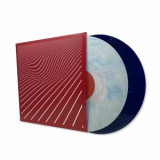
Past Inside The Present has really gone to town with the re-release of this 36 album The Lower Lights: it comes in several different formats and vinyl versions with this one being a limited, numbered and opaque red vinyl including a download code. Musically it is just as essential as a collection of tracks from a year-long 'Audio Diary' project undertaken by 36 between April 2018 and April 2019. It first came back in May 2019 and soon sold out, such is the quality of the vibrant and eclectic ambient sounds within. This is not sleep-inducing background material, but rather emotionally charged soundscaping with a mix of dark, futuristic and urgent pieces all making the cut.
Since we've known him, Robert Lloyd has made quite clear his enormous affection for the songs and sounds of Freakwater, the duo of Janet Beveridge-Bean and Catherine Irwin who've been wrongly denied their place as rightful and willful progenitors of alt-country's 'movement', which (frankly) is to their credit. Their genius in offering absolute authentic to the sound old-time Appalachian folk music with a modern façade that in no way negates tradition (one of their albums is titled Feels Like The Third Time) is unparalleled within the genre, and Freakwater remain under-appreciated. After the start of Covid, Robert dared approach Janet with the idea of recording together. Over the course of the long pandemic, songs were bandied about for months, and when recording was finally practical, a band was assembled with dates set up for a recording session in Valencia, Spain. Robert and Janet were joined by Robert's long-time ally, Pete Byrchmore, the musical foil for Robert's solo album on Virgin and a former Nightingale, Mark Bedford, the bassist for Madness and Terry Edwards' Near Jazz Experience, and Pablo Roda, Spanish mystery drummer, couldn't have worked out more perfectly. Tracks were selected without regard for collective presentation, just the goal of walking out of the studio with an album of perfect gems. Forget Lee & Nancy or George & Tammy, Rob and Janet have an immediate chemistry that only sounds long-lived - and too uniquely them to merit any comparison. The title track, Black Cat, Dark Horse is the sole Lloyd / Bean / Byrchmore composition and one of the record 's highlights. Jim Elkington, collaborator with Jeff Tweedy and Richard Thompson, contributes Heavy Reckonings and a song written with Janet, The True Lovers' Knot And The Lie, while Robert adds reworkings from past releases - Sweet Georgia Black and Black Country (with Pete) - not to mention the unreleased Eggs And Bacon. Janet brought One Shot and the unheard Freakwater song Arc Of A Smile. Covers of tunes from Dion and The Monkees and a magnificent Jon Langford song, "Tears Like Stars" round out the album. We daresay the album is among the finest you'll hear in 2023. That it doesn't fit perfectly into any preconceived genre is a testament to its quality. "Songcraft" is a word used infrequently today, yet Black Cat, Dark Horse will show that good songs endure. We're proud that Robert and Janet will find some new admirers through this album's release. The Michael Cumming / Stewart Lee film King Rocker made a case for Robert Lloyd-as-losthero; this album furthers that idea and shows a compelling side of Janet's talent and abilities which will be a surprise to her fans and serve as an entry point to exploring her many other compelling projects.
- A1: The Good Vibes Intro
- A2: Penthouse Elevators
- A3: Nature At Work
- A4: Jungle Developments
- A5: Ice Cold Coolers
- A6: Bounce Keepers
- A7: Another Two4
- A8: Smoked Cookouts
- A9: Bands Jukes
- B1: The Bad Vibes Intro
- B2: Intended Mayhem
- B3: Leeches
- B4: Dgf
- B5: Short Tempers
- B6: Problems And Solvers
- B7: Dead Ringers
- B8: Angry Cosmos
- B9: Unbeautiful
Following in the footsteps of his famed brother Madlib, Oh No has become one of the most celebrated independent hip-hop artists of the 21st century. His storied career has included not only rap success but an impressive resume behind the boards, with production credits for Mos Def, Freddie Gibbs, De La Soul, Action Bronson, Talib Kweli, Ab-Soul, and more. An innovator in the art of sampling with a history of exploring diverse source material, Oh No is now back with Good Vibes / Bad Vibes, a new instrumental album deconstructing the work of iconic vibraphonist Roy Ayers. A split collection with two thematically distinct halves, the album is entirely constructed from the early, jazz-centric realm of the Ayers archive. Good Vibes is "light and vibrant, with colorful layers radiating under the sun shine,” Oh No explains, while Bad Vibes contains “dark murky atmospheric tones for the angry moments, those times when it’s necessary to step in the mud.”
Higher Octave is a pairing of two guys intrinsic to the UK rave and hardcore scene. David Salvi, owner of Pro-One Records, the label to originally release this record along with a slew of other artists such as Law & Auder, Bay B Kane, Submania, Utomica and DJ Hopa, who is the other half of Higher Octave. David was also half of the group Utomica, whose Rok A Bye track was repressed by Vinyl Fanitiks in 2020 and has long since sold out.
David always credits Hopa as the guy with the ideas… he was out at all the raves and was always on point with how tracks should sound and any new trends that were incoming were hot on his radar. David was the guy with the studio, ready to help make Hopa’s ideas into reality.
A sought after release, originally released in 1992, with ‘Raise The Bones’ being the track that had the most rotations in the clubs and on the pirates back in the day.
Limited pressing on 180g heavyweight black vinyl, presented in a black inner sleeve with a Vinyl Fanatiks 3mm spined housebag.
Donovan Woods’ album is a study in contrasts, as one would expect from its name: Both Ways. That push-and-pull, especially in relationships, has long been Woods’ stock in trade. As the lead track of Both Ways, “Good Lover” unfolds with acoustic instruments and Woods’ quietly compelling delivery -- not what a listener might expect from the title alone. That masterful perspective has led to nominations for the Polaris Prize and the Juno Awards. In addition, his single “What Kind of Love Is That?” climbed to No. 1 on the CBC Top 20 Chart, while his catalog has accrued over 45 million streams. Woods is also a notable songwriter in Nashville with credits by Billy Currington, Charles Kelley, Tim McGraw and Charlie Worsham. NPR Music stated, "There are very few writers who can make you laugh and break your heart in the same song.” No Depression noted that Woods’ style is “as fresh and captivating as any out there.” Asked if he writes differently for himself than he does for other artists, Woods replies, “I used to think that there was a difference. I know now there's no difference. You just try to write the best thing. Everything I wrote where I said, ‘This is mine and I’m going to put it out’ – every song like that gets recorded by somebody else. I know now that I just try and write a song that I would want to do.”
- A1: The Rig (Main Titles)
- A2: Wake Up
- A3: Omen
- A4: Fossils Digging Fossils
- A5: Flesh Meets Floor
- A6: Vision
- A7: Ghost
- A8: Helideck
- A9: S.b.v Lights
- A10: Body, Rejecting
- B1: Circles
- B2: Leck
- B3: Search For Hutton
- B4: Spiderdeck
- B5: Alwyn / Discovery
- B6: Surrender
- B7: No Fire Without Flare
- B8: We'll Bring Him In
- C1: Survivors, Arriving
- C2: Person Unknown
- C3: Don't Let Him Out Of Your Sight
- C4: Rov
- C5: The Altar
- C6: Fissures Spread
- C7: Sleep Tight
- D1: The Charlie
- D2: Rose Takes Control
- D3: Bigger Than All Of Us
- D4: It's Quitting Time
- D5: System Priming
- D6: Life Remains In Life
- D7: The Wave
- D8: The Rig (End Credits)
Blanck Mass (Fuck Buttons, Benjamin J Power, The Editors) hat die neue Amazon Prime Serie 'The Rig' mit Iain Glen und Emily Hampshire in den Hauptrollen vertont.
The Rig Synopse: "Als die Besatzung der in der Nordsee stationierten Bohrinsel Kinloch Bravo auf das Festland zurückkehren soll, zieht ein mysteriöser Nebel auf und unterbricht die Kommunikation mit der Außenwelt. Die Besatzung wird daraufhin an die Grenzen ihrer Belastbarkeit und Loyalität getrieben und in eine Konfrontation mit Kräften jenseits ihrer Vorstellungskraft gezwungen."
Der Soundtrack ist auf 2 x transparentes grünes Vinyl gepresst und in einer breiten Hülle mit doppelseitig bedrucktem Einleger und digitaler Download-Karte untergebracht.
- Col. 2LP: (transparentes grünes Vinyl)
The Other Maria represents the character trait each of us has inside within ourselves. The silent part of us that we try to regulate, keep restrained from others and managed just beyond reach from the rest of the World. It represents the compartmentalized potential to do, say and respond with great chaotic harm, despite all unfortunate consequences. It is a full release feeling that we sometimes quietly envy as we witness with disgust and disapproval.
Widely considered a character flaw to many, yet, some would relish in the opportunity that could summon such an unpredictable internal animal. Every life has two parallel parts. The one for "them", the version of yourself that abides by all the acceptable and expected rules of engagement - often a side that is given credit on face value. The side that achieves progress through peaceful and less confrontational means. The one you use to survive.
And the other side, the one for you. An uncompromising, unthinkably ruthless version that knows no limit. That knows no fear. The side of yourself that tells you yes, when you know that "no" is the better answer.
The Other Maria isn't about comfort. It is about hard truth, but also recognizing raw emotions that stem from feeling undeniably free.
And what could one do with such a dark, yet wonderworking ability - when the absence of fear and consequence presides over the judicious process leading to an enviable fate - convinced that all actions are pure, justified, direct, but conniving. The feeling of relieved of all guilt and accountability?
But as diabolical as it can be and appear. Along with the negative static, there can be progress. As true imposes are exposed, so does the transparency of reality. A precious truth that's needed to fully understand the severity of the situation.
And with this, comes a valuable knowledge from a low level in which one once descended. Dreadfulness is softened to predictability.
- Jeff Mills, April, 2023
Red Vinyl[31,30 €]
Einer der legendärsten und erfolgreichsten Acts der britischen Musikgeschichte präsentiert endlich alle seine Hits auf einer umfangreichen, brandneuen Compilation auf CD und Vinyl. Natürlich inkl. 'I'm Too Sexy', 'Deeply Dippy', 'Don't Talk Just Kiss' und viele mehr.
FRED-FAKTEN:
Die Musik der Band ist durch Dancefloor-Rhythmen und anzügliche Texte gekennzeichnet. Gleich die erste Single 'I’m Too Sexy' ging 1991 durch die Decke und verkaufte sich weltweit etwa drei Millionen Mal. In Großbritannien kletterte der Song bis auf # 2 der Charts, in den USA bis auf # 1. Damit schrieben Right Said Fred Musikgeschichte, denn seit den Beatles war es keiner britischen Band gelungen, drei Wochen in Folge den ersten Platz der US-amerikanischen Billboard-Charts mit einer Debütsingle zu belegen. Außerdem belegte ihr Debütalbum # 1 der britischen Charts. Sie haben zwei Ivor Novello Awards und vier BMI Awards (Broadcast Music Industry) gewonnen. Ganz nebenbei hatten sie u.a. Co-Writing-Credits auf den folgenden Tracks:
- Drake: 'Way Too Sexy' - 300.000.000 Streams
- Taylor Swift: 'Look What You Made Me Do' - 700.000.000 Streams
- Beyoncé: 'Alien Superstar' - 100.000.000 Streams
Tape[9,45 €]
Eric Johnson, der mit einem Grammy ausgezeichnete Multi-Genre-Gitarrist, liefert mit Yesterday Meets Today & The Book of Making zwei Geschwister-Alben, die während des Pandemie Lockdowns fertiggestellt wurden. Johnson hat Inventur gemacht - sowohl emotional als auch musikalisch - und die vielen unvollendeten Tracks, Outtakes, Demos und klanglichen Ideen in seinem Archiv durchforstet, um die 18 Songs zusammenzustellen, die schließlich auf den Alben landeten: "Jedes Mal, wenn ich eine Platte mache, mache ich normalerweise zwei Platten; ich lagere einige der Stücke, die ich nicht verwendet habe, im Tresor", erklärt Johnson. Mit dem Luxus der Zeit war Johnson in der Lage, zwei vollwertige Alben abzuliefern, wobei weitere Tracks Ende des Jahres als EP veröffentlicht werden sollen.
Verpackung: Schwarzes Vinyl mit Standardgewicht. Standard-Hülle. Inklusive 11x11 Einleger mit Lyrics und Album Credits
Tape[9,45 €]
Endlich ist sie erhältlich: Die limitierte Vinyl-Edition von The Book Of Making.
Eric Johnson, der mit einem Grammy ausgezeichnete Multi-Genre-Gitarrist, liefert mit Yesterday Meets Today & The Book of Making zwei Geschwister-Alben, die während des Pandemie Lockdowns fertiggestellt wurden. Johnson hat Inventur gemacht - sowohl emotional als auch musikalisch - und die vielen unvollendeten Tracks, Outtakes, Demos und klanglichen Ideen in seinem Archiv durchforstet, um die 18 Songs zusammenzustellen, die schließlich auf den Alben landeten: "Jedes Mal, wenn ich eine Platte mache, mache ich normalerweise zwei Platten; ich lagere einige der Stücke, die ich nicht verwendet habe, im Tresor", erklärt Johnson. Mit dem Luxus der Zeit war Johnson in der Lage, zwei vollwertige Alben abzuliefern, wobei weitere Tracks Ende des Jahres als EP veröffentlicht werden sollen.
Verpackung: Schwarzes Vinyl mit Standardgewicht. Standard-Hülle. Inklusive 11x11 Einleger mit Lyrics und Album Credits
"Ihr seid jetzt beide Gefangene des Robotov-Imperiums!"
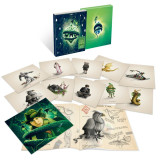
Die dritte und letzte umfangreiche Box mit Audio-Abenteuern bei denen Tom Baker den Doktor gibt. Die zum ersten Mal auf Vinyl in limitierter Auflage veröffentlichte 10LP-Box enthält jeweils ein exklusives Porträt des vierten Doktors, welches von Tom Baker handsigniert ist. Limitiert auf nur 1.200 Exemplare weltweit und präsentiert auf 10 (!) abwechselnd schwarzen und grünen Vinyl-LPs. Das Audio-Abenteuer kommt mit Susan Jameson als Mrs Wibbsey und Richard Franklin als Mike Yates. Zu den Nebendarstellern gehören David Troughton, Michael Jayston, Simon Shepherd, Terrence Hardiman, Joanna David, Sophie Ward, Andrew Sachs und Nerys Hughes. Alle im Original-Sound begleitet vom bekannten Doctor Who-Thema aus dem BBC Radiophonic Workshop.
Die Box kommt mit 10 wunderschön individuell illustrierte LP-Hüllen mit Besetzung und Credits für jede der fünf Geschichten. Ein 16-seitiges, vollfarbiges Booklet enthält Liner Notes und Illustrationen des Doktors, die im Laufe dieser fünf Abenteuer entstanden sind.
- A1: Declare War (Opening Demo)
- A2: Choose A Person (Character Select)
- A3: Let's Run Through! (Stage 1)
- A4: Show Spirit (Stage 2)
- A5: Snowy Road (Stage 3)
- A6: Cadaverous (Stage 4)
- A7: Go Ahead! (Stage 5)
- B1: The Scene Of A Hard Battle (Boss 1)
- B2: Furiously (Boss 2)
- B3: Secret Place (Stage 6)
- B4: Uncanny Laugh (Demo Before Last Boss)
- B5: Final Madness (Last Boss)
- B6: Escape (Demo After Last Boss)
- B7: Good Ending
- B8: Bad Ending
- B9: End To The War (End Credits)
Metal Slug 4 marks the dazzling return of the Peregrine Falcons in this unforgettable new episode of the cult series developed by SNK. In this sequel, the legendary SNK Sound Team continues its work and signs a new explosive soundtrack with rock-orchestral sounds. The complete soundtrack was remastered and is available for the very first time on vinyl format!
- A1: N.y's Finest - Do You Feel Me (Club Mix)
- B1: Groove Committee - Dirty Games (Victor Simonelli Club Mix)
- B2: Street Players Vol. 1 - Make It Thru The Night
- C1: Sound Of One - I Know A Place (118 Bpm Mix)
- D1: Inner Faith - I've Been Changed (Club Mix)
- D2: International Connection - I Can't Help Myself (Previously Unreleased Instrumental Mix)
Vol.1[31,05 €]
In the words of Bill Brewster - DJ History
‘At the turn of the 1990s, there were few more successful New York house producers than Victor Simonelli. Under a dizzying array of aliases – Solution, NY’s Finest, Groove Committee, Critical Rhythm and Cloud 9 being amongst the better-known – the Brooklyn-born DJ/producer delivered a string of underground club hits during the city’s early ’90s house boom.’
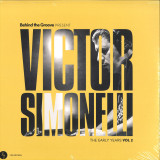
BTG presents “Victor Simonelli: The Early Years Vol 1” a collectors edition double Vinyl release - 2 X 12’s in each Vol
Launching the first Behind The Groove collectors edition vinyl series is New York’s finest Victor Simonelli with ‘The Early Years Vol 1 & 2’ double Vinyl releases. Featuring seminal house tracks such as Cloud 9’s ‘Do You Want Me’, Solution’s ‘Feel So Right’, Instant Exposure’s ‘Wanna Be With You’ and rare mixes of Raiana Page and EZ-AL, this collection brings together classic and rare Victor Simonelli cuts that reflect the early raw energy and buzz of the New York House scene. With ‘Vol 2” scheduled to follow shortly after, this is the most comprehensive collection of rare Simonelli cuts that firmly establishes his esteemed role in 90s House Music as well as introducing new fans to his inimitable sound.
Victor Simonelli is one of the early kings of NYC sampling In house music. The real deal - Victor danced at the legendary David Mancuso’s Loft sessions and developed a serious appreciation for good music. He interned for Arthur Baker at his renown Shakedown Studios (where Arthur worked with the iconic Afrika Bambatta on the seminal dance floor ’Planet Rock’ track) and went on to release hugely influential releases on seminal NYC labels 4th Floor and Nu Groove. Victor’s music was championed by the hugely celebrated iconic House Music DJ pioneers, Larry Levan and Tony Humphries at Paradise Garage & Zanzibar/WBLS/Kiss FM respectively.
Revered as a New York house heavyweight and prolific producer since the turn of the 1990s, Victor Simonelli grew up in Brooklyn, NYC, nurtured by a music loving family, with an avid record collecting father who also worked as a local party DJ. He took music lessons in piano, drums, guitar and bass, before discovering his first love, tuning into NY’s Radio Mix Shows on WBLS, WKTU and WRKS,98.7 Kiss FM) where he discovered the art of mixing and in his own words, ’I just simply got lost in the music’.
Graduating from NYC’s Centre For Media Arts, Victor got an internship in the legendary producer, Arthur Baker’s Shakedown Studios. Soon graduating to editing, mixing and then producing he worked for artists David Bowie, Quincy Jones, Debbie Harry, Sinead O’Connor and Talking Heads. Teaming up with fellow NYC producer Lenny Dee to become the Brooklyn Funk Essentials, they released records ‘Critical Rhythm’ and ‘Subliminal Aurra’ on 4th Floor before Victor went solo as Groove Committee releasing the classic ‘I Want You To Know’ on the legendary Nu Groove Records. Paradise Garage legend, Larry Levan broke ‘I Want You To Know’ rocking 2 copies on his last tour of Japan whilst King of NY House Music,Tony Humphries broke Victor’s new ‘Feels So Right’ across New York on his WBLS/Kiss FM Mastermix show and at his legendary Zanzibar club sessions. It was only a matter of time before Victor’s name became synonymous with quality House music ensuring a worldwide platform for his productions.
In the early 90s alongside his own productions, Victor Simonelli worked on high profile projects, including James Brown’s album, “Love Overdue” BeBe and CeCe Winans single featuring Mavis Staples “I’ll Take You There” and Quincy Jones’ “I’ll Be Good To You” featuring Chaka Khan and the legendary Ray Charles. Never straying too far from his clubland roots, Victor worked with Danny Tenaglia on his classic “The Harmonica Track”.
DJ gigs across the world started flooding in and Victor found himself recording for a dizzying array of labels including Tribal America, Sub-Urban, Bassline, King Street Sounds and Vibe, under a wide range of aliases. He also produced, wrote and remixed for artists such Nile Rodgers (Chic), Afrika Baambata, Hall & Oates, Frankie Knuckles, Kerri Chandler, Madonna and Michael Jackson. Famed for his own productions “It’s So Good” by Creative Force, “I Know A Place” as Sound Of One - the first release on Roger Sanchez One Records -, “Dirty Games” as well as the “Street Players Vol 1 EP”, Victor went on to set up Suburban Records with Tommy Musto and Bassline Records with two other partners. Notable releases on this label include “Do You Feel Me”, Connie Harvey’s gospel inspired, “Thank You Lord”, Urban Blues Project’s “Deliver Me”, Colonel Abrams “Not Gonna Let”, and Mone’s “Better Way”. Never ceasing to produce, DJ, run his own label and host radio shows like Groove Lift, Victor has worked with virtually every NYC producer and has nurtured a next generation talents including Angel Moraes, Jazz ‘N’ Groove, Urban Blues Project, Harlem Hustlers, Jay Jay and Julius Papp. Victor’s releases have also been used on M&S’s “Salsoul Nuggett” hit and Eddie Amador’s underground smash ‘House Music’.
In the late 90’s Victor launched his new Westside Productions, notable for the “Latin Impressions 1 & 2” releases, opened up a studio in Italy as he found himself increasingly working in Europe and now divides his time between New York and Italy. Suffice to say his unique sound of uplifting and spiritual music has kept him at the forefront of House Music and he is credited as one of its leading exponents with his string of classic releases and remixes.
Behind the Groove, branches out from its digital platform to embark on a programme of releases from the iconic pioneer producers of House Music. Esteemed for their high quality features and mixes that continue to explore, celebrate and venerate the contributions of highly respected, scene-shaping Labels, Artists, DJs and Special Events, BTG seeks to bring these talents and tales to the attention of the wider community. Unlocking the stories surrounding the pivotal roles they played and continue to play today in shaping the underground music scene we have come to know and love.
BTG presents “Victor Simonelli: The Early Years Vol 1” a collectors edition double Vinyl release, released on May 12th 2023. ‘Vol 2” follows on May 26th 2023 . These releases are the most comprehensive collection of rare Victor Simonelli cuts that firmly establish his esteemed role in 90s House Music and introduces new fans to his carefree sound.
Fresh out of high school, Hannah Jadagu released her debut EP, What Is Going On?, a collection of intimate bedroom pop tracks recorded entirely on an iPhone 7, which was, at the time, Jadagu's most accessible mode of production. An off-the-cuff approach to music making and instinctive ability to write unforgettable hooks belied the intensity of Jadagu's subject matter. What Is Going On? confronted some of the nation's most urgent struggles through Jadagu's compassionate perspective. What Is Going On? built on the small online fanbase Jadagu had developed by releasing music on SoundCloud for years as she realized her growing passion for songwriting. Now, Jadagu is releasing Aperture, her first LP and most ambitious work to date. Written in the years between graduating from high school in Mesquite, TX and her sophomore year of college in New York, Aperture finds Jadagu in a state of transition. "Where I grew up, everyone is Christian; even if you don't go to church, you're still practicing in some form," Jadagu says, laughing. "Moving out of my small hometown has made me reflect on how embedded Christianity is in the culture down there, and though I've been questioning my relationship to the church since high school, it's definitely a theme on this album, but so is family." As a kid, Jadagu followed her older sister - a major source of inspiration - to a local children's chorus, where she received choral training. "I hated it," Jadagu admits. "But it taught me how to harmonize, how to discover my tone, how to recognize and write melody." The aching single "Admit It" is dedicated to Jadagu's sister, whose love and impeccable taste have been a constant since Jadagu was a kid. The siblings were raised on mom's Young Money mixtapes and the Black Eyed Peas (to whom Hannah credits her love of vocoder) but it was in the sanctity of her sister's car that Jadagu discovered the indie artists who inspire her work. With Aperture, Jadagu faced the challenge of finding a co-producer capable of complementing her work without dominating it. Enter Max Robert Baby, a French songwriter and producer who captured Jadagu's attention with his take on Aperture's lead single "Say It Now." The duo worked remotely, sending stems to one another via email, before meeting in-person for the first time at Greasy Studios on the outskirts of Paris. "When I recorded my EP, it was all MIDI, but in the studio Max and I worked with a ton of analog instruments," Jadagu says. "Every track on this album, except for 'Admit It,' was written first on guitar. But the blanket of synths throughout helps me move between sensibilities. There's rock Hannah, there's hip-hop Hannah, and so on. I didn't want any of the songs to sound too alike." An aperture is defined as an opening, a hole, a gap. On a camera, it's the mechanism that light passes through, allowing a photographer to immortalize a moment in time. For Jadagu, the word perfectly encapsulates the mood of her debut album. In the years it took her to complete, she faced moments of darkness, sure, but the process of making it was ultimately a cathartic experience, one she now shares with you. Let the light in.