"Incubus carved their own musical niche and earned a huge following by tireless touring and releasing ever-improving quality albums. A Crow Left Of The Murder came out in 2004, and hit the album charts at number two. The album was produced by Brendan O'Brien, who's known for his Pearl Jam production work. O'Brien shaped an album that Incubus needed in this stage of their development: crisp and clean, but still heavy enough to allow for an effective variation between heavy riffing and fine acoustics. A Crow Left Of The Murder is available as a limited edition of 2000 numbered copies on transparent red coloured vinyl. "
Поиск:cris p
Все
If Katsuhiro Otomo’s Akira were a utopia instead of its opposite, this EP could be a possible sound track. Using the ingredients of classic house as a platform (pianos anyone?), Nick Nikolov‘s imagination as a producer for his new new NKLV project is far too vivid to stay on the beaten track.
The sound design and nerdy attention of IDM and ambient (Clusters) connects with the brazen boogie approach of the French touch, micro-sampling manifestos have to stand up to the weirder moments of signature sounds like Basement Jaxx or KiNK‘s musical side (Heartbeat). Not too far off from his peer‘s early approach, the Bulgarian‘s take is emotionally charged, play- and powerful.
For instance, Speak to Me and No More hit their respective topical nails on the head and the EPs title track Inbetween is sultry serotonin soul. If you are looking for plain and pure euphoria in between all the hardships, happiness is just around the bend.
Incubus carved their own musical niche and earned a huge following by tireless touring and releasing ever-improving quality albums.
A Crow Left Of The Murder came out in 2004, and hit the album charts at number two. The album was produced by Brendan O’Brien, who’s known for his Pearl Jam production work. O’Brien shaped an album that Incubus needed in this stage of their development: crisp and clean, but still heavy enough to allow for an effective variation between heavy riffing and fine acoustics.
A Crow Left Of The Murder is available as a limited edition of 2000 numbered copies on transparent red coloured vinyl.
- 1: Crisis
- 2: Grief
- 3: Pendulum
- 4: Metal Detector
- 5: New Standard
Joshua Kitakaze's new album Darkness & Light for Acquit is a superb nine track record that comes on trifold clear vinyl. It runs the gamut from pure, dark and driving Detroit style techno to more other and astral electronics, cosmic sounds and bubbling house. The likes of 'Seven Samurai' brings crisp drums and rubbery basslines to future facing synths. 'Hidden Fortress' has a dark edge and more menace in the drums. 'Trying To Come Home' is a lighter vibe with its head up in the stars and day dreaming. A complete work, then.
his release marks the first complete album reissue on Canopy. Originally released in Nigeria in 1987, “Oppressor” was executive produced by Myke Moul himself and distributed domestically by EMI Nigeria & Tropic Records.
“Oppressor”, the album, finds the sweet spot between synth reggae, boogie, and euphoric Balearic island vibes.
Written by Myke Moul and arranged in collaboration with reggae star Majek Fashek in Nigeria, it was later re-crafted and recorded in France with a host of French musicians. Most notably the contribution of multi instrumentalist Pierre de St Front added engaging synthesiser parts and electronic drums.
Unfortunately the pressing of the album suffered from inherent technical flaws which adversely affected the sound quality and therefore even those lucky enough to find a copy, will not be able to enjoy it without considerable sonic defects. Therefore this remastered reissue will prove welcome to both collectors and new discoverers.
The titular track “Oppressor” stands out as a mid-tempo synth-reggae-boogie jam espousing the turbulent political times in Nigeria that were present in the late 80s. Elsewhere “Shadows in the Rain” is an instrumental cut displaying a jazz-funk sensibility which was unusual for a Nigerian artist at that time, and reflects Myke’s influences outside his home country. “Heading for the Top” is a boogie dance floor gem that shows the popularity of this genre at the time, as evidenced in many Nigerian releases and still sounds just as vital today. “Rescue us. O! Lord” shows Myke’s great song writing and Pierre’s fine musical skills working in tandem to create a reggae boogie tune, displaying the reggae & ska tendencies that were present in pop music in this era, from artists such as Grace Jones, Sly & Robbie or The Police.
All in all, the album demonstrates something fresh & exciting for Nigerian album reissues, touching down in a reggae fusion direction, with some fuller sounding production aesthetics, making the dynamics full and crisp on sound systems while also well suited to home listening.
Maestro Argentinian producer Kevin Fingier returns with a brand new 45 on his Fingier Records imprint. This time, he presents Santa Fiebre – a red-hot Buenos Aires Rhythm and Soul outfit. It’s the perfect combination, with Kevin’s slick production meeting the band’s sound, rooted in a pulsating beat, pumping horns, crisp guitar and a driving refrain.
Over the last few years, Fingier Records has released a string of highly acclaimed and collectable 7” singles, followed by a compilation LP and a full-length album from the Kevin Fingier Collective. This record is true to form – latin dynamite from the man that knows.
Fingier 45s are known to sell-out fast, so pre-order yours now!
Originally released during the heyday of rave culture in 1992, Kirsty Hawshaw’s ethereal vocals remain the main focal point of this reimagination of the track, keeping all optimistic, hypnotic elements intact while generating a multi-layered anthemic sense of euphoria. The production by Adam F and Shadow Child maintain the elation of Edward Barton’s lyrics, while Hawkshaw’s newly recorded vocals are as crisp, clear, innocent and all-knowing as ever.
“We are delighted to share that "Fine Day" continues to be a cherished anthem of positivity,” say Hawkshaw and co-producer Adam F. “It is a humble reminder of the power of spreading good vibes into the world. As we celebrate the milestones achieved and our journey in the world of music, we are thrilled to present a reimagined rendition of this timeless song.”
- A1: The Hub (Freddie Hubbard) 16’44
- A2: Blue Moon (Rogers/Hart) 7’44
- B1: Crisis (Freddie Hubbard) 24’46
Re-mastered from the original Mono Master Tapes. Limited repress 1000 copies.
180 gr vinyl pressed by Pallas in Germany.
Deluxe high-gloss flipback album jacket.
Essay written by Brian Priestley.
Double insert using an original photo by JP Leloir from the concert.
Artwork by Jean-Louis Duralek.
Each record has been visually checked to prevent defects.
A never-before released Art Blakey 1965 live recordings.
First official release with the full permission and cooperation of the Art Blakey Estate & INA (Institut National de l’Audiovisuel).
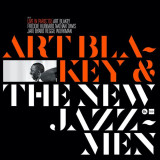
Art Blakey, Live in ’65 boasts an exceptional one-hour concert from Paris in 1965. This performance showcases one of the few undocumented Blakey bands, the New Jazzmen, featuring Freddie Hubbard on trumpet, Jaki Byard on piano, Reggie Workman on bass, Nathan Davis on sax, and, of course, Blakey on drums.
Freddie Hubbard’s incendiary playing on “Blue Moon” and the blistering 24-minute version of his own “Crisis” shows that he was one of the most innovative trumpeters in jazz history.
On this live session, the audiences seem to have been enthusiastic and appreciative. “Everywhere we’d go people would say, This is the best Jazz Messengers we’ve heard!”, according to Davis. “And because of the way Jaki would play and Reggie would go, it was like a semi-freedom thing – with Messengers heads, you know, but when we got to soloing…! And Blakey was ridin’ and floatin’ the time…but he would always be loose enough to follow, to keep it going. He’s one helluva musician.”
Recorded at Palais de la Mutualité, Paris, France, November 3, 1965.
Freddie Hubbard (Trumpet)
Nathan Davis (Tenor saxophone)
Jacki Byard (Piano)
Reggie Workman (Bass)
Art Blakey (Drums)
* Seba has established a reputation as one of the finest purveyors of quality Drum & Bass over a distinguished career stretching back more than 25 years. From his early tracks on LTJ Bukem’s ground-breaking label Good Looking Records to his more recent work across Metalheadz,Commercial Suicide,Soul:r,Hospital and his own Secret Operations, Seba’s music retains a timeless appeal, bringing together beats and bass in classic yet inimitable style. Ethereal atmospheres, crisp breaks and sublime bass rhythms are hallmarks of a sound Seba has made his own.
* Oni showcases Seba’s versatility as an artist and shows why as one of Drum & Bass’s truly unique producers,Seba is as relevant and important today as ever, continually inspiring producers and fans alike.
Building up a head of steam, Ace Vision returns on the heels of his Raising Awareness EP.
For Shaped Mind, the Italian artist is exploring new musical avenues. While his musical essence, glow and style remain, a darker dancefloor palette is employed on the release. Polyrhythmic patterns race in the sample strewn “Second Phase”, rumbling waves and warehouse echoes tempered by swirling stabs. A bouncy liquid groove ushers in “Nu să Chan”, rasping beats shrouded in smoky bass while bars bend around an assortment of textures and tones. “Katana Cut (Trance Mix)” conjures up images of dancing bodies waiting for the dawn. Melodies circle percussive layers, meandering undercurrents of acid bubbling beneath shimmering synthlines. The finale comes with “Mixage Électronique.” Steady kicks and crisp cymbals give way to juddering chords, clean keys and snare rolls countering to a close.
Giuseppe Crisci is a musician and composer who splits his life in between London and Naples.
Known for his previous Acid House projects under the pseudonyms of DoTheDu and Crishi, he released several records on labels like Senseverse Records, Stealth Mission, and Pareidolia Recordings.
Conceived and written in his apartment in London and mostly recorded in his studio in Santa Maria Capua Vetere, this album proposes the sound of an evolving artist who drags himself into the deepest corners of heart and soul using profound synthesisers sounds which are coloured by intimate saxophone solos and rusty piano chords that enfasise strengthen the true sentiment of his lyrics narrated in English and Neapolitan dialect.
“My aim is to reach people’s soul and humbly influence them positively by trying to express what I feel deep inside myself, beyond meanings and words”— Giuseppe Crisci
2024 Repress
Re-mastered from the original Mono Master Tapes. Limited repress 1000 copies.
180 gr vinyl pressed by Pallas in Germany.
Deluxe high-gloss flipback album jacket.
Essay written by Brian Priestley.
Double insert using an original photo by JP Leloir from the concert.
Artwork by Jean-Louis Duralek.
Each record has been visually checked to prevent defects.
A never-before released Art Blakey 1965 live recordings.
First official release with the full permission and cooperation of the Art Blakey Estate & INA (Institut National de l’Audiovisuel).
Art Blakey, Live in ’65 boasts an exceptional one-hour concert from Paris in 1965. This performance showcases one of the few undocumented Blakey bands, the New Jazzmen, featuring Freddie Hubbard on trumpet, Jaki Byard on piano, Reggie Workman on bass, Nathan Davis on sax, and, of course, Blakey on drums.
Freddie Hubbard’s incendiary playing on “Blue Moon” and the blistering 24-minute version of his own “Crisis” shows that he was one of the most innovative trumpeters in jazz history.
On this live session, the audiences seem to have been enthusiastic and appreciative. “Everywhere we’d go people would say, This is the best Jazz Messengers we’ve heard!”, according to Davis. “And because of the way Jaki would play and Reggie would go, it was like a semi-freedom thing – with Messengers heads, you know, but when we got to soloing…! And Blakey was ridin’ and floatin’ the time…but he would always be loose enough to follow, to keep it going. He’s one helluva musician.”
Recorded at Palais de la Mutualité, Paris, France, November 3, 1965.
Freddie Hubbard (Trumpet)
Nathan Davis (Tenor saxophone)
Jacki Byard (Piano)
Reggie Workman (Bass)
Art Blakey (Drums)
"As I'm getting older, chip up on my shoulder..." is the opening line from Mac DeMarco's second full-length LP `Salad Days,' the follow up to 2012's lauded `Mac DeMarco 2.' Amongst that familiar croon and lilting guitar, that initial line from the title track sets the tone for an LP of a maturing singer/songwriter/producer. Someone strangely self-aware of the positives and negatives of their current situation at the ripe old age of 23. Written and recorded around a relentless tour schedule (which picked up all over again as soon as the LP was done), `Salad Days' gives the listener a very personal insight into what it's all about to be Mac amidst the craziness of a rising career in a very public format. The lead single, "Passing Out Pieces," set to huge overdriven organ chords, contains lines like "...never been reluctant to share, passing out pieces of me..." Clearly, this isn't the same record that breezily gave us "Dreamin," and "Ode to Viceroy" but the result of what comes from their success. "Chamber of Reflection," a track featuring icy synth stabs and soulful crooning, wouldn't be out of place on a fantasy Shuggie Otis and Prince collaboration. Standout tracks like these show Mac's widening sound, whether insights into future directions or even just welcome one-off forays into new territory. Still, this is musically, lyrically and melodically good old Mac DeMarco, through and through. The same crisp John Lennon / Phil Spector era homegrown lush production that could have walked out of Geoff Emerick's mixing board in 1972, but with that peculiar Mac touch that's completely of right now. "Brother," a complete future classic, is Mac at his most soulful and easygoing but with that distinct weirdness and bite that can only come from Mr. DeMarco. "Treat Her Better" is rife with "Mac-isms," heavily chorused slinky lead guitar, swooning vocal melodies, effortless chords that come along only after years of effort, and the other elements seriously lacking in independent music: sentiment and heartfelt sincerity. We're only at Part 2 and 1/2 (one EP and two LP's in) into Mac's career. As you read this and as you hear the album on April Fool's Day of this year, he'll probably be on tour, or preparing for one... or maybe already writing new music. A relentless work ethic is something to be admired in today's indie music scene, but when it's of the quality Mac is giving us time and time again, it starts to turn from admiration to awe.
Smallville Records welcomes Barcelona’s Lis Sarocca onto the imprint this November with her four-track ‘Untitled Thoughts’ EP.
Since 2018, Barcelona, Spain’s Lis Sarocca has been steadily unveiling her take on House, Techno, Disco and Electro via the likes of Shall Not Fade, Hot Haus and Chiwax among others as well maintain a steady presence across the globe as a heavily in demand DJ. Here, we see Sarocca making her debut on Smallville with her latest collection of works, again showcasing her widespread influences and mesmerising sonic aesthetic across four cuts.
Up first is ‘Atacote’, a hypnotic house cut with a Balearic feel courtesy of breathy vocals, cinematic strings, piano lines and hazy atmospherics, intertwined with organic percussion and bouncy sub bass tones. ‘Breaks Reminder’ follows and shifts gear into a broken rhythm section, squelchy acid lines and textural synths throughout.
Opening the flip-side is ‘Early Years’, diving back into deeper realms with a multitude of ethereal pads, dubby synth flutters, plucked bass hits and crisp drums. ‘Might Be’ then concludes the EP on a more chuggy Nu-Disco tip, employing gritty bass stabs, bubbling arpeggios, airy flute melodies and a saturated off-kilter drum groove.
Comes with a Full Cover Artwork by Stefan Marx
Keshavara tragen prächtige Schnurrbärte, verwegene Kopfbedeckungen und sprechen ein abenteuerliches Patois aus Englisch, Hindi, Deutsch und Gibberish. Auf ihrem neuen Album "III" kreieren die Kölner um den deutsch-indischen Musiker Keshav Purushotham Klänge, wie andere Leute Drinks mixen, nachdem sie schon drei genossen haben: Verwaschener Kraut-Pop und diasporische Dub-not-Dub-Exkursionen werden nach Augenmaß miteinander kombiniert und wild geschüttelt. Zuckersüß mäandernde Melodien, entlehnt einem fantastischen Niemandsland in der Grenzregion zwischen exotischen Library-Kompositionen und psychedelischen Soundtracks, verschmelzen mit den Grooves einer Rhythmusgruppe, die sich auch in den Tonstudios des funky Beirut der Mittsiebziger Zuhause gefühlt hätte. Das Ergebnis sind mit surrealistischem Zuckerrand gekrönte Cocktails mit der Wirkung einer halluzinogenen Götterspeise. Musik, die schillert und flirrt, wie eine Fata Morgana in der Wüste. Keshavara klingen in einem Moment, als hätte Ennio Morricone einen Bollywood-Film vertont, und im nächsten wie ein von Curt Boettcher produzierter Eden-Ahbez-Song, oder - nicht ganz so spinös aber nichts desto weniger fantastisch - als hätten Khruangbin und Sven Wunder endlich ein gemeinsames Album aufgenommen. In den glanzvollsten Momenten fügt sich das alles wie von magischer Hand zusammen und kulminiert dann in Songs wie "Spiegelmann" und "Tableau Vivant" - fantasmorgiastischen Partys voller transkultureller Clashes, die uns Hörer dazu einladen, sie in farbenprächtige Gruppenchoreografien zu überführen.
War das Debüt von Keshavara noch ein Solo- und der Nachfolger "Kabinett der Fantasie" im Kern ein Duo-Album, so sind Keshav Purushotham, Niklas Schneider, Benedikt Filleböck und Christopher Martin mit ihrem selbstproduzierten, schlicht "III" betitelten dritten Album endgültig zu einer vierköpfigen Band zusammengewachsen … und zwar um eine alte Farfisa-Orgel herum, die eines Tages als Geschenk im Proberaum gelandet ist: Ein, auf sämtlichen Songs mal mehr, mal weniger präsentes UFO aus einer Zeit der Slow-Jams, Live-Takes und des exzessiven Space-Echo-Einsatzes. Sein analoges Blubbern und sein wabernder Funk rollt dem warmen, organischen Bandsound den roten Teppich aus, und verpasst ihm einen zärtlichen Schubs Richtung 70er. Erfrischenderweise kommt er dort niemals so richtig an, sondern bleibt immer im Fluss. Denn das eigentliche Ziel der halldurchtränkten Korridore dieses Albums ist stets der Weg, genau genommen der kunstvoll gezimmerte Holzweg, der phantastische Irrpfad. "III" ist eine Reise, auf der Zeiten und Orte keine Fixpunkte sind, sondern austauschbare Koordinaten eines augenzwinkernden Vexierspiels. Da ist es nur folgerichtig über "Indische Götter im Sauerland" zu singen. Dass ungeachtet der Nostalgie, die alle neun Songs durchweht wie ein warmer Mittelmeerwind, niemals Sentimentalität aufkommt, ist nicht zuletzt diesem Humor geschuldet.
Die ätherischen Drones, sanft nuschelnden Akkorde und geisterhaft seufzenden Soundschwaden, die Keyboarder Benedikt Filleböck seiner altersschwachen Farfisa bevorzugt in den ruhigeren Momenten und den Instrumentalnummern des Albums entlockt, bilden einen stimmungsvollen Kontrast zu den beiden anderen Säulen des Keshavara-Sounds: Christopher Martins leichtfüßig hüpfenden Bass-Dreiecken und Keshavs sonnendurchfluteten Gitarren-Ornamenten. Im Zusammenspiel mit Niklas Schneiders crispen Drumbeats entsteht ein Fundament, mit dem die kaleidoskopischen Texturen und Melodien vollständig verschmelzen.
Das Ergebnis ist das bisher homogenste Album des Quartetts. Mit "III" erweisen sich Keshavara als gewiefte Soundalchemisten und Weltenwanderer, als eine softe Macht, deren Stärke sich aus ihrer enormen Musikalität, ihrer Fabulierlust und ihrem surrealistischen Witz speist.
Moodena’s London-based imprint Tropical Disco’s latest offering is a shimmering journey into the heart of the underground, blending nu-disco, classic house, and contemporary electronic funk in a way that feels both nostalgic and totally fresh. Featuring four standout tracks from Vagabundo Club Social, Scruscru, Da Lukas, and Fun Kool feat. vocals from Bcleo and Anna Dee Tee, — the EP is a testament to the evolving sound of the dancefloor, where groove meets grit, and melody flirts with sultry rhythm. This release channels the spirit of sweaty basement parties, neon-soaked nights, and a collective desire to get lost in the music.
Opening the record is Colombian duo Vagabundo Club Social, presenting Latin-soaked funk colliding with shimmering brass instrumentation, creating a deep, rolling pulse that invites movement from the first beat. 'Zumba Z' is a track that feels right at home in a DJ’s warm-up set or closing down an all-nighter, with a hypnotic flow and vocals that seep into your bones.
Scruscru’s story pushes things deeper into late-night, cosmic territory. 'Konyaalti' is a lush, sun-drenched production, utilising sublime sax, Scruscru delivers a cut that's both playful and distinctly driving.
Da Lukas adds a sophisticated touch, remixing Rosario Cristofaro, and taking you on a slick ride that leans into Italo-disco influences. Swooning synths and crisp percussion form the backbone while gliding melodies create a sense of elevation. It’s elegant yet laced with energy, ideal for a peak-time set where the vibe is euphoric but refined.
Rounding off the release is veteran DJ and producer Gerardo Cinquegrana, whose playful Fun Kool moniker belies the serious funk he delivers in his production. German-born, and now Italy-based, Fun Kool’s sharp, syncopated rhythms and sexy vocal lines from Anna Dee Tee bring an irresistible groove to the forefront, with the kind of bassline that takes over your entire body and mind.
Altogether, 'Tropical Disco Volume 28' encompasses a record that’s both familiar and exploratory—rooted in the timeless grooves of disco and house but pushing forward into new musical territory and picking up sonics from different continents along the way. Whether you’re looking for late-night celestial cosmosis, sophisticated Italo-inspired dubs, or straight-up, no-nonsense funk, this release has something for every dance floor.
Kenny Hooper is a Detroit mainstay and formerly a part of Scan7 who now makes his solo debut on Acquit Records. It continues a purple patch of late that includes his remix work on Nate Nubia's 'Dracula and Frankenstein' and his trilogy on Elypsia Records. The title cut 'Neon Skies' opens with lush synths arp shimmering over crispy, punchy electro drum programming. 'Imagination' has a dubbed-out low end and kinetic kicks with smeared synth lines and intimate vocals bringing some seduction to the sounds. 'Binary Dreams' gets more raw and ragged with a reverberating bassline full of texture and more eerie synth designs up top that keep you on edge. 'How Far' brings a cultured EP to a close with more classy rhythms.
Camelot, the legendary seat of King Arthur's court in Early Middle Ages Britain, was probably not a real place. A corruption of the name of a real Romano-Briton city, the word "Camelot" accumulated symbolic, mythic resonances over centuries, until achieving its present usage as a near-synonym of "utopia." In the mid-20th century alone, Camelot inspired an explosion of representations and appropriations, among them the violent, affectless Arthurian court of Robert Bresson's 1974 film Lancelot du Lac and the absurdist iteration of Monty Python's 1975 Holy Grail, both of which feature armored knights erupting into fountains of blood; the mystical Welsh world of novelist John Cowper Powys's profoundly weird 1951 novel Porius, with its Roman cults, wizards and witches, and wanton giants; and the nationalist nostalgia of President John F. Kennedy's White House. Unsurprisingly there are fewer Camelots in more recent memory. Camelot, Canadian songwriter Jennifer Castle's extraordinary, moving 2024 chronicle of the artist in early middle age, charts a realer, more rooted, and more metaphorical place than the fabled Camelot of the Early Middle Ages (or its myriad depictions), but it too is a space more psychic than physical. In Castle's Camelot, the fantastic interpenetrates the mundane, and the Grail, if there is one, distills everyday experience into art and art into faith, subliming terrestrial concerns into sublime celestial prayers to Mother Nature, and to the unfolding process of perfecting imperfection in one's own nature. Co-produced by Jennifer and longtime collaborator Jeff McMurrich, her seventh record is at once her most monumental and unguarded to date, demonstrating a mastery of rendering her verse and melodies alike with crisply poignant economy. For all their pointedly plainspoken lyrical detail and exhilarating full-band musical flourishes, these songs sound inevitable, eternal as morning devotions. "Back in Camelot," she sings on the lilting, vulnerable title track, "I really learned a lot / circles in the crops and / sky-high geometry." The album opens with a candid admission of sleeping "in the unfinished basement," an embarrassing joke that comes true. But the dreamer is redeemed by dreaming, setting sail in her airborne bed above "sirens and desert deities." If she questions her own agency_whether she is "wishing stones were standing" or just "pissing in the wind"_it does not diminish the ineffable existential jolt of such signs and wonders. This abiding tension between belief and doubt, magic and pragmatism, self and other, sacred and profane, and even, arguably, paganism and monotheism, suffuses these ten songs, which limn an interior landscape shot through with sunstriped shadows of "multi-felt dimensions" both mystical and quotidian. The epic scale and transport of "Camelot," with its swooning strings, gives way dramatically to "Some Friends," an acoustic-guitar-and-vocals meditation in miniature on Janus-faced friends and the lunar and solar temperatures of their promises_"bright and beaming verses" versus hot curses_which recalls her minimalist last album, 2020's achingly intimate Monarch Season. (In a symmetrical sequencing gesture, the penultimate track, the incantatory "Earthsong," bookends the central six with a similarly spare solo performance and coiled chord progression, this time an ambiguous appeal to _ a wounded lover? a wounded saint? our wounded planet?) Those whom "Trust" accuses of treacherous oaths spit through "gilded and golden tooth"_cynics, critics, hypocrites, gurus, scientists, doctors, lovers, government, the so-called entertainment industry_sow uncertainty that can infect the artist, as in "Louis": "What's that dance / and can it be done? What's that song / and can it be sung?" Answering affirmatively are "Lucky #8," an irrepressible ode to dancing as a bulwark against the "tidal pools of pain" and the "theory of collapse," and "Full Moon in Leo," which finds the narrator dancing around the house with a broom, wearing nothing but her underwear and "big hair." But the central question remains: who can we trust, and at what cost faith, in art or angels or otherwise? Castle's confidence in her collaborators is the cornerstone of Camelot. Carl Didur (piano and keys), Evan Cartwright (drums and percussion), and steadfast sideman Mike Smith (bass) comprise a rhythm section of exquisite delicacy and depth. This fundamental trio anchors the airiness of regular backing vocalists Victoria Cheong and Isla Craig and frames the guitars of Castle, McMurrich, and Paul Mortimer (and on "Lucky #8," special guest Cass McCombs). Reprising his decennial role on Castle's beloved 2014 Pink City, Owen Pallett arranged the strings for Estonia's FAMES Skopje Studio Orchestra. On the ravishing country-soul ballad "Blowing Kisses"_Pallett's crowning achievement here, which can be heard in its entirety in the penultimate episode of the third season of FX's The Bear_Jennifer contemplates time and presence, love and prayer_and how songwriting and poetry both manifest and limit all four dimensions: "No words to fumble with / I'm not a beggar to language any longer." Such rare moments of speechlessness_"I'm so fucking honoured," she bluntly proclaims_suggest a state "only a god could come up with." (If Camelot affirms Castle as one of the great song-poets of her generation, she is not immune to the despairing linguistic beggary that plagues all writers.) Camelot evinces a thoroughgoing faith not only in the natural world_including human bodies, which can, miraculously, dance and swim and bleed and embrace and birth_but also in our interpretations of and interventions in it: the "charts and diagrams" of "Lucky #8," a daydreamt billboard on Fairfax Ave. in LA in "Full Moon in Leo," the bloody invocations of the organ-stained "Mary Miracle," and all manner of water worship, rivers in particular. (Notably, Jennifer has worked as a farmer and a doula.) The album ends with "Fractal Canyon"'s repeated, exalted insistence that she's "not alone here." But where is here? The word "utopia" itself constitutes a pun, indicating in its ambiguous first syllable both the Greek "eutopia," or "good-place"_the facet most remembered today_and "outopia," or "no-place," a negative, impossible geography of the mind. Utopia, like its metonym Camelot, is imaginary. Or as fellow Canadian songwriter Neil Young once sang, "Everyone knows this is nowhere." "Can you see how I'd be tempted," Castle asks out of nowhere, held in the mystery, "to pretend I'm not alone and let the memory bend?"
Techno House Connoisseurs are back with a proper VA full of acid and tech house delights for the heads. This EP has 5 dance floor whoppers for even the most discerning ear. Starting things off on the A side is Los Angeles duo Warehouse Preservation Society with a chunky bass heavy breakbeat-ish slammer called Fugitive Funk. Hypnotic west coast music at its finest. THC is stoked to welcome Londons Flash Mitra to the label. Flash's debut track is a psychedelic acid house gem perfect for those looking for something moody, dreamy and percussive. This jam will be welcomed on dance floors worldwide. Flip to the B side with THC stalwart Praus unleashing another low slung acid chugger. Magnetism creeps along working its way into your psyche with its warped and unusual vocal snippets and percussive rhythms topped with a healthy dose of 303. Big room cosmica muziks! Track 2 on the B finds label head Space Ace and Seattle's Sherman C of Selector records together bringing to light a buried acid monster titled Just a dream. Crisp percussion underlies a burly acid baseline with more 303 with a breakdown that will bring the floor to a peak. Not for the faint of heart. Lastly Warehouse Preservation rounds out the VA with a filthy dub of Fugitive Funk with a bass line that will rumble the floor and percussion that is so satisfying you will be looping it throughout your set. Bells, congas and claps all reverberating and panning for that head candy you won't be able to get out of your head.