Blending Afro-Brazilian roots, electronic textures and transatlantic songwriting, Yemamaya is the debut album by French-Brazilian duo Luizga & iZem, born from a chance meeting on the shores of the Atlantic Ocean in Lisbon. The project brings together the melodic and spiritual sensibility of Brazilian singer Luizga with the urban, hybrid touch of producer iZem, creating a musical journey that feels both grounded and universal.
At the heart of the album is the title track “Yemamaya”, a word whispered to Luizga in a dream. It pays tribute to Yemanjá, the Afro-Brazilian sea goddess. The song is a joyful and healing incantation, carried by Luizga’s luminous voice and subtle electronic arrangements that bridge the sacred and the rhythmic. It’s an ode to the feminine, to the ocean, and to vital energy.
“Say My Name” boldly reimagines the Destiny’s Child classic through a fresh and soulful lens. Silky R&B vocals glide over warm Brazilian acoustic guitar, while Afrobeat-inspired rhythms bring an irresistible pulse. A surprise horn section blossoms mid-track into a deep, sultry bass drop. The result is both nostalgic and forward-thinking — a perfect snapshot of the duo’s aesthetic.
On “Feelings Going Through”, the instantly recognizable voice of Curumin — a key figure on Brazil’s alternative music scene — adds a new dimension. The track is a smooth, soulful meditation on emotion, wrapped in organic percussion and refined production.
Rooted in the legacy of Brazilian popular music while embracing the global sounds of today, Yemamaya is a free-spirited and luminous musical statement. An album that sits at the crossroads of genres and continents, where introspection meets celebration.
Search:cross section
- A1: It’s Never Too Late - Charmer
- A2: Start It All Over Again - Alias
- A3: Forever Gamblin’ On You - Petroc And Pals
- A4: Feeling The Fire - The Mad Brothers
- A5: Good Guy - Cross Creek
- B1: The Way Of The Girl - The Michael Rowe Band
- B2: Miss You Too Much - Angie Pepper
- B3: Pistolero - Spectrum
- B4: Girl Of My Dreams - Roy Mccomas
- B5: Wings Of An Eagle - Santiago
- B6: No Reason To Cry - Lawrence Schwedler
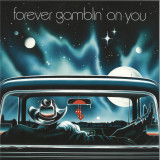
A full tank of gas, the gentle glow from the radio dial, & stretches of open highway await, Forever Gamblin’ On You meanders through miles of soulful AOR, funky folk, & dusty soft rock obscurities. A follow up to Sky Dust Drifter, this compilation was gleaned from American private press oddities & rarities of the 70s & 80s, all of which are seeing their first official reissues on this album. A celebration of love, rebirth, and exploration radiating like the warmth of a loved one from the passenger seat.
Featuring “Feeling The Fire”, a jazzy, AOR grooving declaration of love and desire taken from the sole release from The Mad Brother. The compilations’ title track “Forever Gamblin On You” by Petroc And Pals, features an echo-laden folk rock recollection of hard feelings delivered with swelling guitar in a mournful soft psychedelia. Angie Pepper’s “Miss You Too Much” dwells on a past love, rolling along with an effortlessly cool rhythm section, while Roy McComas croons of his manifested “angel of love” on the swirling psych folk rocker “Girl Of My Dreams”.
Forever Gamblin’ On You unfolds as a hopeful yet equally melancholic collection of nomadic anthems, primed for a memorable journey along the back roads of familiar American landscapes.
"Deep Dancefloor Jams of African Disco, Funk, Boogie, Reggae & Proto Electro Music 1977-1986reggWhen a passionate DJ and crate digger intuitively selects music for a DJ compilation, without artistic compromise and without the burden of trends, AfroMagic vol.1 emerges from the depths of his soul. Herewith we present the new favorite phonomancer’s tool for all the DJs who experience the dance floor as a sanctuary and a source of freedom and love.
The most fundamental thing that defines African music is that it was created for dancing. In African dance, there is often no clear distinction between ritual celebration and social recreational entertainment – one can seemlessly merge with the other. Because dance and rhythm have more power than gesture and more richness than words, and because they express the deepest experiences of human beings, dance is in itself a complete and self-sufficient language. It is truly an expression of life with all of its emotions – joy, love, sadness and hope – without which there is no African music and dance. For the African people, dance and music are integral parts of the body and soul, thus depicting the expression of life, current emotional states, visions or dreams. Through hypnotic repetitive music and dance, people communicate with each other and with the souls of the dead, the animals, the plants, the stars, the Gods… They free the body and the spirit through ecstatic states, reaching a healing sense of freedom, happiness, and satisfaction.
Throughout history, this transcendental perception of rhythm and dance originating from Africa, influenced popular music worldwide, thus creating new living and breathing forms of musical genres – freeing them from their industrial mold. Funk, disco, soul, boogie, reggae, dancefloor jazz etc., developed in parallel all over the world. It is foolish to perpetually discuss where they originated from and who were the creators of all these fiery dance floor genres – being obvious that they directly or indirectly originate from the African continent and its people who were as well, over the centuries, influenced by disturbing socio-cultural factors of colonialism. However, no one can enslave the soul. The seeds of free and uninhibited dance and rhythm, true to their original form, initially first sprouted onto the USA’s fertile fields of clubbing and popular music while later evolving in other parts of the world.
The disco funk club culture manifested itself as a phenomenal explosion of artists and grooves in the second half of the 70s in the USA. Shortly it spread around the world continually reigning over charts in its various forms – to this day. Clubs emerged where the DJ is an almighty shaman and the dancers are a tribe united under one roof. This urban ritual had and still has a single goal: togetherness, freedom, and love. Clubs have evolved into temples where we free ourselves from the burden of a consumerist lifestyle and suppressed emotions – a place where we receive love and give love – to be who we really are.
Disco funk clubbing was such an influential global phenomenon that its influence can be observed in various other genres from the disco funk era i.e. progressive rock, which mutated by layering complex rock arrangements with a disco funk groove resulting in hybrids, highly sought by today’s diggers, producers and collectors. The profit-hungry music industry of the 80s very quickly commercialized the original disco funk sound by amputating of its original Afro groove to be able to easily ‘sell’ it globally. So, the original disco funk groove became underground again, and it has remained so until this day. Today, for a DJ to unearth that ravishing groove that will lead the dancers to the stars, he must dig passionately like a true musical archaeologist in search of that groove that picks you up after just a few initial beats. That groove which forces the atoms in your body to vibrate, that groove which unites the body and releases the burden.
The AfroMagic compilation series is created as a tool for real DJs who stick to the aesthetics and essence of clubbing.
This continuation of the Afromagic compilation by DJ Borovich was created in a private jam session which served as an escape route from intense and complex love problems.
Unconsciously driven by intuition and emotion and following a live mix tape framework where many tunes are arranged instantaneously, Borovich narrates his story with a strong rhythm that cuts loose even the most blocked off energy nodes and restores happiness to the spirit and the body.
The musical experience of the groove is completed by the lyrics of the songs, which symbolically give DJ Borovich universal answers to his questions arising from questioning the boundaries, nuances and other forms of love.
When considering that Borovich’s selection was created to facilitate an escape from the burdens of reality through rhythm and dance, we can be sure that Afromagic Vol. 2 will have a 100% uplifting, energized and spaced-out effect on the listeners.
The intro to A1, “Feeling Happy” by the Apostles, introduces us to an experienced and slow, cool and irregularly tight groove containing a confidently sung chorus that instantly gives a sense of freedom and hints at the remainder of Afromagic Vol. 2: “I’m gonna feel happy, ´cause I know I’m gonna be myself.” After the anthemic song mantra of the Apostles, Aigbe Lebarty uncompromisingly continues with a dirty disco rhythm. Acidified by accented synths that elevate it to shamanic levels and held together by a female tribal choir, we embark on an uncompromising ritual disco journey. Without a moment to take a breather the prog funk band Mighty Flames and their Road Man launch a highly vicious and raw, thick funk groove spiced with acid synths and dirty RnR breaks, raising the bar for the A side. Jimi Hendrix himself would surely praise it given the ultimate freedom and virtuosity in the solo sections. With the last tune on A side DJ Borovich decides to burn the floor with Geraldo Pino’s psychedelic, acid furious groove and lyrics which describe this HEAVY part of love problems: “The way she walk, the way she talk, the way she does a funky dances, she is really really heavy – that woman”.
While the A side represents a compact intoxicating afro groove machine that separates us from reality and lifts us up to the stars in over 23 minutes, the B side is a treasure trove of proto sub-genres gems. This selection represents the mission of the Afromagic: to find singular events in African recorded discography of popular music from the 70s and 80s that give evidence to the birth of new modern genres on the Dark Continent even before they emerged in the U.S.A. or Europe. The beginnings of electronic music influenced genres are represented back to back with 80s synth jazzy pop, all painted in African colours.
The B side opens big with Jake Sollo and a huge reggae blues number singing about the humiliation of a man – goosebumps guaranteed! “You think I’m nobody that’s why, you don’t know the way for me, I’m somebody I know, I found myself at last”. Adolf Ahanotu then enters the scene with a hard sliding tackle at B2 and an exotic rare disco funk dancefloor napalm. A ‘Sensation’ that would ignite even the coldest of introverts. While we approach the end of the compilation the narrative revolves again and takes a different turn. No less and no more than to the proto-electro that Baad John Cross serves us in “Give Me Some Lovin´”. The fat and repetitive broken electro synth groove, championing many early 90s electro tracks, is presented here without hesitation and with constant tension accompanied by a mantric chorus “Gimme some, gimme some, gimme some looooovin’, EVERBODY!!!”. Finally, we’re guided to the end of Afromagic Vol. 2 by Eji Oyevole’s 80s synth pop style presented in an authentic afro manner, giving us a glimpse at yet another released Afromagic edition, as well as giving an answer to DJ Borovich’s love problems. A smoothly broken electronic rhythm resembling electrified highlife sounds, carried on the wings of a virtuoso dreamy saxophone on top of which Eji presents the most intimate parts of himself. Finalizing the track with a symbolic chorus, on the surface referring to the dancefloor and simply having fun, but in actuality referring to the skill and happiness of living: “I´m a dancer, I can dance”. So, get up and dance among the stars with DJ Borovich and Afromagic.
The discography of the phantom Gruppo Sound exceeds over thirty titles published in an undefined time frame between the Eighties and the Nineties. However, there is very little information about this curious pseudonym. it is possible to find a library music album by Gruppo Sound inside the Canopo, Deneb, Flower, Monosound Records and Teams catalogues, all managed by Flipper Music publishing group, but both the creators and the musicians have never been the same. Gruppo Sound is only a collective name, maybe to identify a certain number of 'new' productions characterized by an electronic background And, not by chance, the author of “New York City” is a single artist, the multi-instrumentalist Gabriele Ducros. Son of the prolific composer Remigio Ducros, he first followed his footsteps in the field of music libraries and soundtracks and then become the author of many tracks for television commercials of a certain relevance, winning some international awards.
“Some of these tracks may have been associated with a pornographic film. Others were, however, made as brief comments for a theatrical show, perhaps never made”, remembers Gabriele Ducros. What unites the thirteen pieces is the same musical language, which derives from a widespread funk and jazz matrix. Both genres are thus declined through a different approach and taste, in line with the fusion trends of the time, when the early synthesizers were used by few artists. A handful of electric guitar notes for a 'urban' mood, the acoustic ones from a dreamy morning awakening. Electronic keyboards to arouse a sense of nostalgia in the listener, while flute and saxophone always punctuate different atmospheres. A computer melody, a theme for children and a sophisticated ode to the fusion sound of the Big Apple, perhaps true source of ispiration of the work. “New York City” is not a concept album, but one of the best cross-sections of Gabriele Ducros' great creativity.
shipping to EU only !
The industry standard Xone:92 is a versatile six channel analogue mixer, renowned for its expansive, involving sound.
With its solid construction and easy to use interface, the 92 is on the riders of most of the world’s top DJs and is a permanent fixture in the booth at many of the biggest superclubs.
The Xone:92 was one of the first professional DJ mixers to incorporate MIDI for control of DJ software or external devices, and the first to include the innovative dual VCF filters.
With its two stereo FX sends, twin Mic/returns, and one of the best EQ sections around, this mixer is a DJ’s dream tool.
Features:
• 6 dual stereo channels – 4 phono/line, 2 mono/mic or stereo return
• 2 independent stereo mix outputs
• 2 aux sends for output to external FX units
• VCF system – 2 independent stereo filters with frequency and resonance controls
• 2 independent LFO’s for filter manipulation
• 4-band EQ – total kill on HF and LF, wide Q for cut, narrow Q for boost
• Booth output – dedicated output on TRS jack
• MIDI values can be output from 6 controls (e.g. crossfader, LFO)
• P&G easy change professional VCA crossfader
• Illuminated lightpipes showing status of performance controls
• Intelligent cue for pre or post EQ monitoring
• Monitor section includes post EQ switch, split cue and mix to cue balance
• 2 headphone outputs (1/4” and 3.5mm)
• Ducking control on mono/mic channel
Steel Drum covers of Drake, Snoop Dogg & Dr Dre, Claudja Barry, The Game & 50 Cent, A$AP Rocky, Stranger Things Theme, and more. Bacao Rhythm & Steel Band, the mysterious steel pan outfit hailing from Hamburg, Germany have amassed a cult following around the globe. With a slew of classic 7”s and three critically acclaimed full length albums, they set a high bar for themselves, one they clearly intend on pushing even higher with this new offering. On their fourth album BRSB, Bacao are back with more of the same, but more of the same with them is inherently different. Covering songs that span genres and range from mega hits to underground album cuts, they make them their own with their unique approach to the traditional steel pans of Trinidad and Tobago. While part of the allure of a new Bacao Rhythm & Steel Band album is finding out what covers they do it is equally intriguing to see what original tunes they cooked upland this record is foul of standout originals. The album opener, “In The Crosshairs” is a rough and tough mid-tempo head nodder while both “Grilled” & “Treasure Quest” pick up the tempo with heavy African Funk in‑fluences on both. Bacao goes deep with “Hazy Memories”, a bass heavy slow burner that walks a line between hypnotic and hype. All these originals stand as testament that the term “cover band” is a shoe that could never fit Bacao. However, in the tradition of steel pan music, they do a heavy amount of covers. This time around there is a big West Coast Hip Hop influence with covers of Game & 50 Cent’s “How We Do”, Dr Dre & Snoop Dogg’s “Nuthin But A G Thang”, and Tupac’s “Got My Mind Made Up” all of which take on new energy and lend themselves to the BRSB steel treatment. Bacao puts another certified dance‑floor filler on their resume with their cover of Claudja Barry’s uber Disco classic “Love For The Sake Of Love” which they flip into a dubbed-out affair aptly changing even the title to “Love For The Sake Of Dub”. Pulling from the contemporary smash hit section of Hip Hop they cover Drake’s “Hotline Bling” and “Love$ick” by Mura Masa & A$AP Rocky. Then they go very unexpected with “Stranger Things Theme” where they take the synth heavy theme song to the hit show and give it a more hypnotizing tone than the original. By the time BRSB is through, Bacao has taken the listener on a journey spanning a myriad of energies, tempos, and moods while keeping it all under one umbrella. For all that, these songs are alive, and they will be taken out of the context of this album and sewn into the fabric of DJ sets around the globe for many years to come. Bacao Rhythm & Steel Band continues building their legacy and pushing the boundaries of steel pan music forward with another rock solid musical offering. Enjoy
- A1: Domma Summer - I Feel Love
- A2: Gloria Gaynor - Life Ain‘t Worth Living
- A3: Calvin Davis - Train To Ride To Nowhere
- A4: The Trammps - Disco Inferno
- A5: Jennifer - Do It For Me
- A6: Luv‘ - You‘re The Greatest Lover
- B1: Kool & The Gang - Ladies Night
- B2: Anita Ward - I Love The Nightlife
- B3: D D. Sound - Disco Bass
- B4: Three Degrees - Jump The Gun
- B5: New Paradise - U S.a. Disco People
The vinyl sampler „70s Disco Hits Vol. 2“ is a compilation of timeless disco classics from the 1970s presented on a highquality vinyl record.
This sampler invites you to rediscover the pulsating rhythm and distinctive sound of this outstanding decade.
Thanks to very careful selection, „70s Disco Hits Vol. 2“ presents a fascinating mix of well-known songs and hidden gems of the disco era. From funky basslines to rousing horn sections and infectious choruses, this sampler offers a crosssection of all the diversity and energy of the 70s.
Active in the mid-80’s and heavily influenced by the British post-punk dissonant style and the Belgian cold-wave melancholic atmosphere, The Ultimate Dreamers resurrected during the COVID lock-down, releasing a selection of good old demo songs on their “Live Happily While Waiting For Death” release. A dynamic impulse that brought them not only back on stage but also into the studio to work on new material. The magic is back!
The Ultimate Dreamers feel stronger than ever and enjoy uniting past, present and future on this exciting “Echoing Reverie” album, on which they reach a subtle balance between light and darkness: a poignant cold wave fusion of futuristic danceable dream pop with a retro noisy post-punk attitude with surrealistic introspective cynical lyrics dealing with fleeting life, melancholic solitude and other inner demons..
The new songs intelligently merge nostalgic cold wave chills and alluring poignant vocals with carrying basslines and irresistible danceable beats to become “less is more” addictive tunes that capture you in no time. If you like bands such as New Order, The Cure, Minimal Compact, Trisomie 21 or yet Section 25, “Echoing Reverie” comes highly recommended for a timeless dusk sonic experience at the crossroads of darkness and brightness.
See the magic operate and let The Ultimate Dreamers carry you in their echoing reverie…
- A1: Nandele & A-Tweed - Deserto 05 20
- A2: Nadia Struiwigh – Lovessong 04 38
- B1: E-Saggila - Pr1Nt 04 18
- B2: Nvst - Heatstress (Tunnel Edition) 05 36
- C1: Ryan James Ford - Totes (Bath Mix) 04 42
- C2: Viikatory – Cinema 03 56
- D1: Jean Redondo – Hypersonic 03 52
- D2: Significant Other - Cellar One 04 30
- D3: Willis Anne - Späti System 03 28
- E1: Dj Sotofett Meets Kavadi - Kandhan Karunai 05 10
- E2: Ireen Amnes – No Longer Human 05 12
- F1: Solid Blake – Hexaghost 05 33
- F2: Nit. - Cirrus Virga 06 00
yet is a slippery word in English. Amorphous, these three letters in dierent contexts can define contrast or emphasis, set a place in time, show an expectation that something will occur or, paradoxically, that it is likely to stop.
It is this mercurial nature that makes yet the perfect title for Tresor’s latest compilation: the label follows on from the more explorative sections of 2021’s landmark Tresor 30 boxed set with a compilation, featuring 13 artists making music that resists easy definition.
Every track hints at and borrows from the familiar yet none follow the expected path: halfway through Deserto, Nandele & A-Tweed dramatically reveal a very dierent sonic landscape that was initially suggested; DJ Sotofett collaborates with Sri Lankan artist Kavadi with results that are unlike anything in the Norwegian producer’s catalogue as yet.
Further invention can be found as Jean Redondo’s Hypersonic moves across spaces inhabited by digital hardcore and hyperpop before swerving o-road and into a futuristic hip-hop section; on No Longer Human, Ireen Amnes takes a dierent path at the crossroads melding hyperpop, trance, and sci-fi soundtrack atmospherics, Significant Other heads towards UK Bass and Dubstep, and France’s Willis Anne skims by the outskirts of footwork with a piece that is almost completely uncategorisable.
Yet more sonic experimentation comes from E-Saggila, Nadia Struiwigh, NVST, Solid Blake, and Viikatory who oer unique takes on the well-established electro blueprint, while Ryan James Ford, and Nit. both find ways to blend elements normally found in ambient pieces with those heard on a dancefloor.
The feel of the compilation is yet again reflected in the enigmatic artwork by Malik Arbab, where shapes and colours suggest animals and plants but in a world that appears to be transient and constantly evolving.
Angelo is an LP, named after a car, featuring nine songs Brijean have crafted and carried with them through a period of profound change, loss, and relocation. It finds percussionist/singer Brijean Murphy and multi-instrumentalist/producer Doug Stuart processing the impossible the only way they know how: through rhythm and movement. The months surrounding the acclaimed release of Feelings, their full-length Ghostly International debut in 2021 which celebrated tender self-reflection and new possibilities, rang bittersweet with the absence of touring and the sudden passing of Murphy’s father and both of Stuart’s parents. In a haze of heartache, the duo left the
Bay Area to be near family, resetting in four cities in under two years. Their to-go rig became their traveling studio and these tracks, along with Angelo, became their few constants. Whereas Feelings formed over collaborative jams with friends, Angelo’s sessions presented Murphy and Stuart a chance to record at their most intimate, “to get us out of our grief and into our bodies,” says Murphy. They explored new moods and styles, reaching for effervescent dance tempos and technicolor backdrops, vibrant hues in contrast to their more somber human experiences. Angelo beams with positivity and creative renewal — a resourceful, collective answer to “what happens now?”
Angelo the car is a 1981 Toyota Celica they got off Craigslist during their first stint in Los Angeles, where Murphy and Stuart have since settled. “Such a bro-y, ‘80s dude car, it’s been super fun to drive around in a new town,” Murphy says. “He’s older than us, he’s a classic, he’s got a story.” It is a spiritual vehicle with a cinematic appeal, first dropping them off in an alleyway for the scene-setting intro, “Which Way To The Club.” The question is quickly resolved by “Take A Trip” as a cruising bassline mingles with crowd sounds, hand-claps, cuíca hiccups, whip-cracks, even a horse neigh. Brijean have found some club on this cross-dimensional trip — the kind of
imagined space or chamber within one’s self capable of “shifting a fraction of who you are,” says Murphy. They wrote the track with the simple intention to be “as free as we could be,” adds Stuart, likening the flip on the B section to a realm unlocked: ”What if the world changed completely? You open the door to a new room.”
Next is “Shy Guy,” a motivational anthem for the wallflowers among us. Murphy sets up the daydream: “We are in junior high, we’re on the dance floor, what’s going down, who is dancing, who is not, how are we gonna make them dance?” The narrator, the MC, hypes up the room as conga-driven rhythms bounce between languid synth and guitar lines. “Show me how to move...I feel something...I know you feel it too,” Murphy sings sweetly, calling back to the opening lines of Feelings, and this time the audience chants it back. It is easy to picture Brijean performing this one — something they only got to do a handful of times until more recently, opening shows for Khruangbin and Washed Out, an experience they found informative. Murphy explains, “It was inspiring to be out there and let loose more. To see how people can expand their expression on stage gave me more liberty with how I viewed my musicianship. My role for so long was to be a backup percussionist, so why would I ever leave the drums, you know? But then after playing all these runs, you see these artists and realize you can, you have permission.”
“Angelo” and “Ooo La La” deliver the danciest stretch in Brijean’s catalog to date. The title track adopts a deep house pulse replete with strings, hi-hats, and kicks. The latter opts for a funkier groove that foregoes verses in favor of warbled hums and extended breakdowns. What follows is perhaps the duo’s dreamiest run, a comedown initiated with the honey-hued interlude “Colors” drifting into “Where Do We Go?”, a tropicália reverie where Murphy contemplates the passage of time and space.
It all culminates in “Caldwell’s Way,” a fond farewell to their Bay Area community — “a part of my life that I knew couldn’t come back,” says Murphy. Above shimmering organ sounds, lush strings, and the birdcall of their former neighborhood, she wistfully articulates the uncertainty of moving on by remembering the characters dear to them. There’s the wisdom of their neighbor, Santos, who refused payment when helping them move out: “I’d rather have 100 friends than 100 dollars.” And the song’s namesake, Benjamin Caldwell Brown, a friend and club night cohort for many years. “I’m only miles away, maybe I’m just feeling lonely,” the line resigns to warm nostalgia, and “Nostalgia” runs the closing credits to this healing and transportive collection.
It might seem tongue-in-cheek on the surface, but the fact that the title of Eldritch Priest's sprawling debut vinyl release, Omphaloskepsis, is the Greek translation for “navel-gazing” unlocks something essential to the Vancouver-based composer and writer's singular outlook.
Perhaps even more telling is the title of Priest's 2013 book Boring Formless Nonsense: Experimental Music and the Aesthetics of Failure (Bloomsbury), whose 300-odd pages read as though you've been dosed with potent hallucinogens. Throughout the text Priest addresses—celebrates, even—the titular elements via various musical examples, including that of his peers. What's so bewildering it is that his descriptions of how boredom, formlessness, and nonsense manifest are laced with the very tactics he's depicting. Passages tie themselves in knots, footnotes engulf the “primary text,” he even deliberately misleads the reader.
The restless stasis of Omphaloskepsis could be regarded as an extension of this book's wayward spirit. Things unfold fairly slowly and consistently but it'd be a stretch to describe it as properly contemplative. Like attempting to meditate with a high fever, any sense of tranquility is constantly derailed as one succumbs to queasy agitation. The piece's foundation is a seemingly endless guitar melody; an organic meander that neither seems to repeat or offer any concessions to narrative directionality. Priest unfurls this rambling cantus firmus in a rich, clean, jazz-like tone, but as it's played, it's repeatedly tangled with snarls of dense digital processing and shadowed by stumbling virtual “band.” These strident interjections blatantly contrast with the guitar, yet they aren't so violent as to offer more than a faint itch of distraction. As such, the distinctive amorphousness that this piece asks us to inhabit for its 54-minute duration leaves a strong impression, but also feels utterly intangible.
In addition to his recorded forays, Priest's disorienting music has also been performed by top-tier interpreters such as the Arditti Quartet, Quatuor Bozzini, Philip Thomas, Anton Lukoszevieze, and Continuum. While living in Toronto he co-founded the collective neither/nor with John Mark Sherlock, which featured a cross section of musician-composers playing each other's work including Eric Chenaux, Doug Tielli, Eric KM Clark, Heather Roche, and Rob Clutton. “Though the name refers specifically to a loosely knit group of composers and performers,” remark's the collective's website “neither/nor is also a sensibility that refuses art’s messianic pretensions and the gaping maw of commercialized society, opting instead for art’s right to be esoteric.” In 2021, when Eric Chenaux and Martin Arnold relaunched their neither/nor-adjacent Rat-drifting imprint, an album by Priest, Many Traceries, was among the first to be released. Perhaps unsurprisingly, Priest was a student at the University of Victoria, a school that's come to be known for fostering such staunch individualists as Arnold, Linda Catlin Smith, Allison Cameron, and Anna Höstman.
As a scholar, Priest writes from a 'pataphysical perspective and deals with topics such as sonic culture, experimental aesthetics and the philosophy of experience. Priest brings these interests to his job as an Associate Professor in the School for the Contemporary Arts at Simon Fraser University, interests that also inform his work as a member the experimental theory group The Occulture. In addition to Omphaloskepsis, his new book, Earworm and Event: Music, Daydreams and Other Imaginary Refrains,
- A1: Barbour Singers - Don&Apos;T Let Satan Get You
- A2: Selah Jubilee Singers - I Feel Like My Time Ain&Apos;T Long
- A3: Alphabetical Four - Have You Heard About The World Coming To An End?
- A4: Norfolk Jazz &Amp; Jubilee Quartet - This Old World Is In A Bad Condition
- A5: Kentucky Jubilee Four - I&Apos;M Gonna Lay Down My Heavy Load
- A6: Galilee Singers - Singing With The Angels
- A7: Elder Charles Beck - I&Apos;M Going To Walk Right In And Make Myself At Home
- A8: Birmingham Jubilee Singers - Raise A Ruckus Tonight
- B1: Monarch Jazz Quartet Of Norfolk - Somebody&Apos;S Always Talking About Me
- B2: Davis Bible Singers - Do You Want To Be A Lover Of The Lord
- B3: Utica Institute Jubilee Singers - Leaning On The Lord
- B4: Alabama Harmonizers - Holy Unto The Lord
- B5: Birmingham Jubilee Singers - What You Gonna Do When The World&Apos;S On Fire
- B6: New Orleans University Glee Club - The Old Ark&Apos;S A-Movering
- B7: Pilgrim Jubilee Singers - The Lord&Apos;S Prayer
- B8: Royal Harmony Singers - I&Apos;M On My Way To Heaven Anyhow
Tape[16,39 €]
Death Is Not The End present a compilation gathering a cross-section of early gospel choirs and vocal harmony groups recorded between late 1920s and the mid-1950s - a period when spirituals & jubilee traditions merged with blues, jazz and early rhythm and blues, providing the musical routes for the coalescence of the civil rights movement born out of the black church. In the modern world these perennially vital recordings provide a fitting tonic for the near-dystopia we find ourselves living through.
raum…musik welcomes Giuliano Lomonte for its 120th release with Moonlight EP — a three-track journey cross-sectioning house and techno with hints of 90’s progressive trance, combining precise rhythmic control, atmospheric depth, and club-focused energy. Tools built for tension, release, and maximum dancefloor impact.
The EP opens with “Drynation”, a ten-minute prog-tech-house roller built on hypnotic grooves, rolling low-end, and evolving percussive patterns and synth textures, locking the floor in with a steady pulse and a masterful play of tension and release. “Moonlight” shifts into deeper, proggy techno territory, weaving subtle percussive motifs over a simple interchanged kick-and-bass foundation. Fluid and restrained, the track unfolds slowly, with minimal drum variations and gently filtered synths, creating an elegant sense of forward motion. Closing the EP, “One Step Ahead” balances stripped-back tribal house energy with rolling grooves, detailed percussion, and warm pads, resulting in a deeper cut that is precise, functional, and full of understated character.
With Moonlight EP, Lomonte confirms his mastery of tension, texture, and subtle movement, delivering a record that reinforces Raum…Musik’s reputation for high-quality, dancefloor-ready music while highlighting his signature blend of rhythm, refinement, and subtle progression.
- 01: Barbour Singers - Don&Apos;T Let Satan Get You
- 02: Selah Jubilee Singers - I Feel Like My Time Ain&Apos;T Long
- 03: Alphabetical Four - Have You Heard About The World Coming To An End?
- 04: Norfolk Jazz &Amp; Jubilee Quartet - This Old World Is In A Bad Condition
- 05: Kentucky Jubilee Four - I&Apos;M Gonna Lay Down My Heavy Load
- 06: Galilee Singers - Singing With The Angels
- 07: Elder Charles Beck - I&Apos;M Going To Walk Right In And Make Myself At Home
- 08: Birmingham Jubilee Singers - Raise A Ruckus Tonight
- 09: Monarch Jazz Quartet Of Norfolk - Somebody&Apos;S Always Talking About Me
- 10: Davis Bible Singers - Do You Want To Be A Lover Of The Lord
- 11: Utica Institute Jubilee Singers - Leaning On The Lord
- 12: Alabama Harmonizers - Holy Unto The Lord
- 13: Birmingham Jubilee Singers - What You Gonna Do When The World&Apos;S On Fire
- 14: New Orleans University Glee Club - The Old Ark&Apos;S A-Movering
- 15: Pilgrim Jubilee Singers - The Lord&Apos;S Prayer
- 16: Royal Harmony Singers - I&Apos;M On My Way To Heaven Anyhow
Vinyl (LP)[22,48 €]
Death Is Not The End present a compilation gathering a cross-section of early gospel choirs and vocal harmony groups recorded between late 1920s and the mid-1950s - a period when spirituals & jubilee traditions merged with blues, jazz and early rhythm and blues, providing the musical routes for the coalescence of the civil rights movement born out of the black church. In the modern world these perennially vital recordings provide a fitting tonic for the near-dystopia we find ourselves living through.
Reggae music in many ways reminds us of America’s Motown records. The music comes out of its stable fast and furious we tend to know the songs, the artists, the
studio but who? are the players. The unsung heroes that in many cases, cut most of our favourite tracks One such band this applies to in the Reggae field is the Soul Syndicate Band.
Each Jamaican record producer would have their favourite set of musicians they would use, availability permitting. Although several musicians crossed over into different named bands. For example, a set of players working with Producer Bunny 'Striker' Lee would go under the guise of The Aggrovators. The same group working with Producer Joe Gibbs would work under the name The Professionals. Soul Syndicate were the band of choice for Producer Niney the Observer, who used them for his own recordings and when you put that aside the other artists Niney produced, Dennis Brown, Max Romeo, Michael Rose, I Roy, The Ethiopians, Barry Brown, Gregory Issacs and Freddie McGregor. To name a few and not necessary all, you begin to see the amount of material this set of musicians played on.
Built around the rhythm section of Calton 'Santa' Davis and George 'Fully' Fullwood, drums and bass respectfully. They were usually accompanied by Earl 'Chinna' Smith, Tony Chin on guitars, Keith Sterling, Gladstone 'Gladdy' Anderstone, Bernard 'Touter' Harvey, organ/keyboards and Noel 'Skully' Simms, percussion. Niney's tracks tended to be rhythm heavy and thus Sound System favourites.But when brass was needed/called for ,this was provided by the likes of Tommy McCook, Bobby Ellis, Felix ' Deadley Headley' Bennett. Niney not having a studio of his own at the time used most of Kingston's studios, again availability and money providing. But most of these cuts
selected for this release were cut at Channel 1 and a few exceptions at Randy's Studio 17 and at Joe Gibbs studio at Burns Avenue.
Niney also worked closely with King Tubby on his dub plates, so tracks after the recording sessions were taken to King Tubbys for reconstruction and sometimes
re-voicing over an existing rhythm. These were then used as version sides to the vocal cuts, but most importantly used to nice up the dances, being played out on King Tubbys Hometown Hi-Fi Sound System. We have pulled together a selection of such dub plate specials cut by the Soul Syndicate band for this release. Dub sides that emphasise how well the band worked together, and with Niney at the reigns and the added bonus of some Tubby magic sprinkled on top. Please see our Niney the Observer at King Tubbys 1973-1975 (JRO11) for further examples of this work.
We at Jamaican Recordings hope we are not alone in saluting the musicians, that played such a big part in producing many of our favourite Reggae Sounds. Having released titles by The Revolutionaries (JR003), The Aggrovators (JR005), Sly and Robbie (JR006), we are now pleased to release a selection of rare Dub cuts by another one of Jamaica's finest, the Soul Syndicate band to our catalogue...
Respect Jah Floyd.
'Flowers', the new EP from Elizabeth Davis, finds itself at the cross-section of many factors. In part, it’s the result of Davis’ obsession with a seminal folk song. But it also coincides with her rediscovery of the voice and language as an instrument. It was recorded during an autumn residency at Sternhagen Gut, the cultural refuge run by Gudrun Gut and Thomas Fehlmann, located deep in the Uckermark countryside halfway between Berlin and the Baltic coast.
The six tracks on 'Flowers' all take Pete Seeger’s ‘60s protest-folk song 'Where Have All The Flowers Gone' as their starting point. However, they veer off in different directions, from vocal loops and deconstructed lyrics, to instrumental drones and glitchy, manipulated rhythm tracks. Like many musicians, Davis has learnt composition by a process of disassembly, analyzing musical works piece by piece, and 'Flowers' began as one such forensic exercise. “But sometimes,” says Davis, “a source is so loaded up on meaning that the studies and experiments can become worthwhile and meaningful works in their own right.” 'Flowers' began to take on a life of its own, raising renewed questions about age-old themes such as war, authorship, translation and historical structures.
Davis is no stranger to cover versions. From studying violin to playing in free jazz and punk bands, interpreting other artists’ works has long been a key part of her musical approach. And since her radio show 'Deep Puddle' recently drew to a close after seven years, her experiments with narration and sound collage have found their way into her musical work once again. For 'Flowers', she cut up the source material (with a nod to Gysin and Burroughs), and reassembled the lyrics, the musical notes, and recordings by different performers, to create uncanny new forms.
But perhaps the biggest influence on 'Flowers' was conversations about music, art and pop subcultures with Gut. These dialogues helped Davis find a balance between far-out sound design experiments and catchy melodies, combining a certain avant-garde element and modern day songcraft. And it’s this sense of conversation, this revisiting of topics and renewal of ideas, that will keep us coming back to 'Flowers' long into the future.
Prolific beat pharmacist par excellence Brendon Moeller continues his hot streak with a return to Samurai to serve up the exquisite craftsmanship of Shadow Language. Across 15 fresh productions the seasoned house and techno producer demonstrates yet more variations on his rejuvenated sound since pivoting towards 160 tempo zones. Heavyweight dub techno pulses collide with D&B pressure and dubstep snarl, delivered with devastating restraint and mediative warmth.
Moeller's dub-informed, high-grade production hit a hot streak as he started to experiment with faster tempos and more broken rhythms, reaching into thrilling new sound fields where fast-slow rhythmic intrigue meets with spatial subtlety and constantly evolving synth voices. The past year has seen him release a swathe of albums, from Further on Samurai to outings on Constellation Tatsu, ESP Institute and Quiet Details that all burst with inspiration, each distinct from the last and offering an original perspective on this rich seam of crossover electronics.
Shadow Language shows Moeller burrowing even deeper into this new era of his work, continuing the hypnotic approach set out on Further while edging more forthright ingredients into the mix. From the outset 'Division By Zero' hits with immediacy even as it dips into a dubwise breakdown, with snatches of vocal and even the iconic loom bird making the slightest of appearances. 'Feral Hymn' finds a curious kind of uplift in the synth chord that twists in and out of the mental techno murmurations of the rhythm section. 'Impermanence' has some snarling bass that belongs in the gnarliest tech-step, while the nagging hats ticking through 'Junkyard Syntax' hint at a shockout without resorting to brute force. The majestic dub techno chords of 'Driftform' create a through-line across Moeller's extensive catalogue, but here they dominate the mix above a spongy bed of sub bass throb and framed by the tiniest slithers of percussion.
Throughout the album, it's the implications Moeller suggests with the tools at his disposal that create a powerful energy. Restraint governs the delivery, guiding the listener in deeper until they find a maximal experience from each elegantly understated roller. The weight and presence is abundant across every track, fuelled by the invigorating power of each tone and frequency while avoiding the clutter of overloaded arrangements.
Finding the notes in between and half-hidden rhythms, Moeller himself perfectly summed up his latest opus as he continues to develop his own compelling Shadow Language.
- Heartsick
- Ordinary People
- The Devil We Know
- In The House Of Denial
- Infinite Sadness
- Payback From God
- Yours To Bury
- Perfect Things
- Letters To Insomnia
- Perfect Blue
- Running The Fear Of It Dry
- Ataraxia
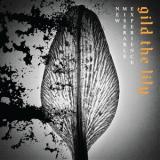
NEW MISERABLE EXPERIENCE are a Philadelphia-rooted collective that reshapes heavy-music rigour into expansive, melody-forward songs through alternative synth-rock. What started as a file-trading collaboration between vocalist/bassist David Grossman (ex- ROSETTA) and multi-instrumentalist Joshua Mahesh Kost expanded into a full band that now includes ROSETTA drummer Bruce "B.J." McMurtrie Jr., technical-metal bassist Brett Bamberger (REVOCATION), and guitarist Brody Uttley (RIVERS OF NIHIL). The group forgoes technical exhibitionism in favour of mood and melody, composing introspective songs designed to reward close listening. Across the twelve tightly arranged tracks of 3rd album "Gild The Lily", the band pares its palette to essential elements: clear melodies, precise dynamics, and richly textured production. The album trades overt bombast for craft, building emotional weight through small gestures and patient arrangements rather than moments of spectacle. "We started saying `infinite sadness' as a bit of a catch phrase with the last album. I think that sums up the vibe of the album and project overall. We are very much in the `sadboi' world with Jeff Buckley, Puma Blue, Radiohead, Deftones, The Black Queen", says Grossman. Sonically, `Gild the Lily' combines alternative synth rock with chorus-tinted guitars, and a rhythm section that alternates between taut propulsion and roomy, reverb-soaked space. The arrangements both electronic and instrumental negotiates smooth and slick danceability alongside sinister edges. The band's aesthetic is one of deliberate economy: textures are chosen to serve mood and narrative rather than technical exhibitionism, and arrangements reveal their depth across repeated listens. Slick, sorrowful and cinematic in atmosphere, `Gild the Lily' is an eclectic collection that can not only groove in vibe and inspire movement, but also pierce to the nerve in ethereal lamentation. RIYL Crosses * Black Queen * Ulver * Vowws * Rosetta * Revocation * Rivers of Nihil
R2 2-CHANNEL ROTARY DJ MIXER
Introducing the Headliner R2, a 2-channel rotary DJ mixer that
is perfect for DJ’s looking for precise control and a warm sound,
without breaking the bank. The R2 is packed with features, like an
analog filter and 3-band isolator EQs on each channel, and uses
only high-quality components, including genuine ALPS potentiometers.
Featuring two stereo channels with selectable Line and Phono
RCA inputs, each channel on the Headliner R2 comes equipped
with gain control with a peak LED, a 3-band isolator EQ, a headphone cue selector, a large channel volume control knob, and a
filter activation switch.
The Master channel boasts an analog filter, headphone monitoring,
and output control section. The analog filter features selectable
High Pass / Low Pass Filter modes with Frequency and Resonance
controls, giving you precise control over your sound. Independent
Master and Booth outputs with volume controls, both with balanced
XLR and unbalanced RCA connectors, give you the flexibility to
connect to any sound system.
The Headliner R2 features genuine ALPS potentiometers, and a
sturdy metal enclosure with stained wood side panels for a classic
look that will complement any DJ setup. The modular internal
construction, coupled with the external power supply connected
via locking Mini XLR ensure superior audio performance.
The Headliner R2 is a reliable, high-quality mixer that will give
your DJ performances that classic vibe. Whether you’re spinning
house, techno, or classic funk/soul/disco jams, this fun little mixer
is the perfect addition to your setup.
• Two stereo channels with selectable Line and Phono RCA inputs
• Each channel features Gain control with Peak LED, 3-Band Isolator EQ, Headphones Cue selector with LED, channel
volume control and filter activation switch with LED
• Master channel features analog filter, headphone monitoring and output control section
• Analog filter features selectable High Pass / Low Pass Filter modes with Frequency and Resonance controls
• Genuine ALPS potentiometers
• Headphone Cue control section features volume control, mix control (Cue/Master), and split monitor switch
• High current headphone amplifier with dual 1/4” and 1/8” jacks
• Independent Master and Booth outputs with volume controls, balanced XLR outputs and unbalanced RCA outputs
• Additional Record output with unbalanced RCA jacks
• Dual LED level meters for the Master output
• Microphone input with level control on front panel
• Sturdy metal enclosure with stained wood side panels
• Modular internal construction for superior audio performance
• External split rail power supply connected via locking Mini XLR connector and push-button power switch
• Measurements: 320 x 219 x 106 mm
• Weight: 2.8 kg
Microphone Input
Nominal Input Level: -50dBu
Frequency Response: 20Hz – 20kHz (+/- 0.1dB)
THD + N: 100dB
Crosstalk: 100dB
Übersprechen: < -65dB
THD + N: < 0,05%
Kopfhörerausgang
Maximaler Ausgangspegel: 70mA/Kanal in 150Ω
Minimale Lastimpedanz: 32 Ohm/Kanal
Stromversorgung
Typ: Extern mit verriegelbarem Mini-XLR-Stecker
Eingangsspannung: 100-240v ~ 50/60Hz
Ausgangsspannung: +/-15V; 500mA
Spannungsbereich: 32 Ohm/Kanal