Search:cultural noise

Styles
All
Hyper Gal - After Image

Hyper Gal

After Image

12inchLPGRAC161
Skin Graft
13.09.2024

"Springing from Osaka, Japan’s cultural center and historical heart, comes HYPER GAL, a two-piece band consisting of visual artist Koharu Ishida on vocals and noise artist Kurumi Kadoya on drums.

The minimalist duo make maximum impact - stripping music down beyond the bare essentials, to create shimmering, no wave pop from blast beat drums, glittery keyboard loops and ethereal bubblegum vocals - laced with velvet and firecrackers.

On “After Image” HYPER GAL hold fast to their limited palette, but expand their reach. Working with a canvas larger than ever before, the band fearlessly alternate bold, avant-garde strokes with intimate, deliberate gestures. The result is a new world awash in a sea of endless possibilities - only visible with closed eyes and open ears.

“There's something almost vapor-wave-adjacent about the glorious racket riled up by this pair. The effect of repetition throughout, the way the beat slips in and out of time, is hypnotic” - THE WIRE

“Blends elements of noise, no wave, pop and blistering punk to create something remarkable and new… Endlessly inventive and challenging” - MAXIMUMROCKNROLL

“These royalty of no-wave-pop don't blink and their delivery is absolute. An exhilarating, total experience” - NOISE-FI

""Indescribable, just listen to it for yourself. And don't take any stimulants beforehand, you could end up in the emergency room"" – OX FANZINE

“It looks like noise, but there is too much color. Pop, but unsellable. Their music goes beyond barriers, genres and boundaries, as if a virus had been injected into a video game bringing delirious ruin to a perfect world” – SODA POP

“Intensely good. A beautiful challenge, a noise, relentless, not an onslaught, always inviting, like they want to pull you in rather than chase you away. Actually, this is joyous” - THE ORGAN"

pre-order now13.09.2024

expected to be published on 13.09.2024

31,72 €
ONEIDA - EXPENSIVE AIR LP

A song is a song until it isn't, until it's pushed to its limits and beyond to become harder, faster and more dissonant. The music on Oneida's 17th full-length album, Expensive Air, all started as tightly structured, melodic rock songs _ very much in line with the non-stop bangers of Success from 2022 _ but along the way, they changed. Bobby Matador sketched the structures of these songs from his home base in Boston, then sent the demos to Oneida's New York contingent: Kid Millions, Hanoi Jane, Shahin Motia and Barry London. "We were working out the songs in New York without Bobby. We would start out riding the riffs, and then Shahin and Jane would add wild, out-of-tune licks," said Kid Millions. "It seemed so perfect." Oneida has long straddled gray-area boundaries between the NYC punk/psych/rock world and the art/experimental world, playing at gritty rock clubs and elevated cultural institutions, including the Guggenheim, MoMA PS1, ICA London, MassMOCA and the Knoxville Museum of Art. The band has been known for extended live improvisational performances, collaborating onstage with Mike Watt, members of Flaming Lips, Portishead, Boredoms, Yo La Tengo, Dead C, Godspeed You! Black Emperor, and many others. Oneida's members juggle a wide variety of other music projects. Drummer Kid Millions has played with Spiritualized, Royal Trux and Boredoms and releases solo compositions under his own name and as Man Forever. Shahin Motia founded noise - punk's Ex-Models and currently plays in Knyfe Hits. Kid and Fat Bobby perform and release music as People of the North, and Bobby's outside projects New Pope and Nurse & Soldier each released new albums in 2023. Oneida's previous album, Success, came after a four-year hiatus, unleashing the band's pent up creative energy in a set of catchy, accessible, nearly poppy songs. Song structure remained important in the run up towards Expensive Air, but so was the instinctual, improvisatory interplay that has always been a part of Oneida's process. The band had been playing live together for two years, sharpening its attack and pushing its songs to go harder, faster and wilder. Oneida recorded Expensive Air in three sessions scattered across 2023, convening at Colin Marston's Menegroth The Thousand Caves studio in Woodhaven, Queens, whenever they had a few songs ready. Marston and the band mixed the album in February 2024 at Menegroth. The new album expands on what Oneida achieved with Success, but also pushes past it, laying down irresistible song structures then blowing them to psychedelic bits. "I found myself thinking about this record as a darker, looser, louder, counterpart to Success," Bobby explains. "Both records charge forward from the jump and mix the elliptical with the blunt, and longing with self-mockery. But Success is like laughing in a car gunning carelessly through an ice storm, and Expensive Air is how you laugh at yourself as the car spins into the ditch, or a tree. Same trip, but a little closer to the bone."

pre-order now19.07.2024

expected to be published on 19.07.2024

23,95 €
A.R. Kane - Up home!

A.r. Kane

Up home!

12inchRGIRL134
ROCKET GIRL
24.06.2024

*REMASTERED ROUGH TRADE 4 TRACK E.P LIMITED TO JUST 500 COPIES*

Everything on “Up Home!” is bigger, richer; the guitars are huge, as though they’re being played through the clouds, massive gusts of blue-green noise that move across the stereo spectrum like weather systems. “Baby Milk Snatcher” is built around face-flattening dub bass, with glinting piano and shards of guitar ricocheting through the song. “W.O.G.S.” is delirious to the point of expiration; “One Way Mirror” is their attempt at weird, lopsided ‘anti-funk’, the song’s melody crushed by avalanches of six-string interference. And the closing “Up” is AR Kane’s masterpiece, a disembodied thud pulsing at its heart as a six-note guitar melody spirals ever onward, Ayuli’s voice lost in its own reverie, hymning escapism via references to Jamaican political activist Marcus Garvey’s ‘black star line’.
• Jon Dale, lead review in Uncut Magazine
who grew up together in Stratford, East London. From the off the pair were outsiders in the culturally mixed (cockney/Irish/West Indian/Asian) milieu of the East End, with Alex and Rudy’s folks first generation immigrants from Nigeria and Malawi, respectively. The two of them quickly developed and fostered an innate and near-telepathic mutual understanding forged in musical, literary and
artistic exploration. Like a lot of second-generation immigrants, they were ferocious autodidacts in all kinds of areas, especially around music and literature. Diving deep into the music of afro-futurist luminaries such as Sun Ra, Miles Davis, Lee Perry and Hendrix, as well as devouring the explorations of lysergic noise and feedback from contemporaries like Sonic Youth and Butthole Surfers, they also thoroughly immersed themselves in the alternate literary realities of sci-fi and ancient history (the fascination with the arcane that gave the band their name), all to feed their voracious cultural thirsts and intellectual curiosity.

It was seeing the Cocteau Twins performing on Channel 4 show the Tube that spurred A.R. Kane into being - “They had no drummer. They used tapes and technology and Liz Fraser looked completely otherworldly with those big eyes. And the noise coming out of Robin’s guitar! That was the ‘Fuck! We could do that!
The duo debuted with the astonishing ‘When You’re Sad’ single for One Little Indian in
1986. Immediately dubbed a ‘black Jesus & Mary Chain’ by a press unsure of WHERE to put a black band clearly immersed in feedback and noise, what was immediately apparent for listeners was just how much more was going on here – a tapping of dub’s stealth and guile, a resonant umbilicus back to fusion and jazz, the music less a conjuration of past highs than a re-summoning of lost spirits.

The run of singles and EPs that followed picked up increasingly rapt reviews in the press, but it was the ‘Up Home EP’ released in 1988 on their new home, Rough Trade that really suggested something immense was about to break. SimonReynolds noted the EP was: Their most concentrated slab of iridescent awesomeness and a true pinnacle of an era that abounded with astounding
landmarks of guitar-reinvention, A.R. Kane at their most elixir-like.

If anything, the remastered ‘Up Home’ is even more dazzling, even more startling than it was when it first emerged, and listening now you again wonder not just about how many bands christened ‘shoegaze’ tried to emulate it, but how all of them fell so far short of its lambent, pellucid wonder. This
remains intrinsically experimental music but with none of the frowning orthodoxy those words imply. A.R. Kane, thanks to that second generation auto-didacticism were always supremely aware about the interstices of music and magic, but at the same time gloriously free in the way they explored that connection within their own sound, fascinated always with the creation of ‘perfect mistakes’ and the possibilities inherent in informed play.

out of Stock

Order now and we will order the item for you at our supplier.

Last In: 2 years ago
14,24 €
Khôra - Gestures of Perception LP 2x12"

Khôra

Gestures of Perception LP 2x12"

2x12inchMARIONETTE24LP
Marionette
19.04.2024

Khôra is the medium Matthew Ramolo uses to delve deeply into initiatory world-building by way of sound, image, and lyrical prose. Figuring wholly realized art-myths which distill and rouse the numinous while provoking the visceral and cathartic, Khôra intricately collages studio documents of ritualized instrumental performances, introducing overdubs by transient, heteronymic personae which dismantle stable points of reference in the music and open uncommon planes of consciousness.

"Gestures of Perception" is Khôra’s first double album with a supporting artbook and features a fascinating array of sources subjected to patterned assembly, poetic layering, and the elevations of the heart. Deft handling of modular synthesis is palpably central, while feedback, erhu, keys, flute, contact electronics, guitar, field sounds, and various percussion objects (rattle and frame drums, seed pod sticks, random metal objects, meditation bowls, kalimbas, bells) all serve to provide breathing structures and energetic contours that guide and scaffold inner and outer journeys into the far-near. Prominent across the record's span is a home-built, solenoid drum machine, responsible for the alive and askew techno-archaic flows and conceived as the album’s "rhythm seed”. The music on Gestures is teeming with organic and alien textures, soaring drones, inter-dimensional noises, and emotionally resonant melodies; balanced on the fringes of exotica and meditative trance, with capacities that untether the listener from the ballast of limited reality.

Operating hermetically in the penumbra of Toronto's cultural scene for well over a decade, Khôra has been invested in self-publishing handcrafted editions of spiritually driven recordings which led to the LP/CD reissue of inaugural album "Silent Your Body Is Endless" by Constellation. Khôra has toured extensively in North America and Europe both solo and in collaboration with Picastro, Nick Kuepfer (Hrsta,1/4 Tonne), and Brandon Valdivia (Mas Aya, Lido Pimienta), generated over a hundred hours of unreleased, bewildering drone through durational performance with experimental outfit Nidus (Marc Couroux, Jason Doell), composed for live dance and independent film, been commissioned by MaerzMusik, and seeded and co-run the now defunct music and art venue Ratio in Toronto.

pre-order now19.04.2024

expected to be published on 19.04.2024

26,85 €
Whitney Houston - Whitney Houston LP

Whitney Houston’s self-titled debut album has few parallels. Viewed solely through the lens of sales numbers, Whitney Houston is a watershed statement on par with the most commercially successful and culturally dominant LPs ever released. Having sold more than 14 million copies in the U.S. and upwards of 25 million units worldwide, the 1985 LP became the equivalent of the television show or blockbuster film that everyone collectively experiences and discusses. Nearly four decades later, it’s lost none of its appeal or magnetism — and its artistic significance and historical import have only grown.


Sourced from the original master tapes, pressed at RTI on MoFi SuperVinyl, and strictly limited to 4,000 numbered copies, Mobile Fidelity's 180g SuperVinyl LP of Whitney Houston presents the breakthrough in audiophile sound for the first time. The signature traits Houston exhibits on every song — her three-octave range, radiant warmth, personal conviction, impossibly controlled register — come across with exceptional clarity, focus, and presence. Free of artificial ceilings and constricted dynamics, this reissue plays with an openness, airiness, and balance that put the singer’s once-in-a-lifetime instrument and immortal artistry into proper perspective.

It does the same for the songs’ cascading melodies and captivating arrangements. Individually produced by one of four renowned industry veterans — Kashif, Micheal Masser, Jermaine Jackson, and Narada Michael Walden — each composition feels grander, closer, more genuine. A vocal spectacular, Whitney Houston benefits from the high-end characteristics of SuperVinyl, which include a nearly inaudible noise floor, superb groove definition, and dead-quiet surfaces. This is how an album that changed the direction of popular music — opening previously inaccessible doors for Black artists; bringing smooth-singing vocalists back into the mainstream; kickstarting a movement that soon included several “divas” who would command the charts through the early 21st century — should look and sound.

Though Houston’s seemingly effortless performances suggest otherwise, creating the record Rolling Stone ranks as the 257th Greatest Album of All Time wasn’t easy. Nearly 18 months were required to identify songs suitable for a still-unknown singer who did not fit into the conventional frameworks of the mid ‘80s. Confident, powerful, and prodigiously talented, Houston would forge her own parameters with Whitney Houston. In the process, she obliterated the stubborn lines between R&B and pop, Black and white radio. She dared to reimagine who could be a superstar and then went out and defined the role. Recorded for nearly $400,000 and released on Valentine’s Day, the LP exceeded the wildest expectations of those most closely associated with it — save for Houston and her family.

Having made her first public appearance at the age of 11 singing at a Baptist church, Houston understood pressure and knew her way around, inside, and through a song. The invaluable guidance and support she received from her mother, Cissy, an accomplished gospel vocalist who backed Aretha Franklin and Elvis Presley, are on display throughout Whitney Houston. They arrive in the types of authoritativeness, discipline, and diction rare for even most seasoned veterans — and unheard-of for a 21-year-old newcomer. Houston brings a soulful elegance, understated glamour, and in-the-moment rapture to every note. Moving up, down, or staying in the middle of the vocal ladder; channelling softness or sweetness; showing restraint or increasing the volume, she is a marvel of emotionalism, a dynamo who can seamlessly transition from one mood to another within a verse.

Though the 10-track LP largely concerns itself with the ballad tradition, Houston covers the bases, getting into an R&B groove on the fleet “Thinking About You,” turning up the heat on the duet “Take Good Care of My Heart,” and investing the contagious dance-pop confection “How Will I Know” with all the anxiety, hope, energy, and enthusiasm its lyrics demand. Featuring her mom on background vocals and Houston’s pitch-perfect tone, uncanny precision, and skyscraper highs (no AutoTune here, friends), the synth-based anthem propelled Whitney Houston into the stratosphere, the vocalist into regular MTV rotation, and the term “crossover” into popular parlance. The double-platinum single reached No. 1 on the Hot 100, Hot R&B, and Adult Contemporary charts — a trifecta that foreshadowed accomplishments that would ultimately crown Houston as the most-awarded female artist of all time.

Whitney Houston became the first album by a Black female performer to top the Billboard charts. It remained there for 14 non-consecutive weeks en route to claiming the title of the best-selling LP of 1986. It stands as the first debut and first album by a solo female artist to spawn three No. Hits, as well as the first album by a Black female artist to top the year-end charts in Australia and Canada. These are just a handful of the accolades — along with four Grammy nominations — that surround a set that also contains the unforgettable ballad “Saving All My Love,” string-accompanied “Greatest Love of All,” and sensual “You Give Good Love.”

As TIME observed in an article written two years after the album took the world by storm: “This is infectious, can't-sit-down music, and her performance dares the listener not to smile right back.” We’re still smiling.

pre-order now29.03.2024

expected to be published on 29.03.2024

75,21 €
Corp Cruid - Corp Cruid I

tapetopia 007 Corp Cruid I was the only release of the planned tap series BleiBeil. The tracks were recorded over a longer period of time in 1988 – and in changing constellations that corresponded to the lineup of the East Berlin underground band Ornament & Verbrechen. 30 copies were circulated exclusively among friends. Concerts were not part of the plan, also due to the band’s rejection of a playing permit; there was no interest in being tolerated by the cultural apparatus, which treated projects like Corp Cruid with contempt or even hostility. Even before the GDR collapsed, in November 1989, almost half of the Ornament & Verbrechen musicians had left the country. Ensembles as remote from the state as Corp Cruid sounded like a faint scratch on the Wall of Sound of a hysterical system. The tape survived on a master tape and on a few copies; today the GDR is only its background noise.
The tapetopia series, using the original layouts and track lists, publishes cassette editions from the GDR underground of the 1980s, especially from the “walled-in” scene in East Berlin. More than three decades after their initial “release”, these tapes have yet to be heard on either vinyl or CD, even though they made an audible mark in the canon of GDR subculture. Despite the tiny original editions of the time, many of the bands were considered cult in countercultural circles, which made them highly suspect in informed circles

pre-order now26.01.2024

expected to be published on 26.01.2024

26,47 €
Stan Getz/Joao Gilberto - Getz/Gilberto LP 2x12"

1STEP Process 180g 45rpm Double LP Pressed on VR900-Supreme Vinyl!
Mastered From The Original Analogue Master Tapes by Bernie Grundman!
Super-Luxe "Monster Pak" Jacket with a Rich 36-Page Booklet & Striking Outer Slipcase!

New lacquers cut for every 500 pressings!

Strictly Limited To 7,500 Numbered Pressings!

There have been more than 40 U.S. releases (and hundreds more worldwide) of Stan Getz's cultural touchstone album and for good reason: few recordings better capture the breezy warmth and easy-going sophistication of Brazilian bossa nova for an American jazz audience. Fewer recordings can replicate the you-are-there presence and flawlessly tight studio acoustics. Only Getz/Gilberto has Billboard Top-10-charting singles like "The Girl from Ipanema." When Impex Records jumps into this densely-populated fray with our own production, we need to bring maximum value and prestige to it. Challenge accepted. We worked directly with Stan's wife Monica Getz and their son Nicolaus to create the most authentic, best-presented Getz/Gilberto ever.

Exclusive to Impex's 1STEP Getz/Gilberto includes an insightful new interview/essay by Charles Granata featuring Monica reminiscences of the making of this record, the subsequent cultural phenomenon, and Stan's battles with some pretty heavy demons. Also unique to this release are two bonus tracks: an alternate mono 7" mix of "The Girl from Ipanema" (without the added echo, thank you very much) and a live recording of "Corcovado" from Carnegie Hall. Finally, the large-format, 36-page booklet features dozens of rare photos, the original album notes, and a fascinating personal remembrance from Monica Getz herself, celebrating her late husband's work and an inside look at Stan's family life while making the record!

Using the original analog master tapes and no computers at all, Bernie Grundman at Bernie Grundman Mastering sought to keep the sense of space and tone on the master tape intact without unnecessary embellishment. Impex 1STEPs get you closer to the source, not the ideal.

We know you have many choices when it comes to enjoying this singular album. The Impex 1STEP of Getz/Gilberto cuts above all other releases with added-value content that takes you deeper into Stan Getz's life and process in a way never previously possible.

The 1STEP Process:


The Impex 1STEP process relies on short, tightly-controlled runs that require a new lacquer after each 500 pressings. This unforgiving format has the lacquer skipping the regular father-mother process, going right to a single convert and then pressing. Though this dramatically increases mastering and production costs, it also assures each run is more consistent from disc to disc, with less noise, clearer details and deeper bass.

Reducing production complexity to just a single "convert" disc between the lacquer and the press greatly improves groove integrity, diminishes non-fill anomalies and increases signal integrity from the master tape to your system.

Features:


The only release of this fundamental jazz classic crafted with the full participation of the Getz family, including never-before-seen photos and notes from Monica and Nick Getz
Exclusive new interview essay about Getz's life and the recording of the album by noted producer and historian Charles L. Granata
Exclusive ultra-luxe Impex 1STEP packaging featuring a deluxe 36-page booklet within a heavy-stock two-sleeve Monster Pack jacket and striking colour-matched slip case
Two all-analogue bonus tracks: an alternate mono 7" mix of "The Girl from Ipanema" and a live recording of "Corcovado" from Carnegie Hall
Limited to 7,500 copies

pre-order now20.12.2023

expected to be published on 20.12.2023

193,24 €
A. Maiah - F(r)icciones LP

“F(r)icciones is a complicated piece of miscellaneous works. A set of experiments in preparation for a gig at a noise convention in Orozco that never happened, an 18 women choir piece composed for a soundtrack to a documentary that doesn’t have a release date yet or trying to create a drone piece by accumulating guitar noise. The result? Burnt psychedelic blues with electronics ”

Partly an official soundtrack to “Durangas”, a documentary focusing on women and heritage, discussing civil war, education, sex or violence in the town of Durango, Basque Country. And partly a non musical accompaniment to an imaginary movie, F(r)icciones is the new album by A. Maiah.

Self described as Guitarist / Composer / Improviser of Idiomatic Noise / Microtonal Blues Ist or Psychedelic Populist, Asier has been self-releasing albums for nearly a decade now, focusing mostly on prepared guitar or improvised noise

Durangas was composed by Asier, arranged/conducted by Garazi Navas, performed by an 18 women choir from Durango and recorded live at San Agustin Cultural Centre. All of the other tracks were recorded between 2021-2022 in between portable recorders in Burgos or at Estudios Nomadas.

out of Stock

Order now and we will order the item for you at our supplier.

Last In: 2 years ago
22,90 €
Andreas Gerth & Carl Oesterhelt - Music for Unknown Rituals LP 2x12"

After two years, Carl and Andreas present their second album, and once again, it opens up a wide associative space for us. What strikes us initially is the uncommon instrumentation: a church organ, harpsichord, glass tubes, and more. Like their first album (The Aporias of Futurism), it is mysterious and dark. But it also carries a strong touch of rebellion and adrenaline, sometimes quite pointedly. The pieces are now shorter and feature intricate yet irresistible rhythms. The impact is immediate, yet it maintains a sense of solemnity and ceremony. The Apollonian complexity of the rhythms and subtle melodic interweavings is transformed into a Dionysian, ecstatic, hypnotic, and at times tribal context. "Music for Unknown Rituals" oscillates between primitive instincts and avant-garde intrigues.

The process began in Döblitz, a small village on the Saale river in Germany, inside an old church that houses an organ built in 1886 by Johann Adolph Ibach. Carl and Andreas gained access and secluded themselves there for a few days, accompanied by the organ, an instrument made of glass tubes, and a set of modular synthesizers. After recording the basic tracks in Döblitz, the work continued in Munich and Berlin. Carl played electric guitars, harpsichord, bass, metallophone, xylophone, Indian harmonium, and various percussive instruments. Andreas added layers of electronic sounds, noises, and atmospheric drones. He also created percussive structures extracted and derived from recorded material of technical and industrial noises, which contrasted with the acoustic drums played by Carl. The antithetical approach continues with the dichotomous arrangement of the instruments, often panned hard left and right in the stereo field, creating an antiphonic communication. Some parts, especially the use of the electric guitar, evoke memories of the psychedelic sixties. However, this is anything but a nostalgic album—these musical references are merely remnants, set pieces, and fragments used from a contemporary, post-modern, post-youth-cultural, and post-romantic perspective.

Although Andreas and Carl continue on their chosen path of composing music with an almost literary narrative structure, this album is conceptually and formally completely different from their first effort. If “The Aporias of Futurism” was a revolutionary manifesto (in a pataphysical sense), "Music for Unknown Rituals" is more like the implementation in action; it is the practical application of the previous statement. To put it another way, if "The Aporias of Futurism” was the conceptual manifesto of a dark utopia of modernity, "Music for Unknown Rituals" is the staging of free will surrendering to the myths and catharsis of a Greek tragedy. And in response to this, the artwork features a leitmotif of histrionics with hands, the hands being the first and intuitive part of the body to express something: a ritual, a prayer, a defeat...

— Andreas Gerth is one half of Driftmachine, and Carl Osterhelt is part of F.S.K and collaborates with Hans-Joachim Irmler of Faust. Both became connected through their participation in the Tied & Tickled Trio.

pre-order now17.11.2023

expected to be published on 17.11.2023

31,89 €
SUNWATCHERS - MUSIC IS VICTORY OVER TIME LP

In the decade or so that hard-working New York quartet Sunwatchers have operated, the group has steadily & subtly refined their sound - a brain-blasting mixture of jazz, psychedelia, krautrock, punk, noise, & Saharan blues - into something that is avant-leaning enough to appeal to the discerning jazz & experimental music fan & weird & wooly enough to get the true heads' toes tapping. "Music Is Victory Over Time" is the band's 5th album, and fourth for Chicago-based Trouble In Mind Records, seeing the long-running lineup of Peter Kerlin (bass guitar), Jim McHugh (guitars), Jason Robira (drums), and Jeff Tobias (alto saxophone and keyboards) in prime form. Album opener "World People" is a classic Sunwatchers number whose title expresses their Anarcho-Internationalist ideology (and the atypically multi-culti make up of their crowds), with an underlying melodic resonance to New Orleans funeral marches à la Albert Ayler _ a triumphant call to arms to all peoples. Live fave "Too Gary"'s gang vocal shout punctuates a motorik rager named for a phrase often uttered by a badass eight year old skateboarder McHugh knew with a speech impediment (it means "that's too scary"). "T.A.S.C." (or "Theme For Anarchist Sports Center") is inspired by Sonny Sharrock's maligned 80's output & sounds exactly like a wrathful, mutant version of a prime-time athletic show theme, replete with the requisite "sitcom ending." The sun- scorched "Foams" - a longform piece intended to depict natural stuff like tides, nightfall, and time slowly passing, ancient, peaceful and slightly gross all at once - practically jumps out of the speakers, its palpable intensity crackling in your eardrums. The title of "Tumulus" might reference an ancient burial mound, but the music itself might be the group's most high-tech song to date, complimented by an arpeggiating sequencer, three different forms of tape delay and an electric saxophone; ecstatic, fiery & deeply spiritual. "There Goes Ol' Ooze" is a smoky creeper that lets Tobias & Kerlin take a walk for a while, with respectful nods to the Stones and Steve Reich. "Song For The Gone" closes out the album, showcasing a sincerely tender moment for the gang, as an expression of love and resolve for dear friends who had recently, tragically died. Its cascading, bluesy melody attuning itself to our own collective unconscious grief. Having the distinct pleasure of being the first band to record in John Dwyer 's new LA-based recording studio Discount Mirrors, "Music Is Victory Over Time" boasts a beefed up sound. The band worked closely with in-house engineer Eric Bauer - facilitator, troubleshooter, sonic obsessive, a legendary freak and a DIY lifer. The band also had full access to the studio's epic armory of gear: amps, axes (it's Dwyer's Eddie Harris model electric sax), synths, a bass guitar once belonging to Klaus Flouride of the Dead Kennedys. Crucial for the sounds and the vibe. The album art was created by Josh MacPhee, the activist artist, author, archivist and founding member of both the radical artist collective Just Seeds and Interference Archive, a public collection of materials from social movements based in Brooklyn. MacPhee's participation in the project works as a statement of Sunwatchers' progressive utopian intentionality, and organically underscores their involvement in revolutionary projects within and without of their hometown. Listening to "Music Is Victory Over Time", Sunwatcher's rebellious spirit & unbridled enthusiasm remain fully intact, but the secret sauce is their infectious irreverence in the face of the horrors of this world. Much of our best cultural commentary is Trojan-horsed to the general public via humor & satire & the band has a knack for lacing the ridiculous with the radical. It's good to have them back. "Music Is Victory Over Time" is released worldwide digitally via most DSPs, on CD, black vinyl & a limited "Sunflare" blue/red splatter vinyl while supplies last.

pre-order now10.11.2023

expected to be published on 10.11.2023

20,97 €
SUNWATCHERS - MUSIC IS VICTORY OVER TIME LP

In the decade or so that hard-working New York quartet Sunwatchers have operated, the group has steadily & subtly refined their sound - a brain-blasting mixture of jazz, psychedelia, krautrock, punk, noise, & Saharan blues - into something that is avant-leaning enough to appeal to the discerning jazz & experimental music fan & weird & wooly enough to get the true heads' toes tapping. "Music Is Victory Over Time" is the band's 5th album, and fourth for Chicago-based Trouble In Mind Records, seeing the long-running lineup of Peter Kerlin (bass guitar), Jim McHugh (guitars), Jason Robira (drums), and Jeff Tobias (alto saxophone and keyboards) in prime form. Album opener "World People" is a classic Sunwatchers number whose title expresses their Anarcho-Internationalist ideology (and the atypically multi-culti make up of their crowds), with an underlying melodic resonance to New Orleans funeral marches à la Albert Ayler _ a triumphant call to arms to all peoples. Live fave "Too Gary"'s gang vocal shout punctuates a motorik rager named for a phrase often uttered by a badass eight year old skateboarder McHugh knew with a speech impediment (it means "that's too scary"). "T.A.S.C." (or "Theme For Anarchist Sports Center") is inspired by Sonny Sharrock's maligned 80's output & sounds exactly like a wrathful, mutant version of a prime-time athletic show theme, replete with the requisite "sitcom ending." The sun- scorched "Foams" - a longform piece intended to depict natural stuff like tides, nightfall, and time slowly passing, ancient, peaceful and slightly gross all at once - practically jumps out of the speakers, its palpable intensity crackling in your eardrums. The title of "Tumulus" might reference an ancient burial mound, but the music itself might be the group's most high-tech song to date, complimented by an arpeggiating sequencer, three different forms of tape delay and an electric saxophone; ecstatic, fiery & deeply spiritual. "There Goes Ol' Ooze" is a smoky creeper that lets Tobias & Kerlin take a walk for a while, with respectful nods to the Stones and Steve Reich. "Song For The Gone" closes out the album, showcasing a sincerely tender moment for the gang, as an expression of love and resolve for dear friends who had recently, tragically died. Its cascading, bluesy melody attuning itself to our own collective unconscious grief. Having the distinct pleasure of being the first band to record in John Dwyer 's new LA-based recording studio Discount Mirrors, "Music Is Victory Over Time" boasts a beefed up sound. The band worked closely with in-house engineer Eric Bauer - facilitator, troubleshooter, sonic obsessive, a legendary freak and a DIY lifer. The band also had full access to the studio's epic armory of gear: amps, axes (it's Dwyer's Eddie Harris model electric sax), synths, a bass guitar once belonging to Klaus Flouride of the Dead Kennedys. Crucial for the sounds and the vibe. The album art was created by Josh MacPhee, the activist artist, author, archivist and founding member of both the radical artist collective Just Seeds and Interference Archive, a public collection of materials from social movements based in Brooklyn. MacPhee's participation in the project works as a statement of Sunwatchers' progressive utopian intentionality, and organically underscores their involvement in revolutionary projects within and without of their hometown. Listening to "Music Is Victory Over Time", Sunwatcher's rebellious spirit & unbridled enthusiasm remain fully intact, but the secret sauce is their infectious irreverence in the face of the horrors of this world. Much of our best cultural commentary is Trojan-horsed to the general public via humor & satire & the band has a knack for lacing the ridiculous with the radical. It's good to have them back. "Music Is Victory Over Time" is released worldwide digitally via most DSPs, on CD, black vinyl & a limited "Sunflare" blue/red splatter vinyl while supplies last.

pre-order now10.11.2023

expected to be published on 10.11.2023

20,97 €
Run DMC - Raising Hell

Run-D.M.C.'s Raising Hell remains the turning point at which hip-hop crashed through mainstream barriers and never left. Anchored by the crossover smash "Walk This Way," the 1986 blockbuster still sounds like a revolution unfolding in real time. It has everything – hard-rock riffs, turntable scratching, itchy rhythms, hit singles – not the least of which are the trio's invigorating raps and inseparable chemistry. And now it's the first rap record afforded audiophile treatment, courtesy of Mobile Fidelity.

Sourced from the original master tapes and pressed on MoFi SuperVinyl, the reissue label's numbered-edition 180g 33RPM SuperVinyl LP elevates Raising Hell to sonic heights on par with its musical and cultural significance. Ranked the 123rd Greatest Album of All Time by Rolling Stone, 43rd on Pitchfork's Greatest Albums of the 1980s, one of the Top 100 Albums of All Time by TIME – and included on "Best of" lists by Spin, Paste, XXL, Entertainment Weekly, and basically every other significant media outlet – the triple-platinum effort rocks the house.

Benefitting from the ultra-low noise floor and groove definition of SuperVinyl, Raising Hell unleashes a torrent of massive dynamics and tsunami of frequency-plumbing details underlined by Rick Rubin's taut, crisp, albeit raw and streetwise production. Just as the Queens-based group both defined what hip-hop could represent – and displayed just how big it could get – Rubin's work melded ear-worm hooks, savvy drum loops, metal-leaning guitars, and, of course, Run and D.M.C.'s cross-fire lyrical interplay into watertight frameworks bursting with ideas, tones, samples, and beats. Heard anew on Mobile Fidelity vinyl, Raising Hell is in every regard the aural equivalent of a direct-to-console 1970s classic. And it sounds as fresh as hell.

As for the music, it ranks among the most influential, inventive, and invigorating ever released – rap or otherwise. Vanguard artists such as Ice-T, Eminem, Jay-Z, and Public Enemy's Chuck D – who declared it his all-time favorite and "the first record that made me realize this was an album-oriented genre" – have testified on behalf of its brilliance. And never mind the presence of the Top 5 single "Walk This Way," whose power helped make Aerosmith's Steven Tyler and Joe Perry relevant for the first time in nearly a decade – and literally put Run-D.M.C. in bedrooms ranging from the Bronx to Bartlett to Bad Axe.

Look instead to the rest of the entirely filler-free set, be it the corkscrew turns, slippery wordplay, and "My Sharona"-meets-"Mickey" mixology of the boisterous "It's Tricky," the fat-but-minimized bass grooves and warped turntable wobble of the hysterical "You Be Illin'," chimes-accented inertia and boombox-on- shoulder thunder of the now-iconic "Peter Piper," or voice-as-percussion attack of the funky "Is It Live." With Raising Hell, the answer to the question is always affirmative – a sensation bolstered by the fact the group always had something to say.

The definition of Golden Age Hip-Hop in every way, Run-D.M.C. avoids the negativity and misogyny that later plagued the style, spinning assertive tales about identity (the biographical and culture-changing "My Adidas"), work ethics ("Perfection"), and, most notably, pride (the Harriet Tubman- and Malcom X.-referencing "Proud to Be Black"). Pavement-packed inner cities, tree-lined suburbs, and cornfield-rimmed rural areas would never again be the same. And rocking a rhyme that's right on time would become trickier than ever.

pre-order now31.10.2023

expected to be published on 31.10.2023

74,75 €
A.R. Kane - A.R. Kive LP 4x12"

A.r. Kane

A.R. Kive LP 4x12"

4x12inchRGIRL133
ROCKET GIRL
08.09.2023

A.R. Kive collates the three most astonishing works from that most miraculous of duos - A.R. Kane - comprising the ‘Up Home’ EP from 1988 that signified the band’s dawning realisation of their own powers and possibilities, their legendary debut LP ‘sixty nine’ (1988) and its kaleidoscopic, prophetic double-LP follow up ‘i’ (1989).

In founder-member Rudy Tambala’s new remastering, the music on these pivotal transmissions from the birth of dream pop, have been reinvigorated and re-infused with a new power, a new depth and intimacy, a new height and immensity. Vivid, timeless and yet always timely whenever they’re recalled, these records still force any listener to realise that despite the habits of retrospective myth-making and the
safe neutering effects of ‘genre’, thirty years have in no way dimmed how resistant and dissident to critical habits of categorisation A.R. Kane always were. Never quite ‘avant-pop’ or ‘shoegaze’ or ‘post-rock’ or any of those sobriquets designed to file and categorise, A.R. Kive is a reminder that those genres had to be coined, had to be invented precisely to contain the astonishing sound of A.R. Kane, because
previous formulations couldn’t come close to their sui generis sound and suggestiveness. This is music that pointed towards futures which a whole generation of artists and sonic explorers would map out. Now beautifully repackaged, remastered and fleshed out with extensive sleeve notes and accompanying materials, ‘A.R. Kive’ reveals that 35 years on it’s still a struggle to defuse the revolutionary and inspirational possibility of A.R. Kane’s music.

A.R. Kane were formed in 1986 by Rudy Tambala and Alex Ayuli, two second-generation immigrants who grew up together in Stratford, East London. From the off the pair were outsiders in the culturally mixed (cockney/Irish/West Indian/Asian) milieu of the East End, with Alex and Rudy’s folks first generation immigrants from Nigeria and Malawi, respectively. The two of them quickly developed and fostered an innate and near-telepathic mutual understanding forged in musical, literary and artistic exploration. Like a lot of second-generation immigrants, they were ferocious autodidacts in all kinds of areas, especially around music and literature. Diving deep into the music of afro-futurist luminaries such as Sun Ra, Miles Davis, Lee Perry and
Hendrix, as well as devouring the explorations of lysergic noise and feedback from contemporaries like Sonic Youth and Butthole Surfers, they also thoroughly immersed themselves in the alternate literary realities of sci-fi and ancient history (the fascination with the arcane that gave the band their name), all to feed their voracious cultural thirsts and intellectual curiosity.

It was seeing the Cocteau Twins performing on Channel 4 show the Tube that spurred A.R. Kane into being - “They had no drummer. They used tapes and technology and Liz Fraser looked completely otherworldly with those big eyes. And the noise coming out of Robin’s guitar! That was the ‘Fuck! We could do that! We could express ourselves like that!’ moment”, recalls Tambala - and through a mix of
confidence, chutzpah, ad hoc almost-mythical live shows and sheer innocent will the duo debuted with the astonishing ‘When You’re Sad’ single for One Little Indian in 1986. Immediately dubbed a ‘black Jesus & Mary Chain’ by a press unsure of WHERE to put a black band clearly immersed in feedback and noise, what was immediately apparent for listeners was just how much more was going on here - a
tapping of dub’s stealth and guile, a resonant umbilicus back to fusion and jazz, the music less a conjuration of past highs than a re-summoning of lost spirits.
The run of singles and EPs that followed picked up increasingly rapt reviews in the press, but it was the ‘Up Home EP’ released in 1988 on their new home, Rough Trade that really suggested something immense was about to break. Simon Reynolds noted the EP was: Their most concentrated slab of iridescent awesomeness and a true pinnacle of an era that abounded with astounding landmarks of guitar-reinvention, A.R. Kane at their most elixir-like.

If anything, the remastered ‘Up Home’ that forms the first part of ‘A.R. Kive’ is even more dazzling, even more startling than it was when it first emerged, and listening now you again wonder not just about how many bands christened ‘shoegaze’ tried to emulate it, but how all of them fell so far short of its lambent, pellucid wonder. This remains intrinsically experimental music but with none of the frowning orthodoxy those words imply. A.R. Kane, thanks to that second generation auto-didacticism were always supremely aware about the interstices of music and magic, but at the same time gloriously free in the way they explored that connection within their own sound, fascinated always with the creation of ‘perfect mistakes’ and the possibilities inherent in informed play.

‘sixty nine’ the group’s debut LP that emerged in 1988 had
critics and listeners struggling to fit language around A.R. Kane’s sound. As a title it was telling - the year of ‘Bitches Brew’, the year of ‘In A Silent Way’, the erotic möbius between two lovers - and as originally coined by the band themselves, ‘dream pop’ (before it became a free-floating signifier of vague import) was entirely apposite for the music A.R. Kane were making. Crafted in a dark small basement studio in which Tambala recalls the duo had “complete freedom - We wanted to go as far out as we could, and in doing so we discovered the point where it stops being music”. There was an irresistibly dreamy, somnambulant, sensual and almost surreal flow to ‘sixty nine’s sound, but also real darkness/dankness, the ruptures of the primordial and the reverberations of the subconscious, within the grooves of remarkable songs like ‘Dizzy’ and ‘Crazy Blue’. Alex’s plangent vocals floated and surged amidst exquisite peals of refracted feedback but crucially there was BASS here, lugubrious and funky and full of dread, sonic pleasure and sonic disturbance crushed together to make music with a center so deep it felt subcutaneous, music constructed from both the accidental and the deliberate, generous enough to dance with both serendipity and chaos. ‘sixty nine’ remains - especially in this remastered iteration - ravishing, revolutionary.

The final part of this ‘A.R. Kive’ contains 1989’s astonishing double-LP ‘i’ which followed up on ‘sixty nine’s promise and saw the duo fully unleash their experimental pop sensibilities over 26 tracks, plunging the A.R. Kane sound into a dazzlingly kaleidoscopic vision of pop experiment and play. Suffused with new digital technologies and combining searingly sweet and danceable pop with perhaps the duo’s strangest and boundary-pushing compositions, the album did exactly what a great double-set should do - indulge the artists sprawling pursuit of their own imaginations but always with a concision and an ear for those moments where pop both transcends and toys with the listeners expectations. Jason Ankeny has noted that “In retrospect, ‘i’ now seems like a crystal ball prophesying virtually every major musical development of the 1990s; from the shimmering techno of ‘A Love from Outer Space’ to the liquid dub of ‘What’s All This Then?’, from the alien drone-pop of ‘Conundrum’ to the sinister shoegazer miasma of ‘Supervixens’ — it’s all here, an underground road map for countless bands to follow.” Perhaps the most overwhelmingly all-encompassing transmission from A.R. Kane, ‘i’ bookended a three year period in which the duo had made some of the most prophetic and revelatory music of the entire decade.

After ‘i’ the duo’s output became more sporadic with Tambala and Ayuli moving in different directions both geographically and musically, with only 1994’s ‘New Clear Child’ a crystalline re-fraction of future and past echoes of jazz, folk and soul, before the duo went their separate ways. Since then, A.R. Kane’s music has endured, not thanks to the usual sepia’d false memories that seem to maintain interest in so much of the musical past, but because those who hear A.R. Kane music and are changed irrevocably, have to share that universe which A.R. Kane opened up, with anyone else who will listen. Far more than other lauded documents of the late 80s it still sounds astonishingly fresh, astonishingly livid and vivid and necessary and NOW.

pre-order now08.09.2023

expected to be published on 08.09.2023

105,84 €
Second Tension - Phryktoria LP 2x12"

„Phyktoria“ is the first album of Stavros Tilkeridis aka Second Tension. Very few projects have managed to develop such an unmistakable signature sound as it is laid out on this album and the two previous EP’s on Persephonic Sirens. Hailing from Central Macedonia, Second Tension influences of Greek cultural and mythological heritage are obvious while the music acquires transcendence through relentless loops of maximal euphoria and hypnotism. Effortlessly Stavros conducts crispy noise experiments without ever sounding academic or nihilistic. Literally uncompromising.

out of Stock

Order now and we will order the item for you at our supplier.

Last In: 2 years ago
22,65 €
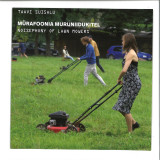
Taavi Suisalu - Noisephony of Lawn Mowers

Taavi Suisalu is an Estonian media artist particularly interested into complex and adventurous sounds, field recordings and harsh audio emergencies, organized under the form of symphony or as a result of performative interactions.

In 2014 Suisalu received the Young Estonian Artist Prize as curator of Project of In-existent Villages, an articulate exhibition full of installations and site-specific sound performances. The use of peripheral spaces and the crossovers, sometimes extremely creative, of human interactions, data, sounds and technologies, are recurring in the works of Suisalu, whose subjective perspective unconventionally investigates different social and cultural phenomena. He is always attracted by the different forms of technologies. It can be an old seismograph he reconstructs to record the underground vibrations of a volcano, or, it can be some 3D models he uses to analyze a grain of soil coming from the ancient Pompei. The results of the researches would lead to the installations. The whole set of data is often the premise of a narration, a datafiction, as in the case of the signals recorded from some abandoned satellites, who are later presented with a speed set by the position of other satellites gravitating above the gallery hosting the event.

“Noisephony of Lawn Mowers" was originally composed in 2013, but it was unreleased until now, when Staalplaat, a fundamental label for its unusual experimental connections and for the sound events performed in unconventional spaces, decided to publish it. It's a score for lawnmowers, whose making is given to a conductor and executed by a group of artists. Suisalu reminds us that historically, lawn has been a symbol of power and wealth as it required substantial upkeep and unused land. Today, it still indicates wealth, but is mainly maintained by the owners themselves. This puts us in a schizophrenic situation where we strive to be privileged by taking the role of the servants.

“Silver Meets Ted” is the other track included in the selection. It's a recording of over ten minutes, whose trend cryptically moves on and with some unsettling minimal tolls, always more metallic. Some deaf beats follow, and then we have a splash of water and some slightly hinted neighs, chirps, different spills of liquid, more intense and measured, clackings and vibrations, some hardly identifiable frequencies and again a series of punctuated metal bells. The work by Taavi Suisalu stands out as a calibrated combination of mathematical coherence and elements of surprise, automatized and causal processes, some small oblique utopias, that work well together by improving highly subjective resources and create some slightly unsettling final results.

out of Stock

Order now and we will order the item for you at our supplier.

Last In: 3 years ago
13,66 €
AAKAARA - OBSIDIAN PROMISES

Lost in the depths of space, AAKAARA takes listeners on a journey to the outer limits of the sonic universe with their latest album “Obsidian Promises”. Blending influences from punk and metal, EBM, architectural design and certain celestial objects, AAKAARA offers a fresh take on industrial techno.

This body of work is dark and brooding, full of haunting and thought-provoking soundscapes. Metallic and cold one moment, blisteringly hot the next. Pounding drums create searing rhythms, acid-drenched synths weave abrasive textures, and noise permeates the stereo field. Inspired by the mysterious and alluring world of black holes, the producer explores the beauty of extremes through sound. “If you know my work or me,” AAKAARA says, “it’s no secret that I have a spiritual connection to, and an obsession with, black holes.

It’s not about doom and gloom, but about beautiful extremes: infinite calmness, ultra-high energy, being deeply centered, and inevitable attraction.” “I try to sonify this in a naive sense. It isn’t an attempt at science; it’s a way for me to practice a makeshift spirituality about these entities through craft and functional dance music for people.”

Spirituality and stellar inspiration were essential to AAKAARA’s life during the three years they spent between Los Angeles and London, while writing this album. It provided a sonic home during a period of transition, when they didn’t feel at home and didn’t have access to a studio.

Everything was made “in the box” using only Ableton 10. After collecting guitar pedals and amplifiers for years, AAKAARA has shifted away from a hardware-focused mindset and is now more invested in the conceptual framework, narrative, and cultural implications of their work. Visuals also play an integral role in this maximalist experience.

The outer sleeve (front and back cover) conveys the “big ideas” visually, while the companion poster includes custom typography, detailed drawings, symbol design, and poetry. The poetry provides a textual counterpoint to the lyric-less music, written in parallel but later stages of the production process. The visual identity of this work is inseparable from the music, describing it in an integral way. It’s the other side of the coin, not simply an accompaniment. With its spiritual connection to the infinite and mysterious, “Obsidian Promises” harnesses the beauty and intensity of celestial entities as musical inspiration, transforming the science into mystical, narrative-driven sonic experience. Get ready for a ride through the unknown as AAKAARA’s latest offering takes you on a high-energy trip through the black hole’s playground.

out of Stock

Order now and we will order the item for you at our supplier.

Last In: 3 years ago
14,41 €
Dave Aju & The Invisible Art Trio - Glossolalia LP

Never one to pull inventive punches, Left Coast electronic music producer Dave Aju reassembled this notorious cast of characters for a remarkably fitting album package made during one of the most strange times our world has ever faced in the throes of the COVID-19 pandemic. While things were essentially shutdown, reopened, cycle-repeat worldwide, and every other species in mother nature's kingdom temporarily rejoiced while humans remained still in their caves, Aju and The Invisible Art Trio, his formidable if not-seen-in-a-minute musical team behind such underground anthems as "Be Like the Sun", went to work in the final days of the glorious G-Son studios in Atwater Village LA to record this LP.

Indeed, the same four/five walls and vocal booth that saw the Beastie's iconic Check Your Head and Hello Nasty come to life, became the birthplace of Glossolalia, Aju's fifth studio album and appropriately impressive seven-song set. As always, myriad musical styles and influences are strung together and boldly combined here, to the degree that drawing comparisons or attempting genre references feels futile. There are, however, clear visceral expressions of political provocation, hope and anger, fear and joy laid over twisted yet dedicated grooves in a lockdown era where Aju's imaginary collective dance floor feels in the temporary absence thereof and bizarro sixth-world unification strategy of recording every song's lyrics in complete non-languages aka total gibberish, feels right at home. Even the vocal guests join in the literal chant here, granting us diverse spell-casting and sensual nonsensical lyrical lines over tech-funk mother lodes, before closing the otherworldly proceedings with a powerful grand finale tribute to the US of A's proud boys-in-blue in the wake of George Floyd's very public assassination.

Equal parts timely anti-establishment and uplifting call-to-action, Glossolalia serves as a decidedly coarse yet crucial reminder of the possibilities in collaborative and devoted noise-making, booty-shaking, and alternative world-building during greater global disarray - beyond stylistic, nationalistic, and linguistic dividing lines. An overtly universal and unifying message liberating us from any fixed cultural identities and thus differences, to instead just focus on how the music delivers and we physically respond, together, as the foundation. Perhaps also an inspired response to the talking heads in every corner of the world's media, spewing useless and politically-tainted mouth data at us amidst these turbulent times.

out of Stock

Order now and we will order the item for you at our supplier.

Last In: 3 years ago
20,97 €
Various - Stone Techno Series 2022 - Triclinic 4x12"

box-set clear / vinyl / 180 gr

The Stone Techno Series returns with another exciting compilation. This time alongside a new festival that celebrates forward thinking artists from 9th to 10th of July at Europe's biggest coal mine complex under the UNESCO World Heritage Zollverein. The project is exceptional at its core, bringing back excitement and inventiveness to the genre.

The project functions as a multidisciplinary ever-evolving experiment that brings different aspects together. Sampling, creating and releasing music made out of million years old inorganic materials which shaped and defined the Ruhr Area like nothing else. "Auf Kohle geboren - born on coal" stands for this region and the so-called "German Wirtschaftswunder".

The Stone Techno project wants to embrace the history of "the Ruhrpott" while looking into the future as well. Techno Music stands for upheaval and modernity, while coal is the symbol of the Ruhr Area. This unique project will lend audibility to the ongoing process of transformation in the cultural and natural history of this region. Science and museums crossing paths with contemporary electronic music culture.

The Stone Techno project is not shy of its obvious significance. World-famous Ruhr Museum and The Third Room collective mark a first of its kind of long-lasting collaborations between a techno brand and a cultural institution.

This time the project is conceptually going one step further: Before the final backfilling of the mine at Zeche Zollverein, the acoustic atmos

out of Stock

Order now and we will order the item for you at our supplier.

Last In: 20 months ago
49,16 €
Sote - Majestic Noise Made In Beautiful Rotten Iran

It's an all electronic affair, harmonically maximalist, predominantly symphonic-synthetic, requiring active listening. Some pieces function as challengers of musical structural habits, provoking the short attention span culture, others present a problem-solution scenario, collectively via a neoteric noise aesthetic and detailed melodic weaving. Ultimately, the objective was to engineer an assortment of works full of sound, euphonic and vivid in nature.

The making of this album was intentionally a very personal process, going into self therapy territory at times interpreting the composer's contemplating mind dealing with tolerance, destruction, compassion, misery, grace and tyranny in an auditory manner. Some pieces function as challengers of musical structural habits, provoking the short attention span culture, others present a problem-solution scenario, collectively via a neoteric noise aesthetic and detailed melodic weaving. Ultimately, the objective was to engineer an assortment of works, awash with euphonic sound vivid in its essence, with a deep focus on various synthesis techniques within a compositional framework.

Dedicated to Peter Rehberg aka Pita

Ata 'Sote' Ebtekar composes music with a deeply-held conviction that rules and formulas should be deconstructed and rethought. He alters musical modal codes from their original tonality and rhythmic tradition to achieve vivid, synthetic soundscapes. Over the last three decades, his work has been published by labels such as Warp, Sub Rosa, Opal Tapes, Diagonal, Mute and Morphine, among others. In 2018, he founded a new label called 'Zabte Sote', which focuses on releases by Iranian experimental electronic composers from around the globe.

Known for creating compositions that range from the delicate to the abrasive, using sounds both of acoustical and electronic origins, Ebtekar sees music as the expression of cultural habits in sound and anti-sound (silence). Seeking to expand such traditions he creates music that, while rooted in many cultures at once, belongs to none in particular. Sote's work deals with various blueprints, in particular his solo all synthetic music, his electroacoustic audio/visual group project, and his multi-channel sound installations. Sote is on the jury panel of The DAAD Artists-in-Berlin Program, and has created commissioned work for and performed at a.o. Berghain and CTM Festival (Berlin), Unsound Festival (Krakow), Cafe Oto (London), Jazzhouse (Copenhagen), TodaysArt Festival (The Hague), Bozar (Brussels), Ultima Festival (Oslo), Donaufestival (Krems), Donaueschinger Musiktage, Mira (Barcelona), Terraforma (Milan), and many more.

pre-order now20.01.2023

expected to be published on 20.01.2023

18,11 €
The Cool Greenhouse - Sod's Toastie LP

While frontman Tom Greenhouse’s off-kilter observations and bizarro anecdotes remain front and centre, this time round the band up their game with a more vigorous sound that keeps pace with Greenhouse’s wholly distinctive lyrical style. Greenhouse continues to revel in telling increasingly surreal short stories, rejoicing in the power of the deadpan one-liner and bedecking his songs with far-flung cultural references. But now the band employ a variety of techniques with improved pro- duction, from the impulsively bashed keyboards and jubilantly repetitive guitar stabs that have be- come their trademark, to flirtations with–heaven forbid!–melody, chord progressions and arrangements which elevate their tried-and-tested blueprint into a more exciting and cohesive whole.

Opener Musicians is the perfect embodiment of this conscious development. Here, Greenhouse re- counts a sarcastic tale of half-truths that see him galavanting around town trying to put a band to- gether. Sonically, it begins with a caustic callback to the group’s first EP Crap Cardboard Pet and its über-minimalist aesthetic. But by the end of the song a joyous festival of afrobeat-inspired in- struments including samba whistles, bongos and saxophones are added to the mix as the front- man, ironically, fails in his mission to recruit more players.

With Get Unjaded, the band have somehow conjured something close to pop, without abandoning the repetition and wit that’s relished by their early fans. I Lost My Head also adopts a jangle-pop sheen with a luscious synth melody, as the frontman ditches the spoken-word for a surly croon (his first known attempt at actual singing!) that provides a welcome breather from the onslaught of dense recantations that are the band’s bread-and-butter.

While the lyrics here are still often humorous and political, Greenhouse has also notably expanded his interests on this album to include a new host of topics. The influence of extraterrestrials, for ex- ample, infiltrates the subject matter frequently. On The UFOs, the mysterious protagonist Blinkus Booth’s isolationist lifestyle is apparently interrupted by the spectres of otherworldly visitors, while closer The Neoprene Ravine feels like an extract from a deep space rock opera. Here, jaunty and angular instruments pile-on as we are fed images of an interstellar Spinal Tap, the titular fictional band “The Neoprene Ravine” who are “the alien equivalent of the Velvet Underground” and include an alien Lou Reed yelping “too busy sucking on my little green ding dong!”.

Meanwhile, Hard Rock Potato is propelled by a vortex of keys and synths, a real noise-pop gem comprised of real guitar chords (!) and rock-orientated riffs. Here the stream-of-consciousness lyrics take shots at the sinister financial industry, and include one of the many top-tier one-liners on the album: “It’s not gambling if you’re wearing a tie (even if you’ve got no trousers on)”.

On Sod’s Toastie, The Cool Greenhouse have pushed their distinctive flavour of post-punk to the point of perfection – their incongruous riffs, alchemical instrumental chemistry, and irreverent spo- ken-word vocals are a delight throughout. Sod’s Toastie is hilarious at times, and at others just hilariously good – a not-so-difficult second album.

pre-order now11.11.2022

expected to be published on 11.11.2022

18,87 €
The Cool Greenhouse - Sod's Toastie LP

Yellow and black splatter

While frontman Tom Greenhouse’s off-kilter observations and bizarro anecdotes remain front and centre, this time round the band up their game with a more vigorous sound that keeps pace with Greenhouse’s wholly distinctive lyrical style. Greenhouse continues to revel in telling increasingly surreal short stories, rejoicing in the power of the deadpan one-liner and bedecking his songs with far-flung cultural references. But now the band employ a variety of techniques with improved pro- duction, from the impulsively bashed keyboards and jubilantly repetitive guitar stabs that have be- come their trademark, to flirtations with–heaven forbid!–melody, chord progressions and arrangements which elevate their tried-and-tested blueprint into a more exciting and cohesive whole.

Opener Musicians is the perfect embodiment of this conscious development. Here, Greenhouse re- counts a sarcastic tale of half-truths that see him galavanting around town trying to put a band to- gether. Sonically, it begins with a caustic callback to the group’s first EP Crap Cardboard Pet and its über-minimalist aesthetic. But by the end of the song a joyous festival of afrobeat-inspired in- struments including samba whistles, bongos and saxophones are added to the mix as the front- man, ironically, fails in his mission to recruit more players.

With Get Unjaded, the band have somehow conjured something close to pop, without abandoning the repetition and wit that’s relished by their early fans. I Lost My Head also adopts a jangle-pop sheen with a luscious synth melody, as the frontman ditches the spoken-word for a surly croon (his first known attempt at actual singing!) that provides a welcome breather from the onslaught of dense recantations that are the band’s bread-and-butter.

While the lyrics here are still often humorous and political, Greenhouse has also notably expanded his interests on this album to include a new host of topics. The influence of extraterrestrials, for ex- ample, infiltrates the subject matter frequently. On The UFOs, the mysterious protagonist Blinkus Booth’s isolationist lifestyle is apparently interrupted by the spectres of otherworldly visitors, while closer The Neoprene Ravine feels like an extract from a deep space rock opera. Here, jaunty and angular instruments pile-on as we are fed images of an interstellar Spinal Tap, the titular fictional band “The Neoprene Ravine” who are “the alien equivalent of the Velvet Underground” and include an alien Lou Reed yelping “too busy sucking on my little green ding dong!”.

Meanwhile, Hard Rock Potato is propelled by a vortex of keys and synths, a real noise-pop gem comprised of real guitar chords (!) and rock-orientated riffs. Here the stream-of-consciousness lyrics take shots at the sinister financial industry, and include one of the many top-tier one-liners on the album: “It’s not gambling if you’re wearing a tie (even if you’ve got no trousers on)”.

On Sod’s Toastie, The Cool Greenhouse have pushed their distinctive flavour of post-punk to the point of perfection – their incongruous riffs, alchemical instrumental chemistry, and irreverent spo- ken-word vocals are a delight throughout. Sod’s Toastie is hilarious at times, and at others just hilariously good – a not-so-difficult second album.

pre-order now11.11.2022

expected to be published on 11.11.2022

19,71 €
David Westlake - My Beautiful England LP

We love nothing more than belated success, from the Nightingales' rise to top cult band, to the string of five marvelous Blue Orchids LPs in six years (as much as Martin Bramah had managed in the previous four decades) . . . so give us more. Like David Westlake. The release of NME's C86 cassette heralded a new generation of artists who'd emerged since the preceding C81 assembled a set of acts who'd coaxed new dialects out of punk, rhythms, reggae and the avant-garde. Though variable, C86 became a phenomenon, making a bigger splash and enduring longer than anyone could have predicted. The evolution by 1986 of "independent" or "alternative" music into "indie" brought a modified focus. From C81's post-punk negotiations of politics and cross-cultural influence to C86's compact blasts of, on the one hand, effervescent melodic pop and, on the other, jagged Beefheart-esque racket. Tiny Global Productions has proudly presented already one of the best from C86. The Wolfhounds' leader David Callahan's talent evolved masterfully into Moonshake, and more recently to a strain of blistering raga-folk psychedelia which deals with sociopolitical issues in brilliantly idiosyncratic fashion. And what of another of the best from C86 - the Servants, David Westlake's band? Ambivalent about the invitation to be on C86, Westlake gave the NME a wrong-footing b-side, before keeping a distance from the noise around the compilation. Subsequent releases from Westlake and The Servants and Westlake attracted fine reviews but settled quietly into relative obscurity, despite musical involvement from various Housemartins, Go-Betweens and Triffids, a quest by Stuart from Belle & Sebastian to find Westlake and form a band; not to mention Luke Haines' own five-year presence in the Servants before forming The Auteurs, Baader Meinhof and Black Box Recorder. Westlake went first into the law, then spent years in literary academia. Now the surprise arrival of My Beautiful England. The album is a masterpiece of concept, composition and performance, a conceptual work of truths and reflections of difficult but deft and unflinching expression. "It is not only fashionable now to denigrate England and its past; it is heresy to recognise good in it. The place that made me is disappearing. Its values and traditions. Among them: good manners, humility and clemency, resilience and perseverance, good humour. History is being refashioned – in spirit and material fact – by ideologues unshakeably certain they are in the right, and people are being distanced from their pasts. Some find themselves forced into passive acceptance of new distortions of the past, out of imitativeness or cowardice. I resist. This album is a memorial. Intentionally, a museum piece. It is a personal tribute to the England I knew."

pre-order now30.10.2022

expected to be published on 30.10.2022

22,90 €
Kemialliset Ystävät - Alas Rattoisaa Virtaa

Jan Anderzén and his partners celebrate the transcendental power of ecstatic music. Alas Rattoisaa Virtaa is the first Kemialliset Ystävät album in four years. It is the result of chance enhancing online collaboration methods, desire to get lost in the sound archives and the high art of meticulous editing. The album title is from visions of rivers running down from Heart of Darkness to the City of Joyful Noise. If contemporary music is a high speed train passing by then KY's music would be an orgy of light under a railway bridge.

A band member Lars Mattila experiences the music of Alas Rattoisaa Virtaa in spatial terms:

"There are worlds accessed only through our auditory system. I hear a Wunderkammer of freestanding sound objects. Rhythms like sequences of seemingly random stuff laid out on the forest floor: a pair of thrones, a Henry Moore sculpture, a watermelon, two thrones, a Moore sculpture, a melon... I trust the path to go on even if I can't see behind the hill. There's motion, wether it be drunk driving or super human rapid eye movement. The sheer amount of detail makes it impossible to take everything in at once. One's perception and shifting focus reshape the experience on each listen. I remember my visit to Cappella Palatina in Palermo where Normann architecture, Arabic arches and Byzantine dome form a harmonious whole. Various cultural and spiritual influences are recognized as equals. The sense of space also brings to mind the end scene of The Lawnmower Man when the dude is trying to escape the virtual world."

pre-order now21.10.2022

expected to be published on 21.10.2022

17,61 €
Sudden Infant - Lunatic Asylum

Joke Lanz and Sudden Infant once again return in their razor-sharp trio setting whereby the absurdist nature that Joke’s work is already cut with is reconfigured in a gnarled and beefy punk-fucked contorted rock setting. Short bursts of angular flex are heavily propelled by depth-charge rhythms, wry lyrical musings on modern living, and sensibilities hatched from years of experience in the worlds of sound art, abstract music, industrialised junk-noise and related areas have manifested in the perfect follow up to 2018’s Buddhist Nihilism album on Harbinger Sound. Aided by Christian Weber on bass and Alexandre Babel on drums, Joke lays on a battery of electronics, loops, field recordings and samples to complement mostly semi-spoken vocals that appear like they’ve been swept from the overflowing gutters of a shopping centre into a huge ball of malaise that can only be laughed at as world leaders look on perplexed. Exactly as the title suggests, 'Lunatic Asylum' depicts a world in absolute disarray as the seams binding it together slowly fall apart to reveal jesters whose best attempts to glue everything back in place are built on bigger lies more transparent than ever. Meanwhile, citizens of the developed world turn on each other for the stupidest of reasons or grow fatter with their descent into an ignorance nourished by half-baked cultural nuggets pre-packaged and sold as great and awe-inspiring work. And everything has to be recorded, photographed and shared as brain cells are decimated by false ideals, propaganda, exaggerated lifestyles and a huge tub of popcorn swimming in indiscernible yellow gloop. Such are the snapshots that resonate as Lunatic Asylum takes some well-aimed swipes at the human condition of the 21st Century. Featuring a fantastic guest appearance by Franz Treichler (The Young Gods) on ' Il y a des Enfants', each of the 12 songs that constitute Lunatic Asylum are bold, heavy, playful and rife with surprising twists and turns Joke’s mostly English splatter-poetry helps guide into a space that’s about as accessible as the outer reaches of rock can get. In a perfect world, this is the stuff even daytime airwaves should be pregnant with but, since the world is presently tripping over its own feet more so than ever, we will have to suffice with wherever this can nudge with the help of Fourth Dimension Records. One day, hopefully, more will catch up. The CD version of Lunatic Asylum features two exclusive bonus tracks. It was released in April 2022. TRACKLIST 1/Good Morning! 2/Head 3/I Ghore Es Gloeggli 4/Mood Swings 5/Damage Control 6/Happiness to Go 7/Pain is a Pain 8/Il y a des Enfants 9/The Lived Body 10/Ah-Ah-Ah 1921 11/Mika the Dog 12/Tuba Manifesto

pre-order now29.09.2022

expected to be published on 29.09.2022

18,45 €
Ihor Tsymbrovsky - Come, Angel LP 2x12"

"Kontakt Audio and Infinite Fog Productions proudly present the 25-th anniversary reissue of the one of most unique albums on avantgarde/neoclassic music – Ihor Tsymbrovsky – Come, Angel.

Recorded in 1995 in Ukraine and released in 1996 just as a small run on cassette on Polish label Koka Records, the album without any promotion little by little became legendary and madly wanted by many fans all around the world. And from the first seconds, you can hear why it is so. Pretty hard to explain what songs play Ihor, moreover that would be senseless. “Come, Angel” is one of those albums which are so unique that takes you in a vacuum of verbal forms in an attempt to describe the record. In a few words, this is definitely very intimate and deeply emotional music with an absolutely incredible voice. The first associations could forward you to Antony Hegarty from Antony And The Johnsons, Marc Almond, Arthur Russell, Baby Dee, Bjork. Experienced listener familiar with these great artist knows that all of them are inimitable and Ihor Tsymbrovsky is totally inimitable as well.

In 2016 well-known German label Offen Music published 3 tracks from the album “Come, Angel” which brought a lot of attention to Ihor’s music. This time we’re excited to announce the first full album reissue on CD, Double vinyl, and tapes. Beside the full version of the album, you’ll find an exclusive bonus song from the cult compilation “Music The World Does Not See” – Nefryt Records 2000.

~

“For me, music is a certain way of cultural survival. Here I do not set myself theoretical problems or experiments.
The connotations of life are important: rhythms, melodies, their connection with language, poetry, real life, virtual or imaginary space. It is very important to me how the recitation of work sounds, how consonant and vowel sounds dissolve in singing, how they combine musically. I understand sound space as a field of my interpretations, preferences, priorities, and I do not use direct imitation. If I hear a melody or a musical phrase, and it is fixed in my memory, later I extract it in my own interpretation, as already formed by this field. In art, the goal is in the work itself, not outside it. For me, the expression “To be is to create a new reality” is another winged reality.” – Ihor Tsymbrovsky

~~

“Tsymbrovsky – an architect, musician, a poet, an artist; one of the most underestimated musicians in Ukraine’s artistic world. Many critics pulled their hair out trying to get to the bottom of Tsymbrovsky’s music. It has been inspired by jazz, minimal, modern, ethnic, and meditation music. Tsymbrovsky is not a virtuoso, however, he creates whole worlds with his astonishing falsetto. Although Cymbrovsky’s music is simple it is made of many elements. Filled with magic and unusual sensitivity and warmth it can be therapeutic for the listener. This is that kind of music, which can be listened to many times – in a different way each time.” – Koka Records.

~~~

“Igor Tsymbrovsky’s only album “Come Angel” (1995) still remains perhaps the most bizarre phenomenon in Ukrainian music since independence. The story of its author is a vivid example of cultural amnesia. In the pre-Internet era, Tsymbrovsky was a prominent figure in the Ukrainian underground, performed on the “Red Route”, went on tour in Germany. However, he left a minimum of evidence of his activity and became a silent legend for a few. We talked to Igor to find out where he came from and where he was going.

The album “Come Angel” is eight compositions performed with a falsetto to the accompaniment of a piano. (Tsymbrovsky’s falsetto is a legacy of the Lviv Dudaryk choir, where he sang as a child.) It would seem that it could be easier. But, despite such ascetic tools, Tsymbrovsky managed to create a phenomenon unique to Ukrainian culture. Some people compare him to Benjamin Clementine and Anthony Hegarty, but no comparison will be exhaustive. The lyrics of the songs attract special attention: two of them were written by Tsymbrovsky himself, the others demonstrate his remarkable literary knowledge. Here and Guillaume Apollinaire, and Mikhaijl Semenko, and even less obvious poets, such as Mykola Vorobyov or Jozsef Attila.

The young performer’s first performance took place in 1987 in the club of the Forestry Institute. It is quite symbolic that this room used to be a Jesuit church because such a chamber environment suits his songs about angels much better than the noise of big festivals. However, there were also many festivals in Tsymbrovsky’s career: in 1989, Chorna Rada and Chervona Ruta, in 1991, Kharkiv’s Nova Scena and Ukrainian Nights in Gdansk, Alternativa in Lviv. Ihor calls his first performances musical performances and notes that they sounded completely different. Unfortunately, we will never know exactly how.” – Amnesia

~~~~

“The magicians at Dusseldorf’s Offen Music pluck a madly beguiling pearl of late-night songcraft by Ukraine’s Ihor Tsymbrovsky to follow their vital releases by Toresch and Rex Ilusivii. Come Angel was first recorded in Lviv, Ukraine, in 1995, and issued on cassette by Poland’s Koka Records in 1996. There appears to be no prior mention of the release or artist on the internet and quite how it came into of Offen Music possession is not disclosed, and that only ratchets the record’s enigma to astonishing degrees once you’ve heard the music. In a quivering, high register, androgynous trill, Ihor Tsymbrovsky beckons heavenly beings in the remarkable A-side Come, Angel against a swirling backdrop of phasing, subtly delayed organ. It was recorded in one take (this is the 2nd version), and, if we’re not mistaken, you can hear the keys being pressed rhythmically in the background, which seems to be the song’s only tangible connection to this mortal world as Ihor vaults octaves high and close-in-the-mix with the sort of alien, dreamlike vocal that requires pinching oneself to make sure you’re awake. Spellbinding is definitely the word. On the other side he (we’re assured it is a ‘he’ in the promo text) sets two poems by Mykola Vorobyov and Mykhal Semenko, respectively, to emphatic piano keys, this time more shy of FX save for some delay, placing that willowing, avian vocal at a dreamy arms reach in Roses for the Poet, and with a sort of liturgical dark jazz feel, sorta like Lewis repenting his sins as a castrato monk, in the spare atmosphere in By the Sea. This is gold-seal business, we tell ya. Clock the clips and clear some swooning room.” – Boomkat

credits:
Music By – Ihor Tsymbrovsky
Lyrics By: Ihor Tsymbrovsky (tracks: C2, D1)
Atilla Joszef (tracks: B1)
Mychajl Semenko (tracks: B2, C1,C3, D2)
Mykoła Worobjow (tracks: A1,A2)
Engineer – Edward Hryhorjew
Remastering – Ihor Tsymbrovsky"

out of Stock

Order now and we will order the item for you at our supplier.

Last In: 4 years ago
36,93 €
RADIO DIASPORA - NEGRO HUMOR LP

Radio Diaspora works on the concept of cultural identity, which is flexible and dynamic. This provocation is generated by referring to all African ancestry moved by the diaspora and its sonorous, vocal, polyrhythmic, and polyphonic codes - all the ancestral heritage that has spread throughout the world following expropriations, genocide, and slavery - sampling and amplifying references that become triggers of energetic approaches. A heavy core of representations and senses aims to exorcize through noise and strangeness all secular violence against people of the African diaspora. In the title song of this album, 'Negro Humor', the respected Brazilian actor Grande Otelo highlights the contradiction of the clown, which awakens joy in everyone but is a sorrowful, lonely figure, ridiculing himself and putting himself in the most embarrassing situations. Relieved, loud laughter echoes in the audience because it is not the target of ridicule. In 'Despacho', Radio Diaspora explores the dichotomy of society by introducing a speech by Brazilian lawyer Hédio Silva Júnior specialised in Afro-Brazilian religion. He questions a rule under discussion in Brazil's Congress that would prohibit the use of chickens in Candomblé and Umbanda rituals. Silva Júnior points out that everyone takes a stand to protect the rights of animals, but the same cannot be said of the defense of young black people and outlying societies. The track 'Meia-Noite' evokes a celebrated point of Umbanda, an Afro-Brazilian religious syncretic cult, permeated by free jazz and electronic atmospheres developed by the duo. The other songs on the album are divided into two parts. They feature the voices of North American icons of the black struggle for civil rights: The tracks 'A.H.M. Al-Shabazz 1 and 2', amid sonic dissonances, use extracts from speeches by the American leader Malcolm X, and in 'Muhammad Ali 1 and 2' we hear quotes from famous interviews given by the boxer and activist. Ali ironizes the questions he asked his mother as a child, why all good and positive things are associated with white. "Mother, how come is everything white? Why is Jesus white with blonde hair and blue eyes? Angels are white, the Pope, Mary, and even the angels. When we die, will we go to heaven? She said naturally we go to heaven. So, I said, what happened to all the black angels they took from the pictures." His Inquiry, however, is seen as a joke by the white audience present at the TV show, which laughs off Ali's scathing criticism. Radio Diaspora uses art as an instinctive force to reject submission to traditions and culture as taming. Music is the weapon. "The (album) sound means to exorcise racism out of our minds and make us ready to act". - Rômulo Alexis

pre-order now26.08.2022

expected to be published on 26.08.2022

29,79 €
Neneh Cherry - Raw Like Sushi LP 3x12" (Boxset)

Picture London, thirty years ago, as Neneh Cherry gears up to release her debut album Raw Like Sushi - a thrumming, restless, vibrant city that in 1989, much like today, pulsed defiantly against a backdrop of increasing political doom, rocking to the joyful noise of culture leaping across boundaries, radically reordering itself. Rents are low.

Soho hums to the chatter of poets, vagabonds and petty sex tourists drinking in the same elixir of possibility. The divisions between the queens of Old Compton and mods and punks of Carnaby Streets look huge but feel slight. A spirit of multiracial unity permeates the air.

New York hip hop and Chicago house continue their euphoric colonisation of nightclub culture. Amid this maelstrom, Neneh Cherry emerges, capturing the entire, giddy rumble of this rolling community street culture in one record, Raw Like Sushi. With no interest in genre, Raw Like Sushi upsets and inverts everything you thought you knew about how pop can work, at it's brightest and most effective.

One of the greatest debut albums of all time, born halfway between Never Mind The Bollocks and Boy In Da Corner, Raw Like Sushi was ready to escort you right to the centre of it's dancefloor, dripping hot sweat under a mirrorball at 3am - and its particular magic remains just as potent today.

To celebrate the 30th anniversary of an album that culturally, musically and stylistically defined a generation and everything that followed, Raw Like Sushi has been remastered at Abbey Road and will be released in super deluxe format across 3CD and 3LP heavyweight vinyl box sets, and 1CD and 1LP formats.

The box sets include a stunning 48-page 12x12 book packed full of iconic photos, new interviews, liner notes and memorabilia. The album features five of Neneh’s biggest singles - including the worldwide smash hit single ‘Buffalo Stance’ as well as hit singles ‘Manchild’ produced by Massive Attack’s Robert Del Naja, ‘Kisses On The Wind’, ‘Heart’ and ‘Inna City Mamma’. It also features rare mixes of key tracks by Massive Attack, Arthur Baker, Smith N Mighty, and more.

Since the release of Raw Like Sushi 30 years ago, Neneh Cherry has continued to define and redefine culture, style and music releasing five studio albums, including 2018’s Broken Politics, produced by Four Tet, which was met with critical acclaim by the likes of The Guardian, Rolling Stone, The Times, Q and Pitchfork.

Neneh went on to tour the album throughout 2019 including her largest ever headline show at London’s Roundhouse, and festival performances at Glastonbury, Latitude, Primavera, Pitchfork and more proving her music and message more relevant than ever.

out of Stock

Order now and we will order the item for you at our supplier.

Last In: 4 years ago
50,38 €
Anthony Moore - Flying Doesn't Help LP

40-plus years since its original release, the pop-punk-new wave inventions of Anthony
Moore’s ‘Flying Doesn’t Help’ are freshly remastered, blasting the sparkling, angular
sounds into today with perfect vitality.
 After spending the early years of the 1970s making experimental music first as a solo
artist, then with Slapp Happy and Henry Cow, 1976’s ‘OUT’ sessions had reinvigorated
Anthony’s youthful love of the naive pop melodies of pop radio, the undeniable excitement
of songs. While ‘OUT’ ultimately went unreleased at the time, the iconoclasm clouding the
late ’70s air was addictive and transformative for Anthony. England seemed to be roiled
as violently as it had been in counter-cultural days a decade earlier; the UK pop charts
breathlessly reflected the changing spectrum with equal parts aging hippie and prog
delicacies alongside new ascendant sounds: rough-hewn pub and punk rock, plus dub
reggae and disco and ska and Stiff and Krautrock. This proved to be an ideal environment
for Anthony to make records by exploring, as he puts it, the “deep connection between
minimalism, repetition, working with tape and celluloid and forming the modules of a
three-minute pop song.”
 Caught up in a no-holds-barred era, Anthony was more than happy to play the out-of-hishead madman, raving through outrageous exchanges with the press, while ‘Judy Get
Down’ received Single Of The Week honours from the NME (with review penned by Brian
Eno). Represented by Blackhill Enterprises, Anthony did production work throughout
1978-1979, on Kevin Ayers’ ‘Rainbow Takeaway’, Manfred Mann’s Earth Band’s ‘Angel
Station’ and the first This Heat album, meanwhile cutting his own songs on a dead time
deal at Workhouse Studio with engineer / producer Laurie Latham. Through the wee
hours of countless nights, the two pieced together ‘Flying Doesn’t Help’, with a little help
from friends (an inspired bunch, including Bob Shilling, Charles Hayward, Chris Slade,
Robert Vogel, Festus, Matt Irving, Sam Harley, Bernie Clark, Edwin Cross and Martine
Moore on the telephone).
 Building upon the axis of pop and experimental impulses that distinguished ‘OUT’, and
informed further by the raw sensibilities exploding everywhere, ‘Flying Doesn’t Help’
blasts out of the speakers with its own unique blend of sophistication and aggression,
Anthony’s keyboard flashes between arpeggiations and outright stabs among the noise of
slicing guitars, funk basslines and the reverbed blare of the drumkit. Opening with
Anthony’s greatest hit, ‘Judy Get Down’, and containing a noise-laden remake of the
Slapp Happy/Henry Cow number, ‘War’, among other delightful sweet-and-salty
confections, ‘Flying Doesn’t Help’ never stops moving, fuelled with raw outrage and dark
satirical intent, churning with the energy of next-gen types like Tubeway Army and DEVO,
while shimmering with the elegance of the still-challenging old guard types, like Cale and
Bowie.
 Clearly, ‘Flying Doesn’t Help’ was steeped in the time, and the original release reflected a
deep mistrust of the corporation mindset. Information was a dubious concept, and
connections to any recognizable organization were seen as untrustworthy, so facts like
musician credits were left out of the package, and even Anthony’s name was altered (he
was credited as A. More on the album and Tony More on a single release). The label
name QUANGO was conceptual as well, standing for ‘Quasi Autonomous NonGovernmental Organization’; each record was sealed with red tape that the listener was
required to cut through in order to get to the music. Rather than recreate the conditions of
the original release of ‘Flying Doesn’t Help’, this reissue instead embraces the changed
environment of the current time and place: instead of no credits, now they are complete,
with Anthony’s full name restored and even the artwork subtly ‘relocated’ to reflect a new
set of relationships. All of which brings the forward-looking sounds of ‘Flying Doesn’t Help’
into the more independent-minded 21st Century syntax where it belongs.

pre-order now10.06.2022

expected to be published on 10.06.2022

25,84 €
Mai Mai Mai - Rimorso LP (2x12")

Repossessed by the past, bitten once again and forced to relive drama, history, memories, tradition and roots. A past that needs exorcizing, bending and re-imagining in order to move forward and depend on. This is ‘Rimorso’, Mai Mai Mai’s colossal mediterranean gothic album.

Known for his incredible blend of Southern Italian Folklore, industrial drone, proto-techno & punishing miasmic electronic music, Toni Cutrone aka Mai Mai Mai approached ‘Rimorso’ with a clean slate. Following ‘Nel Sud’ (La Tempesta International, 2019) and his mediterranean trilogy ‘Theta’ (Boring Machines, 2013), ‘Δέλτα’ (Delta) (Yerevan Tapes, 2014) and ‘Φ’ (Phi) (Not Not Fun Records / Boring Machines, 2017) the Roma based noise artist recreated his spirits of the past by collaborating with musicians and ethnomusicologists that work on the present, on traditions that are still passed on and morphing continuously, healing our nostalgia for a lost future. ‘Rimorso’ sheds the past heavy use of samples and sound manipulation in lieu of a human element: voices, percussion, lap steel guitar all embedded in a rich cultural heritage.

pre-order now20.05.2022

expected to be published on 20.05.2022

32,73 €
Kishi Bashi - 151a (10th Anniversary Edition)

Note vinyl rel date is later. 10 Year Anniversary Reissue. 2LP / 2CD featuring the album proper & demos of each song + rarities. Colored clear vinyl, includes digital download. Recommended If You Like: The original ‘151a’ release, of Montreal, Regina Spektor, Andrew Bird. They say that you spend your entire life writing your first album, piecing every formative moment, scribbled turn of phrase, and thematic epiphany into a fantastical collage. Multi-instrumentalist K. Ishibashi (aka Kishi Bashi) disproves that old adage. The title of Kishi Bashi’s 2011 debut album,‑151a, is a riff on the Japanese phrase‑“ichi-go ichi-e,” roughly translating to “one time, one place.” That’s exactly what this debut is: A singular time, an inimitable place, a launchpad for bigger and better things to come. “It’s a play on words that translates as a performance aesthetic of having a unique performance in time, with imperfections, and enjoying it while you can,” Ishibashi‑told NPR at the time of the album’s release. “The saying reminds me to embrace my mistakes and move forward.” From the deconstructed Beach Boys-esque doo-wop of “Wonder Woman” to the menacing marriage of Eastern Hues and Western operatics of “Beat the Bright out of Me,”‑151a‑is a mediation between opposing drives, offering possible reconciliation but never promising it. The album’s emotional wellspring, “I Am The Antichrist To You” was reimagined in 2021 when it was featured on the animated sci-fi sitcom‑Rick and Morty, introducing Kishi Bashi to a new generation of awestruck fans. Kishi Bashi uses‑151a‑as a vehicle to explore his cultural background. Using Japanese refrains as a compositional and textural device (the polyrhythmic grandeur of “Bright Whites”; the gleeful surrealism of “It All Began With a Burst”), Kishi Bashi celebrates his heritage with earnestness. Japanese phrases and couplets are sung as the response to Kishi Bashi’s resplendent calls, offering listeners a conversation that dovetails with the album’s themes of love, sentimentality, and self-discovery. Today, the “one time” and “one place” that­151a‑inhabited seems further than ever, almost broaching celestial realms of time and space. But, rest assured, with each listen, the world that Kishi Bashi built springs back to life. The world of‑151a‑never left—it was just waiting to be rediscovered.

pre-order now25.04.2022

expected to be published on 25.04.2022

36,60 €
Fabio & Grooverider - 30 Years of Rage Part 1 (2x12")

Fabio & Grooverider have been at the forefront of UK dance music for over 3 decades. This is the roots of their story told through music.

The 2 London DJ's are part of the DNA of the global Jungle / D&B movement and they have remained relevant, cutting edge, authoritative and essential to this truly underground art-form since it's inception. RAGE could arguably be the ground zero of Jungle. The party was started at London's cavernous Heaven club by Fabio & Grooverider in 1988, at the height of Acid House fever that was making it's way up and down the motorways, slip-roads, fields and warehouses of the M25 and further beyond every weekend, troubling the nation, the police, your parents and the press as it went. RAGE was a different beast, it certainly channelled some of that Acid energy but pitted it against the new and exciting sounds emanating from Belgium, Amsterdam, Detroit, Sheffield, Essex and Hackney and in turn created a new style, a new sonic attitude and energy in the process. Rumbling bass-lines, narcotic synth rushes and roughly chopped and sped-up breakbeats all merged into a style that we now know as Jungle. Nothing like this had been heard before, this was a brand new style and it was coming out of London's West End and Fabio & Grooverider were the people firmly behind it.

RAGE is approaching its 30th anniversary. Its sonic and cultural legacy is still being felt today, Fabio & Groove are still shutting down raves and festivals every weekend all over the world with their superior DJ sets and musical knowledge guided by their pioneering spirit. This musical selection you hold in your hands, the first of 4 parts, sees them delve into their prodigious memories and record boxes to select a true musical representation of the very beginning of one of the UK's most unique and influential musical movements of the last 50 years. Across 4 x 2 x 12"s compilations we are taken on the journey through the sounds of RAGE, accompanied with track by track notes from Fabio & Groove themselves. This is the sound of the underground, from the inside out.

This is a masterclass in the old-school. The roots. There is no filler here, it's simply ALL killer. Lovingly selected and programmed by the masters - 'The Living Shock' & 'The Ladies Choice'. Produced in conjunction with Above Board distribution and Fabio & Grooverider. All tracks mastered from original sources and fully licensed. Mastering by Optimum, Bristol. Artwork and design by Atelier Superplus. 2019

out of Stock

Order now and we will order the item for you at our supplier.

Last In: 4 years ago
25,17 €
Tushen Raï - Drums Circle

Tushen Raï

Drums Circle

12inchCRACKI069
Cracki Records
16.12.2021

For his first solo EP, Tushen Raï designed a record in the form of a colorful patchwork of sounds, a meticulous collage of samples, surrounding noises and synthesizers. Here, Maori percussion dug on field recording discs from the late 60s and 70s meet Indonesian chants recorded on phones and posted anonymously online. A nostalgic yet deeply contemporary testimony to an imagination weakened resulting from the cultural globalization.

With Drums Circles, Tushen Raï wants to reconnect with the adventure novels, from Jules Vernes to Barjavel, which nourished his childhood. Thought out as an ode to the diversity of our cultures, our practices and our beliefs, Drums Circles is a cry in favor of open-mindedness and curiosity. It is an invitation to discovery rather than to conquest.

A humble invitation to embark on a journey and to collective trance.

out of Stock

Order now and we will order the item for you at our supplier.

Last In: 3 years ago
10,88 €
Andreas Gerth & Carl Oesterhelt - The Aporias Of Futurism 2x12"

This double album is a new collaboration between long-time Umor Rex artists Andreas Gerth (one half of Driftmachine) and Carl Oesterhelt (11 Pieces for Synthesizer). Both developed their shared musical cosmos during their time with the now defunct Tied +Tickled Trio. Oesterhelt is also known for his solo compositions for orchestras and for collaborations with Johannes Enders and Hans-Joachim Irmler of Faust.

As futurism seems inherent to electronic music, the backward-looking view is alien to its nature – consequently, a dialectical struggle between these principles is rarely expressed with the means of electronics. Especially today, its essence as a medium of progress stands in opposition to a sceptical position. By reconnecting us with history, The Aporias of Futurism seeks to define a critical location, that stands in opposition to the postmodern concept of interpretation, deconstruction and reformulation and the belief in progress that goes with it.

The working method for the album Andreas and Carl followed was the usual musique-concrète-technique – cut/assemble/edit/process pre-recorded sounds – but instead of deconstructing the concrete noises into an abstract sound entity, they followed a different path: the organic interweaving of orchestral structures with the electronically processed noise layers into a composition in the sense of classical modernism at the beginning of the 20th century.

Carl started with sketches recorded via a broken CD player, processed through a ring modulator, which sounded like old electronic music from the 1950s. To interact with these fragments Andreas recorded and processed a plethora of everyday noises, atmospheres, tonal fragments from the modular, industrial and shortwave radio noise, percussion in the form of door slamming, falling metal sheets, ball tracks, and so on. So, while they still played within the futuristic discipline, the reference to the past is actually unmistakable. One can hear it in the tonality of the contrasting orchestral passages, in the sound character of the processed samples and the sonic electronic layers. But it is precisely here, where a narrative tension develops. Theses and antitheses, extreme (unresolved) opposites, contrasts… essentially inner contradictions, or expressed in another word aporias… … but there is another factor at play here, something that plays a subordinate, almost ostracized role in the post-modern context: beauty (albeit the beauty of ruins) – beauty, the only refuge of the pessimist.

In the course of the process, a wide range of motifs and ideas emerged from the fog of memory. Free associations of concepts, books and authors from a wide period of time, such as Milton's Paradise Lost, William Blake, Robert Graves, ancient Rome, as well as Borges and Juan Rulfo. This flood of images is also incorporated on the album cover as a "free interpretation" of cultural objects and their relations in time.

The overarching motif of a sceptical rejection of the idea of Futurism is illustrated by a quote from Emile M. Cioran, the writer who most closely embodies the common spirit of the work presented here.

"But here comes the strangest thing: the Futurist idolizes becoming only until he has enforced that order for which he fought; then the ideal conclusion of time becomes apparent to him, the ‘always’ of utopia, which concludes and crowns the historical process. The conception of the Golden Age of Paradise par excellence, thus grips believers and unbelievers alike. But between the original paradise of the religions and the eschatological of the utopia there is the whole distance that separates a nostalgia from a hope, a repentance from a delusion, an achieved from an unrealized completion."

All music composed by Andreas Gerth and Carl Oesterhelt between Berlin and Munich, Germany in 2021. Produced and mixed by Andreas Gerth in Berlin. Mastered by John Tejada in Sherman Oaks, USA. Artwork by Daniel Castrejón in Mexico City.

pre-order now05.11.2021

expected to be published on 05.11.2021

25,84 €
BUMMER - Dead Horse

Bummer

Dead Horse

12inchTHRILL548LP
Thrill Jockey
01.10.2021

Kansas City trio BUMMER mirror the absurdity of
modern life with a balance of dark humour, dejected
nihilism and righteous fury. Their music spills out in
torrents of skull-crushing riffs, gargantuan bass and
caustic howls delivered at breakneck speed with
gleeful abandon.
Following their split 7” with long-time friends The Body,
which teased a more focused, lean sound for the
group, ‘Dead Horse’ hones BUMMER’s auditory
desolation and scathing gaze to laser-point precision.
In eleven short vignettes the quartet lay waste to
everything in their path, penning a vitriolic overview of
life in the American Midwest, a surprising blend of onestar Trip Advisor review and insightful cultural critique.
“BUMMER puts the ‘power’ in power trio as they play
a raw and primal form of aggressive music that splits
the difference between ‘Bleach’-era Nirvana and the
early, primitive thrash of Slayer. It’s aggressive and inyour-face, but doesn’t skimp on melody, making their
songs memorable. So, there is power and a bit of
precision to what they do. A whole lot of volume, too.” -
New Noise Magazine
CD in gatefold packaging with lyrics.
LP packaged with download code.
Available to independent retailers on grey / blue vinyl.
Artwork by painter Joan Lalucat Vehil.

pre-order now01.10.2021

expected to be published on 01.10.2021

25,17 €
CUBENX - FRACTAL CITY

Cubenx

FRACTAL CITY

12inchIF1045
InFiné
26.08.2021

Fractal City, the latest Cubenx album is a collection of terrestrial jams and arachnean ambient ballads that are particularly apt for urban listening. If its predecessors cracked the musical codes in force and shone by the versatility of their references, this new opus offers its listener an intense and symbolic sound environment.


The raw material of Fractal City was first conceived as a series of sound patches, designed to run in parallel with Canadian digital artist Maotik's installation. Broadcasted in real-time by generative patches reacting to various external and non-human data, those musical excerpts have been rendered in hundreds of nuances and extended over infinite durations. This unusual approach confers to the recording of the finished album's outstanding immersive strength.

Recorded live on a single track over a short period of a few weeks, the nine compositions of Fractal City capture the obsessions of its author for postmodern urban landscapes, and the revelation of new perspectives on the city of Paris.

The opening piece `Ssarg´ seems to hide the figure of the Mexican ambient producer Jorge Reyes. Cubenx built a cocoon of energetic layers, a new home of the mystical kind harmoniously integrated in a flourishing rainforest ecosystem.

`Transect ´refers to the urban development model of the same name, which is based on a division of the city into autonomous "fractal" zones. It also echoes the concept of "metro polarities" which considers the city as a mosaic of social groups. "By cycling in the evening with a friend, we could get away from the city centre to the suburbs of Paris. The contrasts are striking. You move from chic districts to bedroom communities, from industrial zones to improvised caravan camps. But there is a kind of energy in this heterogeneity that pushes you to always pedal further."

A few miles away, it would look like Art and urbanism have tried to level the cultural and social discrepancies of the outskirts of Paris. "Architectural sites like the Arcades of Bofill are splendid. There are completely extravagant projects, which seem to emerge from nowhere."
These buildings with ambitious aesthetics off the beaten tourist track, deteriorate over time and often remain far from the expectations of the local population. A feeling of nostalgic beauty is particularly perceptible on the slowest and most introspective ballads of the album as 'Urban Decay', 'Hagel' or 'Axe Majeur'. The producer leaves nonetheless no room for melancholic emptiness. "Every time, I have the impression that urban culture is taking its rights back and that young people appropriate the places in one way or another."

Just like `Transect', ` Quantified' and `Fractal City' present themselves as mirrors of a daily urban life in constant motion. All three are empowered by an overheated factory, which dispatches hypnotic beats and burst of analogue compressors with a clinical precision and direct them straight away to the reptilian areas of their listener's brains.

The sequencing leaves however space and time to take breath and makes way for aerial sonic excursions of spiritual and enlightened nature. On `Human Dilemma', Cubenx shows some concerns to opening the Pandora's box of transhumanist theories. While a long cosmic wave gives the listener a feeling of perfect fullness, a dizzying guitar distortion cast doubts on long term outlooks. `Smash Other' on the other way alternates gentle dissonances over an ocean of white noise and concludes the album on ethereal note.

With ´Fractal City", Cubenx eludes his irreconcilable love for shoegaze pop song and techno to concentrate exclusively on the production of mutant experimental materials. The result is an uncanny musical object, rich in image and sensation. Cubenx give us a guiding framework, enthralling enough to engage the listener to a tour of town. But he leaves it to the sole listeners to design their own projection of the city.

out of Stock

Order now and we will order the item for you at our supplier.

Last In: 5 years ago
14,24 €
Xordox - Omniverse

Xordox

Omniverse

12inchEMEGO283V
Editions Mego
14.05.2021

Throughout his vast career, the New York based Australian composer JG Thirlwell has adopted many masks as a means of infiltrating and subsequently subverting a wide range of pop cultural forms. His work under the Foetus moniker has taken on everything from big band to opera to noise-rock. Steroid Maximus embraced exotica and the world of soundtracks, while his Manorexia project continued his quest to the outer limits of contemporary composition and musique concrete. Thirlwell has also carved out a significant output in the field of the soundtrack via the large body of work created for the animated television shows Archer and The Venture Bros. In addition he has been commissioned to create compositions by such notables as Kronos Quartet, Bang On A Can, Alarm Will Sound, String Orchestra of Brooklyn and many others.

Now we have ‘Omniverse’, the second release under the moniker Xordox. Xordox is a synthesizer-based project, and on this evocative album we see the project branch into many new avenues. The science fiction element brushes up against crime noir, even veering into areas that could well fit in the video game soundtrack genre. With an audacious attitude and an arsenal of machines Thirlwell serves up a selection of thrilling retro-future mind capsules. This is music made from a life saturated in culture, both underground and mainstream, high and low. Tense sequencing and noir tinged keyboard lines invoke a powerful visual image of films and memory, of screens and speakers, of sound and space, all entering the cosmos and the subsequent galactic race. Thirlwell’s decades long exploration of sampling and sequencing, composing and ingesting a daunting amount of audio and visual artworks speaks volumes for the bold assimilations exposed here. ‘Between Dimensions’ lays out a tense theme which starts off like a score to a a crime thriller before morphing into a simulacra of Kraftwerk scoring a video game. The living ghosts of Giorgio Moroder and John Carpenter haunt ‘Oil Slick’ as it permeates wormholes, updating lifeforms with its stealth sequencing and tense momentum.

‘Omniverse' is a synthesised soundtrack journey, one which embraces past forms whilst reshaping them for the new unknown. ‘Omniverse' is a thrilling liquid ride through fear and hope, and like all the best of Thirlwell’s output, is simply one hell of an enjoyable journey to take.

pre-order now14.05.2021

expected to be published on 14.05.2021

19,29 €
Marcello Giombini - Transvitaexpress

TRANSVITAEXPRESS is a psycho-phonic tale of the afterlife. Maybe one of the weirdest italian albums ever released.

'TRANSVITAEXPRESS is the sonorous realization of an idea that had been developing in me for some time and to which the encounter with the poet Barbarino gave the decisive push. I used the "tape-sound" technique, that is the organization and integration of sounds, noises, speech, song and rhythm, of which the resulting sound, being the result of electronic manipulation of the sound events themselves, is audible, therefore repeatable, only by means of magnetic tape. The sound material is, in part, reportage, so the work often takes on the character of a “disc-truth”, in part it is a faithful reconstruction of parapsychological events. We have defined this work "Psycho-phonic tale" in fact it is a sound experience, that is, a journey into the world of sounds of an "afterlife", rooted in us due to childhood, ancestral reminiscences, superstitions, legends, anxieties, utopias and above all fear. Fear of the mystery, fear of the unknown.

TRANSVITAEXPRESS is therefore the sound representation of these cultural and existential limits, and is therefore a critical, liberating, provocative work. I certainly do not expect, and perhaps I do not want someone after having listened to tell me that it is "beautiful".

TRANSVITAEXPRESS is the name of a train full of ... that travels in an afterlife so "beyond" that it coincides with the most central point of my ego. Perhaps the most logical "end-continuation" of life, the least imaginative, the least corrupt. The distortions, things that are too, or too little, defined, realistic situations, clichés, monotheisms and captions are embedded in the most traditional dream fabric, the most suitable in my opinion to promote approaches with the mysterious, with the esoteric, with the magical.'

M. GIOMBINI

pre-order now23.04.2021

expected to be published on 23.04.2021

26,51 €
Gesellschaft Zur Emanzipation Des Samples - Anthology of American Pop Music

GES: Anthology of American Pop Music

Six great pop standards remembered: five pop songs are dissected by sampler, stretched, compressed, and re-collaged. In this way, their identity is lost. What remains is a vague concreteness: flashes of déjà vu and remote echoes that evoke the original.
GES (Gesellschaft zur Emanzipation des Samples)
-
Active members: Helmut Schmidt, Jan Jelinek
Founded: 2009
Headquarters: Federal Court of Justice, Karlsruhe, Germany
-

GES Glossary

Acoustic Surveillance Series

A 7-inch vinyl record series curated by GES focussing on historical methods of acoustic surveillance. Each record introduces a surveillance system from the past. Starting with Uguisubari in 2017, the series will continue with the release of Orecchio di Dionisio in 2021. GES is open to further suggestions on this subject.

Bundesgerichtshof (German Federal Court of Justice), Karlsruhe

“The use of audio samples as artistic practice may justify the infringement of copyright and intellectual property rights.” (ruling of the German Federal Court of Justice pertaining to Metall auf Metall II, 2016). The court is also the official headquarters of GES.
Circulations

What happens to copyright claims when music from a passing car is captured in a street recording? Is it legal to use this recording freely or is it necessary to obtain licensing rights? Circulations re-enacts this recording situation: audio players are placed in public spaces, where they reproduce the desired sample material. The acoustically choreographed space is then recorded, creating a field recording in which everyday noises circulate together with seemingly incidental music.

Emancipation of Sampling

Fuelled by its criminalization, the act of sampling existing recordings forfeited some of its artistic prestige (see Sampling). GES wishes to rehabilitate and re-emancipate the practice of sampling as a form of art in its own right. Strategy: 1. Name samples and sources explicitly. 2. Choose samples that are as popular and as recognizable as possible (Beatles, Carpenters, etc.). 3. The editing and manipulation of the sample must not compromise its recognizability (negotiable). 4. Use as many samples as possible. 5. Always name more sample sources than were actually used in the composition.

Field Recording

A compositional practice widely used in sound art and ethnomusicology that involves the recording of natural acoustical phenomena. Two additional requirements are usually imposed: The recording process should take place outside a studio environment, i.e. outdoors. And the person recording does not generate any of the acoustic material him/herself. GES expands this definition by introducing the concept of choreographed public space (see Circulations).

Gambling

An acoustic event favoured by GES, already used in numerous sound collages (must take place in public). The most popular option is thimblerig, a cup and ball gambling game commonly played in the street. Compositional instruction by GES: Place an audio playback device in the proximity of a thimblerigger. Play works for orchestra (by Debussy or Mahler). Move slowly towards the gamblers with a microphone.

Helmut Schmidt

Multiple identity and fictional character devised by GES. Figures variously within the semiotic system of GES as member, guest artist or public representative. Following the historical example of Subcommandante Marcos (EZLN).

Kraftwerk

The German band founded by electropop musicians Florian Schneider-Esleben and Ralf Hütter (a.k.a. Die Prozessoren) is the natural enemy of GES. Protected by computer-generated avatars, Kraftwerk operates a quote-hostile cultural hegemony. Their strategy: Install a special brand in the collective consciousness by means of a sophisticated system of quotations and references that may in turn not be quoted by anyone else. Other bands with such delusions of omnipotence: U2, Metallica.

Marcel Duchamp

As the inventor of the readymade, Duchamp may be viewed as a precursor to the art of sampling. However, the artist is appreciated above all for his sonorous qualities, as his vocal silence has often been sampled and processed. It was the inspiration for Jelinek's radio play Zwischen.

Orecchio di Dionisio

This 65-meter-deep limestone cave in the Sicilian town of Syracuse, carved out of a hillside in ancient times, has exceptional acoustics: A person standing at the cave entrance can hear every word whispered deep down inside it. The painter Michelangelo da Caravaggio gave it its name (The Ear of Dionysius) in 1608. The cave indeed resembles an ear and – according to Caravaggio – had a specific function: The tyrant Dionysius I imprisoned his political prisoners in the cave in order to spy on them. Orecchio di Dionisio will be featured in the Acoustic Surveillance Series in the near future.

Sampling

Compositional practice whereby recorded music is fragmented, turned into sound collages and transferred into different contexts of meaning. Since the advent of affordable sampling technology in the 1990s, the music industry has been trying to criminalize and/or promote the practice. Both strategies are driven by the same principle: Profit.

Uguisubari

Sound-making floorboards in Japanese temple and castle complexes, featured in the Acoustic Surveillance Series in 2017. In the Edo period, the “nightingale floor” (literal translation of uguisubari) was a popular acoustic warning system. The principle was straightforward: When someone stepped onto the boards, nails would rub against metal clamps beneath the floor, creating a tell-tale squeaky sound that was said to resemble the chirping of the Japanese nightingale.

Wind

A generator of acoustic events and an amplifier/transmitter of existing sounds. A meteorological form of energy appreciated by the GES on account of its unpredictability. A series about wind as an acoustic phenomenon is planned. Working title: Hotel Corridors.

Zwischen (Between)

Radio play by GES member Jan Jelinek based on recordings of various public interview situations. From the speech of the interviewees (all of them eloquent personalities) the pauses between coherent utterances were extracted and assembled. What we hear is an archaic body language: modes of breathing, word particles and onomatopoeic turmoil. A key question for GES: Which comes first, personal rights or artistic freedom? For Zwischen, Jelinek used only recordings by public figures that were already available to the public.

out of Stock

Order now and we will order the item for you at our supplier.

Last In: 5 years ago
17,44 €
NOCTURNAL EMISSIONS - TISSUE OF LIES

(Record Store Day 2020)

Mannequin Records is proud to celebrate 40th years of Nocturnal Emissions with more reissues setup for 2020.

"Tissue of Lies" is the Nocturnal Emissions first album, released on the band's own Sterile Records label as EMISS001 in 1980. "Tissue Of Lies"
shows you Nocturnal Emissions Industrial roots, from noisy collages to classic power noise, reminding the early Throbbing Gristle and Cabaret Voltaire, Faust ('Tapes' period) or Conrad Schitzler's 'Schwarz'.

The Nocturnal Emissions project, masterminded by Nigel Ayers, has been on the cutting edge of new music since the 1970s. Nigel Ayers has been described as a Guerrilla Sign Ontologist, cutting-up and pasting the contents of the human psyche. With a background in avant-garde art, his work has grown from audio visual installations through underground video works which changed the shape of British television.

In the early eighties Nocturnal Emissions hit London with a barrage of seminal funk; pioneering the use of sound samplers, multi-cultural
collage and electronic noise. They became a shape shifting chameleon lightening the darkness of post-industrial music, combining extremist performance art and video displays with apocalyptic beat music. Nocturnal Emissions have since been credited as a catalyst for a
generation or two of sound workers.

However, at the height of their success, the Emissions decided to shun the crass commercialism that had developed around them, and to develop their work as a secret alchemy. Nigel Ayers has continued to work with a strong underground of cult support, avoiding music industry fashions, and following his own creative path he concentrated on creating a strong sense of a wilderness identity through sound.

Limited edition of 600 copies, on solid white vinyl.

out of Stock

Order now and we will order the item for you at our supplier.

Last In: 6 years ago
19,71 €
Rosaceae - Efia

Rosaceae

Efia

12inchPP32
Pudel Produkte
29.06.2020

»Efia,« the sophomore album by Rosaceae, picks up where the Hamburg-based sound artist’s 2019 debut on Neoprimitive left off, further exploring the topics that had already informed »Nadia’s Es- cape«. From its confrontative front cover to the eight tracks on the album, »Efia« is fully dedicated to the motif of resistance, but does not exhaust itself in polemics. Rather, it masterfully translates the complexities of its underlying central themes into a visceral narrative.
»Efia« was originally conceived as a commissioned work for the 2019 edition of Hamburg’s Noise- xistance festival and departed from a sentence uttered in the British 1980s TV show »Sapphire & Steel« which inspired cultural theorist Mark Fisher in his analysis of what he had coined »hauntolo-gy,« a term originally coined by the Algerian-French philosopher Jacques Derrida in the early 1990s: »There is no time here, not anymore.«
The album again showcases Rosaceae’s knack for combining abstract experimental sound art with a form of storytelling that had already been at the centre of »Nadia’s Escape« and which relies on both verbal and musical means of giving a voice to the voiceless. The disembodied voice of - amongst others - Jesseline Preach and manipulated vocal samples blend in with dense soundscapes, elements of Neue Musik and occasional pure harsh noise. It’s a mix that deliberately puts different artistic tradi-tions into a dialogue with each other: the hallmarks of European salon culture are con- fronted with Kurdish wedding music and the unnerving loop of someone demanding a »Zugabe« (»encore«).
Thus, »Efia« not only blurs the lines between cultural and regional traditions, but also conjures up the ghosts of a past, ghosts that are more than ready to haunt the timeless present trying so hard to repress the atrocities happening at its fringes. As a whole, this makes »Efia« both a chilling work of sound art and a vibrant political statement fuelled by burning hot energy.

out of Stock

Order now and we will order the item for you at our supplier.

Last In: 5 years ago
12,90 €
Items per Page:

Language