shipping to EU only!
Xone:96. The long-awaited follow-up to a genuine club classic.
A new, uncompromising analogue DJ mixer, destined to be the heart of your creativity, Xone:96 takes the legendary soul of the acclaimed Xone:92 and redelivers it, enhanced, and with state-of-the-art digital connectivity.
It’s all here. The huge, detailed, space-shaking analogue sound that only Xone delivers. A refined, precision 4-band EQ. Unrivalled dual Xone:VCF filters with CRUNCH harmonic distortion. And a dual 32-bit USB soundcard (24 Channels @ 96kHz) with Traktor Scratch certification right out of the box.
Xone:96 lets you connect your whole rig, from laptops and turntables, to pedals, synths and drum machines.
Two dedicated FX sends, four stereo input channels (with 4-Band EQ), two stereo input channels with all new 3-Band Parametric EQ + two auxiliary stereo return channels. And a separate master insert for your outboard hardware.
Explore new possibilities with a familiar layout of beautifully tactile controls. And rely on the industrial build quality that exceeds the demands of relentless back-to-back performances, night after night.
Xone96: You mixed. We listened.
Features:
• Type Analogue
• Channels 6 + 2
• EQ
o Channel 1-4, 4-Band EQ
o Channel A-B, 3-Band Parametric EQ
• USB Soundcards Dual 24 Channel (12 in / 12 out)
o Hi-Speed USB2.0 / Mac Class Compliant
o 32bit / 96kHz
o MIDI over USB
• Line Inputs 4 x RCA (CH 1-4)
o 4 x 1/4″ TRS (CH A-D) Mono/Stereo
• Phono Inputs 4 x RCA (CH 1-4)
o LN/PH Switch for DVS
• USB Inputs 6 x USB (CH 1-4 + CH A – CH B)
• Mic Input 2 x XLR
• Master Output 1 x XLR (Balanced)
• Master 2 Output 1 x 1/4″ TRS (Balanced)
• Booth Output 1 x 1/4″ TRS (Balanced)
• Record Output 1 x RCA (Un-balanced)
• Master Insert 1 x 1/4″ TRS
• MIDI Out 1 x 5-Pin DIN
• Send/Return I/O
o 2 x 1/4″ TRS Send
o 4 x 1/4″ TRS Return
o 1 x LN/Hi-Z Switch (SND1/RTNA)
o Filter 2 x VCF Filter
o HPF / BPF / LPF
o Adjustable Frequency & Resonance
o Assignable CH 1-4 + CH A-B
o CRUNCH (Controlled Harmonic Signal Distortion)
• X-Link 1 x RJ45
• Headphones 2 x 1/4″
o 2 x 3.5mm
o Split Cue Monitoring
• Channel Faders 60mm VCA / Replaceable
• Chanel Meters 9 Segment LED
• Channel Fader Curve 3 Types
• X-Fader InnoFADER / 45mm VCA / Replaceable
• X-Fader Curve 3 Types
• Earth Ground Terminals x 2
• Headroom 20dB
• AC Mains
o 100 to 240V
o AC 50/60Hz
o Consumption 45W max
o Mains Adaptor 3 pin IEC socket
• Height 109mm / 4.3″
• Width 336mm / 13.25″
• Depth 410mm / 16.2″
• Weight 7kg / 15.4 lbs.
Search:cur l
Glasgow based Seated Records return with more 1980s Scottish Post-Punk / New Wave material. In this 8-track mini compilation the label introduces the work of Stirling band 22 Beaches, offering a deep dive into music recorded between 1980-1984 - the majority of which has never seen the light of day!
22 Beaches formed in Stirling in the late 1970s as an evolution of the short lived group ‘Alone at Last’ - drummer Fred Parson’s and guitarist Stephen Hunter being the two who spanned the divide. Out of the six members of 22 Beaches, many were school friends, and the rest naturally fell together. The band toured extensively and played at a truly diverse set of venues across the UK: from a local swimming pool boiler room, to small nightclubs and university parties, to several fundraisers for the miners strike. Maybe most notably of all, drummer Fred Parsons described playing at what he calls “the Grangemouth International”, organised by local promoter Brian Guthrie and which featured an all-star lineup of 22 Beaches, The Exploited and the first incarnation of The Cocteau Twins. A coach was hired to ship the audience to Grangemouth from Stirling, the cost of which was included in the ticket. The gig then paused halfway through for a 'help yourself' buffet. Young promoters take heed. This is how it's done!
Over the course of the 80s the band released music on three different, and now sought after, various artists compilation cassettes. “What Day Is It?” and “Sadie When She Died” were released on a compilation of local Stirling artists 'The A.N.K.L.E File'. The track from which the current record takes its namesake - “Dust” - was initially released on a compilation-tape for the fanzine 'Another Spark'. And ‘‘Zoo” (also featured on this record) was first released on Glasgow label Pleasantly Surprised via compilation, 'An Hour Of Eloquent Sounds', where 22 Beaches rubbed shoulders with early music from Scottish names Primal Scream, Cocteau Twins, The Wake and Sunset Gun. Unfortunately, 22 Beaches never met the same level of commercial success as these others and decided to retire the project in 1984 - leaving their recordings and demos to gather dust (hehe)…until now!
This compilation, “Dust: recordings 1980-1984” follows the band's journey and the changes in their sound over the years. It moves from the raw, punk energy of early DIY recordings through to the A Certain Ratio style Balearica of their later pieces. The record's opener and title track “Dust” is perhaps the most shining example of the latter. Characterised by the plenitude of sonic space in the mix, “Dust” has an almost dub sensibility that is communicated through centrality of Parsons’ drums, McChord’s percussion, and Fildes’ Bass while the harmonising vocals of Sharkey and McGregor chant over the top to give the track its distinctive psychedelic edge. This is an atmosphere only exacerbated by the lofi quality of the recording which sits the vocals in the same aural realm as much 1960s psych-folk. On “Cartoon Boy”, the band strips things down further. A droning bass line persists through the tape fuzz and is accompanied by the sounds of a sole looping guitar chord sequence and McGregor and Sharkey’s vocals - respectively and carefully dancing around one another before harmonising in the most beautiful way. The result is a haunting and abstract Marine Girls style heartbreaker. ‘That Girl’ again delivers a dub adjacent rhythm section similar to that of “Dust”. However, on this instance crisp guitar chords, a distant, phased organ and blue-eyed soul vocal delivery, produce a track that could easily have been a lost Orange Juice recording from their sessions with Dennis Bovel. On “Somebody Got It Wrong” and “One Of Us” the band employ a more macro approach where a jangling guitar with an almost highlife-influenced tone, vocal ad-libs and syncopated percussion give the music a Talking Heads-esque swagger.
Taken together these tracks illustrate a clear trajectory in the band's sound, moving from from the high energy no-wave quality of early recordings towards a more dub influenced, and stripped-back sound - a sonic trajectory followed by so many bands of the time, not least those emerging from the diaspora of Manchester’s Factory Records.
On “Breathing’’ we hear the beginning of this transition, with the strong influence of the oddball NYC disco styles of Was (Not Was) and ZE records. All of this is meshed together with the residual punk rock energy of 1980s UK. This combination is employed to excellent effect with the addition of the distinctly Scottish (and what the band confirmed to me to be spontaneous) vocal delivery of: “Do you love me? Do you want me?” “Aye!” “Do you love me? Do you need me?” “Naw!”.
On the record’s closing tracks, “Zoo” and “Talent Show”, we hear early examples of the band’s work, playing with their rawest all-in-one-take live energy where Hunter’s spiralling guitar riffs and McGregor's distorted vocal exclamations lead the charge. The band recalls that these initial-forays did not always translate so well into multitrack recording and overdubbing: “the deconstruction took away some of the band's natural feel”. On “Talent Show” the record ends with Sharkey delivering an almost unintelligible spoken word section over the top of the track, making for one final, disorientating, almost manic slice of post-punk.
These tracks from 1980-1984 chart the progress of a unique contribution to the world of Scottish Post-Punk and New Wave, encapsulating not only the musical trajectory of 22 Beaches but also echoing the broader sonic landscape of 1980s UK, a testament to the adaptability and creativity of the UK’s underground music of the time.
Vinyl only. Limited. No Repress.
Begin a journey of sound with NOREPRESS Sounds' enthralling launch, NRP003 - VA - NOREPRESS 003. A challenging 4-tune EP, an offshoot of MixCult Records, bids you to dive into modern-day electronic music's essence, each tune offering an individual trek through tone and ambiance.
Keny G’s “Permission” (A1) escorts us into the tech house domain, laced with late 2000s tech house resonances yet revamped for today's ear. Its throbbing beats and echoey cymbals craft a catchy rhythm that bridges reminiscence and novelty, tempting foot-tappers to immerse in its enchanting pull.
Gonzalo Villarreal’s “Segment Two (Ian Oskadev Remix)” (A2) alongside Genning’s “Observation Glass Scenery” (B1), submerge deeper into dub techno mysteries, spinning a narrative filled with enigma and allurement. Both pieces radiate dark but potent vibes whereby profound basses mingle with ghostly tunes crafting auditory terrains full of allure and secrecy. Each chord hints at undiscovered territories beckoning ears toward acoustic curiosity.
Closing the EP is by Zone+'s "Evening Ride" (B2), giving nods to timeless deep house while introducing refined tweaks propelling it higher. This piece oozes grace and classiness reflecting those memorable deep house anthems’ spirit consistently entrancing audiences. With unfolding notes listeners get swathed in smooth harmonies alongside heartfelt rhythms —a flawless finale for traversing diverse electronic sounds realms.
NOREPRESS 003 is a testament to the versatility and creativity within the electronic music landscape, showcasing a range of genres and influences that captivate the senses and stir the soul. So immerse yourself in the music, let the rhythms guide you, and experience the magic of NRP003 firsthand.
"...too G to take a knee, still I gave you all of me.”
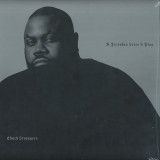
A pivotal force in the early ‘10s NYC rap revival, now LA-based rapper and producer Chuck Strangers steps into the limelight on new solo LP A Forsaken Lover’s Plea.
The album sounds markedly lush, candid rhymes bolstered by a slew of guest producers—including The Alchemist, Animoss and Strangers himself. Chuck’s own production feels current without ditching its previous homeliness, a seamless compliment to his honest, lived-in raps.
A Forsaken Lover’s Plea is laced with guest verses from a collection of fellow New York rap torchbearers, from Pro Era comrade Joey Bada$$ & Flatbush Zombies' Erick the Architect to Queens’ own Remy Banks.
Strangers’ tangled romance with hip-hop is the crux of the project—the culmination of a decade’s unwavering dedication to his craft, with its lofty highs, inevitable lows, and rough lessons of humility, patience, and process.
It’s Chuck’s most comprehensive solo project since Consumers Park, his 2018 debut, and follows The Boys & Girls EP, released May 2023.
A Forsaken Lover’s Plea is available on heavyweight green vinyl, silver tape and CD.
- A1: Saylo
- A2: Can't Take The Hood To Heaven
- A3: Attack Of The Dreadlocks (Feat Rae Khalil)
- A4: Lynn's Lullaby (Interlude)
- A5: Brownskin Cinnamon
- A6: Grey Seas (Feat Reaper Mook)
- A7: Cowboy Leather (Feat Pink Siifu)
- A8: Overseas Sam
- B1: Bullets From A Butterfly
- B2: Pearly Gates Playlist
- B3: Things Grandma Told Me
- B4: Bygones
- B5: Lagonda (Feat Goya Gumbani)
- B6: The Card Players (Feat Jayellz)
- B7: When I Met Rose
Cassette[10,88 €]
Forest Green Vinyl
Seafood Sam is a futuristic artifact. If that description might sound confusing at first, it matches the eclectic dualities found in true originals. With his effortless cool and timeless style, the North Long Beach native defies convention and exact comparison. He's a virtuosic rapper, a stop-you-in-your tracks singer, and a symphonic producer. Welcome to the lavish life of a laid-back transcontinental man of mystery, rolling in old school Cadillacs, eating caviar with a blade in his pocket, and making plays in vintage Pelle Pelle gear. A blaxploitation icon for the Instagram age, blessed with the bars of a `90s legend and 23rd century swagger. Seafood Sam is a true hero of modernity. On his full-length album debut for up-and-coming label drink sum wtr (Kari Faux, Deem Spencer, Aja Monet) debut, Standing on Giant Shoulders, Sam splits the difference between Snoop Dogg and D' Angelo, Curren$y and David Ruffin. The songs reveal a forward-thinking sensibility rooted in ancestral soul. He creates spiritual hymns for the streets that tap into universal ideals and irrepressible groove. In an era plagued by short-term thinking, his ambitions reveal a crate-digging depth of music history and a meticulous ear for detail. The giant shoulders in the album's title refer to James Brown, Bobby Brown, and Miles Davis - the holy trinity who inspired Sam's process. From the Godfather of Soul, Sam took a perfectionist's rigor and focus. The example of Bobby Brown lent an unshakeable confidence and self-belief. While the constant artistic left turns of the trumpeter that birthed Ccool offered an aspirational archetype. The story starts in the glory days of Long Beach hip-hop. As a young child, the G-Funk era soundtracked rides in Sam's father's car. Some of his earliest memories are trying to memorize Snoop's verse on "Nuthin' But a "G" Thang." Beyond gangsta rap, the LBC has historically doubled as a capital of lowrider soul and carwash oldies. At any intersection, you could hear Dogg Food or Brenton Wood, Warren G or Barbara Lynn. This too was absorbed via osmosis. It also just so happened that the art of performance was always in Sam's blood. So at family functions, he and his sister supplied entertainment by singing karaoke renditions of The Isley Brothers. While his Harlem Shake remains a thing of local lore. Long Beach is a culturally diverse mecca of skate parks and gang life, street fashion and tricky dance moves. This is the place that raised Sam on a diet of Wu-Tang and Nelly Furtado, Lil Bow Wow and Allen Iverson. He was the middle ground between his two older brothers: one who gangbanged, the other who graduated with a master's degree from UC-Santa Barbara. But it wasn't until the end of high school that Sam started to take rap seriously. Alongside long-time collaborators like Huey Briss and Reaper Mook, Sam's name began to make waves on the northside of the city, but he was partially distracted by a modeling career that paid the bills and took him all to way to walk in Paris' fashion week. The first turning point arrived with 2018's "Ramsey," a self-produced, slick-talk anthem with over 10,000,000 streams across all platforms. With each subsequent release, Sam showcased his peerless consistency, building buzz both online and in the city streets. Spin hailed his "smooth and unhurried cadences and understated lyricism_ that sounds like nothing else in Long Beach." Clash raved about Sam's "evolution as an artist, cruising through nostalgic production with slick, witty rhymes." The culmination arrives with Standing on Giant Shoulders. It's the evidence of a master, a young sensei in the model of Quincy Jones. All rhymes, singing, production, and arrangements were handled by Sam - with an assist from his close Long Beach kinsman Tom Kendall from the group Soular System. It's hard-edged and lyrical enough for disciples of Larry June and Roc Marciano, but orchestral and melodic enough for fans of Anderson .Paak and H.E.R.
3 Mâts Records sets sail once more, delving deeper into uncharted waters. Waypoint settled and new landscapes waiting to be explored. Introducing this latest voyage featuring Paraguayan artist Rafael Schneider, aka R.E.S.S, alongside finest addition by P.O. Carefully crafted, each track has undergone meticulous mixdown refinement, resulting in a harmonious blend of sounds.
This 4 tracker EP dive into a whirlpool of sonic exploration, where the depths of creativity meet the currents of innovation with past influences. From pulsating rhythms to ethereal melodies, each composition offers a glimpse into this 80/90' inspiration palette of R.E.S.S, amplified by a powerful tricky and trancy edit by the french wizard P.O.
Let the music be your compass.
- A1: Teresa Winter - No Love Is Sorrow
- A2: Susu Laroche - Black Is The Colour Of My True Love S Hair
- A3: Alex Zhang Hungtai - Me And My Shadow
- A4: Aya - Lovesong
- A5: Maria Minerva - The Storms Are On The Ocean
- A6: Christina Vantzou - Hot Springs (Feat Ezra Fieremans)
- B1: Spivak - Just As You Are
- B2: Flora Yin Wong - The Roof
- B3: Salamanda - La Fille Aux Yeuh De Lin
- B4: Claire Rousay - Breakfast In Bed
- B5: Wild Terrier Orchestra - Cool Waves
- B6: Dania - No Need To Argue
Commissioned and curated by Flora Yin Wong for her label and publishing house Doyenne, ‘Venus Rising From The Sea’ is a collection of love-themed cover versions featuring Teresa Winter, Susu Laroche, Alex Zhang Hungtai, aya, Maria Minerva, Christina Vantzou, Spivak, Salamanda, clare rousay, Wild Terrier Orchestra, Dania and Flora Yin Wong herself covering songs by The Cure, Robert Wyatt, Mariah Carey, The Cranberries, Pentangle, The Carter Family, Spiritualized, Debussy and more.
‘Venus Rising From The Sea’ takes its cues from the classical deity Aphrodite - whose name literally means “sea foam” - for an ever necessary expression of love in the modern age. The label asked friends and collaborators to interpret “love” in whichever way they saw fit, be it obsession, self-love, unrequited, unconditional, whatever. But despite the open brief, and the vastly different modes of execution, all the artists involved somehow ended up linking hands with a shared determination to smudge the original songs into bleary-eyed, uncanny traces of the originals.
To open, Pentangle's jaunty 'No Love is Sorrow' is puffed into stormy clouds by Teresa Winter, who retains the original’s unmistakable bass twang and teases Jacqui McShee's siren song into a saturated buzz of layered, obfuscated words. Verses twist into verses, lines into echoed-out lines, capturing the song’s boundless yearning, rather than tracing its exact contours. Next, Susu Laroche yields one of the set’s highlights on a brilliantly nuanced, highly impactful version of Nina Simone’s take on folk standard ‘Black is the Colour of My True Love’s Hair’, turning the original’s multi-faceted Appalachian/Scottish routes into a heart-stopping, Nico-esque fuzz we haven’t stopped playing for weeks. Christina Vantzou (the CV ov CV & JAB) is joined by pianist Ezra Fieremans in the absorbingly filmic scenes of ‘Hot Springs’, while Maria Spivak's interpretation of Robert Wyatt's 'Just as You Are' finds her singing Brazilian vocalist Mônica Vasconcelos' words with reverence, smearing them into a hypnagogic fantasy.
Flora Yin Wong takes an inconspicuous approach on her love-letter to Mariah Carey's 'The Roof (Back in Time)', itself a melodramatic interpolation of Mobb Deep's Herbie Hancock-sampling 'Shook Ones, Part II'. The unmistakable piano line is frayed into a granulated gurgle, fleshed out by gauzy cries; Mariah's ecstatic diva logic haunts the edges like a furtive glance, hanging beautifully behind Wong's dense soundscapes. Alex Zhang Hungtai's take on the 1927 standard 'Me and My Shadow' is even more atomised, reduced to a disembodied vocal that oozes around a clattering woodblock.
Always a standout, aya's tribute to The Cure's 'Lovesong' infuses the 1989 classic with the same self-investigatory charm she exhibited on 'im hole', slowing it down to a giddy, infatuated lurch, and replacing the guitars with eerily-tuned oscillations and drums with hollowed-out, electrically charged thuds. "I will always love you," she moans through a wall of static, like some lost “Pop Artificielle” addendum. The album’s biggest surprise is saved for last, however, a cover of The Cranberries' 'No Need To Argue' from Paralaxe Editions boss Dania Shihab. Already a poignant memory of a faded romance, Dania's version is even more glacial, her tender voice gusting over inverted guitars and looping, wordless moans, guiding us ever so gracefully into the nether-world.
‘Venus Rising From The Sea’ is a gooey, emotionally raw set of recollections and affirmations from some of the scene's most open-hearted operatives. In the end, the love that's most evident is the love each of the artists has for their source material, somehow binding loose threads into a rich tapestry that will leave you gasping, perhaps a little tearful too.
‘Kevin’, a new collaboration between Ben Bondy and Mister Water Wet, presents what feels like a time-machine hidden in the back of your closet. ‘Laundry’ pleasantly haunts listeners with phantom purrs, harmonies, hums and horns. This project is a hand reaching through the void and out of your speakers responding to moments of isolation and pining with resounding gratitude. It makes space for warmth in slow-healing wounds; the gift of reset that is born from the call and response between friends.
The discography of the phantom Gruppo Sound exceeds over thirty titles published in an undefined time frame between the Eighties and the Nineties. However, there is very little information about this curious pseudonym. it is possible to find a library music album by Gruppo Sound inside the Canopo, Deneb, Flower, Monosound Records and Teams catalogues, all managed by Flipper Music publishing group, but both the creators and the musicians have never been the same. Gruppo Sound is only a collective name, maybe to identify a certain number of 'new' productions characterized by an electronic background And, not by chance, the author of “New York City” is a single artist, the multi-instrumentalist Gabriele Ducros. Son of the prolific composer Remigio Ducros, he first followed his footsteps in the field of music libraries and soundtracks and then become the author of many tracks for television commercials of a certain relevance, winning some international awards.
“Some of these tracks may have been associated with a pornographic film. Others were, however, made as brief comments for a theatrical show, perhaps never made”, remembers Gabriele Ducros. What unites the thirteen pieces is the same musical language, which derives from a widespread funk and jazz matrix. Both genres are thus declined through a different approach and taste, in line with the fusion trends of the time, when the early synthesizers were used by few artists. A handful of electric guitar notes for a 'urban' mood, the acoustic ones from a dreamy morning awakening. Electronic keyboards to arouse a sense of nostalgia in the listener, while flute and saxophone always punctuate different atmospheres. A computer melody, a theme for children and a sophisticated ode to the fusion sound of the Big Apple, perhaps true source of ispiration of the work. “New York City” is not a concept album, but one of the best cross-sections of Gabriele Ducros' great creativity.
"Deep Dancefloor Jams of African Disco, Funk, Boogie, Reggae & Proto Electro Music 1977-1986reggWhen a passionate DJ and crate digger intuitively selects music for a DJ compilation, without artistic compromise and without the burden of trends, AfroMagic vol.1 emerges from the depths of his soul. Herewith we present the new favorite phonomancer’s tool for all the DJs who experience the dance floor as a sanctuary and a source of freedom and love.
The most fundamental thing that defines African music is that it was created for dancing. In African dance, there is often no clear distinction between ritual celebration and social recreational entertainment – one can seemlessly merge with the other. Because dance and rhythm have more power than gesture and more richness than words, and because they express the deepest experiences of human beings, dance is in itself a complete and self-sufficient language. It is truly an expression of life with all of its emotions – joy, love, sadness and hope – without which there is no African music and dance. For the African people, dance and music are integral parts of the body and soul, thus depicting the expression of life, current emotional states, visions or dreams. Through hypnotic repetitive music and dance, people communicate with each other and with the souls of the dead, the animals, the plants, the stars, the Gods… They free the body and the spirit through ecstatic states, reaching a healing sense of freedom, happiness, and satisfaction.
Throughout history, this transcendental perception of rhythm and dance originating from Africa, influenced popular music worldwide, thus creating new living and breathing forms of musical genres – freeing them from their industrial mold. Funk, disco, soul, boogie, reggae, dancefloor jazz etc., developed in parallel all over the world. It is foolish to perpetually discuss where they originated from and who were the creators of all these fiery dance floor genres – being obvious that they directly or indirectly originate from the African continent and its people who were as well, over the centuries, influenced by disturbing socio-cultural factors of colonialism. However, no one can enslave the soul. The seeds of free and uninhibited dance and rhythm, true to their original form, initially first sprouted onto the USA’s fertile fields of clubbing and popular music while later evolving in other parts of the world.
The disco funk club culture manifested itself as a phenomenal explosion of artists and grooves in the second half of the 70s in the USA. Shortly it spread around the world continually reigning over charts in its various forms – to this day. Clubs emerged where the DJ is an almighty shaman and the dancers are a tribe united under one roof. This urban ritual had and still has a single goal: togetherness, freedom, and love. Clubs have evolved into temples where we free ourselves from the burden of a consumerist lifestyle and suppressed emotions – a place where we receive love and give love – to be who we really are.
Disco funk clubbing was such an influential global phenomenon that its influence can be observed in various other genres from the disco funk era i.e. progressive rock, which mutated by layering complex rock arrangements with a disco funk groove resulting in hybrids, highly sought by today’s diggers, producers and collectors. The profit-hungry music industry of the 80s very quickly commercialized the original disco funk sound by amputating of its original Afro groove to be able to easily ‘sell’ it globally. So, the original disco funk groove became underground again, and it has remained so until this day. Today, for a DJ to unearth that ravishing groove that will lead the dancers to the stars, he must dig passionately like a true musical archaeologist in search of that groove that picks you up after just a few initial beats. That groove which forces the atoms in your body to vibrate, that groove which unites the body and releases the burden.
The AfroMagic compilation series is created as a tool for real DJs who stick to the aesthetics and essence of clubbing.
This continuation of the Afromagic compilation by DJ Borovich was created in a private jam session which served as an escape route from intense and complex love problems.
Unconsciously driven by intuition and emotion and following a live mix tape framework where many tunes are arranged instantaneously, Borovich narrates his story with a strong rhythm that cuts loose even the most blocked off energy nodes and restores happiness to the spirit and the body.
The musical experience of the groove is completed by the lyrics of the songs, which symbolically give DJ Borovich universal answers to his questions arising from questioning the boundaries, nuances and other forms of love.
When considering that Borovich’s selection was created to facilitate an escape from the burdens of reality through rhythm and dance, we can be sure that Afromagic Vol. 2 will have a 100% uplifting, energized and spaced-out effect on the listeners.
The intro to A1, “Feeling Happy” by the Apostles, introduces us to an experienced and slow, cool and irregularly tight groove containing a confidently sung chorus that instantly gives a sense of freedom and hints at the remainder of Afromagic Vol. 2: “I’m gonna feel happy, ´cause I know I’m gonna be myself.” After the anthemic song mantra of the Apostles, Aigbe Lebarty uncompromisingly continues with a dirty disco rhythm. Acidified by accented synths that elevate it to shamanic levels and held together by a female tribal choir, we embark on an uncompromising ritual disco journey. Without a moment to take a breather the prog funk band Mighty Flames and their Road Man launch a highly vicious and raw, thick funk groove spiced with acid synths and dirty RnR breaks, raising the bar for the A side. Jimi Hendrix himself would surely praise it given the ultimate freedom and virtuosity in the solo sections. With the last tune on A side DJ Borovich decides to burn the floor with Geraldo Pino’s psychedelic, acid furious groove and lyrics which describe this HEAVY part of love problems: “The way she walk, the way she talk, the way she does a funky dances, she is really really heavy – that woman”.
While the A side represents a compact intoxicating afro groove machine that separates us from reality and lifts us up to the stars in over 23 minutes, the B side is a treasure trove of proto sub-genres gems. This selection represents the mission of the Afromagic: to find singular events in African recorded discography of popular music from the 70s and 80s that give evidence to the birth of new modern genres on the Dark Continent even before they emerged in the U.S.A. or Europe. The beginnings of electronic music influenced genres are represented back to back with 80s synth jazzy pop, all painted in African colours.
The B side opens big with Jake Sollo and a huge reggae blues number singing about the humiliation of a man – goosebumps guaranteed! “You think I’m nobody that’s why, you don’t know the way for me, I’m somebody I know, I found myself at last”. Adolf Ahanotu then enters the scene with a hard sliding tackle at B2 and an exotic rare disco funk dancefloor napalm. A ‘Sensation’ that would ignite even the coldest of introverts. While we approach the end of the compilation the narrative revolves again and takes a different turn. No less and no more than to the proto-electro that Baad John Cross serves us in “Give Me Some Lovin´”. The fat and repetitive broken electro synth groove, championing many early 90s electro tracks, is presented here without hesitation and with constant tension accompanied by a mantric chorus “Gimme some, gimme some, gimme some looooovin’, EVERBODY!!!”. Finally, we’re guided to the end of Afromagic Vol. 2 by Eji Oyevole’s 80s synth pop style presented in an authentic afro manner, giving us a glimpse at yet another released Afromagic edition, as well as giving an answer to DJ Borovich’s love problems. A smoothly broken electronic rhythm resembling electrified highlife sounds, carried on the wings of a virtuoso dreamy saxophone on top of which Eji presents the most intimate parts of himself. Finalizing the track with a symbolic chorus, on the surface referring to the dancefloor and simply having fun, but in actuality referring to the skill and happiness of living: “I´m a dancer, I can dance”. So, get up and dance among the stars with DJ Borovich and Afromagic.
After a long absence, Forbidden Teachings returns with a new vinyl
release from artist Mind I Matter. This EP can be interpreted as a
reflection of the current era, where inequality and injustice have
become the norm. As hope begins to fade, the artist proposes a
journey into the heart of the workings of the human mind which could
relate to the origins of this situation. Is humanity imperfect at its core, or is our condition the direct consequence of an imperfect world? Could it be that, in the midst of all this pain and suffering, we all have an individual responsibility? With four cutting-edge tracks, Mind I Matter offers a window into what these questions might imply. Ultimately, this EP testifies to the label's commitment to offering experiences that transcend our earthly senses
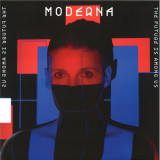
Moderna Ignites the Dance Floor with Debut Album "The Future Is Among Us"
Conceived over seven years in Berlin and Mexico City, "The Future Is Among Us" is a sonic tapestry woven from diverse influences. Each track, produced in a different era, retains its unique character while seamlessly blending into a cohesive album experience.
The album ignites with "DIE4U," a powerful homage to Prince's iconic "I Would Die 4 U." Moderna reimagines the timeless sentiment – entirely self-produced and written in Berlin. Layered vocals, a driving bass line, and a pulsating electro beats that create a controlled yet electrifying atmosphere.
The title track, "The Future Is Among Us," embodies the collaborative spirit at the heart of the album.
Originally conceived before the album was complete, bringing bass lines and a percussive energy that feels like a declaration that the future is not something to wait for, but something we are actively creating together on the dance floor.
The album promises a vibrant blend of electronic and dark wave music, showcasing Moderna's ability to weave together infectious dance floor anthems with deeper, more introspective moments.
This depth is evident in tracks like "Lost at Heart," a collaboration with post-punk artist Skelesys that transcends genre with its raw emotional vulnerability. The album's ability to seamlessly shift
between these contrasting styles is a testament to Moderna's artistry and her ability to curate a cohesive listening experience that invites a provocative energy.
Moderna’s impressive career extends beyond this album. Beyond her solo work, she has showcased her remixing talent on tracks for The Matrix 4 soundtrack and Curses' Next Wave Acid Punx compilation, collaborated on four EPs with Mexican artist Theus Mago who also contributes to the album on the dream wave serenade “Blades”.
The album will be released on her ‘Brave New Rave’ imprint which she established in 2019 from her highly recognized radio show on KCRW Berlin.
A mysterious release, not only for its unique expressive style but also because it isn't even known when it was initially recorded let alone its release date. According to non profit Studio Piccolo owner Vincent Bruley, it could have been recorded during the 70s and eventually released in the early 90s, sometime throughout Nilton Castro's time in Paris making music for contemporary dance classes (often led by his wife). This album was originally intended for accompanying dancers in classes with an emphasis on rhythm and coordination. Given Nilton's background and expertise in percussion, the focal point of this album is to present an array of Afro Brasilian rhythms performed by himself with additional moments of choir, flute and keys/metallophone. Effortless due to Nilton's prowess and unburdened by typical financial pressures (often behind the release of a record), the result feels like charmingly unadulterated and pure expression throughout the entire album. But what really takes the listener to places of unheard-of bliss is “Ondes (Les Vagues)” a track that has plagued the curiosity of diggers and collectors for a while now. With its harmony crescendos elegantly coming and going as per the title, overlayed on Nilton's subtle percussive patterns, an aural landscape of illusory beauty - listening is believing. Remastered and officially re-issued with its original artwork.
Straight from Rio de Janeiro, Dippin' Records introduces the studio album 'ASA', by the sizzling hot modern Brazilian Multi-instrumentalist/Producer Fabio Santanna. Flyest modern Brazilian tropical disco-boogie you'll find in the market! Following up on his most recent collaborations with JKriv and Joutro Mundo, Fabio modernizes the MPB vibes of Joao Donato, Marcos Valle, Ed Motta for the current dance music lovers.
ASA: Dia (Day) evokes a sunny Balearic boogie 'day time' feels just in time for the Brazilian summer skies opening up. So sit back, put on your shades and sip on your tropical drinks and press play to vibe with the fabulous Fabio sounds.
Repress.
One of Stockholm’s finest exports, Elfenberg arrive at Bordello with four slices of synthesizer goodness. The duo open with “Forever Alone”. A cruising arpeggiator steers its way through glistening snares, rolling kicks and classic italo vocals. Night falls in the jungle “Conga Coronation”. The treetops bristle with birdsong, thickets of bongos, toms and rain sticks lead a path to dawning melodies. A wonderfully textured percussive piece, the track is intricately carved and demonstrates the diversity and depth of Elfenberg. The disco dipped futurism of “Sphere Of Missing Out” follows. Echoes of “Conga Coronation” rhythms are countered by beaming synth bars and vocoder lyrics with the Swedish pair pushing for the floor. “Cosmic Tribune” is the curtain close. Astral chords, spiralling key shifts and incising drums coalesce in this space inspired finale. A truly stunning debut from this talented partnership.
Excelsior Ruth is a composer, DJ and producer born in the North-East of England but who currently resides in South London.
On her eponymously titled debut, she combines a life-long love of euphoric trance with echoes of her live performances as exlRuth, which incorporate sound recordings, drone, traditional choral music and the makina backdrop of her youth. Embedded in community heritage, it’s a record that probes connections between the classical and contemporary.
Gossamer harp drifts across time on ‘Haunt’, leading to the affecting arpeggios, strings and high BPMs of ‘Dream Of Night’, programmed, as much of the EP was, on classic 90s synthesisers, including the Roland JP8080 and Quasimidi Rave-0-Lution 309. Drinkwater’s ‘Dawn Return mix’ reduces ‘Dream Of Night’ down to a moment of 6am E-motion, limbs weaving through dry ice like mist on long-forgotten moors.
A cathedral of angelic voices swells in ‘Dream Of You’, their hymn to oceanic feeling rooted to earth by a raining cascade of kicks. And ‘Sleepy Hollow’ journeys further into deep, unspeakable bodily knowing, pushed and pulled between propulsion and stasis as fizzy high hats and restless melodies weave through shrouds of ambient pads.
Words by Joe Roberts.
- A1: Oriana Ikomo - Never Forget
- A2: Moodprint - Eartha
- A3: Kin Gajo - Exit, Gajo!
- A4: Adja - Told You So
- A5: Bodies - Brioche
- B1: Orson Claeys - Conversations
- B2: Bodem - Kleine Mars
- B3: Honey - Bossa Dolce
- C1: Azmari - Sheep Party
- C2: Le Ministère - De L'amour
- C3: Ciao Kennedy - Parcifal Pt. I
- D1: Echofarmer - Beginning Would Have Been Outside
- D2: Kassius - Escapism
- D3: Bruno X Soet X Moene - Ott
Vol. 1[22,27 €]
Vol.2 Black Vinyl[24,79 €]
Vol.2 Limted Red Vinyl[26,01 €]
Vol. 3 Transparent Violet Vinyl[27,52 €]
Standard version on 2LP black vinyl in gatefold sleeve. ‘Lefto presents Jazz Cats' is back with volume 3 and still doing what it does best: putting you in the front row of what the thriving Belgian jazz scene currently has to offer and revealing a melting pot of the musical talent.
'Lefto presents Jazz Cats' is back with volume 3 and still doing what it does best: putting you in the front row of what the thriving Belgian jazz scene currently has to offer and revealing a melting pot of the musical talent coming out one of the smallest countries in Europe. Never change a winning team they say, so we're happy to have Belgian DJ and eclectic connoisseur Lefto on board again.
Although you expect thecompilation to be talking jazz, volume 3 explores a broader array of styles, genres, and sounds than ever before, arriving at a point where the 'young cats' of today don't bother no more. It may focus on the Belgian scene, but let's face it, seeing the influences, this one could be compiled from all over the world. From the empowering and bittersweet voices of Oriana Ikomo and Adja, over the more acoustic-electronic productions of Moodprint, Ciao Kennedy, Kassius and echofarmer. It's even expanding the Jazz Cats universe to dub and bass-heavy tracks with Kin Gajo and Le Ministère, Ethio-jazz from Azmari, while sending you back to earth with bodies' swirling sax and drums. That saxophone still rings in your ears when you end up in the orbit of the march-like drums of Bodem, Orson Claeys' piano testing your ability to follow him, slamming the breaks to go smooth cruisin' with HONEY (Morricone meets Khruangbin, anyone?), to crashing in a raging tempo on that last track of Bruno x Soet x Moene. And there you are, back with us.
2018's 'Lefto presents Jazz Cats' included tracks from some of Belgium's biggest hitters, including Black Flower, STUFF. De Beren Gieren and Glass Museum who have all gone on to receive global acclaim. The album was given the accolade of 'Album of the Week' on Worldwide FM and also received further radio support from Jazz FM in addition to numerous glowing reviews. The 2022 follow-up 'Jazz Cats volume 2' paved the way for a new generation inspired by its peers, entering another era of very talented individuals and collectives. Maybe even more so than 4 years before. It uncovered a beautiful balance of more established but also obscure musicians and artists. Opening up to electronics and dance, enter bands like ECHT!, Stellar Legions and TUKAN. Thrilling innovative soundscape grooves and jazz fusion with Bandler Ching and L?p?GangGang, not to forget about the weaving musical odyssey that is M.CHUZI. In addition, there's the balanced unease of One Frame Movement, the laidback 'acoustic electronica' of Boombox Experiments, the classic funky jazz stylings of Cargo Mas and cinematic The Brums, all of these have set volume 2 on the map as an essential release for any jazzhead with a passion for new sounds.
Tastemaker, selector, curator, DJ and producer, these words often get mentioned when Lefto's name pops up in discussions. And rightly so. If you've ever had the pleasure to listen to one of his incredible Boiler Room sets or one of his many radio shows, you'll know why. Famed for his gloriously eclectic taste on the decks, he switches effortlessly between hip hop, funk, breaks, neck-snapping beats, future bass, South-American influences, bruk riddims, some wild African rhythms and of course, jazz.
Growing up as a child, his father would have the sounds of jazz flowing through the speakers. Which led him to bars around town to hear the latest jazz ensembles. Falling in love with the genre, he would later refine his knack for record digging and fine ear for music working at Belgium's legendary Music Mania record store in his hometown Brussels. Which makes that Lefto is consistently a couple steps ahead. He doesn't wait for the next thing to land in his lap, but actively seeking it out.
Lefto on Jazz Cats volume 3:
"Another release in less than two years! I am very impressed by the amount of creative "jazz" talent we've managed to compile over the last couple of years. Thanks to the internet, young musicians find inspiration from around the globe and incorporate diverse influences into their work. Given the history and heritage of jazz in this country, it has managed to create a healthy jazz scene supported by festivals, venues, press, and labels. Therefore, I am very proud to present to you the thirdinstallment of Jazz Cats. This compilation is dedicated to the young and hardworking musicians who are the present and the future of Belgium's jazz scene."
Fierce and forlorn, Swarm Intelligence’s “The Shattered Self” delves into the complexities of human existence in an era dominated by technological advancements. In this thought-provoking exploration, the artist challenges listeners to confront the consequences of a near future where physical and mental augmentation are commonplace. In a world where limbs can be upgraded, where consciousness can be uploaded, where memories can be digitally archived and shared on social media, where our AI clones can liberate us from menial tasks… What remains of our selves? Who is our self?
Swarm Intelligence draws influences from black metal, industrial-tinged dub and post rock, splicing these with his distinctive take on techno to devastating effect. "Dejected," the inaugural track, unleashes grinding walls of feedback against a relentless broken beat, its foreboding atmosphere heightened by a menacing low growl of distorted bass that permeates the unease. It's a disquieting overture that sets the stage for the tumultuous journey ahead.
The second track, “Eros” envelops the listener in a visceral soundscape, where haunting atmospheres intertwine with grinding feedback and pounding percussion. Initially tense, the track evolves into an unexpected and almost euphoric climax, adding an unforeseen emotional depth to the sonic narrative. Yet, beneath the surface, an undercurrent of tension remains—an ever-present reminder of the fragility of our self.
On the flip side, "Inciter" channels inner fury through a guttural chant punctuating a Birmingham-styled broken beat, marching forth with unyielding force.
Finally, "Portal" offers a moment of quiet introspection, as haunting pads echo a mournful refrain while micro recordings of whirring machinery are assembled into the percussion section. It serves as a poignant curtain-closer.
Through "The Shattered Self," Swarm Intelligence challenges listeners to reconsider their perceptions of identity, consciousness, and agency in an age where the machine and the human converge. It's a haunting and profound journey—one that invites introspection and contemplation long after the final reverb tails fade into silence.