Facsimile reissue using the original cover art (front photo is lost).
Double insert using an original photo by JP Leloir from 1959.
Each record has been visually checked to prevent defects.
Recorded December 19 and 20, 1958 at the studio Hoche, Paris.
Original LP issue: Barclay 84.063.
Belgian jazz artist Bobby Jaspar died far too young at age 37 in 1963, but fortunately made a handful of memorable dates as a leader. This is the last studio session under his name. Jaspar sticks exclusively to flute on these December 1958 studio recordings. He’s joined by drummer Kenny Clarke, Sadi Lallemand or Michel Hausser (who also doubles on xylophone) on vibes, and either Paul Rovere or Jymie Merritt on bass, as well as percussionist Humberto Canto (on one of the two sessions). Jaspar’s soft arrangements prove very appealing for his originals, standards such as ‘Lullaby of the Leaves’ and ‘There Will Never Be Another You’, and classic jazz tunes (an exotic ‘Misterioso’ and a Latin-flavored ‘Chasin’ the Bird’, the latter featuring Hausser on xylophone). This is easily one of Jaspar’s finest recordings as a leader.
Ken Dryden / All Music
Bobby Jaspar (Flute)
Michel Hausser (Vibes) (tracks 1 to 4, 6,8,9)
Sadi Lallemand (Vibes) (tracks 5,7,10)
Paul Rovère (Bass) (tracks 1 to 4, 6,8,9)
Jymie Merritt (Bass) (tracks 5,7,10)
Humberto Canto (Percussion)
Kenny Clarke (Drums)
As with most things, this project started with a conversation in the pub between me and Martin.
As we discussed what J-Walk and BiD could do next we chatted about our mutual love of DIY, Post Punk, Reggae, Digital & Dub, how about using that feel as an initial jump off on the next thing and see how you get on? I suggested.
As is his way Martin considered the suggestion, then promptly disappeared, 6 weeks later something landed in my inbox, it was titled Broken Beauty and the music contained embraced all those symbiotic ideals and culture.
Nailed it!
Recorded entirely in Stockport using a mixed kit bag of cheap forgotten keyboards, guitar, bass and effects pedals, this LP takes the J-Walk aesthetic and applies the wider palette of these influences to create something unique, those past and present influences forged together to bring you something truly DIY - instructions below.
How To Make Such A Thing...
Deactivate social media. Ignore the internet, don't answer text messages, avoid other music, the telly and other people. This is a process where it's only you in the room with whatever's in your mind. You will be there for some time and the loneliness can hurt a little.
Forget any predetermined ideas. Forget everything you've ever done before. This is an opportunity to start from scratch, but with years of accumulated knowledge and craftsmanship. Trust yourself.
Be scared. Be excited about not knowing what will happen and what will result.
Don't use midi sequencing, virtual instruments or samples. Just plug a toy instrument into an amp, press a rhythm and play around to see what happens. If it sounds good and fresh then record it. Plug a bass in to jam around and you'll soon hear and feel what sits in the pocket of the beat. Record it as it is. Dirty is real and good. Cleanliness equals sterility. Loop the bassline. Plug a guitar in and do the same.
Don't think when doing any of this. Just experiment with interest and curiosity and the music will take care of itself. You will now have a groove which is also about half a song minimum. Play some keys from the toys on top of what you have. Put 'em through effects pedals. Again, don't overthink it and don't try to get it clean. Add sound effects in right and random places.
There you go. Something you've never made before. But more importantly, it's something you've never heard before.
You don't have to die to be reincarnated.
BROKEN BEAUTY...You can't be either without also having been the other.
out of Stock
Last delivered 22 months ago available to reorder, subject to availability
In the performance of this work, "Plan for Sleep" (1986), created simultaneously with “Every Dog Has His Day” (1985), Yamanaka took on the role of sound operation. The performance begins with a minimal piece where the tones of the electronic organ and striking phrases from the piano and saxophone race forward in syncopation. Following this, various sound fragments drift over a deafening industrial beat reminiscent of machine noises. There are also pieces that transform the typing sounds of a typewriter into rhythm, showcasing a range of experiments inspired by the then-novel sampling technology, beautifully intertwining with the physicality of the performance.
Additionally, influenced significantly by film music, Yamanaka incorporates a rich tapestry of colors through melancholic melodies that evoke various scenes, from secular jazz to other influences. This work constructs a uniquely original and sophisticated worldview that stands out even when surveying the canon of avant-garde performance art from around the globe in the postmodern era.
DUMB TYPE is a multimedia performance art group based in Kyoto that was formed in 1984 and continues to be active at the forefront of the art scene. We are excited to announce the simultaneous release of two cassette book works produced by musician Toru Yamanaka and the late Teiji Furuhashi, a central figure of the group, for works from the early DUMB TYPE Theatre era: "Every Dog Has His Day (recorded in 1985)" and "Plan For Sleep (recorded in 1986)," now available for the first time on vinyl.
Since the founding of DUMB TYPE, Yamanaka has primarily been responsible for music production, while the late Furuhashi played a crucial role in translating Yamanaka’s compositions into stage direction. Their collaboration began with previous groups ORG and R-STILL, and was influenced by the NEW WAVE and progressive rock trends they were pursuing at the time, as well as by artists like Laurie Anderson, Meredith Monk, and Robert Wilson, who fused minimal music and avant-garde performance. Moreover, their bold incorporation of cutting-edge sampling and house music during that era laid the foundation for DUMB TYPE's sound, marking an important intersection in the history of minimalism, ambient music and performance art in Japan.
The two works which comprise this retrospective release project - "Plan for Sleep” (1984) and "Every Dog Has His Day” (1985) - are collaborations between Yamanaka and Furuhashi which were foundational to the music development of Dumb Type's aural legacy and intermedia innovations at large. Their early stage music possessed a unique charm and innovation, serving as an essential element at the core of their art. Through this project, the legacy of these works is to be re-evaluated, and the essence of the music contributing to the evolution of Dumb Type's sound through this day will be introduced to a new generation.
DUMB TYPE is a multimedia performance art group based in Kyoto that was formed in 1984 and continues to be active at the forefront of the art scene. We are excited to announce the simultaneous release of two cassette book works produced by musician Toru Yamanaka and the late Teiji Furuhashi, a central figure of the group, for works from the early DUMB TYPE Theatre era: "Every Dog Has His Day (recorded in 1985)" and "Plan For Sleep (recorded in 1986)," now available for the first time on vinyl.
Since the founding of DUMB TYPE, Yamanaka has primarily been responsible for music production, while the late Furuhashi played a crucial role in translating Yamanaka’s compositions into stage direction. Their collaboration began with previous groups ORG and R-STILL, and was influenced by the NEW WAVE and progressive rock trends they were pursuing at the time, as well as by artists like Laurie Anderson, Meredith Monk, and Robert Wilson, who fused minimal music and avant-garde performance. Moreover, their bold incorporation of cutting-edge sampling and house music during that era laid the foundation for DUMB TYPE's sound, marking an important intersection in the history of minimalism, ambient music and performance art in Japan.
Shock Room it’s a double vinyl release who takes the name from the main room of the discoteque.
ULTIMO IMPERO DI Torino; an historic temple of the techno music from the ‘90s. in this compila)on are all included the most iconic and an)cipated “techno, trance & progressive” grooves that have made dance en)re genera)ons of people, nowadays again on track and well
spinned up by djs all arounf the world.
out of Stock
Last delivered 10 months ago available to reorder, subject to availability
"Without pausing for breath and hot on the heels of their exhilarating debut album 5, the elusive Sault return with their sophomore full length titled 7. The signature hybrid of funk, dance, post-punk, soul and disco is front and centre once again, confidently delivered with their typical fearless nature. If 5 had you out of your seat, 7 will have you dancing in the streets....Spread the word, Sault are back at it!"
Dean Josiah Cover aka Inflo has been composing for Michael Kiwanuka, The Kooks, Tom Odell, The Jungle and Little Simz
out of Stock
Last delivered 4 years ago available to reorder, subject to availability
Belén Natalí, Argentinian artist based in Barcelona and known for her extensive international career in the field of reggae and sound system culture, starts a new project where she navigates organically in pop/lo-fi rhythms with R&B reminiscences and jazz without forgetting his nods to Jamaican music. Her EP Jacarandà (Say it Loud Records & Costa Futuro, 2023) is quite a declaration of intent that features the collaborations of Ferran Palau and Santa Salut on two of the cuts. Belén, inaugurates a new stage in her musical career with musicians and producers such as Genis Trani or Hoss Benitez and Enric Peinado from the groove combo Big Menu.
In a world of division, BEÃTFÓØT’s delayed second album is as an invitation to unite at a utopian celebration of life. Originally scheduled for release in October 2023 but postponed due to the ongoing Israel/Palestine war, the intrinsically-political ‘TOO CUTE’ has taken on more prominence than the Tel Aviv duo of Udi Naor and Adi Bronicki could have imagined.
“It's more urgent than ever for us to share this now, even though the album has been ready for a while,” says producer Naor. “BEÃTFÓØT are against any war, and believe that people should talk and not use violence - never,” he adds vehemently. “We feel the pain of Palestinians and Israeli loss of life, and are devastated by it. We hope the war will be finished soon and that peace and prosperity will come soon for both sides.”
While both Naor and vocalist Bronicki have been active in protests, charity work and community efforts over the past year - explicitly against the current government in Israel - such values of peace, acceptance, coexistence, inclusiveness and anti-hate from all sides are further instilled in the songs that form ‘TOO CUTE’.
“We're really trying to highlight that there are people here working tirelessly for a brighter future for our ill kids and our neighbour’s kids,” adds Naor, who is also co-founder of techno duo Red Axes. Having had to flee the country with his family, it’s through music that Naor and Bronicki have found hope.
In light of such conflict, the multi-layered yet sonically-bonkers record also enables escapism, which is needed more now than ever. Following their self-titled 2021 debut (released on DJ Tennis’ label Life and Death), ‘TOO CUTE’ is a refreshingly-ridiculous dark-rave rollercoaster which careers between hard-dance, big-beat, post-punk, techno, hyperpop, country and everything in between.
Things blast off at breakneck speed with the chaotic title track’s hyperpop snares, instantly-catchy lyrics (which feel ominously striking considering the war) and a stadium-ready chorus that erupts into rolling breakbeats, punishing EDM and even a nod to The Bloodhound Gang’s ‘The Magic Touch’. Somehow, we’re just three minutes into the record.
The tongue-in-cheek ‘HEART OF LEAD (TAKE IT OFF)’ still bangs despite its silliness, like if Kero Kero Bonito got in the studio with will.i.am. Later, ‘LEO’S SONG (THE SOCIAL MEDIA GUY)’s wittily satirical one-liners - “I just wanna get high with AI” - come thick and fast amid a barrage of glitches and guitars. ‘SUKC MY DIKC !!!’, meanwhile, pairs flute with pulsing hardstyle beats.
While their first record’s experimental explosion captured the pure carnage and energy of the BEÃTFÓØT universe in a conceptual fashion (though remaining polished in its own way), album two is primed to connect with a bigger audience thanks to its pop melodies, structures and songwriting.
Much of ‘TOO CUTE’ was written while the duo toured Europe for the first time, with rough sketches of tracks created in the moment during their incendiary live shows, and then recorded in planes and cars.
If their first record was a case of testing the vibes, album two is more assured and confident within their sonic world. “In the first album, we stepped into the club, metaphorically, and started making eye contact with everyone to figure out the energy,” Bronicki says. “But, this time round, I already had an idea of the story that I wanted to tell to these random people.”
And what is that story? “Radical silliness, or radical fun – that’s the essence of BEÃTFÓØT,” Naor confirms. “What we really want to do is goof around and have fun, and that brings out something very profound and honest,” he explains. A sense of nostalgic freedom is also at the album’s core, thanks to the removal of adult predetermined social constructs that decide how people should behave or look. “There’s a very honest and positive energy in holding onto your childlike wonder and trying to explore that with others,” Bronicki suggests, adding that “the adult world can be so wrong and angering”.
She feels this relates to both the album’s lyrics and the artistic state of mind that the duo always work to: “the goal is to feed a really thought-out and profound idea, but through a playful spoon,” she says. With this in mind, the recurring theme of ‘TOO CUTE’ stems from the duo’s “radical and lived experience of existing in a place that holds a lot of guilt and fear – because death is so imminent and prevalent in a very confronting way”. This is clearly represented on ‘FOOTYLICIOU$’, on which Bronicki screams “someone’s gonna die tonight!” before emphatically shouting “NOT ME!”
The album title is BEÃTFÓØT’s response to that: “We want to be a celebration of life, and that applies to all lives, of all backgrounds, including animals… that’s our guiding light,” Bronicki says.
“We create in the context of living in a country where the current government’s anti-democratic measures are limiting who is included in the celebration of life. Because different people are always being pushed out and excluded: whether it’s queers, Palestinians or people from different religions.”
BEÃTFÓØT - who have found a home among the LGBTQIA+ community - are fighting back against oppression. “We want everybody to come to the party and celebrate life together,” says Naor, setting out his and Bronicki’s mission… “and our goal is to widen that party as wide as it can go.”
c MANIAC ft. Princess Rani
e WHERE HAVE I BEEN ALL MY LIFE ft. Bugle Boy
c MANIAC ft. Princess Rani
[e] WHERE HAVE I BEEN ALL MY LIFE [ft. Bugle Boy]
[c] MANIAC [ft. Princess Rani]
[e] WHERE HAVE I BEEN ALL MY LIFE [ft. Bugle Boy]
out of Stock
Last delivered 23 months ago available to reorder, subject to availability
All Orbital's classic tracks across all albums in one piece of vinyl / 1LP as cult edit versions.
Orbital's own words about "A Beginner's Guide" : " The package you are holding in your hands is your threshold to a transformational psychoacoustic experience. An experience that will take you to spaces familiar, sonic pathways opening different times and different sounds to the chronosonic method of Orbital."
out of Stock
Last delivered 3 months ago available to reorder, subject to availability
The legendary Lagoa club, a temple of techno in Menin, is celebrating its 34th anniversary in style with the exclusive release of LAGOA TRAX Vol. 1, a vinyl compilation featuring four unreleased tracks composed by four of the club's iconic resident DJs: Manu Kenton, DJ HS, Jamie Dill, and Max Walder. These artists, who have made their mark in Lagoa's history with their memorable performances, pay tribute to the soul and energy of the club through compositions that are true to its unique musical style, known for its powerful beats and dynamic sounds.
This vinyl captures the essence of Lagoa's legendary nights, offering fans four exclusive tracks to once again vibe to the intense rhythm that has shaped the club's reputation.
Le légendaire club Lagoa, temple de la techno à Menin, célèbre son 34ème anniversaire en grande pompe avec la sortie exclusive de LAGOA TRAX Vol. 1, un vinyle regroupant quatre titres inédits, composés par quatre des DJ résidents emblématiques du club : Manu Kenton, DJ HS, Jamie Dill et Max Walder. Ces artistes, qui ont marqué l’histoire de Lagoa avec leurs performances mémorables, rendent hommage à l'âme et à l'énergie du club à travers des compositions fidèles à son style musical unique, reconnu pour ses rythmes puissants et ses sonorités dynamiques.
Ce vinyle capture l'essence des nuits légendaires de Lagoa, offrant aux fans quatre morceaux exclusifs pour vibrer à nouveau sur le rythme intense qui a forge la reputation du club.
out of Stock
Last delivered 3 months ago available to reorder, subject to availability
For fans of The Stray Cats, Brian Setzer, Swing and Big Band! The Brian Setzer Orchestra (sometimes known by its initials BSO) is a swing and jump blues band formed in 1992 by Stray Cats frontman Brian Setzer. In 1994 they released their debut album which was followed up in 1996 with Guitar Slinger. In 1998, for their breakout album The Dirty Boogie, the group covered Louis Prima's "Jump, Jive an' Wail", which originally appeared on Prima's 1957 album The Wildest!. The BSO's follow up single, appearing on the album Vavoom!, was "Gettin' in the Mood." Now get Guitar Slinger from the Brian Setzer Orchestra for the first time on vinyl since 1996. Remastered on 180g vinyl in an amazing limited- edition color. There are only 700 of the Silver Melt. Guitar Slinger is the second release from the Brian Setzer Orchestra and where the band really started to come together. The album leads off with "The House Is Rockin'" and features the Brian Setzer/Joe Strummer (The Clash) penned tracks "Ghost Radio" and "Sammy Davis City". There are 12 tracks in all, and it clocks in at just over 43 minutes. This is the first in a series of three reissues coming from Deko Entertainment with The Dirty Boogie scheduled to also hit by the end of 2024, with Vavoom! to follow in early 2025.
"As I'm getting older, chip up on my shoulder..." is the opening line from Mac DeMarco's second full-length LP `Salad Days,' the follow up to 2012's lauded `Mac DeMarco 2.' Amongst that familiar croon and lilting guitar, that initial line from the title track sets the tone for an LP of a maturing singer/songwriter/producer. Someone strangely self-aware of the positives and negatives of their current situation at the ripe old age of 23. Written and recorded around a relentless tour schedule (which picked up all over again as soon as the LP was done), `Salad Days' gives the listener a very personal insight into what it's all about to be Mac amidst the craziness of a rising career in a very public format. The lead single, "Passing Out Pieces," set to huge overdriven organ chords, contains lines like "...never been reluctant to share, passing out pieces of me..." Clearly, this isn't the same record that breezily gave us "Dreamin," and "Ode to Viceroy" but the result of what comes from their success. "Chamber of Reflection," a track featuring icy synth stabs and soulful crooning, wouldn't be out of place on a fantasy Shuggie Otis and Prince collaboration. Standout tracks like these show Mac's widening sound, whether insights into future directions or even just welcome one-off forays into new territory. Still, this is musically, lyrically and melodically good old Mac DeMarco, through and through. The same crisp John Lennon / Phil Spector era homegrown lush production that could have walked out of Geoff Emerick's mixing board in 1972, but with that peculiar Mac touch that's completely of right now. "Brother," a complete future classic, is Mac at his most soulful and easygoing but with that distinct weirdness and bite that can only come from Mr. DeMarco. "Treat Her Better" is rife with "Mac-isms," heavily chorused slinky lead guitar, swooning vocal melodies, effortless chords that come along only after years of effort, and the other elements seriously lacking in independent music: sentiment and heartfelt sincerity. We're only at Part 2 and 1/2 (one EP and two LP's in) into Mac's career. As you read this and as you hear the album on April Fool's Day of this year, he'll probably be on tour, or preparing for one... or maybe already writing new music. A relentless work ethic is something to be admired in today's indie music scene, but when it's of the quality Mac is giving us time and time again, it starts to turn from admiration to awe.
Amandra, half head honcho behind Ahrpe Records, goes for subtly evolving and droning atmospheres. With releases spanning electronic genres and record labels: Nous klaer Audio, AD 93, Tikita or Semantica, just to name a few; the French producer ba with coherence his own vision of acid and tribal rhythms that can be presented with either bright and soft feelings or through a
Brera Som Som EP
As always with Amandra, there is a blend of poetic and soft hidden touch given to the music through carefully crafted personal Som is a 4 tracker EP, recorded back when he lived in Warsaw Poland, showcasing the artists ability to navigate through nich double 12 package cherry topped with four intelligent and eclectic remixes from artists with their own unique identity: Shieldin Brainwaltzera.
Amandra on disc 1
Brera Som Som
I want my music to breathe dirty so its alive to my ears, trying to stay away from surgical, clean, electronic music. The Prophet recorded by hand, with assumed offbeat imperfections, as always. I wanted to get a naive Asian mood out of it, just to try and c track. I tend to think a lot about my tracks and their meaning more in terms of feelings, art and techniques than in terms of dee
dance floors or whatever. Brera Som Som is a try at using the chiaroscuro technique depicted in classical paintings for instance interesting focus on some very specific elements.
Cyborg Pelikana
Recorded out of a jam on a Soma Pulsar 23 and some heavy distorted synths, it ended up sounding like no other recordings bit different as I wanted to have a more composed like approach here.
Fanfaron
Here is a try at going jungle... with a Moog DFAM and a 303 processed through a Sherman Filterbank.
Prorokini
This one belongs to a phase where I was exploring the sampling side of electronic music. Until that moment I was building 100 based on raw drum machines and some processing, then started feeling how it would feel to sample some raw external beats and process them my way. I didnt pursue that sampling lead much afterward because it felt like a boring approach to me that
stood out anyway, like this one, which Im very proud of. The synths are clearly programmed on the Prophet 08, it cant go any Instruments than that, if you like them, go grab that synth
Remixers on disc 2
Cyborg Pelikana Shielding Remix
I liked the dry and direct qualities of the original track and wanted to maintain that feeling while collaging it using my own proc Recorded in my old home studio in Stockholm.
Brera Som Som Brainwaltzera Remix
no comment.
Fanfaron Whylie Remix
The remix was made using resampling techniques, the rhythmic noises were transformed into driving percussive layers pushi character. A more emotional overlay was added to the track based on the sentimental and personal approach I built through.
Brera Som Som Martinou Remix
Interpreting Amandras work has been on my bucket list for a while. Theres something in it that is innately humanizing and raw capture in my remix. The melody line from the remix is just a snapshot of a small part of the full original track, but it stuck with my improvisation to what you see before you today. With this remix I wanted to make something that would swell slowly and ring o
All original tracks written and produced by Amandra.
Remixes written and produced by Brainwaltzera, Whylie, Martinou and Shielding.
Mastered by Amandra.
Artwork by Neurotypique.
out of Stock
Last delivered 18 months ago available to reorder, subject to availability
Re-mastered from the original Mono Master Tapes. Limited repress 1000 copies.
180 gr vinyl pressed by Pallas in Germany.
Deluxe high-gloss flipback album jacket.
Essay written by Brian Priestley.
Double insert using an original photo by JP Leloir from the concert.
Artwork by Jean-Louis Duralek.
Each record has been visually checked to prevent defects.
A never-before released Art Blakey 1965 live recordings.
First official release with the full permission and cooperation of the Art Blakey Estate & INA (Institut National de l’Audiovisuel).
Art Blakey, Live in ’65 boasts an exceptional one-hour concert from Paris in 1965. This performance showcases one of the few undocumented Blakey bands, the New Jazzmen, featuring Freddie Hubbard on trumpet, Jaki Byard on piano, Reggie Workman on bass, Nathan Davis on sax, and, of course, Blakey on drums.
Freddie Hubbard’s incendiary playing on “Blue Moon” and the blistering 24-minute version of his own “Crisis” shows that he was one of the most innovative trumpeters in jazz history.
On this live session, the audiences seem to have been enthusiastic and appreciative. “Everywhere we’d go people would say, This is the best Jazz Messengers we’ve heard!”, according to Davis. “And because of the way Jaki would play and Reggie would go, it was like a semi-freedom thing – with Messengers heads, you know, but when we got to soloing…! And Blakey was ridin’ and floatin’ the time…but he would always be loose enough to follow, to keep it going. He’s one helluva musician.”
Recorded at Palais de la Mutualité, Paris, France, November 3, 1965.
Freddie Hubbard (Trumpet)
Nathan Davis (Tenor saxophone)
Jacki Byard (Piano)
Reggie Workman (Bass)
Art Blakey (Drums)
Fashion icon, catwalker, curator, historian, commentator, activist, Grammy winner and - damn right - DJ, there ain"t much these days that Ms. Honey Dijon doesn"t do with aplomb. Most of her achievements thus far came via her passion for clubbing and the art of DJing, from those early Chicago parties to her role as a de facto ambassador for world dancefloors. This compilation is a pan-global, multi-era waltz through house music"s storied past. Repping Chicago, there"s Dance Mania"s Dance Kings, Blackjoy and Art Of Tones carrying the flag for Paris and even Shaboom"s Blackpool gets a nod. Some of these are forgotten classics, some are dollar bin finds, and there"s also a brand new Dijon track, sprinkled with her usual mustard-hot flourishes and lightly seasoned with some more recent efforts by Waajeed and Kiko Navarro. This can be consumed on a dancefloor, in the back of a cab or relaxing at home with a glass of something cold (or, if you must, hot).
out of Stock
Last delivered 81 days ago available to reorder, subject to availability
Area Silenzio is eat-girls" debut record and it is both haunted and haunting. For the past four years, the French trio have been crafting their songs into little self-contained worlds with the patience of entomologists, taking them out all over the country and Europe to confront them with the wilderness of a live audience. The ten resulting tracks are a collection of electronic madrigals, groove-driven songs played on a mischievous multi-speed Victrola, ranging from languid dub drips to full-on drum machine cavalcades. Their live performances have that same ghostly, ephemeral quality. There is something other-worldy about the three of them, a suggestion of telepathy, their three voices blending together or going their separate ways like a flock of starlings. They secured opening slots with artists as different as Thalia Zedek, Exek and The Young Gods, just to name a few. It is the elusive essence of their music that allows them to feel at ease pretty much anywhere they find themselves: part no-wave disco rhythms, part post-punk throbbing basses, folk tunes and synthesizers in equal measures, with a perpetual attention to hooks and melodies. The album was self-recorded, a necessary measure to protect the delicate nature of the inner landscapes painted by the band. In this case "delicate" does not mean "soft" by any means: the industrial disco inferno of "A Kin", the ritualistic kraut stampede of "Para Los Pies Cansados" and the bubbly post-funk rhythms of "Trauschaft" will leave you gasping for air once you come out on the other side. "On a Crooked Swing", the opener, is all arpeggiated bass and stumbling kicks. "Unison" will dip you into a hallucinatory river where nothing is what it seems to be and rescue you at the very last second. "Canine", the first single off the record, will gently but firmly reach for your jugular with its vulpine Farfisa and deceptively nonchalant drum beat. The vocal polyphonies on "3 Omens" sound like a field recording of traditional music from a tiny country that has yet to be discovered. eat-girls exist on a slightly different plane from ours, where everything is teeming with secrets and hidden life. Area Silenzio is a precious polaroid shot from that world, or, as Tom Verlaine would have it, "a souvenir from a dream".
Area Silenzio is eat-girls" debut record and it is both haunted and haunting. For the past four years, the French trio have been crafting their songs into little self-contained worlds with the patience of entomologists, taking them out all over the country and Europe to confront them with the wilderness of a live audience. The ten resulting tracks are a collection of electronic madrigals, groove-driven songs played on a mischievous multi-speed Victrola, ranging from languid dub drips to full-on drum machine cavalcades. Their live performances have that same ghostly, ephemeral quality. There is something other-worldy about the three of them, a suggestion of telepathy, their three voices blending together or going their separate ways like a flock of starlings. They secured opening slots with artists as different as Thalia Zedek, Exek and The Young Gods, just to name a few. It is the elusive essence of their music that allows them to feel at ease pretty much anywhere they find themselves: part no-wave disco rhythms, part post-punk throbbing basses, folk tunes and synthesizers in equal measures, with a perpetual attention to hooks and melodies. The album was self-recorded, a necessary measure to protect the delicate nature of the inner landscapes painted by the band. In this case "delicate" does not mean "soft" by any means: the industrial disco inferno of "A Kin", the ritualistic kraut stampede of "Para Los Pies Cansados" and the bubbly post-funk rhythms of "Trauschaft" will leave you gasping for air once you come out on the other side. "On a Crooked Swing", the opener, is all arpeggiated bass and stumbling kicks. "Unison" will dip you into a hallucinatory river where nothing is what it seems to be and rescue you at the very last second. "Canine", the first single off the record, will gently but firmly reach for your jugular with its vulpine Farfisa and deceptively nonchalant drum beat. The vocal polyphonies on "3 Omens" sound like a field recording of traditional music from a tiny country that has yet to be discovered. eat-girls exist on a slightly different plane from ours, where everything is teeming with secrets and hidden life. Area Silenzio is a precious polaroid shot from that world, or, as Tom Verlaine would have it, "a souvenir from a dream".
The Outer Edge is excited to announce the release of an intense and previously undiscovered funk rap / boogie single, featuring two tracks recorded in 1986.
While researching for his book on 80s funk music in Germany, DJ Scientist explored bands from Bavaria that collaborated with GIs. One of these bands is Grand Slam, a group that remains active to this day. The band’s leader, Toby Mayerl, lived near a US Army base in Amberg, where he fell in love with funk after hearing Roger Troutman and Zapp. He soon became part of two groups: Total Control and Grand Slam.
Originally led by guitarist Harry Zawrel, Grand Slam had a “European” funk sound similar to Talking Heads or Level 42. However, in 1985, Mayerl took over the band and merged it with Total Control, a mixed group that included African-American soldiers. From that point on, they shifted towards a heavier funk and soul sound, continuing to work with musicians from the GI community. By late 1986, they had enough material to record their debut album, Make My Day. Although published by the independent label Kerston, the album was only available on cassette, primarily sold at their concerts in early 1987.
DJ Scientist managed to track down an original copy of this ultra-rare tape in the MUZ archive in Nuremberg. "What I heard blew my mind," he said. "The cassette featured seven raw, well-produced funk and soul jams with fantastic arrangements and vocals." As an old-school funk and disco rap collector, he was immediately captivated by the track "Goin' Out," which features GI rapper Calvin E. Flagg. This song evokes the energy of early recorded rap singles from labels like Enjoy or Sugar Hill Records.
On Side B, the second track from the unheard debut album, ‘Don’t Let You Down,’ offers another glimpse of what we've been missing. This uptempo boogie-funk track features lead vocals by Aletha Mcbryde, Calvin E. Flagg, and Oliver Allwardt, along with thrilling synths and a lively brass section - perfect for turning up the volume.
Both tracks have been remastered from the original master tapes, which Toby Mayerl fortunately still had in his archive. The artwork for the release is inspired by original band posters, with the Grand Slam logo taking cues from Bootsy's Rubber Band’s Body Slam! cover from 1982. This limited vinyl pressing is capped at just 350 copies.
out of Stock
Last delivered 23 months ago available to reorder, subject to availability
Unbound by place or genre, mercurial, experimental pop duo Soft as Snow find freedom to intuitively reflect the disarray of human connection with their intricate, shape-shifting pop production. With each successive release, the duo evolves, unfurling into their own poetic sound, now fully realized on their intimate, third full-length, Metal.wet.
The oft-present trappings of male-female duos are eschewed here as the Berlin-based Oda Starheim and Øystein Monsen contribute equally across a canvas of analogue synthesizers, samplers, live drums, and processed guitars. At once a part of and yet apart from the zeitgeist, their forward-thinking modernity stretches the limits of expectations across Metal.wet's ten insouciant tracks. Fans of Tirzah, Hype Williams, and even Angelo Badalamenti will find much to love in this haunting work peppered with ASMR moments and rough sampling wrapped in high production –– twinkling glasses and sirens in the distance, rhythms and voices up front. The result is synth-driven, noisy, and dripping with laidback, confident sensuality.
Although Starheim's voice begins the album in a whisper, it quickly becomes apparent that the group has jettisoned their previous tendency to bury and distort her vocals. Nested in a bed of thorny electronics and broken rhythms, her multifaceted vocals might bring to mind Kazu Makino of Blonde Redhead or Hope Sandoval fronting Massive Attack. London MC Brother May (Mica Levi, CURL) makes an appearance on the driving and ethereal “Whip,” while Øystein’s own voice appears for the first time in a state of languid background haze.
Soft as Snow create and record across Europe. Defiantly averse to genre, the pair become vessels for their “electronic music pushed to the brink of collapse” (The Wire), previously released by Infinite Machine and Houndstooth. Informed by backgrounds in film and performance art, “there’s a surrealism that comes with watching Soft as Snow in the flesh,” (Vice) as seen at L.E.V. and Lunchmeat Festivals. Collaborations with visual artist Guynoid, designer AGF Hydra, and sculptor Camilla Steinum add depth to the corporeality of their “strange, mesmerising and utterly unforgettable” electronic experimentations. (DJ Mag).
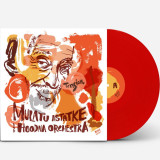
Ethio-jazz pioneer Mulatu Astatke joins the Hoodna Orchestra, Tel Aviv"s number one Afro funk collective, melding his enchanting vibraphone playing with their brass heavy force across seven original compositions that play tribute to the classic Mulatu sound while forging fresh paths. Produced by and featuring Dap-King Neal Sugarman, the results are gritty, yet majestic, soulful and uplifting.
Ethio-jazz pioneer Mulatu Astatke joins the Hoodna Orchestra, Tel Aviv"s number one Afro funk collective, melding his enchanting vibraphone playing with their brass heavy force across seven original compositions that play tribute to the classic Mulatu sound while forging fresh paths. Produced by and featuring Dap-King Neal Sugarman, the results are gritty, yet majestic, soulful and uplifting.
Where would a painter paint if it were not on a white canvas? Where would a composer compose if it were not on the stave and the spaces in between the lines? How would a musician play his instrument if there were no melodies composed, written down, painted for him to follow?
The magic of art needs a frame, a somewhat solid container to hold the freedom that can only be found once we integrate some form of structure. And that also holds in every other area of life. We all need a frame, a structure, a rhythm, or else, we fall apart. This human form needs the body, and yet it transcends the limitations of the body - through art.
Consistency being one of them seems oftentimes less tangible, for it resides more in the act of doing, and showing up for the practice, for devoting energy and presence. Strangely, if we consistently show up for our practice, regardless of its form, the solid frame of the hour we devote to playing the instrument, learning a language, doing the sport, sitting silently for that meditation: It feels different every single time. It feels new every single time.
The repetitive consistency in being present again and again allows for nothing short of magic to happen. Magic feeds consistency. Consistency feeds magic. Consistency sets a foundation that strengthens over time. It allows us to slowly but surely develop any kind of skill, to find and hence to embody expertise. On the fertile grounds of such a solid foundation, creativity fosters, and innovation blossoms.
Establishing consistent rituals and routines can bring a sense of comfort and safety into every-day-life. For routine beholds repetition and its frame enables our experience within to change. In the familiar, we dare to explore, maybe even experiment, merely because a part of us remembers we depart from, and always return to, a safe space. We do not get lost. We do not fall apart. As we practice, again and again, we build resilience in overcoming obstacles or literally persevering through challenging situations and stretches of time.
While consistency gifts steadiness and stability, its overdose risks to result in what may appear as uniformity. It feels like constantly - consistently - dancing on the fine line of freedom within a structure. Life is filled with unexpected twists and turns, adjustments need to be made to accommodate change and avoid rigidity. By striking a balance between consistency and flexibility, we can create harmony in our lives, just like a beautiful melody that flows smoothly from one note to the next.
Within the magical waves of music, skills are needed, too. Consistency is key to show up and do the work. It frames the freedom of magic that resides beyond and only beyond effort. Learning to play an instrument, learning to sing, does never happen within the blink of the eye. It takes time. Time to show up for the practice, to do precisely that: practice. Again and again, every single time, again and again. Precision feeds perfection that falls apart inside the structure of a song, a line, a rhythm, dissolving into magic.
Consistency in practicing, in composing and sharing music with the world regardless of the form allows any musician to refine his style, to carve out his uniqueness. For any artistic expression is, after all: Unique. And this uniqueness is born inside the vessel of any structure, over and over again. Sharing music in the form of new releases and public performances nourishes the bond between artist and audience. And for that to unfold, both parties need to show up - while the underlying beat of this never-ending practice is presence fuelled by consistency.
Clothilde’s new album sounds like a constant departure from almost everything. Up until now, her music pieces seemed uncontrolled, a total commitment to the machines. She was, somehow, in between us - listener, audience - and the idea of a machine producing sounds she doesn’t seem to control. Of course, none of this was entirely true, she was mostly in control, but the fantasy, the orchestration of it was beautiful. It was sci-fi-ish, Metropolis-magnificent.
In “Cross Sections” everything is purposely under control. We feel, without being told, that Clothilde is directing the narrative, inviting us to partake of this raw and austere electronic sound, forcing us to learn to enjoy it. This is new. Whereas before she would expect you to stay put and listen, eventually you would understand and give in. Or your body would. Now she is telling you to be there, she doesn’t want to be alone, she wants us to feel this subterranean urgency at all costs.
The real eureka moment comes with “Medullary Rays”, when we start cohabiting with the sounds, when they feel familiar. The darkness becomes real; it is palpable how she is stretching each sound and making them come to life at every moment. It is violent, brutal. Like every track, it's a relief when it ends, it's like coming out of a car crash alive. Much of the A side of is Clothilde pushing the boundaries of her sound. She is not testing but finding new ground and sharing it with us. She is exorcising, demolishing and building over and over again, she is crying and screaming, dozing off with the demential levels of bass, making us constantly listen to alarm bells. She is scaring the shit out of us.
The B side keeps the levels of anxiety high up, especially on the 13-minute “Ring”. Surrealistic drones come and go, every second sounds like the end of something, the accumulation of tension is torrential and it never, never stops. We hope there is a conclusion to this. But there is not. “Cross Sections” builds and feeds on this darkness but, in a way, it is self-contained. Never explodes, never releases itself from itself. It is a continuous process of catharsis that it is never over. It never aims to be. Like, you know, life itself.
We've all been there. It feels familiar. Now it has a sound, or sounds. It can be heard and it is outer dimensional. “Cross Sections” is a tremendous effort from an artist trying to survive something. You never know what is. You don’t need to know what it is. It is just there. Cliché but it has to be said: highest possible volume on this one.
Disco-Soul-Funk Album With Mixed From The Original Multi-Track Tapes By Kenny Dope! Tucked in the back corner of a linen closet in Macon, Georgia since 1979 sat a box that very few people knew existed. Lost and presumed forgotten, this box contained reel-to-reel tapes of the lost album by the band that issued the lauded Black Gold as The Mighty Chevelles in 1977. By 1979, while transitioning to the name Music Makers Band, the band entered Capricorn Studios and recorded this disco funk opus, finally issued as You Can Be.Nearly all songs have been remixed from the original multi-track masters by Kenny "Dope" Gonzalez.
Fratelli Malibu is an original idea of Andrea De Fazio with the cooperation of Paolo Petrella, drummer and bassist for the “Nu Guinea” live band. Their love for synthesizers and drum machines brought them together to create the shiny world of Ciro Miami.
We could think of Ciro as a neapolitan expat in the american dream, where he discovers a world of excess, flashy cars, cocktail bars, beautiful women, cocaine, gambling, spaceships and videogames that erodes all of his money forcing him to go back to Napoli
completely broke, but with a fistful of wonderful memories.
out of Stock
Last delivered 6 months ago available to reorder, subject to availability
'La Ritournelle' is undoubtedly Sebastien Tellier's biggest song. Since its first release in 2003, it kept growing and circulating throughout the world year after year like a virus.Considered by many as the ultimate love anthem of the 21st century, the song has now infected numerous hearts and lovers, and gained a classic status.
out of Stock
Last delivered 4 months ago available to reorder, subject to availability
Recorded at the Studio Acousti, Paris, September 23, 1965.
Original LP issue: International Polydor Production – 46.871.
This self-titled album is a testimony of the short lived-band led by New-York drummer Ron Jefferson during his stay in Paris in the mid-60s. After a first album under his name on Pacific Jazz in 1962, the founding member of The Jazz Modes and the Les McCann trio made the trip overseas.
Here, he made his living by playing with the popular pianists Errol Parker or Hazel Scott but his main drive was this trio that he formed with two other US expats, bassist Roland Haynes (the same musician who recorded an album on Black Jazz as a pianist, as confirmed by Kirk Lightsey) and guitarist Buz Saviano. After a highly successful show at ‘Palais de Chaillot’ in 1965, they were invited for a series of concerts in Dakar Sénégal. On their return, Polydor International proposed them this session. You can hear the deep impact their stay in the Motherland had on their music on the stand-out track ‘Africa the Beautiful’. On pair with the best of Yusef Lateef’s afro-eastern explorations from the time, it showcases Ron on flute and Senegalese percussion. The album release nonetheless was a commercial failure that prompted the band’s separation and Ron’s return to New-York where he performed until his passing in 2007.
Only a few copies of this record ever made it to the shops at the time and very few have had the chance to listen to it before this legit reissue remastered from the original MONO master tapes.
– Antoine Rajon –
Ron Jefferson (Drums & Flute)
Buz Saviano (Guitar)
Roland Haynes (Bass)
Jackie Robinson (Vocal on The Speaker)
out of Stock
Last delivered 23 months ago available to reorder, subject to availability
Jazz vocalist Helen Humes’ second album on Contemporary Records, “Songs I Like to Sing!” was released in 1961 and is conducted by Marty Paich. Backed by musicians including Art Pepper (sax), Leroy Vinnegar (bass), Shelly Manne (drums), Barney Kessel (guitar) and Andre Previn (piano). This new edition released as part of the Acoustic Sounds Series, features (AAA) lacquers cut from the original master tapes by Bernie Grundman and is pressed on 180-gram vinyl at QRP, and presented in a tip-on jacket.
"We could go so far as to say that it is the human condition to be grotesque, since the human animal is the one that does not fit in, the freak of nature who has no place in the natural order and is capable of re-combining nature's products into hideous new forms." So reckoned Mark Fisher in 'The Weird And The Eerie', which chronicled the means by which the uncanny can enter the everyday. Mwg Drwg, the second album from South Wales psychic seers Obey Cobra, is an album that dwells in exactly this kind of headspace, where the otherworldly meets the kitchen sink. Always a band who've sought out new dimensions to explore via their trademark warped post-punk, electronic and industrial influences, Obey Cobra have crafted surreal new shapes here. Taking influences as diverse as Diane Arbus, David Lynch and Sonic Youth, they balance out heaviosity and grace on the likes of the majestically discordant 'Ten Of Wands' Elsewhere, on the title track, the band sculpt a Jesus Lizard-esque rhythmic pulse, eerie vocal abstraction and the crepuscular downtempo atmosphere of Massive Attack's Mezzanine into a uniquely haunting dreamscape. Mwg Drwg is where the weird and eerie are amplified to intimidating proportions It's where grotesquely and beauty happily cohabit. It's an aural exorcism of William Friedkin proportions that demands your immediate attention.
Alkalino's follow up to the 2021 release of the second installment of the Make Up series comes with all original production from the man himself.
The first comes as the thumping tribal vibe sounds of "get ready' with the second on the A-side is a banger with 'Heavy as stone' with it's lush vocals that would work in any set. On the flip, 'Jack area' is classic sounding body jacking music that'll make you do just that. jack your body. and rounding out the ep is the gritty bass of 'reproduction'. This latest installment from Alkalino is a true testiment that he is a true master of making you dance.
out of Stock
Last delivered 19 months ago available to reorder, subject to availability
Auf dieser Tribute-Compilation finden sich Interpretationen von Margo-Guryan-Songs von TOPS, Rahill, Clairo, June McDoom, MUNYA und Kainalu, Frankie Cosmos und Good Morning, Kate Bollinger, Pearl & The Oysters, Bedouine und Sylvie, Empress Of, Barrie, und Margo Price. Die meisten unserer Geschichten über Kultmusiker, die ein oder zwei Alben machen und dann zu verschwinden scheinen, sind von Trauer, Verzweiflung und ausgefranstem Ehrgeiz umrahmt. Nicht so bei Margo Guryan, einer begeisterten Jazz-Ausnahmeerscheinung, die Popmusik verachtete, bis sie 1966 „God Only Knows“ hörte, das ihr ein Fenster zu den Wundern öffnete, die diese Musik-Form enthalten konnte. Nur zwei Jahre später veröffentlichte sie auf dem Album „Take a Picture“ ihre eigenen kleinen Popsinfonien und erntete dafür großes Lob und hohe Erwartungen. Aber da sie sich bereits von dem Posaunisten Bob Brookmeyer hatte scheiden lassen, lehnte sie es ab, ein Musikerleben zu führen und auf Tournee zu gehen oder auch nur darüber zu sprechen. Ihre Zurückhaltung führte dazu, dass „Take a Picture“ bald in den Regalen der Discounter und letztlich in den Mülleimern landete. Sie schrieb weiterhin Songs und nahm noch jahrelang auf, arbeitete sogar mit der Band von Neil Diamond zusammen, aber meistens schien sie mit ihrem relativ privaten Leben zufrieden zu sein. Wie es sich für eine so atemberaubende und subtile Musik gehört, erlebte die 2021 verstorbene Guryan in den letzten sechs Jahrzehnten mehrere Wiederauferstehungen. Und jetzt geschieht es wieder: Kurz nachdem ihre fast geflüsterte und liebeskranke Hymne „Why Do I Cry“ sie 2021, im selben Jahr, in dem sie starb, zum TikTok-Star machte, startete die Numero Group eine Wiederveröffentlichungskampagne, aus der 2024 das hochgelobte Set „Words and Music“ hervorging. Und jetzt haben ein Dutzend Künstler - von denen keiner geboren war, als „Take a Picture“ entstand - das gesamte Album (plus einen Bonustrack) für „Like Someone I Know: A Celebration of Margo Guryan“ neu interpretiert. Empress Of, Margo Price, Clairo, June McDoom: Sie alle bestätigen Guryans Schärfe als Songwriterin und die Brillanz eines Albums, das den Werbezyklus, den Guryan vor so langer Zeit ablehnte, bei weitem übertroffen hat. Guryan wurde in einer weitläufigen Familie in Far Rockaway geboren, als der Ort noch größtenteils von Bäumen umrahmt war. Während ihres Kompositionsstudiums an der Boston University stolperte Guryan in einen Auftritt als Pianistin zwischen den Konzerten des Miles Davis Quintet, unterschrieb einen Vertrag als Songwriterin bei Atlantic Records und verpatzte eine Session mit Nesuhi Ertegun. Aber sie war nicht darauf aus, ein Gesangsstar zu werden. 1959 ging sie an die Lenox School of Jazz in den Berkshires, um für Ornette Coleman und Don Cherry zu schreiben, die Aufmerksamkeit des Dozenten Max Roach zu gewinnen und in Gunther Schuller einen langjährigen Mentor und Freund zu finden. Sie wurde eine versierte Texterin und schrieb nicht nur für Coleman und Nancy Harrow, sondern auch für Harry Belafonte und Gary MacFarland. Aber es war die spätere Begegnung mit den Beach Boys, die Guryan die Tür zu „Take a Picture“ und einer Reihe anderer großartiger Songs öffnete, von denen viele auf „Words and Music“ erschienen sind. „Take a Picture“ ist eine ausgefeilte Bestandsaufnahme der Romantik und Unentschlossenheit der Mittzwanziger, vom koketten Treiben in „Sunday Morning“ und der Verliebtheit in „Can You Tell“ bis zur verzweifelten Hilflosigkeit in „What Can I Give You“. Ihre ewig weiche Stimme, ihre kühne Songkunst und ihre völlige Offenheit: Guryan machte 1968 und darüber hinaus gewagte Musik, egal wie sanft sich diese Klänge zu bewegen schienen. „Like Someone I Know: A Celebration of Margo Guryan“ unterstreicht die Stärke von Guryans Liedern, indem es einem Dutzend verschiedener Künstler erlaubt, sie auf ihre eigene Reise mitzunehmen. Im Laufe der letzten Jahrzehnte ist immer deutlicher geworden, wie gut Guryan war, wie stabil ihre Lieder inmitten der wechselnden Geschmacksrichtungen. „Like Someone I Know: A Celebration of Margo Guryan“ ist eine absolute Bestätigung, ein Zeugnis für die anhaltende Relevanz und Brillanz von Guryans Arbeit. Ein Teil des Erlöses dieses Albums wird für die Bereitstellung von und den Einsatz für erschwingliche reproduktive Gesundheitsdienste gespendet.
MIRACLE OF SOUND hat weltweit über 1 Milliarde organische Streams gesammelt und zahlreiche virale Hits erzielt, darunter den erfolgreichen Song
„Valhalla Calling“.
Mit Materia (Best Of 2011 – 2024) veröffentlicht Mastermind Gavin Dunne sein erstes physisches Release und Napalm Records Debüt am 08.
November 2024.
Als Multi-Instrumentalist, Songwriter und Sänger hat Dunne mit seinem Solo-Projekt MIRACLE OF SOUND zahlreiche #1 Chartplatzierungen in ganz
Europa erlangt, kooperiert mit Ubisoft, Bioware, Owlcat/Games Workshop, EA und Bethesda und produziert virale Hits. Sein Projekt ist bekannt für
themenbezogene Musik, die von wagemutigen Charakteren, sagenhaften Filmgeschichten, Büchern und Gaming-Klassikern wie Mass Effect,
Assassin’s Creed, Warhammer 40k, Wasteland 2 und Watch Dogs inspiriert ist.
Das Best Of-Album steht als Sinnbild für seinen kreativen Geist und präsentiert eine exklusive Auswahl, die Hörer*innen in die mystischen Welten von
Wikingern, Piraten, Seemannsliedern, keltische Geschichte und moderner Fantasy entführt
The Twilight Sad feiern das 15-jährige Jubiläum ihres zweiten Studioalbums 'Forget The Night Ahead' mit einer sehnsüchtig erwarteten Vinyl-Wiederveröffentlichung, die eine neue Variante des Originalartworks enthält.
'Forget The Night Ahead' ist ein noch düstereres Werk als sein gefeierter Vorgänger 'Fourteen Autumns and Fifteen Winters', wobei James Grahams unheimliches Talent für beunruhigende Lyrics, die er mit seiner ureigenen kaledonischen Stimme vorträgt, weiterhin gut zur Geltung kommt.
Produziert von Gitarrist Andy MacFarlane und aufgenommen und abgemischt von Paul Savage in den Chem19 Studios in Schottland, enthält das Album die Singles 'I Became a Prostitute', 'Seven Years of Letters' und 'The Room'.
Two-Piers bringt mit "Come To My World" eine kurze Geschichte und Tauchgang in die Welt des Indie-Pop, von seinen bescheidenen Anfängen in den 1980ern bis zu den vielen grossartigen Bands, die heute die Flagge hochhalten.
"Come To My World" beginnt mit coolen Bands wie Talulah Gosh, The Flatmates, Blueboy, Primal Scream, McCarthy, 14 Iced Bears und The Springfields auf bahnbrechenden DIY-Labels wie Sarah Records, The Subway Organization und Creation. Über die einflussreichen C86-Kassettenjahre gelangen wir zu den kommerzielleren Spät-1980er-Sounds von The Primitives, The Soup Dragons und The Darling Buds. Wir navigieren durch die 1990er mit der unterschätzten Brillianz von Heavenly, der florierenden schottischen Szene mit Acts wie BMX Bandits und The Vaselines, bis zum Durchbruch der Indie-Pop-Sounds von Velocity Girl und Blake Babies in den USA. In den 2000ern brachte die US-Szene exzellente Bands wie Dum Dum Girls und The Pains Of Being Pure At Heart hervor, neben Underground-Acts wie Joanna Gruesome, The Spook School und Veronica Falls. Die Zusammenstellung endet mit einem Blick in die glänzende Zukunft des Indie-Pop mit Künstlern wie The Goon Sax, The Lost Days und Ribbon Stage.
Für Indie-Pop-Liebhaber ist diese Underground-Musik seit fast 40 Jahren eine ständige Quelle der Freude. 2LP mit 34 Tracks. 2CD mit 40 Tracks.
Known for the monolithic force of their music and their inventive production techniques, The Body"s albums are benchmarks in the expansion and evolution of heavy music. Tightly packed with deceptively nuanced arrangements and exhilarating, challenging distortion, their compositions are possessed of an unmistakably singular sound. The Crying Out of Things is no exception; a culmination of all that The Body have done before, highlighting their mastery of dynamic and monumental music that pushes toward the unmistakable sound of oblivion The Body have produced a wealth of groundbreaking collaborations with the likes of Full of Hell, Thou, Uniform, BIG|BRAVE, OAA, and Dis Fig. The duo"s benchmark albums have, over the past 2 decades, changed the perceptions and directions of heavy music. The Crying Out of Things" embrace of noise is a comprehensive display of the multitude of expressions possible with abrasive sound, a skill that The Body have pioneered and refined. "I think for us the key to the way we use noise is, it"s not the only element," says Buford. "You"ve gotta really listen if you"re into noise. But it also has to have dynamics. Where, say, BIG|BRAVE (who have a similar ethos) expresses it in this more intellectual, minimalist way, The Body comes from an instinctual, maximalist way. We"re trying to cover it ALL." The Body stand alone in their ability to connect disparate influences and collaborators into a wholly original, potent and singular work. Alongside producer/engineer Seth Manchester, the duo"s voracious and omnivorous musical appetites have pushed the studio as an instrument into new avenues to conjure profound feelings from the music. The Crying Out of Things cements The Body"s place as a leader of heavy new music, their boundless creativity, their defining ability to convey anguish, created with a visceral clarity to devastating impact.