2024 Repress
Lars Huismann is back on Mutual Rytm with the much-anticipated third volume of his 'Sounds From The Past' trilogy.
A core part of SHDW & Obscure Shape's ever more crucial Mutual Rytm imprint thanks to his timeless techno offerings as part of his ongoing 'Sounds From The Past' series, Berlin-based DJ/producer Lars Huismann's stock continues to rise release by release as a talent merging influences from the past with forward-thinking nuances of the future. Drawing on the early 2000 techno sound, he embellishes it with his own perspective, as evidenced by his earlier releases on the label. This latest six-track offering is another accomplished outing from this unique talent as he concludes the three-part series on the label in style.
The title track 'Sound From The Past III' opens up with a finely filtered chord groove that provides a smooth and hypnotising foundation. A subtle bassline, buoyant kick drums, and embedded vocal patterns harmonise with the synths, unveiling a smooth linear groove that soon sweeps you up.
'Fusion' brings more intensity with its barreling drum kicks, a dirty driving bassline, and melodies flashing by like headlights on an intergalactic motorway, with the overhanging pent-up energy inescapable. Next, 'Shimmer' rides on vast, heavy layered drums that are warm, and comforting as the track travels through a journey of diverse dub techno elements.
Like in 'Loucura', taken from 'Sounds From The Past II', Lars again showcases his strong influences from Brazilian and Latin music. On 'Estar Farto', the drums and bass are tightly interwoven, racing beneath bright and funky synth lines that bring ever-evolving shades of colour. A jazz drummer himself, the music transports into the groove via intelligent brass chord progressions and fine-tuned vocal and percussion elements.
It's straight dance floor business on the closing vinyl production 'Bittersweet', with its muted synth smears darting over more macho drum programming, while digital bonus 'Dusty Lick' is an unrelenting, jazzy, percussion-driven banger that hits hard and heavy in all the right places.
Buscar:d a v e the drumm
Anonymous British funk studio outfit Ultrafunk was spearheaded by Blues & Soul magazine proprietor John Abbey, who ran a fashionable record shop and label called Contempo in London’s West End during the 1970s; he conceived of the group as the UK counterpart to US studio bands like Mfsb. Arranger Gerry Shury, who had worked with Barry White and Maurice Gibb of the Bee Gees, drafted guitarist Chris Rae and bassist Frank McDonald (who often composed library music together) and future Rubettes drummer John Richardson to form the group, in situ. A lack of band photos, suggestive song titles and a predilection for American cover tunes led many to believe the band was US-based. Their self-titled debut LP is where the myth all begins, with a number of truly atmospheric and cinematic hard funk instrumentals, given added textural depth through full orchestration, including covers of Bill Withers’ “Use Me” and Stevie Wonder’s “Living In The City.” Though not quite as compelling as the better-known follow-up set, Meat Heat, there is still plenty to savour on Ultrafunk, making this debut companion disc a must-have for all true funk aficionados.
Zdehvedo Gob is a collective of musicians who all hail from various cities around the world. It consists of Udacha label head Alexey Kalik as well as drummer Roman Shestaev and Gamayun associates Anton Dvoenko and Stas Mitrofanov and they all got together in the studio in summer 2023 and the results are now presented on this new album. It's a gorgeous mix of world, jazz, spiritual percussive, experimental music that ride son nice loose and vibrant rhythms with a great mix of synthetic and organic sounds all offering plenty for the mind as well as the body to get excited about.
Lets Discult is back with its 3rd vinyl release. The same concept as always, a massive Various Artists shaped for the dancefloor. A solid 4-track EP with a deep, powerful A-side. Side B is all about groove. S/O to the artists involved in this V.A: Baertaub, Edine, Ollie Drummond and label heads Discult Soundsystem. Love from Lets Discult.
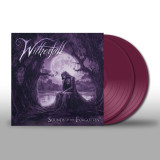
Die in Los Angeles ansässige Dark-Melodic-Metal-Band Witherfall präsentiert ihr viertes Album über DeathWave Records. Der Vorgänger 'Curse Of Autumn' konnte großes Lob in der relevanten Fachpresse sowie die # 20 in den deutschen Album-Charts als auch US-BILLBOARD-Charts verbuchen.
Das neue Album wird von einem ehrgeizigen Zeitplan mit sieben Singles begleitet, von denen jede ein offizielles Video enthält, das die Geschichte des Albums voller Herzschmerz, Wut und Hartnäckigkeit erzählt. Das sind Witherfall, immer bereit, die Extrameile zu gehen, um endlich zur Speerspitze der internationalen Metal-Szene vorzudringen. Witherfall wurde 2013 in Los Angeles gegründet. Seitdem hat die Gruppe drei vielbeachtete Alben veröffentlicht. Die band macht keine Abstriche und engagierte für 'Curse Of Autumn' u.a. den international anerkannten Top-Drummer Marco Minnemann (The Aristocrats, Steven Wilson, Jordan Rudess). Die Band engagierte erneut den Produzenten/Studio-Zauberer Chris "Zeuss" Harris (Rob Zombie, Queensrÿche, Shadows Fall) als Ingenieur/Co-Produzent sowie für Mix und Master
Das Cover von Blake Armstrong (In Flames, Megadeth, Kataklysm, Harry Potter) bietet einen visuellen Gegenpol zur Musik auf dem Album sowie zu Michaels kompromissloser Text-Offenheit.
Neben der CD gibt es schwarzes Vinyl sowie zwei limitierte farbige Versionen!
Robert Chini is a Southern California native music producer, multi-instrumentalist and singer-songwriter who began his musical journey as a drummer at the age of five. Although starting out as a drummer, he soon found a passion for the guitar, keyboard, and bass. Robert's talents led him to become a Motown songwriter during the 70s, and to tour/perform with many international recording artists.
He is currently performing as a solo artist as well as with many popular musicians and singers. Robert also operates his family owned business and recording studio (Sound Jar Studio) in North County, San Diego.
Glasgow based Seated Records return with more 1980s Scottish Post-Punk / New Wave material. In this 8-track mini compilation the label introduces the work of Stirling band 22 Beaches, offering a deep dive into music recorded between 1980-1984 - the majority of which has never seen the light of day!
22 Beaches formed in Stirling in the late 1970s as an evolution of the short lived group ‘Alone at Last’ - drummer Fred Parson’s and guitarist Stephen Hunter being the two who spanned the divide. Out of the six members of 22 Beaches, many were school friends, and the rest naturally fell together. The band toured extensively and played at a truly diverse set of venues across the UK: from a local swimming pool boiler room, to small nightclubs and university parties, to several fundraisers for the miners strike. Maybe most notably of all, drummer Fred Parsons described playing at what he calls “the Grangemouth International”, organised by local promoter Brian Guthrie and which featured an all-star lineup of 22 Beaches, The Exploited and the first incarnation of The Cocteau Twins. A coach was hired to ship the audience to Grangemouth from Stirling, the cost of which was included in the ticket. The gig then paused halfway through for a 'help yourself' buffet. Young promoters take heed. This is how it's done!
Over the course of the 80s the band released music on three different, and now sought after, various artists compilation cassettes. “What Day Is It?” and “Sadie When She Died” were released on a compilation of local Stirling artists 'The A.N.K.L.E File'. The track from which the current record takes its namesake - “Dust” - was initially released on a compilation-tape for the fanzine 'Another Spark'. And ‘‘Zoo” (also featured on this record) was first released on Glasgow label Pleasantly Surprised via compilation, 'An Hour Of Eloquent Sounds', where 22 Beaches rubbed shoulders with early music from Scottish names Primal Scream, Cocteau Twins, The Wake and Sunset Gun. Unfortunately, 22 Beaches never met the same level of commercial success as these others and decided to retire the project in 1984 - leaving their recordings and demos to gather dust (hehe)…until now!
This compilation, “Dust: recordings 1980-1984” follows the band's journey and the changes in their sound over the years. It moves from the raw, punk energy of early DIY recordings through to the A Certain Ratio style Balearica of their later pieces. The record's opener and title track “Dust” is perhaps the most shining example of the latter. Characterised by the plenitude of sonic space in the mix, “Dust” has an almost dub sensibility that is communicated through centrality of Parsons’ drums, McChord’s percussion, and Fildes’ Bass while the harmonising vocals of Sharkey and McGregor chant over the top to give the track its distinctive psychedelic edge. This is an atmosphere only exacerbated by the lofi quality of the recording which sits the vocals in the same aural realm as much 1960s psych-folk. On “Cartoon Boy”, the band strips things down further. A droning bass line persists through the tape fuzz and is accompanied by the sounds of a sole looping guitar chord sequence and McGregor and Sharkey’s vocals - respectively and carefully dancing around one another before harmonising in the most beautiful way. The result is a haunting and abstract Marine Girls style heartbreaker. ‘That Girl’ again delivers a dub adjacent rhythm section similar to that of “Dust”. However, on this instance crisp guitar chords, a distant, phased organ and blue-eyed soul vocal delivery, produce a track that could easily have been a lost Orange Juice recording from their sessions with Dennis Bovel. On “Somebody Got It Wrong” and “One Of Us” the band employ a more macro approach where a jangling guitar with an almost highlife-influenced tone, vocal ad-libs and syncopated percussion give the music a Talking Heads-esque swagger.
Taken together these tracks illustrate a clear trajectory in the band's sound, moving from from the high energy no-wave quality of early recordings towards a more dub influenced, and stripped-back sound - a sonic trajectory followed by so many bands of the time, not least those emerging from the diaspora of Manchester’s Factory Records.
On “Breathing’’ we hear the beginning of this transition, with the strong influence of the oddball NYC disco styles of Was (Not Was) and ZE records. All of this is meshed together with the residual punk rock energy of 1980s UK. This combination is employed to excellent effect with the addition of the distinctly Scottish (and what the band confirmed to me to be spontaneous) vocal delivery of: “Do you love me? Do you want me?” “Aye!” “Do you love me? Do you need me?” “Naw!”.
On the record’s closing tracks, “Zoo” and “Talent Show”, we hear early examples of the band’s work, playing with their rawest all-in-one-take live energy where Hunter’s spiralling guitar riffs and McGregor's distorted vocal exclamations lead the charge. The band recalls that these initial-forays did not always translate so well into multitrack recording and overdubbing: “the deconstruction took away some of the band's natural feel”. On “Talent Show” the record ends with Sharkey delivering an almost unintelligible spoken word section over the top of the track, making for one final, disorientating, almost manic slice of post-punk.
These tracks from 1980-1984 chart the progress of a unique contribution to the world of Scottish Post-Punk and New Wave, encapsulating not only the musical trajectory of 22 Beaches but also echoing the broader sonic landscape of 1980s UK, a testament to the adaptability and creativity of the UK’s underground music of the time.
Studio One was founded by Clement "Coxsone" Dodd in 1954, and the first recordings were cut in 1963 on Brentford Road in Kingston.
Amongst its earliest records were "Easy Snappin" byTheophilus Beckford, backed by Clue J & His Blues Blasters, and "This Man is Back" by trombonist Don Drummond. Dodd had previously issued music on a series of other labels, including World Disc, and had run Sir Coxsone the Downbeat, one of the largest and most reputable sound systems in the Kingston ghettos.
The label and studio were closed when Dodd relocated to New York City in the 1980s.
Lust Pattern slithers its way to Dark Entries with four tracks of deviant electro-wave on Stand, Scatter. Ryan Armbridge has graced Dark Entries several times via his project Linea Aspera, a revered coldwave revivalist duo with Zoe Zanias. As Lust Pattern, Armbridge draws hypnotic paths through the reverb-laden halls of post-punk and electro-funk, coursing in a gait uniquely his own. Built up from improvised jams, the four cuts on Stand, Scatter defy neat categorization while spanning a wide breadth of genres. Opener “Forming Lines” features Drexciyan squelch, silky guitar, and bursts of live drumming; this sounds like a lot, but it coheres into a perfectly simmering stew of funk. “Choreography” preserves the aquatic vibes but bumps the tempo up into space disco territory, complete with laser bleeps and Moroder-esque pads. It’s a mark of Armbridge’s craft that closing track “No Floor” - a searing motorik synth punk jam that recalls Suicide at their finest - sounds not at all out of place, but rather serves as a logical conclusion to this illogical picture. Stand, Scatter drifts across genres but never loses its focus on the unorthodox groove.
London producer Kel McKeown celebrates the release of his tenth album as Kelpe, with a vinyl edition of uncategorisable dance music on Kit Records.
Kelpe's work combines live drumming with synthesis and guitars. Like the nine records that came before it, LP10 treads the line between gauzy melancholia and bustling, dancefloor-ready energy.
Listening to Kelpe's music can feel like fluttering through a photo album at speed. Familiar faces and locations are revealed, nostalgic scenes assembled then scattered by unruly rhythms and samples.
Analogue percussion takes centre stage on LP10. This restless drumming - gear-shifting from hip-hop through to jungle - showcases McKeown's chops as an instrumentalist, while harking back to the scrambled beats that were a hallmark of his early releases.
Kelpe has worked closely with the visual artist Nikita Iziev on this record. Inspired by pioneering film director John Schlesinger, the serendipitous geometry of new wave cinema is mapped out in fractured moments across the music and artwork.
While the track 'Schlesinger' echoes the bouncing unpredictability of the sleeve, 'The Palace Guard Loop' pours neon fertiliser over fender rhodes jazz keys. Adrenalin reaches a zenith on 'Events Proved Me Wrong', as Kelpe hits his stride for a homespun drum and bass workout.
LP10 will be the final full length Kelpe album.
dub & detroit techno-inspired tracks for the dancefloor
The A-side features two timeless tracks by label founder Sub Semantics. "Stay" captivates with melancholic pads, while 'Dub Revolver' is a gentle yet energetic track for situations away
from main time.
The B-side features solo productions by Session Restore and Bernhard Hudalla. The two are known from joint productions on
rauh and soon on Mojuba/ a.r.t.less. With "Jelly", Session Restore delivers reduced, Detroit-inspired techno with highly effective 909-drumming. "Influx" by Bernhard Hudalla rounds off the EP with playful drum clusters and insistent leads.
In 1967, Disperú commissioned trumpeter Toño Reyes to form a band and record an album with a series of songs that reflected the latest tropical music trends, in his own inimitable style. “Mister Boogaloo” combines the influences received from the likes of Mexican drummer Leo Acosta and the emerging Nuyorican boogaloo scene. First time reissue, including its original striking psychedelic artwork and remastered sound. In the few years that the Disperú record label was operative, it managed to open its doors to emerging artists, who were often ignored by the major labels but would go on to leave their mark on Peruvian popular music. In 1967, Disperú commissioned trumpeter Toño Reyes to form a band he called Toño y sus Sicodélicos. During the recording sessions for this album they performed a series of songs that reflected the latest tropical music trends, in his inimitable style. Instrumentals such as 'Mr. Boogaloo', 'El Guayacol', 'La Anticuchera', 'La Peinadora' and 'La Fiesta es Mañana' are versions that follow the lines traced by the Mexican composer and drummer Leo Acosta. In the early sixties, based in Los Angeles, Acosta played with the orchestras of Harry James, Sammy Davis Jr, Tony Bennett, Herb Alpert, and Dámaso Pérez Prado. Mid-decade, Acosta turned to the novel sounds of boogaloo, which immediately caught the attention of young South Americans. The song 'Borinque Bella' is another cover version, originally recorded by The TNT Band, based in New York. Another noteworthy influence on the album is the blind Venezuelan organist Tulio Enrique León, who performed cumbias and guarachas enhanced by his Hammond organ, as is the case of 'Chin chin'. Songs in vogue at the time complete the album. The best known is perhaps 'Es la Lluvia que cae', popularized in Spanish in 1967 by Los Iracundos. ‘Tequila' and 'No te bote', by The Champs and
Sonora Matancera, respectively, were also classics on Lima's radio stations. 'Las hojas secas', by the Mexicans Los Zignos, was so popular that it was even covered by Peruvian rock groups such as Los Steivos and Los 007. The success reaped by Toño y sus Sicodélicos took them straight to another record company, and the group’s records were also re-released in neighboring countries, always with striking psychedelic cover illustrations. First time reissue!
Studio One was founded by Clement "Coxsone" Dodd in 1954, and the first recordings were cut in 1963 on Brentford Road in Kingston.
Amongst its earliest records were "Easy Snappin" byTheophilus Beckford, backed by Clue J & His Blues Blasters, and "This Man is Back" by trombonist Don Drummond. Dodd had previously issued music on a series of other labels, including World Disc, and had run Sir Coxsone the Downbeat, one of the largest and most reputable sound systems in the Kingston ghettos.
The label and studio were closed when Dodd relocated to New York City in the 1980s.
Coming from a diverse background of equal amounts hip hop and rock, the producer behind the alias of nrl:ndr got into dance music late in his musical career. After playing in kraut-oriented bands like So Many Mammals, parts of that group reformed into the live techno outfit Tren Né, with the goal of fusing techno elements with live drums. Playing for illegal raves with a punk-like energy, nrl:ndr has cemented his relationship with his machines in service of the dance floor.
But his solo debut on blundar is quite far removed from that scene. To understand this music, one should be aware of the conditions under which it was manufactured. Reluctant to consider himself an artist in the traditional sense, nrl:ndr makes his music free of anticipation and without apparent goals. To glean into this outré musical space is like putting one's ear to the boarded up windows of the photograph that adorn the front sleeve.
The album makes extensive use of the Roland JV-2080, a sample-based synth rack from 1996 with a distinctly clean sound. Our producer dives deep into the expansion cards (labeled after genres like “Hip Hop” and “World”) for curious and sometimes cheesy samples. But he also forces the JV-2080 to do things which are not its forte, like the arduous task of programming decent kick drums.
Another technique that is testament to his experimental view on music making, is the idea of using sketches of unfinished tracks with different time signatures, and mash them together into something new - of which the results of one of these experiments can be heard on the closing track and its bilingual conversation between ambient and tribal.
Full of stunted rhythms and eerie melodies, the unclassifiable nature of the music of nrl:ndr lies somewhere in the vicinity of IDM, classical avant garde and private press synth. From the epic opening track - echoing the post-kraut drumming style of Michael Shrieve - to juggling with chopped up vocal samples and treading into almost trap-like territories on A4, he crosses into a multitude of genres without getting his hands too dirty with nostalgia.
Cosmic Shuffling took us on its journey last year with its magnificent vocal album COSMIC QUEST. Now the Swiss septet extraordinaire returns with the sequel of its latest album: the instrumental side of the Quest. These two brand new 7” singles present four instrumentals taken from an upcoming full instrumental album due out September 2024. If you wish that Tommy McCook, Bobby Ellis, Roland Alphonso or Don Drummond had written more melancholic instrumentals, these tunes are for you! Burning hot scorchers!
Led by a gorgeous horns and flute top line, ‘Poor M. Collins’ grooves with a rhythmic finesse that will have you swaying to its infectious beat, while ‘Memories of Plans-Bochet’ takes you on a nostalgic ride, leaving an indelible mark on your soul.
Mystic Transfers is a label focusing on experimental music and club cuts from around the world, taken from the suburbs. MYSTIC VALLEY - Mystic Valley is the new musical project by Andrea B, architect, collector and producer from Florence, Italy. His sound is best described as a melting pot of Italian psychedelic influences, from obscure downtempo to new beat, as well as English breakbeat and German EBM. After years of Tropical Animals he started with Felis Oxiana the project ‘’Galattica’’ and from 2021 is one of the founders of Mizuna. Heading coach of the post punk group Zona Utopica Garantita, he began to work with them since they started to play, and together they launched the label ‘’Mystic Transfers’’, focusing on experimental music and club cuts from around the world.
SPO - Drummer in the ’00 of the underground scene in Florence fond of the 70s Progressive Rock sounds and experimental, co-founder in 2006 of the DIY label La Statua Sommersa Produzioni.
Currently in Florence after the experiences in Rome and 5 years in Berlin with many gigs around Europe and albums with his solo project Die Lust! and the italo-german duo Bloodygrave & Die Lust! establishing itself as a producer and composer in the electronic european musical scene Minimal Wave e Synth Wave. From 2017 began a new solo project named SPO (Solo Per Oggi).
A new label straight from Ukraine, called Frequencies, is ready with its first joint. For this VA release they decided to gather 4 artists all around Ukraine for the unforgettable house journey.
A-side is starting with Odesa-based guru Rayo (All Inn, Fabric, Propaganda, Body Parts) and continues with a high-quality vinyl selector and producer Vinaya (Wex, Telomere Plastic, Black Pony Orchestra Records) from the capital of Ukraine.
On the flipside we’re having the youngest one from the list – Peshka (Visionquest, Banoffee Pies, Alien Recordings), who was born in Mariupol + last, but not least, the owner of the label, also member of the Aimed trio – Dibe (Adult Only, Drumma, Serialism), who’s currently based in Switzerland.
What you do is a fundamental question. But it's how you do something that ultimately determines the effect." — Julian Sartorius
With 'RLLRLRLLRRLRLRLRLLRLRLR', Swiss drummer and sound artist Julian Sartorius presents his third album in three years. Together with 'Ensemble This | Ensemble That' Sartorius has created a mesmerizing 39-minute percussion album that conclusively expands his artistic output. For the first time, an ensemble plays an idea conceived by Sartorius, while he assumes the role of an interactive conductor, manipulating the sounds made.
Sartorius is known for his fluid and versatile solo performances in which he continually modulates the sound of his instruments, adding objects and progressively unfolding his sound world. The idea of expanding this practice was already gestating when the 'Ensemble This | Ensemble That' invited him for a collaboration. Together with the drummers and percussionists Brian Archinal, Victor Barceló, Miguel Angel Garcia Martin and Bastian Pfefferli the concept was further explored, elaborated upon in detail, and finally realized.
'RLLRLRLLRRLRLRLRLLRLRLR' is both title and score for the ensemble's four percussionists. The pattern, consisting of 23 individual beats, is played continuously by the ensemble while Sartorius gradually makes alterations to the instruments played. The result is a piece that has a sustained rhythmic flow yet is perpetually changing. Sartorius' interventions and the precise musicality of the ensemble allows the listener to discover an expansive array of moods and intensities.
The album is structurally recursive but develops an almost mystical magnetism through an odyssey of diverse musical landscapes. Sartorius explains: "It amazes me deeply how much the sentiment can change based on a musical mood - this sense of curiosity is made audible with this album." The album recording itself is designed as an endless loop: at the end of the recording, the ensemble's sound has returned to its starting point, thereby completing an endless, self-contained cycle, with no beginning or end. In this way, Sartorius also echoes his 2021 album 'Locked Grooves'.
Julian Sartorius' precise and multi-layered rhythmical patterns are keen excursions into the hidden tones of found objects and prepared instruments, bridging the gap between organic timbres and the vocabulary of (experimental) electronic music. He has released numerous solo albums, creates audiovisual art works, collaborates with musicians, writers, and artists, and performs live in intimate venues and on festival stages.
Ensemble This | Ensemble That (ET|ET) have established themselves not only as interpreters of contemporary music, but also as collaborators to a wide range of artists including projects like Zimoun, Myriam Bleu, Strotter Inst., Lê Quan Ninh, Marko Ciciliani, Jürg Frey, and Michael Maierhof, amongst others.
Jackie Mittoo is one of the most important artists in the history of Jamaican music. As founding member of the legendary Skatalites, as in-house arranger/producer at Studio One and as a solo artist in his own right leading groups such as The Soul Brothers, Sound Dimension and Soul Vendors.
These classic and rare recordings were made in the mid 1960's at Studio One. The Soul Brothers bridged the gap between Ska and the arrival of Rocksteady mixing it all up with Funk, Jazz and Latin styles. The Soul Brothers recorded at Studio One between 1965-1967. This was the transitionary period between Ska and Rocksteady where the music was a mixture of Funk, Latin and Jazz sometimes with a reminder of Ska and the hint of Rocksteady.
The previous era of Ska had been dominated by the Skatalites, the first in-house band at Studio One who created classic hits such as "Guns of Navaronne", "Man in the Street", "El Pussy Cat" and many more. Unfortunately the strong personalities in the group meant that The Skatalites stayed together for less than two years. It was also around this time that the mentally unwell Don Drummond was arrested for the murder of his girlfriend, the dancer Margerita.
In August 1965, barely a week after the demise of the original Skatalites, The Soul Brothers (featuring ex-Skatalites members Jackie Mittoo, Roland Alphonso, Johnny Moore and Lloyd Brevitt) were up and running as the new house band at Studio One.
The Soul Brothers were essentially a collective, releasing material under their own name or under a nominal leader (usually Jackie Mittoo or Rolando Alphonso). The group line-up changed over time with Bobby Ellis (trumpet), Bryan Atkinson (bass), Dennis Campbell (Sax), Harry Haughton (guitarist) and Joe Isaacs (drummer) replacing various members alongside the ever present Jackie Mittoo.
REVIEWS
"Jackie Mittoo was a true star of Jamaican music; a founder member of The Skatalites, a prolific composer and the keyboard powerhouse behind many a classic tune. His simple, often hypnotic approach, to ska, rocksteady and reggae made him one of the most distinctive sounding musicians of the era." BBC.
"Jackie Mittoo was one of the great names in Jamaican music, manning the keyboards for the Skatalites, the Soul Vendors, and Sound Dimension-- three of the greatest house bands of the 60's
(and I mean anywhere, not just in Jamaica)." PITCHFORK.