The undisputed kings of garage rock are back! It’s been 22 years since the last Headcoats album, but now Billy, Bruce, and Johnny return with a brand-new studio album!
Recorded last year at Ranscombe Studios in Rochester. Billy, Bruce, and Johnny kindly answered some pertinent questions…You got back together recently as Thee Headcoats Sect to make the ‘Tribute to Don Craine’ EP. What was it like working with each other again after all this time? BILLY: It was 'fab' and 'gear.' BRUCE: The weirdest thing for me was how weird it wasn't.
It was like time compressed, but to the 'good old days', early on. I was wary that it 'wouldn't be like Thee Headcoats', but it was. JOHNNY: I'm with Bruce and Billy on that one. I think we were all surprised how it all just worked. If I remember correctly, we kicked off role playing like we detested each other. Then we got started and well, you can hear the result.
What were the first songs you ran through when you got in the studio? BILLY: That’s a very good question. No idea. BRUCE: I can't remember. They all sound the same to me. JOHNNY: Bill had stuff on his phone that went “KSSHHCCCKSSHHHH”! So, we did that first. You’ve also paid tribute to Don with a track on the Irregularis album – ‘Oh Leader We Do Dig Thee’.
He was, along with the other members of Downliners Sect, a big inspiration to Thee Headcoats. When did you first become aware of his music and what was he like to work with? BRUCE: We were given (or possibly lent) a reissue of the Sect's first LP around 1977, marketed as 'Punk From The Vaults', which certainly floated our boats and definitely popped our corks, due to the somewhat aggressive yet carefree nature of the tunes and sound in general. Ollie, our old bassist, found an ad in a trade magazine for them with a contact number for a Michael O'Donnell, which I excitedly called almost immediately.
T'was none other than Don his'self and we managed to convince him into venturing down to Rochester to record some tunes with us which became the first Headcoat Sect EP. We were fairly starstruck and presented him with a brand new 'dearstalker' (or 'Headcoat', as they were now known). He was very accommodating and a great laugh and spent the evening with us, regaling us with tales of yore. I recorded a lot of it on cassette, which I may still have somewhere. Gawd bless Don
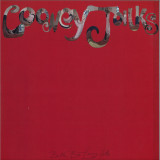
Bella Boo is back on Studio Barnhus with her most direct and club-focused material yet. A veteran of the Stockholm underground, named “one of the most promising new artists not only on Studio Barnhus, but in house music in general” by Resident Advisor, Bella has channelled the energy of her recent DJ dates at Berlin’s Panorama Bar and London’s Phonox into this Looney Talks EP, a collection of four intoxicating dance trax full of intense rhythmic themes and inventive new takes on classic rave sounds.
out of Stock
Last delivered 2 years ago available to reorder, subject to availability
“These things happen,” says K. Leimer of LUYU. Listen Until You Understand is a test drive through an obstacle course designed for new instruments, arrangements, juxtapositions, and real-time experiments dedicated to leaving the original impulses untouched and unadorned. Joined at times by digital percussionist Dolphie Stein, the music throws itself against itself without loyalty to genre or form, mashing granular particles into a tremulous spectrum of soundwalls, transitions, noise, distortions, and the occasional clearing. As close to live improvisation as one can get in a multitrack studio setting, LUYU takes generative techniques and drops them into short-form events by building its soundstage in thickets of shifting elements, collapsing phrases, broken signatures, and implied patterns. An outlier in Leimer’s catalog of general stillness and subtle detail, LUYU revels in the bare sound of things usually hidden in the mix.
Kerry Leimer founded Palace Of Lights in 1979. Leimer’s work has also been issued by Abstrakce, Autumn, First Terrace, Les Giants, Invisible Inc., Origin Peoples and RVNG. His work is included in the Cherry Red Noise Floor compilation series and his early cassette work is featured in the critically acclaimed VOD box set American Cassette Culture. Leimer has been actively producing music since the mid 1970s—his current catalog includes twenty solo albums plus collaborative albums with Savant, Marc Barreca, and Three Point Circle. Recent soundtracks include work for video artists Cristiane Bouger and Fred Birchman, HBO’s How To With John Wilson and the Netflix documentary John Was Trying to Contact Aliens. His work is included in the collection of The British Library.
“This is me at my most imaginative, freakiest, and yet still most grounded and introspective,” says Japanese American rapper/actor Lyrics Born not only about his new album Vision Board, but also his “self” and his existence. “I feel like a new man! I’m healthier physically, spiritually, mentally, and emotionally.” The lead single and video “Diamond Door” is a pop/rap banger that lands you with an infectious barb and keeps you hooked for days, and is a thinly-veiled tribute to a particular style of female appreciation, but it can also be taken as a welcome mat to the new era of Lyrics Born. The accompanying video which shows Lyrics Born in his current physical form - svelte, stylish and with a confident swagger - reinforces this next chapter in his life. 60 pounds lighter, he lost the weight during the pandemic when he knew he needed to make a change. “Touring was becoming harder, and I was having all these weird health problems, but nothing that anybody could put their finger on,” he explains “My anxiety was high. I was not sleeping well. I was on the verge of really bad health.” And this improvement brought more confidence which shows in his new album. Vision Board is a focused affair that found him stretching his creativity farther and challenging himself to write in a way he’s never written before. Recorded primarily in New Orleans and produced by Rob Mercurio of Galactic (who also produced 2015’s Real People and 2018’s Quite a Life), it posited him in a new environment that helped his creative juices flow even more fluidly. “There’s nothing like recording in the Crescent City. It just gets in your blood, and the results are always funky and wild.” “This is about as psychedelic as I’ve ever been,” LB says. “I’m so proud of this album. I’m in a different space. The world is in a different space, and I wanted to celebrate that, loosen up and really create some imagery and share some emotion that I never have. I was listening to a lot of Shuggie Otis; a lot of obscure psychedelic soul and later Temptations,” he explained. “This is like if Alice in Wonderland was Japanese.” Vision Board was also inspired by another Bay Area rap luminary, although one who’s no longer with us - Gift of Gab. The dexterous Blackalicious MC and fellow Quannum Projects alum had a profound effect on Lyrics Born’s life, both creatively and philosophically. “I asked myself on some of these songs: ‘How would Gab approach them?’” he said. “I’d play with certain cadences, certain styles; I tried to stretch stylistically, lyrically and vocally on every single song. None of the patterns are the same.” Lyrics Born’s vulnerability shines through on the nine-track effort, something he’s not ashamed to admit (nor should he be). At one point during the pandemic, he was losing one friend, peer or family member every other week - from Zumbi of Zion I to Gift of Gab to Digital Underground’s Shock G. While many of the songs are deeply introspective, he had to “write some fun shit,” too. Celebratory horns, uptempo rhythms and fiery bars pepper the project from start to finish, and truly encapsulate Lyrics Born’s evolution of not just a groundbreaking Asian-American MC but also a human being. As the only Asian-American MC to release 10 studio albums, the first Asian-American to play major music festivals like Coachella and Lollapalooza and the first Asian-American to release a greatest hits compilation, Lyrics Born has been breaking barriers his entire life - and he’s not going to stop anytime soon. From the bombastic and tribal “I’m the Best Rapper in the World” with its self-winking boastfulness to the playful scat of “Bang Bang Bang” that slinks like an outtake from West Side Story, to the smooth and seductive “Who's The Best? (Dear Young LB)," to the psychedelic and swoony ”Alligator Boots” with it dreamy “Walk on the Wildside”-esque reverby sway, Vision Board sees Lyrics Born tackling different tones, textures and genres without fear and making them completely his own. It's an eclectic body of work that boasts more synths, more psychedelia and is generally more abstract.
Repress! Following the success of two collaborative releases (EMC "The Show" / 2008 and Ace & Edo G "Arts & Entertainment" / 2009), Masta Ace joins forces with the metal faced MF Doom for Son of Yvonne, a highly personal concept album that celebrates the life and legacy of Ace's recently departed Mother. Like his 2004 landmark Disposable Arts, Son of Yvonne is meticulously constructed with stories, settings, and characters that resonate with flesh and bone humanity. Interstitial vignettes provide a thematic backbone to the experience, and each track complements and completes the previous to form a narrative whole: a sometimes visceral, sometimes nostalgic slice of Ace's young life in Brownsville, Brooklyn. Entirely underscored by MF Doom's iconic Special Herbs instrumentals, Son of Yvonne features the Juice Crew general Big Daddy Kane, new comers Pav Bundy (The Bundies), Reggie B and even MF Doom on the mic. It's Masta Ace's no frills flow, however, that looms largest above the dusty samples and digger loops that define Doom's production. Ace's photo-realistic rhymes about stick-up kids, spraycan artists and wack emcees add extra gravity to his already celebrated reputation as "truly an underappreciated rap veteran and underground luminary" (Allmusic Guide). Like Eminem recalls in his 2008 autobiography The Way I Am, "Masta Ace had amazing storytelling skills. His thoughts were so vivid."
If credibility were currency, FAKE NAMES" wealth would be off the charts. Composed of Brian Baker (Minor Threat, Bad Religion, Dag Nasty), Michael Hampton (S.O.A., Embrace), Dennis Lyxzén (Refused, INVSN, The International Noise Conspiracy), Johnny Temple (Girls Against Boys, Soulside) and the newest member Brendan Canty (Fugazi, Rites of Spring), the band is a veritable post-hardcore dream team. However instead of rehashing the past, Expendables is a reinvention that sees the band dialing back the distortion and leaning into the melodies. The result pairs their unparalleled pedigree with a pop sensibility that"s slightly unexpected and wholly satisfying. "For our last record 2019"s FAKE NAMESthe general influences were 70"s U.K. punk and power-pop; but it wound up with a little classic rock vibe as well, like the Vibrators meets Aerosmith. We never saw that coming!" , Baker explains. For Expendables the band enlisted producer Adam "Atom" Greenspan (IDLES, Yeah Yeah Yeahs). Baker explains, "The pop influences are a little more out front on this one and the production really helps it shine. It sounds more direct, more urgent." Expendables is the latest exchange in a musical conversation that spans four decades. Baker aptly refers to the lineup of FAKE NAMES as a "mutual admiration society" and says that once the five members got in the same room together, it felt as if they had already been in the band together for years.
If credibility were currency, FAKE NAMES" wealth would be off the charts. Composed of Brian Baker (Minor Threat, Bad Religion, Dag Nasty), Michael Hampton (S.O.A., Embrace), Dennis Lyxzén (Refused, INVSN, The International Noise Conspiracy), Johnny Temple (Girls Against Boys, Soulside) and the newest member Brendan Canty (Fugazi, Rites of Spring), the band is a veritable post-hardcore dream team. However instead of rehashing the past, Expendables is a reinvention that sees the band dialing back the distortion and leaning into the melodies. The result pairs their unparalleled pedigree with a pop sensibility that"s slightly unexpected and wholly satisfying. "For our last record 2019"s FAKE NAMESthe general influences were 70"s U.K. punk and power-pop; but it wound up with a little classic rock vibe as well, like the Vibrators meets Aerosmith. We never saw that coming!" , Baker explains. For Expendables the band enlisted producer Adam "Atom" Greenspan (IDLES, Yeah Yeah Yeahs). Baker explains, "The pop influences are a little more out front on this one and the production really helps it shine. It sounds more direct, more urgent." Expendables is the latest exchange in a musical conversation that spans four decades. Baker aptly refers to the lineup of FAKE NAMES as a "mutual admiration society" and says that once the five members got in the same room together, it felt as if they had already been in the band together for years.
Sebastian Gummersbach's Yore debut brings with it a further refinement of the material he's created for the German label Raw Soul. It specializes in material infusing modern house and techno grooves with flavourings of jazz, funk, and soul, the result a timeless take on house music. Anyone who's been keeping tabs on Andy Vaz's Yore releases will realize immediately that the same description could be applied to his imprint.
Given all that, it's easy to understand why Gummersbach, a producer hailing from Neuss, Germany, is such a natural fit for Yore. There's no small amount of artistry in play in the EP's four tracks, each one arguing strongly on behalf of his skills as an arranger and mood shaper. No cut better shows that than the opening “Rough Edges,” which is, frankly, anything but rough. He builds the arrangement methodically, starting with warm, billowing washes and then layering in step-by-step dub atmospherics, a strutting house pulse, congas, and synth ear-worms—a seductively smooth intro to the release.Gummersbach might have been listening to Hall and Oates's “I Can't Go for That (No Can Do)” prior to crafting “Calming Solitude” when the latter sounds so much like a clubby instrumental riff on the hit. Here too silky chords and synth textures merge with a rousing beat pattern to draw listeners to the dance floor.
On the flip side, “Eden” initially changes things up with a classic B-Boy beat and handclaps, but the tune gradually aligns itself to the character of the EP's other body-movers, even if acid-tinged synths become part of the mix. Closing out the release is the most techno-oriented of the four cuts, “Undisclosed Thoughts,” acid once again central to the track's identity and the chugging groove frothy. The word Eden naturally calls to mind the Biblical paradise, and consistent with that the tone of Gummersbach's EP, its A-side cuts especially, is generally smooth, serene, and harmonious; it's also, as stated, a seamless addition to the Yore catalogue.
out of Stock
Last delivered 2 years ago available to reorder, subject to availability
Fazerdaze, aka Auckland-based singer / producer / multi
nstrumentalist Amelia Murray, is back with new music after a
very intentional five year pause.
Fazerdaze returns with ‘Break!’, an air-punch purge in musical
form, marking an important reintroduction to an essential artist
of our times.
In a society where being strong and resilient is often held up like
a badge of honour, it’s much, much harder to acknowledge
when enough is enough - to accept when it’s time to let go. It’s
a truth that Murray has spent years wrangling with, but one
whose story thankfully comes with an empowering punchline of
personal reclamation. Rewind back half a decade and,
objectively, things for Fazerdaze were hitting their stride. Then
residing in Auckland, an early determination to graft hard and
“put herself in the right places” had led to working for and then
signing with legendary New Zealand label Flying Nun. A debut
LP - 2017’s ‘Morningside’ - followed, full of gauzy melodies and
nfluenced by Frankie Cosmos, Japanese Breakfast, and the
dream-pop landscape of the time.
Finishing up touring for the record at the end of 2018, Amelia
speaks of a deep sense of burn out and, more than that, of
feeling the “wheels starting to come off” in her general life. “No
longer being stoic and strong was the best thing I ever did for
myself. Giving up on the people and things that weren’t working
in my life was this big release where I could finally put down this
weight that I was carrying, and ever since then everything has
been better in my life overall,” she continues with an audible
sense of relief. “I can hear my intuition and write songs and be
creative; I signed a record deal, I moved into my own place. It’s
like the floodgates opened for good stuff coming into my life.”
Black vinyl in a single sleeve jacket and printed inner sleeve.
Design by Joey Clough.
Press - Reviews & features in The Guardian, The FADER, Brooklyn Vegan,
Complex, Consequence, DIY, Narc Magazine, Pigeons and Planes.
Radio - BBC 6 Music A-List.
Online - Support from both fans & fellow musicians, including posts shouting
out ‘Break!’ from King Krule & Lorde.
On her third album, Berlin-based Dutch-Italian composer and sound designer Aimée Portioli, aka Grand River, asks what guiding forces might be driving, enticing, and affecting us. “All Above” is rooted in her deeply personal philosophy as an artist, blurring the boundaries between electronic music and acoustic music and sculpting familiar ambient forms into personal themes painted with rich emotional colours. Written painstakingly over the last two years, the album is the most ambitious and divergent set of music Portioli has assembled so far, with a wide variety of instrumentation (including voices, strings, organs, guitars, and synthesisers) focused around the piano. She‘s keen to assure listeners that while that instrument isn‘t always heard, it‘s constantly at the forefront of the album, shepherding its emotions and anchoring its mood. It makes sense then that on the opening track ‘Quasicristallo’, the acoustic piano is the first element we hear, recorded closely, so its characteristic rattle and creak can speak as loudly as the familiar tones themselves. When the music blooms into abstraction and processed electronics, it‘s almost imperceptible: reverb mutates into ghostly vapour trails, and distortion forms the keys into another instrument entirely.
“All Above“ follows 2020‘s acclaimed “Blink A Few Times To Clear Your Eyes“ and 2018‘s “Pineapple” released on Donato Dozzy and Neel‘s Spazio Disponibile imprint. Having garnered praise from outlets like Resident Advisor, XLR8R, The Quietus, Inverted Audio, and The Verge, Portioli operates in a unique space within the electronic music scene, straddling the art world and the wider electronic music scene. She‘s developed sound art installations for Rome‘s La Galleria Nazionale and the Terraforma Festival-related Il Pianeta, and has appeared at Barbican, MUTEK, Le Guess Who?, Kraftwerk, and other internationally renowned venues and festivals, often collaborating with Marco Ciceri on A/V presentations. Ciceri also maintains the visual identity of Portioli‘s label One Instrument, a concept imprint that asks artists to create music only using a single device. All this experience is poured into “All Above”, a richly visual album that‘s far more than just an imaginary film score. While on ‘Human’, her piano punctuates a rhythmic synthesised bassline and smudged choirs that can‘t help but trace out the silver screen. The composer is keen to clarify that she doesn‘t think of her music (or sound in general) in visual terms.
Portioli studied as a linguist and used her art to develop an emotional language that‘s not bound by expected cultural constraints. When she adds a different instrument or process, it‘s not to reference a visual cue but to mark a journey through different states of being. Each element embodies a different emotion or mood: the electric guitar represents strength or violence, synthesisers shuttle us into the dream world, and the acoustic instruments highlight intimacy and warmth – even heart. Read like this, the tracks are like meditative poems rather than cinematic vignettes: ‘The World At Number XX’ is seemingly centred around a chugging synthesised arpeggio, but the cosmic, Klaus Schulze-esque pads, strangled guitar and evocative organ tones hint at the open-hearted, literate psychedelia of the 1970s; ‘In The Present As The Future’ meanwhile is breathy and windswept, juxtaposing urgent rhythmic phrases with light, flute-like gusts of harmony.
Dedicated to Editions Mego founder Peter Rehberg, who died suddenly last year, “All Above” demands engagement and refuses to evaporate into the background. The album asks listeners not just to absorb the album as a whole but notice the cracks in the structure and discern the tension they cause. That‘s never more evident than on the closing track ‘Cost What It May’, a piece of music almost jarring when Portioli chops into noisy waves of electric guitar. In the wrong hands, this might sound like a power move – some rock posturing to act as a finale. But Portioli‘s expression is different. She‘s forcing a level of engagement that perceives the negative space as just as necessary as the saturated positive, and what could be more haunting and emotionally resonant than that?
Composed, produced and mixed by Aimée Portioli.
Mastered by Stephan Mathieu.
Cut by Andreas Kauffelt at Schnittstelle, Berlin.
Photography by Federico Boccardi.
Design and layout by Riccardo Piovesan.
out of Stock
Last delivered 9 months ago available to reorder, subject to availability
Welcome to the third part of the TELE MUSIC saga, the label founded by Roger Tokarz. He deeply marked the era with his audacity and his vision of music on film. This irresistible new selection tells the story from 1968 to 1985 of a prolific label that sometimes produced ten albums a year, and which delighted many French and foreign film directors who, to 'flavour' their films, drew on this sumptuous catalogue.
In this volume 3 TELE MUSIC, we have highlighted legendary artists who have left an indelible mark on the history of the music bookshop and on the history of music in general:
• Janko Nilovic (also known as Yanko Nilovic, Anady Loore, E. Orti or Alan Blackwell),
• Jean-Jacques Debout with his irresistible “Mitsuko” released in 1967 and re-released in 1969 on “Music Bazaar”, • Bernard Lubat, the impressive percussionist, vibraphonist, multi-instrumentalist and very good “scator” (Bernard played in the Doubles Six with Quincy Jones and Eddy Louiss),
• Gabriel Yared, the man with a hundred film scores. Arranger and composer for Johnny Hallyday and Charles Aznavour, among others!
• Hervé Roy conductor and writer for Nancy Holloway,
• George Chatelain, pianist, guitarist, clarinettist, founder of the famous studio “CBE” created in 1966 with his sister Janine Bisson and his high school friend Bernard Estardy.
All these composers were renowned for their acute sense of composition, arrangement, conducting and inter- pretation, and in their own way left their mark on many sound recordings of musical illustration "made in France!
CBE, the Chatelain, Bisson and Estardy studio is located in the 18th arrondissement of Paris. Still in operation and run by Julie Estardy, it has been receiving major artists for over half a century. It is a place of reference. At the time: Johnny Hallyday, Claude François, Sheila, Carlos, Françoise Hardy, Nino Ferrer recorded their hits there.
Now it's the turn of Sebastien Tellier, Bertrand Burgalat, Keziah Jones, Tony Allen, Jeff Miles to name but a few. CBE and its giant Bernard Estardy put TELE MUSIC in the best conditions to produce an atypical and powerful sound.
Bernard Estardy had a custom- built mixing console built by his German friend Gunther Loof, offering the perfect tool for recording 4 and then 32-track Arp 2000, Moog, Korg, Prophet synthesizers and all acoustic instruments. The field of experi- mentation was limitless.
Until now, the titles of this collection were only available in vinyl format, via rare and expensive prints that collectors sell for a high price on dedicated websites. This volume 3 gives you access to the "crème de la crème" of the legendary repertoire made in France!
out of Stock
Last delivered 3 years ago available to reorder, subject to availability
"Hello It’s Me" sings Signe Marie Rustad in her crystal clear, inimitable voice. And with that, she’s back, three years after the release of her successful third album, When Words Flew Freely. The above lyric is taken from a song bearing the same name, the first single off Rustad’s fourth album, Particles of Faith. Known for her poetic lyrics and vivid songwriting, and backed by a tight knit band that’s been with her for years, Rustad’s new album offers a natural transition from the already classic When Words Flew Freely (WWFF). However, Particles of Faith also brings something completely new and fresh. WWFF presented a broader, organic and piano-driven Laurel Canyon-sound, and less of the americana sound present on Rustad’s first two releases. Particles of Faith is harder to place in any genre, other than in the broader singer-songwriter tradition, helmed by pioneers such as Joni Mitchell and Carole King. But Rustad also points to a host of other inspirations. Alternative pop/rock from the 80’s and 90’s have always been a big influence on Rustad, and on Particles of Faith, this is more evident than ever. R.E.M., Fiona Apple, Crowded House and Tori Amos were important components both in the artist’s record collection and on her TV screen via MTV. Seeing as this era was also the golden age of the saxophone, it was only natural to include a three-minute-long sax solo, courtesy of acclaimed Norwegian jazz musician Harald Lassen – a solo that “made me cry” says Rustad. The album is produced by Rustad along with indie pop hero Kenneth Ishak. “This is the music coursing through my veins,” says Rustad about the album. Rustad has been critically acclaimed ever since her 2012 debut, but with WWFF, things really took off. Rave reviews, inclusion on several year-end lists, live performance on Norway’s biggest talk show and a booking to Norway’s biggest festival followed the release. The album was awarded a Spellemann award (Norwegian Grammy) for lyricist of the year. After widespread touring since the fall of 2019, Rustad’s performance on Øyafestivalen’s main stage in August 2022, marked the wrap up of the WWFF project, while it simultaneously introduced the next chapter, announcing the new album with the performance of two new songs. The songs on the album are snapshots from a life, and “particles of faith” refers to keeping the faith in yourself, love, the people around you and the world in general throughout everything that you endure in life. It can be a kind of strength that you may think comes from the outside, but is actually found inside of us.
"Hello It’s Me" sings Signe Marie Rustad in her crystal clear, inimitable voice. And with that, she’s back, three years after the release of her successful third album, When Words Flew Freely. The above lyric is taken from a song bearing the same name, the first single off Rustad’s fourth album, Particles of Faith.
Known for her poetic lyrics and vivid songwriting, and backed by a tight knit band that’s been with her for years, Rustad’s new album offers a natural transition from the already classic When Words Flew Freely (WWFF). However, Particles of Faith also brings something completely new and fresh.
WWFF presented a broader, organic and piano-driven Laurel Canyon-sound, and less of the americana sound present on Rustad’s first two releases. Particles of Faith is harder to place in any genre, other than in the broader singer-songwriter tradition, helmed by pioneers such as Joni Mitchell and Carole King. But Rustad also points to a host of other inspirations.
Alternative pop/rock from the 80’s and 90’s have always been a big influence on Rustad, and on Particles of Faith, this is more evident than ever. R.E.M., Fiona Apple, Crowded House and Tori Amos were important components both in the artist’s record collection and on her TV screen via MTV. Seeing as this era was also the golden age of the saxophone, it was only natural to include a three-minute-long sax solo, courtesy of acclaimed Norwegian jazz musician Harald Lassen – a solo that “made me cry” says Rustad. The album is produced by Rustad along with indie pop hero Kenneth Ishak. “This is the music coursing through my veins,” says Rustad about the album.
Rustad has been critically acclaimed ever since her 2012 debut, but with WWFF, things really took off. Rave reviews, inclusion on several year-end lists, live performance on Norway’s biggest talk show and a booking to Norway’s biggest festival followed the release. The album was awarded a Spellemann award (Norwegian Grammy) for lyricist of the year. After widespread touring since the fall of 2019, Rustad’s performance on Øyafestivalen’s main stage in August 2022, marked the wrap up of the WWFF project, while it simultaneously introduced the next chapter, announcing the new album with the performance of two new songs.
The songs on the album are snapshots from a life, and “particles of faith” refers to keeping the faith in yourself, love, the people around you and the world in general throughout everything that you endure in life. It can be a kind of strength that you may think comes from the outside, but is actually found inside of us.
Dublin-based producer Moving Still further blends both his Saudi Arabian and Irish heritage on 'Kalam Hub', a triumphant new EP that marks the fifth release on CWPT/Cooking With Palms Trax. Following a series of 12” edits and original productions that have put his sounds in the record bags of DJs including Hunee, Nabihah Iqbal and Esa Williams, 'Kalam Hub' presents an ambitious expansion of the Moving Still sound, delving into his identity and background to open up imaginative, universal new corners for club culture.
This potent musicality is immediately evident from the first notes of 'Kunafa King'. Taking its title from a traditional Arabic dessert, analogue midi sounds deliver a skewed take on the traditional Saudi rhythms of the artist's youth, before expanding into a wistful diversion for any self-respecting dance floor. It's a trick Moving Still pulls off again on the pulsing 'Hayati 89', which transforms from a traditional aesthetic into a blistering, neon-tinted Italo banger, the kind of track designed to compliment an accelerated spin in the car gracing the eye-catching cover of ‘Kalam Hub’, a collaboration with the artist alongside Manchester-based graphic design studio, Dr. Me.
Concluding the record's A-side, the rhythms take a trippier turn for the duration of 'La Titasil Feeya'. Translating to “don't call me!” and making sonic reference to teenage years immersed in rock, metal and general angst, it unfolds as something akin to Middle East-tinted techno with a formidable kick drum, before exploding in colourful, organic breakbeats. Immediately on the flip, the sense of wonder returns in a sonic mirage for 'My Bosa Is For You', weightless rhythms blending with an electric organ and charming, lightly psychedelic breakdowns.
Further sonic tricks fall from Moving Still's delicately-tailored sleeves on 'Haram Odyssey', where an almost impossibly tight bass line provides the function for contrasting synthesis and unpredictable percussion, drawing parallels between the sometimes confusing aspects of the artist's dual-cultural life as a child, through to the music he makes as an adult. Fittingly, the record concludes with ‘Kalam Hub', a triumph of minimalist percussion and traditional instrumentation that pays tender tribute to the Moving Still's grandmother, translating simply to “Love Talk”.
out of Stock
Last delivered 8 months ago available to reorder, subject to availability
Originally released in 2012, the second album by the São Paulo-born composer Rodrigo Campos marks a turning point in both lyrical and aesthetic inspiration. “Bahia Fantástica” is the result of the absorption of a then recent influence of soul music (especially Curtis Mayfield) and is in the middle of this path marked by an unlikely geography in the lyrical part (São Mateus, Bahia, Japan) and by an expansion of sound ( from samba to the indefinable, with a passage through black American music).
The album turns ten years old in 2022 and exudes vitality. The soul reference takes on a different aroma when it passes through the filter of the composer and his band – formed by Kiko Dinucci on guitar, Marcelo Cabral on bass, Maurício Fleury on keyboards, Maurício Takara on drums and Thiago França on sax: it has Brazilian sauce, hints of afrobeat and a very particular seasoning. The lyrics bear the artist's mark: they project scenes in the listener's imagination and design the characters and environments with their own style of subjective chronicle. Bahia is both imaginary and intimate in Rodrigo Campos’s music.
out of Stock
Last delivered 3 years ago available to reorder, subject to availability
Parenthesis was born out of the creative exchange between Yarni and GMM. The project wasn't intended to become an album. More so a general swapping of ideas in the hope of composing some music and sharing each other's experience in their musical fields. What started out as a few unfinished demos became the focal point of reflection.
Not that the pandemic became the subject of the record, more so a coincidental catalyst that projected their initial muses to become completed bodies of work. The idea of a Parenthesis casting over the paused pieces became the core concept in which it flourished.
out of Stock
Last delivered 3 years ago available to reorder, subject to availability
“A lemma is a generally minor, proven proposition which is used as a stepping stone to a larger result” - Wikipedia
We are proud to present Lemma2!
As a true lemma it both stands on its own and supports the larger theorem: to explore bass heavy music across a span of tempos and time signatures. Lemma2 goes deeper into the ideas presented in Lemma1, this time drawing inspiration from DnB, Dubstep, and Footwork. The result being a collection of sprawling 160BPM polyrhythmic rollers.
Side A ventures into sound design, mangling field recordings collected on travels far and beyond into almost unrecognizable shapes.
Side B takes on a more percussive tip, driving for the dance floor with some stepping d&b-not-d&b business and footwork interpretations.
out of Stock
Last delivered 3 years ago available to reorder, subject to availability
After a year and a half writing and recording rock music, I needed to clear my head. I listened to and made music where things generally happen gradually rather than suddenly. I would set up patches on a Monomachine or Analog Four and listen to them, hearing one sound morph into others, making changes to a patch only after having listened for quite a while, gradually adding elements, and finally manipulating the sounds on the fly. All tracks were recorded live to CD burner, with no overdubs, and executed on one or two machines.
While I was almost exclusively listening to artists such as Chris Watson, Peter Rehberg, Bernard Parmegiani, CM Von Hausswolff, Jana Winderen, Oren Ambarchi, Hazard, Bruce Gilbert, Klara Lewis, Ryoji Ikeda, and so on, I was also inspired by my mental image of John Lennon's tape and mellotron experiments he made at home during his time in the Beatles, as well as events like the first minute of Bowie's Station To Station, ...And The Gods Made Love by Jimi Hendrix, the synths in the song Mass Production by Iggy Pop, and the general idea of Eno's initial concept of Ambient music.
Music being a solitary sculpture in sonic space was the main motivating thought. I was looking at pictures of sculptures and trying to make music that simultaneously conveyed both movement and stillness. I refrained from sudden musical changes, especially avoiding sequences of notes and rhythms. In fact, this music was made from sequences which never exceed a single note, many of these pieces being made on a single pattern. The movement which a good sculptor conveys when the shape of his medium meets the eyes of the viewer who walks around the piece, or the sun changes its position, are the kinds of movement which it was the role of the synth patches to communicate.
I've been listening to music like this since I was 13 or so, but I felt that making it was out of my reach because of the amount of restraint I imagined it required. Once I found myself making this music, it did not feel like a matter of restraint at all. I wanted to build a certain type of building, and hear certain types of movement, and I knew when it was complete. There was no place for sequences of notes and rhythms in my plans.
I also cannot overstate the role that being in my band played. I had previously spent 12 years programming and engineering my own music, and then spent a year and a half making music where my role was basically to write songs and play guitar. When the band's recording phase was completed, I needed to go back to my adopted language. I had done enough with chords, rhythms, notes, defined sections, sharp transitions, etc.. What I needed was to create music from the ground up with nothing but sound, and have that music reflect "being" rather than "doing". It was a therapeutic way of re-balancing myself, before and during my band's mixing process.
This music seeks to just exist, and is not attempting to manipulate or grab the listener in any way. I believe it works well if one listens loud and focuses on it, but also works well at soft volumes and in the background. It can compete with silence on silence's own terms, and it can also happily wipe silence out.
There are two versions of this album. The CD version is pronounced "two" and called : I I . This is the longer version. The vinyl version is pronounced "one", and called . I : This version is shorter, but contains one vinyl-only track. The reason the vinyl is shorter is that some of the tracks have sounds that can not be pressed on vinyl.
John Frusciante
out of Stock
Last delivered 3 years ago available to reorder, subject to availability
Having spent the past few years supplying low notes as bass player for a who’s who of UK Soul and Jazz talent (including Tom Misch, LoyleCarner, Berwyn, Jordan Rakei, Poppy Ajudha, Jamie Isaac, Puma Blue, Jorja Smith, Alfa Mist & Charlotte Dos Santos) Rudi Creswick steps into the spotlight with his first full length solo offering ‘Different Forms’ on Alfa Mist’s Sekito imprint.
Hailing from Newcastle-Upon-Tyne, Rudi was immersed in club culture from a young age, the low end sonics of which guided his playing, and led him to discovering his own style In the years that followed, Rudi continued to hone his craft, melding the sub rattling sounds of Hip-Hop producers such as J Dilla, MF Doom and Knxwldge with the technical sensibilities of influential Jazz players such as Pino Palladino, Derrick Hodge and Thundercat.
With this record serving as a chance for Rudi to stretch his creative legs, the aim was to showcase the many musical sides of his creative spirit. The first single lifted from the project ‘Sometimes’ enlists the vocal talents of the incredible Emmavie - who dives into self-reflective and cutting, honest lyrics. She explains: “No one ever leads with “often temperamental, quick to anger and generally hot and cold” when describing themselves. Something about Rudi’s laidback production and bouncy singing bass line pulled this reflective and apologetic yet playful subject out of me. “
On the LP, Rudi says: ‘This whole project is thanks to Alfa , Barney Artist and the team at Sekito who’ve helped me realise my dream. They had faith in me for which I’ll always be grateful. The project’s kind of all over the place because there’s so many corners to anyone’s being, inspirations and their musicality, so I wanted Different Forms to reflect that’
Throughout the record, Rudi’s musical prowess and vast influences are laid bare for all to see. From the gliding melodies and twinkling keys and hazy fanfares of second single ‘Peace Of Mind’ (Feat. Manny & The Coloured Sound) through to the sparse and haunting tones of ‘Charlotte’ the LP traverses high peaks and deep valleys, channelling a sense of beauty of textured mystique throughout. Sporting an impressive roster of collaborators including Alfa Mist himself, Trumpeter Sheila Maurice Grey (Kokoroko), Chelsea Carmichael on Tenor Sax, Barrel Jones (Drummer for Nubya Garcia) and Vels Trio’s Jack Stephenson-Oliver (who played synth for the track ‘With Want You’). The lush instrumentation provides an incredible backdrop for esteemed performers such as Barney Artist to drop bars over the crisp drums and laid back strut of ‘Holding The Fence’, meanwhile Berwyn supplies sombre lyrics of the vast expanses of ‘96BPM’. An emotive and engaging listen from start to finish, ‘Different Forms’ is a truly stunning debut.
Thee Headcoats and CTMF go head-to-head! Two Billy Childish bands battle it out with versions of the same song! Thee Headcoats version is taken from their forthcoming new studio album "Irregularis: The Great Hiatus". The CTMF version is exclusive to this release. Q: Two versions of the same song by different bands. Has each band heard the other version? If so, did they pass judgement? A: No, neither group heard the other version. I had forgotten how the CTMF version went - even though it was only a few weeks past. As with all the LPs there's no rehearsal. I play the track - we do a run through and then press record. I don't remember how either version goes now. Q: There's a famous saying - "Talent borrows; genius steals". Are you a borrower? A stealer? Or something else entirely? A: As I've said before, I follow strict music industry guidelines and only plagiarise 50 percent of my material. Kurt Cobain put it better - he said people thought he was original because he didn't let on what he was ripping off. Though we know he got the riff to his most famous song from The Daggermen, a local group Wolf (our drummer) played in. Q: What was it like recording with Bruce and Johnny after such a long time? A: We met up in the studio in the morning, had a cuppa, a chat, plugged in and recorded the LP (in two days.) It was the first time we'd all been together in about 30 years, and it felt like yesterday - just laughing and joking about how rubbish we were and generally having fun. It was like no time had passed at all. Q: Love the sleeve picture for this 7"! A lot of people miss the humour in your work, does that frustrate you? A: I'm not frustrated but surprised that the British seem to have lost their sense of humour somewhat - they've been pretty po-faced since 1978, I think. I was brought up on Pete and Dud when I was a kid. Interestingly a lot of comedians seem to like what we do. Stewart Lee has always been a fan and he said there are others of his ilk. If something can't be mocked or laughed at, I'm not that interested in it.
Faitiche presents Groupshow’s Greatest Hits: The ten tracks on this first vinyl album by Groupshow (Hanno Leichtmann, Andrew Pekler, Jan Jelinek), recorded between 2005 and 2018, document concert recordings and studio improvisations by the trio.
In improvisation there are no mistakes, only missed opportunities. Groupshow found their first opportunity in the routines of live performance and they used this opportunity to break with these routines. The trio consisting of Jan Jelinek, Hanno Leichtmann and Andrew Pekler came together in the context of Kosmischer Pitch, playing live versions of the music from Jelinek’s 2005 studio album of that name. During this project, the musical interaction between the three participants quickly emancipated itself from the original programme, departing from fixed roles and finding a distinct form in constant change.
Groupshow sessions – rehearsal, concert or recording – are always improvised. The interplay of the various sound sources, converging from the directions of “electronics”, “percussion” and “guitar”, does not follow the Krautrock wave logic of crescendo and morendo. Jelinek, Leichtmann and Pekler have established a method of transparent density in which links and breaks are not concealed but remain audible. The music works through attraction and repulsion, with a loosely organized structure that always leaves enough room for the next intervention.
The principle here, repeated even in the smallest units, is that of duration. Groupshow think of their music in terms of an installation: no starting point, no dramaturgy, and ideally no end. Concerts take place not raised up on a podium, but in the middle of the room on a level with the audience, who only enter the space with the musicians and instruments once their interaction is already underway. In 2008, Groupshow used this approach to create a live soundtrack for Andy Warhol’s film Empire, over the full length of eight hours and five minutes.
Recordings in general and the “Greatest Hits” format in particular are another key aspect of this ongoing work on a collectively modulated continuum. The ten tracks on this first vinyl album by Groupshow, recorded between 2005 and 2018, document the ephemeral capturing of opportunities that were not missed. Extracts and essences of an endless movement of searching. The sprawling form of the whole, suspended in succinct, separate units. To paraphrase Lao Tzu and Roland Barthes, one might say: Once their work is done, they are no longer attached to it. And because they’re not attached to it, it will remain.
Arno Raffeiner, 2022
out of Stock
Last delivered 3 years ago available to reorder, subject to availability
After 45 years, the most acclaimed, revered horror franchise in film history reaches its epic, terrifying conclusion as Laurie Strode faces off for the last time against the embodiment of evil, Michael Myers, in a final confrontation unlike any captured on-screen before, one where only one of them will survive. As Halloween Ends marks the last chapter of the David Gordon Green trilogy, so it ushers the essential return of original director and composer John Carpenter to score the iconically hair-raising soundtrack alongside Cody Carpenter and Daniel Davies. Recorded in its entirety at Carpenter's home studio and Davies' studio, the unmistakable mix of software synths, vintage analogue equipment, and live instrumentation once again provides the signature sound of Halloween, one of the most distinctive aspects of the movie franchise to date. The soundtrack was tracked scene by scene but the album itself plays like a standalone piece of music. The general atmosphere is one of dread yet the record includes some groove laden moments reminiscent of Escape From New York or some of Carpenter's other more dance-able scores. Exquisite and delicate ambient pieces weave their way between some of the score's more arresting moments and yet maintain a subtle pop sensibility. The overall achievement showcases three master musicians, one of whom invented the entire horror-synth genre, crafting an evocative, playful and deeply listenable score that honors a legacy and expands on the decades of work that have been leading to this triumphant climax. Halloween Ends is the soundtrack of the final battle against evil. Watch your back this Halloween, Michael may be near you.
After 45 years, the most acclaimed, revered horror franchise in film history reaches its epic, terrifying conclusion as Laurie Strode faces off for the last time against the embodiment of evil, Michael Myers, in a final confrontation unlike any captured on-screen before, one where only one of them will survive. As Halloween Ends marks the last chapter of the David Gordon Green trilogy, so it ushers the essential return of original director and composer John Carpenter to score the iconically hair-raising soundtrack alongside Cody Carpenter and Daniel Davies. Recorded in its entirety at Carpenter's home studio and Davies' studio, the unmistakable mix of software synths, vintage analogue equipment, and live instrumentation once again provides the signature sound of Halloween, one of the most distinctive aspects of the movie franchise to date. The soundtrack was tracked scene by scene but the album itself plays like a standalone piece of music. The general atmosphere is one of dread yet the record includes some groove laden moments reminiscent of Escape From New York or some of Carpenter's other more dance-able scores. Exquisite and delicate ambient pieces weave their way between some of the score's more arresting moments and yet maintain a subtle pop sensibility. The overall achievement showcases three master musicians, one of whom invented the entire horror-synth genre, crafting an evocative, playful and deeply listenable score that honors a legacy and expands on the decades of work that have been leading to this triumphant climax. Halloween Ends is the soundtrack of the final battle against evil. Watch your back this Halloween, Michael may be near you.
After 45 years, the most acclaimed, revered horror franchise in film history reaches its epic, terrifying conclusion as Laurie Strode faces off for the last time against the embodiment of evil, Michael Myers, in a final confrontation unlike any captured on-screen before, one where only one of them will survive. As Halloween Ends marks the last chapter of the David Gordon Green trilogy, so it ushers the essential return of original director and composer John Carpenter to score the iconically hair-raising soundtrack alongside Cody Carpenter and Daniel Davies. Recorded in its entirety at Carpenter's home studio and Davies' studio, the unmistakable mix of software synths, vintage analogue equipment, and live instrumentation once again provides the signature sound of Halloween, one of the most distinctive aspects of the movie franchise to date. The soundtrack was tracked scene by scene but the album itself plays like a standalone piece of music. The general atmosphere is one of dread yet the record includes some groove laden moments reminiscent of Escape From New York or some of Carpenter's other more dance-able scores. Exquisite and delicate ambient pieces weave their way between some of the score's more arresting moments and yet maintain a subtle pop sensibility. The overall achievement showcases three master musicians, one of whom invented the entire horror-synth genre, crafting an evocative, playful and deeply listenable score that honors a legacy and expands on the decades of work that have been leading to this triumphant climax. Halloween Ends is the soundtrack of the final battle against evil. Watch your back this Halloween, Michael may be near you.
On his debut 12" EP, Chicago producer and bike messenger DJ HANK captures the feeling of racing against traffic and, as he puts it, "trying to make it out alive with the chaos of the city going around you."
DJ Hank grew up in North Carolina, Eastern USA. As a teenager, he began making rap beats on pirated music software while also DJing and playing keyboards in experimental punk band Whatever Brains. In 2011, at age 18, Hank moved to Chicago to pursue a career as a bike messenger. In a city dominated by 21+ clubs and venues, Hank gravitated to the famous footwork hub Battlegroundz due to it's all-ages inclusivity and raw energy. DJ Rashad, DJ Spinn and other luminary figures of the footwork community spun weekly, while dancers spanning multiple generations and crews battled it out on the dance floor every Sunday.
Through the underground network of Chicago footwork events, Hank became a close and frequent collaborator with international footwork collective Teklife. He has released music on Teklife's record label but isn't a member of the group itself. In similar fashion, he's loosely affiliated with dance group Take Ova Gang (TOG) founded by DJ Manny. Hank maintains a fluid relationship with the footwork culture from which his sound draws. Beyond collaborating with his friends, Hank has collaborated with Chilean rapper Catana, Berlin-based DJ Paypal, and Floridian DJ Orange Julius.
On "Traffic Control," however, Hank explores a wide range of sounds, from melodic to experimental, influenced by everything from UK Garage and Grime to Ghetto House and Snap music (or Southern Hip hop production in general). Artists like Kode9, MachineDrum, and Sherelle have been supporters of Hank's music, playing his tracks throughout multiple recorded sets. In a live setting, Hank has shared the stage with such influential acts as Loefah, DJ Deeon, Sporting Life, DJ Spinn, Traxman, and pioneering footwork artist Jana Rush, who has been both a friend and mentor to Hank during his formative years in Chicago.
out of Stock
Last delivered 3 years ago available to reorder, subject to availability
Destruct is an MC from Los Angeles who joined forces with legendary
Hip-Hop artists forging his reputation on a global scale in the Hip-Hop
community. Alongside with Mind the Wax, Destruct brings some of his
most ground-breaking collaborations, with fourteen tracks including
classic and unreleased joints featuring Sean Price, Blu, General Steele of Smif-N-Wessun, Moka Only, Jake One, Kev Brown among others,
exclusive to "The Best You Never Heard" vinyl.
out of Stock
Last delivered 3 years ago available to reorder, subject to availability
* `Got to be Conscious’ was a massive underground hit back in 2002 and is well worthy of a reissue presented here by Partial Records.
* Backed with `Long Way to Go’, both tracks were featured on King General’s 2009 CD set `Broke Again’ (just released on vinyl for the first time - PRTLP018 – minus these two tracks)
* Mixed and produced in fine style by The Bush Chemists.
* Featuring 3 previously unreleased mixes, including the original cuts, with two additional dub mixes following each vocal.
out of Stock
Last delivered 3 years ago available to reorder, subject to availability
"Matasuna Records" musical journey takes the listener this time to "Panama" - a country in Central America, which offers a rich and breath-taking variety of musical treasures. In a first reissue, two songs from the legendary "Loyola Records" label were selected, both released in 1969: one by "Camilo Azuquita" and one by the group "Panama Brass". Two super-rare tunes that fetch crazy prices, if you're lucky enough to find a copy at all. Available for the first time as an official remastered reissue on 7inch vinyl - the song by Panama Brass even makes its 7inch premiere. Don't sleep on it!
The A-side features the killer boogaloo tune "Borombon" by "Camilo Azuquita". Its take of the song composed by "Javier Vasquez" is undoubtedly the best version of this song. The striking piano, driving bass and rich horns are fueled by percussive accompaniment and especially by Azuquita's powerful voice. A terrific song that has also recently gained new notoriety in movies and series - such as "Better Call Saul".
The B-side features the instrumental Latin Jazz/Guaracha tune "Con La Mano En La Biblia" by "Panama Brass" - an orchestra led by the excellent organist "Cristobal Munoz Jr." and consisting of Panama's best musicians. A no less energetic and furious song composed by "G. Garcias". The musicians of the orchestra combine a great musicality and diversity in the song, delivering a special delicacy.
"Camilo Luis Argumédez" is a singer and composer born in "Colon (Panama)" on February 18th 1945. He became world famous under his stage name Camilo Azuquita. He began his career at a young age, when he participated in various competitions organized by local radio stations. He left Panama for the first time for an engagement in "Lima (Peru)" - the prelude tocountlesstrips.
After returning to Panama, another engagement in 1966 took him to "Puerto Rico", where he also recorded music. Due to a tour he was involved in, he ended up in "New York City" where he made new & fruitful acquaintances with other artists that resulted in some more recordings.
In 1968 he returned again to Puerto Rico, where he joined a band to record an album. In the following years, tours and concerts followed, as well as an engagement in a club where he musically accompanied many stars of Latin American music.
Between 1972 and 1976 he spent four years in "Los Angeles", where he performed in night clubs, recorded two albums and toured California with his own band "Melao". In LA, through a brother of the "Fania" boss, he got a contract with "Vaya Records", a subsidiary of the Fania label, which brought him back to New York City in 1976. There he joined the band "Tipica'73" and their two following albums brought him much success.
A tour led him to "Paris", where he met the journalist "Pierre Goldman". A proposed project became reality two years later: Azuquita opened the first Parisian Salsa Club. As this became a complete success and the audience filled the club on each of the evenings, a first engagement of one month was extended to several years. In France, he performed at the world-famous "Olympia Theater "or played at the "Old Bourget airport", opening for a live concert by reggae legend "Bob Marley" in front of 75,000 people. From France, he traveled throughout Europe, where the performances in front of European audiences brought him enormous prestige.
From 1985 to 1987, "Azuquita y su Melao" toured extensively in "California", where he signed a 1-year contract at "Club Candilejas" in "Hollywood" in 1988. In the following decades, he recorded many more albums - in NYC, Cali (Colombia), France or Havana (Cuba), among others. In addition, he was still very active on tours, festivals and concerts around the globe. An extremely remarkable artist, whose activity has brought him to the top.
---
"Panama Brass" was an orchestra directed and orchestrated by the excellent organist "Cristobal Munoz Jr." The orchestra consisted of one of the best musicians of Panama at that time. Munoz was an exclusive artist of "Loyola Records" at the time and was considered a promising or up-and-coming conductor. That this album could be realized at all had only been possible thanks to Hubert J. Pretto. Pretto, then Assistant Vice President & General Manager of "Coca Cola Panama" arranged the funds necessary for the realization of this album and supported the campaign to promote music culture in Panama. This album would remain the only one released by this group.
out of Stock
Last delivered 3 years ago available to reorder, subject to availability
The wait is over! Delgado, the ten-track collaboration album by Flee Lord & Roc Marciano is now available on vinyl with bonus tracks from the delxue digital version! Originally released in August of 2021, Delgado was produced entirely by Roc Marciano, with the veteran artist / producer providing a blend of versatile beats for the Lord Mobb General to spit his patented street raps over. With features from long time collaborators such as Conway the Machine, Ransom, Stove God Cooks and DJ Boogieman, Delgado received both commercial and critical acclaim and now this fan favorite is available on wax! HotNewHipHop had this to say about the album: “On this one, Flee is in absolute beast mode, bodying each instrumental that Marci serves up with fire and fury. At this point, it’s going to be hard to deny Flee a spot at the best current lyricist table, especially after he delivers inspired performances on ‘This What Ya Want?’ and the minimalist ‘First Kill’.”
Shelter Press extend a quietly cine-poetic invitation to visit the Outer Hebrides via immersive sounds - field recordings of psalm singing and local dialect - collected and arranged by interdisciplinary artist Joshua Bonnetta, going hand-in-hand with Shelter Press’ core interests in the fading light of its 10th year in operation. A beautiful artefact - complete with 60 page photobook.
Accompanied by an evocative photo study and access to an accompanying film and essay, Bonetta’s second release for Shelter Press following 2016’s ‘Lago’ imparts a real feel for the archipelago, off the north west coast of Scotland, where he was stationed during an artist’s residency during 2017-2019. Stitched together from observant field recordings and interviews with residents on the islands of Barra, Berneray, Harris, Lewis & North Uist, the work elicits a sense of timelessness in its slow drift between shores, hills, standing stones and the intimacy of its voices, including Gaelic spoken word, folk song and whistling. Save for the appearance of a plane overhead, the sounds of car and boat motors, plus a little bit of electronic disturbance that pull you into the modern era; the results practically imagine what it would have been like to visit the islands with a recording device at any point since the last ice age.
For Bonetta, who hails from rural Canada, the similarities between his formative landscapes and those of Scotland must have appeared familiar, perhaps a subconscious recall/reminder that the two places shared a landmass, albeit 425 million years ago. His sound sensitive subtlety and cinematic ear in arranging his collected sounds serves to highlight the way the modern world only just infringes on Innse Gall’s ancient landscapes and only relatively modern tongues (if we’re thinking in geologic terms of scale). We hear the sounds of its avian population seamlessly eliding its humans in the whistling of Alick Macauley, and the natural cadence of of its mild oceanic climate mirrored in lilting Gaelic folksong, here performed by Calum McDonald, Joey Morrison, and Maggie Smith, and more generally practiced by only a tiny percentage of Scotland’s population (some 1%) but still surely alive in its meridian isles where time moves much more slowly.
With the nuance and poetry expected of a Shelter Press title, ‘Innes Gall’ reflects on the area’s anglicised name, meaning “islands of the strangers”, with calming, soberly documentarian results as heartwarming and fascinating as a visit to the area, just without the effort of travel, and from the comfort of your own living space. Bonnetta is incapable of ignoring the cinematic frame, and intersperses each shot with enough poetry to keep you entranced.
Ever spent Christmas in New
York City? It’s pure magic…the
department store decorations,
the nip in the air putting color in
the cheeks of eager shoppers, the
general spirit of bonhomie that
pervades the street and subway,
and—if you’re lucky—the silent
beauty of a fresh snowfall reflecting
in the streetlights. Having grown
up in New York, Lea Michele knows
well just how spectacular New York
can be during the holiday season;
and on this, her Top 40 2019
album, the Glee star (currently
playing Fanny Brice in Funny Girl on Broadway)
captured a sleigh-full of that Yuletide joy. The centerpiece of the
record is “Christmas in New York,” an original that, in her words,
“paints this beautiful picture of New York, but it also is really about
what it means to be with your family and friends and engaged in that
holiday spirit.” The rest of the record, which is produced by Glee
producers Alex and Adam Anders, is equally transcendent, featuring
duets with fellow Glee stars Jonathan Groff (the voice of Kristoff
in Frozen) and Darren Criss, plus a showstopping vocal display on
“Angels We Have Heard on High” with Cynthia Erivo. For its vinyl
debut, Christmas in the City comes to you in a gatefold album jacket
containing a printed inner sleeve featuring beautiful shots of Lea
spreading some Christmas cheer. A snow white vinyl pressing limited
to 1500 copies…Merry Christmas!
Berlin-based producer Rampue has not released an album in 14 (in words: fourteen) years. Between 2008 and 2020 he toured the world and worked mainly on his live sets in the meantime. So now only a worldwide pandemic had the power to prevent the traveling musician from continuing this hustle and bustle and eventually share a new record with the public. Corona was what brought this standstill and the otherwise well- traveled individual experiences cabin-fever during lockdown. Hence, the new Rampue album "Tragweite" came into existence in February 2021, which portrays the artist's desire for experimentation.
Inspired by a modular synthesizer (Buchla), Rampue has seemingly put himself into a kind of trance, in which he lets the machines work and combines randomly created sounds with airy structures such as low drums or simple grooves. Rampue accomplished to break free by using random sounds as a new impulse and a way out of a creative crisis, which stemmed both from the enforced home isolation and from the self-perceived paralysis. The result is literally unique, as many of the sound products cannot be reconstructed and are preserved in album form for the general public.
Listening to "Tragweite" one gets the impression that the dialectical relationship between chaos and order, further supported by its production, is the defining theme of the album. After an initially perceived chaos, a delicate order, which is determined by structuring drum patterns and basslines, takes over throughout the course of the album.
Later, it frays and loses itself again in sounds and tones created mechanically However, it never seems arbitrary, but willful and skillfully staged. For instance, "Furo?" begins with apparent arrhythmia. The combination of bass and subtle percussion, however, gives this arrhythmia a shape, guiding the track which gradually becomes more and more driving without losing its original playfulness.
Although one might be inclined to think of genres such as Downtempo or Ambient at the beginning in the further course of the album results in such a diverse sound and rhythmic landscape that one willingly questions one's own perception of music while listening and finally throws every type of categorization overboard joyfully. The listening experience is too intoxicating and enlightening to stick to simple genre boundaries. The musical spectrum ranges from straight arrangements that live entirely without a drum foundation ("Fu?r Dich") to almost meditative sound collages ("Regengesicht") to the four-to-the-floor banger "Kembang" which adds a grimmer note with a certain industrial appeal to the overall rather melancholic-progressive curation. "Direct Faden" on the other hand, surprises with its simple guitar-based foundation on which the omnipresent synth snippets and pads are allowed to let off steam towards the end of the record. The track that most closely combines the progressive production style with a danceable club atmosphere is probably "Phobia". Wafting, partly breaking away synthesizer sounds rise higher and higher, while the driving mixture of bass and drums consistently march forward.
Rampue breaks with his old, musical habits as "Tragweite" creates the impression of improvisation and jam character without getting lost. Rampue takes his listeners on a journey that is stirring and moving, sometimes demanding or even a bit disturbing, yet always one thing: incredibly exciting.
out of Stock
Last delivered 3 years ago available to reorder, subject to availability
The Mixtapers land on the newborn Angis Music - founded by Bakerboy - with a warm-sounding and futuristic EP which stems from jam session recordings in which acoustic instruments interact with electronic ones. The path begins with the title track Sun Metaphors, driven by an enveloping bassline which leads us to exotic and surreal landscapes, dominated by a vibrating groove. The glorious vocals of the singer ALO sound like a tribute to the Sun and more generally to warm, bright energies, like a Gospel choir. The same spirituality resonates in Trinity, a cosmic funk trip with flute and keytar interludes. Side A serves also Smokey Reflection which is pure sensuality in its most deep form while Stay (Away From Me) is the epilogue of a fervent journey, where the sounds of drum machine and congas recall the atmosphere of bossa nova, also because of the presence of Sara Lima's voice.
After the relative success of The Bitter Springs' last album, The Odd Shower, Simon Rivers promptly disbanded the long-running group and began recording his first solo album, Like Yer Wounds Too, under the name Poor Performer. As Jim Wirth wrote of a recent Bitter Springs reissue, "Weaving the messy threads of suburban life into dense tapestries, he has something of the Go-Betweens' gift for melody, something of Mark E Smith’s ear for language, something of Vic Godard’s common touch, and almost none of the acclaim that should have been his due." This holds true for Poor Performer's debut album, though the songs seem based around a loose concept of issues dealing with middle-age self-reflection . . . though nothing nearly as navel-gazing as that statement might imply! Rivers: "For as long as I can remember, I've been either making records or planning to make them. But for once, this is a record I didn't really plan to make. The strange circumstances of the Covid lockdown led to its coming together. I'd lost my Dad to a demential-related death, retired from work due to mental stress, and was shielded for seven months . . . I took my banjo, my Dad's Yamaha keyboard and a few of my guitars, and booked a month of studio days at One Cat with the brilliant Jon Clayton at the controls . . . after a week or so of recording backing tracks, Jon said, "I think 57 songs is a bit ambitious, Si", so together made the decisions that shaped this record and its accompanying EP." With 7" 45s now nearly as expensive to make as a full vinyl LP, a decision was made to include likely contenders on a bonus CD EP, which certainly rivals the album in quality and perhaps generally exceeds it in immediacy, but Like Yer Wounds Too is more of a grower than anything yet released by Tiny Global Productions, and one of the releases we're most proud to present to the public. Humour, insight and brilliance abound. Album tracks: Golden London Leaves / Kempton Park / Life U Chose / Hard To Be Happy / Lil' Bro / Sleepy Little Town / No Escape From Me And You / Right As Rain / The Point / Our Souls / The Frog's Tale / Can You Whistle? / Something's Gonna Kill Ya ep tracks: The World Has Had Enough / 2 Hard 2B Happy / For A While / Get Up Them Stairs / Daylight Robbery
Föllakzoid are nearly unparalleled in the hypnotic lysergic drenched neo-psychedelic experience. On their debut it is mostly a rather bulky one, determined by the downright dirty, distorted electric guitar, which is also usually accompanied by a spacey, howling and herbaceous howling one. In addition, there is fat bass and powerful drums. During the prolific post-napster musical era dominated by myspace, the Chilean musical field opened up so that many bands could broaden their creative spectrum by taking global and timeless references as an aesthetic holy grail. This experimentation had the internet and specialized forums as a search engine, which not only provided the world parameters in trends, but also allowed to find true hidden gems, bands that were adored by a few connoisseurs of the real quality left behind by the record labels. In this context, a group of university students who have known each other from school began to rehearse in the Caracol Vip underground (Santiago, Chile), in a room owned by a local heavy-metal legend, Juanzer. Equipped with tube amplifiers, Marshall and other custom made, the members of that time: Gonzalo Laguna on vocals, Juan Pablo Rodriguez on bass, Domingo García-Huidobro on guitar, Diego Lorca on drums and Francisco Zenteno on second guitar, they began to play endless jams without a strict sense of songs or directed compositional notion. The rule was to follow the noise in a journey through valleys and peaks that allowed the spontaneous appearance of textures, lyrics, phrases and some invented chords that did not resemble anything that had been heard at that time. The rehearsals were transformed into true live performances without an audience, which were only seen by a few curious, among alcohol, smoke and deafening noise, which could only end when the owner of the room (Juanzer) entered to turn off the equipment. Over time he himself stayed as an auditor, witnessing how the musicians stripped themselves in their rehearsals. Considered at that time as play or fun, the idea of forming a band with a name came with the real live performances to which they were invited, without yet having songs made, at the end of 2006. The myth of their first live performance alludes to a numerical superstition, on July 7, 2007, in a small bar in Providencia (Santiago), which also provided the band with an upward recognition for the psychedelic-punk music they were doing, with a voracious vocalist who destroyed everything on stage and a band that stood firm on the endless songs they built. The name that was invented for that occasion was the result of a nonsense about the German word feuerzeug brought to the group by their close friend Alfredo Thiermann (who would later make the cover of the first album and become keyboardist), which the members of that time took and Spanishized at will. This neologism represents the second founding myth of the band since the interest in bands like Can, Neu! and AMON DUUL II and the characteristic motorik rhythm would soon arrive, in the form of kosmische musik. By 2008 the band had already added several live performances and some songs appeared, among which were Directo al Sol and Loop (nod to the English band), which allowed a greater deployment of ambient-noise resources, almost close to the 'concrete' music. The deconstructed rock of Spacemen 3 was also present in the form of repeated sequences on the bass and drums, as the layers of shrill guitars formed the foam of the tide bursting in the darkness of space. With the ideas and general feeling of the sound that they already had, the band made the decision to record their first album with the sound engineer and Juan Pablo's brother, Ignacio 'Nes' Rodríguez, who later together with JP would form the BYM label to make the first CDs of the forthcoming debut of Föllakzoid and other bands that Nes was recording. Sheltered that winter in the studio that Nes had built in an old house in Recoleta, the band recorded the bulk of the songs on the album with a new jam that emerged in that room composed of 1 note and moments of rising intensity: Sky Input I and II appeared to complete a set of songs that came from rock but were slowly passing to a level of trance and cacophony typical of orchestrated and atonal music. With three takes per song but only one take of the jam, the album was finished with a few extra takes and overdubs, some made in the house of Nes himself, who contributed a guitar to Loop, although it does not appear in the credits, and additional takes of "Pelao" Zenteno with delay and reverse for almost all songs. The names of the songs came from the lyrics that Laguna had worked from the live versions to the studio finals, except for Loop, Sky Input and El Humo. The cover of the album, which as mentioned was made by Thiermann, represents well the spirit of those days, when creative magma looked for an outlet through the instruments without any restriction or explicit direction from any of the members of the group. The image of the tree towards the sky speaks of the roots that rise towards the immensity, the nature projected towards the stratosphere. Ideas that the neo-psychedelia of those years seemed to capture well, echoing in the Chilean bands that at that time were gathering around the BYM label. Both the creative fluency and the lack of a musical director ensured that Föllakzoid was an original band that did not impose themselves a way of doing things or sounding, collective music took shape in the most wonderful way, without characters, without a record name, without faces. Just an instant in space. 2022 GALAXY GREEN coloured vinyl
out of Stock
Last delivered 3 years ago available to reorder, subject to availability
"Viktor Marek is at home everywhere, even at home," DJ Booty Carrell recently remarked on his old companion. Marek is the outernational musician par excellence. When he's not working as general manager of the legendary Golden Pudel Club in Hamburg, he travels the world, meets people and records music with them. With his inimitable productions between HipHop, Acid and Dub, he has long been known as the "Madlib from the Waterkant" far beyond the borders of Hamburg! As a beatmaker and producer for artists such as Jacques Palminger and the Sufi Dub Brothers (Marek together with Ashraf Sharif Khan) and a lot more, he has already released countless great tracks and albums. Finally, he is going to release his first solo album for which he has invented the character Mr.Subtitle. A translator of cultures. An overcomer of distances. A humanistic spirit of research and comic hero who encounters many artists and cultures on the album "The lucky bag of Viktor Marek". Some of them are probably not even native to this planet. On the first hit single for instance, "Mr.Subtitle Theme", we hear Kurdish vocals by Hêja Netirk and Sicilian Rap by Don Colfit. Is it a piece about Palermo? Istanbul? Los Angeles? We don't know. But that's exactly the point! Mr.Subtitle overcomes national and genre boundaries in the blink of an eye and has created a kind of mission statement for the Fun in the church label with this work! Outernational music for interplanetary people. Truly.
Seabuckthorn is the alias used by Andy Cartwright for his solo works. Cartwright uses finger picking & bowing techniques combined with various open tunings to form a mixture of approaches, often with layered accompaniments. Generally the songs lean towards to the experimental genre, whilst on the edge of the ambient and folk.
Having grown up in Oxfordshire, Cartwright studied sound engineering in Cornwall and then lived in the cities of London, Paris & Bristol working as a broadcast wireman. He now resides in the French Southern Alps making music.
Cartwright has been actively touring internationally for several years performing in festivals and events throughout Europe.
Various songs have been featured in documentaries, film and contemporary dance. His works has been released since 2009 on labels such as Dead Pilot Records, Bookmaker Records, Lost Tribe Sound, Eilean Rec., IIKKI and Fluid Audio. "Of No Such Place" is his 13th solo releases.
Here is the much anticipated volume 3 of the HOT SAUCE compilation LPs dedicated to the Trojan related UK labels between 1965 and 1975.
HOT SAUCE VOLUME 3 features outstanding original Rocksteady, Boss Reggae and early Reggae (“Reggay”) tracks including rare songs, overlooked gems, hidden treasures and a couple of hits.
The record labels showcased on this third volume are Amalgamated, Duke, Gayfeet, Grape, Harry J, Rio, Randy’s, Treasure Isle, Upsetter and Trojan. The tracks here have been selected according to their musical interest firstly, their rarity, and their complementarity.
These tracks are all outstanding tracks, “killer tracks”, there is no “filler” whatsoever.
Particular attention has been paid to the way the songs are sequenced (or “mixed”) so that the album builds up nicely and gradually, generally starting with the Rocksteady songs on the A side and the 70s songs on the B side.
HOT SAUCE is a musical journey across early Jamaican Reggae - highlighting its diverse musical genres and outstanding artists – as it was once published by the U.K. record labels during this golden decade…
Since the early 70s “Tighten Up” series, no compilations have really explored these labels in depth on vinyl.
Recommended If You Like: Trentemøeller, Nine Inch Nails, Zola Jesus, Tropic of Cancer, Chelsea Wolfe, William Basinski, oOoOO, The Focus Group/Ghost Box -- hauntology in general. LP on Blood Red Vinyl, LP & CD packaged in a gatefold jacket. First new music since 2018’s Lingering Pt. II. Featuring k Hover (Sound of Ceres) on “Moldering Fragments”. Sleep Party People’s Brian Batz dives into the darker edges of orchestral pop on new album Heap of Ashes. Influenced by primarily Bulgarian choral music, old-school metal, and 21st century experimental composition, the music of Sleep Party People exposes every facet, every moment, and every wound, finding beauty even when the last glow of hope looks like it’s ready to fade into the ashes. Heap of Ashes includes contributions from Halvcirkle, GNOM, and Sound of Ceres’ K Hover. Track Listing 1 It Won't Be Cinematic 2 Tide 3 Spider Cracks 4 Moldering Fragments 5 No. 3147 6 Labyrinth 7 Parched Bodies 8 Pagan Flames 9 Needle
Recommended If You Like: Trentemøeller, Nine Inch Nails, Zola Jesus, Tropic of Cancer, Chelsea Wolfe, William Basinski, oOoOO, The Focus Group/Ghost Box -- hauntology in general. LP on Blood Red Vinyl, LP & CD packaged in a gatefold jacket. First new music since 2018’s Lingering Pt. II. Featuring k Hover (Sound of Ceres) on “Moldering Fragments”. Sleep Party People’s Brian Batz dives into the darker edges of orchestral pop on new album Heap of Ashes. Influenced by primarily Bulgarian choral music, old-school metal, and 21st century experimental composition, the music of Sleep Party People exposes every facet, every moment, and every wound, finding beauty even when the last glow of hope looks like it’s ready to fade into the ashes. Heap of Ashes includes contributions from Halvcirkle, GNOM, and Sound of Ceres’ K Hover. Track Listing 1 It Won't Be Cinematic 2 Tide 3 Spider Cracks 4 Moldering Fragments 5 No. 3147 6 Labyrinth 7 Parched Bodies 8 Pagan Flames 9 Needle