For the first time ever, The Commi$$ioner Vol. 1 & 2 by Kool Keith lands on wax. A cult classic across underground hip-hop circles, these volumes capture Keith at his most raw and unfiltered. From cosmic rhymes to gritty boom-bap, it's a wild ride through the mind of rap’s most eccentric visionary.
Newly mastered for vinyl by Davide Bassi and featuring brand new cover artwork by Alejandro Torrecilla this is a true collector’s piece — vivid, strange, and unmistakably Keith. Originally CD-only, this long-overdue vinyl treatment is the format it always deserved — file under essential.
On his brand new studio effort Styles P proves his key to success has always been consistency. The born in Corona, raised in Yonkers, NY native has really worked harder than most to earn the name GOAT, and by naming his album “S.P. The GOAT: Ghost Of All Time” you know he’s not bragging about it, in fact he’s getting his flowers while he’s alive from Hip Hop connoisseurs who know fire bars when they hear them. With productions by Vinny Idol, Termanology, Dayzel the Machine, and Noah Idol among others and guest appearances by Sheek Louch, Jadakiss, Nino Man, Fame of M.O.P, Whispers and Cris Streetz, the legendary LOX and D-Block member proves once again he’s aging like fine wine.
Dunkirk is a 2017 English-language war film written, co-produced and directed by Christopher Nolan (Interstellar, Memento, Insomnia, The Dark Knight Trilogy, Inception). The score is composed by multiple award winner Hans Zimmer (Interstellar, Batman V Superman, The Crown). On 5 April 2017, Zimmer revealed that he was nearly finished with the score, and that it would be complete by the start of his Hans Zimmer Live on Tour shows in May.
For the purpose of intensity, the script was written to accommodate the auditory illusion of a Shepard tone, which had previously been explored in Nolan's 2006 film The Prestige. This was coupled with the sound of a ticking clock, that of Nolan's own pocket watch, which he recorded and sent to Zimmer to be synthesized. The first pressing is individually numbered and pressed on transparent blue vinyl.
In 1979, Record Player privately pressed and issued a solitary 45 on their Gem City Records imprint in Dayton, Ohio. Though they had recorded a host of other songs, and were on the verge of signing to a major label, their trajectory stalled and the band splintered by the early 1980s. In the early 2000s, Record Player principle Charles Jackson surfaced with their unreleased songs. Todate, only two Record Player songs have been reissued, as part of Now-Again's long-running Soul Cal series. Now, the entirety of their oeuvre is presented here as Free Your Mind, and their story detailed in words by Bret Sjerven. This is a special release for us at Now-Again, and will be perfect for any fan of the deep disco scene that birthed the likes of Luther Davis, Edge of Daybreak, Tomorrow's People, Split Decision Band, and so many others issued by us, Numero Group, and other like minded labels.
Heavily influenced by Motown and Stax soul sounds, Version is the second studio album by British DJ
and producer Mark Ronson, a triple platinum success in the UK that is by far his most successful and
helped to win him the BRIT Award for Best British Male Solo Artist.
Released in April 2007, it is entirely comprised of carefully selected cover versions produced with an
impressive cast of collaborators (from Ol’ Dirty Bastard to Robbie Williams) that produced three top
ten hit singles: ‘Stop Me’ with Daniel Merriweather, ‘Oh My God’ with Lily Allen and the timeless
Valerie featuring Amy Winehouse.
For anyone unfamiliar with Skeleton Recordings, it was started in 1992 by DJ Monita based in West London and had a quality string of releases between 92-94 like Triple 6, Luv To Luv Ya, A Classic Skank, The Razor's Edge, Nightmares, I could go on and on...
In 2014, the label started back up again & I'd been sending some of my music to Monita around this time which led to me releasing an EP called Storylines on the label in 2016, where I was able to put out some of my music that was made in a darker & more modern style than my usual oldskool inspired work. I also had a tune featured on the 25th anniversary release series called Time's Up alongside other favourite artists of mine like Threshold, Gremlinz, Antidote (R.I.P), Future, Theory, Ricky Force & many more.
In 2021, Monita announced that he would be retiring Skeleton Recordings and putting out the final releases, which were single sided represses of Luv To Luv Ya & Nightmares, nearly 30 years after they originally were made. However, I had some great unofficial remixes that Phineus II had done of The Razor's Edge & Full Cry by Steve C & Monita, which never saw the light of day officially and I took a chance by contacting Monita to see if he'd be up for one more Skeleton Recordings release, in conjunction with Future Retro London.
Thankfully, he was up for the release and on top of that, he was able to provide 2 tracks that he made in 1995 that were meant for Skeleton Recordings but never saw the light of day until they were released digitally on Hardcore Junglism for a brief period of time, but never released on vinyl.
Big thanks to DJ Monita of course for allowing me to make this happen (as well as for his work in creating such a great label) & Phineus II for his remixes.
Following on from his highly acclaimed debut Len Parrott"s Memorial Lift, Baxter proves that this was no fluke. His 2nd album Floor Show sounds like it was recorded in St Paul"s Cathedral, with vocals added in the whispering gallery. Narratively, it"s seems to be about a disintegrating relationship, although this is no confession booth moment. Guitars float like ectoplasm, Wurlitzer"s spin beneath mirror balls, summoning the presence of spectral beings, swaying to luxurious, narcotic music that predates trip-hop by a good sixty years. Stand-out tracks include the single "Lisa Said", "Cocaine Man" and the wonderful "Francesca"s Party". The album was produced by Baxter, Nick Terry and mixed by Craig Silvey (The Coral, Magic Numbers) in West London in the winter of 2004 / 2005. The band are Damon Reece on drums and Mike Mooney on the electric guitar- both former members of Spiritualized.
Clinically excellent by Salik from Going Good Records Brixton with a superiourly consistent, bass heavy, strict & steady (dub) stepper molding deep, dark & atmospheric strings pending between dub step and the sounds of D&B. Backed by DJ Sotofett's off-kilter & de-syncronized excursion surging through acidic & 3D sonic landscapes.
Back in again soon. Following on from the success of ‘Greg Belson’s Divine Disco’ series Greg Belson and Cultures of Soul team up again to explore the world of Gospel Funk. Belson is one of the world's leading collectors and DJs of gospel music. You hold in your hands a collection of some of the rarest Gospel funk records from Belson’s amazing collection featuring everything from the laid back breakbeat laced “I Don’t Want to Be Alone" by Allen Gauff Jr to the high octane and socially-on-point take of the Gospel classic ‘This Little Light Of Mine’ by the Gospel Ambassadors to drum break funk of the Wearyland Singers ‘If You See Me Doing Wrong” to the sublime soulfulness of Zella Jackson’s “Days Are Just Like People." Without a doubt though, all of the artists included in this compilation, believed in themselves, the message, and the direction of the Gospel Funk intensity you hear within these grooves. Gettin’ on the Good Foot for God? Listen and decide for yourselves!
out of Stock
Last delivered 5 years ago available to reorder, subject to availability
Chaz Bear (formerly Bundick) was a musician from birth. Growing up, it was normal to hear music across genres, from Michael Jackson to Elvis Costello to The Specials, in the Bundick household. These influences were quite unique for a biracial kid growing up in South Carolina, contributing to the complexity of Chaz’s self-understanding and expression through his own music.
Chaz began playing and recording original compositions in his preteen years, forming multiple indie bands starting in middle school and continuing until his personal project, Toro y Moi, was signed by Carpark Records in 2009. Before getting signed, he was already an incredibly prolific artist, having released over 10 Toro y Moi albums on his own (and undoubtedly retaining a vast compendium of unreleased songs). His personal work drew upon a vaster array of influences than did his full band. Early Toro work called upon Chaz’s childhood exposure to 80’s R&B, pop and electronic music, while also evolving with his discoveries of acts like My Bloody Valentine and J Dilla and his burgeoning interest in French house. Just before his graduation from the University of South Carolina, where he earned a degree in graphic design, Chaz caught the attention of music bloggers and record labels with his dreamy, bedroom recordings.
Outer Peace, was written and recorded in the Bay Area after Chaz’s return from a one year stint in Portland. It is somewhat of a homecoming celebration, filled with features by friends and saturated with a playfulness that had not previously been embraced in past Toro albums. Outer Peace stands in contrast to the more sparse and contemplative Boo Boo, an album recorded while in Portland in relative isolation. With Outer Peace, Chaz showcases his ability to remain on the cutting edge of music’s evolution while not taking himself too seriously. There are contemporary hip hop references mixed in with funk, Eurodance and ambient elements, all interwoven expertly and retaining that quintessential Toro y Moi aesthetic.
For his first Mondoj release, Finnish musician Olli Aarni journeys to the wide oblique, where shapes are implied by slants of light previously thought impossible, coming from sources dispersed and hidden. The paranoid eye turns them into phantasms: distant pop songs, fields of fair folk spinning vocoded fudge, an exquisite tasting menu, the shiny towers of an inflatable castle protruding from underground. Scientific inquiry reveals spoken word, diatonic harmony, wide stereo fields, spectral shenanigans, strong scores of wonder and tenderness on the Geneva Emotional Music Scale.
Bubblegum as they are, it's imperative to take these phantasms at face value. The real is elusive; they are all we have. And yet it's also imperative to question them with the greatest scrutiny, because what is wonder and tenderness worth if artificial? Cotton candy can be damned to the void by a single drop of rain. Lucky thing it's drought season. It's up to you, now, whether and how to partake.
And for the hidden truth: among these mirages hide true wonders, the likes of which you've never seen, undiscovered insectile joys, passionate hearts, berries blue to black, rasp to lingon. They are never to be disregarded.
Salamanda is the collaborative alias of South Korean producer/DJ duo, and close friends, Uman Therma (Sala) and Yetsuby (Manda). Together they create avant-garde electronic music inspired by minimalist concepts, harmonious rhythms and the work of American composer Steve Reich.
Across the eight tracks of Sphere, their debut for Small Méasures, the pair conjure spherical worlds inspired by bubbles, refracting light and planet earth. Soundscapes laden with percussive elements ebb and flow as arpeggiated stanzas cede to misty synths and shimmering plates, conjuring images of solitary temples sat in vast open plateaus.
“For Sphere, we came up with an abstract concept and image to explore more diversity and encourage imagination. Each track is related to different kinds of sphere we found or imagined. From the big round planet embracing every creature to dancing little bubbles underwater, fragments of ideas floating around, exploding tomatoes, and movement of lights flashing and tickling the eyes…
Or the tracks can be about completely different types of spheres in other people's perspective. We hope Sphere can unleash the imagination and take you on a delightful journey of music.’’
out of Stock
Last delivered 14 months ago available to reorder, subject to availability
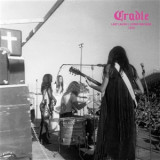
Cradle was a late-60s/early-70s Detroit rock band that evolved from the groundbreaking all woman rock group The Pleasure Seekers, led by the Quatro sisters-Patti, Nancy, Suzi, and Arlene, By the final lineup of The Pleasure Seekers, Nancy Rogers had joined as drummer, bringing a new thunderous presence with her double bass drum kit and playing a key role in the group's transfornation into their heavier sound under the new moniker, Cradle. With raw, intricate instrumentation and powerful dual vocals-Suzi's Joplin-esque edge and Nancy Quatro's Robert Plant-like wail-the band delivered socially relevant hard rock with grit and attitude. Touring extensively, they shared stages with legends like Mountain. Ten Years After, Jeff Beck, Santana, and Jefferson Airplane, cementing their place in Detroit's hard rock movement. Despite theit undeniable talent and determination. Cradle faced industry roadblocks, disbanding in 1973. But today, their music sounds better than, ever-and their legacy serves as an important chapter! in music history, helping pave the way for women in heavy rock.
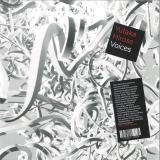
WRWTFWW Records is very excited to announce its third release from visionary Japanese ambient/experimental/environmental composer/producer Yutaka Hirose, this time with brand new album Voices, available on limited edition heavyweight-sleeved double LP as well as double CD, both with liner notes from the artist.
Voices finds Yutaka Hirose expanding his signature spatial layering into a three-dimensional videography of sound, blending field recordings, electronic manipulations, and abstract narratives. The 12-track album is a journey through a crumbling library where books whisper, history collides, and sonic textures weave new realities. Chaos, memory, and transformation – Hirose’s voices echo throughout the space, creating a fully immersive sonic experience.
The pioneering experimental and abstract electronic piece with deep hints of ambient and IDM is beautifully represented by the original artwork by Koji Shiroshita and Mifuku gracing the double LP and double digipack CD sleeves.
Voices marks Yutaka Hirose’s third full-length release on WRWTFWW Records, following his kankyõ ongaku classics Nova + 4 (an expanded version of his genre defining Soundscape 2: Nova album) and archival compilation TRACE: Sound Design Works 1986-1989, both available in vinyl, CD, and digital formats.
out of Stock
Last delivered 14 months ago available to reorder, subject to availability
Thank You For Using GTL is a 2020 album from vaunted Los Angeles rapper, Drakeo the Ruler. The album contains verses recorded entirely through phone service from GTL while Drakeo the Ruler was incarcerated at Men’s Central Jail in Los Angeles, California. The album focuses on topics such as the targeting of rap and rappers by the US criminal justice system, the prison-industrial complex, incarceration, capitalism, and the gray area between what’s real versus fiction in hip-hop. Lauded by Pitchfork as “Likely the greatest rap album ever recorded from jail,” and included at number 32 on their 50 Best Albums of 2020, the album serves as an interesting moment in hip-hop, further cementing Drakeo the Ruler as one of LA’s most beloved rap luminaries. For the very first time, for any album, on any format, Drakeo’s music will be available on vinyl for fans. Pressed on Green & Blue A Side B Side vinyl and limited to 1700 copies.
Horace Silver’s 1962 tour of Japan had a deep impact on the pianist who dedicated his album The Tokyo Blues to his Japanese fans. With his quintet of Blue Mitchell, Junior Cook, Gene Taylor, and John Harris Jr., Silver combined a “Japanese feeling in the melodies with the Latin feeling in the rhythms.” This stereo Tone Poet Vinyl Edition was produced by Joe Harley, mastered by Kevin Gray from the original analog master tapes, pressed on 180g vinyl at RTI, and packaged in a deluxe gatefold tip-on jacket.
Back in 2016 a talented wordsmith from the Bronx going by the name Mickey Factz teamed up with producer Nottz to release his full-length "The Achievement: Circa '82". The album is an ambitious piece of work that finds Mickey trying to encapsulate all his thoughts in lieu of this very moment, with Nottz serving as the executive producer providing a plethora of landscapes for Mickey to illustrate his stories. Featuring guest appearances by names such as Styles P, Smoke DZA, Phonte, Curren$y, Royce Da 5'9", Skyzoo, Stalley and several others, this deluxe and extended edition also presents a few remixes and unreleased tracks, all packed in a 2LP limited edition vinyl, bringing Mickey's achievements on physical copy for the first time ever.
Titanic is a 1997 American epic romance-disaster film directed, written, co-produced, and co-edited by James Cameron. The movie stars Leonardo DiCaprio and Kate Winslet as members of different social classes who fall in love aboard the ship during its fateful maiden voyage.
Upon its release on December 19, 1997, Titanic achieved critical and commercial success. Nominated for fourteen Academy Awards, it tied with All About Eve (1950) for the most Oscar nominations and won eleven, including the awards for Best Picture and Best Director, tying Ben Hur (1959) for the most Oscars won by a single film. With an initial worldwide gross of over $1.84 billion, Titanic was the first film to reach the billion-dollar mark.
Titanic is available as a 25th anniversary edition of 10,000 individually numbered copies on silver & black marbled vinyl and includes an 8-page booklet, XL fold-out poster and a print replica of the historical newspaper front page. The 2 LPs are housed in a deluxe heavyweight gatefold sleeve with alu-brush finish and metallic embossing.
Vines, the solo project of New York-based multi-instrumentalist and composer Cassie Wieland, offers a window into her inner world through expansive swaths of sound. She pieces together a celestial mix of synths, percussion, strings, and vocoded voice, making music that is at once deeply personal and cinematic in scope. This diaristic approach first took shape with her 2023 EP Birthday Party, and is crystallized on her debut LP, I’ll be here. With the sweeping and vulnerable I’ll be here, Vines arrives fully formed as an artist who crafts deeply resonant and open music–the kind that invites listeners in to listen, reflect, and share in the journey of learning through living.
“It was through making music that I was able to meet myself,” Wieland said. “Anything I’m going through or feeling is something that somebody else out there can relate to, and that’s really special to me.”
I’ll be here is both a culmination of years spent creating gossamer soundscapes and an opening to a new journey for Wieland as an artist. The album grew out of her years as a composer and songwriter, and builds on the language she developed on Birthday Party, which transformed the tumultuous feelings of the passing of time into minimalist meditations. It was just a start, though–a prologue, a development of the kind of language and ideas she wanted to express. With I’ll be here, she digs deeper and writes music that feels more sprawling, further solidifying her singular voice.
Wieland’s musical composition process is similar to journaling, lending itself to the music’s honesty. When she writes, she makes room for all the ideas she has; in these sessions, there are no wrong ideas, and she allows the music to be attuned to the experiences she’s having at the time. With I’ll be here, Wieland zeroes in on themes of anxiety, loneliness, navigating human connection, and having to grow up from a young age, ultimately coming to a place of acceptance. And though it began as a journal written in solitude, her collaborators shape the music with her.
Working with friends, in fact, was a crucial part of bringing the record to life. “Everything that was supposed to happen came together so easily because of the people involved,” Wieland said. I’ll be here was co-produced and recorded with Wieland’s longtime collaborator Mike Tierney, a four time Grammy-nominated engineer who has worked with artists across the contemporary classical and experimental scene like minimalist pioneer Steve Reich, LA’s preeminent classical ensemble Wild Up, and various bands on Bang on a Can’s Cantaloupe Music label. Percussionist and composer Adam Holmes and violinist Adrianne Munden-Dixon are two other longtime collaborators who are frequent fixtures of her live show. Holmes plays synths, drums, and banjo; in live settings, his kit is loaded with elements of the songs that are then triggered by MIDI, making the music an interactive, evolving experience. The album’s gentle, filamented edges are colored by Munden-Dixon, whose poignant string melodies elevate Wieland’s introspective compositions, as well as cellist Helen Newby, saxophonists Julian Velasco and Jordan Lulloff, and bassist Pat Swoboda.
Wieland takes an economic approach to writing music, building the swirling and immersive landscapes of Vines through short melodies, lyrics, and phrases. As each element layers and interweaves, they grow into sprawling webs of ghostly sound. Prior to Vines, Wieland composed pieces for other people to play using a minimalist’s sensibility, writing slowly unfolding melodies for instruments like violin and saxophone. In recent years, she sharpened her solo style across a variety of singles and covers which have garnered significant attention on social media for their emotional resonance (“being loved isn't the same as being understood” in particular went massively viral on TikTok in 2024). Birthday Party, her debut as Vines, brought her writing to a much more intimate space, centering on her vocoded voice cloaked in feathery reverb. A series of recent singles, meanwhile, including “I am my home,” showcase the way that Wieland’s music is born from the story of her innermost feelings, extending far beyond just the self.
Though Wieland’s music often deals with dark themes, it unfolds with tender melancholy, the kind that feels like a warm embrace. On “Evicted,” Wieland wonders if she’s getting sick or moving on, if she’s lost or found. Her vocals expand with each lyrical repetition, as the instrumentals slowly encircle and the music’s rhythm grows and bursts into a heart-wrenching, yet radiant wave reminiscent of post-rock bands like Explosions in the Sky. “Tired” follows a similar trajectory, building from a looping, melancholy rhythm and floating lyrics into a solemn resignation. Elsewhere, Wieland takes a more ruminative approach: “Omw” begins with twinkling piano and melancholy strings that gradually transform into an undulating mass. It is a song born out of the warm feeling of reminiscence, the slight return of hope that comes with nostalgia.
With any searching journey, there is also a point of understanding. The title track closes the album with the freedom of acceptance. A marching drum beats steadily beneath Wieland’s open vocals, moving forward, ever onward as it flies into the ether. In Wieland’s delicately textured music, there is room to come into yourself, and learn to love whomever that is. I’ll be here is a special space that can be all your own, one in which to feel what needs to be felt. “This is music for your story,” Wieland said. “I want you to use it how you need it.”
They say the best thing for a new band to really find out who they are is to go out and play as much as possible. They see what works and what doesn’t with the crowd as well as watch their peers perform and can learn from the best. For the past 2 years, WORMWITCH, has done just that. Having toured North America with The Black Dahlia Murder, Numenorean and appeared at last year’s prestigious Psycho Las Vegas Festival with Danzig, Dimmu Borgir and many more, the Vancouver 3-piece took it all in and regrouped in the Fall of 2018 to start writing their new album. Heaven That Dwells Within is the follow up to 2016’s Decibel Magazine Year End charting, Strike Mortal Soil. The riffs are stronger, the overall feel the album darker and their love of black metal dimly shines through much more on their past release. The album was mixed and mastered by V. Santura (Triptykon, Schammasch), giving it that much of a gloomier touch. With a tour right out of the gate with Cloak and Uada followed by a European run, the future, though dark in music, can only be bright.
The ‘Split EP’ is a collaborative release with James Hayford and BiggaBush, as well as labels Filtered Deluxe and Tru Thoughts Recordings.
The collaboration commenced several years back, when Glyn ‘Bigga’ Bush reached out to James (known for his Shoes Edits series), one conversation led to the next, and a remix exchange was initiated.
In 2022, James contributed a remix to BiggaBush’s ‘A Different Style’ remix collection, released on Tru Thoughts Recordings - followed by Bigga’s version of James Hayford’s ‘Flower Of Thy Womb’, released via Filtered Deluxe Recordings in the spring of 2025.
The ‘Split EP’ is presented as a vinyl-only release, including the previously unreleased ‘Come To Crunch’ by
BiggaBush.
-
James Hayford is a sample-based producer best known for his unparalleled series of Shoes edits (feat. Al Green, Miles Davis, Roy Ayer, and more), plus remixes released under his own Shoes and Plimsoll labels - as well as for the Numero Group.
James continues to release original downtempo and leftfield dance music on labels Filtered Deluxe Recordings, and Growroom Productions.
Glyn ‘Bigga’ Bush launched his career as half of Rockers Hi-Fi, and co-founded the Magic Drum Orchestra. He’s
released as BiggaBush and Lightning Head through the ever-evolving Tru Thoughts Recordings, and many more.
His influences range from afrobeat, dub and funk, to library music and soundtracks - as well as electronic, Latin, and jazz music.
The New Eves are a Brighton quartet who have been labeled as one of the country's most spellbinding new bands. Nestled somewhere between primal rock'n'roll live performance and transcendent ritual, there's an unmistakable alchemy that happens when Violet Farrer (guitar, violin, vocals), Nina Winder-Lind (cello, guitar, vocals), Kate Mater (bass, vocals) and Ella Oona Russell (drums, flute, vocals) step onto a stage together. Now, they've distilled this visceral energy into their extraordinary debut album The New Eve Is Rising: a lighting rod of inspiration channelled by a quartet with the ability to create something greater than the sum of their parts. The New Eve Is Rising was written in Brighton and at an artistic residency at The Cornish Bank, co-produced by The New Eves and Jack Osbourne (Bingo Fury) and recorded at Rockfield Studios and Bristol's Cotham Parish Church.
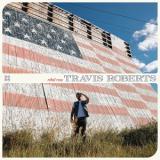
If anyone knows how to roll with the punches, it’s Travis Roberts. At 24, the Texas songwriter has already battled addiction, buried friends, and been so broke he couldn’t put a roof over his head. Hell, he even joined an underground fight club just to pay for studio time.
“Whoever won the fights took home the lion’s share of the money,” he explains, “but even if you lost, you made something. I lost a lot, but I got what I needed out of it.”
It should be no surprise, then, that Roberts comes out swinging on his blistering debut, Rebel Rose. Recorded with Roberts’ longtime live band, The Willing Few, the album fuses earnest country storytelling with rowdy rock and roll energy as it blurs the lines between roots, punk, folk, and power pop. The writing is raw and visceral here, built on gritty portraits of working-class underdogs just trying to get by, and the performances are nothing short of explosive, propelled by a relentless rhythm section, searing guitars, and infectious melodic hooks. The result is an exhilarating album that defies easy categorization, an alternately bruising and triumphant reflection on growing up, getting clean, and giving it your all from an artist who’s taken more than his fair share of hits.
Every fighter knows, it doesn’t matter how many times you get knocked down. All that matters is how many times you get back up
Friends since the age of six, most of the album was written and recorded by the pair when they were nineteen. The songs possess all the singular magic of a duo writing and playing together while sounding like a full, sonically charged band. Their debut E.P. track 'Two Monkeys', included here, has a level of shoegazey dirt that will leave many distortion freaks reeling. `Every Word Said' is prog-pop perfection. The title track is as moody as anything by Flying Saucer Attack. 'Another One Making Clouds' evolves over 35 minutes and doesn't stop elevating and surprising. A founding notion of our label was to release recordings made as the musicians' first intended. No `notes' and no re-recording with a `proper' producer in a `real' studio. A noble preference we saw labels like Rough Trade pursuing with The Strokes, The Smiths, The Fall et al.This album is a proud example. And captures something you can't fake. A young band finding an epic, emotional, cinematic sound in their bedroom. Using it in that peculiarly British way to express the wonder, confusion and heartache of being nineteen. Of wanting to be seen and not seen. It's a kind of British `soul' music with ancestors like The Cure, Echo & The Bunnymen, The Jesus & Mary Chain and the original shoegaze bands. Progressive guitar music, channeling deep emotion, a desire to hear something that sounds like how you feel inside. The stuff nobody talks about. Everything Else.
Friends since the age of six, most of the album was written and recorded by the pair when they were nineteen. The songs possess all the singular magic of a duo writing and playing together while sounding like a full, sonically charged band. Their debut E.P. track 'Two Monkeys', included here, has a level of shoegazey dirt that will leave many distortion freaks reeling. `Every Word Said' is prog-pop perfection. The title track is as moody as anything by Flying Saucer Attack. 'Another One Making Clouds' evolves over 35 minutes and doesn't stop elevating and surprising. A founding notion of our label was to release recordings made as the musicians' first intended. No `notes' and no re-recording with a `proper' producer in a `real' studio. A noble preference we saw labels like Rough Trade pursuing with The Strokes, The Smiths, The Fall et al.This album is a proud example. And captures something you can't fake. A young band finding an epic, emotional, cinematic sound in their bedroom. Using it in that peculiarly British way to express the wonder, confusion and heartache of being nineteen. Of wanting to be seen and not seen. It's a kind of British `soul' music with ancestors like The Cure, Echo & The Bunnymen, The Jesus & Mary Chain and the original shoegaze bands. Progressive guitar music, channeling deep emotion, a desire to hear something that sounds like how you feel inside. The stuff nobody talks about. Everything Else.
Tough Love brings to vinyl for the first time April Magazine's Sunday Music For An Overpass, a nine track collection originally issued on cassette in vanishingly small number by Paisley Shirt in 2021. The kind of mythical recording you might have once needed to know the band to own. Alas, no longer... Can the universe have two centres? Because if it's not Gothenburg it's San Francisco... It's impossible for me to think about what's going on in that particular part of the west coast right now without immediately being drawn to April Magazine, a comparatively loosely assembled three (sometimes four) piece centred around artist/musician Peter Hurley, who seem to simultaneously operate at both the heart and the margins of the current Bay Area underground. On the one hand they share members with many other bands, their guitarist/singer runs a gallery that functions as some kind of focal point/social space, and Cindy even have a song named after them. On the other hand, their music is resolutely lo-fi and invariably couched in a mysterious haze, the live footage available online seems to suggest that they sound slightly different each time they play, and there are reports they have dozens of songs (possibly albums?) that have not and may never be released, hidden inside their own private universe. On its initial release, Sunday Music For An Overpass was an early attempt to drag the group a little closer into the light, yet inevitably made them feel as endearingly enigmatic as ever. Typically, this vinyl reissue some four years later only goes part way in clearing that alluring fog. April Magazine channel the greats - Spacemen 3, The Pastels, early B&S, Mary Chain, Rainy Day/Opal/Mazzy et al - but submerge their obvious melodic capabilities within seemingly infinite spray can hiss, as if the songs are being pulled backwards through some vortex to the past. Half of these tracks are instrumentals, and it's in those moments that the band are perhaps at their most expressive, suggesting a very inviting melancholy that can't quite be figured out. Though the LP remasters the original recordings and is a little cleaner sounding as a result, no secret is being given away. The appeal is that the more you hear from them, the less you really know, and all the better for it. Maybe, then, it's that April Magazine are here to show there is no centre to the universe, that instead it's always just off to the side...
Ghetto Cycle is the soundtrack of Charlie P’s life, set to music by O.B.F.
Meeting up with Charlie P and Rico from O.B.F in a studio is like diving into a particle accelerator operating at full speed. Lively, hyperactive, hardworking, Southend’s MC and the greatest warrior of French sound systems just can’t stay put.
Their creativity works continuously: riddims, melodies, lyrics, clip concepts and other fantasies spurt out at top speed. These common traits allow them to produce explosive collaborations, both on stage and in the studio.
After the success of the singles “Dub Controler” and “Sixteen Tons of Pressure”, the launch of an album became self-evident. Coming from a modest background in a remote London suburb, Charlie P has been through a lot before understanding that his passion for music could be a vehicle for emancipation. It is this life trajectory, punctuated by difficulties, pitfalls, hard work, encounters and challenges that he tells through the tracks of “Ghetto Cycle”.
Conceived as a concentrate of joint influences, this album gathers tracks in the purest digital dub vein, but also reggae, dance or downright grime. A new stage in the development of their collaboration.
3XL boss and scene hyper-connector Special Guest DJ (aka uon, shy, Caveman LSD) lands on their own label with a debut album of hazed ambient noise and aquatic club anarchitextures, with a patented, heady style bent into new shapes.
For nigh on a decade, Berlin-based American producer, label boss, promoter and DJ Shy has operated at the centre of a scene that's still not fully defined. Their mythical DJ sets, where you're likely to hear precision-tweaked dubstep, dreampop, decelerated rap and dubwise ambient blended into vapour; gives some sense of the vibes at play, and a comb thru their spiderweb of a catalog - as Caveman LSD or uon, as part of Ghostride the Drift, Hoodie, crimeboys, virtualdemonlaxative and Cypher, or as the figurehead of 3XL, Experiences Ltd, xpq? and bblisss labels - further blurs that gist.
They've been caught in the crossfire of Big Ambient, sure, but there's always been something scrappier, sexier and more present going on under the hood. Shy and his network of associates - Huerco, Ulla, Perila, Ben Bondy, Naemi/Exael, Ponteac Streator and Arad Acid, among others - have asserted the interrelatedness of their discrete approaches. So-called "ambient" music doesn't exist in a vacuum, it un-focuses elements that undergird so many more corporeal sounds, and for Shy, their music reflects the druggy, DIY, genre-agnostic ethos of a trans-Atlantic neo-punk underground that exists in some liminal zone between the club, the bedsit and the basement.
Concerned with themes of “anger, sensuality, and dreaming”, the 40 minute roil of ‘Our Fantasy Complex’ frames Special Guest DJ at their most unapologetically oblique and illusive, expanding and contracting between whorls of shoegazing dynamics and extended portions of quasi-speed D&B x dub tech smeared on the mind’s-eye, with a vivid sense of bruised lushness that’s perfused all shy’s work thus far.
Joined by kindred collaborators Ben Bondy, Arad Acid and mu tate, and suspended in agitated bliss by Rashad Becker’s lucid mastering, the results feel out some of 2025’s most considered and distinctive within an amorphous zone that’s become a world unto itself. Ambient music’s fluffier signifiers are swapped out for a sort of sublime tension that, like the sound’s original ‘90s explosion, can be heard to reflect states of altered consciousness - both individual and collective.
Shy's layered, undulating productions are more like the chewed remnants of a thousand mixtapes cooked into a stream-of-consciousness hex. Save for the glistening, zoomed-out parting piece ‘Dream’, it all mostly avoids pretty melodies in favour of a spatio-textural sensuality that wraps us up, sometimes uncomfortably intimately, in shy’s thoughts. That oneiric closer is one of three gritty palate cleansers that swirl around its peaks, where elements of Reese-bass are suspended, writhing below looming atmospheric pressure in ‘How Long Can I Burn?’, emerging charred and flecked with rattled percussion on ‘Yoro (pt I & II)’, as though K-holing thru a blazing summer’s day.
In step with Perila’s notably darker turn of events on her ‘Omnis Festinatio Ex parts Diaboli Est’, album, or the unexpected ferocity of recent Space Afrika live shows, it’s not hard to hear a darkside gravitational pull on this one, where ambient music is no longer just a balm for troubled souls, but also suggestive of humanity’s most frightful odours.
out of Stock
Last delivered 13 months ago available to reorder, subject to availability
Recorded at the legendary Atlantis Studio in Stockholm, Words Were Coming Out Our Ears captures a unique musical encounter in the moment. Pianist Johan Graden, bassists Vilhelm Bromander and Pär Ola Landin, and drummer Nils Agnas entered the studio without a fixed plan – the music emerged organically through improvisation and attentive interplay.
What sets this album apart is the instrumentation. With two double bass players, the music gains an unusual depth and weight, where the bass not only supports the harmony but also takes on melodic and textural roles. This is no traditional piano trio – rather, it's an ensemble where roles shift constantly, and the sonic landscape is shaped by sensitivity and openness.
One track features additional layers of sound with guest musicians Katarina Agnas on contrabassoon and Emil Strandberg on trumpet.
With Words Were Coming Out Our Ears, the ambition is to create a cohesive sonic identity – to allow each piece to take its own shape while still belonging to a unified whole. The music invites deep listening, guided by intuition and presence in the moment.
I envision this music as emanating from a moon inhabited by otherworldly life forms and ecosystems; these sounds as evoking the moon’s topographies, beings, lunar rivers, and strands of light — as if this moon’s essence were itself sonic, vibrational matter.
Musically and acoustically, Strands Of Lunar Light departs from a set of tones corresponding to a confined harmonic series segment of a very low fundamental frequency: 5.15 hertz. Through twelve continuous sections, each employing various methods of activating openly tuned guitar strings, the music is sculpted from the twenty-four pitches corresponding to harmonics 24 through 47 of this fundamental frequency.
At times, the natural second (octave) harmonics of the open strings are activated and introduce a secondary, octave transposed version of the original harmonic series segment, doubling the fundamental frequency to 10.30 hertz, and thereby revealing a brighter vibrational realm.
As a consequence of the rational pitch relationships integral to harmonic series of tones, these two sub-audio fundamental frequencies (pitch wise existing two and three octaves below the E-string of a double bass, respectively) can be heard in the music as the frequencies of the interference patterns produced by the simultaneous sounding of any pair of adjacent tones in the respective sets of tones.
These interference patterns, of 5.15 or 10.30 hertz (depending on the octave of the tones produced), are perceived as even pulsations occurring with varying degrees of clarity over the course of the piece.
I imagine these fundamental frequencies and their related harmonic tones as the elemental components of a moon, and this music as offering a glimpse into its vast lunar-sonic existence.
- 180 GRAM AUDIOPHILE VINYL
- PVC PROTECTIVE SLEEVE
- MIKE OLDFIELD'S TUBULAR BELLS IS INSPIRED
BY THIS ALBUM
- FEATURED IN GRAND THEFT AUTO IV ON THE
RADIO STATION 'THE JOURNEY.'
- 50TH ANNIVERSARY LIMITED EDITION OF 500 INDIVIDUALLY NUMBERED COPIES ON TRANSPARENT VINYL
Keyboard virtuoso Terry Riley started experimenting with different instruments in the '50s. One of his electronic music landmarks is his third album A Rainbow in Curved Air. Through the use of overdubbing, he recorded all the instruments to feature on the title track. The composition consists of three movements, each representing another part of his musical influences. As the song progresses, its structure goes through frequent changes. It's an colorful, psychedelic, atmospheric and revolutionary song. The second track consists of a loop of saxophones and is the dreamy and calm opposite of the title track. Fans of electronic music, such as Tangerine Dream and Klaus Schulze, would love this record. Taking inspiration from Hindustani classical music and jazz techniques, Riley's masterpiece influenced many musicians, from the likes of Brian Eno to Emeralds.
A Rainbow in Curved Air 50th anniversary limited edition is available as 500 individually numbered copies on transparent vinyl.
The Jamaican musical group The Maytals can be considered as one of the best known and most important ska and rocksteady groups of all time. Frontman Toots Hibbert penned an impressive catalogue of songs during his time in jail, and after his release he reunited with his bandmates and entered the studio with the brilliant producer Leslie Kong. Some of the great tracks he recorded during that time are included on this record, like “Monkey Man” (covered by the legendary Amy Winehouse) and “Pressure Drop”. The quality and great energy of this band is very well represented on this release.
Kim Anh follows up her highly acclaimed After Dark EP with an eclectic remix package.
Kim Anh’s Can U Not Talk Records launched at the beginning of 2022 with the ‘After Dark EP’, its strong statement of intent receiving high accolades across the world and gaining the support of artists such as
Jennifer Cardini, Josh Caffe, Terr & many more. She now recruits a star-studded cast built around her Panorama Bar Family to remix the EP, showcasing community and connection whilst preserving queer
underground music.
Massimiliano Pagliara kicks things off by drenching the title track in acid, its resonant squelches gliding across the original’s infectious bassline. Alinka’s remix of ‘Recovering’ from the original release features next before Kim Anh remixes her own ‘House of Virgo’, incorporating a catchy organ bass to accompany her soulful, emotive vocals. Spotlight party founder Chris Cruse also provides a version of the track, turning it into a driving & hypnotic acid work-out, warming things up before Chrissy’s D&B flip of ‘Giving’ closes out the release with ripping bass and rolling breaks.
out of Stock
Last delivered 6 months ago available to reorder, subject to availability
The extroverted blend of attitude, energy, and ostentatiousness that spills from the New York Dolls’ self-titled debut can be seen in full view on the album cover. Depicting the quintet in its hallmark flash-and-trash apparel and in drag appearance, the 1973 album scared away a considerable amount of potential listeners while capturing the attention of a sizable audience that recognized the band for what it was: zeitgeist pioneers who helped develop the punk and glam rock movements.
Named by Rolling Stone the 301st Greatest Album of All Time and by Mojo the 49th greatest album of all time, New York Dolls receives long-overdue audiophile treatment on Mobile Fidelity’s numbered-edition 180g 45RPM 2LP set. Sourced from the original master tapes, pressed at Fidelity Record Pressing in California, and housed in a Stoughton gatefold jacket, this collectible version marks the first time the group’s career-making statement is available to be experienced in audiophile quality.
Far from harboring the crude elements that became associated with the punk scene, New York Dolls benefits from keen production overseen by none other than Todd Rundgren. Though more accustomed to working far higher-caliber musicians, Rundgren — taken by the New York Dolls’ charisma and cool, if not their instrumental approach — fully understood the ensemble’s aesthetic. He captured what went down at New York City’s Record Plant with an astute blend of live-on-the-floor feel, raw authenticity, and professional acumen.
On Mobile Fidelity’s definitive-sounding reissue, you can hear those facets as well as key details, dynamics, and textures with previously unimaginable insight. Rundgren preserved generous degrees of grit, grime, and grease while bestowing the raucous music with elevated levels of separation, solidity, and impact every landmark recording deserves. His vision extends to introducing choice accents — barroom piano notes, Moog synthesizer passages, Buddy Bowser’s honking saxophones — that add to the songs’ appeal without interfering with the primary architecture.
Afforded extra groove space on this pressing, the tenor, presentation, and attack of both vocalist David Johansen and now-iconic guitarists Johnny Thunders and Sylvain Sylvain come across with stunning vibrancy and vitality. The New York Dolls often seem headed off the rails and into the red, but somehow, the strut, swagger, and sloppiness — and the associated sleaze and scruff, scrape and snarl, frenzy and feverishness those characteristics entail — remain together as a whole that shakes its collective fist at the frustrations, isolation, disarray, and disillusionment of youth chaos and urban decay.
Kicking off its debut with “Personality Crisis,” cited by Rolling Stone as one of the 500 Greatest Songs of All Time, the band makes obvious its grasp of alienation, deviance, displacement, and suburban disaffection — as well as its capacity to play hanging-by-a-thread boogie, noisy rock ‘n’ roll, and Brill Building-inspired pop. The lipstick-kissed New York Dolls possesses traits many of its harsher predecessors would overlook: joyfulness and melody, topped with a knack for knowing how and where to take a song inside of three-and-a-half minutes.
Dive and dash with the belligerent “Looking for a Kiss”; stomp your feet and clap your hands to the big choruses of “Jet Boy”; surrender to the demands and provocations of the coded “Vietnamese Baby”; decide whether “Bad Girl” yearns to explode or implode. It’s one of several tunes here that allude to the world coming to end. Of course, that doesn’t mean there isn’t time for a fling before everything burns. “There’s no place I gotta go,” yowls Johansen. And he means it.
Adorned with tonal crunch, glitter, and gristle, New York Dolls takes pride in its brashness and brattiness. The rambunctious effort, which earned the band the distinction of being voted both “Best New Group of the Year” and “Worst New Group of the Year” in the pages of Creem, displays knowing reverence for the blues without calling attention to the style. The folk-laden “Lonely Planet Boy” is nothing if not a collision of heart-on-the-sleeve emotions and the desire in the face of challenges to maintain a tough-skinned exterior. An interpretation of Bo Diddley’s “Pills,” complete with shivering harmonica and clattering rhythms, announces there’s no cure for what infects this band. It’s that contagious. And how.
His deliveries gushing with campy fun, playful irreverence, and sheer decadence, Johansen doubles as the equivalent of an open fire hydrant that spouts at will. He’s at once tender and vicious, serious and tongue-in-cheek. On arguably his finest hour on the album, Johansen’s phrasing, passion, and lyrical ambiguity alone turn “Trash” into an insistent glam-rock gem whose echoing harmonies and girl-group references stamp it a pop classic.
Too much, too soon? Only for those averse to some of the finest rock ‘n’ roll ever put on tape.
The Making Of Five Leaves Left tells the story of how Nick Drake’s debut album ‘Five Leaves Left’ came to be released in 1969. This Nick Drake Estate authorised 4LP edition comprises over 30 previously unheard outtakes from the sessions, compiled across three discs. The final disc to complete the package is the original Joe Boyd produced album. The whole set has been mastered by John Wood. Accompanied by a 60 page book printed on special textured paper stock, written by Neil Storey in collaboration with Richard Morton-Jack, complete with full track recording details, charts and recording history. This Nick Drake Estate authorised 4CD edition comprises over 30 previously unheard outtakes from the sessions, compiled across three discs. The final disc to complete the package is the original Joe Boyd produced album. The whole set has been mastered by John Wood.
Accompanied by a 60 page book printed on special textured paper stock, written by Neil Storey in collaboration with Richard Morton-Jack, complete with full track recording details, charts and recording history.
Experience the Double-Platinum 1996 Album in Audiophile Sound for the First Time
Mobile Fidelity’s Numbered-Edition 180g 45RPM 2LP Set Is Sourced from the Original Analogue Tapes
1/2” / 30 IPS analogue master to DSD 256 to analogue console to lathe
If great art, as many believe, is inherently polarizing, then the Stone Temple Pilots’ Tiny Music… Songs from the Vatican Gift Shop easily ranks as the California-based band’s finest album. Simultaneously celebrated and castigated upon release in spring 1996, the group’s third full-length finds vocalist Scott Weiland and company expanding their “grunge” palette with a smart blend of glam rock, psychedelia, jangle pop, and other related styles. Having benefited from long-view reassessments that shed the biases and meanness of initial criticisms, the double-platinum effort is now largely and rightly seen as a creative masterwork. All the more reason why it deserves reference-grade production.
Overseen by producer Brendan O’Brien, Stone Temple Pilots used bedrooms, hallways, bathrooms, and the lawn to capture a broad blend of textures, spaciousness, and ambience that helped underline the group’s obvious (and somewhat unexpected) leap from normal “alternative” status to an artist whose aspirations went beyond that of many of its contemporaries. You can hear the multitude of details and tonalities with previously unattained clarity, presence, and scope on this fantastic reissue, which also delivers the impact and punch every rock record deserves. Another tremendous asset: The depth, grain, and pitch of Weiland’s voice.
For all the contagious choruses and glossy melodies that help make Tiny Music… Songs from the Vatican Gift Shop sparkle, the vocal performances of the late singer arguably rank as the best that the much-missed Weiland committed to tape. None other than the Smashing Pumpkins’ Billy Corgan — who, like many peers and critics, felt a pressing need to reevaluate the record as both time marched on and the self-importance attached to the “alternative” scene faded — praised Weiland’s efforts by noting: “Like Bowie can and does, it was Scott's phrasing that pushed his music into a unique, and hard to pin down, aesthetic sonicsphere.”
Smooth and diverse, those traits are everywhere on Tiny Music… Songs from the Vatican Gift Shop. From the clever combination of emotional closeness and distance he brings to the catchy albeit ultimately melancholic “Lady Picture Show”; to the lounge-fly balladeering that causes “And So I Know” to lightly swing akin to a bleary-eyed house band’s final number at a 4 A.M. bar; to the effortless cool and laissez-faire casualness he articulates on the grinding “Pop’s Love Suicide”; to the dimensional raspiness, defiant energy, and let-loose wail that sail through the crunchy “Big Bang Baby.”
The latter tune, the record’s first single and per Weiland a conscious attempt by the band to deconstruct its prior approaches, clearly borrows from the Rolling Stones’ “Jumpin’ Jack Flash.” Because of it, the song drew all kinds of barbs from naysayers. Their disdain extended to most material on Tiny Music… Songs from the Vatican Gift Shop, which indirectly references other prized acts such as the Beatles, Cheap Trick, T. Rex, and Lush. Those cynics failed to grasp that Stone Temple Pilots were paying homage and having a blast, with even Weiland, then battling serious substance-abuse and legal issues, getting in on the action.
Stone Temple Pilots’ skeptics also turned a deaf ear to the records’ stellar pop craftsmanship, sticky hooks, and sly commentary on music-industry machinations and fame. Not to mention the band’s intent, made clear from the outset. In an interview conducted in 1994, guitarist Robert DeLeo stated: “The last thing I wanted to do with this band was make everybody believe we invented something.”
Seen through that lens and the hindsight afforded history, and appreciated independent of the self-righteous authenticity standards of the day, Tiny Music… Songs from the Vatican Gift Shop sounds borderline fearless while authoritatively checking all the right boxes for fun, flavor, and finesse. Part winking send-up, part tribute to the glitter rock age, and part middle finger towards the hip crowd that didn’t know what they were missing, this mid-90s classic repeatedly invites you to drop the needle and press play.
Mobile Fidelity's UltraDisc One-Step 180g 45RPM 2LP Set Plays with Authoritative Tonality, Airiness, and Clarity:
Pressed on MoFi SuperVinyl and Strictly Limited to
3,000 Numbered Copies
1/4” / 15 IPS Dolby A analogue master to DSD 256 to analogue console to lathe
Joni Mitchell is the only artist who could’ve made Hejira. The legendary singer-songwriter said as much when discussing the album decades after its release. Yet that fact seemed obvious from the moment the gold-certified effort streeted in fall 1976. An adventurous travelogue, probing narrative, and offbeat homage to freedom, Hejira remains an inimitable entry in the catalog of recorded music — a spare, gorgeous, meditative series of sonic vignettes comprised of floating harmonic pop, cool jazz, soft rock, and sensitive vocal elements that beckon feelings of motion, discovery, and self-examination.
Sourced from the original analog master tapes, pressed at Fidelity Record Pressing on MoFi SuperVinyl, and strictly limited to 3,000 numbered copies, Mobile Fidelity's UltraDisc One-Step 180g 45RPM 2LP set presents the record ranked the 133rd Greatest of All Time by Rolling Stone with definitive detail, richness, accuracy, and directness. Marking the first time the revered LP has received audiophile treatment, it's one of six iconic 1970s Mitchell records Mobile Fidelity is reissuing on vinyl and SACD.
Playing with a virtually nonexistent noise floor, dead-quiet surfaces, and superior groove definition, this collectible reissue reproduces in enveloping fashion the tones, textures, and craftsmanship that help Hejira function as the equivalent of a liberating trip down an open road with nothing but blue sky, natural landscape, and fresh air in the immediate vicinity. Passages bloom, carry, decay as they do amid an acoustically optimized environment. Soundstages extend far, wide, and deep, with black backgrounds and pinpoint images adding to the realism.
The reference-grade immediacy, airiness, and presence put in transparent perspective Mitchell’s dense strings of words, stream-of-conscious-like phrasing, and unhurried albeit forward momentum. Likewise, the instrumental contributions of her A-list support musicians — a cast that includes L.A. Express members John Guerin, Max Bennett and Tom Scott, plus Neil Young, Victor Feldman, and Abe Most — emerges with breathtaking clarity and dimensionality.
While Mitchell, whose intimate vocals and abstract guitar parts center everything, Mobile Fidelity's restoration of Hejira further reveals the visionary breadth of guitarist Larry Carlton and bassist Jaco Pastorius. Though heard on only four tracks, Pastorius' fretless bass epitomizes the fluid, subtle, flexible, roomy, and shape-shifting characteristics of songs that often appear to transpire out of nowhere akin to the formation of a puffy cumulus cloud overhead. In sync with Mitchell’s voice, Pastorius’ fusion hovers and floats, suspended in a fog you want to deeply inhale. The "grace notes" Mitchell desired on Hejira can now be heard in full. Ditto the luxurious tapestries of alinear lines, fills, and supplements unreeled on Carlton’s six-string.
Visually, the packaging of this UD1S set complements its identity as the copy to own. Housed in a deluxe slipcase, the LPs come in foil-stamped jackets with faithful-to-the-original graphics. This version is for listeners who desire to become immersed in everything about Hejira, including the unforgettable album cover — a pastiche of 14 different photos Mitchell used a Camera Lucida to assemble into one image that’s anchored by a portrait of her in a stoic pose — and the interior shots of Mitchell skating on a frozen Wisconsin lake wearing a pair of black skates, black shirt, and fur cape.
The notion of skating, feeling an awakening wind whipping against your face, and losing yourself to the surroundings are extremely apt for Hejira, which Mitchell wrote after a sequence of trips and relationships prompted her to reflect on the complicated conflicts between independence and marriage, success and satisfaction, duty and desire — and, more specifically, “the cost of being a woman.” The Canadian native delved into such themes before. But never as she does on Hejira, whose liberating, running-away aura doubles as another of Mitchell’s rejections of tradition as well as a suggestion of a better alternative.
At once observational and personal, expansive and insular, cheerful and poignant, Hejira spans a sea of human conditions, emotions, and circumstances. It addresses drifting, isolation, pleasure, place, time, and surroundings with strikingly poetic discourse matched with music that, save for the crooned ballad “Blue Motel Room,” forgoes conventional structures and choruses.
The jazz-based arrangements, marked by scaled-down percussion and all manner of bent, rounded, and unsettled notes, hint that Mitchell has no exact destination in mind. Excursions such as the moody “Furry Sings the Blues,” funky “Coyote” and edgy “Black Crow” throw open previously locked doors to possibility and journey. They signal it’s time for a welcome departure from norms and the past, one that leads to a heightened sense of clarity and perspective. Or, as Mitchell said upon choosing the album title, it’s time for “leaving the dream, no blame.”
An adversarial network of ideas, electronic post-punk trio The Wants welcome the possibility that embracing friction can give rise to something cathartic and unexpected. Formed by Madison Velding- VanDam and Jason Gates in 2017, and with the addition of Yasmeen Night in 2021, The Wants' sound is defined by the push and pull of its members' processes: floating rhythms upheaving grounded songwriting, pulsing synths overwhelming live instrumentation. Their new record, Bastard, is an evolution of many of the seeds planted in their debut record, Container (2020), with a refined sense of acerbic emotional urgency and sonic experimentation. Drawing from a deep well of influences across decades and genres, The Wants forge an unlikely alliance of sounds that feels both radical and inevitable. Velding- VanDam channels both the raw power and snark of Public Image Ltd. and The Smiths' romance, while Gates draws intensity from bands like Bauhaus and Throbbing Gristle, and inspiration from experimental techno. Night's sound bridges inspiration from '90s alternative rock like Smashing Pumpkins and Garbage between the nocturnal trip-hop atmosphere of Massive Attack. The result sits in its own category—too raw to be pure electronic music, too mechanised to be straight rock— drawing favorable comparisons to early PIL and contemporaries like Model/Actriz while remaining distinctly their own beast.
out of Stock
Last delivered 14 months ago available to reorder, subject to availability
Another timeless classic makes it on to the Dynamite cuts 45 series "I wouldn't Change a thing" made famouns by Coke Escovado as an up tempo rare groove dancer. Here is the Orignal cut by Mr hang on in there baby him self soul don Johnny bristol. Both tracks are so perfect for a 7" reissue. on the flip "Lusty Lady" Another mid-tempo soul gem, nice drum break intro and great groove.
out of Stock
Last delivered 14 months ago available to reorder, subject to availability
Alanis Morissette Delivers the Equivalent of a Spiritual Awakening on Supposed Former Infatuation Junkie:
Introspective Themes and Compassionate Emotions on Eastern-Tinged Album Have Grown More Relevant
1998 Smash Plays with Enhanced Detail, Rich Textures, and Sharp Focus on Mobile Fidelity’s 180g 33RPM 2LP Set:
First-Ever Audiophile Edition Strictly Limited to 3,000 Numbered Copies
1/2" / 30 IPS analogue master to DSD 256 to analogue console to lathe
Alanis Morissette refuses to adhere to convention on Supposed Former Infatuation Junkie. While most artists follow-up their breakthrough with an album that closely parallels the approaches that helped make them famous, the maverick singer-songwriter stayed true to herself and drew inspiration from travel to India before she began the recording sessions. As much as the preceding Jagged Little Pill put her on the global radar, Supposed Former Infatuation Junkie confirmed her role as a vital generational voice — and proved her blockbuster success was no fluke. Having set a mark for most sales of an LP in its debut week by a female artist, the 1998 smash remains a pop-rock staple.
Sourced from the original master tapes, strictly limited to 3,000 numbered copies, housed in a Stoughton jacket, and pressed at Fidelity Record Pressing, Mobile Fidelity’s 180g 33RPM 2LP set of Supposed Former Infatuation Junkie presents the triple-platinum LP in audiophile sound for the first time. Benefitting from defined grooves that befit the album’s nearly 72-minute length, this pressing plays with enhanced detail, refined clarity, sharper focus, and broader dynamics than prior versions.
Those traits are key given Morissette’s use of more textured and atmospheric soundscapes, not to mention her evolution into a more nuanced and controlled singer. Similarly, the scale and reach of David Campbell’s string arrangements come across as orchestrations should. Ditto the synth-based architecture shaped by producer and principal Morissette collaborator Glen Ballard. All in all, Mobile Fidelity’s collectible edition simply delivers more information via transparent means.
Notable for its balance, sophistication, and richness, Supposed Former Infatuation Junkie at heart finds Morissette pausing, taking a breath, and learning how to navigate life in a healthy manner after enduring one of the most exhausting and rocket-to-fame stretches any musician ever experienced. It’s the sonic equivalent of a spiritual awakening, a call to betterment, a brave assessment of the self and humanity as a whole. As such, the tunes on her second international (and fourth Canadian) release teem with gratitude, compassion, love, empathy — emotions that lend themselves to the largely mellow, contoured scope and Eastern-tinged melodies of the songs themselves.
“How ‘bout how good it feels to finally forgive you,” Morissette sings on the lead single “Thank U.” “How ‘bout grieving it all one at a time.” Those sentiments, and the vocalist’s embrace of concepts such as divinity and acceptance, not only provide a foundation on which Supposed Former Infatuation Junkie rests. They also reflect the personal maturation she gained from her embrace of Buddhist culture in India and a mindset bent toward notions of reconciliation, peace, and sensuality that were nearly absent in popular music in the late ‘90s.
Those themes continue on “That I Would Be Good,” a confident reflection that takes stock of one’s mental, physical, and emotional state in the face of both changing and unpleasant circumstances — and concludes with Morissette performing a flute solo, further exposing the raw intimacy of the introspective tune. She channels relatable simplicity and joy on “So Pure,” with her invocations of “dance” and “freestyle” speaking to the freedom of expression that courses throughout Supposed Former Infatuation Junkie. And perhaps no song finds Morissette showcasing her refreshed attitude toward life and opening up more than the relationship-themed “Unsent,” whose unconventional structures and lack of a chorus only add to its directness.
Akin to many albums that were ahead of their time, and despite the critical and commercial accolades afforded it upon release, Supposed Former Infatuation Junkie attracted new appreciation and perspective as it got older. Issued during an era where its ideas of serenity, absolution, tranquility, and contentment seemed largely alien, the record — akin to the ways its predecessor foreshadowed a movement — now functions as a visionary beacon that foretells of way to maintain sanity, dignity, and goodness amid a contemporary landscape filled with constant distractions, polarizing views, and incessant calls to purchase, promote, and produce without questioning the what-for purpose.
Supposed Former Infatuation Junkie dares to ask the questions and, at its best, supplies meaningful answers and alternatives that lead to longed-for enlightenment, healing, and laughter. For these reasons alone, it’s a record that never goes out of style.