Gems return with another superb signing from the 90’s the mighty Eagles Prey. The release reworks a 1992 underground classic, originally produced by John Kennedy (Apple Records) alongside Lee Grainge (Fat Cat Records) and Paul Coleman (Rocket Science , Rehab/Offshoot , Zoom Records) — a lineage deeply rooted in UK electronic history.
On remix duties, the Circulation Mix delves deep and hypnotic already receiving heavyweight support from Laurent Garnier and John Digweed, underlining its club and tastemaker appeal.
Jim Rivers, a proven serial producer and DJ, adds his signature depth and precision, balancing modern floor functionality with timeless underground sensibility.
Rounding out the package Ranj Kaler continues his standout run, currently omnipresent across production, remixes, and DJ sets, delivering contemporary drive while respecting the original’s DNA.
A release that bridges heritage and forward momentum, built for discerning DJs, specialist radio, and late-night systems.
Поиск:d func
Все
Tapping into the otherworldly frequencies of the UFO series, UK-born, Lisbon-based prodigy Rene Wise arrives on Dekmantel with an assured demonstration of his position at the cutting edge of real techno.
Andrew Shobeiri appeared in the cut and thrust of the scene fully-formed around 2017, instantly bringing his Rene Wise alias to top-tier labels with a razor-sharp combination of functional minimalism and mind-warping flair. There's no grey area fluctuation in his hypnotic, intentional sound — this is deep, captivating techno for the long haul, music to submit yourself to.
True to his sound, Rene Wise makes his presence felt on Dekmantel UFO with a varied spread of sounds, leading with the melancholic charm of the melodic sequences weaving through 'Johnson's Theme' before sinking into the engrossing folds and low-end rumble of 'Granite Skin'. There's a lighter atmosphere at play in the vaporous impulses that mark out 'Flow' before rolling into the rhythmic urgency and strafing bleeps of 'Kanga'.
This is the Dekmantel UFO experience as expressed by one of the leading lights in modern techno — an artist who understands the psychoactive power contained within the subtleties of production and pursuit of the ultimate loop.
Protocolo SysEx aka Fabio Vinuesa lanza este EP en su sello con cuatro pelotazos originales y dos remixes de Boris Divider y Heinrich Mueller.
GEOMETRÍA VIRTUAL documents a scenario in which mechanisms of control cease to function as external layers and instead become the very foundation of the system. The album does not propose a future dystopia, but rather a reality in which decision-making is automated and artificial intelligence is established as a structure of social control.Protocolo SysEx, a project by Fabio Vinuesa, is conceived as a narrative and sonic framework from which to examine the political and philosophical implications of a world governed by artificial intelligence. The release includes reinterpretations by Boris Divider and Heinrich Mueller and constitutes the first chapter of a trilogy focused on the progressive normalization of algorithmic control.
Geometría Virtual EP – Distrito 91 15
a A1 - Geometría Virtual Part I
b A2 - Geometría Virtual Part II
- 1: Pulse Repetition
- 2: Absolute Elsewhere
- 3: The Proxy
- 4: Progress Report
- 5: Buran
- 6: Tesseract
- 7: Backscatter
- 8: Frequency Shift
On a remote gravel-covered spit of land on the east coast lie the abandoned buildings of a government facility for weapons testing and experiments with radar.
In the mid 1960s this site witnessed the construction of an over-the-horizon radar, a technological marvel bouncing signals off the ionosphere, built to covertly monitor the activities of other nations.
The reflectivity of the ionosphere is a function of frequency, time of day, time of year and of the solar cycle. In essence, a sympathy for the celestial was required to fully exploit this man made construction.
Plagued by noise that created false returns on the monitors, the intended performance was never achieved, and despite several investigations the system was shut down and eventually dismantled in the early 1970s.
The long dormant Cobra is now a nature reserve.
2026 sees Robert Hood going back to his minimal techno roots and then flip things forward with remastered releases from his ground-breaking label, M-Plant. Throughout this year the Perpetual Masters series has been dropping one track per week, digitally, from Hood's extensive catalogue with remastering by legendary German producer, Thomas Heckmann. Now coming to vinyl are two of these remastered tracks.
Robert Hood's "Psychic / Pole Position" is a classic which features his stripped-back minimal techno style that helped define the sound in the late '90s. Both tracks are built around hypnotic rhythms and sparse, precise grooves characteristic of Hood's influential production ethos. Originally released in 1999, the EP reflects Hood's focus on minimalist electronic structures and dance floor functionality, and has remained a sought-after piece among fans of the genre.
First coming to prominence purely as a drum & bass artist, with the likes of Metalheadz, Digital's Function and Klute's Commercial Suicide labels all over his material, veteran Slough producer Amit has, in more recent years, spread his stylistic base via his Amar label to take in deep dubstep and a touch of acid as well as ruffneck junglist behaviour. This 12", his first for more than five years, is heavyweight dub business, with echo chambers set to maximum dubbage and shuddering sub causing potential structural damage to all but the sturdiest buildings in a five mile radius. 'Dem Rude', with its gunshots and sonic soup, takes the A-side, while the flip tune 'Hush Up' marries more aural abstractions with another stepping rhythm, the hi hats fizzing and sizzling like they're encased in a deep fat fryer. Great to have this vastly underrated underground trooper back in the ranks - and well worth the wait.
DeepLabs opens 2026 with an exciting new release, “Förvandling,” from Tarik Hensen—the collaborative project of two exceptional producers, Martinou & Ben Kaczor.
This release completes a full-circle journey: rooted in Detroit techno, traveling through Malmö, and landing in Basel, where these influences converge into a singular, immersive statement.
Longtime admirer of both artists’ solo works, Luke Hess joins the project with his own interpretation of Förvandling, bringing his distinct Detroit-informed perspective to the release.
Förvandling is the Swedish word for “transformation,” describing the metamorphosis of a caterpillar into a butterfly.
The title reflects the evolution of techno itself—how it shifts and reshapes across cities, communities, and eras while retaining its core spirit.
Varp refers to the vertical warp threads in woven fabric—essential structural lines that hold everything together.
The track mirrors this concept: hypnotic percussion and immersive ambience interlace with melodic tones, unified through Tarik’s live dub mixing approach, creating a rich, fluid tapestry of sound.
Malm translates to raw ore, the unrefined material that, when forged with alloys, becomes durable metal.
True to its name, the track channels a deep, raw warehouse energy—refined into a functional gem through harmonious stabs, textured layers, and driving momentum.
Closing the EP, Luke Hess’s remix of Förvandling draws from elements across the original works while incorporating new audio stems from the DeepLabs studio.
The result is a seamless transformation of Tarik Hensen’s aesthetic into Luke’s unmistakable Detroit sound—an adventurous, atmospheric journey crafted for extended DJ sets and immersive dancefloor moments.
Tarik Hensen and Luke Hess invite you to weave these tracks into your curated selections and allow them to transform the dancefloor in unexpected ways.
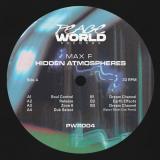
Peace World Records returns with Hidden Atmospheres, the debut release produced by Max F and mixed by Space Ghost. Drawing from classic deep house and esoteric club sounds of the '90s and early 2000s, this seven-track collection channels these influences into fresh territory while preserving the digital grit and dreamlike essence of the era.
The release strikes a delicate balance between the meditative and the kinetic. On the A Side, tracks “Soul Control” and “Zone 6” highlight subtle yet hard-hitting percussion grooves and deep basslines that anchor the mix beneath ethereal pads and sweeps. Each track builds through hypnotic, evolving arrangements that reward close listening. On the B side, “Dream Channel” and “Earth Effects" both feature airy, spectral synth progressions that interweave with ephemeral yet decisive melodies, demonstrating a refined insight of space and dynamics. To round things off, Space Ghost took a crack at an energetic club remix of “Dream Channel. ” Carried by a classic 909 house rhythm and a bubbly bassline, the remix offers a fun, uplifting take on the original, complete with organ stabs and MIDI sax!
As a whole, Hidden Atmospheres delivers something new for fans of 90s and 2000s era house music. Think Ronin, Hanna, Chris Brann, Wamdue Kids—artists whose work holds its own in the club while remaining equally suited for intimate late-night listening. Throughout the record, tracks drift seamlessly between shimmering dancefloor functionality and liminal, introspective ambience, inviting repeat listens that reveal new details and "hidden atmospheres" with eachpass.
Hidden Atmospheres lands on Peace World Records April 9th, 2026.
g B3. Dream Channel Space Ghost Club Remix
Death Is Not The End collaborate with Uzbek label Maqom Soul to deliver an LP counterpart to last year's mixtape of the same title, compiling specially picked & fully licensed individual belters from the ex-soviet studios of Central Asian republics between 1978 and 1989 - incl. Uzbek, Tajik, Kurdish & Uyghur artists pulling traditional folk motifs together with pop & rock and psych elements.
"These recordings do not form a smooth or coherent history. They feel more like a sequence of discoveries made at different moments and in different circumstances. Songs and instrumental pieces that once lived inside specific contexts radio broadcasts, philharmonic programs, touring routes now sit side by side, revealing hidden connections as well as clear fractures between them.
Nasiba Abdullaeva appears here as a voice from the end of an era. Trained within a conservatory system, she worked inside the format of the Soviet pop song while filling it with melodic logic that did not come from Moscow or Leningrad. Her voice is soft and sustained, shaped by Eastern melisma, and it never functions as decoration. Even in tightly structured songs there is a sense of resistance, an effort to preserve a musical language rooted in Uzbek tradition rather than fully adapted to an all Union standard.
The ensemble Sintez, later renamed Navo, represents a different path. Beginning as a student rock group, the band was gradually absorbed into the official VIA system with all its limitations and compromises. Yet it was precisely within those boundaries that Sintez and Navo developed a recognizable sound. Electric guitars and jazz rock harmonies do not overpower the folk material but remain in tension with it. Their recordings feel like negotiations between what the musicians wanted to play and what they were allowed to perform.
The Tajik ensemble Gulshan reflects an institutional approach carried to a high professional level. Formed under television and radio structures, the group treated folk material almost as a written score. Carefully constructed arrangements, close attention to orchestration, and restrained use of pop techniques define their sound. There is less spontaneity here, but a strong sense of discipline and structure, where national melody becomes part of a carefully controlled sonic framework.
Koma Wetan occupies a very different space. Formed in the 1970s, this Kurdish rock group approached poetry and folklore as tools of cultural assertion. Their psychedelic rock never feels like a stylistic borrowing. Instead it functions as a contemporary vessel for language and themes that might otherwise have remained unheard. Even today these recordings sound fragile and stubborn at the same time.
The Uyghur ensemble Yashlik, closely connected to a musical drama theatre, operated somewhere between stage performance and popular music. Their songs are built on folk melodies but shaped for wide audiences. What emerges is a constant attempt to preserve the recognizability of Uyghur musical identity without freezing it in a folkloric frame. Yashlik's music exists in a state of balance between representation and development.
Digging Central Asia does not attempt to establish hierarchies or offer a single wayof listening. Names and dates matter less than the sound itself. Tape noise, abrupt transitions, and unexpected timbres remain part of the material rather than flaws to be corrected. This music existed at the crossroads of multiple routes geographic, cultural, and ideological. Heard today in a new context, it no longer feels peripheral. Instead it stands as a reminder that the history of popular music is far more fragmented, layered, and polyphonic than it is usually allowed to be."
AO (Trascendental Amor Organization) appears with a five-track EP for Modern Obscure Music's Trip-Vapor-Club Focus Series, released as a vinyl-only edition. The record aligns with the series' ongoing interest in club music as an experimental framework, following releases by Pedro Vian and Actress.
Drawing from techno and electro without committing to their functional codes, the EP explores rhythm as texture and acidic repetition as inquiry. Pulses are skeletal, surfaces are unstable, and melodic fragments emerge only to dissolve back into noise and space. The tracks suggest movement without instruction, privileging sensation over utility.
Minimal in format yet dense in implication, the EP positions the dancefloor as a speculative zone-sound designed as much for close listening as for physical immersion.
“Música Para Caminar” is the new album by 80%Baul, and the record that confirms his definitive leap from revelation to legend. Following the critically acclaimed debut Ayer y Ahora, this release positions 80%Baul alongside the great names of Spanish post-punk, standing shoulder to shoulder with seminal acts such as Décima Víctima and Parálisis Permanente. Rooted in a dark, introspective sensibility, Música Para Caminar also connects seamlessly with the vitality of today’s Spanish underground, aligning with the current wave of forward-thinking artists, including labelmates like Yvgoslavia. But this album is not defined by sound alone. Once again, 80%Baul surprises with songs that function as poems—bleak, incisive reflections on a decaying, dystopian present. More than music, Música Para Caminar is a statement: music with intention, depth, and meaning—an artistic vision that transcends genre and cements 80%Baul as one of the essential voices of contemporary Spanish post-punk. Presented in ONE-OFF truly limited edition of 300 copies lacquered pressed on 180 gr. high quality solid BLACK vinyl tracks have been specially remastered and mastered for vinyl by Daniel Hallhuber at Young and Cold Studios (Germany).
Solar Operandi is a new Parisian label born from a B2B project and developed into a curated platform rooted in electro and exploring its darker intersections with techno, acid and trance. It's focusing on peak-time energy with depth and character.
Its first various artists release, Carnal Savana Vol. 1, brings together standout producers from across the globe, each delivering a distinctive yet cohesive vision of modern electro. The compilation balances raw club functionality with refined sound design, built for powerful systems and late-night intensity.
With Zera, Len Faki returns to Figure with a tightly focused EP that moves between raw, driving functionality and more open, atmospheric moments. Across five tracks, he explores variations in groove, tone and energy, balancing direct, floor-ready structures with a more fluid and spacious approach.
Opening cut Maschine Girl locks into a restless, forward-driving groove. Crisp percussion and a tightly coiled low end create immediate momentum, while sharp synth fragments and metallic accents add a nervous edge. The track stays stripped and efficient, letting its steady build and controlled tension carry the energy.
Kobold follows with a darker and more twisted tone. Warped synth figures weave through a heavy rhythmic backbone, giving the track a slightly mischievous character while maintaining a firm, heads-down drive. The interplay between tonal movement and grounded percussion keeps the groove dynamic without breaking its focus.
Closing the A-side, Maschine Girl (Version) revisits the opener from a different angle. Elements are tightened and subtly rebalanced, shifting the emphasis further toward rhythm and direct impact. More reduced and tool-like in nature, it pushes the groove forward with a sharper, club-ready feel.
On the flip, Zera unfolds with a broader sense of space. Hypnotic synth movement and layered atmospheres sit atop a firm low-end framework, gradually building intensity while maintaining a deep, immersive flow. The track thrives on its slow development, drawing the listener further into its evolving structure.
Rounding out the release, Zera (Hardspace Mix) reimagines the original with a heavier, more physical approach. The groove becomes more pronounced and the rhythmic pressure more direct, tightening the structure into a denser, floor-driven tool that emphasises impact and propulsion.
With Zera, Len Faki delivers a cohesive and wide-ranging release that connects raw, driving tools with more expansive, early morning-leaning grooves — further reflecting the breadth and versatility that has defined his output in recent years.
Dino Lenny returns to Rekids with the ‘Piano Lessons at Eight’ EP, complete with a Tal Fussman remix. It follows Lenny’s ‘Not About The Volume’ EP, released in December 2025.
London-based DJ, producer, vocalist, and Fine Human Records label owner Dino Lenny returns to Radio Slave’s Rekids with the ‘Piano Lessons at Eight’ EP 24th April 2026, alongside a remix from label regular Tal Fussman. The EP follows Lenny’s ‘Not About The Volume’ EP, which released late 2025, and won support from Laurent Garnier, Chloé Caillet, Catz ‘n Dogz, and more.
‘Piano Lessons at Eight’ centres Lenny’s own vocals over a dark, chugging rhythm that develops steadily, tracing a personal journey from formal piano training to the discovery of electronic music. The biographical thread running through the record gives it an identity that sits apart from purely functional dance music. Rekids regular and Survival Tactics boss Tal Fussman then provides the accompanying remix, a crunchy, percussive rework that brings his characteristic blend of deep house and raw techno to bear, adding melancholic piano stabs that add texture without crowding the arrangement. The outcome is focused, atmospheric, and built for extended play.
With releases on R&S, Diynamic, Innervisions, Crosstown Rebels, Strictly Rhythm, Bedrock, and his own Fine Human Records label, and collaborative work alongside Underworld, Missy Elliott, Wu-Tang Clan, and Madonna, Lenny holds a long-established position within both underground and mainstream electronic contexts. Consistently supported by Pete Tong, Solomun, Carl Cox, and Groove Armada, he maintains a presence that spans scenes without being defi ned by any single one. Since 2021, he has hosted Tomorrowland’s CORE radio show, platforming artists including Nina Kraviz, Ellen Allien, and DJ Tennis.
Mutual Rytm spawns new sub-label ‘Versus’ with debut EP from longtime techno associates Regent and Chontane. Continuing to expand its creative world, SHDW’s Mutual Rytm imprint now introduces ‘Versus’ - a new sub- label crafted for creative symbiosis between two artists across one shared release. Opening the series with authority, Regent and Chontane man the debut offering - two close friends and native Berliners who have been shaping techno for more than 15 years. Both long-standing members of the Mutual Rytm family, having released multiple times here before, the pair have always created music informed by life immersed in their local scene. Having both mutually influenced one another over the years, here they present their shared interpretation of techno with individual artistic DNA, forming a unified sound that represents the best of both worlds. Regent goes first, leaning towards functional, anthemic, dance-floor-focused techno. ‘Ephemera’ is tight, minimal but forceful; ‘Slow Burn’ has synth tension rising through the dark, next to glitchy percussion; and ‘Afterglow’ lets in more light, bringing otherworldly synths that hang above the groove and consume your focus. Chontane then explores a more musical and unconventional approach. ‘Plaxaric’ is supple, warm, and deep techno that tunnels into an abyss. ‘Grounding Factor’ is just as economical in design, but with introverted funk and evolving layers of sound. ‘Mental Lab’ spins out into complex rhythms inspired equally by IDM, jungle, and techno. It’s a mental workout as well as a physical one. Both artists add a pair of digital bonus tracks. Regent’s ‘Control Room’ and ‘Rarely Enough’ deliver elevated, hypnotic tools, before Chontane’s ‘Escore’ and ‘Outside In’ bring extroverted drum patterns along with contrasting melodic unease
Wilt returns with a new deep house EP on his own label, Thé Chaud Records. The French DJ and producer delivers a twosided release showcasing his dual approach to club music.
On the A-side, Wilt settles into a deep, late-night groove with two carefully crafted cuts built for the floor. Crisp drums and warm, rolling basslines drive a steady pulse, with subtle arrangements that let the tracks breathe. The B-side highlights his love for old-school sampling, blending warm textures and nostalgic touches into a more intimate, soulful atmosphere. A concise yet balanced EP, moving between refined club functionality and timeless deep house depth.
This first-time reissue of Quinteplus’ 1971 album revives a key moment in Argentine jazz, featuring crisp trumpet and tenor sax, electric piano-driven funk and modal grooves, and a tight, spacious rhythm section. It showcases prominent figures like Jorge Anders and “Pocho” Lapouble.
==================================
Quinteplus was born in Buenos Aires at the end of the 1960s, emerging directly from the ideas and experiments of the legendary Agrupación Nuevo Jazz. Founded in the early ’60s, this collective brought together some of the most forward thinking figures in Argentine jazz functioned as a creative lab where musicians questioned where jazz could go next. Among the key ideas discussed was the fusion of jazz with Argentine folk styles such as zamba, chacarera, malambo, cueca, and candombe, as well as a deeper look into African rhythms as a bridge between musical worlds.
Two members of that collective, keyboardist Santiago Giacobbe and bassist Jorge “Negro” González, carried those ideas forward when they formed Quinteplus in 1969. The group came together naturally: all the musicians already knew each other and had played in different projects around the Buenos Aires scene. They shared a strong admiration for Julian “Cannonball” Adderley’s quintet, along with a clear goal—to develop a modern jazz language grounded in local Argentine rhythms.
From the start, Quinteplus stood out for its openness and adventurous spirit. Rhythm was central, and so was experimentation. The band belonged to a generation of Argentine jazz musicians eager to explore electric instruments and new textures, anticipating what would soon be known as jazz-rock. This was happening in Buenos Aires at the very same time Miles Davis was opening new doors with “In a Silent Way” and “Bitches Brew”. Giacobbe introduced one of the first Fender electric pianos in Argentina, while González pioneered the amplification of the upright bass and even developed a hybrid electric, boxless version of the instrument. Trumpeter Gustavo Bergalli, meanwhile, maintained close ties with the emerging Argentine rock scene, collaborating with Luis Alberto Spinetta and appearing on Almendra’s first album.
In 1971, Quinteplus recorded its first and only studio album for EMI. The original lineup featured Jorge Anders on tenor saxophone, Bergalli on trumpet, Giacobbe on keyboards, González on upright and electric bass, and Norberto “Pocho” Lapouble on drums and percussion—who also illustrated the album’s iconic sleeve. The record is a refined showcase of the band’s musical vision: original compositions, fluent jazz language, folk-derived rhythms, funky electric textures, tight ensemble playing, and standout brass solos. Though critically praised, the album received little label support and sold modestly, eventually becoming a sought-after collector’s item.
Quinteplus disbanded in 1973, their music was perhaps too bold and unconventional for its time.
Returning with his first artist album in 13 years, revered techno innovator Mike Parker continues to shape out his explorations around 170 with his latest work for Samurai Music, Echo Disintegrator. Transcending genre lines with his unmistakable sonic stamp, the seasoned US producer crafts an extended trip through his exacting, lithe frequencies and brutalist rhythms. As evidenced on recent EPs Envenomations and Sabre-Tooth, Parker can comfortably slip into a hard-stepping D&B structure and make it his own. 'Earth Energy Imbalance' leaps forth with precision and purpose, wrapping atonal synth shapes around the stark beat in staggering high definition. 'Positronic Tentacles' finds a similar rolling momentum, even threading ruthlessly trimmed vocal snatches into the lyrical pulse of the lead tones. 'Radiative Force' teases its own mutant funk out of the envelopes shaping the molten sonics coursing through the middle of the frequency range. Elsewhere, Parker explores a variety of accented grooves around typical D&B tempos, remaining reliably broken while dipping into half-time space on 'Lunar Nocturne' and finding a low-slung swagger in the carefully deployed pressure of 'Ghost Rain' and 'Echo Disintegrator'. 'Beat Activator' pivots on a dense bed of bass with a crooked, off-beat slant before 'Dragon Bravo' casts a similarly dembow-informed beat into a dense tapestry of cyclical machine shrieks and snarls. There is a ruthless consistency to Parker's approach across Echo Disintegrator, riding the loops without flinching and forcing the focus deep into the minutae of every sonic element. Both brilliantly functional and profoundly subtle, there's a visceral, physical quality to the sound design that makes it a listening experience like no other.
With Coalescence, The Third Room brings together artists from distinct yet interconnected techno lineages, united by a shared understanding of the music as both physical and introspective. Rather than staging contrasts, the EP focuses on convergence, where propulsion, atmosphere and restraint fold into a coherent whole. Rene Wise & Ignez open the release with Anjos, pairing Wise's tactile, percussive pressure with Ignez's expansive, oceanic pads. The result sits at the intersection of functional drive and elevated, almost devotional space, reflecting a new generation's approach to techno as both tool and inner landscape. Norbak's remix draws the track further inward, deepening its hypnotic pull and extending its energy into a more meditative, slow-burning form. On the B-side, Claudio PRC & Luigi Tozzi present Onirica, a deeply restrained and immersive composition rooted in atmosphere, spatial detail and subtle psychedelia. Unfolding with patience, it rewards attentive listening and long-form dancefloor contexts. Markus Suckut closes the EP by reducing Onirica to its bare essentials, applying his signature economy and precision to heighten tension and focus. Coalescence reflects The Third Room's vision of techno as a shared terrain, where different voices and generations meet, align and quietly reinforce one another.
- Shopping For An Avant-Garde Identity In The Bazaar Of Life
- Are You Ready To Know That Seen From Up Close Things Have No Shape
- One Fine Day The Sun Admitted She Was Just A Shadow
- Oh Sweet Martyrdom Of Not Knowing How To Speak But Only Bark
- A Pile Of Dumbstruck Faces Watching The Universe Function Without Them
- Every Epoch Dreams The Next One Even If It Becomes The Nightmare Of The Other
- My Tongue Pronouncing Words Without Consenting To Their Utterance
- Working Through Disappointment To Further Disappointment To Defeat
Sergeant ventures deeper into the chaos, occasionally emerging with something dangerously close to catchiness.
Symbols further explores the technique the band calls “dj-shadow-in-reverse”. Instead of digging for samples, they dig through themselves. Things are cut apart and glued back together: kraut drums, plunderphonics fragments, dance floor killers and dub chambers. This time, the wreckage has rhythm and the rhythm has an opinion. Ferre sings through the songs like he’s looking for an exit and having a great time not finding it. Somewhere in there, a flute appears: it sounds slightly worried about the bassline. But the band is more in charge of its plot than ever before. Sergeant finds bliss in losing it over and over again.
**Vinyl Only**
For their first step into the wax game, Genau Experience land with a strictly vinyl statement straight out of Udine. (Italy)Active since 2018, Genau Exp. have been quietly cultivating parties and pushing underground culture in their corner of the map. Now it translates into grooves. No rush, no noise: just the right moment to press this record.
Leading the charge is resident and long-time digger Stefano Conte. A vinyl collector with a deep-rooted connection to house, techno and electro, Stefano’s sound carries echoes of the ‘80s, ‘90s and early 2000s | raw drum work, hypnotic sequences, stripped tension and subtlemachine funk. These four original cuts, written between 2025 and 2026, feel focused and functional. Club-minded but not obvious. Built for heads who listen.
On remix duties, taking the reins on The Landing, we find Shkedul – selector and producer who hardly needs an introduction. He draws us deeper into his signature style: decisive basslines, dark rhythms, and evolving sound design that flows and morphs across the full length of the track.
A versatile weapon with enough character to work across different floors and moods.
Epsie steps up on Secretsundaze’s 9FINITY imprint with ‘Any Colour You Like’, a four-track EP weaving trippy, techy, and subtly progressive elements juxtaposed with darker, electro-orientated moments for a heady dancefloor statement.
Built with a live-first mentality, his productions mirror the fluidity of his sets—intricate rhythms and elastic basslines ground the EP in pace and movement. The release oscillates from the sleek to the abrasive with punchy drums and otherworldly synths existing in tandem with deep tech house grooves. A distinctly European sensibility runs throughout: restrained yet exploratory, minimal yet richly detailed, all landing with understated psychedelia and deep functionality tailored for the heads.
A record that feels introspective and timeless, balancing dancefloor functionality. With Early Reflections Pt. 2, Insect O. continues the journey with the same quiet confidence and emotional depth that made the first chapter so compelling. Once again rooted in Dub Techno and Dub House, this second installment feels like a natural continuation, deeper in mood, even more immersive in detail, and beautifully refined in its execution. The result is a record that feels introspective and timeless, balancing dancefloor functionality with a deeply emotive listening experience. Insect O. proves once again that true depth does not come from excess, but from restraint, sensitivity and a strong understanding of space and motion.
- Sea Ceremony (With Karen Vogt)
- Coral And Bones (With Laryssa Kim)
- Heartsea (With Vargkvint)
- Naiade (With Mt Fog)
- Moon And Mirrors (With Elska)
- Daughter Of The Abyss (With Singer Mali)
- Serpentine (With Nightbird)
- Their Voices Rise Above The Waves (With Yellow Belly)
- For All The Sea-Girls (With Nadine Khouri)
- Ondine (With Astrid Williamson)
- Coda (With Camilla Battaglia)
Oceanine, Jolanda Moletta’s third album and her first for Beacon Sound, is a powerful and ethereal statement of artistic community. Expanding on her previous work, each track represents a collaboration with a different female vocalist, with the foundational elements being generated entirely by her own voice. By turns haunting, enchanting, and inspiring, you won’t want to come up for air once you’ve been pulled under. Representing a
musical practice that is distinctly feminist, this is an album with a longer view in mind, to an age when the altars were to goddesses and women were centered as powerful beings representing the earth’s cycles of regeneration and renewal. Oceanine then, in all its beauty, can be viewed as an album of survival. It is deeply transportive, accessing something that lies within all of us. As the late, great Lithuanian folklorist and archaeologist Marija Gimbutas noted, “We must refocus our collective memory. The necessity for this has never been greater as we discover that the path of 'progress' is extinguishing the very conditions for life on earth.”
Jolanda Moletta is a multimedia artist and one-woman electronic choir. She creates wordless compositions through extended vocal techniques, integrating wearable-controlled live processing, alongside symbolic visuals. Moletta considers her performances to be a collective ritual and creates her Sonic & Visual Spells following the cycles of nature and the moon. Jolanda's 2022 critically acclaimed album Nine Spells was released on the Ambientologist label, followed by Night Caves on Whitelabrecs in 2025. Moletta’s artistic practice is a radical and spiritual journey through sound art, ritual, and the symbolic archaeology of the feminine.
Oceanine is inspired by sirens, water nymphs, and the timeless call of the sea. At its core lies Jolanda’s deep, lifelong connection to the Mediterranean Sea and to the ancient and modern myths and folklore that have emerged from its waters. Growing up by the Mar Ligure, Jolanda was surrounded by stories carried by salt, wind, and waves: legends of sirens, echoes of ancient voices, and the sea as both origin and oracle. This intimate relationship with the Mediterranean is not merely a backdrop, but a living source that shapes Oceanine’s emotional, symbolic, and sonic world.
Each track features a different female vocalist, creating a rich tapestry of voices, styles, and perspectives. This artistic choice not only broadens the album’s sonic palette, but also deepens its narrative core: celebrating the power, beauty, and mystique of feminine energy through myth, history, and sound.
The entire album is built exclusively from the human voice, processed and layered, yet always remaining voice, and nothing else. For each piece, Jolanda invited every vocalist involved to contribute a raw stem: a short, unedited melodic fragment of just a few seconds, inspired by the album’s themes. These intimate vocal seeds became the foundation of each track: the guest artists’ voices appear as brief, melodic stems, while the entire surrounding “orchestral” fabric is created solely from Jolanda’s own layered and processed voice. In this way, Jolanda’s voice becomes the Ocean itself, embracing, absorbing, and carrying the sirens’ calls within a vast, immersive soundscape. Every song is a unique expression of the feminine experience, revealing its depth, complexity, and emotional range, echoing the call of the sea and the many faces of the siren archetype.
The figure of the siren has transformed across centuries. In myths of Ancient Greece and Rome, sirens were hybrid beings, part woman, part bird, whose irresistible songs lured sailors to their doom. During the Middle Ages, the image shifted toward the half-woman, half-fish figure, often associated with temptation and danger. Historically, the voice of women has often been feared. Sirens were considered harbingers of misfortune not simply because they seduced or destroyed, but because they were powerful liminal beings.
In Ancient Greek, sirens functioned as psychopomps: figures who existed between worlds and guided souls, especially between life and death. Their songs were believed to carry forbidden knowledge, including prophetic insight and the ability to reveal truths about fate and the future. The danger of the sirens lay in what they revealed: knowledge that humans were not meant, or ready, to hear.
Oceanine confronts this legacy head-on. The voices heard throughout the album are not merely beautiful: they are dark and luminous, wild and enchanting, magical, soothing, dreamy, and at times fractured or distorted. They whisper, lament, beckon, and enchant. Like sirens, they skim the surface of the water and sink into its depths, hovering on the edge between tenderness and danger, vulnerability and power. They rise toward the sky, dissolve into mist, and return as echoes charged with raw, elemental emotion: voices that seduce, warn, mourn, and remember. They refuse to be reduced to decoration.
Alongside the album’s release in May, Oceanine will also unfold as a visual and performative work through a short art film. The film includes a live session recorded inside a sea cave facing the Mar Ligure, the very coastline where Jolanda spent her childhood, dreaming of sirens and listening to the sea as if it were speaking directly to her. This site-specific performance reconnects the music to its place of origin, allowing the voice to resonate within stone, water, and air, and transforming the cave into both a sanctuary and a threshold between myth and reality.
What if the sirens’ songs were considered dangerous because they carried another truth, an ancient truth long forgotten?
Oceanine embraces the idea that we are still deeply woven into myth. Though we may see ourselves as rational and modern beings, our world is saturated with ancient symbols and archetypes, often distorted, simplified, or stripped of their original meaning. And if those symbols are allowed to shift, if the mirror once held by the siren becomes an invitation to look beyond appearances and into what has been obscured, then we may finally uncover a deeper truth and reclaim the voice that was always ours.
Oceanine is not just an album. It is a reclamation, a spell, and a call from the depths.
Rooted in the deeper corners of minimal house and micro-driven grooves. UTROWAX001 marks the first wax chapter from Utro Records with Hive Minded EP, a refined and elegant three-track selection by Peter Zherebtsov, Vid, and Herck. Rooted in the deeper corners of minimal house and micro-driven grooves, this release brings together subtle textures, reduced rhythms, and a strong sense of late-night atmosphere. Wrapped in beautiful artwork and backed by a great minimal track selection, UTROWAX001 is a tasteful debut that captures the essence of understated dancefloor functionality and timeless after-hours appeal.

There is a strong sense of craftsmanship throughout this release, hardware-driven, deeply textured, and full of character. MS14 brings together Myles Serge and Jamie Bissmire for a powerful journey into wonderfully raw, analog-rooted techno. And When the Sky Was Open captures the spirit of classic Detroit-infused machine music while pushing it forward with depth, soul, and precision. The record feels both timeless and immediate, balancing driving rhythm structures with a spacious, atmospheric edge that gives it a distinctive emotional weight. Rather than relying on sterile functionality, these cuts breathe with warmth, movement, and a human touch, making the record equally effective for deep listening and focused dancefloor moments. It is techno with substance: hypnotic, elegant, and uncompromising.

- 1: Can't Get Enough (Scorpions)
- 2: Nausea (X)
- 3: Cities On Flame With Rock And Roll (Blue Öyster Cult)
- 4: Rotten To The Core (Rudimentary Peni)
- 5: Mother Mary (Ufo)
- 6: Tragedy (Bee Gees)
- 7: Bloodstains (Agent Orange)
- 8: Beat My Head Against The Wall (Black Flag)
- 9: St. Vitus Dance (Black Sabbath)
- 10: Foreign Policy (Fear)
- 11: Rocket Ride (Kiss) (Bonus Track)
NEON GREEN VINYL[24,58 €]
There comes a point in every bands life when originality stops being a virtue and honesty takes the wheel. On their 11th long-playing record: Forgeries (72-84)-(16)- return to the impulse that first dragged them into loud rooms and bad ideas: the urge to steal what we love and make it semi-unrecognizable through devotion. We have partnered with Heavy Psych Sounds Records to release a collection of covers that function less as homage and more as a possession to be given away. The artworkrendered by the ever-amazing Maraldcompletes the ritualiconicunsettlingand unafraid. Weve always believed that a great cover is not mimicry but revelation. Its finding a song that's already lived inside you since youth and letting it crawl outbruised and changed. From the early 90s onward-(16)- have treated covers as translations rather than as replicasacts of tribute and emulationfiltered through distortionfatigueand lived experience. These are songs that taught us how to standhow to falland how to keep going. In our collective headthis album exists because these songs demanded it. Because they screamed copy meand we listened. In the endForgeries (72-84) stands as both a thank you note and a thefta reminder that all music worth a damn is borrowedbrokenand passed on between friends. The selections on Forgeries 72-84 span eras and attitudesunified not by genre but by necessity. Each track is a document of obsessionof influence absorbed and re-expressed without permission.
- 1: Can't Get Enough (Scorpions)
- 2: Nausea (X)
- 3: Cities On Flame With Rock And Roll (Blue Öyster Cult)
- 4: Rotten To The Core (Rudimentary Peni)
- 5: Mother Mary (Ufo)
- 6: Tragedy (Bee Gees)
- 7: Bloodstains (Agent Orange)
- 8: Beat My Head Against The Wall (Black Flag)
- 9: St. Vitus Dance (Black Sabbath)
- 10: Foreign Policy (Fear)
- 11: Rocket Ride (Kiss) (Bonus Track)
Black Vinyl[21,81 €]
There comes a point in every bands life when originality stops being a virtue and honesty takes the wheel. On their 11th long-playing record: Forgeries (72-84)-(16)- return to the impulse that first dragged them into loud rooms and bad ideas: the urge to steal what we love and make it semi-unrecognizable through devotion. We have partnered with Heavy Psych Sounds Records to release a collection of covers that function less as homage and more as a possession to be given away. The artworkrendered by the ever-amazing Maraldcompletes the ritualiconicunsettlingand unafraid. Weve always believed that a great cover is not mimicry but revelation. Its finding a song that's already lived inside you since youth and letting it crawl outbruised and changed. From the early 90s onward-(16)- have treated covers as translations rather than as replicasacts of tribute and emulationfiltered through distortionfatigueand lived experience. These are songs that taught us how to standhow to falland how to keep going. In our collective headthis album exists because these songs demanded it. Because they screamed copy meand we listened. In the endForgeries (72-84) stands as both a thank you note and a thefta reminder that all music worth a damn is borrowedbrokenand passed on between friends. The selections on Forgeries 72-84 span eras and attitudesunified not by genre but by necessity. Each track is a document of obsessionof influence absorbed and re-expressed without permission.
- A1: Un Futuro Migliore
- A2: Teneri Affetti
- A3: Disgelo
- A4: Eterni Valori
- A5: Il Progresso
- A6: Progetto Di Vita
- B1: Appello
- B2: Il Generale Inverno
- B3: Anni Drammatici
- B4: Anni Drammatici (Finale)
- B5: Intolleranza
- B6: Ceti Emergenti
- B7: Anni Bui
- B8: Opposizione
Long overlooked outside specialist circles, Drammi e Speranze is presented for the first time ever on vinyl reissue, newly remastered to highlight the depth and tonal richness of Umiliani’s arrangements.
Originally released in 1976 on Piero Umiliani’s own Sound Work Shop imprint, Drammi e Speranze—issued under the pseudonym Rovi—stands as a refined example of his late-period library work.
Performed by a compact string ensemble and subtly augmented by piano, Hammond organ, Eminent organ, and Rhodes, the album unfolds through a series of classically-informed compositions where melody takes center stage. Each piece is concise, evocative, and purpose-built—reflecting the functional yet highly expressive nature of Italian library music at its peak.
Conceptually, the record is structured in two contrasting halves: the first side explores themes of optimism and resolution, while the second delves into darker, more introspective territories, mirroring the emotional duality suggested by its title (Tragedies and Hopes).
This release celebrates 100 years since the birth of Piero Umiliani, honoring the enduring legacy of a composer whose work continues to resonate across cinematic, library, and contemporary sample-driven music.
©℗ 1976, Liuto Edizioni Musicali / Licensed to Holy Basil Records by Liuto Edizioni Musicali
pdqb is an entity without a fixed form, moving through multiple timelines at once, performing in all of them simultaneously.
Every tone on this record was sampled somewhere else: in collapsed futures, unfinished pasts, and inside stress loops that never resolved. The tracks are not composed - they are retrieved, stitched together from moments that already happened and moments that haven't happened yet.
The music is unstable, dependent on who listens, and in which dimension, the tracks re-arrange themselves, revealing different harmonics, different fears, different exits. No two listeners hear the same, even if they play it at the same time.
The überskilled Detroit remixers provide a solution for Earthbound listeners - those unable to time-travel or shapeshift: By filtering pdqb's multidimensional signal through machine discipline, they force a temporary alignment - a version of a track that sounds the same to most listeners. Only then does collective rhythm become possible, a shared timeline where bodies on a dancefloor move to the same future at once.
---
Dr. Paul Dominic Quentin Bernard defines Future Traumatic Stress Disorder as a cognitive condition marked by a reversal of mnemonic orientation. Memory, in this model, no longer operates retrospectively but functions prospectively, encoding anticipated survival outcomes rather than past experience. Affected subjects do not recall what has been lived through; instead, they retain anticipatory memory structures of what will be survived. Bernard notes that this temporal inversion produces sustained psychological stress and warrants further empirical investigation.
Continuum - Vol. 16.219, Peer-Reviewed Scientific Journal
Really glad to present the first release of the year 2026, an amazing piece of music made by 4 friends of Copenhagen Jacob Funch, Kim Las, Rasmus Valldorf and Tan Vargas.
A very cinematographic journey in between Ambient and Experimental, with a certain touch of Balearic right in the middle of the Leftfield. A super trippy trip, gifted by beautiful melodies and vocals like on the titles “Indisponible” or “Mambo n6”… as if you were crossing a super cozy desert on LSD, starting from the coast after a nice bath in the sea to the dryness of the sand under the sun, with intense divagations like on “Fastelavn” or “Kompasitu” to long relief of contemplations like on “Opium Swing” or “Blizzard” at the end of the way...
This is a full immersive experience, one of those life soundtrack releases, and probably one of our favorite release ever.
The Parade imprint returns for its seventh outing, keeping the mystery alive with a four-track heater from a nameless contributor. The Neo Piano EP is a masterclass in dancefloor nostalgia, expertly blending the euphoria of the early 90s with modern, punchy production.
On the A-side, "Everyday" sets the tone with soaring chords and a breakbeat foundation that feels both fresh and familiar. It’s followed by "Angelite," a shimmering roller that leans into the lighter side of rave, balancing celestial pads with a driving rhythm section.
Flip the wax for "Somebody 2 Love," a high-energy edit that reconstructs a classic vocal into a peak-time breaks anthem. Closing out the record is "Da sweetest Ting," a bass-heavy, old-school leaning cut that lives up to its name with infectious hooks and a soulful finish.
Pure dancefloor functionalism with a sentimental heart—strictly for the heads.
>>> comes in different marbled colored 12 “ Vinyl and ONLY on Vinyl <<<
- A1: Intuition, Nimbus (5:34)
- A2: Alignment, Orbits (7:46)
- B1: Impatience, Magma (11:15)
- B2: Persistence, Buds (8:27)
Caterina Barbieri & Bendik Giske's At Source resounds music as wellspring, that which is essential and unknowable, and yet utterly primary. It finds two acclaimed composer-musicians building a world together in self-contained collaboration between analogue synthesis and an extended approach to the saxophone that conjures its own universe of sound. It is at once intimate and cosmic, drawing on the challenges and possibilities of their artistic exchange, tearing down technique to access all the expansive possibilities of their sonic meeting point.
At Source is a document of the world of sound to be conjured when two artists strive for something together, discovering the expansions and limitations of performance by bodies and machines. It is not an exercise in assimilation, but in productive exchange and creative confrontation. It does not draw on outside energies or influences, but grapples with what there is to find in their respective playing. "It also reflects how natural the collaboration was," says Barbieri, "a meeting at the source which was spontaneous, graceful and natural".
Barbieri and Giske first met and were enthralled by one another's performances at Kunsthaus Glarus in 2019, a meeting that spurred conversations on the power of transitions as a compositional force. Giske later contributed a rework of Fantas for Fantas Variations (Editions Mego, 2021), an ambitious undertaking to rescore Barbieri’s work for his saxophone and voice, a challenge Giske had started undertaking two years prior as an ongoing practice of transcription. “The request came as a proof of aligned ideas”, says Giske.
Their new collaborative project then started during an artistic residency in Milan’s ICA in 2021, by invitation of swiss artist and curator Jan Vorisek, as the world was emerging from lockdown. This meeting, and the preceding closure of sites for cultural exchange, made their work together 'feel like springtime' says Barbieri. Giske, who was on the brink of releasing his sophomore album, Cracks, then joined Barbieri's light-years tour, which functioned as an inaugural incarnation of her newborn label and platform through a series of multi-artist curated shows with appearances of Lyra Pramuk, Nkisi, MFO, among other artists.
Through the tour, they continued to develop material live, and this release, laid down in the studio, is true to that ever-evolving process of creation, where live feedback stays essential to the vitality of this collaborative effort. The tracks are each named with two evocative words that contain the two poles of their sound. Theirs is both abstract and cosmic, in the synth as machine undermined by Barbieri's naturalistic playing, and in Giske's continuous exploration of the symbiosis between his instrument, voice, and body. These binaries, of body and machine, posed various challenges, notably in how the stepped patterns Barbieri uses were near-impossible to translate for Giske's body to perform, and other times where mathematical resolutions were needed to sync their playing. Explains Giske: "It forced me to go to the core of what I am and what I have to offer”. Barbieri says that it "explores the liminality between the machine and the human, and the vulnerability in this process".
At Source is testament to two divergent practices finding a whole cosmos in which to convene; music is crystalised and made utterly enveloping through the focused and critical work of two musicians working at their peak. The versions here are, temptingly, "just one of many versions" of this abundant source material Giske explains. Like the best collaborations, At Source is more than the sum of its parts – bringing more to the feast than the simple combination of two musicians, promising versions upon versions of the exquisite material captured here.
Shrouded in mystery when it first appeared, Tiger & Woods’ debut album quickly took on a life of its own. With little more than whispers surrounding the project, the music spoke loud enough: a set of extended disco constructions carefully tuned, remixed, over-dubbed, sliced and diced by the elusive duo of Larry Tiger and David Woods. What began as a cult phenomenon soon caused a stir across dance floors and record bags worldwide.
Now, for the first time ever, that legendary debut finally arrives on vinyl. Through the Green captures Tiger & Woods at the moment their distinctive language of groove first took shape. Rooted in the spirit of disco edits but already stretching beyond the format, the album blends loop-driven funk, house-leaning propulsion and the unmistakable bounce that would soon become their signature.
It’s the sound of two producers refining a craft that would later blossom on albums like On The Green Again, where their approach expanded into a wider palette of boogie, electronica, Italo and uptempo house. But here is where the story begins.
Before world tours, live sets and the creation of their own T&W Records imprint, there were these tracks: hypnotic, playful and engineered with a dancer’s instinct for tension and release. Each cut unfolds like a perfectly extended club moment, full of warmth, swing and that unmistakable Tiger & Woods sense of fun and function.
Years after its original digital release, Through the Green remains a cornerstone of modern disco-house culture. Pressed to wax at last, it finally receives the physical format it always deserved: grooves built for the turntable, the dance floor and the crate.
The mystery might be gone. The magic, however, remains very much intact.
Be The Mountain (2026) is the latest release from Detroit-based musician STS. The record explores a serene and introspective world shaped by organically morphed textures and slowly evolving soundscapes.
While largely drumless, the album maintains a subtle rhythmic backbone - not through traditional percussion, but through modulated pads, shifting synths, and carefully sculpted ambience. The music moves and breathes without overt propulsion, finding tension and momentum through tone, density, and motion rather than beats.
Much of the record was written during a period of sustained physical and mental strain. A time when daily effort fought against perceived limits. Instead of responding with heavier or more aggressive material, the music became a quiet counterweight to the intensity. These tracks function as an escape from chaos. They are built from patience, repetition, and a gradual transformation.
The title reflects a central idea behind the record: confronting something that initially feels insurmountable, only to realize that the enduring force is the one within us all.
Be The Mountain is about endurance, not as struggle, but as presence.
Cassette[14,50 €]
Aspen is very proud to introduce ‘Non Sonett’ by the Christian Wallumrød Ensemble. This ensemble is a pioneering Norwegian chamber group whose work on ECM and Hubro has redefined the boundaries between jazz, contemporary composition and folk music.Across seven albums, the ensemble has developed a highly distinctive l anguage built on restraint, timbral nuance and collective interplay, placing it among the most influential European ensembles of the 21st century.
Bringing together some of the finest musicians in Norway, the ensemble draws on a rare collective sensitivity, where each player contributes to a deeply integrated and texturally rich sound world.
With Non Sonett, the Christian Wallumrød Ensemble opens a new chapter that grows directly out of recent years of work in more solitary and cross-disciplinary contexts. In this period, Wallumrød has developed material for solo performance as well as for dance, allowing ideas to take shape in more fluid and exploratory formats. Some of this material now finds its way into the ensemble, where it is met by the possibilities offered by instrumentation, collective playing, and the distinct voices of the musicians. At the same time, older pieces—originating in entirely different settings— re-emerge here in new forms, reshaped by the ensemble context.
A defining aspect of Non Sonett is the way many of the pieces function less as fully determined compositions and more as open frameworks: starting points, suggestions, or “springboards” for music. These structures invite response rather than prescribe outcome, relying on the ensemble’s inherent sensitivity and capacity to realize and transform the material in performance. The result is music that feels both precise and fluid, shaped in equal measure by composition and by the interpretative presence of the players.
Central to this album is a continued deepening of Wallumrød’s long-standing interest in ambiguity and in dissolving boundaries between different musical elements and expressive worlds. By placing contrasting materials and associations side by side—sometimes subtly, sometimes more overtly—the music opens up spaces where meanings remain fluid and interconnected. On Non Sonett, this approach is taken a step further, allowing these juxtapositions to play an even more active role in shaping the music’s character and flow.
This approach connects closely with the ensemble’s broader artistic trajectory. Over time, the Christian Wallumrød Ensemble has developed a language that is immediately recognizable—marked by reduction, clarity and a deep attention to sonic detail. While each release has its own character, the underlying aesthetic remains consistent: a focus on the inner life of sound itself. Rather than foregrounding gesture or virtuosity, the music draws the listener toward the smallest elements, where meaning emerges gradually through texture, spacing and timbre.
The listening experience becomes one of concentration and proximity, where each sound carries weight, and the accumulation of detail forms a larger whole. References may be sensed—to early polyphonic music, Norwegian folk traditions, or more recent experimental practices—but these are absorbed into a singular musical language that resists categorization.
As with the ensemble’s recent work, Non Sonett also continues the integration of electronics as a fundamental part of the sound world. Each musician engages with electronic elements alongside their acoustic instruments, creating a layered and dynamic sonic environment. At times, this leads into extended, exploratory passages reminiscent of analogue musique concrète; at others, electronics operate almost imperceptibly, subtly altering and extending the acoustic textures in real time.
vinyl[21,81 €]
Aspen is very proud to introduce ‘Non Sonett’ by the Christian Wallumrød Ensemble. This ensemble is a pioneering Norwegian chamber group whose work on ECM and Hubro has redefined the boundaries between jazz, contemporary composition and folk music.Across seven albums, the ensemble has developed a highly distinctive l anguage built on restraint, timbral nuance and collective interplay, placing it among the most influential European ensembles of the 21st century.
Bringing together some of the finest musicians in Norway, the ensemble draws on a rare collective sensitivity, where each player contributes to a deeply integrated and texturally rich sound world.
With Non Sonett, the Christian Wallumrød Ensemble opens a new chapter that grows directly out of recent years of work in more solitary and cross-disciplinary contexts. In this period, Wallumrød has developed material for solo performance as well as for dance, allowing ideas to take shape in more fluid and exploratory formats. Some of this material now finds its way into the ensemble, where it is met by the possibilities offered by instrumentation, collective playing, and the distinct voices of the musicians. At the same time, older pieces—originating in entirely different settings— re-emerge here in new forms, reshaped by the ensemble context.
A defining aspect of Non Sonett is the way many of the pieces function less as fully determined compositions and more as open frameworks: starting points, suggestions, or “springboards” for music. These structures invite response rather than prescribe outcome, relying on the ensemble’s inherent sensitivity and capacity to realize and transform the material in performance. The result is music that feels both precise and fluid, shaped in equal measure by composition and by the interpretative presence of the players.
Central to this album is a continued deepening of Wallumrød’s long-standing interest in ambiguity and in dissolving boundaries between different musical elements and expressive worlds. By placing contrasting materials and associations side by side—sometimes subtly, sometimes more overtly—the music opens up spaces where meanings remain fluid and interconnected. On Non Sonett, this approach is taken a step further, allowing these juxtapositions to play an even more active role in shaping the music’s character and flow.
This approach connects closely with the ensemble’s broader artistic trajectory. Over time, the Christian Wallumrød Ensemble has developed a language that is immediately recognizable—marked by reduction, clarity and a deep attention to sonic detail. While each release has its own character, the underlying aesthetic remains consistent: a focus on the inner life of sound itself. Rather than foregrounding gesture or virtuosity, the music draws the listener toward the smallest elements, where meaning emerges gradually through texture, spacing and timbre.
The listening experience becomes one of concentration and proximity, where each sound carries weight, and the accumulation of detail forms a larger whole. References may be sensed—to early polyphonic music, Norwegian folk traditions, or more recent experimental practices—but these are absorbed into a singular musical language that resists categorization.
As with the ensemble’s recent work, Non Sonett also continues the integration of electronics as a fundamental part of the sound world. Each musician engages with electronic elements alongside their acoustic instruments, creating a layered and dynamic sonic environment. At times, this leads into extended, exploratory passages reminiscent of analogue musique concrète; at others, electronics operate almost imperceptibly, subtly altering and extending the acoustic textures in real time.
CRYME lands on Oddysee with 5 club tools designed for maximum dance floor functionality. Titled “7th Element”, the Berlin-based producer finds himself in form with a collection of deep and dubby dance floor grooves, rhythmic programming and sexy vocal-infused house. The record also features a sophisticated slice of steamy, house-laced techno in collaboration with Ben Reymann. Another step in the SEVEN’s co-founder steadily growing repertoire that shows continues upwards progression.
A Sudden Burst of Noise is a study in equivalence between rotational frequency, material structure and sonic form. The album is based on sonified pulsar data and field recordings captured at a concrete radiotelescope located in the Eifel region of West Germany.
Following the core concept of BRUTALISM, architecture and infrastructure are not treated as backdrop but as structural agents. The radiotelescope – its reinforced concrete body, rotational mechanics and scientific function – serves as compositional framework. Rotational movement becomes rhythm. Structural tension becomes texture.
Measured cosmic data becomes sound.
The source material consists of astronomical measurement data translated into sound, combined with field recordings from the site itself: interacting with exposed concrete, mechanical resonance and electromagnetic presence. Dornen and Lomi process these elements into compositions that oscillate between abstraction and physical density.
The result is not a documentary representation of the site but a sonic architecture derived from it. Each track reflects a structural component: axis, mirror, descent, radiation. The record unfolds as a sequence of material states – from reduction and
erosion to rotation and amplification.
With A Sudden Burst of Noise, BRUTALISM continues its transformation of material, texture and structure into sonic forms. The vinyl format captures our site-specific research process as a physical object.
Blue Hour distills over a decade of artistry into his debut album Selva, unearthing eight tracks inspired by ancient wisdom and forgotten worlds.
Blue Hour is the moniker of Luke Standing, a multifaceted artist, producer, and label owner navigating between past and present electronic dance music. Over more than a decade, Standing has built a career balancing transformative craft with a sharp curatorial approach, earning him respect across the global scene. After years of sonic experimentation, he now releases his debut LP Selva. “I never set out to make an LP – it just wrote itself,” he says. “I followed my intuition, and the music found its own path.”
Born and raised in the UK, Standing grew up in parallel with club culture, moving between Brighton, Bristol and Berlin while running club nights and establishing himself under former aliases Furesshu and Esoteric.
He launched his Blue Hour project in late 2013, shortly after relocating to Berlin. Initially a platform for his own music, Blue Hour quickly became a collaborative hub, blurring the lines between personal output and curation. Over time, Standing has cultivated an international ecosystem of like-minded artists while continuously expanding his own sonic horizons.
Selva marks his first full-length studio album, weaving a lifetime of influences into a cohesive narrative inspired by ancient wisdom and forgotten worlds. The eight-track double LP transforms his inner dialogue into a subconscious story pulling inspiration from a labyrinthine network of influence and experience. “I followed the music obsessively, reflecting and refining until the story revealed itself,” Standing explains.
“To me, the LP evokes Amazonian or Mayan jungles, themes of exploration, the mysteries of the natural world, wisdom passed down through generations. I didn't set out to write about these things consciously,
they just emerged on their own.” he adds.The album was shaped through intensive work in his studio and periods spent in subtropical locations.
Listening closely, Selva unfolds like a modern ceremony: the opening tracks channel his early UK dance influences, shifting into blends of traditional and contemporary techno, then expanding into melodic soundscapes before concluding with transcendental textures and atmospheres. The result is an introspective journey where functionality and emotive storytelling coexist, revealing a depth in Blue Hour we haven’t heard before.
Whether performing, curating, or producing, Standing operates with a deep commitment to sound, culture, and collaboration. More than an artist, he is an architectural thinker of what electronic music could become. “Every release is my own metamorphosis,” he says. “This LP reflects my current form, and I’m curious to see what the next chapter brings.” Few artists can unify a lifetime of genre-spanning influences into a sound as sharp and focused. On Selva, Blue Hour does exactly that, opening a new era of deeper
immersion from his Berlin-based label.
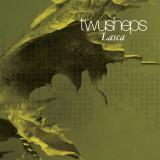
Lasca” inaugura la trayectoria de Naturaleza Mecánica con un manifiesto sonoro contundente. TwuSheps construye un diálogo entre lo primitivo y lo tecnológico, donde la materia orgánica se fractura, muta y adquiere forma electrónica. Cada pieza funciona como un fragmento —una lasca— que revela tensiones entre instinto, máquina y territorio.
El EP avanza como un proceso de transformación: texturas rugosas, pulsos mecánicos y atmósferas densas que evocan un ecosistema futuro. Lejos de la contemplación, “Lasca” propone movimiento, fricción y evolución constante, convirtiéndose en una puerta de entrada a la identidad experimental, física y magnética del sello navarro.
Es una obra que no mira atrás: abre un camino y afirma un territorio
Getting back to simple things, Homemade EP is an allegory of a DIY mentality in an era filled with complexity and uncertainty.
The A-side leans into early-2000s electro and house, with tight drums and functional grooves.
"Rue des Loubards" (A1) kicks off as a groovy cut, filled with mysterious chords and sensual French vocals, layered with tight, driving drums. "Dreams" (A2) follows as an electro piece with aggressive synth riffs and cinematic vocals.
The B-side drifts toward a late-80s palette, with warmer tones and nostalgic feelings. "Godspeed" (B1) cleverly mixes Italo and new beat elements for a chiaroscuro effect. "Antwerp" (B2) closes the EP with a true journey, starting with trancey textures and skillfully drifting toward a synthpop conclusion.
Manaccan ep is a blend of dub and Detroit techno tracks.
Merv (Denmark) are known for their dubby Basic Channel like sound. Elevation is a natural successor to the timeless classic 'Dust'.
Ohm (Denmark) and Octal Industries (Estonia) have been industry stalwarts for decades. Their experience is evident in the BS1818 debut track 'Journey': a functional track in the Scandinavian dub techno style.
Kuba Sojka (Poland) is back on Boomstraat 1818 with a remastered version of 'Rain', which was originally released on Rohs! The track deserved a vinyl release and Kuba rebuilt the track from scratch.
Stroef (Netherlands) his track 'Boxed In' was originally released on OHM Series Digital. This version is reconstructed for the vinyl release on Boomstraat 1818.
Small Great Things / Small Great Beats returns with a shiny yellow vinyl by Quadrakey - the Summer Vibes EP.
With SGB003, Small Great Things delivers a warm and groove-driven vinyl release from Quadrakey, featuring four carefully crafted cuts designed for both late-night dancefloors and sun-soaked daytime sessions.
The EP opens with A1 Good For You, bringing uplifting, feel-good house energy driven by a steady groove, playful details, and a warm bassline that instantly sets a positive tone on the floor. A2 Feel Alone follows on a deeper and more emotional tip, exploring hypnotic rhythms and moody atmospheres, perfectly suited for intimate club moments and late-night transitions.
Flipping to the B-side, B1 Dancing With You delivers a smooth and infectious flow built around rolling rhythms and subtle melodic touches, balancing elegance with dancefloor functionality. Closing the record, B2 Summer Vibes lives up to its name with sunny chords, relaxed grooves, and an effortless open-air feel, ideal for daytime sessions and sunset sets.
From hypnotic grooves to feel-good summer moods, SGB003 showcases a refined and confident production style, staying true to the Small Great Things philosophy: quality music, pressed on vinyl, made for DJs who value depth, groove, and longevity over short-lived trends.
A solid addition to any record bag, SGB003 captures the essence of modern house music with a classic touch, simple, honest, and effective.
On 'Vesturgata Gaze', Hitam traverses a new biome. Geographically and metaphorically. Through this introductory release on Omen Wapta, a remarkable voice in techno lunges into artistic deliverance. Here we, the listeners, find ourselves with an EP that harbours the emotive voltage of a perspective-pivoting trip. Tectonic shifts reshuffle subterranean frequencies, rhythmic phrases carry the timbre of ancient rainfall and we humbly stand witness as ceremonial incantations demarcate indigenous land. In elusive ways, this record assigns a bardic function to mostly nonverbal music. All five tracks consistently resemble traces of life-affirming encounters by sculpting Iceland's geological features into sound. 'Vesturgata Gaze' shows that commitment and intimate collaboration, taking on bold artistic ventures, touching moss and glaciers - that's what can break the mould.
"Tapping into a shared affinity for early trance – as in short for transcendental – Function and Nastia Reigel come together on Dekmantel with ‘Devocion’. Bridging the past and the future, this partnership draws deeply on brooding, melancholic early-90s sounds and supercharges it with the immensity of modern techno.
The project began when Nastia Reigel shared a series of discoveries with David ‘Function’ Sumner – records rooted in the rave-leaning edge of the era, spanning labels like R&S, FAX and EXperimental. He responded that this was precisely the music he had been absorbing while coming up in the thick of New York’s club and rave scenes and beginning his journey into DJing. The excited exchange of deep digs around this niche of dance music history naturally led to a conversation about collaborating on music in this vein, and Devocion is the result.
Familiar genre touchstones are everywhere, from the plaintive bleeps and understated breakbeat roll of 'Eternity' through the sad-eyed arpeggios strafing on the edges of 'Reverence' and on to 'Flowstate's blue-hued acid lines and 'Orion's sky-scraping gated pads. But Reigel and Sumner deploy these strongly coded elements with poise, feeding into a richly rendered production that feels anything but old-school. The emotive streak is wielded with care, spelling out the mood without losing the steely, shadowy sensibility that tracks through their respective catalogues.
In a perfect demonstration of honouring the past while embracing the present, Devocion EP lands as a distinctive artistic statement on its own terms."
Convergence is an ambient album formed through a series of morning rituals during rehabilitation following a severe medical event and an extended hospital stay. After weeks immersed in the constant alarms, beeps, and environmental signals of medical equipment, the act of listening itself became recalibrated. The music was performed and assembled using glass marimba, flute, and analog synthesizers, with each instrument treated as a source of resonance and gradually dissected through spectral analysis—allowing melody to emerge from fragments through repetition, attention, and daily practice, where synthesis functions not as traditional composition but as an exchange of signals.
Working slowly and intuitively, Stardust Multiplier approaches sound as a communicative medium between humans, the natural environment, and non-ordinary states of perception. Motifs evolve through repetition and subtle variation, informed by ceremonial music, mythic structures, and speculative communication frameworks associated with non-human intelligence—not as narrative devices, but as metaphors for attuned listening and pattern recognition.
Rather than moving toward resolution, Convergence documents moments of alignment—instances where intention, system, and environment briefly synchronize. The result is a restrained, deeply focused record, less concerned with atmosphere than attention, where synthesis functions as both a grounding practice and a method of inquiry.
- A1: Veillands
- A2: Eolasfalas
- A3: Sonnenallee
- A4: Somnisvela
- B1: Nothing Under Heaven
- B2: Turadh
- B3: Caoimal
- B4: Saorla
Nothing Under Heaven is the third full-length album from Scottish ambient and drone multi-instrumentalist Yulyseus.
It follows 2022’s In the Dark Palaces of Both Our Hearts, an introspective and immersive work shaped by travel, displacement, and unfamiliar surroundings. Where that release explored darker and more inward-looking terrain, Nothing Under Heaven opens outward into broader, more expansive soundscapes. Drawing on years spent moving between Glasgow, Berlin, Mexico City and Valencia, Niall Gahagan’s compositions here feel patient and quietly luminous, built from layered electronics, bowed strings and subtle field recordings.
Rather than seeking dramatic gestures, the album unfolds slowly, allowing atmosphere and emotion to emerge over time. Working within a crowded and ever-evolving ambient landscape, Yulyseus continues to focus on texture, weight and gradual movement.
Across eight carefully shaped pieces, Nothing Under Heaven explores how sound can hold both stillness and momentum, inviting attentive listening rather than functioning as simple background music. The opening track, Veillands, sets the tone with a quiet intensity that gently draws the listener inward. From there, the album develops as a continuous, immersive experience, rich in detail and emotional nuance. Nothing Under Heaven reflects an artist still in motion, responding to change, uncertainty and new surroundings with humility and care. It stands as a thoughtful and deeply considered addition to Yulyseus’s growing body of work which is rooted in patience, deep listening, and a continuing search for meaning through sound.
Berlin-based producer ZentaSkai returns with ‘Analog Assets Vol. 04’, a four-track vinyl-only EP focused on analog texture, dub-inflected atmospherics, and disciplined techno structure. Active since 1997 and operating Mask Records and its parent label, Zaijenroots, from his Berlin studio, he continues to refine a sound shaped by spatial control and steady, architectural pacing. Tracks unfold patiently, elements are introduced with intent, and nothing feels excessive.
Setting the tone with Cuddling Monsters’ partner, Laura Merino Allue, A1 features phased melodic textures and crisp percussion that gradually lock in the rhythm. A2 develops a filtered synth motif over a steady four-to-the-floor rhythm, revealing its full weight before pulling back. B1 is the most direct cut, driven by a firm, punchy beat and sharp rhythmic detailing built for peak-time focus, while B2 closes with rising string layers over a dub framework, balancing warmth and precision in a clean, measured finish.
With releases on Jerome Sydenham’s Ibadan Records and upcoming collaborations including Cuddling Monsters with Laura Merino Allue and a joint project with Thomas Grun for Rhythm Trax Austria, ZentaSkai’s work sits comfortably between minimal experimentation and functional dancefloor design.
Supported by artists such as Richie Hawtin, Joseph Capriati, Marcel Dettmann, Luke Slater, Laurent Garnier, and DVS1, he maintains a consistent presence within the underground without chasing trends.
MP06 introduces DHAEUR to the Moving Pressure catalogue. The Berlin-based producer carves his sonic worlds through a strong sense of rhythmic architecture and a deep understanding of dancefloor dynamics. Here, he channels club-driven sensibilities into a mature and conscious 4 tracker.
The concept behind the EP reflects the principles of the label - namely, the pressure of sound and its resulting movement. Minimalism meets maximum technical intention, where swollen basslines and tightly coiled rhythmic progressions open up in signature DHAEUR style. The groove carries a distinct elasticity, punctuated by vocal inserts that add a subtly funky, almost soulful essence to the flow. Every element sits with purpose: dynamic yet
stripped back, intricately offset in ways that keep the body locked and the mind wondering. While the A-side leans into this physical immediacy - driving, playful, and sharply articulated - the B-side slips further into the tunnel. Atmospheres thicken and the palette turns eerier, stretching its essential rhythmic backbone into darker territories. Spatial details begin to seep through the structures, pulling the listener deeper while maintaining that firm gravitational pull toward the dancefloor.
Together, the two sides reveal different shades of DHAEUR's language. The result is a beautifully balanced narration between propulsion and immersion, where groove-led functionality meets a more shadowy, atmospheric depth.
Naarm/Melbourne producer Mistr Dean delivers the first release on the city’s newest label, Lower Power, a nine-track double LP rooted in Dub influences.
The project is at its core, a journey that progresses through ambient and house adjacent soundscapes, to methodically constructed grooves. Phase Shift, Solanin, Automagic and Send Dub all exemplify the consistency and range of the record, and Dean’s clear ability to build clean tracks from the ground up.
While it has a clear cohesive identity, Phase Shift leans into a diversity of sound and feel, suitable at points, for the bar, club, couch or frankly, any function you feel.
IN2POL rounds out the record with a remix of the title track that brings its own distinct weight to the LP’s sound and, to no one’s surprise, it truly is a weapon.
Credits:
Mixed by Mistr Dean
Mastered by Brendan Zacharias at Cirius Audio
Japan's Takuya Matsumoto returns to Inhale Exhale with a new six-track EP entitled 'Song Of The Ocean'.
Japanese DJ and producer Takuya Matsumoto has quietly established himself as one of the most distinctive voices to emerge from Japan's contemporary house scene. Known for his warm, deeply musical approach to production, Matsumoto blends classic house
sensibilities with jazz, funk and soulful influences, crafting records that balance dancefloor functionality with rich musicality. Through releases on respected international labels like Clone's Jack For Daze and Royal Oak, Vibes and Pepper, and Fina he's built a
reputation for refined grooves, elegant arrangements and a timeless approach to house music.
Across the six tracks Matsumoto once again radiantly showcases the depth of his production skills as the project sonically traverses Balearic-tinged House, bouncy acid- laced electro, cosmic nu-disco, breaks driven jungle and dub infused deep house.
In the rapidly shifting tectonic plates of the global Afrobeats scene, few arrivals have been as seismic as that of Ahmed Ololade—better known to the world as Asake. With his breakout project Mr. Money With The Vibe, the artist didn’t merely debut; he effectively recalibrated the tempo of the Nigerian pop soundscape. The EP functions as a masterclass in synthesis, pulling from the ornate, percussive history of Fuji music and grafting it onto the driving, bass-heavy architectures of contemporary Amapiano. It is a calculated, deeply rhythmic hybridization that manages to feel both nostalgic and jarringly modern.
From a critical vantage point, Mr. Money With The Vibe is defined by its brevity and density. Asake treats each track as a focused vignette, utilizing a vocal delivery that oscillates between a melodic, almost liturgical chant and the staccato urgency of a Lagos street orator. The production—characterized by sharp, frenetic percussion and deceptively simple melodic loops—creates a high-intensity atmosphere that mirrors the relentless pace of urban life. He avoids the pitfall of bloated experimentation; instead, he doubles down on a "street-pop" ethos, prioritizing accessibility without sacrificing the complex rhythmic interplay that gives the genre its distinctive texture.
Ultimately, Mr. Money With The Vibe stands as a pivotal document of the current era, capturing the transition of Afrobeats from a regional powerhouse to a dominant global force. By blending the aspirational "hustle culture" narrative with an increasingly sophisticated sonic palette, Asake established a blueprint that has since influenced a new wave of artists. The project is a testament to the idea that authenticity, when paired with relentless precision, remains the most effective currency in contemporary music.
Luis Malon returns to Overthink Records with a 4-track EP.
Four cuts rooted in his distinctive, functional sound.
Driven by raw drum machines, acidic lines and precise sequencing, the release moves between techno and electro with a direct, dancefloor-focused approach — tight, hypnotic and built for late hours.
TGP & LDG on their third collaborative release, a four-track statement that moves between raw live energy and deep, hypnotic exploration. The A side captures the essence of the dancefloor with two cuts from Tobias. & Kuniyuki’s live set at EDEN, Japan. Spontaneous, textured, and driven by the moment. A direct transmission from the booth.
B side shifts perspective: Yuta / O-MA strip things down to the core with a minimal techno approach, precise, reduced, and functional. Ness closes the record with a downtempo, hypnotic journey, immersive, subtle, and introspective.A release built on contrast and cohesion, bridging live improvisation and studio precision. Third chapter. Same vision. Expanded language.
- 1: Remenanuèch
- 2: Fòrabanda
- 3: Adissiatz Palhassonaira
- 4: Clam
- 5: La Majorana
- 6: Au Nòst' Casalòt
- 7: Diuré Tremblar
- 8: Diuré Samsir
- 9: A L'amistat
- 10: Flame Folclòre
- 11: Lo Mes De Mai
- 12: Jana D'aimé
With Flame Folclòre, Cocanha continues reclaiming Occitan folklore as a living, political and embodied space. For Lila Fraysse and Caroline Dufau, folklore is neither decoration nor nostalgia. It is a site of struggle, where narratives, identities and imaginaries are constantly renegotiated. Drawing from fragments of traditional Occitan music, the duo composes, reshapes and rewrites. Ancient melodies intertwine with original texts in a contemporary language that echoes both subversive Occitan memories and present-day struggles. The voice becomes a chronicle of now, a way of inhabiting the present. Driven by hypnotic polyphony and the deep pulse of stringed tambourines, the album embraces a minimal, physical and grounded aesthetic. Repetition acts as propulsion, dance as function. Cocanha"s practice is collective by nature: to gather, to move, to fuel a joyful struggle around reclaiming the commons. Produced by Raül Refree, Flame Folclòre intensifies the dialogue between memory and transformation. Voices strike, revolve and respond, opening a circular space where folklore is no longer frozen but alive and burning in the present.
Electro as its best! SS001 marks the first transmission from Serpiente Sounds, a debut 12" split that keeps it lean, direct, and floor-focused. Viewtiful Joe handles the A-side with two cuts that balance Electro snap and Detroit discipline: clean drum architecture, crisp low-end, and synth lines that feel both futuristic and functional. On the flip, Subversive brings two late-night weapons with a colder edge and a deeper swing. SS001 is a debut statement with zero filler, a compact toolkit of Electro/Detroit tools for the booth.
Arriving twenty-six years after his debut Cell, Particle further sharpens the fractured electronics and muted melodic language explored on 2021’s From Stasis, presenting a crisper, more immediate set of compositions.
Cadoo, also widely known as a founding member of pioneering electronic project Gridlock, has used Dryft as a consistent outlet for his electronic work across decades, bridging early post-industrial IDM with more contemporary, restrained forms.
Long recognized for beat structures that feel precarious, rhythms that seem to strain, erode, and reassemble in real time, he approached Particle with a renewed focus on allowing these patterns to fully resolve. Melodic elements are given a more direct role, actively driving momentum rather than hovering in the margins.
Emphasizing clarity and immediacy, Particle favors tactile sound design and forward-pushing arrangements over density or abstraction. The result is a notably focused Dryft release that functions as an all-encompassing signpost for Cadoo’s electronic output to date, informed by decades of exploration while remaining resolutely forward-looking
Born in Madrid and now entrenched deep in Boston's underground, Ketzaal operates at the darker more, textural end of the techno spectrum. He shows off that signature again here with a tightly wound four-tracker. Opener 'Placed Upon Thee' lands with great tension, all driving stabs and forward thrust, while 'Final Ritual' dips into a rolling, bass-heavy stride that loosens the grip without losing pace. On the flip, 'The Throne' locks into a head-down groove before 'In Bloom' stretches into something more elusive and shapeshifting. Purposeful construction and a clear sense of function don't mean there isn't plenty of character in these dance floor bombs.
Daskal debuts on DJ Tennis’s Life and Death label today with the release of “Changes,” the first single from his forthcoming album OD, out March 6. The release marks a defining moment for the producer and composer, whose work moves fluidly between contemporary dance, film, and electronic music, and represents his first full-length statement reconnecting his compositional practice with the dancefloor.
“Changes” arrives alongside a striking accompanying video directed by award-winning filmmaker Tamir Faingold, featuring dancers from the world-renowned Batsheva Dance Company. Rather than functioning as a traditional music video, the piece uses contemporary dance as its primary language, translating the emotional charge and magnetism of nightlife into movement. Together, the single and visual introduction frame OD as a bridge between club culture and the expressive traditions of modern dance and composition.
A classically trained composer with deep ties to the world of choreography, Daskal has spent recent years creating original scores for institutions including Los Angeles Dance Project and the Royal Danish Ballet, while simultaneously developing a parallel body of work across ambient and experimental electronic music. OD emerges as a convergence of those paths: a ten-track album shaped as much by physical movement and spatial awareness as by club tradition, positioning Daskal between concert hall, black box theater, and late-night club environments.
Recorded and mixed primarily using vintage hardware — including a rare 1980s German mixer in a high-end Tel Aviv jazz studio — OD reflects a deliberate shift away from purely atmospheric writing toward rhythm, repetition, and physicality, while retaining the precision and restraint of his compositional background.
Shaped from fragile, emotionally charged piano motifs that distort, disappear and transform into dense, cinematic textures, 'CANALS' is a debut that's finely matured, the result of years of friendship and growth. Italian artist Vanja Sturno and Montréal-based Belgian-Spanish composer Pablo Geeraert (aka Sanea Ima) have worked together extensively on various projects up until now, but 'CANALS' is their first official release as a duo. Having both studied music academically, the pair were eager to work more intuitively, so applied their well-honed set of skills to sound that, instead of fitting into a conceptual box, reflected more personal experiences.
Back in 2023, Geeraert travelled to Rome to support his friend at a difficult time and, during the trip, received some bad news of his own. The complicated feelings unconsciously surged through a series of delicate Ryuichi Sakamoto-inspired piano improvisations and a new project began to coalesce. They didn't realize it at the time, but once the record was finished, Sturno and Geeraert began to understand that the entire process had been a form a joint catharsis - a release of pressure. They were able to function so effortlessly and swiftly because they had already provided the space for each other to resonate emotionally and the music flowed from that point.
So the album's title, while remaining ambiguous, suggests its formation: a sequence of eight interconnected channels that feed a creative whole. On the first segment, Sturno and Geeraert's initial recordings can be perceived most nakedly, the melancholy, Satie-like phrases floating peacefully for a moment before the tranquility is agitated by stormy distortions and swelled into thick waves of harmony. The piano provides the record with its emotional anchor, offering focus and clarity as multi-dimensional noise wells up around it before inevitably dissipating, leaving gentle, unadorned sounds once again.
And the familiar instrument is reshaped into a wheezing artificial organ on the animated 'CANALS III', punctuated by percussive, tape-warped pitch fluctuations that seem to bite into its very essence. Gauzy acoustic granulations snowball into a powerful, bass-heavy crescendo on the fourth part, setting the tenor for the album's second half. But after the crushing 'CANALS VI', possibly Sturno and Geeraert's heaviest track, a brief tremolo-heavy vignette that ripples through experimental rock and ambient music's braided history, the duo clear the air with a jazzy diversion, introducing soft woodwind blasts as a palate cleanser before an epic, widescreen finale.
It's an album that's best absorbed as a whole, a vortex of ritualistic, rhythmic repetitions that Sturno and Geeraert appropriately refer to as "spiral listening".
Brussels-based Maloca presents Paradise Mountain, the new EP from Katatonic Silentio, DJ and production moniker of Italian sound artist Mariachiara Troianiello. Positioned in counterpoint to her darker,
more visceral work, the record delicately folds Detroit electro and techno drum structures into a softened New Age glow, generating environments that breathe, shimmer, and slowly coalesce.
Across the EP, tracks unfold gently, rife with wet modular tones, chromatic arpeggiations, and light-touch percussion which drifts in and out of focus, blurring the line between dancefloor function and inward-facing sound art. Paradise Mountain ultimately traces a slow ascent through luminous, carefully crafted terrain - quietly joyful and deeply hypnotic in its approach.
- A1: Old Becoming New
- A2: Vessel Diaspora
- A3: Floor Phlegm Hue
- A4: Soft Tissue
- A5: Arriving Through The Front Door
- B1: Moth Ball
- B2: Spin
- B3: Terraforming
- B4: Lilac Sea
- B5: Oumuamua
London experimental spoken word and electronics duo BAG land on Phantom Limb with mesmerising new album This House is a Body, marrying visceral poetry with exploratory production to achieve beguiling, occasionally screwy and occasionally dreamy sonics.
“This album functions as a floor plan, a house in itself, collecting and containing the ecosystems of multiple rooms,” write BAG - Canadian artist and poet Jody DeSchutter and London producer Daniel Allison. “The roles we play can be defined by the room we are in; and it can be near impossible to tell what room we are in without looking from outside. This album maps out a number of rooms which hold such relations, memories, or experiences and builds them all into a single house, a single body.” Formed from Allison’s headspinning, depth-mining production for synthesis, field recording, and acoustic instrumentation, and DeSchutter’s lysergic and prophetic spoken word, the palette of This House is a Body can turn on a dime from claustrophobia and dread to hyperreal dream sequence, illuminated in sunstreamed glory in places and dripping with basement effluvia in others. Throughout, words, meaning, and imagery all dissolve into an architecture of alternately familiar and unknowable sound.
So… what are we actually supposed to tell you about HCL? Honestly, it’s a pretty nice story. A collaboration the way it’s meant to be.
HCL stands for Horkheimer, Consti aka Zeitstill, and Delenz — not hydrochloric acid, but liquid music. One shared idea of sound, without a fully mastered plan. Most of the tracks were born during long studio sessions — long nights, extended jams, ideas taking shape naturally. No big concept, just working it out together and seeing where things go (or not).
After the first two HCL tracks found their way onto various samplers — including the 25 Years of Live at Robert Johnson compilation and Freeride Millennium’s own Queer Base Vol. 2 — it felt like the right moment to take the next step and release the first pattern. Not as a conclusion, but more as a checkpoint. This is far from the end. There are more patterns, more sessions, more ideas already waiting to be published.
Describing the genre is, as always, not that easy. It drifts somewhere between techno and all the other things orbiting around it. Purely electronic music, rooted in the club, but not obsessed with functionality. In a way, it reminds us of the early 2000s — deep, slightly twisted, hypnotic, driving but never aggressive. Music that takes its time, creates space, and pulls you in rather than pushing you forward.
For moments that are meant to last — tracks you don’t want to hear mixed out. For getting lost on the dancefloor, for forgetting the noise and madness outside for a while, for drifting into yourself and letting time fly. Honest club music, built for immersion.
Enjoy the music. Enjoy yourself. Love.
Yours, HCL
The second vinyl release on Platz fur Tanz continues the narrative of techno's past and future. Experienced artists reinterpret the shadowy vibe of dancefloors around the world, giving it new form and depth.
The record opens with a track by Swedish techno futurist Lakej, featuring his signature sound of machinery on a working factory floor. The music immediately transports you into the industrial atmosphere of a rave.
This time, the Italian-born, Berlin-based artist VSK takes us on a journey through the emotional waves of deep techno. A slightly jazzy groove makes this track perfect for peak time dancefloors.
Latvian producer Ksenia Kamikaza stays true to her style, transporting us into a world of visualized melodies and rhythms. The bassline sets the groove, while the unhurried rhythm allows you to fully surrender to the dance.
Liza Aikin brings an uncompromising Berlin vibrations to the release, reminding us how a true rave should sound. Her style is not heavy but persistent. Liza never stops experimenting, and this track will be a highlight of any DJ set.
Another Latvian electronic talent closes the release. Igors Vorobjovs blends the best of electro and techno in his track. Nervous rhythms and loud sounds stir the emotions, while the raw, untamed resonance will leave no true connoisseur of feral techno indifferent.
reActive Lab proudly unveils its first vinyl release, marking a defining moment for the label's evolution. reActive Lab Collective 001 brings together four of the label's core members - Chrivu, Dragne, Flavius, and Pattern Tusk - to craft a 12" that perfectly captures the collective's sonic DNA: deep groove, subtle minimalism, and timeless house energy. The record opens with Chrivu - "Cell Division", a vibrant house piece driven by a confident bassline and crisp percussive motion. Built with clarity and flow, it sets the tone for a journey anchored in groove and precision. Dragne - "Get Funk" follows with playful rhythm and low-end warmth - an irresistible combination of swing, bounce, and character designed for the dancefloor. On the flip side, Flavius - "The Interview" introduces a more introspective dimension - stripped-down yet immersive, balancing atmosphere with emotion through delicate textures and steady rhythm.
Closing the release, Pattern Tusk - "We Went On" blends soulful depth with minimal intricacy, offering a smooth, driving finale that resonates with both feeling and functionality. reActive Lab Collective 001 stands as more than a debut - it's a declaration of artistic identity. A 100% in-house release from reActive Lab, crafted with authenticity and intent. A promising first step in what's clearly a long-term commitment to sound, craft, and community. Short Description: reActive Lab makes its vinyl debut with reActive Lab Collective 001, a powerful VA featuring Chrivu, Dragne, Flavius & Pattern Tusk. Four deep and groovy house cuts blending energy, warmth, and minimal precision - a pure statement of the label's identity.
Nightfall marks Maoh's first release on The Third Room, channelling a sound distilled through years of deep exploration. Four tracks evoke natural forces and instinctive motion, reshaping the dancefloor into a psychedelic, collective yet deeply personal journey driven by a relentless, precise groove. Maoh commits to a tightly defined sonic language born from tribal percussion and restrained rhythmic dynamic, creating a physical and grounded listening experience. Deeply rooted in repetition and pulse, the release remains precise in its contemporary execution, serving as a bridge capable of uniting listeners in shared momentum. As the tool-driven composition unfolds into storylines, revealing vast and unfamiliar landscapes, sparse voices surface to complete the narrative like a final breath, reminding us of the human presence within the universal expanse that the release encapsulates. Ultimately, Nightfall traces a continuous line from early collective expression to a forward-facing, technological present. Rhythm functions here as ritual and joint movement, articulated with clarity and intent.
Detroit Legend, Rick Wade joins Collect Records for the first time with Just Beneath EP. A key figure in Detroit's second generation of house producers and founder of Harmonie Park, Rick Wade delivers three deep and hypnotic cuts rooted in jazz, soul and classic machine funk. Warm, stripped-down and functional, with one acid-leaning track adding extra tension to the EP. Underground house music for late night hours. Collect Records operates from Collect, the Lisbon-based record shop and radio located in Cais do Sodre, a meeting point for DJs, collectors and the local underground scene.
After releases on Bordello A Parigi and ZONE label (run by The Hacker, Gesaffelstein) and more recent his 'Into the Zone' Ep for Neuma Records Hungarian based Martin S. debuts on Rotterdam Electronix with ''Life of Crime'' ep! A functional and highly effective 4 tracker inspired the French Electro sound. Big tip 4 the Electro heads!
For our 30th anniversary, we reissue three absolute minimal techno statements by Robert Hood. These tracks define the birth of minimal techno — reduced to rhythm, pressure and repetition. No ornament. No compromise. Just structure, tension and movement. Originally released on Logistic Records, they remain as powerful and modern today as they were in the early 90s. Functional. Spiritual. Underground.
Take Me, I’m Yours is the first collaboration album between Alan Abrahams and Jan Jelinek. Released through the latter’s faitiche, it builds upon multi-layered vocal sketches by the former. The Paris-based artist, primarily known for his work as Portable and Bodycode, supplied Jelinek with multi-layered song sketches that the German artist subjected to a rigorous process of manipulation, excavating the ambiguities of the original material and transforming its rhythms into subtle pulses. Take Me, I’m Yours is neither a typical Abrahams record nor a classic Jelinek album—it is something third, mediating between the physicality of the voice and the abstraction of electronic sound design.
The two had crossed paths before really getting to know each other after Abrahams invited Jelinek to play at one of his Süd Electronic parties. The idea of a collaboration emerged slowly. “It started as an experiment, and over the past few years grew from a few tracks into this album,” says Abrahams. He describes recording the basic material as a “tantalizing” process, not knowing how Jelinek would transform his material, some of which was based on wordless chanting, while other tracks were working with lyrical content. However, their mutual trust allowed Jelinek to remove the harmonies, radically reduce the rhythms, and concentrate on Abrahams’ voice.
Jelinek heard something “fragile” in this voice, “moments of doubt and dark premonitions.” He points to Forever as an example. “Alan’s original song reminded me of classic vocal house, but his voice seemed to almost break,” he says. “This contradiction made the piece even bigger, because we hear a singer in the moment of an awakening.” He further accentuated such tensions through arrhythmic synth modulations and time-stretching algorithms, while also adding concrete sounds from a variety of sources. With its dedication to both transforming and amplifying the emotional qualities hidden within Abrahams’ pieces, Take Me, I’m Yours functions as a dialogue between those two singular artists.
Danish producer Kasper Bjørke returns with a new release on Tropical Animals, the “Veri/Gliss” EP a work that fully captures his signature blend of cinematic depth, refined production, and forward-thinking electronic aesthetics.
“Veri” opens the EP as a richly layered and immersive experience. Built around an evolving tapestry of textures, the track unfolds through pulsating synths, shifting sonic details, and a steady yet powerful rhythm. The result is a truly intergalactic journey, where each element seems to orbit around a constantly transforming emotional core. This is Bjørke at his most visionary-bridging club functionality with intricate sound design in a hypnotic and expansive narrative.
On remix duties, label head Ricardo Baez reinterprets “Veri” with a sharper, more direct approach. Stripping back the original’s layered atmospheres, he delivers a driving electro version that’s lean, tense, and fully focused on the dancefloor. With its tight groove and immediate impact, the remix is built for peak-time energy and club intensity.
On the flip side, “Gliss” reveals a more intimate and emotive dimension of Bjørke’s sound. A modern electronic ballad, the track blends sensual rhythms with delicate, suspended melodies. Its subtle yet captivating groove carries the listener to an unknown planet, where everything moves in sync, locked into the same pulse and flow. It’s a piece that radiates both mystery and warmth, showcasing Bjørke’s ability to craft deeply atmospheric yet rhythmically engaging compositions.
With the “Veri/Gliss” EP, Kasper Bjørke and Tropical Animals reinforce a shared artistic vision where sonic exploration meets club-ready precision, balancing introspection and dancefloor energy, cosmic textures and physical groove.
A defining transmission in the history of Skylax Records. Originally released across different moments of the Skylax catalogue, these recordings are now assembled as the final chapter of the Skylax House Explosion series — a project exploring the architecture, memory and survival mechanisms embedded within house music culture. The record opens with Move D’s “Outer Rim 64”, originally released in 2018 as part of the Skylax House Explosion narrative. Suspended between motion and distance, the track establishes the conceptual perimeter of this final chapter — a space where rhythm no longer functions only as propulsion, but as orientation. Here the listener stands at the outer edge of the dancefloor’s architecture, where structure persists even as its original social conditions begin to disappear. The sequence continues with Hardrock Striker’s “Motorik Life (DJ Sprinkles Dub)”, originally released in 2011. Rather than operating as a conventional remix, the Dub reinforces the motorik continuum of the original composition, transforming repetition into endurance. DJ Sprinkles preserves the infrastructural skeleton of the dancefloor — its capacity to sustain bodies through duration alone, without narrative resolution or emotional release. The record culminates with “Motorik Life (DJ Sprinkles Mountain Of Despair Remix)”, one of the most politically explicit works ever associated with Skylax Records. Through the relentless repetition of the phrase “mountain of despair,” Terre Thaemlitz dismantles the traditional function of dance music, transforming remix culture into structural critique. Referencing Martin Luther King Jr.’s famous metaphor, the remix removes the promise of redemption and leaves only the architecture of struggle. The dancefloor is no longer presented as escape, but as a temporary condition of survival. Together these recordings reveal house music’s true function: not to resolve despair, but to create temporary conditions in which bodies can continue to exist despite it.
With Agenda EP, Tom Carruthers closes a landmark trilogy on Skylax Records, following Neutralise EP and Deepline. Three records. Fifteen tracks. One coherent vision of machine-driven house music stripped to its raw, functional core. This final chapter dives deeper into direct, club-focused energy, where groove, repetition and tension do the talking. Agenda is less reflective, more physical — built for movement, sweat, and long transitions in dark rooms. Opening track “Chrome” sets the tone: sharp drum programming, metallic pressure, and looping synth phrases that lock the body into motion. “Agenda (Raw Mix)” follows with a tougher, stripped-down approach — no excess, just pure rhythmic insistence rooted in early Chicago jack and warehouse discipline. “Beat Down” pushes further into machine funk territory, where relentless patterns and rugged textures meet in hypnotic repetition. On the flip, “Fade Away” brings a deeper, moodier tension — a late-night track where subtle emotion seeps through minimal structures. Closing cut “What You Want” is classic Carruthers: jacking drums, understated melody, and a groove that feels timeless rather than retro. As with the previous releases, the visual identity is handled by H5, whose modernist, reduced artwork mirrors the sonic philosophy: clarity, impact, and purpose. Agenda EP completes the Skylax trilogy as a statement of intent — not revivalism, not nostalgia, but dance music reduced to its essential elements.
TRANSMISSIONS #1 connects four distinct Skylax signals into a single flow. Each track comes from a precise moment, a specific context, and a clear dancefloor function. Together, they form a transmission built on movement, use and continuity. A1. F.T.G – Tribute ’89 (Fuckthegovernment #001 Mix) is a raw drum-machine workout positioned between dark Chicago house and late-’89 European techno. Stripped, direct and uncompromising, Tribute ’89 quickly became an underground staple, heavily played by Ricardo Villalobos and Raresh — a foundational Skylax signal. A2. Nick Beringer – 57th Corner, taken from Second Floor (Wax Classic, 2016), is a tech-leaning deep house cut marked by restraint, precision and late-night tension, capturing Beringer at a pivotal point in his long-standing relationship with Skylax. B1. Floorfillers – Love Is Growing delivers a powerful house-disco statement rooted in old-school foundations, where filtered disco loops, raw drum programming and uplifting swing echo the lineage of DJ Sneak, Paul Johnson, early Roulé / Crydamoure-era French touch and classic Chicago jack — a modern floor-driver with timeless intent. B2. Nicolas Aftalion – Rue des Wallons brings deep, soulful house with a strong Kerri Chandler influence; warm chords, chunky drums and emotional weight firmly grounded in early ’90s US garage tradition. Supported by Cinthie, it closes the transmission with groove, balance and purpose. TRANSMISSIONS #1 — built to move, built to last, signals in motion. Four tracks. Four signals. Still moving.
Simoncino returns to Skylax Records with Traxxx EP, a raw and hypnotic five-track collection built for the dancefloor. Known for his unmistakable analog approach and deep connection to the legacy of Chicago house and underground European club culture, the Italian producer delivers a set of stripped-down, highly functional DJ tools. Tight drum machine programming, rolling basslines and subtle synth movements drive each track forward with precision and efficiency. No gimmicks, no excess — just pure club energy designed for long mixes and late-night sessions. True to the Skylax philosophy, Traxxx EP focuses on timeless groove architecture rather than trends, offering DJs and collectors a record that will remain effective in the bag for years. Raw, hypnotic and direct, this is underground house music in its most essential form.
- A1: Intro + Dreams Feat Liv East
- A2: Fruits Of The Universe Feat Douniah
- A3: Define Us Feat 30/70 & Dreamcastmoe
- A4: High Feat Cor.ece
- B1: Vibin Feat Ben Westbeech & Sanity
- B2: Without The Sun Feat Oliver Night
- B3: Bells
- C1: Rearrange Yourself Feat Ben Westbeech & Obi Franky
- C2: Downstream With Life On Planets
- C3: Be Real Feat Life On Planets
- D1: Looks Like It (Space Talk)
- D2: Illusions (Midnight Dub) Feat Ava Lavá & Life On Planets
- D3: Simulate Feat Goya Gumbani & Javonntte
DJ Support: Laurent Garnier, Dennis Cruz, Girls Of The Internet, Horse Meat Disco, Stacey Pullen, Elliot Schooling, Solomun,Marco Carola, Joseph Capriati, The Martinez Brothers, Dam Swindle, Soul Clap, Luke Solomon, Riva Starr, Franky Rizardo, Archie Hamilton, Silvie Loto, Fouk, Austin Ato, Salomé Le Chat, Blackchild, Jean Pierre, Black Loops, Kassian, Seamus Haji, Melvo Baptiste, Rimarkable, Sophie Lloyd
In-demand Amsterdam-based duo Makèz step into new ground with the release of their album ‘Arriving Home Elsewhere’, via ANOTR’s No Art label. A kaleidoscopic project that moves between deep house, cosmic jazz, R&B, broken beat, and club-ready energy, the record is both a declaration of identity and a dissolution of boundaries - proof of the duo’s rare ability to merge worlds without diluting or compromising their true essence.
Where most albums that span electronic realms lean on functionality, ‘Arriving Home Elsewhere’ reaches for something much more expansive. The project is a true hybrid: half shaped for the intimacy of a headphone listen, half designed for the electricity of the dancefloor. together forming a seamless continuum between reflection and release. Tracks like ‘REARRANGE YOURSELF’, ‘BE REAL’, and ‘LOOKS LIKE IT (SPACE TALK)’ are stripped to the core of house music’s driving pulse, made for bigger systems and peak-time release. In contrast, ‘Dreams’, ‘Fruits of the Universe’ (with douniah), and ‘Without The Sun’ (with Oliver Night) explore lush, textured arrangements where live instrumentation and improvisation carry equal weight to rhythm and groove.
Collaboration is at the heart of the LP, with Makèz inviting a constellation of voices who each expand the project’s palette. Ben Westbeech, Liv East, and SANITY bring soulful intensity; 30/70 and dreamcastmoe connect Amsterdam to Melbourne and DC; Cor.Ece and Oliver Night weave delicate threads of emotion; Goya Gumbani and Javonntte guide the production with their vibey, groove-led performances; while Life on Planets reprises his role as a core creative partner, appearing across the album on tracks including the standout ‘BE REAL’ and the previously released ‘ILLUSIONS’ alongside rising Amsterdam talent AVA LAVÁ. Together, these contributions shape an album that feels less like a singular statement and more like a living, breathing ecosystem.
For Makèz, ‘Arriving Home Elsewhere’ is as much about philosophy as it is about music. The title encapsulates a tension central to their art: the feeling of belonging to multiple worlds without ever being confined to one. Jazz, house, soul, and experimental club sounds are not separate influences but parallel languages, and in merging them, the duo has created a record that mirrors the fluidity of contemporary identity and expression. And while it may speak in many voices, the LP tells one clear story - that of Makèz, arriving, again and again, home elsewhere.
Fides Records is ready to introduce the 4th chapter of the10-year anniversary series with. X4 leans into momentum and contrast with its hard-groove pressure, dub-chord depth, and melodic release that showcases a side of the label where functional club tools and emotional storytelling sit naturally together.
Side A begins with Rebecca Delle Piane’s “Genomica”, a driving techno train powered by tightly layered elements and rhythmic tenacity, marking another step forward for one of Italy’s most exciting rising artists. Rorschack follows with “Primeriti”, weaving dubby chords and rolling basslines around a haunting female vocal. Closing the side, Berlin-based SLV lands with “Ritual Resonance”, a hard-groove banger that fuses percussive urgency with dub-chord sophistication.
Flipping to Side B, OFF GRID’s “The Roots” stands out as a colorful, mental hardgroove tool: elegant in detail yet built for drive, striking a heady balance between control and impact. Francesco Devincenti’s “Joanaz” brings trance tinged melodic techno with harmonic depth and cinematic intensity, opening the door to a more emotive register. The record closes with Endrew’s “Alright”, a powerhous
Classy and versatile various artists release built for selectors who prefer depth over noise. Rhythm Cult returns with the second chapter of its Collective Series, bringing together Just Her, Acitone, Roland Klinkenberg, and Soulade for a refined four-track selection rooted in timeless club functionality.
Warm chords, subtle groove pressure and a spacious late-night feel. This is heady, functional and quietly expressive club music, refined in detail, reduced in form, and made for deep hours rather than obvious moments. A tasteful and immersive release with real depth. With UKR059, Eva Lansberg delivers a deeply atmospheric and elegantly reduced four-tracker for Ultra Knites Records.
No filler, no detours, just floor-focused disco from Berlin's Delfonic, who is always on point. 'Welcome Black' wastes no time snapping into action with driving drums, elastic bass and bright string stabs that demand full body movement. 'Dancing Facts' keeps it lean and punch with vocals and tight percussion, doing exactly what's required. Flip it over and 'Got To Know Your Body' rolls out classic disco funk, warm chords and a flash of soulful heat cutting through the groove. 'FM4 Me' goes deeper, chugging rhythm and filtered synth lines primed for locked-in, late-night sessions. Functional, effective and quality as ever from Delfonic.
With Mr. Coconut, Cosmo Dance delivers a four-track EP that strengthens a distinctive sonic identity, blending retro aesthetics, club culture and cinematic sensibility into a cohesive body of work.
The title track unfolds through refined dynamic control. Warm multilayered percussion, textured guitars and a deep yet restrained bassline create an organic groove that evolves gradually rather than relying on obvious drops. The production favors subtle progression and hypnotic growth, resulting in elegant, mature dance music.
Goodbye expands the project’s narrative dimension. Inspired by the atmosphere of Italian ’70s library music, the track represents the protagonist’s theatrical exit from the club — not a melancholic farewell, but a charismatic closing scene. A playful detail emerges when Dandolo (Cosmo Dance’s alter ego) delivers an ironic “cough solo” precisely as an off-voice introduces Mr. Coconut, adding a self-aware cinematic twist.
Dub nuts explores deeper dub-informed territory. Built through layering and subtraction, the track showcases careful spatial control and restrained low-end management.
The EP closes with the Coccappella Version, a stripped-down reinterpretation of the title track focused solely on percussion and voice, revealing the rhythmic backbone of the project.
Mr. Coconut is a refined balance between club functionality and cinematic storytelling — controlled, elegant and unmistakably personal. It’s not about peak-time fireworks — it’s about atmosphere, detail and identity.
Frankfurt am Main -- Leipzig duo not even noticed deliver their long-awaited debut album space beyond noise - a 12-track journey balancing club functionality with immersive, long-form listening.
Shaped by years of touring and a shared ritual of visiting botanical gardens around the world, the album blends shapely grooves, field recordings and warm melodic textures into a cohesive, lived- in sound. Subtle environmental details run throughout, creating a natural flow between tracks.
Musically, it moves between electro-funk, breakbeat and hip-hop- inflected cuts, with downtempo and dubby excursions. Highlights include the driving “chrone,” the sundown groove of “diras,” the acid-tinged “plune,” and the hazy two-step moment “skum.”
Designed with warmer months in mind, space beyond noise captures the balance between dancefloor energy and home listening depth.
Good Life sees Detroit icons Inner City return on KMS with one of the most celebrated house records of all time, presented here on fresh 12” vinyl.
A defining track of the late 80s and early house movement, Good Life remains a timeless anthem, driven by uplifting melodies, soulful vocals and unmistakable Detroit energy.
This edition features a remastered version of the original alongside an Inner City edit of the Carl Craig remix, plus a Dub Mix, offering both classic playback and updated DJ functionality.
As a cornerstone release from the KMS catalogue, the record continues to resonate across generations of DJs and listeners, maintaining its place as an essential dancefloor staple.
Back on fresh 12" vinyl, this repress offers strong appeal for both collectors and DJs looking to stock a truly iconic house record.
An essential catalogue piece for stores supporting classic house and Detroit heritage releases.
c B2: Good Life (Remastered) Dub Mix
Vitamin Of The Moon launches as the new label and artistic platform of Toulouse-born, Berlin-based producer Lenny Mailleau, also known as one half of Zendid. The Question marks both its inaugural statement and Lenny’s first release under the new imprint. It is a focused, groove-driven record that moves between house, dub, techno, minimal, and space-disco. The tracks are delivered with quiet confidence, sophistication, and clear dancefloor intent.
The opener, “The Question,” establishes a taut, hypnotic framework. It features crisp 707 drums, syncopated movement, disco-tinged basslines, and a subtle, paranoid tension that relentlessly draws the floor in. “Saturday Déboch” stretches the energy further. It is built for late-night or early-morning moments when time dissolves into rhythm, using dub-inflected textures, highly detailed spatial echoes, and a patient, locomotive four-to-the-floor drive. On the flip, “Schönleinstrasse Caval” sharpens the architecture with stripped-back techno percussion and a rolling, functional pulse, clearly shaped by Mailleau’s time on Berlin floors. Closing the EP, “La Femme” (ft. Ariachi) adds a warmer, more playful and emotive layer by weaving vocal fragments and melodic accents around a minimal-tech core.
With The Question, Lenny Mailleau introduces Vitamin Of The Moon through restraint and clarity — positioning it as an extension of his personal language and refined club sensibility. A first chapter that honours minimalism’s roots while quietly pushing it forward, proving once more that focus, rhythm and atmosphere remain central to imagining contemporary club music.
Playedby021-1 is the starting point of Andrei Ciubuc’s Back 2 Back to the Future, unfolding over three vinyl chapters. Released as a double 12”, this first part lays the foundation of the journey: hypnotic rhythms, sharp grooves, and intricate sound design that highlight Andrei’s ability to balance dancefloor functionality with deeper narrative elements. Each track stands strong on its own, while also acting as a fragment of the larger story that continues in the next two volumes.
With Severance, IGLO returns to Figure with a focused yet exploratory EP that reflects his open-ended approach to contemporary techno. The release moves fluidly between restraint and expression, combining functional structures with subtle, unconventional elements that give the tracks a distinct sense of character. Rather than settling into a fixed formula, Severance highlights IGLO's curiosity and willingness to push his sound forward while remaining grounded in precision and control.
Connection opens the release with a restrained, heads-down groove. A firm low-end foundation and sparse percussion lock into a steady momentum, while understated melodic elements add depth without breaking the track's linear drive.
On Kauriraris, the energy tightens. Nervous synth motifs and crisp rhythmic details create a sense of urgency, pushing the track forward through constant micro-variation. It's a lean and effective tool built for sustained pressure.
Flipping the record, Blink Twice moves into darker, denser territory. Murky textures and a weighty groove unfold gradually, building tension through repetition and space. The track thrives on its slow burn, making it well-suited for late-night transitions.
Alive introduces a more open and flowing feel. Warmer tonal elements and a subtle swing soften the edges, while the groove remains firmly anchored and forward-moving.
Digital-only track Forlornly closes the EP with a spacious and introspective mood. Reduced rhythms and airy melodic layers create a calm, drifting atmosphere that rounds off the release with control and restraint.
With Severance, IGLO delivers a tightly structured EP that emphasizes clarity, tension and functionality - a confident addition to the Figure catalogue.
The music of Foreign Material carries an invisible veil: at first glance this is great, potent and highly functional contemporary Techno. But for those willing to see, behind the veil there's more than meets the eye. An old, wise Baba-DJ once claimed that we are merely "redefining the ancient tribal ritual for the 21st century". Titles like "Kantae Niskae" and "Drums Of Kaltjär" alludes to that specific, long forgotten past that we all still carry deep within. The blissful and etheric A-side, contrasted by the caveman mania of "Kaltjär", represent the dualistic nature of our scene, our sound and our aim as a label, and encapsulates everything we love with Foreign Material's unique approach to Dance Music.
On remix duty we have none other than Stockholm based "Deep" pioneer Evigt Mörker. Expertly withdrawn, edited and added, he's created a groovy, yet atmospheric, DJ-tool for the ages. Expect to notice it in a wide array of DJ-sets in the near future.
Pennyroyal – PYRY05
Tearoom Vibes Vol. 2 (Various Artists)
Pennyroyal returns with its fifth vinyl release, PYRY05, presenting Tearoom Vibes Vol. 2. A Various Artists compilation focused on electro, techno and cosmic-leaning club tracks, built for late-night and after-hours settings.
Featuring Mama (Exarde, Griffe), Bruno (22 Recordings), rising Egyptian artist Saharty, Thomas (Rebvs, debut release) and Gianluca Pellerano (CMDRPX). A tight and functional VA with a clear underground attitude.
Mark Flash returns on DTFA with two late-night transmissions built for the floor and the mind. "Interstellar Dreams" opens the space. Warm textures, deep chords, uplifting strings, and floating atmospheres drift into Detroit's futurist side, combining Hi-Tech Jazz with a funky bassline by Jon Dixon.
"Midnight Scanner" moves with purpose—pulsing synth lines and restless energy cutting through the dark, like signal traffic across the city after hours. Direct, mechanical, and locked-in, it's a peak-time tool designed to drive the room forward.
Together, the two tracks capture both ends of the spectrum: street-level grit and cosmic lift-off—classic Mark Flash territory where funk, techno, and movement meet. Functional. Emotional. Built for DJs.
- A1: Not The Country You Know
- A2: This Ain't That
- A3: Am I Wrong
- A4: Comin Right Back
- A5: Bad For You
- A6: Nasty Player
- B1: God Mode
- B2: Freddy Tiffany
- B3: Is You Cool
- B4: How You Wanna Play
- B5: No Fun
- B6: Ain't Going
- C1: Should I
- C2: Always Something
- C3: Who Am I
- C4: Psychology Of Revenge
- C5: Control What I Can
- C6: What's Really Real
- D1: Plant A Seed
- D2: Chasing
- D3: Massage Envy
- D4: Walk Away
- D5: Bad At Goodbyes
In the evolving landscape of modern Southern hip-hop, the pairing of Starlito and Bandplay stands out as a unique bridge between street-level authenticity and refined, calculated musicality. Their collaborative project, Not The Country You Know, functions less like a standard release and more as a manifesto—a masterclass in the chemistry between a seasoned, introspective lyricist and a producer who possesses an intuitive grasp of the region's pulse. It is an exploration of legacy and adaptation, capturing the tension between where they came from and where the culture is currently headed.
Bandplay, long recognized for sculpting the sonic identity of Memphis icons, brings his signature, trunk-rattling 808s to the project, yet he manages to pivot here. The production feels remarkably expansive, masterfully blending the raw, stripped-back aesthetics of classic Tennessee rap with forward-thinking textures that refuse to be confined to a single sub-genre. Complementing this, Starlito operates with his trademark mix of cynical observation and genuine vulnerability. He navigates these beats with the weary grace of an artist who has weathered the music industry's relentless cycles, treating every bar like a necessary piece of a larger, ongoing story.
The album’s title serves as a direct commentary on these shifting tides. Across the tracklist, the duo investigates the growing disparity between the romanticized South and the cold realities of the streets, alongside the inevitable evolution of the music business itself. There is no frantic chasing of streaming-era trends or algorithmic bait here; instead, the project remains a stubborn, confident assertion of artistic identity. By weaving together Starlito’s "voice-of-reason" flow and Bandplay’s evolving, genre-bending sound, Not The Country You Know challenges the listener to abandon their preconceived notions of the region, offering instead a complex, urgent vision of a South that is as haunting as it is vibrant.
The first chapter of a new series exploring identity, temporality and the many dialects of contemporary techno. Four tracks, four distinct approaches, yet bound by a shared pursuit of tension, texture and transcendence.
Chronicles Diary introduces its identity with WAYF VOL1, the first entry in a series asking when, not where, this music belongs. The answer comes in four club pieces that favour impact over ornament, tracing tension, texture and a sense of forward movement.
Boyd Schidt & Uvall's "Bullet Train" is tensile 4/4, serrated hats and a tunnelling bassline pulling the room into a tight zone. Commissar Lag's "Battle Rites" ups the pressure, all offline bass and percussive rhythm. MMSS pares things back on "Aion_01," a looping, hypnotic figure that blurs time without dropping energy. Time Traveller (UK) closes with "Stud," glitched and driving, a roughcast groove that breathes between the hits. Four perspectives, one intent: functional, underground Techno that works.
DJ Tennis expands the universe of his recent single ‘Playa Paradiso’ featuring vocals by multifaceted British artist Eliza with a deep-diving Club Mix, retooling “Playa Paradiso” into a darker, longer-burning version aimed squarely at the dance floor.
Stripping back the sun-kissed gloss of the original, the Club Mix leans into his precision production instincts; elongating the groove, tightening the rhythm, and letting the low-end shine. With the vocal weaving in and out like a guiding light through the haze, it’s a hypnotic take that trades coastal charm for heady club
elevation. A masterclass in tension and release, the Club Mix underscores DJ Tennis’s ability to balance emotional depth with dance floor functionality. The remix is a reframing of “Playa Paradiso” for the night shift: smoke-filled rooms, peak-time crescendos, and sunrise afterglows. Both versions capture different corners of the
same world, one that basks in the Balearic sun, and the other pulsing in the strobe.
Together, they mark a full-circle return for DJ Tennis’s first solo material in three years as an artist whose sonic world has always defied simple categorization.
defaultbox returns with its 20th release entitled "020".
This various artists compilation brings together five carefully selected tracks by Karenz, Gockel, TIKOA, 10.000 BC, and aem.aze, each rooted in a shared vision of deep, functional techno rhythms and subtle dub-infused textures.
The release comes on a limited run of 50 transparent blue splatter copies alongside the regular black pressing.
InDepth Imprint launches its debut release with a forward-thinking V.A. bringing together UFO95, Hadone, Raar, Initial Code and Clara D. The label focuses on bridging avant-garde sound exploration with club-driven functionality. This first release is built on audio material recorded during a collaborative residency at Willem Twee Studios, using its unique collection of mid-20th-century scientific instruments repurposed for music. Each artist was invited to explore their own creative path, resulting in a highly distinctive record where experimental textures meet precision-engineered techno. The outcome is a coherent yet diverse sonic statement that sets the artistic direction for InDepth Imprint: immersive, concept-driven and deeply connected to contemporary club culture.
This release represents the musical union of two friends who, despite the distance, have always found in music the place where they stay close. This EP is the proof that when the connection is real, sound becomes common ground - a space to share moments, ideas, and energy beyond geography.
Both artists have been devoted to physical formats from the very beginning, especially vinyl. They have always been record collectors, and that passion shapes the intention behind this project: a work conceived with the depth, respect, and materiality that only vinyl can convey. This EP is more than music; it is a cultural object that preserves a way of understanding techno.
Creatively, Truncate and Pushmann set out to merge their sonic identities. The result is an EP charged with strength, built for the dancefloor, and defined by a clear aesthetic: raw energy, firm rhythm, and a contemporary reading of hardgroove and jackin. These are intense, direct tracks - the kind that emerge when two visions complement each other effortlessly.
In a scene often driven by speed and overstimulation, this release stands out for its authenticity. It is fast, funky techno, yes, but crafted with soul, intention, and emotional depth. It does not chase trends; it delivers groove, substance, and a recognisable sonic character from the first bar.
Inspired by rave culture and the pure roots of hardgroove, this EP offers a journey that blends functionality, sensitivity, and force. A project that reinforces LILA's philosophy: preserving the essence of techno and supporting those who create it with passion.
As Poorly Knit completes it's first arc of the Sun, it's children become four, as a new mini LP is born.
Tending to his crop with dreams of rotation, Bruce sows and scythes four new grains in the porky mill. Of this strange fruit, that further explores his increasingly familiar, hyper-real and sonically surreal work within this current “movement,” he finds his foothold once more in a wild world intensity: fear and fury grappled in equal measure.
What's more, in celebration of the plentiful harvest thus far, (let alone in the interest of seed diversity), Bruce invites four fellow reapers to the farm, offering their recipe from the spoils of the label's yield:
Vancouver based Brit-abroad, dj_2button pulls apart 'The Hand,' with his 'Accidental Mood Mix,' to be reborn as an Odyssian 13 minute stomper: "a fight of emotions, of light and dark; in quiet protest to the incessant fear mongering that slowly numbs us on a global scale." Balearic shores can be seen glimmering in the distance, whilst you are dragged by part man part (very horny) bull into the depths of dancefloor madness.
re:ni proves she is the captain of her own ship as sweet SSRI numbness billows in the sheets and fraying, dubwise halyards tether and tear through her devilishly elegant 'sertraline queen mix'. polyrhythms plotted and percussion plundered; the vocal from 'Golden Water Queen' sounds oh so sweet in the claws of its new Regina.
Hotly titted deep house reviver, fka boursin empties clips with their bubblegum 'boomkat mix,' of 'The Price,' swivelling the original's brash and bawdy bonce, to face a 120 reality we all need to wake up and start sniffing. Sprinkled with trauma on an icing of a bassline more than a little rood, boursin is packing enough cake for the whole function to take home in (dreadful) goody bags (and even allowed compression in the mastering - mental).
Last and indubitably not least, from lying somewhat dormant in the depths of UK dance music legend, none other than flippin' Untold (!?) rises to seal the release with typically megalithic prowess. Proving he was just resting his eyes for a bit, his 'A1 Mirabelle Mix,' weaves and whips an otherworldly beauty, technically tantalising 'Dham's Jam' in adornments both sour and sweet. It's nothing short of a cloaks and daggers banger, primed for the darkest of dancefloor cosmic moments, and serving as a little less-than-warm-reminder that Untold’s presence in the world of dance music is crucial as ever.
Frankly, if you couldn't tell from all the verbose waffle, they have all absolutely smashed and finessed it: they were all approached after expressing a real resonance from the previous releases and it's such an honour to have them and their fantastic visions on the label.
Available digitally or on high quality cassette, the final chapter of the Poorly Knit's first act has been woven whimsically into the fraying folds.
a A1. It Ain’t Over Till… 04:37
b A2. Wesley’s Sniped All Our Bleeding’ K (Re-Vamped) 05:40
[c] A3. Rockfall [05:06]
[d] A4. You Were Right [10:00
[e] B1. The Hand (dj_2button's accidental mood mix) [13:07]
[f] B2. Golden Water Queen (re:ni's sertraline queen mix) [05:36]
[g] B3. The Price (fka boursin's boomkat mix) [08:30]
[h] B4. Dham's Jam (Untold's A1 Mirabelle Mix) [09:42]
[a] A1. It Ain’t Over Till… [04:37]
[b] A2. Wesley’s Sniped All Our Bleeding’ K (Re-Vamped) [05:40]
[c] A3. Rockfall [05:06]
[d] A4. You Were Right [10:00
[e] B1. The Hand (dj_2button's accidental mood mix) [13:07]
[f] B2. Golden Water Queen (re:ni's sertraline queen mix) [05:36]
[g] B3. The Price (fka boursin's boomkat mix) [08:30]
[h] B4. Dham's Jam (Untold's A1 Mirabelle Mix) [09:42]
In spring 2025, Abul Mogard and Rafael Anton Irisarri created the source material for their second album, Where Light Pauses in the Silence of the Sun, during a three-day residency at Morphine Raum in Berlin. Functioning as both recording studio and performance venue, the space has no stage, with the audience gathered around the performers. Working within an open framework, the duo reshaped the music each evening while recording the performances live to multitrack. Rotary speakers, modular synthesizers and bowed guitar formed the core of their sonic language, captured through a 1970s mixing console and microphones placed around the room.
Back in Mogard’s studio in Rome, the material was further crafted as motifs were stretched, fragments isolated, and tempos dissolved. Irisarri recorded additional guitar textures and treatments in New York, while passages recorded by Martina Bertoni and Andrea Burelli in Berlin reinforced the harmonic centres and brought breath, refinement and a new sensibility to their compositions. The process continued as Mogard’s layering and subtraction reassembled everyone’s parts into the final arrangement.
The album opens with “In the Eastern Wild,” building from a sparse outline into a monumental formation of low-frequency weight, its internal motion shaped by the rotating Leslie speaker. “Over the Domes” widens into a broader acoustic field, where sustained modular tones meet waves of softly plucked guitar. The music then turns inward with “A Blue Descent,” centred on Bertoni’s cello, whose growling timbre introduces a melancholic depth.
At the album’s centre, “In a Quiet Radiance” unfolds around a slow guitar ostinato, its luminous stillness opening into a more expansive and reflective state. Across its ten-minute span, Burelli’s violin lines and Bertoni’s lower cello phrases gradually surface, weaving through the harmonic field. Mogard brings Burelli’s processed voice to the fore, its emotive, operatic presence becoming one of the record’s pivotal moments. “Of Blessed Ages” suspends the sonic flow, shifting between parallel major and minor chords as lingering, slowly decaying melodies shape the music’s internal drift. The closing “Among Shadows” settles into a darker resonance as layered textures recede.
Mogard and Irisarri’s shared language balances restraint and maximalism. UK magazine Crack describes the music as “a tidal wave held in suspension,” while Dutch newspaper de Volkskrant writes, “What a colossal sound, and how this music strikes at the emotions.” Reflecting on the residency sessions, Irisarri recalls: “At moments I genuinely couldn’t tell if a sound was coming from me or from Abul. It stopped feeling like two people making decisions and began to feel like we were inside a system moving on its own."
Marja de Sanctis’ cover artwork revisits the vessel sculpture from the duo’s first album, Impossibly Distant, Impossibly Close. There it appeared as raw, unfired clay. Here it has been fired in the kiln and finished with a glaze. Light gathers on its polished surface and spills into the surrounding space. As she explains, “I wanted to convey the idea of continuity within the duo, and the vessel became a kind of container for that idea. However, their music felt different this time, and with the collaboration of Martina and Andrea, I felt it should have a sleeker, softer, more glamorous look, very distant from the first raw appearance.” The transformation of the vessel from raw clay to fired form suggests a passage from immediacy toward permanence, mirroring the music’s gradual expansion.
In spring 2025, Abul Mogard and Rafael Anton Irisarri created the source material for their second album, Where Light Pauses in the Silence of the Sun, during a three-day residency at Morphine Raum in Berlin. Functioning as both recording studio and performance venue, the space has no stage, with the audience gathered around the performers. Working within an open framework, the duo reshaped the music each evening while recording the performances live to multitrack. Rotary speakers, modular synthesizers and bowed guitar formed the core of their sonic language, captured through a 1970s mixing console and microphones placed around the room.
Back in Mogard’s studio in Rome, the material was further crafted as motifs were stretched, fragments isolated, and tempos dissolved. Irisarri recorded additional guitar textures and treatments in New York, while passages recorded by Martina Bertoni and Andrea Burelli in Berlin reinforced the harmonic centres and brought breath, refinement and a new sensibility to their compositions. The process continued as Mogard’s layering and subtraction reassembled everyone’s parts into the final arrangement.
The album opens with “In the Eastern Wild,” building from a sparse outline into a monumental formation of low-frequency weight, its internal motion shaped by the rotating Leslie speaker. “Over the Domes” widens into a broader acoustic field, where sustained modular tones meet waves of softly plucked guitar. The music then turns inward with “A Blue Descent,” centred on Bertoni’s cello, whose growling timbre introduces a melancholic depth.
At the album’s centre, “In a Quiet Radiance” unfolds around a slow guitar ostinato, its luminous stillness opening into a more expansive and reflective state. Across its ten-minute span, Burelli’s violin lines and Bertoni’s lower cello phrases gradually surface, weaving through the harmonic field. Mogard brings Burelli’s processed voice to the fore, its emotive, operatic presence becoming one of the record’s pivotal moments. “Of Blessed Ages” suspends the sonic flow, shifting between parallel major and minor chords as lingering, slowly decaying melodies shape the music’s internal drift. The closing “Among Shadows” settles into a darker resonance as layered textures recede.
Mogard and Irisarri’s shared language balances restraint and maximalism. UK magazine Crack describes the music as “a tidal wave held in suspension,” while Dutch newspaper de Volkskrant writes, “What a colossal sound, and how this music strikes at the emotions.” Reflecting on the residency sessions, Irisarri recalls: “At moments I genuinely couldn’t tell if a sound was coming from me or from Abul. It stopped feeling like two people making decisions and began to feel like we were inside a system moving on its own."
Marja de Sanctis’ cover artwork revisits the vessel sculpture from the duo’s first album, Impossibly Distant, Impossibly Close. There it appeared as raw, unfired clay. Here it has been fired in the kiln and finished with a glaze. Light gathers on its polished surface and spills into the surrounding space. As she explains, “I wanted to convey the idea of continuity within the duo, and the vessel became a kind of container for that idea. However, their music felt different this time, and with the collaboration of Martina and Andrea, I felt it should have a sleeker, softer, more glamorous look, very distant from the first raw appearance.” The transformation of the vessel from raw clay to fired form suggests a passage from immediacy toward permanence, mirroring the music’s gradual expansion.
In spring 2025, Abul Mogard and Rafael Anton Irisarri created the source material for their second album, Where Light Pauses in the Silence of the Sun, during a three-day residency at Morphine Raum in Berlin. Functioning as both recording studio and performance venue, the space has no stage, with the audience gathered around the performers. Working within an open framework, the duo reshaped the music each evening while recording the performances live to multitrack. Rotary speakers, modular synthesizers and bowed guitar formed the core of their sonic language, captured through a 1970s mixing console and microphones placed around the room.
Back in Mogard’s studio in Rome, the material was further crafted as motifs were stretched, fragments isolated, and tempos dissolved. Irisarri recorded additional guitar textures and treatments in New York, while passages recorded by Martina Bertoni and Andrea Burelli in Berlin reinforced the harmonic centres and brought breath, refinement and a new sensibility to their compositions. The process continued as Mogard’s layering and subtraction reassembled everyone’s parts into the final arrangement.
The album opens with “In the Eastern Wild,” building from a sparse outline into a monumental formation of low-frequency weight, its internal motion shaped by the rotating Leslie speaker. “Over the Domes” widens into a broader acoustic field, where sustained modular tones meet waves of softly plucked guitar. The music then turns inward with “A Blue Descent,” centred on Bertoni’s cello, whose growling timbre introduces a melancholic depth.
At the album’s centre, “In a Quiet Radiance” unfolds around a slow guitar ostinato, its luminous stillness opening into a more expansive and reflective state. Across its ten-minute span, Burelli’s violin lines and Bertoni’s lower cello phrases gradually surface, weaving through the harmonic field. Mogard brings Burelli’s processed voice to the fore, its emotive, operatic presence becoming one of the record’s pivotal moments. “Of Blessed Ages” suspends the sonic flow, shifting between parallel major and minor chords as lingering, slowly decaying melodies shape the music’s internal drift. The closing “Among Shadows” settles into a darker resonance as layered textures recede.
Mogard and Irisarri’s shared language balances restraint and maximalism. UK magazine Crack describes the music as “a tidal wave held in suspension,” while Dutch newspaper de Volkskrant writes, “What a colossal sound, and how this music strikes at the emotions.” Reflecting on the residency sessions, Irisarri recalls: “At moments I genuinely couldn’t tell if a sound was coming from me or from Abul. It stopped feeling like two people making decisions and began to feel like we were inside a system moving on its own."
Marja de Sanctis’ cover artwork revisits the vessel sculpture from the duo’s first album, Impossibly Distant, Impossibly Close. There it appeared as raw, unfired clay. Here it has been fired in the kiln and finished with a glaze. Light gathers on its polished surface and spills into the surrounding space. As she explains, “I wanted to convey the idea of continuity within the duo, and the vessel became a kind of container for that idea. However, their music felt different this time, and with the collaboration of Martina and Andrea, I felt it should have a sleeker, softer, more glamorous look, very distant from the first raw appearance.” The transformation of the vessel from raw clay to fired form suggests a passage from immediacy toward permanence, mirroring the music’s gradual expansion.
- A1: That Could Funktion As A Song
- A2: Hongkong House Feat. Liu's Family
- A3: Watch Me Fall
- A4: Ok So
- B1: Baum
- B2: The Syntheziser Has Been Drinking
- B3: Liquit Feat. Mr. Oizo;
- B4: In Der Klemme
- C1: Koko
- C2: Langsame Runde
- C3: Der Uhrturm
- C4: Meissner Schwerter
- D1: Dummdidumm
- D2: Every Tree Needs A Friend
- D3: Lehm Feat. Erobique & Dana
- D4: Irgendwohin
Siriusmo is back! His fourth album, "Buletten & Blumen", will be released in November 2025 – a collection of musical delicacies. Freshly prepared, spicy, and greasy, but as always with a flower on top. The Berlin-based producer, whose real name is Moritz Friedrich, remains true to himself and his distinctive style – between funk, hip-hop, electronica, soundtrack vibes, and genre playfulness. As usual, Siriusmo wanders through musical styles, embracing them, missing them spectacularly – or simply inventing them. A subtle "Berliner Allerlei". The artist himself says of his working method on the album: "I'm a whole band. Nobody masters their instrument, but everyone pretends to – always with the fear that the others will notice." The album begins with the tongue-in-cheek opener "That Could Function As A Song", an ironic exploration of the artist's own creative process. With "Buletten & Blumen," Siriusmo delivers not simple fare, but a multifaceted menu.
Guests: Mr. Oizo, Erobique, Dana (& Claire Waldorff) An album that oscillates between irony, melancholy, and absurdity.
Tracklist:
A1. That Could Funktion As A Song
A2. Hongkong House feat. Liu's Family
A3. Watch Me Fall
A4. Ok So
B1. Baum
B2. The Syntheziser Has Been Drinking
B3. Liquit feat. Mr. Oizo
B4. In Der Klemme
C1. Koko
C2. Langsame Runde
C3. Der Uhrturm
C4. Meissner Schwerter
D1. Dummdidumm
D2. Every Tree Needs A Friend
D3. Lehm feat. Erobique & Dana
D4. Irgendwohin
NYC's Sweater on Polo follows up his acclaimed L.I.E.S. 12 inch from 2023 with debut full length double LP, "Almighty Grand Essence" This is pure to form 1985-1988 Chicago House worship, and while many have attempted to recreate this sound, most fail to deliver with correct reverence. Names like Saunders, Mixx, Virgo Four, undoubtedly appear in this conversation with Sweater on Polo taking cues and transforming the vintage sound into re-imagined dancefloor classics. Raw but clean, psychedelic but functional...this nine track record can move the crowd in all the right ways, with the lush deepness of "The Creation" to the nu-wave-house hybrid of "Proto Wave" or BMX beat track closer Psychotic Seance, its rare to find a young producer tapping into the vaults in such a focused, effective manner. Highly recommended to house heads worldwide.
Phonica AM welcomes long-time friend of the shop Voigtmann, appearing under his A Thousand Futures alias with a release that feels perfectly at home on the imprint. Known for precision engineering and playful groove work, he delivers a 12″ that’s subtle, characterful and built for repeat play.
Across four tracks, Voigtmann moves between sleek, futuristic club moods with ease: from the ghostly, cosmic drive of “Leftfoot Lover” and the acid-flecked momentum of “Outer Edge,” through to the jacking electro-funk tension of “No Room For Squares.” The record closes on “Sunshine Capital,” a warm, chord-led cut that still carries his trademark grit - a deeper moment without losing focus.
Curated by Phonica’s Luther Vine, the AM series champions the stranger, more late-night corners of the dancefloor, and this release fits the ethos with style. Touching lightly on progressive house, tech house and electro-leaning minimal, the record avoids strict genre lines and instead prioritises feeling: trippy, functional and made for DJs.
In early 2025 Oakland-based Jerod S. Rivera released his second full length Dot-Dash, featuring a collaboration with CST co-founder Cat Lauigan and Jonathan James Carr. From the beginning we were mesmerized with the result, a perfect melding of Cat's processed spoken-word and Jerod's Buchla experimentations.
The thought of remixes presented immediately, the material extra ripe for interpolation. Enlisting friends from geographically and sonically disparate locations to present an ideal remix 12". Something for everyone, something for every setting, a tool with multiple functions...
The mysterious dub/techno/leftfield mastermind behind False Aralia dives further into territory explored on iri.gram, uptempo and dancefloor-ready in a more maximal Perlon-ish way while still embracing a half-time dub feel. Philipp Otterbach (Music from Memory, Offen, RIO) goes deeper into the guitar zone he’s been exploring, channeling Earth 2, Boris, and the like for some heavy drone. Oakland duo DJ ML and Wonja adopt their Motoko & Myers moniker (Future Times, Soda Gong), zeroing in on some choice vocal snippets that mesh perfectly with a live drum break and bassline for a Seefeel-esque version that could have come from a 90’s UK studio. Finally, Slowfoam embraces the more experimental elements of the original with a remix that starts sparse and minimal but builds into a glitchy rhythmic climax.
The 12” includes a 2-sided riso insert and a download code with access to an additional remix by close collaborator Jon Carr that twists the vocals into a throbbing industrial caucaphony.
There are records that follow the rules, and others that rewrite them in real time. With O R G A S M A N I A, Byron The Aquarius returns to Skylax with a deeper, freer and more unpredictable statement — where jazz instinct meets raw machine funk, and structure dissolves into pure feeling. Rooted in the lineage of Detroit yet never confined by it, Byron operates in that rare zone where house music becomes expression rather than format. His sound doesn’t chase functionality — it breathes, it stretches, it resists. The EP opens with Back 2 Zion (Tomorrow), a spiritual and meditative journey built on loose drums and luminous chords, carrying a sense of elevation — early morning music where the dancefloor begins to think again. Enter the Co$mos (Fool) pushes further into abstraction, with drifting synths and broken rhythms unfolding in a non-linear structure, navigating between Sun Ra’s cosmic language and Detroit futurism. On the flip, Mr. Captain Crunchhh brings a raw, playful energy — crunchy textures, off-grid swing and an almost improvised groove, alive and unpredictable, a leftfield tool designed to disrupt expectations. Finally, O R G A S M A N I A stands as the centerpiece — hypnotic, sensual and immersive, locking into a deep repetitive groove while evolving in subtle layers, a late-night body experience guided by a sharp musical mind. Across four tracks, Byron The Aquarius confirms his unique position between jazz musician, house producer and sonic storyteller, with a trajectory spanning Sound Signature, Axis, Eglo, Apron and Shall Not Fade, continuing to resonate from Detroit to Berlin and beyond. Artwork by H5 — the iconic studio behind Daft Punk, Air and Vitalic — reinforces Skylax’s timeless and art-driven identity. This is not fast music, this is not algorithm music — this is music for those who still listen. Strictly for the heads. Vinyl only. No repress. Skylax Records.
Phase alternations arise where overlapping waves diverge in phase, revealing the hidden
geometry of sound. A phenomenon that Peryl deliberately allows to happen — thus placing
the physical and technical aspects of music at the center of attention. His new album
builds on a fundamental idea of electronic music — but reimagined.
The person Peryl and his needs steps into the background during production —
functioning merely as a channel that intuitively receives and transmits what long-studied
machines, in dialogue with the subconscious, collectively bring to the surface.
The result is a collection of nine tracks, like emanations of precisely crafted analog
synthesis. No sound returns the same way twice. This fragility fuels the urgency — a
creative necessity to listen, to commit, to allow form to arrive before it dissolves again.
Rhythm is no longer on the grid, but a series of small shifts, offsets, and delays. Loops fall
slightly out of sync. Deviation creates friction, and friction creates energy. Through the
layered interplay of phase-driven effects — chorus, phaser, flanger — the sounds begin to
breathe in alternate rhythms. Hollows emerge. Swells fold into one another.
Challenging these swells is an essential part of Phase Alternations. Effects come alive in
subtle shifts, industrial textures whisper melodies, folding and unfolding in rhythms that
emerge through their own logic.
Peryl presents the result of an experiment: the sound itself chooses its form.
Following FATPOD-58 (2020) and his contribution to the latest Freude am Tanzen compilation, Module One now presents his first solo EP on Jena's Finest: Freude am Tanzen. The record combines minimalist, functional dub techno with gently playful ambient textures and is complemented by a rework from Japanese producer Yone-Ko (Closer Kiew). On the A-side, ‘Against The Tide’ and ‘Utopia’ are clearly aimed at the dance floor: both tracks fuse influences from deep house, minimal and techno into versatile club tracks that feel at home in a wide variety of DJ sets. The B-side, featuring ‘It's November Again’ and Yone-Ko's reinterpretation, opens up the sound spectrum – from introspective listening to subtle grooves. A release that mediates between functionality and atmosphere – ideal for listening, drifting away and dancing.
A1
Künstler: Module One
Titel: Against The Tide
Spielzeit: 06:10
- - - - - - - - - - - - - - - - - - - - - - - - - - - - - - - - - - - -
A2:
Künstler: Module One
Titel: Utopia
Spielzeit: 06:46
- - - - - - - - - - - - - - - - - - - - - - - - - - - - - - - - - - - -
B1:
Künstler: Module One
Titel: It’s November Again
Spielzeit: 02:06
- - - - - - - - - - - - - - - - - - - - - - - - - - - - - - - - - - - -
B2: Künstler: Module One
Titel: It’s November Again
Version: Yone-Ko Rework
Spielzeit: 08:08
Where maturity evolves into a signature sound, the personal and musical journey becomes one. Chromadelia by Italian producer and live artist Ness refines two decades of precision and craft. It is techno reduced to its core logic - direct, functional, and self-aware. Ness' process moves from spontaneous jams to detailed sculpting, a continuous sequence where improvisation gradually becomes structure. Randomness plays a role, but only as the foundation for his architecture. The result is music that feels both deliberate and fluid, shaped by intuition and refined through years of practice. Minimalism here isn't merely an aesthetic choice, but an organic conclusion -- drawn from experience and the trust that less can truly reveal more. The four tracks on Chromadelia extend this clarity onto the dance floor: sharp, beepy, metallic, rhythmically charged, yet open enough to let each element breathe. Introspection and club-functionality coexist seamlessly, each amplifying the other. In Chromadelia, Ness demonstrates that every tone, every pulse serves a purpose, offering a clear reflection of an artist who has learned to let precision speak louder than complexity.
After collaborating with Answer Code Request on Delsin early 2024, Amotik now strengthens the relationship with a first solo EP for the Amsterdam based label. Delsin is known for working the sweet spot in between emotive electronica and dancefloor functionality, and it feels like the perfect place for Amotik's new EP 'Raat'. The Berlin based producer has been pushing his highly effective techno tools via his own imprints for over a decade and doesn't make an appearance on external labels often. So for this special occasion he adds new layers of deepness and emotion to his palette. An effortless combo of punchy techno grooves and soothing pads together form a well rounded pack of dancefloor euphoria. The remarkable bleeps and playful rhythms of Amotik's highly effective techno are deftly transformed into four pieces of excellent eyes-closed techno felicity.
TUP003 marks a meaningful milestone for The Underground Pulse with a release led by Saharty (Egypt) and Manzo (Mexico, now based in Italy). This EP is a carefully crafted journey through the roots of electro, drawing strong influence from the Italian electronic tradition while embracing modern, emotive production.
Characterized by warm analog textures, refined melodies, and heart-touching synth work, the release balances dancefloor functionality with deep musical sensitivity. Each track reflects a timeless approach to electro, where groove and emotion coexist naturally, creating an immersive listening experience.
Perros' third installment is a sequel release from various artists that develops the theme Canerêve. Holding the usual multi-functional-tracker mission, this Volume 2 features four dancefloor house-lines facets.
DJ Cream struts with solid drum kicks that mellows into a structure that humps atmosphere dreams through a cheeky R'n'B sample, opening the record with warm charisma. A deep house blowgun truly on point. Following the info side of the record, we found a rising french producer based in Barcelona by the name of Groenogen, setting an elektrisch-soaked trip to tech house, throughout chunky basslines and infectious grooves that move inside a stridulous synth in combo with a sexy vocal chorus.
Artwork side, by the italian painter and tattoo guru FASE, starts with a showcase of layered high-quality projects throughout instruments knowledge and improvisation that just a live-act maestro like Emi Ömar can guarantee. Tribal, Deep, Acid, Electro,Funky. An immersive mixture of textures and emotions that enhances a full storytelling, a whole venture narrated by a hypnotic vocoder. The fourth and final track, comes up with a glimpse criteria, climbing the heights gradually. Then, when DJ Rou finally decides to start, that moment is just a boom! The break comes with energetic grooves, intricate percussions, sci-fi samples bounce all around with both acid and melodic flows of a potential hard-house hit.
PHONOGENE RECORDS PRESENTS PHONOGEN EP
From the depths of the Mexican electronic music scene emerges a new chapter with its first vinyl release. PHONOGENE RECORDS officially opens its own chapter on the international underground map. PHONOGENE EP
The new chapter of PHONOGENE RECORDS comes courtesy of the Italian duo NU SOUL CITY, who deliver an EP that encapsulates the essence of the label: depth, precision, and a groove as subtle as it is powerful. With a sonic language that navigates between minimal, microhouse, and an innate European sensibility, the duo delivers an elegant, functional, and characterful work.
This release is further elevated by two exceptional remixes from Christopher Ledger, one of the most respected producers in the contemporary scene. Ledger brings his unmistakable touch: surgical rhythms, detailed sound design and a progressive construction that turns each reinterpretation into a masterpiece. It is a declaration of principles: a precise, refined and deeply dancefloor-oriented sound, where every element serves a purpose and every texture propels forward with textures of Dub House, Minimal House and Breakbeat.
Renowned for his visceral work with HIGH-FUNCTIONING FLESH, Greg Vand dives deep into the experimental proto-industrial with his solo project NEWBOY, revealing a darker, looser, and more hypnotically unstable side of the music machines. “The Color of Everything” is a transmission compilation with cracked circuitry, lysergic funk, warped tape hiss, and urban hallucinations.Think Cabaret Voltaire jamming with Bourbonese Qualk, Ike Yard, and Esplendor Geométrico: a mutant rhythm ritual for abandoned clubs and alleyway rites. This is rhythm as both weapon and escape. A dystopian groove engine primed for fans of the avant-garde, the unstable, and the underground, all tuned into the fractured future of dance music.presented in ONE-OFF truly limited edition of 300 copies lacquered pressed on 180 gr. high quality solid BLACK vinyl.
To submit or to surrender? Robert Johnson resident Oskar Offermann doesn’t have the answers, and that’s kind of the point. Things change: one moment you’re touring the globe as a recognizable face of one of the greatest clubs in the world, the next you’ve started a new life as a teacher. How do you handle that shift? On this record, Offermann doesn’t offer solutions so much as trace his own way through it, reflecting the whole process in his music and creative work.
Whatever the story, whatever the case, Oskar Offermann can still produce some of the most emotive, bleepy, strange dance music out there and this 12 inch is the proof. Sonically and conceptually it leans into that precise, melancholic German school: at points drawing from 80s wave and experimental music, then flirting with trancey motifs and closing in divinely crafted breakbeat. In just four tracks it packs in a surprising amount of functional range, exactly what you’d expect from one of RJ’s longest-standing residents. The A- and B-sides mirror each other: they open at full intensity, tempos pushed well past the 130 BPM mark, easy to imagine ripping through a peak-time floor – and still both sides land on something far more personal and reflective.
Even inside a framework of high-intensity club tunes, Oskar’s character shines through loud and proud. Think the slightly disjarring yet melodically captivating winds in the middle of the B1 trance induced number “Accepting”, or the masterfully paced build of opener “Planet Interface”. The same goes for A2 “Televise Improvise” and B2 “Sei mal nur lieb”: on paper they should feel like breathers next to the two behemoths, but they don’t. Offermann crams so much substance and personality into them that they become quietly dangerous. There’s that magical mix of squelchy acid, rough low end and naturalistic melodies on B2, and the relentless emotional drive of A2 “Televise Improvise”. Oskar is really, really good at making dance music irresistible.
Character, skill and honesty in one record, meant for the attentive listener and the brave DJ. A rare combination nowadays, get it fast!
Jacksonville returns with Heavy & Gold, a powerful five-track EP rooted in the raw energy of underground house and analog machine funk. Produced by Chris Lyth, the record blends Chicago-influenced drum programming, hypnotic basslines and deep melodic textures into a set of highly functional DJ cuts built for the dancefloor. The EP moves between muscular jack tracks and deeper hypnotic moments, balancing driving groove architecture with subtle emotional tension. Heavy & Gold opens with the title track, a dense and rolling house cut driven by heavy drums and warm synth layers, before Just Another High delivers a tighter, more stripped-down groove with classic underground swing. Rapido pushes the energy further with a direct, rhythmic workout built for peak-time transitions. On the flip side, Parallel Love expands into a deeper and more atmospheric territory with evolving textures and hypnotic momentum, while closing track Miz & Ida delivers a long, hypnotic groove combining analog warmth and late-night dancefloor pressure. True to the Skylax philosophy, this release focuses on timeless groove design rather than trends, offering DJs and collectors a record built to last in the bag for years. Written and produced by Chris Lyth with executive production by Hardrock Striker and artwork by H5 (Simon Renaud), Heavy & Gold continues the Skylax tradition of uncompromising underground house music.
The duo Adjustment Bureau, return with another deeply hypnotic 12" on their own Hypnosapiens imprint. Following the label’s first two vinyl-only gems, The Others expands their sound palette between deep house, microhouse, and subtle breaks, all wrapped in a refined analog warmth.
Pressed on black 140-gram vinyl, The Others continues Hypnosapiens’ mission to showcase the minimal scene’s most sophisticated and soulful side. Functional yet emotional, understated yet timeless, crafted for DJs who value precision, patience, and space.
Hamburg’s very own Madison returns to his home base wanted BEATZ with a stripped-back, floor-driven 4-tracker that keeps things raw, warm and strictly about the groove. Get 2gether is pressed on 140g wax and built for dark basements, low ceilings and sweat on the walls, no gimmicks, just rolling tech house for DJs who still like to work the mixer.
WBZ024 – “Get 2gether” is Madison in pure DJ mode: four functional, characterful tracks that slide into any proper tech house or stripped techno set and stay there for a long time.
Its Big! Limited vinyl run from one of the biggest tracks of 2025.
Fold and cu.rve join forces for the inaugural release on Ingram, a new label dedicated to bold, underground-rooted electronic music. Their debut collaboration, “Business,” delivers a dark, kinetic statement of intent—genre-defying, club-ready, and engineered for the dancefloor’s outer limits. Merging raw authenticity with forward-thinking production, the track crystallises the label’s mission while uniting two artists whose careers have consistently pushed at the edges of UK club culture.
On the flip is “Smart Casual,” a sleek counterpoint to the intensity of Business. Harnessing the same shadowy, garage-inflected energy, the track leans into a deeper, bassline-driven groove—refined, minimalist, and designed to work across peak-time warm-ups and after-hours sessions alike. Already following in the successful footsteps of “Business,” which has been receiving global support from heavyweights including Four Tet and Joy Orbison, “Smart Casual” lands as a sharp, functional club tool that reinforces Ingram’s commitment to cutting-edge dance music.
Together, the two tracks mark an uncompromising opening chapter for Ingram—one defined by progression, underground spirit, and dancefloors pushed to their limits.
El dúo NX1 colabora con Sunil Sharpe, Oxygeno, Rommek y Unhuman en cuatro tracks para la octava referencia de su propio sello.
Nexe Records marks its return by reconnecting with the core idea that first defined its identity — being a true nexus between artists, techno lovers, and the label’s vision. NX1 leads this new chapter with Core VA I, a project built around four collaborations with producers who share the same commitment to authenticity and forward motion in techno. This first volume sets the tone for what’s to come, creating a dialogue between distinct voices while preserving a unified aesthetic.
Opening the record, NX1 and Oxygeno pay tribute to loopy, hypnotic, and driving techno — groovy yet serious, perfectly crafted for deep and focused dance floors. Following up, the collaboration with Rommek delivers an intense, bleepy, and atmospheric track, infused with subtle sci-fi undertones and tension-filled layers that evolve naturally.
On the flip, NX1 and Unhuman explore a more classic but forward-looking take on techno. Clean percussion, dynamic progression, and precise energy shifts give the track a refined sense of movement, balancing power and clarity. Finally, Sunil Sharpe joins to close the release with a bold and energetic piece that captures the raw essence of the club — rhythmic, metallic, and charged with movement.
Overall, Core VA I stands as a statement of Nexe Records’ renewed identity: connecting artists through a shared vision of pure, functional, and evolving techno. Each collaboration offers a different voice, yet all converge in the same pulse that defines NX1’s sound and philosophy.
- A1: Trois-Quarts Taxi System – K
- A2: Dela Savelli – Init Proceed
- B1: Jonnnah – Alliance Sofa Memory
- B2: Dangermami – Venefica
- B3: Darzack & Canblaster – Dice Game #2
- C1: Elsa – Quiet Lux
- C2: Laima Adelaide – Residual
- C3: Hadone – Everything Was Functional Until It Wasn’t
- D1: Zaatar – Dreams Of Cordoba
- D2: Nmss – Assistance Please
The new step of GIMIC: Soundscape Waves Vol . 1 — the debut compilation from GIMIC Records on a double vinyl, Various Artists. Two records, two worlds: experimental & electronica explorations vs raw club energy. Featuring Hadone, Dangermami, NMSS, Canblaster, Darzack and more — the GIMIC soundscape comes alive.
Berlin imprint Catem Records makes its debut with 001, a pure and timeless 12" that merges elements of techno, house, electro, and deep house into one coherent statement.
Driven by analog warmth and rhythmic clarity, the release captures the essence of underground club energy: deep, functional, and emotionally precise. Pressed on black 140g vinyl, CATEM001 marks a confident first step for the label, setting a clear direction toward quality, authenticity, and sound design with character.
Meltdown Deejays Recordings, a long-standing pillar of Finland’s underground scene, continues its beautiful streak with Kitkatone. Known for his stripped yet soulful productions, the Helsinki-based artist delivers four timeless cuts that capture the label’s spirit, honest, functional, and deeply musical.
Four tracks that balance tight drum programming with a dry sense of funk, shaping a sound that’s both stripped and full of motion.
No tricks, no drama, just proper dancefloor tools from start to finish.
Mixners and Slidey Thingys flows effortlessly between house and techno, balancing raw rhythm and subtle groove. A record full of character, made for DJs who appreciate precision, warmth, and that unmistakable Meltdown touch.
From the heart of Tokyo, Kasmisou emerges with its debut vinyl release, Fleur by Taiga Tokunaga. A label built on the pursuit of functional beauty in dance music, Kasmisou embraces subtlety, detail, and emotional precision.
Fleur is a timeless 12″ designed for selectors who value both warmth and clarity. Across its grooves, Tokunaga blends delicate deep-house textures, fluid micro-house rhythms, and elegant breakbeat atmospheres. Each track unfolds like a living space, organic, balanced, and quietly radiant.
This record captures the refined minimalism of Tokyo’s underground scene while carrying a universal pulse that transcends borders. A vinyl built to stay in your bag, adaptable to any time slot, yet always leaving its mark.
2026 Repress
After a storming Soma debut at the tail end of 2017, Cleric returns with the Silent Kingdom EP. This typically intense and raucous new release features an epic VSK remix on the flip.
Phantom Limb opens the EP, all guns blazing. Calamitous percussion hammers through as twisted synth hooks tear the speakers with unrelenting drive. Tag X takes on a more hypnotic functionality yet still embodies Cleric's fierce, vigorous energy. Title track Silent Kingdom concludes Cleric's original tracks for the new EP and doesn't let up on intensity one bit. Pervasive rhythmic elements are bolstered by dystopic pads that cleave through the heart of the track creating an absolute killer, peak time cut. The in-form, Berlin based VSK, fresh from his Soma release under Symmetrical Behaviour offers his take on Silent Kingdom; a decidedly gritty affair he retains the deeper elements of the original but certainly ups the severity.
Another hard hitting and astute release from one of the UK's brightest talents.
fter a series of long-form cassette releases on MAL Recordings, Berceuse Heroique, and his own Ideal State imprint, Samson A.K shifts focus to the club with Heavy Birds Drop - his first 12” EP. Mastered by Rainy Miller and pressed in a limited run of 150 copies, the record distills the grit and atmosphere of his tape work into a direct, floor-focused form.
Opening with the heaving distortion and low-end churn of Frog Bite, the EP moves through the fractured percussion of Forever Cold, then the hypnotic, deep-hours roll of the title track Heavy Birds Drop, before closing with Ballast, stripped back to skeletal dread and tense negative space. Across all four cuts, Samson A.K shapes a sound that is raw, functional, and uncompromising, setting the tone for the future of Ideal State.
- A1: Free Spirit - Get On Up
- A2: Le Cop - Le Roc 'Move Your Body
- A3: Eddie Russ - I Heard That
- A4: Luciano Perrone E Seus Ritmistas Brasileiros - Samba Vocalizado
- B1: Eva & Friends - Fantasia Theme (Original Theme)
- B2: Brian Eno & David Byrne - Regiment
- B3: Zaza - Zauberstab (Instrumental)
- B4: Manteca - Afro Funky
Straight from Detroit! With BP004 “Comeback City”, Biblical Proportion assembles a dream-team of Motor City pioneers and torchbearers: Thomas Barnett, Cloud Young, Suburban Knight and Biblical Proportion themselves. The result is a deeply rooted EP that feels like Detroit through and through – equal parts techno blueprint, house soul and street poetry.
Comeback City isn’t just a title, it’s a narrative. It’s about rebuilding, reimagining and reclaiming space, framed in crisp drum programming, thick low-end and shimmering synth work. Every track feels like a love letter to Detroit: tough but emotional, functional yet full of character.
Syncretic marks the debut full-length from Australian duo Bhairavi Raman, a Western and Carnatic violinist, and Nanthesh Sivarajah, a mridangam player and versatile percussionist. Both artists share a Tamil heritage, a current that hums across the album. Raman, from South India, and Sivarajah, from Sri Lanka, draw lines that connect Western practice and Carnatic tradition. This hybrid is central to Raman’s approach as a violinist, an instrument itself caught between East and West since the late 18th century. Her playing folds history, lineage and experimentation into music that acknowledges inheritance while gently rewiring its circuitry.
Expanding on traditional music can be a precarious practice, but Syncretic never feels heavy-handed. Raman and Sivarajah exercise measured restraint, letting the Carnatic framework breathe even as it is refracted through contemporary tools. Delays, looping, subtle layering and synthesized harmonies tilt tradition into a new light without disguising it.
Even within a contemporary framework, Raman’s rigorous Carnatic training under gurus Sri S. Varadarajan (India), Sri Murali Kumar (Australia) and Sri Gopinath Iyer (Australia) is unmistakable. She captures the spiritual and emotional essence of each raga: on Seven, the playful raga Bahudari becomes both centrepiece and conduit, while on the traditional piece Thunbam Nergayil, drawn from a Tamil poem, we hear a deeply personal iteration, a weeping euphony of mixed emotions hitting all at once. Tradition here is absorbed, expanded and reframed.
Sivarajah’s command of the mridangam, honed by his gurus Sri Jambunathan (Sri Lanka), Sri Balasri Rasiah (Australia) and Sri T. R. Sundaresan (India), is central to his original composition Guardian. He sustains tradition while extending it through layering and sound-spatialisation. The mridangam here functions as both a structural and ornamental force, mapping continuity between inherited form and contemporary sonic architecture.
Syncretic resonates as a space where Tamil heritage, diasporic memory and contemporary practice coalesce. Culture, like sound, circulates, transforms and persists. Tradition is not an archive but living material, a soundworld that lingers in the ears and the imagination.
Kucera & Delayed Sentence Present the Analog Rhythms EP
Scrap & Delete continues its trajectory as a home for uncompromising techno with the Analog Rhythms EP. A collaborative release from Kucera and Delayed Sentence that merges their respective strengths into a tightly honed four-tracker of futuristic machine music.
Opening cut "Analog Rhythms" sets the tone with raw propulsion and hypnotic focus. Anchored by a driving low end and jagged synth pulses, it balances grit with surgical control. A track built for long blends and warehouse immersion.
"Between Networks" dials into a more kinetic space. Its interlaced groove patterns, off-axis drum programming and haunting vocal grooves create a feeling of constant shift, evoking unstable connections and digital interference while maintaining absolute floor impact.
On "Synthax," the duo lean into sci-fi atmospheres. Bleeding-edge textures swirl through a thickly percussive dancefloor orientated framework, creating a dark yet spacious momentum that's equal parts cerebral and physical.
Closing cut "Twisted Ankl3" is the EP's most unhinged moment. A wonky workout full of broken signal bursts and twitchy rhythmic grooves. It's a subtly evolving sequenced post-industrial DJ tool, leaving dancers disoriented and locked in.
With Analog Rhythms EP, Kucera and Delayed Sentence showcase a shared vision rooted in sonic discipline, hardware fluency, and unrelenting energy. This is high-functioning techno at its most distilled. A perfect fit for Scrap & Delete's refined catalogue.
- A1: Voting Line, Downtown Chicago
- A2: Penny Whistle Seller, Guangzhou
- A3: Sullivan's Island Beach, Charleston
- A4: Basketball Court Feat Macie Stewart
- A5: Walking Home, Los Angeles Feat Patrick Shiroishi
- A6: My Kitchen, Chicago
- A7: Outside, Arrington Feat Colin Held
- A8: Midewin National Tallgrass Prairie, Illinois Feat Corey Smith, Ellie Mejía, Anna Fox
- A9: Train, Antwerp To Amsterdam
- A10: Belzec Extermination Camp Feat Jesse Perlstein
- A11: Home, Los Angeles Feat Claire Rousay
- A12: Amtrak, Hudson Valley
- A13: Home, Portland Feat Steve Rosborough
- A14: Walking Home, Chicago
- A15: Antwerp Central Train Station, Antwerp
- A16: Barcelona (6 13 Am, January 1St)
Various Small Whistles and a Song, the new album by Chicago-based artist Lia Kohl, incorporates notions of space, social relations, and humor. As the title suggests, the album responds to Ed Ruscha’s 1964 photographic artist book Various Small Fires and Milk, which Kohl sees as a wondrous celebration of ordinariness, one that reveals Ruscha’s trademark deadpan humor and depth. In the spirit of that publication, Kohl created her own series of sonic vignettes, with guest appearances from her close community of collaborators including claire rousay, Macie Stewart, Patrick Shiroishi, and others, reflecting the same sense of humor and mundanity.
The structure of the album—16 one-minute tracks—directly mirrors Ruscha’s book, which comprises 15 photographs of fire and one of a glass of milk. Ruscha’s “small fires” are represented here by recordings of whistles—mostly human whistling, with occasional appearances by train whistles, emergency whistles, and a woman selling penny whistles on the street in Guangzhou, China. About this choice of material, Kohl writes: “I’ve always been captivated by whistling—it’s musical but often a bit unconscious; usually solo but often done in public places. There’s something tender and human about hearing someone whistle, a socially acceptable version of hearing their mind wander.” As with Ruscha’s photographs, the whistles are not random snapshots but windows into social situations, narratives, or spaces.
The “milk” of the title — the 16th photograph in Ruscha’s book — is interpreted here as a single recording: a group of people singing together in Barcelona around 6 a.m. on New Year’s morning, captured through the floor of an Airbnb. Kohl describes this as a social, collective sound that contrasts with the solitary nature of whistling. The song functions as a counterbalance—a quiet celebration of shared experience.
Lia Kohl is a composer and sound artist based in Chicago. Her wide-ranging practice includes composition and performance, installation, improvisation, and collaboration. She tours nationally and internationally, working in theater, jazz, rock, and experimental contexts. Her work centers curiosity and patience, an exploration of the mundane and profound possibilities of sound.
Samuel Kerridge, with his signature sonic arsenal, stands alone in the worlds of rhythm and noise. A singular artist, his music is to be appreciated on its own terms. Here, he returns to James Ruskin's Blueprint Records with the eleven track album, "Memoir Of Disintegration".
The British producer has been carefully turning techno inside-out for over a decade. Taking a distinctly post-punk approach to the genre, he has become an integral part of Regis' legendary imprint Downwards. Kerridge has helped to define the label's contemporary sound: broken techno and snarling punk, informed by industrial music and metal.
Samuel Kerridge has released seven EPs and five albums (including a collaboration with Dva Damas' Taylor Burch) and his recent, "Kick To Kill", has become something of a statement of intent, blossoming into a new label and event series with a focus that broadens beyond techno tracks into full-blown song writing. Aside from his solo work, he collaborates with OAKE in what he describes as the "power metal techno" duo UF, and has recently started his own guitar band, Death Disco.
Kerridge ran the Berlin-based Contort label and party series and curated the legendary Berlin Atonal festival for three years, underlining his credentials as a stalwart figure in the world of experimental, boundary-pushing techno. He's also an accomplished live performer, most recently developing a hybrid live-DJ set that dismantles hundreds of tracks into a sampler to make new music in real time. It's an inventive process that places him in the lineage of iconic and ground-breaking techno acts, while still carrying the flag for the darkest corners of underground electronic music.
UK producer Tom Carruthers returns with a scorching 5-tracker for Skylax Records, diving headfirst into the primal roots of jackin’ house, proto-italo, and early machine funk. Known for his raw MPC-driven grooves on L.I.E.S., Clone Jack For Daze, Syncrophone, and Craigie Knowes, Carruthers channels the energy of the underground circa ’86—pure drum machine soul for the dancefloor faithful. Side A kicks off with the title track “Neutralise”, all sharp snares, warped synths and hypnotic repetition—a jack track in the truest sense. “Deep North” follows with ghostly pads and relentless drum programming, while “No More” brings metallic tension and stripped-down funk with a heavy nod to Chicago’s original blueprints. On the flip, “Pascals” weaves cosmic arps through rugged percussion, merging italo sensuality with bleep-era minimalism. The closer, “Cosmic Ride”, is exactly that: a journey through spacey chords, dusty rhythm boxes, and that unmistakable feeling of warehouse euphoria at 4 a.m. Neutralise EP is a raw, timeless record that strips dance music down to its essence—jacking, emotional, physical. To match the sonic purity and timeless aesthetic of the release, we enlisted the iconic H5 studio—a name synonymous with visionary design in music and culture. Known for their groundbreaking work with Daft Punk, YSL, and numerous award-winning visual campaigns, H5 brings a level of artistic sophistication that elevates this EP into a complete sensory object. Their clean, modernist design echoes the stripped yet futuristic vibe of Tom Carruthers’ sound—a perfect fusion of form and function, underground and high art. Vinyl only. No digital. No compromise. For fans of: Virgo Four, Baby Ford, Larry Heard, early Warp, Mr. Fingers, and Beppe Loda.
Primediv.space presents Hypnosis, the latest statement from New York producer Vincent Fiore. A stripped two-tracker built for late-night floors, the EP dives into hypnotic techno pressure with precision and force. Waves of repetition and drive unfold across the title track, while the included locked groove distills Fiore’s vision into a raw, endless loop. Pure, functional, and deeply entrancing - this is techno at its most focused.
A Bristol x Paris link-up between SSSLIP and Bamao Yendé delivers with BP028. A label debut for both artists on the BPR original series. All killer no filler ear worms from across the spectrum. “On The Dial” and vinyl only cut “Don Plz” offer something for those sillier hours, while “Brek Stance” and “Kalypso” host the artists' deeper servings. A balanced collection of functional low end tools for the dance.
Bristol-based producer SSSLIP, known for their experimental club hybrid productions and a growing back catalogue of strong outings on No dice, ec2a and their own imprint SSS Audio. Sharing the EP with Parisian DJ and producer, Bamao Yendé, head of Boukan Records, blending inspirations through garage, broken beat, and Kuduro.
Sex Tapes From Mars presents Outdom Records' boss, LATENT, who shares a brand-new four-track EP that spars with breakbeat, electro, house, and left-field electronics, neatly centring them all into a steady, sexy collision. The record as a whole captures genuinely original-sounding, rough-edged b-boy breaking badness - nostalgic, but never polite. It's a few BPMs slower than Sex Tapes' last few outings, but no less effective. Arguably, it's more late '80s sounding than ever, although, in fact, it's a brand-new, stonking release that showcases the label's versatility and unpredictability.
The opening track, "Break Machine", sets the pace with a clear nod to the '80s US group of the same name, bringing tidy drum workouts and clipped vocal samples that recall early Chicago, as well as choppy rave and street party energy at its most unfiltered.
"Disco Hijack" pushes the clutch into a more functional gear, merging delay-heavy, druggy, chuggy, sludgy bass with more robotic vocoder tropes, sharing something playful but IDM and European skewed. It's a dancefloor tool with a wink - just the style this now accomplished label has made its identity. Oh, don't forget the amens and clattering jungle breaks. 1990 or 2040? Fuck knows.
On "Distress Robot", pneumatic percussion and malfunctioning android chatter bring a darker, more mechanical edge, while "Virtual Body" closes with a spacious, garage-leaning shuffle that pulls the EP into recognisable contemporary yet still very much peak-time territory.
LATENT gives lean grit, pushes the edges, and lets the tracks feel alive in their imperfections. It’s music that thrives on tension between old-school reference points and modern floor pressure.
Bristol's label head Elon Dust HAS done it again.
Vinyl-only as per, don't sleep."
On The Arboretum, Analogue Attic co-founder Alex Albrecht leans further into the dancefloor, channelling the more hypnotic and driving energy that Butter Sessions is known for. Across the five tracks, listeners are treated to Albrecht's signature melody-driven deep house, bolstered by intricate rhythms, a deeper low end, and hypnotic loops designed for larger systems and later hours.
The tracks are playful yet serious, functional yet full of personality. There's the joy of long blends and the tiny details that bubble up in the mix: field recordings from time spent away, nostalgic archival material, and subtle harmonic shifts that keep the tension simmering.
It's a record built for dancers, but also for home listening. By embracing a tougher, more energetic sound, this release expands Albrecht's sonic world while staying true to the textural depth and sense of journey that run through all his work.credits
After an amazing run with his latest EP on Hessle Audio 'Make It Better/ Restless Sleep' Josi Devil is back with a 3 tracker on TSVI & Wallwork's Nervous Horizon.
Combining club functionality and cinematic sound design this EP leaves no stone unturned.
'No More' has already conquered most dance floors around the UK and the world being played by the biggest names in the scene like Ben UFO, Joy O, Special Requests etc.
'Duinpan' is a pounding garage banger with mind bending sound design.
'M.e.S' the final track is a collaboration with label boss TSVI, and it definitely is the cherry on the cake incorporating both the signature Nervous Horizon sound and Josi Devil's cold & slick production.
Effortlessly charming, inquisitive and generous in spirit: 'Total internal reflection' is the beautifully crafted debut album from DJ ojo, returning to Blank Mind, following his acclaimed 2023 EP ‘Coiled up’.
The vivid sound design, irreverent flourishes and elastic rhythms of his past work remain, yet here he leans further into his enduring love of house and techno music. An impressionistic take on the forms, with a light, considered touch that allows his idiosyncrasies to shine through. There’s a synaesthetic quality here, that implies a gestural play between sound, colour and form.
It is functionality that is the key embrace: eight tracks, two discs, two tracks per side. A cohesive body of work purposefully presented to be played out. These guiding principles complement the uniquely skewed style of ojo: there’s always a groove, but it might trip over itself; there’s always a sense of cohesiveness, but it’s never clear; there’s always a dancefloor, but it’s slippery when wet.
The record features art by photographer Thomas Steineder, who interprets the record visually, by bouncing light through analogue film wrapped around a prism, capturing a reflection turned inward.
With ‘Total internal reflection’, ojo has somehow become even more himself, refining his vision into something playful, profound and enduring.
Where music resists becoming personal confession, it creates its own narrative - abstract, precise, and unbound by outside noise. Vibraform by Berlin-based hardware and live artist Peryl provides an analytical yet deeply instinctive view on music. It reflects the duality between flow and restraint, between self-exploration and the healthy act of setting limits. At its core lies a certain nonchalance - a refusal to act on voices and trends while maintaining full commitment to sound itself. Meticulous sound design, unpredictable, morphing basslines and an intentional timeless aesthetic offer a rare window into Peryl's creative state of mind. Even as he tries to sidestep personal narratives, emotions inevitably surface in the music, subtly shaping its character. The result is not a confessional piece of work, but an abstraction that remains universal rather than private, while still carrying a trace of personal truth. Four tracks that are striking a rare balance between novelty, grace and aggressive functionality, including a remix by R?dh?d, offer to find purpose in the act of believing that sooner or later art reveals a logic of its own. ? 2025 The Third Room All tracks written & produced by Dennis Strobel B2 remixed by Mike Bierbach Mastered by Ahmet Sisman Artwork by Daniel Bornmann & Lennard Makosch (STUEDIO.XYZ) Distribution by Clone Pressing by Matter Of Fact
Analog synths and space echoes. Mastered on a reel to reel tape machine cut on 12" 180g silver marbled vinyl.
- A1: Running To The Nearest Body Of Water
- A2: Perfect & Learning
- A3: I Could’ve Cried
- A4: Umlaut
- A5: Windows
- A6: Seven Less Functions (Feat Chloë Lestage)
- A7: Song | 6
- A8: Luca’s Song
- A9: Signs
- A10: A Wish Slanted
- B1: Storytime
- B2: The Primate
- B3: Texas Sundial V1
- B4: Quick Before Something Drastic Happens
- B5: Better Now
- B6: Uptown Lovebug
- B7: Talk / Pleasure
- B8: Cardinal
- B9: Window Seat
- B10: +Ad
For its second anniversary, Samba Jean-Baptiste’s 2023 LP, ‘Cardinal' arrives on vinyl and CD. Two years on from its original release on Samba’s own AM Radio imprint, this physical release via Scenic Route Records celebrates an album that’s quietly built a devoted following for its intimate songwriting, cinematic arrangements, and deeply human detail.
This edition features alternative artwork by Rafi Goudy and, for CD buyers, a 32-page lyric booklet featuring images captured by Samba himself.
An intimate, richly textured record that’s grown into a modern cult classic, ‘Cardinal’ stands as a deeply personal snapshot of a singular artist - now a tactile home experience.
Utter presents Marshall Jefferson's previously unreleased meditation opus 'Yellow Meditation For The Dance Generation' alongside two remixes from French production maestro Joakim.
Marshall Jefferson: Chicago House music pioneer, creator of the anthemic ‘Move My Body’, an original collaborator of Adonis, Ce Ce Rogers and Roy Davis Jr., production mastermind of countless dancefloor classics such as Phuture’s ‘Acid Tracks’, Sterling Void’s ’It’s All Right’, Hercules’ ‘7 Ways’… and the soothing voice behind a 36 minute healing meditation guide. Yes, really.
But let’s rewind, slightly.
In 2017, Marshall was approached and encouraged by Ian ‘Snowy’ Snowball to write his autobiography and the pair set about putting Marshall’s account of the history of House music together. The book, ‘Marshall Jefferson: Diary of a DJ’ was published in 2019.
Following the book’s release, Ian and Marshall's collaboration continued and during the pandemic an outlandish idea arose to create a piece of music combining Ian's interest in meditation (he runs Club Chi specialising in Shibashi Qigong - a form of Tai Chi Qigong - which is a gentle form of movement therapy/exercise) and Marshall's willingness to experiment musically to see what might be possible.
The result is ‘Yellow Meditation For The Dance Generation’, where Marshall vocalises Ian’s lyrics in his instantly recognisable voice. The keen-eared out there may also recognise aspects of the music itself as a stripped back, lengthened and far mellower version of Marshall’s 1985 obscurity ‘Vibe’:
“I would take tapes to the Music Box and Ron Hardy would play my music. ‘Vibe’ was one of those tracks. I recorded ‘Vibe’ in 1985, but it became one of my tracks that I just forgot about until some guy on Facebook sent me a recording of it that was taken from a club. The only person who I ever gave a recording of ‘Vibe’ to was Ron Hardy. The other people I know who had copies of the track were Gene Hunt and Emanuel Pippin (DJ Spookie).
"The original version of ‘Vibe’ was made using a Roland 707, Roland JX-8P keyboard and a Roland 727 drum machine. I was still working at the Post Office at the time, and this was pre-‘Move Your Body (The House Music Anthem)’. ‘Vibe’ has the building blocks for ‘Move Your Body’ because it was using the instruments on the track that I discovered what I could do with the bass sound, to make a track like ‘Move Your Body’.”
Still, Ian’s initial intention for ‘Yellow Meditation’ was function and it was designed to be a ‘Sequential Relaxation Exercise’ focusing on the Solar Plexus. Bearing this in mind, Marshall took a bare-bones and hypnotic approach to this particular re-recording of ‘Vibe’ so that the voice takes centre stage and listeners (hopefully) find themselves on a meditative journey. In fact, this long-form track was always intended as a private tool purely for meditation at Club Chi rather than released to the public - after all, Marshall had also created and released a more drum heavy, ’traditional’ club-focused 'Vibe Three' instrumental version for that very purpose - but a chance airing of the full 36 minute version changed its path.
Much like those 1985 ‘Vibe’ cassettes, Marshall had sent the track to a few close contacts, one of whom was Kieran at Phonica Records who aired it over the shop’s basement soundsystem. Its unorthodox nature caught the ear of colleague Alex (of Utter) and the seeds of a physical release were planted.
Eventually, with the full-version carefully whittled down to a vinyl friendly length of 24 minutes, full track parts in hand and a b-side to fill, Alex sought out one of his favourite producers to take up the remix reigns: Joakim. The Tigersushi co-founder and Crowdspacer boss has a long history of boundary-pushing remixes that straddle both dancefloor functionality and experimentation. This time the original material resulted in Joakim coming up with a number of ideas and he finally delivered two versions - one club focused (‘Vertical’), the other more introspective and meditative (‘Horizontal’), both of which appear on the final 12”.
The limited edition 12” also includes a download code giving buyers access to all of the vinyl tracks plus an 18 minute extended version of Joakim’s ‘Horizontal’ remix, its instrumental counterpart (for those who can live without Marshall's voice) and full 12 minute acapella (for those who can't!)
Alex
a A1. Yellow Meditation For The Dance Generation (Edit) 24:00
b B1. Yellow Meditation For The Dance Generation (Joakim's Vertical Remix) 9:09
9:05
0203983A, aka Ferdinand Domes, returns to Routes with a four-track 12” EP. Following the project’s distinct sound, the record hovers between excess and reduction, focusing on sound processing through hypnotic percussion-heavy forms, while positioning itself between dancefloor functionality and sonic exploration. Available on vinyl only, with digital files accessible via a link included. Plain black label in an antistatic inner sleeve, covered by a white outer sleeve. Track titles can be found in the run-outs.
Mastered by Mike Grinser at Manmade Mastering.
The darker side of Arbilla well known since the Moving Forward EP released. “Wave Function” is absolutely mind-melting here, classy Detroit Techno elements inviting with FM bass line, intensive stabs build and complete the track.
“Shadow Of Dance” is the track for those closed eye moments - a perfect opening track...
The Japanese DJ/producer, label owner who released music on Yore, Motech and Compufunk Records now signed to an another great label.
What more is there to say? It’s a soulful techno thing…
Biz (Peter Elmaloglou) is back to Xistence Records with a track “Everything Changed”.
It’s with full of energy, heavenly melodies, frenetic acid and heavy stabs that builds up and down the track. SuperB!
“Lost In Space” as the title says is a spacey techno track of the highest order, Aubrey brings his signature sound with a massive distorted kicks and destroying bass that perfectly fits the dark atmosphere.
This is definitely a must have for every deep techno fans out there.
- 01: Intro (Do You Remember?)
- 02: Videobox
- 03: Pirates Night Out
- 04: Ravers Dateline
- 05: Walls Of Babylon
- 06: Absolute Class
- 07: Limelight
- 08: Freestyle
- 09: Funky Power
- 10: Functioning Neatly
- 11: Greek Salon
- 12: School Reunion
- 13: Under 18S Disco
- 14: A1 Sound
- 15: Summertime & 90
- 16: Back To Back Mixtapes
- 17: Rare Groove Champagne Party
- 18: Savage Affair
- 19: Are You Sure?
- 20: Ladies Sunday Night Affair
- 21: Hello Ladies
- 22: British Flag
- 23: Any Kind Of Function
- 24: Trade Equip
- 29: City Of Joy
- 30: Amsterdam
- 31: Roller Skating
- 32: Too Radical
- 33: Escape &Apos;93
- 34: Corporation Of New Generation
- 35: Jookie Jam
- 36: Revival Showcase
- 37: Until Further Notice
- 38: High Fashion
- 39: Damn Best Night Out
- 40: Lepke Sent You
- 25: I`ll Buy You A Beer
- 26: Legs` Birthday
- 27: Yeah Amigo
- 28: Next To Tescos
Vol 1[20,59 €]
The first volume in a two-part collection of pirate radio adverts & idents, taken from recordings of London stations between 1984 & 1993.
Many thanks to Wayne Anthony, Simon Reynolds, Stephen Hebditch & The Pirate Radio Archive.
The Rhythm Vision — the Berlin-based trio of Francesco Passantino, Daniele Ricca, and Francesco Monaco — debuts on Tractorecords with Techno Ballad EP, a vibrant four-tracker blending analog depth with dancefloor functionality.
The A-side kicks off with "Techno Ballad", a hypnotic, emotional techno cut with deep pads and raw drums, followed by "Love Love", an uplifting jam that nods to the golden era of '90s club music while keeping it fresh and modern.
On A2, "Folleti" explores a groovy, warm house atmosphere, born from a spontaneous studio session with guest artist Dahbar — pure jam energy pressed to wax.
The B-side closes with "RADUNO", a bonus track from the now-classic Resilience Groove collective, offering deep rhythms and a rolling analog feel perfect for late-night transitions.
A versatile EP with character — bridging techno and house with soul, groove, and timeless analog aesthetics.
AnalyticTrail unveils the first chapter of its new series with Gems 0.1, a carefully curated snapshot of where the label's techno heart is today. Conceived by Markantonio and rooted in the Neapolitan school of groove, this collection focuses on functional power, hypnotic motion, and forward momentum across seven cuts split between vinyl and digital. On wax, the journey opens with Human Safari's Trap Door, mixing tight percussion with jazzy melodic touches. Lysander continues with Riot in Rio, bringing tribal rhythms and rolling basslines that push the dancefloor. KLBR's Thunder Drums hits hard with analog weight and crisp drums, while SYNDROM's Nikaia Nightfall closes the side with deep, hypnotic grooves and cinematic textures. The digital edition adds three more highlights: The Groove Room's Bloom delivers a dubby, pulsing journey; Cri Du Coeur's Safre builds raw warehouse tension with powerful hits and Omis (Italy) Collapse drives a stripped-back, high-intensity groove perfect for peak-time sets. With Gems 0.1, AnalyticTrail shows its formula in action: rooted in groove, focused on the dancefloor, and always looking toward the future.
Solid Snake Series is the new VA line showcasing the next generation of cutting-edge electronic music, combining dancefloor functionality with multifarious layered sonic exploration. It debuts the collaboration of label boss Phase Fatale with Falling Ethics owner P.E.A.R.L., as well as fellow KHIDI resident Yanamaste, with a rare outing. Label mainstay Unhuman brings his sound directly into the techno realm alongside Nørbak and the first track together by Ne/Re/A and Clarisa Kimskii from New York City.