The collaboration between Gino Pavan and Guido Frezzato began in 1995, with the creation of the soundtrack of Giancarlo Marinelli's movie "Scano Boa - Dannazione".
Gino Pavan recorded and produced, in his own "Noi Studio", the music of Frezzato, then given to an ensemble of 15 musicians, among them a strings quintet, and the folk ensemble Marmaja, along with the ethnic suggestions of the percussions by African Brothers. In the following two years, their collaboration would lead to the production of two albums for African Brothers: "N'der Tangana" and "Voodoo".
Followed by the soundtrack of "Alla ricerca dell’uno” (Searching for the One) with the musicians of the Compagnia dei Popoli, and the music for the dance-theatre performance of Belgian dancer Thierry Parmentier. Also worth mentioning, the album by Luca Xodo & Frezzato "Didjeridu", later to be used as a soundtrack for the movie "Case" (Homes) by Rodolfo Bisatti (Ipotesi Cinema). After twenty years spent piling up autonomous musical experiences, Pavan offered Frezzato to try their hands at a musical project that sees them, for the first time, composing music together.
The result is the "NOT LINEAR" project, a musical dialogue between electronics (Pavan) and acoustic instruments (Frezzato), using an "online" form of composition.
Recorded in separate locations, between December 2017 and February 2018 and subsequently mixed at "New Frontiers” studio by Ugo Bolzoni, "NOT LINEAR" collects, within these first 6 tracks, the fruit of this artistic collaboration.
"NOT LINEAR" is enriched by the collaboration of Pavan and Frezzato with two internationally-acknowledged, exceptional artists such as Giulio Aldinucci and Eraldo Bernocchi, each one interpreting a track of their choice out of all those initially selected out of the studio sessions, in a furrow of continuity of the "non-linear" concept that inspires this work. NOT LINEAR design has been curated by renowned visual artist Petulia Mattioli.
Search:d mention
»KAMILHAN; il y a péril en la demeure« is the conclusion of a 5-part cycle of works by artist Grischa Lichtenberger which was initiated with the album »LA DEMEURE; il y a péril en la demeure« in 2015 and continued with the triple EP release »Spielraum, Allgegenwart, Strahlung« in 2016. In addition to the concept of „demeure“, ones residence as a symbol for the joy and artistic possibilities one can find in isolation, Lichtenberger places a further emphasis on the expression of the voice, represented by the word „Kamilhan“. „Kamilhan“ is a non-existent word, an expression that Ernst Bloch once mentioned in an anecdote about his childhood. Fascinated by its sound but without knowing its meaning, it remained vivid in his memory in its purely „material“ form. Lichtenberger also refers to this childish perception of language. Words that we do not know, but repeat in our thoughts until they become insignificant. Lyrics in a foreign language that we do not understand and still sing along and imitate. With computer-generated voices, Lichtenberger tries to reproduce these experiences. In his tracks we hear syllables and phrases that are similar to words and that seem familiar to us, but whose meaning remains a secret. As on the previous album, the tracks on »KAMILHAN« are constantly torn apart and reassembled. Borrowings from hip-hop and even pop are unmistakable, desired, and yet delusive. Rhythms that are repeatedly broken in order to re-organize themselves into new temporal patterns. Melodies that are pierced by precisely these intricate rhythms. Voices that lack any empathy due to their artificiality. Lichtenberger himself describes these tracks as „crooked ballads“, which, by deliberately following classic pop song structures, try to sell us the absurd as the normal, and in turn smuggle some hope of recognition into the absurd. »KAMILHAN; il y a péril en la demeure« will be released on May 08, 2020 on CD and as a limited double vinyl edition including a handmade and signed silkscreen print.
Samosa Records 10 is the brand new spin off label from Samosa Records concentrating on 2 choice cuts from some of the finest producers at the label one each side of a 10” vinyl. It also see’s Samosa announce an exciting collaboration with another of the finest labels out there Tropical Disco who will be handling the digital release for this one down the line.
Launching the brand new imprint it’s only fitting for the label bosses De Gama and Les Inferno to lead things out.
First up is De Gama’s Sometimes Sometimes which see’s him creating a much more reflective track than his previous powerful peak-time percussive club jams. Despite its ever so bluesy laid-back sentiments it’s no less a sublime outing. Velvety smooth the lead vocal is definitely one of those once heard never forgotten magical musical moments. It’s a track of simplicity, a smooth bassline, subtle guitar licks and the wonderful vocal performance. It’s an entrancing life affirming track which has all the hallmarks of a track which absolutely must be listened to again and again. And yeah, maybe just one more time!
Over on the flip Les Inferno takes us off towards classic Philly territory with an equally subtle but ever so funky slice of feel-good disco in ‘Yeah C’Mon’. Smooth percussion, an ever so danceable bassline, brilliantly performed yet subtle keys and another absolute monster vocal. And did we forget to mention the disco flute? Yeah Disco flute, does it get any better. We think not?
This is a 10” which is quite simply undeniable. You must have this in your collection right now because you will need to listen to it time and again. Samosa continues its quest to dominate the disco vinyl landscape with yet another ridiculously superb release.
What are you waiting for just order this and thank us later.
In 1981, London-based E.G. Records released the debut album from a young Ghanaian group called Edikanfo. Edikanfo quickly rose to international notoriety following the release of “The Pace Setters” because of the infectious, forward-looking highlife meets afro-funk synthesis the band committed to tape. But the album also caught an additional wind of publicity due to its producer, the already legendary British musician and sound conceptualist Brian Eno. During that time, Eno was researching and openly propagating West African musics. He often mentioned his love of Fela Kuti and called his own rhythm-driven experiments the search for a “vision of a psychedelic Africa.” He had recently been collaborating with The Talking Heads on their Avant-funk masterpiece “Remain in Light” and with The Talking Heads frontman David Byrne on “My Life in the Bush of Ghosts,” an album which foretold the sort of cross-pollination and global music interconnectivity that today we take for granted. Eno and Edikanfo’s work together at Studio One in Accra (Ghana) was yet another inspired morphing of soundworlds and processes and a significant touchstone for both artists. As Brian Eno recently noted: “the actual recording sessions were joyful - the band played with such verve that you couldn't resist.”
But just when the sky seemed the limit for Edikanfo, the coup d’état in Ghana on the last day of 1981, tragically put the brakes on the band’s quickly developing fortunes. For years after that, the country endured enforced curfews at night, which of course ultimately gutted the live music scene in Accra and elsewhere. Because of this and other financial setbacks, the band ceased activity and its members spread out in exile, all over the world. It clearly seemed as though the story of Edikanfo, one of Ghana’s greatest bands of that era, had come to a premature end.
Now, almost four decades later, Edikanfo has returned. And with its surviving members gearing up to reissue and tour their classic 1981 album, “The Pace Setters,” the band is once again excitedly pointed towards the future.
Andrés almost doesn’t need an introduction. But we’re gonna give him one anyway. Mentioned in the same reverential tones as such illustrious names as Hanna (aka Warren Harris), Marcellus Pittman, Rick Wilhite, Theo Parrish and, of course, Kenny Dixon Jr. (aka Moodymann), all collaborators, colleagues and compadres over many years, the long-serving Detroit producer has rocked up on the likes of Mahogani Music, Moods & Grooves, NDATL Muzik and his own imprint La Vida. Many more besides too when you take into account his hip-hop alter ego DJ Dez. Which is why we are super-stoked that he has joined the Hizou family with his house head on for the super-limited EP, All U Gotta Do Is Listen, a master class in downtempo, sun-kissed soulful beats, both the timeless eponymous title track and the funked-up flipside Night Time Is The Right Time.
"NOON" One of the most prominent and widely acclaimed polish producers, returns after a two-year break with the new album called "Nobody Nothing Nowhere".
The fifth solo work of NOON was released by his own label called "Nowe Nagrania". The idea of "Nobody Nothing Nowhere" is connected to the various places in Poland and Europe: from the first sketches recorded in Gdynia, through Warsaw and London, to the final recordings in Łódź. Alan Kamiński is responsible for the graphic design of the album, based on NOON's own photos.
The atmosphere of working on "Nobody Nothing Nowhere" is similar to the aura of "Gry Studyjne" LP - NOON's sophomore album. However, this time NOON puts emphasis on much greater advancement, devoting himself to work alone with one analog beat making machine called Elektron Rytm Mk2.
Mikołaj Bugajak on "Nobody Nothing Nowhere" is accompanied by excellent musicians and also his regular concert partners - drummer Marcin Awierianow, bassist Piotr Połoz (both from polish post-punk band Psychocukier) and violinist Tomasz Mreńca. It is worth mentioning that NOON's part's contained on "Nobody Nothing Nowhere" were programmed on the machine in the shape of live performances, which gave the LP additional element of dynamism and life.
"Album called "Nobody Nothing Nowhere" is an album about escape, which turns out to be impossible. All these struggles and attempts to change destiny resemble a spiral journey. The albums consists of three parts, and is summarized by the song called "Spektrum".
My fifth album is released less than two years after "Algorytm" premiere in terms of experiences that I wanted to share with the audience." (NOON)
1970’s best-kept Bossa Nova secret. Surrounded by mystery for nearly 50 years due to its obscurity, this is one of the most honest, personal and unpretentious albums of it's genre.
A selection of 12 exquisitely crafted songs supported by measured, subtle arrangements. The list of musicians born or raised in the Tijuca district of Rio de Janeiro is long and illustrious and includes names that have shaped Brazilian music: Tom Jobim, Roberto Carlos, Tim Maia, Milton Nascimento, Jorge Ben or Erasmo Carlos – to mention but a few.
We can now add to that list another name: Werther. In 1970, a man by that name recorded an album unique in its personality, its honesty, and its lack of pretense. In a time when Bossa Nova had become a global phenomenon and its main characters were already household names in Brazil, Werther assembled a collection of songs that uncannily – almost naively – remind us of the time when Bossa Nova was just a group of youngsters making music. His songs are about simple things: bohemian life, the sea, love.
Despite Werther and his friends being only in their teens, without any previous experience recording music, those working behind the scenes were not equally amateur. Producer Peter Keller had already worked with Aloysio De Oliveira in the quintessential Bossa Nova label Elenco, and was also an initial partner in Roberto Quartin’s cult label Forma.
Studio owner Bill Horne was a very loved character in the Rio jazz scene who had regularly taken part in the legendary meetings in Nara Leão’s apartment and befriended some of Brazil’s most respected musicians. Some of these musicians were, for example, Naná Vasconcelos and Edison Machado, who provided small contributions to Werther’s album.
You learned that there are genres. Everything separated into categories with their own canon and rules: Major, minor, 4/4, 6/8, highs, lows, high head, butt end. Techno here, Disco there. You learned that art and music are two different things. Visually auditory, audio-visual, optically acoustic, not to mention the surface feel. Listen to me, look at me, touch me. But everything in that order please! You have learned that understanding takes you further. Night / life, rhythm / dancing, substance / excess, water / holding out, sleep / rest, headache / not good. But what would it be if all of that wasn't just right? If all of our knowledge is based on the mistake of having to put everything in relation? To classify it, to make it responsive. What do we do with something that doesn't follow the rules of this logic? That is not based on 0 and 1 and therefore not bound to our binary systems? Is this all at once? After all, what if the whole thing has no limits?
Jens-Uwe Beyer recently released the Yellow Book with Albert Oehlen on Gagosian and on his own label Magazine. He also runs PNN and Schalen. His 4th album „Horizons“ as Popnoname is the very first long player to be released on Cologne based label Feines Tier.
LIMITED EDITION 300 ONLY WHITE VINYL
There was a terrible egregious shift in vibration the day the transmission arrived. It came to me in a dream, as was natural for these particular occurrences, and left no time for preparation. The sound was unmistakable, a low baritone that echoed wildly and reeked of ancient fumes. A deeply monumental and monolithic apparition stood before what appeared to be a crowd of hexagonal beings. The vibrations worked through them in an apparent communicatory way, though would be impossible to translate in any logical linguistic fashion. I don’t know how but I knew they were aware of me, though their disposition was imminent of their consciousness as being collective, rather than individual; and were largely unbothered by my presence.
Once the transmission had finished it was clear that there had been a tamper. The kind of which Id seen before, and had resulted in definite yet undefinable change in the fabric of reality.
I initially stumbled upon the odd and highly dangerous musical practices of Perhaps while on an assignment in Bermuda. There had been rumors of a local tribesman partaking in occult practices, of which I knew was native strictly to the Goat Bleeding Bad Men of the Congolese jungle. These rumors intrigued my journalistic nature, so I took the afternoon off in the hopes to possibly glean something that would be an easy pitch to a tabloid back home.
Upon arrival it was clear there was a strange foreign intervention within the community of the tribe, which was largely uninhabited upon first glance. Much of the surrounding foliage had been strung with the entrails of various animals and there were several disturbing fixtures composed of bones and various organs lining the commune. I managed to track down the tribesman, who appeared to be in some deep trance and was entirely unable to communicate, though seemed to be fixated on a single task: the drawing of a peculiar symbol. My researching the symbol resulted in only one hit, a piece of musical literature by a band Perhaps, who I later found to be recording in the area just weeks before.
It didn’t take long for me to become fully fixated on Perhaps, who were anything but coy about their whereabouts and metaphysical practices. Wherever they went a small commune followed, which was typically composed of deranged acid freaks, occultists, and Norweigian dairy farmers who had sold all their assets to follow the band after “hearing their music speak from the mountains”. After managing to crack into one of their camps that was stationed in an abandoned motel, I spoke with Jim Haney of Perhaps regarding their cultish practices, who gave little in way of detail but claimed to be working towards a deconstruction of reality through a linguistic utilization of vibration.
My stint with the cosmic beings through the telekinetic transmission had lead to one conclusion; that Perhaps have been in the works on something new. It seems as if they may have landed on the result which Haney had mentioned years ago. Through my continued interest I’ve procured the names of other members of this current project, which include: Sean Mcdermott, Tom Weeks, Ricky Petraglia, David Khoshtinat, Ben Talmi, Makoto Kawabata, Lucas Brode, Isiah Mitchell, Olivia Kieffer, Tyler Skoglund, Chang Chang. Though I can’t say exactly what is to come, it seems as if the ideas that were proposed during my initial meet may have been surpassed. Perhaps’ plans have begun to surface, and we are all at risk, for whatever that means. The great column and the vibrational prismic beings have shifted their attention to earthly matters, it would be foolhardy to not heed their warning. Though, self-preservation may be an impossibility.
Sam Hailstone Dec 24/ 2019
"Available again for the first time since original release in 1974, Outernational Sounds proudly presents one of the deepest custom press jazz recordings of all – Jaman’s spiritualised and funky Sweet Heritage.
The history of jazz is often told as though it was principally a history of releases and recordings. On those terms, it’s easy to mistake a small recorded footprint for obscurity or silence. But that is to put the cart before the horse, for the true history of the jazz is the story of the music as it was played night after night in the clubs, bars, concert halls and backrooms of cities and towns across America and the world. Only a tiny fraction of this living tradition ever makes it onto a recording. The far greater part is embodied in the musicians and their music as they play it and live it. And even though 1974’s Sweet Heritage is James Edward Manuel’s only release, the pianist and educator better known as Jaman has undoubtedly lived it.
Brought up in Buffalo, New York, Jaman studied classical piano before beginning formal jazz studies under greats including Earl Bostic and Horace Parlan. Quickly becoming a respected regular on the club scene in Buffalo, Jaman held down innumerable residencies and worked with top local musicians – one of his early trios included the renowned bassist John Heard and drummer Clarence Becton, both of whom were poached one night by a visiting Jon Hendricks; sometime Sun Ra Arkestra bassist Juini Booth and regular Ahmad Jamal sideman Sabu Adeyola (also of Kamal & The Brothers) have graced his groups too. At famous night spots all over Buffalo’s East Side and on excursions to Manhattan’s storied jazz clubs, Jaman has shared the stage with some of the most illustrious names in jazz and blues: Big Joe Turner, Muddy Waters, Joe Henderson, Ruth Brown, Frank Morgan, Woody Shaw, Sonny Stitt, and too many others to mention. His eponymous group, Jaman, was formed in 1970; they toured the US and Canada steadily in the years that followed. He became, in short, one of Buffalo’s true jazz stalwarts, and so he remains.
But despite a life lived deep within the music, Jaman only recorded a single LP, 1974’s Sweet Heritage. Pressed in tiny quantities by the Mark Records custom service, and issued with a stock landscape cover, Sweet Heritage featured the regular Jaman group playing a mixture of covers and originals. The whole LP showcases an ensemble in compete control, and with the flying, spiritual sound of ‘Free Will’ and the upful, Latin-tinged ‘In The Fall of The Year’ – both Jaman originals – the album has since become a legendary collector’s classic. Unavailable since its original issue, Outernational Sounds is proud to present Jaman’s Sweet Heritage – the soulful and spiritualised sounds of a master at work."
Deliberately breaking all the rules Mr. Hornby once famously outlined regarding the creation of homemade (tape) compilations, Saroos’ members indeed had the term “mixtape” on their minds while working on their latest full-length – albeit in the hip-hop sense: a sonic snack box, interconnected shots from the hip, something that just came together and immediately felt right.
Whereas hip-hop folks nowadays often use the vacuous term “project” in order to steer clear of the ontological debate caused by the almost synonymous use of album/mixtape, Florian Zimmer, Christoph Brandner, and Max Punktezahl, otherwise busy with The Notwist, Driftmachine & Lali Puna, stick to the classics: their new 16-track project “OLU” (Off Label Use) is, officially, still an album. But it’s wild and vibrant like a mixtape, interwoven like its cover: a seamless burst of ideas, impulsively combined to form a split-screen snapshot of recent moments and momentums.
Re-appropriating the term “Off Label Use” – which actually means: using prescription drugs in ways that aren’t mentioned on the instruction leaflet – in their own “off-label” way, Saroos never sounded more loose-limbed and elastic. Whereas the trio’s earlier releases were rather conceptual and homogenous, “OLU” indeed has a more loose, spur-of-the-moment feel, a spontaneous force at its core. Checking the weighty sci-fi inspirations at the door, they use that Bomb Shelter-type of freedom to reinvent themselves at every turn, chasing sounds that happened to emerge in the group’s triangular energy field.
Kicking it off “with a killer, to grab attention” (Hornby/Cusack, after all), the massive reverb-stumblin’ adjustment between beats and bass of opening track “Quarantaine” cross-fades smoothly into “Humdrum Rolloff,” an early hint at the group’s off-label practices: the underwater creepers floating around here were really voices (mostly). From majestically built oriental sound-pieces (“Looney Suite Serenade”), synth-based “End House Mario” and a triptych of speaker-boxxxing gas lamp experimentations entitled “Cord Burn 1-3,” Saroos have rarely sounded this playful and unrestricted: there’s a new energy at work that welds all the different sonic playing fields together to create one continuous 40 minute mix.
For the B-side descent, “Tatsu Jam,” at less than 4 minutes still the longest cut, billows over the kind of sizzling hi-hats you’d expect to hear on real trap tapes from Hotlanta. A prelude to a bunch of quicker-paced instrumentals (“Scratch Pets”, “24h Love Gumbo”) and ambient sun showers, until the next “Plateau” (Mo’Wax vibes!) brings the beats to the fore once again (“Tomorrow’s Kudos”), and the ultimate “Whirligig” sounds like a mix of Oktoberfest 2020 and Johnston’s “Casper The Friendly Ghost” coming apart at the seams.
Whatever you wanna call it – album, LP, mixtape, project, who cares? –, it’s definitely a double A-side tour-de-force.
Limited edition 180g 12″ record featuring 5 bangers. Comes with high-quality gloss sleeve featuring Gobsmacked skull artwork.
Taking influences from underground spaces and dark clubs, the GOBSMACKED! 12” series kicks off with a bang, dropping a five track vinyl from Diarmaid O Meara. The Irish producer describes himself as “trying to push the boundaries of electronic noise” and he couldn’t be more right. It’s just 30 minutes long and hugely pulsing, but packs more punch than a gym full of heavyweight boxers. “While working on new tracks in the studio, I’m always trying to create my own personal rave, and when I find myself in the middle of a dark and twisted sound, then I know I’m on to something,” he says of the creative process in his Berlin bunker studio.
The 12” includes a number of previously released digital singles by Diarmaid O Meara, which have been his chart topping and most widely played tracks, that have not yet made it onto black gold until this point. Featured as multiple Beatport number ones, peak time festival big room sounds, countless Boiler Room recordings, the 12” is a collection of club belters, tried and tested over countless sound systems and DJs.
At Diarmaid O Meara’s touch in the studio, the technotic sounds released from his control become alive, while dark vibes take a stormy ride through intense rhythms. Track titles like ‘Selfish Bass’ convey the vibe of music that chews up and spits out razor-sharp techno and rave fusions that race to tempos upwards of 140BPM. There are playful techno tracks like ‘In Your Head’ next to euphoric rave ups like ‘Live In The Night’ and bass contortions like ‘Ripcord’ that are masterfully concise but utterly devastating. Not to mention the ever hypnotic, chugging sounds meets massive crescendo of ‘Improbable Strip’.
“Whenever something crazy emerges through a rig, enough for you to you hear people screaming in ecstasy, and you know the production has delivered”, he says. And it is exactly this momentum that GOBSMACKED! wants to deliver – it sounds loud and obnoxious but also fun that draws on real appreciation for dancefloor destruction as well as countless hours of studio work. Therefore, it is no surprise that the artwork for the series also features the style of the well known Gobsmacked bunker parties run in Berlin venues like the infamous Griessmuehle, where said music has probably been overplayed to crowds with goldfish length memories. .
Anton Klint has been on our radar for a good 10 years now with killer releases as Tiedye on Italians Do It Better, and under his own name on Public Possession, 2MR and Hivern Discs just to mention a few.
Since 2016 he's also been running the label Tryck & Ton together with his old Tiedye sparring partner Edvin Edvinsson.
We're psyched to have him onboard and we hope you are to!
Prins Thomas, January 2020
Samuel Rohrer CONTINUAL DECENTERING With his Arjunamusic label and a growing catalog of categorydefying releases, Samuel Rohrer continues to quietly, yet confidently, make a name for himself as a genuinely unique Gigure within the European electronic music realm. In the current era, talk of blurring boundaries between musical genres and attitudes is more the rule than the exception, but not always something done with any degree of success. Rohrer is one of those rare alchemical explorers to have truly created a hybrid which is all his own, one that does not just exist to melt distinctions for its own sake, but is a natural result of years of experimentation with both the determination of electronic music and the ludic spirit of ‘free improvisation.’ On his newest offering, Continual Decentering, this vision is applied to a set of mostly in real time (live) performed explorations. In keeping with his many years’ worth of fruitful collaborations, the tonal palette on this new record is one that is expectedly rich for those familiar with his work, yet still surprising in terms of how exactly the differing tonal colors come together. Representative tracks like Spondee and The Fringe are brimming with dub pulses, noir shivers and blooming timbral variations that are in many places carefully isolated / focused and in other places blended together in vivid fusions. In terms of the emotional atmosphere created here, the pensive and questioning tone hearkens back to the ‘wide open’ state of electronic music in the mid-late 1990s, yet with a greater clarity and maturity of vision that makes this music feel like a possible answer to aesthetic questions being raised at that time. As with Rohrer’s most recent solo work, like the Range of Regularity LP, Continual Decentering showcases the artist’s skill in turning the drum kit into a lead instrument. While the term “lead instrument” denotes a kind of exuberant “Glash,” or a clear separation from the rest of the voices in an ensemble, we can take the term to mean something different throughout this listening program of 13 short vignettes: that is to say, everything else within the audible environment exists to complement the character of the percussive playing rather than to stand apart from it. It helps that Rohrer has, in fact, developed a unique and complex hybrid system in which drum hits trigger modular synthesizer processes, the use of which makes for an incredibly fluid response time between distinct sonic events. In contrast to the previous Range... LP, this new offering is propelled less by interlacing threads of intensity and more by a shared sense of deep listening. As displayed on pieces like All Too Human, there is a profound sense of attention to silences or thoughtful pauses that maybe hints at another crucial aspect of Rohrer’s style: over the course of this program, we tend to hear the player not only playing but listening, an activity which makes perfect sense given the sense of instrumental dialogue already mentioned. All of the above come together to give Continual Decentering a “live”-ness that will easily translate from recorded document to dynamic performance.
Etruria Beat boss Luca Agnelli returns to the label as he unveils four fresh originals in the form of ‘Dangerous’. A leading name within Italy’s techno landscape and beyond, DJ, producer and label owner Luca Agnelli’s musical journey continues to surge with releases and remixes via the likes of Drumcode, Soma and his own Etruria Beat imprint.
Having played a series of stand-out shows to close the year including Universe82 festival (Valencia), Duel (Naples), Die Rakete (Nuremberg) and Steam (Athens), not to mention a breathtaking performance from the top of Torre Del Cassero in his home region of Tuscany, early 2020 sees a welcome return to home turf as the Etruria Beat boss steps out to reveal his latest EP ‘Dangerous’, comprised of four commanding productions.
Title track ‘Dangerous’ unveils a high-octane ride through escalating synths, resounding kicks and menacing low- end tones, whilst ‘High Gravity’ utilises further infectious lead line work and slick, metallic drum licks. Next, ‘End Of Time’ sees the introduction of soaring melodies alongside off-kilter sonics and tripped-out vocal snippets, before closing proceedings with ‘Acidulous’, a driving acid-led effort that snakes through both tough and more melodic territories in impressive fashion.
From the cosmic creative musical mind of Swiss/Catalan studio whizz, Zeleste Nightclub engineer, video nasty film composer, occasional Jaume Sisa (Muìsica Dispersa) collaborator and future electronic music therapy pioneer J. M. Pagaìn comes the synth-ridden, vocoder-loaded 1984 sci-funk soundtrack to Barcelona’s daytime TV response to the universal E.T. phenomena. Get ready to meet your new alieniìgena amic and the unidentified flying object of thousands of Catalonian kids’ affections through the 1980's as Finders Keepers present Pagaìn’s lost lunar modular synth score to ‘Kiu I Els Seus Amics’ (Kiu And Friends aka Kiu Is Your Friend).
From the same intergalactic phenomenon that brought such delights as Turkey’s exploito cash-in ‘Badi’ or South Africa’s lo-rent homage ‘Nukie’ to our unregulated small screens and the same craze which filled international airwaves with the likes of Extra T’S electro smash single ‘E.T. Boogie’ or the million selling Columbian ‘Cumbia De E.T. El Extraterrestre’ smash hit... not to mention a wide range of unofficial theme-tune cover versions from Holland, Austria, France and Germany (lest we forget an inspired late period Lee Scratch Perry Album).
In 1982 the diaspora from Steven Spielberg’s small fictional mid-American neighbourhood that played host to everyone’s favourite torch fingered, three toed, Skittle-scoffing space goblin touched virtually every family home in every major city resulting in one of the biggest cinematic merchandise phenomenas of the 21 st Century, resulting in an unexpected high-demand / short-supply play-off in which bootleggers, copyists and counterfeiters rose to the challenge like never before.
When Spielberg regrettably told interviewers that he had no intention of making a sequel to ‘E.T. The Extra Terrestria’ it instantly became open-season for the imitators... but way before somebody squeezed-out ‘Mac & Me’, ‘ALF’ and ‘The Purple People Eater’, a team of kid’s TV executives in Catalunya were ready to fill the widening gap in the market without haste. Created in 1983 by Luna Films and Televisioì de Catalunya (TV3) and screened exclusively in Catalunya, ‘Kiu I Els Seus Amics’ was one of the first E.T. ‘tributes’ to make it out of the gate and with a crew of five individual directors and writers to ensure that the five episode, one-off series hit the wave of phone-home-fever, Kiu has since remained a short but sweet micro- memory in the hearts of an entire generation of Catalonian cosmonauts.
This special Finders Keepers edition comes complete with all of Pagaìn’s cosmic synthesiser soundscapes fully intact (barring striking comparisons with the likes of Tangerine Dream, John Carpenter, Vangelis and the soundtrack music of Suzanne Ciani), as well as some rare, unreleased, incidental TV edits. The bulk of this LP is made up of tracks taken from the rare full-length album, which was released after the TV programme had already been aired and coincided with sales of jigsaws and rubberised play figures in an attempt to catch-up with the unexpected mega-success of the show, needless to say, with a short promotional window, the LP (and cassette edition) did not benefit a re-press and with most copies sold to children, few vinyl pressings have escaped repeat needle scratches and decorated sleeves.
- 1: Frusciante
- 2: Funky As Me Feat. Nico The Beast & Dj Mysterons
- 3: Status Quote Feat. S Squair Blaq & Dj Hypercutz
- 4: Cruisin’ Through The City Feat. 1989Tre & Lisa Spykers
- 5: Blue Gardenia
- 6: On Fire Feat. Amira Lacrima
- 7: Instant Feat. Mantique
- 8: Cat With A Box Feat. Lady Emz
- 9: Skg Landing
- 10: Thrilled Feat. Mic Bles & Dj Moya
- 11: For Sale
Mr. Collage’s debut solo album “Layers” takes a traditional Hip-Hop approach, utilizing samples as well as recorded instruments. “Layers” is a sonic painting consisting of dusty vinyl memories and future plane tickets. Funky beats and basslines, afro percussions and a second-hand synth are layered to complete the musical background of the album.
Is that all? Def not! The album features some very talented artists from the USA, Australia, Spain, Greece and Belgium. The rappers Nico The Beast, S Squair Blaq, Mic Bles and 1989TRE get funky on Collage’s beats and lady MC Amira Lacrima with her mellow raps gets into a story telling.
Soul comes strong in the album too with Lady EMZ cherishing life over a Northern Soul-inspired beat and Mantique spicing up the funkiness with her deep voice. Not to mention vocalist Lisa Spykers adding an extra R&B/Soul vibe by joining forces with 1989TRE.
On the wheels of steel, the IDA World Finalists - Fly Immigrants (DJ Mysterons and DJ Hypercutz) and the heavy artillery of scratching of Mind The Wax, DJ Moya take care of the scratches in the album.
Layers will be released on vinyl by label Mind The Wax in December 2019, and includes 11 tracks.
- A1: Sharnell Morton – You Are My Shining Star
- A2: Janice “Nicki” Harisson – Magic Of Love
- A3: Direct Connec Shun – He’s No Good
- A4: James Family- We’ve Got It Made
- B1: Network & Co – Spirit Of The Boogie
- B2: Marlon Hunter – Did You Forget My Number
- B3: Spice Of Ice – Star Struck
- B4: Executive Suite – When It Comes To Lovin Me
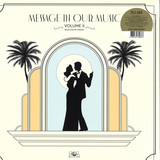
SOL DISCOS is extremely happy to introduce the second volume of their Message In Our Music compilation series, selected by WAXIST. This album is the result of more than two years of work in researching the original recordings, the artists involved & licensing the different songs. Focusing once again on the Modern-Soul genre, the album brings back to light eight extremely rare songs from the mid-70's to the mid-80's, all officially licensed. From the heavy synth Gospel Boogie of Sharnell Morton's "You Are My Shining Star", to
the magnificent Network & Co private Disco "Spirit Of The Boogie", most of these songs are highly difficult to find on their original format, not to mention at a decent price. Direct Connect Shun’s "He's No Good" records have been destroyed in a flood, and the few
copies which have sold on the Internet reach the 3 figures price tags for example. Also, the album is proud to introduce to a wider audience some lesser known but exceptional recordings such as Janice "Nikki" Harrison's "Magic of Love", which is taken from a Broadway musical produced & composed by Ted Wortham - who also composed for
Philadelphia International Recordings artists such as Teddy Pendergrass, Anthony White or Jean Carn. Message In Our Music Vol.2 has been fully remastered, and features interview based liner
notes, along with never seen before pictures of the artists selected
Kicking off the year in style, with a new album by someone we've greatly admired and whose music we've followed for many a year; the mighty William Burnett aka Willie Burns / Speculator and Black Deer.
We first were introduced to his music through the wonderful Grackle remix by our pals T.Keeler & Capablanca. Over time we've followed his many aliases with much enjoyment and can still recall hearing the first Black Deer music being played one afternoon in Phonica and NEEEEDING to know everything about it. There's also fond boat party memories in Stockholm soundtracked by the UTTU release. Not to mention WT Records putting out some brilliant records by now familiar faces - our favourites include Art Crime, Kartei and Tummy Tummy!
Recently, William has started a new long form interview podcast, Talk Video on The Lot Radio and Marc Maron comparison isn't far off the mark. Well worth digging into. He's also been making music for himself and we're chuffed to be releasing some of that with you now.
Artwork by Belgrade's finest, floating.bstrd
- A1: Zuzu Man
- A2: Quitters Never Win
- A3: In The Night
- A4: She’s Just A Square
- A5: Woman Is The Roo
- A6: The Ear Is On Strike
- A7: Helping Hand
- A8: Danger Zone
- A9: One Naughty Flat
- B1: Bald Headed
- B2: Mama Roux
- B3: Tipitina
- B4: New Orleans
- B5: Qualified
- B6: Loser For You Bab
- B7: One Night Late
- B8: Did She Mention My Name
- B9: Storm Warning
We are privileged to explore on this essential LP a plethora of Dr.
John's earliest and most satisfying recordings. The unique mixture of styles on display is drawn from the music he grew up listening to in the clubs of the Deep South, where he first practised his (witch) craft. The combination would impress many other musicians, including the Rolling Stones and Jools Holland, himself no mean boogie pianist.