For the first time ever repressed on FullTime Production the iconic disco record "Easy Going" by Easy Going!
That's a brand-new great landmark for the label as "Easy Going" set a milestone in the italian Disco culture.
If at the end of the Seventies you were at Piazza Barberini in Rome at night, you would have come across a small but crowded club half-hidden in the ascent of Via della Purificazione, a trendy gay club with elegant Fassbinderian furniture, but also a night crossroads for many prominent characters of the cultural and artistic life of the eternal city and a regular stop for the most popular national DJs at the time. Easy Going creature was founded by Claudio Simonetti (Goblin), as a homage to the place mentioned above.
The homonymous 33 rpm debut of 1978 is remastered and repressed on a glossy white vinyl and due next December 13th on FullTime Production!
It features the original LP cover highlighting the mosaic of masculine struggle between a sailor and a strictly naked policeman , photographed in the Roman club.
The music explodes with the piece that will define the group par excellence: "Baby I Love You" also released as the first single, sung by a very filtered voice on a hypnotic rug of keyboards and a captivating melody that define a real masterpiece of italian disco and beyond. The same goes for the remaining three tracks of the album, which are also set to set the dance floor on fire: "Do It Again" is pure dance from Studio 54 and on the flip side, Creedence Clearwater Revival's cover "Suzie Q" and the ballad "Little Fairy".
Buscar:d mention
2022 Repress
In future times, culture historians will refer to Gabor Schablitzki aka Robag Wruhme as a creator of a singular techno sound, a rock in the murky sea of arbitrary musical dullness that befell mankind in the early 21st century.
Furthermore, a lesser known quality of Schablitzki will be praised and explored: He was a relentless wordsmith, a deeply passionate inventor of elegant idioms that enriched German language. Take ‘Freggelswuff’ or ‘Wemmel’ as shining examples.
It’s within this context that a certain cultural artefact released on a Cologne based record label called KOMPAKT (which towards the end of the 21st century made a hardly publicised turn to manufacturing CO2-neutral wall plug systems) that went by the sonorous title ‘Topinambur’ has to be mentioned. Legend has it that Schablitzki claimed to have created the word ‘Topinambur’, unknowingly that local farmers have been marketing a root tuber under the same name since it got imported from America in 1610 AD. The following tenacious copyright lawsuit between Schablitzki and a large agricultural consortium lasted for many years. It isn’t considered as a highpoint in Schablitzki’s turbulent life but it still serves a staircase wit that is passed on from generation to generation amongst Black Forest moonshiners.
Kulturhistoriker künftiger Generationen werden Gabor Schablitzki alias Robag Wruhme als Schöpfer eines singulären Techno-Sounds preisen, als einen Fels in der Brandung der im frühen 21. Jahrhundert vorherrschenden Beliebigkeit. Als DJ und Produzent war ein Meister des deepen Abrisses, werden sie weiterhin formulieren, obschon es weitere 136 Jahre dauern wird, bis die subkulturelle Bedeutung des Wortes 'Abriss' zweifelsfrei geklärt werden konnte.
Es wird aber auch eine weitere einzigartige Qualität Gabor Schablitzkis hervorgehoben werden: Er war ein unermüdlicher Wortschöpfer, der die deutsche Sprache um elegante Idiome wie Freggelswuff oder Wemmel bereicherte. In diesem Zusammenhang findet meist eine Veröffentlichung des Kölner Labels KOMPAKT (welches im ausklingenden 21. Jahrhundert einen wenig bemerkenswerten Wandel zum Hersteller von CO2-neutralen Dämmstoffdübeln vollzog) Erwähnung. Diese Veröffentlichung erschien unter dem klangvollen Namen "Topinambur" und die Legende besagt, dass Schablitzki behauptete auch hier der Nachwelt eine neue Wortschöpfung hinterlassen zu haben, nicht wissend, dass europäische Landwirte bereits seit 1610 A.D. unter diesem Namen ein aus Amerika importiertes Knollengewächs vermarkteten. Der sich daran anschliessende Copyright-Streit zwischen Schablitzki und einem mächtigen Agrarkonzern, zählte nicht zu den rühmlichen Episoden seines bewegten Lebens, sorgt aber seit Generationen als Treppenwitz unter Schwarzwälder Schnapsbrennern für viel Geschmunzel.
Megastar Bruno Mars has unveiled his new album 24K Magic (pronounced twenty-four karat magic), with lead single of the same title. Written and produced by Shampoo Press & Curl, with additional production by The Stereotypes.
The last time Mars dropped an album was December 2012 - four years ago, an eternity for a pop star. He's surfed the intervening years like a pro, with two Super Bowl halftime performances (headlining in 2014, and a cameo last February with Coldplay and Beyoncé), not to mention the biggest-selling song of the past few years, his collaboration with Mark Ronson, "Uptown Funk", spending 14 weeks at Number One - tying for the second-longest run in chart history - and winning the Grammy for Record of the Year. To date, it's sold more than 12 million copies, been streamed nearly 2 billion times and made several dragons want to retire.
This is Bruno Mars. Six Number One singles. Thirty combined weeks at the top of the chart (44 if you count "Uptown"). Two albums, 26 million in sales worldwide, four Grammys and counting.
Throughout 24K Magic , Bruno Mars re-creates the R&B he fell in love with as a child - the likes of Jimmy Jam, Terry Lewis, New Edition, Bobby Brown, Jodeci, Boyz II Men, Teddy Riley, and Babyface.
It took 2 years to finally release these reworks for the debut album by Philogresz. Taped wall of sound kinda drift from The Cyclist aka Buz Ludzha complemented by ZK Bucket's straight on moody jam gives the EP a strained contrast. Not to mention peak time euphoric Philogresz remake of his own Asakusa that is dedicated to the Japanese eels in that neighborhood. Gazing cutsz!
Even in these most turbulent of times, dub musician and fatigued onlooker Elijah Minnelli remains an inexplicable stalwart on the lower rungs of the Breadminster County Council.
His latest record ‘Clams As A Main Meal’ continues his astute siphoning of council funds, this time with help from the Breadminster Board of Abstinence. As a further mark of respect, the original head of the Board, Dr. K'houldoux, graces the cover art in his infamous ‘Looming Moon of Desire’ guise.*
As fine a backdrop as any for Minneli’s off-brand dub experiments, and ‘Clams...’ is the truest representation of his varied wheelhouse yet...
We find vocal appearances from dub goliath Dennis Bovell and Welsh-language singer Carwyn Ellis. A pair of tracks which build on 2024’s acclaimed ‘Perpetual Musket’, a collection of folk songs reworked alongside reggae vocalists, released by FatCat Records. It garnered glowing reviews, with nods from The Guardian and The Quietus concluding with prominent appearances on their respective yearly round-up lists.
Elsewhere, the album finds Minnelli in a more experimental mode, all wheezing contraptions and cockeyed bass, creaking with the weight of creation, a satisfying tactility laid seam-side up.
As well as ‘Perpetual Musket’, the new album follows years of sold out 7" singles, handmade and self-released. Online, the tracks have amassed global streams numbering in the millions. His tracks have found play across an eclectic range of radio mixes and dance floors, most notably the likes of Andrew Weatherall, Batu, Optimo and Zakia Sewell (BBC6Music).
It is perhaps worth mentioning that this everbuilding interest in his work is at great odds with the growing suspicions amongst his fellow townsfolk, who see his Breadminster County Council Music Initiative as nothing more than an empty cash-grab.
Further Reading on the Breadminster Board of Abstinence
In the late 70s, Breadminster was awash with the last vestiges of the hippy era. Though the flared silhouette of the lower leg remained, the utopian ideals that had once flowed merrily around the youth's shaded ankles had begun to wane. LSD and free love had led to a sharp spike in population and a generation of children raised by air-headed psychonauts unprepared for the bleary-eyed strictures of parenthood.
Aware of the crisis, the County Council entrusted Dr. Paulinque K'houldoux to spearhead a pushback, and it was his pro-abstinence movement - a mixture of education initiatives and radical renutrition campaigns - that came to impact Breadminster's census deep into the new millennium.
Being a pseudo-archipelago Breadminster has fundamentally limited resources, however deep-seated ties to distant coastal villages meant that oysters were a regular part of the local diet. K'houldoux pinpointed this as a factor in the town's overpopulation, and believed that simply replacing these with clams (a “lesser mollusk”) would help lower the erotic urges of the people. It was his “anti-aphrodesia” movement that first championed the idea of “Clams As A Main Meal,” and the slogan “Consider Abstinence” carried the message yet further.
The Breadminster Board of Abstinence soon became involved in all cultural happenings in the area, with K'houldoux MCing at prominent festivals and performances, sometimes dressed as the “Looming Moon of Desire” - an idea of his relating to the tide, seafood, menstrual cycles, and his privately held celestial predilections.
It was in 1981 that it was revealed Dr. K'houldoux had never fully qualified as a doctor and was seeking exile in Breadminster due to a series of botched bracelet heists in which he had previously been involved. K'houldoux was subsequently extradited to Basingstoke, where he served 3 of a 12-year sentence, owing to the lunar-oriented prisoner health campaigns he helped implement.
It has been a strange twist of bureaucratic fate that the Breadminster Board of Abstinence has never stopped receiving public funding, despite its lack of clear utility. And while its roots are tied to a rose-tinted past, the Board continues to sponsor cultural events and projects to this day.
An extract from: Eugeniq Schooner's article in Sydney Parishioner: “Clams, Breadminster and Countercultural Abstinence Trends” (2008)
- Checkerlads - The Dreamer
- Checkerlads - Behind Ev'ry Man
- White Knights - There She Goes
- White Knights - Run Run Baby
- Tomorrow's Keepsake - Eat Your Hot Dog Boy
- Plague - Love And Obey
- Plague - We Were Meant To Be
- Lexington Avenue - Wendy Taylor
- Lexington Avenue - Flowing Kind Of Feeling
- Lexington Avenue - Good To Me
- Nrg - It All Comes Back To Me
- Solid Reputation - Things
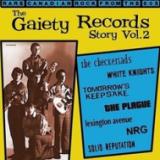
Highlights include more terrific songs from the Plague and Lexington Avenue, bands whose members would be better known when they created the Jarvis Street Revue. Twelve tough tracks by the Checkerlads, White Knights, Tomorrow's Keepsake, NRG, and Solid Reputation . The Gaiety roster was rich in talent (the 49th Parallel, Jarvis Street Review, and Souls of Inspyration, not to mention the Checkerlads, White Knights, Dewline, Tomorrow's Keepsake, NRG, Merriday Park, and Portland Street South) -- but it was not rich in resources, which is why these singles are as relatively unknown as they are even today
UILTY RAZORS, BONA FIDE PUNKS.
Writings on the topic that go off in all directions, mind-numbing lectures given by academics, and testimonies, most of them heavily doctored, from those who “lived through that era”: so many people today fantasize about the early days of punk in our country… This blessed moment when no one had yet thought of flaunting a ridiculous green mohawk, taking Sid Vicious as a hero, or – even worse – making the so-called alternative scene both festive and boorish. There was no such thing in 1976 or 1977, when it wasn’t easy to get hold of the first 45s by the Pistols or the Clash. Few people were aware of what was happening on the fringes of the fringes at the time. Malcolm McLaren was virtually unknown, and having short hair made you seem strange. Who knew then that rock music, which had taken a very bad turn since the early 1970s, would once again become an essential element of liberation? That, thanks to short and fast songs, it would once again rediscover that primitive, social side that was so hated by older generations? Who knew that, besides a few loners who read the music press (it was even better if they read it in English) and frequented the right record stores? Many of these formed bands, because it was impossible to do otherwise. We quickly went from listening to the Velvet Underground to trying to play the Stooges’ intros. It’s a somewhat collective story, even though there weren’t many people to start it.
The Guilty Razors were among those who took part in this initial upheaval in Paris. They were far from being the worst. They had something special and even released a single that was well above the national average. They also had enough songs to fill an album, the one you’re holding. In everyone’s opinion, they were definitely not among the punk impostors that followed in their wake. They were, at least, genuine and credible.
Guilty Razors, Parisian punk band (1975-1978). To understand something about their somewhat linear but very energetic sound, we might need to talk about the context in which it was born and, more broadly, recall the boredom (a theme that would become capital in punk songs) coupled with the desire to blow everything off, which were the basis for the formation of bands playing a rejuvenated rock music ; about the passion for a few records by the Kinks or the early Who, by the Stooges, by the Velvet mostly, which set you apart from the crowd.
And of course, we should remember this new wave, which was promoted by a few articles in the specialized press and some cutting-edge record stores, coming from New York or London, whose small but powerful influence could be felt in Paris and in a handful of isolated places in the provinces, lulled to sleep by so many appalling things, from Tangerine Dream to President Giscard d’Estaing...
In 1975-76, French music was, as almost always, in a sorry state ; it was still dominated by Johnny Hallyday and Sylvie Vartan. Local rock music was also rather bleak, apart from Bijou and Little Bob who tried to revive this small scene with poorly sound-engineered gigs played to almost no one.
In the working class suburbs at the time, it was mainly hard rock music played to 11 that helped people forget about their gruelling shifts at the factory. Here and there, on the outskirts of major cities, you still could find a few rockers with sideburns wearing black armbands since the death of Gene Vincent, but it wasn’t a proper mass movement, just a source of real danger to anyone they came across who wasn't like them. In August 1976, a festival unlike any other took place in Mont-de-Marsan – the First European Punk Festival as the poster said – with almost as many people on stage as in the audience. Yet, on that day, a quasi historical event happened, when, under the blazing afternoon sun, a band of unknowns called The Damned made an unprecedented noise in the arena, reminiscent of the chaotic Stooges in their early adolescence. They were the first genuine punk band to perform in our country: from then on, anything was possible, almost anything seemed permissible.
It makes sense that the four+1 members of Guilty Razors, who initially amplified acoustic guitars with crappy tape recorder microphones, would adopt punk music (pronounced paink in French) naturally and instinctively, since it combines liberating noise with speed of execution and – crucially – a very healthy sense of rebellion (the protesters of May 1968 proclaimed, and it was even a slogan, that they weren’t against old people, but against what had made them grow old. In the mid-1970s, it seemed normal and obvious that old people should now ALSO be targeted!!!).
At the time, the desire to fight back, and break down authority and apathy, was either red or black, often taking the form of leafleting, tumultuous general assemblies in the schoolyard, and massive or shabby demonstrations, most of the time overflowing with an exciting vitality that sometimes turned into fights with the riot police. Indeed, soon after the end of the Vietnam War and following Pinochet’s coup in Chile, all over France, Trotskyist and anarcho-libertarian fervour was firmly entrenched among parts of the educated youth population, who were equally rebellious and troublemakers whenever they had the chance. It should also be noted that when the single "Anarchy in the UK" was first heard, even though not many of us had access to it, both the title and its explosive sound immediately resonated with some of those troublemakers crying out for ANARCHY!!! Meanwhile, the left-wing majority still equated punks with reckless young neo-Nazis. Of course, the widely circulated photos in the mainstream press of Siouxsie Sioux with her swastikas didn’t necessarily help to win over the theorists of the Great Revolution. It took Joe Strummer to introduce The Clash as an anti-racist, anti-fascist and anti-ignorance band for the rejection of old-school revolutionaries to fade a little.
The Lycée Jean-Baptiste Say at Porte d’Auteuil, despite being located in the very posh and very exclusive 16th arrondissement of Paris, didn’t escape these "committed" upheavals, which doubled as the perfect outlet for the less timid members of this generation.
“Back then, politics were fun,” says Tristam Nada, who studied there and went on to become Guilty Razors’ frontman. “Jean-Baptiste was the leftist high-school in the neighbourhood. When the far right guys from the GUD came down there, the Communist League guys from elsewhere helped us fight them off.”
Anything that could challenge authority was fair game and of course, strikes for just about any reason would lead to increasingly frequent truancy (with a definitive farewell to education that would soon follow). Tristam Nada spent his 10th and 11th unfinished grades with José Perez, who had come from Spain, where his father, a janitor, had been sentenced to death by Franco. “José steered my tastes towards solid acts such as The Who. Like most teenagers, I had previously absorbed just about everything that came my way, from Yes to Led Zeppelin to Genesis. I was exploring… And then one day, he told me that he and his brother Carlos wanted to start a rock band.” The Perez brothers already played guitar. “Of course, they were Spanish!”, jokes their singer. “Then, somewhat reluctantly, José took up the bass and we were soon joined by Jano – who called himself Jano Homicid – who took up the rhythm guitar.” Several drummers would later join this core of not easily intimidated young guys who didn’t let adversity get the better of them.
The first rehearsals of the newly named Guilty Razors took place in the bedroom of a Perez aunt. There, the three rookies tried to cover a few standards, songs that often were an integral part of their lives. During a first, short gig, in front of a bewildered audience of tough old-school rockers, they launched into a clunky version of the Velvet Underground's “Heroin”. Challenge or recklessness? A bit of both, probably… And then, step by step, their limited repertoire expanded as they decided to write their own songs, sung in a not always very accurate or academic English, but who cared about proper grammar or the right vocabulary, since what truly mattered was to make the words sound as good as possible while playing very, very fast music? And spitting out those words in a language that left no doubt as to what it conveyed mattered as well.
Trying their hand a the kind of rock music disliked by most of the neighbourhood, making noise, being fiercely provocative: they still belonged to a tiny clique who, at this very moment, had chosen to impose this difference. And there were very few places in France or elsewhere, where one could witness the first stirrings of something that wasn’t a trend yet, let alone a movement.
In the provinces, in late 1976 or early 1977, there couldn’t be more than thirty record stores that were a bit more discerning than average, where you could hear this new kind of short-haired rock music called “punk”. The old clientele, who previously had no problem coming in to buy the latest McCartney or Aerosmith LP, now felt a little less comfortable there…
In Paris, these enlightened places were quite rare and often located nex to what would become the Forum des Halles, a big shopping mall. Between three aging sex workers, a couple of second-hand clothes shops, sellers of hippie paraphernalia and small fashion designers, the good word was loudly spread in two pioneering places – propagators of what was still only a new underground movement. Historically, the first one was the Open Market, a kind of poorly, but tastefully stocked cave. Speakers blasted out the sound of sixties garage bands from the Nuggets compilation (a crucial reference for José Perez) or the badly dressed English kids of Eddie and the Hot Rods. This black-painted den was opened a few years earlier by Marc Zermati, a character who wasn’t always in a sunny disposition, but always quite radical in his (good) choices and his opinions. He founded the independent label Skydog and was one of the promoters of the Mont-de-Marsan punk festivals. Not far from there was Harry Cover, another store more in tune with the new New York scene, which was amply covered in the house fanzine, Rock News (even though it was in it that the photos of the Sex Pistols were first published in France).
It was a favorite hang-out of the Perez brothers and Tristam Nada, as the latter explained. “It’s at Harry Cover’s that we first heard the Pistols and Clash’s 45s, and after that, we decided to start writing our first songs. If they could do it, so could we!”
The sonic shocks that were “Anarchy in the UK”, “White Riot” or the Buzzcocks’s EP, “Spiral Scratch” – which Guilty Razors' sound is reminiscent of – were soon to be amplified by an unparalleled visual shock. In April 1977, right after the release of their first LP, The Clash performed at the Palais des Glaces in Paris, during a punk night organised by Marc Zermati. For many who were there, it was the gig of a lifetime…
Of course, Guilty Razors and Tristam were in the audience: “That concert was fabulous… We Parisian punks were almost all dressed in black and white, with white shirts, skinny leather ties, bikers jackets or light jackets, etc. The Clash, on the other hand, wore colourful clothes. Well, the next day, at the Gibus, you’d spot everyone who had been at this concert, but they weren’t wearing anything black, they were all wearing colours.”
It makes sense to mention the Gibus club, as Guilty Razors often played there (sometimes in front of a hostile audience). It was also the only place in Paris that regularly scheduled new Parisian or Anglo-Saxon acts, such as Generation X, Siouxsie and the Banshees, the Slits, and Johnny Thunders who would become a kind of messed-up mascot for the venue. A little later, in 1978, the Rose Bonbon – formerly the Nashville – also attracted nightly owls in search of electric thrills… In 1977, the iconic but not necessarily excellent Asphalt Jungle often played at the Gibus, sometimes sharing the bill with Metal Urbain, the only band whose aura would later transcend the French borders (“I saw them as the French Sex Pistols,” said Geoff Travis, head of their British label Rough Trade). Already established in this small scene, Metal Urbain helped the young and restless Guilty Razors who had just arrived. Guitarist for Metal Urbain Hermann Schwartz remembers it: “They were younger than us, we were a bit like their mentors even if it’s too strong a word… At least they were credible. We thought they were good, and they had good songs which reminded of the Buzzcocks that I liked a lot. But at some point, they started hanging out with the Hells Angels. That’s when we stopped following them.”
The break-up was mutual, since, Guilty Razors, for their part, were shocked when they saw a fringe element of the audience at Metal Urbain concerts who repeatedly shouted “Sieg Heil” and gave Nazi salutes. These provocations, even still minor (the bulk of the skinhead crowd would later make their presence felt during concerts), weren’t really to the liking of the Perez brothers, whose anti-fascist convictions were firmly rooted. Some things are non-negotiable.
A few months earlier (in July 1978), Guilty Razors had nevertheless opened very successfully for Metal Urbain at the Bus Palladium, a more traditonally old-school rock night-club. But, as was sometimes the case back then, the night turned into a mass brawl when suburban rockers came to “beat up punks”.
Back then, Parisian nights weren’t always sweet and serene.
So, after opening as best as they could for The Jam (their sound having been ruined by the PA system), our local heroes were – once again – met outside by a horde of greasers out to get them. “Thankfully,” says Tristam, “we were with our roadies, motorless bikers who acted as a protective barrier. We were chased in the neighbouring streets and the whole thing ended in front of a bar, with the owner coming out with a rifle…”
Although Tristam and the Perez brothers narrowly escaped various, potentially bloody, incidents, they weren’t completely innocent of wrongdoing either. They still find amusing their mugging of two strangers in the street for example (“We were broke and we simply wanted to buy tickets for the Heartbreakers concert that night,” says Tristam). It so happened that their victims were two key figures in the rock business at the time: radio presenter Alain Manneval and music publisher Philippe Constantin. They filed a complaint and sought monetary compensation, but somehow the band’s manager, the skilful but very controversial Alexis, managed to get the complaint withdrawn and Guilty Razors ended up signing with Constantin with a substantial advance.
They also signed with Polydor and the label released in 1978 their only three-track 45, featuring “I Don't Wanna be A Rich”, “Hurts and Noises” and “Provocate” (songs that exuded perpetual rebellion and an unquenchable desire for “class” confrontation). It was a very good record, but due to a lack of promotion (radio stations didn’t play French artists singing in English), it didn’t sell very well. Only 800 copies were allegedly sold and the rest of the stock was pulped… Initially, the three tracks were to be included on a LP that never came to be, since they were dropped by Polydor (“Let’s say we sometimes caused a ruckus in their offices!” laughs Tristam.) In order to perfect the long-awaited LP, the band recorded demos of other tracks. There was a cover of Pink Floyd's “Lucifer Sam” from the Syd Barrett era – proof of an enduring love for the sixties’ greats –, “Wake Up” a hangover tale and “Bad Heart” about the Baader-Meinhof gang, whose actions had a profound impact on the era and on a generation seeking extreme dissent... On the album you’re now discovering, you can also hear five previously unreleased tracks recorded a bit later during an extended and freezing stay in Madrid, in a makeshift studio with the invaluable help of a drummer also acting as sound engineer. He was both an enthusiastic old hippie and a proper whizz at sound engineering. Here too, certain influences from the fifties and sixties (Link Wray, the Troggs) are more than obvious in the band’s music.
Shortly after a final stormy and rather barbaric (on the audience’s side) “Punk night” at the Olympia in June 1978, Tristam left the band ; his bandmates continued without him for a short while.
But like most pioneering punk bands of the era, Guilty Razors eventually split up for good after three years (besides once in Spain, they’d only played in Paris). The reason for ceasing business activities were more or less the same for everyone: there were no venues outside one’s small circuit to play this kind of rock music, which was still frightening, unknown, or of little interest to most people. The chances of recording an LP were virtually null, since major labels were only signing unoriginal but reassuring sub-Téléphone clones, and the smaller ones were only interested in progressive rock or French chanson for youth clubs. And what about self-production? No one in our small safety-pinned world had thought about it yet. There wasn’t enough money to embark on that sort of venture anyway.
So yes, the early days of punk in France were truly No Future!
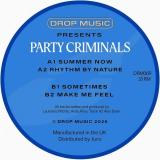
Andy Riley and Laurence Ritchie are Drop Music accomplices; the label is a natural outgrowth of yesterday's Smokescreen Soundsystem, one of the oldest and best-respected UK crews to endorse (sound-) systems thinking. In case you don't know, remember this: they were early 90s stanchions of pressure-dropping UK house heft. This rare new reissue hears their hugely in-demand classic 'Party Criminals' return to fully swung, gatecrashing mode. And boy, weren't they just. Their fourth ever Drop drop, it first surfaced in 1999 and turned instant heads for its crystalline blue inners and jacking, organic sound, not to mention a cameo from fellow duo Freaked on the A2's 'Rhythm By Nature'. But our favourite has to be 'Make Me Feel' with its soft-attack hi-hats, not tapping, more fizzing like metal leaf against the ears.
Heavyweight psychedelic improvisers EarthBall are back with their third and most monstrous record to date: ‘Outside Over There’, released on Upset The Rhythm (Nov 7th). Born from the haunted basements of Nanaimo, Canada, the quintet thrives on spontaneity, shaping improvisation into jagged hallucinations and ecstatic eruptions.
Recorded live-off-the-floor in 2024 in Jeremy, Izzy, and Kellen’s basement, and mixed by drummer John Brennan, ‘Outside Over There’ is an album that feels both summoned and inevitable. Each track lands with uncanny purpose, as if uncovered rather than written.
The opener, 100%, features a cameo from comedian and English icon Stewart Lee, who lent his blessing for the band to use a fragment of his stand-up. The album was mastered by John Dieterich (Deerhoof), with liner text contributed by longtime comrade John Olson (Wolf Eyes). Olson describes the album in his unmistakable style:
“This eight-track odyssey unfolds like a dreamscape, where whispered incantations brush against the shadowy fringes of the cosmos, and wild, Cézanne-inspired rock anthems erupt like geysers of color in the midst of a western warm and wet rain storm… culminating in the sprawling eleven minute masterpiece, ‘And The Music Shall Untune The Sky,’ aptly dubbed the Earth Crusher. A creation so utterly deconstructed and intertwined with the pulse of nature itself that if AI was called upon to conceive ‘Outside Over There’ anew, it would just spit back, “F.U. in Tree Font”. An enchanting invitation for even the flat-earthers to join the circle, if only just a little.”
EarthBall’s trajectory has been relentless. Their 2024 album ‘It’s Yours’ was praised by The Quietus as “fully aggressive and fully life-affirming,” and by The Wire as "a boisterous mind-melting album”. The band’s live double set LP ‘Actual Earth Music Vol. 1 & 2’ (2025) captured blistering performances: a performance opening for Wolf Eyes at the Fox Cabaret, and a Café OTO improvised throw-down featuring Chris Corsano and Steve Beresford. These releases on their own confirm them as one of Canada’s most vital experimental exports, not to mention the impressive self-released discography on their Bandcamp. The band’s reach has stretched far beyond their west coast roots with a UK tour May 2024, plus this past June, EarthBall closed Montreal’s Suoni Per Il Popolo Festival alongside Pulitzer Prize-winning composer Raven Chacon. This November they will perform at Le Guess Who? Festival in Utrecht, with a European tour to follow (tour dates below). Outside of EarthBall, each member carries their own torch. Jeremy Van Wyck, founding member of the legendary Shearing Pinx, has toured extensively, released over 100 records, and has been a vital force in the Vancouver and West Coast underground for the past 25 years. He and Isabel Ford (Izzy) play together not only in EarthBall, but also in Psychedelic Dirt, Shearing Pinx, Behaviours, and Crotch.
John Brennan collaborates widely, including recently with Endlings (Raven Chacon and John Dieterich), Evichen (Victoria Shen), Francesco Fonassi, Plan Your Future (with Greg Saunier of Deerhoof), Brennan/Corsano duo and Physics with John Dieterich. Kellen Maclaughlin performs with KVMP and Ora Corgan, while saxophonist Liam Murphy is a west coast staple, playing with the best across Vancouver Island and the mainland. On three of the tracks of ‘Outside Over There’, the band is joined by their comrade Justin Patterson, who also plays with Brennan in the duo Modale. This cross-pollination fuels EarthBall’s sound - a collective improvisation, psychically overdriven, and grinding into bloom.
Outside Over There’ is more than an album though, it is a ritual, a gathering of sound at the forest’s edge; where feedback, saxophone screams, and ecstatic vocals dissolve the boundary between chaos and clarity. EarthBall invite you into their circle, to share in the joyful terror of spontaneous creation. ‘Outside Over There’ will be released on November 7th through Upset The Rhythm digitally and as a limited blue-in-black vinyl LP.
Heavyweight psychedelic improvisers EarthBall are back with their third and most monstrous record to date: ‘Outside Over There’, released on Upset The Rhythm (Nov 7th). Born from the haunted basements of Nanaimo, Canada, the quintet thrives on spontaneity, shaping improvisation into jagged hallucinations and ecstatic eruptions.
Recorded live-off-the-floor in 2024 in Jeremy, Izzy, and Kellen’s basement, and mixed by drummer John Brennan, ‘Outside Over There’ is an album that feels both summoned and inevitable. Each track lands with uncanny purpose, as if uncovered rather than written.
The opener, 100%, features a cameo from comedian and English icon Stewart Lee, who lent his blessing for the band to use a fragment of his stand-up. The album was mastered by John Dieterich (Deerhoof), with liner text contributed by longtime comrade John Olson (Wolf Eyes). Olson describes the album in his unmistakable style:
“This eight-track odyssey unfolds like a dreamscape, where whispered incantations brush against the shadowy fringes of the cosmos, and wild, Cézanne-inspired rock anthems erupt like geysers of color in the midst of a western warm and wet rain storm… culminating in the sprawling eleven minute masterpiece, ‘And The Music Shall Untune The Sky,’ aptly dubbed the Earth Crusher. A creation so utterly deconstructed and intertwined with the pulse of nature itself that if AI was called upon to conceive ‘Outside Over There’ anew, it would just spit back, “F.U. in Tree Font”. An enchanting invitation for even the flat-earthers to join the circle, if only just a little.”
EarthBall’s trajectory has been relentless. Their 2024 album ‘It’s Yours’ was praised by The Quietus as “fully aggressive and fully life-affirming,” and by The Wire as "a boisterous mind-melting album”. The band’s live double set LP ‘Actual Earth Music Vol. 1 & 2’ (2025) captured blistering performances: a performance opening for Wolf Eyes at the Fox Cabaret, and a Café OTO improvised throw-down featuring Chris Corsano and Steve Beresford. These releases on their own confirm them as one of Canada’s most vital experimental exports, not to mention the impressive self-released discography on their Bandcamp. The band’s reach has stretched far beyond their west coast roots with a UK tour May 2024, plus this past June, EarthBall closed Montreal’s Suoni Per Il Popolo Festival alongside Pulitzer Prize-winning composer Raven Chacon. This November they will perform at Le Guess Who? Festival in Utrecht, with a European tour to follow (tour dates below). Outside of EarthBall, each member carries their own torch. Jeremy Van Wyck, founding member of the legendary Shearing Pinx, has toured extensively, released over 100 records, and has been a vital force in the Vancouver and West Coast underground for the past 25 years. He and Isabel Ford (Izzy) play together not only in EarthBall, but also in Psychedelic Dirt, Shearing Pinx, Behaviours, and Crotch.
John Brennan collaborates widely, including recently with Endlings (Raven Chacon and John Dieterich), Evichen (Victoria Shen), Francesco Fonassi, Plan Your Future (with Greg Saunier of Deerhoof), Brennan/Corsano duo and Physics with John Dieterich. Kellen Maclaughlin performs with KVMP and Ora Corgan, while saxophonist Liam Murphy is a west coast staple, playing with the best across Vancouver Island and the mainland. On three of the tracks of ‘Outside Over There’, the band is joined by their comrade Justin Patterson, who also plays with Brennan in the duo Modale. This cross-pollination fuels EarthBall’s sound - a collective improvisation, psychically overdriven, and grinding into bloom.
Outside Over There’ is more than an album though, it is a ritual, a gathering of sound at the forest’s edge; where feedback, saxophone screams, and ecstatic vocals dissolve the boundary between chaos and clarity. EarthBall invite you into their circle, to share in the joyful terror of spontaneous creation. ‘Outside Over There’ will be released on November 7th through Upset The Rhythm digitally and as a limited blue-in-black vinyl LP.
Crave Tapes is thrilled to announce the first vinyl release on the label which will be the second album from Frankfurt's underground post-punk/dark wave band Babes of Enola Grey, Krieg und Wohlstand.
Krieg und Wohlstand sees Babes of Enola Grey follow the path of their 2021 debut, Anfang vom Ende, and take a step further into the realm of melancholic and disillusioned soundscapes. While keeping a certain retro character to the songs, Deborah Vision, Salvador Islero and Fabian van Castorp focus on quite contemporary themes, which some might call the most German obsessions:
War and prosperity.
But this is not the only reference to the band's heritage. Sometimes more, sometimes less, there are musical allusions to various German influences and contributions to (modern) music and music history. While Doppelt Frei is a nod to EBM and bands like DAF or the early Die Krupps and Wie auf Schienen as well as Die Heuschrecken pay homage to German düster punk bands like Fliehende Stürme or EA80, Panik and the title track Krieg und Wohlstand refer to the romantic German art song tradition of the 19th century (not to mention the obvious hint at a certain successful German Schlager in Die Kugeln und das Herz).
This makes Krieg und Wohlstand not only a worthy epigone of the band's debut, but also takes the album and the artistic approach to another level.
Commenting on the chosen format (12" vinyl), the band members said: "It was clear to us that we wanted to release this album on vinyl. When you look atGerman history, war and prosperity have to be seen as two sides of the same medal, or in this case of a record".
- A1: Philip Smart - Get Smart Theme
- A2: Sammy Levi - Come Off The Road
- A3: Lilly Melody - Promotion & Stripe
- A4: Scion Success - Cry Fi Mi Girl
- A5: Tom And Jerry Horns - Autumn Leaves
- B1: Tony Tuff - Hit And Run
- B3: Shelene - Where Does It Go From Here
- B4: Frankie Paul - Plastic Smile
- B5: Half Pint - Don't Try To Use Me
Following our well received "Prince Philip Presents..." 2LP compilation, here's a lovely overview of the second phase of Philip's career, as engineer & producer at his own studio, HC&F. These ten tracks comprise our favorites from his production catalog, spanning the mid '80s when the studio really got going, right up until 1996 and his last set of proper productions. The album holds a mix of well known classics like the Garnett Silk, lesser known album only cuts like the Frankie Paul, NY dancehall 12" staples like the Scion Success or Shelene, as well as some lesser known gems. We'd be remiss in not mentioning that this album also contains two previously unreleased cuts - a wicked mid '80s Tony Tuff, and the wild vocoder laden 1985 theme song for Philip's "Get Smart" radio show, which ran for many many years on New York University's WNYU radio station.
Igor Tamerlan is a stranger in his own land. Born in 1954 the Hague and spent most formative years in Paris, Igor suddenly had the urge to relocate to Bali in 1986. “I want to settle in Indonesia and marry a local girl,” he told his sister shortly before flying out.
His next journey would be as audacious as his time in the Fifth Republic. Born from a prominent Indonesian expatriate family in Paris with ties to Indonesia’s first prime minister Sutan Sjahrir, Igor earned a degree in architecture at Ecole nationale supe´rieure d’architecture de Paris-La Villette.
He could have been a brilliant architect or a political scientist (he was accepted to Sciences Po), but his passion for music distracted him from his academic works. He was after all named after Russian composer Igor Stravinsky.
During his brief stint at Sciences Po, Igor spent most of times hanging out at recording studios and rub shoulders with the likes of singer-songwriter Jean-Jacques Goldman and Michel Polnaref. He had a brief encounter with The Rolling Stones at the Cha^teau de Thoiry studio in the early 1970s.
But Igor’s musical education and his occidental eyes appeared to be ill-suited for Indonesia. His first record, titled Langkah Pertama (First Step) on the mainstream label Musica was met with a shrug and was a commercial dud. An experimental record blending the influence of Spanish motifs, Francophile production and a whiff of hip hop and ska was seen by critics as being too alien. His sarcasm-laden lyrics and his biting critique of excessive materialism among the upper tier of Indonesia’s nouveau riche in the album was met with confusion from the audience. He was just too far ahead of his time.
He left the label Musica – or may had been dropped – soon after Langkah Pertama and decided to go independent. He then relocated to Bali and set up a state-of-the-art recording studio in Sanur, across the street from Southeast Asia’s first boutique hotel where luminaries like Mick Jagger, David Bowie, Sting, Yoko Ono and Ringo Starr stayed for their holiday.
From the studio, Igor recording everything from the sounds waterfalls, geckos, minibuses to motorized rickshaw and mix them with hip hop, jazz, electronica, dub and Balinese gamelan. A visionary, Igor was the first musician to use MIDI, which started to be available globally in the early 1980s.
On paper, songs like “Bali Vanilli” should not work, a mish mash of disparate elements mentioned above, sung in three languages, Balinese, English and Bahasa Indonesia while tackling the subject of overtourism. The song was also the first to introduce rap to an unsuspecting audience. But for some strange reason “Bali Vanilli” became a sensation and overnight Igor became household name. And in 1987, long before overtourism was an issue, Igor broached the subject to a national audience in Indonesia on the possible destruction of nature and culture from tourism.
Ever an iconoclast, Igor decided to step out of the limelight following the success of “Bali Vanilli” and in early 1990s he relocated to Indonesia’s cultural capital, Yogyakarta. Here, he worked on some more experimental music while juggling as music video director. He passed away in 2018 at the age of 64.
The 10 songs in this compilation, Bali Vanilli: Experimental Pop from Paradise Island (1987-1991), are some of Igor’s best works, music that would have gone into obscurity had it not been for the diligent work of film director Alfred Pasifico Ginting, who managed to track down some of the master tapes while researching on a documentary on the musician.
These recordings have never before been released outside of Indonesia. Igor would have been proud with this reissue project.
- 1: Each Day Is A Lifetime
- 2: I Want You Back
- 3: Out In The Country
- 4: You Can Come Right Back To Me
- 5: I Can't Be Hurt Anymore
- 6: Rainy Night In Georgia
- 7: I've Got A Need For You
- 8: Anything That You Ask For
- 9: Let Somebody Love Me
- 10: For The Shelter Of Your Love
- 11: Dinah
- 12: Don't Stop Lovin' Me
- 1: It's Gonna Take A Whole Lot Of Doin
- 2: I Want Her To Say It Again
- 3: Your Heartaches I Can Surely Heal
- 4: Get Away Heartbreak (Keep On Moving)
- 5: You Make Me Do Things I Don't Want To Do
- 6: Mountain Of Memories
- 7: Heaven Help Us All
- 8: Each Day Is A Lifetime
- 9: Don't Stop Lovin' Me
- 10: You Can Come Right Back To Me
- 11: Dinah
Motown Records: The Supremes, Stevie Wonder, The Miracles, Marvin Gaye, Martha Reeves and The Vandelas and, of course, The Temptations. It is antithetical to mention any of those without the others. The community of artists started as the Sound of Young America, but as history has proven, it became the sound, the look and the inspiration of so much more. And now, little nuggets of Motown's influence can be found the world over. David Ruffin, founding member of Motown superstars The Temptations, went on to become a successful solo artist even after he left the group. In 1969, Ruffin released two fantastic solo records, My Whole World Ended and Feelin' Good. Between 1970 and 1971 he recorded what was to be his third long playing solo record. However, his career was suddenly put on hold when Motown, for reasons unclear, shelved the album that had been dubbed David. The record had even been assigned a catalog number and final artwork. Ruffin returned in 1973 with a brand new LP titled David Ruffin (treated officially as his third LP) and the previously recorded album David sat on the shelves, unheard for decades. This deluxe 2xLP set features the original, rare David LP, plus an LP of bonus tracks and mono single mixes all packaged in a beautiful gatefold jacket, featuring extensive liner notes and striking color photographs of Ruffin. His red and yellow suede suit featured in the interior gatefold LP jacket is an absolute must-see! The record was cut and pressed at Third Man's Detroit HQ, just a couple miles away from the original Motown HQ. For the first time ever on vinyl, Third Man is proud to present the essential, true third LP from the Temptations' mighty David Ruffin.
- 1: Carrion Crawler
- 2: Contraption / Soul Desert
- 3: Robber Barons
- 4: Chem-Farmer
- 5: Opposition
- 6: The Dream
- 7: Wrong Idea
- 8: Crushed Grass
- 9: Crack In Your Eye
- 10: Heavy Doctor
What's the first thing you think of when someone mentions Thee Oh Sees? Probably their riot-sparking live show, right? Visions of a guitar-chewing, melody-maiming John Dwyer careening across your cranium, rounded out by a wild-eyed wrecking crew that drives every last hook home like it's a nail in the coffin of what you thought it meant to make 21st-century rock 'n' roll? Yeah, that sounds about right. But it misses a more important point-how impossible Thee Oh Sees have been to pin down since Dwyer launched the project in the late '90s as a solo break from such sorely missed underground bands as Pink and Brown and Coachwhips. (While Dwyer still records songs on his own, Thee Oh Sees is now a five-piece featuring keyboardist / singer Brigid Dawson, guitarist Petey Dammit, drummer Mike Shoun and multi-instrumentalist / singer Lars Finberg.) That restlessness extends to everything from the towering, thirteen-minute title track of 2010's Warm Smile LP to the mercurial moods of 2008's The Master's Bedroom Is Worth Spending a Night In. Now, Thee Oh Sees chase the home-brewed symphonies of Castlemania with the scrappy, high-wire hooks of Carrion Crawler / The Dream. Originally envisioned as two EPs, it was cut live to tape in less than a week at Chris Woodhouse's Sacramento studio in June, reflecting the battering-ram bent of the band's live show better than any bootleg ever could. "As I'm sure most would agree," explains Dwyer, "Castlemania was more of a vocal tirade. This one's meant to pummel and throb." That it does, whether one blasts the slow, speaker-bruising build of "The Dream," the sunburnt organs and dovetailing guitars of "Crack in Your Eye" or the interstellar instrumental "Chem-Farmer," a perfect example of what happens when one takes a well-oiled machine-a gang of rabid road warriors, really-and adds a second, groove-locked drum set to the mix. To listen is to realize that Dwyer's music is as manic as the underground comic inclinations of his artwork; colorful and confusing in a way that's more than welcome. It's downright refreshing, like a slap in the face at 5:00 in the morning. Or, as Dwyer puts it, "You have to leave a mark somehow."
- A1: Chiemi Eri - Aizu Bandaisan
- A2: Pinky & Killers - Soran Bushi
- A3: Tokyo Children's Choir - Kokiriko
- A4: Michiya Mihashi & Tokyo Cuban Boys - Sado Okesa
- A5: Dark Ducks - Konpira Funefune
- A6: Ebonee Webb - Cowboy's Elegy
- A7: Akira Ishikawa & Count Buffalo - Tanchame
- B1: Satoru Oda & His Group - Yagi Bushi
- B2: Pinky & Killers - Otemoyan
- B3: Miki Nakasone - Kunjan Sabakui
- B4: Leon Pops - Mamurogawa Ondo
- B5: The Peanuts - Ohara Bushi
- B6: Tokyo Academy Mixed Choir - Kiyari Kuzushi
- B7: King Orchestra - Dojou Sukui (Yasugi Bushi)
- For all fans of the Wamono series!
- All tracks selected by DJ Yoshizawa Dynamite. Includes the first ever vinyl release of The Peanuts' "Ohara Bushi" track, originally released only on tape in 1970.
- Fully licensed King Records masters.
- Mastering and lacquer cut by Jukka Sarapaa at Timmion Cutting Lab, Helsinki, Finland.
- 180g heavy vinyl pressing, reverse board jacket.
- Artwork by Nicolas Kerembellec (Nker).
---
Active as a professional DJ in Japan since the late eighties, DJ Yoshizawa Dynamite is also a renowned remixer, compiler and producer. An avid record collector and an expert of Wamono music, Yoshizawa has published in 2015 the now-classic Wamono A to Z records guide book, which instantly sold-out. The book unveiled a myriad of beautiful and rare records from a highly prolific, but still then unknown, Japanese groove scene. He has also selected a large part of the music in our highly acclaimed Wamono compilations.
For this brand new chapter in the series, Yoshizawa explores King Records' legendary catalog and unearths exceptional, rare and unknown musical gems. King Records has been releasing music since 1931 and is one of the most prestigious labels in Japan. Traditional Japanese music, known as "Minyo", are ancient songs once sung by fishermen, coal miners and sumo wrestlers. They are reimagined here with vibrant afro latin, rock, rare groove and funky arrangements in this killer selection of music released on King between 1963 and 1979. Also worth mentioning is the track Ohara Bushi by The Peanuts, which was released only on tape in 1970 and is now available for the first time ever on vinyl format.
Put the needle on the record, turn up the volume and dig right now into the Wamono sound - the cream of the Japanese funk, soul, rare groove and disco music developed throughout the years since the end of the fifties in Japan!
---
180GWALP08 - Manufactured and distributed by 180g.
- A1: Harris & Orr - Spread Love
- A2: Terry And Deep South - Trying To Get By
- A3: Toshiyuki Honda - Burnin' Waves
- A4: Igna Igwebuike - Disco Bomp
- B1: Janette Renee - What's On Your Mind (Super Club Remix)
- B2: Grupo Serenata - Sodade, Tem Pena D’mim
- B3: Vital Disorders - Zombie
- B4: Alphonsus Idigo - Flight 505
- C1: Dj Food - Peace (Harvey's 30 Something Mix)
- C2: Man Jumping - In The Jungle
- C3: Stars - Dancin’ People
- D1: Gaucho - Dance Forever (Club Version)
- D2: 49Th Floor - Night Passage (Bongo Mix)
- D3: Orion Agassi - Desacato
- D4: Fatdog - Remember Feat Cj Raine
yellow vinyl[28,15 €]
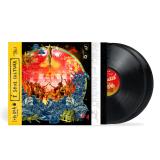
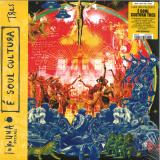
With two deeply cherished compilations already in the bag, Luke Una steps up for the third volume in his É Soul Cultura series on Mr Bongo. A love letter to the dancefloor and its power to unite people from all corners of society amid growing division and extremist politics. Genre-spanning in nature, the 15 tracks travel between cosmic soul, boogie, proto-house, slo-mo technoid grooves, drum machine afro, astral bass-bugging futurism, jazz funk, dance, and disco. Each having the ability to move the body as much as the heart.
From his formative years in Sheffield to co-founding Manchester’s much-fabled Electric Chair with Justin Crawford, through to helming the iconic LGBTQ institutions of Homoelectric / Homobloc, Luke has spent 40 years immersed in dance music. His latest outlet, É Soul Cultura, has grown from a label to a globe-spanning events series with Luke holding residencies and embarking on tours across the world from Japan and Australia to America and Europe.
“For me, the dancefloor was never about a one-dimensional, thudding, 130 BPM beat only. It's a much more dynamic, broader vision than that. I cut my teeth in an era where a 100 BPM record had as much impact, excitement, and energy as a 134 BPM dancefloor jazz funk or techno record”, Luke mentions. É Soul Cultura Volume 3 is the perfect embodiment of that notion: “It’s about four decades in the trenches playing dance music, the late-night afters, the shebeens, the basements, warehouse parties, the eight-hour journeys in East London, through to festival sets at Houghton and We Out Here. It’s music unconstrained by genre or tempo and more about making your body move”.
But this isn’t simply a collection of disparate dance tracks; they carry meaning and soul. “It’s less about escapism, more about reconnection. My experience of post-covid has been the coming together of all the clans in various clubs and gatherings. A reaction to a very toxic world out there, where the aggro rhythms of division have sought to divide us, and people don't meet as often. The coming back together face-to-face in clubs has encouraged a real love in the air, there's a real togetherness and collective spirit”.
Opening up the compilation is a track that channels that very message, the transcendental, soul-rousing Harris & Orr ‘Spread Love’. Joining the dots from there, to the low-slung deep house closer of Fatdog ‘Remember’, you’ll find electronic drum machine Nigerian funk, sitting side by side with dancefloor Cape Verdean brilliance, a post-punk cover of Fela Kuti, rubbing shoulders with cosmic electro, and an Una-championed, 8-minute, kickless DJ Harvey remix. There’s jazz funk in various guises moving from boogie synth to astral travelling, slo-mo acidic raw techno, and a ‘79 soul stepper, alongside swirling percussive Italo disco and tribal-charged house. All infused with an innate ability to bring people together.
As society becomes increasingly fractured, É Soul Cultura Volume 3’s message is more than movement. It’s about dance music’s power to unify people from all walks of life and break down the barriers that divide us.
- A1: Harris & Orr - Spread Love
- A2: Terry And Deep South - Trying To Get By
- A3: Toshiyuki Honda - Burnin' Waves
- A4: Igna Igwebuike - Disco Bomp
- B1: Janette Renee - What's On Your Mind (Super Club Remix)
- B2: Grupo Serenata - Sodade, Tem Pena D’mim
- B3: Vital Disorders - Zombie
- B4: Alphonsus Idigo - Flight 505
- C1: Dj Food - Peace (Harvey's 30 Something Mix)
- C2: Man Jumping - In The Jungle
- C3: Stars - Dancin’ People
- D1: Gaucho - Dance Forever (Club Version)
- D2: 49Th Floor - Night Passage (Bongo Mix)
- D3: Orion Agassi - Desacato
- D4: Fatdog - Remember Feat Cj Raine
black vinyl[28,36 €]
With two deeply cherished compilations already in the bag, Luke Una steps up for the third volume in his É Soul Cultura series on Mr Bongo. A love letter to the dancefloor and its power to unite people from all corners of society amid growing division and extremist politics. Genre-spanning in nature, the 15 tracks travel between cosmic soul, boogie, proto-house, slo-mo technoid grooves, drum machine afro, astral bass-bugging futurism, jazz funk, dance, and disco. Each having the ability to move the body as much as the heart.
From his formative years in Sheffield to co-founding Manchester’s much-fabled Electric Chair with Justin Crawford, through to helming the iconic LGBTQ institutions of Homoelectric / Homobloc, Luke has spent 40 years immersed in dance music. His latest outlet, É Soul Cultura, has grown from a label to a globe-spanning events series with Luke holding residencies and embarking on tours across the world from Japan and Australia to America and Europe.
“For me, the dancefloor was never about a one-dimensional, thudding, 130 BPM beat only. It's a much more dynamic, broader vision than that. I cut my teeth in an era where a 100 BPM record had as much impact, excitement, and energy as a 134 BPM dancefloor jazz funk or techno record”, Luke mentions. É Soul Cultura Volume 3 is the perfect embodiment of that notion: “It’s about four decades in the trenches playing dance music, the late-night afters, the shebeens, the basements, warehouse parties, the eight-hour journeys in East London, through to festival sets at Houghton and We Out Here. It’s music unconstrained by genre or tempo and more about making your body move”.
But this isn’t simply a collection of disparate dance tracks; they carry meaning and soul. “It’s less about escapism, more about reconnection. My experience of post-covid has been the coming together of all the clans in various clubs and gatherings. A reaction to a very toxic world out there, where the aggro rhythms of division have sought to divide us, and people don't meet as often. The coming back together face-to-face in clubs has encouraged a real love in the air, there's a real togetherness and collective spirit”.
Opening up the compilation is a track that channels that very message, the transcendental, soul-rousing Harris & Orr ‘Spread Love’. Joining the dots from there, to the low-slung deep house closer of Fatdog ‘Remember’, you’ll find electronic drum machine Nigerian funk, sitting side by side with dancefloor Cape Verdean brilliance, a post-punk cover of Fela Kuti, rubbing shoulders with cosmic electro, and an Una-championed, 8-minute, kickless DJ Harvey remix. There’s jazz funk in various guises moving from boogie synth to astral travelling, slo-mo acidic raw techno, and a ‘79 soul stepper, alongside swirling percussive Italo disco and tribal-charged house. All infused with an innate ability to bring people together.
As society becomes increasingly fractured, É Soul Cultura Volume 3’s message is more than movement. It’s about dance music’s power to unify people from all walks of life and break down the barriers that divide us.
Crave Tapes is thrilled to announce the first vinyl release on the label which will be the second album from Frankfurt's underground post-punk/dark wave band Babes of Enola Grey, Krieg und Wohlstand.
Krieg und Wohlstand sees Babes of Enola Grey follow the path of their 2021 debut, Anfang vom Ende, and take a step further into the realm of melancholic and disillusioned soundscapes. While keeping a certain retro character to the songs, Deborah Vision, Salvador Islero and Fabian van Castorp focus on quite contemporary themes, which some might call the most German obsessions:
War and prosperity.
But this is not the only reference to the band's heritage. Sometimes more, sometimes less, there are musical allusions to various German influences and contributions to (modern) music and music history. While Doppelt Frei is a nod to EBM and bands like DAF or the early Die Krupps and Wie auf Schienen as well as Die Heuschrecken pay homage to German düster punk bands like Fliehende Stürme or EA80, Panik and the title track Krieg und Wohlstand refer to the romantic German art song tradition of the 19th century (not to mention the obvious hint at a certain successful German Schlager in Die Kugeln und das Herz).
This makes Krieg und Wohlstand not only a worthy epigone of the band's debut, but also takes the album and the artistic approach to another level.
Commenting on the chosen format (12" vinyl), the band members said: "It was clear to us that we wanted to release this album on vinyl. When you look atGerman history, war and prosperity have to be seen as two sides of the same medal, or in this case of a record".
- A1: The Supremes - Baby Love
- A2: The Miracles - You Really Got A Hold On Me
- A3: Stevie Wonder - I Call It Pretty Music
- A4: The Temptations - The Way You Do The Things You Do
- A5: Martha & The Vandellas - Heatwave
- A6: Dusty Springfield - You Lost The Sweetest Boy
- A7: The Earl Van Dyke Sextet Vamp
- A8: The Miracles - Ooo Baby Baby
- A9: The Vandellas & Dusty Springfield - Wishin' And Hopin
- A10: The Temptations - It's Growing
- A11: The Supremes - Shake
- A12: Martha & The Vandellas - Nowhere To Run
- B1: Stevie Wonder - Kiss Me Baby
- B2: Marvin Gaye - Can I Get A Witness
- B3: The Vandellas & Dusty Springfield - Can't Hear You No More
- B4: The Supremes - Stop! In The Name Of Love
- B5: The Temptations - My Girl
- B6: Martha & The Vandellas - Dancing In The Street
- B7: The Miracles - Shop Around
- B8: The Supremes - Where Did Our Love Go?
- B9: The Miracles & Various - Mickey's Monkey
Dusty Springfield hosted this impromptu TV special to promote the Tamla Motown artists that were taking part in their first ever European tour in 1965. Motown sent over their six premier - The Supremes, The Temptations, The Miracles, Stevie Wonder, Marvin Gaye, Martha & The Vandellas were all backed by the Motown house band, The Earl Van Dyke Sextet. Dusty was a huge Motown fan and was keen to play her part in bringing the acts to a wider audience. The Beatles and the Stones also went out of their way to give Motown a mention in their interviews. Remember, Motown had only just launched its label in Europe earlier that year and the artists were known only to a small number of soul aficionados, so ticket sales for the tour were very poor. Mary Wilson recalls that the acts referred to it as the ghost tour, but they all put a performance for this fabulous TV show.


![Babes Of Enola Grey/artist] - Krieg und Wohlstand](https://www.deejay.de/images/l/4/3/1227043.jpg)



![Babes Of Enola Grey/artist] - Krieg und Wohlstand](https://www.deejay.de/images/l/1/7/1226617.jpg)