Expanding on his signature cinematic canvas, the EP solidifies the immersive, spiritual space Common Saints occupies in the contemporary landscape, a distinct sound with trademark intricate studio arrangements.
Following the structural foundation laid by the project's breakout singles "Night Light" and the title track "Illusions", the full EP stands as a striking philosophical assessment of the modern human condition. Age Of Illusions serves as an artistic reflection of cultural anxieties surrounding hyper-technological advancement, guiding the listener through a deliberate sonic architecture of self- discovery, spiritual rebirth, and final enlightenment.
Dirty Sound Magnet's album to ease the soul. An album that showcases the depth of DSM's music. Between modern folk and ambitious art rock reminiscent of Sgt Pepper by the Beatles and early Pink Floyd and David Bowie.
Coil’s 17-minute soundtrack for »How to Destroy Angels«, performed on January 19, 1984: ritual music ›for the accumulation of male sexual energy‹, structured around magickal and numerological concepts.
Throughout history man has made and used music for two distinct and separate purposes. In recent years, particularly since the advent of sound recording, the most popular use of music has been for entertainment - the temporary amusement and distraction of as large a number as possible. As a consequence, many people tend to overlook its more fundamental and ancient use as a tool for affecting man's body and spirit. The many varieties of religious music from around the world contain a vast quantity of clues to the way in which sound can affect the physical and mental state of the serious listener, yet many find their associations with religion itself too difficult a stigma to overlook in their appreciation of the sound and its potential, for its own sake.
On this record, hopefully the first in a series, we have tried to produce sound which has a real, practical and beneficial power in this modern Era. Specifically, it is intended as an accumulator of male sexual energy. Although we make neither claims nor rules for its use, we do suggest that for maximum potency it should only be played in circumstances that exclusively male and/or onanistic in nature. What these are is entirely up to you.
The execution of the piece was structured around concepts we felt would work for us - in this case magickal and numerological rather than conventionally musical in form. One image or symbol which we drew upon that may be useful to bear in mind is that of Mars, often indicated by the male symbol.
Should this music have any power, over and above the banal and transitory titillation achieved by most records available now, it is a positive and beneficial power to be used and controlled by the listener, as he desires.
Coil’s 17-minute soundtrack for »How to Destroy Angels«, performed on January 19, 1984: ritual music ›for the accumulation of male sexual energy‹, structured around magickal and numerological concepts.
Throughout history man has made and used music for two distinct and separate purposes. In recent years, particularly since the advent of sound recording, the most popular use of music has been for entertainment - the temporary amusement and distraction of as large a number as possible. As a consequence, many people tend to overlook its more fundamental and ancient use as a tool for affecting man's body and spirit. The many varieties of religious music from around the world contain a vast quantity of clues to the way in which sound can affect the physical and mental state of the serious listener, yet many find their associations with religion itself too difficult a stigma to overlook in their appreciation of the sound and its potential, for its own sake.
On this record, hopefully the first in a series, we have tried to produce sound which has a real, practical and beneficial power in this modern Era. Specifically, it is intended as an accumulator of male sexual energy. Although we make neither claims nor rules for its use, we do suggest that for maximum potency it should only be played in circumstances that exclusively male and/or onanistic in nature. What these are is entirely up to you.
The execution of the piece was structured around concepts we felt would work for us - in this case magickal and numerological rather than conventionally musical in form. One image or symbol which we drew upon that may be useful to bear in mind is that of Mars, often indicated by the male symbol.
Should this music have any power, over and above the banal and transitory titillation achieved by most records available now, it is a positive and beneficial power to be used and controlled by the listener, as he desires.
Pleasurewood return with 'Electric Telepathy', their second full-length LP offering Simla Space Funk, Psych-Library and Vintage-Cinematic Raga-Rock grooves.
This new offering from the band embraces more of their vintage Hindi Cinema soundtrack influences — "Chump Change", "The Hoverfly" and "RAMMM" could easily fit into the middle of an R.D. Burman score, each with their incongruous synthesis of different genres, infectious percussion, classical modes and funk chops.
There is also a slight sweep across a too-slow-to-disco tempo and feel with the moody Johnny Guitar Watson-esque slow burn of "Good Falcon" up to the nonchalant four-to-the-floor of "Last Dance Saloon" with its lyrical warning of digital over-saturation in our social-media saturated world and a foreboding of the mini-monoliths sat in the palms of our hands that in a Kubrickian way threaten to cosmically absorb us all as a species into their individual jet-black abysses.
And then, coming into focus like a sweet slice of disjointed, lo-fi, 8 bit space disco, "Mojave Desert" is a slacker-strut with telephone vocals dub guitars, dry cosmic synths and futurist Farfisa organ driven by an almost Acid-Jazz meets Post-Punk Bass line. The song is autobiographical in its account of an excursion along the 29 Palms Highway reflecting on an escape from the City of Angels not so far away, up into the stark psychedelic desert realm.
There is a lot to unpack in this record and yet more to discover so it will be best to allocate 40 minutes in a comfortable dimly-lit room with eyes closed and maybe a cognac in hand, to have a deep-dive into its well-travelled and esoterically funky grooves.
Golden Seconds has arrived — a brand-new Disco label brought to you by Johannes Albert. In the 1990s, Disco House records became dancefloor anthems, drawing on the nostalgia of disco's golden era while incorporating modern production techniques like sampling. Pioneered by influential producers like JohNick or DJ Sneak, Disco House revitalized the uplifting spirit of Disco while infusing it with the infectious rhythms of House Music. A young Johannes became addicted to this happy music in a heartbeat. Fast forward two decades, and he’s crafted his own updated take on the genre, guided by one simple philosophy:
"Sometimes all it takes to make a room go bang is a beat and a sample."
Golden Seconds Vol. II opens the vaults again and delivers a selection of tracks straight from the stash — timeless grooves, dancefloor heat, and that unmistakable disco glow.
Sexy cover included.
“What Robot Says L” on What Robot Says Records is a deeply immersive Dub Techno journey crafted for demanding listeners who seek atmosphere, precision, and emotional depth beyond conventional dancefloor music. Across four carefully sculpted tracks, the release moves through shifting moods and textures, balancing raw energy with subtle elegance while exploring the deeper and more hypnotic side of techno.
A1. Nicolas Barnes – Dusted Maze opens the EP with a smooth and introspective approach, combining delicate textures, refined grooves, and floating harmonic layers that capture the timeless spirit of classic Dub Techno through a modern lens.
A2. Continuing the journey with TM Shuffle, Monoder – Vihreesametti delivers a warmer and more fluid interpretation of the genre, blending rolling grooves, dub-driven chords, and sophisticated sound design into a deeply immersive experience.
On the B-side, B1. Denizo – Versus follows with dark dub pressure, stripped-back rhythmic architecture, and evolving ambient detail, creating a hypnotic late-night atmosphere filled with tension and movement.
B2. Closing the EP, The Open Circle – Shinkai dives into deeper and more mysterious territory, emphasizing submerged atmospheres, minimal rhythmic tension, and profound spatial depth that slowly unfolds with every listen.
WRSL1 – “What Robot Says L” is not designed for casual listening, but for those who appreciate Dub Techno as an evolving exploration of mood, space, and sonic detail — a refined and highly immersive statement from some of the genre’s most skilled contemporary artists.
but wait a minute.. Does anybody know What Robot Says?
For South Central’s premier singer, songwriter, and producer, success was never an overnight accident; it was a blueprint executed with meticulous precision. With his highly anticipated project, Labor of Love, Blxst delivers a masterclass in modern West Coast R&B and Hip-Hop, proving that true artistry requires both sweat and soul. The album serves as a sonic manifesto on the price of ambition, the weight of loyalty, and the delicate balance of maintaining romance while building an empire. It stands as a definitive evolution of the distinct sound Blxst pioneered, blending crisp, trunk-thumping 808s with soulful, nostalgic chords and his signature, effortlessly smooth vocal runs.
Entirely self-produced and co-written, Labor of Love bridges the gap between the sun-drenched grit of Los Angeles street culture and the vulnerability of late-night bedroom playlists. From the bounce of celebratory anthems to introspective, late-night drive confessionals, Blxst curates a tracklist that feels both deeply personal and universally resonant. It explores the sacrifices made in the pursuit of greatness, paying homage to the sonic pioneers of LA while firmly cementing his own place as the vanguard of the city's modern sound. It is a celebration of independence and the self-made mentality, reminding listeners that he remains the chief architect of his own destiny.
Ultimately, Labor of Love is a testament to the grind, capturing the sleepless nights and tested relationships that pave the road to success. Blxst puts his heart on the line to show that the work itself is where the true passion lives, creating an album for the city, for his family, and for everyone who stays dedicated to their craft. More than just a collection of radio-ready hits, this project is a cohesive, cinematic experience from one of music's most reliable hitmakers. It is a definitive reminder that Blxst isn't just riding the wave—he is directing the current.
On their third album, FANGS, London collective HMLTD have created an entirely new genre: Götherdammerüng (or ÜberGöth). Predictably unpredictable, it could not be further away from their last outing, 2023 rock opera The Worm. The sixteen-piece orchestra has been traded in for Ableton, the timpani and violins replaced with side-chained four-to-the-floor and rave synths, and the gospel choir swapped for guttural gothic howling and black metal screams. The result is both unique and terrifying: a total reinvention and rehabilitation of the goth genre, through the looking glass of modern electronic and doomscroll-era dance music.
This new beginning was accompanied by a change in personnel, with Theo Spark and Andrei Martynchyk joining the fray alongside original members Henry Spychalski and Duc Peterman. Decamping to a ruined château in the Loire Valley, the quartet became obsessed with vampire lore, and the EBM and goth sound that inspired their early work: Fad Gadget, DAF, Nitzer Ebb, Suicide and Bauhaus. FANGS also points to more contemporary influences like Crystal Castles, German hardcore, 2000s blog-house a la Justice, and 2020s sleazepop.
The world crafted in FANGS is full of cosmic pessimism, glowing horror, imperceptible evil and digital dismemberment, ancient curses and ruined castles, Vampires. But it is also a thoroughly fun, and funny, record, as danceable as it is deep. Born of the club, some tracks would not sound out of place on Brat. Like a Smiths song which sounds happy and carefree until your brain tunes in to the misery of the lyrics, it can be listened to - and enjoyed - on two levels. One can get lost in the throb of bass and ludic synths, or tune into the horror of the lyrics which overlay them.
FANGS attempts to offer up a reflection to a culture that - like a Vampire - has lost its own. The result is something not only thoroughly modern, original, and inventive - but that feels genuinely dangerous and potent. FANGS delights in this ambiguity: simultaneously indicting decadence, decay, and moral rot, while luxuriating in its intoxication by it. Cacophonous sub-bass becomes a chthonic call of the void; seraphic rave synths become the screech of Valkyries; four-to-the-floor becomes a deathly funeral march. Vampire apocalypse.
Pronounced Zero (ay ay) RIOT
Shit and Shine go fully CAN on their eleventh album release for Riot Season since their debut way back in 2004.
DEEP SOLID GROOVE REPETITION !!
Fully CAN in the sense that the rhythms are VERY CAN LIKE, but with a modern sharper edge and less flowery decoration. If CAN had a Roland TR-1000 drum machine it might sound a lot like this!
Basically all your favourite bits of krautrock, but sharpened up with modern tools, and it works perfectly! Say it again … DEEP SOLID GROOVE REPETITION !!
It’s definitely danceable, if that’s your thing, but also definitely deeply listenable. Something to put on and fill the space with infectious groove while you wash the dishes or drive your car, have your workout (I’ve heard from several sources $&$ makes excellent workout music) or whatever.
Two long songs on each side of the record. It’s an absolute beauty and actually sounds like shit and shine might be taking things a bit more seriously for a fuckin’ change! BRAVO !!!
On their third album, FANGS, London collective HMLTD have created an entirely new genre: Götherdammerüng (or ÜberGöth). Predictably unpredictable, it could not be further away from their last outing, 2023 rock opera The Worm. The sixteen-piece orchestra has been traded in for Ableton, the timpani and violins replaced with side-chained four-to-the-floor and rave synths, and the gospel choir swapped for guttural gothic howling and black metal screams. The result is both unique and terrifying: a total reinvention and rehabilitation of the goth genre, through the looking glass of modern electronic and doomscroll-era dance music.
This new beginning was accompanied by a change in personnel, with Theo Spark and Andrei Martynchyk joining the fray alongside original members Henry Spychalski and Duc Peterman. Decamping to a ruined château in the Loire Valley, the quartet became obsessed with vampire lore, and the EBM and goth sound that inspired their early work: Fad Gadget, DAF, Nitzer Ebb, Suicide and Bauhaus. FANGS also points to more contemporary influences like Crystal Castles, German hardcore, 2000s blog-house a la Justice, and 2020s sleazepop.
The world crafted in FANGS is full of cosmic pessimism, glowing horror, imperceptible evil and digital dismemberment, ancient curses and ruined castles, Vampires. But it is also a thoroughly fun, and funny, record, as danceable as it is deep. Born of the club, some tracks would not sound out of place on Brat. Like a Smiths song which sounds happy and carefree until your brain tunes in to the misery of the lyrics, it can be listened to - and enjoyed - on two levels. One can get lost in the throb of bass and ludic synths, or tune into the horror of the lyrics which overlay them.
FANGS attempts to offer up a reflection to a culture that - like a Vampire - has lost its own. The result is something not only thoroughly modern, original, and inventive - but that feels genuinely dangerous and potent. FANGS delights in this ambiguity: simultaneously indicting decadence, decay, and moral rot, while luxuriating in its intoxication by it. Cacophonous sub-bass becomes a chthonic call of the void; seraphic rave synths become the screech of Valkyries; four-to-the-floor becomes a deathly funeral march. Vampire apocalypse.
UK experimental multi-instrumentalist Oli Heffernan (aka Ivan The Tolerable) returns to independent label Riot Season Records on October 23rd, 2026, with The Planets, a fierce, tension-fuelled reinterpretation of Gustav Holst’s iconic orchestral suite tailored for the modern age.
Originally composed over a century ago to capture the astrological characters of the cosmos, Holst's masterpiece receives a radical, uneasy update. Where the original composition leaned on grand symphonic sweeps, Ivan The Tolerable strips away the comfort of the orchestra, replacing it with fracturing analog synthesisers, claustrophobic tape loops, and the hypnotic, nervous pulse of modern kosmische music and avant-garde noise.
The Planets is an album forged in the specific dread of 2026—a year defined by geopolitical instability, climate weariness, and pervasive societal tension. Rather than looking up at the stars in awe, Heffernan turns the telescope back toward a fractured Earth. From the staggering, industrial-tinged dread of "Mars" to a hollow, melancholic take on "Jupiter," the album transforms familiar motifs into an immersive exploration of collective psychological fatigue.
Recorded in isolation by Heffernan, the project captures the signature solo vulnerability seen on his recent landmark releases like Psychogeography. It balances moments of deep, meditative stillness with sudden, jarring eruptions of noise, offering listeners a space to both confront and process the overwhelming static of the everyday world.
Following the success of the inaugural all-Jiri Jiri edition, Batov Records returns with the second instalment of its Give Me Disco series, once again curated by label co-founder and globe-trotting selector DJ Kobayashi. Rather than revisiting familiar disco classics, Give Me Disco Vol. 02 digs deeper, bringing together four dancefloor discoveries from across Europe and Asia, including two previously unreleased tracks available here for the first time.
Spanning Portuguese jazz-funk, Norwegian cosmic oddities, Japanese-inspired psychedelic disco and cinematic groove, the EP reflects the breadth of Kobayashi's record bag - a carefully assembled selection of tracks that have soundtracked his DJ sets for years alongside exclusive material rescued from the vaults.
Opening the record is The Bam Jam Band's brilliantly understated "Theme", a soaring slice of jazz-infused disco from Portuguese musicians Sérgio Alves and Pedro Tenreiro. Originally released only as a now long-sold-out 7 inch on Mad About Records, the track has become one of Kobayashi's trusted secret weapons, championed by discerning selectors including Darryn Jones and Red Greg. Built around Alves' dazzling synthesiser work, "Theme" finally gets the wider audience it deserves. The EP's first exclusive arrives courtesy of D. Apal, instrumentalist and member of Norway's Flammer Dance Band. His only solo release, issued on the band's Lysketrekk Records, has become a cult favourite among adventurous record collectors. Batov now unveils the previously unreleased "60 Meter'n (Rytme)", an extended instrumental dub that strips away the vocals to let the handclaps, cavernous bassline, dub effects and wonderfully eccentric synthesisers breathe, transforming an underground favourite into an irresistible dancefloor weapon.
Side B opens with YĪN YĪN's "Tokyo Disco", taken from the band's acclaimed third album Mount Matsu on Glitterbeat Records. Long-time admirers of the Dutch quartet, Kobayashi has championed them since first hearing the breakthrough pairing of "Dis ̄ kô Dis ̄ kô" and "Dion Ysiusk" on Bongo Joe. Since then, he has hosted the band twice on Soho Radio and supported them live in London. "Tokyo Disco" perfectly captures YĪN YĪN's distinctive blend of Japanese-inspired psychedelia, Southeast Asian influences, post-punk funk and shimmering disco grooves, making it a natural fit for the Give Me Disco series.
Closing the EP is another exclusive from Jiri Jiri, whose contribution helped launch the series on Vol. 01. Ahead of their forthcoming album later this year, the duo unveil the previously unreleased "Spaghetti Western", a wonderfully off-kilter fusion of Morricone-esque cinematic atmosphere, taut funk rhythms and the soulful modern groove of SAULT. Equal parts soundtrack and dancefloor curveball, it provides a fitting finale while offering another tantalising glimpse of what's still to come. With two exclusive cuts sitting alongside two carefully chosen modern classics, Give Me Disco Vol. 02 is another lovingly curated snapshot of DJ Kobayashi's musical universe: borderless, groove-driven and unapologetically built for adventurous DJs, discerning collectors and open minded dancefloors alike.
Seven years after the haunting resonance of Voids, electronic pioneer Martyn returns to the album format with Music For Existing. Arriving on 15 May 2026, the record is more than a collection of tracks; it is a profound exploration of what it means to remain devoted to a craft in an era of relentless noise.
The album’s announcement is heralded by the lead single "Heavy Sound." The track serves as the perfect bridge between Martyn’s past and present - a masterclass in tension and release that previews the album’s dialogue between the producer, the musicians, and the audience. We live inside a culture that has prioritised and monetised restlessness. The modern apparatus runs on the continuous production of "next," driven by algorithms that value novelty over depth.
Music For Existing serves as a love letter to the communal act of making music - something that is both healing and inherently defiant. For Martyn, a musician often finds solace in musical conversation with others; in the moment we press record, we simply exist together. This record is an invitation to build human infrastructure around what we love, leaning into the fluid nature of community and seeing exactly where the music takes us when we choose to listen.
The album is a sprawling, "off-the-grid" tapestry that echoes Martyn’s profound appreciation for jazz - free, instinctive, and bursting in every sonic direction. This collection features an expansive cast of collaborators, including Duval Timothy, Dan Only, Lucinda Chua, and Mark Cisneros. The record is further elevated by the contributions of jazz talents Mischa Porte and Cees Bruinsma, alongside the evocative words of writer and poet Musa Okwonga.
While the acoustic textures and improvisational spirit of this record may feel like a departure, they represent a homecoming. Jazz has always been ingrained in Martyn’s work; even in his most stripped-back club tracks, the DNA of swing, syncopation, and free-form structure was always present, if not always visible.
Music For Existing marks the beginning of an exciting journey that will continue from the studio to the stage, celebrating the radical act of existing in the moment.
With his first release on co-owned Smallville-Label Lawrence aka Peter M. Kersten celebrates another tribute to more than 20 years of House Music. Wether it is the magic sound of Nick Holder or modern grooves of labelmates like Melchior, Pronsato and Christopher Rau- this EP is full of inspiration. Beyond the club influences Kersten was mainly driven by slow Detroit Jazz from the early 70ies and classical Minimal Music which make the colorful taste of this EP. With "Sorry Sun" Lawrence invites to another adventure into the miracle of a cosy dancefloor letting only the music shine and the people close their eyes and smile. Sorry Sun, here comes the Night.
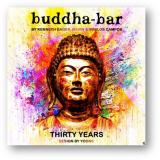
Mit "Buddha-Bar 30 Years" feiert eine der weltweit bekanntesten Marken für Lounge-, Downtempo- und anspruchsvolle elektronische Musik ihr 30-jähriges Bestehen. Die hochwertige Jubiläumsedition vereint drei sorgfältig kuratierte Mixe von DJ Ravin, Kenneth Bager und Carlos Campos, die gemeinsam die stilistische Vielfalt und klangliche Identität von Buddha-Bar widerspiegeln. Zwischen Lounge, Balearic Sounds, Organic Grooves, Ethno-House und modernen elektronischen Klangwelten entsteht eine facettenreiche musikalische Reise, die den internationalen Erfolg der Marke eindrucksvoll dokumentiert. Ergänzt wird die Edition durch ein exklusives Artwork des zeitgenössischen Künstlers Yoons, das den Sammlercharakter der Veröffentlichung zusätzlich unterstreicht. Als musikalische Retrospektive und hochwertiges Lifestyle-Objekt richtet sich Buddha-Bar 30 Years gleichermaßen an langjährige Anhänger der Reihe, Sammler und ein internationales Publikum mit Interesse an stilvoll kuratierten Compilations.
Strut proudly presents the first release in almost a decade from the legendary Senegalese group Orchestra Baobab with Made In Senegal. Few groups embody the spirit of African music like Orchestra Baobab. Formed over 50 years ago as the resident band of the Baobab Club in Dakar, their timeless fusion of Afro-Cuban rhythms, Wolof griot traditions, mbalax, Congolese rumba and jazz continues to resonate across generations and continents. Now, the celebrated big band marks a new chapter in their illustrious history with Made in Senegal, their first new studio album since Tribute To Ndiouga Dieng in 2017 for World Circuit. Released on respected imprint Strut Records in conjunction with Madoky Music, the new album celebrates home, heritage, love and resilience and was recorded entirely in Dakar. On Made In Senegal new songs sit effortlessly beside re-imagined classics. Lead single "Togne Bakhoul", composed by late Baobab vocalist Rudy Gomis is a poignant ode to his wife and "Tioro Bye Samba" reprises a classic Thione Seck song while "Casamance" celebrates the culturally rich Southern Senegalese region, homeland of several Baobab members. "Baobab 50 Ans" marks the 50-year anniversary of this indomitable group. Made In Senegal is another modern Baobab classic combining a fresh approach with roots fixed firmly in Senegal"s rich traditions. It is the perfect time for a new generation to discover the elegant, hypnotic sound of one of Africa"s greatest ever big bands.
Larry June has built a career on making hard work look effortless, and his album Who Coppin’ stands as a masterclass in smooth, lifestyle-driven West Coast hip-hop. The album delivers a high-grade mix of Bay Area luxury, entrepreneurial motivation, and unbothered charismatic flows. Spanning a laid-back audio palette designed for early-morning juice runs and late-night freeway cruises alike, Uncle Larry balances the discipline of a hustle-first mindset with warm, sun-drenched production anchored by crisp organic instrumentation and heavy-knocking bass.
The album features a tightly curated roster of collaborators who align seamlessly with Larry's signature aesthetic. Spoken-word encouragement from Wallo267 sets an intentional tone on the opener "Go Outside Intro," framing the record around execution and focus. Soulful contributions from Jhené Aiko on "California Dream" and Musiq Soulchild on "Pretty Green Eyes" provide lush R&B textures, while NorCal legend B-Legit and longtime partner DJ.Fresh reinforce June’s deep West Coast roots. Meanwhile, Swizz Beatz injects high-energy bounce into "Flex," offering a vibrant contrast to Larry’s understated, cool-headed cadence.
Behind the boards, top-tier producers like Cardo, Teeko, Beat Butcha, Jay Versace, and June Santana craft a nostalgic yet modern backdrop filled with warm sample flips, smooth G-funk synthesizers, and relaxed soul grooves. The project builds to an emotionally grounded conclusion on "God Got Us (Ain't Too Many)," where June strips away the flexes to offer direct encouragement to his audience, proving once again that consistency, self-belief, and steady progress remain the ultimate luxuries.
WRWTFWW Records proudly announces the release of sfs/in vain (selected tracks) by UK jungle heavyweight and Future Retro London founder Tim Reaper, a limited-edition 3LP bringing together selected tracks from two previously digital-only albums, sfs and in vain.
An insane collection of slower 140 BPM wonders, sfs/in vain explores jungle, dubstep, UK garage, R'n'B, grime, liquid D&B and broken beats through Tim Reaper's fresh and informed approach. Deconstructed and reconstructed club music, rooted in tradition but looking forward, these tracks reveal another side of one of the key figures in the modern jungle revival.
The selection comes from 2 albums. sfs collects a body of slower material Tim Reaper worked on throughout 2025, stretching across various genres of UK electronic music. in vain comes from a much more personal place. Written during a period of instability, heartbreak, financial and professional uncertainty, the album became a way for Tim Reaper to process what was happening around him and find some kind of escape. The tracks were made at a point when the effort he had put into rebuilding his life felt as though it had all been "in vain" - hence the title. The result is warm, melancholic, soulful, simply very human.
Together, these selected tracks highlight the incredible range of Tim Reaper's production, proving that his understanding of jungle extends far beyond the traditional boundaries of the genre. From heavyweight bass music to delicate melodic passages, sfs/in vain (selected tracks) is a beautifully varied snapshot of an artist constantly pushing UK club music into new territories.
Tim Reaper has been leading the resurgence of jungle for years, with releases on AKO, Skeleton Recordings, 7th Storey Projects, Green Bay Wax, Dalston Chillies, Parallax, Myor Massiv, V Recordings, Deep Jungle and many more. He is also the founder of Future Retro London, one of the most respected labels and platforms in the contemporary jungle scene.
Crash landing onto the scene in 2017 with his now legendary NTS broadcast of 2 hours of unheard music, the ultra-mysterious and enigmatic Michael J. Blood has gone on to release a series of sought after, lush and rugged future classics on his own imprints Blood Inc. and BodyTronixxx. Allegedly hailing from Manchester in the North of England, Blood’s sound is hard to pin down but instantly recognisable. Rooted in the twin foundations of modern dance music—Detroit and Chicago—while schooled in the sweaty basements of Manchester’s fêted club scene, his music feels both original and familiar, timeless yet unplaceable.
Weaving together a hypnotic narrative that feels both archival and futuristic, Cause & Effect Vol. 1 brings together some of Blood's rare and hard to find bangers from a variety of his early sold out projects. The collection mixes the pulse of Chicago with the grit and cosmic dreams of Detroit, while never losing sight of the North of England’s sophisticated late-night sleaze. Blood’s dance-floor eclecticism and raw, infectious mutant beats drive a soulful, jazz-louche energy into every track. The result is a collection of atmospheric grooves that weave together hypnotic rhythm and smoky texture, blurring house, techno, broken beat, and jazz-soaked electronics into a heady trip. Cause & Effect Vol. 1 maps out the restless evolution of Blood’s sound, a testament to his instinct for rhythm, atmosphere and dance-floor alchemy. House for the heart, techno for the mind, both built for the body. It’s in the Blood.