
4

Finnish Recue debuts on Analogical Force with 'Paramnesia EP', where Riku Annala explores the murkier side of electronic soundscapes with distorted and gritty undertones. With impeccable production, Recue guides us through this expedition in his highly distinctive style that blurs boundaries between bass music, idm and reflective electro-nix. 'Paramnesia EP' takes you on a cinematic journey through post apocalyptic soundscapes full of deep bass, textures and nuances. Some of Paramnesia's tracks have accompanied Recue in his live sets, acting as a counterbalance for the most nolanesque moments, when the music starts driving the listener forward in full speed. Some have started as reworks of other material, gradually morphing into something completely different, leaving only a memory of something that never came to be. The release is the result of a dialogue and curation together with AF, and the end result is something that sits comfortably in the sound that is Recue and undertone that's Analogical Force. You know what to do!

Pure Oldschhol breakbeat stock found in the Nederlands... 1991 original press... Crazy early techno/hardcore/dance/rampage

Big Crown Records is proud to present the debut full length offering from Les Imprimés, Rêverie. The stirring and ethereal sounds of Les Imprimés have been making fans of anyone who hears them since their first 7" single hit the speakers. Morten Martens is the man behind the band. Born, raised, and working in Kristiansand, Norway, he keeps a low prole while making his heart felt, highly infectious, and unique music. This album is a long time coming for Martens and it is sure to make him a name to be reckoned with. The first thing you notice listening to Les Imprimés is the high level of musician-ship. Martens plays nearly every instrument on the recordings and handles the production and arranging. He has been making records for decades, winning a Spellemann Award (aka, the Norwegian Grammy) in 2006 for producing a HipHop album as well as getting nominations across three other genres. While awards and accolades speak to the level of his talent, this new album really shows who he is an artist on his own terms. Moving away from being a hired gun on the touring scene naturally led him to start doing more studio work. Slowly collecting gear and getting more experi-ence behind the boards he built his own studio on the island of Odderoya and was making a living playing with and recording other people's music. As the story goes, after those sessions would end he would work on his own project into the wee hours of the night. From these late night sessions, Les Imprimés was born and Rêverie began to take shape. However, "it wasn't until COVID, when things locked down, that I was really able to nd the time to focus on Les Imprimés" Morten says about creating and leading his own solo project. "It was a scary time. But I knew I had to do something with it." He took the sum of his inuences, combined them with his own vibe and got busy writing the music, playing the instruments, and singing the songs. "It's soul music, but I don't exactly have the soul voice," Morten explains humbly. "But I do it my own way, in a way that's mine. "It is his sound, his fingerprint, his sensibility, that makes his music hard to put in a box. The album showcases both Martens' range and his ability to make a cohesive album. The lead single "Falling Away" starts with a raw drum break and turns into a lushly arranged tune that paints the picture of love when it slips away. On "Still Here" he professes his resilience through life's twists and turns over a thundering track that puts a new spin on the B side ballad genre. Songs like "You" and "Our Love" mix tones from 60s and 70s Soul with arrangement nods to Doo Wop records while Martens' lyrics and delivery leave you singing the melodies long after they finish. "Love & Flowers" finds Martens in a moment of clarity with a song that ts the niche sub genre of happy break up tunes, the four on the floor track will move the dancefloor or while the message will resonate with anyone who put too much effort into the wrong situation in their lives. However, it is songs like "Muse" and "Chess" that really encapsulate the uniqueness of Les Imprimés as they push the boundaries of genre, one a profession of love for music and the other a cover of an electronic record respectively. Martens' lyrics, emotion, and delivery truly make the whole thing come together and stand out from any of his peers. There's an infectiousness and a pop sensibility in the writing that is done with the utmost class and taste giving Les Imprimés the rare quality of immediate attraction that only deepens the more you listen.

2024 repress!
Blinding double pack of heavily old school influenced bleep, direct from the depths of England by prolific young producer, Tom Carruthers. These are heavily sample based mpc productions that harken to the carefree days when the pills were pure and the music was fresh and never stopped. When house was techno and techno was house, this long player takes the best elements from say Chill Records, early-Warp and the best Nu-Groove creating timeless dance tracks made for the warehouse dj. Essential stuff here. TIP!

Aural architect Skygaze follows his 2022 ‘Astral Trip EP’ for Flumo Recordings, offering an advanced fusion of house, broken boogie, and future jazz, with five brand new reinterpretations from the extended Flumo family.
Skygaze’s diverse sound, breaking down barriers between house and techno, broken beat, jazz, ambient, hip hop, jungle, and even esoteric IDM, has been showcased across a growing catalogue of releases across Guayaba records, Riverette, Flumo and Thirty Three Circular, and remixes for Ed is Dead and Contours & Yadava; earning the producer support from the likes of Mr. Scruff, Simbad, k15, Bandcamp’s Andrew Jervis, and Gilles Peterson.
Feted singer, musician and producer Alysha Joy, rising producer Divorce From New York, ones-to-watch, Footnote and Karmasound, and Skygaze himself under his Jailed Jamie guise, joined by Lorenzo Soria, put a new spin on ‘Astral Trip’, whilst staying true to the originals’ spirit.
The multi-talented Allysha Joy, of 30/70 Collective & LCSM fame, remixes ‘’Night Heat’’, enhancing the groove with broken beats and her undeniable first-rate vocals.
Jailed Jamie & Lorenzo Soria, reshape ‘’Gimme Five’’ with rough synths and jacking bassline driven “Think” beats.
Divorce From New York boosts the tempo and infuses ‘’Wagwan’’ with Latin rhythms, perfectly balanced by high-energy synth lines.
Italian producers, Footnote and SofaTalk, delve deeper into ‘’Minor Mood’’, adding softer, retro-infused sound structures in a broken boogie mould.
Barcelona’s Karmasound explores the ruminating nature of ‘’City Cathedratics’’ and its counterbalance between broken beat and house.
The diverse but complementary set of remixes is sure to move bodies on sophisticated dance-floors this year and shed further light not only Skygaze’s production but also his talent for melody and song-writing. A feather in his and Flumo’s bow.
DJ Support:
Ashley Beedle (Back To The World Records)
Bolam (Lobster Theremin)
Crazy P (Hot Toddy / 2020 Vision)
Dan Curtin (Mobilee)
Fouk (Heist / Toy Tonics)
Joshua James (XOYO, Glorias, Rinse)
Laurent Garnier (F Communications)
Severino / Horse Meat Disco (Strut / !K7 Records)
Speaking Minds (Circoloco, Italy)

Nippon Psychedelic Soul 1970-1979 is Time Capsule’s continuation of the deep dive into Japan’s rich history of folk and psychedelic soul music.
Vinyl LP with 4 page insert, original artwork and photos
The kaleidoscopic psychedelia of 1970s Japan captured a fragile and fertile moment as the country sought its future in funk grooves, heavy reverb and lyrical hallucinations.
The follow-up compilation to Time Capsule’s Nippon Acid Folk, Nippon Psychedelic Soul takes myriad pathways into the tripped-out undergrowth of 1970s Japan. Finding their feet at home and looking for inspiration abroad, the musicians featured here were engaged in the communal soul-searching that followed the breakdown of the 1960s protest movements. Some made it big, others drifted into oblivion. The music they left behind shimmers with intensity.
At the core was Happy End, the first project of YMO’s Haroumi Hosono, whose distortion-heavy guitar and crisp back-beat laid the foundations for Japanese lyrics that flipped the paradigm of Japanese rock music on its head. With it came a new found sonic ambition, such as in the bold Philly-soul style arrangements of producer Yuji Ohno, whose work with occult wandered Yoshiko Sai shares some of the bittersweet grandeur of Rotary Connection or David Axelrod.
Then there was Jun Fukamachi, a pioneer of Japanese synthesis, whose debut album was a carnival of orchestral funk, euphoric horn lines and rich production, complete with soaring guitar solos, psychedelic organ and a truly cinematic finale. The first and only time Fukamachi would sing on record, ‘Omae’ rips like the ultimate end-of-nighter.
Influenced by giants of the US soul scene, maverick composer Hiroshi “Monsieur” Kamayatsu (otherwise known as ‘the Brian Wilson of Japan’) went one step further, enlisting Tower of Power to play on ‘Have You Smoked Gauloises?’ The B-side to Monsieur’s biggest-selling single, it coasts with sophisticated cool - a liquid bassline and suave keys comping under a roaring trademark ToP sax solo. No surprise it found favour once more on the Acid Jazz dance floors of ‘90s London.
Such was the spirit of experimentation that big studio productions and private press releases sat side-by-side, with the likes of Momotaro Pink and Kazushi Inamura, taking their hopes of success into their own hands with the resources available to them. More reflective but no less robust, theirs was a heavy, fat-backed drum sound, soaked in dramatic, soulful psychedelia.
If some were dreamers and others space cadets, none were further out than sci-fi writer, musician, activist and self-made scientist Tadashi Goino, who transformed his own fantasy novel Messenger from the Seventh Dimension into an operatic prog odyssey with few discernible musical reference points – a majestic and completely bonkers outlier even among company as strange and brilliant as that which is collected here.
Less a compilation of a scene, as a compilation of a sentiment, Nippon Psychedelic Soul is a wild ride from start to finish, shattering the narratives of the Japanese folk and rock tradition into a million tiny pieces.

Africamore: The Afro-Funk Side of Italy (1973-1978)
Continuing Four Flies' dedication to delving into lesser-explored periods of Italian music, Africamore takes us on a captivating journey into the intersection of Afro-funk and the Italian soundscape during the six years between 1973 and 1978 - a time when disco was looming on the horizon and the nightclub market was rapidly expanding.
Before reaching Italian shores, the infectious sound originating from African and Afro-Caribbean roots traversed both the Mediterranean and the Atlantic, landing on New York dancefloors, where DJ Dave Mancuso discovered "Soul Makossa" by Manu Dibango. In 1973, from Mancuso's Loft parties, the song's hypnotic groove spread to the rest of the globe, including in Italy, where it sparked a wave of imitations and variations.
Tribal influences thus found their way into Italian soul-funk and early-disco productions released between 1973 and 1978 – from psychedelic-tinged tunes like Jean Paul & Angelique's "Africa Sound" to the Afrobeat-inspired club banger "Kumbayero" by composer/producer Albert Verrecchia (aka Weyman Corporation); and from groundbreaking Afro-cosmic songs like Chrisma's "Amore", co-written by Vangelis and featuring the rhythms of Ghanaian-British Afro-rock band Osibisa, to mind-blowing floor-fillers like Beryl Cunningham's "Why O", a re-write of Nat King Cole's "Calypso Blues" arranged by Paolo Ormi, with percussion breaks that sound pretty much like what would later become known as techno.
Combining feel-good vibes with driving rhythms, world-style percussion, and even synths, all these productions pushed the boundaries of dance music at a time when disco had not yet taken over. In doing so, they sowed many of the seeds of the later Italian cosmic scene and its unique mixture of African elements, disco-funk and electronic music.
This was a brief but nuanced period in Italian music history, one that deserves to be rediscovered, with love.
Africamore is due out on March 22nd and will be available as a gatefold 2LP and digipak CD. Both formats come with stunning artwork by Kathrin Remest and liner notes by Pierpaolo De Sanctis and Elena Miraglia.
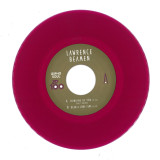
IZIPHO SOUL are incredibly proud to announce our 100th 7” single!
LAWRENCE BEAMEN - THINKING OF YOU
The unsurpassable bass-baritone voice of LAWRENCE BEAMEN originally recorded THINKING OF YOU in 2008. After years of pleas for a vinyl release; it’s finally here and sounding fresher than ever.
THE 7 REMIX courtesy of Don Turney at DKS Productions has added a magic touch and beefed up this classic even further!
Arranged and produced by Narada Michael Walden and Lawrence Beamen. Music Produced by Narada Michael Walden. Lyrics by Lawrence Beamen.
On the flip is a new recording entitled BEEN A LONG TIME - a banger of a tune, straight outta Oakland, California.
Packaged in a hole backed picture sleeve.

Most audiophiles know Alan Parsons Project's I Robot by heart. Engineered by Parsons after he performed the same duties on Pink Floyd's Dark Side of the Moon, the 1977 record reigns as a disc whose taut bass, crisp highs, clean production, and seemingly limitless dynamic range are matched only by the sensational prog-rock fare helmed by the keyboardist and his creative partner, Eric Woolfson. Not surprisingly, it's been issued myriad times. Can it be improved? Relish Mobile Fidelity's stupendous UltraDisc One-Step 180g 33RPM box set and the question becomes moot.
Mastered from the original master tapes and pressed at RTI on MoFi SuperVinyl, I Robot comes to life with reference-setting realism on this numbered, limited-edition reissue. Boasting immaculate highs and lows, generous spaciousness, and see-through transparency that takes you into the studio with Parsons and Woolfson at Abbey Road, this definitive edition is designed to demonstrate the full-range capabilities of the world's best stereo systems while offering listeners the convenience of having all the music on one LP.
Featuring a nearly inaudible noise floor, this transcendent UD1S edition functions as a repeat invitation to savor reference-grade soundstages, immersive smoothness, sought-after instrumental separation, three-dimensional imaging, and consummate tonal balances. Able to be played back at high volumes without compromise or fatigue, it is a demonstration record for the ages – the likes of which are no longer being made. This is the very reason you own and invest in high-end audio gear.
The special characteristics of this UD1S version extend to the premium packaging. Housed in an elegant slipcase, the reissue features special foil-stamped jackets and faithful-to-the-original graphics. Aurally and visually, it is made for discerning listeners who prize sound quality and production, and who desire to fully immerse themselves in everything about this conceptual landmark. The Alan Parsons Project's most famous record deserves nothing less.
Inspired by and loosely based around the Isaac Asimov stories of the same name, I Robot delves into themes of artificial intelligence and technological dominance that make the record extremely relevant in the 21st century. Indeed, Parsons and Woolfson's pinnacle creation dovetailed with the ascendency of Star Wars, which itself is experiencing a rebirth in an age of self-driving cars, smart devices, and mindless automation. Lyrically, songs such as "The Voice" call into question human behavior – and their relationship to increasing robotic supremacy – in everyday life. Parsons and Woolfson reflect the associated paranoia, dichotomy, and transformation via shifting sci-fi arrangements steeped in drama and moodiness.
The absorbing tunes on I Robot also continue to fascinate due to their perfectionism and innovation. Borrowing from Pink Floyd's strategies, Parsons and Woolfson utilize a looped sequence on the title track to create new downbeats. "Some Other Time" employs two different lead vocalists and yet gives the illusion that only one is involved. Captivating strings, a piccolo trumpet, and bona fide pipe organ grace "Don't Let It Show." The origins of "Nucleus" stem from a unique analog keyboard concoction dubbed "the Projectron," devised by Parsons and electronic engineer Keith Johnson. Andrew Powell's orchestral and choral arrangements top it all off, with "Total Eclipse" arriving as a frightening track that presages the climactic "Genesis Ch. 1 V. 32."
Does man or machine win in the end? Decide as you get lost in Mobile Fidelity's UltraDisc 180g 33RPM LP pressing. Secure your numbered copy today!
More About Mobile Fidelity UltraDisc One-Step and Why It Is Superior
Mobile Fidelity Sound Lab's UltraDisc One-Step (UD1S) technique bypasses generational losses inherent to the traditional three-step plating process by removing two steps: the production of father and mother plates, which are created to yield numerous stampers from each lacquer that is cut. For UD1S plating, stampers (also called "converts") are made directly from the lacquers. Since each lacquer yields only one stamper, multiple lacquers need to be cut. Mobile Fidelity's UD1S process produces a final LP with the lowest-possible noise floor. The removal of two steps of the plating process also reveals musical details and dynamics that would otherwise be lost due to the standard multi-step process. With UD1S, every aspect of vinyl production is optimized to produce the best-sounding vinyl album available today.
MoFi SuperVinyl
Developed by NEOTECH and RTI, MoFi SuperVinyl is the most exacting-to-specification vinyl compound ever devised. Analogue lovers have never seen (or heard) anything like it. Extraordinarily expensive and extremely painstaking to produce, the special proprietary compound addresses two specific areas of improvement: noise floor reduction and enhanced groove definition. The vinyl composition features a new carbonless dye (hold the disc up to the light and see) and produces the world's quietest surfaces. This high-definition formula also allows for the creation of cleaner grooves that are indistinguishable from the original lacquer. MoFi SuperVinyl provides the closest approximation of what the label's engineers hear in the mastering lab.

Of the countless accolades and analyses that surround Blue, no point is more significant than the fact that the 1971 Joni Mitchell album continues to become more popular, revered, referenced, and relevant with each passing day. Such vitality is not only extremely singular; it is the ultimate measure of great art and, in the context of Blue, indisputable proof of the record's accessibility, integrity, and timelessness. If the most brilliant and everlasting music seeks to find truths shared by all of humanity, Blue can be said to be universal doctrine.
Sourced from the original analogue master tapes, pressed on MoFi SuperVinyl, and strictly limited to 12,000 numbered copies, Mobile Fidelity's UltraDisc One-Step 180g 45RPM 2LP box set presents the landmark album with reference-grade detail, tonality, and directness. Marking the first time the beloved LP has received audiophile-quality treatment, it's one of six iconic 1970s Mitchell records Mobile Fidelity is reissuing on definitive-sounding vinyl and SACD sets.
Everything about Blue sounds more intimate, involving, and inescapable on this transparent pressing, which benefits from a virtually non-existent noise floor and superior groove definition. Mitchell's voice, positioned front and center, and primarily accompanied by minimalist acoustic guitar, piano, and dulcimer playing, comes across clearly and prominently. Suspended notes and radiant chords double as question marks, commas, and phrases. The in-the-room presence and spatial dimensionality make absolute the full-range spectrum of introspective emotions — hurt and distress, self-awareness and joy, difficulty and uncertainty, warmth and desire — Mitchell navigates, queries, and contemplates throughout the record. The defencelessness the singer once spoke about is laid bare here like never before.
The packaging of the Blue UD1S set complements its distinguished status. Housed in a deluxe box, both LPs come in special foil-stamped jackets with faithful-to-the-original graphics that illuminate the splendor of the recording. This UD1S reissue exists as a curatorial artifact for listeners who prize sound quality and production, and who desire to engage themselves in everything involved with the album, including the unforgettable cover photograph of a ruminative Mitchell shot by Tim Considine.
Deemed the third Greatest Album of All Time by Rolling Stone; universally celebrated by critics, fans, artists, and educators; and defined by a spell of disarmingly vulnerable songs that are at once confessional, intense, spare, honest, painful, hopeful, and exquisite, Blue charts love, spiritualism, independence, and loss like no record before or since. Widely considered the album that established the singer-songwriter template, the largely autobiographical LP changed everything shortly after its original release in June 1971. Amazingly, it continues to do so more than five decades later.
An incalculable influence on generations of artists, it stands as the through-line from Carole King, Elton John, James Taylor, Joan Armatrading, and Leonard Cohen to Patti Smith, Carly Simon, Emmylou Harris, and Rosanne Cash to 21st century contemporaries like Brandi Carlile, Taylor Swift, Sharon Van Etten, and Courtney Barnett. Teetering between agony and optimism, it is — to borrow a phrase from Mitchell's eternal "A Case of You" — a bottomless "box of paints."
The beauty of the stripped-down arrangements, intoxicating melodies, and Mitchell's wisdom on Blue didn't go unnoticed. Critical acclaim, coupled with the depth of the material and Mitchell's reputation, propelled the album into the Top 20 in the U.S. and Top 10 in the U.K. Yet while so much pop music diminishes with age, Blue has defied norms and headed in the opposite direction. Its 50th anniversary year witnessed an outpouring of tributes, reflections, and testimonials that helped frame the record's escalating importance and symbolism — apt in an age in which women have become the prominent trailblazers in rock, R&B, and hip-hop.
Perhaps most succinctly, in a 2021 article celebrating the LP, the Los Angeles Times declared: "In 1971, nothing sounded like Joni Mitchell's Blue. 50 years later, it's still a miracle." Nothing, indeed. Yet "miracle" suggests Blue partially owes to a divine agent or inexplicable circumstance. And though Mitchell's bracing conviction and forthright sincerity can appear otherworldly, her musical approach and lyrical storytelling is nothing if not personal and human. What we hear is pure truth — no matter how aching, complicated, or stark.
Much has been written about the circumstances that inspired the songs on Blue: Mitchell's romances; her time overseas; her disdain for celebrity; her lingering sense of loss at having given up her daughter for adoption; her treatment by the very same industry that her music made uncomfortable; her prolonged search for resolution. These situations and experiences pushed Mitchell to question everything — especially big-picture concepts that have always obsessed mankind: fulfilment, autonomy, love, honesty, being.
"I wanna make you feel free," Mitchell sings on the record-opening "All I Want." Mission accomplished. Blue is liberation — and the start of a freedom that continues to impact music, culture, and identity today.
More About Mobile Fidelity UltraDisc One-Step and Why It Is Superior
Mobile Fidelity Sound Lab's UltraDisc One-Step (UD1S) technique bypasses generational losses inherent to the traditional three-step plating process by removing two steps: the production of father and mother plates, which are created to yield numerous stampers from each lacquer that is cut. For UD1S plating, stampers (also called "converts") are made directly from the lacquers. Since each lacquer yields only one stamper, multiple lacquers need to be cut. Mobile Fidelity's UD1S process produces a final LP with the lowest-possible noise floor. The removal of two steps of the plating process also reveals musical details and dynamics that would otherwise be lost due to the standard multi-step process. With UD1S, every aspect of vinyl production is optimized to produce the best-sounding vinyl album available today.

Stix Records, a sub-label of Favorite Recordings, presents the 3rd release from its new Mellow Reggae Series project. Following two stunning covers of Bobby Caldwell and Player alongside label mates Ethel Lindsey, Mato is now taking over the famous hit by Sylvia Striplin, this time inviting his longtime friend and singing partner, Lady Gatica.
Produced by Roy Ayers in the early 80s , “You Can’t Turn Me Away” belong to this kind of title recognized by everyone, while Sylvia Striplin remains a name known by just a few. Like always, Mato production skills perfectly fits with the original and his Reggae rendition sounds like coming out straight from Kingston.
While with her long experience singing Soul, Funk and Disco, Lady Gatica is also a perfect match for the vocals. Starting his reggae production career in 2006, Thomas Blanchot (aka Mato) has released music through various projects on EDR Records, Big Singles or Makasound... In the meantime, he developed a real trademark: taking over classic French, Hip-Hop, OST, Classical or Pop songs, into roots reggae-dub new versions. His 15 years collaboration with Stix Records and label honcho Pascal Rioux gave life to many masterpieces and the story seems far from the end…

Some artists embrace their success by repeating the steps that originally granted them fame. Billy Joel did the opposite, refusing to be contained by prescribed approaches or constrained by a given label. The follow-up to the breakthrough The Stranger, 52nd Street further expands on its predecessor's bold production techniques and inventive arrangements, incorporating more sophisticated textures as well as reflecting a jazz edge gleaned from New York City's thriving club scene.
A key piece of Mobile Fidelity's Billy Joel catalogue restoration series, 52nd Street is here sourced from the original master tapes and pressed on 45RPM 180g LP at RTI. The wider and deeper grooves – as well as the meticulous mastering – yield resplendent dynamics, broad soundstages, three-dimensional perspectives, and tonal balances absent from prior editions. This is how you want to experience the 1978 LP that captured the Grammy Award for Album of the Year.
Teaming again with producer Phil Ramone, Joel capitalizes on his momentum, churning out another direct-sounding affair replete with captivating melodic devices, showmanship accents, and penetrating lyrics. The singer's concision and focus is evident via the tune's lengths, with only "Until the Night" breaking the six-minute mark. Hit singles "Big Shot" and "My Life" rattle forth with an urgency and intensity that Joel had not previously demonstrated, the combination of passionate deliveries, snide overtones, and insistent grooves setting the table for what follows.
Broadening his palette, and drawing from New York's thriving jazz club scene and the city's late-70s grit, Joel splashes Latin and jazz colours on several pieces, employing veterans such as Dave Grusin and Freddie Hubbard to contribute along with a cast that includes a team of background vocalists and horn players. Everything is tastefully appointed, and yet the vocalist's trademark Broadway gaze and knack for the grand gesture coincide with the straight-ahead swagger.
52nd Street is one of the main reasons why Joel has always been championed for consistency. Everything here, from the production to the stand-up songs, helped redefine mainstream pop-rock. Decades later, it's finally available in fidelity that nears that of the Columbia Records' master tapes produced right on 52nd Street.

Ankommen - bei sich und in der Welt, trotz aller Widrigkeiten. Das vierte Studioalbum von Benne ist ein packendes Werk an Eindringlichkeit und Empfindungskraft.
Manchmal schreibst du nicht ein Album. Sondern das Album schreibt dich. Umstände ändern sich. Das Leben wechselt die Richtung und nichts mehr scheint wie zuvor. Was tun, wenn deine Welt zusammenfällt - und im neuen Normal noch so viel Krise steckt?
Das vierte Studioalbum "Zuhause" von BENNE handelt von Wandlungen in Zeiten von Widrigkeiten. Es geht dem Gefühl nach, heimisch zu werden. Ein Zuhause zu finden, in sich selbst und in der Welt. Trotz aller Widerstände, die das Leben bereithält.
Es erzählt von Menschen, die uns bewohnen. Auch wenn sie nicht mehr bei uns sind. Von den Versuchen und Versuchungen, die zwischen Freiheit und Verbundenheit liegen. Von schierer Freude und tief empfundenem Verlust.
"Zuhause" widmet sich dabei den Zweifeln und Ängsten, die unser Innerstes bewegen, wie auch den fast unscheinbaren Veränderungen, den feinen Haarrissen in unseren Beziehungen. Mal beobachtend, mal biografisch erzählend ist "Zuhause" das bislang persönlichste Album. Ein packendes Meisterwerk an Eindringlichkeit und Empfindungskraft.
Geprägt haben BENNE im Schaffensprozess insbesondere der Verlust der eigenen Stimme und der Tod eines nahestehenden Menschen. Jede Silbe, jeder Ton ist somit gefühlt und gelebt. Von herzzerreißenden Balladen wie "Hula Hoop" oder "Alles erlaubt" bis zu bewegenden Up-Tempo-Stücken wie "Lichtjahr" und "In the air tonight" besticht das Album durch seine musikalische Vielseitigkeit.
Dabei schimmert eine mutmachende Message durch: Die Möglichkeit, am Ende aus jeder persönlichen Tragödie einen Triumph machen zu können. Dem Leben doch ein letztes "Ja" zuzurufen. Mal lauter und nach außen dringend, mal leiser, ganz in sich gekehrt, nur zu sich selbst. Aber ein Zuhause ist immer auf dem Weg.

Violist, violinist and singer-songwriter Marla Hansen returns to Karaoke Kalk with "Salt", her second full-length album to date. Building upon the sonic palette the Berlin-based musician established with her debut "Dust" in 2020, "Salt" takes the delicate mixture of acoustic instruments such as viola, violin, piano and guitar combined with subtle electronics to the next level. The new album is both a remarkable departure and at the same time sheds a new yet reassuring light on Hansen's work and creativity. "Salt" features numerous collaborations with like-minded musicians and friends, e. g. producer and composer Simon Goff, The Notwist's drummer Andi Haberl and the renowned artist DM Stith.
The "Dust" has settled. After having recorded her solo debut of that name, in 2020 the world came to a grinding halt, leaving Marla Hansen left to her own devices in her adopted home of Berlin. For Hansen, who previously had lent her talent to many creative minds such as The National, Sufjan Stevens, The Hidden Cameras, Jay-Z and Ravi Coltrane, the collaborative aspect of writing and producing music had always played a crucial part in finding her own path as a solo artist.
"I started to explore synthesizers and electronic production myself," she remembers of the time when meeting other musicians in person was out of the question. "I am proud that I accomplished many of the electronic elements of the new album by myself, and otherwise laid the groundwork for the final electronic structures through my own experiments. I always wanted to record a 'big' record, one that has a lot of power and sound, and this one is 'bigger' than anything I have done so far."
"Salt" is big, indeed. The opener "Chains" is driven by a gliding bass line, bobbing 808 snares, deep chords and a mesmerizing chorus doubled by luscious strings, marking the beginning of a new chapter in her creative journey. A stark statement, both musically and lyrically. Meanwhile, the title track of the album is an almost abstract sounding ambient miniature, sketch-like, dark and haunting, showcasing Hansen's voice in a shy, brittle and fragile state. If This Mortal Coil/The Hope Blister were ever to record another album, these songs should be high up on the shortlist of tunes to pick. "The One Time" - a duet with Hansen's long-time friend DM Stith - gently meanders between a Philip Glass-inspired piece for chamber orchestra and a vocal ensemble performing on Top Of The Pops. In this range of styles and approaches, Hansen's vision is more present than ever.
For refining and finishing the songs, Hansen turned to Simon Goff, who produced the album and engineered much of the recording, merging Hansen's newly-found songwriting approach with the artistic delicacy which made her debut album an exceptional piece of work. Features include among others: Alice Dixon (Oriel Quartett) on cello, Kyle Resnick (The National, Beirut) on trumpet, Benjamin Lanz (The National, Beirut) on trombone and tuba, and Miles Perkin on bass. And then there is The Notwist's Andi Haberl, who "crafted perfect drum and percussion parts to move the songs wherever they needed to go, either into their driving grooves, slow-build explosions or gentle swells of feeling."
But what are songs actually about? "The themes revolve around a feeling of being trapped. Having to stay inside during the pandemic, with all the silence and stillness coming with it. Simultaneously, I was caught up in a professional situation that was not working for me, yet it required a lot of energy and time. I was thinking a lot about how to break old habits and patterns. Patterns in my life, patterns I saw my friends and loved-ones stuck in. There are a lot of ways that people can be trapped, and breaking out of that requires a lot of courage and energy - on all levels. The title 'Salt' seemed to fit, ocean themes showed up naturally in some of the songs, and I thought often about the quote: 'The cure for anything is salt water: sweat, tears or the sea.' Maybe I was just dreaming of the ocean, since it was inaccessible for the first time! But I wanted a cure for this feeling of being trapped, in a time of uncertainty and anxiety, salt as a remedy seemed to have some truth in it: sweat, tears or the sea."
Perseverance and the urge for freedom prevailed in the end. "Salt" is a bold artistic achievement, with songs as big as the biggest waves imaginable. With melodies as alluring as the most comfortable breezes. Perfect from start to finish.

Grand Canyon
the trip of a lifetime.
You're locked in beauty, the memories of the limestone, the secrets of the mountains.
When you approach them, you have the distinct impression that you're facing castles, monasteries, cities;
but they suddenly disappear, like fantastical dreams, illusions, or mirages.
You become a traveller in the land of dreams and Fata Morgana.
It's a place, where only Silence speaks.
And it was this Silence that inspired me to compose
"Melancholy".
Zbigniew Preisner

Wer sich auf den Weg nach Louisiana macht, kehrt meist nicht auf dem gleichen Weg wieder zurück. Die Songs von BROTHER DEGE atmen die schwüle Luft der sumpfigen Wälder im Mississippi-Delta und beschwören die Geister der Bayous herauf. In den Adern des für den GRAMMY Award nominierten Singer & Songwriter Dege Legg, der seine musikalische Heimat an den Kreuzwegen aus mitreißendem Rock'n'Roll, wortgewandtem American Folk und psychedelischer Glückseligkeit gefunden hat, fließt das heiße Blut seiner Heimat in Form von surrenden Slide-Gitarren, unverfälschtem Gesang und schweißgetränkter Poesie. Mit der Magie des tiefen amerikanischen Südens zieht BROTHER DEGE auf seinem sechsten Album "Aurora" die Hörer in den Banner seiner üppigen musikalischen Welt. Sein Aufstieg fand beinahe im Stillen statt und das, obwohl der Amerikaner zig Millionen Streams generiert hat und seine breite Anerkennung sogar von keinem geringeren als Quentin Tarantino honoriert wurde, der persönlich den Song "Too Old to Die Young" für eine Schlüsselsequenz in seinem Film "Django Unchained" auswählte. Die Musik von Dege Legg lässt kühne Hooks über einer Unterströmung aus bluesiger Verzerrung aufblitzen. Dabei kanalisiert er seine Liebe für die Klassiker der Siebziger und Achtziger in einer höchst individuellen Variante des Southern Rock in den Sound des 21. Jahrhunderts. Aus diesem stilistischen Nebel erwächst eine unvergleichliche Klangvision, die Alt-Americana gleichermaßen Schärfe und Gusto verleiht. Als Dege Legg im Jahr 2004 unter dem Namen BROTHER DEGE mit seinem Debütalbum "Trailerville" in der Szene des Südens aufkreuzte, war sein höchst individueller Sound bereits voll ausgeprägt. Schon der zweite Langspieler "Folk Songs of the American Longhair" brachte gleich mehrere Hymnen hervor, darunter auch "Too Old to Die Young". Dege Legg nutzte diesen Schwung, um gleich eine ganze Reihe von Fan-Favoriten zu veröffentlichen: "How To Kill A Horse" (2013), "Scorched Earth Policy" (2015) und "Farmer's Almanac" (2018). Es lässt sich nicht leugnen, dass BROTHER DEGE stark von der Musik und den Klängen des Deep South der USA beeinflusst ist, gegen die er in seiner wilden Jugend noch rebellierte. Doch obwohl seine Wurzeln stark hervortreten, übersetzt der amerikanische Gitarrist und Sänger die Songs seines neuen Meisterwerks "Aurora" noch einen Schritt weiter in die universelle Sprache des Rock'n'Roll. Aber Vorsicht: Wer sich einfach zurücklehnt, die Augen schließt und dieses wunderbare Album auf sich wirken lässt, könnte in Louisiana aufwachen!

Wer sich auf den Weg nach Louisiana macht, kehrt meist nicht auf dem gleichen Weg wieder zurück. Die Songs von BROTHER DEGE atmen die schwüle Luft der sumpfigen Wälder im Mississippi-Delta und beschwören die Geister der Bayous herauf. In den Adern des für den GRAMMY Award nominierten Singer & Songwriter Dege Legg, der seine musikalische Heimat an den Kreuzwegen aus mitreißendem Rock'n'Roll, wortgewandtem American Folk und psychedelischer Glückseligkeit gefunden hat, fließt das heiße Blut seiner Heimat in Form von surrenden Slide-Gitarren, unverfälschtem Gesang und schweißgetränkter Poesie. Mit der Magie des tiefen amerikanischen Südens zieht BROTHER DEGE auf seinem sechsten Album "Aurora" die Hörer in den Banner seiner üppigen musikalischen Welt. Sein Aufstieg fand beinahe im Stillen statt und das, obwohl der Amerikaner zig Millionen Streams generiert hat und seine breite Anerkennung sogar von keinem geringeren als Quentin Tarantino honoriert wurde, der persönlich den Song "Too Old to Die Young" für eine Schlüsselsequenz in seinem Film "Django Unchained" auswählte. Die Musik von Dege Legg lässt kühne Hooks über einer Unterströmung aus bluesiger Verzerrung aufblitzen. Dabei kanalisiert er seine Liebe für die Klassiker der Siebziger und Achtziger in einer höchst individuellen Variante des Southern Rock in den Sound des 21. Jahrhunderts. Aus diesem stilistischen Nebel erwächst eine unvergleichliche Klangvision, die Alt-Americana gleichermaßen Schärfe und Gusto verleiht. Als Dege Legg im Jahr 2004 unter dem Namen BROTHER DEGE mit seinem Debütalbum "Trailerville" in der Szene des Südens aufkreuzte, war sein höchst individueller Sound bereits voll ausgeprägt. Schon der zweite Langspieler "Folk Songs of the American Longhair" brachte gleich mehrere Hymnen hervor, darunter auch "Too Old to Die Young". Dege Legg nutzte diesen Schwung, um gleich eine ganze Reihe von Fan-Favoriten zu veröffentlichen: "How To Kill A Horse" (2013), "Scorched Earth Policy" (2015) und "Farmer's Almanac" (2018). Es lässt sich nicht leugnen, dass BROTHER DEGE stark von der Musik und den Klängen des Deep South der USA beeinflusst ist, gegen die er in seiner wilden Jugend noch rebellierte. Doch obwohl seine Wurzeln stark hervortreten, übersetzt der amerikanische Gitarrist und Sänger die Songs seines neuen Meisterwerks "Aurora" noch einen Schritt weiter in die universelle Sprache des Rock'n'Roll. Aber Vorsicht: Wer sich einfach zurücklehnt, die Augen schließt und dieses wunderbare Album auf sich wirken lässt, könnte in Louisiana aufwachen!

Debut 7” from Dave Guy. Member of The Roots, El Michels Affair, Menahan Street Band, The Dap Kings, The Budos Band. Produced by Homer Steinweiss & Nick Movshon.
Big Crown Records is proud to present the debut offering from the newest artist to join the label, the man on trumpet, Dave Guy. Dave is a long time friend, collaborator, and contributor to a boatload of songs on the label and far beyond it.
A member of The Roots, The Dap Kings, and The Budos Band, he has lent his talents to the music of everyone from Amy Winehouse & Lizzo to Lee Fields & Charles Bradley. Now Dave steps to the front of the stage with a debut record that could have only come from a seasoned veteran. Teaming up in the studio with fellow long time collaborators Homer Steinweiss & Nick Movshon, who handle the production as well as play on the recordings, the set of songs on this 7" are telling of what's to come.
Side A, "Footwork" is a Latin inspired tune that gets you up from the intro drum fill and is sure to soundtrack many a dancefloor from Soho to Harlem and far beyond the city that inspired it. Dave's trumpet lines are infectious, something about his playing walks the line of jazz and vocal arrangement. The choruses are moving, the verses are gorgeous, the backing band couldn't be sharper as they push the tune down the tracks making this an instant classic. Side B, "Morning Glory" is drenched in swag. The trumpet line repeats to great effect over the walking beat and the arrangement takes you through all the changes while staying entirely in the groove. It is easy to draw comparisons to 70s soundtrack music a la Marvin Gaye's Trouble Man but Dave's music is clearly contemporary pulling the best influences from the past and pushing them forward.

