Seven Steps to Heaven arrived at a crucial junction in Miles Davis' career. Recorded at two separate locations in spring 1963, it served as Davis' first release in more than a year – a layoff that was then unprecedented for the jazz visionary who had issued at least one LP a year since debuting in the early '50s. Equally notable, Seven Steps to Heaven marks the point at which the core of Davis' Second Great Quintet started to assemble. The twice Grammy-nominated effort is also Davis' final studio record to blend standards with originals. And it happens to be one of the expressive, well-played albums in the jazz canon.
Sourced from the original master tapes, pressed at RTI, and housed in a Stoughton gatefold jacket, Mobile Fidelity's 180g SuperVinyl LP of Seven Steps to Heaven adds yet another step (or more) towards the bliss suggested by the album title. Playing with standout clarity, detail, tone, and balance, this audiophile reissue pulls back the curtain on the instrumentalists. Afforded the tremendous advantages of SuperVinyl – including a nearly inaudible noise floor, dead-quiet surfaces, and superb groove definition – this numbered-edition version presents Davis and Co. amid a wide, deep soundstage whose dimensions and solidity help bring the record's historical importance and musical merit into focus. Warm, organic, and present, the SuperVinyl LP of Seven Steps to Heaven is what great-sounding hi-fi is all about.
And there's nary a passage on this 1963 landmark that isn't great. That Davis manages to make it feel so cohesive and seamless is a testament to the inspired performances and engaging compositions. Davis didn't draw it up the way it unfolded. No matter. He held trump cards that stayed up his sleeve for the next three decades: A drive to be nothing less than superb, a refusal to settle for mediocrity, and standards to which nearly no other composer or player could match. "The toughest critic I got, and the only one I worry about, is myself," Davis wrote in the liner notes. "The music has to get past me."
Davis' demanding approach partly explains why he switched up his band between the first and second sessions – and underscores how fast his mind was racing with new ideas. Seven Steps to Heaven acts as the stable bridge between the transitional period that followed the dissolution of his First Great Quintet and formation of the Second; without it, Davis perhaps doesn't invite then-23-year-old Herbie Hancock and a still-teenage Tony Williams into the fold. The trumpeter not only got his men – he preserved in amber for the only time (well, magnetic tape anyway) the chemistry and vibe he achieved with pianist Victor Feldman, drummer Frank Butler, tenor saxophonist George Coleman, and bassist Ron Carter.
That line-up gels for half of the six songs on Seven Steps to Heaven. Captured in Los Angeles April '63, the quintet stretches out on a luxurious reading of the late '20s New Orleans staple "Basin Street Blues"; lays on the romance for a candlelit stroll through the '40s standard "I Fall in Love Too Easily"; and explores the rounded contours and melodic crevices of the early blues "Baby Won't You Please Come Home." The performances are refined, elegant, emotional; the band lets the feelings linger and gives the listener time to absorb the colours and textures.
A month later, Davis returned to New York City with Coleman and Carter, and partnered them with Hancock and Williams. Tellingly, the quintet tried its collective hand at the title track and "Joshua" – Feldman-penned songs already recorded in Los Angeles – as well as the yearning "So Near, So Far." Those are the tunes that comprise the other piece of Seven Steps to Heaven, with the revised quintet's liquid pulse, articulate dynamics, and timing shifts a harbinger of things to come.
It's also worth mentioning that the interpretations of the bounding "Seven Steps to Heaven" – a showcase for Davis' trumpet – and interlocking "Joshua" netted considerable radio airplay and attracted the attention of other contemporaries who covered the songs. Keeping Carter and Williams as the rhythmic engine, and Hancock as the anchor between solo flights and structural motifs, Davis would soon soon welcome Wayne Shorter into the family and transform jazz. Again. The aptly – and, in hindsight, perhaps prophetically titled Seven Steps to Heaven – is how he got there.
Cerca:d quin
Recorded August, 1965, Copenhagen, Denmark.
Original LP issue: OKTAV – OKLP 111
Sahib Shihab (Edmund Gregory) played with many of jazz’s finest musicians. Shortly after he became one of the first jazz players to change their names due to an Islamic conversion, he joined Thelonious Monk for his Blue Note sessions. He also played with Art Blakey, Dizzy Gillespie, Oscar Pettiforn and Quincy Jones. A unique musician, he was at home in every musical style, from the experimentalism of Thelonious Monk to the more direct hard bop of Art Blakey. Sahib Shihab’s distinctive sound was rooted in his modernist compositions and arrangements, complemented by an intense, soulful playing style.
In 1959 he toured Europe with Quincy Jones after getting fed up with racial politics in USA and ultimately settled in Scandinavia. He worked for Copenhagen Polytechnic and wrote scores for television, cinema and theatre. He remained there until 1973. During this period, he recorded several albums as leader for European labels such as Vogue, Storyville and Futura.
In 1961 he joined The Kenny Clarke-Francy Boland Big Band and remained a key figure in the band for the 12 years it ran. He married a Danish lady and raised a family in Europe, although he remained a conscious African-American still sensitive to racial issues.
This record, on the Danish Oktav label, his second as a leader and also his rarest is a true masterpiece !!!
- Louis Armstrong- - When You're Smiling
- Aretha Franklin- - God Bless The Child
- Chet Baker- - I Fall In Love Too Easily
- Chris Connor- - Lullaby Of Birdland
- Ella Fitzgerald- - My Funny Valentine
- Julie London- - Cry Me A River
- Lena Horne- - Stormy Weather
- Esther Phillips- - Release Me
- Billie Holiday- - Blue Moon
- Doris Day- - Keep Smilin', Keep Laughin', Be Happy
- Nat King Cole- - Unforgettable
- Peggy Lee- - Black Coffee
- Della Reese- - Whatever Lola Wants
- Harry Belafonte- - Day O (The Banana Boat Song)
- Frank Sinatra- - The Lady Is A Tramp
- Etta James- - At Last
- Nina Simone- - Stomping At The Savoy
- Dinah Washington- - Mad About The Boy
- Anita O'day- - Sing, Sing, Sing
- The Dave Brubeck Quartet With Carmen Mcrae- - Take Five
- Sarah Vaughan- - All Of Me
- Dakota Staton- - The Song Is Ended
- Miles Davis- - Ascenseur Pour L'échafaud (Générique)
- Duke Ellington, John Coltrane- - In A Sentimental Mood
- Dean Martin- - You're Nobody Till Somebody Loves You
- Charles Mingus- - Boogie Stop Shuffle
- 4: Thelonious Monk- - Monk's Dream
- John Coltrane- - Giant Steps
- Quincy Jones- - Soul Bossa Nova
- Dizzy Gillespie- - Manteca
- Charlie Parker- - Ko Ko
- Gerry Mulligan, Stan Getz- - Anything Goes
- Count Basie Orchestra- - Whirly Bird
- Sidney Bechet- - Twelfth Street Rag
- Bud Powell- - Parisian Thoroughfare
- Erroll Garner- - You Are My Sunshine
- The Horace Silver Trio- - Opus De Funk
- Herbie Hancock- - Watermelon Man
- Django Reinhardt, Quintette Du Hot Club De France- - Mi
- The Bobby Timmons Trio- - This Here
- A1: Leroy Burgess - Nothing Stays The Same (Two Soul Fusion Remix)
- B1: Tony Touch - Apaga La Laz (Pablo Fierro Afro Latino Remix)
- B2: Leroy Burgess - Nothing Stays The Same (Two Soul Fusion Dub)
- C1: Two Soul Fusion - Lovin' (Two Soul Fusion Dub)
- D1: Louie Vega & Johnny Dangerous - You Are A Star
- E1: Bebe Winans - Let's Go Champ (Two Soul Fusion Piano Dub)
- F1: Elements Of Life - Let Us Shine Ft. Josh Milan (Louie Vega Mix)
- F2: Louie Vega - Where I Wanna Be (Demo)
- G1: Louie Vega - Swayin' Demo Ft. Axel Tosca
- H1: Two Soul Fusion - Brazillian Soul Fusion
- I1: Professor Ft. Ndu Shezi & Thebe Vs Luis Radio, Pietro Nicosia - Unobenga Vs Sermon Of The Drums (Ken Terry Rework)
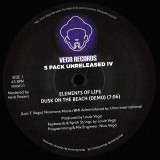
- J1: Elements Of Life - Dusk On The Beach (Demo)
V[57,77 €]
Fall is here after all the summer maddness with festivals, mediterranean tours and Ibiza residencies, it full on vinyl releases for Vega Records. Introducing the 5 Pack Unreleased IV edition, Vega Records takes another step into the world of unreleased music from the Vega Family. Gems from Leroy Burgess, Two Soul fusion, Tony Touch, Professor Featuring Ndu Shezi & Thebe, Johnny Dangerous, and gospel royalty Bebe Winans to Elements Of Life Demos and songs in the making all come together on this special 5 piece vinyl set. With 12 tracks in the sequence there are a select number of talented producers on the project which include Two Soul Fusion AKA Louie Vega & Josh Milan, Pablo Fierro, Johnny Dangerous, Luis Radio, Pietro Nicosia and musicians Axel Tosca and Luisito Quintero. They all contribute to these unique pieces of music mastered by the one and only who we call “The Quincy Jones Of Mastering” Mr. Herb Powers of PM Mastering and the vinyl manufactured by Optimal, Germany. With a limited number of copies made make sure you get your hands on them, they will be rare and very fast!!! Vega Records “always bringing you top quality music” !! Distributed by Above Board, UK.
Following an inspiring moment during a back-to-back live appearance at Fool’s Gold Presents: A-Trak & Friends in Oasis Wynwood during this year's Miami Music Week, The Magician and long-time friend A-Trak have collaborated on the captivating new single 'Love On You' (ft. Griff Clawson).
The Magician - known for his seminal Magic Tapes compilation series - heads up Potion Records and is a veteran of high-profile collaborations with Kolombo and Samaran, amongst many more. He has a mystic touch and spellbinding sound full of emotion and has taken it to places like Ushuaia Ibiza, Tomorrowland, and CRSSD festival in San Diego while also holding down his influential residency at Elsewhere Brooklyn. Here, he works with A-Trak, a.k.a. Alain Macklovitch, a legendary talent on the decks, president of Fool's Gold Records and a quintessential cultural connector. His 25-year career has seen him take turns as an internationally renowned DJ and World Champion turntablist, as well as being one half of the Grammy-nominated duo Duck Sauce and The Brothers Macklovitch, all of which have meant he continues to reshape the very role of the DJ as tastemaker and storyteller.
Their sublime 'Love On You' (ft. Griff Clawson) is an uplifting dance track that radiates positive vibrations. The rhythm section is married to tender piano chords and plenty of subtle synth details that bring it to life. The standout feature is the well-treated vocal that sounds fresh and futuristic but comes laden with a bittersweet sense of emotion that hooks you in and is sure to be sung back by vast crowds worldwide.
Support from: Purple Disco Machine, Junior Sanchez, Feenixpawl, Swanky Tunes, Olugbenga, ROOG (Hardsoul), Mr. Belt & Wezol, Judge Jules, Sugarstarr, Keanu Silva, Dots Per Inch, DJ Phantasy, Micha Moor, Patric La Funk, Borgore, Don Diablo, Claptone.
We Release Jazz is sooooo happy to announce the release of a very limited edition double LP for Boillat Thérace Quintet’s 1974 Montreux Jazz Festival performance, with 3 bonus studio tracks! This gem from the Geneva, Switzerland band follows the acclaimed WRJ reissue of their self-titled album (1974) and My Greatest Love (1975), their full-length with Benny Bailey. The 300-copies-only white sleeved DLP comes with the classic obi and features fully remastered audiophile-ready recordings.
Captured live at Montreux Jazz Festival, July 3rd 1974, this rare audio treat features Boillat Thérace Quintet fan-favorites including their infamous homages to Swiss Marmite ("Cenovis"), and Geneva's public transport line Tram 12 ("1224"), as well as remarkable renditions of timeless jazz numbers by Freddie Hubbard ("Straight Life" and "Backlash") and Chick Corea ("Spain").
Additionally, the double LP offers 3 bonus songs taken from the ensemble’s sessions for their self-titled debut: superb takes on Herbie Hancock’s "Dolphin Dance", Wayne Shorter’s "Adam’s Apple", and Claude Engel’s "5th of July, Dulong Street".
All in all it’s a beautiful soul-jazz/modal fest full of flair and heart, one that perfectly encapsulates the vibrant and inventive Swiss jazz scene of the 1970s. A must have for fans and collectors.
This new album from We Release Jazz follows the label’s celebrated releases of the Ryo Fukui catalogue (Scenery, Mellow Dream, A Letter from Slowboat, Ryo Fukui in New York, My Favorite Tune), Hiroshi Suzuki’s seminal Cat album, and Le Cercle Rouge soundtrack by Eric Demarsan among other jazz wonders.
Harp – das gemeinsame Projekt von Tim Smith (ehemaliger Sänger und Songwriter von Midlake) und seiner Frau Kathi Zung – kündigen ihr Debütalbum "Albion" (via Bella Union) an.
"Es ist nicht das Ziel, es ist die Reise", schrieb schon der amerikanische Philosoph Ralph Waldo Emerson. Doch bei Smith scheint das Gegenteil der Fall zu sein. Der Weg zu "Albion" mag lang und kurvenreich gewesen sein, und holprig obendrein, aber die Musik, die Harp geschaffen hat, ist voller schöner Melodien, Dramatik und Details. Die zehn Songs und zwei zur Stimmung passende Instrumentals werden umrahmt von akustischen und elektrischen Gitarren, sanften Keyboardtönen und Smiths besonderer Stimme; mit anderen Worten, die Quintessenz dessen, was die Leute in erster Linie zu seiner Arbeit mit Midlake hingezogen hat.
Auf dem neuen Album ist alles jedoch in etwas dunkleren Tönen gehalten. Es sind Lieder über den Zustand des Menschen, von verlorener und gefundener Liebe, von Angst bis Freude, von Furcht bis Akzeptanz, alles in eine sehr eigene poetischen Sprache verpackt. "Albion" wurde von Smith größtenteils allein zu Hause aufgenommen, mit Gastbeiträgen des ehemaligen Midlake-Bassisten Paul Alexander bei "Silver Wings" und "Throne Of Amber", E-Gitarren von Max Kinghorn-Mills von der Band
2023 repress on Translucent Purple double vinyl! A Brand You Can Trust is the classic 2009 debut album from hip-hop supergroup La Coka Nostra feturing House of Pain's Everlast alongside Danny Boy & DJ Lethal with Ill Bill (Non Phixion), and Slaine (Special Teamz). Additional contributions come from such hip hop elite as Snoop Dogg, Cypress Hill, Immortal Technique, Bun B and The Alchemist. A breath of fresh air in the days of contrived airbrushed rap music, Ill Bill explained that, "This record is a no holds barred burst of hardcore hip-hop to the fullest, representing everything we love about this art form but feel is missing from the game right now." "This shit bangs," Slaine added. "We set out to make a boom bap hip-hop record and we did that, but to stop there would be selling it short, because lyrically, musically, and sonically this album doesn't fit in a box." Though similar stylistically to the group's prior 2009 online releases, the debut album features songs grounded more in reality. Subjects touched upon include politics, death, drug addiction, raising a child and terrorism. AllMusic gave four out of five stars. Andrew Kameka of HipHopDX wrote that "the album is a mostly solid effort and exactly what someone would expect from a supergroup of like-minded members known for high-energy music". Adam Kennedy of the BBC while praising some the moments of the album said "it's a tantalising parting taste of potential capabilities, yet until they improve a customer satisfaction hit rate that barely troubles one in three tunes here". Steve Juon of RapReviews gave it a seven out of ten. Thomas Quinlan of Exclaim! said "La Coka Nostra are an interesting collection of collaborators that live up to the hype".
These 4 records reissued for the first time, with so rare and rich contents from 1970's Japanese Jazz which is gathering attention globally, were released on Terumasa Hino private label "LOVE RECORDS" and distributed by Japanese major label.
Representing "Ode to workman" from "J Jazz : Deep Modern Jazz From Japan 1969-1984" released on BBE, in his session with local N.Y. musicians, these 4 records are so important pieces in 1970's independent Jazz !
In 1970, after breaking up his legendary quintet band, Terumasa Hino moved his base to U.S.
This record shows his great effort in his long-term session with the local musicians, and is very important to know Jazz scene in New York at that time.
With Steve Grossman, Dave Liebman, and Dave Holland, Terumasa Hino produced avant-garde and creative sound that is one and only in the world.
Those familiar with the sound and style of the DIY scene in Chicago's Logan Square may be surprised to find out that it was the birthplace of psych pop quintet Lucille Furs. They are a little surprised themselves.
At the time it wasn't exactly the place to hear harmonies and harpsichords so much as songs about sniffing glue. This isn't to say they didn't like the raucous power of Magik Milk, on the contrary. But, as the people who would come to make up the band began to talk, it became clear that they wanted to make something different entirely. They wanted to make something with the heartbeat of sweaty city basement shows but with the unrestrained imagination of places and times where they had never been.
Bassist Patrick Tsotsos will tell you about the music of post-war Greece where his grandparents grew up. Guitarist Nick Dehmlow will tell you about the garage bands of LA. Drummer Brendan Peleo-Lazar can fill you in on a late 60s London studio session as though he was running the tape machine. Mellotron/organ player Constantine Hastalis can show you a record by some long-forgotten folk singer who writes so earnestly you won't forgive the world for forgetting it. Singer Trevor Newton Pritchett is unapologetic about what they borrow. "You might hear the Zombies for their kind of haunting and contemplative quality, the Kinks kind-of casual criticism, the West Coast Pop Art Experimental Band for their distant romantic quality, Temples, Love, Diane Coffee, Charles Bradley or our Chicago people Post Animal, Jude Shuma and Whitney." Now that half of the band is located in Los Angeles you'll be likely to hear those influences, too.
And that's what becomes crystal clear when listening to the upcoming album Another Land. It's an immersive listen, the kind of record you can get lost in on a cross-country drive from the midwest to the west coast. A record with warm blood running through its veins. Music where thought can be abandoned.
The whole record is dressed up in surreal and esoteric terms, in exchange for being topical. Think Dylan lyrics from the late 60s. "Paint Euphrosyne Blue" is kind of a meta-level example of that. The song is a reference to the goddess of mirth, about the human need to adapt to the point of becoming unoriginal. It's about chasing Van Gogh's depression because it makes you feel like a better painter.
The album was written through September 2017 and was recorded following the release of the self-titled Lucille Furs album later that year. It was recorded direct to tape before being completed at Treehouse Records in Chicago.
For fans of: The Kinks, The Zombies, Love, West Coast Pop Art Experimental Band, The Byrds, The Beatles, Foxygen, Triptides, Temples, Mystic Braves, Levitation Room
Those familiar with the sound and style of the DIY scene in Chicago's Logan Square may be surprised to find out that it was the birthplace of psych pop quintet Lucille Furs. They are a little surprised themselves.
At the time it wasn't exactly the place to hear harmonies and harpsichords so much as songs about sniffing glue. This isn't to say they didn't like the raucous power of Magik Milk, on the contrary. But, as the people who would come to make up the band began to talk, it became clear that they wanted to make something different entirely. They wanted to make something with the heartbeat of sweaty city basement shows but with the unrestrained imagination of places and times where they had never been.
Bassist Patrick Tsotsos will tell you about the music of post-war Greece where his grandparents grew up. Guitarist Nick Dehmlow will tell you about the garage bands of LA. Drummer Brendan Peleo-Lazar can fill you in on a late 60s London studio session as though he was running the tape machine. Mellotron/organ player Constantine Hastalis can show you a record by some long-forgotten folk singer who writes so earnestly you won't forgive the world for forgetting it. Singer Trevor Newton Pritchett is unapologetic about what they borrow. "You might hear the Zombies for their kind of haunting and contemplative quality, the Kinks kind-of casual criticism, the West Coast Pop Art Experimental Band for their distant romantic quality, Temples, Love, Diane Coffee, Charles Bradley or our Chicago people Post Animal, Jude Shuma and Whitney." Now that half of the band is located in Los Angeles you'll be likely to hear those influences, too.
And that's what becomes crystal clear when listening to the upcoming album Another Land. It's an immersive listen, the kind of record you can get lost in on a cross-country drive from the midwest to the west coast. A record with warm blood running through its veins. Music where thought can be abandoned.
The whole record is dressed up in surreal and esoteric terms, in exchange for being topical. Think Dylan lyrics from the late 60s. "Paint Euphrosyne Blue" is kind of a meta-level example of that. The song is a reference to the goddess of mirth, about the human need to adapt to the point of becoming unoriginal. It's about chasing Van Gogh's depression because it makes you feel like a better painter.
The album was written through September 2017 and was recorded following the release of the self-titled Lucille Furs album later that year. It was recorded direct to tape before being completed at Treehouse Records in Chicago.
For fans of: The Kinks, The Zombies, Love, West Coast Pop Art Experimental Band, The Byrds, The Beatles, Foxygen, Triptides, Temples, Mystic Braves, Levitation Room
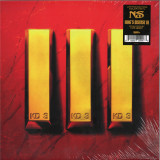
As the third installment of Nas and Hit-Boy's GRAMMY Award winning King’s Disease series, King’s Disease III is Nas' latest album, and marks the duo's highly anticipated return since 2021's surprise LP, Magic. Executive produced by Nas and Hit-Boy, the album finds the rap legend at his best, flowing effortlessly over signature punchy beats including "Legit," "Michael & Quincy," and "30" among others. "With ‘King’s Disease III’, the New York rapper has put the seal on a strong album trilogy that proves that, three decades in, he’s still a force to be reckoned with." - NME 2LP pressed on Ruby Red & Black Striped color vinyl, packaged in an upgraded, glossy gatefold jacket with 12x24 printed insert.
There’s a big clue to the pacific wisdom of The Orchestra in the Sky in the artist name – Hochzeitskapelle + Japanese Friends. For this is, indeed, music based in, and resonating with, friendship, camaraderie, collaboration, and creative exchange. Across two albums – one documenting recordings from Tokyo, the other an expansive double album of sessions from Kobe – Hochzeitskapelle gather around them some of the finest voices in Japanese independent and underground pop music, like Tenniscoats, Eddie Marcon, Yuko Ikema, and Kama Aina, and explore an open field of music, full of creative encounters.
You may already know Hochzeitskapelle as the German instrumental quintet formed by members of The Notwist, Alien Ensemble, and friends from the jazz scene. Across three albums, one a collaboration with Kama Aina (2018’s Wayfaring Suite), they’ve developed a way of playing together that’s intimate and playful, rich and human; it’s a music that’s deliberately rough around the edges, and that nestles cosily into the everyday. Their relationship with Japanese indie has developed over the years, doubtless encouraged by Saya´s „Minna Miteru“, compilations series of Japanese indie pop for Morr Music. A peripatetic gang, Hochzeitskapelle also recently backed Japanese singer-songwriter Makoto Kawamoto on her new album, Hikari.
In many ways, The Orchestra in the Sky feels like the culmination of a set of ongoing cross-cultural exchanges: the Minna Miteru compilations; tours of Japan by Hochzeitskapelle and The Notwist; and indeed, Markus Acher’s Spirit Fest group with Saya and Ueno of Tenniscoats. The latter are present throughout much of The Orchestra in the Sky, and Saya’s voice is particularly winning on songs like “Tsuki no oto”, where the two outfits are joined by brass ensemble Zayaendo. There are several lovely turns from singer-songwriter Yuko Ikema, and Eddie Marcon appear twice; their songs are still beautiful, spectral acid folk, but with Hochzeitskapelle filling the details with lush, sad brass and strings.
But it’s also the potentially lesser-known names that shine through The Orchestra in the Sky, like the frail folk of Gratin Carnival; the delightful, gentle pop songs by sekifu and Zayaendo member, Kanako Numata; a trio of beautiful, stumble-drunk melodies played in swaying consort with popo. That group, along with the presence of Zayaendo, Fuigo, and Mitamurakandadan?, make strong connections with the Japanese underground’s love of brass bands, partly informed by the tradition of chindon’ya, marching bands that walk the streets of Japanese cities. They also all appeared on the recent Alien Parade Japan compilation of such groups, assembled by Acher and Saya.
All things converge, then, on The Orchestra in the Sky, a smart, spirited collection of heavenly pop songs, intimate folk melodies, lungfuls of joyous brass, deep weeping strings, and swooning sighs. The last words go to Acher himself: “Many things we did in the last years come together here and it feels like something special was captured.” We hope you like what you hear.
- A1: Garden Of Peace - Hochzeitskapelle, Tenniscoats
- A2: Higasa Amagasa -Hochzeitskapelle, Gratin Carnival
- A3: Itsuno Manika Watashitachi - Hochzeitskapelle, Eddie Marcon
- A4: Kaze No Uta - Hochzeitskapelle, Tenniscoats
- B1: Kitakana St March - Hochzeitskapelle, Satomi Endo
- B2: Kuroganemochi - Hochzeitskapelle, Eddie Marcon
- B3: Poisong - Hochzeitskapelle, Tenniscoats
- C1: Big Park - Hochzeitskapelle, Kanako Numata
- C2: Unknown Street - Hochzeitskapelle, Gratin Carnival
- C3: Miracle Happy - Hochzeitskapelle, Mitamurakandadan?
- C4: Dep - Hochzeitskapelle, Popo
- C5: Gold Rush - Hochzeitskapelle, Popo
- D1: Boat - Hochzeitskapelle, Popo
- D2: Ashioto - Hochzeitskapelle, Kanako Numata
- D3: When The Wind Blows, The Bucket Maker Gains - Hochzeitskapelle, Satomi Endo
- D4: Coppepan - Hochzeitskapelle, Mitamurakandadan
There’s a big clue to the pacific wisdom of The Orchestra in the Sky in the artist name – Hochzeitskapelle + Japanese Friends. For this is, indeed, music based in, and resonating with, friendship, camaraderie, collaboration, and creative exchange. Across two albums – one documenting recordings from Tokyo, the other an expansive double album of sessions from Kobe – Hochzeitskapelle gather around them some of the finest voices in Japanese independent and underground pop music, like Tenniscoats, Eddie Marcon, Yuko Ikema, and Kama Aina, and explore an open field of music, full of creative encounters.
You may already know Hochzeitskapelle as the German instrumental quintet formed by members of The Notwist, Alien Ensemble, and friends from the jazz scene. Across three albums, one a collaboration with Kama Aina (2018’s Wayfaring Suite), they’ve developed a way of playing together that’s intimate and playful, rich and human; it’s a music that’s deliberately rough around the edges, and that nestles cosily into the everyday. Their relationship with Japanese indie has developed over the years, doubtless encouraged by Saya´s „Minna Miteru“, compilations series of Japanese indie pop for Morr Music. A peripatetic gang, Hochzeitskapelle also recently backed Japanese singer-songwriter Makoto Kawamoto on her new album, Hikari.
In many ways, The Orchestra in the Sky feels like the culmination of a set of ongoing cross-cultural exchanges: the Minna Miteru compilations; tours of Japan by Hochzeitskapelle and The Notwist; and indeed, Markus Acher’s Spirit Fest group with Saya and Ueno of Tenniscoats. The latter are present throughout much of The Orchestra in the Sky, and Saya’s voice is particularly winning on songs like “Tsuki no oto”, where the two outfits are joined by brass ensemble Zayaendo. There are several lovely turns from singer-songwriter Yuko Ikema, and Eddie Marcon appear twice; their songs are still beautiful, spectral acid folk, but with Hochzeitskapelle filling the details with lush, sad brass and strings.
But it’s also the potentially lesser-known names that shine through The Orchestra in the Sky, like the frail folk of Gratin Carnival; the delightful, gentle pop songs by sekifu and Zayaendo member, Kanako Numata; a trio of beautiful, stumble-drunk melodies played in swaying consort with popo. That group, along with the presence of Zayaendo, Fuigo, and Mitamurakandadan?, make strong connections with the Japanese underground’s love of brass bands, partly informed by the tradition of chindon’ya, marching bands that walk the streets of Japanese cities. They also all appeared on the recent Alien Parade Japan compilation of such groups, assembled by Acher and Saya.
All things converge, then, on The Orchestra in the Sky, a smart, spirited collection of heavenly pop songs, intimate folk melodies, lungfuls of joyous brass, deep weeping strings, and swooning sighs. The last words go to Acher himself: “Many things we did in the last years come together here and it feels like something special was captured.” We hope you like what you hear.
Die Symphonic Metal-Piraten VISIONS OF ATLANTIS begeben sich erneut auf hohe See! Nachdem sie sich auf ihrem letzten Studioalbum Pirates so selbstbewusst wie nie zuvor präsentiert hatten und damit die Top 20 der deutschen Albumcharts erreicht haben, folgte im Frühjahr ihr fulminantes drittes LiveAlbum Pirates Over Wacken sowie ausgiebige Tourneen durch die USA und Europa. Aber nun gönnt sich das internationale Quintett keine Pause, sondern veröffentlicht am 1.
Dezember 2023 eine exklusive rein orchestrale Version ihres Erfolgalbums Pirates, das unter dem Titel A Pirate’s Symphony über Napalm Records erscheinen wird. Die Band lädt die Zuhörer ein, mit ihnen auf eine Reise durch faszinierende Klanglandschaften zu gehen, aber dieses Mal ohne Gesang, ohne Schlagzeug und sogar ohne Gitarren.
Das Quintett lässt die symphonische Schönheit der Musik für sich selbst sprechen und präsentiert damit erneut eine andere Seite der Band, die stark an Filmmusik erinnert. Die exzellenten Orchestrierungen wurden sorgfältig von Lukas Knoebel erstellt und können nun ganz für sich selbst stehen.
This modern jazz summit meeting in Toronto has been called "the greatest jazz concert ever." We owe the survival of the music to Charles Mingus, who, along with Max Roach, taped the concert and subsequently issued it on his own new Debut label. There was tension between the giants before, during, and after the concert. Bird arrived without a horn and had to borrow a plastic alto (he made it sound like gold). The hall was three-quarters empty (the promoters had overlooked the coinciding heavyweight championship match between Marciano and Walcott). But the true heavyweights were onstage, and the results have been knocking out the world of jazz ever since.
Filled with aural magic and enchanting musical spells, Sorcerer is true to its name. The third of five albums devised by Miles Davis' legendary second quintet – and the second record in a still-unprecedented string of eight consecutive releases within a four-year period that forever changed the face of jazz – the 1967 magnum opus mesmerizes with instrumental colours, subdued musings, and subtle details.
This is a reference-standard reissue. You'll hear poetic lyricism pouring out of Wayne Shorter's horn, the breadth and definition of the notes spreading across an enormous soundstage. Never before have drummer Tony Williams' rim shots ricocheted with such purpose or his light percussive work mirrored that of a feather touching skin. Similarly, Herbie Hancock's piano runs now occupy their own space, where their relationship to the central rhythms and front line becomes clearer.
Prizing inflection and nuance more so than heady solos or uptempo flights, Sorcerer mesmerizes with cerebral properties and cascades of emotional interplay. Such beauty emerges in the mellow ballad "Pee Wee," an indelible statement of restrained authority and sophisticated expression. The swirling title track unfolds as jazz shadowplay, Hancock, Shorter, and Williams mirroring one another's moves with guile and purpose. The opening "Prince of Darkness" showcases the ensemble's reach and communication, every musician going in seemingly different directions yet ending up on the same page
A lasting example of Davis' visionary insight, Sorcerer is comprised entirely of pieces written by his band mates. Indeed, save for the closing "Nothing Like You" – a brief tribute to Davis' eventual wife, who also graces the cover, recorded in 1962 and adorned with vocals from Bob Dorough, the album represents a further maturation and refinement of a quintet that stands as one of the finest in jazz history.
First time on vinyl!
Newly remastered. LP housed in a gatefold jacket.
Featuring Herbie Hancock, Martha Reeves, Alphonse Mouzon, Chuck Rainey, Patryce “Choc’let” Banks, Carlos Morales, and members of The Pointer Sisters.
In the 1970s, Betty Davis defied genre and gender by pushing her voice to extremes and embracing the erotic. She articulated a kind of pre-punk, funk-blues fusion that had yet to be normalized in mainstream music – a style that few musicians have come close to replicating. As one of the first Black women to write, arrange, and produce her own albums, Betty was a visionary who disregarded industry boundaries and constraints. Raw, unapologetic and in full control, Betty paved the way for generations of future artists who said “funk you” to the music industry and social norms.
In 1979, when Davis entered an L.A. studio to record her fifth and final album, she was reeling from a series of setbacks. Three years earlier, after recording her fourth album, Is It Love Or Desire, Davis was dropped from her label and the LP was subsequently shelved. In 1978, her beloved band Funk House went their separate ways. Looking for a fresh start, Davis relocated to Hollywood to focus on songwriting. Before long, British manager Simon Lait (Toni Basil), offered to fund her next project.
With renewed vigor, Davis reunited with former Funk House guitarist Carlos Morales and brought together industry veterans like fusion drummer Alphonse Mouzon and session bassist Chuck Rainey. Old friends Anita and Bonnie Pointer (The Pointer Sisters) and Patryce “Choc’let” Banks joined Davis on vocals, as did Motown legend Martha Reeves. The resulting album, Crashin’ From Passion, was her most musically diverse, blending elements of reggae and calypso (“I’ve Danced Before”), jazz (“Hangin’ Out in Hollywood,” “Tell Me a Few Things”), dark synth-pop (“She’s a Woman”), and even disco (“All I Do Is Think of You”). Equally exploratory are Davis’ vocals, as she trades in her signature sass and snarls for more nuanced stylings.
Among the album’s few funk tracks is “Quintessence of Hip,” in which Davis hails musicians like Bob Dylan, Billie Holiday, Stevie Wonder, and John Coltrane, while deftly integrating elements of their work. The song also offers a moment of stark vulnerability, as she sings, “Isn’t rich? Isn’t it queer? Losing my timing so late in my career.” It would prove to be a prophetic line in the months to follow.
The mixing process was mired by artistic differences and then cut short, amid the death of Davis’ beloved father. Bereft and exasperated, Davis returned home for the funeral, setting into motion her retirement from the music industry. Crashin’ From Passion, meanwhile, would be shelved for 15 years and licensed for a CD-only release, without Davis’ consent, in the ‘90s. This 2023 edition of the album, made with Davis’ full approval and cooperation, marks its first official release and first time ever on vinyl. The package was designed by GRAMMY®-winning artist, Masaki Koike, while the album cover features an incredible shot of Betty captured in London in the mid-1970s by renowned photographer Kate Simon.
Crashin’ From Passion was remastered by Dave Cooley at Elysian Masters and pressed on vinyl at Record Technology, Inc. (RTI). The accompanying booklet includes a treasure trove of rare photos from the era, plus lyrics, and new liner notes by writer, ethnomusicologist, and Betty’s close friend, Danielle Maggio, who integrates interviews that she conducted with Davis, marking her last ever interviews.