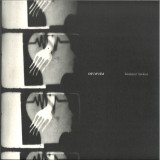
Edition of 200 hand-numbered records, each housed in a custom Rosy womb French paper jacket with letterpress + a unique hand-cut found photo memory fragment on each cover with newsprint insert. Every copy has a different cover.
An archival release by short-lived post-punk, Brooklyn duo Möthersky. Xander Hing, with South African origins, vocals and guitar on Side A, bass + vocals on Side B. Richard Vergez, visual artist and Noir Age label owner, fuzz bass + drums on Side A and guitar + synths + drums on Side B. Played the Nothing Changes party in 2013. Shared bills with acts such as Cindytalk, Black Rain, Eric Random, Das Ding, and Drew McDowall.
Reviewed in The Wire magazine:
First single by this Brooklyn based duo named after the classic track on Can's Soundtracks LP. Their basic approach remains bottom-heavy in the vein of early Factory and 4AD units, but the guitar angles up top have gotten more slithery. Far less doom-ridden than their earlier work, this still stirs up dark waters aplenty. And it has a lovely package of which I think Peter Saville would approve."
-Byron Coley, The Wire
quête:d savi
Unleash the groove with this rare jam – a Street Funk remix of a legendary track from one of hip-hop’s most iconic voices and his powerhouse Flipmode Squad. Known for delivering countless hits and unforgettable anthems, this collective has once again blessed the decks with something truly special. Previously unreleased on 7” vinyl, this DJ-friendly edit is a treasure for any serious DJ and collector.
The pressing quality is simply mesmerizing, built with clubs and dancefloors in mind. From bouncing beats to fluid basslines, from uplifting keyboard chords to soulful vocals and razor-sharp rap verses – it’s got all the ingredients of a certified smash. Whether you're setting the tone or saving a set, this 7” is a go-to weapon for DJs worldwide. There’s not a problem this squad can’t fix and for sure this 7” will save a DJs life every night…
A long-lost masterpiece of Yugoslavian jazz-funk and disco finally returns! Originally released in 1979 on the iconic Jugoton label, YU Disko Expres by Igor Savin and Orkestar Stanka Selaka is a rare gem—an electrifying fusion of jazz, funk, electronic music, and traditional folk elements. Decades ahead of its time, this album remains a strikingly modern and danceable exploration of sound, seamlessly blending synthesizers with tight horn arrangements and deep, infectious grooves.
Igor Savin, one of Croatia’s most respected composers and pioneers of electronic music, was a driving force in blending contemporary jazz with emerging electronic sounds. A classically trained musician with a deep love for jazz, he left a lasting mark on the region’s music scene, working across film, TV, and avant-garde composition.
Backed by an all-star ensemble featuring some of Yugoslavia’s finest musicians—trumpeter Stanko Selak, bassist Miljenko Prohaska, drummer Silvije Glojnarić, saxophonist Stjepan Mihaljinec, and more—YU Disko Expres delivers an unparalleled groove that has remained a collector’s favorite for decades.
For the first time ever, this sought-after album gets an official reissue, fully remastered from the original tapes. DJs, hip-hop producers, and groove aficionados take note: YU Disko Expres is back, sounding fresher than ever. Don’t miss your chance to own a piece of Yugoslavian music history!
Definitive Edition[168,03 €]
The Perfect Kiss Single[13,66 €]
Shellshock Single[17,61 €]
Perfect Kiss Crystal Clear[18,07 €]
Peter Saville says of Sub-Culture "LABEL ONLY was specified in 1985 due to time pressure around the original release and as a consequence, a sleeve design for the re-release has no actual precedent. However, exploring the principle 'the solution is in the problem’ has led to the subliminal evocation of a sleeve that is still LABEL ONLY”.
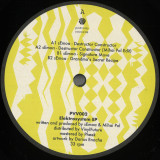
For our second release we invited Semoa who delivered an amazing blend of the minimal and electro genre. The EP includes a remix from the legendary Mihai Pol, who took the project to a whole new level.
"We gotta dance, cause it won't be long before we get lonely again.
To friends who talk in their sleep at night and the apartment next to the drugstore,
we'll go farther and farther away,
fed with the knowledge of life-saving advice."
-Stefan Baghiu
Building on the subtle beauty of her last album ‘Kassi Valazza Knows Nothing’ (???? The Times, ???? Mojo) ‘Weight Of The Wheel’, the first single off her new album ‘From Newman Street’, evokes feelings of heaviness and confusion with life’s constant cycle. Delivered with what can only be described as exquisite songwriting alongside her unmistakably tender yet warm voice that conjures up thoughts of the likes of Karen Dalton, Joni Mitchell and Sandy Denny with much of the same quiet wisdom.
Kassi Valazza returns with From Newman Street on May 2 via Loose Music. Newman Street refers to the location of a friend's house in Portland where Kassi found shelter and a safe space while navigating change in 2023. Here, she wrote most of the songs for the new record and planned her move to New Orleans, Louisiana. The 10-track set is delivered through a strikingly honest lens as Valazza ponders her willingness to accept change, finding positivity where she can. From Newman Street follows 2023's Kassi Valazza Knows Nothing, which received rave reviews from NPR Music, UNCUT, No Depression, MOJO, The Times, Holler, and more.
‘Weight Of The Wheel’, the first single from the new album, evokes feelings of heaviness and confusion with life’s constant cycle. Delivered with what can only be described as exquisite songwriting alongside her unmistakably tender yet warm voice that conjures up thoughts of the likes of Karen Dalton, Joni Mitchell and Sandy Denny with much of the same quiet wisdom.
Zuul supplies pressure control’s debut release, Routine Machine.
Following releases on Exarde and White Scar, the Laik label-head’s signature sound takes a menacing turn. In a departure from his usual output he delivers a grizzly 5 tracker filled with EBM, New Beat and Wave affined floor-fillers; all fraught with tension, straight out of the Kirkstall strip.
Fitting for peak-time, warm-ups and rub-downs, the EP is filled with snarling, left-of-centre bombs. All reminiscent of the golden-era sound forged in Frankfurt and Ghent circa 88-91, with new-school stylings for the modern day working disk-jockey.
Constructed exclusively for dark and discerning dance floors.
You can run, but you can’t hide.
Credits:
All music by Ollie Burgess
Pressing and distribution by by One Eye Witness
Design by Al Robertson
Mastering by Marco Pellegrino
Words by Josh Bayat
fabric Records has enlisted Turkish-Italian DJ and producer Carlita for the next instalment of its prestigious mix compilation series, ‘fabric presents’. Set for full release on April 11, fabric presents Carlita will showcase her meticulous curation, featuring two new original tracks.
The double vinyl sampler features eight full length tracks taken from Carlita’s mix. Her two exclusives ‘Raf’ and ‘Stop Now’ are cut to A1 and C1 respectively.
The two black vinyl plates are 140g and are packaged in black inners, inside a matt printed reverse board printed sleeve. The vinyl package accompanies the CD, digital download and streaming of fabric presents Carlita mixed compilation across all major platforms on 11th April 2025.
The announcement of Carlita’s mix arrives alongside the release of the first single, “Raf,” a collaboration with Toronto producer Andre Zimmer, out now via fabric Records. “Raf” is a high-energy fusion of classic house and rave influences, crafted with the dancefloor in mind. The track pairs infectious, soulful vocal elements with punchy synth stabs and rolling breakbeats, all anchored by a deep, groovy tech-house bassline. “Raf,” along with an additional original from Carlita, “Stop Now,” is nestled among storied house and techno juggernauts such as Butch, Alex Metric, and Paco Osuna, as well as rising underground producers Prunk, Toman, Alinka, and more.
Beyond the club and festival circuit, Carlita is a leading figure at the intersection of music and fashion. She’s been featured in British Vogue and on the cover of Vogue Italia, performed at exclusive events for Louis Vuitton, Versace, and Fendi, and curated performances featuring The Blessed Madonna and Heron Preston at her own multi-sensory Senza Fine parties. Most recently, she collaborated with Audemars Piguet to mark the release of her debut album, Sentimental.
Carlita (real name Carla Frayman) comes from a background of musical mastery, having played classical cello for the Royal Academy of Music in London in her earlier years (after learning to play piano at age 3). Since her earliest memories, Frayman has never stopped developing her musical talent, picking up more instruments, learning music theory, and after university, saving up enough money to pursue it full time. She hasn’t stopped chasing her dreams and is now playing high-profile DJ slots (check out her Cercle set at Cinecittà in Rome), and has quickly risen as a producer with her phenomenal debut album Sentimental on Ninja Tune last year, as well as remixes for Disclosure and RÜFÜS DU SOL.
Coming up, Carlita be performing at festivals and clubs in Puerto Rico, Switzerland, Germany, and many more. On April 12, celebrating her fabric presents release, Carlita will be taking over Room 2 at fabric alongside Jennifer Loveless, Tommy Gold, and Pedrose.
Credit 00 is still doing his thing with PUT THE FUNK BACK IN 2 TECHNO, saving you from the horrors of today's life with a bunch of stirring tracks to dance against oppression. On his seventh EP for Uncanny Valley the Leipzig based funkster finds solace in his craft, doing what he does best. And that is to make dance music that is both undeniably catchy and blessed with an ever-surprising range of ideas and styles. What all the tracks have in common is that they have been written by someone who is deeply committed to the roots of dance music. On top of that, he has the enviable ability to find titles that already give you a hunch of sound and message of the tracks, even before you listen to them. Be it the title track with its wild Detroit rhythms and piano sound bits or the closer YOU NEED 2 CHILL, a still highly danceable ode to 90s chill out floors. While the stomping BRAZILIAN BUTT LIFT gets use of Credit 00's own voice, the chords heavy CHURCH FOR THE RENEGADES is a perfect example of inventive use of vocal samples. All in all, it's music you pretty much can't help but love. Also, don't miss a closer look at the front and back cover, which are full of references and iconographies from the history of dance music. In typical Credit 00 style, it's a super entertaining way for the artist to give credit to a lot of his influences.
180 G. BLACK VINYL WITH LINER NOTES IN CREOLE, FRENCH, ENGLISH
Originally released in 1979, "Spiritual Sound" lives up to its name, a soaring, triumphant album, six tracks of spirit magic from Guadeloupe.
Telluric, intense, terribly alive, the gwoka drums of Guadeloupe carry the identity of a painful and fervent island. Marked forever by the crime of slavery, Guadeloupe's créolité cherishes the ka drums and their natural environment: the low-pitched boula drum with male goatskin, the high-pitched soloist makè drum with female goatskin, the chacha, ti bwa, triangle, calabash and other percussion instruments that surround them, and the voices - the fiery, proud, timbred, urgent voices of the gwoka.
This album is also a legend for its voices: in his then dazzling youth, singer Lukuber Séjor was one of the first gwoka artists to largely feminize the chorus of répondè, who converse with his text delivered in a straight and powerful voice.
And everything here sets new standards. In 1979, Mizik Filamonik - Spiritual Sound proclaimed a spiritual patriotism of ferocious intensity. The album by Lukuber Séjor - whose spelling alone is a battle - sets out to give Guadeloupe the intangible weapons of self-respect and self-knowledge, through a singular practice of traditional music.
The genesis of gwoka music is less straightforward than one might imagine... The drums performed the servile task of accompanying the work of slaves in the fields and during the “corvées” imposed by the administration, before being freely practiced by the common people after the abolition of 1848. At the heart of the conviviality of the Guadeloupeans furthest from the cities - geographically and socially - the gwoka drums come out for carnival, funeral wakes and neighborhood celebrations, but also during strikes, fits of anger and armed vigils of the riots and revolts that have punctuated the island's history. For generations, governors of the colony and then the prefects of the overseas department of Guadeloupe have been viewing the gwoka as a potential for turbulence and a threat to public order.
But as the Beatlesmania, “chanson engagée” and rock revolutions unfolded in Europe, young people turned to the drums of mizik a vié nèg (“bad negro music”, in Creole), which Guadeloupeans had learned to despise by following the “assimilation” process advocated by the school system and most of the political class. At the end of the sixties, in a Guadeloupe mourning the deadly repression of the May 1967 social movement, they played traditional music, refusing to wrap it up in tourist prettiness and madras folk costumes. Instinctively, they played a rough and contemporary gwoka, led by the incendiary Guy Konkèt. This was the era of decisive 45 rpm records such as Robert Loyson's Kann a la richès, which brought to light the fieriest words of union rallies.
At his home in Sainte-Anne, Lukuber Séjor played with flautist Olivier Vamur and his brother Claude Vamur, who cobbled together a drum kit from tin crockery and became, a few years later, the most influential drummer in Kassav'.
These were the years of the Bumidom program, when young Guadeloupeans were encouraged to emigrate to mainland France. At the age of twenty, Lukuber Séjor embarked on the liner Irpinia, disembarking at Le Havre and taking the train to the Gare Saint-Lazare - the route taken by thousands of young West Indians who went on to study or looked for work, all the while trying to maintain a link with their homeland. In this case, it's at the Antony university residence, where Lukuber played the drum and participated in a thousand gwoka updates and aggiornamentos, while exile reinforced the need for a spiritual link with the native land.
In 1978, Guy Konkèt played at the Salle Wagram, a historic event for West Indian music. After serving as répondè - i.e. backing vocalist - on one of his home-recorded albums, Lukuber joined his live band. Little by little, he became one of the key artists on a circuit parallel to French show business. At a student party in Caen, he met a young woman from Martinique who, at the time, was more motivated by her ambitions as a visual artist than by her vocation as a musician. Her name was Jocelyne Béroard and, a few years before she plunged into the Kassav' adventure and became the greatest West Indian singer of her generation, she designed the cover of Lukuber Séjor's LP.
This ambition was obvious and imposed its will. A more or less regular band was formed, with Roger Raspail, Rudy Mompière and Éric Danquin on ka drums, Claude Vamur on ti bwa, Olivier Vamur and Françoise Lancréot on flutes and Annick Noël on keyboards. Lukuber Séjor is set on wanting to extend the gwoka palette to other instruments, as the jazz-rock revolution opens a thousand new doors. Annick Noël will play a wide range of timbres and textures on electric piano and synthesizer. Another novelty: the répondè are two men and two women, Roger Raspail, Olivier Vamur, Françoise Lancréot and Maryann Mathéus ...
Mizik Filamonik - Spiritual Sound is a self-production in which the singer and leader sank all his savings, allowing him no more than a single day in the studio. The first side is more of a musical manifesto, with the first two tracks, Éritage and Penn é plézi, being instrumentals. The third, Son, forcefully celebrates the need for Guadeloupeans to connect with the gwoka. In fact, Jocelyne Béroard's cover shows a tambouyé in the shadow of a cloudy sky, against which a radiant sun is rising and whose light will soon flood the entire landscape. The silhouette and face of this man strongly evoke the immense Vélo, master of the ka, rejected at the time on the fringes of society.
The second side of the LP is surprising. Formally, three tracks are explicitly linked like the three parts of a triptych. Primyé voyaj evokes the appalling tribulation of Africans deported as slaves to Guadeloupe; dézyèm voyaj speaks of the Bumidom program and the economic, political and social forces driving young Guadeloupeans towards the mirage of prosperity in France; twazyèm voyaj closes the cycle with the emigrants' return from Europe after years away from their island...
This gwoka, obsessed with the need to save Guadeloupe spiritually, appeals far beyond the politicized audience. Mizik Filamonik - Spiritual Sound instantly became a classic, although Lukuber Séjor never really made a career for himself as a musician.
After all, the album was released in 1980, with no promotional resources in France or Guadeloupe - and therefore no concerts. The thirty-two-year-old author, composer and performer made his own third trip back to Guadeloupe. He set up a small woodworking business, which he lost in Hurricane Hugo in 1989. His other activity, teaching in a medical-educational institute, became the core of his professional life. He continued to be an active campaigner - a campaigner for the Creole language, a campaigner for the reawakening of identity, a campaigner for special education, a campaigner for a thousand causes that he ignited with his generous and perceptive enthusiasm, such as the defense of breadfruit fries...
The echoes of his 1979 album have not died down. Of course, the use of Penn é plézi as the theme tune for Radio Guadeloupe's funeral notices from 1980 to 1992 kept him in the collective memory, but he continues to sing and compose sporadically, as with his all-female
vocal group Vwapoulouéka... Still convinced that music is a means of liberating the spirit, he continues the journey of a young man eager to deploy the power of Creole music and language.
Bertrand Dicale
Oulu-based label Elektorni returns with a 12” by Swedish mastermind Daniel Savio.
The EP starts off with Noel Skum, a downtempo scorcher that creeps and crawls into your earhole and activates the body rock. Dubbed out ominous chords haunt the skies as the track squelches on. Next up Savio conjures the force of Mighty Thor to smack some sense into humanity. A classic electro banger infused with funky licks. B-side opens with No A.I, the definitive man-machine manifesto. Crunched out and ominous, an end-of-times underground resistance activator. Last track Reverse Cowgirl is a time-travelling digi-dub transmission carrying a reverberated message of caution from the Great Filter.
At the start of the 1980’s X-Plode’s dad had a second-hand colour TV business in Bolton, Lancashire where he would buy, sell, repair and trade TVs. He would come back home with all kinds of things he had traded for a TV but the most memorable, to a 10 year old kid at that time, were the keyboards. He use to watch his dad play songs from the 1960’s on these keyboards and when his dad had gone out, Lee X-Plode would sneak on them and start messing about, experimenting with the drum programs and fiddling with the buttons, trying out ideas. He had to move fast though because these keyboards didn’t stay in the house for long as his dad would trade them again for something else; one time that was an old analogue echo chamber, which Lee also messed about with when his dad was out. That echo chamber was a revelation to Lee and opened up the possibilities of what was possible with sound. So by the time Lee was 16, he decided he wanted his own keyboard and started saving. When his 17th birthday came around he had saved up £200 and visited his local Argos where he bought himself a Yamaha PSS 680, an FM synthesizer with memory banks and a basic drum machine incorporated. ‘It was shit quality like, but I didn’t mind. I just wanted it for the programmable drum machine, the synth and the memory banks that came with it” Lee recalls. The year was 1987 and by this time in Lee’s life he was into reggae and hip hop, the latter he first embraced in 1983 by the way of breakdancing and listening to electro, so all he wanted to do when he got his gear was make reggae and electro sounding beats. Recalling his youth and the fun he had with the echo chamber, the next edition to his home set up was to acquire one of those, which he did via a mate of his. But by the time he got his minimal set up sorted in 1988, his musical tastes had changed. House music had landed here in UK and this was Lee’s new passion, so from that point on wards he started experimenting, trying to nail a decent house groove. ‘I wanted 808 sounds, but I didn’t know what one was!’ Lee explains.
Around late 1990 or early 1991, Lee started to improve upon his set up, purchasing an Atari STE, a Cheetah MS6 , a 6 voice polyphonic/multi-timbre analogue rack mounted synth that linked up to his Yamaha – “It wasn’t a great bit of kit, I kept getting electric shocks from it. Eventually it just blew up!” Lee had acquired a cracked copy of Cubase on floppy disk from his local computer game shop but struggled with it. “It was so complicated to understand and took me ages to get used to it. I was stoned a lot back then and I just couldn’t concentrate on anything for long” Lee laughs, continuing “I also picked up a 4 channel sampler/sequencer which plugged into the side of the Atari and that’s when I first started sampling, I think this would have been late 1991. I had the Simon Harris ‘Breaks, Beats and Scratches’ vinyl that he put out on Music for Life which were a godsend back then. I was also sampling a lot from cassette tapes, especially reggae. I would also record the Stu Allan show on Key 103FM, one of the main stations broadcasting out of Manchester. He would do a 3 hour show with hip hop and house, and then hardcore house came along. Eventually he dropped the hip hop altogether and it was just house and hardcore. I recorded the shows onto cassette most weeks and started to learn more about how house and hardcore was put together by listening to those shows.”
(marble organe, black coloured vinyl) This ep contains 5 dancefloor fillers, produced by Belgians finest; Dj Ghost, Jamie Dill, Jan Vervloet, Danny Corten & Bestien. From techno to hard trance, all productions are made with an old school twist, the signature from the new label Don Ghost Records.
New Order are delighted to announce the release of the definitive edition of their 1985 studio album Low-Life. The collection includes an LP (180g), x2CDs, x2DVDs, a book and features unreleased rare material across the different formats and new sleeve designs.
CD 2 contains previously unreleased mixes and alternative versions, including Love Vigilantes and Sub-Culture instrumentals, Sooner Than You Think Full Length Unedited. The two DVDs include an unreleased performance from The Manhattan Club, Belgium and rarely seen footage from Rotterdam Arena (Netherlands), International Centre (Toronto, Canada) and a BBC filmed Whistle Test at The Hacienda, 1985.
The 180g vinyl LP will be wrapped in its original ‘heavyweight tracing paper’, designed by Peter Saville. In addition the CD will also be wrapped in the same way for the first time ever. Also included in the set is a beautifully presented hardback book featuring rare photos and a new interview with all band members.
Marketing to promote the release include:
• National press and radio promo campaign – reviews, features, and interviews TBC.
• Organic and promoted content from the New Order official socials and Warner Music owned socials.
• Promotion of singles pre-release with BBC 6 Music support.
• Far-reaching online advertising campaign.
LP 180g Vinyl
Side one
1. Love Vigilantes
2. The Perfect Kiss
3. This Time of Night
4. Sunrise
Side two
1. Elegia
2. Sooner Than You Think
3. Sub-Culture
4. Face Up CD1
1. Love Vigilantes
2. The Perfect Kiss
3. This Time Of Night
4. Sunrise
5. Elegia
6. Sooner Than You Think
7. Sub-Culture
8. Face Up
CD2: Extras
1. Love Vigilantes - TV Pitch Instrumental Edit (mono)
2. The Perfect Kiss - Writing Session Recording
3. Untitled no. 1 - Writing Session Recording
4. Sunrise - Instrumental Rough Mix **
5. Elegia - Full Length Version *
6. Sooner Than You Think – Album Session Unedited Version
7. Sub-Culture - Album Session Early Instrumental Version
8. Face Up - Writing Session Recording
9. Let's Go – Album Session Instrumental
10. Untitled no. 2 - Writing Session Recording
11. Sunrise - Writing Session Recording
12. Love Vigilantes - Writing Session Recording
13. Sooner Than You Think - Writing Session Recording
14. Skullcrusher – Demo
All tracks previously unreleased except * and ** (previously unreleased on CD and Digital)
DVD1
Live in Tokyo
The Koseinenkin Hall, Tokyo, Japan 1985
1. Confusion
2. Love Vigilantes
3. We All Stand
4. As It Is When It Was
5. Sub-Culture
6. Face Up
7. Sunrise
8. This Time Of Night
9. Blue Monday
Live in Rotterdam
The Rotterdam Arena, Netherlands 1985
10. As It Is When It Was
11. Everything's Gone Green*
12. Sub-Culture*
13. Ceremony*
14. Let's Go*
15. This Time Of Night*
16. The Village
17. The Perfect Kiss*
18. Age Of Consent*
19. Sunrise
20. Temptation*
21. Face Up*
Live in Manchester
Whistle Test, The Hacienda 1985
22. As It Is When It Was
23. Sunrise
24. Face Up - Restored version using available footage from The Hacienda Dec ‘85 and July ‘85.
DVD2
Live in Leuven
The Manhattan Club, Leuven, Belgium 1985
1. Let's Go*
2. The Perfect Kiss*
3. Age Of Consent*
4. State Of The Nation*
5. As It Is When It Was*
6. The Village*
7. Sub-Culture*
8. Atmosphere*
9. Blue Monday*
Bonus Tracks
10. Thieves Like Us*
11. Temptation*
12. Confusion - Restored version from damaged tape with mixing desk audio.*
Live in Toronto
Filmed by Paul Boyd
The International Centre, Toronto, Canada 1985
13. Elegia*
14. Sub-Culture*
15. The Village*
16. Sunrise*
17. We All Stand
18. As It Is When It Was*
19. Love Vigilantes*
20. 586*
21. Age Of Consent
22. Temptation
23. Ceremony*
24. The Perfect Kiss*
The Perfect Film
Rehearsal Room, Cheetham Hill, Manchester 1985
25. The Perfect Kiss
*unreleased
Tony Iommi ist ein englischer Musiker. Er war Mitbegründer der bahnbrechenden Heavy-Metal-Band Black Sabbath und war über fünf Jahrzehnte lang Gitarrist, Bandleader, Hauptkomponist und einziges ununterbrochenes Bandmitglied der Band. Er gilt als einer der Wegbereiter und Pioniere der Heavy-Metal-Musik und hat zahlreiche Subgenres des Metal inspiriert. Er gilt weithin als einer der größten Rockgitarristen aller Zeiten. Iommi hat eine Reihe von Preisen gewonnen. Dazu gehören Q Awards, Kerrang! Awards sowie drei Grammy Awards, die er als Mitglied von Black Sabbath gewonnen hat. Glenn Hughes ist ein englischer Musiker, der vor allem als Bassist und Sänger in der Hardrock-Band Trapeze und in den Mk. III- und IV-Besetzungen von Deep Purple bekannt ist. Außerdem war er Mitte der 1980er Jahre kurzzeitig Frontmann von Black Sabbath. Neben seiner Tätigkeit als aktiver Sessionmusiker verfolgt Hughes auch eine bemerkenswerte Solokarriere. Derzeit ist er Frontmann der Supergruppe Black Country Communion und war von 2013 bis 2015 Frontmann von California Breed und von 2019 bis 2023 Frontmann von The Dead Daisies. 2016 wurde Hughes als Mitglied von Deep Purple in die Rock and Roll Hall of Fame aufgenommen. Dies ist eine Neuauflage des zweiten Soloalbums des legendären Black Sabbath-Gitarristen Tony Iommi, das ursprünglich 2005 veröffentlicht wurde. Das Album enthält auch Gesang und Bassgitarre des ehemaligen Sabbath-Frontmanns Glenn Hughes. Diese Veröffentlichung enthält 3 Bonustracks.
" In 2022, Guts brought together his musical family for his ‘Estrellas’ album. An ambitious project that brought together musicians from: Franc, Cuba and various African countries. For a journey that was as rich artistically as it was humanly. The list of superlatives was almost endless, "Formidable", "incredible", "unforgettable" and "magical" all thrown into the pot, during these magical moments in the Dakar studio. From the seventeen tracks heard on the original album, three have been entrusted to the expert and inventive hands of four producers, who have come up with new interpretations bringing Africa and the Caribbean together for a modern dancefloor.
‘Por Que Ou Ka Fe Sa’ (Poirier Remix)
From his studio in Montreal, Canadian Poirier has opted for a strong groove and relentless bass drum to keep out intruders, putting vocalists David Walters and Brenda Navarrete in a rhythmic cocoon. Accompanied in a slightly moody bassline that adds some driving muscle to the track. The hooky guitar line eventually gives way to the saxophone that emerges from the mix to parade around the front line. The original electric piano is replaced by a synth pad that loops and spins driving the track to its conclusion.
‘Por Que Ou Ka Fe Sa’ (David Walters Remix)
Before recording this track, David Walters and Brenda Navarette didn't even know each other. So in the magic of the moment that brought them together is a genuine and sincere artistic bond. It is no longer Guts but David who is at the musical helm, and before they too can savour the connection between the two artists, the dancers will have to pass through an overheated corridor where a Caribbean rhythm resonates with percussion. Digital and woodwind swirl and clash until the vocal encounter with the artists. It's a moment of respite that's as suspended as it is life-saving, because the exit is also via the famous corridor.
‘San Lazaro’ (Bosq Remix)
On Bosq’s mix, he’s opted to maintain things focused on the dancefloor, keeping the percussion persistent for the unleashed bodies of the dancers to smile. It's once again the walking bass line rises to the forefront of the groove, softening the shocks of the relentless kick drum. Roberto Valdes's timeless piano has disappeared, while guitars float and add to the atmosphere. The track is no longer awash in cigar smoke. Under Akemis's powerful vocals the low ceiling has disappeared, and the open roof is more a brass-lit spectacle. That doesn't make things any less overheated though, this one is sweaty until the end.
‘Medewui’ (Captain Planet Remix)
Captain Planet brings the dancer’s attention to the Afrobeat flavored jam that rocked the original, highlighting the Pat Kalla & Assane Mboup duet. Despite the track remaining mid tempo, laying back is no longer the order of the day as this mix really develops. The drums are more present jolting along with the organ in the first half. Once all the storytellers have taken their microphones, the rhythmic beats are doubled and the track is carried towards a frenzy of Afro-Latin dancing. Fired up by the brass and percussion, it’s this almost switch up that takes hold of the second part of the tune, with some righteous authority and relentless piano and trumpet."
The rarest and best genuinely outsider soul 45 to come out of America (I know that's a controversial shout), Lee Tracy's super rare single outing from the outskirts of Nashville is a dream of something bigger that never came in time for him. A beautiful, haunting song cut to cassette with help from his friend Isaac Manning (on the Casio). Flipped with an almost unrecognizable version of Whitney Houston's hit "Saving All My Love For You" which stands all tall as what was the original B-Side. Beyond essential cut of outside soul.
- A1: I Swear, I Really Wanted To Make A "Rap" Album But This Is Literally The Way The Wind Blew Me This Time 12 20
- B1: The Slang Word P(*)Ssy Rolls Off The Tongue With Far Better Ease Than The Proper Word Vagina Do You Agree? 13 50
- C1: That Night In Hawaii When I Turned Into A Panther And Started Making These Low Register Purring Tones That I Couldn't Control .. Sh¥T Was Wild 10 29
- D1: Buypolodisorder's Daughter Wears A 3000® Shirt Embroidered 13 06
- D2: Ninety Three 'Til Infinity And Beyoncé 3 49
- E1: Ghandi, Dalai Lama, Your Lord & Savior J C. / Bundy, Jeffrey Dahmer, And John Wayne Gacy 10 15
- E2: Ants To You, Gods To Who ? 6 42
- F1: Dreams Once Buried Beneath The Dungeon Floor Slowly Sprout Into Undying Gardens 17 11
Mit "New Blue Sun" veröffentlicht André 3000 ein unerwartetes, rein instrumentales Album, auf dem Andre Flöte spielt und von anderen talentierten Musikern begleitet wird. Auf dem von Andre 3000 und dem Multiinstrumentalisten Carlos Niño koproduzierten Album "New Blue Sun" spielen Nate Mercereau, Surya Botofasina, Deantoni Parks, Diego Gaeta, Matthewdavid, V.C.R., Diego Gaeta, Jesse Peterson und Mia Doi Todd.
Diese limitierte 3-LP-Vinylauflage ist auf 180 g schweres schwarzes Vinyl gepresst und verfügt über ein ausklappbares Poster, bedruckte Innenhüllen und eine Notiz des Künstlers.
Six years on, O$VMV$M mark the return to NoCorner for their first 12” on the label, with a six tracker (available with a special zine) entitled Weekend Saviour.
Musically, the record traverses that noir-ish, bass-centric atmosphere of their early output with the first three cuts, before switching up into an oddball dancehall trajectory on Side B, all whilst playfully hinting at a paradoxical world where nothing can be taken too seriously and fun must be had in order to maintain some sanity.
The final track, ‘Codzilla Outro’ is not really an Outro as such, it feels like the start of the best film you’ve never seen – or heard. Or maybe the film was called Weekend Saviour and you’ve just watched it? Either way, the imagery is definitely strong with this music, even with eyes closed.