First Word Records are thrilled to announce a brand new addition to the label - LA beatmaker and producer 14KT.
Known for his deft, soulful hip hop production, KT has broadened his palate for his FW debut to create 'For My Sanity', the first offering from his jazz-influenced project IAMABEENIE.
The album will be released in early 2019, but we couldn't wait that long to share this taster of what 14KT created as a form of escaping from his "normal" ways of making music. Case in point: the first single taken from the project - 'The Power of Same' feat. Muhsinah.
Strongly rooted in KT's spiritual practice, 'The Power of Same' is a bass and synth-heavy ode to consistency and unconditional love, laced nicely together by his signature drum lines, harmonious guitar riffs (played on the track by Stro Elliot) and the unmistakable sound of James Poyser (The Roots). Vocal powerhouse Muhsinah adds layers of emotion via her endearing delivery of the core message, and, deep in the background you can hear KT sharing a very personal routine with us all - giving thanks to God.
How much of a personal project this is, in 14KT's words "This was inspired by a bible study plan I was reading called The Power of Same. It spoke about the power of being consistent in our lives. I thought about how consistently God's love and my family's love have gotten me through my journey of life. Once I made a "skeleton" of the song, I reached out to the brother James Poyser who I was extremely blessed to work with. My brother Stro Elliot was living right down the street from me at the time. One night he walked over to my house, I played the record for him, he picked up my electric guitar and played the first thing that came to mind - which was perfect. I played the record for my brother Tall Black Guy, who suggested I reach out to Muhsinah to add vocals. I sent the record to her and two days later she sent me exactly what you hear. Amazing. That was definitely the spirit of God working. Huge shout out to my Playlist family. Love y'all."
To date, 14KT has released seven solo albums, as well as his collaborative hip hop album, 'Takin' Ls' with emcee Ozay Moore, R&B/soul album, 'Saturn Return' with singer/songwriter AB, and 'The Big Knock', together with Mayer Hawthorne as Jaded Incorporated.
Last year saw another duo collaboration album with Michigan rapper Ro Spit, entitled 'RSXGLD', a project held in high regard by the global hip hop community.14KT is also part of Jazzy Jeff's Playlist Retreat, alongside our very own Eric Lau, Tall Black Guy and Kaidi Tatham, who also turns out an unmistakably dope remix on this 7" single.
A very warm welcome to the family, KT!
'The Power Of Same' is available on 7" and all digital platforms on March 1st 2019.
Search:d saw
Chemistry between individuals is an amorphous and elusive notion. It is usually seen as something that occurs between two people who are sharing a physical space, with access to each other's body language and energy. However, modern technology has provided many other opportunities for chemistry to blossom and be explored and this record is just one example of that: Vent is proud to present Kina, a double LP of musical collaborations between MAYa and Tolga Baklacioglu.
Tolga Baklacioglu is an associate professor in aeronautical engineering. He is also a musician. For several years, he has been steadily building a body of work that explores the outer boundaries where techno and abstract textures merge and blur. In 2014, Tolga created a label, VENT, as a platform for his explorations and those of likeminded travelers within this sonic realm.
MAYa Hardinge works in film. She is also a musician. She has collaborated with numerous artists. Beginning in 2008, She released 4 EPs under her solo guise MAYa. Considering her background in film, it comes as no surprise that her work has a strong visual element. Pre- dating Beyonce´'s Lemonade by many years, her last two EPs were visual albums made in
collaboration with various directors.
It makes total sense that MAYa and Tolga should have made an album together. Their interests and backgrounds overlap and diverge meaningfully in a way that has all the hallmarks of good musical chemistry. There is however one unusual element to their collaboration: they have never met. Tolga lives in Eskisehir (Turkey) and MAYa lives in New York City.
Always on the look out for inspiration and new collaborators, Tolga stumbled across MAYa's videos online. What he saw and heard inspired him to reach out and contact her. After some correspondence they decided to experiment with the prospect of making music together. Perhaps deprived of the traditional notions of chemistry defined by proximity, they found inspiration across time and space in the name of exploration and discovery. Tolga began by sending MAYa files of beats and ambiance. Upon finding the ones that spoke to her, MAYa went to work disassembling, adding, subtracting and rearranging. MAYa's work would then go back to Tolga, a world away, for further input and then back again. In this way each track was painstakingly constructed and a true chemistry was born. One built on sensitivity, support and honest artistic communication. In a word: LISTENING.
The songs cover a broad spectrum of topics, from the deeply personal feelings and experiences, to world events, and the fundamental aspects of life and death. Kina is a document of two artists from different backgrounds and their shared visions of the interplay
between one's private microcosm and the global macrocosm of our time; a testament to the fact that, for all its vastness and diversity, this world offers inspiration and potential collaboration around every corner. The music contained within has traveled around the world many times before reaching your ears. As MAYa and Tolga have done before, it is now your turn to LISTEN.
There are some elements in electronic music that make them timeless, elements that if melted together they can give an impressive result, to the mind and to the body. Sawlin - Ursprung is the first album of the career of Sawlin, after his debut in 2010 he evolved like a wonderful orchid, an orchid that never followed the flow of the other flowers around him, but found his own way to the music. Ursprung is the result of an interminable evolution in the mind of the artist, 8 elements that complete a circle built on a very mysterious atmosphere, like a film that you never saw, but you always had in your head, something more bigger then a memory, and something more deep then a picture. This 8 elements are the blueprint of the work that comes from the background of the artist, Deep raw imaginary pictures, mixed with oldschool wallpapers of a new wall based on an old concrete. Sawlin Mix the new to the old in a way that no-one can do, and probably no-one risked to do. This is the power of an artist that needs more attention and more time, you can feel at the first listening that there is something really big going on, but you need time to understand what he wanted to create, meticulous details that he wanted to paint, in a way that we cannot see them at first, but we find them quite impressive after. Sawlin present himself in the most modern way he can, no compromises, he don't want to please you, he want to paint the future. in the most Artistic way possible.
- A1: Ikarie Xb-1
- A2: Surveillance On Standby-Alpha Centauri
- A3: A Small Stone In Space
- A4: Sunflower For A New Star
- A5: The Backwoods Of The Universe
- A6: Silver Ball (Vera In Cameo)
- A7: E.v.a. Will Teach You
- B1: The Tigers Breath
- B2: The Dark Star
- B3: Do Not Eat The Fruit
- B4: The Awakening
- B5: Voyage To The End (Of The Universe)
- B6: The White Planet
Liška, the Czechoslovakian word for fox. Beguiling in its beauty, cunning in it's charm. Said to be one of the most intelligent animals on the planet its global family consists of thirty-seven varieties; all of them recognised, respected and feared for their persuasive, creative, resourceful and elusive nature. The Liška we will talk about today is no exception to these hereditary rules and within the grooves of this record Finders Keepers present an 'elusive' musical artefact that best exemplifies every facet of this composer's animal namesake.
Had he not been born in the small Bohemian town of Smecno in the early 1920s the story of The Fantastic Mr. Liška might have well taken a different course. Alternatively, fettered by the hampers of communism, this lifelong resident of Czechoslovakia would never quite find his seat at the same table as the likes of John Barry, Ennio Morricone, Michael Nyman and Stanley Myers, nor drop enough phonographic breadcrumbs to track his legacy. But having waited patiently behind the borders of the wider landscapes of international cinema, Liška's musical brood, spanning multiple stylistic decades and generations, has now started to walk proudly amongst his would-be, latter-day compeers. In an era where music lovers have almost become immune to adjectives like 'lost', 'rare' and 'unreleased' in a climate where previously lesser-known off-kilter master composers such as Vannier, Kirchin and Axelrod have become widely revered, it is perhaps the perfect time for discerning listeners to advance above the feeding trough and seek out this truly pioneering and revolutionary Eastern European composer. Rivalled only by the likes of Krzysztof Komeda and Andrzej Korzynski in Poland, alongside Alexandr Gradsky in Russia, and often splitting workloads with fellow Czech composers like Luboš Fišer, Zdenek Liska's filmography of over almost 300 fully formed movie scores virtually eclipses the achievements of these socialist era luminaries. Respected unanimously in both Czech and Slovakian by studio bosses, producers, directors and actors alike Liška is widely known for his ability to take the existing energy in a reel of film and literally change the polarity to suit his own interpretation while maintaining the full support from his 'client' who would in-turn end up working under this composer's creative direction. Not only was Liška a genius of emotive orchestral and coral composition, his grasp on small group arrangements and intimate, minimal scores set him above the competition. By utilising primitive sample techniques by 'looping' a films existing ambient noise, or rearranging found sounds and dialog into subtle melodic arrangements, Liška would independently develop his own techniques which had simultaneously become known in Paris as musique concre`te. It is a direct extension of these experiments that saw Liška also draw parallels with Walter Branchi (Ennio Morricone's main electronic sidekick) in Italy as well as Daphne Oram in the UK, making Liška a relatively untravelled pioneer of early electronic composition and sound design due to his unlikely global environment. Imprisoned, preserved or reserved; time has been kind to Liška's music.
A mythical and misplaced masterpiece of lost soft rock and acidic folk funk by a one-hit wonderer lost in the wilderness for four decades. From the producer of Margo Guryan, writer behind Wool, Gerry Mulligan collaborator, Tarantino soundtracker and Wendy & Bonnie confidant, Paint A Lady now emerges from folkloric obscurity, to bring a wash of soft psychedelic colour to your vinyl collection and quench the repeat requests of a thirsty new found audience waiting for the rain.
Within certain record collecting circles, especially those who gather under the umbrella that covers fragile niches like 'acid folk' and 'soft rock', it's difficult to imagine a time when the legendary Susan Christie album didn't exist. When Finders Keepers Records first shared the unheard 60's songs like Paint A Lady, For The Love Of A Soldier and Echoes In Your Mind with a wide-eyed audience thirsty for organic soul and festival friendly acoustic funk, Susan's new found fan base instantly felt like they had known these songs all of their lives, and with a single needle drop we saw the birth of what could rightfully be described as an 'instant classic'. Which is why it's hard to believe that the music on this lost 60s acetate was only pressed 12 years ago. As our lucky seventh release in an international discography that now surpasses the 100 mark (and one of a small clutch of English language recordings on the label) Paint A Lady has slowly become one of our most requested re-releases, and with this 2018 edition it is technically accurate to say that this pressing is the first-ever reissue of this elusive and essential LP.
The oft over used term mythical applies to this album on many levels. Perhaps it's the woozy nostalgia found within the pop craft of Paint A Lady that has led to false rumours that original 1960's copies used to exist on the collectors market, or the bizarre claim that songs like the head-nodding title track, and the acid-drenched sound effects on Yesterday Where's My Mind were just a product of a contemporary studio band trying to create a fake folk funk red herring. As a result Susan Christie and her producer and husband of 40 years, John Hill have happily taken the repeat phrase 'unbelievable' as a compliment to their songwriting skills and foresight. In all fairness, with a decade to ponder, the original 1969 song titles alone do seem custom-built for the nostalgia market... No One Can Hear You Cry might lament the unrequited yearning for a record deal which never quite followed Susan's won one-hit wonder novelty hit I Love Onions; similarly When Love Comes might allude to the subsequent 35 year wait for the right label to eventually come along. Echoes In Your Mind and the aforementioned Yesterday... could easily allude to the haunting melodies that sat in the can on John Hill's studio shelf while his projects for Margo Guryan, Wool and Pacific Gas & Electric sat proudly in record racks before benefitting successful French cover versions or making their way on to Quentin Tarantino soundtracks. The track Paint A lady itself, complete with it's future-proofed sample-worthy rhythm section, seems like the perfect title for a mock rock pseudo psych contender - at which point you eventually step back and see the bigger picture. These guys were simply one drop too far ahead of their time; a family force of experimental pop perfection that late 60's America simply wasn't ready for. It is just over 12 years since champion record rustler Keith D'Arcy (who you'll meet on the inside sleeve) stumbled upon one of the original acetates that led to the final release of Paint A Lady, and it's almost a longer 50 years since Susan and John added their final touches to these recordings which tragically went into hibernation for over four decades.
Whether this album has been on your wish-list for what seems like a lifetime, or you are taking a plunge into this deep puddle for the first time, when the needle drops on the first track you'll find that Susan Christie, John Hill and Finders Keepers have been saving up for a very rainy day.
- A1: Not Drowning, Waving - Frogs
- A2: Mark Pollard - Quinque Ii
- A3: Blair Greenberg - Beach
- A4: John Heussenstamm - Sawan
- A5: Beyond The Fringe - Guitar Fantasia
- B1: Meera , Atkinson - White
- B2: Free Radicals - My Lips Are Moving
- B3: John Elder - Again
- B4: Helen Ripley-Marshall - Under The Sun
- B5: Blair Greenberg - Rainforest
- B6: Sam Mallet - Westgate Bridge At Dawn
- C1: Gary Havrillay - Temple
- C2: Ros Bandt - Starzones
- C3: John Elder - Wayayisma Petra
- D1: Sam Mallet - Stream Daimons' Speak
- D2: Blair Greenberg - Gleaming
- D3: Robert Bleeker - Glowing Trombones
- D4: Tom Kazas - Blankets Of Ice
- D5: Errol H. Tout - As Darkness Falls
Midday Moon is a survey of ambient and experimental music that emerged from Australia and New Zealand between 1980 and 1995. These recordings are sourced from a rich variety of micro-labels, private pressings, theatre soundtracks and artists' personal archives. Curated by Melbourne based DJ and archivalist, Sanpo Disco (a.k.a Rowan Mason), the collection delves deep into the world of outsider music that emerged in Australia and New Zealand in the latter half of the twentieth century, as synthesisers and early workstations began to enter the consumer marketplace. The record is an odyssey in itself, a journey that takes listeners into the unsung world of Australian new age composers. There are stories abound within this volume, from the mysterious disappearance of Helen-Ripley Marshall after the release of her 1988 album 'Green Chaos', to the journey of American-born, Perth based blues/rock guitarist John Heussenstamm, who unexpectedly turned his finger to 'ambient' music in the late 80's; and again from Melbourne based Ros Bandt, who made a series of recordings exploring the resonance of a hollow concrete cylinder 5 stories beneath busy Collins Street in Melbourne's CBD. Compiled by Sanpo Disco / Mastered by Mikey Young . '(Ambient music is) a surrounding influence that induces calm and a space to think... it can accommodate many levels of listening attention without enforcing one in particular.' - Brian Eno / 'A richer and more diverse ambient genre began to form. Music that crafts a unique cultural geography of landscapes and atmospheres: real and imagined, natural and man-made. Some artists turned their attention to the singular acoustic ecologies of overlooked spaces around the country. Others fostered interests in non-Western music cultures and instruments. The common thread is their use of new technologies to conjure interior and exterior regions, through acoustic and synthesised sounds.' - Sanpo Disco
A never before released version of a truly, legendary house record from the late great Frankie Knuckles...working in collaboration with The Frankie Knuckles Foundation who will receive 50% of the profits from this project, SoSure Music is proud to present the Director's Cut re-production of 'Baby Wants To Ride'. Alongside this, a vinyl exclusive edit by Jimmy Edgar, which was originally a tribute release after Frankie's passing in 2014, finally gets an official release.
2011 saw the launch of Frankie and long-time production partner Eric Kupper's 'Director's Cut' project, with the aim to release new music, whilst re-producing classic cuts to fit with the modern dancefloor. SoSure Music is now working alongside Eric Kupper and Hector Romero, with the blessing of both Def Mix and The Frankie Knuckles Foundation, to bring a renewed focus to some of this material.
First up, the illustrious, evocative 1987 anthem, 'Baby Wants To Ride'. Rightly regarded as a masterpiece of early Chicago house and a pioneering classic through and through. Knuckles and Kupper extend the intro and outro to allow for those sweeping blends, whilst adding deft touches and reprogrammed lines to give a crisper, more detailed feel to this sumptuous slice of definitive house music. Couple that with newly spiritualised vocals and fresh erotic ad libs from Jamie Principle and prepare to rekindle that infectious energy 32 years down the line.
On the B side, Jimmy Edgar showcases his trademark touch to provide a fresh spin on the original whilst staying true to its essence. Reworking the arps, adding atmospheric drops and crunchy percussive elements, whilst holding off on the iconic vocal till the last section, all combine to give this version a unique, big room character that nods to the past, yet reinterprets for the present. A fitting tribute from an artist whose own productions are clearly laced with influence from Frankie Knuckles.
With 'Caused Corruption & Spilled Blood', the second release on Voidance Records, Chafik Chennouf & Katsunori Sawa have created a soundtrack of the tragic drama of humanity´s fatal flaws, meditating on the question whether the angels were right to fear mankind's creation of causing corruption and spilling blood according to an anecdote that all Abrahamic religions share.
The follow up - Mediate Between Them' may not provide an answer to this question, but further elaborates on the topic. Whereas issues such as obstruction of truth for personal gains, affinity for internal destruction or longing for salvation were originally approached more internally by means of ambient or experimental electronics, the experience now emerges through the work of renowned artists Samuel Kerridge, Eomac, Nene H. and Stave using Noise, Techno and stepping Industrial as their weapons of choice.
Voidance Records is proud to present Chafik Chennouf & Katsunori Sawa´s vision once again, this time through different eyes of 4 unique artists. Not only is - Mediate Between Them' the reverence these tracks deserve, but also demonstrates a huge step forward in the Label's position as a striking new voice in contemporary electronic music.
- A1: City Song
- A2: Long Road, No Turns
- B1: Satan In The Wait
- B2: The Flammable Man
- B3: The Lords Song
- C1: Less Sex
- C2: Daughter
- C3: The Reason They Hate Me
- D1: Ocean Song
- D2: Guest House
Daughters, the Rhode Island-based noise
impresarios, release their first new album in eight
years, 'You Won't Get What You Want', via Ipecac
Recordings.
On the heels of their 2010 self-titled offering, the
members engaged an indefinite hiatus. One fated
dinner and two sold out hometown shows in
Providence in 2013 saw them pick up where they
had left off. Throughout the next four years the
band recorded, eventually culling down 150 ideas
to the ten comprising 'You Won't Get What You
Want'.
'London Fog' coloured vinyl LP.
For fans of The Jesus Lizard, The Birthday Party,
Dillinger Escape Plan
Lost Futures is a new label that explores experimental and often radical approaches to dance music from the past. In a musical landscape that increasingly claims to seek and reward new forms and ideas, Lost Futures delves into the recent past to revisit forward-thinking, optimistic projects that, owing to the social, musical or outright political climate, perhaps struggled to find an audience. Allowing only time to re-contextualise these leftfield, sometimes misunderstood and ultimately human bodies of work, Lost Futures taps into the inherent idealism of rave.
LF001 trips back until the early nineties to revisit the alternative scene emerging from the Dutch city of Utrecht. Here, three young men - DJ Zero One (Sander Friedeman), TJ Tape TV (Arno Peeters) and DJ White Delight (Richard van der Giessen) - joined forces to form 'The Awax Foundation'. Inspired by the transcendent and revolutionary electronic music arriving on their shores imported from Chicago and Detroit, combining their knowledge, gear and ever-expanding vinyl collection allowed additional freedom in paying sincere tribute to these intoxicating sounds, while also developing their tastes in a more personal, eclectic direction.
The musical flavours of Awax initially leaned toward acid house and the roots of techno. However, with three different mindsets in the mix, their tastes were rarely fixed. One thing each shared in common was a devotion to collecting rare sounds, specifically more adventurous and international samples than those emanating from the increasingly-hard, masculine dance music emerging from the Netherlands during the period. Inspired by the cross-over global sound of bands like Suns of Arqa, or 'World Music', as it was perhaps patronisingly termed at the time, the trio became interested in the idea of making techno with 'ethnic instruments'.
Of course, this being 1992, none of The Awax Foundation had access to such instruments, instead, they had a vast, collective library of samples from all over the world. There were no collaborations and no clear plan. Instead, they set to work using a Yamaha TX16W sampler, the legendary Atari 1040ST computer, a cheap mixing desk and a couple of low-end synths and FX machines. When Richard mentioned the project to his friend, Akin Fernandez, the London DJ and owner of cult label Irdial Discs, Fernandez was intrigued enough to invite the trio to record a one-hour show for his 'Monster Music Radio' series on London's then-burgeoning Kiss FM.
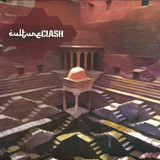
Forced to come up with a name, 'CultureClash' seemed like the obvious choice, even if the members of Awax were only creatively sparring among themselves. Along with the term 'ethno-techno', slightly dubious to a hopefully more conscious Western audience in 2017, these were the only guiding principles to the quietly ambitious project that soon combined cutting-edge machine rhythms with samples sourced from everywhere from Bolivia to Togo, and inspired by everything from Ravi Shankar's epic soundtrack to the Oscar-winning movie Ghandi, to the technical limits of their own setup requiring a dazzling degree of cut-and-paste work. Some tracks even emerged out of academic studies within the ethnomusicology department at The University of Amsterdam.
The show aired on October 2nd, 1992, recorded in one blistering take and without any rehearsals, traversing a huge variety of tempos and styles. If the performance wasn't seamless, it was undeniably thrilling, fresh and ambitious. As such, several labels, including Fernandez's aforementioned Irdial Discs expressed an interesting in commercially releasing CultureClash, while another imprint proposed a series of twelve-inches and an album. But the sheer complexity of the project meant that it never saw the light of day, while the trio embarked on different journeys ahead, both creative and personal.
Twenty five years later, and the original CultureClash lineup and founding members of The Awax Foundation provide the sound of the first release from Lost Futures. An otherworldly, ambitious and optimistic compilation, accompanied by extensive sleeve notes from the trio, CultureClash is a timeless ode to experimentation in dance music's ever-overlapping culture.
Though highly contemporary Bad Woman is an album that takes Pop music back to a time when lyrics where more than esthetic gimmicks. With Céline's music, one cannot avoid to listen to what she has to say. To be honest we've not been struck by lyrics as much as with this record for quite a long time, and it keeps on growing.
.
Bad Woman can be seen as a mutant blend of everything that's been produced by the music industry these last 30 years, from Cher's delirious come-back in the 1990's to the most embarrassing moments in Dance music (think Gabber and Happy Hardcore), blurring the frontier between 'good' and 'bad' taste, between commercial and alternative. Just like Cher's Believe, Céline Gillain's Bad Woman sometimes sounds like the music of a former diva who's been through tough times, saw her expectations torn apart and came back to music with a bizarre testimony of her state of mind.
- A1: Let There Be Flutes
- A2: Midlander (There Can Only Be One...)
- A3: Why Is A Frog Too
- B1: Mind That Gap
- B2: Run On The Spot
- B3: Bentley's Gonna Sort You Out!
- C1: Ragtopskodacarchase
- C2: Whoosh
- C3: Who Put The Bom In The Bom Bom Diddleye Bom
- D1: Spacehopper
- D2: Return Of The Hardcore Jumble Carbootechnodisco Roadshow
- D3: On Her Majesty's Secret Whistle
- D4: Spy Who Loved Moose
Limited Edition: 500 x 2 LP Gatefold Pressing. Bentley Rhythm Ace formed in Birmingham in 1996 when ex Pop Will Eat Itself bassist Richard March and DJ Michael Stokes discovered a shared love of obscure, oddball and eccentric tunes. Utilising lo-fi cut and paste sampling techniques combined with analogue synths and some wild turntable action their debut EP was picked up by Fatboy Slim's Brighton based Skint Records and released to widespread acclaim. The BRA live show added Fuzz Townshend on drums and James Atkin (ex EMF vocalist) on keyboards and the latter years of the 90s saw BRA firmly established as festival favourites with appearances at Glastonbury, Reading, V, T in the Park, Montreux Jazz and Fuji Rock amongst many others. Their irreverent approach mixed with big beats, thundering bass, wild synths and esoteric samples proved to be a hit with fans and critics alike. 1998 saw Bentley Rhythm Ace crowned 'Best Dance Act' in that year's NME awards. Their eponymous debut album was given a worldwide release after the Bentleys signed to Parlophone records and the band toured extensively in the UK, Europe, Japan, Australia and USA. As well as releasing a highly regarded DJ mix album on Ministry of Sound, and releasing a second album for Parlophone (featuring vocals from Black Grape/Ruthless Rap Assassins frontman Kermit), BRA also produced well received remixes for the Beastie Boys and Supergrass as well as soundtracking several TV shows and adverts. This "21st Birthday - Bonus Tracks Edition" of the album has been compiled by Richard March of the band and includes the original 11 track album along with 2 bonus tracks remastered and repressed to vinyl for the first time in almost two decades! Presented in a deluxe gatefold sleeve, complete with original artwork and comprehensive sleeve notes for all thirteen tracks written for this release by Richard March. Bentley Rhythm Ace (21st Birthday - Bonus Tracks Edition)
One Instrument presents ""One Instrument Sessions", a new format on which each artist shows a more personal narrative of the sound experiments they compose.
Neel opens the series with a solo record including "Aria", a 20 minutes long piece made with the E340 Cloud Generator of Synthesis Technology, and "The Morning After", composed with the Roland SH-01A.
The E340 Cloud Generator is an oscillator which Neel says has always been a fan of. It has eight sines and sawtooth VCOs with unique modulation capabilities. "Aria" came to life while he was preparing for a live techno set: when he stopped the recording the oscillator kept running producing the sound and tones audible in the composition.
The Roland SH-101 is Neel's favourite synth. "The Morning After" is one of the 9 experiments he created while using the boutique version of the machine.
It has been a good year for Idle Hands. The label reached its 50th release with a release from Livity Sound's Pev and November saw the release of Parris' latest 12' featuring a KMOS remix.
For the labels final vinyl release of 2018 it is the turn of Stockholm's Pistol Pete. Idle Hands boss Chris Farrell has long been a fan of this artists work. He may not have put much out over the years but each release has found a welcome home at the Bristol record shop from which the label operates.
On this release we find three club focused House tracks, each exuding a warmth one would hope for in these cold winter monts. 'Orphan' opens the set with crunchy, swinging drums and the deft use of a sample. 'Lundagatan' continues things apace with some concentrated drum programming and a chopped up soul sample. 'Esqpads' rounds things off with a warm Deep House feel and grooving bassline.
One thing The Vryll Society aren't short of is admirers, Lauded at just about every turn by press and public alike, the release of their debut LP for Deltasonic Records is hotly anticipated thanks to the promise this band have shown through their live sets and recent single releases.
Discovered and nurtured by the late and much missed Deltasonic founder Alan Wills, they fitted the type for him perfectly. He instantly saw in them similar attributes he'd previously found in the early days of The Coral and The Zutons. The confident swagger, the solid union formed by their band-of-brothers gang mentality, their willingness to stand outside the conventional and often stifling jangly Liverpool scene, and the work ethic. Always the work ethic.
Wills instilled in The Vryll Society something which has become over the ensuing years a key element of what they are, what they've become, and of the music they produce. He gave them belief. A belief that hard work and determination will bring them to the place they wanted to reach.
'Alan taught us that all you need to conquer the world is a rehearsal room, your instruments, a good work ethic and a positive attitude and you'll get there. He kind of taught us the rules and the attributes that you need to have to be successful so we've just continued on that path' says frontman Mike Ellis.
Ellis has stated that it was that attitude and that work ethic which got them through the subsequent tragic loss of their friend and manager in 2014, driving them forward through those times, propelling them to harder work, and bonding them even closer together as a unit.
That unit have spent the intervening time creating and honing their own brand new-psych sound, and building up a fanbase with their superlative live shows. Drawing from an eclectic palette of influence from deep funk to Krautrock, electronica and prog, they've created a heady, intoxicating, pin sharp, and tightly wound mellifluous groove, washed over with cyclical motifs, acres of effects laden guitar hooks, and shimmering, textural technicolour soundscapes. It is at once blissful, dizzying and madly infectious. It's that eclecticism, that kaleidoscopic swirl of influences which brings together hip hop flavours, with the prog stylings of names such as Aphrodite's Child and The Verve - pre Urban Hymns - when the drugs were still working. The dynamic leaps and folds through all these influences is where you find The Vryll Society's own brand perfect pop. Its all there in the loops, in the hooks, the drive and the vibe of this unique band. But this isn't frippery, these aren't throwaway cheap thrills for our disposable times. No, this is heavier. This is music too feed your head.
Live too, The Vryll Society are a formidable force. That gang mentality binds them together over the ideas formed by spending long hours together in the rehearsal every day. Hotwiring these ideas into the heads of the crowd through extended psych jams and deep solid grooves gives a different show every time, and with each and every set, the offer gets better. Recent travels have seen them take SXSW 2017 by storm as guests of BBC Introducing as well as major festivals such as Glastonbury and Leeds/Reading.
The songs that fill the delicious grooves of Course Of The Satellite weren't so much written as devised or developed, brought together organically over months in the band's underground lair, or over weeks in Liverpool's Parr Street Studios. Working closely with producers, Wills' right hand man and Deltasonic brother-in-arms Joe Fearon and Tom Longworth, the album took shape organically, biding its time and finding its way. The result is a work of impressive confidence and stature. It's a record that believes in itself, and for all the right reasons. This is an effortlessly cool album, the sort of record that makes friends easily. The world is ready, willing and more than able to take The Vryll Society even deeper to their heart. The path Alan Wills showed them awaits. It's a path that leads to greatness.
a1 | Course Of The Satellite
a2 | A Perfect Rhythm
a3 | Andrei Rublev
a4 | Glows And Spheres
a5 | Tears We Cry
a6 | When The Air Is Hot
b1 | The Light At The Edge Of The World
b2 | Shadow Of A Wave
b3 | Soft Glue
b4 | Inner Life
b5 | Give In To Me
For the last 20 years London-based author and party organiser Tim Lawrence has dedicated himself to excavating the history of New York City party culture and bringing some of the most powerful aspects of that culture to London's dance scene, from where it has ricocheted around the world. Having conducted the first set of major interviews with David Mancuso, Lawrence started to put on Loft-style Lucky Cloud Sound System parties with David and friends in London in June 2003. In early 2004 he published Love Saves the Day: A History of American Dance Music Culture, 1970-79, which tracked the influence of the Loft on the wider New York DJ, dance and disco scene. In 2009 his biography of the iconic musician Arthur Russell became the first book to map the wider downtown music scene. These beautifully written and politically insightful histories have educated, inspired and celebrated the previously overlooked foundations of contemporary dance music.
Lawrence's most recent publication, Life & Death On The New York Dancefloor, 1980 - 1983, published in late 2016, shines a light on 'one of the most dynamic and creative periods in the history of New York City'. Falling between the more regularly celebrated sounds of disco, house and techno, the period produced a uniquely hybrid series of sounds that never acquired a settled name. This led them to be largely ignored by historians and even DJs, yet the power of the period's music and the scenes it birthed, Lawrence argues, remains undeniable. Met with a rapturous response, Life and Death On The New York Dance Floor saw Lawrence on the road for most of the next year as he spread the word about the characters, the records, the clubs and the bands that shaped the post-Disco, post-Punk, and burgeoning Hip Hop landscapes of New York City during the early 1980s—a period when freedom still ruled.
This, the first of a 2-part sonic tribute to the 1980 - 1983 era as well as a musical companion piece to Life & Death On The New York Dance Floor sees recognised musicians (David Byrne of Talking Heads) nestle up alongside the belatedly recognised (Arthur Russell's Dinosaur L and Loose Joints, and Suicide's Alan Vega) and the downright obscure (Gray, 2 Teens Kill 4 and Tuxedomoon). An indication of what's to follow, Dinosaur L's original album version of 'Go Bang' has been dramatically overshadowed by the definitive François Kevorkian remix yet received regular play by David Mancuso and remains an enthralling experimental Arthur Russell jam.
Lovingly curated across 2 slabs of vinyl, the album introduces listeners to a stunning array of sounds, styles, vibes and feelings that encapsulate this most fertile and forward-thinking era, when music, fashion, sound system innovations, leaps in music technology, a DIY attitude and a freedom from corporate politics combined with extraordinary expressivity. All music contained within this album has been hand-picked and programmed by Tim Lawrence. It represents a selective yet rich introduction to one of the most extraordinary periods in New York City's epic musical history.
This is the first release on Reappearing Records, a label led by Tim Lawrence and distributed worldwide by Above Board distribution. Licensing courtesy of Tracksuit Music. Mastering by Optimum Mastering, Bristol UK. Artwork & design courtesy of Atelier Superplus. 2018.
john Yancey' Is The Second Album Illa J Will Release On Jakarta Records, Following The Successful
Release Of Home Last Year. The Project Is The Second Collaboration With Los Angeles
Based Producer Calvin Valentine, Who Once Again Contributed All Of The Production For The Long
Player. While home' Was Largely Inspired By Illa's Native City Of Detroit, john Yancey' Now
Focuses On His Time In California.
(this Album Is) Definitely More Personal Than All Of My Projects, Nothing Specific, But I Basically
Talk About About The Ups And Downs Of All My Relationships Over The Past 10 Years, Still Grieving
About My Bro, Etc. This One Is Trippy Because The First Single Comes Out A Day Before My 32nd
Birthday And The Original Title Was 32 Because This Is A Special Year To Me Because My Brother Died
At That Age So It Had A Lot Of Meaning. But It Makes Sense That It Ended Up Being Called John
Yancey Because For So Long In My Career I Felt Like I Was Tryna Be Me And My Brother, And I'm Finally
At Peace, Like I'm Not J Dilla's Younger Brother Illa J, I'm James Younger Brother John.'
While The Story Of The Album Might Have Changed, There Are Certain Continuities As Well, Built
Around The Strong Foundation Of The Combination Of Illa's Voice And Calvin Valentine's Soulful
Sample Based Production. The Previous Album Already Saw Illa J Incorporate More Singing Into
His Raps And He Goes Down This Path Even Further: i Wanted To Emphasize The Singing But Use
More Of My Natural Singing Voice, As Well As Rap More Than On Home.' In Regards To The Music,
Calvin Wanted To Make The Project Sound a Bit More Polished Where Home Was Purposely
Rough Around The Edges.' Still, The Production Remains Soulful And Rich With Layers To Leave Things
Interesting For The Listener, The More Spins You Give The Record.
The Cover Was Created By Robert Winter, A Cologne Based Photographer Who Was Also Behind The
Visual Appearance Of Home.
Skin Town's unexpected return with their new album 'Country' finds the duo upping the already high bar set on their striking dark pop gem debut 'The Room' with a dauntless artistic statement that trades clever posturing for vulnerability. Yielding their prowess with more restraint, Skin Town's 'Country' hits harder and cuts deeper - doubling down on their narcotic cocktail of strong R&B hooks, spacious bewitching productions, and marked sense of melody that puts vocalist Grace Hall and multi-instrumentalist Nick Turco in a class of their own.
Many saw that potential on their debut with support from Dazed, Interview, The FADER, KCRW, as well as artists like Tinashe shouting out Skin Town. Lamenting on the duo's unmistakable chemistry, Pitchfork says, "Turco's synthscapes are huge and scene-stealing, while Hall's husky voice strikes a glorious medium between Abel Tesfaye and Sade." Their latest is even more potent, a particular strain of sad dance music that feels timeless and raw.
'Country' refines Skin Town's minimal framework of tethering hip-hop/R&B rhythms to Hall's smoky, precise phrasing exploring richer atmospheres and darker concerns. Written and recorded over 3 years, the album touches upon depression, loss, hedonism, poverty, rebellion, sex work, empowerment, and love's contradictions. The album's completion was sidetracked many times with Hall suffering a string of life-threatening mysterious immune system ailments, as a result there is a lot of pain and joy in this record, made with literal blood and tears.
The opener "Bad" signals at this departure from their upbeat predecessor stripping away the beats, relying on the interplay between Turco's ringing chords, the enveloping synthwork and Hall's melancholic, rhythmic intonations. "Mute" brings back the drums, couched in a slinking hip-hop beat and a creeping synth lead. Throughout the record, Turco's productions glean from an eclectic, disparate mix: melodic Amiga tracker music, Metro Boomin', New Age, The-Dream while Hall seems ever more comfortable exploring syncopation and half-rap/half-sung excursions. This is inventive, uncanny pop music where Enya, Offset, Zola Jesus, and Future inhabit the same space.
Skin Town's unerwartete Rückkehr mit ihrem neuen Album "Country' hebt die sowieso schon recht hohe Messlatte ihres markanten Dark-Pop-Juwelen-Debüts "The Room' noch ein wenig höher. Skin Town's - Country" schlägt härter zu und schneidet tiefer - und verdoppelt ihren narkotischen Cocktail aus starken R&B-Hooks, einer großzügigen, betörenden Produktion und einem ausgeprägten Sinn für Melodie. Das ist erfinderische, unheimliche Popmusik, bei der Enya, Offset, Zola Jesus und Future im selben Raum leben.
Viele sahen dieses Potenzial bei ihrem Debüt und so gab es reichlich support von Dazed, Interview, The FADER, KCRW sowie Künstlern wie Tinashe. Pitchfork hob die unverwechselbare Chemie des Duos vor und sagte: "Turcos Synth-Landschaften sind riesig und szenenraubend, während Halls heisere Stimme eine Klasse für sich ist, angesiedelt zwischen Abel Tesfaye und Sade.'
Country' verfeinert den minimalen Rahmen von Skin Town, Hip-Hop/R&B-Rhythmen mit Hall's rauchigen, präzisen Vocals, die weitere Atmosphären und dunklere Anliegen erforschen. Das Album behandelt verschiedenste Felder von Depressionen, Verlust, Hedonismus, Armut, Rebellion, Sexarbeit, Empowerment bis zu den Widersprüchen der Liebe. Die Fertigstellung des Albums wurde mehrmals aufgeschoben, wobei Hall eine Reihe von lebensbedrohlichen, mysteriösen Immunsystem-Krankheiten erlitt, was dazu führte, dass viel Schmerz und Freude auf dieser Platte zu finden sind, die sprichwörtlich mit Blut und Tränen gemacht wurde.
Deep Nigerian ''Igbo highlife'', here combining Highlife with the more traditional Igbo music - guitar-based music, with rare characteristic blend of horns and vocal rhythms..
.
The 1970s and 80s saw the rise of the Ukwuani style in Nigerian highlife. A funky fusion of the laidback, mellifluous guitar lines characteristic of Igbo highlife with the rugged, animated rhythm section of Edo dance music, the sound was a sensation that made stars of musicians like Rogana Ottah, Steady Arobby, King Love A.U., Bob Fred and Chief John Okpor. One of the most consistent players in this field, though, was General Franco Lee Ezute, leader of the Harmony Kings International Band.
Bongo Joe presents this deluxe reissue of Onye Kata Obia, one of the Harmony Kings' most underrated albums. Full of electrifying guitar work and intoxicating rhythms, it is sure to keep the crowd dancing!