2023 Repress
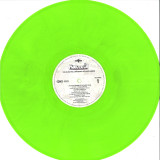
In between the re-releases of the two legendary Drexciya albums released on Tresor in '99 and '01, the Berlin techno institute is proud to re-present Transllusion's 'Mind Over Positive and Negative Dimensional Matter' the 12' single which originally accompanied the album 'The Opening Of The Cerebral Gate'.
Produced by the late James Marcel Stinson and released in 2001 via Supremat, a short-lived sub-label Tresor dedicated to a more abstract and experimental electro sound, both releases were conceived as the second part of the so-called Drexciyan Storms - a whopping stack of seven albums by the Detroit pair released under different monikers within a single year (the Tresor album 'Harnessed The Storm' being the rst).
This phase marks a groundbreaking time for the duo, their cosmos breaking wide open, right at the dawn of a new technological era in electronic music production. All this is deeply reected in Transllusion's rst album and single.
Thematically, 'The Opening Of The Cerebral Gate' and 'Mind Over Positive and Negative Dimensional Matter' saw Stinson shift away from the grand narrative of the Drexciyan saga, instead exploring a sub-plot of esoteric concepts revolving around internal, mental and psychedelic tropes. Musically, it presents the electro genius at the height of his game.
Suche:d saw
This land runs through Katherine Paul’s blood. And it called to her. In dreams she saw the river, her ancestors, and her home. When the land calls, you listen. And KP found herself far from her ancestral lands during a time of collective trauma, when the world was wounded and in need of healing. In 2020 she made the journey from Portland back to the Skagit River, back to the cedar
trees that stand tall and shrouded in fog, back to the tide flats and the mountains, back to Swinomish.
It is a powerful thing to return to our ancestral lands and often times the journey is not easy. Like the salmon through the currents, like the tide as it crawls to shore this is a story of return. It is the call and response. It is the outstretched arms of the people who came before, welcoming her home. The Land, The Water, The Sky is a celebration of lineage and strength. Even in its deepest moments of loneliness and grief, of frustration over a world wrought with colonial violence and pain, the songs remind us that if we slow down, if we listen to the waves and the wind through the trees, we will remember to breathe.
There is a throughline of story in every song, a remembrance of knowledge and teachings, a gratitude of wisdom passed down and carried. There is a reimagining of Sedna who was offered to the sea, and a beautiful rumination on sacrifice and humanity, and what it means to hold the stories that work to teach us something.
Chord progressions born out of moments of sadness and solitude transform into the islands that sit blue along the horizon. The Salish Sea curves along her homelands, and when the singer is close to this water she is reminded of her grandmother, how she looked out at these same islands, and she’s held by spirit and memory.
The Land, The Water, The Sky rises and falls, in darkness and in light, but even in its most melancholy moments it is never despairing. That is the beauty of returning home. When you stand on ancestral lands it is impossible to be alone. You feel the arms and hands that hold you up, unwilling to let you fall into sorrow or abandonment. In her songs Katherine Paul has channeled that feeling of being held. In every note she has written a love letter to indigenous strength and healing.
There is a joy present here, a fierce blissfulness that comes with walking the trails along the river, feeling the sand and th stones beneath her feet. It is the pride and the certainty that comes with knowing her ancestors walked along the same land, dipped their hands into the water, and ran their fingertips along the same bark of cedar trees.
This is a story of hope, as it details the joy of returning. Katherine Paul’s journey home wasn’t made alone, and the songs are crowded with loved ones and relatives, like a really good party. And as the songs walk us through the land it is important we hover over the images and the beauty, the moments that mark this album as site specific. The power of this land is woven throughout, telling the story of narrow waterways, brush strokes, salmon stinta, and above all healing.
Let it take you. Move through the story and see the land through her eyes, because it is a gift, a welcomed sʔabadəb.*
*The word “gift” in Lushootseed, the language of the Coast Salish people“
ComposedandConducted By John Williams
E.T. the Extra-Terrestrial Original Motion Picture Soundtrack...
The summer of 1982 saw the release of some of the most culture-defining films of our lifetime (STAR TREK II: THE WRATH OF KHAN, POLTERGEIST, TRON, CONAN THE BARBARIAN, THE THING, THE ROAD WARRIOR ... just to name a few!)
But few have had nearly the same impact on film music as the legendary sixth collaboration between Steven Spielberg and John Williams: E.T. THE EXTRA-TERRESTRIAL.
Mondo, along with Geffen Records and Universal Pictures, are proud to celebrate forty years of E.T., with an all new re-issue of John Williams' timeless, essential and period-defining score.
Reissue Produced by Bruce Botnick & Mike Matessino
Composed and Conducted by John Williams
Artwork by Dan McCarthy
Liner Notes by Mike Duquette
Manufactured in Czech Republic
An official reissue, with the original gatefold jacket and the original large booklet reproduced. Pressed on 180 gram vinyl, with side D etched. Sweden's Tribulation have been one of the most innovative bands working in metal in the new millennium. Their third album The Children Of The Night (2015) saw the band leap even further from their death, black and thrash metal origins and add hints of psych rock, prog and classic rock into the mix. Pitchfork called it "a sprawling, compulsory tale that doesn't turn dull. ... There is no way to arrive at a consensus artist who will satisfy everyone, but The Children Of The Night comes close." Svart Records presents, in conspiracy with Century Media, an official reproduction of the original 2015 double LP, that has already become a rarity.
Released in 1981& the last in a decade-long run of Top 50 R&B albums, ‘The Electric Spanking Of War Babies’ was the band’s twelfth studio LP & featured several players new to the Funkadelic line-up, notably Sly Stone. With its allusions to the Vietnam War & US imperialism, George Clinton’s project was destined to court controversy from the start, not least for its uncompromising sleeve art which original label Warner Bros. censored. Described by Robert Christgau as “the solidest, weirdest chunk of P-Funk since one nation gathered under a groove” & originally conceived as a double LP, many tracks saw release on Clinton’s later P-Funk projects. Arguably, it is better for having been précised down to a single album while still spawning two hit singles, the title track (US R&B No. 60) & ‘Shockwaves’ (US R&B No.53). FUNKADELIC Masterminded by the larger-than-life figure of George Clinton, Funkadelic was a key component of his influential P-Funk empire. Funkadelic’s unique combination of Rock, Psychedelia, R&B & Soul led to the band crossing over to the pop mainstream & gaining a vast international following, becoming one of the most important & influential groups in music. On 6 May 1997, Parliament / Funkadelic were inducted into the Rock & Roll Hall Of Fame by Prince. To commemorate six decades of thrilling & delighting fans, George Clinton returned to the stage in 2022 for a series of concerts. To celebrate, Charly have reissued Funkadelic’s classic four albums ‘Hardcore Jollies’; ‘One Nation Under A Groove’; ‘Uncle Jam Wants You’; & ‘The Electric Spanking Of War Babies’ (originally released by Warner Bros during a golden period for the band between 1976-1981). Each album will be available as deluxe gatefold Digi-Sleeve CDs in PVC wallets + obi-strip & facsimile-edition gatefold LPs on 180-gram black vinyl & limited edition 180-gram colored vinyl + 1970s-style obi-strip in a protective PVC sleeve. “They played a HUGE role in creating the future of music.” PRINCE
Red Vinyl
Young Fathers - Alloysious Massaquoi, Kayus Bankole und G. Hastings - kündigen heute ihr langerwartetes neues Album, „Heavy Heavy“, an. Das vierte Album des Trios erscheint am 3. Februar 2023 via Ninja Tune und ist ihr erstes seit „Cocoa Sugar“ von 2018. Das 10-Track-Projekt signalisiert einen erneuten Back-to-Basics-Ansatz ohne externe Produzenten, nur ein winziges Heimstudio, ein paar Geräte und Mikrofone: alles immer eingesteckt, alles immer in Reichweite. Über das Album schreibt Alloysious: „Jede Platte muss besser sein als die letzte. Das ist die Mentalität. Wenn es nicht besser wäre, würde es nicht herauskommen.“ Für ihn geht es bei diesem Album nicht einmal wirklich um die zehn Songs auf der Tracklist. Es geht darum, was mit dem Trio in den langen, verrückten Jahren seit „Cocoa Sugar“ passiert ist. „Heavy Heavy“ ist der Beweis für das, was von dieser Zeit übrig geblieben ist. Der Erfolg des Überlebens, der Exzess der Existenz. „Ich mag den Titel ‚Heavy Heavy‘, denn es ist alles plus die Küchenspüle", fügt G. hinzu. „Maximalistisch. Keine Art von Schlankheitskur. Es fühlt sich voll an, gewichtig. Und es zweimal zu sagen, macht es spielerisch.“
Für Young Fathers gibt es keinen Dresscode. Tanzen, nicht moshen. Die Hüften zucken, die Füße rutschen, das Gehirn feuert in Catherine Wheel-Sparks aus Freude und Empathie. Unterirdisch, aber nie dunkel. Immer noch jung, nach einigen Jahren, auch wenn die heavy, heavy weight of the world von Tag zu Tag zu wachsen scheint.
- A1: Logic System - Unit
- A2: Kraftwerk - Computerwelt (2009 Remastered
- B1: Whodini - Magic's Wand
- B2: Rocker's Revenger - Walking On Sunshine (Feat Donnie Calvin
- C1: Klein & Mbo - Dirty Talk (European Connection
- D1: Liaisons Dangereuses - Los Niños Del Parque
- D2: Yello - Bostich
- E1: The The - Giant
- F1: The Residents - Kaw-Liga
- G1: Clan Of Xymox - Stranger
- G2: A Split - Second - Flesh
- H1: Severed Heads - Dead Eyes Opened
- H2: The Weathermen - Poison!
- I1: New Order - Blue Monday
- J1: Anne Clark - Our Darkness
- J2: 16 Bit - Where Are You?
- K1: Phuture - We Are Phuture
- K2: Model 500 - No Ufo's (Vocal
- L1: Frankie Knuckles Feat Jamie Principle - Your Love
- L2: Quest - Mind Games (Street Mix
- M1: Jasper Van't Hof - Pili Pili
- N1: Guem Et Zaka Percussion - Le Serpent
- N2: Hugh Masekela - Don't Go Lose It Baby
- O1: Sly & Robbie - Make 'Em Move
- Q1: The Ecstasy Club - Jesus Loves The Acid
- R1: Foremost Poets - Reason To Be Dismal?
- S1: Lhasa - The Attic
- S2: A Guy Called Gerald - Voodoo Ray
- T1: M/A/R/R/S - Pump Up The Volume - Usa 12" Mix
- T2: Bobby Konders - Nervous Acid
- U1: Meat Beat Manifesto - Helter Skelter
- V1: Raze - Break 4 Love
- W1: Sueño Latino With Manuel Goettsching Performing E2-E4 - Sueño Latino (Paradise Version
- X1: Off - Electrica Salsa
- O2: Brian Eno - David Byrne - Help Me Somebody
- P1: Primal Scream - Loaded (Andy Weatherall Mix
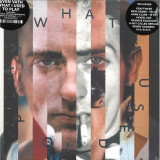
For this uniquely personal retrospective spread over twelve vinyl discs, Sven Väth takes us back to the early days of his DJ career. On What I Used To Play we meet great pioneers of electronic music, gifted percussionists, obscure wave bands, and innovative producers of a bygone 'new electronic' era. Rough beats and irresistible grooves from the identification stage of house, techno, and acid remind us not just how far electronic music has evolved over the past four decades, but how great it was to dance to EBM, techno, and house for the very first time.
If there is one protagonist of the electronic music scene who has remained curious, innovative and at the very cutting edge of music for over four decades, it's Sven Väth. His multi-layered artist albums and Sound of the Season mix compilations have been defining the genre for over two decades, and even today, he is constantly on the lookout for the next top tune to add to the highlights of his next set. At least, that's the case when he's not producing them himself as an artist or remixer. "Actually, it's always been part of my DNA to think ahead," and nothing had been further from his mind than looking back at his past, but when in spring of 2020 the international DJ circuit had to be scaled down to virtually zero, the 'restless traveler' suddenly had time. Time to stop and reflect on "how it actually was back then, at the very beginning of my career..."
"It was a great trip and with every track, beautiful memories came flooding back".
In the London apartment, he had just moved into, Sven has set up a "little music room", where he cocooned himself for several days, "to look way back for the first time and review my musical journey through the eighties, so to speak."
The interim result was six thematically oriented playlists with a grand total of 120 tracks from 'early 80s' to 'Balearic late 80s', together with excursions into afrobeat, European new wave, and EBM sounds and a few epochal techno/house tracks from the USA in between. From these 'Best of Sven Väth's favorites', the project What I Used To Play crystallized. Sven remembers how the Cocoon team reacted to his proposal: "They found the idea of making a compilation out of it MEGA from the beginning and everyone said 'Sven, go for it', but then, of course, the work really started, namely, to clear the rights and to get clean sounding masters of the up to 40-year-old tracks. There was also disappointment, of course. We couldn't clear certain titles because the rights holders in the USA had fallen out with each other or simply disappeared from the scene. In short, it wasn't easy, but now I can safely say we got the most important tracks."
Finally, after two years of research, curation, design, and administrative fine-tuning, the "little retrospective" from 1981 to 1990 is available. The exquisitely packaged, and three-kilo heavy box set is not only physically impressive, WIUTP is also the definitive record of Sven Väth's musical development. On each of the twenty-four sides of vinyl, you can trace track by track, what influenced him during which phase, and how he took off as a DJ from his parents' Queen's Pub straight into the spotlight at Dorian Gray. There and at Vogue (later OMEN), Sven became the style-defining player in the DJ booth that he still is today.
1981 - 1990: Future Sounds of Now
In the early eighties, the crowd in clubs like Vogue and Dorian Gray danced to what nowadays we call 'dance classics' - mainly disco, funk, soul, and chart pop. It was up to a new generation of DJs, including Sven Väth, the youngest protagonist in the Rhine-Main area at the time, to create their own club-ready music mix. Good new tracks and potential floor-fillers were rarities that had to be sought out and found, in order to prove oneself worthy.
Without MP3s, internet streaming, or other digital download possibilities, music didn't just gravitate to the DJ, instead, it had to be tracked down. In well-stocked record stores in Frankfurt and Wiesbaden or even in Amsterdam, London, or New York, Sven and friends sourced the material for countless magical nights. On WIUTP we can follow Sven's very personal journey through this wild, innovative era in which synth-pop, funk, hip-hop, and disco were successively replaced as 'club music' by house, techno, acid, and breakbeat. By the end of the decade, it was clear to see that these once exotic 'fringe' phenomena would soon become 'mass' phenomena.
Early 80s
Dirty Talk by the Italian-American duo Klein & M.B.O. represents the most innovative phase of the Italo-disco genre in the early eighties like no other track. Mario Boncaldo (I) and Tony Carrasco relied entirely on the original synthetic drum and percussion sounds of the Roland TR-808, coupled with the raunchy vocals of Rossana Casale and guitar accents of Davide Piatto. Of course, other tracks from this period were also influential in style, most notably Unit by Logic System, which worked as the perfect soundtrack to the laser lighting system at the legendary Dorian Gray club. With stomping beats and robotic rap interludes, Bostich by Yello also belongs on Sven's eternal playlist - after all, it caught the attention of Afrikaa Bambaataa, who invited the Swiss duo to perform at the Roxy in New York in 1983.
EBM Wave - Mid 80s
From today's point of view, the almost ten-minute-long, downtempo track Giant by Matt Johnson's band project The The, would probably not be considered an obvious club classic. However, a closer (re)listen reveals the rhythmic intricacies of the percussion overdubs by JG Thirlwell (aka Foetus) on Johnson's composition, and it becomes clear why this exceptional piece of music is one of Sven's absolute favorites. Other classics from this phase include Kaw-Liga by the mysterious The Residents, the hypnotic-synthetic Our Darkness by Anne Clark (and David Harrow), and last but not least, the somber, monotonous anthem Where Are You? by 16Bit, one of Sven Väth's projects together with Michael Münzing, Luca Anzilotti from 1986.
US House - Late 80s
You certainly can't talk about Chicago house without mentioning Frankie Knuckles. The resident DJ at the Warehouse not only gave the name to an entire genre, but also produced epochal floor fillers on the Trax label like the timeless Your Love, sung (and moaned) by Jamie Principle. Acid house protagonists Phuture also hail from Chicago, and on We Are Phuture (also released on Trax) we hear the chirping acid sounds of the legendary Roland TB-303 in full effect. Another featured classic is No UFO's by Detroit's Model 500 aka Juan Atkins, who is rightly considered the 'Godfather of Techno' even if the genre-defining track from 1985 still breathes with the spirit of hip-hop and electro from the first breakdance era.
Afrobeat
Le Serpent, by Algerian-born Abdelmadjid Guemguem, is a track that sounds completely different from everything else on WIUTP. Made in 1978, it's a monumental, rousing groove created without bass or synths, just with five congas! Even though Guem sadly passed away in 2021, his immortal, acoustic beats are understood all over the world and will continue to enrich many thousands of DJ sets for years to come. Another classic that not only Sven appreciates beyond measure is Hugh Masekela's Don't Go Lose it, Baby. In addition to being one of the most important jazz pioneers, the trumpeter and freedom fighter from Johannesburg was very experimental, integrating electronic sounds into his music in later years, in a similar vein to Miles Davis and Herbie Hancock. Dutch jazz pianist Jasper van't Hof's afrobeat project Pili Pili has also aged well. The trance-like, almost sixteen-minute-long track of the same name, manages to fill a whole side on the seventh of twelve vinyl discs in the WIUTP box.
UK-US-Euro - Late 80s
Time for a change of scene, in the truest sense of the word, and from a musical perspective, this section is like landing on another planet. First up is Andrew Weatherall's classic remix of Primal Scream's Loaded, featuring the iconic Peter Fonda sample (lifted from the 1966 biker film Wild Angels) that came to personify the mood triggered by the British Second Summer of Love in the late eighties: "We wanna be free to do what we wanna do, and we wanna get loaded...". This period also saw the emergence of M/A/R/R/S whose only single, 1987's Pump Up The Volume, became a club classic with support from DJ legend CJ Mackintosh. In this most eclectic of sections, we also encounter New York house and reggae producer Bobby Konders and his seminal Nervous Acid.
Balearic - Late 80s
Those who know him, know that Sven had already lost his heart to the 'magic island' of Ibiza as a teenager, so with that in mind, the WIUTP project couldn't end without a Balearic chapter. Inspired by Manuel Göttsching's E2-E4, the immortal, eponymously titled Sueño Latino belongs in there without question. Equally popular on the island was, and still is Break 4 Love by Raze, which thinking about it, would also fit perfectly into the house chapter. Last, but not least, there's an overdue reunion with Sven Väth himself, in his role as frontman of the successful Frankfurt trio OFF. Together with Michael Münzing and Luca Anzilotti (later of Snap!) this 'Organization For Fun' created the off-the-wall club hit Electric Salsa in 1986 which incidentally turned into an international chart smash, putting Sven in the enviable position of having to decide between pop stardom and a DJ career. Well, we all know how that decision turned out and the rest, as they say, is history. A not insignificant part of his story is What I Used To Play. Enjoy!
Following up on reissues of the 2000 compilation »Multila« and 2001’s »Anima,« Sasu Ripatti has thoroughly revisited the classic »Whistleblower« for its first ever vinyl issue on the German Keplar label. Ripatti created entirely new mixes of previously unheard-of alternative versions of the tracks that first appeared on CD through his own Huume imprint in early 2007. He thus shines a new, different light on a record that was as much an expression of reaching a turning point in his life as it also showcased a new, more direct and perhaps more abrasive side of his Vladislav Delay project. »Whistleblower« was marked by the insertion of more noise and disruptive elements into Ripatti’s slowly moving take on intricate electronic music that heavily leaned on dub techniques. Fittingly for an album written at the threshold between one life and the other, »Whisteblower« seems at once melancholic and forward-looking in both tone and style.
»Whisteblower« was the follow-up record to 2005’s »The Four Quarters« and produced in the German capital. »I had quite a hard time in Berlin towards the end and I'm sure the track titles and the music reflect some of that uneasiness,« Ripatti says 15 years later. Changes in his personal life had a profound impact on him when making the record. The fifth track, »Lumi,« was dedicated to his daughter who was born shortly after the album was finished. »I had to reconsider what my life had been,« he recalls this watershed moment in his biography. Having already previously embraced a sober lifestyle—hinted at with the last piece’s title, »Recovery IDea«—Ripatti started questioning his life choices more thoroughly. This is also expressed in »He Lived Deeply,« a track inspired by Miles Davis’s love for Duke Ellington whose title can be read as an implicit question that Ripatti nowadays paraphrases thusly: »Had I been living fully, or fully not living?«
The seven tracks also marked a musical turning point in Ripatti’s work as a producer, not only because it was the last one for which he primarily used analogue and vintage equipment. They are also more straightforward on a music level, more demanding and at times more concerned with subtle rhythms than with the thick textures that were so integral to his earlier work. »Whisteblower« represented the first step in a process of focusing less on sonic abstraction and more on direct (self-)expression. While Ripatti admits that he found working on the album difficult back then, he also points out that he was surprised to hear how »gentle and peaceful« it sounded when he started revisiting the original files he used as a basis for these newly mixed versions. »It probably proves how much more comfortable I had become with sound.«
Arkada records is excited to announce our 4th release - forthcoming split vinyl EP featuring the sounds of ADJ & Adrien d’Elzius.
We are very happy to present the first part of the EP with the unique sounds of one of the pioneering artists in the UK underground Electro scene, the label owner of Pyramid Transmissions - ADJ
ADJ originates from and is based in London. He has been playing Underground Electronic Music for over 35 years as a DJ, starting in the days of Early Electro and Hip Hop. He has also been producing and releasing music for 25 years, releasing over 200 tracks in this time on a plethora of labels including Touchin Bass,For Those That Knoe, Another Perspective, Ai, Outside, Cultivated Electronics,Yellow Machines, Crobot Muzik, Diffuse Reality, Netlabel ,Digital Distortions and more...has done remixes for Flint Kids, Scanone, LASynthesis, Carl Finlow, Fleck Esc, Arsonist Recorder , Paul Hierophant to name a few.
He has run the Pyramid Transmissions Record label with label partner Pathic for 20 years and also ran the Analogique record label for 5 years from 1995-2000 releasing Techno, Electro and Electronica as 3 Elements.
ADJ also performed his first LIVE set in a few years in March 2020 MUTABOR in Moscow.
As a DJ, he has played at many festivals including a BLOC residency, Glastonbury For BLOC, Bestival, Shambala, Infiltrate at WMC Miami. 2019 saw another tour of the US with Silicon Scally,Ben Milstein, EVAC, Ion Driver and 214. He also runs the Dodo Club and Frequency Resonate(with Errorbeauty) nights in London and Berlin aswell as playing in Lille, Kiev, Moscow, St Petersburg Berlin,Zagreb,Athens, Napoli, Brussels, Budapest, Vienna, Valencia, Sofia, Paris and many more..
Second part of our EP presents the futuristic glitched-out sounds of the one of a kind Belgium producer Adrien d’Elzius also known under his allies HosmOz.
Adrien d’Elzius was born in the gloomy south of Belgium spending his youth hanging around in a camping and listening to Hip Hop, he started his life in a mess of paradox. At 10, he learned to play drums under his punk’s brother regard, and experimented different kind of rock until 18. That’s where someone showed him a track of Aphex Twin, who blew his mind and made him believe he had finally found the music that suited him. From there, he compulsively spend hours playing around with his computer and slowly made himself a place in the very small community of underground music lover of Brussels under the nickname hosmOz after winning a contest. From his melodic and acidic drill’n’bass beginning, his sound slowed down and got darker, challenging himself to try to create something he couldn’t before. He recently re-released his Lp on Diffuse Reality that make it available on physical form and also his debut album on Burial Soil with remixes by Umwelt and Lloyd Stellar.
The masters of the release are kindly made by Thomas Dunstan. Artwork made by our amazing designer Lawrence Cli
Following his discharge from Army Service in 1960, Elvis Presley and his Manager Colonel Tom Parker had eschewed live performance and concentrated instead on Elvis's burgeoning film career. A steady stream of record releases kept Elvis's worldwide audience of fans happy, and June 1962 saw the release of this non-soundtrack LP. Pot Luck reached No.1 in the U.K and No. 4 in the U.S.A due to the compositions Kiss Me Quick, Suspicion (which went on to become one of his outstanding songs of the period), I'm Yours and That's
Someone You Never Forget (co-written by Elvis with Red West). By the end of 1962, Elvis was set to remain at the top of the tree. But this was the year which saw The Beatles and Bob Dylan make their recording debuts. The times were, indeed, a-changin'!
New family members Loris S. Sarid & Innis Chonnel summon a long-overdue return to the 12th Isle with an album built around percussive sounds taken from various mic-ed up objects found in a wood workshop on the East Coast of Scotland. With the pair occasionally leaving said workshop to enjoy some respite in Innis Chonnel’s horse box / studio, the artists hatched a plan to process and program their field recordings, later combining them with improvised synthesiser rhythms and overdubs. The tracks began to materialise over the course of a few follow-up sessions by which time saws sang and flutes flowed through watering cans. Shortly afterwards they found their way to us via carrier pigeon on a CD-ROM that smelt vaguely of soiled hay and we knew we had to act.
In 1962 Martin left his record label Capitol and signed with Frank Sinatra’s new label Reprise. His debut album for them was French Style, released in April of that year. Martin had recently released an album of songs sung in Italian and would go on to record an
album of Latino material at the end of that year. French Style came in between the two, and collected a number of songs about France ably arranged by conductor Neal Hefti. At this point, France must have seemed impossibly glamorous, with Brigitte Bardot swanning
around St Tropez, while Grace Kelly raced her sports car around the clifftops of Cannes in Hitchcock’s To Catch A Thief. Beatniks filled the jazz cafés, where the New Wave of French cinema was being discussed over Disques Bleu and café au lait. What’s more, the
majority of songs in this collection focus on Paris – and the City of Lights has been a magnet for Americans ever since the days when Hemingway and F. Scott Fitzgerald and Cole Porter first took up residence there. French Style is delivered with his trademark
charm and ease. So, bon appetit!
- A1: I Walk The Line
- A2: Folsom Prison Blues
- A3: Rock Island Line
- A4: Ballad Of A Teenage Queen
- A5: Hey Porter
- A6: Get Rhythm
- A7: Oh Lonesome Me
- A8: I Love You Because
- B1: Five Feet High And Rising
- B2: The Rebel - Johnny Yuma
- B3: Don’t Take Your Guns To Town
- B4: Hey Good Lookin’
- B5: Frankie's Man, Johnny
- B6: Bonanza!
- B7: Country Boy
- B8: In The Jailhouse Now
If one single song is indelibly associated with Johnny Cash, it has to be I Walk The Line - the song that landed him his first American hit in October 1956. But for many, Cash is defined by a single line from Folsom Prison Blues. “I shot a man in Reno, just to watch him die…”
confirmed Cash as a hard-living, fast-shooting guy (Don’t Take Your Guns To Town; Bonanza!) and also saw him identifying with prisoners and prison life. The ‘Man in Black’ had become a friend of Presidents and pop idols; a man whom stars like Bono and Bob Dylan deferred to; a legend courted by fans such as Quentin Tarantino and Johnny Depp.
And though a lot has been written about Johnny Cash since he died in 2003, questions remain about how this man came to dominate the world of popular music - but here, in your hands, are sixteen reasons why…
- A1: The Reese Project - Direct Me (Joey Negro Remix)
- A2: Andrew Pearce - Day By Day (Urban Sound Gallery Mix)
- B1: Surreal - Happiness (Fathers Of Sound Renaissance Mix)
- B2: Slo Moshun - Bells Of N.y. (Xen Mantra Beefy Bells Mix)
- C1: Inner City - Ahnonghay (Dave Clarke Remix)
- C2: Rhythmatic - Demons (Sequel Mix)
- D1: Neal Howard - To Be Or Not To Be (Mayday Mix)
- D2: The 10Th Planet - Strings Of Life (Ashley Beedle Remix)
The Art and Soul of Network is well and truly captured on this beautiful collection.
Fittingly for a remix selection, Network’s iconic artwork is reconstructed by Trevor Jackson, the designer of those original graphics. He has lovingly reworked the maverick indie house label’s distinctive branding for this 2 x 12 double album selection which rewinds to some of Network’s finest moments.
Network was based in Birmingham but as this release demonstrates had an international outlook and an alchemist touch for joining together disparate talents which lent itself well to the world of remixology.
Dave Lee’s remix,when he was working under his Joey Negro pseudonym, of The Reese Project’s awesome Direct Me is arguably his finest ever work. The original track fused Detroit electronica with the Motor City’s ever present Soul Music stirrings. Dave simply made the superlative perfect . The result was not only an iconic Network release but one of House Music’s greatest recordings.
There was possibly no better example of Network’s deft touch when it came to selecting unlikely combinations of people to work together than Day By Day. . Andrew Pearce, a raw but incredibly gifted 18 years gospel singer, was plucked of the streets of Wolverhampton and promptly despatched to Detroit where producer Kevin Saunderson and songwriter Ann Saunderson gave him the complete Reese Project template on the mesmerising Day By Day. Then Chez Damier & Ron Trent were drafted in to create their Urban Sound Gallery masterpiece of a remix. It truly is a gem.
Ann Saunderson is also central to Surreal’s hypnotic Happiness, not only as songwriter but as the vocalist too. Network then did their “let’s try this” thing by letting loose Italian house godfathers The Fathers Of Sound on the track parts. They threw down and created a progressive (but dreamy) house anthem that is to this day massively in demand.
Slo Moshun’s game changer (House slows down into Hip Hop then ramps up back into House) Bells Of New York was produced by Mark Archer & Danny Taurus.It became huge literally overnight. Various attempts to remix it were tried but in the end it was back to Mark who demonstrated that sometimes the original creator of a track is best able to re-imagine it by coming up with his much loved Beefy Bells remix.
Inner City’s stark and brutal Ahnonghay saw Kevin Saunderson going back to his Detroit Techno roots. Fittingly it was one of the UK’s disciples of that innovative Belleville Three era,Dave Clarke, who supplied the awesome remix contained here.
Rhythmatic’s Mark Gamble created a British Bleep House anthem with the sledgehammer Demonz. The original won the support of John Peel with repeated BBC Radio plays underlining incessant club plays. Again it’s the original artist who does that remix thing best with Mark’s Sequel mix managing to improv his classic original.
Neal Howard’s Indulge was the debut Network release. His music sounded like it was from another planet and he was hailed as Chicago’s answer to Detroit genius Derrick May..Here we present Derrick’s Mayday remix of To Be Or Not To Be which was the flip to Indulge. This was Network’s debut release, and it is hard to imagine a label having a more euphoric greeting card.
The album concludes with a remix of a track recorded at a live concert in 1989.. To be clear THE TRACK that defined that year’s Acid House cultural revolution. Derrick May brought along Carl Craig to perform with him as Rhythim Is Rhyhim when invited to support Inner City at London’s Town And Country Club . Luckily Kool Kat - the predecessor to Network - recorded for posterity an historic rendition of Strings Of Life. Roll on a few years and Network went into the vaults and asked Ashley Beedle to work on the tape. He completely remoulded it and conjured up a new incarnation of Strings Of Life.
Network - we coninue…
Lady in Satin was released in 1958 on Columbia Records, catalogue CL 1157 in mono and CS 8048 in stereo. It is legendary singer Billie Holiday's penultimate album completed by the singer and released in her lifetime (her final album, Billie Holiday, being recorded in March 1959 and released just after her death).
AllMusic says: "The feeling and tension she manages to put into almost every track set this album as one of her finest achievements. 'You've Changed' and 'I Get Along Without You Very Well' are high art performances from the singer who saw life from the bottom up."
The song material for Lady in Satin derived from the usual sources for Holiday in her three-decade career, that of the Great American Songbook of classic pop. Unlike the bulk of Holiday's recordings, rather than in the setting of a jazz combo Holiday returns to the backdrop of full orchestral arrangements as done during her Decca years, this time in the contemporary vein of Frank Sinatra or Ella Fitzgerald on her Song Books series. The album consists of songs Holiday had never recorded before.
Bandleader Ray Ellis used a 40-piece orchestra, complete with horns, strings, reeds and even a three-piece choir. It would turn out to be Holiday's most expensive music production. Soloists on the album included Mel Davis, Urbie Green, and bebop trombone pioneer J. J. Johnson.
Now with our 45 RPM release, mastered from the original analogue tape by Bernie Grundman, and pressed by our own Quality Record Pressings, the best-sounding version of this historic album gives listeners an even richer sonic experience. The dead-quiet double-LP, with the music spread over four sides of vinyl, reduces distortion and high frequency loss as the wider-spaced grooves let your stereo cartridge track more accurately.
Original album produced by Irving Townsend, and engineered by Fred Plaut.