Ruff Daft returns, and after a various artist EP for number 7, number 8 on the label goes back to the founder, with three new tracks from Cottam'Washed Out' kicks things off, at the cross roads between Mood Hut & Basic Channel where dub techno sensibilities meet dreamy chords for a delectable deep house track. 'Horns' harks back to Cottam's earliest releases, with an afro-ish horn loop teased out over four minutes until the full loop and bass kick in to devastating effect.A Ruff Draft' sees Cottam look back towards his techno roots, with a killer kick drum and raw acid lending an abrasive edge to a well rounded EP of varied styles.
Buscar:d styles
- A1: The Eloise Trio - Come To The Caribbean
- A2: Cachao Y Su Ritmo Caliente - Trombon Criollo
- A3: Duke Of Iron - Bambouche
- A4: Lucho Azcarraga Y Su Conjunto - Tamboritos Panamenos
- B1: Alfredito - Timbales
- B2: King Scratch - Christmas Time In Nassau
- B3: Guy Du Rosier Orchestra - Panono M'tombe
- B4: Noro Morales Orchestra - Mississippi Mambo
- C1: Peanuts Taylor - Nassau Blues
- C2: Katherine Dunham Ensemble - Nago
- C3: Hubert Porter & The Jamaican Calypsonians - Rum & Coconut Water
- C4: The Bay Street Boys - Donkey Wants Water
- C5: Guy Du Rosier Orchestra - Anatole
- D1: Sonny Burke & His Orchestra - West Indies
- D2: Dioris Valladares & His Conjunto Tipico - Los Dos Merengues
- D3: Julio Gutierrez - Theme For Conga
- D4: Hubert Porter & The Jamaica Calypso Funmakers - Mary's Lamb
Soul Jazz Records’ new album 90 Degrees of Shade features the music of the Caribbean – Mambo, Calypso, Mento, Merengue, Latin Jazz and much more. The music of Cuba, Jamaica, Haiti, Puerto Rico, Dominican Republic and more all feature in this lightning journey through the many island sounds.
This is the sound of independence, righteous and hot jump-up sounds from the 1950s and 60s, an exciting period of endless new musical styles that would travel across the world – Mento, the Jamaican precursor to reggae; mambos and descargas from Cuba, Dominican merengue, Haitian compas – and more.
This album coincides with the release of Soul Jazz Records’ massive new deluxe large format hardback book 90 Degrees of Shade: 100 Years of Photography In The Caribbean (with foreward by Paul Gilroy) featuring hundreds of fascinating and unique photographs spanning one hundred years of Caribbean history.
The new album comes as a deluxe two-CD pack complete with large outsize booklet, packed full of info and original artwork. There are also two limited edition separate heavyweight double LP vinyl editions, each one housed in gatefold sleeves complete w
- A1: The Eloise Trio - Come To The Caribbean
- A2: Cachao Y Su Ritmo Caliente - Trombon Criollo
- A3: Duke Of Iron - Bambouche
- A4: Lucho Azcarraga Y Su Conjunto - Tamboritos Panamenos
- B1: Alfredito - Timbales
- B2: King Scratch - Christmas Time In Nassau
- B3: Guy Du Rosier Orchestra - Panono M'tombe
- B4: Noro Morales Orchestra - Mississippi Mambo
- C1: Peanuts Taylor - Nassau Blues
- C2: Katherine Dunham Ensemble - Nago
- C3: Hubert Porter & The Jamaican Calypsonians - Rum & Coconut Water
- C4: The Bay Street Boys - Donkey Wants Water
- C5: Guy Du Rosier Orchestra - Anatole
- D1: Sonny Burke & His Orchestra - West Indies
- D2: Dioris Valladares & His Conjunto Tipico - Los Dos Merengues
- D3: Julio Gutierrez - Theme For Conga
- D4: Hubert Porter & The Jamaica Calypso Funmakers - Mary's Lamb
Soul Jazz Records’ new album 90 Degrees of Shade features the music of the Caribbean – Mambo, Calypso, Mento, Merengue, Latin Jazz and much more. The music of Cuba, Jamaica, Haiti, Puerto Rico, Dominican Republic and more all feature in this lightning journey through the many island sounds.
This is the sound of independence, righteous and hot jump-up sounds from the 1950s and 60s, an exciting period of endless new musical styles that would travel across the world – Mento, the Jamaican precursor to reggae; mambos and descargas from Cuba, Dominican merengue, Haitian compas – and more.
This album coincides with the release of Soul Jazz Records’ massive new deluxe large format hardback book 90 Degrees of Shade: 100 Years of Photography In The Caribbean (with foreward by Paul Gilroy) featuring hundreds of fascinating and unique photographs spanning one hundred years of Caribbean history.
The new album comes as a deluxe two-CD pack complete with large outsize booklet, packed full of info and original artwork. There are also two limited edition separate heavyweight double LP vinyl editions, each one housed in gatefold sleeves complete with insert, full text and free download code. Also comes as a worldwide digital release.
- A1: Work Song (Unknown Title) Feat. Mr Tonohara
- A2: Hatoma Bushi Feat. Tadashi Haraguchi
- A3: Tsundara Bushi Feat. Tetsuhiro Daiku
- A4: Yonaguni No Mayagwa Feat. Mina Mermoud
- A5: Urafune Yunta Feat. Shigeo Arakaki
- A6: Nagareru Mamani Feat. Keiko Kina
- A7: Tsuku Nu Kaisha Feat. Tetsuhiro Daiku
- B1: Uronsun No Jiraba Feat. Mr Tonohara
- B2: Koi No Hana Feat. Keiko Kina
- B3: Kun Nu Ura Bushi Feat. Hiroji Yokome
- B4: Prayer Song (Uknown Title) Feat. Mrs. Uesedo
- B5: Densa Bushi Feat. Sadako Yokome
On his album Songs from Okinawa, Sven Kacirek explores the traces of a unique traditional music from the famed Pacific islands south of Japan. He recorded a wide range of local musicians - both amateurs and well-known figures - and carefully wove in his own instrumentation: marimba, xylophone, and piano. The result is an album of timeless beauty and quiet elegance. The southern Japanese archipelago of Okinawa has a complex and turbulent history, particularly shaped by the conflicts between Japan and the United States - an aspect thoughtfully outlined in the liner notes by Mina Mermoud. Over the centuries, this layered past has given rise to a rich and distinctive musical culture. During the U.S. military occupation of the islands, Okinawan musicians began blending traditional forms with Western styles. Today, Okinawan music is recognised in Japan as a genre of its own. "I"m fascinated by the sublime simplicity and precision of Okinawan music - from its orchestration to the phrasing of the singing voice," says Kacirek. True to this admiration, he keeps many of the original vocal and instrumental recordings intact, gently adding his marimba or percussion without ever pushing himself into the spotlight.
* Emerging from the shadows are the thrills and chills of Royalston's new album the People on the Ground' LP out 30th October on Med School - the experimental sister label of drum & bass empire Hospital Records. For his second album, Sydney-based DJ and producer has ripped apart the rulebook with fifteen eccentric and exciting electronic tracks.
* The People on the Ground' LP explores through the obscure yet brilliant sounds of one of Sydney's most talented exports for a haunting and hypnotic take on drum & bass. Title track features the captivating vocals of Hannah Joy and moves through melodic, piano foundations before catapulting into a euphoric whirlwind of sounds and styles making way for mania to come.
* There are the sudden, schizophrenic switch-ups of Give Me the World' and I Saw the Face of a Person' that highlight Royalston's unpredictable style. His game of guesswork keeps things exciting and exhilarating throughout with influences of techno, house and trance all enticingly tangled into dirty drums and deep bass. The Wrath of Mr Sparkles' and Don't Give Me Up' are not to be taken lightly, unrelenting and unrestricted to any musical parameters.
* Royalston has also enlisted a number of artists to join in the fun and games. Welcoming back Victoria, from pop group MA, cousin and fellow drum & bass producer Pearse Hawkins, Sydney-based singer Emily Harkness and emerging UK hip-hop artist Lyflyk.
* When he's not writing drum & bass Royalston pursues his other passion of illustration, which he's made full use of in this project, with the intricate detail in his music replicated in the artwork he solely designed.
* The "People on the Ground" LP accelerates Royalston from his previous album "OCD", whilst keeping to his unorthodox approach to production mashing and merging genres into one crazed counterpart.
- A1: Goneville (Feat. Max Graef)
- A2: Computer Killer
- A3: Throwback (Album Cut)
- A4: Shit Iz Real
- B1: (Forgotten Intro) 4 My Peeps
- B2: Bochum (Feat. Imyrmind)
- B3: You Can't Groove
- B4: To The Beat Interloot
- C1: Still Shining
- C2: Kilometer Disco (Feat. Max Graef)
- C3: Ødland
- D1: One For Viktor
- D2: Long Live Human (One For Sveta)
- D3: A Bit Warmer
- D4: Brother T (Greeting To Rasho)
Essen's own Glenn Astro has called his first album Throwback, and the name is at once a perfect fit and not nearly the extent of the story. On the one hand, Astro has filled the double-LP with a wealth of old-school gestures and textures—the warm whoosh of analog synths, the rattle of Rhodes tines and the sizzle of jazzy drums,all held together by the comforting glue of tape hiss and vinyl crackle. If you're used to the clean sonic lines and stylistic streamlining of so much contemporary house music, then Throwback is sure to feel less like a record you just pulled out of plastic wrap than a well-seasoned one salvaged from a flea market or unfinished basement. And yet like so many Tartelet releases—particularly the label's last two full-lengths,
Max Graef's Rivers of the Red Planet and Uffe's Radio Days—it feels fresh and keenly contemporary no matter how vintage the fabric. Rather than throw back to any one moment, he's given us a collage of styles that's quite literally timeless. Astro makes brilliant work of his influences, drawing on hip-hop, house, funk and soul in such equal measure that it's hard to argue that one impulse dominates the other. The sound certainly flirts with the dance floor, with Astro applying highpressure
deep house pads on the title cut, gliding on shimmering keys for "One For Viktor," and taking us on a vibraphone-fueled workout with "Kilometer Disco," one of a pair of cuts featuring Max Graef. But Astro obviously relishes the time he spends on the sidelines absorbing the atmosphere, or at home head-nodding to the dustiest corners of his record collection. For every house beat you hear, you'll also dip into juicy, 90's-style beat science, toasty ambience and buttery chord progressions.
Expertly paced but never hustling you along, Throwback begs to be heard as a whole but explored at your own easy pace—a record for hazy mornings-after, vibey
nights in and endless summer afternoons.
- 01: Produzione 03:46
- 02: Mondo In Crisi :31
- 03: Attività 02:30
- 04: Attività 02:33
- 05: Problemi Sociali 02:18
- 06: Non Mollare 02:17
- 07: Azione Sindacale 02:04
- 08: Programmazione 01:43
- 09: Conflitti 01:38
- 10: Mafia Oggi 01:35
- 11: Pendolo Ed Angoscia 01:47
- 12: Cuore E Raffiche 01:53
- 13: Metronomo E Cuore 01:44
- 14: Marcia Ambigua 02:09
- 15: Terrorista 01:36
- 16: L'ultima Raffica 02:37
- 17: Sovversione 02:22
- 18: Abbandono Dei Campi 01:25
Don't be mislead from the name, the enigmatic M. Zalla, is one of the numerous alter ego of the italian maestro Piero Umiliani. Umiliani, during his period of fascination for psychedelic and electronic atmospheres, starts to compose a good number of musical portraits dedicated, as the title reveals, to the problems of his time. We are at the beginning of '70 and italians are worried by mafia, terrorism and social conflicts: so it has sense that the music choosen to represent this anxious problems has a sperimental nature, dark and disturbing a sort of unicum in the long and extremly productive Umiliani career.And if, in 2015, titles as Mondo in Crisi', Problemi Sociali', Azione Sindacale' and Mafia Oggi' sounds still sadly actual, it's even more surprising find that the music of Problemi d'Oggi' (Today Problems) is projected on the future, sounding still alien and uniques.
The record presents various styles: from Pink Floyd atmospheres (or Braen's Machine if you prefer...) to compositions characterized by a great use of drum machines and synthetizer (MOOG and Sinthy). We just have to listen the begginning of the opening track Produzione' to give sense to the words of Sean Canty (Demdike Stare) that defines the music the first techno/trance track of the history, but between the grooves of this vinyl it's easy to find intuitions that many other artist and musicians - from Residents to Aphex Twin and Four Tet - will be able to catch during their carrers.
Following almost two years of driving bass music promotion, in the form of compilation albums, free download round-ups, reviews, guest mixes & mix series CDs, the time has come to transcend from what first began as an online blog into our very own music label. After working with renowned artists such as El-B, Quest, BunZer0 and Phaeleh, as well as fellow promotional platforms FatKidOnFire & Deeper Vibrations - the Albion community has developed and grown to become recognised across the board of the bass music spectrum. This extension of our brand will help in pushing this music even more, enabling us to curate a fundamentally diverse sound beside the culture that we so passionately enjoy.The launch of Albion Collective Recordings is to be set in motion with In Pieces, a collaborative down-tempo effort conceived between Vaun and Jafu which is radiant in textural soundscapes. This particular piece has been doing the rounds as a clip on Deeper Vibrations' YouTube channel since 2013, inducing longing excitement for the song to finally surface.
Bristol based Daniel Brown, aka Vaun, has prospered into one of the scene's most prolific producers, covering multiple styles and turning out numerous releases for MindStep Music, Redshift-One and Soulstep Records. After recently hinting at the imminent release of an album, Brown can also reap in the keepsake of ALBION001 alongside Canadian artist James Fuller, aka Jafu, who likewise has blossomed astutely alongside his soulful Chord Marauders collective.In Pieces falls somewhere amongst immersive trip-hop and jazzy 2-step, an affectional arrangement that makes wonderful use of Marvin Gaye's a cappella in his classic Sexual Healing. The composition will certainly induce healing of the cerebral kind, with its stripped and delicate percussion work, dubbed out horns and soothing string sections. Encapsulated within Vaun & Jafu's musical offering is our label's statement of intent. That is, to champion unique music that emanates elegance such as this collaboration - and such as J.Sparrow's remix treatment. Ryan Wild aka Jack Sparrow, a Deep Medi Musik signee and one half of dubstep extraordinaire duo Author, has granted the scene with his tenacity to build profoundly stunning electronic music. Wild has the tempo notched up for his In Pieces edit but remains true to Vaun and Jafu's approach in the sense of its lavish spatial touch. The atmospherics breeze over with a soft vibrancy, as the electronic guitar solo recording from the original plays over the initial main section charmingly. This is all resulting in a simply sumptuous mix which goes right up there with his top drawer remix work for Annie Drury and De Niro & Y. To compliment J.Sparrow's sublime contribution and to also complete the package, the Black Butter Records assosciated and Bristol-based outfit Sly-One have whipped up an outright banger of a remix. Joe Cannon, Dave Constant and Oliver Read can already boast an admirable set of releases in the four years since they've joined forces, featuring on Shifting Peaks, Lost In Translation and 877 Records. Add that to a rude collaboration with fellow Bristol head & rasta emcee Buggsy and a remix for Bad Mojo on Meanbucket, Sly-One had clearly meant business from the offset - and have shown absolutely no let up for us at Albion Collective. Served with a side order of the trio's classic subtle cowbell hits, their 2-step/bassline fusion works wonders with the vamped-up vocal sample and is ready and waiting to rumble clubs & festivals for this summer and beyond. Early DJ support for the release has been noted from artists including Phaeleh, Quantum Soul, Thelem, J. Robinson, Walsh, K-Man, Nanobyte, Syte, Trashbat, Majora and D-Operation Drop & Foster. Radio airings to date stand at Sub FM on the BunZer0's legendary FOB Show, BBC Introducing showcased the release and Monki played the Sly One Remix on BBC Radio 1 Extra. The almighty
Dubstep duo Truth added the J.Sparrow Remix to their recent 'Chronicles' mixtape on Soundcloud, which was posted to their 75,000 plus following, Biscuit Factory Records owner and dubstep legend Walsh opened the edit on his latest podcast and J.Sparrow is set to showcase the version in a mix for the iconic Deep Medi label. Support is confirmed from digital publications such as FatKidOnFire,
GetDarker, Trusik and MTV Wrap up, which will involve a number of featuresm reviews, track premieres and artist spotlights. A review will also be printed in November's edition of Mixmag on Tomas Fraser's Grime/Dubstep page
The second release on Modern Cathedrals includes an original mix by Altstadt Echo supplemented with remixes crafted by Donor, Luigi Tozzi, and Asop. The inclusion of Donor's remix represents a continued effort to link together the Detroit and Brooklyn scenes, while the Luigi Tozzi remix connects Modern Cathedrals to the ghastly, dark styles of techno that Italian artists have become so respected for. As a core member of the Modern Cathedrals team and a primary force behind the label's event series, Asop's remix is the very first public release of work by this incredible new Detroit-based artist.
But while the artist names change from record to record, the philosophy does not. We continue in a desperate attempt to generate meaning during the short spasm of a lifetime we are given in a world that seems to conspire to prevent this effort's realization. This situation might be inescapable, but through the rejection of complacency and dogma, we can approach our end with the bitter comfort that we were at least willing to be honest about our situation.
After a busy year that saw releases on Funkineven's Apron and Classic, Seven Davis Jr returns to London's Ninja Tune with a new LP, his second to date and a follow-up to this year's Wild Hearts EP for the same label. Universes is a stunning body of music comprised of fifteen tracks, all of which showcase Seven's many different styles and abilities behind the mixing desk...after all, it is called Universes! Our favourite moments have to be "Everybody Too Cool" because it reminds us of Outkast at their most daring, the off-kilter beats of "Karma", "Options" and its pseudo techno stance, and the abstract soul wails of "Fighters". Check it, there's plenty of goodness inside.
Part 2 of Editors Kutz 005 pressed on Purple Vinyl feat cuts from JKriv / Noodleman / Riccio & EmVee who round things off nicely.
With edits and reworks on little known or impossible to find originals, and some beloved classics, this release covers various disco styles, keeping the right balance between the up-tempo and low tempo vibes. Limited Repress act fast.
Dark Entries is proud to release the sophomore EP from BEZIER entitled Telomeres. Bézier is the moniker of local SF musician ROBERT YANG, who also is part of the illustrious HONEY SOUNDSYSTEM crew. Telomeres is the follow up to Bézier's debut EP Ensconced, released in 2013. The title relates to themes of time, science, analytics and procedures. Bézier integrates the refrains of Spanish new wave and Italo disco with the attitude and aggression of underground styles like synth-punk and industrial. These six tracks were written, produced and mixed by Bézier at his home studio in San Francisco between 2014 and 2015, and feature the debut of his own vocals. All songs have been mixed by Mark Pistel (of Meat Beat Manifesto fame) at Room 5, San Francisco and EQed for vinyl by George Horn at Fantasy Studios. The vinyl comes housed in a jacket featuring an illustration by in-house designer Eloise Leigh riffing on early 80s computer graphics. The matted sleeve is meant to resemble the side panels of early computing instruments like Macintoshes or the Commodore 64. Each LP includes a postcard with a photograph of actual telomeres captured by a microscope camera by the Blackburn Lab at UCSF. Telomeres' are life's building blocks, changing the lengths of chromosomes to determine lifespan. This music is an investigation of a future in which time elongates as well as contracts.
Amazones de Guinee - SambaPure vibes to start our series. Live and direct, high energy African funk with a powerful vocal, recorded live in Paris in 1983.Hailing from Guinea they were the countries first all female group, formed by members of Guinean army nonetheless. Their lead percussionist Kade Diallo was killed in a car crash just days after returning from a tour of France in the early 80's. The group did not record again until 2008, but they continue to tour now, with a new generation of fans.Taken from the sought after 1983 album 'Au Coeur De Paris', previously unreleased on 7'.Moussa Doumbia - SambaMalia born Moussa Doumbia and was a prolific saxophonist, composer and arranger, who lived in Abidjan, Ivory Coast.He fused African and Funk rhythms in his own unique style, comparable to the likes of Fela Kuti, Orchestre Poly Rythmo de Cotonou and Ebo Taylor. Moussa's voice is strongly reminiscent of the almighty James Brown. Similarly to Fela and The Shrine, Moussa played at 'Boule Noire', a club in the cosmopolitan area of his town, Treichville. Every night they would play their own styles for hours to rich businessmen and locals.'Samba' is taken from his 1980 LP 'Lassissi Presente Moussa Doumbia' released on Sacodis. Extremely hard to find.
Tasty Treats, another side project of the multi-talented Ronald Burrell dropped this 4 track EP way back in 1993 on the cult Citi label out of NYC.
As expected the tracks contained within have all the facets of that magical "Burrell sound"; healthy doses of Soul, sleaze, deepness, late night atmosphere and that solid, no nonsense NY/NJ House attitude, for the heads, the dancers, the all nighters and the freaks! This is pure Shelter/Garage joy!
The Burrell brothers back catalog is just ridiculous in terms of releases, styles and quality control and this EP sits comfortably up there with some of their classics. An all round solid EP for all true House music lovers regardless of area code or geography!
%100 legit re-issue, re-mastered and brought back for the summer 2015 flex - Don't snooze!
- A1: Abayomy - Obatala (Pd)
- A2: Zebrabeat_Zebrabeat Afro - Amazônia Orquestra (Zebrabeat)
- A3: Burro Morto - Lúcifer Colômbia (Daniel Jesi/Burro Morto)
- A4: Ive Seixas - Cervejas Populares (Ive Seixas)
- B1: Iconili - O Rei De Tupanga (Iconili)
- B2: Zulumbi - Zulumbi (Rodrigo Brandão / Lúcio Maia / Pg / Dengue)
- B3: Passo Torto - Faria Lima Pra Cá (Kiko Dinucci / Rodrigo Campos)
- B4: André Sampaio E Os Afromandinga - Ecos De Niafunke (André Sampaio)
- B5: Fabrício - Feito Tamborim, Pará Céu (Fabrício.)
Over the past few decades, there has been a seismic shift in Brazil's musical landscape. A plethora of varying musical undergrounds has developed across the nation. While Rio and São Paulo have been overwhelmed with networks of talented musicians for a long time, creative life is now bursting all over the country. Amplificador exists to document and propagate the wonderfully diverse music currently blossoming from Brazil's vivacious and geographically varied musical undergrounds. Presenting an up-to date insight into Brazilian music, this compilation draws together some of the components of 'Novíssima Música Brasileira' (brand new Brazilian music), ranging from afro-grooves to rock, to modern samba and MPB. The music reaches back across Brazil's incredibly rich musical and cultural traditions, while also taking in influence from other movements around the globe.
Having begun life in 2012 as a Brazilian music blog run by Marcelo Monteiro, Eduardo Rodrigues, Mateus Campos, and Ricardo Calazans, the aim of Amplificador is to document and propel to wider audiences, Brazilian music of the '00s and '10s generation. This is a task made more significant by obvious changes in the way music is consumed. 'People are no longer obliged to listen to what the radio and TV are presenting. There is a whole new generation that wants to listen to new bands and new sounds and we try to connect those bands with other bands, producers, fans and even the mainstream.' These changes in technology and the way music is discovered and shared have developed parallel to the proliferation of these emerging scenes. The ostensible decentralization of the music industry means the promoting and filtering work of journalists and blogs, like Amplificador, have become increasingly important, as people try to keep up with the tsunami of new music and media flooding the country on a daily basis.
Marcelo uses the example of the Mangue Beat movement to explain a trend in contemporary Brazilian music that looks both inwards, to Brazil's own musical traditions and outwards, to movements around the world to create a novel, localised identity: 'The 90's Pernambuco art-social movement was inspired by Coco, Maracatu and Forró all mixed with modern riffs and grooves. The mythical
revolutionary Chico Science, his Nação Zumbi, Mundo Livre, Siba, and many others do this blend perfectly. There are also the references to the older generations and masters - Gil, Caetano, Luiz Gonzaga, João Gilberto, Tim Maia, Jorge Benjor - as a constant inspiration for all bands.' This is very much the case for the Brazilian artists of today.
Music is unquestionably informed by place. Brazil has always been famed for its regional differences in this sense. Indeed there are still pronounced variations between the scenes of Rio, Sao Paulo, Natal, Goiânia, Belo Horizonte and Belém for example, there are also great divergences within cities and while technology has brought changes to the way musical influences are shared, there are cultural differences, rooted in folkloric traditions, that aren't going away. Expressing his appreciation for this fact, while highlighting the potential of Brazil's spread of musical flavours, Marcelo explains that 'what we have now is new ingredients to make an even better mixture.'
This compilation heavily features music from a scene in Brazil's current musical make-up, which draws inspiration from African music, particularly Afro-beat music. Abayomy Afrobeat Orchestra from Rio formed because of their shared love of the music of Fela Kuti, uniting initially in 2009 for a jam session in his honour. But what sets Abayomy apart from other groups of a similar nature, is the fact that their sound also brings with it the songs and rhythms of candomblé. In this sense, Abayomy was the first band of its kind. The thirteen members of the orchestra have a palpable current of Rio's musical heritage - its rhythms and culture - running through them. So while their sound is distinctly African, it is also inherently Brazilian. Similarly, Zebrabeat Afro-Amazônia Orquestra draw upon traditional guitarradas and carimbos from the state of Pará and fuse these with the poly-rhythms of Afrobeat to create another regional hybrid, which stays true to both its Amazonian and African roots, yet which results in a very fresh, Brazilian sound. From Belo Horizonte (capital of Minas Gerais), Iconilli are another key band on Brazil's Afro-groove scene. With influences as varied as funk, jazz and psychedelic rock, congado, mining harmonies, maracatu, coco, ijexá, carimbó, Iconilli somehow manage to balance all of these sounds in such a way that makes it impossible to pin them down. From the Northeastern city of Joao Pessao, Parayba, Burro Morto's pshychadelic afro sound leans more towards rock and funk influences, with hint of regional Brazilian rhythms such as frevo and forro. They add another flavour to the Brazilian afro-groove scene: just one of the many exciting facets of Novíssima Música Brasileira.
While African-inspired music features heavily on the compilation, it is just one of the many styles within. Ive Seixas has a fresh approach to MPB, based on traditional rhythms and instrumentation, punctuated by a pop sensibility, coupled with a powerful female vocal. As an artist she is a product of a 'Do It Yourself' outlook to creativity, taken from her love of rock growing up. In 2013 she embarked on a project of street performance: wandering, like a lonely troubadour with just her guitar. Ive and her project began to gain notoriety and shortly after, her first EP was recorded, featuring some important names of South Rio's underground scene. 'Cervejas Populares' taken from the EP, is a beautiful, sombre piece of modern Brazilian pop, with a traditional samba rhythm. Another artist of the new MPB scene is Fabricio, from the city of Vitoria, who's 'Feito Tamborim' melds rock and funk and is also clearly reminiscent of the old Brazilian masters. It's an appreciation for the national musical heritage, alongside a keen ear for melody and an acceptance of foreign influences that results in these promising new sounds of Brazilian MPB.
Sao Paulo's super group of the underground 'Passo Torto' have been at the helm of an emerging scene in the city: an innovative approach to samba which draws in and experiments with afro grooves, jazz melodies and rock structures. Their sound is naturally very Brazilian, but the nylon twang of Faira Lima Pra Ca, interspersed with ominous strings and light rolling percussion, seems reminiscent of Captain Beefheart or Tom Waits, as the band lament their frustrations with their native city through their music.
The Future of Novíssima Música Brasileira looks very bright. The main challenge (and purpose of this album) is to get the music beyond Brazil's underground and into view of international audiences. In the last 10 years this goal has become somewhat more attainable, as the Brazilian government has begun to see the internationalisation of the nation's culture as a strategic objective, with public projects gaining increased investment and backing. The continuing project of Amplificador is to reinforce this international bridge by writing, filtering and promoting the scene as a whole. There is a wealth of great music currently blooming in Brazil and using new media tools, Marcelo and the team, alongside many others, will passionately continue to get the voices of Brazil's underground heard.
The enigmatic Amara Touré from Guinée Conakry finally getting a well deserved compilation showcasing all of the 10 songs ever released between 1973 and 1980. Cuban influenced music of a different kind featuring amazing spaced-out guitar works!! Analog Africa compiles a complete collection of Amara Touré's Afro-Cuban compositions, originally released between 1973 and 1980."Lamento Cubana and Temedy are the two finest Afro-Cuban compositions ever recorded. As if they were played in a smokey, poorly lit ballroom where dark rum was sipped ever so slowly" - Vikram Sohonie - Ostinato Records
Analog Africa to release a compilation by Amara Toure, the enigmatic Afro-Cuban musician from Guinea-Conakry, showcasing all of the 10 songs he ever released between 1973 and 1980.
"Latin music, is it really foreign to us Africans I don't think so. Listen to the drums, to the rhythm. It all seems very close to us - it feels like it's our own culture," declared enigmatic singer Amara Toure. It is the late 50s, and Senegal is going crazy to the groove of Son Montuno and Patchanga. Brought to West Africa by Cuban sailors in the early 40s, these styles were immediately adopted by a flourishing music scene that did not hesitate to embrace the Caribbean sound, mixed it with their own Folklore, and, in the process, created something new. Through the unique cultural fusion of West African and Caribbean influences, Latin music took on a new and unique sound - the format was reinvented. Producer Ibra Kasseì and his Miami nightclub acted as the spearheads of this movement. They brought a breath of fresh air into Dakar's nightlife, further energising one of West Africa's most exciting cities. The demand for ballroom parties and live acts exploded, attracting numerous musicians from surrounding countries. One of the musicians who answered this call was percussionist and singer Amara Toureì, from Guinea-Conakry. Spotted by Kasseì while performing with Dexter Johnson, Toureì was asked if he would like to be part of a new project. Little did he know that this project would become a phenomenon.Immensely important for the development of Senegalese modern music, Le Star Band de Dakar, led by Mady Konate, became a sort of musical incubator and workshop, where many musicians learned and practiced their trade before moving on to become stars in their own right. Toureì's talent on percussion was undeniable, but it was his powerful and raw voice that captivated the producer. The fascinating way Toure interpreted Cuban music was unparalleled, and it was this feature that encouraged Kasse to recruit the unknown artist.
Although already brimming with incredible talent, Amara Toure's joining of Le Star Band de Dakar in 1958 began the band's meteoric rise to the top. The band quickly became Dakar's number one orchestra, and it cemented the reputation of the Miami nightclub as the hottest spot in the country. The place was packed nightly, and Dakar was boiling.
Amara Toure's Senegalese adventure lasted for ten years when he received an irrefutable offer and in 1968, joined by a few talented Senegalese musicians, headed to Cameroon and immediately formed the Black and White ensemble. Many live gigs later and it was time for the first songs to be recorded. A total of three singles were produced between 1973 and 1976. These singles, representing the first six songs on this compilation, fully epitomise and distill the essence of what Toureì had learned during his career. His Mandingue roots fused with the Senegalese sound that he had mastered - the perfect foundation for the Toureì's Cuban interpretations.
If Toure's intention was to create the most sensual music ever recorded in Africa, he might very well have reached this goal. The musicians on the recording sound like they are playing in a smokey, poorly lit juke joint, where dark rum was sipped ever so slowly, and the pulse of the music took up a life of its own. How many couples have danced, swayed, and melted together to the distinct sound of Amara Toure Nobody can say for sure ...
Amara Toureì's success poured across the borders of Cameroon, and in 1980 he went to Libreville, Gabon, to team up with the powerful Orchestre Massako. Toureì recorded an LP at that time which is hailed by many music aficionados as one of the very best African albums. The songs from that LP are the last four on this compilation. It took only ten songs for Amara Toureì to become a legend. These ten treasures, representing Toure ìs complete discography, have been carefully re-mastered from original session tapes and vinyl records, and will be released by Analog Africa on 22 June 2015. After the release of his LP in 1980, Toureì seems to have disappeared. Apparently he was last seen in Cameroon but it is unknown if he is still alive today. His music though is definitely alive.
Zaquoir alias Matthias Groß is a producer and musician currently living in Leipzig. After sending us more than 10 GIGABITES of great music, we sat down together and tied a selection of his really eclectic styles of production together into one LP, creating some sort of showreel created in the timespan of over 15 years.
Zaquoir himself sees the record as a reminiscent mood of a donkey in the Sardinian sun and describes the record as a trip in itself, allowing the listener to traverse the lines of various acoustic landscapes.
The tracks on the LP where produced in six different places, including a historic house in the centre of Vilnius, the artist residency "Blumen" in Leipzig, a French-German art association and a village in Northern Bavaria.
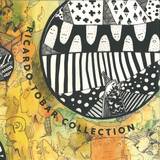
Let's focus on Ricardo Tobar: Born in Chile and now residing in France, Tobar picked the "creative border crossing" as the common thread for his album "Collection". Musical experimentation and crossing musical borders - Tobar refers here directly to the style and sound of the great new-wave-bands of the 80s and 90s. With the help and influence of their new electronic instruments (that often met classic rock guitars) the post-punk-electronic-movement turned almost everything upside down. No matter if the result was moody and mysterious or romantic and hedonistic, all sounded new and different back then and paved the musical path for a whole generation - the reverberations of that episode are noticeable until today.
Tobar plays with the musical approach of the post-punk-era, he mixes, merges and experiments fearless with styles and moods. He creates a wide range of "own styles" and even dives into abstract sound fields - listening electronic in best form! Ricardo Tobar breathes the air of his own musical universe and is not refering to the typical styles of this genre - you won't find any Detroit, Berlin or Sheffield reference here. Although produced in France, Tobar's album doesn't have anything of the sweet and lovely french listening touch. It also won't beam you into the north of England and the grey and cold Sheffield winter like so many other electronic albums try to do.
"Collection" contains full compositions, sound collages, experimental sounds and even proper beat based tunes. Tobar rather creates than produces and is presenting a bigger picture with his collection. Many electronic music artists are trying to do this however Tobar delivers a collection with an impressive range and it seems he did all this in an almost nonchalant way. He plays and combines his instruments and sounds at the same time very sensitive and harmonic but also brave and dissonant without risking to be inaudible at any point. He creates atmospheres by using electronic sounds and layers. Listening to the sound of "collection" almost appears like reading an acoustic book. This album is full of interesting sounds and ideas and is far from being boring or even too demanding.