Through the medium of a distinctly synthesised, sustained ambience, seasoned artist and composer Jasmine Guffond arrives on OOH to explore the tension between technology and human creativity in an increasingly ambiguous playing field.
Alien Intelligence came into being during Guffond's residency at fabled Parisian institution GRM in 2021. While learning how to generate sound and make music with the in-house Serge modular synthesiser, the Australian artist noticed the typical role of human input for machine output was being subverted by the behaviour of certain electronic elements, which came to exercise their own influences on the direction of the music.
Taking this idea one step further, Guffond proceeded to explore the programming environment MaxMSP, a customisable interface which allowed her to blur the lines between human input and machine directives even further. Across the three extended pieces which make up Alien Intelligence you can hear the results of Guffond's inquisitive approach as she coaxed the machines into bringing their own ideas to bear on the music.
The tension inherent in this thematic duality is mirrored by the contrast between glacial ambience and chaotic interference across the album. On 'Serge & Maxine Variation One' the presiding mood is a slow and patient one, as undulating waveforms rich with harmonic overtones spill out over one another across 10 minutes. The track's latter passage, driven by steadily intensifying oscillations, is then interrupted with an unexpected flurry of pitch shifting. This kind of complex technical movement features more prominently at the start of 'Serge & Maxine Variation Three', which then gradually shifts into a gentler ebb and flow of rising and falling frequencies.
Angled slightly differently and residing on the B side of the album, 15-minute quiet epic 'Serge & Maxine Variation Two' bookends a louder passage of synth work with serene, sustained notes that ring out a sort of hymnal melody. Throughout, the movement in the music evolves in subtly modulating, hypnotic, ways, but there are also unexpected turns or melodic diversions which feel much more incongruous. In its closing stretch, the notes dart around more freely as though played by hand, but it's hard to be sure whether these shifts in the otherwise delicate tonal music were a human conceit or a programming by-product. In the end, the two inputs logically become one.
As Guffond says herself, "More-than-human logics emerge, a kind of alien intelligence that questions an assumed central position of human subjectivity in socio-technical assemblages and considers the philosophical, socio-political and cultural implications beyond music practice in an increasingly technologically mediated world."
As AI creeps into art as much as other aspects of modern life, Guffond applies her playful instinct to the theme of these works by re-considering machine intelligence as 'alien', crediting its contributions with a more robust yet enigmatic identity in the creative process, leading to an end result which is far from artificial.
►Mastered by Giuseppe Ielasi, cover art by Ilan Katin, layout by incepBOY, photo by Camille Blake, words by Oli Warwick
"Creation" is the debut album by British songwriter, singer & pianist James Sayer and includes the three singles "Living It Up", "Chemistry" and Cherry".
After spending many years playing for others, Sayer says that "writing my own music happened completely by accident. But I'm so glad I recorded that one demo which ultimately spurred me on to create a full album all this time later." Sayer, often called an old soul due to his love of classic song writing and bygone eras comments that although technology has changed the landscape of the musical world today, making a record organically was still a must for him.
Originally from Birmingham, Sayer's fascination and love of music began at a very young age when he learnt all thing rhythm & blues and rock'n'roll from his dad's music collection of artists such as Elton John or Jerry Lee Lewis, later also finding a love of soul artists such as Michael McDonald, Aretha Franklin, Van Morrison and Earth, Wind and Fire. Sayer moved to London in 2012 where he began performing almost every night in piano bars, clubs and pubs; spotted by the likes of Tom Jones whilst holding down a residency at the world-famous American Bar at the Savoy hotel.
About recording "Creation" he says: "I've tried to capture all the styles I love - Soul, Rhythm & Blues, Gospel and classic pop music – but still create a sound that is all mine".
EVOLV is a visionary window into the mind of Dubfire, the journey of the ‘hybrid’ being and its evolution. Last year in October, an 11-track debut album was released on his long-standing SCI+TEC imprint. And now, just over a year later, Grammy award winning producer Dubfire returns to that sonic discourse, drafting in an impressive array of names to re-interpret the material, and accompanied by Dubfire's new audio-visual EVOLV show which picked up where the critically acclaimed electronic performance experience HYBRID had left off.
The eclectic package will include such notables as Glaskin, Arjun Vagale, Nadia Struiwigh, Mathimidori (dub alias of Mathias Kaden), Maral, Decka, Carl Craig, Truncate, Drumcell, Chris Liebing, Radio Slave and Luke Slater who have all given the original music in their own unique style.
With a career spanning over 3 decades, Dubfire has achieved global success as an artist with relentless drive, talent, and intuition. Pioneering commercial notoriety came initially as one half of the Grammy Award-winning (2001) duo Deep Dish, before embarking on a truly groundbreaking solo career in 2007. A career filled with timeless tracks include his early works, ‘RibCage’ (2007), ‘Emissions' (2007), ‘Roadkill’ (2007) and the highly acclaimed ‘Grindhouse’ (2009) remix from Radio Slave which led to a host of other notable projects over the years.
Collaborative work highlights include projects with Miss Kitten, Luke Slater, Flug, and Oliver Huntemann, as well as co-producing two songs on Underworld’s Barking album. A true artist, he has always been heavily invested in exploring performance technology, unveiled to wide praise with his HYBRID live show. A two-year world tour commenced in 2015 and was followed by his retrospective album, A Decade Of Dubfire (2017), a celebration of his immense output during the first 10 years of solo artist stardom. EVOLV is Dubfire’s debut solo artist album.
– Meow, Doc! Are you serious?!
– Hopefully, now we'll be able to program the cognitive processes of different creatures.
– The intranasal mutagen?
– With consciousness, too!
Spacelunch devoted all of his spare time to developing the virus. Once in the body, its molecules activate: they replace the configuration of neurotransmitters and start evolving independently. A small dosage of vapours reactivates brain navigation, whereas readings are taken from a nano-oscilloscope and sent to a tablet for further analysis. Augmented reality has long gone beyond virtuality, ladies and gentlemen!
The simulation of the collective mind has undergone a series of public tests initiated by enthusiasts from the Venus Biomolecular Institute. After a data leak from the lab's journal, the dangerous technology could have fallen into the hands of Aerospace Corporation, but luckily was intercepted by the Meta-Warp operational unit. Putting the development on pause, they shut down access to any information about the project. It remained unexplored, but the Professor's inquisitive mind wanted to understand the discovery that could change the future.
Rudimentary Music garners worldwide high praise with their first release. A strong, fluid and very well-rounded EP with something for every electronic dance fan. The Barcelona based butItalian born artist Deiv, sets the foundation and tone with the stunning 'Paranoik Android' EP forthe fledgling label whose everyday life revolves around and embodies the synergy and spirit of dance music culture. 'Take control of your shit' is the first cut and is the ideal smooth late night electro jam. A sexy, melodic deep machine groove that is nothing short of pure class. Thishighly addictive track is sure to get many repeat plays. To complete the A-side is the technostormer 'Technology'. A body grabbing bassline that will surely get everyone's attention. Thiswicked,robotic workhorse is guaranteed to move the main room by any DJ who selects it.Inspired by the label's search for music that fits every part of life, this track encapsulates thepower of techno in the late night. The reverse side showcases the title track 'Paranoik Android'.It rides a strong balance of house and funk sentiments for the primetime slot on the dancefloor.The killer acid line, island percussion and blips and bleeps, makes this a great ying and yang of futuristic and retro sounds. The title track, it stands out from the crowd but here in this EP, it blends perfectly into the wide array of vibes blossoming here. 'Dolphins' closes out the EP inelegance. With the soothing almost aquatic melody notes it exudes the perfect vibe to drift away your cares to. Overall, this is a very versatile EP with a track for every emotion and time during a night out with dance music
Teenage twins Ruffy & Tuffy deliver an apocalyptic slab of synth drenched Rub a Dub with what could be the first use of Vocoder in Reggae for 1982’s If The 3rd World War Is A Must. This release draws from both the original 12” and the master tapes combining the best vocal cut and dub versions.
Though not prolific musicians, many may recognize the twins sparring in matching red Pony track suits in Ted Bafaloukos’ iconic 1978 film Rockers. Ahead of its time in almost every way, the lyrics dealing with global war and the nefarious use of technology, sadly seem as relevant now as they did in 1982 though some of the actors may have changed. Surrounded by elite reggae musicians from childhood it was nothing unusual for the brothers to be in the presence of elders like Gregory Isaacs, Burning Spear, Augustus Pablo, Jacob Miller and especially Bob Marley at recording sessions and in daily life.
If The 3rd World War was their first venture into the studio as solo artists in 1982 first at Channel One and then Tuff Gong where Wailers alumni Earl Wire Lindo and Tyrone Downie (keys and Vocoder) laid down their space age additions to the track creating a genre bending Reggae /Electro/ Dub concoction that still sounds fresh 41 years later. Wire Lindo & the twins took the mastertapes to Texas based mechanical engineer and producer Stephen “Iya” James who ran Marcus Garvey Records and the label African Unity Productions in the unlikely Reggae hub of Austin Texas. The track was not released until two years later in 1984 as a 12” which had a run of only 500 copies and is no easy find these days.
The Stallions compilations have become a benchmark of Bosconi's position as one of the leading house and techno labels operating out of Italy. This third instalment marks a shift in sound which also comes full circle to the music that first inspired founder Fabio Della Torre as a DJ and producer around the turn of the millennium, when punchy electro production was driving European house and techno into new zones.
All the artists featured on Vol. III are Italian, holding true to Bosconi's commitment to supporting local talent from Florence and across the country. Amongst the familiar faces is Della Torre's own Minimono collaboration with Ennio Colaci, which indulges a proudly manic palette of tweaked bleeps and dirty low-end. Elsewhere, recent additions to the Bosconi fold include veritable legends Alexander Robotnick and Marco Passarani, who infuse their unpredictable approaches to electro-techno and italo disco with ear-snagging synth-pop and driving analogue box jams respectively to create vibrant, impassioned dancefloor monsters.
The Mechanical Man is an alias from Nicola Altieri, who leans in on a classic Italo arpeggio to create a seductive club sound which builds on his recent Bosconi EXV EP, while Cixxx J switches from the mood of his own Bosconi appearance for a new alias Queen Of Coins and a pivot towards heads-down electro-techno-trance with a whiff of International Deejay Gigolos. Lapucci builds on the promise of his 2021 Bosconi 12" with a sentimental fusion track which lands somewhere between old school Italo house, the snappy pulse of EBM and crisp 00s-era electro house. Meanwhile modern day Italian techno legend Lucretio of The Analogue Cops makes his first appearance on Bosconi with the playful video game stylings of 'Gradius'.
A great deal of space on Vol. III is given over to emergent talent, ranging from Miguel Herr's twitchy detroitian synth-pop braindance and Twovi's vocoder-charged electro funk to DJ Rou's jacking ghetto house flavour. Giammarco Orsini and Jacopo Latini appear as Data Memory Access and deliver an emotive, punchy strain of machine soul. Feel Fly rounds the compilation off in bombastic style with an epic, cinematic workout which draws on Moroder-inspired drama without losing the forthright peak-time focus which binds the whole collection together.
Even the artwork on Vol. III serves as an opportunity to celebrate Italian creativity, as pioneering crypto artist Niro Perrone builds on his accomplished work in the field of NFTs and a background in music production to respond intuitively to the vibrant, synthetic sound of the compilation. For all the futurism in the music though, there remains a strong sense of human feeling which has marked Bosconi out since the beginning. The label remains as inspired and inspiring as ever, celebrating the fertile crossover when people manipulate technology to express themselves in an honest, playful way. Independent of wider trends or fashions, Bosconi remains true to its own idiosyncratic passions, and so Bosconi Stallions Vol. III stands proud as a compilation like no other.
Kenn-Eerik is an Estonian versatile sound artist and musician working in Tallinn. His passion for music began in early childhood when he witnessed accordion playing as a six-year-old boy. Encouraged by this musical experience, he learned various instruments over the years, engaged in choir singing, and participated in the activities of several bands. Even today, he is part of a band called Käsi which was created with friends from teenage times.
Kenn-Eerik became interested in electronic music during high school when he composed the first songs – inspired by dubstep and dub. Wanting to cultivate his technical music skills, he went to study sound technology at the Viljandi Academy of Culture. Along with his studies in Viljandi, he acquired his first drum machines and synthesizers, which, in addition to his personal creative activities, were also used to compose music for dance performances.
While his first DJ sets consisted mainly of dubstep, with minor detours into the areas of techno and house, by now this relationship has become the opposite – techno and house beats have become more concrete and present, but the influences of dub and dubstep are still there.
Over the years, Kenn-Eerik has played in several Tallinn clubs such as Ulme, Ups, Asum, Uni, Hall, etc. His live debut took place at the festival Kuru Plirr (2015). In addition to DJ and live sets, cooperation with several theaters operating in Estonia has deepened over time, where he has composed soundscapes based on original music.
Kenn-Eerik’s music can be characterized as a search for a certain state. His sound language is centered on organically flowing synth lines and minimalistic rhythms, which combine the deeper areas of techno, house, ambient and experimental music. Kenn-Eerik does not directly set genre restrictions for himself, nor does he limit himself in the choice of choosing instruments – anything that inspires and drives will be used, starting from analog synthesizers and ending with recorded sewer pipe sounds.
At times where technology inexorably infuses into humankind, Ammar808’s next adventures lays within the realms of Stambeli’s invisible creatures, an old genuine Tunisian tradition that has roots spreading out within the depths of the African continent.
Stambeli is a Tunisian musical therapeutic ritual that was implanted by afro-descendant communities. During the ceremonies, music, dance and chants are blended so as for some participants to reach the alternate state of trance while they are possessed by super natural entities. It is a syncretism between Islam and animist Yorisha religion’s voodoo beliefs, that has been disseminated during slave trade by Yoruba populations originating from current Benin’s gulf. Stambeli is a precious legacy the symbolizes the outstanding diversity and complexity of the North-African identity.
Using drum machines and analog synthesizers, he summons super natural creatures to visit our material world and taste human incarnations, form the audience’s collective experience. The album features vocals and gumbri from Bellassan Mihoub, who inherited his father’s knowledge and mastery, and currently embodies the avant-guarde of Stambeli’s revival. Two additional choristers round off the stage band, also playing the krekebs: these are pairs of large castagnet-like instruments oscillating in the limbo between binary and ternary rhythmic patterns. They breathe life and motion into this pagan communion, blessed by VJ Sia original visuals synchronized to the thundering music.
Super Stambeli is a contemporary interpretation of the Stambeli traditional repertoire, processed through a time-travel washing-machine, a parallel-dimension earthquake portal, that aims to echoes ancestral ceremonies through sub-harmonic speakers. It’s a dialogue between the wailing of the gombri, known to call for the spirits to descend into the bodies of the participants, but this time AMMAR808 directs them straight into the digital circuits of his clockwork-crafted machineries.
Crucial Toronto rapper / producer / DJ myst milano. returns with thrilling new album Beyond the Uncanny Valley, an exhilarating ride through hedonistic experimental hip-hop and house music that reinterprets the breadth of Black electronic music with addictive singular energy.
“I offer Beyond the Uncanny Valley as a working anthology of Black electronic music across generational, geographical and genre lines,” myst milano. writes. “I thought a lot about staples of Black art across the world that can be traced back to Africa, and that link the diaspora regardless of where our people end up and throughout all eras.”
A mighty example of this omnivorous and multifaceted awareness of Black creativity, Beyond the Uncanny Valley is a tidal wave, swallowing up Canadian House, Detroit Electro, Chicago Footwork, UK Jungle and Dubstep, Jersey / Baltimore / Philly Club, Southern Hip-Hop and West Coast Funk into the trail of euphoric destruction left by myst milano.’s trademark grimy, sweaty, lusty neo-R&B take on contemporary hip-hop.
Opening with “Thirteen”, the album hits with punch and immediacy. The track’s thumping kick and swirling, haunted synthesis represent myst milano.’s keen ability to nurture perfect symbiosis between production, arrangement and lyrical theme. It is equal parts dreamy, provocative, sexy and powerful, and, together, entirely unique to myst’s creative voice. As with Beyond the Uncanny Valley as a whole, it is evocatively storytelling, mixing vivid imagery with slick wordplay. We are introduced to myst’s groupie (formerly “a hater”), as their crew “causes damage you can’t afford”, while witty threats and erudite posturing flow out over a steadily expanding instrumentation that mimics myst’s breathless, sweatbox DJ sets.
“Ring Ring” is another key track. Glitching nuclear alarms give way to a bulldozing kick drum and in-the-red distortion on myst’s voice. The vocals hit at breakneck speed while the production retains a dirty, dirging stomp. It is formidable, intense, fun, and intimidating in all the right ways.
Underpinning the album is a mechanised female voice that has possessed the record like a replicant ghost. “When we go beyond the uncanny valley, we reach a state of perfect harmony where the robot has mimicked the human to the point of being indistinguishable,” myst says. “Who are we when we become perfect imitations of what the world wants instead of who we really are, which is imperfect and flawed and a little uncanny, anyway?” While the music of Beyond the Uncanny Valley is human, with real emotion and expression, it occasionally flirts with the beyond, reaching into a near future where reality and technology bleed into one.
Beyond the Uncanny Valley is myst milano.’s second full length, following 2021’s rapturously received debut Shapeshyfter, and a monstrously successful accompanying house remix on the UK’s legendary Defected Records.
Sound artist and researcher Amit Dinesh Patel aka Dushume began working in the field of music technology in 2000. In 2021, he began a research project addressing the distinctive lack of visibility for Black and Brown artists within the field of experimental music and sound: "Exploring Cultural Diversity in Experimental Sound", hosted at the Sound/Image Research Centre, University of Greenwich.
Disruptive Frequencies is one output of this research. Patel, together with five other Black and South Asian experimental and electronic artists recorded new music to release as part of this compilation:
Crossing noise, high-energy electronic music, deep bass, ambient and experimental soundscapes, this compilation is a statement challenging institutional Whiteness, racist biases, lack of visibility and access to experimental practices. Each contribution pushes the boundaries of sound manipulation, turntablism, field recording, audio fragmentations and sound collage techniques.
David Byrne & Fatboy Slim’s acclaimed 2010 album Here Lies Love receives its first-ever vinyl release to coincide with a new production opening on Broadway this summer. Here Lies Love is a double-disc song cycle – improbably poignant, decidedly surreal, surprisingly thought provoking – about the rise and fall of the Philippines' notorious Imelda Marcos. It was conceived by David Byrne; composed by Byrne and DJ/recording artist Fatboy Slim, AKA Norman Cook; and performed by a dream cast drawn from the worlds of indie rock, alt country, R&B and pop. Byrne's taste in collaborators is as imaginative as it is impeccable, including Cyndi Lauper (who recounts, to lighthearted disco beats, Imelda's courtship with Ferdinand Marcos), Steve Earle (as the power-hungry Ferdinand), Dap-Kings vocalist Sharon Jones (recalling Imelda's introduction into New York society) and Natalie Merchant (as spurned Imelda confidante Estrella, anticipating the onset of martial law). Along with vocals turns from such stars as Tori Amos and the B-52's Kate Pierson, Byrne works with rising indie rockers St. Vincent and My Brightest Diamond; New York chanteuses Nellie McKay and Martha Wainwright; and dance-music divas Róisín Murphy and Santigold. Byrne himself appears as the voice of imperialistic America on ‘American Troglodyte’, a send-up that wouldn't have seemed out of places in Talking Heads' True Stories.
Byrne originally envisioned this as a musical theatre piece, to be mounted in disco and nightclub settings, reflecting the globe-trotting Marcos' taste for such velvet-roped spots as Studio 54 and Regine's. In 2006, he performed work-in-progress versions to enthusiastic audiences at New York City's Carnegie Hall and the Adelaide Festival in Australia. While plans for a US theatrical production continued to evolve, he delivered this unique recording. The award-winning theatrical production eventually premiered at The Public Theater in New York in 2013, travelled to London’s National Theater for a sold-out run (2014–15), and was remounted at the Seattle Repertory Theater (2017).
Here Lies Love has an effervescent disco feel, redolent of Fatboy Slim's own dance-floor anthems, with warm undercurrents of the Latin rhythms that have percolated through Byrne's recent solo work. The sunny arrangements act in counterpoint to the reality of the Marcos' increasingly repressive regime, reflecting the imagined inner life of the glamour-obsessed Imelda. Explains Byrne, "For me, the darker side of the excesses are, for the most part, a matter of record. A lot of the audience is going to come with that knowledge already. What's more of a challenge is to get inside the head of the person who was behind all of that, and understand what made them tick." Byrne offers no judgment and avoids the obvious – there is no mention of Imelda's infamous shoe collection.
Many of Byrne's lyrics are, astonishingly enough, constructed from actual Imelda quotes, including the project's title, the words that Imelda, now returned to the Philippines from US-assisted exile in Hawaii, would like to have inscribed on her gravestone. In addition to his new liner note, Byrne illustrates the story with archival photos. In a detailed preface, he reveals what drew him to this subject and the bumpy route he took to launch the project and, ultimately, record this album. The booklet is indeed a page-turner, just as Here Lies Love is a wonderfully old-school album that rewards start-to-finish listening. Once again, Byrne – beloved as musician, thinker and bicyclist-about-town – reveals the breadth and singularity of his vision.
The new production of Here Lies Love will premiere at the Broadway Theatre in New York City. Performances begin June 17, ahead of an official opening night on July 20. Tony Award winner Alex Timbers (direction) and Olivier Award nominee Annie-B Parson (choreography) reunite with Byrne (concept, music, and lyrics) and Fatboy Slim (music) to bring Here Lies Love to Broadway, continuing a ten-plus year collaboration on the project. Tom Gandey and J Pardo contribute additional music. Here Lies Love is produced on Broadway by Hal Luftig, Patrick Catullo, Diana DiMenna for Plate Spinner Productions, Clint Ramos, and Jose Antonio Vargas. The staging at the Broadway Theatre will transform the venue’s traditional proscenium floor space into a dance club environment, where audiences will stand and move with the actors. A wide variety of standing and seating options will be available throughout the theatre’s reconstructed space. The producers of Here Lies Love said, “As a team of binational American producers – Filipinos among us – we are thrilled to bring Here Lies Love to Broadway! We welcome everyone to experience this singularly exuberant piece of theatre. The history of the Philippines is inseparable from the history of the United States, and as both evolve, we cannot think of a more appropriate time to stage this show. See you on the dance floor!”
David Byrne’s recent works include the launch of Reasons to be Cheerful, an online magazine focused on solutions-oriented stories about problems being solved all over the world (2019); Joan of Arc: Into the Fire, a theatrical exploration of the historical heroine that premiered at the Public Theater in New York (2017); The Institute Presents: NEUROSOCIETY, a series of interactive environments created in conjunction with PACE Arts + Technology that question human perception and bias (2016); Contemporary Color, an event inspired by the American folk tradition of color guard and performed at Brooklyn’s Barclays Center and Toronto’s Air Canada Centre (2015); Here Lies Love; Love This Giant, a studio album and worldwide tour created with St. Vincent (2012); and How Music Works, a book about the history, experience, and social aspects of music (2012).
Byrne curated Southbank Centre’s annual Meltdown festival in London in 2015. A co-founder of the group Talking Heads (1976–88), he has released eight studio albums as a solo artist and worked on multiple other projects, including collaborations with Brian Eno, Twyla Tharp, Robert Wilson, and Jonathan Demme, among others. He also founded the highly respected record label Luaka Bop. Recognition of Byrne’s various works include Obies, Drama Desk, Lortel, and Evening Standard awards for Here Lies Love; an Oscar, Grammy, and Golden Globe for the soundtrack to Bernardo Bertolucci’s The Last Emperor; and induction into the Rock and Roll Hall of Fame with Talking Heads. Byrne’s work as a visual artist has been published and exhibited since his college days, including photography, filmmaking, and writing. He lives in New York City. In addition to 2019’s cast album for American Utopia on Broadway, Nonesuch has released eight other David Byrne records since 2003, including 2018’s American Utopia studio album and two versions of his musical Here Lies Love.
Drumcode is set to release ‘Elevate’ a 10-track compilation showcasing cuts from a fresh array of label family and friends, including BEC, Juliet Fox and rising talent Chelina Manuhutu, Tini Gessler and DJ Dee. The project is also testament to techno’s global appeal with artists coming from Japan, China and Australia, as well as across the UK and Europe.
Always with an eye on the future, ‘Elevate’ sees a total of seven artists make their Drumcode debut split across three vinyl EPs. The third and final part sees Tini Gessler, Marie Vaunt and BEC let loose three future Drumcode classics.
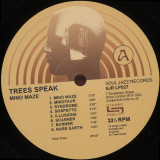
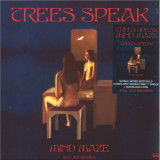
Mind Maze is, amazingly, Trees Speak’s fifth album to be released on Soul Jazz Records in the space of little over two years– an output matched only by the intensity of their music created during this short time.
The first pressing only of the album comes with a bonus seven-inch single containing two tracks that are not available on vinyl anywhere else.
As with all their previous releases, ‘Mind Maze’ is a mind-boggling tightrope walk across an array of musical influences that seamlessly create the unique present-day world of Trees Speak.
The band’s sound is characterized by a combination of German krautrock motoric-beat rhythms, angular New York post-punk attitude, 60s spy soundtracks, psych, rock, jazz, and 70s synthesizers and vocoders. There is also a cosmic spatial awareness to their sound; both personal inner space and galactic outer space, as well as a wilful pushing of sonic boundaries.
Trees Speak are a musical duo based in Tucson, Arizona, composed of Daniel Martin Diaz and Damian Diaz. Their music is heavily influenced by the cosmic magic of the natural desert landscapes of Arizona, creating a unique and captivating sound that is both experimental and innovative.
Here you will find the myriad sounds of 1970s German electronic music (everything from Can to Cluster, Popul Vuh to Tangerine Dream); 1980s New York post-punk and synthcore (from No Wave to Suicide); John Barry’s 1960s movies, John Carpenter’s 1970s horror. You will also hear the influences of French and Italian progressive rock (Magma, Goblin) as well as cosmic, new age and experimental space soundscapes …. an almost endless list of diverse influences that ebb and flow like an ocean of sound, in the process creating a truly unique soundscape that Trees Speak have made wholly their own.
The name Trees Speak reflects their interest in the concept of using future technologies to store information and data in trees and plants, with the idea that trees communicate collectively. This interest in nature and technology, combined with their passion for experimentation, has led Trees Speak to create a truly one-of-a-kind listening experience that is both unique and engaging.
If you ever wanted to hear Can, Neu!, Destroy All Monsters, Pere Ubu, electric eels, John Cage, Liquid Liquid, Tangerine Dream, Suicide, Laurie Spiegel, Art Ensemble of Chicago, John Barry, Mother Mallard’s Portable Masterpiece Company, Sun Ra, Stockhausen, John Carpenter, Electro-Acoustic and Musique Concrete and Mars in one band - then this is it! Trees Speak are a band that defies categorization and offer an eclectic listening experience, both exciting and memorable.
The two bonus tracks (‘Seraphim’ and ‘Orpheus’) included with the album give us a further window into the complex mind maze of the group - two stunning acoustic tracks that explore a distinct early 70s sound of Yes, Argent and other progressive rock accolytes.
Eternally Frozen consists of a series of canon based compositions for brass ensemble, percussion and synthesizer by Andrea Belfi. The canon is an ancient compositional technique in which an initial melody is imitated at a specified time interval by one or more parts, creating illusionary never-ending musical journeys.
The work is inspired by the evocative image of the Deprong Mori, a mythological bat with the alleged ability to fly through solid matter by bending atoms by its natural skill of audio echolocation. The myth suggests that one of these bats had been “eternally frozen” in a wall of solid lead in 1952 by the researcher of the Rockefeller University, Donald R. Griffith. This story is exhibited in a display at the Museum of Jurassic Technology in Los Angeles, an institution renowned for both speculative, fantastical reinforcement of mythology and playful and beguiling distortions of mysterious could-be truths.
Both the canon and the “frozen” Deprong Mori are man-made illusory simulations of eternity. Their attempt is to create mirages, where the insinuation of facts is more meaningful than the reality.
After many years of sonic explorations with percussion, drums, and electronics, Belfi is here projecting himself as a composer through the direction of an astonishing brass ensemble in the realization of these canonic works. There are evident echoes of the works of Arthur Russell, Miles Davis, Moondog, William Basinski, and the Italian soundtrack tradition of Ennio Morricone and Egisto Macchi.
From the deep caves the screeches echo and the footsteps get closer. Welcome label head DJ Life as he takes you on a journey through the swamplands where goblins groan and the magic forms. A heady 4 tracker of weird and wondrous tech house that embodies the sound of Program. Another relic along the way, are you willing to take part?
**Debut album from former 'Eighties Matchbox B Line Disaster' front man Guy McKnight's new band.** **ORANGE MARBLE COLOURED VINYL - VERY LIMITED!!** The DSM IV’s debut album, “NEW AGE PARANOIA,” is an impressive collection of stories, beats, guitars, and noise. The album seamlessly weaves together sobering but dream-filled songs that explore the ways in which our collective minds are influenced by mass media, entertainment industries, and social media. Formed by Guy McKnight of critically acclaimed and cult favourite The Eighties Matchbox B-Line Disaster. The DSM IV has a dark sound that blends noise-rock, synth-pop and industrial, that delivers a unique musical experience. Their music is cacophonous and epic, featuring rich textures and melodic hooks that keep listeners captivated. The band’s powerful soundscapes, combined with their thought-provoking lyrics, create a mesmerizing atmosphere that both entertains and encourages introspection. The album prompts important questions about our society, such as what’s driving the normalization of a narcissistic culture that prioritizes personal desires over altruism. It delves into the ways in which technology, social media, and mass media shape our collective psyche and affect our relationships with ourselves and each other. The DSM IV’s music offers a timely and compelling commentary on these issues. The DSM IV is a band that creates music with a powerful message that resonates with people who feel that a kinder world is possible. Their songs are both nasty and nice, reflective and entertaining. With “NEW AGE PARANOIA,” The DSM IV has crafted an album that will captivate and inspire listeners, while also prompting deeper reflection on our society’s values and priorities.
Foundation is set in the future when the world is barely remembered and humans have colonized the galaxy. The record introduces Donnie Ozone, a brilliant visionary rapper and psychohistorian whose job is to use lyrics and rhymes to predict the future. It is divided into six chapters, each showing a part of the bigger picture portrayed on the outstanding cover by Infidel.
Teslasonic gathers together the galaxy's top scientists and artists on a bleak outer planet and sets out to preserve the accumulated knowledge of humankind and begin a new human galactic empire based on Art, Science and Technology. He calls his sanctuary the Foundation and designs it to withstand a dark age of ignorance, barbarism, and warfare that he predicts will last for a long time.
Speicher 125 is a most auspicious collaboration between two great, inimitable voices in techno: Kompakt co-founder Michael Mayer, and Magazine’s own Barnt. They’ve both been productive of late, Mayer with his “Brainwave Technology” EP in 2021, Barnt with his first release on Kompakt, "ProMetal Fan Decor Only Product" in 2022. Of course, they’re also busy with their respective record labels, and international DJing schedules.
You may already have heard their first track, which appeared on Michael’s "&" album from 2014, the psychedelic “Und Da Stehen Fremde Menschen”. For Speicher, though, they set their sights firmly on the peak time dance floor – the result is two stunning cuts of techno euphoria.
On “Teller” Barnt and Mayer unleash a synth storm, tense and thrilling. Percussion piles up against the incessant buzz, but before too long we’re submerged in waves of dense texturology, making the track an object lesson in tension and release. “Duration” is a bittersweet anthem about "life long love". A moving voice tells us about "faith in life" while gleaming, synths, choral swarms and snares shower down from above to form an epic tale about duration and devotion.
Weirding the groove and updating the emotions, Speicher 125 is a monster.
Speicher 125 ist die Zusammenarbeit zwischen zwei unnachahmlichen Stimmen des Techno: Michael Mayer, Mitbegründer von Kompakt, und Barnt von Magazine. Beide waren in letzter Zeit nicht unproduktiv, Mayer mit seiner "Brainwave Technology" EP, Barnt mit seiner ersten Veröffentlichung auf Kompakt, "ProMetal Fan Decor Only Product". Natürlich sind sie auch mit ihren jeweiligen Plattenlabels und internationalem DJing beschäftigt.
Vielleicht hast Du schon ihre erste Kollaboration gehört, die auf Michaels "&"-Album von 2014 erschienen ist, das psychedelische "Und Da Stehen Fremde Menschen". Für "Speicher" haben sie den Peak-Time-Dancefloor ins Visier genommen - das Ergebnis sind zwei atemberaubende Stücke voller Techno-Euphorie.
Auf "Teller" entfesseln Barnt und Mayer ein Synthie-Gewitter, spannend und mitreißend. Die Percussion türmt sich gegen das unaufhörliche Summen auf, aber schon bald tauchen wir in Wellen dichter Texturen ein, was den Track zu einer Lehrstunde in Sachen Spannung und Entspannung macht. "Duration" ist eine bittersüße Hymne über "lebenslange Liebe". Eine bewegte Stimme erzählt uns vom "Glauben an das Leben", während schimmernde Synthies, Chorschwärme und Snares von oben herab eine epische Geschichte über Ausdauer und Hingabe prasseln.
Speicher 125 ist ein Monster, das den Groove neu erkundet und die Emotionen auffrischt.
Bog Bodies - the band consisting of Robert Stillman, Anders Holst and Seán Carpio delve into deep time to carve sonic abstractions across their self-titled new album on MIC.
Navigating the “liminal territory between noise and signal, chaos and control, form and abstraction,” the trio recorded and mixed the album on an
8-track cassette machine. Bog Bodies is a searching inquiry into the mythologies and magical undercurrents that knit together our existence in the information age.
Bog Bodies opens with a leftfield homage to Superman III, exploring the mythical qualities of technology through a series of angular horn lines that dissolve into the mire of feedback noise on the album’s raking, anthemic title track. Reverberating in tectonic sheets of sound on ‘One That Is Reflected In The Image Becomes All’ and Bog Bodies reaches its climax on the 11-minute ‘Cave Painting 2019’ - a subterranean epic of mystic force, drawn up from the earth in sweeping drones.
Bringing together their combined experiences playing with the likes of Manuel Göttsching, Luke Temple, The Smile and more recently Coby Sey.
“Preparing Singularity” is the debut album by Berlin-based EBM act Transhuman Rebirth, currently a one-man side project of renowned German synth-punk artist Ben Bloodygrave.
Already instantly recognizable on the European synth/wave scene and touring circuit with his high octane aggressive minimal synth, Bloodygrave started this new project over the past few years focusing more on classic, first-wave EBM, moulding the nine tracks on “Preparing Singularity” into a sound that’s recognizable to fans of the starting foundations of the genre. While retaining a sound that’s unique and solely its own, elements of minimal wave and synth-punk are fused in these propulsive tracks, with nods to old idols such as Deutsch Amerikanische Freundschaft, Front 242 and Absolute Body Control.
Transhuman Rebirth is subjectually futuristic to dystopian, interspersed with political statements. The lyrics focus on topics that are current and modern, including science, technology, surveillance and artificial intelligence — all delivered through Bloodygrave’s well-known vocal style with a sound that is much rougher and with compositions and sound designs that are more complex than his main Ben Bloodygrave persona.
Mind Maze is, amazingly, Trees Speak’s fifth album to be released on Soul Jazz Records in the space of little over two years– an output matched only by the intensity of their music created during this short time.
The first pressing only of the album comes with a bonus seven-inch single containing two tracks that are not available on vinyl anywhere else.
As with all their previous releases, ‘Mind Maze’ is a mind-boggling tightrope walk across an array of musical influences that seamlessly create the unique present-day world of Trees Speak.
The band’s sound is characterized by a combination of German krautrock motoric-beat rhythms, angular New York post-punk attitude, 60s spy soundtracks, psych, rock, jazz, and 70s synthesizers and vocoders. There is also a cosmic spatial awareness to their sound; both personal inner space and galactic outer space, as well as a wilful pushing of sonic boundaries.
Trees Speak are a musical duo based in Tucson, Arizona, composed of Daniel Martin Diaz and Damian Diaz. Their music is heavily influenced by the cosmic magic of the natural desert landscapes of Arizona, creating a unique and captivating sound that is both experimental and innovative.
Here you will find the myriad sounds of 1970s German electronic music (everything from Can to Cluster, Popul Vuh to Tangerine Dream); 1980s New York post-punk and synthcore (from No Wave to Suicide); John Barry’s 1960s movies, John Carpenter’s 1970s horror. You will also hear the influences of French and Italian progressive rock (Magma, Goblin) as well as cosmic, new age and experimental space soundscapes …. an almost endless list of diverse influences that ebb and flow like an ocean of sound, in the process creating a truly unique soundscape that Trees Speak have made wholly their own.
The name Trees Speak reflects their interest in the concept of using future technologies to store information and data in trees and plants, with the idea that trees communicate collectively. This interest in nature and technology, combined with their passion for experimentation, has led Trees Speak to create a truly one-of-a-kind listening experience that is both unique and engaging.
If you ever wanted to hear Can, Neu!, Destroy All Monsters, Pere Ubu, electric eels, John Cage, Liquid Liquid, Tangerine Dream, Suicide, Laurie Spiegel, Art Ensemble of Chicago, John Barry, Mother Mallard’s Portable Masterpiece Company, Sun Ra, Stockhausen, John Carpenter, Electro-Acoustic and Musique Concrete and Mars in one band - then this is it! Trees Speak are a band that defies categorization and offer an eclectic listening experience, both exciting and memorable.
The two bonus tracks (‘Seraphim’ and ‘Orpheus’) included with the album give us a further window into the complex mind maze of the group - two stunning acoustic tracks that explore a distinct early 70s sound of Yes, Argent and other progressive rock accolytes.
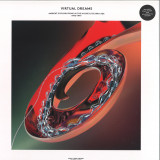
Music From Memory is delighted to be turning 50 with a special release: MFM050 - V/A - Virtual Dreams: Ambient Explorations In The House & Techno Age, 1993-1997 (3xLP/2xCD). The first in a series of compilations, alongside more in depth artist-focused releases, Virtual Dreams will delve into music produced during the 1990’s that redefined the boundaries of ‘Ambient’. This was music that explored the possibilities of Ambient music within a new setting, created often by House & Techno music producers for a world beyond dance floors but made very much with the pre and post-clubbing listener in mind.
When House and Techno exploded out of America in the mid 1980s a whole generation was redefined not only musically but also culturally and chemically speaking. Peaking, quite literally, with a second ‘Summer of Love’ in 1988, millions of young people across the world would experience the life-changing ups of a brave new world but with it of course came the downs; enter the concept of a ‘Chill-out’ room. Whilst early Chill-out rooms lacked a specific sound and were often soundtracked by music such as reggae and soul, slowly young Techno and House producers themselves would become increasingly interested in developing a futuristic ‘Ambient’ soundtrack to a world beyond the thud of the main room.
‘Ambient’ in this new age now though had sharper teeth than in Brian Eno's key text for ‘Music for Airports’, instead here the sounds were the mode of transport rather than the backdrop. While the melodies were pretty, the soundscape steered away from the pastoral, dreaming of outer-space and technology as opening up exciting new dimensions. Much like in the first Summer Of Love; the musicians were again exploring psychedelic, mind-altering and transcendental possibilities of music. And also much as in the first Summer Of Love, a psychedelic visual language would accompany the music. Though now the tracks could be accompanied by music videos, utilising early CGI techniques, they would look almost entirely to the future: envisioning technology, nature and humanity intertwined in a new Utopian future. Virtual Dreams of a better world.
From Ambient and early Chill-out classics, to lesser known one-off projects, as well as Ambient deviations by some of House and Techno’s leading producers, Volume One of Virtual Dreams features tracks by Bedouin Ascent, LA Synthesis, LFO, Marc Hollander, Mark Pritchard & Kirsty Hawkshaw, Richard H. Kirk and more.
To celebrate our 50th release the first 1000 copies include a holographic 'Virtual Dreams' sticker plus a special insert poster with artwork by Victoria Pacheco and design by Steele Bonus.
From a research work started in full lockdown three years ago, finally sees the light (or darkness) Echi Senza Fine, a remastered collection of sound material by Tasaday. Inspired by the controversial media story in 1971 of the discovery of a tribe in the Philippines that apparently had technology that had stood still in the Stone Age, the project officially borrows the name Tasaday in 1984 from the evolution of Nulla Perreale, in turn union of Die Form (musical part) & Orgasm Denied (performative part).
To put it in the words of Marcello Ambrosini, the Tasadays find in Die Form the controlled destruction of the form after its careful design and construction, while in Nulla Iperreale the spontaneity free from any possible superstructure. They declare themselves new primitives, not in the perspective of a nostalgic return to a pre-industrial or prehistoric external world, but in the exception of an inner experience in stark contrast to the leviathan of the single utilitarian thought that has dominated the West for centuries.
Their production-action does not allow itself to be tempted by the repetitiveness used by many industrial groups of those years, thus resulting seminal in the evolution of the scene. Their impulse to go further and not remain caged in the format of the new wave is witnessed by their particular sound vocabulary that sees, along with the use of conventional instruments, the use of DIY tools such as Chopper Vox and highly sui generis tools, like the Camolofono, cariole loaded with sheets, stones, tubes, chains and “garbage” of various shapes and sizes.
A discography dotted with primordial electronic experiments that reaches the new millennium through several vinyl records and an endless number of cassettes. From this undefined and mysterious number of tapes that is born Echi Senza Fine: 14 tracks (+ 2 digital bonuses) remastered, collected by Asymmetrical, who also edited the release insert, a collage of visual and textual material from their fanzines. A series of 300 transparent vinyl + Insert.
Bernard Szajner is a French composer, musical theorist, visual artist. He is credited with the invention of the laser harp, which he patented.
Between 1979 and 1983, Szajner released five albums of innovative and Avant-garde electronic music. He became renowned as a light and visual effects technician with artists such as Magma, Gong, Stomu Yamashta and The Who.
During the 1970s, he became a pioneer in the field of using laser technology as an artistic tool. As a measure of his success, he became renowned by his work with companies such as Cartier and Renault. In 1980, inspired by the novel, Nova, by Samuel R. Delany, he first created the laser harp. The laser harp became so successful that Jean-Michel Jarre ordered a version from Bernard Szajner for his tour of China. Despite all this, Szajner would only occasionally use this instrument in his own performances. He has stated that he would rather the public not know him solely for his work on the laser harp, and that it not be allowed to take precedence over his work in musical composition that it enables. This is also why he continues to develop other instruments which use other innovative methods of interaction, such as tactile or holographic.
Towards the end of the 1980s and disgusted with the music industry, he chose to abandon music entirely, and shifted his focus towards digital and visual arts, and theatre.
From Bernard Szajner : “These tracks are my preferred ones .... Ever ! ... For a long time I've been waiting for a record label to release what corresponds to what I like playing these days... Until Sleepers records decided to release this compilation which contains most of the tracks I enjoy playing live on stage ! At last my wish is fulfilled !”
Quoth is the brainchild of Alex Egan (Utter) and Mike Smaczylo (Half Edge). Singular in focus, this newly minted (sub)label harnesses the pair’s diverse and expansive tastes in weird and hallucinatory sonics, aimed squarely at the dancefloor. We're very proud to present ‘Barney’s Maze’, a four-track EP of twisted techno, drawing influence from IDM, bass, and older strains of textural music.
‘Barney’s Maze’ is the work of Nottingham producer Coralie (aka Steven Randall). It fell on our ears strangely dislocated from time and place. Its sound world is utterly modern, technical and weird; mangled sonics slip deftly out of reach of easy categorisation. But the spirits evoked feel ancient, spectral resonances of a psychedelic continuum older than memory.
Haunting voices predominate: human, not too human, but captured and distorted by technology, cut from any source of context and voided of meaning. The sonic spaces conjured here are cavernous; great cathedral-like structures resonating with the collapsed centuries of digital time. Broken techno rhythms roll echoing in an artificial void with synthetic voices, raised to synthetic heavens. Strains of the sacred glimmer within a form that’s entirely profane, the most human of constructs.
It’s a stunning EP - moody, atmospheric and gorgeous, each track a world unto itself, but fully primed for the dance. We recommend it wholeheartedly.
Coralie tells us it’s dedicated to his dog.
Available on hand stamped vinyl, limited to 200 copies (including insert), and digital formats. Mastered by Beau Thomas at Ten Eight Seven.
The official soundtrack of the 2021 'Rumba Rules, New genealogies' documentary movie by Congolese artist Sammy Baloji and Quebec filmmaker David Nadeau-Bernatchez. A deep dive into Kinshasa’s vibrant Rumba scene, including remastered classics by Brigade Sarbati, Werrason, Papa Wemba, Franco & le Tout Puissant O.K. Jazz
Rumba Rules, New genealogies is about contemporary rumba in Kinshasa, but this music has deep historical roots nevertheless. Born in the interstices of the colonial world and thriving during the three decades of the Mobutu era in Zaïre, Congolese rumba has been iconic and popular all over Africa for decades. The roots of Rumba are even deeper, and the many paths it evokes trigger the imagination. The story goes that this music came with the migration of the ‘Kumba’ drum and dance in previous centuries, African slaves having carried it all around the Americas and giving birth to Cuban ’Rumba’, Colombian ‘Kumbia’ and many others. With its varied rhythms, guitars and horns, through LPs and radio stations, Rumba came back to (re)conquer Africa throughout the 20th century, paving the way for new practices. One could say this music is a sort of palimpsest, a memory in itself of Atlantic migrations and histories.
Rumba is nowadays discussed all around the world, igniting many debates among the Congolese diaspora. Being the constant talk of the town sometimes overloads public debate, and many people get tired of this broken record. Thus, over the last decade, enterprising producers have worked hard to promote Kinshasa’s musical diversity and tried to emulate new sounds to reach worldwide attention. But Kin’ locals and urban dwellers will not be fooled : new shoots cannot hide the forest. Despite some difficulties to innovate, despite the pastoralist sermons and the diaspora fighters pushing for concert cancelations, rumba is still at the core of the Congo today. Talented artists such as Fally Ipupa, Ferré Gola, Brigade Sarbati and others are leading the fifth generation, and the religious world has also proven to be a nurturing environment for the cultural and economic dynamism of this music.
Focusing on the music of Brigade Sarbati and his Orchestra, this record offers a deep dive into Kinshasa’s rumba scene. Halfway between professional studios and Zoom H4 field recordings, the rumba herein is about today’s youth: dense, full of energy and breakdowns, insights and name-dropping. The cavacha rhythm, the solo and bass guitar’s playing style, the singing style and numerous dedications all resonate with the history of Rumba. In an era where digital sound is taking over, it is interesting to highlight the instrumental and live performance compositions of this music. Digital technology is indeed used during the recording and mixing phases, but Congolese rumba still relies strongly on instrumental playing. There is all that but also, many other things to hear on this record… It’s time to let it be. A big thanks to Étienne Tron for making it possible: it is on his initiative and through his patience that this album is in your hands today. (David Nadeau-Bernatchez, december 2021)
Six years on since his latest appearance on the label's main series, Stroboscopic Artefacts boss Luca Mortellaro, aka Lucy, returns with 'Dyscamupia' - an introspective, multisensory techno triptych revolving around the core sequence of Albert Camus' classic existentialist novel, 'The Stranger'. Also known as the 'killing of an arab', this pivotal moment in Camus' seminal book - which also inspired The Cure their song 'Killing An Arab' back in the day, is here evoked through three variedly intense, deep and hypnotic techno variations - flexing from 120 to 130, onto 140 BPM - each of them translating a particular step in the author's minute, focal-shifting depiction of the unknown man's murder on the beach.
Embodying Meursault for a minute, Jason Snell lends his voice to the narrator and his inner demons, casting a strange, ominous spell on the club and its crowd. Willing to explore and dig up further into the textural wealth and crucial warmth of organic sounds and synthetic treatments, Lucy made wise use of the binaural microphones technology during the vocals recording process, greatly enhancing the immersive force of his compositions to create thoughtful, dystopic narrative bubbles that stand in their own right.
The first number, ' Dyscamupia (Forward)', happens before and right until the actual killing - hence time flowing at a metronomic, heartbeat-like tempo; the second cut 'Dyscamupia (Pause)' takes place right after the nameless man's death, when the narrator enters a kind of existential 'pause' and a whole new flow of consciousness begins; the third sequence, 'Dyscamupia (Backward)', plumbs the depths of the action itself as played backwards, like an equally hazed-out and dizzying reminiscence of the sad encounter's mechanism. Don't let its seemingly conceptual framework fool you though, like most of his past output 'Dyscamupia' also aims to bring dancefloors to a steady simmer, whilst maintaining Lucy's ascending momentum towards an all-round genre-busting, thought-provoking apex.
Since he started producing music, Berlin-based American sound artist Jake Muir has been obsessed with sampling. His 2018 album "Lady's Mantle" was based on manipulated chunks of vintage Californian surf rock, and its follow-up, 2020's midnight symphony "The Hum Of Your Veiled Voice" was sourced from a wide variety of old records, and inspired by the work of experimental turntablists like Marina Rosenfeld, Janek Schaefer and Philip Jeck.
On "Mana", Muir looks back to a misunderstood musical movement. Around 1995, a group of New York producers and DJs - including DJ Olive, DJ Spooky and Spectre - pioneered a genre-dissolving sound by unifying hip-hop techniques with ideas pulled from dub, jungle, ambient music and industrial noise. Badged "illbient", it was a short-lived genre that felt like a high-minded psychedelic cousin of the UK's trip-hop.
Muir uses illbient as the springboard for "Mana", utilizing a selection of samples to inform his frothy drones and foreboding atmospheres. He ushers the material into 2021 by diverting it through his own contemporary worldview, attempting to recreate the hyperreal fantasy histories of Japanese RPGs (think "Dark Souls" and "Final Fantasy") and nod to sensual, tactile soundscapes of European industrial labels Staalplaat and Soleilmoon. The result is a magickal, sensory journey that's as physical as it is representational.
If the illbient producers were encouraging a burgeoning experimental music landscape to emphasize the tactile feeling of turntablism and sample manipulation, Muir is doing the same with "Mana". Each track heaves and breathes not just with his cultural reference points, but with layered, complicated emotions. We can hear joy, sadness, desire and anguish, obscured by disintegrating noise, hallucinogenic harmonies and sub-aquatic bass. It's electronic music that's rooted not in technology, but in touch.
Lost Souls Of Saturn (Seth Troxler and Phil Moffa) launch their new label ‘Holoverse Research Labs’ as the hub for both LSOS’s audio transmissions and their adventures in media and technology.
The first release HRL 001 presents special interpretations of Lost Souls Of Saturn’s eponymous debut album by the legendary Pépé Bradock. ’Cycloned by Pépe Bradock’ finds Lost Souls of Saturn, in the words of Bradock, “Dreamed, Weighted and Micro-Waved”. This is the album shattered into pieces and brought back together into new forms as the parts and files fall. Deconstruction or reconstruction? It’s unclear. What’s tangible is that the new tracks are very special, with Pépé bringing his unique talents to the control room / operating table.
“Bouillabaisse From Space Remix” is the sound of Pepe singlehandedly launching the French space program to find lost dance floors deep in our own cerebral cortex. “Pacific Limbo Bonus Beat” channels more of the same. This is head music for the dance floor. No amateurs.
Further remixes of tracks from the ‘Lost Souls of Saturn’ album are to follow in March from Mathew Jonson, Freedom Engine and Carl Craig.
The next release in the Phonica Special Edition series comes from Ukrainian duo Asyncronous who first came to our attention after hearing their critically acclaimed debut on Berlin label Slow Life, 'The Art of Fighting In A Dream'.
A Phonica favourite, it provided the soundtrack to many days in the shop throughout the year, culminating in its inclusion in our top ten Best Singles of 2019!
The Phonica Special Edition series is focused on one-off projects, special remixes or collaborations, highlighting music that is slightly left of the dance floor and pairing it with unique artwork.
This time featuring a beautiful piece by celebrated Ukrainian artist, Mykyta Storozhkov.
The pair initially joined forces in an effort to explore human imagination and life experiences through music, focussing on creating feelings and atmosphere rather than be constrained by genre limitations. The result on this EP is a hazy cosmic trip through their universe of synth swells, deep sub bass and meticulous percussion.
The journey begins on 'Padma Kirtanam' with a constant drone providing the backbone to a building tension scattered with drums. The tension releases and makes way for A2 'Shinkansen', a beautiful track with minimal drums and dubbed out synths which echo around the listener's ear. Closing the A side 'Volta' continues this aesthetic but adds a 4x4 kick drum upping the groove to a cosmic deep house jam.
'Avalanche' kicks off the B side of the record with a syncopated bass line and skitterish hi hats. The energy is at its highest level here and only stops to make way for the next track 'Blocks of Despair'. The tempo drops and drum hits reverberate above stretched out bass notes creating arguably the most heartfelt tune of the release.
The EP ends with 'Midnight Sun' an ambient excursion that invites you to drift off with Asyncronous into outer space.
Today we have many opportunities to discover the world and travel through it without leaving your own room. In the age of globalisation, with the help of knowledge, technology and imagination, you can instantly teleport yourself to mystical temples of India or see the sun above the polar desert at midnight. No more borders - we are connected like never before, as if we are not at different ends of the globe, but on a single and indivisible continent that is not mapped but exists in a plexus of global events, information flows and digital environment.
This is our common home. Our new Pangaea.
Australia's Nightime Drama welcome Steven Tang and label associate Trinity for a new collaborative EP that comes with two originals and remixes by Basic Soul Unit and Daniela La Luz.
Tang has long been serving up space age techno sounds on his own Obsolete Music Technology and the likes of Smallville, and Trinity is a DJ, live act and producer from Sydney who plays key clubs around Europe and releases on Counter Pulse and Coincidence as well as this one.
Innermost Search opens the EP with supple and rubbery drums carrying you off into the cosmos as spaced out pads bring real scale and emotional depth. It's a cinematic house track with vivid imagery. Then comes a remix from Dekmantel's Toronto mainstay Basic Soul Unit that is much more busy and robust. A wide lead synth line sprays about above drums which are much bigger and heavier. It's prime warehouse material to get people marching.
Tang & Trinity's Adrifting Voyage then slips back into a deep, cerebral house groove with oodles of reverb and dubby chords cut though by icy hi hats and transcendental pads. Last of all, Berlin's Daniela a La Luz (who has released on the likes of Cocoon and !K7) remixes this one into a lively, nimble house track with curious melodic riffs and tough drums appealing to both head and heel. It rounds out a fresh and powerful EP of futuristic house music.
Madame E. is a musical setting of Georges Bataille's 'Madame Edwarda', a short novel that interlaces themes of eroticism, religiosity and death, and was written under the pseudonym Pierre Angelique in 1941, during the occupation of Paris.
Composer Mirco Magnani wrote eleven electronic pieces and presented them to actor/singer Ernesto Tomasini. They turned them into songs by adding vocal melodies and together they produced a libretto based on Bataille's French text. The result of their dynamic interpretation is a hypnotically spellbinding performance where the audience is transported through worlds - ancient and new - and where Tomasini's haunting falsetto conveys the tormented emotions in Bataille's work and becomes the instrument that articulates the writer's famously obscure themes.
The experimental operatic performance captures the atmosphere of heightened human passion, reminiscent of opera seria and revisited through hazy and minimalistic lens. The resulting dark and twitchy mood amalgamates old vintage electronic devices, string piano and Stella Veloce´s touching violoncello. The stage becomes a space where Eros and Thanatos, real and virtual, analogue and digital, cluster and melody, spirituality and technology are intermixed and turned unidentifiable, hence collapsing the binary logic of dualism.
Written by Magnani/Tomasini and produced by Mirco Magnani, with lyrics taken from "Madame Edwarda" by Georges Bataille, Madame E. was developed between Berlin and London where Magnani and Tomasini are respectively based. Recorded in Berlin, mastered by Murcof and released by Magnani's label Undogmatisch, a collective that also includes Nicolas Defawe (Urban Spree) and Valentina Bardazzi, the painter responsible for the album artwork.
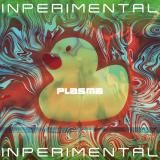
Inperimental is a bold return from Lithuanian electronic pioneers Plasma, presenting a meticulously crafted double LP that explores the intersections of techno, ambient, and forward-thinking electronic sound. Every element — sound, structure, and visual identity — is
intentional. This is not a collection of experiments, but a fully realized sonic architecture shaped by decades of experience and analog mastery. This vinyl edition is more than just an audio release — it's a multi-sensory experience.
The gatefold cover and packaging feature hidden artwork that can only be revealed using included red-lens glasses. This visual element isn’t just a gimmick — it reflects the same intentionality that defines the music. With no room for improvisation or trend-chasing, Inperimental is a precisely executed statement in both sound and form. The album blends ambient tones, analogue warmth, and dancefloor rhythms. It demonstrates a refined sound palette: humid techno grooves, cosmic textures, and cinematic depth.
Inperimental is described by the artist as a voyage where technology meets pure emotion — “a realm where warmth intertwines with technology, dreams blur into reality, and pure, authentic sound reigns supreme”. A digital download card is also included with each vinyl copy.
The new album is inspired by the simultaneously magical and insidious ways that advertising and name-brand technology wraps itself around our memories. It’s an ambivalent ode to the nostalgic pull of commercial jingles and proprietary start-up sounds. The best things in life may be free, but childhood and corporate entertainment products are completely intertwined. The obsession with advertising and consumer technology informs the sonic make-up of the music as a source of raw material out of which the foundations of the tracks were built. Speaking on this impetus for the album Robbie Chater says ““It seems to be bound up with the nature of sampling itself. Once we start digging through forgotten sounds and uncovering their meaning, almost inevitably you get sent down a path of discovery. Every forgotten sound opens another door. And that’s what I love - feeling like a kid again. Diving into this whole world of advertising, looking at how jingles get made, it’s the kind of thing that keeps me interested in sampling as a process, an art form.”
Nintendo and Laced Records are linking up to bring the sweeping music of The Legend of Zelda™: Breath of the Wild to vinyl records with this 8LP box set featuring nearly four hours of music.
This collaboration marks the first time a Nintendo soundtrack has been commercially released on vinyl outside of Japan. This box set features heavyweight LPs that come in printed disc inners and spined inner sleeves, all housed in a rigid board dual slipcase. All packaging is adorned with archival artwork by the team behind The Legend of Zelda: Breath of the Wild. Each disc side is sequenced around a theme, reflecting players’ adventures in the game, whether exploring Hyrule, battling enemies, freeing the Divine Beasts from Calamity Ganon’s hold, or unlocking the mysteries of the Shrines. The unforgettable music of The Legend of Zelda: Breath of the Wild introduced bold new musical textures to the series, while embracing classic themes. From the first spine-tingling piano notes of “Main Theme” to the final choral-orchestral stirrings of “Epilogue”, the soundtrack follows the ups and downs of Link’s epic adventure. Each element of the game enjoys a distinct musical palette, including the iconic minimalist piano of the open world, the alien sounds of Sheikah technology, the tension-filled rhythms of enemy encounters, and the orchestral grandeur of the Divine Beast battles. The pieces were composed by Manaka Kataoka, Yasuaki Iwata, Hajime Wakai, and Soshi Abe. Along with this wonderful soundtrack on vinyl, fans can experience the full digital soundtrack for The Legend of Zelda: Breath of the Wild by downloading the Nintendo Music app.*
Tiki for the Atomic Age feels like a mid-century transmission intercepted from a parallel timeline—one where hi-fi futurism, Polynesian fantasy, and postwar optimism never lost their sense of wonder. Kava Kon isn’t recreating exotica so much as reviving its original promise: escape, elegance, and possibility, rendered in warm, widescreen stereo.
Built on shimmering vibraphones, reverb-drenched guitars, analog organs, and ritual-leaning percussion, these tracks move at an unhurried pace. This is oceanic music—designed for dim lights, glowing glassware, and time stretched just enough to breathe. The lineage is clear: lounge exotica, bachelor-pad modernism, space-age pop. But this isn’t pastiche or museum work. It’s retro-futurism with intention, imagined from the future looking back.
The “Atomic Age” isn’t just aesthetic shorthand. It speaks to contrast—leisure in the shadow of anxiety, beauty alongside uncertainty, fantasy as a necessary technology. Kava Kon understands that tiki was never about geography; it was about psychology. A constructed elsewhere. A permission slip to slow down.
Pressed on vinyl, Tiki for the Atomic Age comes fully alive: tactile, immersive, and meant to be lived with. For listeners drawn to mid-century dreamscapes and modern exotica that honors the past without freezing it, this is an invitation—step sideways out of the present and into something more elegant.
The premise of this compilation is simple: music we’d like to hear at the airport.
The idea came after learning that Honolulu’s international airport has been playing AI-generated music over its speakers since November 2025. First reported by Civil Beat, the news has caused frustration and disappointment among residents and visitors, as well as within the local music community.
Everyone knows Hawaii is one of the most musically rich regions in the world — why then is the airport using AI music? 'Music For The Airport' is our response.
Located in the middle of the Pacific at the outskirts of one the most remote cities on the planet, Honolulu’s Daniel K. Inouye International Airport (HNL) is for most people the first place they encounter when they arrive in Hawaii. Warm sun, tropical tradewinds, playful palm trees and majestic mountains welcome every traveler, as do the sounds of birds, familiar music from Hawaiian artists like Aunty Genoa Keawe and Israel Kamakawiwo’ole, and—at least for now—seventeen “island-themed” AI-generated songs.
In late 1977, while sitting in Germany’s Cologne Bonn Airport on a Sunday morning, Brian Eno noticed how terribly uncomfortable he felt hearing the airport’s “muzak” overhead. For a harried, hurried place like the airport where travelers scramble to their gates, stand in long border control lines, and wait impatiently for their luggage at the carousels, music can create more anxiety than calm. Asking himself, "What should we be hearing here?", Eno soon created ‘Ambient 1: Music For Airports’, a sonic remedy aimed at reducing nervousness in public spaces.
When we heard the news that HNL airport is playing AI-generated “muzak”, we were immediately reminded of Eno’s genre-defying 1978 album. And we were similarly inspired to react. But how? Recreating an ambient masterpiece wasn’t in our wheelhouse. We started digging through our catalog of licensed music which we haven’t yet re-released. We quickly realized this was our chance to highlight some of favorite songs from the so-called CD era: the 1990s and 2000s (with a few exceptions). In less than 20 minutes, we pulled 17 original songs recorded by local artists between 1984 and 2017.
The speed at which this project came together surprised us; reactionary gut instinct often produces swift and lasting results. Ironically, our new compilation likely took less time than it did for the state Department of Transportation to commission its AI songs in question. But even though ‘Music for the Airport’ came together in less than one week, the truth is that this collection of 17 songs is the result of years of hard work, trust, sacrifice, patience, and understanding. Building relationships with and licensing music from artists doesn’t happen overnight, but more importantly: these songs are the result of people pouring their hearts and souls into something they believe in. This music wouldn’t exist today without the artists and their loved ones who supported them along the way.
As of this writing, the DOT states its intention in creating AI-generated songs is to “highlight different aspects of the islands, aviation and the airport” and that “no state funds were used to produce them”. Okay, but at what cost? Technology disrupting the music industry isn’t news to anyone. AI music in public spaces are cost-saving measures, since its users (airports, for example) don’t have to pay the licensing fees typically required, which can be a worthwhile source of revenue for artists. But what happens when a place like HNL airport, which hosts more than 21 million passengers annually, uses music created by machines instead of people to represent Hawaii? The identity of a place beings to erode, diluted by a language learning model’s conceptual summary of what a people and its culture sounds like. To echo Brian Eno: what should we be hearing here? In other words: what should the music of Hawaii sound like?
We believe in the power of music, especially when it comes from the soul. We believe in supporting artists, especially as AI disrupts our lives. We believe that Hawaii must be represented authentically, especially when it comes to song. And of course we believe in vinyl, especially since it was a record from 1978 (Mackey Feary Band’s debut LP) that inspired Aloha Got Soul’s origins in 2010.
We hope you find as much joy in this compilation as we have. Perhaps it’ll soundtrack your next journey to Hawaii. At the very least, we hope some people take a moment to hear these sounds: in your headphones for now‚ maybe someday overhead at the airport in Honolulu.