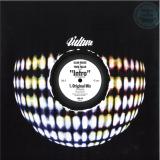
Released in 2000, Alan Braxe and Fred Falke's “Intro” is five minutes of faultlessly melancholy, perfectly elegant, dance music that nudged French House into the future.
“Intro” is now being re-released for its 25th birthday, using the remastered version of the song from the 2023 re-issue of Alan Braxe, Fred Falke & Friends - The Upper Cuts album, with Braxe and Falke also making new remixes of their golden child. Given that “Intro” was pretty much perfect the first time around, the results are astoundingly strong.
Falke’s remix takes “Intro” into new dimensions, cosmic and suspiciously dubby, a newly-recorded bass line sending the mix on its psychedelic way. Braxe’s remix is raw and dirty, a “hotel room edit” as he calls it, that nods to the history of French House as it sparkles up the spine.
Both tunes are evidence that - actually - you can remix the un-remixable, so long as it is done with infinite love and incredible skill.
Cerca:d tune
Melodize is bringing the world back on the dance floor with Lauer and his 4-track “K1m Fantasy” EP. Behind the label is Brooklyn-based DJ and musician Beartrax, who is known for his groovy yet moody compositions. Philipp Lauer, known as Lauer, is a true veteran in the electronic music sphere, with over 20 years of experience, yet his sound remains novel and fresh.
This time, Melodize and Lauer shape the world of a fantasy dance floor where everything is possible. “K1m Fantasy” starts with Lauer letting his confidence shine through as an experienced professional with a signature sound in the first track “Boss Electro”, which will inevitably showcase why he’s the boss.
The playful tune of “Rabbits” takes the listener on a journey through electro-induced synths much like the image of curious rabbits playing on a grass field. The eponymous B-side “K1m Fantasy,” with its steadily unfolding mellow soundscape, is an introspective piece exploring the fantastical world of the techno dance floor where all becomes one.
Lauer’s last treat is “Choirs,” where brassy exclamations take turns with a haunting choir of electronic voices, reminding us that unity is key to pleasure and existence.
Music never exists in a vacuum — every scene and sound evolves from the non-stop exchange of ideas between different groups and cultures. Traditions get passed down from one generation to the next, and then individual heads take influence from their own unique perspective. Sometimes, certain people strike upon fusions that spark massive new movements, but even those rarest innovations came from somewhere.
Jon E Cash knows this more than most — the legendary beats he started putting out at the turn of the millennium had their own disparate roots and influences which he had the motivation to put together into a sound he called sublow. There wasn't any other reference point for this music — when he took the first white labels of 'Drop Top Bimmer Kid' into Blackmarket Records in Soho, London, he had to describe it to a puzzled Nicky Blackmarket and J Da Flex as being, "between garage and hip-hop."
Playing catch-up in 2004, Rephlex Records nodded to sublow when trying to introduce a wider audience to the sounds which had been tearing up the London underground. "Grime. Sublow. Dubstep... It's Music. Different people call it different things depending on when they discovered it." But Jon E Cash's sound was rooted in more than the UK garage that had dominated the clubs through the late 90s, reaching way back to his pre-teen days when the first waves of hip-hop culture crossed the Atlantic and broke in the UK.
25 years on, it's a fine time to reflect on the impact of the music Cash made at the turn of the millennium. History looks back favourably on what he and the Black Ops crew were doing with sublow in the early 00s. The timing meant it ran in parallel with what was happening over East with Pay As U Go, Roll Deep et al, and of course there was crossover. Every DJ and every MC was on the hunt for the best beats they could find. But there's a whole different swagger to sublow — a different web of influences, a different intention and so a different outcome. It's still there in the beats Cash is making more than 20 years later — his 3dom Music label is carrying upfront productions with that sublow DNA coursing through their veins. Whatever the beat or the tempo, the drums are still hard as nails, and the bass is tuned for maximum rave damage.
The Buenos Aires–based producer’s second album on Umor Rex can be read on at least two levels. The most direct traces its origin to the influence of environmental music, as well as to some pioneers of electronic music. The album was recorded in a single session, making extensive use of loops that were later edited and condensed into the six pieces that make up Pequeño clima doméstico. This working method responds to a playful approach that runs through Entidad Animada’s musical intentions, which often start from a specific genre or aesthetic and then filter it through his own language.
From a more conceptual perspective, the record proposes music as a tool capable of modifying the perception of a moment. Rather than closed songs, the album functions as a device that allows one to tune a state, transform a space, or alter a mood. In this sense, it engages with the idea of functional music not as a utilitarian background, but as a means to equalize time, slow the pace, and reconfigure the listener’s emotional climate.
All songs written and performed by Entidad Animada. Recorded in August 2025 in Buenos Aires, Argentina.
Field recordings and processed textures by Guazuncho.
Mastered by José D’Agostino at Moloko Estudio, Frankfurt, Germany. Cover photo by Diego Berruecos. Layout by Daniel Castrejón.
- A1: A Bureaucratic Desire For Revenge Part 1 (Black Noi$E Inversion)
- A2: A Bureaucratic Desire For Revenge Part 2 (Black Noi$E Inversion)
- B1: Ouroboros Is Broken (Black Noi$E Inversion)
- C1: Geometry Of Murder (Black Noi$E Inversion)
- C2: German Dental Work (Black Noi$E Inversion)
- D1: Divine And Bright (Black Noi$E Inversion)
- D2: Dissolution I (Black Noi$E Inversion)
New “Inversions” of drone rock pioneers Earth’s debut release. A collaboration between Dylan Carlson and Black Noi$e (Armand Hammer, Danny Brown, Earl Sweatshirt) formed in mutual respect and appreciation for one another. Both artists were intrigued by the creation of vast musical landscapes and the connection of music, with its ability to transport the listener. The music of Earth was recognised and celebrated for moving at a glacial pace and yet this new collaboration surprisingly saw Black Noi$e slowing things down even further.
The debut, which originally came out in 1991, notably featured Kelly Canary and Kurt Cobain on vocals on the tracks “A Bureaucratic Desire for Revenge Part 2” and “Divine and Bright”. Black Noi$e reimagines the original recordings with his experimental sensibility and innovative multi-instrumental, cross genre exploration. Applying contemporary electronics to the heavy droning bass and guitars and languid rhythms, this inversion oscillates and reverberates with a different kind of energy whilst simultaneously highlighting the much loved low slow and distorted properties of the original.
‘Extra Capsular Extraction’ was the first music Dylan made with Earth and his first time in a recording studio, which he recalls at the time as being “terribly exciting”. It also marked the first time collaborating with others and seeing it reified into a tangible object or product, a spirit that Dylan has carried through to the present. The original album is a document of a specific period and Dylan’s creative development. These inversions of Extra Capsular Extraction are, to quote Dylan, “an exciting way to reintegrate them into the present time and with my more expanded conceptions of musical endeavours”.
"Doom-metal innovators" Pitchfork.
"With guitars ramped up to the nth degree, but tuned to gut-wrenchingly low frequencies, Earth carved out a veritable canyon of pure molten drone, one which would have a profound influence on modern metal music." The Quietus
The first resonant space Zosha Warpeha played in was the Emanuel Vigeland Museum in Oslo, Norway. Built as a mausoleum, its walls reach up into a gradual archway, creating an environment where sound expands and reverberates for twelve seconds before decaying into silence. Warpeha was greeted only by dim lights when she entered, and it wasn’t until she had spent several minutes listening that she was able to make out the frescoes that covered every inch of the room: graphic depictions of the cycle of life from conception through death. As the sound of her Hardanger d’amore encountered the walls and these slowly emerging scenes, they obscured its point of origin in both time and space, augmenting its own life cycle. The experience sat in the back of her mind over the next several years as she developed her own patient style of composition and performance, one that comes into full bloom on her new album I grow accustomed to the dark.
When Warpeha was selected as an artist in residence at Brooklyn’s ISSUE Project Room in 2025, she saw it as an opportunity to more intentionally explore how her music might fill a room with ample natural reverb. I grow accustomed to the dark documents two single-take solo performances for Hardanger d’amore and voice at IPR, with both pieces composed in a unique tuning system developed to interact with the space itself. Listeners can trace resonance from the contact of the bow on gut strings into the body of the instrument, its five sympathetic strings offering another layer of refraction, before the sound is thrown about the cavity of the room. The echoes emerge like a photographic double exposure, or wisps of smoke that linger in the air, creating ghostly harmonic convergences that blur the line between what is there and not-there. Sound begins to act like light, a synesthetic alchemy that transforms drones into beams and ornamental trills into flickers.
Both side-long compositions, “filament” and “visual purple,” exemplify a duality that animates Warpeha’s music: an expressive, individualistic style that draws on extensive knowledge of her instrument’s history in folk traditions, and an austere, devotional quality maintained by focus and precision. Though very different in character and structure, both pieces evolve slowly through numerous repetitive phrases, passages of stillness, and bursts of intensity. “filament” opens with a cycle of delicate melodic fragments played and sung around a drone before blossoming into an outpouring of swooping arpeggios, harmonics flying from the strings like sparks off a bonfire. The disorienting pulsation of harmonic beating forms the core of “visual purple,” the close-tone dissonance building to a swarm of open strings ringing boldly throughout the space. After the knotty tones reach their climax, the piece collapses into studied quietude, hushed, but without any drop in intensity.
When Warpeha first visited the Vigeland Museum in 2019, she was in Oslo to deepen her relationship to the Hardanger fiddle through the study of Norwegian traditional music, which is primarily passed down aurally. The experience of learning songs by ear, not only internalizing the tune but also absorbing the techniques and tonalities by listening, was a crucial step in her development as a composer. The years since have seen her sharpen those skills as a prolific member of the New York avant-garde and improvised music communities. Warpeha’s music encourages listeners to join her in this journey, to listen closely with each repeated phrase and through each dramatic shift. Like the frescoes on Vigeland’s walls, with time and intention, the depth of I grow accustomed to the dark comes on like a revelation.
Introducing the 4th instalment of the Pacific Coast House rebirth. We bring back another much sought-after 12” from The Coastal Commission & Jesse Outlaw. “Bring down the Walls” was a nod to Raze’s “Break for Love”, Robert Owens “Bring Down the Walls” and Ritchie Hawtin’s use of the Roland 606 throughout “Sheet One”. Long out of reach and fetching $100+ on Discogs, Atjazz’s freshly remastered editions are finally available .. “Let it Go” was never mastered & only ever cut to dub-plate. It has now been mastered & available in all it’s glory.
Coastal Commission “Bring Down the Walls” “Bring down the Walls” was a nod to Raze’s “Break for Love”, Robert Owens “Bring Down the Walls” and Ritchie Hawtin’s use of the Roland 606 throughout “Sheet One.” We gave the tune a Californian psychedelic twist with conga laden drums, a moody synth, low pulsing 303 patterns + Benjamin Zephaniahs patois call to “Move the Body Rhythmwize!” The first PCH releases had dropped Worldwide to International acclaim from DJ’s far and wide across the Globe with support in London, Paris & New York. However the local scene here in L.A that preached “Love, inclusion & Unity” was anything but that. L.A at that time was very tribal & divided up into 3 camps. If you weren’t affiliated with any of them (aka independent) then you were pretty much locked out of getting any kind of gig support or the Dj’s from those camps actually playing the music. The local feedback from Dj’s was that what we were making wasn’t “house,” but “Techno” which was absurd to me. “Bring Down the Walls” was a mantra to “move the bod”y and in doing so “bring down the walls” of separation not just in L.A but throughout society in general. Thank goodness for support from people like Terry Francis, Eddie Richards, DJ Deep & Philly Stalwart King Britt. After years of copies going for upward of $100+ on Discogs the now freshly remastered copies by At Jazz’s Martin Iveson are finally hitting the platters this Spring.
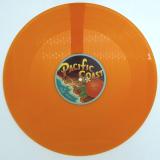
Jesse Outlaw “Let it Go” I met Jesse at Beatnonstop Records on Melrose Ave with Miguel Placencia in the late 90’s. Miguel (RIP) was a mainstay in the Underground scene and had always been very supportive of my endeavors. He had had success with a huge release on Yellow Orange and was working with Jesse under the moniker “When Worlds Collide.” I signed “Brighter Days” & “Set you Free” from them and released the tracks on my Seductive imprint. They told me that they were making the tracks on a Sony Playstation “Music Now” program and I was like FFS “What.s more Underground than that!?” Later Jesse gave me some of his solo work. The track “Let it Go” was never mastered & only ever cut to Dub-plate and featured on my 1st PCH mix “Pacific Coast House Sounds.” It has now been mastered by Martin Iveson and is available in all it’s glory. The dreamy vocal “You need to let it go” beckons over the top of driving percussive Latin beats and church organ which is a great compliment to the flip side of “Bring down the Walls.” All in all two West Coast stompers now finally available remastered on PCH in Orange vinyl.
The new Epiteth brings new artists on vinyl !
Effecthunter unknown project open the dance. A deep dark evolution into psychedelic mental industrial Hardcore that comes again and again and again...
Aaron 6310 is a newcommer too on vinyl, his tune is an hypnotik noise-kick invocation !
Pardonax talent bring the KILLER B side opener ! One of his best tune ever !!
Finally The Darkcreator, back in the years ! 1997 oldschool sound... in a new shape and a new way ! An absolute banger !
Two sides, each lasting 8 minutes and 50 seconds. A clash that resonates in friction, united by the materiality of vinyl - if only for a time. Or at best, a rapprochement, like in cinema. On side A, a MIDI composition by Xavier Robel for synthesized piano, based on La Monte Young's tuning system for The Well-Tuned Piano. Mouse clicks, boxing gloves, vibrancy, and mischief. On side B, a positively insistent On-U Sound-flavored rhythmic investigation, produced by Androo in response to Xavier Robel's composition (one he hadn't asked for). From sparse elements, a kaleidoscopic pulse unfolds - as dub seeps within a fog of electroacoustic fluctuations.
ESCAPE-ISM — the found-sound dreamdrama— are back in action & out in front. And this time, they’re leading a “Charge of the Love Brigade. ”This “charge” isn’t the traditional scramble across a muddy, bloody field though, like in the days of yore. This one is a furtive insinuation into the senses of the tuned-in listener.
Their fifth record, and fourth “sound” record — (the third one was “A Protest Against Sound”- an entirely silent LP) — “Charge of the Love Brigade” is revolutionary in its own right. Besides being packed with tunes — super-hits such as “Black Gold,” “Last Of The Sellouts,” “The Rebel Outlaw,” & “Fire in Malibu,” for exam- ple, Charge of the Love Brigade proposes a reformation of the traditional notes and scales; an entire new sound alphabet!
That’s right, ESCAPE-ISM —the “act of musical vandalism”— famous for their development of new prototypes for stomping & smashing, are reforming the scales, chords, & notes (e.g. A, B, F#, etc) that comprise musical literacy to achieve the group’s primary aim: the repurposing of music as we know it. Though many musicians of note have operated their instruments with "alternative tunings," up until now no one has obliterated tuning absolutely or abolished letter-notes for the destruction of bourgeois society.
According to ESCAPE-ISM, this will have a very profound effect: “Music will no longer be cordoned off from the rest of experience as a commodified, specialty freak show, but instead be a pastime which can be prac- ticed and enjoyed –not only by non-musicians and amateurs– but also by plant life, wild animals, and even inanimate objects such as rocks.
“The violent overthrow of musical conventions will lead to the reintegration of humanity into the natural order, the reordering of life itself into a cosmic congruity. This means the convention of time itself will be ended.” Like so-called nature itself, the ESCAPE-ISM group is also on a “loop.”
Play “Charge of the Love Brigade” and listen as ESCAPE-ISM go “over the top” against the note-letters of accepted musicality in a world premiere of a new upside-down antiscale.
- 1: Apocalypse March
- 2: Superhero Dopeproof
- 3: Children Of Fire And Sacrifices
- 4: The Pilgrim Son
- 5: Cosmic Ride Of The Crystal Skull
- 6: Till The Outerspace
- 7: Lone Wolf
- 8: Desert Sun
- 9: King Snake
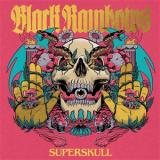
Repress on black vinyl. Goldfoil embossed cover. Alright! 2023, Black Rainbows are back with 12 fresh, brand new tunes! The new album sounds huge, with of a great deal of attention paid to the guitars in the recording, and it seems that the band has finally found the perfect balance and tone for their heavy super stoner sound! This album gives you not only incredible heavy rock-stoner gems, but also: one space acoustic song, one super psychedelic suite and one melodic trippy ballad that adds a perfect mixture of what is sure to be the best album released by the band so far! "Superskull" has been recorded by Fabio Sforza (the same producer of the last two recordings), in May 2022, and after much work and effort by the band in mixing and mastering, the album will see the light of day one year later. The incredible artwork has been delivered by the brazilian artist Pedro Correa.
Earth Dog Records label heads djfix & Jek present the 12th release on their label, Unknown Species.
The A-side, “Unknown Species,” highlights the duo’s signature bass driven, swampy tech steeze. The original track snaking listeners deep into tech-house hypnosis, with neck-snapping, pitch bent basslines, spiraling vocal chops, and crunchy looping drums.
To beef things up, they’ve asked Koduku for his deep techno take on the title track. He takes the original to a hypnotic sweet spot with time-stretched rippling textures and subtle, hard hitting percussion.
On the flip side, “Datura” and “Earth Dub 2” go full on freak mode. Tunes perfect for the deepest, darkest part of the night, or as the sun starts to break through a smoke-filled dance floor.
Pre-orders available now through One Eyewitness, with digital available via Earth Dog Records Bandcamp.
Credits:
Written by Ethan Donovan & Jack Anderson in Bedstuy, Brooklyn
Mastered by Mike Grinser, Manmade Mastering
“I don’t get the opportunity to play a full set at 170 very often. When I do, I feel very responsible for doing my research well, as I come from a different background musically. This is a recording of a special night at Ormside where I played a lot of favourites from four decades.”
Featuring tunes by Type, Paradox and Oaysis. This is a deep and dynamic set that finely showcases Tammo’s craft and range as a DJ. Recorded at Ormside Projects on 15.11.25, playing alongside Lemon D, Lynne and Sam Purcell.
C100, transparent blue cassette. Run of 60.
- A1: Circles & Chambers
- A2: Gather Words For The Fire
- A3: Old Legra
- A4: Lilac Haze Of Lavender
- A5: In The Arms Of Lewes
- A6: Hoist The Drawbridge
- B1: You Often Hid
- B2: On Silbury Hill
- B3: Roar No More
- B4: Til The Worm Turns
- B5: Nerano Sailor
- B6: Viewing The Waterhen
Vinyl[22,48 €]
Rotating Irish/international collective United Bible Studies (UBS) releases its 28th album, Strange is the Coastline, this Autumn (CD on Talking Elephant Records / LP on Hobby- Horse).
The album is preceded by the single ‘In The Arms of Lewes’ which was available on all digital platforms from 14th August.
'Strange Is The Coastline' is a collection of original folk-rock songs written by current core members David Colohan (co-founder of UBS) and Alison O’Donnell (Mellow Candle) in the company of multi-instrumentalist Steven Collins (The Owl Service). Melding and meshing classic folk, contemporary pop, and passionate tune-smithery in an inspiringly complementary way; disparate, yet delightfully cohesive, with themes of Albion myth and legend to Victorian-era murder ballads via tales of chilling contemporary stalkerss, and climate chaos.
United Bible Studies was formed in 2001 and over the last couple of decades has been home to a head-spinning array of performers in an ever-evolving merry-go-round of studio and live personnel. Drawing on the broadest community of musicians, the band have created an impressive catalogue of 28 albums of studio and live recordings.
Standard weight black vinyl LP in picture sleeve with lyric booklet. 300 copies for the World.
“...teems with bushy-tailed folk-rock about Albion and Ireland, as well as brutal, bracing songs about singer Alison O’Donnell’s experiences with a former stalker, such as the startling You Often Hid”. (THE GUARDIAN)
- A1: I Put A Spell On You (2:36)
- A2: Tomorrow Is My Turn (2:50)
- A3: Ne Me Quitte Pas (3:37)
- A4: Marriage Is For Old Folks (From The Musical The Secret Life Of Walter Mitty) (3:30)
- A5: July Tree (2:44)
- A6: Gimme Some (3:01)
- B1: Feeling Good (From The Musical The Roar Of Greasepaint) (2:55)
- B2: One September Day (2:50)
- B3: Blues On Purpouse (Instrumental) (3:18)
- B4: Beautiful Land (From The Musical The Roar Of Greasepaint) (1:56)
- B5: You've Got To Learn (2:44)
- B6: Take Care Of Business (2:06)
black vinyl[24,79 €]
Given her extensive and varied recording catalog, if you're looking for a place to explore the talents of the late Nina Simone, then 1965's I Put a Spell On You is a great place to dip your toes - particular if you want to start with her more pop oriented sides.
The set features a truly eclectic mixture including stabs at jazz (the instrumental "Blues On Purpose"), R&B (the title track), French chanson ("Ne Me Quitte Pas") and a number of show tunes.
- Le Mieux Et Le Bien
- Yellow Moon
- Papillon
- Come Home
- My Little Sweet New Zealand Bunker
- Stop This World
- Indien De Paname
- Les Maximiseurs De Pi
- Notre Ile
- My Little Sweet New Zealand Bunker
- C'est Comme Ca C'est La Vie
Rather than yielding to despair in these troubled times and offering listeners a rope to hang themselves, Zimmermann (trombonist for Claude Nougaro, Manu Dibango, and Tony Allen) playfully grants them another option - a humorous sarcasm! He mocks the vain shelters of the powerful with the tune "My Little Sweet NZ Bunker", denounces the manufacture of one- track minds with "Les maximiseurs de PI", and escapism with the classic satirical Mose Allison's song "Stop This World (let me off" (translated and sung in French) In more tender moments, he reflects on the intimate consequences of this global unraveling.
Daniel Zimmerman's style, both as a composer and soloist, is that of a melodist above all else; disregarding concepts, he sings and seeks to go straight to the heart. He was voted 'Trombonist of the Year' by Jazz Magazine (Frances most influential jazz publication) in 2021, 2022, 2023 and 2024.