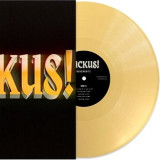
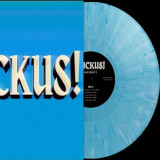
'Jump Into Love' is the new album from Half Japanese, true DIY noise-rock royalty, led by the ever-effervescent Jad Fair. It's a meeting of minds, a coming together from the world's favourite indie-alt-rock outsiders. Atypically out there and off-kilter, the album wears its heart on its sleeve through a cascade of new, dark and brooding songs from the band who would be king. Loved by Kurt Cobain, Daniel Johnston, Penn Jillette and outsiders everywhere, Half Japanese continue their quest for answers; creating a soundscape for a post-zombie land where bells chime and it's OK to say "Yes". It's another adventure; series 20 from an introspective parallel world where the super prolific Jad Fair cogitates on life, love, giants, the possessed and even bigger issues that simply swell the brain. Musing on the writing process, Jad explains "I feel a need to do music and do song writing. It's something I really miss when I'm not doing it. There's a certain amount of tranquillity that's obtained from the fact that you can be working on songs each day. I think you use that certain portion of your brain that is otherwise not used. I kind of kind of prefer using it than not using it." Half Japanese currently includes Jad with John Sluggett, Gilles-Vincent Rieder, Mick Hobbs and Jason Willett, a veritable who's who of DIY indie culture. 'Jump Into Love' was recorded at Tempo House, Baltimore, Russian Recording, Bloomington Indiana, Studio de la Trappe, Donneville France and la Casamurada, Tarragona Spain. The album was mixed by long time Half Japanese sparring partner Jason Willett at his home in Baltimore, Maryland. "Amid hard-riff jams, swinging ditties, lovelorn ballads and other catchy gems, Jad persistently breathes life into the Half Japanese" NPR "One of indie rock's most reliable sources of positivity" Pitchfork
Поиск:dan penn
Все
Repress!
Coming as the eighth edition of the series, ‘EP8’ stays true to committing Defected’s biggest digital releases to wax, delivering an upfront package of house heat previously unavailable on vinyl. ‘EP8’ features four of Defected’s first releases of the decade, with David Penn’s collaboration with renowned house vocalist Roland Clark ‘The Power’ kicking off the A-Side, as Roland Clark’s mighty spoken word narrative paired with David’s rolling bassline and percussive breaks combine for a sincere and uplifting track.
Up next, Italian duo Supernova deliver their dancefloor cut ‘Can’t Stand It’, featuring Los Angeles vocalist Marley Monroe, who delivers her heavenly top-line, a track infused with Chicago house influences, Supernova’s cut is a start-to-finish groover. On the flip, ‘To Burn’ by Dennis Cruz opens, featuring Leo Wood’s compelling vocals, as a wandering bassline and vocal stabs throughout take it to the club. To round off the release, Defected regular OFFAIAH delivers his track ‘Private Show’ (Club Re-Edit), ready to ignite dancefloors with seductive vocals and tension-building drops.
- Musical Train – Roy Shirley
- Conversation - Uniques
- Till I Die- Delroy Wilson
- Daddy’s Home – Pat Kelly
- Run Come Dance – Glen Adams
- Forst Gate Rock- Lester Sterling
- Rock, Rock And Cry – Raving Ravers
- Trying To Find Me A Home - Uniques
- Warming Up The Scene- Roy Shirley
- I’ll Get You – Dawn Penn
- It’s Been So Long – Winston Samuels
- Long Life – Bill Gentiles
- She’s So Fine – Glen Adams
- Forever – Cynthia Richards
- How Could I – Ken Parker *
- Super Special – Lester Sterling
Fever hit Jamaica around 1966 when the jerky Ska rhythms slowed down to a more leisurely, sexy pace. Some say due to the extreme heat that hit the island that year, making frenzied dance routines of the earlier sounds seem like hard work in the all night Sound System Sessions. Others would say Reggae’s beat is always evolving and changing into something slightly different and moving with the times.
Whatever the reasons were, this two year period that ran until 1968, would see some of the power escape from then big three producers, Clemet ‘Coxone’ Dodd, Prince Buster and Duke Reid, who ruled the airwaves. They had to finally make room for the new wave of up and coming producers who had something to say.
Such names as Joel Gibson (Joe Gibbs), Sonia Pottiger, Derrick Harriot and the most prolific of them all, Mr Bunny Lee, would unleash some fine music in this fascinating, if short lived period in Reggae;s history. We have compiled some of the biggest hits from the Rocksteady era alongside some lesser known cuts we believe deserve to be re-evaluated.
Rocksteady was an inspirational time and some may say a little overlooked, but we hope you agree with us when we say that it brought us some outstanding music. So sit back and enjoy some Rocksteady straight from the dancefloors of Jamaica.
Hope you enjoy the set…..
Death Is Not The End's 333 sub-label drops a much needed reissue of Rupie Dan's My Black Race 12" from 1982. A huge Shaka selection featuring one of the heaviest dubs available from this era of UK roots production. Originally written and produced by Rupie for his Flag Records label, with engineering from Tony Addis (later of Addis Posse and the Warriors Dance label).
"The lyrical idea for My Black Race came about during the 1980/81 social/racial revolution that took place in several cities all over England, including London, Liverpool, Birmingham, Leeds etc. I was living in Bradford, West Yorkshire at the time and was a DJ/Sound System operator on Jah Scorcher International Sound. I also co-hosted a Reggae show on an independent radio station Called Pennine Radio 235. In my regular job I was a youth and community leader with the Bradford education council. I was fully connected and in touch the community.
Seeing how the media used the events of the social uprising as a weapon to further discriminate against the African & Caribbean community committed me to say and do something to elevate the minds of especially young people who were already demoralised by the rhetoric that brought about the so called "riots" of the time. It was during this time that the lyrical foundation of "My Black Race" was laid. The rhythm came later after hearing Barry Brown's "No Wicked Shall Enter the Kingdom of Zion". In the summer of 1982 I entered into the Addis Ababa recording studio on Harrow Road, Paddington and recorded the song having moved to London the previous year. Musicians featured included Victor Cross on bass and Mark Wright on drums (both from the Ariwa band), Rizzo on guitar, Tan Tan and Bami on Horns (all 3 from Aswad band), Bubblers on Piano/Organ (Undivided Roots/Ruff Cutt Band). Lead vocals were provided by myself, with backing vocals Jenifah Gad and Niomi who was working with David Bowie at the time. The engineers were Bubblers and Tony Addis (later of Addis Posse & the Warriors Dance label).
Jah Shaka was in the studio during the entire recording session. I was aquatinted with him as I was previously involved in a 3 way soundclash with Shaka, Quaker City and my sound at the time Jah Scorcher. Some years later I was in Terry's Dub studio in North Acton cutting some dubs when King Jammys and Bunny Lee walked in and heard the song. Bunny was responsible for the production of Barry Brown's "No Wicked Shall Enter the Kingdom of Zion". Thankfully they were both impressed by the track which delighted me as a young up-and-coming artist/producer. The rest is history as we know it. Jah Shaka was mystically constant hence his attachment and love for the song. Jah bless and guide him."
- A1: Lynyrd Skynyrd – The Seasons (4.09)
- A2: Barefoot Jerry – Smokies (2.14)
- A3: Joe South – Hush (3.47)
- A4: Bobbie Gentry – Papa, Won’t You Let Me Go To Town With You (2.34)
- A5: Area Code 615 – Stone Fox Chase (3.17)
- A6: Cher – I Walk On Guilded Splinters (2.32)
- B1: Cowboy – Please Be With Me (3.48)
- B2: The Allman Brothers – Ain’t Wastin’ Time No More (3.40)
- B3: Link Wray – Be What You Want To (4.29)
- B4: Boz Scaggs – I’ll Be Long Gone (4.08)
- B5: Lynyrd Skynyrd – Comin’ Home (5.29)
- C1: Bobbie Gentry – Seasons Come, Seasons Go (2.52)
- C2: Leon Russell – Out In The Woods (3.37)
- C3: Tony Joe White – Polk Salad Annie (3.42)
- C4: Barefoot Jerry – Come To Me Tonight (4.43)
- C5: Dan Penn – If Love Was Money (3.29)
- C6: Linda Ronstadt – I Won’t Be Hangin’ ‘Round (2.59)
- D1: Waylon Jennings – Big D (2.30)
- D2: Big Star – Thirteen (2.37)
- D3: Bobbie Gentry – Mississippi Delta (3.06)
- D4: Travis Wammack – I Forgot To Remember To Forget (2.54)
- D5: Johnny Cash & June Carter – If I Were A Carpenter (3.01)
- D6: Billy Vera – I’m Leavin’ Here Tomorrow, Mama (4.13)
Black Vinyl[29,62 €]
Long out of print (10 years!), this new edition of Soul Jazz Records' classic Delta Swamp Rock, features a killer all-star line-up of seminal artists who all first blended rock, soul and country together to create a stunning new sound of southern American music in the 1970s.
Featuring the Allman Brothers, Dan Penn, Leon Russell, Tony Joe White, Johnny Cash, Bobbie Gentry, Big Star, Link Wray, Area Code 615 and loads more!
This album comes as a superb limited-edition gold vinyl double vinyl release complete with extensive original sleevenotes, interviews and exclusive photography, all spread over a 12-page full-size magazine and two bespoke inner sleeves. The works!
Delta Swamp Rock is an interstate southern road-trip through the United States of America where country, rock and soul met at the crossroads - an exploration of the musical and cultural links between the cities of Memphis, Muscle Shoals and Nashville in the 1960s and 70s.
At the start of the 1970s, a new type of music emerged out of the southern states of Alabama, Tennessee, Georgia, Mississippi and Florida. Southern rock, the creation of young blue-collar white Americans, blended rock, soul, country and blues music together to present a new vision of the south – a post-civil rights southern identity complete with a celebration of the regions natural landscape and its way of life.
The Allman Brothers and Lynyrd Skynyrd epitomised the definitive southern rock groups – a mixture of blues-rock and country with a southern rebelliousness and attitude. Unfortunately both The Allman Brothers and Lynyrd Skynyrd were to be struck by tragedy, which would affect the movement’s rise and fall.
The backstory to southern rock is the fact that a number of the people involved in its creation had been central to the production of southern soul music in the 1960s mainly in Memphis, Tennessee, and the small town of Muscle Shoals (population around 10,000) deep within the bible-belt, liquor-free, deeply segregated state of Alabama, creating 100s of R&B hits on an almost daily basis.
Here in Muscle Shoals, with its proximity to Memphis and Nashville, an all-white group of in-house musicians, (famously referred to by Lynyrd Skynyrd in the song ‘Sweet Home Alabama’ as the ‘Swampers’), created countless classic soul records for the likes of Aretha Franklin, Wilson Pickett, Etta James, Clarence Carter and more during the 1960s.
This album charts the rise and fall of southern rock from its funky swamp roots in southern soul to its phenomenal success in the first-half of the 1970s, including its influence on Nashville’s ‘outlaw’ country and tracing it right back to the arrival of rock and roll in the 1950s - the first meeting of black and white American music at the crossroads.
“Crystal Motion” were a vocal quartet of Cape Verdean descendancy from New Bedford Massachusetts. The group’s original members being lead vocalist “Kevin Gomes”, Kevin’ s cousin, Rodney “Skeeta” Santos, Daniel “Buddy” Monterio and John Paris, the man responsible for coining the group’s eventual performing name “Crystal Motion”.
Entering a local now defunct recording studio “Metcalf’s” the grouped recorded the Kevin Gomes penned demonstration song, the sweet soul ballad “There’ll Be Another”.
A copy of this song was eventually submitted to the recently formed Independent Recording Studio, “Omega Sound Productions” in Philadelphia, PA. The label was owned by Frank Fioravanti who having just hit paydirt with William DeVaughn’s smash hit “Be Thankful For What You Got” continued with his policy of supporting up and coming talent and upon hearing Crystal Motion’s demo decided to offer them a recording contract. Although deciding against using their submitted demonstration song (which was to remain unissued) Fioravanti chose to record the group on a song he had co-written with another Philly writer and recording artist Pal Rakes, the title of the song was “You’re My Main Squeeze (Part 1 & 2)” an exciting disco dance orientated song that Frank released on them in 1975 on his Sound Gems label imprint. The song became a minor hit in Boston MA, Providence RI and Philadelphia areas also receiving extensive airplay in Atlanta GA and Houston TX. John Paris was to leave the group being replaced by a longtime friend of the other group members Douglas “Dougie” Mendes. With attention coming from the producers of “American Band Stand” and “Soul Train” the group toured the East coast circuit throughout 1975 and 1976 in preparation for an upcoming album project which was never finished before lead singer Kevin Gomes left for unforeseen personal reasons and ultimately the group broke up. Little did “Crystal Motion” know at the time but their solitary 45 release was finding a new audience across the pond in the UK with “You’re My Main Squeeze” being championed by inspirational DJ Colin Curtis in the hallowed halls of Blackpool Mecca, a timeless classic that never fails to bring a smile to the listening audiences faces even to this day.
Returning to the groups unfinished Sounds Gems album project only one track was ever completed, the Fioravanti/Rakes composition “Million Dollar Baby” which along with “There’ll Be Another” has been licensed from their respective owners and paired together for a long overdue 45 release for your delectation. With ‘Crystal Motion’s’ “You’re My Main Squeeze” cult and anthemic status being forever assured with Northern/Modern Soul devotees we’d like to think the discovery and release of these two slightly differing Sweet Soul offerings will garner and enhance the group’s wider appeal with the growing aficionados of the Chicano, Group Harmony and Lowrider genres, Enjoy.
Like a winding system of trails and paths cutting through a digital forest-scape, M. Sage's Paradise Crick is shaped by time. Full of wonder and charm, designed patiently and from a rich, curious mulch of synthesized and acoustic sound, the versatile American artist and magic realist's new suite of music is an imaginary destination and a pastoral fantasy that envisions the natural and fabricated worlds as one. Matthew Sage is a musician, intermedia artist, recording engineer and producer, publisher, teacher, partner, and parent. Assembling a sprawling and idiosyncratic catalog of experimental studio music between Colorado and Chicago since the early 2010s, recent highlights include The Wind of Things (Geographic North, 2021), an ensemble-recorded expression of bow-splashed nostalgia, and the four seasonal albums of Fuubutsushi, the improvisatory ambient jazz quartet he formed with friends from afar in 2020. Sage renders projects with nuanced velocity and a completist sensibility _ when it's finished, it's done _ which is what makes Paradise Crick, his debut for RVNG Intl., a compelling outlier. Sage first staked his tent in Crick's conceptual campground five years ago from his home studio in Chicago (he's since returned to Colorado, home to the mountains and prairies often personified in his work). He had just read Richard Brautigan's Trout Fishing in America, a kaleidoscopic reflection of pastoral America's shifting identity by way of magical fishing sojourns. Inspired by that feeling, of getting lost but finding oneself in through the outdoors, he amassed over seventy demos documenting a fictional soundtrack for camping. Pull up to this park, and the sign might read, "Welcome to Paradise Crick. Fire Danger Is Low." The sequence, pruned down to thirteen tracks, courses the dewy mornings, afternoon hikes, and firelit nights of a weekend expedition. While Sage is not a filmmaker, he views the method of making this album as a similar form of world-building via structure, narrative, formal elements, and editorial refinement. Contrasted with his collaborative craft, here he is a sole auteur reclined in total autonomy, able to improvise scenes and implement special effects at will. A parallel precedent for such unchecked imagination in the M. Sage canon is A Singular Continent, his 2014 album that tilted its compass to a faraway land. Where Continent built its world layering samples as composition, Paradise Crick deploys a balance of accessible song structures with experimental instrumentation and sound design. Speckled with harmonica, autoharp, chimes, penny whistle, voice, hand percussion, and other mysteries, Crick's texture is treated as a sensorial adventure; the swamps gurgle, the lakes glisten, and the valleys breathe in robust HD. The rhythms are loose and buoyant, bursting with a few `kick and snare' moments shaped by Sage's lifelong love for drumming and headphone prone electronic music. Crick bumps more than most anything he's done before; crackling static pulses and lush vibrations reveal an intrinsic groove, a hidden beat map. In the landscapes of Paradise Crick, science and magic co-exist, 5k boulders and midi frogs share the frame with real-life memories of Midwest camping trips and the desire to feel extra human in a digitized space. Sage strived for "nature in the holodeck" but couldn't help leaving fingerprints in the simulation, and it's these traces of spirit and character that give Paradise Crick its strange allure. The album's bubbling sense of play, melody, and timbre takes cues from left-field electronic lineage; synth pioneers like Tomita and Raymond Scott up through the more expressive pop tendencies of Woo, Stereolab and the Cocteau Twins, and into contemporary composers like Sam Prekop. The album's vocabulary is uncomplicated; the gestures are sweet and inviting, intended to lull the listener. As much as Sage continues to be an experimentalist by nature in his work, with Paradise Crick, he spins a narrative. Not necessarily a concept album, but rather an invitation to take off for a weekend. That's the modus operandi down here in the Crick, we stretch out. M. Sage's Paradise Crick will be released May 26, 2023 in LP, CD, and digital editions. A portion of the proceeds from this release will benefit Earthjustice, the premier nonprofit public interest environmental law organization.
The Croatian production powerhouse and disco boogie impresario steps up to International Feel, and takes a left turn into deep space with a new six track LP Pulsar Diaries.
Ilija’s discography stretches back to 2003, and over those 20 years he’s packed it full with albums, versions, remixes and singles. His releases are often perfectly-penned love letters to ‘80s boogie, electro and disco, and like postcards from an old flame, they’ve landed in an array of record label catalogs, from Bear Funk, Rong, and Electric Minds, to Is It Balearic? as well as his own Red Music and Imogen Recordings. He’s long-been an active voice on the underground club scene, and if you’ve been out dancing in Zagreb, Berlin or even Tisno beach, chances are you’ve gotten down to one of his beautifully blended sets of cosmic-tinged electro funk and disco dubs.
On Pulsar Diaries, Ilija delivers a panoramic collection of spaced-out synths and drum machine grooves, dedicated to the planet and our place in the universe. The A side opens up with the blissful, weightless pads of the title track, before it breaks out into filtered stabs over a minimal b-boy bounce. Delphic Expanse ebbs and flows like a lunar eclipse, sounding like a futuristic version of Key-Matic’s Breaking In Space, all uprock rhythms and syrupy synth horns as it spins off beyond the asteroid belt. Side A closes out with Blackburn Tales, a suspenseful and spacious electro rhythm packed with strings and 303 squelch, which you might call anti-gravity acid, if you were so inclined.
Side B picks up the tempo with Fourth Amendment, perfect for the space station discotheque with its sweeping bass filters and ice-cold synth melodies hovering in orbit. Farewell Theme takes an introspective moment, slowing the pace to a cosmic 90 bpm and inviting a certain cinematic feel to proceedings. This feeling applies not just to the vivid landscapes we travel through, but also wider thoughts about humankind: as we pause for a breath and look around, we find ourselves in Ilija’s space, considering human motivations, like the pursuit of happiness, or the eternal struggle with the self.
Every journey begins with a goodbye, and so the last track of the album feels like the arrival at a new destination: Ursa Major is ablaze with cascading drum fills, bubble-wrapped bass riffs and bright synth chords that sparkle like city lights underneath a re-orbiting satellite.
With Pulsar Diaries, Ilija Rudman has created a rare artifact: an album that straddles several worlds at once. Part soundtrack to space travel, part meditation on the human condition, part deep-burning dancefloor dynamo - whether in the club surrounded by friends or at home by yourself, this is a record that expands the mind and lets the imagination soar.
Essential UK experimental composer Richard Skelton returns to Phantom Limb for new album selenodesy, interweaving his newfound love of electronics and synthesis with mastery of gritty organic texture.
Skelton’s music has always been rooted in landscape, in the loam and grit of the earth: from his 2009 Pennine Moors-inspired modern classic Landings to his more recent Moraine Sequence of geological excavations, his work has been bound inexorably with the stark and untended wilderness of northern landscapes. With this new album, however, Skelton shifts his gaze skyward — in part the result of a move in 2017 to the countryside near the Kielder Observatory, and to a so-called ‘dark sky’ region of the UK. In this remote landscape, light pollution is minimal, allowing the austere majesty of the night sky to be seen with greater clarity.
The resulting album, selenodesy, reveals a new, reverberant spaciousness to Skelton’s use of electronics. It marries the twin worlds of his previous Phantom Limb release - 2020’s These Charms May Be Sung Over A Wound, and its abandoned-factory threnody - with the landscape-revering arcana of his earlier work, which saw him bury instruments in the soil to return months later to recover and record with them, newly imbued with the land they occupied. selenodesy was prefigured by a period of insomnia and the relief found
in stargazing, during which Skelton tried to transcribe his hypnagogic visions: “much of this music came to me in the early hours, in that nowhere state between dreaming and waking. I’d look out the window and the night sky would be swirling with stars. Mars or Venus would be hovering in the corner of the room. I’d lie there and watch the Aurora Borealis dance across the ceiling.”
In selenodesy, we find the lingering, distorted sine waves of album opener “Albedo” that thrum and fizz with an icy, foreboding moonlight, rays of subtle movement that illuminate and darken alternately. Next follows lead single “The Plot of Lunar Phases”, whose passive shrieks echo about a cold, yawning space, reaching an ecstatic crescendo of hissing sonics and swirling celestial drone. Its dynamic range acts like the light of a lunar passage, from utmost darkness to radiant luminosity. Elsewhere, the pulsing, precessional bass of “Faint Ray Systems” gradually opens to reveal mournful, elegiac synthesis that reaches high into the night sky with an unearthly beauty. It is as if, during those long months of lockdown in the Scottish countryside, Skelton tapped into a series of sidereal electromagnetic transmissions, and transposed them into musical form.
Beta Librae returns to Incienso with her third album, “DAYSTAR”. Whereas her previous album for the label, “Sanguine Bond” was an altogether more heady affair - “DAYSTAR”, like the name implies, is a bright and bold waypoint in the ever expanding Beta Librae universe.
On eight songs, including a striking collaboration with james K on the lead single “Late At Night”, Beta gathers up new elements of sound and pairs them her unmistakable rhythmic shapes to bring us the most wide-ranging and cohesive B.L. album yet.
Ghost Producer aka Badawi (aka Raz Mesinai aka Bilal ibn Yakub al-Badawi) is a prolific producer and artist who has been on the forefront of underground experimental jazz and electronic music scenes around the world for over thirty years, with a catalog of albums on labels as ROIR, Asphodel and Tzadik under various monikers dating back to the late 1980s.
Ghost Producer released his first albums starting in the late 80’s under the monikers Psy Co. and Ruff Riddim Productions, selling his cassette tapes in NYC. He produced, on average, at least one album per week since 1988 until today. One of the twenty or so monikers was Badawi, later being signed to ROIR Records and releasing the seminal experimental dub, punk albums »Bedouin Sound Clash« and later »The Heretic of Ether« on Asphodel. Spending time as a child between Occupied Jerusalem, the West Bank (Balata) and New York City (Rock Steady Park) during the height of the B-Boy era in the 70s and 80s informed Ghost Producer’s singular sound of heavy driving Sufi rhythms, sonic experiments, percussion, piano playing and sound design which has connected him to a wide variety of artists ranging from Maryanne Amacher to John Zorn, to added elements of darkness to music by such artists as Hanz Zimmer (Black Hawk Down) and rappers Danny Brown (Pneumonia) and Skepta and Double D (Don) among many others.
At age 14, Ghost Producer was discovered by visionary jazz and rock musician, Juma Sultan (Jimi Hendrix) whom later trusted Ghost Producer with producing the archive of over 2000 hours from recordings from »Studio We« and the Free Jazz Loft Movement in NYC in the 60s and 70s. As a composer, he has worked with Kronos Quartet and has had premiers at Carnegie Hall (Cross Fader, The Echo of Decay) and Lincoln Center (String Quartet For Four Turntables). In addition, Ghost Producer has released several albums on John Zorn’s Tzadik label, where he explored producing to the books of Franz Kafka (Before The Law, Resurrections for Goat Skin, Cyborg Acoustics)
As a composer for film, he coined the term »score design» to describe his work in conceiving and producing scores for films with particularly demanding needs, working on such films as A Late Quartet (director Yaron Zilberman composer: Angelo Badalamenti), The Fountain, Black Swan and The Wrestler (Darren Aronofsky/Clint Mansel), Black Hawk Down (Ridley Scott/Hans Zimmer) and many more. In 2014, he was awarded as a fellow in the Sundance Composers Lab.
In 2015, Ghost Producer formed the Underground Producers Alliance, a unique program for developing producers, performers and composers, with co-founders Scotty Hard (Wu Tang Clan, Medeski Martin and Wood, De La Soul), HPrizm aka High Priest (Anti Pop Consortium), Honeychild Coleman (the 1865, The Slits) and Prince Paul (Jungle Brothers, De La Soul), where Ghost Producer produces entire albums with student participation in his master course.
This album, »The Book of Jinn«, is one of many productions done within the course, featuring players/mentors Juma Sultan (percussion), Chandenie (voice) and Shahzad Ismaily (electric bass), with additional student participation from Adam Culbert and Jonah Sollins (aka Goodnight 1500) on synths and percussion as well, then all remixed and rearranged by Badawi into what you hear here, The Book of Jinn.
King Creole was the fourth of Elvis Presley’s Hollywood movies, released in June
1958. Loosely based on Harold Robbins’ novel A Stone For Danny Fisher, about a
struggling young Boxer. Producer Hal Wallis decided it would make a perfect vehicle
for Elvis Presley, and so the lead character became a Singer instead of a Boxer, and
the whole project was promptly transformed into a musical. It’s one of the best of the
Presley soundtracks opening with the title track King Creole penned by Leiber &
Stoller, followed by R&B number Crawfish, and the contrasting Rock'n'Roll track
Dixieland Rock which is reminiscent of Jailhouse Rock. Sadly, it was to be the last
truly dramatic role Elvis was ever given, and Presley himself would always cite King
Creole as his personal favourite out of all the films he made.
- A1: Volare (Nel Blu Dipinto Di Blu) – Dean Martin
- A2: I’ve Got You Under My Skin – Frank Sinatra
- A3: Frankie And Johnny – Sammy Davis Jr
- A4: That’s Amore – Dean Martin
- A5: You Make Me Feel So Young – Frank Sinatra
- A6: Once In A Lifetime – Sammy Davis Jr
- A7: Mambo Italiano – Dean Martin
- A8: How About You? – Frank Sinatra
- B1: I Get A Kick Out Of You – Frank Sinatra
- B2: My Funny Valentine – Sammy Davis Jr
- B3: Memories Are Made Of This – Dean Martin
- B4: Three Coins In The Fountain – Frank Sinatra
- B5: Spoken For – Sammy Davis Jr
- B6: I Can’t Give You Anything But Love – Dean Martin
- B7: My Blue Heaven – Frank Sinatra
- B8: Something’s Gotta Give – Sammy Davis Jr
- C1: On An Evening In Roma (Sott’er Celo De Roma) – Dean Martin
- C2: Makin’ Whoopee – Frank Sinatra
- C3: You Do Something To Me – Sammy Davis Jr
- C4: In Napoli – Dean Martin
- C5: Sentimental Journey – Frank Sinatra
- C6: What Kind Of Fool Am I? – Sammy Davis Jr
- C7: When You’re Smiling – Dean Martin
- C8: Old Devil Moon – Frank Sinatra
- D1: Ain’t That A Kick In The Head – Dean Martin
- D2: Nice ‘N’ Easy – Frank Sinatra
- D3: Return To Me – Dean Martin
- D4: Me And My Shadow – Sammy Davis Jr. & Frank Sinatra
- D5: C’est Si Bon – Dean Martin
- D6: Pennies From Heaven – Frank Sinatra
- D7: Buona Sera – Dean Martin
- D8: Too Close For Comfort – Sammy Davis Jr
- E1: Come Fly With Me – Frank Sinatra
- E2: Let Me Go, Lover – Dean Martin
- E3: I Got Plenty Of Nuttin’ – Sammy Davis Jr
- E4: Under The Bridges Of Paris – Dean Martin
- E5: Easy To Love – Sammy Davis Jr
- E6: Love And Marriage – Frank Sinatra
- E7: Rio Bravo – Dean Martin
- E8: Lonesome Road – Sammy Davis Jr
- F1: Young At Heart – Frank Sinatra
- F2: Sway – Dean Martin
- F3: Song And Dance Man – Sammy Davis Jr
- F4: Too Marvelous For Words – Frank Sinatra
- F5: Hey There – Sammy Davis Jr
- F6: The Naughty Lady Of Shady Lane – Dean Martin
- F7: On The Road To Mandalay – Frank Sinatra
- F8: That Old Black Magic – Sammy Davis Jr
Long before today's 'rebellious' pop idols, singers Frank Sinatra,
Dean Martin and Sammy Davis Jr. plus Actor Peter Lawford and
Comedian Joey Bishop had entered showbiz legend as the
genuinely hellraisin' Rate Pack. The handle proved a gift to
journalists chronicling the life and high times of the all-male quintet
whose leading lights were, without a doubt, three of the greatest
entertainers of the 20th Century. Captured on this 3LP compilation
album are some excellent musical memories performed at their best
The incongruous, yet glorious, creative partnership between Nancy Sinatra and Lee Hazlewood was well underway when the two singular artists reunited to record 1972’s Nancy & Lee Again, a follow-up to their bestselling duet debut, Nancy & Lee. Nancy, the eldest daughter of Frank Sinatra, had been working with the Oklahoma-born songwriter since 1965, when she topped the pop charts with “These Boots Are Made For Walkin’.” Over the next five years, the two artists forged a prolific relationship in the studio, with Hazlewood writing and producing many of Nancy’s solo hits. Soon, the duo found success with a series of duets, including “Sand,” “Summer Wine,” and “Some Velvet Morning” – all of which appeared on their highly-influential 1968 debut.
Not long after the critical acclaim and chart success of Nancy & Lee died down, however, Hazlewood unexpectedly relocated to Sweden, leaving his musical partner in the proverbial dust. America, meanwhile, was in the midst of a cultural shift, as the Vietnam War waged on. By the turn of the decade, the musical landscape had changed significantly. “Trivial music and not profound music became unimportant,” recalls Nancy, speaking to Hunter Lea. “It was a tough time.” And yet, despite the circumstances, the stars somehow aligned for the duo to record some of their most magnificent music together.
Returning to Los Angeles for the project, Hazlewood – who reprised his role as producer – chose to take a new direction with the duo’s sophomore album. Nancy recalls, “It was more dramatic; it was more fun to do, more challenging to do…. It was more grandiose.” For the lush, orchestral arrangements, they collaborated with Larry Muhoberac (an original member of Elvis Presley’s TCB band, whose early ‘70s credits also included Barbra Streisand, Neil Diamond, and Lalo Schifrin) and Clark Gassman, who had worked on Hazlewood’s 1970 LP, Cowboy in Sweden. Backing vocals from brothers John and Tom Bahler, who remain two of the most recorded singers in history, added additional texture to several songs.
The big sound that Nancy describes above is exemplified in the album’s cinematic opener, “Arkansas Coal (Suite).” Clocking in at nearly six minutes long, the dynamic overture tells the tale of an ill-fated coal miner (sung by Hazlewood), while Nancy adjusts her vocals to sing as both the miner’s daughter and his wife. Hazlewood’s knack for vivid, nuanced storytelling shines throughout Nancy & Lee Again, particularly in “Paris Summer,” which details the conflict that a married woman faces, as she engages in a passionate affair. Another highlight is the country-inspired hit, “Did You Ever,” which was released as the album’s lead single. After it landed at No.2 on the U.K. pop charts, the song served as an alternate title track in several countries, including LP pressings in the U.K., Germany, and Canada.
One of the most emotionally-charged moments on Nancy & Lee Again is a cover of Dolly Parton’s “Down From Dover.” The heartbreaking tune tells the tale of a pregnant teenager, who has been abandoned by her lover and her family and ultimately gives birth to a stillborn baby. While Parton’s 1970 version was sung from the teenager’s point of view, Hazlewood and Sinatra transformed the country song into a duet. Hazlewood, who offers the man’s side of the story, sings in a notably deeper octave than his signature baritone.
Another poignant selection is “Congratulations,” which describes a soldier coming home from Vietnam. “His face has grown old and his eyes have grown cold/And they tell you of where he has been/Congratulations, you sure made a man out of him,” Hazlewood sings, pointedly. Nancy, who performs as the vet’s wife, argues that the song had a deeper meaning for her duet partner. “Lee started out a hawk, he was an army guy, so he was all for the war in the beginning. We didn’t talk about it, but at some point, he changed radically. ‘Congratulations’ was almost like an apology from him. I don’t want to put words in his mouth, but it was as though he was saying ‘I’m really sorry.’”
The song “Friendship Train” could also be interpreted as an apology of sorts – this time to Nancy. “You’ve been hurt and I’ve been hurt/Now we’re living pain,” the tune opens. When Hazlewood moved to Sweden without telling his longtime musical partner, Sinatra was understandably upset. “I felt pretty betrayed. I mean, who does that? Who just up and disappears like that? I’ll never understand it,” she reveals. But the uplifting duet – a slice of ‘70s pop perfection – offers reaffirming words of love between friends. “Lee felt things very deeply and tended to express his feelings in song instead of in real life,” explains Nancy.
The 10-track album closes with the stripped-down “Got It Together.” Backed by an acoustic guitar, the song is equal parts playful and candid, as the duo has an impromptu, spoken-word conversation about their lives. “I wish that we’d quit getting so old,” laments Nancy, who later shares her wish to have children (she would do so in the next few years). Hazlewood, meanwhile, attempts to remedy his past wrongdoings – this time asking his partner, “Can I go back to Sweden?” With that, Nancy gives her blessing.
This definitive reissue of Nancy & Lee Again also includes two bonus tracks. Both are stylistic departures for the duo – but fit right in with the psychedelic pop of the era. The first one, “Think I’m Coming Down,” is a harmony-filled reflection on a toxic relationship. “I think that was one of [Lee’s] drug things. I don’t mean that he used drugs; I mean that he was trying to be part of that culture. Trying to be hip,” explains Nancy, who delivers an emotive vocal performance on the solo track. Also included is “Machine Gun Kelly,” penned by a staple of the 70s singer-songwriter movement, Danny Kortchmar (James Taylor, Carole King, Linda Ronstadt). Recorded several months after the release of the album, the song found Nancy reuniting with Billy Strange, who arranged many of her solo albums, as well as Nancy & Lee. Sinatra and Hazlewood first performed “Machine Gun Kelly” during their residency at Las Vegas’ Riviera Hotel in February 1972 (later released as a concert documentary on Swedish television). While the recording has long remained a career favorite of Nancy’s, it would be decades before it was officially released.
Nancy & Lee Again remains a creative high point in the careers of Sinatra and Hazlewood and, upon its release, garnered rave reviews from Billboard, Record World, and Cash Box, among others. Yet, Nancy & Lee Again never received the spotlight it so utterly deserved. “We didn’t have label support at all in those days,” recalls Nancy. “Without the strength of a label, records die. We were old. We were old-fashioned. We were just not what was happening. It’s a very ageist kind of business.” Nevertheless, she adds, “I think it’s a very good album. I think it’s timeless.” Now, after years of being a sought-after rarity, this gem in the Sinatra-Hazlewood canon can finally get its due.
Five decades later, Nancy’s legacy only continues to grow, as new generations discover her impressive catalog (which boasts nearly 20 studio albums – her duets with Hazlewood among them – and dozens of charting singles, including the theme song to the 1967 James Bond film, You Only Live Twice). In 2020, Sinatra was recognized by her peers when “These Boots Are Made For Walkin’” was inducted into the GRAMMY® Hall of Fame. That same year, Sinatra partnered with Light in the Attic for Nancy Sinatra: Start Walkin’ 1965-1976, a definitive survey of her most prolific period. LITA has also reissued Sinatra’s classic debut, Boots, and her iconic, 1968 album with Lee Hazlewood, Nancy & Lee. The label looks forward to celebrating Nancy over the coming years with a variety of special releases, exclusive merchandise, and more.
The incongruous, yet glorious, creative partnership between Nancy Sinatra and Lee Hazlewood was well underway when the two singular artists reunited to record 1972’s Nancy & Lee Again, a follow-up to their bestselling duet debut, Nancy & Lee. Nancy, the eldest daughter of Frank Sinatra, had been working with the Oklahoma-born songwriter since 1965, when she topped the pop charts with “These Boots Are Made For Walkin’.” Over the next five years, the two artists forged a prolific relationship in the studio, with Hazlewood writing and producing many of Nancy’s solo hits. Soon, the duo found success with a series of duets, including “Sand,” “Summer Wine,” and “Some Velvet Morning” – all of which appeared on their highly-influential 1968 debut.
Not long after the critical acclaim and chart success of Nancy & Lee died down, however, Hazlewood unexpectedly relocated to Sweden, leaving his musical partner in the proverbial dust. America, meanwhile, was in the midst of a cultural shift, as the Vietnam War waged on. By the turn of the decade, the musical landscape had changed significantly. “Trivial music and not profound music became unimportant,” recalls Nancy, speaking to Hunter Lea. “It was a tough time.” And yet, despite the circumstances, the stars somehow aligned for the duo to record some of their most magnificent music together.
Returning to Los Angeles for the project, Hazlewood – who reprised his role as producer – chose to take a new direction with the duo’s sophomore album. Nancy recalls, “It was more dramatic; it was more fun to do, more challenging to do…. It was more grandiose.” For the lush, orchestral arrangements, they collaborated with Larry Muhoberac (an original member of Elvis Presley’s TCB band, whose early ‘70s credits also included Barbra Streisand, Neil Diamond, and Lalo Schifrin) and Clark Gassman, who had worked on Hazlewood’s 1970 LP, Cowboy in Sweden. Backing vocals from brothers John and Tom Bahler, who remain two of the most recorded singers in history, added additional texture to several songs.
The big sound that Nancy describes above is exemplified in the album’s cinematic opener, “Arkansas Coal (Suite).” Clocking in at nearly six minutes long, the dynamic overture tells the tale of an ill-fated coal miner (sung by Hazlewood), while Nancy adjusts her vocals to sing as both the miner’s daughter and his wife. Hazlewood’s knack for vivid, nuanced storytelling shines throughout Nancy & Lee Again, particularly in “Paris Summer,” which details the conflict that a married woman faces, as she engages in a passionate affair. Another highlight is the country-inspired hit, “Did You Ever,” which was released as the album’s lead single. After it landed at No.2 on the U.K. pop charts, the song served as an alternate title track in several countries, including LP pressings in the U.K., Germany, and Canada.
One of the most emotionally-charged moments on Nancy & Lee Again is a cover of Dolly Parton’s “Down From Dover.” The heartbreaking tune tells the tale of a pregnant teenager, who has been abandoned by her lover and her family and ultimately gives birth to a stillborn baby. While Parton’s 1970 version was sung from the teenager’s point of view, Hazlewood and Sinatra transformed the country song into a duet. Hazlewood, who offers the man’s side of the story, sings in a notably deeper octave than his signature baritone.
Another poignant selection is “Congratulations,” which describes a soldier coming home from Vietnam. “His face has grown old and his eyes have grown cold/And they tell you of where he has been/Congratulations, you sure made a man out of him,” Hazlewood sings, pointedly. Nancy, who performs as the vet’s wife, argues that the song had a deeper meaning for her duet partner. “Lee started out a hawk, he was an army guy, so he was all for the war in the beginning. We didn’t talk about it, but at some point, he changed radically. ‘Congratulations’ was almost like an apology from him. I don’t want to put words in his mouth, but it was as though he was saying ‘I’m really sorry.’”
The song “Friendship Train” could also be interpreted as an apology of sorts – this time to Nancy. “You’ve been hurt and I’ve been hurt/Now we’re living pain,” the tune opens. When Hazlewood moved to Sweden without telling his longtime musical partner, Sinatra was understandably upset. “I felt pretty betrayed. I mean, who does that? Who just up and disappears like that? I’ll never understand it,” she reveals. But the uplifting duet – a slice of ‘70s pop perfection – offers reaffirming words of love between friends. “Lee felt things very deeply and tended to express his feelings in song instead of in real life,” explains Nancy.
The 10-track album closes with the stripped-down “Got It Together.” Backed by an acoustic guitar, the song is equal parts playful and candid, as the duo has an impromptu, spoken-word conversation about their lives. “I wish that we’d quit getting so old,” laments Nancy, who later shares her wish to have children (she would do so in the next few years). Hazlewood, meanwhile, attempts to remedy his past wrongdoings – this time asking his partner, “Can I go back to Sweden?” With that, Nancy gives her blessing.
This definitive reissue of Nancy & Lee Again also includes two bonus tracks. Both are stylistic departures for the duo – but fit right in with the psychedelic pop of the era. The first one, “Think I’m Coming Down,” is a harmony-filled reflection on a toxic relationship. “I think that was one of Lee’s drug things. I don’t mean that he used drugs; I mean that he was trying to be part of that culture. Trying to be hip,” explains Nancy, who delivers an emotive vocal performance on the solo track. Also included is “Machine Gun Kelly,” penned by a staple of the 70s singer-songwriter movement, Danny Kortchmar (James Taylor, Carole King, Linda Ronstadt). Recorded several months after the release of the album, the song found Nancy reuniting with Billy Strange, who arranged many of her solo albums, as well as Nancy & Lee. Sinatra and Hazlewood first performed “Machine Gun Kelly” during their residency at Las Vegas’ Riviera Hotel in February 1972 (later released as a concert documentary on Swedish television). While the recording has long remained a career favorite of Nancy’s, it would be decades before it was officially released.
Nancy & Lee Again remains a creative high point in the careers of Sinatra and Hazlewood and, upon its release, garnered rave reviews from Billboard, Record World, and Cash Box, among others. Yet, Nancy & Lee Again never received the spotlight it so utterly deserved. “We didn’t have label support at all in those days,” recalls Nancy. “Without the strength of a label, records die. We were old. We were old-fashioned. We were just not what was happening. It’s a very ageist kind of business.” Nevertheless, she adds, “I think it’s a very good album. I think it’s timeless.” Now, after years of being a sought-after rarity, this gem in the Sinatra-Hazlewood canon can finally get its due.
Five decades later, Nancy’s legacy only continues to grow, as new generations discover her impressive catalog (which boasts nearly 20 studio albums – her duets with Hazlewood among them – and dozens of charting singles, including the theme song to the 1967 James Bond film, You Only Live Twice). In 2020, Sinatra was recognized by her peers when “These Boots Are Made For Walkin’” was inducted into the GRAMMY® Hall of Fame. That same year, Sinatra partnered with Light in the Attic for Nancy Sinatra: Start Walkin’ 1965-1976, a definitive survey of her most prolific period. LITA has also reissued Sinatra’s classic debut, Boots, and her iconic, 1968 album with Lee Hazlewood, Nancy & Lee. The label looks forward to celebrating Nancy over the coming years with a variety of special releases, exclusive merchandise, and more.
Ground Groove, the third full-length release from the LA-based, Iranian-American producer and DJ, Maral, begins with an invocation: the sprawling, achingly heavy Feedback Jam opens the floodgates of history. Conventional (linear) spacetime collapses, crushed beneath the track’s lumbering 4/4 heartbeat and successive waves of distortion. As each wave recedes, samples trickle forward in the mix — seeking, perhaps, to fill the void. Voices and instruments rise and fall in uncanny reverse. Overlapping, implied melodies flicker into focus, then flit away. Feedback Jam is at once an initiation ritual, and a thesis statement for the record that follows.
Drawing upon a vast personal archive of Iranian folk, classical, and pop recordings (some sourced from mixtapes made by her parents in the eighties/nineties), Maral presents, on Ground Groove, a further refinement of the signature “folk club” sound she developed as a live DJ— a sound she would later codify on Mahur Club (2019) and Push (2020). By collecting, dissecting, and re/presenting sonic fragments from Iran, Maral practices a kind of dance-floor ethnomusicology. The subject of her inquiry: Iranian
culture and contexts, throughout history and in the present. But, crucially, this inquiry is instantiated within and throughout the body of the listener, whether this listener is dancing in the club, or riding the train, nodding along with headphones on.
Maral speaks of being in collaboration with her samples, treating each as a distinct bandmate, often consulting with an artist’s catalog (or even a single recording) as one would a trusted creative partner. In so-doing, Maral claims to seek to transcend the self. In this regard, her output neatly triangulates contemporary dance and heavy music with much of the traditional religious music that she samples. Broadly speaking, each of these idioms addresses a desire —shared by audience and performer alike—to transcend the self through volume, repetition, and movement.
Having, in her youth, studied the Setar under Nader Majd (the founder of Virginia’s Center for Persian Classical Music), Maral cycled through various genres (ex: punk, emo, dub) in her adolescence and early twenties, all the while expanding her knowledge of, and appreciation for, Iran’s diverse musical traditions during regular summer trips to Tehran. In college, Maral taught herself to make beats with a ripped copy of Ableton (which remains her DAW of choice), eventually transitioning to playing and hosting various club nights. Forever abiding by an autodidactic, DIY impulse to create art and foster community, Maral relocated to Los Angeles in 2013, where she quickly immersed herself in the city’s numerous overlapping music scenes.
Collaboration (beyond sampling) has proven an important component of her process, with notable spoken word contributions from the likes of Lee Scratch Perry and Penny Rimbaud, as well as a 2021 Panda Bear collab track (On Your Way), which the Animal Collective founder co-produced. Maral is equally attentive to the visual components of her records (album art, music videos, etc.), drawing upon the work of peers and friends for inspiration.
Indeed, the genesis of Ground Groove can be traced back to an audio-visual collaboration between Maral and the artist Brenna Murphy, originally commissioned for the 2021 Rewire Festival — a project that would eventually serve as the album’s foundation. Tracks eight through eleven on Ground Groove comprise Maral’s half of this installation, with tracks one through seven composed afterwards, inspired by the fruits of Maral and Murphy’s collaboration. Murphy’s visuals will be released alongside Ground Groove as a visual accompaniment. Additionally, Murphy designed the album’s art, directed the video for the lead single (the aforementioned Feedback Jam), and is featured on track six, Shy Night.
Composed largely on Ableton, Ground Groove features more frequent and more prominent live recordings from Maral (guitar, bass, and vocals) than either Push or Mahar Club. The cult favorite Roland MC-909 groovebox rears its head on Mari’s Groove. Mixed by Trayer Tryon (Hundred Waters) and mastered by Daddy Kev, the attention to sonic quality on Ground Groove constitutes another significant step in Maral’s development as a studio artist.
Ground Groove’s eleven tracks are “grooves” in the obvious sense, in that they are each driven by a persistent, propulsive rhythm, but the album’s title may just as well suggest the glacial passage of time—the scope of human history, in which individual voices, like streams, carve paths (impossibly) through earth and stone, winding their way to the vast sea of the present.
A year and a half ago, THE MFA returned to the fore once more, when we released their "Oranges and Lemons EP".
Their new album, “Lights Out”, which could be described as a long time coming, is definitely THE MFA’s most ambitious work to date.
As they put it in their own words: “The album is very special to us. It’s a long ambition brought to fruition. It’s an album that is at home on the dancefloor or at home. We’ve always been influenced by 90s rave culture and the club scene of that era and the explosion of creative freedom through electronic music that happened back then.”
The album sums up what THE MFA stands for; their love of electronic music intertwined their love of songs and melody, sometimes banging, sometimes pensive, sometimes longing, occasionally up-beat and happy. Melodic techno-pop-rave then.
The album opener "My Desire" pins down the essence of the album, showing some pop sensibility and a healthy dose of that early 90s spirit with longing vocals by Rhys Evans. The track shows from many angles of the intensity of what club culture was about. The track has, for sure, that pop quality which sets it apart - it is a very complete and rounded and in the true sense, a hit.
"Identify This" kicks off with blissed-out sci-fi sounds but commences with 90s rave chords that gets under your skin and creates a fantastic kaleidoscopic picture of moody UK rave with these spurts of emotional uplifting moments which are worth every penny.
"Bear Likes To Rave" takes us back to the warehouse days and reminds us of the acid warehouse parties with fanned stroboscope beams and dry ice cannons. It’s like looking down on a rave party happening from above, from a bird's eye view, which is in full swing where the euphoria spills over into the audience. "Girl Ahead" is a vocal track exclusively on the digital version of the album, again with Rhys Evans on vocal duties. Here they ponder all the possibilities of the future and the mistakes of the past. Features space toms and grand piano rave chords to evoke a housy feel within.
With "Freedom24" a Hi-NRG melody meets nightcrawler sounds ala "Klang De Familie". This is a soundtrack for the night.
"Lammas Day" has the chilling exotic quality of 808 State "Pacific State" if you grant us this comparison, paired with some phantastic Dr Who sensibilities! This track is quite a voyage!
"Warehouse"... Make Some F-...ing Noise... A TV presenter speaks about Acid house...... This is a wild mash up of impressions which nicely go together due to the melodic string composition and the 303 sequences.
"The Snapping Branch" starts with a mash up of sounds and then dives into an episodic snapshot of "happiness" when the serotonin shoots in (just before it drops). Experiencing a perfect flow that does not want to end. Every clubber knows that feeling.
"You Make Me Smile" is the third vocal track on the album featuring Rhys Evans on vocals. It has fantastic radical stark mood changes and blatant shifts, therefore throws the listener from one corner to the other. Just like the contrast of day and night. Bits here and there might conjure a Radiohead spirit, but really this is all MFA.
"Lights Out” certainly puts across the feeling you get at the end of the night - the club has closed; you are walking home. These are the sounds and feelings in your memories as you chase the vibe that is dwindling as the club becomes ever further away.
Limited colour variant "battlefield aftermath with blood & dirt swirl" Following their 2020 debut, Ruin, FORETOKEN's latest album sees the group expand upon their foundations of meticulously lofty soundscapes, mythological narratives, and elaborate musicianship. Utilizing traditional narratives of myths, legends, and folklore from a wide range of Western and Middle Eastern origins, Triumphs examines the ignored collateral damage of the cost of victory through these established mythos. Taking musical inspiration from melodic and tech death metal, as well as power, folk and black metal, Foretoken's core sound on Triumphs is bolstered by subtle and captivating use of traditionally Scandinavian, Southeast Asian, and Middle Eastern instruments for atmospheric depth. Reunited once again with Hannes Grossmann (Hate Eternal, Alkaloid, Obscura, Necrophagist, Blotted Science, and Triptykon) on drums and boasting a guest guitar appearance by The Black Dahlia Murder's Brandon Ellis, FORETOKEN's technical prowess shines through without overpowering any of the nine songs' rhythmic charge. Triumphs was penned throughout 2021 by both Steve Redmond (guitar and orchestration) and Dan Cooley (vocals), with the pair settling on eight original compositions and a cover of Naglfar's I Am Vengeance. Grossmann then commenced drum tracking at his own studio, Mordor Sounds, with guitars recorded by Redmond himself and vocals captured at Trepan Studios by Tony Petrocelly, before mixing and mastering duties were placed in the accomplished hands of Jacob Hansen (Arch Enemy, Fleshgod Apocalypse, The Black Dahlia Murder, and more) at Hansen Studios. Visually tied together by portrait artist Tomas Honz's detailed cover painting, depicting a protagonist's journey in the aftermath of battle, Triumphs aesthetic component is a symbolic embodiment of the duo's enduring fascination with historial consequence via a folkloric lens. Taking fables and fantasy to extreme sonic heights, FORETOKEN's Triumphs is as lofty in ambition as it is accomplished in its musicianship and songcraft.
Superb spiritual jazz meets classical choir from 1982.
The William Penn Jazz Ensemble was formed by American composer and flutist Leslie Burrs. Throughout the 1970s, Leslie performed with several major jazz and funk artists, including Grover Washington Jr., Kool & The Gang, and most notably, with Del Jones for the now cult album Positive Vibes.
Carvings, recorded in 1982, holds a special place in Leslie's career. This album showcases Leslie's musical versatility and features clear influences of both jazz and classical music. The Ensemble's uncommon association of African American and white members at the time results in a unique fusion of cultural influences that is reflected in the music.
The musical journey is both profound and spiritual, taking listeners on an experience that is both deep and meaningful.
Paul Kelly, who died in South Carolina in 2012, only ever had one genuine 'hit', ”Stealing In The Name Of The Lord” in 1970, despite a recording career that lasted the best part of three decades. He also had the misfortune in later years to be confused with an Australian singer of the same name.
He was, however, a singer and writer of unusual and undeniable talent, and in the first half of the seventies -a time when his songs were in considerable demand- cut two of the greatest of all soul LPs down in Nashville, “Don't Burn Me” and “Hooked, Hogtied & Collared” with long-time mentor and producer Buddy Killen, on which the two self-penned tracks on this single initially appeared.
It is the first time either of them have been featured on a 45. “Tremble” is a lovely relaxed dance side, bathed in shimmering strings, while “Come With Me” flows effortlessly underneath Paul's sublime aching singing. Enjoy!
Sampler for RED D's forthcoming LP project " How does one select a single from an upcoming full album? When you have someone like Lady Linn on vocals that is actually quite easy. Lady Linn has been the go to singer for Red D and San Soda’s infamous FCL project since day one. Tracks like ‘It’s You’, ‘More Than Seven’, ‘Can We Try’, etc would not have been the same without her sultry voice.
When making his debut album Red D called upon his musical peers to join in for some collabs and when Linn heard the basis of the track and the Red D-penned lyrics for ’22 Shoulders’ she was all up for it. Melancholy is the order of the day, but not without losing the power of the dance floor. It was after all the missing of that very same dance floor that inspired Red D to write this one.
Add the depth of the Larry Heard-inspired ‘Compelled’ on the B-side and you will know what to expect from Red D’s upcoming full album. Promotional copies of the album are already being rinsed by the likes of Prosumer, Laurent Garnier, Oliver Dollar and many more of Red D’s peers. So get on it matey!"
Moullinex makes his debut on Crosstown Rebels with a three-track EP titled A Fistful of Stars. The release highlights the multi-dynamic approach of the artist, who blends enchanting electronic melodies with club-orientated moods. Fascinated by the solar system, Moullinex's music conveys cosmic feels and radiant energy, perfect for an open-minded dancefloor.
The title track unfolds with a lugging kickdrum and lustrous chords, meandering into a celestial soundscape that tingles the senses—a poignant opener. On the flip, Atacama Skies bristles with shaker-led percussion and tribal drums before a starry synthline winds between the beats. Closing tune JFC switches the vibe with an elastic bassline and choppy rhythm, in typical Moullinex style, he penned it live in one afternoon.
Moullinex is a producer, DJ and co-founder of the label Discotexas. He runs the imprint alongside fellow Portuguese artist Xinobi. Together, the pair release nu disco, melodic techno and organic house by international producers spanning Anja Schneider, Diana Oliveira, Oma Nata and many more. Having spent his early years looking up at the star-spangled sky, Moullinex pursued a career in astronomy while developing a passion for music, science and art. Today, Moullinex combines each field into electronic music production, evoking exuberant sounds for reflective listening and club-based audiences. With a versatile aesthetic, Moullinex has remixed tracks by Cut Copy, Sebastien Tellier, Royksopp and Robyn.
Spills is the debut album from Spairs (made up of Jonn Penney and Dan
Worton of Ned's Atomic Dustbin) and features mighty riffs, emotion and
rock/moshability one would expect from such pedigree
This prolific lyricist, combined with the multi- instrumentalist talent that is Dan
Worton, has created something very special. This isn't a Ned's Atomic Dustbin
side project, this is a totally new beast born out of lockdown.
• Fame collectors know how rare this 45 is to find in the wild; it hardly ever happens. ‘Go Away With Me’ is a fabulously, catchy dance number from 1963 when the little-known Dixon wandered into the Fame Studios in Muscle Shoals and laid these track down. It is one of Dan Penn’s very early compositions and the nascent talent of the writer is in evidence here.
• The tuneful self-penned ‘Time Will Tell’ flip reveals another accomplished musical bent to the singer who, though he only cut two 45s, was revered as a major Muscle Shoals influence by the likes of Jimmy Johnson, Donnie Fritts and David Hood.
Emanating from a ‘prehistoric’ existence near the end of the last millennium, Andy Votel and his slightly older college mates were once best recognised in Mancunian clubs and bars as teenage vinyl nerds and bum-fluffed battle rappers under the collective name Violators Of The English Language (which in acronymic form explains Andy’s own exotic pen-name).
As steadfast supporters of the 1980s / 90s Brit-core rap scene coming out of London, the multicultural Violators’ Mancunian accents were perhaps a bridge-too-far to secure dream job contracts for humble labels like Kold Sweat and Music Of Life. An unlikely constructive meeting with Gang Starr’s DJ Premier (while Andy helped out at a radio station), plus playing warm up DJ sets for countless US rap heroes might have temporarily added inspirational fuel to the fire, but after an active period combining graffiti, rapping, scratching, obsessive record digging and beat making into their daily operations, adulthood eventually began to rear its unwelcome head.
A decade later, Andy Votel and his digging skills would begin to provide direct sample material for the likes of Madlib, Mos Def, Jay Z, Nas, Dr Dre, Ghostface Killa and Action Bronson, amongst others, and the Violators’ black book of breakbeats and catalogue numbers soon began to feed a same-butdifferent rap beast.
For a project that has taken thirty years, it would be totally inadequate to call the formation of Hypocritical Beatdown Records a lockdown-project. There’s a deep history and psychology in these records by Violators Of The English Language and their spin-off groups Magnets (Rap Group) and ProVerbs, that combines stage-fright, loss, pride, creative-schizophrenia, racial inequality, surrealism, personal politics, brotherhood, artistic-constipation, better judgment, love, anti-love, soul searching and much more.
As well as Andy Votel taking care of both production and part of the microphone duties, some might recognise fellow MC and solo recording artist Figure Of Speech as a prominent voice here. The trio of Magnets (Rap Group) sees Andy also joined by local B-Girl legend Jeni Chan aka Penny Chew, and rapper and DJ Benjamin Hatton who has previously recorded with Kid Acne, The Mongrels and Sheffield’s Invisible Spies’ long-running squadron. Widely respected visual artist Rick Myers (now living in Massachusetts) also contributed scratches for many of these recordings via file sharing and custom dub-plates to keep the Violators’ authentic line-up intact, as well as galvanising the crew’s semi-reluctant art-school roots.
Extra production credits for the label also go to Sean Canty from Demdike Stare, and the late great Dan Dwayre aka Black Lodge (Mo Wax) who sadly passed away during the completion of these recordings. The members of Violators Of The English Language who you’ve not yet heard of will quickly make themselves known as the needle drops on this long-mooted debut vinyl release.
20th Anniversary Edition of the Grammy Award Winning album by the King of Rock ‘n’ Soul - the great Solomon Burke. Newly mastered and includes the bonus track “I Need A Holiday”. The newly packaged
booklet includes exclusive photos from the recording session and new liner notes.
Recorded live in the studio in a raw, organic style by Joe Henry, the album features new compositions by writers and artists including Bob Dylan, Van Morrison, Tom Waits, Elvis Costello, Barry Mann & Cynthia Weil, Nick Lowe, Brian Wilson, Joe Henry and Dan Penn, all of whom credit Solomon with deeply influencing their work. None of these songs have ever been released commercially before now, and Solomon makes each of them his own with his dynamic delivery.
Clear Vinyl
th Anniversary Edition of the Grammy Award Winning album by the King of Rock ‘n’ Soul - the great Solomon Burke. Newly mastered and includes the bonus track “I Need A Holiday”. The newly packaged
booklet includes exclusive photos from the recording session and new liner notes.
Recorded live in the studio in a raw, organic style by Joe Henry, the album features new compositions by writers and artists including Bob Dylan, Van Morrison, Tom Waits, Elvis Costello, Barry Mann & Cynthia Weil, Nick Lowe, Brian Wilson, Joe Henry and Dan Penn, all of whom credit Solomon with deeply influencing their work. None of these songs have ever been released commercially before now, and Solomon makes each of them his own with his dynamic delivery.
Anyone who has had even half an eye on the electro scene over the past decade will already be familiar with Emile Facey aka Plant43's unique sound, mixing an uncompromising approach to off kilter rhythms and machine-led funk with an emotive and powerful use of melody. This trio of ultra fresh tracks were penned for recent live shows in The Hague and Berlin and are brimming with the energy and excitement Facey felt on his return to the live circuit. 'Remote Signals' is led by a booming kick drum heavy enough to command any audience with Facey weaving ever more complex webs of melody around it. 'Searching The Skies' builds a mysterious atmosphere based around a call and response between characterful melodic elements while 'Constantly Morphing Entity' closes the EP with a flourish of forward moving beats and an SH101 bass line designed to move any dancefloor.
First Time On Black vinyl. A lot has happened to the Magic Castles since this was released in April 2021 this release took over a year to be manufactured, the band have toured with the Brian Jonestown Massacre & the Warlocks in the USA in 2022 & the the track “Lost Dimension” was used in the HBO series “Succession” so not a bad 2022 for the band. Sun Reign is the band’s fourth release on Anton Newcombe's label ‘A’ Recordings Ltd. Ironically similar to BJM, the Magic Castles have been plagued by lineup changes over the years. In November of 2019, tragedy struck and Edmonds was seriously injured in a car accident that required hospitalization and surgery. Friends started a Go Fund Me that raised over $20k USD for the uninsured musician’s hospital bills, showing an incredible outpouring of love and support for him and his family. Fortunately, Edmonds has made a complete recovery from his injuries and has bounced back remarkably well. In early 2020, Edmonds managed to finish the remaining work on the album “Sun Reign”, including a previously unreleased song, “Surmise'' penned by guitarist Jermiah Doering, and a rare cover of a moody 1966 garage rock song “Ode to the Wind” by Danny and the Counts. Edmonds also began working with a booking agency, planning a return tour to Europe with the band to support the new album. Unfortunately, it was not to be. Due to the global pandemic crisis of Covid-19, the album was delayed until 2021, and the promising tour was cancelled. In May of 2020, Minneapolis police killed George Floyd two blocks from Edmonds’ home, which incited riots across the country. The protests led to the burning of Minneapolis, where a long time music venue and many other buildings were lost. Edmonds’ studio was not destroyed although many nearby buildings were. Edmonds is a known supporter of Black Lives Matter Tracklisting:- 1) Sunburst , 2) Lost Dimension , 3) Ode to the Wind , 4) Asuras , 5) World of Time , 6) Valley of Nysa , 7) Magna Mater , 8) Surmise , 9) Gates of the Sun , 10 ) Relax Your Mind
What Are People For? make the perfect kind of dystopic dance music for our times. Born from a collaboration between artist Anna McCarthy and musician/producer Manuela Rzytki, the band could be the illicit lovechild of Tom Tom Club and Throbbing Gristle, displaying the ideal balance of hip shaking vibes and dark provocative content.
On their collaborative debut, McCarthy and Rzytki share songwriting duties. The album was produced by Rzytki herself. They are joined by Paulina Nolte on backing vocals and Tom Wu on drums, while Keith Tenniswood mastered the record.
The whole project stems from a publication and exhibition by McCarthy laying the foundations for the content and lyrics of the album, which is humorous, poetic and political. As a lyricist, McCarthy uses her storytelling ability to explore anxieties and desires, digging into free surreal word associations reminiscent of Su Tissues’ tongue in cheek experiments with Suburban Lawns, but also explosive and gripping like a Kae Tempest rap.
Rzytki’s precise sonic palette and talent at penning structured bangers perfectly complement McCarthy’s playful and subversive language manipulations. Rzytki's beats are rooted in old school Hiphop loop principles and an authentic love for the analog. Her use of an array of synthesizers and other "real" instruments adds to WAPF's depth, soul and sincerity.
The album opens with a joyful anthem, full of energy and melodic hooks. The audience is confronted with the quintessential titular question What Are People For? and told that they are just a mere disposable commodity. Throughout the album, lyrical themes revolve around underground aspects of society, violence, political ideologies, sexuality and mysticism. The content is deep but the album is as danceable as it is biting.
73, with its drum machine hysteria and hypnotic synth basses is a a text collage written on the 73 bus through London, consisting of situations and conversation snippets encountered along the way. Drones indulges in the narrator’s paranoia as they feel they are being watched by cigarette machines, whilst the haunting choir is half spoken, half sung, ending on the orgasmic chanting of the word “mummy”. Nursery Rhyme brings more soothing incantations. There is definitely an affinity for fairytales, albeit adult ones and especially the anarchistic ones such as The Moomins, who were a consistent influence on the band. The artwork for the record, created by McCarthy, is a beautiful children's book-style painting of the group in a forest, seemingly about to engage in a magical encounter to which we are invited.
WAPF? have absorbed and digested a variety of influences. Trip hop, Punk and Techno are rubbing shoulders on Party Time. 1977 was coined “Summer of Hate” in the UK and unsurprisingly in WAPF?’s Summer of War, ethereal singing alternates with a powerful marching Garage/Grime chorus reminiscent of street protests and UK culture.
Mz. Lazy starts like an invitation to meditation and references Gertrude Stein’s book Ida in which she develops the idea that publicity is a new religion and people are now famous for being famous. Repressed anger explodes into violence and freedom at the end of the song as our heroine eventually grabs an axe to destroy her oppressors.
Fantasize, on its part, is raw, sexual and liberating while the closing track Bring Back the Dirt is a welcome hymn into a world that is becoming more and more sanitised.
While exploring deep subject matters throughout their album, WAPF? manage to remain satirical, exciting and funny. Each and everyone of their songs have a cathartic quality.
The visual identity of the band is intrinsic to their appeal. Live, they are eccentric, wild and unapologetic, wearing see-through costumes, bright miniskirts and intricate headpieces while delivering their songs with sharp intensity. Their performances radiate queer sexiness and transcend B52's thrift store aesthetics, creating a space for collective dreaming.
WAPF? is a rare combination of contemporary punk energy, irresistible groove, absurdist dry humour and astounding depth of field. They have the mighty power to create a party with their music and soon you will find yourself lifting your arms as if controlled by an external force, to chant: WAPF? WAPF? WAPF?
– Marie Merlet (Malphino, Little Trouble Girls, London)
First ever vinyl release of this tribal ambient gem. A plethora of exotic rhythms and sonic meteorological phenomena. Loops, leftfield beats, and all kinds of textures from the 4th world and beyond. Originally released in 1994 on CD, it is a true beauty of electronic hypnotism and sonic exoticism. Through a highly developed process of layering, Jeff composes and performs music rich in texture, depth, mood, and subtle detail. His blend of electronic and acoustic instruments and textures produces haunting yet inviting soundscapes with a strong sense of place that hover somewhere between the exotic and the familiar. Moreover, you will find here collabs from other great artists: Dennis Rea (Savant) on guitar and Rob Angus with drum programming.
Jeff Greinke began composing and performing music in 1980 while studying meteorology at Pennsylvania State University. After moving to Seattle in 1982, Jeff formed the production company and recording label, INTREPID, through which he produced his first LP, Cities in Fog. He has since released twenty other recordings on various U.S. and European labels. He has composed music for film, video, dance, theatre, radio, and art installations. Jeff has toured throughout the United States and Europe and has performed in China, Canada, and Mexico. He has also been a member of numerous ensembles and is founder of the group LAND.
Spills is the debut album from Spairs (made up of Jonn Penney and Dan
Worton of Ned's Atomic Dustbin) and features mighty riffs, emotion and
rock/moshability one would expect from such pedigree
This prolific lyricist, combined with the multi- instrumentalist talent that is Dan
Worton, has created something very special. This isn’t a Ned’s Atomic Dustbin
side project, this is a totally new beast born out of lockdown.
Greg Puciato, the enigmatic singer known for his diverse list of projects, from the incendiary The Dillinger Escape Plan to the brutalist electro-pop outfit The Black Queen and the unabashedly thrashy Killer Be Killed, releases his debut solo album, Child Soldier: Creator of God this Autumn via Federal Prisoner. The Los Angeles-based singer premiered the single “Fire For Water” on BBC Radio 1’s Rock Show with Daniel P. Carter and followed with the debut of a video for the three-minute track via Revolver. The video was edited and directed by Puciato and fine artist Jesse Draxler, Puciato’s Federal Prisoner co-founder. Puciato played all of the instruments on the song with the exception of drums, which were done by Chris Pennie (the last original material the pair worked on together was The Dillinger Escape Plan’s 2004 Miss Machine), who also contributed additional programming. “I started writing in May or so of 2019, for what I thought would be the next Black Queen album, except that’s not at all what came out. So, just like with everything else that’s been born from necessity, it felt like the right time to create a home for anything that I do that didn’t fit neatly under any other existing roof. The misfits needed a place to go,” explains Puciato about releasing his first solo album.
Reflecting upon their new album Different Bridges, Nutrients discovered a
time capsule from the dullest days of the pandemic
The 10 hopeful songs manage to sonically sound as optimistic as their lyrics.
Unbeknownst to the band, they were composing an ode to the way life had once
been. Lyrically, Teeple subconsciously penned love letters to everything he had
taken for granted: parties, air travel, even just meeting new people. The band's
sun-drenched guitars continue to jingle and jangle on Different Bridges, yet this
time around, other ingredients are in the spotlight. Sean McKee's basslines
ecstatically bounce around on the album's title track opener, while Iulia Ciobanu's
ghostly harmonies and tense keys soar on the jazzy, lounge pop bop Nauseous.
Ben Fukuzawa's steady cadence and vivacious fills animate tracks like the spritely
closer, Kool Kat '22. Saxophone by guest Emily Steinwall shimmers alongside the
buoyant congas, bongos, and triangle added by percussionist Juan Carlos
Medrano. Still, guitar work on songs like the wordplay-adorned I and the nostalgic
House Fire Painting sturdily underpin Taylor Teeple and Will Hunter's smooth
songwriting. Compositionally, the band has freshened up forgotten cliches from
'70s soft rock and '80s new wave and incorporated them into a signature sound
listeners first discovered on their self- titled debut. Some of the more oblique
noodling may bring to mind bands like Steely Dan, while certain funk-lite grooves
evoke British pop groups like Orange Juice or Haircut 100. Contemporarily,
Different Bridges would likely find fans in listeners of fellow Canadians TOPS,
Video Age, or even Drugdealer. That optimism was perhaps a bit….well optimistic,
the band now recognizes. But they still believe that keeping a positive mindset is
key to creating music you can be proud of, and living a fulfilling life in general.
This album marks the debut recording for Venezuela's Velvet label by pianist Ray Pérez and his trombone-led salsa band Los Dementes. Heavy dance numbers and the distinctive vocals of Perucho Torcat make this historic 1967 rarity a sought-after collector's item. Now the LP has been lovingly restored, mastered from the original tapes, with its original artwork intact, preserving the legacy of Los Dementes for today's generation of salsa lovers everywhere. First time reissue. Salsa pianist, vocalist, composer and arranger Ray Pérez, acquired his nickname "Loco" by being a free, independent spirit, an innovator and iconoclast who was initially branded as "crazy" for the freshness and audacity of his sound. Amazingly, he is not that well known in the US, where he spent some time in the late 1960s and salsa was king during the 1970s. Yet he was quite popular in his home country from the beginning, especially amongst the working class of Caracas and Maracaibo, who adopted Cuban music played by New York Puerto Ricans as their own and called it "salsa" years before the term was employed by US labels like Fania as a marketing tool. Pérez is revered in Venezuela, as well as in Mexico and Colombia, and his storied career, which spans seven decades and thousands of concerts, has yielded more than 35 albums recorded by his various bands, including Los Dementes, Los Kenya, and Los Calvos, all of which are collector's items today. At the start of 1967 Pérez debuted Los Dementes, with vocalists Claudio Zerpa and Perucho Torcat backed by an ace band featuring only trombones in the brass section. Titled "¡Alerta mundo! Llegaron los 'The Crazy Men'" the record was released on the small Venezuelan label Prodansa. Soon after, Prodansa folded and Los Dementes were left without representation or much compensation for their efforts, being paid only in records. In the end of February of that year, Pérez returned to Caracas from a stint in Maracaibo in order to finish his first LP with the well-established and larger Velvet label, entitled "Manicomio a locha". In the first quarter of 1967, Velvet unleashed a trilogy of salsa records in order to compete with rival label Palacio and their recent success with Federico y su Combo Latino: "Porfi '67 Salsa & Boogaloo" by Porfi Jiménez y su Orquesta, "Guasancó" by Sexteto Juventud and lastly "Manicomio a locha". The LP begins appropriately with the boisterous title track, written by the band's conguero Carlos "Nené" Quintero, who would become a legend in coming years. Torcat describes a jam session in mental institution and introduces the band, with tasty solos by trombonist Rufo García followed by Ray on piano. Already you can hear something was different about Ray and his "Crazy Men"-a sound as wild and innovative as what was happening in New York with Eddie Palmieri, but with a more unhinged, raw feeling in line with Willie Colón and other younger Nuyorican bands. Next up is an intriguing track sung in a mix of Italian, English, Spanish and Papiamento by Pérez himself, performed in the complicated rhythm of the mozambique, an Afro-Cuban carnival beat developed in the early 1960s. This is followed by the heavy dancer 'Rico guaguancó', penned by Angelito Pérez, which changes from the guaguancó to the mozambique rhythm mid-way through, proving that Los Dementes were "different from the rest" as the lyrics say. 'Puerto Libre', sung by Torcat, is dedicated to the Venezuelan island of Margarita in the Oriente region, and the independent spirit of its working people. The rhythm changes from guaguancó to guajira and back again but remains danceable all the way through. The side closes out with a "3 in 1" medley inspired by the popular formula of the mosaicos of Billo's Caracas Boys, seamlessly knitting together several different tempos, rhythms, moods and compositions. Side two starts strong with the fierce yet satirical 'Corte e' patas', then 'Alma Cumanesa', a typical folk song refashioned as a guaguancó. This is followed by the funky 'Guajira con Boogaloo'. The tune echoes the sound of young Latin New York, pointing out the connection between Cuban and African American soul music. The pace picks up again with 'Fiesta de trombones', a hot descarga and then the album closes with another medley. Though this marks the end of a rather short album, it also signaled the emerging success of Los Dementes and their involvement with the salsa boom in Venezuela, quickly selling out of its initial run of 1000 records and making for a memorable debut on the Velvet label. Now this rare and sought-after LP has been lovingly restored, mastered from the original tapes, with its original artwork intact, preserving the legacy of Los Dementes for today's generation of salsa lovers everywhere.
1970 was a time for heady experimentation in popular music, but very few records—and even fewer on major labels—come close to matching the stylistic ground covered by William S. Fischer’s album
Circles.
African American composer/arranger/keyboardist/saxophonist Fischer grew up woodshedding with the likes of Ray Charles, Fats Domino,
Muddy Waters, and Percy Mayfield…and then took a sudden left turn by studying electronic music in Vienna during the mid-‘60s. There, he met Joe Zawinul, and ended up penning five of the six tunes on Zawinul’s groundbreaking 1968 album The Rise and Fall of the Third Stream. Fischer went on to arrange for Herbie Mann, who signed him to his Embryo imprint for Atlantic Records; Circles was Fischer’s one and only release for the label. And he didn’t waste the opportunity; an utterly mindblowing mix of Sly Stone funk, heavy Hendrix-y metal, Southern soul, jazz fusion, and Stockhausen-esque explorations on the Moog synthesizer, Circles enlisted the same band (bassist Ron Carter, guitarists Eric Weissberg and Hugh McCracken) that Fischer had worked with while acting as Musical Director on Eugene Daniels’ underground classic Outlaw, complemented by drummer Billy Cobham and a five-piece cello section. With a line-up like that, it’s little wonder that the artistic reach of Circles is breathtaking, but it somehow manages to cohere according to its own internal, crazy logic; it remains one of the most adventuresome and collectible releases of its day. For this, its first-ever vinyl reissue, we’ve pressed 2000 copies in “black ice” vinyl, preserved the original “circle” cut-out stencil cover, and added liner notes by Peter Relic that feature quotes from Fischer himself. For the intrepid listener!
- A1: Crazy About You (Can't Hold Out Much Longer) (Can't Hold Out Much Longer)
- A2: Down At The Crown
- A3: Tell Me All The Things You Do
- A4: Station Man
- A5: Purple Dancer
- B1: Station Man
- B2: Crazy About You (Can't Hold Out Much Longer) (Can't Hold Out Much Longer)
- C1: One Together
- C2: I Can't Stop Loving Her
- C3: Lonely Without You
- C4: Tell Me All The Things You Do
- D1: Jewel-Eyed Judy
- D2: Hey Baby
- D3: It's You I Miss
- D4: Gone Into The Sun
- D5: Tell Me You Need Me
- E1: Madison Blues
- E2: Purple Dancer
- E3: Open The Door
- E4: Preaching Blues
- E5: Dust My Broom
- E6: Get Like You Used To Be
- E7: Don't Go, Please Stay
- F1: Station Man
- F2: I'm On My Way
- F3: Jailhouse Rock
- F4: King Speaks
- F5: Teenage Darlin
- F6: Honey Hush
This three album Limited Edition Numbered set of Fleetwood Mac live
and studio tracks on Blue Vinyl recorded after the departure of Peter
Green and before the arrival of Stevie Nicks and Lindsey Buckingham
Fleetwood Mac made it big twice over: first as young kings of the late 1960's
British blues boom – blues fanatics who nonetheless made the pop charts with a
batch of memorable songs penned by founder Peter Green.
Then secondly, as the band that with its Rumours album Californian line- up,
tapped into a whole new market in the mid-1970's which became known as AOR -
adult oriented rock.
The music here is from a pivotal eighteen months in Mac's history as it lost its
original if- it- ain't- blues- we- don't- wanna- know attitude and looked to its own
songwriters - and America's West Coast sound - for inspiration.
After Peter Green's exit in May 1970 the rest of the band bravely decided to carry
on as a 4-piece, and so rented an oast house called Kiln House to try and 'get it
together in the country. Christine McVie joined, and one of the stand-out songs,
'Station Man', would endure for Mac in the bleak years before they moved to
California in 1974 where they struck gold with their eponymous white album and
then Rumours. 'Station Man' eventually found its way into the live set-list of the
Buckingham/ Nicks line- up and listening to it again here you can hear why: in
there, as far back as 1970, are some trademarks of the Rumours sound: threevoice harmonies, in- song tempo changes and ringing guitar sounds. Similarly,
'The Purple Dancer' and 'Jewel Eyed Judy' showcase a vocal harmonies and
melodic sense of things to come for Fleetwood Mac many miles down the line.
Charlie Griffiths, guitarist for British Progressive Metal band Haken, proudly presents his debut solo album ‘Tiktaalika’. With musical roots still firmly in the progressive realm, Charlie draws from his love of old-school 80s thrash, 90s tech-metal and alternative rock. Running the gamut from melodic to avant-garde to straight-up heavy, you might say Tiktaalika bridges the gap between King Crimson and King Diamond! This concept album was 375 million years in the making, with the 9 tracks drawing inspiration from themes of geological time, fossilisation, transformation and humanity’s connections with each other and the planet we inhabit. The Griffiths-penned lyrics are given voice by some of the best vocalists in the business: Tommy Rogers (Between the Buried And Me), Danïel De Jongh (Textures), Vladimir Lalić (Organised Chaos) and Neil Purdy (Luna’s Call). The album also features a host of guest musicians: Drummer Darby Todd (Martin Barre, Frost, Devin Townsend), Keyboard wizard Jordan Rudess (Dream Theater) and Saxophonist Rob Townsend (Steve Hackett). The album was mixed by Adam ‘Nolly’ Getgood and mastered by Ermin Hamidovic. The artwork was created by Dan Goldsworthy. Available as Limited CD, Gatefold 180g 2LP+CD & as Digital Album.