Impérieux (aka Alper Durmush) is a beatmaker extraordinaire hailing from Kircaali / Kardjali: since antiquity a hub of mythical music, located at the crossroads of Bulgaria, Turkey and Greece.
After conquering the hearts and feet of the scene with his stunning debut album Rezil and the follow-up Fena EP, Impérieux caps off his stellar year with a seven track mini album on Macro. Its effortlessly mesmerizing tracks consolidate the outlines of
forward-leaning club music.
Experimentation is a well-established facet of Impérieux’ approach to the adventurous techno (left)field, but the In and Out EP brings to the table his most condensed dance floor material so far. Holistically captivating hooks, bass lines and rolling rhythms: The next step after several years of exploration and refinement.
Unpredictability, bound together by a consistent, modernist glint. From the raw jacking of Gips to the warm euphoria of Baka, from the darbuka frenzy of Duman to the cutting friction of Trese – a triumph.
Buscar:dan
Alex Voorhies, known to dance floor connoisseurs as lil_art_hoe, is a multidisciplinary artist based in Louisiana, where they operate the boutique imprint Techno Money Records. lil_art_hoe’s signature sound is raw and unedited, with an array of grooves and melodies endlessly swirling to create truly unique tracks full of big ideas, but completely lacking in regard for normalcy.
For this Studio Barnhus debut, lil_art_hoe delivered two prime examples of their sonic practice, with elements constantly expanding and contracting, resulting in some of the most captivating yet straight-forward club music heard at Studio Barnhus HQ in recent times. A side standard living comes with a special dub mix prepared by the artist themself, while OG rave daddy and long time Studio Barnhus hero Truncate was called in to deliver a high octane techno take on flipside recall.
“standard living and recall were tracks spawned in the springtime when I was yearning for balance and reminiscing on moments that got me to the present. I was exploring a lot of live funk recordings for recall, while standard living was an emulation of going back in the work force and reestablishing a 9-to-5 schedule as a chef”, says lil_art_hoe in a rare communique straight from the swamps of south Louisiana.
- See You Soon
- Double Transgression
- Faux Jazz
- Aesthetic Memory
- A Limited Release Of Exclusive Graves
- Flemington Dream House
- Transmodal Projection
- Sentimental Techno Music
- Personal Computer Ensemble
- Shareware
- Peak Leisure
Der zurückgezogen lebende Elektronikmusiker Jeremy Dower aus Melbourne kündigt eine Compilation mit bisher unveröffentlichten Stücken aus einem Vierteljahrhundert an, die in zwei Hälften unterteilt ist, um sein unaussprechliches Ambient-Techno-Projekt Tetrphnm aus den 90er Jahren sowie die melancholischen Faux-Jazz-Aufnahmen, die er später unter seinem eigenen Namen veröffentlichte, zu präsentieren. Personal Computer Music, 1997-2022 ist der Höhepunkt der laufenden Reissue-Reihe von Chapter Music für Jeremy. Im August veröffentlichte Chapter seine früheren Alben erstmals digital - Sentimental Dance Music For Couples (ursprünglich 2000 über das US-Label Plug Research, Heimat von Veröffentlichungen von Flying Lotus und Jon Tejada) und Music For the Young and the Restless (ursprünglich 2004 auf dem japanischen Label Bit Of Heaven). Zunächst inspiriert von strengem deutschen Techno wie Monolake und Mouse on Mars, wuchs Jeremys Klangwelt und nahm so unterschiedliche Einflüsse wie The Sea and Cake, Joao Gilberto, Jaki Liebezeit und Alain Goraguer auf. Jeremy arbeitete jedoch ganz allein auf der anderen Seite der Welt an diesen Meilensteinen und improvisierte Systeme der ,subtraktiven Komposition" mit billigen Soundkarten aus den 90er Jahren, 12-Bit-Samplern und gebufferten Noise Gates. Seine Musik entwickelte sich in einer parallelen, aber separaten Welt zu Genres, die später als IDM oder Microhouse bezeichnet wurden, aber eigentlich klingt sie wie nichts anderes als Jeremy Dower - magisch einfallsreich, berührend und persönlich. Efficient Space hat einen Tetrphnm-Track auf ihrer beliebten 2018er-Compilation mit australischer Elektronikmusik der 90er Jahre, 3AM Spares, veröffentlicht. Aber Personal Computer Music, 1997-2022 ist Ihre erste Gelegenheit, Jeremy Dowers faszinierende Musikgeschichte mit der Tiefe zu erkunden, die sie verdient.
- Fire (Luke 12:49)
- Nature Is A Song
- Springtime (In Australia)
- Mass-Emmanuel
- Messe Du Saint Esprit
- Light (John 8:12)
- O Brother (Matt. 7:1-5)
- Mary Was Here
- Teenager's Chorus
- O Great Mystery (John 6)
- Christ Our King (Col. 1:13)
- Keshukoran
FIRE VINYL[24,79 €]
Fire of God's Love ist das legendäre Album der australischen Nonne Schwester Irene O'Connor aus dem Jahr 1973 - eine aufrichtige, gefühlvolle und unbewusst psychedelische Songfolge, die der Selbstreflexion und dem Erwachen des inneren Geistes gewidmet ist. Das Album ist eine Sammlung von originellen spirituellen Folksongs, die von O'Connor geschrieben und mit Gitarre, E-Orgel, Drumcomputer und ihrer engelsgleichen Stimme interpretiert wurden. Es wurde von ihrer Mitschwester und Toningenieurin Sister Marimil Lobregat auf erstaunlich futuristische Weise aufgenommen und abgemischt. Freedom To Spend bietet die erste autorisierte Neuauflage dieses heiligen Grals seit 1976; das Album wurde mit Sorgfalt und Bedacht aus den besten verfügbaren Quellen restauriert und remastered. Als junge römisch-katholische Nonne im Orden der Franziskanerinnen von Maria begann Schwester Irene 1953 ihre musikalischen Aktivitäten, als sie von Sydney in ein Kloster in Singapur zog und begann, Kinder mit Lernschwierigkeiten zu unterrichten. Nachdem sie sich eine Akustikgitarre zugelegt und drei einfache Akkorde gelernt hatte, blühten Irenes Lieder dank der Begeisterung der Kinder auf. Durch einen glücklichen Zufall arbeitete ein Elternteil eines Schülers bei einem kommerziellen Radiosender in Singapur, und Irene wurde eingeladen, im Studio des Senders aufzutreten und aufzunehmen. Sie ging hin, trug ihre Ordenstracht und hatte ihre Gitarre dabei, und nahm dort 1965 ihren ersten eigenen Song auf. Unter dem Pseudonym Myiriam Frances, um innerhalb ihres Ordens anonym zu bleiben (,Nonnen machten so etwas nicht", bemerkte O'Connor), veröffentlichte Phillips Ende der 1960er Jahre eine Reihe von Platten von Schwester Irene. Im Kloster in Singapur lernte Schwester Irene Schwester Marimil Lobregat kennen, eine Mitbrüderin aus dem Franziskanerorden, die Anfang der 1960er Jahre von den Philippinen auf die Insel gezogen war. Mehr als ein Jahrzehnt später trafen sie sich, wie durch göttliche Fügung, in einem anderen Kloster in Point Piper in Sydney wieder. Marimil, ebenfalls Musikerin und Klangenthusiastin, arbeitete als Audio- und Videotechnikerin beim Catholic Radio and Television Centre in Homebush im Westen Sydneys. Schwester Irene, die treu an ihren musikalischen Fähigkeiten feilte, und Schwester Marimil schmiedeten den Plan, sich an mehreren Sonntagnachmittagen im Zentrum zu treffen und die Lieder zu komponieren, die später auf ,Fire of God's Love" erscheinen sollten. Die Lieder von ,Fire of God's Love" werden von Schwester Irene mit ihrer engelsgleichen Sopranstimme gesungen (mit Texten in Englisch, Latein und Malaiisch) und von Schwester Marimil produziert und auf einem Teac 3340S 4-Spur-Tonbandgerät aufgenommen. Marimil trug maßgeblich dazu bei, die unheimliche Jenseitigkeit zu zaubern, die das Album durchzieht. Die kristallklare Stimme von Schwester Irene wird exquisit von einem schimmernden Mosaik aus Hall und analogen Synthesizer-Klängen umhüllt, während sie wie eine Glocke in der Dunkelheit erklingt und so lange nachhallt, bis die Wahrheit oder das Göttliche erscheint. Themen wie Barmherzigkeit, Gnade, Licht und Geheimnis werden von sanften Akustikgitarrenklängen und ewigen Pianotönen untermalt, die sich langsam auf vibrierenden Fäden drehen. Bei den Songs mit Keyboards spielte Schwester Irene alle Parts live in Echtzeit, einschließlich der Basspedale. Die Drum Machine wurde von derselben Orgel erzeugt, die sie spielte, und gleichzeitig ausgeführt. All dies trägt zu einer Atmosphäre erhöhter Präsenz bei, einem organischen Blitz, der tief aus dem Unterbewusstsein kommt. Entstanden aus Ideen, die in einem ruhigen Kloster und abgeschieden von weltlichen Einflüssen entstanden sind, wird der liturgische Rahmen des Albums durch die innige Hingabe zweier Schwestern gefiltert - ihre eigene Interpretation von Popmusik, befreit von Anmaßung und oberflächlichem Glamour. Der Titel des Albums stammt, wie viele seiner Songs, aus einem Bibelvers, in diesem Fall Lukas 12:49. Aber Schwester Irene und Schwester Marimil haben ihn in einen Raum gebracht, in dem alle spirituell Suchenden die Übertragung oder: ungewöhnliche Hermeneutik schätzen können. Die Texte sprechen universelle Bedürfnisse, Wünsche und Sehnsüchte an: ewige Liebe und Zuneigung, ein Ende der Einsamkeit, eine neue Form der Erleichterung, Befreiung von der Angst vor dem Tod. Anstelle von Hymnenformeln bedient sich Schwester Irene, vielleicht unbeabsichtigt, der damals modischen Folk- und Psychedelic-Musik, um eine Predigt zu halten, die sich wie Liebesbriefe an eine göttliche Präsenz liest und über jede formale Religion hinaus zur Seele spricht. ,Fire of God's Love" ist ein inspirierendes Archiv früher elektronischer Experimente zwischen zwei befreundeten Frauen und Mystikerinnen, eine Dokumentation ihrer göttlichen Energie, die auf disziplinierte Weise kanalisiert wurde. Bei seiner Erstveröffentlichung war es weder ein durchschlagender Erfolg noch ein Misserfolg, sondern wurde vor allem mit Neugierde aufgenommen. Die beiden haben nie wieder gemeinsam Musik gemacht, und in den 50 Jahren seitdem zieht ihre einmalige Zusammenarbeit weiterhin Zuhörer an, die sie in Plattenläden entdecken (sei es die Originalpressung von Phillips oder die klanglich überlegene Neuauflage von 1976 bei Alba House Communications) oder eher über YouTube, als zufällig entdeckter und heiß diskutierter Kultklassiker. Heute lebt Schwester Irene in Sydney, Australien, und freut sich, dass ein neues Publikum in ihrer Musik mit Schwester Marimil einen Sinn findet. Ihre Geschichte ist ein Beweis dafür, dass man nicht viel braucht, um ein visionäres, zeitloses Album zu schaffen: ein Tonbandgerät, Freundschaft und ,The Fire of God's Love", um den Weg in die Zukunft zu ebnen. Das kann ein spiritueller Freund sein oder ein irdischer Begleiter direkt neben einem. Sister Irene O'Connors ,Fire of God's Love" wird am 14. November über Freedom To Spend auf Vinyl, CD und als digitale Ausgabe veröffentlicht.
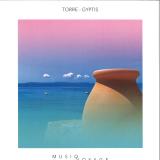
Musiq Voyage sets sail with its debut release by TORRE Bros, a producer duo from Aix-en-Provence. A heartfelt tribute to Marseille and the Mediterranean through two shimmering Space Disco cuts: Gyptis and La Pointe Rouge.
Remixed by the legendary Moplen, Alex From Tokyo, and Julien HBT, this EP blends house, boogie, and balearic vibes into a warm and elegant sonic journey.
//
After cruising their native Provence and spinning on the mythical shores of Ibiza with their iconic pink-and-blue DJ truck, the Musiq Voyage crew is proud to launch their new label with a sun-soaked debut EP.
Rooted in Mediterranean soul, Phocaea Vol. 1 features longtime friends and local legends TORRE Bros (Jean-Marc & Patrick Torre), producers from Aix-en-Provence with over two decades of musical exploration—from disco and house to hybrid electronic jams. Known for underground hits like Corps à Corps and Baleora, supported by artists such as Carl Craig, the duo now pays tribute to Marseille, their beloved coastal city.
A1 – Gyptis
Named after the legendary princess said to have founded Marseille, Gyptis is a lush space-disco homage to the city’s ancient roots—where Greek sailors met local tribes, and myth met the Mediterranean.
A2 – Gyptis (Moplen Remix)
Italian disco don Moplen (Chaka Khan, Talking Heads, Loose Change) delivers a floor-ready rework—elevating the groove with cosmic flair while keeping the original’s dreamy vibe.
B1 – La Pointe Rouge
A sonic postcard of one of Marseille’s most iconic seaside spots—sunsets, sailing, and slow walks by the sea. Built on a strong boogie beat, 80s synths, and balearic textures.
B2 – La Pointe Rouge (Alex From Tokyo & Julien HBT Remix)
Legendary DJ/producer Alex From Tokyo (Tokyo Black Star, Innervisions) teams up with Parisian underground figure Julien HBT (Demented, with François X) for a deep, syncopated reimagining. Infused with Chicago house and leftfield boogie influences, this remix flips the original into a spaced-out late-night groover.
More than just a legendary DJ, Alex From Tokyo has built a global career bridging cultures and sounds. After growing up in Japan, he returned to Paris in the early ’90s and co-founded A Deep Groove with DJ Deep and DJ Gregory, launching one of France’s first underground dance radio shows on FG 98.2 FM.
A key link between Europe and Japan, Alex worked with labels like F Com, Mr Bongo, and Yellow Productions, before living in NYC, Berlin, and beyond.
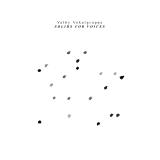
Valby Vokalgruppe was initiated in 2008 by Anja Jacobsen, the Danish collective’s current line-cup is completed by Lil Lacy, Sonja LaBianca, Cæcilie Trier and Laura Marie Madsen. The group has written and performed a large number of cross-aesthetic pieces over the years, including an album Bah New Era released in 2012 on Eget Værelse.
Sharpened to its core, the group dives deep into rhythmical architectures built almost solely from the voice - think Platonic solids reimagined as sound objects. Think trance without electronics. These new compositions are compressed, sparkling forms — vocal geometries that spin, collide, and dissolve through repetition. From inside the circle: radical precision, soft dissonance, and playful intuition guide the way. The group explores the voice not as melody alone, but as material — vibrating, modulating, refracting.
Solids For Voices transcends into deep concentration calling for a clear state of mind, in recognition of an increasingly fragmented and incoherent reality. Valby Vokalgruppe endeavours a total absorption into the voice, the rhythm and the trance.
Four years on from their landmark Grassroots, visionary half-time heavyweights The Untouchables return with their third album, Lost Knowledge. The duo of Kate McGill and Ajit 'Nitrox' Steyns have carved out a space in modern D&B all their own, building on a legacy that reaches back to the late 00s to keep pushing into unexplored terrain with an assured and deadly line in rhythmic intrigue and atmospheric immersion.
Lost Knowledge launches into action instantly with the high-pressure drum science and dubby splashes of 'Drunken Bells', capturing the loopy techno propulsion and rolling intensity that drives so much of the output on Samurai Music. Where The Untouchables excel is in finding variety and nuance in their relatively forbidding, pared down sound. The heads-down groove of 'Mafia Town' owes as much to dembow and dancehall as D&B, while 'Lost Knowledge' spirals out into psychoactive flurries of synth strafes and organic percussion slathered in tight-locked delay trails. There's no light relief from strident hooks or riffs, just a pure, unshakeable commitment to the power of the beat and deeply designed layers of sound shaping out the space around.
'Busy Bones' makes space for carefully deployed hints of pad tone while the snares snap out of the mix with a sharp set of teeth. 'Four Eared Demon' baits the gabber crowd with its rapid-fire 4/4 hats atop seasick creaks across the midrange, keeping subtlety and patience in the lower frequencies to maintain the signature elegance readily associated with The Untouchables. 'Phase Correlation' teases an artfully unhinged ripple of synth that stands out amongst the murky murmurs filling out the middle distance, but it's still exercised with brutal precision.
Nothing happens by accident or feels out of place - McGill and Steyns are in total control, and they demonstrate incredible range and inventive approaches within their focused style. The accent of the grooves shifts, and individual sounds carry all kinds of artefacts, yet everything gets folded into the exacting Untouchables sound with a liberal dubwise sensibility. Brimming with inspiration and immaculately produced, on Lost Knowledge their one-of-a-kind sound is stronger than ever.
- And The Band Played Johnny B. Goode
- If People Don't Like It (It Must Be Good)
- 100: Yards Of Crash Barrier
- A Common Disease
- Dearest Darling
- The Goddess Tree
- The Friends Of The Buff Medways Fancier's Association
- The Devil And God Entwined
- Sally Sensation
- Got Love If You Want It
- The Baby Who Mutilated Everybody's Heart
- Modern Terms Of Abuse
"Die unangefochtenen Könige des Garage Rock" sind wieder da! Zwei Jahre nach ihrem Album "Irregularis (The Great Hiatus)" aus dem Jahr 2023 melden sich Thee Headcoats mit einer neuen Platte zurück, die sich nahtlos in die Reihe ihrer besten Alben aus den 1990er Jahren einreiht. Wir präsentieren Ihnen stolz "The Sherlock Holmes Rhythm ,n` Beat Vernacular". Mit 12 fantastischen Stücken (oder Liedchen, wenn Sie so wollen), die letztes Jahr in den Ranscombe Studios in Rochester aufgenommen wurden. "The Sherlock Holmes Rhythm 'n' Beat Vernacular" erscheint am selben Tag wie "Man-Trap", das brandneue Album von Thee Headcoatees, auf dem die Jungs als Backing-Band fungieren. Thee Headcoats ist eine der vielen Musikgruppen unter der Leitung von Billy Childish und (soweit wir wissen) seine bislang produktivste. Kein Wunder, wenn man Billys unermüdliche Kreativität und seinen vollen Veröffentlichungsplan bedenkt. Thee Headcoats spielen harten R&B, Rock 'n' Roll und Punk Rock, beeinflusst von den frühen Kinks, Pretty Things und vor allem The Downliners Sect, mit einem zusätzlichen Sinn für Humor, der durch Bruce, die Vorliebe des Schlagzeugers für Deerstalker-Hüte, geprägt ist. Thee Headcoats etablierten ihren Stil auf ihrer ersten LP "Headcoats Down" Hangman, 1988 und setzten ihn mit "The Earls of Suavedom" [Crypt, 1989] und "Heavens to Murgatroyd, Even! It's Thee Headcoats! (Already)" [SubPop, 1990] fort. Auf späteren Alben wie "The Messerschmitt Pilot's Severed Hand" aus dem Jahr 1998 kam ein schlankerer, punkigerer Sound zum Vorschein, doch die Jungs blieben ihrem rauen, von den 60ern inspirierten R'n'B treu und klangen auf ihrem Comeback-Meisterwerk "Irregularis (The Great Hiatus)" aus dem Jahr 2023 im Wesentlichen unverändert. "The Sherlock Holmes Rhythm 'n' Beat Vernacular" setzt da noch einen drauf und ist beeindruckenderweise eines der absolut besten Billy Childish Alben der letzten 25 Jahre. Das glauben Sie nicht? Dann kaufen und hören Sie es und lassen sich eines Besseren belehren_
Our next Toolroom vinyl instalment comes from Sara Parker and Eats Everything with his reebeef on an absolute classic! Originally released in 1995 on the Sharp Boys own ‘Sharp Recordings’, ‘My Love Is Deep’ went on to achieve national chart success on ‘Manifesto’. Championed by the late, great Tony De Vit on the legendary dancefloor of ‘Trade’, Tony was the first DJ to play the ‘Sharp Dub’, after being handed an acetate by the boys. Eats Everything, off the back of his debut album ‘We Lost Ourselves and Found A Family’, delivers a blistering new ‘Reebeef’. Listing the ‘Sharp Dub’ in his ‘10 Best Hardbag Tracks of All Time’, Eat’s admiration of the original, Tony De Vit and the nuances and essence of Dance Music culture is evident with this essential rework, guaranteed to be a genuine highlight of the year. The package features both this great new rework and the timeless original!
- A1: Intro For A Major Motion Picture
- A2: Our Singer (La Rehearsal Session)
- A3: Joe Keery Screen Test (Movie Clip)
- A4: Angel Carver Blues/Mellow Jazz Docent (Live At Cirkus
- A5: You're Killing Me/My Radio/Nothing Ever Happens (Jukebo
- A6: Spizzle Truck (Portland Rehearsal Session)
- A7: It's What I Want (Movie Clip)
- A8: In The Mouth Of The Desert (Live At Le Grand Rex, Paris
- A9: Priceless Art (Movie Clip)
- A10: Fame Throwa (La Rehearsal Session)
- A11: Song Is Sacred (Movie Clip)
- A12: Here (Jukebox Musical Versions)
- A13: Zurich Is Stained (Live At Cirkus, Stockholm)
- B1: When Songs Are Bought (Movie Clip)
- B2: Witchi Tai-To (La Rehearsal Session)
- B3: Don't Fuck With My Rolls Man (Movie Clip)
- B4: Two States (Live At Cirkus, Stockholm)
- B5: I Can't Play Billie Joel/"Range Life" Theme (Movie Clip
- B6: Joe Keery Sings Range Life At Fake Lollapalooza (Delete
- B7: Serpentine Pad (La Rehearsal Session)
- B8: Stairwell Scene (Movie Clip)
- B9: Filmore Jive (Portland Rehearsal Session)
- B10: Circa (John Peel Session)
- C1: We Dance (Jukebox Musical Versions)
- C2: Unfair (Live At Cirkus, Stockholm)
- C3: Harness Your Hopes (Live At Cirkus, Stockholm)
- C4: Still Waiting On That Gold Record (Spiral Interview)
- C5: Snail Mail - Shoot The Singer (Live From The Pavement M
- C6: Endless Loop Of Songs (Deleted Scene)
- C7: No More Absolutes/So Mind Blowing (Movie Clips)
- C8: Grounded (Live At The Fonda Theatre, Los Angeles)
- C9: Fight This Generation (Mud Throwa Musical - Live Mix)
- C10: The Band That Ruined Lollapalooza (Movie Clip)
- D1: The Infrastructure Rots (Movie Clip/Jukebox Musical Ver
- D2: Type Slowly (Live At Cirkus, Stockholm)
- D3: Slanted! Enchanted! Tryouts! (Movie Clip)
- D4: Grave Architecture (Portland Rehearsal Session)
- D5: I Heard Pavement For The First Time Six Weeks Ago (Movi
- D6: Give It A Day (Jukebox Musical Versions)
- D7: I Just Saw A Ghost (Movie Clip)
- D8: Slanted! Enchanted! Finale! (Jukebox Musical Versions)
Der Erfolg von Pavement mit ihrer ausverkauften Reunion-Tour, den goldenen Schallplatten oder jüngst dem von der Kritik gefeierten "Pavements"-Film ist ein Beweis für ihr großes Erbe, welches bis heute junge Newcomer-Bands beeinflusst. Obwohl sie in ihrer ursprünglichen Zeit von 1989 bis 1999 zu einer der einflussreichsten amerikanischen Indie-Rock-Bands wurden, erreichten sie nie den Mainstream-Erfolg anderer Kollegen dieser Zeit. Ihr Lo-Fi-Stil und die oft ironischen, abstrakten Texte haben allerdings eine treue Fangemeinde aufgebaut. Wie seltsam bahnbrechend diese wunderbar verspulte wie verspielte Band ist, wurde einem gerade erst jüngst wieder im Kino durch den Film "Pavements" bewusst, dessen Soundtrack jetzt auf Vinyl und CD erscheinen wird. Der Soundtrack, zusammengestellt vom Pavement-Produzenten/Cutter Robert Greene und der Band selbst, vereint disparate Elemente des Films. Dazu gehören Dialog-Ausschnitte, Szenen aus dem fiktiven Oscar-Köder-Biopic "Range Life", sowie Aufnahmen der Besetzung aus dem Jukebox-Musical "Slanted! Enchanted!". Ergänzt wird das Ganze durch Live- und Probe-Aufnahmen der Reunion-Tour der Gruppe im Jahr 2021. Die Aufnahmen der kompletten Band wurden von Bryce Goggin abgemischt, der bereits an den Pavement-Klassikern "Crooked Rain Crooked Rain", "Wowee Zowee" und "Brighten the Corners" mitgewirkt hat.
- The Free Design - Listen
- Evelyn Pope - Surround Yourself In Sound
- James Kirk & Warren Mcintyre - Iron Star
- Frank Schmiechen - Irgendein Französischer Film
- The Kingfishers - Long Lost Friend
- Brent Cash - Good Morning Sunshine
- David Scott - The Last Great American Dynasty
- Shack - Carousel
- Michel Van Dyke - Ich Find Dich Gut
- Marina Unlimited Orchestra - Vermont Snowflakes
- The Bathers - No Risk No Glory
- Fascinator - Mississippi Mud
- The Tall Poppies - The Return Of The Snow Lamb
- Ashby - You Can Have It All
- Norman Blake & David Scott - Hammond Song
- Oscar In Venice - Michael Joseph Scott
- Dislocation Dance - It's A Long Way Down
- The Pearlfishers - Limelight
- Colin Steele Quartet - The Vampires Of Camelon
- Malcolm Ross - Heartbroken All Over Again
- Van Dyke Parks - Chateau Marmont
"Viva Marina" celebrates the 100th release of Marina Records. The label was founded in Hamburg in 1993 by Stefan Kassel and Frank Lähnemann. Over the years the label released many outstanding albums by artists like The Pearlfishers, Shack, Brent Cash, The Bathers, James Kirk, The Free Design, Malcolm Ross, Ashby, Paul Quinn & The Independent Group, Der Plan, and many many more - incl. the best-selling Beach Boys/ Brian Wilson tribute album "Caroline Now!". "Viva Marina" is the 4th of the label"s acclaimed compilations - following in the footsteps of "In Bed With Marina", "Ave Marina" and "Goosebumps". These compilations have all been elaborate classy affairs with lots of attention to detail (packaging / design / liner notes / photography / mastering). Artefacts of beautifully curated Pop Art. The new compilation continues in that tradition. It features 21 tracks from the Marina roster and kindred spirits like Van Dyke Parks, The Kingfishers, Frank Schmiechen and Michel van Dyke. Featuring many exclusive and previously unissued contributions. Enjoy 21 tracks / 75 minutes of pure aural pop pleasure. Viva Marina!
Monolith 45 series I
A new chapter emerges within Organic Signs.Conceived as a vessel dedicated to a single frequency, Monolith 45 is born to trace the lineage of progressive trance — that tribal, hypnotic, and ceremonial sound that carved its path during the early 2000s, and which today we reclaim with reverence.
Each release stands as a stone marker along this continuum: timeless signals that resonate equally with memory and vision. As with the broader work of Organic Signs, this new line will follow a dual path: rescuing forgotten gems from the past while also curating new music that embodies the same spirit.
Monolith 45 becomes the place where past and present intertwine, shaping a narrative that honors tradition while opening new doors for exploration.
The first monolith in the series carries with it two totems of the genre:
On the A-side, Magnetrixx – Intraferences, originally released in the year 2000 on the legendary Tatsu Records. Behind this moniker stands Stefan Lewin, not only a key architect of the progressive trance sound but also the mind behind ACL (Audiophile Circuits League), one of the most special modular synthesizer brands..
His work bridges eras: from shaping the trancefloor at the turn of the millennium to designing instruments that define modern electronic creation.On the B-side, Ticon – Lo Mi Hi, a track that saw the light in 2001 on Digital Structures, one of the most influential labels of that era.
Ticon are nothing short of mythical within this universe — pioneers whose sound blurred borders between deep grooves, psychedelic textures, and progressive structures, leaving an indelible mark that still resonates with dancers and producers worldwide.
With Monolith 45, we seek not only to preserve these transmissions but to project them into the present: to reawaken a sound that was always more than music, a tribal pulse, a ritual language that invited bodies and minds into collective trance.
This is our homage, our offering, and our way of extending the path forward.
Gerry raus, kein Ersatz. Zu fünft, Dim Prospects sind zurück zur deutschen Sprache, neues Kapitel. "Abscheu und Neugier": aufgenommen im Winter 24/25 mit Tom Zwanzga im S.T.R.E.S.S. Studio, gemastert in der North London Bomb Factory von Daniel Hajji Husayn.
13 Songs zwischen Punkrock und Hardcore - mal schnell, mal gedrosselt, immer mit Melodie und melancholischem Unterton. Irgendwo zwischen Hamburger "Schiffen", Leatherface und Hüsker Dü. Texte voll Wut und Spott über den täglichen Irrsinn von Konservatismus und Rechtsruck. Abscheu trifft Neugier, Grant trifft Augenzwinkern.
- 1: Pyar Chahiye Keh Paisa
- 2: Dance Music
- 3: Giraffe Trapping Music
- 4: Orchestral Music
- 5: Contessa
- 6: Dance Music
- 7: Mahbooba Mehbooba
- 8: Bairaag Dance Music
- 9: Title Music
- 10: Dance Music
- 11: Hotel Incidental Music
- 12: Chhedo Na Dekho Na
- 13: Awara Sadiyon Se
- 14: Soul Of Bobby
- 1: Tuning
- 2: Overture
- 3: Historian's Introduction To Act I
- 4: Finland/Fish Schlapping Dance
- 5: Monks Chant/He Is Not Dead Yet
- 6: Come With Me
- 7: Laker Girls Cheer
- 8: The Song That Goes Like This
- 9: He Is Not Dead Yet (Play Off)
- 10: All For One
- 11: Knights Of The Round Table/The Song That Goes Like This (Peprise)
- 12: Find Your Grail
- 13: Run Away!
- 14: The Intermission
- 1: Hstorian's Introduction To Act Ii
- 2: Always Look On The Bright Side Of Life
- 3: Brave Sir Robin
- 4: You Won't Succeed On Broadway
- 5: Diva's Lament (What Ever Happened To My Part?)
- 6: Where Are You?
- 7: His Name Is Lancelot
- 8: I'm All Alone
- 9: Twice In Every Show
- 10: Act Ii Finale
- 11: Always Look On The Bright Side Of Life (Company Bow)
- 12: The Cow Song
- 1: Intro For A Major Motion Picture
- 2: Our Singer
- 3: Joe Keery Screen Test
- 4: Angel Carver Blues/Mellow Jazz Docent
- 5: You're Killing Me/My Radio/Nothing Ever Happens
- 6: Spizzle Trunk
- 7: It's What I Want
- 8: In The Mouth A Desert
- 9: Priceless Art
- 10: Fame Throwa
- 11: Song Is Sacred
- 12: Here
- 13: Zürich Is Stained
- 14: When Songs Are Bought
- 15: Witchitai-To
- 16: Don't Fuck With My Rolls Man
- 17: Two States
- 18: I Can't Play Billy Joel/"Range Life" Theme
- 19: Joe Keery Sings Range Life At Fake Lollapalooza
- 20: Serpentine Pad
- 21: Stairwell Scene
- 22: Fillmore Jive
- 23: Circa 1762
- 1: We Dance
- 2: Unfair
- 3: Harness Your Hopes
- 4: Still Waiting On That Gold Record
- 5: Shoot The Singer
- 6: Endless Loop Of Songs
- 7: No More Absolutes/So Mind Blowing
- 8: Grounded
- 9: Fight This Generation
- 10: The Band That Ruined Lollapalooza
- 11: The Infrastructure Rots
- 12: Type Slowly
- 13: Slanted! Enchanted! Tryouts!
- 14: Grave Architecture
- 15: I Heard Pavement For The First Time Six Weeks Ago
- 16: Give It A Day
- 17: I Just Saw A Ghost
- 18: Slanted! Enchanted! Finale!
- A Prayer For Peace
- First Light
- We Laugh Because We Must
- Midnight Bloom
- The Space Within
- Let The Quiet Speak
- Open Palms
- Light Remains
- Beneath The Noise
- Mouth Full Of Sky
- Grace Is Not Gentle
- As We Are
- Then We Danced
- Here And Now
Green Vinyl[25,63 €]