Cuernavaca / Stateville / Frankincense And Myrrh / Apsara / Ancestral / Spin / Zincali
Approaching his eighty-fifth birthday, sharp and lean, Phil Cohran lives a couple of blocks from the lake on the north side of Chicago. His modest apartment is filled with a palpable richness. His cornet and trumpets, zithers, French horn, harp and frankiphones (an electric kalimba of his own invention); his beloved telescope; African art; a mural of the Chinese monastery where Muslim monks bestowed on him the name Kelan ('holy scripture'); hand-printed posters from the culture wars of 1960s Chicago; all reflect a life dedicated not just to music, but also to science and astronomy, to history and activism. In its range of subject matter the track-list of Kelan Philip Cohran & The Hypnotic Brass Ensemble embodies this invigorating and all-embracing curiosity: a Mexican hill-town filled with perfume and flowers... an Illinois state prison where Cohran taught inmates in the 1960s... heavenly dancers in the temples of Cambodia... a tribute to a sixteenth-century Venetian musicologist. Welcome to the musical world of Kelan Philip Cohran.
Cohran was born in Mississippi and grew up in St Louis. In the immediate post-war years St Louis was a jazz heartland, home of stalwarts like Clark Terry and Oliver Nelson (both of whom he played with), not to mention a genius called Miles Davis. In 1950 Cohran moved to another heartland, Kansas City, where he played trumpet in one of the hardest swinging swing-groups, led by Jay McShann (who famously had given Charlie Parker his first job). With McShann he spent 'the best year of my life', touring as far as Mexico and playing proto-rock'n'roll in Texas with the likes of Big Mama Thornton on vocals. Back in St Louis Cohran led his own group, the Rajas Of Swing, whose show involved wearing red jackets, grey slacks, blue suede shoes and turbans.
Then in the mid-50s he moved to Chicago. He had a small group with a friend, the legendary tenor saxophonist John Gilmore, whose regular gig was to play at Sarah Vaughan's weekly 'birthday' parties, an excuse for the Sassy One to splash the cash and have some fun. ('What, Sarah Vaughan would sing with you and John Gilmore' 'No way, Sarah didn't sing, she was too busy partying.') And in 1959, through Gilmore, he was invited to join Sun Ra's Arkestra, at a crucial period in the evolution of that extraordinary group. Effortlessly wrapping traditions as divergent as boogie-woogie and electronica in an Afro-centric, intergalactic mythology of his own making, Sun Ra casts a huge shadow across conventional narratives of jazz history. 'With Sunny', Cohran simply says, 'I found my own voice'.
You can hear the emergence of this voice on the LP Angels And Demons At Play, recorded in 1960 - Sun Ra's masterpiece from the period. On the track Music From The World Tomorrow, against the urgent whipped and chopped percussion of the Arkestra, it is Cohran's zither, initially bowed and then plucked and strummed, which is the track's magic ingredient. More profoundly it was Sun Ra's example - his defiant self-confidence and sense of purpose - that set Cohran on his own (to quote another Ra composition) 'pathway to unknown worlds'. Indeed this spirit of self-belief led Cohran to turn down the invitation to accompany the Arkestra when Sun Ra moved east in 1961.
Staying in Chicago, Cohran founded the Affro-Arts Theater and performed with the Artistic Heritage Ensemble, recording the group for his own Zulu Records imprint. (Co-members went on to become Earth Wind & Fire; Cohran taught the group's leader Maurice White the mysteries of the frankiphone). The AACM, a musicians' collective of immense influence and importance, had its first meeting in Cohran's front room. With Oscar Brown Jr and Gene Page he wrote and performed in a show celebrating the nineteenth-century Afro-American poet Paul Lawrence Dunbar. He taught music tirelessly in schools and prisons. His studies into music theory and history led him to the discovery of a key book in his life, Gioseffo Zarlino's treatise on harmony, published in Venice in1558. Astronomy is another passion and another area of expertise. One of the gems of the Cohran discography is African Skies, with its lovely harp playing, commissioned by the Chicago Planetarium in 1993.
In Chicago he also raised a large family. Many of his children have gone on to become professional musicians; eight of them are the Hypnotic Brass Ensemble. For each of them, their first teacher was their father, who famously insisted on giving them music lessons not just for several hours after school, but for several hours before school as well. Their father's music was all around them as children; they all vividly remember lying in bed at night not being able to sleep because their father was rehearsing with the Jazz Workshop downstairs.
For the Hypnotic Brass Ensemble, the voyage to where they are now - whether tearing up festivals from Glastonbury to Melbourne, or touring with Gorillaz, or recording their first album on Honest Jon's - has involved a necessary stepping away from their father's shadow. Phil Cohran is the first to recognise this, happily allowing their sound - heavy on the funk, with the urgency of hip hop never far away - to blossom.
But likewise this album is for all of them a natural step. Recorded in Chicago in June 2011, the idea was beautifully simple - 'my music and their band' as Phil puts it, 'we don't have to rattle on more than that'. Only to point out perhaps that here - in the majestic surge of Zincali, for instance, or in the sheer verve and bounce of Cuernevaca - is music not just filled with the warmth of home. This is music that plumbs the depths and rings with joy.
'Cuernevaca is a town in the mountains south of Mexico City. I was there in 1950 when I was on the road with Jay McShann's band. It's a place close to paradise, a city filled with the fragrance of flowers. I always wanted to go back... In 1974 I taught workshops at the prison in Stateville, the Big House where Al Capone spent time. There's a huge wall around the prison, and once I took Hypnotic there - ha - to see what the future holds for them... Makeda, the Queen of Sheba, sent a caravan of gifts to King Solomon - a caravan that took more than a day to pass one point - and the main gifts were Frankincense And Myrrh... I wrote Apsara in 1967, when Jackie Kennedy was in the news with her visit to the temple of Angkor Wat in Cambodia. Apsara were celestial beings, dancers who brought forth the civilization of ancient Cambodia, by dancing in the holy nectar called Amrita... Ancestral is a meditation drone written for my Friday-night residence at the Ethiopian Diamond Restaurant in Chicago's Rogers Park... Spin is the latest of these compositions. Everything in the cosmos spins, from the smallest objects we can see in a microscope to the largest galaxies. Spin is the motion of all things whether it looks like it or not... Zincali is a name Spanish gypsies call themselves. 'Zin', East Africa; 'cali', the people. One of the offshoots in my research into Moorish Spain has led me to Gioseffo Zarlino, the sixteenth-century master of music at St Mark's in Venice. It's said that Bach lost his sight reading Zarlino's treatise on counterpoint. His greatest composition is his setting of the Song of Songs - 'Nigra Sum', 'I am black'. This is my tribute to Zarlino and to the zincali.'
Cerca:dance area
Wah Wah 45s make a welcome return to the world of re-issues. Having started out over two decades ago releasing dance floor funk from Benny Poole, Cheyenne Fowler and The Googie Rene Combo, and later re-releasing obscure Kompa-funk from Haitian pianist Henri Pierre Noel, they now turn their attention to an overlooked early 90s acoustic soul gem.
About thirty years ago, music teacher and budding producer Alex Boyesen found himself working as part of the Haringey Music Workshop - a community programme and outreach project funded by the local council in Haringey, North London (coincidentally the area in which the Wah Wah head office is now based!).
"Anyone could come and get lessons for free - ranging from piano, sax, guitar, drums, bass, singing and workshops including choral, jazz band and more." Alex Boyesen
It was during that time that Alex came across a young Sam Edwards.
"One day I went into one of the rehearsal rooms and there, by herself, was this girl playing a piano and singing. It was the most incredible voice I had ever heard."
Before long, the pair were playing all over London as a duo with Alex on guitar and Sam on vocals.
"Sam had never had professional training, she was simply an utter natural."
The Haringey Music workshop was connected with other projects in the borough, in particular a community project called the Selby Centre. Here they ran training programs for young people and one of these was a music business course. The idea was that they found an artist, recorded them and then promoted them. One way or the other they ended up picking Alex and Sam to be on their roster.
"My good friend Nixon Rosembert was brought in to oversee the recordings and they hired the Islington Music Workshop to do the recording. We got musicians from the Haringey Music Workshop to play on the sessions and spent a day recording two songs -American CarsandLife. The training workshop had created a label called Progression Music and out the record went."
Three decades later and out of the blue Alex started to get interest again in the record he'd almost forgotten about all those years ago. It had become something of a sought after gem on Discogs, and there seemed to be an interest in that 'acoustic soul' sound once again.
"I got three people asking if they could re-release it and finally here we are with Wah Wah 45s doing the business after all these years."
It was Hospital Records and Wah Wah 45s founder, Chris Goss, who first brought the idea of releasing this record to the table.
"This is a really special record for me, picked up 30 years ago, from a young James Lavelle at Honest Jon's in Ladbroke Grove. Sam Edwards would go on to perform and write songs with North London's Izit, the acid jazz collective fronted by Tony Colman - with whom I have built a music company, these past 25 years. Alex Boyeson worked with Tony at the Haringey Arts Project, who produced a one-off vinyl release of Alex's two compositions back in 1991. Thanks to Alex and Tony, we have been able to clean-up the original audio, uncover photos and lyric sheets to present, with real love and affection, these two lost gems from a bygone era." Chris Goss, Feb 2021.
The project was then expanded by Dom Servini, who got heavy disco legend Ashley Beedle and co-label owner and erstwhile producer Adam Scrimshire in to take on remix duties.
"When approached by Dom Servini to reworkAmerican CarsI had no idea about the history of the original song. After a good listen myself and studio partner Darren Morris set to work and all I can say that it was a lovely experience keeping the vibe of the original but giving it a spaced out feel in true Afrikanz On Marz fashion." Ashley Beedle, Feb 2021.
"Remixing without multi-tracks always brings a bunch of challenges, getting the balance between the bass and drums in the original and what you want to do with your own version. The song really dictates certain things to you.
But it was such a pleasure to explore that with this beautiful song and vocal performance. So many ways to approach it. I just wanted to draw out more of the melancholy in the original and make it an absorbing experience." Adam Scrimshire, Feb 2021.
Perhaps the last word should be given to Alex himself, who's very much enjoying the new lease of life that his music with Sam is getting.
"As I write this we are trying to locate her, she's somewhere singing something, that's all she ever did. Thanks for being part of my life Sam and I am so glad that this small bit of that time is being remembered." Alex Boyesen, Feb 2021.
Optimo Music presents “Janara” the new album from Italy’s José Manuel. We always have our ears open for music that is unique, powerful and that can conjure up a ritualistic atmosphere, and this meistrerwerk did all that, and then some. We knew we had to release it after the first listen.
We’ll let José tell you about it….
This album is a result of the necessity of exploring and opening my mind to new musical horizons, by testing the main traditional instrument of the Italian region Campania, whose name is “Tammorra”. It is a big drum, which must not be confused with the typical tambourine, made from a wrap of wood shaped in a circle and covered with dried skin (almost always goatskin or sheepskin). This instrument was used during playful events, especially during rituals and ceremonies, such as the frequent devotional pilgrimages in honour of the Virgin Mary. By using this instrument, the sound, the rite and the magic could take possession of the mind and the body creating a perfect union. Also, the dancers, as if they were bitten by a tarantula and possessed by a strange evil, launched themselves to an uncontrolled dance by moving every part of their body.
In addition to the Tammorra, I also inserted some texts, which have been written by some Neapolitan friends and interpreted with Neapolitans voices, in honour of the “JANARA”. The Janara represents a popular belief of the Southern Italian regions, particularly of the Benevento area. The Janara is one of the many types of witches represented by folktales belonging to the rural tradition.
The Janara was expert in medical herbs, which were also be used for her magical practices, such as the manufacturing of ointment. The ointment gave her the power to become incorporeal with the same nature as the wind. According to the tradition, in order to snatch the Janara it was necessary to grab her by the hair. It was also said that if anyone was able to capture the Janara during her incorporeal moment then Janara herself would offer protection to them and their family for seven generations, in exchange for her freedom.
With this work I hope that the listener might get carried away by the spirit of this pagan and popular legend that can be still be considered as current. As a matter of fact, the folk tales speak of a probable comeback of the Janara, who after being burned at the stake seems to be thirsting for revenge for the evil suffered.
Superb Gatefold delux editioon of a magic ambient to ambient-core sound... Ritch and conceptual music... Out from the fields and upper than any montaign... this is This tale is written inside the gatefold : The Bandiagara Escarpement unravels for more than 400.000 hectares, multitude of sandstone cliffs and plateaus, ravines and caverns. A West African area of unique and exceptional beauty also known as the Land of Dogon.
Summer night is fading away when the Hogon Kalapodis stands up abruptly after days completely motionless staring at the stars through the openings of the Kukulu Kommo Cave. Time has come. The heliacal rising of Sirius is getting nearer. Aware of the power of the word to bring everything into existence by naming, the Hogon reaches with a resolute pace the Polio Kommo Plain where his ancestors wrote in stone the past and future of mankind. There he finds the Awa fully deployed in two lines, the oldest standing and the others sitting before them. Dressed with braids of dyed fibers and embroidered with cowry shells, figures of mythological beings, humans, animals hold the painted wooden masks tightly between their teeth. Behind them, the whole tribe stood around the rock ark in the kanaga position : legs well planted in the sandstone, arms waving to the lightening sky.
Just a nod and Nogod, the most skilled percussionist, starts a solo on his Gom Boy. First he keeps on repeating over and over the same obsessive pattern and then, squeezing the leather chords of the talking drum with arm and body, he modulates the frequency produced with the beats originating from the rest of the tribe. The last Dama has just begun.
The end of the mourning ritual is now looming over the cliff. Hundreds of Boy Na and Boy Tolo and Gom Boys jam together with bells and bullroarers and all the singers. The masked crews jump and dance quickly in sonic belligerence and the faster they cross one another, the more the rhythm accelerates.
Drumming gets supersonic. No longer possible to detect a percussive sound, only a single powerful Black Drone. Super fast music becomes super slow.
In the light of dawn, looking at the horizon, Sigui Sirius A Tolo is now rising. Also its dark companion Po Sirius B Tolo is over there and far away a new New form is taking shape. Nogod standing right at the middle of the vibing tribe, whispers sweetly something but somehow in all that rumble everybody hears clearly the name : S………I………R………I………U………S………C
2023 Repress
it’s happening again: dj, producer and dial records co-owner lawrence produced his fourth album for mule musiq. and once more, another very special one. the berlin-based artist wrote nine new arrangements specifically for “studio mule”, the new audiophile listening bar that mule musiq's head-honcho toshiya kawasaki recently opened in shibuya, tokyo. it features an exquisite vintage hi-fi sound system, a small record shop, craft liquor and beer as well as an extensive natural wine collection. “toshiya's wine and listening bar was the inspiration for the project. i followed the idea of listening to music in this (for me imaginary) place on a magic vintage sound system, slightly drunk with an always special drink in my hand! the music is therefore also very eccentric and “tipsy”, improvised on acoustic instruments, synthesizers and computer, combined with recordings i did in berlin's central tiergarten park.” lawrence acknowledges the imaginative superstructure above his new album and his mode of operating during the recordings. the records is called “birds on the playground” and features deep pulsating music, that unfolds its true absorbing character when the auditor listens care-fully to the detailed storytelling of lawrence. like always his tunes got a special, radiant pulse, that somehow is a signature sign of most of his productions. playful cosmic grooves, light-hearted, crafted with love and yet freshly unset-tling in some moments. his arpeggiated melodies remind partly on the music of hans-joachim roedelius. in other sec-onds they display a jazzy spiritual character and drift into meditative areas, that sound to a degree like long forgotten japanese folk music spheres. as “birds on the playground” isn’t aimed straight for the dancefloor, the overall coating of the music is a relaxed, cautious one, that goes beyond the average definition of ambient music. each track builds up gracefully, in order to present a mesmerizing musical architecture, that offers new sound dimensions with any fresh listening turn. as the record is made for mule musiq`s latest public space enterprise, everyone who is close-ly connected to the label was involved.
mule musiq’s core artist kuniyuki was in charge for the mastering. and the labels visual draw-er stefan marx painted the cover artwork. “when i saw the record cover for the first time, i had to think a bit of an extremely funny new year's eve party from over 10 years ago, when stefan and i founded the imaginary band “the dead sea”. this record would have been a wonderful soundtrack to the bustle during that night.” lawrence reveals.
it must have been a party beyond hysteric spheres, where all guests dance and talk dearly at the bar, while the music slows down their body functions enough to hear a sound that takes everybody away to a place, that must have been home in that very moment.
Legendary Chicagoan General Juke aka Gant-Man returns with Distorted Sensory, his brand new acid house adventure. A longtime veteran who's been behind the decks since before he was even a teen, he's been an essential part of Chicago dance music history since the Dance Mania days in the mid 90s, and a major pioneer in jumpstarting the juke movement that followed. This new single, and his debut solo releaseon the Teklife imprint explores the time honored tradition of jacking, channeling the very essence of house music though a modern lens. Employing an enigmatic 303 bassline that mutates and breathes as if it were alive, Gant plays malicious melodies that run up and down octaves in a freaky, hallucinatory manner. Squelchy synth movements are met by eerie FM tones, reminiscent of Cajmere's classic Chicago staple the Percolator. A rugged 909 drum kit bangs the track along in true jacking fashion, making it the perfect tool for shaking the floors of dark, sweaty warehouses. In addition to the original, two of the UK's finest contribute remixes as well. Hyperdub boss Kode9 puts things into overdrive with his 160 BPM warped vision of Gant's acid, sliced up to appeal more to the footworkers and fans of psycho tempos. Dubstep pioneer Loefah strips back the original percussion and lets the 303s float over a cloud of deep sub bass, adorned with lovely splashes of rolling snares and micro percussion. With an array of stone cold classics under his belt, from ghetto house anthem Juke Dat Girl to his brilliant collabs with the late DJ Rashad Heaven Sent and Juke Dat Juke Dat, Gant-Man is a true renaissance man. For over 20 years, he's consistently shown the world the complexity that makes up his city's dance culture, never sticking to one area or tempo. Distorted Sensory is a beautiful celebration of Chicago house music, a return to its true raw design, and a reminder of just how timeless an art form it really is.
After the worldwide techno hit that was Darc Marc's "Dirty Rocking Bass" comes the next Cluster X instalment from French legend GANEZ THE TERRIBLE. "The Rave..." is another prime time techno monster from the Acid Techno/Techno underground that is going to cause massive dancefloor mayhem with its cheeky 'The rave, the sound, the people, the party" sample and hard funky beats and 303 stabs. With pounding remixes from D.A.V.E. THE DRUMMER, and new kid-on-the-block SEON, and a kicking bonus track "Elevator" from Ganez himself this gives a nod to all areas of harder techno.
Presenting the long sought after, groundbreaking and classic 1990 UK long-player finally remastered and reissued for 2018. London's Warriors Dance label was a unique operation and a pioneering London label during the late 80's acid house phenomena. Home to an assortment of DJs, MCs and soundmen, they went on to make their own original and indelible mark on the rave scene from the infamous 'Addis Ababa' studio on Harrow Road on the North-West side of the city.
A former reggae and soul studio that was instrumental to the output of influential artists like Soul II Soul and more, a steady diet of reggae, bass, hip-hop, house and techno kept their edgy, and die hard UK sound and style right at the cutting edge of the dance music underground across the globe with the top DJs and producers of the day celebrating the label.
The studio, helmed by label owner Tony 'Addis', acted as an incubator for artists whose names would go down in the history books - No Smoke, Bang The Party, The Addis Posse, Melancholy Man, Hollywood Beyond, The Housemaids and more all featured heavily on the label and contributed to its legendary output. The attitude and approach to the music was utterly and unapologetically a London thing, with heavy African and Caribbean influences also drawing on the sounds emanating from Chicago, Detroit and further afield.
Years later, and with the advent of the internet, Discogs, Youtube and any other digital platform you'd care to mention, Warriors Dance continues to be discovered and rediscovered again by curious diggers and music heads with a thirst for heavyweight tracks to play in their DJ sets. This saw the WD mythology rise again, making their records much sought after by fans from all over the world.
When 'International Smoke Signal' landed in 1990 there was nothing else quite like it in the musical landscape, the perfect sonic example of the Warriors Dance ethos and style incorporating all of the influences and grooves that made the label's output so unique, a sound heavily inspired by the preceding period in London and the UK where hip-hop, soul, reggae, rare groove and acid house were played side by side in the warehouses and empty spaces of former industrial areas. Throughout the late 1980's these often drab and dangerous places were transformed by local DJ crews like Soul II Soul and Shake 'N' Fingerpop with more to offer those looking for an open-minded party scene new places to explore, in turn switching people on to broader styles of music.
It's all in here, the heavy breakbeat driven B-boy house flavour of the album version of the classic 'Koro Koro', the Manu Dibango featuring tribal acid groove of 'International Smoke Signal' to the percussive and ultra-deep stylings of 'Oh Yes (Freedom)' the LP encapsulate a time and place yet continue to capture the imagination today.
Timeless music. There's no doubt the No Smoke project is a direct influence on the deeper, tribal house sounds around today and pioneered the afro house sound alongside 'Yeke Yeke', 'Motherland' etc as the acid house phenomenon swept the world. 'Koro Koro' is the omnipresent anthem which was broken at London clubs like Confusion by Bang The Party's Kid Batchelor and RIP which went on to blow up in New York, and was then signed by Profile Records. Hugely sampled and still played to this day.
'International Smoke Signal' fuses the otherworldly science of dub and reggae with Bronx breakbeats, synth laden ambient house excursions and the heartbeat of mother Africa with the technoid thrum of the motor city effortlessly, all while maintaining its London roots and swagger. A true dance music masterpiece. This is the first time the LP has been remastered and reissued, spread across 2 heavy slabs of high quality vinyl for maximum sonic impact. Made in conjunction with the Warriors Dance family and Tony Addis.
Special thanks to Nicky Trax & Tony Addis. - Remastered by Optimum Mastering, Bristol UK. Proudly distributed by Above Board distribution. 2018.
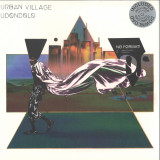
Signed to Parisian label N F rmat! (home to Oumou Sangar , Blick Bassy & M lissa Laveaux), Soweto-based 4 piece band Urban Village present their debut album, ‘Udondolo’.
Marrying the day-to-day experiences of black South Africans with ebullient elements from traditional Zulu music, Urban Village is the alias of four experimental musicians all born & raised in the township of Soweto at the tail end of apartheid.
Urban Village release music under a name which specifically references the blend of cultures, music & rites which were assimilated into the now 1 million strong population of Soweto, when black South Africans from multiple provinces were brought to the area during the establishment of apartheid, under strict segregation from Johannesburg’s white suburbs.
Born for the most part in the last years of apartheid, whilst growing up the band plunged happily into house and dance music that turned the page of a heavy past. Guitarist Lerato came across older Zulu musicians and their style of maskandi playing. Lerato has since mixed styles from homelands and rural areas, sharpened in club jam sessions (where he went on to meet Tubatsi and form Urban Village) during which spoken word, hip-hop and jazz rub shoulders freely.
‘Udondolo’ - partially recorded at legendary Downtown Studios in the heart of Johannesburg and at Figure of 8 studios in the leafy suburbs of Randburg, - is a journey through all the colours of Soweto. This is where it draws its consistency, strength & identity. That of Soweto itself - a dormitory town designed to
monitor those who were sent there, it has become a laboratory of music where the hopes of an entire people resonate, even today.
The latest signing to Parisian label No Format! (home to Oumou Sangaré, Blick Bassy and Mélissa Laveaux), Soweto-based 4 piece band Urban Village will release their debut album "Udondolo". Marrying the day-to-day experiences of black South Africans with ebullient elements from traditional Zulu music, Urban Village is the alias of four experimental musicians all born & raised in the township of Soweto at the tail end of apartheid; Urban Village release music under a name which specifically references the blend of cultures, music & rites which were assimilated into the now 1 million strong population of Soweto, when black South Africans from multiple provinces were brought to the area during the establishment of apartheid, under strict segregation from Johannesburg's white suburbs. Born for the most part in the last years of apartheid, whilst growing up the band plunged happily into house and dance music that turned the page of a heavy past. Guitarist Lerato came across older Zulu musicians and their style of maskandi playing. Lerato has since mixed styles from homelands and rural areas, sharpened in club jam sessions (where he went on to meet Tubatsi and form Urban Village) during which spoken word, hip-hop and jazz rub shoulders freely. "Udondolo" - partially recorded at legendary Downtown Studios in the heart of Johannesburg and at Figure of 8 studios in the leafy suburbs of Randburg - is a journey through all the colours of Soweto. This is where it draws its consistency, strength & identity. That of Soweto itself - a dormitory town designed to monitor those who were sent there, it has become a laboratory of music where the hopes of an entire people resonate, even today.
Timeless periods of industrial rhythm: Diarmaid O Meara and Kucera collaborate to release ‘Shadowmen’ vinyl on Gobsmacked Records
Nightclubs around Europe are shut. Even in Berlin, the clubbing capital of the world, nightlife has been reduced to a simmer. “But that doesn’t mean we can’t have a good time and connect via timeless periods of electrifying and industrial rhythms”, said Irish producer and DJ Diarmaid O Meara. Together with long-time Gobsmacked techno stalwart Kucera, the two have dropped their latest vinyl ‘Shadowmen’.
The collaboration has derived from long sessions in the Gobsmacked cavern studios in Berlin. The result: A 12” that is laid out in the style of the perfect rave – with a breakbeat electronica entry that promotes procrastination, freakish, and intensely introverted thoughts created through pulsating rhythms and ghostly frequencies, industrial rave sounds for those moments of release.
Partying is a huge part of Berlin’s identity
By listening to the vinyl featuring a dark rhythm, it becomes obvious that the duo has been heavily influenced by underground techno nights in Berlin, and also regularly sharing the stage together at international events. With the pandemic-mandated closure of clubs stretching through the summer, however, playing gigs and festivals is no longer an option. Hence, illegal parties have sprung up to fill the gap and infuriated some public health officials and politicians, also in Berlin.
“Partying is still a huge part of the city’s identity”, continued Diarmaid O Meara who has been living in Berlin for over a decade and also organising parties all over the city. “Raves are a much-needed way to blow off steam after a period of isolation but we have to consider a more proactive approach, for instance district authorities making public spaces available to party organisers under conditions that ensure hygiene measures are maintained.”
Although there has been no shortage of digital music events either since the pandemic began, clubbing is more than just watching a DJ set. “Rather it’s about the unique space that’s created by artists and the crowd that are pulled together by music”, said Kucera who has been destroying dance floors across Europe with his live sets since 2004. “In times when people are still feeling more isolated than ever, our latest vinyl with the accompanying music video aims to bring a sense of connectedness and community during the lockdown.” The video imagery has been recorded live using Kuceras machine pattern triggering whilst performing the tracks live.
Unwavering dedication to the culture of counter-culture
The name ‘Shadowmen’ reflects the work both artists have contributed constantly and consistently to the scene over the past two decades with unwavering dedication to the culture of counter-culture. The artwork, in classic Gobsmacked style, comes with a tip of the cap to the global elite who have been successfully driving humanity off a cliff. “We’ve thrown a little apparent illuminati symbol in there for those who’ve been confined too long at home and on YouTube for the past 6 months”, said Diarmaid O Meara.
Both artists are working on a multitude of new tracks and events for the post-Covid era. Of particular interest is Kuceras live visual show for Gobsmacked, with visuals triggered from his machine live-set patterns. This is something he has been wanting to experiment with for a long time now and it started to take shape in the form of visual hallucinations of industrial areas and trains he had been filming while traveling across Europe before the world stopped functioning properly due to Covid-19. Diarmaid O Meara has quite a few tricks up his sleeve, including a new politically inspired alias, where both artists will take centre stage in some wacky antics.
Hypnoskull is part of the global anti-music conspiracy networkTM (since 1992). Hypnoskull was created in 1992 as a solo project in order to experiment in the area of electronic noise combined with rhythmical structures. In the first years of its existence, Hypnoskull was releasing cassettes and tracks on international labels in the so-called cassette network, a widely spread network of independent and experimental musicians and artists who expressed themselves throughout limited tape releases often including artworks, ideas, texts. In 1998, hypnoskull signed to the German label ant-zen and up to today he is still releasing his albums on this highly influential record label. That is not a coincidence: ant-zen stands for ‘anti-zensur’ (anti-censorship), one of the main starting points of the provocative hypnoskull project. Patrick Stevens does not limit himself to just producing music as such, albums always include a severe message, a thought-provoking underlying concept text, questions. The main philosophy: ‘the dance floors, the clubs, the festivals,… are staged warzones with a different set of rules – a therapeutic zone where hidden anger and even aggression of both the artists as well as the spectators can be released in a proper, human way. Music as a means to open up the deepest anger inside human beings, letting it out in a way which is not harmful to others. A strange symbiosis between the two worlds Patrick Stevens is a part of: the techno and the industrial scene. Techno being a genre promoting a peaceful yet hedonistic way of life, industrial on the other hand being a highly nihilistic, philosophic but pitch black reflection on society. The mix of both musical as well as content wise elements of these genres result in what hypnoskull is all about. Added to this an explosive mixture of post-war and contemporary western subversive philosophy – in a rather impulsive manner – makes the project what it is today, after 30 years of existence.
A four track, vinyl only EP, that falls into an unspecified subgenre of techno with hypnotic and atmospheric influences, complete with a cinematic touch. Side A is slow and atmospheric, while side B is dancefloor oriented and focused on building ideas/themes using the track structure. The highlight of the EP is ”Never Relax”, which is a track inspired by the struggle of producing music in residential areas.
Futuro de Hierro, hailing from Barcelona, is the project by one of the Màgia Roja label/club/community collaborators… mostly known for this work with Dame Area but his solo project Futuro de Hierro is equally (or more?) interesting… the loud repetitive broken beats, noises and powerful delivered Spanish vocals make up for a punk influenced industrial techno sound which borders rhythmic noise at times… like something in between Liaisons Dangereuses, Esplendor Geométrico and Sonar…
This is an uncompromising EP filled with harsh tracks that still work for the dance floor… especially for those fed up with hearing the same beat over and over and over again…
Kohib is an important member of the Tromsø electronic music scene, equally as a club organizer, DJ, and producer. His debut was on the Prima Norsk 3 compilation in 2005, followed by an album, a remix-album, and a string of highly regarded EPs and singles. Kohib has had success both with his electronica-style releases (the track "Hear This" from his debut album was licensed to the Buddha Bar XIV compilation) as well as his dance floor releases for Beatservice, Sprechen, Cibicaldi, and SpinSpin NYC.
In Mountains is a desire to seek horizon. The album was written and recorded in November, December and January. A time when the sun is absent in Tromsø. However, the origin of lots of the rhythms in the music, are harvested during summer, from the same area. Sound samples are taken from Kohib's surroundings, from creaking in worn-out doors, to ambient silence along the coast. An electronic album, yes. But all the rhythms and instrumentation are analog. The goal has been to give leeway to all elements, by limiting the amount of information. So, if it follows a dogma with this album, it has been to limit the number of tracks to each song to the bare minimum. A sound weighs the most when alone.
The album will be promoted in UK / worldwide by Shine PR (UK) + social media marketing by Beatservice Records.
Wildflower (Leon Brichard, Tom Skinner, Idris Rahman) continue to explore areas of groove-based improvised jazz on their 2nd album. Taking a slightly freer approach to the writing process, simple but effective melodies and bass motifs are explored to to create fully realised pieces with dynamic extremes that bring a full range of emotion. Recorded over a two day session at Fishmarket Studios in London, the band sounds relaxed and at ease, giving space to explore intricate improvised interplay and dialogue fully whilst at the same time building to fiery powerful climaxes and emotional peaks. Skinner is on fire here whilst Rahman and Brichard trade riffs and push the harmonic and rhythmic boundaries. Rahman’s use of clarinet and bamboo flute plus additional layers of woodwinds, Skinner’s unique approach to stripped-down use of his very personalised kit, and Brichard’s use of both acoustic and electric basses make for a sonic landscape that is both unique and highly approachable. Touching on heavy spiritual vibes whilst taking in dark alternative grooves and delicate folk-like tunes, the overall sound remains instantly accessible
Sax, Flutes and Clarinet: Idris Rahman
Electric and Double Bass: Leon Brichard
Drums: Tom Skinner
Dom Trojga bounces into 2020 with an EP beautifully crafted by one of Warsaw's finest young talents - 2shy. Best known for his work as one half of the burgeoning duo Private Press (of Indigo Area & REKIDS fame), Night Conclusion is his long-awaited solo debut. Citing late 90s US house luminaries and Polish underground hiphop as some of his main influences (WSP's deep classic Faktem Jest was an actual reference during mixing), 2shy combines deep sensibility, great skill and genuine vehemence across the four tracks, telling a story that blends right into the greater narrative of house music, while adding to it its very own emotional touch. To use other words, Night Conclusion is a tender slammer, and does it good for DJs, dancers, lovers and night-time dreamers alike. The label art is an acrylic painting by Micha? Ratajczak, whose work we admire greatly. We've only just begun - look out for more Dom Trojga!
Black Truffle is pleased to present Realejo, the first vinyl release from Brazilian sound artist and composer Manuel Pessoa de Lima. Having composed works for diverse contexts including cinema, contemporary dance, theatre and television, Lima’s live appearances often take the form of self-reflexive lecture performances that combine electro-acoustic sound, red light, video and spoken text, moving unpredictably from the hilarious to the distressing.
Realejo consists of two side-long pieces of highly idiosyncratic electro-acoustic collage, beginning with recordings Lima made of himself playing the organ in the Schloss Solitude Chapel in Stuttgart. Exploring the peculiarities of the instrument’s mechanics, Lima made hours of recordings with the organ stops half-way open, moving from haunting gliding tones to oddly tuned fair-ground melodies reminiscent of the record’s namesake realejo, a hand-cranked organ traditionally found in Brazil as the musical accompaniment to the work of fortune-telling parrots.
To these organ sounds, Lima added recordings of a security guard made in São Paulo: ‘Just before coming to Stuttgart, I started making field recordings of a security guard in São Paulo. It's something pretty common in residential areas: they sit in a chair with a whistle, and use that to signal when people arrive, leave or pass by in the street. This particular security guard, Miguel Viana, works on the same street my parents live, and where I had my childhood, and he has worked there since I was a small child. He has watched the street at night, from 8PM to 6AM, every single day, except Sundays, for over 30 years’.
The poignant sounds of the security guard’s whistles punctuate Lima’s electro-acoustic environment, which also includes raw digital synthesis, recordings of his friends’ infant child, audio lifted from Youtube, and, on the LP’s second side, elements taken from an earlier work, ‘36 English to Portuguese Lessons’. Finely chiselled from dozens of hours of source material into a detail-rich, mercurial structure, Realejo is alternately jarring and seductive, introducing listeners to a young composer with a powerfully individual voice.
- A1: Pinta Manta - António Sanches
- A2: Dia Ja Manche - Dionisio Maio
- A3: Morti Sta Bidjàcu - José Casimiro
- A4: Pontin & Pontin - Bana
- B1: That Day - Fany Havest
- B2: Odio Sem Valor - Pedrinho
- B3: Mino Di Mama - Quirino Do Canto
- B4: Mundo D'margura - Tchiss Lopes
- C1: Po D'terra - Joao Cirilo
- C2: Corre Riba, Corre Baxo - Abel Lima
- C3: Ilyne - Os Apolos
- C4: Sintado Na Pracinha - Americo Brito
- D1: Capchona - Elisio Vieira
- D2: Djal Bai Si Camin - Antonio Dos Santos
- D3: Stebo Cu Anabela - Abel Lima
repress
2LP 140G VINYL + 12 PAGE BOOKLET.
"Space Echo - The mystery behind the "Cosmic Sound" of Cabo Verde finally revealed!" is the 20th release by the fabulous Analog Africa Label.
In the spring of 1968 a cargo ship was preparing to leave the port of Baltimore with an important shipment of musical instruments. Its final destination was Rio De Janeiro, where the EMSE Exhibition (Exposição Mundial Do Son Eletrônico) was going to be held.
It was the first expo of its kind to take place in the Southern Hemisphere and many of the leading companies in were all eager to present their newest synthesisers and other gadgets to a growing and promising South American market, spearheaded by Brazil and Colombia.
The ship with the goods set sail on the 20th of March on a calm morning and mysteriously disappeared from the radar on the very same day.
One can only imagine the surprise of the villagers of Cachaço, on the Sao Nicolau island of Cabo Verde, when a few months later they woke up and found a ship stranded in their fields, in the middle of nowhere, 8 km from any coastline.
After consulting with the village elders, the locals had decided to open the containers to see what was inside - however gossip as scintillating as this travels fast and colonial police had already arrived and secured the area.
Portuguese scientists and physicians were ordered to the scene and after weeks of thorough studies and research, it was concluded that the ship had fallen from the sky. One of the less plausible theories was that it might have fallen from a Russian military air carrier. The locals joked that again the government had wasted their tax money on a useless exercise, as a simple look at the crater generated by the impact could explain the phenomena. "No need for Portuguese rocket scientists to explain this!" they laughed.
What the villagers didn't know, was that traces of cosmic particles were discovered on the boat. The bow of the ship showed traces of extreme heat, very similar to traces found on meteors, suggesting that the ship had penetrated the hemisphere at high speed. That theory also didn't make sense as such an impact would have reduced the ship to dust. Mystery permeated the event.
Finally, a team of welders arrived to open the containers and the whole village waited impatiently.
The atmosphere, which had been filled with joy and excitement, quickly gave way to astonishment. Hundreds of boxes conjured, all containing keyboards and other instruments which they had never seen before: and all useless in an area devoid of electricity. Disappointment was palpable. The goods were temporarily stored in the local church and the women of the village had insisted a solution be found before Sunday mass.
It is said that charismatic anti-colonial leader Amílcar Cabral had ordered for the instruments to be distributed equally in places that had access to electricity, which placed them mainly in schools.
This distribution was best thing that could have happened - keyboards found fertile grounds in the hands of curious children, born with an innate sense of rhythm who picked up the ready-to-use instruments. This in turn facilitated the modernisation of local rhythms such as Mornas, Coladeras and the highly danceable music style called Funaná, which had been banned by the Portuguese colonial rulers until 1975 due to its sensuality!
The observation was made that the children who came into contact with the instruments found on the ship inherited prodigious capabilities to understand music and learn instruments. One of them was the musical genius Paulino Vieira, who by the end of the 70s would become the country´s most important music arranger. 8 out of the 15 songs presented in this compilation had been recorded with the backing of the band Voz de Cabo Verde, lead by Paulino Vieira, the mastermind behind the creation and promulgation of what is known today as "The Cosmic Sound of Cabo Verde".
The field of electronic music were involved. Rhodes, Moog, Farfisa, Hammond and Korg, just to name a few.
The hyper talneted Stellar Om Source (NOT NOT FUN, RVNG, NO 'LABEL) blowing up new styles on this one!
"If there is one thing that leaps out from Stellar OM Source’s music, it is the sense of a highly active mind at work. There is an indivisible feeling that a real person is behind this dynamic flurry of tones, waves, vibrations and modulations. On I See Through You, the first full Stellar OM Source release in over four years, the spark that first LP piqued the interest of so many listeners is glowing stronger than ever.
In the 2010's, Christelle Gualdi carved a name as one of the most essential live electronic musicians around, dazzling dancers and home listeners in kind with her bombastic, acidic hardware jams. Circumstances outside her control forced a stop for the Stellar OM Source project. It was touring, including two shows in the summer of 2019 at Dekmantel Festival and Listen! that Gualdi credits as year highlights, which proved to be the integral jump-start to the engine.
Inspiration came rushing back thanks to the human connection of performing. Seeing a younger generation connect with her put fresh charge into the circuitry of her gear. All this accrued into new material on the road, and thus I See Through You was born.
The spirit of 2013’s cult favourite Joy One Mile is alive and well on I See Through You. There is once again immediacy, urgency and lust. But Stellar OM Source stepping into a comparatively more poppy and playful mode on these four tracks could also throw some. Fundamentally she says, it comes from a similar place, and ends with an enmeshed and positive outcome. Gualdi credits both “1995 rave” and “the clarity, bass and breath” of hi-def hip-hop productions as being twin northern stars for her to follow.
The artwork comes from friend and highly respected photographer & director Pierre Debusschere, whose work similarly flits between arresting close-ups and, well, the widescreen luxe of Beyoncé videos. “I’m definitely not a purist anymore,” Gualdi laughs – and with club-ready impact meeting human warmth, this shows in abundance.
“Night Alone” wastes no time in getting the listener up to speed. Is that an LFO sample running through “Night Alone”? Is this a lost Metro Area classic? Is that Stellar OM Source taking a diversion into searching Ibiza-rousing vocal for a moment, or did we imagine that in a heat haze? Where are the kicks? Oh there they are. How many elements are buried and revived within just over five minutes?
It’s hard to tell. Before we know it, “Lost Codes” is up and away, keeping pulses racing. A pitter-patter of baby kicks feel like a pre-tremor before a welting electro-Italo lead crashes into play. With fizzing energy, rasping synths and a frisson of danger, fans of Unit Moebius and The Hacker will be doing somersaults of joy.
“White Echoes” wastes kicks off the flip side with low gurgles descending briefly like a UFO reverse parking into the spot SOS had vacated. Soon, 303s are twisting like Chinese burns while warm chords offer a salve. The mood maintains on “Wild Palms”, the only song on this record not to feature additional mixing work from Peaking Lights’ dub-wise sensei Aaron Coyes.
True to form, the B2 is all Stellar: elements switching up and out, with all the fun and frenzy of capital-L Live action. Kick drums and bassline darting back and forth like a synchronised swimming routine, all elements in concert. The momentum of a runaway mine cart that you can’t help but strap yourself to. I See Through You is one for the dancers who have given Stellar OM Source the motive to move forward once again."