Spanish producer Pedro Vian is dreaming of the sea on “Ibillorca”, his third studio album.
Vian, whose Modern Obscure Music label is at the heart of the Barcelona electronic scene, moved to Amsterdam in 2018. While the Dutch capital has embraced this inventive producer and DJ, Vian says the new album is inspired by a feelings of absence and longing for his Mediterranean home. “On this album I explore my feelings of missing the light,” he says. “Ibillorca is a journey to a utopian island, a journey to a new state of mind.”
You can hear this displaced utopia on songs like “Can Mortera”, a dreamy reflection on house music, recorded in Ibiza in summer 2019, that brings to mind Larry Heard at his most meditative; or “Medusa” (featuring artist Rosalie Wammes), which sounds like Tangerine Dream drifting over the sea.
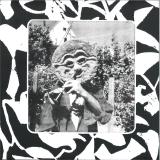
The Quietus called Pedro Vian’s debut album “Beautiful Things You Left Us For Memories” “the soundtrack to walking around the city at night”, while his eponymous second album was both deeply personal and more suited for the dance floor. “Ibillorca” is his Mediterranean album. “I love the Mediterranean sea,” Vian explains. “I come from there and I miss the light, the sun and the smell of the sea, so I dedicated this album to this feeling.” Fittingly, “Ibillorca”’s enigmatic cover art, painted by Spanish artist Blanca Miró, depicts the Mediterranean islands of Ibiza & Mallorca
“Ibillorca” is also Vian’s most varied release to date: “The Destiny Manifest” nods to drum and bass - albeit a touchingly Iberian take on the genre - while “Western Snow” has a hint of Erik Satie’s piano minimalism. Vian’s new home in The Netherlands also played a role in shaping “Ibillorca” .Vian recorded the album during his residency at HetHEM, a new contemporary space in Zandaam, 30 minutes from Amsterdam. “I have my studio at the top of the building, from there I can see all the boats going up and down the river IJ,” Vian says. “The art space is located in an industrial area, everything is grey, also the sky.” All the better, then, for dreaming of the sea.
The prescient sound of an abstract never-coming future built from the everlasting commitment to the boundless experimentation. The prolific one-of-a-kind Terrence Dixon is back to 30D Records.
“Vertical Hold EP”, holds on his unlimited creative scheme: on the basis of the Detroit sound, he transforms that legacy in a fully refurbished approach wherein the true creativity smashes any possible stereotype.
Every track leads us to the unexpected. From the skillful Dixon’s mind, any sonic universe is possible. The straight low pad of “Due Process” flows on a kaleidoscopic background, energized by a danceable bass drum. Second cut, “Vertical Hold”, is a wicked amazing sequential madness from a dreamlike dance floor. “Transition Area” seeks and finds out the depth, a mental mantra to disappear in. The rhythmic and mechanical arpeggiator of “Total Vehicle” drive us to a dancing frenetic hypnosis. And, finally, “Assembly Building”, unfolds a fine-draw and imaginative minimalistic groove.
Five tracks that you cannot miss out. An essential state-of-art Techno work you must have
We are proud to showcase more Bay Area family with the release of a new EP by Doc Sleep who cut her chops as a DJ in San Francisco’s vibrant scene the past decade. In 2016 she made the move to Berlin and became a resident of Room 4 Resistance. Since 2013, she's been the co-owner of Jacktone Records, which specializes in techno, ambient, and experimental electronics. In 2016/2017 she released her first 12's on the Hot Mass-affiliated Detour Records and Bottom Forty. She also co-wrote a track with Bezier and Nicole Ginelli, titled “Stranger,” that we released on the ‘Primes’ EP in 2017. Her latest release, ‘Your Ruling Planet’, was released on Jacktone in March 2019.
We first heard “Creme Fraiche” on Doc’s soundcloud page and begged to release it. The track has the feel-good vibes you get on early morning dancefloors as things are winding down or up. Paired on the A-side is the pulsating dark jam “Never Eating Again” that previously appeared on ‘Run The Length Of Your Wildness V.2’ and, like that compilation, proceeds from this track will be donated to Ghost Ship Fire victim Cherushii's family. On the B-side are two remixes from close friends of Doc. First up is a fresh breakbeat remix from Violet: DJ, producer, boss of Naive records, co-founder of Rádio Quântica, and mina resident shaking up Lisbon's nightlife. Second is Berlin-based producer and fellow R4R resident, rRoxymore, who presents an innovative remix of future-facing techno and bass variations adding her own vocals on top. For this release we’ve teamed up with Jacktone to release a cassette version, our first in this format, featuring two peak-time bonus tracks. All songs have been mastered by George Horn at Fantasy Studios in Berkeley. Each copy is housed in jacket designed by Eloise Leigh with neon pink and lavender gradients echo morning sunrises with a collage of dreamy elements using a photo by Doc of Club Toilet in Detroit.
After dropping several tracks and performing at select festivals throughout the years, Ólafur Arnalds and Janus Rasmussen dedicated the year 2014 to explore the area in-between Ólafur's more acoustic, piano-based solo work and Janus's synth-heavy electro pop, with their collaborative electronic project Kiasmos.
By focusing solely on their self-titled debut album, Ólafur and Janus have been able to combine and further develop their unique sound aesthetics to complete an album driven by their mutual love for electronic music. Made in Ólafur's newly build studio in Reykjavík, Iceland, a majority of the album was recorded using acoustic instruments next to a variety of synthesisers, drum machines and tape delays. It features a live drummer, string quartet and Ólafur performing on the grand piano, producing an ambient, textured sound, which makes it a perfect home listen and equally danceable record. If you listen closely, you can spot them record the thumb piano, finger snapping and even the sound of the metal grinder of a lighter slowly to replace the usual electronic hi-hat sounds, giving the album a far more intimate and unique atmosphere.
We decided to start almost completely over with this record, so most of the material is written this year with the idea of making a record that can stand as one piece rather than a collection of songs. I am very excited to get a proper record out exploring a different territory than I am used to. I touch a lot on electronic genres in my own music but never have the opportunity to go full out electronic like we do here.' - Ólafur Arnalds
The Kiasmos project has been around since 2007, but because of all our other projects we never really got the time to sit down and write all the tracks we always wanted to. So when we early this year finally found the time to sit down and make a full length album there was so much we wanted to try out. The result surprised us a bit, it's deeper and more emotional than we imagined it to be, but that's the beauty of being able to make an album.' - Janus Rasmussen
Long-term Erased Tapes graphics collaborator Torsten Posselt at Feld Studios in Berlin created the cover artwork. Feld Studios was a natural choice for Kiasmos, seeing he also designed the cover for their Thrown EP, released previously.
Kiasmos is made up of Icelandic BAFTA-winning composer Ólafur Arnalds, known for his unique blend of minimal piano and string compositions with electronic sounds, and Janus Rasmussen from the Faroe Islands, known as the mastermind of the electro-pop outfit Bloodgroup. Based in Reykjavík, Arnalds used to work as a sound engineer, often for Rasmussen's other projects, where the two musicians discovered their common love for minimal, experimental music. They eventually became best friends, often hanging out in their studio, exploring electronic sounds.
(remastered classic incl DL card) Environ is proud to present the Metro Area 15th Anniversary Edition, Metro Area's eponymous debut album, meticulously remastered using the original source tapes and generously spread across three slabs of vinyl. The12-track triple LP and digital package combines all the songs from both the original US and licensed European releases, and features new commemorative artwork unique to this edition. In the late nineties, the budding producers Morgan Geist and Darshan Jesrani bonded over their shared love of slower tempos and '70s and '80s NYC club culture. Obsessed with record digging and the sounds they heard on late-night "club classics" radio shows—and turned off by current releases they saw as artlessly "updating" sublime disco by sampling, filtering and subjugating them with huge kick drums —the duo set out to discover how their favorite old 12" records were made. They naturally gravitated towards extended dubs of songs—full of strange mistakes and echoing backing tracks—instead of the better-known vocal versions. Lacking the big budgets and gear that made so many of their favorite classic records come together, they were forced to take a guerrilla approach. They reprogrammed their techno-oriented arsenal of secondhand synths and samplers, using novel digital recording technology to capture live instrumentation and prioritizing mood over hooks, and the resulting music was just wrong enough to sound unlike anything else being released at the time.After just four underground 12" releases, the duo—now well-known as Metro Area—released their first and only album, Metro Area, in the fall of 2002. Fifteen years later, it's time to celebrate the culmination of their shared history and inspiration once again. Environ is proud to present the Metro Area 15th Anniversary Edition, Metro Area's eponymous debut album, meticulously remastered using the original source tapes and generously spread across three slabs of vinyl. The 12-track triple LP and digital package combines all the songs from both the original US and licensed European releases, and features new commemorative artwork unique to this edition.
Phonica unveil the second in a series of three 12" samplers featuring a selection of tracks from their new compilation 'Ten Years Of Phonica'.
Phonica favourite Lo Shea kicks off Sampler number 2 with the ominous 'Home', a bassline-heavy house cut that continues on from his streak of high quality and inventive 12" releases on Seaghdha. Medlar and Red Rack'em join forces for the submerged 'Morning Light'. It's deep house in its truest form and here's hoping they continue to collaborate, because on the basis of this, they're onto something very special.
Moiré is another producer Phonica have been hugely impressed with, his highly original 12"s for Werk Discs and Rush Hour blew us away and his contribution 'Solar Signs' doesn't disappoint. Cult producer STL rounds out the 12" with 'Freaky Fingers'. His distinctively twisted take on house and techno is in full effect on this one, whistles and all. As STL releases on labels other than Something or Smallville are a rarity, it's yet another coup for Phonica.
Phonica Records was established in September 2003 and set up shop in Soho, London, adding to the high concentration of independent records stores that inhabited the area. Founders; Simon Rigg, Heidi Vanden Amstel and Tom Relleen joined The Vinyl Factory with the aim of creating an exciting outlet for innovative dance music, traversing all sub-genres and cultures. Over the past decade the emporium has developed into a well-respected destination for DJs and enthusiasts, and has subsequently become a bustling hive of conversation and inspiration as part of a wider community of music lovers.
While trends and movements in music have grown and faded over these years, Phonica has always remained in a state of evolution. It is this openness to change alongside a commitment to it's original ethos and an enduring ardour for quality, cutting-edge sounds that has fuelled the shop's staying power.
To celebrate reaching this milestone, Phonica Records have invited some of their favourite artists to produce a track for an eclectic yet cohesive compilation, which will hopefully go some way towards sonically unfolding the 'Ten Years of Phonica.'
King Tubby and Producer Bunny ‘Striker’ Lee are intertwined in the birth of Dub Music. After discovering a mistake that made a ‘serious joke’ (more of which later...) they went on to release the first pressings of this new musical genre namely ‘Dub Music’. Tubby’s vast knowledge of electronics and Bunny’s vast catalogue of rhythms would lay the foundations of what today is taken as a standard... the Remix / Version cuts to an existing vocal tune.
Osbourne ‘King Tubby’ Ruddock was born in Kingston, Jamaica on 28th January 1941 and grew up in the High Holborn Street area of downtown Kingston. He studied electronics at Kingston’s National Technical College and also on two correspondence courses from the U.S.A... When he had qualified Tubby began repairing radios and other electrical appliances in a shack in the back yard of his mother’s home. His work in the early days included winding transformers and building amplifiers for Kingston’s Sound Systems. Tubby built his first Sound System in 1957 playing jazz and Rhythm & Blues at local weddings and birthday parties. His reputation as a man who knew and understood both electronics and music grew steadily and as the sixties drew to a close. Tubby purchased his own basic two track equipment. He installed this alongside his dub cutting machine, a homemade mixing console and his impressive collection of Jazz albums in the back bedroom of his home at 18 Dromilly Avenue which he christened his music room.
Tubby and Striker were at Treasure Isle Studio’s one day while Ruddy from Spanish Town was working with the engineer Byron Smith....
“Tubby and myself was talking when Ruddy was cutting some dub but Smithy (engineer) made a mistake through we were talking and forgot to put in the voice. It was two track recording in those days. Ruddy said ‘No Man! Make it stay! and so they cut the rhythm. When I went over to Ruddy’s that Saturday night a dance was in progress and when they played the vocal to the tune... then he said we’re going to play ‘Part Two’. They never called it ‘Version’..and then he played the rhythm track. The song was a catchy song and everybody started to sing along and the deejay started to toast so everything went down well. On Monday morning I went up and I said ‘Tubbs the mistake we made was a serious joke. It mash up Spanish Town! The people went wild. So you have to start to do that now ‘cause when the man put on the ‘Part Two’ everyone start singing this song. It played about twenty times. I said you try Tubbs!’...Well the next Saturday night now when Tubby strung up down the farm U Roy said he’s going to play ‘Part Two’ but Tubby did it different now. He started with the voice then dropped it out and let the rhythm run and then he brought in the voice in the middle and from there Tubby started to get really popular.’’
Bunny ‘Striker’ Lee
Dynamic Sounds upgraded to sixteen track recording in 1972 and Tubby purchased, again with the help of a deal brokered by Bunny Lee. The old four track equipment and the MCI console from their Studio B. The four tracks now gave him far wider scope to work with and he began to create a new musical form where the bass and drum parts were brought up while the faders allowed Tubby to ease the vocal and rhythm in and out of the mix. It was only a matter of time before Tubby’s dub plate experiments began to make it on to vinyl and the first ever long-playing King Tubby releases would feature a collection of his mixes to a selection of Strikers rhythms. So please sit back and enjoy this historic set of sounds, mixed by King Tubby and Mr Prince Phillip Smart and another set of scorcher Bunny Lee rhythms.
They offer a path towards hippiesque stage shows, classic E-organ hues, excess and Sixties rock flair - played by young faces. Their genre is psychedelic rock - but do not miss out on the subtle Blues and Folk traces hidden in there! Established in 2022, the band is already awaiting the release of their second studio album called "Dawns on Mental Highways" in June and making their way onto the various stages of their home region - the Nuremberg Metropolitan area, Southern Germany. The Citadel - Vintage mixed with contemporary vibes, freshly served psychedelic lifestyle! Album description: Here is the second studio album by the German Psychedelic Rock Band The Citadel.
It is a curious mixture of musical styles reminiscent of the time around 1967, when bands experimented in the studio and paved new paths. So maybe, the album title "Dawns on Mental Highways" reflects the stance towards their music. Or maybe it hints at something different. Who can tell? All you need to do is listen, and there is a lot to hear: The singer seems to have a fragile voice, yet shouts her Dylanesque lyrics angrily from time to time. The organ player soaks half of the songs with a classic acid sound. The guitar player acts a folky one, throwing in acoustic tunes and flute, before bashing into heavy electric riffs. The bass player is unusually jumpy on his Tropicana-fused lines while the drummer dances and stomps easily as needed.
They offer a path towards hippiesque stage shows, classic E-organ hues, excess and Sixties rock flair - played by young faces. Their genre is psychedelic rock - but do not miss out on the subtle Blues and Folk traces hidden in there! Established in 2022, the band is already awaiting the release of their second studio album called "Dawns on Mental Highways" in June and making their way onto the various stages of their home region - the Nuremberg Metropolitan area, Southern Germany. The Citadel - Vintage mixed with contemporary vibes, freshly served psychedelic lifestyle! Album description: Here is the second studio album by the German Psychedelic Rock Band The Citadel.
It is a curious mixture of musical styles reminiscent of the time around 1967, when bands experimented in the studio and paved new paths. So maybe, the album title "Dawns on Mental Highways" reflects the stance towards their music. Or maybe it hints at something different. Who can tell? All you need to do is listen, and there is a lot to hear: The singer seems to have a fragile voice, yet shouts her Dylanesque lyrics angrily from time to time. The organ player soaks half of the songs with a classic acid sound. The guitar player acts a folky one, throwing in acoustic tunes and flute, before bashing into heavy electric riffs. The bass player is unusually jumpy on his Tropicana-fused lines while the drummer dances and stomps easily as needed.
Even in these most turbulent of times, dub musician and fatigued onlooker Elijah Minnelli remains an inexplicable stalwart on the lower rungs of the Breadminster County Council.
His latest record ‘Clams As A Main Meal’ continues his astute siphoning of council funds, this time with help from the Breadminster Board of Abstinence. As a further mark of respect, the original head of the Board, Dr. K'houldoux, graces the cover art in his infamous ‘Looming Moon of Desire’ guise.*
As fine a backdrop as any for Minneli’s off-brand dub experiments, and ‘Clams...’ is the truest representation of his varied wheelhouse yet...
We find vocal appearances from dub goliath Dennis Bovell and Welsh-language singer Carwyn Ellis. A pair of tracks which build on 2024’s acclaimed ‘Perpetual Musket’, a collection of folk songs reworked alongside reggae vocalists, released by FatCat Records. It garnered glowing reviews, with nods from The Guardian and The Quietus concluding with prominent appearances on their respective yearly round-up lists.
Elsewhere, the album finds Minnelli in a more experimental mode, all wheezing contraptions and cockeyed bass, creaking with the weight of creation, a satisfying tactility laid seam-side up.
As well as ‘Perpetual Musket’, the new album follows years of sold out 7" singles, handmade and self-released. Online, the tracks have amassed global streams numbering in the millions. His tracks have found play across an eclectic range of radio mixes and dance floors, most notably the likes of Andrew Weatherall, Batu, Optimo and Zakia Sewell (BBC6Music).
It is perhaps worth mentioning that this everbuilding interest in his work is at great odds with the growing suspicions amongst his fellow townsfolk, who see his Breadminster County Council Music Initiative as nothing more than an empty cash-grab.
Further Reading on the Breadminster Board of Abstinence
In the late 70s, Breadminster was awash with the last vestiges of the hippy era. Though the flared silhouette of the lower leg remained, the utopian ideals that had once flowed merrily around the youth's shaded ankles had begun to wane. LSD and free love had led to a sharp spike in population and a generation of children raised by air-headed psychonauts unprepared for the bleary-eyed strictures of parenthood.
Aware of the crisis, the County Council entrusted Dr. Paulinque K'houldoux to spearhead a pushback, and it was his pro-abstinence movement - a mixture of education initiatives and radical renutrition campaigns - that came to impact Breadminster's census deep into the new millennium.
Being a pseudo-archipelago Breadminster has fundamentally limited resources, however deep-seated ties to distant coastal villages meant that oysters were a regular part of the local diet. K'houldoux pinpointed this as a factor in the town's overpopulation, and believed that simply replacing these with clams (a “lesser mollusk”) would help lower the erotic urges of the people. It was his “anti-aphrodesia” movement that first championed the idea of “Clams As A Main Meal,” and the slogan “Consider Abstinence” carried the message yet further.
The Breadminster Board of Abstinence soon became involved in all cultural happenings in the area, with K'houldoux MCing at prominent festivals and performances, sometimes dressed as the “Looming Moon of Desire” - an idea of his relating to the tide, seafood, menstrual cycles, and his privately held celestial predilections.
It was in 1981 that it was revealed Dr. K'houldoux had never fully qualified as a doctor and was seeking exile in Breadminster due to a series of botched bracelet heists in which he had previously been involved. K'houldoux was subsequently extradited to Basingstoke, where he served 3 of a 12-year sentence, owing to the lunar-oriented prisoner health campaigns he helped implement.
It has been a strange twist of bureaucratic fate that the Breadminster Board of Abstinence has never stopped receiving public funding, despite its lack of clear utility. And while its roots are tied to a rose-tinted past, the Board continues to sponsor cultural events and projects to this day.
An extract from: Eugeniq Schooner's article in Sydney Parishioner: “Clams, Breadminster and Countercultural Abstinence Trends” (2008)
out of Stock
Last delivered 4 months ago available to reorder, subject to availability
The Bay Area’s electro-pop underground gets a neon-lit revival with a limited repress of The Limousines’ cult-classic 2010 debut album, Get Sharp, on frosted pink vinyl.
The album features the single “Internet Killed the Video Star,” a blog-era anthem with an instantly recognizable synth line and a self-aware chorus that captured the anxieties and possibilities of the digital age. Heavy rotation at alternative radio juggernaut Live 105 helped transform the song into a regional hit and an indie-dance mainstay.
“Very Busy People” is a high-energy critique of hyper-productivity and modern ambition, personifying a band that synthesized sharp songwriting, glossy synth hooks, and cultural commentary. Together, these elements mark a moment when Bay Area forces aligned to launch a record that continues to resonate.
A tribute to Bob the Landlord from Rotterdam. Bob the Landlord became known in Rotterdam after appearing in a documentary about the harbor cafe Willems Kantine. He was a loud and direct landlord who rented small rooms to people around the area. Bob was famous for his strong Rotterdam attitude and the way he spoke to people without filtering his words. One of the most famous moments was when Cowboy Jos asked him for five euros. Bob angrily replied, "Five euros? On your face!" This line later became a well-known quote in Rotterdam. Even though he could be rough and strict, Bob became a memorable character and a small cult figure in the city. 4 tracks on one very special release. A1 by Doctr - Our Minds Belong Together. The long awaited super nu italo hit already played by David Vunk at many festivals and clubs where everyboday is waiting for! A2 by Theo Scuera - Your Virus. Club banger and Dancefloor filler with crazy sexy bassline and pumping rhythm section. Half electro half techno. Endmix legendary by Endrik schroeder. A1 David Vunk and Ben la Desh - Unrealized prophet. Long time friends Ben la Desh and David Vunk team up again with another super deep techno house track, layered analog sequencial prophet 5 synths sound, Erica Perkons drums and fx. All of this comes together in an exciting tech break with space-like sounds. Be prepared for this secret wapon. B2 Patricio Diaz - Come To My Hell A Parisian space house techno track with energetic beats and 90ies vibes. Pure energy. Get your 10000 steps on this one. Hint: Most likely people will already buy this just for the cover. So be quick for this release and don't miss this.
out of Stock
Last delivered 5 months ago available to reorder, subject to availability
Das erste Album mit Originalmusik von den englischen Künstlern Flying Mojito Bros., die total auf Americana und Dance-Musik stehen. FMB hat dank seines einzigartigen Stils, der als Desert Disco und Outlaw House bezeichnet wird - ein neu definierter Americana-Sound, der von Poolside-Vibes bis zur Tanzfläche reicht -, eine wachsende Fangemeinde in den USA gewonnen. Das Album bietet eine hochkarätige Besetzung mit Künstlern wie Scott Hirsch, Will Worden und Rob Chaney (weitere werden noch bekannt gegeben!) und hat die Unterstützung von einflussreichen Persönlichkeiten wie Diplo, Phish, Pretty Lights, BBC 6 Music und KEXP erhalten. Just Passing Through zeigt die Entwicklung von FMB und kombiniert ihre charakteristischen Re-Edits und Remixe mit Live-Band-Aufnahmen. Es ist ein mutiger Schritt in ihrer Karriere, bei dem sie von den 1970er Jahren inspirierten Rock und elektronische Rhythmen mit Kollaborationen von Top-Musikern wie Shawn Lee (Young Gun Silver Fox), Joe Harvey-Whyte (The Hanging Stars) und Joe Stoddart (ABBA Voyage) verbinden. Dieses Album markiert ein neues Kapitel in der kreativen Reise von FMB und fängt ihre Erkundung der neu definierten Americana und den interkulturellen Rock-Austausch zwischen den USA und Großbritannien ein.
out of Stock
Last delivered 5 months ago available to reorder, subject to availability
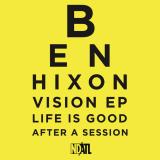
Increasingly essential US artist Ben Hixon drops sublime deep house EP on Kai Alce's faultless NDATL Muzik. The six classy tracks will appeal to those who appreciate the subtleties of the classic Midwestern sound.
Ben is a Texas-born, but Brooklyn-based artist who has become a firm favourite of true deep house heads in the last year or so. He has put out several EPs on Dolfin, all of which find a perfect sweet spot between immersive atmospheres and late-night drive. Dusty analogue textures and frayed edges define his drums, while the subtle details are intelligent and add effortless emotion. He is a perfect fit for NDATL Muzik, the Atlanta label that has long been a flagbearer for well-crafted house grooves like these.
'Taping' kicks off with heavy kicks that swing under gentle chords that are perfect for after dark. There's a persuasive bump in the beats that will get early evening dancers primed and ready for more. Next up we have 'Y Do U Get So Nervous' - a mastery of sampling with nagging vocal hooks, cascading piano keys and wet finger clicks all adding soul to another low-key but all-consuming groove. 'Area Code 336 Phone Rings' is a higgledy-piggledy tapestry of toms and stuttering kicks with vocal fragments to match - the thrill is the looseness of it all. The smouldering and meandering 'December Blackout' is for gazing off it into the distance at the busy yet muted jazz keys that twinkle like faraway stars. 'It's Like A Vision' picks up the pace with more closely stacked kicks but still oodles of cuddly warmth and smudged synth work, before '0823' ends with a decidedly heavy feel - spare, lump drums unfurl beneath forlorn synths that feel utterly bruised and heartbroken.
Ben Hixon's deft artistry makes these quiet, texture tunes irresistibly danceable yet emotionally profound.
out of Stock
Last delivered 66 days ago available to reorder, subject to availability
Death Is Not The End present a further volume of Arja Kastinen's eerie amalgamations of 110 year old wax cylinders with her own meticulously transcribed takes, this time focussing in on Armas Otto Väisänen's field recordings of kantele player Iivana Mišukka (b. 1861 d.1919).
"Ivana Mišukka (1861–1919) was one of the Karelian kantele players recorded by the folk music researcher Armas Otto Väisänen on wax cylinders in 1916 and 1917. In the early 20th century, the remote areas of Border Karelia were undergoing the final phase of a transformation in musical culture, with the ancient runo song tradition giving way to newer forms of music. This transition is reflected in Mišukka's repertoire and choice of instrument. The ancient small kantele, hollowed out of a single piece of wood, was already rare at the turn of the century. Mišukka's kantele was a new type of instrument with 26 strings, constructed of several parts, but he played it using the traditional plucking technique. Like other Border Karelian kantele players, his repertoire consisted of music rooted in runosong culture, as well as newer dances and songs from the east and west. Most of the recorded material falls into the latter category.
Ivan Bogdanov Mišukka was born out of wedlock in Suursara village, Suistamo, on 1 May 1861. He began playing the kantele at the age of five or six, quickly mastering the instrument. In adulthood, he was considered one of the area's best master players. Mišukka was landless for most of his life and lived in different parts of the Suistamo parish. His first wife, Tekla Markintytär, died in 1897 at the age of 40, and his second wife, Jevdokia Filipintytär Jeminen, died in 1907 at the age of 50. Seven children were born from the first marriage, two of whom died young. The third wife, Maria Ignatintytär Gurnan (Kuurnanen), was a well-known master of lamentations. Together with Maria, Iivana Mišukka worked as a tenant farmer in the village of Suursara. Mišukka suffered from rheumatism, which prevented him from participating in physical work like Maria. This was apparently partly the reason why Iivana Mišukka went to earn extra money by playing the kantele on gig trips. He often had other traditional artists from Suistamo as his travelling companions, such as the runosingers Konstantin Kuokka and Iivana Onoila. Iivana Mišukka died in Leppäsyrjä village, Suistamo, on 18 May 1919 at the age of 58, and his kantele was donated to Teppana Jänis.
Mišukka only used 14 of the 26 strings on his kantele, playing the same tunes either a fourth higher or lower. He tuned his kantele to the major scale using fifths, except for a low seventh scale degree on the upper strings, but not below the fundamental. Since he did not use the seventh note of the scale on the upper strings at all, he could use the major scale both lower and a fourth higher with this tuning. According to Mišukka, the sound of higher, or 'finer', strings is 'more beautiful', while that of lower ones is 'greater'. Among runosingers, the size of the thirds varied, ranging from major to minor to neutral. A similar phenomenon can be observed in kantele tunings, where the third, sixth and seventh scale degrees vary in a comparable way.
During a meeting, Väisänen suggested that Mišukka play the smaller kantele belonging to Konstantin Kuokka. The idea was to bring it closer to the horn to improve the recording quality. However, the kantele was completely out of tune, and now Mišukka tuned it to the Lydian scale (track 18).
Using the old plucking technique, Mišukka placed his right middle finger on the fundamental tone, his right index finger on the second scale degree, his left middle finger on the third scale degree and his left index finger on the fourth scale degree, and his right thumb on the fifth. The thumb also played the notes above the fifth note of the scale. As Mišukka remarked to Väisänen: 'Peigaloll' tuloo enemb ruadoa' (the thumb has to do more work). However, he did not use the seventh note of the scale on the upper strings at all. Below the fundamental note, he played the seventh and sixth notes of the scale with his right middle finger of and the fifth note of the scale with his right ring finger. This fifth scale degree below the fundamental is almost always used as a drone. Sometimes, when the melody required it, Mišukka, like other players, also varied the fingering. He would also occasionally strike the same string with the side of his fingernail after plucking it.
The wax cylinder recordings of Karelian kantele players are kept in the archives of the Finnish Literature Society in Helsinki, Finland. Copies were made of them onto reel-to-reel tapes in both the 1960s and 1980s. The 1960s copies are mono and the 1980s copies are stereo. However, not all kantele recordings from these decades have survived.
The sound of the kantele is difficult to hear in wax cylinder recordings due to its low volume, and it occasionally becomes completely obscured by noise. During the copying process, the cylinder sometimes rotates unevenly, resulting in breaks or jumps in the music. Additionally, the rotation speed of the cylinder in the copies does not correspond to the performance speed of the original music, which alters the pitch. However, since Väisänen's precise notes are available in the archive, it is possible to deduce the melodies, their speed, and the tuning level of the kantele in the recordings. Of the copies of the original recordings from the 1960s and 1980s, I have selected the one that best met the requirements of this publication and adjusted the speed of the recording to align with Väisänen's notes. To enhance the listening experience, I have replayed the songs, which now partly overlap the old recordings on this release."
Death Is Not The End present a further volume of Arja Kastinen's eerie amalgamations of 110 year old wax cylinders with her own meticulously transcribed takes, this time focussing in on Armas Otto Väisänen's field recordings of kantele player Iivana Mišukka (b. 1861 d.1919).
"Ivana Mišukka (1861–1919) was one of the Karelian kantele players recorded by the folk music researcher Armas Otto Väisänen on wax cylinders in 1916 and 1917. In the early 20th century, the remote areas of Border Karelia were undergoing the final phase of a transformation in musical culture, with the ancient runo song tradition giving way to newer forms of music. This transition is reflected in Mišukka's repertoire and choice of instrument. The ancient small kantele, hollowed out of a single piece of wood, was already rare at the turn of the century. Mišukka's kantele was a new type of instrument with 26 strings, constructed of several parts, but he played it using the traditional plucking technique. Like other Border Karelian kantele players, his repertoire consisted of music rooted in runosong culture, as well as newer dances and songs from the east and west. Most of the recorded material falls into the latter category.
Ivan Bogdanov Mišukka was born out of wedlock in Suursara village, Suistamo, on 1 May 1861. He began playing the kantele at the age of five or six, quickly mastering the instrument. In adulthood, he was considered one of the area's best master players. Mišukka was landless for most of his life and lived in different parts of the Suistamo parish. His first wife, Tekla Markintytär, died in 1897 at the age of 40, and his second wife, Jevdokia Filipintytär Jeminen, died in 1907 at the age of 50. Seven children were born from the first marriage, two of whom died young. The third wife, Maria Ignatintytär Gurnan (Kuurnanen), was a well-known master of lamentations. Together with Maria, Iivana Mišukka worked as a tenant farmer in the village of Suursara. Mišukka suffered from rheumatism, which prevented him from participating in physical work like Maria. This was apparently partly the reason why Iivana Mišukka went to earn extra money by playing the kantele on gig trips. He often had other traditional artists from Suistamo as his travelling companions, such as the runosingers Konstantin Kuokka and Iivana Onoila. Iivana Mišukka died in Leppäsyrjä village, Suistamo, on 18 May 1919 at the age of 58, and his kantele was donated to Teppana Jänis.
Mišukka only used 14 of the 26 strings on his kantele, playing the same tunes either a fourth higher or lower. He tuned his kantele to the major scale using fifths, except for a low seventh scale degree on the upper strings, but not below the fundamental. Since he did not use the seventh note of the scale on the upper strings at all, he could use the major scale both lower and a fourth higher with this tuning. According to Mišukka, the sound of higher, or 'finer', strings is 'more beautiful', while that of lower ones is 'greater'. Among runosingers, the size of the thirds varied, ranging from major to minor to neutral. A similar phenomenon can be observed in kantele tunings, where the third, sixth and seventh scale degrees vary in a comparable way.
During a meeting, Väisänen suggested that Mišukka play the smaller kantele belonging to Konstantin Kuokka. The idea was to bring it closer to the horn to improve the recording quality. However, the kantele was completely out of tune, and now Mišukka tuned it to the Lydian scale (track 18).
Using the old plucking technique, Mišukka placed his right middle finger on the fundamental tone, his right index finger on the second scale degree, his left middle finger on the third scale degree and his left index finger on the fourth scale degree, and his right thumb on the fifth. The thumb also played the notes above the fifth note of the scale. As Mišukka remarked to Väisänen: 'Peigaloll' tuloo enemb ruadoa' (the thumb has to do more work). However, he did not use the seventh note of the scale on the upper strings at all. Below the fundamental note, he played the seventh and sixth notes of the scale with his right middle finger of and the fifth note of the scale with his right ring finger. This fifth scale degree below the fundamental is almost always used as a drone. Sometimes, when the melody required it, Mišukka, like other players, also varied the fingering. He would also occasionally strike the same string with the side of his fingernail after plucking it.
The wax cylinder recordings of Karelian kantele players are kept in the archives of the Finnish Literature Society in Helsinki, Finland. Copies were made of them onto reel-to-reel tapes in both the 1960s and 1980s. The 1960s copies are mono and the 1980s copies are stereo. However, not all kantele recordings from these decades have survived.
The sound of the kantele is difficult to hear in wax cylinder recordings due to its low volume, and it occasionally becomes completely obscured by noise. During the copying process, the cylinder sometimes rotates unevenly, resulting in breaks or jumps in the music. Additionally, the rotation speed of the cylinder in the copies does not correspond to the performance speed of the original music, which alters the pitch. However, since Väisänen's precise notes are available in the archive, it is possible to deduce the melodies, their speed, and the tuning level of the kantele in the recordings. Of the copies of the original recordings from the 1960s and 1980s, I have selected the one that best met the requirements of this publication and adjusted the speed of the recording to align with Väisänen's notes. To enhance the listening experience, I have replayed the songs, which now partly overlap the old recordings on this release."
The track shows SUEP at their best - glistening synth pop with Marr-esque jangle, sweet but emotionally incisive. Singer Georgie Stott - also known for being the keyboardist of the recently ended Porridge Radio - is at peak performance, marrying catchy melodies with off-kilter storytelling.
Receiving acclaim across BBC 6 Music and the indie press for their ‘car boot sale’ pop music, SUEP rummage through the jumble bin of music history, selecting and reassembling its best parts into something playful, strange and deeply artful. The band are affiliates of the Gob Nation collective - including The Tubs, Sniffany & The Nits, Ex-Void, and others., described by the Guardian as uniting around “a leftfield sensibility, lacerating wit and snotty attitude.”
With a slightly darker edge than their delightful EP Shop or last year’s groovy The Rain, Highway II tells the story of hope slamming into disappointment - a Valentine’s date gone wrong. Tears, cigarette breaks, running makeup and snotty sleeves paint a picture of painful emotional dislocation. It comes with an incredible, multilayered dance-routine music video from frequent collaborator, artist Jess Power.
Singer Georgie Stott says: “The lyrics for this poured out of me on Valentine’s Day when me and my partner went out on a date in the Limehouse area, over the river from where we lived in Rotherhithe. I got drunk too quickly, he got grumpy, and tears started streaming down my face because I just wanted to have a nice romantic time. We made up in the Canary Wharf Wetherspoons at the end of the night, but I went to have a cigarette before, to get out all my sobs and wrote all the lyrics on my phone in one go. Then at a practice studio we quickly wrote it around some chords I made up in the room.”
Forever is a confident debut, a masterpiece of modern indie songcraft. Across the album SUEP dip into country, synthpop, garage rock, post punk, and pub rock, but always retain their signature penchant for melodic hooks, snappy structures and straight-to-the-heart lyrics. Artfully unpretentious, the album was recorded by friend Matt Green, best known for his work with The Tubs, and mixed by Mike O’Malley of the band caroline.
Led by Georgie Stott and Joshua Harvey, SUEP have become fixtures of south-east London’s underground through a series of shared living spaces, improvised studios and DIY venues. Now with George Nicholls (The Tubs, Joanna Gruesome, GN Band), William Deacon (PC World), and Louis Forster (The Goon Sax, Expiry) completing the line up, their debut is finally on its way.
Forever is a glimpse into one of the best bands on the scene, not fitting into any trend, but also never fading into obscurantism - SUEP are a band that wear a joie de vivre loosely but fashionably. Now is their time to shine.
C.L.A.W.S. comes to Dark Entries with a new ripping LP, Splat City II. C.L.A.W.S. is the solo project of musical luminary Brian Hock, who has been a key figure in the Bay Area underground for over two decades via his involvement in projects like Bronze and The Vanishing, as well as helming the record labels Squirrels on Film and Immortal Sin. With C.L.A.W.S., Hock takes on the dancefloor, picking up cues from the Hague’s Giallo-dipped electro, the skewed minimalism of Chicago acid, and the mind-rending forays of San Francisco post-punk icons like Chrome and Tuxedomoon. Following 2019’s inaugural Splat City EP, Splat City II continues to map the psychogeography of a metropolis both alien and immediately recognizable, one where life is cheap, but so are the thrills. Previously released on Squirrels on Film in digital-only format, this expanded vinyl edition of Splat City II features two new cuts. Things kick off with “Route 505” and “One Tear,” a duo of rompers that vibe like Tom Ellard and Chip E locked in a room with a vial of liquid. Next up, Bay Area deckmaster Tyrel lends his editing chops to “Vigilant Slimy Monsters,” sculpting a moody space disco beast. Squirrels on Film co-founder Solar teams up with Hock for “Black Magic Carpet Ride III,” a cavernous downtempo banger. The slow-mo pace continues with “Wild Slugs United,” which features the no wave-esque clarinet work of Paul Costuros. Closer “Don’t Flip the Crystal Ship” pays homage to Bayview venue Bay Area 51 with melancholic strings and a quartz-solid electrofunk bassline. Splat City II comes in a sleeve with artwork by Bert Bergen, which features a vampiric cat and sci-fi cityscapes.
out of Stock
Last delivered 32 days ago available to reorder, subject to availability
“Tubby did three original dub albums, ‘Dub From The Roots’. ‘The Roots of Dub’ and the third is ‘Brass Rockers’ with Tommy McCook ‘pon the flying cymbals. Where he mixed it with the horn going in and out in a dub way and one named ‘Shalom Dub’ you can call Tubby’s too because he mixed the versions as they were off forty fives’’
Bunny ‘Striker’ Lee
King Tubby and Producer Bunny ‘Striker’ Lee are intertwined in the birth of Dub Music. After discovering a mistake that made a ‘serious joke’ (more of which later...) they went on to release the first pressings of this new musical genre namely ‘Dub Music’. Tubby’s vast knowledge of electronics and Bunny’s vast catalogue of rhythms would lay the foundations of what today is taken as a standard... the Remix / Version cuts to an existing vocal tune.
Osbourne ‘King Tubby’ Ruddock was born in Kingston, Jamaica on 28th January 1941 and grew up in the High Holborn Street area of downtown Kingston. He studied electronics at Kingston’s National Technical College and also on two correspondence courses from the U.S.A... When he had qualified Tubby began repairing radios and other electrical appliances in a shack in the back yard of his mother’s home. His work in the early days included winding transformers and building amplifiers for Kingston’s Sound Systems. Tubby built his first Sound System in 1957 playing jazz and Rhythm & Blues at local weddings and birthday parties. His reputation as a man who knew and understood both electronics and music grew steadily and as the sixties drew to a close. Tubby
purchased his own basic two track equipment. He installed this alongside his dub cutting machine, a home-made mixing console, and his impressive collection of jazz albums in the back bedroom of his home at 18 Dromilly Avenue which he christened his music room.
Tubby and Striker were at Treasure Isle Studio’s one day while Ruddy from Spanish Town was working with the engineer Byron Smith....
“Tubby and myself was talking when Ruddy was cutting some dub but Smithy (engineer) made a mistake through we were talking and forgot to put in the voice. It was two track recording in those days. Ruddy said ‘No Man! Make it stay! and so they cut the rhythm. When I went over to Ruddy’s that Saturday night a dance was in progress and when they played the vocal to the tune... then he said we’re going to play ‘Part Two’. They never called it ‘Version’..and then he played the rhythm track. The song was a catchy song and everybody started to sing along and the deejay started to toast so everything went down well. On Monday morning I went up and I said ‘Tubbs the mistake we made was a serious joke.It mash up Spanish Town! The people went wild. So you have to start to do that now ‘cause when the man put on the ‘Part Two’ everyone start singing this song. It played about twenty times. I said you try Tubbs!’...Well the next Saturday night now when Tubby strung up down the farm U Roy said he’s going to play ‘Part Two’ but Tubby did it different now. He started with the voice then dropped it out and let the rhythm run and then he brought in the voice in the middle and from there Tubby started to get really popular.’’
Bunny ‘Striker’ Lee
Dynamic Sounds upgraded to sixteen track recording in 1972 and Tubby purchased, again with the help of a deal brokered by Bunny Lee. The old four track equipment and the MCI console from their Studio B. The four tracks now gave him far wider scope to work with and he began to create a new musical form where the bass and drum parts were brought up while the faders allowed Tubby to ease the vocal and rhythm in and out of the mix. It was only a matter of time before Tubby’s dub plate experiments began to make it on to vinyl and the first ever long-playing King Tubby releases would feature a collection of his mixes to a selection of Strikers rhythms. So please sit back and enjoy this historic set of sounds. Lovingly restored and with a few extra gems added to the CD Editions. These releases were the first to carry the name of King Tubby and the first to credit the great musicians that contributed so much to the rhythms that made these albums possible.
out of Stock
Last delivered 31 days ago available to reorder, subject to availability
We Jazz Records kicks off their new series of archival 7" releases with Esa Pethman "In Belgium 1967" released 23 September 2022. The two-tracker is licensed from the Belgian VRT radio archives and both of the pieces are previously unreleased. Finnish jazz legend Pethman, heard here on alto flute and tenor sax, joins forces with European jazz greats such as Heinz Bigler, Uffe Karskov and Jean Fanis. This is a small but valuable piece of unheard European jazz history from the early heyday of modern jazz. The physical release is a quality "inside-out"-styled EP with 3mm spine and small center hole on the 45rpm vinyl.
An excerpt from the liner notes by Mikko Mattlar:
"Esa Pethman (b. 1938) was one of the key figures of modern Finnish jazz in the 1960s. His album The Modern Sound Of Finland was the first Finnish modern jazz album and his composition "The Flame" a true modern Fenno-jazz evergreen.
Pethman was born in Kuusankoski, 135 kilometres from Helsinki in the Kymenlaakso area. The jazz scene was active even though it was an area of rural landscapes and paper mills. Pethman discovered jazz when he heard a Charlie Parker record being played at a local music shop in the late 1940s. Following Parker, bebop became his favourite style of jazz.
Young Pethman played flute and saxophone in local bands who accompanied schlager singers. They played tangos and waltzes for dancers, but usually started a typical dance event with an hour of jazz. In 1959 Pethman moved to Helsinki to study music at the Sibelius Academy. Back then it was a strictly classical music academy, but Pethman later described the studies as crucial for his development and career. He quickly made his way to studio sessions and into the best orchestras in Helsinki.
As a student of composition, Pethman also began writing his own music. "The Flame" was a melody he just got on his mind one night, and he decided to write it down. The catchy composition was released as a 7" single in 1964, a year before Pethman's debut album. Both records stand as benchmarks for modern Finnish jazz. The album consisted entirely of Pethman's compositions, not versions of jazz standards like a lot of the Finnish jazz released until then.
In the mid 1960s, Finnish jazz was also taking its first international steps. Pethman's quintet took part in the first Montreux Jazz Festival in Switzerland in June 1967. At the Montreux jazz band competition, the quintet came in fourth of the twelve contestants. Despite not winning the competition, the band got an honourable mention, and Pethman was now recognized outside Finland.
In December 1967 Pethman travelled to Brussels. His visit was organised by the national Finnish broadcasting company Yleisradio and their jazz program producer Matti Konttinen. Konttinen was supposed to go to Brussels with Pethman, but the musician ended up traveling alone.
In the Decca recording studios Pethman played two songs. He recorded a version of his most famous composition "The Flame", where he played the alto flute and was accompanied by Belgian musicians. On Swiss saxophonist Heinz Bigler's composition "Like Steel", Pethman played the tenor saxophone. The band was now more international, consisting of Bigler, the Italian Francesco Santucci, the Dane Uffe Karskov, a Belgian rhythm section and Pethman. After 55 years, Pethman still remembers Bigler's remarkable skills as a saxophonist.
The two-day visit included the recording session, a dinner and a concert. Pethman and the other non-Belgian musicians came to Brussels mainly to play at a jazz concert organised by the European Broadcasting Union EBU. They played at the studio first, and the concert was held the following day. Pethman and all the other soloists played as members of an international big band. The studio and live session were produced by the Belgian Radio and Television jazz section leader Elias Gistelinck."
out of Stock
Last delivered 4 years ago available to reorder, subject to availability
Una interpretación de Soinuarenbidea II debería partir de esta premisa: todo es posible, nada es aleatorio, y en sí mismo es un imposible de aleatoriedades. El escenario planteado explora la idea de realidad aumentada desde una percepción sonora, ambiental y colectiva. La obra transita hacia adelante y hacia atrás recreando experiencias extintas de porvenir incierto, tratando de facilitar un fin pacificador. Cada pieza sonora se crea, se despliega, se repliega y se destruye, en una torsión permanente de toda la realidad que hace posible cada fragmento musical, cada identidad acústica, cada espacio sonoro. Lo onírico, la ficción, y el viaje están continuamente presentes, y es en el transitar de cada fragmento donde se produce el diálogo de la exposición musical. Los elementos de esta ficción se recrean continuamente, en un continuum donde se entrelazan y se van contorsionando a medida que crecen o decrecen con cada fragmento de síntesis concreta. Los temas explícitamente musicales son el magma que conduce a dar voluptuosidad al disco, siendo la piel un contexto o límite que en sí mismo fluctúa indefinidamente en texturas y configuraciones posibles. Y la urdimbre del silencio es la síntesis que está continuamente presente y que trata de cohesionar los fragmentos en continua colisión expresiva. Las grabaciones de campo proporcionan el material sonoro concreto, y como un fractal sonoro cada una de ellas ofrece diferentes grados de interpretación que a su vez conduce a nuevos fragmentos y nuevas creaciones. Así que se puede pensar que esta es una síntesis de una posible realidad, pero interpretable en infinidad de maneras. Un movimiento y una estaticidad implícitas que generan estructuras y dinámicas acústicas. Lo que se escucha no es real, pero en sí mismo forma parte de la realidad, creando un escenario expectante. Lo cinematográfico, plástico y teatral, danzante y dinámico cobra importancia en este juego, porque se trata de contar una historia, una experiencia recreada desde los puntos de vista del arte visual. Es a su vez hilo conductor y entretenimiento, discurso político y puro divertimento. Es desde este espacio de convivencia artística que tiene sentido la totalidad y justifica el formato sonoro planteado. La contradicción de la obra es patente en el formato, y es a su vez el planteamiento de una accidentalidad en el devenir vital. Contenedor de Ruido recoge todas estas contradicciones y las manifiesta en la obra Soinuarenbidea II. Es una historia sonora, es un cuento acústico. Es un fragmento de vitalidad en imágenes audibles. Es una invitación a la reflexión, a la crítica, al disfrute, a la meditación, a la celebración. Y sobre todo es esperanzadora apreciación de la realidad como algo maleable que confeccionamos colectivamente, que requiere de una paciente observación y la participación colectiva global, en un mundo finito pleno de diversidades y del que ignoramos prácticamente todo, al que deberíamos volver con respeto y devoción.
Soinuarenbidea II-ren interpretazio batek premisa honetatik abiatu beharko luke: dena da posible, ezer ez da ausazkoa, eta, berez, ausazkotasun ezinezko bat da. Planteatutako agertokiak errealitate areagotuaren ideia aztertzen du, soinu-, ingurumen- eta talde-pertzepzio batetik abiatuta. Lanak aurrera eta atzera egiten du, etorkizun zalantzagarriko esperientzia desagertuak birsortuz eta helburu baketsua lortzen saiatuz. Soinu-pieza bakoitza sortu, hedatu, tolestu eta suntsitu egiten da, musika-zati bakoitza, identitate akustiko bakoitza eta soinu-espazio bakoitza ahalbidetzen dituen errealitate osoaren etengabeko bihurdura batean. Onirikoa, fikzioa eta bidaia etengabe daude presente, eta pasarte bakoitzaren joan-etorrian gertatzen da musika-erakusketaren elkarrizketa. Fikzio honen elementuak etengabe birsortzen dira, continuum batean, non sintesi zati zehatz bakoitzarekin hazi edo txikitu ahala elkar lotzen eta bihurritzen diren. Esplizituki musikalak diren gaiak diskoari atsegintasuna ematera eramaten duen magma dira, azala testuingurua edo muga izanik, testura eta konfigurazio posibleetan mugarik gabe aldatzen dena. Eta isiltasunaren irazkia etengabe presente dagoen sintesia da, zatiak etengabeko adierazpen-talkan kohesionatzen saiatzen dena. Landa-grabazioek soinu-material zehatza ematen dute, eta soinu-fraktal batek bezala, horietako bakoitzak interpretazio-maila desberdinak eskaintzen ditu, eta horrek, aldi berean, zati eta sorkuntza berrietara eramaten du. Beraz, pentsa daiteke errealitate posible baten sintesia dela, baina hamaika modutan interpreta daitekeena. Egitura eta dinamika akustikoak sortzen dituzten mugimendu eta estatikotasun inplizitu bat. Entzuten dena ez da erreala, baina, berez, errealitatearen parte da, eta agertoki espektakularra sortzen du. Zinematografikoak, plastikoak eta antzerkikoak, dantzariak eta dinamikoak garrantzia hartzen dute joko honetan, ikusizko artearen ikuspegitik birsortutako istorio bat, esperientzia bat, kontatzea baita helburua. Aldi berean, hari gidaria eta entretenimendua da, diskurtso politikoa eta dibertimendu hutsa. Elkarbizitzarako espazio artistiko honetatik osotasunak zentzua du eta planteatutako soinu-formatua justifikatzen du. Obraren kontraesana nabarmena da formatuan, eta, aldi berean, bizi-bilakaeran istripu-tasa bat planteatzea da. Zarata-edukiontziak kontraesan horiek guztiak jasotzen ditu eta Soinuarenbidea II obran adierazten ditu. Soinu istorio bat da, ipuin akustiko bat. Bizitasun zati bat da, irudi entzungarrietan. Hausnarketarako, kritikarako, gozamenerako, meditaziorako eta ospakizunerako gonbidapena da. Eta, batez ere, itxaropentsua da errealitatea modu kolektiboan egiten dugun gauza xaflakor gisa hautematea, behaketa pazientea eta partaidetza kolektibo globala eskatzen dituena, dibertsitatez betetako mundu mugatu batean, ia guztia kontuan hartzen ez duguna, eta errespetuz eta debozioz itzuli beharko genukeena.
An interpretation of Soinuarenbidea II should start from this premise: everything is possible, nothing is random, and in itself is an impossible randomness. The proposed scenario explores the idea of augmented reality from a sonic, environmental, and collective perception. The work moves back and forth, recreating extinct experiences of an uncertain future, seeking to facilitate a peaceful end. Each sound piece is created, unfolds, retreats, and is destroyed, in a permanent twisting of all reality that makes each musical fragment, each acoustic identity, each sonic space possible. The dreamlike, the fictional, and the journey are continually present, and it is in the transit of each fragment that the dialogue of the musical exposition takes place. The elements of this fiction are continually recreated, in a continuum where they intertwine and contort as they grow or diminish with each fragment of concrete synthesis. The explicitly musical themes are the magma that leads to the work's voluptuousness, the skin being a context or boundary that in itself fluctuates indefinitely in possible textures and configurations. And the warp of silence is the synthesis that is continually present and seeks to unite the fragments in a continuous expressive collision. The field recordings provide the concrete sound material, and like a sonic fractal, each one offers different degrees of interpretation that in turn lead to new fragments and new creations. So one can think of this as a synthesis of a possible reality, but interpretable in an infinite number of ways. An implicit movement and staticity that generate acoustic structures and dynamics. What is heard is not real, but in itself is part of reality, creating an expectant scenario. The cinematic, plastic and theatrical, dance and dynamic aspects take on importance in this game, because it is about telling a story, an experience recreated from the perspective of visual art. It is at once a common thread and entertainment, political discourse and pure entertainment. It is from this space of artistic coexistence that the whole makes sense and justifies the proposed sound format. The contradiction of the work is evident in its format, and it is, in turn, the presentation of an accidentality in the course of life. Noise Container gathers all these contradictions and manifests them in the work Soinuarenbidea II. It is a sound story, an acoustic tale. It is a fragment of vitality in audible images. It is an invitation to reflection, to critique, to enjoyment, to meditation, to celebration. And above all, it is a hopeful appreciation of reality as something malleable that we collectively craft, requiring patient observation and global collective participation, in a finite world full of diversity and of which we know practically nothing, to which we should return with respect and devotion.
Paisajes sonoros, diseño sonoro, drones y música grabada, realizada y arreglada para Contenedor de Ruido por David Aranaz. Coro: Basandere Ahotsak. Producido y mezclado por David Aranaz. Mástering: Estanis Elorza. Fotografía: David Aranaz. Texto: David Aranaz. Traducción: Saioa Aranaz Oreja. Trabajo y Diseño artístico: Cristina Martinez. Edición: Contenedor de Ruido Producciones y Sarbide Music. Distribución: Contenedor de Ruido.
Contenedor de Ruido agradece el apoyo en la realización de Soinuarenbidea II al coro Basandere Ahotsak y en especial a Eva Orbara Goicoa.
Soinuarenbidea II está dedicado al pueblo palestino.
Paisajes y objetos Sonoros, samplers y otras músicas transformadas para Soinuarenbidea II
Burlada: Paseos sonoros matinales por Merindad de Sangüesa, Calle Mayor, Capuchinas, Parque Uranga y varias iglesias y plazas. Pasajes del cotidiano: basura de papel, cristal y plástico.
Pamplona: Cementerio de San José. CEIP Sanduzelai /// Quinto Real: Fábrica de Armas, Puerto de Urkiaga y alrededores. Suite del silencio, bosques en movimiento /// Fábrica de armas de Orbaiceta: regatas, biosques, paseo sonoro hasta regata /// Belate: Puerto de Belate y alrededores. Vacas en pradera junto a las turberas /// Bardenas Reales: Suite de guitarra y Suite del silencio, estepa desértica /// Austria: Tranvías de Graz y Viena. Muchedumbre del metro de Viena.
Voces cinematográficas de: Matanza en Texas, Robocop, Espíritu Sagrado, Solo los Amantes Sobreviven, Voces de Gaza, Yojimbo, Terciopelo Azul, Los 7 Magníficos.
La pista A2 está dedicada a la memoria de David Lynch.
La pista B4 está dedicada a Eva Orbara Goicoa.
Pista A4: Contiene interpretaciones de piano de Three Piano Pieces Op.11 de Arnold Schoenberg.
Pista A5: Es una interpretación expandida con síntesis FM del Concerto Op. 24 - Etwas lebhaft - de Anton Webern.
Pista A7: Contiene la canción Besarkatu ninduzun (Letra de Josune López y música de Josu Elberdin) en interpretación de Basandere Ahotsak en la iglesia de Burutain bajo la tormenta.
Pista B2: Contiene la canción Recuerdos de la Alhambra (Fernando Tárrega) en interpretación torsionada de David Aranaz Sarasa.
Pista B14: Contiene la canción Agur María (Letra y Música de Estíbaliz Robles “Estitxu” y arreglo exclusivo de Alfonso Ortiz para Basandere Ahotsak) en interpretación de Basandere Ahotsak.
Equipamiento para Soinuarenbidea II.
Micros de condensador SE7, configuración XY y ORTF; Micros de cinta ORTIZ LUTHIER configuración XY y Blumlein; Grabadoras MARANTZ y ZOOM; Sintetizadores y samplers Elektron MONOMACHINE SPS-1, MACHINEDRUM SFX6 y MODEL:SAMPLES. Dave Smith MOPHO. Torso Electronics S-4. Sintetizador Modular 333 DIY; Guitarra clásica ALHAMBRA 6P; Esculturas Sonoras tipo Baschet, cristal y metales; Mesa Soundcraft FX16ii; Interface de Audio RME Babyface Pro FS; DAW Logic Pro; Procesamiento de modelado analógico con Acústica Audio, Waves, Softube, Brainworx, Sonible, Analog Obsesion, Tokio Dawn. Metering de Logic y RME DigiCheck . Amplificación Hafler PRO2400. Monitorización BW DM602 S3. Mezcla digital; Mastering híbrido.
Zombie Club presents a re-edition (new sleeve art) of "Mambo Calypso" another volume of sonic Caribbean Cruise. Following the approach of the first volume and understanding the Caribbean as a region is not limited to a strictly geographical demarcation but rather a demographic and cultural space where countries, islands and coastal areas may fall into a common Mare Nostrum even arrives in New Orleans. The influence of African drum and the "Cuban clave" makes different music beyond its specific components be they Latinos, Anglos or Frenchie's - look at themselves and recognize a certain family. This is not a coincidence, since the slave trade brought African music from the port of Havana to Cartagena de Indias, Nassau, Port-au-Prince, Salvador de Bahía and the southern United States. The same Blackness, the same rhythm, the same festive mood, spirit of resistance and struggle. And so, Arsenio Rodriguez can be heard without jumps next to a Calypso of Blind Blake, or a tasty Pacho Galán's coastal Cumbia crossover with Dave Bartholomew's Mambo or a Latin Swing of Lalo Guerrero, where the Dominican Merengue sounds Joseíto Mateo in line with that of its Haitian neighbor Nemour Jean Baptiste. A very spicy musical "melting pot," a gumbo of percussion and languages, to enjoy and dance. Re-board the Zombie Club Cruise, mixing different genres of Caribbean music with a high dance and rhythmic component. This selection designed for collectors, Dj's & calypsofied zombie dancers.
Mit ,A Constant Charade" nimmt der Künstler und Produzent Elujay aus Oakland die Maske von seinem facettenreichen, genreübergreifenden Schaffen ab. ,Einer der talentiertesten Singer-Songwriter der Bay Area" (Hypebeast) gibt sein Solo-Debüt beim kunstorientierten Indie-Label drink sum wtr mit einer risikofreudigen LP, die auf fast ein Jahrzehnt einzigartiger Arbeit in der zeitgenössischen Pop-Landschaft folgt. Er sieht seinen Stil als eine Fusion unerwarteter Einflüsse: R&B gemischt mit Rhythmen aus Yacht Rock, Sophisti-Pop, Dancehall, Al Jeel, Lovers Rock und den Klängen seiner trinidadischen Wurzeln. ,A Constant Charade" ist eine dynamische Sammlung, die von Verletzlichkeit und Ehrgeiz geprägt ist. Die Themen berühren soziale Signale, Verhaltensmuster und die Art und Weise, wie wir uns anderen gegenüber verhalten, ,einfach beobachten, wie ich mich fühle, wenn ich unter Menschen bin", sagt er. "Ob ich nun den Code wechsle oder mich anders verhalte ... wir alle tun das, es ist eine Farce." Mit seinem charakteristischen Gesang und den bisher stärksten Arrangements, zusammen mit einer Reihe von Mitwirkenden und Co-Produzenten, durchbricht Elujay die Spielchen, um echt zu sein. Aufgenommen an verschiedenen Orten über einen Zeitraum von drei Jahren, krönt "A Constant Charade" ein bahnbrechendes Jahr 2025, das mit der zweiten Folge von GEMS IN THE CORNERSTORE von JEMS! begann, seinem von dsw unter Vertrag genommenen Projekt mit J. Robb. Wie GEMS lehnt sich das neue Album stärker an den Einflüssen karibischer Musik und Leftfield-Elektronik an, von Dance bis Ambient und einem Dutzend Stilrichtungen dazwischen. ,Ich denke, es ist wichtig, einfach zu erkennen, dass diese Leute, mit denen man zusammenarbeitet, den neuen Sounds, die man entdeckt, eine gewisse Glaubwürdigkeit verleihen", sagt Elujay. Er schreibt einen Großteil der nostalgischen Qualität von "A Constant Charade" Nicholas Creus zu: ,Er ist Jazzgitarrist und ein großer Fan von The Police und Yacht Rock, er ist einfach überall auf diesem Album zu finden." Ebenso wie den langjährigen Mitstreitern Martin Rodrigues, Jaden Wiggins und Ben Yasemsky, die Elujay seit seiner Kindheit kennt. ,Benji ist einfach ein stiller Killer, ein großartiger Gitarrist, Produzent und Finisher, der immer in letzter Minute alles aufräumt." Wenn es um die Zusammenarbeit mit anderen geht, ,habe ich kein Ego, es geht nur darum, dass die beste Idee gewinnt. Letztendlich geht es um die Menschen, wir wollen einfach nur die bestmögliche Musik machen."
From 1968 through to the mid 1970’s the reggae beat began to slow down,some say due to the extreme heat hitting down onto Kingston Town and its surrounding enclaves. People needed something less strenuous to dance to. The Ska and Rocksteady Sounds (see 101 Orange Street KS007) that rocked Jamaica previously, had now found a slower tempo and become more ‘Dread’ lyrically to suit the times. Reggae music has always moved within the social climate it found itself in and this set here, as we ‘Return To Orange Street’ was ROOTS ROCK REGGAE TIME....
The Rastafarian message that runs through this collection of ‘Reality’, sometimes labelled ‘Sufferers’ music,is strong and works on many levels. It can come across on a heavy rhythm and vocal cut. Its example represented here by Prince Jazzbo’s ‘Dread in a Earth’ and ‘I Roy’s ‘Roots Man Time’, moving through to the popular new sounds of the DJ’s working over an old rhythm and alongside its existing vocal. As with Busty Brown working with Delroy Wilson's ‘Know Your Friend’ and Mr Jah Stitch working over Johnny Clarke’s ‘Roots Natty Roots’ to produce an even more dreader ‘True Born African’. The heartfelt lyric can also convey this message as we can see when Horace Andy laments ‘Where is the Love’ and Delroy Wilson again shows us on his ‘Who Cares’ cut. The great Twinkle Brothers also put the message across on their two cuts we have here, ’Too Late’ one of their lost classics if ever there was one and the thoughtful ‘It’s Not Who You Know’,being another prime example.
Orange Street itself is always at the heart of all reggae's musical changes and some singers also ride these waves as Mr Cornell Campbell shows us here with two cuts. The mournful ‘Too Be Loved’ and his uplifting ‘Girl of My Dreams’, which uses the same rhythm as our previously mentioned Prince Jazzbo’s 'Dread in a Earth’. Showing us that firstly you can’t keep a good rhythm down and secondly that two if not more great songs can work from the same source point. The light hearted ‘Vengeful’ lyric also worked in this period when artists spared off to each other on records to vent their frustrations. As we can hear here with Mr Lee Perry’s ‘You Funny Boy’. The song snipping back at a previous employer over what he felt were his misdoings to an under appreciated Mr Perry. We have culled these tracks together to show that the Dread Roots feel of the 1970’s came across in many guises and even in earlier songs these sentiments were also prevalent. As represented in Slim Smith’s almost bluesy feel in ‘Trying To Find a Home’, never a truer statement in Kingston's ghetto areas.
Well we hope you enjoy this musical journey and make a connection with messages portrayed here, as Mr Monty Morris points out on his contribution to this collection ‘Times Are Dread’.... Dread indeed.....
When people think of Yacht Rock-those smooth, sun-drenched sounds that once drifted from Californian radio stations in the late '70s and early '80s-they rarely imagine it echoing through rehearsal rooms in Hamburg or Linz. Yet even far from the Pacific coastline, the appeal of shimmering chords, laid-back grooves, and polished production found fertile ground.
This compilation gathers rare and overlooked tracks from Germany and Austria. These artists embraced West Coast aesthetics with sincerity and subtle twists, resulting in music that feels both familiar and refreshingly new-smooth sounds for cloudy skies. So drop anchor, pour something cool, and enjoy this unexpected cruise through the lesser-charted waters of Euro Yacht Rock.
Our journey begins in Austria, where Reflection's Because (1981) set the tone with blue-eyed soul and analogue warmth-a sunlit blend of Doobie Brothers polish and local charm. Its creator, Dieter Heyduk, reappears with Austrian Sky, a heartfelt nod to his homeland that fuses mountain calm with oceanic longing.
From the North Sea island of Föhr, Ara Pacis dreamed of California on their 1979 self-release To the Westcoast. Inspired by Steely Dan and Lake, they turned German rock precision into breezy, melodic sophistication. Meanwhile, in Düsseldorf, Mainpoint fused funk and jazz-rock on Frisbee, their 1980 single bursting with rhythmic drive and optimism before the tide of the Neue Deutsche Welle swept such grooves aside.
Bremerhaven's Nuages offered the compilation's only instrumental gem, Strange Weekend (1985)-a gentle blend of jazz-funk and rock and largely lost to time. Its cool restraint captures the European interpretation of Californian ease.
Around the same period, British traveler Gavin James recorded River of Laughter in southern Germany, backed by the blues-rock band Black Cat Bone. His acoustic reflections on water and flow mirrored the soft, meditative pulse at Yacht Rock's core.
Berlin's Top Spin kept things playful with Bikin (1985), a funk-fusion snapshot of urban joy that showcased the city's finest session players. From the Ruhr area, the Jan Pack Band is up next. While not a typical Yacht Rock track, Cable Dance is driven by an effortless, groovy '80s vibe.
Peter Seiler's Goldfinger project reimagined Walkin' in the Sand as a relaxed reggae-tinged track, while Munich's Major Seven closed the voyage with Silverboat, a wistful soft rock ballad gliding between melancholy and light.
Across these hidden harbors of German and Austrian pop, the West Coast dream took on new forms-reflected in rivers, skies, and studio lights half a world away from L.A. Under and Above the Clouds celebrates that spirit: the enduring pull of smooth music, wherever it's made.
out of Stock
Last delivered 10 months ago available to reorder, subject to availability
An incredibly special project between decorated Manchester punks Loose
Articles and lauded Marseille rapper NADIR, the inviting clash of cultures
come together in a beautiful smash hit - penned as a love letter to
Manchester and Marseille, merging culture, camerarderie and football
You try genre defining this one??? The B Side remix by The Beatmasters is currently
bouncing across dancefloors across the UK and France.
“Tubby did three original dub albums, ‘Dub From The Roots’. ‘The Roots of Dub’ and the third is ‘Brass Rockers’ with Tommy McCook ‘pon the flying cymbals. Where he mixed it with the horn going in and out in a dub way and one named ‘Shalom Dub’ you can call Tubby’s too because he mixed the versions as they were off forty fives’’
Bunny ‘Striker‘ Lee
King Tubby and Producer Bunny ‘Striker’ Lee are intertwined in the birth of Dub Music. After discovering a mistake that made a ‘serious joke’ ( more of which later...) they went on to release the first pressings of this new musical genre namely ‘Dub Music’. Tubby’s vast knowledge of electronics and Bunny’s vast catalogue of rhythms would lay the foundations of what today is taken as a standard... the Remix / Version cuts to an existing vocal tune.
Osbourne ‘King Tubby’ Ruddock was born in Kingston, Jamaica on 28th January 1941 and grew up in the High Holborn Street area of downtown Kingston. He studied electronics at Kingston’s National Technical College and also on two correspondence courses from the U.S.A... When he had qualified Tubby began repairing radios and other electrical appliances in a shack in the back yard of his mother’s home. His work in the early days included winding transformers and building amplifiers for Kingston’s Sound Systems. Tubby built his first Sound System in 1957 playing jazz and Rhythm & Blues at local weddings and birthday parties. His reputation as a man who knew and understood both electronics and music grew steadily and as the sixties drew to a close. Tubby purchased his own basic two track equipment. He installed this alongside his dub cutting machine, a home made mixing console and his impressive collection of Jazz albums in the back bedroom of his home at 18 Dromilly Avenue which he christened his music room.
Tubby and Striker were at Treasure Isle Studio’s one day while Ruddy from Spanish Town was working with the engineer Byron Smith....
“Tubby and myself was talking when Ruddy was cutting some dub but Smithy (engineer) made a mistake through we were talking and forgot to put in the voice. It was two track recording in those days. Ruddy said ‘No Man! Make it stay! and so they cut the rhythm. When I went over to Ruddy’s that Saturday night a dance was in progress and when they played the vocal to the tune... then he said we’re going to play ‘Part Two’. They never called it ‘Version’..and then he played the rhythm track. The song was a catchy song and everybody started to sing along and the deejay started to toast so everything went down well. On Monday morning I went up and I said ‘Tubbs the mistake we made was a serious joke.It mash up Spanish Town! The people went wild. So you have to start to do that now ‘cause when the man put on the ‘Part Two’ everyone start singing this song. It played about twenty times. I said you try Tubbs!’...Well the next Saturday night now when Tubby strung up down the farm U Roy said he’s going to play ‘Part Two’ but Tubby did it different now. He started with the voice then dropped it out and let the rhythm run and then he brought in the voice in the middle and from there Tubby started to get really popular.’’
Bunny ‘Striker’ Lee
Dynamic Sounds upgraded to sixteen track recording in 1972 and Tubby purchased, again with the help of a deal brokered by Bunny Lee. The old four track equipment and the MCI console from their Studio B. The four tracks now gave him far wider scope to work with and he began to create a new musical form where the bass and drum parts were brought up while the faders allowed Tubby to ease the vocal and rhythm in and out of the mix. It was only a matter of time before Tubby’s dub plate experiments began to make it on to vinyl and the first ever long playing King Tubby releases would feature a collection of his mixes to a selection of Strikers rhythms. So please sit back and enjoy this historic set of sounds. Lovingly restored and with a few extra gems added to the CD Editions. These releases were the first to carry the name of King Tubby and the first to credit the great musicians that contributed so much to the rhythms that made these albums possible.
out of Stock
Last delivered 11 months ago available to reorder, subject to availability
Time to dust off the disco ball! Sylvester's timeless disco classic Step II, featuring the smash hits "You Make Me Feel (Mighty Real)" and "Dance (Disco Heat)" returns to vinyl almost fifty years after its original release on a very special "Disco Ball" Clear Glitter pressing. Described by Pitchfork as "a formative record in the queer canon," Step II took Sylvester's from a Bay Area icon, to a national disco superstar whose influence on popular music is as mighty today as it was back in 1978.
Best known for his cinematic jungle excursions, Seb Uncles returns to Livity Sound for a second extended release of introspective electronics with a strong influence from mystical sources.
As Eusebeia, Uncles has developed a strong, independent presence in modern electronic music defined by a prolific run of deep-diving, breakbeat-driven albums and EPs. In 2022 he released Cosmos on Livity Sound, a mini-album that zoomed out to a more reflective strain of electronica shaped by atmospheric synth lines in the hauntological vein of Ghost Box, Pye Corner Audio et al.
The Wyrding Way finds Uncles delving even deeper into this area of his output, keeping drums to a bare minimum and focusing instead on powerful melodic lines. There are still considered soundsystem moments that connect with Livity's long-standing sonic focus, not least the subtle dub inflection of EP centrepiece 'By The Light Of The Moon'. Elsewhere Uncles leaves the melodic parts unaccompanied, letting the phrasing and emotional pull of the title track tell its own story.
Balancing light and dark elements and drawing inspiration from personal experiences and perspectives, combined with spiritual and existential observations, Uncles capitalises on the evocative streak in his studio practice to deliver a timeless, immersive experience unlike anything else in his considerable back catalogue.
Livity Sound is a label set up by Peverelist in 2011 as a vehicle for a raw and exploratory strain of UK techno, rooted in the heritage of UK dance music and sound system culture. It has since become one of the UK's foremost protagonists for cutting edge underground electronic music.
out of Stock
Last delivered 8 months ago available to reorder, subject to availability
We’re delighted to present the latest EP from Coflo, the Bay Area-based producer, DJ, and dancer whose unique blend of deep, percussive house and Afro-rooted rhythms has earned him a growing cult following. His brilliant debut release on Freerange entitled Who The Frequency EP is a 4-track EP that showcases a wide-range of pumped up, raw, unflinching house sounds.
out of Stock
Last delivered 11 months ago available to reorder, subject to availability
DK takes ‘em to church! The connections between Black Gospel traditions and dance music are strong and deep, and in this latest masterclass from the Mr. K Edits series Danny Krivit explores two under-the-radar but powerful examples. After the success of his disco-funk hit ‘This Feelin’, the Washington DC-based Frank Hooker turned from the club to the chapel, releasing a full-length album of worship music set to the early ’80s sound of post-disco boogie. ‘Rise and Shine’ is a clear precursor to piano house — full of energy and giving all the hands in the air vibes of the best gospel. Danny’s edit extends the too short original and adds a sneaky isolation of the chorus vocals for an extra theatrical touch. Also hailing from the DC area, Lafreda’s ‘Church Girl Church’ is a quirky 12-inch from 1983 that has remained largely undiscovered, just the sort of left-field pick you’d expect the deep digging Krivit to have lurking in his crates. Mr. K’s edit melds Lafreda’s impassioned vocals with the stomping dub version to create an unexpectedly powerful cut that is the very embodiment of fierce.
out of Stock
Last delivered 13 months ago available to reorder, subject to availability
"Laurel Hell" ist ein Soundtrack zur Transformation. Eine Landkarte für den Ort, an dem Verletzlichkeit und Widerstandsfähigkeit, Trauer und Freude, Fehler und Transzendenz in unserer Menschlichkeit Platz finden und als würdig angesehen werden können - um letztendlich anerkannt und geliebt zu werden. "I accept it all," verspricht MITSKI. "I forgive it all." Auf "Laurel Hell" festigt MITSKI ihren Ruf als Künstlerin, die die Kraft besitzt, unsere wildesten und zwiespältigsten Erfahrungen in ein heilendes Elixier zu verwandeln. "I wrote what I needed to hear. As I've always done." Nach der Veröffentlichung von "Be The Cowboy", einem der meistgelobten Alben des Jahres 2018, das von Outlets wie Pitchfork (u.a.) zum Album des Jahres gekürt wurde, stieg MITSKI vom Kultliebling zum Indie-Star auf. Mit spürbaren Folgen: Die Schinderei des Tourlebens und die Fallstricke die mit der erhöhten Sichtbarkeit einhergingen, beeinflussten ihre Musik ebenso wie ihren Geist, die sich in der ersten Single "Working For The Knife" niederschlägt. Ein Song, wie ein Prüfstein für das Gesamtgefühl von "Laurel Hell": "I start the day lying and end with the truth / That I'm dying for the knife." "Be The Cowboy" wurde von weiblicher Stärke und Trotz angetrieben, lebte jedoch von seinem Spiel mit Masken. Wie der Berglorbeer bzw. die "laurel hell", nach dem das neue Album benannt ist, kann die öffentliche Wahrnehmung, wie das berauschende Prisma des Internets, eine verlockende Fassade bieten, hinter der sich eine tödliche Falle verbirgt. Die sich immer enger zieht, je mehr man sich anstrengt. "I got to a point, where I just knew that if I kept going this way, I would numb myself to completion." Erschöpft von diesem verzerrten Spiegel und unserer Sucht nach falschen Binaritäten, begann MITSKI, Songs zu schreiben, die die Masken abstreifen und die komplexen und oft widersprüchlichen Realitäten dahinter offenbaren. MITSKI dazu: "I needed love songs about real relationships that are not power struggles to be won or lost. I needed songs that could help me forgive both others and myself. I make mistakes all the time. I don't want to put on a front where I'm a role model, but I'm also not a bad person. I needed to create this space mostly for myself where I sat in that gray area." Die daraus entstanden Songs verkörpern genau diesen Raum. Wie die zweite Single des Albums, "The Only Heartbreaker", die gemeinsam mit Dan Wilson geschrieben wurde und der erste Song dieser Art in ihrer Diskografie ist. "The Only Heartbreaker" verbindet treibenden 80er-Pop mit einem trügerisch einfachen Text, dessen aufrichtiger Refrain ins Ironische kippt, sobald dieser "the person always messing up in the relationship, the designated Bad Guy who gets the blame," beschreibt und sich zugleich fragt, ob "the reason you're always the one making mistakes is because you're the only one trying." MITSKI schrieb viele Songs für "Laurel Hell" während und teilweise vor 2018. Das Album wurde allerdings erst im Mai 2021 final abgemischt. Es ist die längste Zeitspanne, die MITSKI jemals für ein Album gebraucht hat und für die Musikerin inmitten einer radikal veränderten Welt endete. MITSKI nahm "Laurel Hell" mit ihrem langjährigen Produzenten Patrick Hyland in der Zeit der Isolation während der Pandemie auf, als einige der Songs "slowly took on new forms and meanings, like seed to flower." Das Album als Ganzes entwickelte sich "to be more uptempo and dance-y. I needed to create something that was also a pep talk" erklärt MITSKI. Die Spannung, die zwischen ihren raffinierten, aber wehmütigen Texten und dem sprudelnden Pop-Sound der 1980er Jahre entsteht, ist eine dringend benötigte Infusion in Zeiten wie diesen und das Werk einer reifen wie unwiderstehlichen Künstlerin, die auch zu fröhlich ansteckenden Dance-Beats immer noch etwas Profundes beizutragen hat.
More than a decade after his last full album, Kim Hiorthøy returns with Ghost Note, released by the Belgian label Blickwinkel. Though his music has quietly existed in the background—shaping contemporary dance, film, and theatre—this album brings it into focus once more. Ghost Note is an exploration of sound on the edge of presence and absence, a fictional world that is both constructed and organic.
Using mostly digital technology, Hiorthøy created a set of instruments that are real—you can hear them, they have tone, timbre, and resonance—but also not. The percussion, for instance, sounds like cheap scrap metal drums. But are they real? Do they exist? Hiorthøy plays with perception, challenging what feels real and what feels like a memory. In doing so, Ghost Note becomes an invitation to embrace uncertainty and indefinability.
“It's a kind of foggy area between theatre and daily life. Ghost notes. I wanted to try to make music that existed in this in-between space. Electronic music that is acoustic, a kind of emotional music that also hides in abstraction (or the other way around), and to try to make tracks that were sort of falling apart as I was making them.” - Kim Hiorthøy
out of Stock
Last delivered 13 months ago available to reorder, subject to availability
Kevin Saunderson’s E-Dancer combine with DJ Minx to create an instant classic and am anthem for a long hot summer.
If is a triumphant colloboration between Techno godfather Kevin and his son Dantiez, who as well as being part of E-Dancer co-wrote and co-produced this latest gem from Detroit’s electronica lineage.
The result is an insanely catchy proud homage to the Motor City’s Techno roots propelled by one of by one of those unforgettable Reese bass lines.
The Electrifying Mojo, Juan Atkins, Carl Craig, Mayday, Stacey Pullen, UR, Ken Collier, MK, Moodyman, Jeff Mills, Terrence Parker and Octave One are amongst the Area Code 313 legends name checked in the lyrical romp.
DETROIT made its’ debut at the city’s recent Movement celebration of all things Techno and was acclimated as a gem by those who understand that you can’t tell the Motor City’s how to play its’ music. Kevin followed this up with a DJ trip to Ibiza where DETROIT created Detroit mayhem.
“WHATTUPDOE —WE’RE THE D”
out of Stock
Last delivered 31 days ago available to reorder, subject to availability
The discovery of Doris Dennison's score represents a genuine musicological breakthrough—what once would have been "a tree falling in the woods" thirty years ago now holds the potential to render "a thunderous clap in our minds." While researching Anna Halprin's lesser-known collaborators, scholar Tom Welsh uncovered the archives of AA Leath, one of Halprin's principal dancers. Buried within these materials was Dennison's handwritten score for Earth Interval, dated May 1956. Born in Saskatchewan, Canada, in 1908, and raised near Seattle, Dennison (1908-2009) encountered John Cage while teaching Dalcroze eurythmics at the Cornish College of the Arts. She joined Cage's earliest percussion quartet—alongside Margaret Jansen, the composer and his wife Xenia—in the group widely regarded as having performed the first complete concert of percussion music in the United States. This historic December 1938 concert was followed by tours and the landmark May 1941 performance at the California Club, comprising Cage and Lou Harrison's Double Music, the premiere of Cage's Third Construction, and Harrison's 13th Simfony.
As Bradford Bailey observes in his extensive liner notes, Earth Interval demonstrates "an extraordinary balance of elements that imbues the piece with a sense of clarity, directness, and constraint that is both distinct and ahead of its time." The work's most remarkable innovation lies in its approach to extended techniques, particularly Dennison's notation for the central movement: "In 2nd movement, 1st player lowers + raises a gong into a tub of water while beating." This technique, absorbed from Cage's experimental vocabulary, generates what Bailey describes as "fields of acoustic abstraction that bend and warp time through sustained resonances, beat, and space." The temporal sophistication of these manipulations anticipated Karlheinz Stockhausen's Mikrophonie I (1964) and Annea Lockwood's water-based sound investigations by over a decade. After joining Mills College as dance accompanist, Dennison maintained crucial connections to the Bay Area's experimental scene, collaborating with figures like Merce Cunningham and programming Cage's music throughout the 1950s.
Comprising three movements—Land Form, Air Tide, and Earth Play—Earth Interval is scored for recorder, drums, gongs, maracas, muted gongs, and bowl gongs. In total, the piece is just under eight minutes: "a fleeting glimmer of moment in time, a life spent at the cutting edge, and a singular creative vision that packs a powerful punch." When viewed in historical context, placed in contrast to roughly contemporaneous avant-garde percussion works by Cage, Harrison, Louis Thomas Hardin (Moondog), and Harry Partch, or important precursors like Edgard Varèse's Ionisation (1931) and Henry Cowell's Ostinato Pianissimo (1934), it's clear that Dennison was following her own path. Earth Interval is not derivative. It is a precursor to what was yet to come, alluding to developments of avant-garde and experimental music that wouldn't begin to appear on the cultural landscape until the 1970s and '80s, with the emergence of Post-Minimalism and more idiosyncratic artists and ensembles like Midori Takada, Ros Bandt, Peter Giger, Frank Perry, Christopher Tree, Michael Ranta, Gamelan Son of Lion, and Niagara.
This recording by Chicago's Third Coast Percussion, captured in March 2022, represents the first complete documentation of this pioneering work. The ensemble's interpretation reveals the piece's remarkable contemporaneity while maintaining its historical specificity. Where Cage, Harrison, and Partch employed "self-consciously off-kilter polyrhythms," Dennison's rhythmic sensibility anticipates minimalist developments by nearly a decade, yet integrates "forceful rests, as well as sharp shifts in sonic character, tempo, and meter, that break the momentum and breathe a sense of life into the piece's structure." This positions her work closer to Post-Minimalism decades before its emergence. The architectural approach demonstrates Dennison's understanding that "the composer almost entirely disappears" in favor of phenomenological listening experience, creating what might be called an egoless music that places its realities and meaning entirely in the ear of the beholder. The present recording, realized by Chicago's distinguished Third Coast Percussion ensemble, represents a significant achievement in experimental music scholarship and performance practice. As specialists in the Cage tradition and contemporary percussion repertoire, Third Coast Percussion approached Earth Interval with the historical sensitivity and technical precision required to illuminate Dennison's subtle compositional innovations. The March 2022 recording sessions, engineered by Colin Campbell, capture both the work's intimate chamber music qualities and its bold exploration of extended techniques. The ensemble's interpretation reveals the piece's remarkable contemporaneity—its ability to speak directly to current musical concerns while maintaining its historical specificity.
This recording serves multiple scholarly functions: it provides the first complete documentation of Dennison's compositional voice, offers insight into the broader network of experimental music practitioners surrounding Cage and Harrison, and demonstrates the sophisticated level of compositional thinking that was occurring within the Bay Area's dance-music collaborations of the 1950s. The work's emphasis on phenomenological listening—what might be called an "egoless" approach to musical experience—places it within a lineage of American experimental music that prioritizes perceptual process over compositional personality. The work's original obscurity—limited to AA Leath's performances at venues like the 1957 Pacific Coast Arts Festival at Reed College—paradoxically allowed it to remain "entirely on its own terms," free from the constraints of historical categorization. Drawing on Jacques Derrida's Archive Fever, the argument emerges that "the archive can acknowledge, celebrate, and resurrect" overlooked voices, transforming our understanding of experimental music history. The present Blume edition, featuring Third Coast Percussion's authoritative interpretation, includes a lavishly illustrated 16-page booklet designed by Bruno Stucchi / dinamomilano, containing complete scholarly apparatus, historical photographs, and detailed production notes. This recording enables "cross-temporal intersectionality," allowing Dennison to "belong to a newly formed and more dynamic understanding of the present and past," demonstrating how forgotten voices can reshape entire historical narratives when given proper scholarly attention and performance advocacy.
Riki is the Los Angeles based dark synth-pop outfit commandeered by the mysterious Niff Nawor, a visual artist and musician active in the deathrock / anarcho-punk scenes of the California bay area (formerly a member of Crimson Scarlet), before founding her solo endeavor as Riki in 2017. Niff's desire to explore her own sound manifested in the recording of the Hot City cassette tape in 2017, which featured Chelsey Crowley of Crimson Scarlet, Skot Brown of Phantom Limbs and Pedaof Doomed to Extinction. Released on Commodity Tapes and later reissued on vinyl by the well-regarded Symphony of Destruction label, Riki followed the release of the single with several small tours and festival dates, performing with such acts as Light Asylum, Black Marble, and Trisomie 21.For her self-titled debut album for Dais, Riki explores courage, physicality, and romance across eight timeless synth pop anthems. Produced and engineered by hardware-based synthesist Matia Simovich of INHALT, influences and ideas are worn proudly without deviating from fresh and daring electro-pop territory. Nostalgic cues can be heard ranging from Neue Deutsch Welle, early Adrian Sherwood productions, classic ZYX Italo Disco, Japanese Visual Kei and even classic new wave/pop like Pat Benatar, Kate Bush, and early Madonna.The lead single, Napoleon, contains Riki's indelible sound design, reminiscent of 80's New York dance floor electro-pop that recalls the fusion of uptown and downtown styles and culture, told through Riki's present day West Coast narrative. For contrast, the second single entitled Böse Lügen (Body Mix) was previously released in demo form and re-mixed to emphasize its commanding presence and addictive nature. Translated simply to "Wicked Lies" and sung completely in German, Böse Lügen moves away from the upbeat romanticism found throughout the album and commands serious self-reflection guised within an infectious dance floor anthem.
Random Coloured Vinyl
Nu-Tone presents Combo Tezeta's debut 7" vinyl record! The A-side, "La Danza Del Camaleón" is an instrumental cumbia-salsera that takes you on a tropical trip with a touch of psychedelia. On the flip side, a dark mid-tempo bolero called, "La Reina Nocturna". Remastered from the original verion, released by Discos Más in 2020. Based out of the Bay Area, Combo Tezeta plays a highly danceable blend of instrumental Cumbias, Chichas, and Musica Tropical inspired by the late 60's and early 70's era of psychedelic Peru. Layering the reverb-fueled sounds of surf rock onto the foundations of Cumbia, the band's focus is to highlight the rich melodies and hypnotic rhythms birthed from the Afro-Latin diaspora. Along with its appreciation of world music and its diverse cultures, Combo Tezeta's mission is to deliver the sounds and musical echoes of the past to the present through a combination of traditional and original music. Combo Tezeta was featured in Noise Pop 2023 and has played Pacific Northwest tours with Satan’s Pilgrim and Thomas Lauderdale of Pink Martini 2023. The band has played famed Bay Area Venues the Chapel, Eli’s Mile High Club and the Ivy Room. In Summer of 2024 they toured the Pacific Northwest and Southern California, including an appearance at The Hardly Strictly Bluegrass Festival in San Francisco's Golden Gate Park. The band was chosen by NPR’s Tiny Desk Concerts to be one of 20 finalists (out of 7000), and featured them in the Northern California showcase of finalists at Lagunitas Brewery in 2024. “Oakland seven-piece Combo Tezeta kicked off the baile with a garage-band take on ’60s and ’70s classics and originals, with distorted guitars and jangly synths layering psychedelic ooze onto timbales and güiras. The musician’s solos revealed hard-won skills, but the band members looked remarkably chill as they played together fluidly.” – KQED
Santana Bridges the Divide Between Live and Studio Material on Moonflower: 1977 Double Album Features Extraordinary Performances, Soulful Vibes, and Dynamic Mix of Latin, Rock, Funk, and Blues
Sourced from the Original Master Tapes and Strictly Limited to 3,000 Numbered Copies: Mobile Fidelity’s 180g 33RPM 2LP Set Plays with Audiophile-Quality Detail, Balance, and Imaging
1/4” / 15 IPS original analogue non-Dolby master to DSD 256 to analogue console to lathe
Though it may seem strange now, Moonflower stood for nearly 15 years as Santana’s first and only live record released in the United States. This despite the fact that roughly half of the double album consists of new studio songs, including a zesty cover of the Zombies classic “She’s Not There” that reached the Top 30 of the singles charts.
However unconventional, the “split” strategy went over like gangbusters. Moonflower reached the Top 10 of the Billboard Top 200 and achieved double-platinum status — feats the group would not again replicate for 22 years. These, and the beautiful quality of the program itself, are among the reasons why the 1977 effort remains viewed by critics and fans alike as must-have Santana.
Sourced from the original master tapes, pressed at Fidelity Record Pressing in California, housed in a Stoughton jacket, and strictly limited to 3,000 numbered copies, Mobile Fidelity’s 180g 33RPM 2LP set of Moonflower presents the record in audiophile sound for the first time on a domestic reissue. Part of the MoFi’s Santana catalog restoration series, this collectible version features quiet surfaces and black backgrounds that expose the critical details, liquid tones, and dynamic interplay central to Santana’s music.
The enhanced sonics extend not only to Carlos Santana’s six-string wizardry, but to the rhythmic, melodic, and vocal elements that course throughout both the studio and live cuts on Moonflower. The grip and depth of the bass lines; the wash of the organ; the scope and carry of the vocals; the extension and weight of the low-end frequencies; the rich textures of the guitars, percussive devices, and keyboards: all appear amid wide, balanced soundstages and image with right-sized dimensionality.
Significantly rooted in the styles and approaches that inform the group’s first three records, Moonflower captures the final appearances of iconic percussionist Jose “Chepito” Areas and go-to keyboardist Tom Coster on a Santana album. As he did during the preceding five-year stretch, Coster inhabits a large role here, sharing songwriting credits on a majority of the new cuts and helping steer the arrangements toward spiritually minded albeit concise directions that encompass vibrant Latin, rock, and blues themes that began to escape the ensemble shortly after his departure.
Close your eyes and feel the warmth of the sun on the R&B-kissed “I’ll Be Waiting,” anchored by Carlos Santana’s gliding fretwork and Greg Walker’s creamy vocals. Enter the cosmic universe of “Zulu,” on which Coster’s nimble phrasing opens the gate to polyrhythmic beats, knotty grooves, and interlocking funk. Grab the album cover and drift off to paradise amid the equally evocative “Flor d’Luna (Moonflower),” a romantic slow dance that Carlos Santana ensures tiptoes en route to its blissful destination. Channeling a different spirit animal, the guitarist later lets loose on the hard-hitting “El Morocco,” on which he seemingly engages in a shootout with himself and wades into the rippling psychedelia that elevated the band’s early material.
Speaking of the past, Moonflower triumphs on that level as well. In more ways than one, the live selections — and the caliber of the performances — chosen for inclusion represent an abbreviated greatest-hits survey of the band up to that point. And, at the very least, a convincing argument about why Santana had progressed into one of the most formidable bands you could hope to see on a stage in the mid ‘70s.
Simultaneously representative and illustrative of the group’s breadth, tracks stem from the collective’s eponymous debut, Abraxas, and Santana III as well as the then-more recent Amigos and Festival. Whether you fall for the sidewinding spell of a spicy rendition of “Black Magic Woman/Gypsy Queen,” lose your head to the positively epic momentum of “Soul Sacrifice/Head, Hands & Feet,” or keep dropping the needle on the savory grace of the brilliant reading of “Europa (Earth’s Cry Heaven’s Smile),” this pressing of Moonflower puts you — and Santana’s first-chapter legacy — in good hands.
Bonnie Banane and Joseph Schiano di Lombo present L'Orguasme, an album of bawdy and devotional songs accompanied by the organ of the Cité de la Musique / Philharmonie de Paris. Literally composed and written for pleasure, this work (of the flesh, naturally) pays tribute to the most spectacular expression of ecstasy - a paradise so near and yet so misunderstood. From the most restrained sighs to the most dazzling vocal outbursts, from the foreplay to the eruption, not to mention the bliss that follows the incandescence, Bonnie and Joseph sing about the art of reaching seventh heaven, of genuflection and "la petite mort" ("little death" a French expression for "climax") without shying away from the darker areas: those of guilty, forbidden, feigned, or selfish pleasures, for instance.
By turns light, explosive, mystical, burlesque, and poetic, this music diverts the organ from its centuries-old habits, achieving a union of the profane and the sacred, the crass and the beautiful, the body and the spirit, early music and pop - reminding us of the essential truth: it's better to come than to cry.
While the minimalism of the arrangements initially strikes the ear - no instruments other than the organ accompany these musical escapades - the album is infused with numerous unexpected influences: R&B (La petite mort), swing (Le cri), gospel (Simulation blues), jazz (Le calme après l'œuvrette), medieval ballads (Ronde génitale, Au plaisir), and even a famous 16th-century folk dance called the branle (Branle Censored).
A sexy, lush, stripped-down, and unabashed opus, glorifying what remains glorious: love, music, and the boundless joy of creation.
With their EP triptych "Thee Church Ov Acid House Volume 1–3," Oliver Bradford and Jörn Elling Wuttke created a holy trinity of diverse dancefloor variations, a self-contained circle of rave history.
In itself already a heavyweight statement, which they now crowned with “Bells & Whistles - Thee Remixes”. So to speak the quadrature of the circle And as with their original material, this release also reveals a profound knowledge of dance history in the selection of remixers - combined with the best of the here and now.
A1:
The trip begins with Jamie Hodges' ( Born Under A Rhyming Planet ) version of “Acid House Planet”. Hodge was responsible for a number of legendary EPs on Richie Hawtin's Plus 8 label in the early 90s, which explored the deep poetry of techno music. In this sense his remix is also a delicate affair of rarely heard beauty.
A2:
There's Thee Church Ov Acid House themselves, who stretch the swinging groove of Tyson's “G Phunk”, far too short in the original, to almost six minutes. A groove that won't stop.
B1:
And that brings us to the next two legends, this time from the local area. D-Man and Move-D have had a significant influence on dancefloor culture between Heidelberg and Mannheim since its inception. Their lysergic “Theme” remix, with Terrence McKenna vocals and acid twist in the middle, is an epic open air classic to come.
B2:
Lennard Poschmann's aka O-Wells' version of “Rave Mantra”, on the other hand, is deep, digging bass techno for the darkest moments of the night.
Vinyl EP2 featuring remixes of Man Power, As One ( Kirk Degiorgio ), HRDVSION ( Nathan Jonson ), Cosmic Cars ( Pudel Produkte, Smallville, Bureau B )
out of Stock
Last delivered 10 months ago available to reorder, subject to availability