The term Miao is a very ancient Chinese misleading pseudo-ethnic categorisation, what we call the Hmong in western languages, a term recognised by colonial French Indochina. Miao became a generic term which does not reveal the diversity of 38 subgroups or 9 million people, mostly in Southern China Guizhou Province.
China having moved towards the market economy, a large number of minority regions have marketed a commodity available only to them: their ethnicity itself. Ethnic tourism has developed in a big way in China since the 1990s for Chinese and foreign tourists, and is often promoted as the way to create income in those areas for development. I usually stay away from ethnotouristic shows and try to get music which is not a commodity! I was based in Dali, Yunnan, China between 2006 and 2013.
Suche:dance area
Back in what now feels like a golden period in music and creativity, in the 1970s, many bands were formed by students. It almost seems like so many people could either sing, play, dance or write songs! This was also the case of several Woodland High School students in New York, who created Newban with fellow classmates.
The group started gigging around the tri-state area of New York, Connecticut and New Jersey, and were soon brought to the attention of legendary Bell Recording Studios audio engineer Malcolm Addey, who recorded with the band over a two-month period in 1974. Three years later the tracks made up two superb and sought-after albums released by tax scam label Guinness.
In 1977, Newban headed out to play the Los Angeles nightclub scene, closed a deal with A&M, and changed the band name to Atlantic Starr at the request of Herb Alpert.
For the first time on a 7” format, Soul4Real brings you two of the best songs from Newban. Enjoy the music...
- A1: Montego Bay - Everything (Paradise Mix) 04 59
- A2: Atelier - Got To Live Together (Club Mix) 06 06
- A3: Golem - Music Sensations 04 56
- B1: The True Underground Sound Of Rome Feat. Stefano Di Carlo - Gladiators 05 26
- B2: Eagle Parade - I Believe 04 26
- C1: Dj Le Roi - Bocachica (Detroit Version) 05 28
- C2: Green Baize - Synthetic Rhythm 01 41
- C3: M.c.j. Feat. Sima - Sexitivity (Deep Mix) 05 30
- D1: Kwanzaa Posse Feat. Funk Master Sweat - Wicked Funk (Afro Ambient Mix) 06 31
- D2: Progetto Tribale - The Bird Of Paradise 06 29
- D3: Mbg - The Quite 06 59
Vol 1[28,99 €]
Googling “paradise house”, the first results to pop up are an endless list of European b&b’s with whitewashed lime façades, all of them promising “…an unmatched travel experience a few steps from the sea”. Next, a little further down, are the institutional websites of a few select semi-luxury retirement homes (no photos shown, but lots of stock images of smiling nurses with reassuring looks). To find the “paradise house” we’re after, we have to scroll even further down. Much further down.
It feels like yesterday, and at the same time it seems like a million years ago. The Eighties had just ended, and it was still unclear what to expect from the Nineties. Mobile phones that were not the size of a briefcase and did not cost as much as a car? A frightening economic crisis? The guitar-rock revival?! Certainly, the best place to observe that moment of transition was the dancefloor. Truly epochal transformations were happening there. From America, within a short distance one from the other, two revolutionary new musical styles had arrived: the first one sounded a bit like an “on a budget” version of the best Seventies disco-music – Philly sound made with a set of piano-bar keyboards! – the other was even more sparse, futuristic and extraterrestrial. It was a music with a quite distinct “physical” component, which at the same time, to be fully grasped, seemed to call for the knotty theories of certain French post-modern philosophers: Gilles Deleuze, Félix Guattari, Paul Virilio... Both those genres – we would learn shortly after – were born in the black communities of Chicago and Detroit, although listening to those vinyl 12” (often wrapped in generic white covers, and with little indication in the label) you could not easily guess whether behind them there was a black boy from somewhere in the Usa, or a girl from Berlin, or a pale kid from a Cornish coastal town.
Quickly, similar sounds began to show up from all corners of Europe. A thousand variations of the same intuition: leaner, less lean, happier, slightly less intoxicated, more broken, slower, faster, much faster... Boom! From the dancefloors – the London ones at least, whose chronicles we eagerly read every month in the pages of The Face and i-D – came tales of a new generation of clubbers who had completely stopped “dressing up” to go dancing; of hot tempered hooligans bursting into tears and hugging everyone under the strobe lights as the notes of Strings of Life rose up through the fumes of dry ice (certain “smiling” pills were also involved, sure). At this point, however, we must move on to Switzerland.
In Switzerland, in the quiet and diligent town of Lugano, between the 1980s and 1990s there was a club called “Morandi”. Its hot night was on Wednesdays, when the audience also came from Milan, Como, Varese and Zurich. Legend goes that, one night, none less than Prince and Sheila E were spotted hiding among the sofas, on a day-off of the Italian dates of the Nude Tour… The Wednesday resident and superstar was an Italian dj with an exotic name: Don Carlos. The soundtrack he devised was a mixture of Chicago, Detroit, the most progressive R&B and certain forgotten classics of old disco music: practically, what the Paradise Garage in New York might have sounded like had it not closed in 1987. In between, Don Carlos also managed to squeeze in some tracks he had worked on in his studio on Lago Maggiore. One in particular: a track that was rather slow compared to the BPM in fashion at the time, but which was a perfect bridge between house and R&B. The title was Alone: Don Carlos would explain years later that it had to be intended both in the English meaning of “by itself” and like the Italian word meaning “halo”. That wasn’t the only double entendre about the song, anyway. Its own very deep nature was, indeed, double. On the one hand, Alone was built around an angelic keyboard pattern and a romantic piano riff that took you straight to heaven; on the other, it showcased enough electronic squelches (plus a sax part that sounded like it had been dissolved by acid rain) to pigeonhole the tune into the “junk modernity” section, aka the hallmark of all the most innovative sounds of the time: music that sounded like it was hand-crafted from the scraps of glittering overground pop.
No one knows who was the first to call it “paradise house”, nor when it happened. Alternative definitions on the same topic one happened to hear included “ambient house”, “dream house”, “Mediterranean progressive”… but of course none were as good (and alluring) as “paradise house”. What is certain is that such inclination for sounds that were in equal measure angelic and neurotic, romantic and unaffective, quickly became the trademark of the second generation of Italian house. Music that seemed shyly equidistant from all the rhythmic and electronic revolutions that had happened up to that moment (“Music perfectly adept at going nowhere slowly” as noted by English journalist Craig McLean in a legendary field report for Blah Blah Blah magazine). Music that to a inattentive ear might have sounded as anonymous as a snapshot of a random group of passers-by at 10AM in the centre of any major city, but perfectly described the (slow) awakening in the real world after the universal love binge of the so-called Second Summer of Love.
For a brief but unforgettable season, in Italy “paradise house” was the official soundtrack of interminable weekends spent inside the car, darting from one club to another, cutting the peninsula from North to centre, from East to West coast in pursuit of the latest after-hours disco, trading kilometres per hour with beats per minute: practically, a new New Year’s Eve every Friday and Saturday night. This too was no small transformation, as well as a shock for an adult Italy that was encountering for the first time – thanks to its sons and daughters – the wild side of industrial modernity. The clubbers of the so-called “fuoriorario” scene were the balls gone mad in the pinball machine most feared by newspapers, magazines and TV pundits. What they did each and every weekend, apart from going crazy to the sound of the current white labels, was linking distant geographical points and non-places (thank you Marc Augé!) – old dance halls, farmhouses and business centres – transformed for one night into house music heaven. As Marco D’Eramo wrote in his 1995 essay on Chicago, Il maiale e il grattacielo: “Four-wheeled capitalism distorts our age-old image of the city, it allows the suburbs to be connected to each other, whereas before they were connected only by the centre (…) It makes possible a metropolitan area without a metropolis, without a city centre, without downtown. The periphery is no longer a periphery of any centre, but is self-centred”.
“Paradise house” perfectly understood all of this and turned it into a sort of cyber-blues that didn’t even need words, and unexpectedly brought back a drop of melancholic (post?)-humanity within a world that by then – as we would wholly realise in the decades to come – was fully inhuman and heartless. A world where we were all alone, and surrounded by a sinister yellowish halo, like a neon at the end of its life cycle. But, for one night at least, happy."
Reinventing himself as a vocalist on his new album 'Silver Blue', Pomrad fuses 80s fusion funk, raw electro-dance, and 90s rave grooves to craft his unique style of cosmic crooners. For Fans of Prince, Hudson Mohawke and Herbie Hancock.
Drawing inspiration from a wide range of genres, the record pays homage to the iconic African American productions of the '80s-such as Prince, One Way, the Gap Band, and Whitney Houston-while also nodding to UK-styled genres like Street Soul (The Antipode), '90s R&B (Is It True) or even grotesque 2-step (Sad Dancer).
Throughout the album, layered synth textures from instruments like the Yamaha DX7, RolandD-50, Simmons SD-5, and Korg Opsix create otherworldly atmospheres (Silver Blue), as tracks swing from the playful funk naivety of an '80s TV show intro (How It Feels) to corny synth ballads (Sweet Dear Lucky) or happy clapping turned hardstyle (Suzy Got Lost).
Pomrad wrote the songs over the past few years in his home studio in the Antwerp area. After a seven-year hiatus, following his collaboration with Onra, he returns as a fearless singer and storyteller with a distinctly Belgian surrealist flair.
- Neon Demon
- Mine—Sweet Tempest
- Demon Dance—Julian Winding
- What Are You
- Don T Forget Me When You Re Famous
- Gold Paint Shot
- Take Off Your Shoes
- Ruby At The Morgue
- Jesse Sneaks Into Her Room
- Real Lolita Rides Again
- Messenger Walks Among Us
- Runway
- Take Her To Measurements
- Who Wants Sour Milk
- I Would Never Say You Re Fat
- Thank God You Re Awake Remix
- Kinky
- Ruby S Close Up
- Lipstick Drawing
- Something S In My Room
- Are We Having A Party
- Get Her Out Of Me
- Waving Goodbye
The late, great Calvin Keys’1971 debut album for the Black Jazz Records label announced the arrival of a new star in the jazz guitar firmament. Keys had spent the ‘60s backing up the crème de la crème of jazz organists—Jimmy Smith, Jimmy McGriff, Jack McDuff, Richard “Groove” Holmes—but for his first record as a leader, he was eager to play with a piano player instead. So he recruited one of the best—Larry Nash, who, besides being a member of the L.A. Express, played with everybody from Eddie Harris to Bill Withers to Etta James. Bassist Lawrence Evans, drummer Bob Braye, and flautist-songwriter Owen Marshall rounded out the group on Shawn-Neeq, which might remind some of Pat Metheny’s early work (Metheny acknowledges Keys as an influence), or Grant Green.
But what gives Shawn-Neeq extra depth is that it comes from the heart; as Keys says in Pat Thomas’ liner notes, which feature an interview with the artist: “My thing was, I write about some of the experiences that I’ve had in my life.” Keys became a fixture in the Bay Area jazz scene before he passed in April 2024; this is the album that started his journey. Another gem from the celebrated Black Jazz catalog, pressed in blue with black swirl vinyl limited to 750 copies!
- 1: 3-28-8B
- 2: 9-19-17_B_Blackhole_Hifi_V3
- 3: B_Elijah_Therapy_V2 (Feat. Elijah Kessler)
- 4: 7-21-17_Substitute_Hifi_V3
- 5: Tron_New_Rose_Hifi_V2 (Feat. Old Grape God)
- 6: 5-11-15_Outdated_Hifi_V3
- 7: 1-2-1_Intro_Function_Wifi_V3
- 8: Zeiss_Hifi_V2 (Feat. Caleon Fox)
- 9: 4-26-18_Tonys_Drewbanga_Hifi
- 10: Castaway_Tron_Hifi_V2 (Feat. Old Grape God)
- 11: Atherton Hifi
- 12: Drip Bounce _ 7_24_18
Chaz Bear (formerly Bundick) has been immersed in music from a young age, shaped by a household rich with sounds ranging from Michael Jackson and Elvis Costello to The Specials. Growing up biracial in South Carolina, these diverse influences contributed to the unique blend of styles Chaz weaves into his work. Nominated for Best Dance Recording at the 2020 Grammy Awards for his collaboration with Flume on “The Difference”, Chaz’s genre-defying sound has won critical acclaim. His journey began in earnest with early home recordings that showcased his prolific nature, leading to over 10 Toro y Moi albums released independently before signing with Carpark Records in 2009.
Chaz’s debut album under Carpark, Causers of This, was a seminal release that sparked a movement of sample-heavy bedroom recordings. Its success led to early assumptions that he was limited to this sound, but Chaz quickly proved his versatility with 2011’s Underneath the Pine, recorded between tours and featuring entirely live instrumentation. This pivot set a pattern for Chaz’s career: each subsequent release explored new terrain, from the psych rock of What For? to the R&B-influenced Boo Boo, all tied together by his signature production and melodic sensibilities.
Following Boo Boo, 2019’s Outer Peace marked Chaz’s return to the Bay Area after a year in Portland, embodying a celebratory homecoming filled with collaborations and vibrant playfulness. Featuring friends and eclectic references to contemporary hip hop, funk, Eurodance, and ambient textures, Outer Peace was a sharp contrast to the contemplative, isolation-driven Boo Boo and solidified Chaz’s place on the cutting edge of music.
Five days post-release, Chaz teased Soul Trash on Instagram, sharing a cassette titled SOUL TRASH V1 with a Dropbox link, which was later removed. The mixtape was officially released digitally on October 29, 2019, and has since garnered over 39 million streams. This album was also his first collaboration with Elijah Kessler, who later released an album on Chaz’s Company Records. Now available on vinyl for the first time, Soul Trash epitomizes Chaz's experimental spirit, featuring ambient sounds, lo-fi loops, and contributions from Old Grape God, and Caleon Fox. Released alongside more recent projects like Mahal and Hole Erth, Soul Trash bridges his past with his ever-evolving artistry, proving Chaz’s creative well is far from dry.
- A1: Progetto Tribale - The Sweep
- A2: Onirico - Echo Giomini
- A3: Open Spaces - Artist In Wonderland
- B1: Alex Neri – The Wizard (Hot Funky Version)
- B2: M C.j. Feat. Sima - To Yourself Be Free - Instrumental Mix Energy Prod
- B3: Mato Grosso - Titanic Expande
- C1: Dreamatic - I Can Feel It (Part 1)
- C2: Carol Bailey - Understand Me Free Your Mind (Dream Piano Remix)
- C3: The True Underground Sound Of Rome - Secret Doctrine
- D1: Don Carlos - Boy
- D2: Lazy Bird – Jazzy Doll (Odyssey Dub)
Vol 2[28,99 €]
Volume 1 of this expertly curated project of 90s Italian House - put together by Don Carlos.
If Paradise was half as nice… by Fabio De Luca.
Googling “paradise house”, the first results to pop up are an endless list of European b&b’s with whitewashed lime façades, all of them promising “…an unmatched travel experience a few steps from the sea”. Next, a little further down, are the institutional websites of a few select semi-luxury retirement homes (no photos shown, but lots of stock images of smiling nurses with reassuring looks). To find the “paradise house” we’re after, we have to scroll even further down. Much further down.
It feels like yesterday, and at the same time it seems like a million years ago. The Eighties had just ended, and it was still unclear what to expect from the Nineties. Mobile phones that were not the size of a briefcase and did not cost as much as a car? A frightening economic crisis? The guitar-rock revival?! Certainly, the best place to observe that moment of transition was the dancefloor. Truly epochal transformations were happening there. From America, within a short distance one from the other, two revolutionary new musical styles had arrived: the first one sounded a bit like an “on a budget” version of the best Seventies disco-music – Philly sound made with a set of piano-bar keyboards! – the other was even more sparse, futuristic and extraterrestrial. It was a music with a quite distinct “physical” component, which at the same time, to be fully grasped, seemed to call for the knotty theories of certain French post-modern philosophers: Gilles Deleuze, Félix Guattari, Paul Virilio... Both those genres – we would learn shortly after – were born in the black communities of Chicago and Detroit, although listening to those vinyl 12” (often wrapped in generic white covers, and with little indication in the label) you could not easily guess whether behind them there was a black boy from somewhere in the Usa, or a girl from Berlin, or a pale kid from a Cornish coastal town.
Quickly, similar sounds began to show up from all corners of Europe. A thousand variations of the same intuition: leaner, less lean, happier, slightly less intoxicated, more broken, slower, faster, much faster... Boom! From the dancefloors – the London ones at least, whose chronicles we eagerly read every month in the pages of The Face and i-D – came tales of a new generation of clubbers who had completely stopped “dressing up” to go dancing; of hot tempered hooligans bursting into tears and hugging everyone under the strobe lights as the notes of Strings of Life rose up through the fumes of dry ice (certain “smiling” pills were also involved, sure). At this point, however, we must move on to Switzerland.
In Switzerland, in the quiet and diligent town of Lugano, between the 1980s and 1990s there was a club called “Morandi”. Its hot night was on Wednesdays, when the audience also came from Milan, Como, Varese and Zurich. Legend goes that, one night, none less than Prince and Sheila E were spotted hiding among the sofas, on a day-off of the Italian dates of the Nude Tour… The Wednesday resident and superstar was an Italian dj with an exotic name: Don Carlos. The soundtrack he devised was a mixture of Chicago, Detroit, the most progressive R&B and certain forgotten classics of old disco music: practically, what the Paradise Garage in New York might have sounded like had it not closed in 1987. In between, Don Carlos also managed to squeeze in some tracks he had worked on in his studio on Lago Maggiore. One in particular: a track that was rather slow compared to the BPM in fashion at the time, but which was a perfect bridge between house and R&B. The title was Alone: Don Carlos would explain years later that it had to be intended both in the English meaning of “by itself” and like the Italian word meaning “halo”. That wasn’t the only double entendre about the song, anyway. Its own very deep nature was, indeed, double. On the one hand, Alone was built around an angelic keyboard pattern and a romantic piano riff that took you straight to heaven; on the other, it showcased enough electronic squelches (plus a sax part that sounded like it had been dissolved by acid rain) to pigeonhole the tune into the “junk modernity” section, aka the hallmark of all the most innovative sounds of the time: music that sounded like it was hand-crafted from the scraps of glittering overground pop.
No one knows who was the first to call it “paradise house”, nor when it happened. Alternative definitions on the same topic one happened to hear included “ambient house”, “dream house”, “Mediterranean progressive”… but of course none were as good (and alluring) as “paradise house”. What is certain is that such inclination for sounds that were in equal measure angelic and neurotic, romantic and unaffective, quickly became the trademark of the second generation of Italian house. Music that seemed shyly equidistant from all the rhythmic and electronic revolutions that had happened up to that moment (“Music perfectly adept at going nowhere slowly” as noted by English journalist Craig McLean in a legendary field report for Blah Blah Blah magazine). Music that to a inattentive ear might have sounded as anonymous as a snapshot of a random group of passers-by at 10AM in the centre of any major city, but perfectly described the (slow) awakening in the real world after the universal love binge of the so-called Second Summer of Love.
For a brief but unforgettable season, in Italy “paradise house” was the official soundtrack of interminable weekends spent inside the car, darting from one club to another, cutting the peninsula from North to centre, from East to West coast in pursuit of the latest after-hours disco, trading kilometres per hour with beats per minute: practically, a new New Year’s Eve every Friday and Saturday night. This too was no small transformation, as well as a shock for an adult Italy that was encountering for the first time – thanks to its sons and daughters – the wild side of industrial modernity. The clubbers of the so-called “fuoriorario” scene were the balls gone mad in the pinball machine most feared by newspapers, magazines and TV pundits. What they did each and every weekend, apart from going crazy to the sound of the current white labels, was linking distant geographical points and non-places (thank you Marc Augé!) – old dance halls, farmhouses and business centres – transformed for one night into house music heaven. As Marco D’Eramo wrote in his 1995 essay on Chicago, Il maiale e il grattacielo: “Four-wheeled capitalism distorts our age-old image of the city, it allows the suburbs to be connected to each other, whereas before they were connected only by the centre (…) It makes possible a metropolitan area without a metropolis, without a city centre, without downtown. The periphery is no longer a periphery of any centre, but is self-centred”.
“Paradise house” perfectly understood all of this and turned it into a sort of cyber-blues that didn’t even need words, and unexpectedly brought back a drop of melancholic (post?)-humanity within a world that by then – as we would wholly realise in the decades to come – was fully inhuman and heartless. A world where we were all alone, and surrounded by a sinister yellowish halo, like a neon at the end of its life cycle. But, for one night at least, happy.
2024 Repress alert
Space Ghost is excited to announce the release of Dream Tool, a four track 12” EP produced by Space Ghost himself. Dream Tool offers up four spacious house tunes exploring Space Ghost’s signature style of dance music. Each track is equipped with groovin’ drums, atmospheric pads, catchy piano melodies, and bouncy basslines. Dream Tool is the debut release of Space Ghost’s new label, Peace World Records.
With the launch of Peace World Records, Space Ghost aims to harness his passion for music to create a unique platform for like-minded artists in the Bay Area and beyond. Since moving to Oakland in 2009, Space Ghost has been a consistent fixture in the Bay Area music scene, DJing regularly and refining his production skills. For Space Ghost, honing his craft and creating enduring, high-quality art is essential, making the establishment of his new label a natural progression in his artistic journey.
Space Ghost has garnered an international following over the years by steadily dropping a diverse array of LPs and EPs. He has collaborated with Danish label Tartelet Records for multiple projects and has also put out music with acclaimed labels such as Apron Records, Pacific Rhythm, and PPU. Across his releases, Space Ghost’s production style weaves between ambient and dance music, drawing inspiration from the underground scenes of the '80s and '90s while adding a contemporary touch.
The launch of Peace World Records and its debut release, Dream Tool, marks Space Ghost’s inaugural step towards his goal at a full-time music career. Embodying his journey, this debut release truly is his Dream Tool.
Brooklyn Sounds legendary second album from 1972, full of heavy Nuyorican underground salsa dura propelled by raw trombones, off-kilter piano and in-your-face percussion. A perfect blend of barrio attitude and Caribbean swing, the album proves Brooklyn has sabor y salsa! Pressed on 180 g vinyl, our reissue includes liner notes featuring never-before seen photos. “Libre – Free” is the now legendary second album by the short-lived Brooklyn Sounds and is arguably even better than their self-titled debut, displaying a more mature and practiced sound, no doubt honed by their experiences playing more gigs in support of their first record. Brooklyn Sounds were one of a handful of garage salsa bands from the independent scene that was gathering steam in the early 1970s in the New York boroughs, despite little support or exposure in the mainstream Latin music industry from more dominant labels like Fania, Mericana, Cotique and Alegre. As with many others, Brooklyn Sounds briefly fluoresced in a burst of creativity and defiance, yet flamed out shortly thereafter, dying like a flower among the ruins of burned-out apartment blocks in the barrios of its home city. Though the band only cut two LPs and a couple singles in their brief half-decade of existence, and never really broke out of the cuchifrito circuit in the tri-state area of New York, New Jersey and Connecticut, their music gradually spread far and wide, eventually becoming a sought-after global commodity by the late 1990s. In contrast to the first album “Libre – Free” is uptempo and ebullient, with fewer slow songs and more confident, creative arrangements, full of heavy Nuyorican underground salsa dura propelled by raw trombones, off-kilter piano and in-your-face percussion. Standout tracks include the uplifting, anthemic ‘Libre soy’, and ‘Ha llegado el momento’, with its minor key ‘Moliendo café’ quote at the
beginning—both of which have become dance floor anthems over the years. Another mid-tempo killer is ‘Guaguancó tropical’, a favorite in Colombia since the 1970s. A perfect blend of barrio attitude and Caribbean swing, the album proves Brooklyn has sabor y salsa!
Dance and drama began for Paulo Alvarado in 1992 when Sabrina Castillo, Bettina Barckhausen, Joam Solo, Xavier Pacheco, and Alfredo Porras invited him to create the music for their choreographic and theatrical productions as an ethereal actor who is not seen but heard; a sound that is not merely an occasion to "musicalize" the stage production; music that does not merely adorn or incidentally accompany the movement and text, but that acts.
This is how he soon had the opportunity to work on the stage production of Sophocles’ OEDIPUS REX (Edipo Rey), the first of several plays for which Alvarado composed music at the request of Luis Tuchán one of the revered theatrical directors from Guatemala. With him, they also worked on Shakespeare’s Macbeth, which carried the subtitle "Asesino del Sueño" (Sleep Murderer). Later, as an example of another area of action, and at the request of Dennis Leder one of Guatemala's leading artists from the past three decades and Ana Asturias who had worked with the Guatemalan Dance Company, he created the music for a dance-installation called, fittingly, "Lederana" mixing both words from their name. Around that time, he also began composing and presenting music for productions by Guatemalan authors, such as the drama by Rubén Nájera, "Sacra Conversación", directed by Joam Solo.
These pieces, contained on Side A of the album, represent only a very brief sample of an era immersed in theatre and other performative projects where more than forty theatrical and choreographic pieces where created in a span of three decades, and consist of his valuable contribution to the soundtrack of dramatic theater and contemporary dance in Guatemala.
Separately, the title piece of this album, ANTIGUA, found on Side B, was designed for the exhibition of
engravings, lithographs, and digital prints by Roberto Godoy, Antigua Estampa de la Vida Mía. It gathers musical extemporizations for the dance we invented at the moment of inaugurating the photographic exhibition by Rocío Villanueva, Los Mutantes de los Apegos; the fifth movement of my String Quartet No. 5 (version for six cellos); Exiliados en Tierra Propia(introduction to my song Púrpura de Vida y Sentimiento); and Las 56 (from the film Después del Fuego), dedicated to the young women wounded and killed on March 8, 2018, in a so-called "safe home" in Guatemala City. This LP unites many of Paulo's most experimental works and serve as a small tribute to his life, trajectory and to all those who, without reservation, dedicated and invested resources in his music catalogued by himself as one of the main ways to celebrate human life: art.
Sourcing rare records to reissue can involve meticulous research and years of digging, but then occasionally, Lady Luck smiles upon you. We probably would have never heard of the Medium Wave Band if Gary from Mr Bongo hadn't known Wolverhampton-based record dealer, Steve Ward. Whilst offering Gary some records for sale, he remembered he had a spare copy of an old 7" single that he thought Gary might like. Steve didn't know much about the release, and it had never sold on Discogs. Looking at the record itself, it was minimalist in appearance and information, there wasn't much to go on other than that it was from the Birmingham area. The mystery drew us in…
The A-side, 'So Tender’, is a late-night, jazzy slow-jam, with beautifully sultry, soulful female vocals which sounded vaguely familiar. On listening to the B side, 'Games (Instrumental)’, you are rewarded with a superb example of Britfunk / independent UK jazz-funk. The pulsating, bass-led dancefloor groove and sensibility is a sound reminiscent of productions usually found on labels such as Elite, but the 7” was not released on a label, it was a private press by the band themselves. So who are the enigmatic The Medium Wave Band?
After some fruitful internet digging and correspondence, we got the answers. The band lineup featured Elliot Browne on guitar (lead & rhythm), Ron Lyseight on guitar (rhythm), Andrew Proverbs on keyboards, Tony Peart on drums, Paul Snook on bass, Linton Levy on saxophone, and surprisingly, the beautiful vocals we had been enjoying were those of Jackie Graham, aka the hugely successful UK vocalist, Jaki Graham. Maybe best known for her pop hit with David Grant, 'Could It Be I'm Falling In Love', but also featuring on the cult classic track 'Fire In My Heart' by Escape From New York.
Influenced by artists and bands including George Benson, Ronnie Laws, Weather Report, George Duke, Azimuth and Chick Corea to name a few, the guys booked into a studio near the Botanical Gardens in Birmingham and recorded the two tracks that make up this 7”. Only 200 copies of the original 7" were ever pressed and were sold mostly in Birmingham at Summit Records by the band’s friend DJ Frenchi, as well as at live shows. Despite its limited distribution channels, the record received solid support from fans and those in the music industry, including Morgan Khan of the influential record label, Street Sounds. DJ and journalist, Lindsay Wesker, reviewed the release and this led to the band travelling to London for several radio interviews. They played live shows across the country, including at the prestigious Ronnie Scott's in London, and supported both Shakatak and Weapon of Peace in Birmingham.
Thanks to all those involved bringing this release into fruition and for solving the mystery behind a wonderful Britfunk and UK soul record that could have otherwise been lost in the mists of time.
- Quality Crayon Wax Ok
- The Order Form
- Shabby Abbott
- World Friction
- Wake Up
- Albert
- Alkaline Loaf In The Area
- Collecting Dust
- Popcorn Boy (Waddle Ya Do?)
- Aerosol Burns
- World Friction (Single Version)
- Wake Up (Ep Version)
- Eagle Bird
- Quality Crayon Wax Ok (Ep Version)
- Bod's Message
- Flora Force
- Eugene
- Tame The Neighbours
- Music Is A Better Noise
- Moon Town
- Fanfare In The Garden
- The Captain
Iconic UK punk band X-Ray Spex co-founder Lora Logic was unexpectedly ousted before the recording of their debut album 'Germ Free Adolescents' in 1977. Undeterred, Lora went on to form and front the post-punk band Essential Logic. With trademark angular sax lines and her unmistakable vocal stylings, she went on to create some of the most liberating and exciting music of the early post-punk era, not only as Essential Logic, but also as a solo artist. 'Beat Rhythm News (Waddle Ya Play?)' is the band's debut studio album. Originally released in December 1979 on the Rough Trade Records label, whose founder Geoff Travis provided enthusiastic encouragement. The album reached number 11 in the UK Indie chart. Lora's solo album 'Pedigree Charm' followed in 1982. Lora and Poly Styrene would later reform X-Ray Spex for the band's sophomore and final studio album 'Conscious Consumer' in 1995. Essential Logic returned from an extended hiatus in 2022 with the 5 x LP boxset 'Logically Yours', including the new studio album 'Land of Kali', co-produced by Lora and Youth (Killing Joke), followed by 2024's remix album thereof - 'Rekalibrated', which enlisted the talents of an ambitious and diverse set, including Grammy Award winner - Dave Audé, Rave-pop legend - Adamski and Scottish Kandy-poppers - bis, amongst others on remixer duties. This 45th Anniversary 'Deluxe' edition compiles the original studio album together with a bonus album containing the complete Essential Logic studio recordings from 1978 - 1983, including the iconic Cells Records debut single 'Aerosol Burns' (1978), the 'Wake Up' EP (1979), included here for the first time on any physical release since its original pressing, together with the non-album b-side 'Flora Force' and 3 post album Rough Trade Records single releases: 'Eugene' (1980), 1981's 'Music Is A Better Noise' and 'Fanfare In The Garden', and their respective b-sides. Repackaged in a high gloss accented, spot varnished sleeve, on 2 x black and white splatter vinyl, foiler stickered, with inner-sleeves including full lyrics and new sleeve notes by Lora. This release also marks the long overdue and highly championed CD debut of the original album and bonus tracks. Following their recent UK tour with fellow punk legends Penetration, featuring Pauline Murray, in November 2024, Essential Logic show no signs of stopping or slowing down as they plan extensive live celebrations of the album throughout 2025 as well as the recording and release of their next studio album. Press Quotes : "Lora's voice is always doing the right, thrilling things...she frets and somersaults in such an intoxicating way" - NME // "A stunning record that remains a benchmark of the punk era" - AllMusic // "Beat Rhythm News suggests an impromptu brainstorming session between Kate Bush, Talking Heads and Captain Beefheart" - Louder Sound // "An intelligent and fluid benchmark for any band willing to dabble in both punk and dance music at the same time" - PopMatters
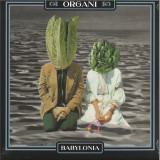
Well-versed in vintage vernaculars, Oakland-based producer/musician Mike Walti is about to return with his sophomore offering under the Organi moniker – as new album “Babylonia” follows 2020’s “Parlez-vous Français?,” a landmark in vibe acquisition ever since.
Wyldwood Studios is a portal. It’s a secret gateway to analog spheres. Cross the threshold and you’ll feel the difference: you can pick any ol’ time, any place, any tongue or vibe, in fact. Hit the dancefloor in 1967, feel that plushy loveseat in the early 70s. It’s a welcoming place where better, saner vibes are still within reach. Fueled, at least in part, by those long-classic 12”s on the walls – just imagine the sepia-tinted countenance of Melody Nelson alongside actual Birkin sans wig, right next to Shadow’s immortal crate diggers, forever blurred –, and channeled through ancient time travel devices such as the MCI 416B only to arrive on classic 2-inch tape (MM1000 aka Ol’ Bessy), it’s a haven for all things organic, for all things imbued with that warm élan. Built and run by Oakland’s own Mike Walti, countless artists from many different genres have felt that flair, creating sonic spheres and moving back and forth along the malleable axis that is space-time. Capturing magic.
Emerging from this unique portal back in 2020, Walti’s aka Organi’s first studio album was a stunning answer to its titular question – “Parlez-vous Français?” It was a soothing, somewhat psychedelic trip so magnétique and alluring that it immediately brought back those bits of Franglais you never knew you remembered. Whereas the debut LP indeed felt like a spontané voyage to the French Riviera ca. 1968, its follow-up “Babylonia” is so much more than linguistic confusion and ancient Akkadian Rhythms. Using that hidden portal near Alameda’s finest port to access all kinds of remote regions and sonic spheres, it’s super tight and feels, well, decent, even though, just like the ol’ Babylon, it’s full of surprising tongues and dreams, schemes and melodies.
“Where do we go from here?,” someone asks in opening “Organii-“ – all majestically cinematic boom bap, buoyant bass, sick strings. A fittingly massive opener that feels like cracking open a cold one after long weeks at work (that ecstatic “ahhhh”), it perfectly sets the tone for another half hour of pure time traveling, globe-spanning bliss. Whereas that certain prédilection pour all things French makes “La Rockette” so tempting and tantalizing (think MalMalNonBien), the sophomore album’s Berlin-based guest singer Nana Lacrima soon takes us elsewhere: title track “Babylonia” spins ever so softly, like a magic lantern, with images of dreamier Stones Throw funksters or Savath y Savalas looming over the steady flow of an arrangement that washes you clean like an ancient, unpolluted River Euphrates or Brazil’s actual Amazon. A sexy Portuguese-flavored anthem, occasional guest singer Alix Koliha also enters the scene to add yet another layer of French chic to this Brazilian landscape. Next, we’re back at the Riviera, but the “Italiano” version of it, splendido sunsets and bell towers in the distance, the ragazze laughing and shaking it up, perhaps even some Portofino Gin so you can really feel that “me ne batto il belin,” as your fingers align form some half-serious “ma che vuoi?”
Tim Maia-penned “Padre Cicero” (1970) deals with the stunning transformation of the titular hero – “De reverendo a lutador,” and what a soaring, sensual hook –, and Organi’s take on Elephant Memory’s “Old Man Willow” (now an “Old Man Waltz”) perfectly underlines what Walti’s Wyldwood endeavor is all about: Easy-Going Experimental Dream Pop, fueled by Gainsbourg, Broadcast, Stereolab, etc.
Later on, even though something seems to be tres complique in “Remembering Anna,” it all sounds carefree like a spontaneous Friday afternoon with a bottle of fine wine. Right before the outro, key album guest Yea-Ming Chen (of Yea-Ming & The Rumors) returns to the mic, adding her dark and dusky trademark timbre to melancholy anthem “Pictures Of Your Face”. Reminiscent of Nico and Trish (rip & rip), it’s a track that’s both dark and strangely propelling, hypnotic and hip-shaking.
A third generation Bay Area native, Mike Walti aka Organi has been running Wyldwood Studios in Oakland CA for some 15+ years (recording artists like Tommy Guerrero, Spelling, Why?, Latyrx, Del, Dan The Automator, and Big Freedia, to name but a few). A multi-instrumentalist who’s obviously in love with the 60s/70s, he loves to work with analog equipment (“We just love us some analog!” “Just listen to those relays purr…”). Recorded and mixed by Mike Walti at Wyldwood, “Babylonia” will be released on vinyl/digital by Alien Transistor.
- A1: Heaven, Or Paradise; And Hell (Ft Adrien Soleiman)
- A2: Our Dead Can’t Rest (Old Jugha Flute Dance)
- A3: Miracle
- A4: The Crane Has Lost Its Way Across The Heaven
- A5: Unraveling (Interlude)
- B1: Zephyr
- B2: Far From The Eye, Far From The Heart
- B3: What Solace Can I Give (Ft Adrien Soleiman)
- B4: …Nothing Matters More Than Touching You Although I Haven’t Touched You Yet
Lara Sarkissian’s long-awaited debut full-length, ‘Remnants’ is an ornate patchwork of ancient and modern sonic shapes that uses the vernacular of electronic music to reformulate Armenian traditions and memories. Taking digitally modeled instruments (such as the kanun, a large zither, and the duduk, an ancient double reed woodwind instrument), vocals, davul and dhol drums, tenor saxophone (from acclaimed Paris-based player Adrien Soleiman) and myriad electronic elements and techniques, Sarkissian tangles the old and the new, creating an immersive, narrative-driven experience that’s powered by history, mythology and her own familial connection to the West Asian landscape. It’s an album that’s best absorbed like a film; only multiple encounters can reveal its layered themes and references to industrial music, noise, various club styles, ambient and traditional folk.
Born and raised in San Francisco and currently based in Los Angeles, Sarkissian has developed her unique approach to composition over years of relentless experimentation across various disciplines. Her interest in music production initially stemmed from her filmmaking and video editing work, when she began to sculpt her own sound collages and scores to accompany the visuals. Since then, she’s constantly blurred the boundary between dance and experimental music, DJing around the world, producing AV installations and scoring film and video projects that have been exhibited in Berlin’s Gropius Bau, Montréal’s Musée d’art contemporain, the Music Center Los Angeles and other prestigious institutions, and releasing music with labels such as Tresor, Knekelhuis, All Centre, Silva Electronics and CLUB CHAI, the label and event series she co-founded. In recent years, she’s also been able to advance the theory behind her art, publishing a conversation with ethnomusicologist Sylvia Alajaji in the Journal of the Society of Armenian Studies in 2021, and unveiling her methodology in Norient’s ‘This Track Contains Politics – The Culture of Sampling in Experimental Electronica’ a year later.
‘Remnants’ is a new stage in Sarkissian’s evolution as an artist; not only is it her first proper album, but it’s the inaugural release on her new platform btwn Earth+Sky. She sees the label as a place to encourage collaborations between musicians and producers and prioritize sound in visual arts realms, and ‘Remnants’ is the ideal proof of concept. It opens with ‘Heaven, or Paradise; and Hell’, a track that’s inspired by the layout of the Armenian sharakan (or hymn) ‘Aravot Luso’. Sarkissian imagines the original piece’s harmonies and melodies as parts of a dreamy electronic opera, using digital kanun sounds to punctuate her woozy, evocative synths. Soleimen joins on tenor sax in the third act, while Sarkissian repeats the chant and Jace Akira adds ghostly traces of electric guitar and bass. And on the rousing ‘Our Dead Can’t Rest (Old Jugha Flute Dance)’, Sarkissian chops urgent davul and dhol drum rhythms with spine-chilling shvi woodwind sounds lifted from a documentary about Old Jugha. The title is a reference to the moving of graves by Armenian families; the area initially housed over 10,000 elaborately carved khachkars (cross stones), one of which is pictured on the album’s cover, provided by historian Argam Aivazian’s archive.
On ‘Miracle’, Sarkissian samples atmospheres from the post-Soviet Armenian comedy film ‘Կիսանդրի’ (Kisandri). She takes this opportunity to lighten the mood a little, powdering her smudged samples with tightly edited breaks and bass thumps. It’s not until the album’s middle section that the duduk, perhaps Armenia’s best-known instrument, makes its appearance. Its familiar reedy tones, popularized by Djivan Gasparyan on his many Hollywood soundtrack appearances, emerge on ‘Unraveling (Interlude)’, weaving through the acidic ‘Zephyr’ and ‘Far from the eye far from the Heart’, a post-punk inspired stomper. Sarkissian mutates the instrument almost beyond recognition, pitching and layering it into a voice-like wail that creeps between her woody, dancefloor-primed percussion on the former, and turning it into a gentle, ghostly moan on the latter. And she brings ‘Remnants’ to a close with two of her most cryptic tracks, marrying digital kanun strings with Soleiman’s resonant tenor hums on ‘What Solace Can I Give’, and looping the same saxophone sounds until they dissolve into the air on the beatless closer ‘…nothing matters more than touching you although i haven’t touched you yet’.
It’s an album that ties up Sarkissian’s various interests and experiences, finding a romantic, poetic glimmer of light in history’s darkness. But most of all, ‘Remnants’ is about the optimism of starting anew, and rebuilding a life from the pieces of everything that’s been left behind.
2024 Repress
Johnny Clarke stands tall as one of the great vocalists that ruled the Jamaican reggae scene from the mid 1970's to the early 1980's Dancehall period. This re-issue of his 'Don't Stay Out Late' set shows his versatility to sing any song that was put in front of him and make it his own. Under producer Bunny 'Striker' Lee's guidance, Mr Clarke produced a run of singles and albums few could match.
Johnny Clarke (b 1955, Jamaica, West Indies) cut his first record 'God Made the See and Sun', after winning a local singing contest in the Bull Bay area of Jamaica. Although the single was not a hit, it led to two follow up tracks for producer Rupie Edwards, '
Everyday Wandering' and 'Julie' that fared much better, both on the island and overseas in England and Canada. These tracks also brought the singer to the attention of producer Bunny Lee and a working relationship that would go on to produce a prolific catalogue of music.
Johnny Clarke's Dread Conscious/ Love Song style were to grace many hits around this time in 1974. Such tunes as 'None Shall Escape The Judgement' , 'Move Out Of Babylon' , 'Rock With Me Baby' , 'Enter The Gates With Praise' to name but a few. All new songs added to a host of cover tunes, recommended by Bunny Lee, many taken from singer John Holt's catalogue, that suited Clarke's vocal style.
The rhythms were cut at various studios around the Island. Randy's Studio 17, Channel I, Treasure Isle, Dynamic Sounds and Harry J's by a group of musicians loosely called The Aggravators and voiced King Tubby's studio.
All great tracks backed by great rhythms, cut by Mr Johnny Clarke with a voice that few could equal.
J. Written has been preparing for this moment almost his entire life. From early on he has been writing. You might even say he was obsessed with writing. It did not matter what he was writing, he just felt compelled to write. Hence the name Written.
Born on January 18, 1994 (yes, he will gladly accept birthday greetings!) in the Payne Land neighborhood of Kingston, Jamaica, J. Written entered this world as Jason Rasheed Wright. Due to certain financial instability in his family they had moved around a bit to various locations within the Kingston area. His parents, wanting him to be safe, encouraged him to be at home with his two sisters and to occupy his time at home he began to write. And write and write. And write some more.
He would write daily journals and even create newspaper articles written on the walls of their home. This creative outlet gave way to writing poems, speeches and essays while a student in high school. At 16 he started a dance trope known as the ACEZ dancers who were quite popular around Kingston.
He was then drawn to music around age 18 and began to create beats at a studio in Trench Town. He became part of the Trench Town community and is still very connected with the people there. His drive to write songs became his new medium for expressing himself. And this has led to him being recorded for various producers and included in the song “Fear To Understand” with Albarosie. Other songs and music videos followed and J. Written was brought to the attention of reggae producer Doctor Dread.
“When I first saw a video with J. Written and began to listen to more of his songs I knew this was a unique artist with a special vibe and a knack for writing interesting songs” says Doctor Dread. So he came to Jamaica and produced a first album “Kaleidoscope” for J. Written which is due for release in late 2024.
“My mission is to be active and positive. Not to confirm with the norm. To sometimes make people feel uncomfortable with issues impacting our community and society at large. To give thought to what is happening in the world and presently around us”. J. Written has made his intentions clear and it is revealed through his music.
And of special note is that J. Written has a role in the Bob Marley movie “One Love” as Junior Braithwaite, a member of the early Wailers in the scene when the young Wailers first come to audition for Coxsone Dodd of Studio One.
The future is bright for J. Written. He is creating music and lyrics as a constant in his life. And now the world will be able to share in his vision of creative expression.
Alkalino's follow up to the 2021 release of the second installment of the Make Up series comes with all original production from the man himself.
The first comes as the thumping tribal vibe sounds of "get ready' with the second on the A-side is a banger with 'Heavy as stone' with it's lush vocals that would work in any set. On the flip, 'Jack area' is classic sounding body jacking music that'll make you do just that. jack your body. and rounding out the ep is the gritty bass of 'reproduction'. This latest installment from Alkalino is a true testiment that he is a true master of making you dance.
Where would a painter paint if it were not on a white canvas? Where would a composer compose if it were not on the stave and the spaces in between the lines? How would a musician play his instrument if there were no melodies composed, written down, painted for him to follow?
The magic of art needs a frame, a somewhat solid container to hold the freedom that can only be found once we integrate some form of structure. And that also holds in every other area of life. We all need a frame, a structure, a rhythm, or else, we fall apart. This human form needs the body, and yet it transcends the limitations of the body - through art.
Consistency being one of them seems oftentimes less tangible, for it resides more in the act of doing, and showing up for the practice, for devoting energy and presence. Strangely, if we consistently show up for our practice, regardless of its form, the solid frame of the hour we devote to playing the instrument, learning a language, doing the sport, sitting silently for that meditation: It feels different every single time. It feels new every single time.
The repetitive consistency in being present again and again allows for nothing short of magic to happen. Magic feeds consistency. Consistency feeds magic. Consistency sets a foundation that strengthens over time. It allows us to slowly but surely develop any kind of skill, to find and hence to embody expertise. On the fertile grounds of such a solid foundation, creativity fosters, and innovation blossoms.
Establishing consistent rituals and routines can bring a sense of comfort and safety into every-day-life. For routine beholds repetition and its frame enables our experience within to change. In the familiar, we dare to explore, maybe even experiment, merely because a part of us remembers we depart from, and always return to, a safe space. We do not get lost. We do not fall apart. As we practice, again and again, we build resilience in overcoming obstacles or literally persevering through challenging situations and stretches of time.
While consistency gifts steadiness and stability, its overdose risks to result in what may appear as uniformity. It feels like constantly - consistently - dancing on the fine line of freedom within a structure. Life is filled with unexpected twists and turns, adjustments need to be made to accommodate change and avoid rigidity. By striking a balance between consistency and flexibility, we can create harmony in our lives, just like a beautiful melody that flows smoothly from one note to the next.
Within the magical waves of music, skills are needed, too. Consistency is key to show up and do the work. It frames the freedom of magic that resides beyond and only beyond effort. Learning to play an instrument, learning to sing, does never happen within the blink of the eye. It takes time. Time to show up for the practice, to do precisely that: practice. Again and again, every single time, again and again. Precision feeds perfection that falls apart inside the structure of a song, a line, a rhythm, dissolving into magic.
Consistency in practicing, in composing and sharing music with the world regardless of the form allows any musician to refine his style, to carve out his uniqueness. For any artistic expression is, after all: Unique. And this uniqueness is born inside the vessel of any structure, over and over again. Sharing music in the form of new releases and public performances nourishes the bond between artist and audience. And for that to unfold, both parties need to show up - while the underlying beat of this never-ending practice is presence fuelled by consistency.
Leng’s San Francisco connection has long been strong, with the 40 Thieves collective – and their friend Cole Odin – providing some of the label’s most memorable releases of the last decade. That Bay Area connection comes to the fore once more on the imprint’s latest release, which sees Odin join forces with fellow San Francisco resident Marshall Watson, a long-serving producer, engineer and live performer known globally for his Balearic-minded productions.
‘Voyager’, the pair’s first collaborative single, is a genuine meeting of minds. It combines Odin’s love of low-slung dub disco, dancefloor psychedelia and low-tempo cosmic house with Watson’s
picturesque Balearic synths, sparkling piano riffs and immersive sound design. It’s this blend that dominates on the EP-opening Original Mix, an infectious workout that gets progressively more blissed-out and saucer-eyed as it progresses. Listen carefully and you’ll hear some suitably psychedelic guitar solos nestling amongst the heady washes of sound, sun-bright piano riffs and weighty bass.
Those languid, stretched-out guitar parts naturally take a more prominent role on the Extended
Guitar Mix. On this alternative take, the pair deliver a lightly tweaked take on the original groove, stretching it out while overlaying eyes-closed guitar solos, pots-and-pans percussion and a more DJ-friendly outro. It’s effectively an extended club mix – the club in question being a Bay Area basement at 5am. To round off the EP, Odin and Watson dust off their dancing shoes and pay tribute to San Francisco great Patrick Cowley. On the appropriately titled Cosmic Rave Mix, the pair swap their bass guitar for a pulsating sequenced bassline, trance-inducing synth sounds, and locked-in electronic loops designed to take you to a higher state of consciousness. By the time the track’s familiar piano refrain drops midway through, you’ll be reaching for the lasers in no time at all.
Oakland's Naked Roommate have been slinking around the Bay Area lighting up stages, shaking asses & confounding listeners since 2018, when the group - originally just the duo of real-life partners Andy Jordan & Amber Sermeno (both formerly of The World) - self-released a cassette of demos (2018's "Naked Roommate"). Members Michael "Mig" Zamora & Alejandra Alcala (Blues Lawyer) joined soon after to augment the sound & live band with their proper full-length album "Do The Duvet", co-released in September of 2020 via UK label Upset! The Rhythm & Trouble In Mind. 2024 finds the lineup expanded even further to incorporate the horn section of Geoff Saba & Jeanne Oss on tenor & alto saxophones as well as percussion & marimba as the band readies their sophomore effort, the dizzyingly ecstatic "Pass The Loofah" Recorded by members Andy Jordan & Mig Zamora from 2021-2023 as time & restrictions allowed, "Pass The Loofah" retains the wild energy of their debut, but leans into the rhythmic throbs perpetuated by forbears like Kid Creole & The Coconuts, Lizzy Mercier Descloux & ESG; the signature sound of UK's On-U Sound & NYC's 99 Records, but with a decidedly West Coast irreverence & a knack for absurdist exposition. Make no mistake, this is music designed to make your body MOVE & Naked Roommate won't stop until they 've made sure every ass is shook. The band freely incorporates elements of the dancier side of post-punk (think A Certain Ratio or Liquid Liquid) as well as disco, funk, & house music. However, the group's uplifting melodicism belies a deeper subtext, understanding the importance of the sense of community of dance music & the culture surrounding it and leaning into a Neo-socialist lyrical context. Shit is fucked, & we get thru it by helping one another & acknowledging & addressing the failures of disaster Capitalism & tech-bro hegemony (a state the band is all-too familiar with, living in The Bay Area) Take the first single "Bus"; a four-on-the-floor banger & salutary paeon to the ups & downs of the people's transport that throbs & pulses with a late-night sashay (and a bridge that launches the tune into the stratosphere). Elsewhere, "Fight Flight "s funky horn stabs and Sermeno's slinky vocals swoon over Numan-esque synth squiggles that are fortified & funkified toward the dance floor. "Broken Whisper " edges into new territor y for the group, adding a Caribbean flavor a'la Kid Creole or The Specials that punctuates the persistent & synthetic beats underneath. Meanwhile instrumental interludes like "Ducky & Viv", "G-Y pt. 1" & "G-Y pt. 2" oscillate into zones of sci-fi meets soap opera soundtracks, sounding not unlike the electronic experiments of UK industrial pioneers Chris & Cosey. Album closer "I Can't Be Found" might be the album's secret weapon; It 's swooning synth melody & processed vocals recall early Daft Punk or MGMT by way of Derrick Carter & The Au Pairs. It 's a beautiful song; perfect for the late night (or early morning) car ride home from the club. "Pass The Loofah" is released worldwide on October 25th, 2024 via Trouble In Mind Records digitally via most DSPs & on black vinyl & limited "disco ball " silver vinyl.