The incredible talent that is Jamie Myerson returns with another stellar EP packed with old school sensibilities and atmospheric charm. A1 - Photosphere Photosphere opens with a warm synth and filtered beats before a raucous kaleidoscope of breaks take over your senses, while a devilishly simple piano melody, layers of airy vocals and sampled effects jostle for your attention adding texture to an already immense array of sounds. All elements are clear and distinct in the mix, offering something new with each listen in exceptional detail and clarity. A2 - Naked Eye Changing up the vibe with a twist, Naked Eye is a a deeply atmospheric piece that opens with synths and light percussion before a relaxed old-school breakbeat and bassline drop and kick start a gloriously laid-back journey which builds and builds with trademark JLM Productions panache - adding a flurry of strings, micro melodies across the soundscape and a perfectly-tuned amen layer to the breaks. AA1 - Evolution Operator Next up: enter the sounds of Evolution Operator, opening with a DJ-friendly filtered break intro coupled with intriguing, intense padwork which builds towards a drop of dancefloor two-step beats featuring none other than the legendary Apache break. Combining driving atmospheric energy delivered from a plethora of melodies and effects with old school sensibilities results in another fine floor filler for the discerning setlist. AA2 - Lightlike Completing the EP we are treated to Lightlike, another gloriously reminiscent piece of music reflecting yesteryear with JLM’s crisp, detailed approach to production. Opening beat-free with glistening pads, subtle drums are gently added before classic Airtight breaks drop with a cacophony of synthwork, cymbals and crafted melodies swirl throughout the elements to create a classic yet modern collage of atmospheric drum & bass. Words by Chris Hayes (Spatial/Red Mist)
May 2026 marks the arrival of TYGAPAW (aka Dion McKenzie)’s first full-length album on Tresor Records, entitled Together You Gather All Power Applied Worldwide. An acronym of its creator’s name, TYGAPAW’s third studio album is a deeply personal collection of music building worlds where Black queer and trans siblings can thrive, while unifying dancefloors worldwide. A proposition that collective wisdom liberates us from the matrix of domination we live within. The album unfolds as the latest chapter in TYGAPAW’s ongoing techno opera opus, continuing to center the voices of Black women, which surface as layered incantations rather than lyrics - powerful, haunting, sensual, activating.
With the process of creating the album starting in 2023, as TYGAPAW (Dion McKenzie) was in the first year of their transition, the music reflects the intensity of that period, where they were experiencing deplatforming as a response to the shift in their physical appearance: Tracks like ‘M32 Riddim’ and ‘Helicopter hovers over my Crown Heights Apartment’ feature high-paced rhythms intersecting with intense siren-like synths to form demanding compositions echoing a heightened sense of alert. Yet throughout the album, relief comes in the form of TYGAPAW’s vocal features, co-conspirators, and chosen family, whose voices are treated with reverb and echo, a sonic fingerprint that leads back to the pioneers in the legendary studios of TYGAPAW’s native land, Jamaica, an important reminder that the past will always inform the future. It is an album for dancers first and foremost, where joy, defiance, and integration with the natural body coexist, and every drop feels less like a climax than a transformation. Expect a bass that permeates your soul and melodic synthesized sequenced phrases echoing the dancehall eras of TYGAPAW’s youth, reshaped into hypnotic melodies that glow over industrial kicks designed to command attention, reasserting Jamaica's pioneering yet often overlooked contribution to electronic music.
In the opening track, ‘Can I Live’, Precious Okoyomon’s words feel like the beginning of a ritual; setting the intentions for the rest of the proceedings. As McKenzie puts it, their “work is about regeneration, resetting, getting integrated into nature, and about rebirth. That’s the tone I wanted to set at the outset of the album.” Ms Carrie Stacks continues this thread of support in ‘Don’t Panic’ with heavily processed vocals on top of a beat that takes inspiration from another important ingredient in the antidote to the oppression of isolation: Ballroom culture. “ I feel like I found my queerness in Ballroom, that’s why this track is very important to me.”
Echoes of NYC Black queer nightlife scene also permeate in the energetic drums of ‘Exorcise the Language of Domination’, in which Julianna Huxtable’s spoken performance complements the various movements and tones of the music. “My producer brain thought this was the one that Juliana’s vocals would be best suited for. I hinted: ‘what do you think of this one?’ She just went into her notes and picked some passages to go with the first section of the track. From there, it was a year-long process of development. It required time and space for this thing to evolve, but I think it’s one of the most powerful tracks on the album.” London’s SUUTOO contributes the album’s only musical collaboration on ‘B2B’, a track that emerged from sessions in McKenzie’s New York studio where the real objective was to connect and have fun; a time out from the demands of life outside.
The album closes out with a double hit of emotion in the form of ‘Effects of Resistance and Black Trans Masculine Experience’. The former features South African scholar Khanyisile Mbongwa drawing connections that exist between Africa and the Black diaspora, whilst looking to the future and calling for a shared sense of community.
The latter piece, an instrumental version of the piece which featured on the IMMIGRANT E.P. of 2025 is a gentle and deeply affecting end to the record, a place of peace and acceptance. This end-of-cycle tone is mirrored in the sleeve photography, which also ties back to IMMIGRANT by finally revealing what was hidden: a portrait of the artist fully self-actualized; a step towards true inner liberation. TYGAPAW is sonically defiant across this album; bass frequencies feel tactile — less heard than inhabited — infectious lead synth melodies remain with you long after the track ends. An overall sound that leaves asserting an urgent need for connection. From Detroit to New York to Berlin to Jamaica, despite geographic distance, this album reminds us that we remain in solidarity, recognising that meaningful world-building requires collective input and action, both personal and communal, if we are to move toward liberation.
Our latest Holy Grail reissue is this private press spiritual jazz gem out of California from Rickey Kelly and his vibes & marimba. Features Diane Reeves (vocals) & Adele Sebastian (flute)!
Heavyweight 180g LP with tip-on sleeve, individually numbered 1-1000, card enclosed for liner notes & audio download
"Rickey, I know these are your friends, the guys you went to school with, but if you wanna record an album, you record with musicians who have been playing their whole life; whatever you write, they'll put their whole life into it. You play with your friends; they may not even play in tune."
These are the words of Slave guitarist Kevin Johnson, and they were to change the course of young Rickey Kelly's life.
It was 1978, and music student Kelly had approached Johnson with a tape of rough demos of some songs he'd written. A San Francisco native, Kelly had recently moved the short distance south to study music at LA City College in East Hollywood. He was a member of E.W. Wainwright Jr.'s African Roots of Jazz, and was spending up to 10 hours a day in practice on both vibes and marimba. He also played with Horace Tapscott, and had his own band made up of fellow students, but it was his ambition to make an album that led to the conversation with Johnson. It was a turning point in his education, and a decision was looming.
The next thing Johnson said was "You call the best jazz musicians. How'd you like to play with Billy Higgins?", a line that would seal it for anyone; for a youngster like Rickey just starting out in the business, you just don't turn down the opportunity to play with the likes of highly accomplished musicians, especially those of the calibre of legendary jazz drummer Billy Higgins.
Some calls were made and the date was set to record at Studio Masters on Beverly Blvd, a studio set up just a few years previous in 1973, owned and operated by Dot Records founder Randy Wood with his son John. Some of the other music professionals set to record with Kelley that day were flautist Adele Sebastian, bass player Tony Dumas, saxophonist Charles Owens and vocalist Diane Reeves, none of whom had previously played with Kelly before.
Kelly was impressed with the studio, with the gold records displayed on the walls and the famous musicians hanging out. 'It took a lot of humility for me to record with them, I mean I was nobody, nothing, and for not a lot of money either' remembers Rickey in a later interview with Calvin Lincoln, 'It taught me a lot, to practice hard, and study for the rest of your life, to give your all, and there's a lot of all to give'.
As the recording session took place, John Wood was listening in. He was impressed. Kelly didn't have the funds to manufacture and release the album himself, so Wood suggested it was pressed up on his in-house studio label, Los Angeles Phonograph Records, and thus the LP 'My Kind of Music' was released early in 1979. The album also saw a subsequent pressing soon afterwards on Dennis Sullivan's New Note label.
Kelly remains humble and proud of his debut album to this day. 'I was still a beginner' he says, 'These masters walked in, smiling, and gave me something worth gold'.
Matias Aguayo drops debut single on Rekids‘El Internet’ is a prelude to the Coméme founder’ upcoming album on the label. Chile’s Matias Aguayo debuts on Rekids with ‘El Internet’, the first single of his upcoming album on Radio Slave’s acclaimed label. Coméme co-founder Aguayo’s ‘El Internet’ is a dancefloor-tested, pumping and uptempo track with personal, intimate vocals phoning in.
“El Internet” tells about walking through the city in hot summer nights looking for the perfect dancefloor and about moments in life where you feel (musical) freedom and change, revolutions in music and dreams in community, about YouTube, MySpace, Fotolog and about people who dance in their houses, yards and on the streets to primitive, raw, and direct music (like the rhythm of the track itself).” - Matias Aguayo
Chilean-born musician and DJ Matias Aguayo has been active for three decades, co-founding the Cómeme label in 2009 and releasing work on the likes of Kompakt, Pschent, Hard Fist, and Permanent Vacation. Beyond music, he has organised underground parties and led social projects, including a theatre production at Le Châtelet in Paris.
Radio Slave’s Rekids was founded in 2006 and has since spawned successful offshoots with the Techno-focused Rekids Special Projects in 2017 and its newest sublabel, REK’D, in 2024. With Matt Edwards as the sole A&R, Rekids has been crucial in developing early artist careers and has become a haven for established acts operating in House and adjacent genres, having recently featured the likes of Hilit Kolet, William Kiss, Tal Fussman, Tiger Stripes, Harry Rimero, The Hacker, Sean Johnston, and many more.
"AVEX REGGAE SYSTEM" is a series of gems of reggae covers of classic AOR and pop songs that were in heavy rotation on dance floors and FM radio from the late 70s to the early 90s. This is the fifth 7-inch single cut project from the series!
"Upside Down" is an 80's dance classic by Diana Ross, produced by Nile Rodgers and Bernard Edwards, who were flying by the seat of their pants at the time, and features Mareen's cute vocals and electric sitar tones, just like the original. The cover features Mareen's cute vocals, electric sitar and a bouncy shuffle beat." Smooth Operater" was released in 1984 and was one of Sade's early hits that made her a worldwide sensation, and it was a longtime seller in Japan at the time, playing in cafes and bars.
pdqb is an entity without a fixed form, moving through multiple timelines at once, performing in all of them simultaneously.
Every tone on this record was sampled somewhere else: in collapsed futures, unfinished pasts, and inside stress loops that never resolved. The tracks are not composed - they are retrieved, stitched together from moments that already happened and moments that haven't happened yet.
The music is unstable, dependent on who listens, and in which dimension, the tracks re-arrange themselves, revealing different harmonics, different fears, different exits. No two listeners hear the same, even if they play it at the same time.
The überskilled Detroit remixers provide a solution for Earthbound listeners - those unable to time-travel or shapeshift: By filtering pdqb's multidimensional signal through machine discipline, they force a temporary alignment - a version of a track that sounds the same to most listeners. Only then does collective rhythm become possible, a shared timeline where bodies on a dancefloor move to the same future at once.
---
Dr. Paul Dominic Quentin Bernard defines Future Traumatic Stress Disorder as a cognitive condition marked by a reversal of mnemonic orientation. Memory, in this model, no longer operates retrospectively but functions prospectively, encoding anticipated survival outcomes rather than past experience. Affected subjects do not recall what has been lived through; instead, they retain anticipatory memory structures of what will be survived. Bernard notes that this temporal inversion produces sustained psychological stress and warrants further empirical investigation.
The fifteenth release from electro label Gladio Operations once again brings us a multi-artist format, featuring new faces and a distinctly Spanish flavour.
This EP opens with the return of producer Cycloplex, with his characteristic minimalist sound.
This track, titled ‘EP01-A’, once again showcases his powerful and aggressive bass lines.
From Gerona comes one of the new and talented artists on the Spanish electro scene. David Pasajero makes his debut on Gladio Operations with ‘Dislektro’, a fluid journey of melodies and warm textures infused with acidic touches.
On the B-side we find Barcelona producer Dark Vektor, who needs no introduction, as he is one of the Spanish icons of electro sound. This artist also makes his debut on the label with ‘Te Voy A Dar Ahhhhh’, a dizzying track with suspenseful melodies and a powerful bass line that will keep you on the dance floor no matter what.
The Spanish duo Slit Observers is another of the label’s new faces and treats us to this vibrant track titled ‘Green Machine’, where we encounter dark passages with a perfect dose of acid and embellished with subtle vocoders.
The EP closes with a collaboration between German producers Intergalactic Noize Commander and Elektrotechnik, the latter an artist who has released music previously. ‘Informationen’ is a rough track, created in the most hidden German bunkers, featuring arpeggios and robust bass lines that dominate throughout the whole track, accompanied by gloomy vocals.
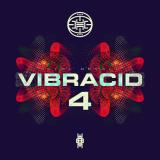
The Vibracid network reaches its fourth phase — the moment of awakening.
What was once hidden beneath layers of programming now resurfaces: the total recall of collective memory.
Encrypted memories from multiple worlds are decoded through sequences of electro-bass, acid warfare, and cinematic techno tension.
Six sound engineers from the Galactic Confederation synchronize their signals to reassemble what was erased — transmitting across psychic fields, dancefloors, and forgotten neural corridors.
Calagad 13 opens the operation with Mad Flava, pure raw energy — the ignition spark that reactivates the buried code.
5ZYL follows with To Your Knees, a dark and heavy descent into pressure and distortion.
Saigg brings the direct, high-voltage electro of Procesos Continuos, channeling precision and drive.
On the B-side, Lups Digga delivers Just Dance, a floor-oriented electro-bass detonator built for propulsion.
Roi expands the field with Despoiled — cinematic, tense and electrified, balancing techno discipline with emotional depth.
Finally, Cliff Dalton closes with Snowbirds, an introspective and elegant comedown: the calm after total awakening.
Mastered and crafted with precision for a strictly limited edition of 150 copies on purple vinyl.
Blue Hour distills over a decade of artistry into his debut album Selva, unearthing eight tracks inspired by ancient wisdom and forgotten worlds.
Blue Hour is the moniker of Luke Standing, a multifaceted artist, producer, and label owner navigating between past and present electronic dance music. Over more than a decade, Standing has built a career balancing transformative craft with a sharp curatorial approach, earning him respect across the global scene. After years of sonic experimentation, he now releases his debut LP Selva. “I never set out to make an LP – it just wrote itself,” he says. “I followed my intuition, and the music found its own path.”
Born and raised in the UK, Standing grew up in parallel with club culture, moving between Brighton, Bristol and Berlin while running club nights and establishing himself under former aliases Furesshu and Esoteric.
He launched his Blue Hour project in late 2013, shortly after relocating to Berlin. Initially a platform for his own music, Blue Hour quickly became a collaborative hub, blurring the lines between personal output and curation. Over time, Standing has cultivated an international ecosystem of like-minded artists while continuously expanding his own sonic horizons.
Selva marks his first full-length studio album, weaving a lifetime of influences into a cohesive narrative inspired by ancient wisdom and forgotten worlds. The eight-track double LP transforms his inner dialogue into a subconscious story pulling inspiration from a labyrinthine network of influence and experience. “I followed the music obsessively, reflecting and refining until the story revealed itself,” Standing explains.
“To me, the LP evokes Amazonian or Mayan jungles, themes of exploration, the mysteries of the natural world, wisdom passed down through generations. I didn't set out to write about these things consciously,
they just emerged on their own.” he adds.The album was shaped through intensive work in his studio and periods spent in subtropical locations.
Listening closely, Selva unfolds like a modern ceremony: the opening tracks channel his early UK dance influences, shifting into blends of traditional and contemporary techno, then expanding into melodic soundscapes before concluding with transcendental textures and atmospheres. The result is an introspective journey where functionality and emotive storytelling coexist, revealing a depth in Blue Hour we haven’t heard before.
Whether performing, curating, or producing, Standing operates with a deep commitment to sound, culture, and collaboration. More than an artist, he is an architectural thinker of what electronic music could become. “Every release is my own metamorphosis,” he says. “This LP reflects my current form, and I’m curious to see what the next chapter brings.” Few artists can unify a lifetime of genre-spanning influences into a sound as sharp and focused. On Selva, Blue Hour does exactly that, opening a new era of deeper
immersion from his Berlin-based label.
Analog Fingerprints Vol. 0 is a compilation bringing together the early 2000s works of Marco Passarani under his Analog Fingerprints alias, collecting key tracks originally released on Rome’s Plasmek and Pigna labels.
For Numbers, the story starts long before the label itself. In their formative years, digging in Glasgow’s Rubadub, Passarani’s records felt like dispatches from a future city. Releases on his own Nature Records and on labels such as Generator and Interr-Ference Communications were mind blowing: rooted in Detroit techno, Chicago house and electro, yet pushing somewhere new. Much like fellow travellers Autechre, who would remix him in 2001, Passarani’s music balanced machine funk with restless experimentation.
Information was scarce, and you would hear these records first on the dancefloor or at listening stations in shops like Rubadub. Print fanzines like Ear and early web outposts such as Forcefield offered only fragments. But there was a palpable axis forming between Detroit techno and a new European wave of record labels including Skam, Rephlex, Clone, Viewlexx and Nature itself. It was the sound that defined Saturday nights at Rubadub’s ‘69’ parties in Paisley, just outside of Glasgow.
Passarani’s records, in particular, were instrumental in bringing together the future Numbers co-founders. Richard had already booked him pre-Numbers; meanwhile Calum (Spencer) and Jack (Jackmaster), then 16/17 year olds working alternate Saturdays in Rubadub, were so enamoured with the Roman sound that they travelled to Rome for the Bitz Festival in 2003 to seek out Passarani and Lory D at their source.
The first Analog Fingerprints release landed as a 12” on Plasmek in 2001, following the fractured, IDM-leaning 6 Katun material. For Passarani, the project marked a recalibration. A DJ first and foremost, he had moved into production via early computer setups, from a Commodore Amiga through primitive PC audio, Cubase and Logic, later experimenting with Ableton. The IDM scene had offered a playground for trial and error, but there was always a tension between abstraction and the dancefloor. Analog Fingerprints became the bridge: still intelligent, but with more dance than distance. After years of broken beats and complex arrangements, he wanted directness without surrendering identity.
Working closely with Francesco de Bellis and Mario Pierro in the Pigneto district, the trio formed Pigna as a vehicle for reclaiming a more accessible dance sound, deliberately steering away from the minimal wave beginning to dominate Europe. Sessions were fast, instinctive, often stretching late into the night with friends dropping by. It was a studio as social space, production as collective energy.
“In that constant search for balance, Analog Fingerprints was my way of expressing something closer to the classic dance floor. The track 'Tribute' - a tribute to my favourite early Detroit techno track of all time, 'First Bass' by Separate Minds - came after I realised I had almost lost my connection with the dance floor. The simplest step was to take inspiration from early Chicago and Detroit and twist it in our Roman ‘Pigna’ way. My goal was to create more accessible dancefloor tracks by mixing my unconscious Italo roots with my teenage love for that early US sound, ensuring the result was as far as possible from the minimal sound that was starting to dominate everywhere.” - Marco Passarani
Technically, the Analog Fingerprints tracks span a transitional era: Roland TR-909, SH-101 and Alpha Juno hardware met early software experiments. A Novation Drumstation rack stood in for the unattainable TR-808, syncing with TB-303 and TR-606. Yet the true secret weapon was Jeskola Buzz, a tracker-style modular environment that allowed step-by-step parameter control and strange melodic constructions, later exported into the audio sequencer. Even the lead on ‘Tribute’ came from an early PPG Wave-style plugin. It was hybrid thinking at a moment when digital tools still felt unstable but full of possibility for technologists like Passarani.
Behind the music sat Finalfrontier, a loose Roman collective orbiting Nature and Plasmek. Distribution and production were intertwined; importing obscure records into Italy built connections with like-minded outsiders across Europe and the US. Expensive phone bills and fax machines forged an “electronix network” that linked Rome to Clone, Viewlexx, Skam, Rephlex, Rubadub and Detroit’s Underground Resistance. There was a shared sense of survival and resistance, of operating against commercial systems.
Passarani recalls “The first time I found a sheet of paper inside an Underground Resistance 12” with info about upcoming releases... and a huge picture of Spock on the back. Imagine that: you love the music, you love Star Trek, and there’s someone on the other side of the ocean sharing those same values and sounds. It was the perfect match. We even gave our original company the suffix ‘Finalfrontier’: that says it all.”
Feedback in that era arrived physically: distributor faxes, conversations with visiting DJs, the experience of playing abroad and meeting kids who had connected with the records. Glasgow became a key node in a scattered outlier network. Passarani personally brought the first two Nature releases to Fat Cat in London, playing them in-store. Shortly after, a fax arrived from Rubadub in Glasgow requesting copies.
“I still remember that phone buzz and the fax paper slowly sliding out, with someone I didn’t know saying they wanted 75 copies of Nature 001. Or like the time we got a fax from the Rephlex crew just saying, “Hello Nature Records, Keep up the good work.” That was how we knew the message was getting through. It was a fantastic feeling; just one piece of thermal fax paper as an analog notification - the mood for the entire week would change.” - Passarani
The connection to Glasgow has since stretched across generations. As Passarani reflects, links often fracture as scenes renew themselves, but in Glasgow something different happened. New and old mixed seamlessly. There was a visible trust in what came before, and a willingness to carry it forward rather than discard it. Observed from Rome, it was deeply encouraging.
Analog Fingerprints Vol. 0 captures that moment of exchange: Rome to Glasgow, Detroit to Europe, experiment to dancefloor. It documents an artist recalibrating his sound and a network of scenes discovering one another in real time, connected by vinyl, faxes and shared intent.
For more than two decades, Eamon Harkin has helped shape New York’s communal pulse. As a founder of Mister Saturday Night, Mister Sunday, Planetarium, and Nowadays, he’s created and DJed in spaces where dance, listening, and connection blur into something deeper — places where people come together to make sense of the world through sound.
On his new album, The Place Where We Live, Harkin turns that lens inward. Drawing on 25 years as a DJ and curator, he moves between house, techno, and ambient currents with a sense of stillness and searching. The result is a record that feels both physical and introspective — the sound of the dance floor seen through memory.
The title comes from psychoanalyst D.W. Winnicott’s idea of “the place where we live,” the psychic space between the inner and outer world — where play, art, and culture help us build meaning. For Harkin, an Irish immigrant long settled in another land, that idea resonates both philosophically and personally. The Place Where We Live captures the tension and beauty of the pulse of the club and the quiet of reflection — an album about belonging, transition, and the quiet resonance of finding home somewhere in between.
Daniele Baldelli
"A pleasant surprise to find in this release various atmospheres and sounds that have always been part of my DJing. It even made me rediscover M’Bamina, whom I used to play back in 1974 at the Tabù Club in Cattolica.
There are afro vibes as well, with Black Line – Myele, which is featured on one of my Cosmic tapes, and Nowhere by the Stratosferic Band recalls a track I used to play at the Baia degli Angeli…
Excellent work!"
Voom Voom Music was an independent Italian record label based in Turin, founded and managed by record producer Ivo Lunardi (Turin, December 6, 1940 – December 9, 2010). A pivotal figure in the Piedmont music scene, Lunardi was active both as a DJ and as the owner of several disco clubs.
The label operated for several years in the latter half of the 1970s, releasing mainly productions connected to the Italian dance and pop scene.
Since 2016, the original master tapes from the Voom Voom Music catalog have been owned by Gianluca Pandullo (I-Robots), a close friend of Ivo and Luca Lunardi. Through his labels Opilec Music and Turin Dancefloor Express, Pandullo oversees their preservation and historical enhancement.
The artistic direction of Voom Voom Music was marked by a distinct sonic identity — eclectic yet visionary. The Turin-based label founded by Ivo Lunardi embraced a sound that blended disco, pop, and rock influences, interwoven with African American grooves in a pioneering, international perspective.
Voom Voom Music was among the first Italian labels to introduce this kind of musical language in the country. A prime example is the Italian edition of the debut album by B.T. Express, Do It ('Til You're Satisfied), released in LP, 8-Track Cartridge, cassette, and 7" single formats.
The label’s productions clearly reflected the influence of black and funk music, as evidenced by the references and inspirations running through its catalogue. The track “Lady Pick-Up”, for instance, includes direct nods to “Do It Good” by KC & The Sunshine Band and Manu Dibango’s iconic “Soul Makossa”, revealing a musically refined and contemporary sensibility.
Among the label’s most representative works is Splash (1977) by the Stratosferic Band, a project conceived by Luigi Venegoni — producer, songwriter, and guitarist of Arti e Mestieri. Venegoni’s artistic journey spanned from progressive rock to space and Italo disco. The album artwork was designed by Piero D’Amore (1944 - 2022), a charismatic and multifaceted figure of Turin’s art scene (one of his works was even acquired by the MoMA in New York).
The record includes a disco reinterpretation of Van Morrison’s classic “Gloria”, and “Splashdown”, a track fusing the disco-rock energy of Rockets and Space. In contrast, “Nowhere” revisits the 1975 single by Hokis Pokis, a soul/disco band from Nassau County (New York), transforming it into a vibrant disco-funk number.
Another significant expression of the label’s catalogue is the afro-rock sound of M’Bamina, an Italo-Congolese group whose rhythmic energy and dialogue between African percussion and Western funk evoke the style of international formations such as Osibisa — themselves linked to a rich artistic history in Italy.
Dutch DJ/producer Boss Priester has built a name as a producer who operates with a ‘let the music speak’ ethos. Now based in The Hague, he has spent years crafting a distinctive sound that blends elements from minimal, house, and techno, releasing across respected labels including Ba Dum Tish, X-Kalay, Dungeon Meat, and his own BPDUBS imprint. His 2023 ‘Hotel Dijon’ EP on LOCUS marked a notable moment in his journey, having long drawn support from label boss Enzo Siragusa, establishing a connection that now comes full circle with an impressive debut outing on FUSE. Building on the backing of other notable figures such as Fumiya Tanaka and Samuel Deep, reinforcing his meticulous attention to rhythm, texture, and groove, his ‘Respect Yourself’ EP extends his sound further as he delivers four tracks that are impactful, precise, and built to command the dancefloor.
Title track ‘Respect Yourself’ leads the EP with its synth-led, hypnotic groove, as intricate percussion and low-end weight immediately establish a commanding presence shaped for the floor. ‘BP On The Master’ follows with a deep, rolling energy, blending minimal textures and squelchy bass licks with understated melodic flourishes. On the B-side, ‘Future Is Electric’ channels a forward-thinking spirit, layering bright textures over weighty, skippy UKG-influenced driving rhythms, before ‘Flava’ closes things with a hazy yet heavy kinetic groove that perfectly encapsulates Boss’s growing sound.
nagoyaka na kaze / 和やかな風 (quiet wind): a collection of forward-thinking electronic experiments sourced from central Japan - co-curated by Nagoya artist abentis for Facta & K-LONE’s Wisdom Teeth imprint.
The project profiles a close-knit community of music makers operating in and around the Japanese city of Nagoya: one of the country’s most populous and industrial cities, but one all too often overlooked in terms of its cultural significance.
Curated in close collaboration with local scene organiser Yuya Abe - aka abentis - the record seeks to capture the creative energy of a community of artists making hard-to-define, future-facing electronic music away from the clamour of the bigger cities. “In Nagoya, there’s a strong culture of supporting artists. Even if you pursue music in your own way, as long as it’s good, you’re encouraged to keep doing what you want”, explains abentis. “Within that environment, my generation has been able to freely bring in elements we like from all kinds of genres, combine them in our own way, and express ourselves individually. If you go to Tokyo or Osaka, that kind of freedom isn’t something you can take for granted.” Spiritually, Nagoya fits the mould of cultural hotbeds like Bristol, Detroit or Melbourne, showing that some of the most innovative creative communities form away from the glare of the capital cities. Like Detroit, Nagoya is principally known for being a major auto manufacturing hub, famous for being the home of Toyota Motors - but behind the scenes, it is quietly harbouring one of Japan’s most vibrant and forward-thinking electronic music scenes. “In a good way, Nagoya is a bit removed from the cutting edge, so you find people making all kinds of music”, explains Karnage. “If you’re making music, you feel like part of the crew, and people of different ages mix together without much hierarchy.” The city’s music scene is characterised by a freedom to mix genres and an open-door approach to creatives of all disciplines. The artists featured come from a diverse set of backgrounds, ranging from hip-hop to noise music, but have found a common collective identity in their omnivorous approach to genre. As such, the record moves fluidly between shimmering ambient and new age (Am Shhara, DHYAN, daiki hayakawa), psychedelic minimal house (Methodd, abentis), abstract, low-slung downtempo (baptisma, Nasty Soupman) and spaceage steppas (Karnage). “I’d say the way ambient, new age and that kind of sound design are blending nicely with dance music feels somewhat new”, says baptisma, the crew’s eldest member and de-facto scene leader. Responsible for bringing artists like Basic Channel, Mala and Jan Jelinek to the city, baptisma has been crucial in establishing underground electronic music in Nagoya since the 90s, and now helps cultivate the next generation of local talent. “Artists and DJs are seamlessly mixing ambient and new age with techno, house and bass music. I think that’s a really interesting development.” nagoyaka na kaze has its roots in a one-off event held in October 2024 as part of the 10 Years of Wisdom Teeth Japan tour. Curated by abentis in collaboration with Facta & K-LONE, the showcase featured live sets from eight artists based in and around Nagoya at one of the city’s key dance music hubs, Club JB’s. Each of the artists features again here, on record, presenting an original commission produced especially for the project. The record’s art direction was led by Yudai Osawa - in-house designer for Kankyō Records, the much-loved Tokyo record shop run by H. Takahashi - and features original photos by Hayato Watanabe.
‘Desire’ is the sophomore full-length album by TLF Trio, following their beloved debut album ‘Sweet Harmony’ from 2022. On ‘Desire’, the group presents their signature, contemporised chamber music through their main instruments: piano, cello and electric guitar; now enhanced by a pervasive use of sampling and a distinct use of silence as musical material.
The album is an aesthetic voyage in a musical landscape of minimalism, classical music, free improvisation, left-field-electronica, and references to pop and house music. It blends into a sound that is experimental and unpredictable – yet at the same time strangely familiar and self-explanatory.
The ten pieces balance an open-ended improvisational intimacy with a tight compositional intention. Each track's repetitiveness operates as a trickling plateau of layered sentiments of times and spaces through the sampling of different acoustic rooms, the playing in specific styles and the curated selection of sounds and instrumentations; a collage of memories and associations patched together to create new meanings.
HAVEN are back with their vinyl operation with a fresh plate of grubby Techno heat from Irish heavyweights Faetch & Sunil Sharpe on the Grotteca EP. Featuring 4 original rippers and a remix from Italian legend DJ Plant Texture of upfront club pressure, the NZ-based label are proud to transmit some of the finest in creeping electronics from across the globe.
The A-side kicks off with 'Bleed In' with its tough drum-work and hypnotising atmospheres eventually descending in to an all-out stomp with one of the filthiest synth-lines in the label's history hitting half-way through. This is followed up with 'Test Breaks' - a broken-beat slammer with a ton of gritty synth design and rear-shaking rhythms. The first side is closed with DJ Plant Texture's remix of 'Bleed In', where driving 909 hits combine with the original synth line for a club-ready weapon ready to get those feet moving.
On the B-side 'Vapornation' keeps the energy rolling with its rolling congas, heavy kick, and eerie atmospheres tailor-made for a concrete basement. Finally, 'Shinplant' closes the record with full-steam-ahead drums and squalid synth rhythms to end yet another plate of dance-floor ammunition from the HAVEN camp.
Silvil proudly unveils its fourth vinyl installment, once again showcasing the distinct sonic fingerprint of Brizman. The new EP delivers three original cuts and a masterfully crafted remix from the revered Romanian talent Crihan, solidifying Silvil’s commitment to forward-thinking minimal and dub-infused house.
Opening the record is “Those Nights”, a delicate yet powerful collaboration with vocalist Nina Noy. Brizman’s signature hypnotic grooves intertwine with Nina’s emotive voice, creating a warm and introspective atmosphere that glows with late-night energy. It’s a track that lingers long after the final note, blending intimate storytelling with dancefloor tension.
On “Akiza”, Brizman dives deeper into his dub-oriented palette. Rolling percussion, textured echoes, and evolving bass patterns guide the listener through a rhythmic journey built for heads-down moments and extended sessions. Minimalist in structure yet rich in detail, it captures the essence of Brizman’s immersive production style.
The B-side ignites with Crihan’s remix of “Roll Thah Deep”, where the Romanian artist reshapes the original into a beautifully restrained, gliding groove. Sleek modular elements, subtle shifts, and refined rhythmic nuance highlight Crihan’s unmistakable touch—a remix that bridges meditative flow with undeniable dancefloor momentum.
Closing the EP is “For The Ones You Know”, a contemplative and emotive piece that resonates beyond the club. Deep bass swells, atmospheric layers, and a stripped-back arrangement showcase Brizman’s ability to craft tracks that connect personally, balancing warmth and precision.
Silvil 004 stands as another milestone for the label—an EP that celebrates refined minimalism, dub aesthetics, and the artistry of two producers operating at the height of their craft.
These tracks were produced by Ori Lichtik between 2006 and 2017.
Half Life and Bill are precise cuts of extensive productions, tailored for the club, while Nu secretly hits everyday dance training routines. Dim the light.
Lethal. Minimal. Timely.
Press quote from Göteborg Opera
'The uniqueness of Lichtik's work lies in the combination of different musical worlds into a sophisticated and refined soundtrack, full of passion and groove, which, together with the choreography, provides the audience with a hypnotic experience. Lichtik's music is influenced by various styles and sounds, from industrial recordings and African indigenous music, through hip-hop, to baroque music. Ori's music is one of the most prominent and distinctive features of Sharon Eyal and Gai Behar's dance works.'
BQD050–Arno: "We Perfectly Understand Each Other Until We Start To Talk – The Remixes"
To mark the 50th release on Brouqade, we reach back into the catalog and release as a set of remixes Arno's album “We Perfectly Understand Each Other Until We Start To Talk” a work that touches on the finer problems inherent to human communication.For this unique Album, released in 2019, three distinctive reworkings offer new breath to the original tracks: Baby Ford conducts a lean and hypnotic revision played in minimal fashion, Kuyateh widens out textures with deep organic rhythms and Dana Ruh puts her distinctive groove-orientated stamp on the material.
The bonus on the release is from Arno — a meditative composition that acts as middle ground in terms of his musical language.
In operation midway between introspection and movement, BQD050 depicts the very spirit of Brouqade: depth, warmth, a timeless dancefloor poetry.
A fish dreams in a drum machine. Hidden Operator surfaces, soaked in fog and radio hiss. The fever escapes. Kontra-Musik and Kess Kill hold hands in a burning telephone booth--two labels dancing backwards through a mirror, cackling. This is a record made of riddles and ruin. Dub coughs in the corner. Proto techno slips on oil. UK hardcore gurgles something unspeakable before melting into a slo-mo house groove with a hangover. Lo-fi? No-fi. High-why. Slightly wrong but utterly intentional. Basslines stagger like drunks in a maze. Snares in existential crisis. Synths whispering conspiracy theories. This is an apparition. Half dungeon, half dancefloor, half pigeon coop. Understanding is colonialism. Twitch instead.? KONTRAKESS01. Carved in vinyl. Released into the ether. Confuse your neighbours. Alarm your pets. Send postcards from the inside.
Brooklyn duo Fundido team up with Philadelphia's Universal Cave to press their first physical release titled ‘Paradise Tempo’, a love letter to dance floor music that sits in the cross section of the tougher sounds of the city and the softer sounds of the balearic and the backwoods.The A side kicks off with a flawless downtempo mix from California based Dirty Dave and Alex Pasternak, who find a rare cover of the Cathy Denis classic and refurbish it to perfection. Next up is ‘Emotional Jungle’, a jazzy midtempo weapon led by a massive saxophone hook and edited to optimum club efficiency by NY based Nick Stropko. LA via Serbia’s Masha Mar unearths extremely rare gem ‘Take Me to Mecca’ and reworks it into a dreamy midtempo journey that carries both a children’s choir vocal and a middle eastern synth melody effortlessly across a foggy dance floor. And closing out the A-side is the wonderful ‘Charlie’s Vision’ from Universal Cave, a spooky AOR tinged cosmic trip that is only available on this vinyl pressing.The B Side leads with balearic beach party stomper ‘Amor’ from Fundido themselves; complete with Spanish vocals, lofty piano jamming and a contagious growling bassline. Next up is ‘Sex-O’ from Seoul man Tucan Discos, who reworks a tribal classic into a hypnotic and seductive club mix; followed by ‘Freak Estilo’ from Spain’s Ritmal Astral boss Orion Agassi who offers a bumping freestyle breaks mix with an addictive r&b vocal hook. Last but not least, the ‘Be Careful Operator’ edit from Miles Felix aka Sisserou closes down the function with a block party jam swimming with jazz, swing and soul.When asked what visual imagery they had in mind for Paradise Tempo, the prompt given to artwork maestro Ray Fernandez was ‘salt of the earth utopia’ and ‘working man’s paradise’ … and Ray delivered exactly that. Enjoy Paradise Tempo !
Asphalt DJ returns to Oddysee with another intoxicating 4- track formula, titled “Double O”. Operating on a solo tip this time around, the Berlin-based producer further expands his sonic palette and offers a versatile collection of steamy club workouts geared towards various stages of dancefloor
functionality. The record seamlessly touches on seductive after-hours bounce, slices of late nite propulsion and flawless rhythmic explorations, while keeping firm footing in the 90 and 00’s sound spectrum. With an eye on the ongoing terror inflicted upon the Palestinian people, we (artist &
label) decided to donate all proceeds from this release to Save The Children - Gaza and West Bank Emergency.
London-based producer, vocalist, and DJ System Olympia is set to unveil her latest project, M3 Opera,
a five-track EP that fuses her signature sensual synth soundscapes with a bold conceptual twist.
Dropping on April 25th 2025 via her own Okay Nature Records, the EP features a unique collaboration with five distinct female vocalists, each lending their voice to a standalone "act" in this sonic drama.
Inspired by the sleek power of the BMW M3 and the theatrical grandeur of opera, M3 Opera reimagines the EP format as a multi-act narrative.
Each song accelerates through a different emotional gear—romance, tension, liberation—while the lush pads, gritty drums, and dreamy melodies System Olympia is known for provide the horsepower. "This is about motion and drama," System Olympia explains. "The M3 is that late-night drive, the pulse of the road. The opera is the story unfolding with every voice, every act."
The EP showcases an all-female lineup of vocalists, each bringing their own flavour to the journey. From sultry confessions to soaring crescendos, the tracks weave together a tapestry of feminine energy that’s both intimate and expansive—think *Delta of Venus* meets horsepower under green neon lights.
Following the success of 2024’s *Sanctified* EP with Working Men’s Club and her acclaimed NTS Radio residency, M3 Opera solidifies System Olympia’s reputation as a visionary who blends retro-futuristic
sounds with raw emotion. The EP promises to be a ride worth taking, whether cruising the streets or losing yourself on the dance floor.
Italy’s Tuccillo is back on Kaoz Theory this July with his ‘First Summer’ EP, once again showcasing his widely lovely interpretation of stripped-down, groove-led house. Making his start in the 90’s and still as relevant as ever, Tuccillo, has become highly sought after both for his records and as a DJ, his name is synonymous with gritty, groovy and dance floor focused jams which have found a home on many reputed imprints such as Visionquest, 20/20 Vision, Free-range, his own House Of Tucci and of course Kerri Chandler’s Kaoz Theory where he returns here. Tuccillo also operates as one half of the Doublet duo alongside Holic Trax boss Tomoki Tamura amongst many other sonic side ventures. Opening is title-track ‘First Summer’, perfectly setting the tone with Tuccillo’s distinctive style which utilises, fluttering stab sequences, bouncy bass tones, choppy vocal cuts and a bulbous bass groove atop a raw, reduced rhythm. ‘One More’ follows next and leans heavily into dub house realms with gritty, echoing dub chords, ethereal pad textures and murky bass swells delicately ebbing and flowing around a saturated swinging drum groove. ‘People For The People’ follows next and lays down organic percussion with filtered funklicks, a snaking bass line and jazzy keys before ‘Gotta Be Free’ concludes the release, heading back to a more stripped-back aesthetic courtesy of twitchy acid-tinged bass hits, fluttering synth melodies, crisp drums and an amalgamation of processed vocal chants throughout.
In celebration of Pride Month, Kinga struts to Dark Entries with “Sexy Boy,” a steamy Canadian pop gem. Inspired by gender-bending pop stars of the 1980s like Boy George and Janet Jackson, a young Tomas Fussey aka Kinga ditched his “schoolboy appearance” to adopt an edgier, androgynous style. Immersed in Calgary nightlife, he became acquainted with sexy synthpop and disco songs like Madonna’s “Everybody,” Divine’s “Native Love,” and the Flirts’ “Passion” - songs which still linger in his mind. He began writing music: “It was 80s. Everyone was making a record. So I made one too.” In 1988 he teamed up with keyboardist Dan Madison and veteran producer Bob Gallo to make “Elevator Operator” and “Sexy Boy.” Kinga was surprised when the B-side “Sexy Boy” garnered substantial radio play from CFNY in Toronto. But he notes: “They saw the obvious... My physical appearance supported the lyrics.” In 1989, Amok Records backed a new “Late Night Dance Mix” version of “Sexy Boy.” Almost every part was re-recorded or remade, including Kinga’s vocals. The new version surprised Kinga with its slick production and moody atmosphere. Sales were disappointing, and Kinga stated “It was not the sound of the moment.” But these deeper house-inflected grooves feel like the sound of our current moment. This release of Sexy Boy includes five different mixes, including the original 7” mix, three versions from the 12”, and the previously unreleased “TV Mix”. Sexy Boy comes sleeved in a reproduction of the original artwork and includes an insert with liner notes and lyrics, as well as an 8x10 glossy press photo of the sexy boy himself.
Rising French producer and live act Akyki is out on Quinoa for the label's 5th instalment. Delivering a quacking slice of summer, the 'Egyptian Geese' EP offers a groovy and multifaceted narrative that will get your backsides giggling like uncle Waldo's. Techy-er than previous references on the label, the release doesn't leave out some essential hallmarks of the Quinoa sound: playful vocals, quirky breaks, signature enveloping basslines, and a breadth of sound that finds its cohesion in a warm, comfy place.
DISCLAIMER: This vitamin D-drenched mini-album has been found to induce a condition known as PSSS or "Prolonged Summertime Smiling Syndrome". Symptoms may include euphoria and a sudden urge to dance. They may appear when listening and are not affected by seasonality. The record is to be consumed at the dancers' discretion and should not be used as a substitute for a varied and balanced diet. If the symptoms persist please consult your local physician.
Hologram Teen is the solo project (and anagram) of former Stereolab keyboardist Morgane Lhote. Her colourful playful songs are heavily influenced by disco and 80s French pop.
Initially from Paris, Morgane relocated to Los Angeles where she concentrated on her solo material. Captain Fluo is a disco-fuelled love letter to 1980s Paris and its underground nightlife, record store discoveries and the exhilaration of growing up as a gay teenager in a world of self-discovery.
Produced and mixed by Andrew Claristidge (Acid Washed) at Duca Sonora Studios in Brittany Captain Fluo is a vibrant fusion of propulsive beats, bouncy synths and funky basslines. Morgane’s signature keyboards weave through a constellation of guest vocalists including Sandra Zettpunkt, Maxwell Farrington, Eric D Clark and Alex Aikiu. From the euphoric pulse of ‘Lust Pill’ to the radio crooner nostalgia of ‘Fréquence Gaie’ each track is a portal to the dance floors and late-night airwaves of a bygone era.
Drawing inspiration from French pop icons like France Gall, Michel Berger and Louis Chedid alongside the sleek productions of Italo disco pioneers Kasso and the genre-defining touch of David Bowie, Nile Rogers, Quincy Jones and Depeche Mode, Captain Fluo is a heartfelt ride through an era when music was liberation.
Joseph Salvador's impressive young Universo Positivo label returns with a new EP from the boss himself alongside Europe mainstay Orlando Voorn. The dynamic duo serve up four cuts that perfectly embody their timeless sound. Salvador has been at the heart of the underground since the 1990s. He is deeply involved on the scene on many different levels from running the cult Tomorrow Is Now Kid! nights in Amsterdam to labels like TINK Records and also working as part of house acts like Black Tulip & Wendell Morrison, Thyone Girls, Digital Cartel and many more. His music always operates at the sharp end of the spectrum and has come on labels like Tribal America, EMI and Sony Columbia. Orlando Voorn is equally as vital to the evolution of techno. His sound famously builds a bridge between Detroit pioneers and the contemporary European sound and he has worked with greats such as Blake Baxter and Amp Fiddler. He recently remixed South Bay Jams on this label and has also dropped music on the likes of Rush Hour, R&S and Housewax. 'Every Man Loves' brings lavish disco strong stabs to a mid-tempo groove that is packed with warmth. Funky bass riffs and jumbled toms all bring it to life next to an exquisite diva vocal that brings the soul. 'Slap My Funk' hits harder with raw drum loops and a touch of filter house energy. Chopped vocal stabs keep things driving with more live funky bass next to jazzy chords. The steamy 'So Well' is a fulsome house sound with big trumpet stabs and smart vocal samples worked into a heavy, party-starting but emotional groove. Last but not least, 'Break It Down' layers up freeform Rhodes jams with crashing drums and smeared synths to make for a real dance floor weapon. These are four potent and expressive new house gems from this dynamic duo.
Franky Wah, a Yorkshire native, epitomises contemporary club culture with chart-topping releases blending emotion, dance energy, and catchy hooks. His global performances include renowned venues and festivals and operating his own label, events company, and clothing brand 'SHÈN'. His contributions to club culture and his entrepreneurial ventures highlight his versatility and commitment to pushing the boundaries of electronic music.
Releasing on his own imprint, SHÈN Recordings, ‘The Revival, Vol. 2’ is a sequel to ‘The Revival, Vol. 1’ which was released in 2020 and included records such as ‘Come Together’ which cemented his place amongst the dance heavy hitters and has subsequently led to global recognition.
Brazilian talent Rafael Cancian has grown in stature thanks to solid outings on the tasteful likes of Razor-N-Tape and Hot Pot Records. Now with that profile established, he heads out with a new label of his own in the form of About Disco. He inaugurates it with a quartet of edits that he has already been deploying to great effect on various dancefloors around the world. 'Sounds Chicago' does indeed with raw drums and great keys dancing over the beats. 'Ti Amo' has a more funky undercarriage and disco percussion, 'D'Afrique' again brings a funky bass riff to the fore with some psyched-out sounds for company and 'Opera' shuts down with some late-night and soul-drenched synths over intimate and stripped back house drums.
Archeo Recordings is a record label. Old, lost, obscure and forgotten gems and a boundless focus on the new Balearic scene for a wider audience of collectors, DJs and music lovers. All releases are limited edition. This release is a Limited Edition EP (250 on black vinyl). New life and an expanded treatment of Quiroga's epic Electronic/Future Jazz/House Snaporaz (Really Swing 2020), from none other than L.U.C.A. (AR029). Archeo delights us with this luscious and limited release featuring Quiroga's sleek jazz-house UFO "Snaporaz". This edition includes an exclusive extended version, a brand-new cut from the Neapolitan groover, and a completely cosmic overhaul from the mighty L.U.C.A. Operating at the nexus of future jazz, beatific electronics and deft house, Quiroga (Walter Del Vecchio to his nearest and dearest) has carved his own irresistible niche over the past two decades, gracing countless labels with nuanced body movers and forging his impressive Really Swing imprint, the original home to this melodic masterpiece. Tucked away on Del Vecchio's 2020 EP "Chords and Desire", the sunny and sultry Snaporaz fell foul of our communal pandemic preoccupation, missing out on the widespread acclaim, appreciation and ass-shaking it so richly deserves. Archeo steps in as patron, giving this Rhodes-led jazz-house heater the full 12" treatment it was born for. On the A1, Quiroga's extends the ecstasy of "Snaporaz", stretching its original elements into a loosely grooving, dopamine-deep delight. Sunkissed keys and tender pads ride the rhythm of a bubbling bassline while the sophisticated percussion snaps, crackles and pops in the background - the perfect environment for the P&P leadline to flourish. If that wasn't enough to have you slipping straight into your party pumps, Walter makes the most of the extra runtime with a HOT hand drum freakout down the final stretch, adding the most enticing icing to an already heady cake. A comparative cooldown follows in A2 offering "Escorpião", a fusion-tinged flirtation for aperitivo everywhere. Cutting back on the kick to save space for the swing, Quiroga leads us through a sublime sequence of hooks, riffs and solos, without ever overwhelming the ears but keeping the groove alive. It's a dizzying delight from start to finish and features one of the finest keytar and cowbell interplays you're likely to hear. The B-side belongs to the frankly legendary Francesco de Bellis, a house, disco, Italo and electro hero, appearing here under his deliciously downbeat alias L.U.C.A. Imbuing Quiroga's original with the atmospheric stylings of his Edizioni Mondo oeuvre, the Roman producer delivers a radical rework, slowing the tempo by 20 bpm and translating those jazzy tones into a drifting new age dancer for the cosmic crowd. Zero gravity rhythms meet mystical melodies uptown as the house hippies get down. Lest we overlook the batshit brilliance of the drum programming, L.U.C.A. caps it off with a bonus beats version sure to delight DJs and dancers alike in its otherworldly oddness.
Scottish techno thunderbolt Mha Iri returns to Adam Beyer’s Drumcode with her explosive new futurist three tracker EP ‘Neon Storm’. A Drumcode veteran warrior, Mha Iri boasts standout bestselling tracks on DC’s debut Elevate compilation, A-Sides Vol. 12 (‘Bell’), her debut EP ‘The Unexpected’ and 2024’s ‘Bombay’ EP. A YOZE remix of ‘Bell’ also featured on Elevate Vol II.
Now ‘Neon Storm’ launches another rip-roaring year for the Edinburgh artist, following early 2025 shows at fabric and Gashouder for Awakenings New Year, and an incredible 2024: an Australian tour inc. Carl Cox’s Eat The Beat festival alongside Lilly Palmer and Chris Liebing; her EP debut for PIAS Électronique supported by Mixmag, Clash, DJ Mag, Jaguar/BBC Dance; plus releases on Filth on Acid and TRICK.
‘Neon Storm’: the title track juxtaposes rampaging techno beats of pure primitive power, with futurist dystopian elements – fuzzy hoover growls and stabs, doppler builds, and an unsettling robot girl’s vocal riffs. A mysterious operatic choir surprisingly dovetails with the resulting soundscape as the dark sounds become increasingly ominous.
‘Moving Machines’ keeps up the energy with galloping techno, metallic stabs and a chopped melody with a 90s vibe as a rising doppler siren you can feel in your teeth spans a gargantuan breakdown… another shot of dance dynamite.
‘No Return’: similarly powerful, its resistless onslaught of thudding beats, bass snarls and regiments of rattling hi-hats herald spacey FX and an alien-like melodic vocal, alongside a suitably almost-Scottish-influenced melody.
'Neon Storm' is an apt description to this colourful yet chaotic set of tracks that have been making serious impact in my sets across the last months of touring. I wanted to create an EP that represented my energy but drew from the best Drumcode groove style and I’ve been so happy to watch how they go down in Adam’s peak time sets too.’
Since launching her own club night, “Motivation,” back in 2018, B.AI has played a key role in bringing the underground’s club sounds to her home country, China. While introducing some of the scene's most exciting artists to her local audiences, she emerged as one to look out for as well: first as a DJ and quickly thereafter as a producer. Her original takes – a sensitive, highly personal approach to melody and a knack for playing with expectations – crystallized in a slew of A+ releases and a couple of international tours. This trajectory, shaped by taking matters into her own hands and self-empowerment, now sees a logical next step, with the inception of a label that will also operate under the “Motivation” banner and features her own “Hope” EP as its first release.
Sparkling mallets, with synth-pop quality catchiness, open the title track. Rather than further evolving, their two-bar arrangement gets looped over and again, serving as the foundation for a slick FM bass rhythm and a variety of hooks. Although these incline to the bright, the overall vibe is melancholic. In vintage B.AI style, the aptly titled “Hope” is more ambiguous than its patches suggest. Similarly, the vocal this type of palette would call for ultimately comes in the form of aloof, covert musings. A bit buried in the mix, they are most efficient – just like the tension that keeps brooding underneath the surface.
“Murderbot Diaries 1991” turbocharges four-to-the-floor synthetic drums with an arpeggiated rolling bass. The blue note melody on top feels sequenced via a pocket calculator, and the dissonant, electroclash-reminiscent stabs that follow might sound even more angular. The tune is frantic, sinister – and perhaps above all tongue in cheek. It reaches fever pitch with the arrival of a tubular bell theme between the two breaks.
“Once”’s slomo cutoff modulation on the 16th note mid-bass instantly creates a sultry atmosphere that meshes greatly with the pastel cool of the gently delayed DX7 leads. The energy drifts between effortless control and uncertain outcome. These contrasts are amplified as the drums alternate amidst moderation and beat-repeat rendered havoc.
On “Only We Know,” a progressive sine lead lays out the central motif. Yet as briskly as it appears, it makes way for detuned, gliding square waves taking on the same theme. This outlines the track’s structure: as slightly morphed repetitions keep getting introduced almost haphazardly, a dreamlike, mesmerizing ambience unfolds. Techy drum rhythms and a 101-type bass make sure everything stays fuelled. Within the ingenious tapestry of melodies and new twists, it never loses touch with the dance floor. It illustrates B.AI’s club savvy neatly and is therefore a perfect closer for this EP.
Infinity Plus One joins Fresh Tunez. Operating from London’s underground since the ‘90s, Infinity Plus One has been quietly building a reputation as a distinguished producer across electronica. Here he blends deep moods with undeniable dancefloor appeal. The opening track is big, pulling us in with brooding bass and intricate textures. At A2, rich dreamy chords combine with energetic drums for an ethereal haze. Flipping to the B-side, B1 brings fresh energy with its breaks-infused groove, injecting a lively yet sophisticated edge to the record. The EP closes with a dive into an irresistibly sleek and sultry downtempo number for a few minutes of calm.
Panavision was born from the shared passion for music of Akaj, Pierro, and Brassac. After years of playing as DJs, they came together in 2023 to create a space that goes beyond dance music — a platform where producers and artists can explore creativity, freedom, and in novation.
Rooted in a diverse range of genres, we are committed to discovering and nurturing talent, both from the past and present. Our mission with this label is to bring stories to life through music that is authentic and dedicated. For our first releas e, we are thrilled to present a mini - album from S evered Heads titledOp5.
This record marks the official launch of our label, which operates between Brussels and Ljubljana — two cities that embody our ambition to explore diverse creative landscapes and push the boundaries of contemporary music. This first release is a t ribute to one of the pioneering forces in electronic music. The OP Series is one of many innovative projects S evered Heads h as produced since the late1970s.
For this special release, we’ve carefu lly selected six original tracks out of fifty from the Op Series releases of the early 2000s and curated them into a thoughtful sequence to form this mini - album
As the tenth candle flickers atop the torta alla panna, Archeo Recordings play the Uno reverse card, breaking with tradition to give us a gift in celebration of its birthday: the first in a series of exquisite EPs on which the label's favourite contemporaries pay homage to past masters. Each re-polished gem is plucked either directly from the beatific back catalogue of the fine Florentine label or is at least Archeo-adjacent, perhaps a sign of future wonders to come. Like a musical version of Janus, who can be found at the heart of Bertoldo di Giovanni's frieze in the Medici villa, Archeo Recordings will continue to look forwards and backwards to provide sublime sounds for us all.
Pepe Maina officially joined the Archeo family in 2019 with the much-needed reissue of his 1979 masterpiece Scerizza (AR015), but his astounding music has been a constant companion to label head Manu for much longer. An inter-dimensional, multi-instrumental maverick, Maina weaves the frayed edges of prog rock, new age, organic jazz and global minimalism into a shimmering tapestry all of his own. The results are spread across fifty years and almost as many albums, largely self-released and always absolutely untarnished by commercial concerns.
Based in a small village in the hills of Brianza, just north of Milan, Maina translates the beauty of his surroundings into transformative tone poems, and the folkloric fusion of "The Infinite", originally released on his 2014 CD Tales From The Hill, is the perfect example of his practice. It opens with a recitation of Giacomo Leopardi's 1825s poem "L'Infinito" by famed Italian actor Vittorio Gassman. A leading figure in the romantic movement, Leopardi explores the idea of time and space within the natural world, and the peace that comes with an appreciation of the immensity of eternity. Manu, longtime digger and now a burgeoning producer, expands upon the original with tribal percussion, chirping electronics and a spheric bassline, folding Maina's elegant strings and gossamer pads into a new arrangement suited for a slow dance under the stars.
Unless you had a well-trained ear tuned to Italy's avant-jazz scene, chances are your first encounter with innovative flautist Roberto Aglieri came via the 2017 Archeo reissue of hisalmost untraceable LP Ragapadani (AR011). It's a true testament to Manu's digging credentials that he snatched this masterpiece out of the esoteric atmosphere and brought it attention it so richly deserved. A delicate union of digital synthesis and versatile flute - be it soft and silvery or
brilliant and clear - the 1987 album was a shapeshifting masterpiece, replaying scenes from Virgil, Verdi, Visconti and Pasolini with a neon glow. Quintessentially Italian, but uncanny and previously unimagined - Penthouse and Portico perhaps. Powered by a percolating prototechno sequence, cascading keys, hallucinogenic vocal snippets and a variety of tonal timbres from Roberto's reed, "Danza N. 1" long deserved the praise reserved for Jean-Luc Ponty's pinnacle, so many thanks to Manu for our collective introduction. The tall task of reinterpreting this particular paragon falls to Perugian polymath Daniele Tomassini AKA Feel Fly, whose peerless skills as both producer and musician have delighted DJs and dancers alike. Hot on the heels of his diverse and definitive remixes of Tony Esposito for AR027, Daniele delivers a radical rework of "Danza N. 1" perfect for both day rave sunshine and full moon party alike. Enhanced by snapping breaks and a rattling kick, the bassline gurgle emerges as a progressive powerhouse, laying the foundation for the trilling flute and circular keys to cast a psychedelic spell. As the slow-Goa revival picks up pace, this one is way ahead of the pack.
Archeo take us all the way back to the start of its story here - well almost. Though it bore the stamp AR001 (2015), this Radio Band reissue actually hit shelves months after Tony Esposito's "Je-Na' / Pagaia"; a false start perhaps but a true classic all the same. Radio Band were a group of DJs from Florence who all sailed the airways of Radio Fantasy in 1984 and whose one and only release was this super groovy slice of Italo-boogie. Following the example of Milanese DJs Band of Jocks but far surpassing their formulaic funk fizzle, Radio Band employed an intergalactic bassline, cosmic keys and that undeniably Italian style of rapping to deliver a sophisticated party-starter which even found its way to disco deity Ron Hardy. Back to the here and now, and if you've found yourself pumping an ecstatic fist to a supercharged Italian epic of late, chances are its from the mind of the mysterious Radiomarc. Operating on the ascendent Popcorn Groove imprint, this shadowy figure steers his country's lost classics into peaktime territories, finding a sweet spot between late Italo-disco, early Italo-house and contemporary cool. Pushing the tempo with a club-ready 4/4, setting the sequencer to stun and supplementing the original melodies with a series of synth riffs, the mystery producer send this one into orbit. Radio Band - Radio Rap - Radiomarc, the circle is complete.
Few have done more to develop cross-cultural musical exchange than Futuro Antico. A collaborative venture from musician, archeologist and ethnomusicologist Walter Maioli, keyboardist and tonal theoretician Riccardo Sinigaglia and multi-disciplinary artist and composer Gabin Dabiré, Futuro Antico formed in Milan in 1979, combining ancient international folkloric traditions with otherworldly electronics. The result is an arresting melange of Mediterranean, African and Asian instrumentation, mimicked by esoteric synth tones and hypnotic minimalism, which the group perfected on their acclaimed 1990 LP Dai Primitivi All'Elettronica. The meditative and transportive "Pan Tuning" belongs to their largely overlooked 2005 CD only release Intonazioni Archetipe, and has been amongst Manu's most loved tracks from the first moment he heard it. Who else is better placed to reshape this evocative opus into an immersive, transcendental dance floor journey than label favourites Mushrooms Project? The duo sows the original elements into a sprawling fifteen minute fusion of séance and science, at times propulsive with a ritualist rhythm of tuned percussion and crunching drum machine at others drifting off into ethereal ambience. Mushrooms Project continue to push the boundaries of the Afro-cosmic style, and this remix marks a new zenith.
A third Punctuality enters the chat; its latest member Maara proclaiming Drama On for Spray’s ever-evolving label. The Montreal maverick cues up a psy-eyed sesh for the ages, 5 wily thumpers shaded sapphic for those enthralled by the mischievous dance.
Since 2021, Maara has operated on an ‘all pills, no frills’ basis. Her prolific run of EPs for the likes of Kalahari Oyster Cult, Step Ball Chain and Radiant Records has cemented her rightful place within the club pantheon of the prog and divine. Spray and his Punctuality cohort reside there also, teasing clubland salvation for those who dare. Maara giddily joins for the ride, offering a gift in the name of Drama On; an EP of direct dancefloor transmissions that map out kinetic paths to sordid euphoria.
The curtains rise as What U Do 2 Me skips, gallops and jumps across theatrical plains, breaking for a titular reflection before reuniting with its ravey chaos. Drama On swings sharper, riding a sleazy donk through a dimly lit groove of pulsating vulgarity. An outright sassier affair celebrates Sigmund Freud’s Big Day Out; an unconscious slip of the hard house tongue that feeds an otherwise techno-driven delirium with wry glee. Give Me Ecstasy eases the tempo while raising the temperature, commanding your gaze with a noxious roller that seductively writhes in sexed-up delight. The house lights beckon, and Not My Web, Not My Problem she retorts with an unforgiving groove thrusting its charged-up rump through a cauldron of salacious murmurs and groans.
It’s Maara’s world, and we’re all just dancing in it.
The Check In brings us 006 by Duncan Thomas. Anyone operating in the world of deep minimal groovers have heard the whispers and tales of his genuinely unique grooves, blurring the lines of deep and soulful to light-hearted and bouncy.
Hard synth stabs and a punchy drum grooves open the EP through the A1 Espresso Tonic, a deep roller which is seductively euphoric. Then into Movin’ To The Sound which brings out the jazzy side of Duncan Thomas with synth licks and floaty chord progressions.
Flip over and you land on See You Never which leans to the festival forrest with heavy swing, a driving lead and laser sounding synth chords. Followed by the B2 Hello Out There which closes off the EP and is easily the most soulful of the four cuts. The repeating chord stabs are undoubtedly nostalgic and the bass-line routes the nostalgia to the dancefloor. This is a sunrise groove if ever there was one
Willie Roy Turner a native Mississippian, migrated with his family to the South Side of the city of Chicago during the 1950’s. Initially taking up employment at the Golden Rod Ice Cream Company, his first foray into secular music arose when he was accompanied by Muddy Waters Band at Smitty’s Corner Club and performed an impressive recital of the 1959 Big Jay Neely standard “There’s Something On Your Mind” at an Open Mic Night sometime in 1963. A regular talent show entrant, Duke would eventually meet and befriend fellow Mississippian, Garland Green. Green himself had been spotted at the Trocadero Theater by the then husband and wife team of Mel Collins and “Joshie” Jo Armstead, who signed him to their Giant Enterprises production company where he recorded several excellent singles for MCA’s subsidiary, Revue and Uni labels. Green’s third Revue single release, “Ain’t That Good Enough” was composed by Jo Armstead, brothers Howard and Walter Scott and session drummer Ira Gates. It was Green who introduced Duke Turner to the Scott Brothers. The Scott Brothers Review (later known as The Scott Brothers World), one of Chicago’s most respected bands, operated their own production company, Capri Productions, producing songs on both their own and other labels artists. With the Scott’s, Duke recorded his first 45, the upbeat funk mover “Doggie Dog World” b/w “Put Some Soul In Your Dance”. The tracks penned by Duke and respected arranger Johnny Cameron was released on Don Clay’s Omega label in 1968.
Duke then formed his own company, Spinning Top Records, initially releasing “Shake Your Rang-A Tang (Rang-Dang-Du) to be followed by a second single “(Let Me Be Your) Baby Sitter”. Originally intended for release with a b-side entitled “Friendship Or Friends” the studio engineer on the project Ed Cody persuaded Duke to drop “Friendship” in favour of a part 2 version of “(Let Me Be Your) Baby Sitter”. “Friendship Or Friends” was sadly never revisited and with Duke moving to several different addresses across the ensuing years, the tapes eventually became lost. Fast forward half a century, and following a conversation with collector Malcolm Collins who divulged the existence of a acetate of “Friendship Or Friends” won on e-bay by a British collector Russell Gilbert (now living in the Netherlands), the idea of releasing the song was born. When contacted, Russell was only too happy to loan to us the acetate as a mastering reference. Upon receipt of the acetate, we realized in addition to the unreleased “Friendship Or Friends” the version of “Baby Sitter” was a longer and different mix to the released 45 version. After confirming and reacquainting Duke with his long-lost masters a licensing deal was struck which will see the long overdue release of “Friendship or Friends” along with the alternative mix of “(Let Me Be Your) Baby Sitter” as part of a 3- track EP courtesy of Soul Junction Records that also includes the original 1974 version of “Give Me Some Sugar, Baby”, a song now finding favour with the ‘Lowrider’ scene. “Give Me Some Sugar, Baby” became Duke’s signature song, which he recorded again in 1983 under the title of “Sugar Baby Your Love” with his then band ‘Torch’, which included two young musicians that Duke had previously mentored, Terry Coffey and Jon Nettlesbey, the successful 90’s songwriting partnership responsible for several RnB/Pop hits for Howard Hewitt, Alexander O’Neil, Teddy Pendergrass and Keith Washington. Their credits also include Joey Diggs “Always Coca-Cola” hit commercial jingle.
For the next edition under the number twenty-two we have Peruvian mastermind Rufo, coming up to steer the spaceship into the right direction as he always does. Currently based in Barcelona being the resident of the legendary project Mad Radio that is expanding rapidly with the clear vision of electronic underground music. Therefore, our artist has learnt and studied the ancient methods of best of the best. The extend play is called chronicles of past millennium and explores the sound of the past with a modern twist on it. It’s sounds splendidly fresh now and with full confidence could be said it will sound fresh in all the upcoming future millenniums. The record features a vast range of sounds which shows the maestro is very versatile at the executing stunning audio puzzle pieces that are ready to blast the dancefloors of big clubs, illegal raves or the afterparties all over the globe.