
Search:dancing day time

12

- A1: Chairman Of The Board - Life And Death In G&A (Part 2)
- A2: Curtis Mayfield - (Don't Worry) If There Is A Hell Below, We're All Going To Go
- A3: The Temptations - Psychedelic Shack
- A4: The Chambers Brothers - Time Has Come Today - Single Version
- A5: Brutal Force - The Number For Groove
- B1: Isaac Hayes – Hyperbolicsyllabicsesquedalymistic **
- B2: Bobby Womack - California Dreamin
- B3: The Five Stairsteps - Dear Prudence
- B4: Ebony Rhythm Band - Drugs Ain't Cool
- B5: Doris - You Never Come Closer
- C1: Terry Callier -You Goin' Miss Your Candyman
- C2: Rodriguez - Sugar Man
- C3: Patti Drew - Hard To Handle
- C4: Marlena Shaw - Liberation Conversation
- C5: El Michels Affair - Murkit Gem
- C6: Janko Nilovic - Drug Song
- D1: Kylie Auldist - Nothin' Else To Beat Me **
- D2: Khruangbin - Maria También
- D3: Christian Madden & The Enemy Chorus - Twice As Thick
- D4: Gabriels - Love And Hate In A Different Time
- D5: Michael Kiwanuka - Black Man In A White World
- D6: Mrcy – Purple Canyon
‘Soul Psychédélique’, released on Two-Piers, takes you on a journey into the world of Psychedelic Soul & Funk, from its early beginnings in the 1960s and 1970s to the current crop of artists championing the more Psychedelic, Trippy end of the Soul sound today.
‘Soul Psychédélique’ brings together legends of the Soul Psych scene, such as Curtis Mayfield, The Chambers Brothers, Marlena Shaw, The Temptations, and the brilliant ‘Sugar Man’ by Rodriguez. Place alongside Soul Titans like Isaac Hayes, Bobby Womack, Chairman of the Board, Terry Callier all delivering stunning Psychedelic Nuggets for your Listening pleasure. Throw in some covers like ‘Dear Prudence’ by The Five Stairsteps, ‘Hard to Handle’ by Patti Drew and ‘California Dreamin’’ Bobby Womack and finish with some brilliant modern-day exponents of the scene like Khruangbin, Gabriels and Michael Kiwanuka. The result is a crazy ride through the world of Psychedelic Soul and Funk. If you ain’t dancing and smiling by the end - what the hell is wrong with you!
‘Soul Psychédélique (The Best of Lounge & Exotica 1954-2022)’ is the fourth instalment in the ‘Psychédélique’ Compilation series on Two-Piers, following the critically acclaimed ‘Pop Psychédélique (The Best of French Psychedelic Pop 1964-2019)’, ‘Garage Psychédélique (The Best of Garage Psych and Pzyk Rock 1965-2019)’ and ‘Lounge Psychédélique (The Best of Lounge & Exotica 1954-2022)’ and is available on 2LP Coloured Vinyl
9
DJ Support: Garnier, Opolopo, Worldwide FM, Marcia Carr, Bill Brewster, Timeout Moscow, Craig Smith, Delfonic, Tony Nwachukwu, Marcel Dettmann, DJ Rocca, Shuya Okino, Borrowed Identity, Titonton Duvante, Alex Attias, Rainer Truby, Sol Power All-Stars, Kyri R2, Robert Luis, Severino Panzetta, Lars Behrenroth, Kassian, Alkalino, Getdown Edits, Moodymanc, Gerd, Lea Lisa, Young Pulse, Mark de Clive-Lowe, Mark Grusane, Alex Barck….
International dance music heavyweight, producer and DJ Alexander Lay-Far returns with a powerful new chapter - Lay-Far Dance Orchestra (LFDO) - a fully-fledged live band project that reconnects him with his jazz-funk and fusion DNA while pushing dance music forward with unmistakable groove, musicianship and emotional weight. Formed in early 2024, LFDO is no nostalgia exercise. With Lay-Far at the helm as bassist, bandleader, composer, arranger and sound engineer, the orchestra has already been turning heads with explosive live performances, reinventing classic Lay-Far cuts, and now unveil their first album “Skybreak” with all new and original material written and produced by Lay-Far together with his bandmates and star guests, including Lipelis, Antoha MC and Seven Davis Jr. This work shows the departure from the predominantly electronic sound of Lay-Far's previous solo albums in favour of live instrumentation recorded to analogue tape and effortlessly bridging the gap between Jazz, Library Music, Disco-Funk, House, Broken Beat and Drum’n’Bass. “Skybreak” is dynamic, passionate, spiritual, cinematic, playful, heartfelt, life-affirming, dreamy and deeply romantic. Ultimately, there’s something profoundly romantic in recording and releasing such music in this day and age!
“Take Flight (Part 1)” is opening the album with style. It takes us on a beautifully orchestrated journey, blending the sensuality of Library Music with high-octane Jazz-Funk and raw b-boy breaks, propelled by breathtaking flute and Rhodes solos of Timur Nekrasov and Maxim Glonti. This aural symbiosis of “beauty and the beats” will become more and more prominent as the album unfolds.
It’s time for “Aquarius Love” created with the inimitable artist and vocalist Seven Davis Jr. (Secret Angels, Ninja Tune). In this composition cinematic soul and heavy jazz meet the restless energy of live drum & bass with deep and heartfelt vocals - timeless sound combined with a timeless message about love and life!
Next is “Head In The Clouds” - a theme for an imaginary rom-com, an ode to all the dreamers - sweet, light, naive and heartwarming. Space-Disco-Funk at its best!
“Where You From” is a fiery Soulful House number with heavy Afro-Latin influences recorded in collaboration with Lipelis. It’s full of Sun, joy and passion. Its irresistible rhythm is emphasised by funky octave bass, wah-wah guitar, catchy piano riffs, guitar solo by Lipelis and seemingly light conscious message delivered by Lay-Far and Maryag. Summer is here!
Now the album takes an unexpected twist in the form of “The Harp of Boom” which at first glance appears to be a classic-sounding Boom-Bap banger. Yes, It’s loud, raw, and gritty, yet it gradually evolves into something delicately-touching and deeply-soulful thanks to a memorable flute melody and lush string arrangement. Definitely recorded with tongue in cheek.
Next is “Feel The Moment” a remarkable collaboration with one of the most recognisable and distinctive Russian artists, singer, trumpeter and cultural icon Antoha MC. It’s a feel-good song, hopeful, life-affirming and bittersweet. A stylish excursion into Brit-Funk and Soviet Jazz-Fusion sound, drawing inspiration from the likes of Atmosfear, Light Of The World or Soviet Jazz bands like Allegro and Arsenal, but reimagining the influences through the modern West London broken beat lens.
The spectacular music journey continuous with “Take Flight (Part 2)” - it’s all about the deep infectious jazz-funk groove, heavy beats, rolling percussion and the glory of the soloing instruments - saxophone and flute by Timur Nekrasov, demonstrating the wide range of emotions from thoughtful and lyrical to restless and borderline vicious. One for freestyle dancing!
As the album draws to an end a vibrant musical triptych “Soul Constant” awaits, mixing together the deep and sensual mood of spiritual jazz with heavy syncopated drum’n’bass rhythms by Michail Fotchenkov, lush orchestration, expressive saxophone solos and the ending which can simply be described as “aural bliss”. It’s breath-taking!
A pleasant bonus is the exclusive version of “Where You From” by Lipelis himself, who is taking it into dub territories, further enhancing the rhythm section and enriching the song with his trademark playful synth flourishes and dreamy guitar solos for maximum effect (and appeal).
The album “Skybreak” by Lay-Far Dance Orchestra is the work of real artistry and craftsmanship with timeless sound that’s not only deeply-rooted but also forward-thinking.

- A1: Is This What You Like - Terra
- A2: The Tribe - The Fred Bloggs Band
- A3: Morning Light - Smythe And Rucker
- A4: Zig Zag - David Chalmers
- A5: High Again - Shades Of Rayne
- B1: Animal Talk - Dana Alberts
- B2: Child Of Nature - The Key Of Creek
- B3: Child Of Earth - Chuck Robinson
- B4: Silvery Waterfalls - Luellen Reese
- B5: The Lost Road - Doria
10
2026 Repress
A further exercise in musical curation, Child Of Nature is our latest sonic confluence of self-released tracks from the loners, hippies and outsiders of the 70s and early 80s. A collection of privately pressed music, able to breathe and be created free from the constraints of heavy handed commercialism, yielding a pure vision of artistic expression. Child Of Nature features ten songs of brooding soft rock and psychedelic folk steeped in melancholia. Some ache for better times or past lovers, while others seek spiritual fulfilment or social progress.
A compilation to evoke the raw and unobstructed, to summon the occult, to fundamentally conjure a vivid portrait of our untamed natural environment. Recorded on the north coast of California, Luellen Reese’s ethereal “Silvery Waterfalls” drifts and swirls with electric guitar as her unearthly vocals transcend across a seven minute opus, fit for the golden age of labels like 4AD or Dedicated. “The flowers are dancing just for you …”, Reggie Russell croons over glistening Key Of Creek’s title track “Child Of Nature”, evoking a utopian world of natural harmony free from the present day realities of industrial decay.
Tap into your inner primal being, to embrace wholeheartedly, with frivolity and without reserve, your own child of nature.

10
With a keen sense for intricate arrangements and hypnotic grooves, Mäder's debut on Paradijs Boogie crafts a sonic universe that invites both dreaming and dancing. His productions strike a delicate balance between organic elements and contemporary club aesthetics, always driven by a deep passion for musical innovation.
- A1: Countrymusicdisco45 4 08
- A2: Sometimes Shooting Stars 2 57
- A3: Short Cut Home 3 25
- A4: Disappointment 3 00
- A5: Days Are Mighty 2 46
- B1: Don't Dance With Me Tonight 3 27
- B2: You Got It Wrong 2 39
- B3: Ring The Bells 3 57
- B4: Let's Make It Up 2 49
- B5: When Did You Stop Loving Me 3 54
- C1: Just Beginning 4 00
- C2: Wintering Of The Year 3 16
- C3: Let It Rain 3 04
- C4: We Tell Each Other Who We Are 3 27
- C5: Trip To You 4 06
- D1: Dirt 2 54
- D2: Heaven Right Here 3 38
- D3: If Later Ever Comes 3 03
- D4: Remember The Season 3 10
- D5: A Little Love 3 35
- D6: Weary Traveller 3 20
21
“The high priest of country cool” - Rolling Stone
“I like him very much. He’s very special. He’s singing with a voice I never heard before” - Townes Van Zandt
“A conscious, soulful brother” - Horace Andy
“He’s a brother to me - one of the best singer/songwriters I’ve ever met” - Adrian Sherwood
“Unearthed mine of gems from inner Wales - a songbook of ideas - that's Jeb!” - Gilles Peterson
Jeb Loy Nichols is a bonafide Country (Got) Soul legend. The Music Maker presents 21 incredibly deep, grooving and soulful songs from the cream of Jeb's catalogue; from its earliest days to his latest unreleased gems via countless rare and unbelievably good lost-classics. This 2LP set is presented in a gatefold sleeve complete with freshly commissioned artwork courtesy of Jeb himself.
In collecting these uncut, under-heard gems, we hope to do justice to Jeb's jaw-dropping artistic brilliance. A man who, in working with Adrian Sherwood, Dennis Bovell, Dan Penn, Larry Jon Wilson and countless other legendary characters, has crafted some of the most deeply affecting folk, country, soul, funk, blues, dub, reggae, gospel, rap and electronic music, ever heard.
The first music Jeb really felt a connection with was southern soul: "I used to listen to the radio at night and fell in love with Bobby Womack and Al Green, The Staple Singers and Joe Simon – that whole Nashville/Memphis/Muscle Shoals thing.” But Jeb was so much more than a soul boy, Indeed, he "went to bluegrass festivals with my dad and come home and listened to jazz records with my mother.” And, when he was fifteen, he heard his first punk record: "God Save The Queen" by The Sex Pistols. “That and The Ramones completely changed me.” In 1979 he got a scholarship to go to art school in New York: “A great time. Punk was over but hip-hop was starting and I got into that in an obsessive way.”
His first recording, in 1980, was an unreleased rap song called "I’m A Country Boy". If that isn't an insight enough into Jeb's kaleidoscopic path through music, in 1981 he visited friends in London and found himself living in a squat with Adrian Sherwood, Ari Up (from the Slits), and Neneh Cherry. “Adrian put me to work immediately, moving boxes of records all across London. It was Adrian that was and is my biggest influence – in his complete disregard for genre purity.” So, presumably you're getting the picture? A veritable musical magpie with a voracious appetite and unimpeachable taste.
"Mine has always been a meandering career. I've done what I've done, and made the music I've made, due to chance meetings. I'm not particularly ambitious; it's more important to me that I work with friends and like-minded people. I've been a big fan of Be With for years. Everything they release is essential. When they asked about rereleasing "Countrymusicdisco45" I was both pleased and flattered. We began talking about how we'd do it; two years and twenty-one tracks later, here we are. I've always thought of the music I make as Country Music. Music conceived in the country, written in the country, recorded in the country. I left London and moved back to the country so I could live among the trees, the grasses, the animals, those things that don't go to war and get greedy. This compilation is the story of that life. Hand made, lo-fi, ramshackle, stripped down, real deal music. Heartworn and funky. Music made in the kitchen, not in the studio. As the great Skip Mcdonald said, Perfect ain't perfect. It's great to see all these tracks gathered together. It feels like a family reunion. Some older members of the tribe, some newer arrivals."
Opener "countrymusicdisco45" is a song Jeb wrote about how his crew lives, tucked up blissfully in the hills: "House parties full of country folk dancing to disco, reggae, soul, country, hip-hop. All night. I recorded it at home under the influence of Stevie Wonder." It's one of the funkiest records you'll ever hear. "Sometimes Shooting Stars" was recorded in Nashville and mixed by the legendary Dennis Bovell. It's deep, dubby, majestic. A thing of fragile, melodic beauty. The party ramps back up again with the undeniable groove of "Short Cut Home" before the profoundly moving "Disappointment" arrives. One of many songs he's recorded with good buddy Benedic Lamdin (aka Nostalgia 77): "We were going for a Leon Thomas meets Richard Brautigan meets Alice Coltrane kind of thing". We think they nailed it. "Days Are Mighty", like a lot of the tracks on this collection, "started life as a demo, an attempt to get something down while it was fresh. No frills, nothing fancy, just feel." And what feels!
The irrepressibly funky "Don't Dance With Me Tonight" is a deeply moving, slow-mo organ-drenched head-nod-funky country-ballad. Next up, the breezy "You Got It Wrong" was recorded in Wales with some of Jeb's good friends and neighbours, The Westwood All Stars, featuring Clovis Phillips and Will Barnes. Skanking fiddle-flecked gem "Ring The Bells" was the first thing Jeb recorded when he moved to Wales. A combination of all his loves; country, reggae, soul. It's followed by "Let's Make It Up", a truly sumptuous string-drenched emotional groover. "When Did You Stop Loving Me" is another Nashville track, written and recorded during a time Jeb was spending a lot of time with the Muscle Shoals crew, Donnie Fritts, Spooner Oldham, George Soule and Dan Penn: "It shows, I'm sure, their influence." Oh, you bet it does!
The swaggering country-funk of "Just Beginning" should grace many groove-focused DJs' sets whilst "Wintering Of The Year", again made with Clovis, is pastoral, campfire soul. The glacial, gorgeous "Let It Rain" is from an unreleased record Jeb made with the great British jazz bass player Andy Hamill and "We Tell Each Other Who We Are" is freaky country-soul made by a man with a love for strutting, wonky hip-hop stylings. Rounding out the side, "Trip To You" is pure, uncut amphetamine-propelled drum-machine soul.
The spare, beautiful "Dirt" is from an EP Jeb made with Julian Moore in his house in South London: "All first takes, straight to tape." Swoon! "Heaven Right Here" was a very minor league hit in America: "It was produced by the brilliant and much missed Wayne Nunes. It was started in the countryside of Missouri, finished in the countryside of Wales, and recorded in the countryside of Sussex." Double swoon! "If Later Ever Comes" is electronica meets J.J. Cale business whilst "Remember The Season" is truly wonderful and breezy guitar soul. "A Little Love" was made with Wayne Nunes as well, after a night of listening to Studio One and Northern Soul. Bouncy dub closer "Weary Traveller" was written by Bill Monroe, the hero of Jeb's youth: "Monroe's music was heavily influenced by black southern churches; I've tried to keep some of that feral feel." This was the final recording by Jeb's 1990s Country-Dub band, Fellow Travellers.
The name of this compilation comes from a time when Jeb lived in Peckham, south London and he used to DJ and sometimes perform at a local bar: "The owner of the bar, a Jamaican named Count Percy, once asked me what I called my music. I told him I wasn't sure, I guess just pop music. He thought about it for a minute and then said, 'no, more like mom and pop music'. Rather than call me a country singer or a folk singer he always referred to me as The Music Maker."
With the long overdue deluxe overview of his beloved music, we hope to finally shine a light on the unheralded genius of Jeb Loy Nichols. RIYL Larry Jon Wilson, Townes Van Zandt, Bobby Charles, country got soul artists, dub, deep soul, disco, dancing, heartbreak. This deluxe collection, spellbinding from beginning to end, should hopefully go some way to ensuring Jeb reaches an ever bigger, ever more appreciative crowd of followers. Mastering for this special double vinyl edition was overseen by Be With regular Simon Francis and it was cut by the esteemed Cicely Balston at Abbey Road Studios to be pressed in the Netherlands by Record Industry. The artwork has been lovingly put together by The Music Maker, himself, Jeb Loy Nichols. "Be With is the perfect home for this mongrel music. I am forever in their debt." The pleasure is all ours, Jeb.

- A1: Pryda - Allein
- A2: Dexter Connection - Baby Be Mine
- A3: Superfunk Feat. Ron Carroll - Lucky Star
- B1: Dave Swayze - Goldwave (24K)
- B2: Chris Bangs Feat. Rita Campbell - Warm Weather (Ibiza Beachball Vocal Mix)
- C1: Hyper Pearl - Can You Feel The Pain (Up & Vox Version)
- C2: Daniel Bovie & Roy Rox - Stop Playing With My Mind (Dub)
- D1: The Disco Freaks - Make My Dreams Reality (Chord Memory Mix)
- D2: The Mackenzie Feat. Jessy - I Am Free (Marino Stephano Club Mix)
9
Incl. Pryda, Dexter Connection, Superfunk feat. Ron Carroll, Dave Swayze, Chris Bangs feat. Rita Campbell, Hyper Pearl, Daniel Bovie & Roy Rox, The Disco Freaks, The Mackenzie feat. Jessy
Since 2020, 12 Inch Lovers have been releasing new samplers every year, eagerly anticipated by collectors. These samplers have now become a staple and are easily added to vinyl collections across Europe. They offer timeless classics and rare tracks that are often hard to find elsewhere.
With Samplers 9 & 10, they surprise again with a mix of modern classics and tracks that have never been released on vinyl or are difficult to find. By adding unique and exclusive tracks, the 12 Inch Lovers samplers remain innovative and high-quality. They are a must-have for DJs, collectors, and fans of contemporary classics!
SAMPLER 9
A1) Pryda - Allein (Original Release 2012)
Pryda, the legendary alter ego of Eric Prydz, has earned iconic status in the electronic music scene with his refined productions and epic tracks. Under this name, he has released several hits that have stood the test of time, including Allein. This track is a progressive house masterpiece built around a sample from Polarkreis 18's Allein Allein and is infused with the characteristic Pryda sound: grand, hypnotic, and emotionally powerful.
With its timeless and universal appeal, Pryda - Allein has captivated fans worldwide. The track is an absolute floor-filler that forms a highlight in any DJ set. Notably, this iconic track has never had a vinyl release, making this edition extra special for both collectors and lovers of true electronic music history.
A2) Dexter Connection - Baby Be Mine (Original Release 2003)
Released in 2003, this delightful groover samples Michael Jackson's Baby Be Mine and Brothers Johnson's Stomp. The track combines funky basslines with a tight, rhythmic groove that immediately invites dancing. The nostalgic vibes from the classic samples provide a familiar sound, while the modern production gives it a fresh, contemporary twist. Ideal for DJ sets where you want to get the crowd in the right mood.
A3) Superfunk feat. Ron Carroll - Lucky Star (Original Release 2000)
This track needs little introduction. Released in 2000, with soulful vocals from Ron Carroll, it quickly became an iconic hit within the house scene. Lucky Star was the breakthrough single of Superfunk, a French house group,and sold over 500,000 copies worldwide. The track reached number 42 on the UK Singles Chart and has since become a staple in house and dance sets.
With its funky basslines, catchy melody, and infectious groove, it's a perfect mix of disco, house, and soul. The track includes a sample from Chris Rea's Josephine, adding to the recognizable and nostalgic vibe. Lucky Star became not only a floor-filler but also an anthem of the French house movement, alongside acts like Daft Punk and Cassius who dominated the world in the same period.
B1) Dave Swayze - Goldwave (24K) (Original Release 1996)
This 1996 trance classic needs little introduction. Goldwave is a timeless track that continues to resonate with trance lovers, thanks to the unique combination of dreamy synths, hypnotic rhythms, and epic build-up. The track is a true ear-candy and touches anyone who hears it. Originally released in 1996 on Belgium's DiKi Records, it quickly became a classic in clubs like La Bush, Illusion, La Rocca, and many more.
To this day, Goldwave is still played in the sets of many DJs, and remains a favorite at retro trance events. The track has stood the test of time and remains a key track for fans of old-school trance. It's a piece of electronic music history that makes people dream on the dancefloor with its dreamy Goldwave.
B2) Chris Bangs feat. Rita Campbell - Warm Weather (Ibiza BeachBall Vocal Mix) (Original Release 2000)
Warm Weather by Chris Bangs feat. Rita Campbell is a summery, uplifting track that perfectly evokes the atmosphere of Ibiza. The song blends house and trance with the infectious vocals of Rita Campbell, creating a warm, relaxed vibe. The Ibiza BeachBall Vocal Mix adds a touch of Balearic energy, with a calm rhythm and melodies that immediately remind you of sunny beaches and carefree days. Originally released in 2000 on the UK label INCredible, it remains a hidden gem for many trance lovers.
C1) Hyper Pearl - Can You Feel The Pain (Up & Vox Version) (Original Release 1995)
This 1995 trance classic made a lot of noise in clubs like Illusion, La Bush, Lagoa, and At the Villa. Pure old-school trance with emotion and drive like only that era could produce. A fantastic track, produced by Carl Drake, Matt Spinner, and Zzino, originally released on Belgium's Aquatic label.
C2) Daniel Bovie & Roy Rox - Stop Playing With My Mind (Dub) (Original Release 2008)
Daniel Bovie (aka Danny Van Wouwe) is a versatile producer with dozens of tracks to his name, many of which are considered classics. This track is no exception. Originally released on the legendary Strictly Rhythm label, co-produced with Dutch producer Roy "Van Luffelen" Rox, this track quickly became a floor-filler and charted in Belgium and the Netherlands. The vocals wereprovided by the talented Nelson.
D1) The Disco Freaks - Make My Dreams Reality (Chord Memory Mix) (Original Release 1997)
Originally released on an EP by The Disco Freaks, the alter ego of producers Bart Grinaert and Lajos Meszaros. This mix, which is much stronger than the original, quickly became a club classic and was played extensively in clubs like Illusion, Carat, and Extreme. A delightful, groovy, and uplifting track that combines disco elements with house. The Chord Memory Mix adds a nostalgic touch by using warm chords, funky basslines, and uplifting percussion.
D2) The Mackenzie feat. Jessy - I Am Free (Marino Stephano Club Mix) (Original Release 1997)
I Am Free by The Mackenzie needs little introduction and is a must in every DJ and vinyl lover's collection. This mix, often played at our parties, is something special. The man behind many legendary trance classics, Marino Stephano (RIP), hasreworked this version in his unmistakable way. The remix has an energetic and captivating vibe, with deep, hypnotic beats and floating synths. A beautiful track in its original version, it continues to fascinate.
8
After a much acclaimed series opener, the creators of The Hidden Beauty Of Dutch House ’94-’98 are back! They’re bringing us this second batch of eight carefully selected masterpieces from The Netherlands’ blossoming scene of the day.
Just like volume I, its sequel is filled with thought-to-be-lost tracks from Dutch producers whose names you rarely come across. It took another deep and long dive into the "Atlantis" of Dutch House to gather this collection. Most of the original master tapes literally had to be dusted off before playing…
Suitable for any true House afficionado, you’ll find a panoramic range of styles and flavours on this second selection, as there was on the first. A truly representative flashback has to show the versatility and broadness of both the music and culture of the nineties. The days of open minds and dancing-like-nobody’s-watching. When we went to the club to discover new sounds and dimensions. The time when this attractively fresh music was the hero of every successful night.
Lovingly compiled for your listening pleasure. So, sit back, open up, and surrender to the beauty of Dutch House!

5
To celebrate the 40th anniversary of Dancing in the Street, a limited edition white vinyl 12" will be released on 29th August - 2 days after its anniversary, bringing together all of the song's mixes for the first time.
Speaking about the song, Mick Jagger said: ‘’We had such a laugh doing Dancing in the Street with both the song recorded in the studio and the video done in one day. Remarkable how we pulled it off really. The video is hilarious to watch now. We enjoyed camping it up and trying to impersonate each other’s moves, making it up as we went along. It was the only time David and myself collaborated on anything, which is a real shame.”
30% of the retail price from the sale of this single will be donated by David Bowie, Mick Jagger and Parlophone Records to The Band Aid Charitable Trust (Charity Number 292199).

- A1: It's You
- A2: Ain't No Mountain High Enough
- A3: Pay Girl
- B1: (Knock Out) Let's Go Another Round
- B2: Live It Up
- B3: Make It Last Forever
- C1: Make It Last Forever (12" Larry Levan Paradise Garage Mix)
- D1: Let's Get This Thing Together
- D2: Ain't No Mountain High Enough (12" Garage Version Mix By Larry Levan)
9
Jocelyn Brown should need no introduction at this stage, one of the US's most respected vocalists famed for bringing the gospel edge into contemporary R&B and soul music. Brown was the voice behind the celebrated Disco and Boogie outfit Inner Life, whose 1981 self-titled LP you currently hold in your hands in the form of this luxurious reissue.
Cutting 2 LP's for the label in the early 1980's, Inner Life came
strong with club hit after hit, working with the top producers, mixers, arrangers and studios of the day the group were gaining cult status with their records becoming the taste of the dancefloors at the Garage, the Loft, the Warehouse and everywhere and anywhere else in-between! It's no surprise then, that these records are still coveted by music lovers and DJ's today, classic status bestowed upon this most soulful of catalogues.
A truly essential package for the die-hard Disco aficionado or for those who are exploring this most important movement in dance music for the first time. Curated with the full input and backing of Salsoul Records and carefully repressed across 2x12"s for maximum sonic playback. For listening, for dancing, for turning on a party!
Remastered by Optimum Mastering. Fully authorised and approved by Salsoul Records. Worldwide distribution by Above Board.

Supa Jams are proud to present. For our, And their debut release, The CJP Band.
Two peak time Disco Soul Funk laced 'Supa™' jams. Ready for the floor, Whilst perfectly encapsulating the labels ethos core.
Disco by extension, Funk for guaranteed dancefloor retention. Music and lyrics for the soul will never not be the intention.
First up 'You and Me and the Music', for the dancers, and DJ's looking for them to 'Lose it' on the floor. This one has it all, Just wait for the strings and 'hat tip' refrain to a legend of the game.
On the flip 'We Can Never Go Back" brings us squarely back to 2025 lyrically. We ALL know 'The systems have changed' and indeed hope that nature will intrinsically "Remain the same".
Nolo asks the same questions clearly forgotten by Jay K in 1993 perhaps? How do we balance our 'Pleasure as an act of defiance in a world that runs on greed'?
In the meantime both tracks deliver the same time honoured essentials for dancing potential - Drum breaks for days, And the night time haze. Bass lines for the loose spined, Lyrical refined for the spiritual of mind. Hotter than the summer dance floors they'll be played on.
300 limited pressing - Hand Stamped Sleeve.
Don't Sleep!

- A1: Moondata – Let The Moonshine In (Dub)
- A2: Dhuo – Walkin’ (Dub Version)
- A3: Luc Van Acker / Anna Domino – Zanna
- A4: Roger Rönning – Cecilia
- B1: The Quick – One Light In A Blackout (Special Version)
- B2: Colourfool – Hey You
- B3: Amy Cooper – Music
- B4: Maxisand – Don’t Be Talking About That (Vocal)
- C1: Michael Heart – Some Girls (Instrumental)
- C2: Jean Louis Murat – Te Garder Près De Moi (Dream Remix)
- C3: Mind Fair Presents … Sundown Drive – Give It Up (Mark Seven Parkway Dub)
- D1: Gregg Brown – Baby Talk (Club Mix)
- D2: Yeah Bo! – Yeah Bo! (Groove On Mix)
- D3: J Dalton – Game
14
Leng Records proudly presents Everything You’re About to Hear Is True: Volume 1, a compilation carefully curated by Rotation Soundsystem. Brought together by Rotation founders Dean Meredith and Ben Shenton, alongside the Wrekin Havoc trio of Rob J, Stuart Robinson, and Rich Hall, this debut volume captures the collective’s shared vision – shaped by decades of crate-digging.
Founded in 2013, Rotation has grown from a modest gathering in Staffordshire into a thriving community of like-minded music lovers, attracting heads and partygoers from across the UK – and well beyond. What began as an intimate affair has evolved into a full-scale, three-day celebration, now held in a grand yurt and powered by a bespoke six-way sound system. The rig features four Klipschorns, two JBLs with twin 18” and 15” sub reinforcements, compression horns, and an Isonoe 420 mixer.
Meredith explains: “With the help of my brother, Martin, I’m constantly looking at ways to improve the setup. I love the way Larry Levan did that at The Paradise Garage. We have a few things that are custom-made. I want our system to be unique to us.”
According to regular attendee, DJ and writer Steve KIW: “In the right hands, the sound system at Rotation – very much Dean’s labour of love – is untouchable. The comparisons with Mancuso’s Loft come easily because they are deserved. There isn’t a bad spot in the yurt. Wherever you are, it sounds incredible.”
As the dancing continues through the weekend, the DJ line-up has grown to match the occasion. Guests and headliners have included a roll call of legendary selectors: Bill Brewster, Colleen “Cosmo” Murphy, Phil Mison, Nick The Record, Ruf Dug, Mark Seven, and The Idjut Boys — the latter playing a marathon 10-hour set in 2024. The parties have also featured live performances from Emperor Machine, Quinn Lamont Luke, Reuben Vaun Smith, and Orbs of Light.
Presented on gatefold double vinyl, this lovingly assembled collection is the result of decades spent digging through dusty crates, reflecting the selectors’ deep-rooted passion for uncovering rare gems and overlooked treasures. Decidedly European in spirit, the album brings together 14 rarities with standout selections from Belgium, Sweden, Italy, Germany, and France. The vast majority of tracks are true obscurities, and nearly every one is a mid-tempo bumper.
“This has been a long time coming – something we’ve always dreamed of doing. We’re incredibly thankful to Leng Records, who understand our vision and what we’re trying to build. This compilation pulls together some of our favourite tracks from over the years. It’s not just a playlist – it’s a journey, a window into the sound of Rotation,” says Meredith.

4
From a 4x5m room stacked with vinyl, ashtrays, magazine drafts, and semifunctional synths, Stompin n Risin rises again—reincarnated but not revised.
Originally a spontaneous ritual from the days of blunted dreaming and one-eyeopen ambition, this track first snuck into the world under a different name (Jacobite Fool, courtesy of those tasteful Belgians at International Feel) and went on to become a cult curio. Now, it’s back—rebuilt with the very same machines that once hummed beside the mattress, but still left to run wild like they used to.
The rest of the EP stays close to that spirit: music as lived experience, jammed with friends, lovers, and ex-boyfriends (literally). Lucy’s Electricity is a shimmering daydream, born from a jam with Daniele Labbate, recharged by a whirlwind wedding, and soundtracked by a bittersweet guitar line courtesy of the groom’s bride’s ex. A track for walking into churches—or out of time entirely. A personal favorite of the artist, and maybe the only funeral anthem with this much static joy.
One takes things inward—made with the Moog One for open-air yoga sessions during the era of no-dancing-but-still-dreaming. It’s a sun-dappled, slow-motion dancefloor where breath and bass align. Love 2 Love closes the circle: an unearthed jam with long-time collaborator and platonic supermodel Hanne Uekermann, revived from hard drive purgatory and infused with new life. A love song to the music, the moments, and the friendship behind it.
This record isn’t just a collection of tracks. It’s a lived-in photo album, a soft pulse through oceanic memory, a reminder that all sound comes from life, and maybe all life comes from sound.

- A1: Clean Up
- A2: Taste Of Soul
- A3: This Scorcher
- A4: Water Hole
- A5: Blue Lue
- A6: Taste Of Living
- A7: Juice Box
- B1: Keep On Dancing
- B2: Mellow Fellow
- B3: Can I Change My Mind
- B4: Spring Time
- B5: Hang 'Em High
- B6: Lazy Bones
- B7: Hello Studio One
By the time Jackie Mittoo released this outstanding album (his 4th), he had already gained a big reputation in the early days of Reggae, Ska and Rocksteady for his contributions to the Studio One catalog and his work with the Skatalites. With his beloved Hammond organ, endless talent and a bag on influences that included Jamaican sounds, Soul and Funk, Mittoo created a cool, moving, warm and groovy sound that would explode in his amazing dance songs and has gained cult status among followers of Jamaican Music, Soul and Funk lovers. A great collection of reggae-soul instrumentals by one of the most talented figures of the genre.

9
The Situation collective headed up by Mr Mulatto and Frank Situation return with their much-anticipated new album ‘Audio Proxemics’. Across nine sumptuous tracks it explores a warm array of sounds from jazz-flecked deep house to soulful nu-disco with guests like Javonntte, Faze Action's Robin Lee and more. Situation is a collective of DJs, producers, editors, and musicians who hail from the five valleys of Stroud in the UK. Between them they have deep roots in electronic music and have been entrenched in the scene on many levels from hosting their own events, organising free parties, releasing everything from deep house to tech under several aliases and, since 2014, have established Situationism Records with cultured sounds from the likes of Ashley Beedle, Greg Wilson, Dr. Packer, and more.
This accomplished new album has been two years in the making and began with three tracks recorded by South African vocalist Venessa Jackson while she was on tour in the UK. As well as Venessa’s sweet tones, vocalists from across the globe contribute alongside some core Situation members: James Payne, Phil aka Dr Keys and Jon Gray aka BitterSuite who take care of bass, arrangement, production, and guitar.
It’s a timeless record that spans everything from jazz to funk with real musicality and standout instrumental skills lighting up each track. Underground favourite Javonntte adds deep and smoky tones to the flute laced and sunny house sounds of 'Bullit' while 'Never Taken A Weekend Off' is a lush broken beat sound with radiant synth leads and vocal hooks that echo classic Brit funk. 'Mrs Donovan' is a more club-ready sound with dazzling keys dancing over dusty house drums and 'Fairy Godmother' is a gorgeous slice of disco house with vibrant strings from Faze Action's Robin Lee and an effortlessly cool acid jazz vocal. Add in 'Over & Over', a lovely jumble of chords, organic percussion and life-affirming horns, and the hip-swinging drums and expressive interplay of sax and synth on the uplifting 'Rodborough Groove' and you have an album perfectly suited to bright days and hot summer nights.
- A1: Montego Bay - Everything (Paradise Mix) 04 59
- A2: Atelier - Got To Live Together (Club Mix) 06 06
- A3: Golem - Music Sensations 04 56
- B1: The True Underground Sound Of Rome Feat. Stefano Di Carlo - Gladiators 05 26
- B2: Eagle Parade - I Believe 04 26
- C1: Dj Le Roi - Bocachica (Detroit Version) 05 28
- C2: Green Baize - Synthetic Rhythm 01 41
- C3: M.c.j. Feat. Sima - Sexitivity (Deep Mix) 05 30
- D1: Kwanzaa Posse Feat. Funk Master Sweat - Wicked Funk (Afro Ambient Mix) 06 31
- D2: Progetto Tribale - The Bird Of Paradise 06 29
- D3: Mbg - The Quite 06 59
11
also available
Vol 1[28,99 €]
Googling “paradise house”, the first results to pop up are an endless list of European b&b’s with whitewashed lime façades, all of them promising “…an unmatched travel experience a few steps from the sea”. Next, a little further down, are the institutional websites of a few select semi-luxury retirement homes (no photos shown, but lots of stock images of smiling nurses with reassuring looks). To find the “paradise house” we’re after, we have to scroll even further down. Much further down.
It feels like yesterday, and at the same time it seems like a million years ago. The Eighties had just ended, and it was still unclear what to expect from the Nineties. Mobile phones that were not the size of a briefcase and did not cost as much as a car? A frightening economic crisis? The guitar-rock revival?! Certainly, the best place to observe that moment of transition was the dancefloor. Truly epochal transformations were happening there. From America, within a short distance one from the other, two revolutionary new musical styles had arrived: the first one sounded a bit like an “on a budget” version of the best Seventies disco-music – Philly sound made with a set of piano-bar keyboards! – the other was even more sparse, futuristic and extraterrestrial. It was a music with a quite distinct “physical” component, which at the same time, to be fully grasped, seemed to call for the knotty theories of certain French post-modern philosophers: Gilles Deleuze, Félix Guattari, Paul Virilio... Both those genres – we would learn shortly after – were born in the black communities of Chicago and Detroit, although listening to those vinyl 12” (often wrapped in generic white covers, and with little indication in the label) you could not easily guess whether behind them there was a black boy from somewhere in the Usa, or a girl from Berlin, or a pale kid from a Cornish coastal town.
Quickly, similar sounds began to show up from all corners of Europe. A thousand variations of the same intuition: leaner, less lean, happier, slightly less intoxicated, more broken, slower, faster, much faster... Boom! From the dancefloors – the London ones at least, whose chronicles we eagerly read every month in the pages of The Face and i-D – came tales of a new generation of clubbers who had completely stopped “dressing up” to go dancing; of hot tempered hooligans bursting into tears and hugging everyone under the strobe lights as the notes of Strings of Life rose up through the fumes of dry ice (certain “smiling” pills were also involved, sure). At this point, however, we must move on to Switzerland.
In Switzerland, in the quiet and diligent town of Lugano, between the 1980s and 1990s there was a club called “Morandi”. Its hot night was on Wednesdays, when the audience also came from Milan, Como, Varese and Zurich. Legend goes that, one night, none less than Prince and Sheila E were spotted hiding among the sofas, on a day-off of the Italian dates of the Nude Tour… The Wednesday resident and superstar was an Italian dj with an exotic name: Don Carlos. The soundtrack he devised was a mixture of Chicago, Detroit, the most progressive R&B and certain forgotten classics of old disco music: practically, what the Paradise Garage in New York might have sounded like had it not closed in 1987. In between, Don Carlos also managed to squeeze in some tracks he had worked on in his studio on Lago Maggiore. One in particular: a track that was rather slow compared to the BPM in fashion at the time, but which was a perfect bridge between house and R&B. The title was Alone: Don Carlos would explain years later that it had to be intended both in the English meaning of “by itself” and like the Italian word meaning “halo”. That wasn’t the only double entendre about the song, anyway. Its own very deep nature was, indeed, double. On the one hand, Alone was built around an angelic keyboard pattern and a romantic piano riff that took you straight to heaven; on the other, it showcased enough electronic squelches (plus a sax part that sounded like it had been dissolved by acid rain) to pigeonhole the tune into the “junk modernity” section, aka the hallmark of all the most innovative sounds of the time: music that sounded like it was hand-crafted from the scraps of glittering overground pop.
No one knows who was the first to call it “paradise house”, nor when it happened. Alternative definitions on the same topic one happened to hear included “ambient house”, “dream house”, “Mediterranean progressive”… but of course none were as good (and alluring) as “paradise house”. What is certain is that such inclination for sounds that were in equal measure angelic and neurotic, romantic and unaffective, quickly became the trademark of the second generation of Italian house. Music that seemed shyly equidistant from all the rhythmic and electronic revolutions that had happened up to that moment (“Music perfectly adept at going nowhere slowly” as noted by English journalist Craig McLean in a legendary field report for Blah Blah Blah magazine). Music that to a inattentive ear might have sounded as anonymous as a snapshot of a random group of passers-by at 10AM in the centre of any major city, but perfectly described the (slow) awakening in the real world after the universal love binge of the so-called Second Summer of Love.
For a brief but unforgettable season, in Italy “paradise house” was the official soundtrack of interminable weekends spent inside the car, darting from one club to another, cutting the peninsula from North to centre, from East to West coast in pursuit of the latest after-hours disco, trading kilometres per hour with beats per minute: practically, a new New Year’s Eve every Friday and Saturday night. This too was no small transformation, as well as a shock for an adult Italy that was encountering for the first time – thanks to its sons and daughters – the wild side of industrial modernity. The clubbers of the so-called “fuoriorario” scene were the balls gone mad in the pinball machine most feared by newspapers, magazines and TV pundits. What they did each and every weekend, apart from going crazy to the sound of the current white labels, was linking distant geographical points and non-places (thank you Marc Augé!) – old dance halls, farmhouses and business centres – transformed for one night into house music heaven. As Marco D’Eramo wrote in his 1995 essay on Chicago, Il maiale e il grattacielo: “Four-wheeled capitalism distorts our age-old image of the city, it allows the suburbs to be connected to each other, whereas before they were connected only by the centre (…) It makes possible a metropolitan area without a metropolis, without a city centre, without downtown. The periphery is no longer a periphery of any centre, but is self-centred”.
“Paradise house” perfectly understood all of this and turned it into a sort of cyber-blues that didn’t even need words, and unexpectedly brought back a drop of melancholic (post?)-humanity within a world that by then – as we would wholly realise in the decades to come – was fully inhuman and heartless. A world where we were all alone, and surrounded by a sinister yellowish halo, like a neon at the end of its life cycle. But, for one night at least, happy."
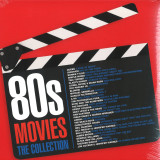
- A1: Queen - A Kind Of Magic (Highlander)
- A2: Survivor - Eye Of The Tiger (Rocky Iii)
- A3: Bonnie Tyler - Holding Out For A Hero (Footloose)
- A4: Simple Minds - Don't You (Forget About Me) (The Breakfast Club)
- A5: Tina Turner - We Don't Need Another Hero (Thunderdome) (Mad Max Beyond The Thunderdome)
- A6: Gladys Knight - Licence To Kill (Licence To Kill)
- A7: Lionel Richie & Diana Ross - Endless Love (Endless Love)
- B1: Ray Parker Jr. - Ghostbusters (Ghostbusters)
- B2: Blondie - Call Me (American Gigolo)
- B3: Michael Sembello - Maniac (Flashdance)
- B4: Harold Faltermeyer - Axle F (Beverly Hills Cop)
- B5: A-Ha - The Living Daylights (The Living Daylights)
- B6: The Psychedelic Furs - Pretty In Pink (Pretty In Pinkl
- B7: Echo & The Bunnymen - People Are Strange (The Lost Boys)
- B8: The Bangles - Hazy Shade Of Winter (Less Than Zero)
- C1: Kenny Loggins - Footloose (Footloose)
- C2: Huey Lewis & The News - The Power Of Love (Back To The Future)
- C3: Dan Hartman - I Can Dream About You (Streets Of Fire)
- C4: Philip Oakey & Giorgio Moroder - Together In Electric Dreams (Electric Dreams)
- C5: Limahl - Never Ending Story (The Never Ending Story)
- C6: The Beach Boys - Kokomo (Cocktail)
- C7: Christopher Cross - Arthur's Theme (Best That You Can Do) (Arthur)
- C8: Neil Diamond - Love On The Rocks (The Jazz Singer)
- D1: Bill Medley & Jennifer Warnes - (I've Had) The Time Of My Life (Dirty Dancing)
- D4: Deniece Williams - Let's Hear It For The Boy (Footloose)
- D5: Olivia Newton-John - Magic (Xanadu)
- D6: Stephen Bishop - It Might Be You (Tootsie)
- D7: Joe Cocker & Jennifer Warnes - Up Where We Belong (An Officer And A Gentleman)
- D2: Billy Ocean - When The Going Gets Tough, The Tough Get Going (The Jewel Of The Nile)
- D3: James Brown - Living In America (Rocky Iv)
30
"30 unforgettable hits from the decade that brought movie classics from The Breakfast Club to Back To The Future.
There was no greater era for movie soundtracks than the 80s! Featuring some of the most iconic and memorable soundtrack moments including the title track from Ghostbusters, ‘Holding Out for a Hero’ from Footloose, ‘I’ve Had The Time Of My Life’ from Dirty Dancing, ‘A Kind Of Magic’ from Highlander, ‘Eye Of The Tiger’ from Rocky III, Gladys Knight’s classic Bond theme from Licence To Kill plus many more. This epic double vinyl will have you reminiscing on those beloved 80s film classics and their amazing music."

A1 Dharma
Opening the LP in lively fashion, JLM liberally flecks a detailed composition with exquisite breaks cymbals playing a key role in the evolving patterns as the track progresses while heavy layers of synth work forms a substantial atmosphere. Musical and resonant with micro melodies and sprinkles of FX, Dharma encapsulates JLMs everimpressive attention to detail throughout its seven minutes.
A2 Artha
Where to start with Artha Setting the scene immediately with an epic synth intro that whooshes through your mind to prepare you for what is to come, its immediately obvious JLM has crafted a modern day classic here. Crisp Hot Pants breaks drop before we are treated to inspiring, continually developing and rousing melodies with a tuneful 808 bassline playfully dancing below. One to drop any chance you get Artha deserves to be heard.
B1 Moksha
Delightfully clear, characterful percussion introduces Moksha, a dancefloor friendly piece which rolls along beautifully thanks to old school breakbeats seizing the initiative while fluid keys, filtered synths and waves of serene effects punctuate the production. The
kick-light breaks will stay long in the memory as perfect for both the headphones and the discerning dance floor, just as weve come to expect from JLM.
B2 Kama
Taking you back to the early Progression Sessions era with a modern scifi twist reminiscent of your favourite space operatics, Kama will sit effortlessly alongside tracks from those days and now with its simple yet memorable core wind melody, sprawled
across energetic breakbeats and wide layers of synths & pads to a typically appropriate bassline. Another fine example of the evolving diversity in JLMs production with Spatial.
C1 Boundary
Switching things up, JLM treats us to a notably laid back vibe as Boundary is introduced by understated, filtered synth work and explorative kicks before a mellow yet chunky break pattern provides energy to the track. Detailed as ever, a myriad of effects and
samples are introduced and dance around the mix with a wistful complexity, in a track destined to be in your playlist for some time to come.
C2 Hexis
Kicking things off with a filtered DJ friendly beat intro, Hexis soon drops with constant old school jungle synth work and periodical strings alongside rasping, striking breakbeats that drive the track forward with impressive energy. The breaks reverberate in and out of the mix at intervals as JLM toys with the listener at will, creating a tonally unique and vibrant composition very much worthy of our attention.
D1 Ideal Forms
Low pass breaks echo and jostle for position with FX free counterparts early doors in the finely crafted intro to Ideal Forms, slowly developing with a triumphant assortment of keys and synths before a third layer of breaks are added which underpin a detailed, yet never busy, breakbeat landscape. Occasional breakdowns offer respite in a glistening wilderness of comforting melodies and light ambience.
D2 Physis
JLM rounds the album off very much on form with Physis a suitably climactic piece that opens with a detailed array of percussion, synths and effects before superbly programmed breaks take over the mix. An occasional, all encompassing sci fi synth rush
permeates the atmosphere to almost cinematic levels, while a melodic bassline nestles below leaving you with a track (and an album) you will not forget.
Words by Chris Hayes (Spatial / Red Mist)

how do we live in times when nothing seems safe, how do we listen to music when rockets and bullets make the air scream, how do we produce music when the building with our studio is simply no longer there?
over the last 2 years, AMAS and KONSTANTIN KOST have been trying to produce a techno EP across the borders of the war in ukraine. KONSTANTIN KOST was never able to leave ukraine for this, while we were able to move freely through europe.
this ambivalence is part of this album, it is part of every note and every line of the poems that can be heard here. we all associate techno with bass-heavy and dancing through the night, but ODESSA is more, it is a journey without being able to travel, an experience without being able to experience, an escape without being able to escape and a life without really being able to live ...
neither AMAS was able to travel to odessa during this time, nor KONSTANTIN KOST to europe, neither was able to experience the other personally. however, the exchange of music and lyrics has built up a relationship to a country at war, as well as to its people, musicians, women and children.
while we were dealing with our everyday problems in germany, the situation in ODESSA became increasingly confusing. the constant fear of being drafted and producing videos and images for the album at the same time were extremely ambivalent moments.
how do you deal with your counterpart in such moments and what do you say to someone in a situation that we can hardly imagine? we often talked about friends simply disappearing and corrupt officials and soldiers embezzling money and in the next sentence it was straight back to the vinyl production. these conversations were very rational and at the same time extremely surreal.
this EP is not meant to be a political EP, it is meant to be a human album and to take away the feeling of powerlessness from the people who were and are involved. this production and its music is a triumph over the destructive and dark side of war, it is meant to show that art is boundless and that people are connected all over the world even in the darkest times.
in the first track RED GLOW our guest TANYA (musician and djane from Odessa) stoically repeats the words LOVE and FEAR, followed by the words: “i meet you with red glow, in your eyes i quickly dissolve!” the track is part of everyday life, everywhere you meet this red glow and yet everything has to flow on and yet people still live and dance ...
in NIGHTCALL we walk through the streets and follow the call of darkness. the words “through the night” are used here repetitively like a percussion. but the highs and lows also give us hope and the belief that we will wake up again tomorrow and start a new day. in the dark there is always light, which must be preserved and found.
OLD KINGS is also the title of the poem we have written, based on the poem OZYMANDIAS by percy bysshe shelley. OLD KINGS determine our times and our political systems, seemingly unteachable old men hold the world in a stranglehold and it seems as if there are an infinite number of them. yet we continue to fight against these people, we cannot and do not want to do otherwise ...
in TALK TO GOD, KONSTANTIN KOST reads from the well-known ukrainian poem “a cloud floating behind the sun” by TARAS SHEVCHENKO, a famous ukrainian poet and writer. he is considered the founder of modern ukrainian literature and, in part, of the ukrainian language. it is about red fields, the fog and its darkness, as well as the sea and the calmness of the heart in nature, the longing for peace and peace with god.
in addition to poetry and music, all photographs and videos are original recordings by KONSTANTIN KOST of his city ODESSA. although we cannot visit each other, we still share strong visual impressions of a city that, in all its beauty and resilience, will hopefully soon be open to the world again. the cover is therefore also a picture of the port of odessa, a place where people and goods from all parts oft he world will soon be able to sail in and out again.

4
" In 2022, Guts brought together his musical family for his ‘Estrellas’ album. An ambitious project that brought together musicians from: Franc, Cuba and various African countries. For a journey that was as rich artistically as it was humanly. The list of superlatives was almost endless, "Formidable", "incredible", "unforgettable" and "magical" all thrown into the pot, during these magical moments in the Dakar studio. From the seventeen tracks heard on the original album, three have been entrusted to the expert and inventive hands of four producers, who have come up with new interpretations bringing Africa and the Caribbean together for a modern dancefloor.
‘Por Que Ou Ka Fe Sa’ (Poirier Remix)
From his studio in Montreal, Canadian Poirier has opted for a strong groove and relentless bass drum to keep out intruders, putting vocalists David Walters and Brenda Navarrete in a rhythmic cocoon. Accompanied in a slightly moody bassline that adds some driving muscle to the track. The hooky guitar line eventually gives way to the saxophone that emerges from the mix to parade around the front line. The original electric piano is replaced by a synth pad that loops and spins driving the track to its conclusion.
‘Por Que Ou Ka Fe Sa’ (David Walters Remix)
Before recording this track, David Walters and Brenda Navarette didn't even know each other. So in the magic of the moment that brought them together is a genuine and sincere artistic bond. It is no longer Guts but David who is at the musical helm, and before they too can savour the connection between the two artists, the dancers will have to pass through an overheated corridor where a Caribbean rhythm resonates with percussion. Digital and woodwind swirl and clash until the vocal encounter with the artists. It's a moment of respite that's as suspended as it is life-saving, because the exit is also via the famous corridor.
‘San Lazaro’ (Bosq Remix)
On Bosq’s mix, he’s opted to maintain things focused on the dancefloor, keeping the percussion persistent for the unleashed bodies of the dancers to smile. It's once again the walking bass line rises to the forefront of the groove, softening the shocks of the relentless kick drum. Roberto Valdes's timeless piano has disappeared, while guitars float and add to the atmosphere. The track is no longer awash in cigar smoke. Under Akemis's powerful vocals the low ceiling has disappeared, and the open roof is more a brass-lit spectacle. That doesn't make things any less overheated though, this one is sweaty until the end.
‘Medewui’ (Captain Planet Remix)
Captain Planet brings the dancer’s attention to the Afrobeat flavored jam that rocked the original, highlighting the Pat Kalla & Assane Mboup duet. Despite the track remaining mid tempo, laying back is no longer the order of the day as this mix really develops. The drums are more present jolting along with the organ in the first half. Once all the storytellers have taken their microphones, the rhythmic beats are doubled and the track is carried towards a frenzy of Afro-Latin dancing. Fired up by the brass and percussion, it’s this almost switch up that takes hold of the second part of the tune, with some righteous authority and relentless piano and trumpet."

8
Glasgow based Seated Records return with more 1980s Scottish Post-Punk / New Wave material. In this 8-track mini compilation the label introduces the work of Stirling band 22 Beaches, offering a deep dive into music recorded between 1980-1984 - the majority of which has never seen the light of day!
22 Beaches formed in Stirling in the late 1970s as an evolution of the short lived group ‘Alone at Last’ - drummer Fred Parson’s and guitarist Stephen Hunter being the two who spanned the divide. Out of the six members of 22 Beaches, many were school friends, and the rest naturally fell together. The band toured extensively and played at a truly diverse set of venues across the UK: from a local swimming pool boiler room, to small nightclubs and university parties, to several fundraisers for the miners strike. Maybe most notably of all, drummer Fred Parsons described playing at what he calls “the Grangemouth International”, organised by local promoter Brian Guthrie and which featured an all-star lineup of 22 Beaches, The Exploited and the first incarnation of The Cocteau Twins. A coach was hired to ship the audience to Grangemouth from Stirling, the cost of which was included in the ticket. The gig then paused halfway through for a 'help yourself' buffet. Young promoters take heed. This is how it's done!
Over the course of the 80s the band released music on three different, and now sought after, various artists compilation cassettes. “What Day Is It?” and “Sadie When She Died” were released on a compilation of local Stirling artists 'The A.N.K.L.E File'. The track from which the current record takes its namesake - “Dust” - was initially released on a compilation-tape for the fanzine 'Another Spark'. And ‘‘Zoo” (also featured on this record) was first released on Glasgow label Pleasantly Surprised via compilation, 'An Hour Of Eloquent Sounds', where 22 Beaches rubbed shoulders with early music from Scottish names Primal Scream, Cocteau Twins, The Wake and Sunset Gun. Unfortunately, 22 Beaches never met the same level of commercial success as these others and decided to retire the project in 1984 - leaving their recordings and demos to gather dust (hehe)…until now!
This compilation, “Dust: recordings 1980-1984” follows the band's journey and the changes in their sound over the years. It moves from the raw, punk energy of early DIY recordings through to the A Certain Ratio style Balearica of their later pieces. The record's opener and title track “Dust” is perhaps the most shining example of the latter. Characterised by the plenitude of sonic space in the mix, “Dust” has an almost dub sensibility that is communicated through centrality of Parsons’ drums, McChord’s percussion, and Fildes’ Bass while the harmonising vocals of Sharkey and McGregor chant over the top to give the track its distinctive psychedelic edge. This is an atmosphere only exacerbated by the lofi quality of the recording which sits the vocals in the same aural realm as much 1960s psych-folk. On “Cartoon Boy”, the band strips things down further. A droning bass line persists through the tape fuzz and is accompanied by the sounds of a sole looping guitar chord sequence and McGregor and Sharkey’s vocals - respectively and carefully dancing around one another before harmonising in the most beautiful way. The result is a haunting and abstract Marine Girls style heartbreaker. ‘That Girl’ again delivers a dub adjacent rhythm section similar to that of “Dust”. However, on this instance crisp guitar chords, a distant, phased organ and blue-eyed soul vocal delivery, produce a track that could easily have been a lost Orange Juice recording from their sessions with Dennis Bovel. On “Somebody Got It Wrong” and “One Of Us” the band employ a more macro approach where a jangling guitar with an almost highlife-influenced tone, vocal ad-libs and syncopated percussion give the music a Talking Heads-esque swagger.
Taken together these tracks illustrate a clear trajectory in the band's sound, moving from from the high energy no-wave quality of early recordings towards a more dub influenced, and stripped-back sound - a sonic trajectory followed by so many bands of the time, not least those emerging from the diaspora of Manchester’s Factory Records.
On “Breathing’’ we hear the beginning of this transition, with the strong influence of the oddball NYC disco styles of Was (Not Was) and ZE records. All of this is meshed together with the residual punk rock energy of 1980s UK. This combination is employed to excellent effect with the addition of the distinctly Scottish (and what the band confirmed to me to be spontaneous) vocal delivery of: “Do you love me? Do you want me?” “Aye!” “Do you love me? Do you need me?” “Naw!”.
On the record’s closing tracks, “Zoo” and “Talent Show”, we hear early examples of the band’s work, playing with their rawest all-in-one-take live energy where Hunter’s spiralling guitar riffs and McGregor's distorted vocal exclamations lead the charge. The band recalls that these initial-forays did not always translate so well into multitrack recording and overdubbing: “the deconstruction took away some of the band's natural feel”. On “Talent Show” the record ends with Sharkey delivering an almost unintelligible spoken word section over the top of the track, making for one final, disorientating, almost manic slice of post-punk.
These tracks from 1980-1984 chart the progress of a unique contribution to the world of Scottish Post-Punk and New Wave, encapsulating not only the musical trajectory of 22 Beaches but also echoing the broader sonic landscape of 1980s UK, a testament to the adaptability and creativity of the UK’s underground music of the time.

4
Long awaited new record YOIONWAXOO9 is finally here!
We've been preparing for it for a really long time.
But there's a reason for that.
First of all, meet a brand new kind of records in our series - printed vinyl! Let's tell you a secret, our distributor made it exclusively for YOI, for which we thank him for such support and faith in our art! Now the incredible artwork made by our boss Alexey Mikheev is even easier, more exciting and fun to watch! So YOI becomes the first and only dance music label who makes printed vinyl with animated artwork.
Secondly, of course, the whole situation in the world cannot go unnoticed, and we cannot and do not want to remain silent about it, because we are as always, as from the very beginning, for unity and art, creation and development, friendship and love, happiness and peace. So this record once again brings together artists from different countries: Mariche from Argentina, Italian Sbruf, label boss Watsche from Russia and Englishman Yogi P, and the artwork reflects our planet, which is spinning thanks to our dancing day and night everywhere where the best house music is played!
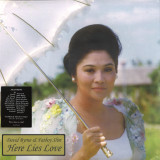
- A1: Here Lies Love Feat. Florence Welch (Florence & The Machine)
- A2: Every Drop Of Rain Feat. Candie Payne & St. Vincent
- A3: You'll Be Taken Care Of Feat. Tori Amos
- A4: The Rose Of Tacloban Eat. Martha Wainwright
- A5: A Perfect Hand Feat. Steve Earle
- B1: Eleven Days Feat Cyndi Lauper
- B2: When She Passed By Feat. Allison Moorer
- B3: Walk Like A Woman Feat. Charmaine Clamor
- B4: Don't You Agree? Feat. Róisín Murphy
- B5: Pretty Face Feat. Camille
- B6: Ladies In Blue Feat. Theresa Andersson
- C1: Dancing Together Feat Sharon Jones
- C2: How Are You? Feat. Nellie Mckay
- C3: Men Will Do Anything Feat. Alice Russell
- C4: The Whole Man Feat. Kate Pierson
- C5: Never So Big Feat. Sia
- C6: Please Don't Feat. Santi White
- D1: American Troglodyte
- D2: Solano Avenue Feat. Nicole Atkins
- D3: Order 1081 Feat. Natalie Merchant
- D4: Seven Years Feat. Shara Worden (My Brightest Diamond)
- D5: Why Don't You Love Me? Feat. Tori Amos & Cyndi Lauper
22
David Byrne & Fatboy Slim’s acclaimed 2010 album Here Lies Love receives its first-ever vinyl release to coincide with a new production opening on Broadway this summer. Here Lies Love is a double-disc song cycle – improbably poignant, decidedly surreal, surprisingly thought provoking – about the rise and fall of the Philippines' notorious Imelda Marcos. It was conceived by David Byrne; composed by Byrne and DJ/recording artist Fatboy Slim, AKA Norman Cook; and performed by a dream cast drawn from the worlds of indie rock, alt country, R&B and pop. Byrne's taste in collaborators is as imaginative as it is impeccable, including Cyndi Lauper (who recounts, to lighthearted disco beats, Imelda's courtship with Ferdinand Marcos), Steve Earle (as the power-hungry Ferdinand), Dap-Kings vocalist Sharon Jones (recalling Imelda's introduction into New York society) and Natalie Merchant (as spurned Imelda confidante Estrella, anticipating the onset of martial law). Along with vocals turns from such stars as Tori Amos and the B-52's Kate Pierson, Byrne works with rising indie rockers St. Vincent and My Brightest Diamond; New York chanteuses Nellie McKay and Martha Wainwright; and dance-music divas Róisín Murphy and Santigold. Byrne himself appears as the voice of imperialistic America on ‘American Troglodyte’, a send-up that wouldn't have seemed out of places in Talking Heads' True Stories.
Byrne originally envisioned this as a musical theatre piece, to be mounted in disco and nightclub settings, reflecting the globe-trotting Marcos' taste for such velvet-roped spots as Studio 54 and Regine's. In 2006, he performed work-in-progress versions to enthusiastic audiences at New York City's Carnegie Hall and the Adelaide Festival in Australia. While plans for a US theatrical production continued to evolve, he delivered this unique recording. The award-winning theatrical production eventually premiered at The Public Theater in New York in 2013, travelled to London’s National Theater for a sold-out run (2014–15), and was remounted at the Seattle Repertory Theater (2017).
Here Lies Love has an effervescent disco feel, redolent of Fatboy Slim's own dance-floor anthems, with warm undercurrents of the Latin rhythms that have percolated through Byrne's recent solo work. The sunny arrangements act in counterpoint to the reality of the Marcos' increasingly repressive regime, reflecting the imagined inner life of the glamour-obsessed Imelda. Explains Byrne, "For me, the darker side of the excesses are, for the most part, a matter of record. A lot of the audience is going to come with that knowledge already. What's more of a challenge is to get inside the head of the person who was behind all of that, and understand what made them tick." Byrne offers no judgment and avoids the obvious – there is no mention of Imelda's infamous shoe collection.
Many of Byrne's lyrics are, astonishingly enough, constructed from actual Imelda quotes, including the project's title, the words that Imelda, now returned to the Philippines from US-assisted exile in Hawaii, would like to have inscribed on her gravestone. In addition to his new liner note, Byrne illustrates the story with archival photos. In a detailed preface, he reveals what drew him to this subject and the bumpy route he took to launch the project and, ultimately, record this album. The booklet is indeed a page-turner, just as Here Lies Love is a wonderfully old-school album that rewards start-to-finish listening. Once again, Byrne – beloved as musician, thinker and bicyclist-about-town – reveals the breadth and singularity of his vision.
The new production of Here Lies Love will premiere at the Broadway Theatre in New York City. Performances begin June 17, ahead of an official opening night on July 20. Tony Award winner Alex Timbers (direction) and Olivier Award nominee Annie-B Parson (choreography) reunite with Byrne (concept, music, and lyrics) and Fatboy Slim (music) to bring Here Lies Love to Broadway, continuing a ten-plus year collaboration on the project. Tom Gandey and J Pardo contribute additional music. Here Lies Love is produced on Broadway by Hal Luftig, Patrick Catullo, Diana DiMenna for Plate Spinner Productions, Clint Ramos, and Jose Antonio Vargas. The staging at the Broadway Theatre will transform the venue’s traditional proscenium floor space into a dance club environment, where audiences will stand and move with the actors. A wide variety of standing and seating options will be available throughout the theatre’s reconstructed space. The producers of Here Lies Love said, “As a team of binational American producers – Filipinos among us – we are thrilled to bring Here Lies Love to Broadway! We welcome everyone to experience this singularly exuberant piece of theatre. The history of the Philippines is inseparable from the history of the United States, and as both evolve, we cannot think of a more appropriate time to stage this show. See you on the dance floor!”
David Byrne’s recent works include the launch of Reasons to be Cheerful, an online magazine focused on solutions-oriented stories about problems being solved all over the world (2019); Joan of Arc: Into the Fire, a theatrical exploration of the historical heroine that premiered at the Public Theater in New York (2017); The Institute Presents: NEUROSOCIETY, a series of interactive environments created in conjunction with PACE Arts + Technology that question human perception and bias (2016); Contemporary Color, an event inspired by the American folk tradition of color guard and performed at Brooklyn’s Barclays Center and Toronto’s Air Canada Centre (2015); Here Lies Love; Love This Giant, a studio album and worldwide tour created with St. Vincent (2012); and How Music Works, a book about the history, experience, and social aspects of music (2012).
Byrne curated Southbank Centre’s annual Meltdown festival in London in 2015. A co-founder of the group Talking Heads (1976–88), he has released eight studio albums as a solo artist and worked on multiple other projects, including collaborations with Brian Eno, Twyla Tharp, Robert Wilson, and Jonathan Demme, among others. He also founded the highly respected record label Luaka Bop. Recognition of Byrne’s various works include Obies, Drama Desk, Lortel, and Evening Standard awards for Here Lies Love; an Oscar, Grammy, and Golden Globe for the soundtrack to Bernardo Bertolucci’s The Last Emperor; and induction into the Rock and Roll Hall of Fame with Talking Heads. Byrne’s work as a visual artist has been published and exhibited since his college days, including photography, filmmaking, and writing. He lives in New York City. In addition to 2019’s cast album for American Utopia on Broadway, Nonesuch has released eight other David Byrne records since 2003, including 2018’s American Utopia studio album and two versions of his musical Here Lies Love.
q C6. Please Don't feat. Santi White Santigold

8
A new artist on the Citizen Records / Clivage Music roster, Vhinz is a musician based in Brussels. After taking his time to break onto the electronic scene, he’s now ready to share Belvédère, his debut, dreamlike album, confidently intense, sweeping between cinematic songs and soaring, epic electronic sounds.
Vincent Honca is Belgian, with Armenian roots and a love of keyboards: the mini synth he used to play as a child, the classical piano of his years of training at the Académie de Musique, the Yamaha synth of his teenage years... During the noughties of his adolescence, electronic music was omnipresent in his life as he listened to and admired Daft Punk, Moby, Vitalic, Air and The Chemical Brothers. He also went out dancing, a lot, in the nightclubs and parties of Brussels and the vicinity, and soon his love of computers, technology and synthesisers led to him producing his own music. “I wanted to create beautiful textures with synths,” he says. “I wanted to have fun and discover the possibilities. As part of the internet generation, I taught myself everything I know through reading magazines and checking the forums.”
Vincent went on to become a computer programmer and decided to make music in as much of his spare time as possible. His first productions came out in 2015, including “Drastical”, one of three deep house dancefloor-orientated tracks recorded with none other than Kris Menace. “At the time I was really searching for my musical identity,” explains Vincent, and progressively his music started to lean towards another of his passions – films and film music. “I’ve listened to soundtracks a lot since I was a teenager, and they’ve been a big influence, in particular the music for Heat by Elliot Goldenthal, Gladiator (Hans Zimmer), Saving Private Ryan (John Williams), The Last Temptation of Christ (Peter Gabriel), The Virgin Suicides (Air) and Leon (Eric Serra).” Coincidentally, Vincent has already worked on two independent Belgian films by director Christophe Karabache, UltravoKal and Vortex, both collaborations with Michel Duprez.
Now Vincent has chosen the name Vhinz, bringing together his expertise with machines and computers, his passion and enthusiasm for the electronic sounds of his adolescence and his adoration of cinema’s powerful, impactful soundtracks. Vhinz’s first track is thus called “Aether”, a track brimming with character and confidence, with sung-spoken vocals that sweeps the listener up in bewitching synthetic themes and drums like an off- kilter heartbeat. The track perfectly encapsulates the Vhinz sound, and Citizen Records – the only label he sent it to – immediately loved it and were ready to release a 12” with more. “Then Covid and the lockdown happened, and everything came to a complete halt,” remembers Vhinz. During those long two years without anything being released, the project continued its gestation and has now grown in a mini-album of eight coherent, fascinating tracks. “I really wanted a strong concept for everything, and so was born this album that I’ve called Belvédère. I imagined myself on a belvedere with a panoramic view of the world, channelling all the emotions it elicited in me into music.”
Belvédère is a dreamlike debut album, confidently intense, sweeping between cinematic songs and soaring, epic electronic sounds. It’s a place for Vhinz to showcase his dreams, talk, sing and invite others too: Margot Ferro sings on “Le Passage” and “Envole-moi”, and Michael Meers lends his vocals to “Evolution”. “My album tells a story, with the tracks in chronological order. There are both times of hope and darker periods of my life, with sadness and love,” meaning that listeners are invited to experience a suite of different emotions and be swept along by the author’s musical daydreams. Musically, the album falls somewhere between Moby, Vitalic, Air and Serge Gainsbourg, with a density and atmosphere that are completely Vhinz. “With Belvédère I was looking for beauty, but also something darker, dirtier, more organic. The album is the culmination of that.”

9
8 years almost to the day after releasing his unique re-interpretation album of his field recordings made in the late 90's in Tanzania, Kink Gong is back with another volume of bushmen madness. Here’s what Kink Gong aka Laurent Jean-neau has to say about his end of millennium trip:
‘’My experience in Tanzania is now over 20 years and most of the so called remix was started in Tanzania and left un-finished, then eventually retouched in Vienna, Paris, Shanghai, Kunming, Dali or Vientiane. 20 years later I searched my Tanzanian files and rediscovered unfinished tracks which are being now refreshed on this new record.
Back to the early days of the XXI century, when I lost my health trying to survive with the HADZAs, the last bushmen in northern Tanzania. In 1999 James Stephenson from NYC invited me to join his Hadzas friends. I would leave the bush to rest in a place with enough food and electricity and start to edit, loop and work on the original recordings, to trans-form them into organic abstract compositions, the only instrument I had recorded a lot with the Hadzas was the malimba and I bought different malimbas in Arusha to take back with me to Europe, I used either the original record-ings or me playing malimbas on some tracks and applied some electronic treatment to it, at that time I used Roland synths for some tracks.
The original recordings are related to scenes at night by the fire with the Hadzas, but also 3 different types of celebra-tions, Epeme Men was recorded on a moonless night with men and women singing and dancing in complete dark-ness in Mangola, an Hadza camp. Irawk Drum Under the Rain was recorded during daytime at a Multi ethnic gathering at the Franciscan Spanish catholic mission with a crowd dancing and singing under heavy rain while an IRAWK large (and wet) drum was being played, Northern Tanzania. Makonde Island was recorded in southern Tanzania at the boarder with Mozambique and is a pure scene of trance taking place on an island where the MAKONDE fishermen off the coast of Mtwara, get wild, hitting plastic containers for the sound, drunk and stoned men and women are hysterical-ly jumping and falling on each other, ending up with a few wounded.
Once again I'm responsible for this act of multicultural sabotage, but don’t forget that you can always listen to the origi-nal recordings on the Kink Gong recs collection. ‘’
Laurent Jeanneau, Berlin 2023

- A1: Bluey Theme Tune (Instrument Parade) (Instrument Parade)
- A2: Keepy Uppy
- A3: Here Come The Grannies!
- A4: A Message From The Fairies (John Ryan's Polka) (John Ryan's Polka)
- A5: Taxi
- A6: The Claw (Pachelbel's Canon) (Pachelbel's Canon)
- A7: Pool
- A8: Who Likes To Dance?
- A9: Bluey Theme Tune (Extended)
- B1: The Weekend
- B2: Wagon Ride
- B3: Camping
- B4: Fruit Bat
- B5: The Creek (Intro)
- B6: Creek Is Beautiful!
- B7: I Know A Place (The Creek Song) (The Creek Song)
- B8: Bluey Theme Tune
17
also available
Orange Vinyl[25,17 €]
Loved by parents and children for its heartfelt and funny portrayal of young family life and celebration of play, the season follows Bluey, a six-year-old Blue Heeler dog, who loves to play and turns everyday family life into extraordinary adventures that unfold in unpredictable and hilarious ways, bringing her family, friends and community into her world of fun.
Bluey ‘The Album’ was released in January 2021 in Australia and the US and was a phenomenal success reaching #1 in the Australian ARIA charts and #1 in the US Billboard Kids Album Charts.
The initial pressing of the vinyl exclusive to Australia Record Store Day 2021 sold out.
Now the chart topping album is available on vinyl globally for the first time. Pressed on 140g blue coloured vinyl, the album features 17 songs, all original compositions from Season 1. Housed in the original album artwork this release includes an A3 colour poster of the
family neighbourhood.
Highlights include music from fan favourite episodes such as ‘Keepy Uppy’, ‘Here Come The Grannies!’, ‘Pool’ and ‘The Creek’. Two versions of the catchy theme tune are included – as an
extended version and ‘Instrument Parade’.
Side A features upbeat songs to get the whole family dancing like ‘The Claw’ and ‘Taxi’. Side B takes a tranquil tone with highlights ‘I Know A Place (The Creek Song)’, vocals by Helena Czajka & Jazz D'Arcy, and ‘Camping’. This is the perfect album for Bluey fans of any age.

9
Angelo is an LP, named after a car, featuring nine songs Brijean have crafted and carried with them through a period of profound change, loss, and relocation. It finds percussionist/singer Brijean Murphy and multi-instrumentalist/producer Doug Stuart processing the impossible the only way they know how: through rhythm and movement. The months surrounding the acclaimed release of Feelings, their full-length Ghostly International debut in 2021 which celebrated tender self-reflection and new possibilities, rang bittersweet with the absence of touring and the sudden passing of Murphy’s father and both of Stuart’s parents. In a haze of heartache, the duo left the
Bay Area to be near family, resetting in four cities in under two years. Their to-go rig became their traveling studio and these tracks, along with Angelo, became their few constants. Whereas Feelings formed over collaborative jams with friends, Angelo’s sessions presented Murphy and Stuart a chance to record at their most intimate, “to get us out of our grief and into our bodies,” says Murphy. They explored new moods and styles, reaching for effervescent dance tempos and technicolor backdrops, vibrant hues in contrast to their more somber human experiences. Angelo beams with positivity and creative renewal — a resourceful, collective answer to “what happens now?”
Angelo the car is a 1981 Toyota Celica they got off Craigslist during their first stint in Los Angeles, where Murphy and Stuart have since settled. “Such a bro-y, ‘80s dude car, it’s been super fun to drive around in a new town,” Murphy says. “He’s older than us, he’s a classic, he’s got a story.” It is a spiritual vehicle with a cinematic appeal, first dropping them off in an alleyway for the scene-setting intro, “Which Way To The Club.” The question is quickly resolved by “Take A Trip” as a cruising bassline mingles with crowd sounds, hand-claps, cuíca hiccups, whip-cracks, even a horse neigh. Brijean have found some club on this cross-dimensional trip — the kind of
imagined space or chamber within one’s self capable of “shifting a fraction of who you are,” says Murphy. They wrote the track with the simple intention to be “as free as we could be,” adds Stuart, likening the flip on the B section to a realm unlocked: ”What if the world changed completely? You open the door to a new room.”
Next is “Shy Guy,” a motivational anthem for the wallflowers among us. Murphy sets up the daydream: “We are in junior high, we’re on the dance floor, what’s going down, who is dancing, who is not, how are we gonna make them dance?” The narrator, the MC, hypes up the room as conga-driven rhythms bounce between languid synth and guitar lines. “Show me how to move...I feel something...I know you feel it too,” Murphy sings sweetly, calling back to the opening lines of Feelings, and this time the audience chants it back. It is easy to picture Brijean performing this one — something they only got to do a handful of times until more recently, opening shows for Khruangbin and Washed Out, an experience they found informative. Murphy explains, “It was inspiring to be out there and let loose more. To see how people can expand their expression on stage gave me more liberty with how I viewed my musicianship. My role for so long was to be a backup percussionist, so why would I ever leave the drums, you know? But then after playing all these runs, you see these artists and realize you can, you have permission.”
“Angelo” and “Ooo La La” deliver the danciest stretch in Brijean’s catalog to date. The title track adopts a deep house pulse replete with strings, hi-hats, and kicks. The latter opts for a funkier groove that foregoes verses in favor of warbled hums and extended breakdowns. What follows is perhaps the duo’s dreamiest run, a comedown initiated with the honey-hued interlude “Colors” drifting into “Where Do We Go?”, a tropicália reverie where Murphy contemplates the passage of time and space.
It all culminates in “Caldwell’s Way,” a fond farewell to their Bay Area community — “a part of my life that I knew couldn’t come back,” says Murphy. Above shimmering organ sounds, lush strings, and the birdcall of their former neighborhood, she wistfully articulates the uncertainty of moving on by remembering the characters dear to them. There’s the wisdom of their neighbor, Santos, who refused payment when helping them move out: “I’d rather have 100 friends than 100 dollars.” And the song’s namesake, Benjamin Caldwell Brown, a friend and club night cohort for many years. “I’m only miles away, maybe I’m just feeling lonely,” the line resigns to warm nostalgia, and “Nostalgia” runs the closing credits to this healing and transportive collection.

12
Welcome to Dazion’s Grooveboxxx – a maxi-sized love letter to The Hague’s 80s and 90s club scene crafted with minimal tools and loaded with vibe. It’s no coincidence it arrives on Dekmantel, a label with its own roots in the same Dutch city’s electronic music culture.
Dazion is The Hague’s Cris Kuhlen, previously spotted releasing on Second Circle, Safe Trip and Animals Dancing. He cut his teeth clubbing and working at long-since closed clubs like Eau, described in Kuhlen’s own words as, “clubs with blocks to dance on, lazers, decorations, crazy extravert sic parties.”
In capturing the spirit of Eau and the other formative parties of his youth, Kuhlen limited himself to just one machine to make his longest work to date – the Roland MC-303 Groovebox. While these entry level units from the mid-90s had stripped down functionality in the wider spectrum of studio gear, they contained all the iconic Roland sounds in a Rompler style, giving the user access to everything necessary to make raw, immediate club tracks without requiring an entire studio’s worth of hardware.
The brash gear of choice set the tone for a record of rough, ready and playful jams which end up more sophisticated than you’d expect from such limited means. ‘La DS’ jacks with a freaky, bleep techno intensity, while ‘Kimberly & Nance Backstage Rehearsal’ rides an angular groove tooled to inspire the weirdest dance moves of the night. Every track is named in reference to a particular nightspot, a hazy memory or moment from Kuhlen’s formative raving years.
This is the sound of Dazion having the time of his life. You might well hear a nod to the odd rock totem being given a re-version in irreverent new beat style or some gnarly US acid breaks vibes riding underneath helium rap licks. But for all the cheekiness, the tracks stand up both as nods to halcyon days and relevant workouts for the sweatiest parties in the here and now. As MC Paul T says in dramatic style heralding the intro of Grooveboxxx, “This movement will live on forever.”

Roadmap through the night!
On side A our travel starts with a driving track, find out for yourself where your travel leads you. The atmosphere is full of energy, that calls out for serious dancing! The second track is a classic track that goes in the direction of Acid. We love Acid – the whole night long!
On side B TCCM proves that robots can be funky! Shaped by the late 70s and Disco-Funk, a totally new corpus has been created. That’s what we expect from TCCM – always something different. The last track of this EP points towards dawn. It’s time to wrap up, to turn night into day and to relax before Afterhours starts again!
“Computer Controlled Minds” show a braid spectrum of electronic beats and an incredibly fantastic roadmap through the night, from dancefloor to dancefloor with different styles!
Yet another solid gold modern reimagining of the mighty Loleatta Holloway, this time her infamous 1977 smash 'Hit & Run' goes under the knife and is tweaked to devastating effect by 2 of Chicago's finest modern day editors - Jamie 326 & Cratebug. Anyone with even a passing interest in Disco or House will be more than familiar with these 2 guys names. Having edited and remixed numerous cuts in their own original ways, they take this all-time Salsoul classic and strip it right back to the essence, to the very basics, and in the process create a total dancefloor weapon. This edit originally came out a few years ago (2013) on a compilation that showcased the new wave of contemporary talent emanating from the Windy City and naturally it was one of the cuts that stood out, finding favour with a wide variety of DJ's across the board from Motor City Drum Ensemble, Todd Terry, Jeremy Underground Paris, Theo Parrish and more. Drawing comparisons with Paperclip People's anthemic 'Throw' from 1994 in the way it snatches a killer loop from 'Hit & Run's' bassline, 'Hit It & Quit It' is a monster, a record you'll literally play over and over and over again, a relentless Disco juggernaut that oozes power. It made perfect sense for this legit single-sided reissue 12" to come out on Salsoul Records, the home of Loleatta Holloway's finest material and all of her classics. This limited reissue has been made in conjunction with Jamie 3:26 & Cratebug and Salsoul Records, 100% sanctioned and lovingly re-presented for your dancing pleasure. This one is HOT. Sleep at your peril!

- A1: Ali Ou Hayani
- A2: Ana Sahraoui
- A3: Nihayat Hob
- A4: Angham Chaabia
- A5: Dikrayat
- A6: Alach Yayouni
- B1: Layali Fass
- B2: Lobna
- B3: Tanger L'été
- B4: Taksim Abdou
- B5: Hanan
- B6: Interlude
Abdou El Omari was born in 1945 in Tafraout, south of Agadir -- a village suspended between the pink granite peaks of the Anti-Atlas and the waves of the Atlantic. A landscape already musical in itself. He grew up in the dry mountain light, surrounded by the rhythms of nature and Berber's culture. Very little is known about the man -- a veil of mystery still surrounds his life, only deepening the fascination. In the 1970s, as Morocco was transforming, Abdou El Omari shaped a sound of his own -- a visionary blend of spiritual jazz, psychedelic funk, Moroccan traditions, and early electronic experimentation. Today, his work is resurfacing, rediscovered by a new generation of listeners in search of lost horizons. This record stands among its rarest and most precious fragments. At twenty-two, he founded his first group, Les Fugitifs, which gained him local fame. Soon after, he released records and cassettes on labels such as Cléopâtre, Hassania, Boussiphone, Hilali, and his own, Al Awtar, while performing on RTM (national radio and television). He also composed for artists like Naima Samih, Laila Ghofran, and Aicha El Waad. In 1976, through the label Gam, he released his only vinyl album, Nuits d'été -- a record that would become cult decades later, reissued in 2017 by Radio Martiko. In the 1980s, his music grew quieter, more secret. He tried to recover his old tapes from the studios he had recorded in, but gradually withdrew from the scene and returned to hairdressing. A pioneer of musical fusion, he opened paths that would remain unexplored for years. He passed away in 2010, never witnessing the rediscovery of his music by diggers, bloggers, and collectors online. One day, his close friend and poet Aziz Essamadi, rescued a cardboard box from the trash -- a box containing Abdou El Omari's personal archives. It was later entrusted to Casablanca based collector Ahmed Khalil, founder of the label Dikraphone. Inside were treasures preserved by chance: demos, rehearsals, private recordings, unseen photographs -- and a stunning, almost forgotten cassette. Here, El Omari sounds bolder than ever, exploring territories where pop, cosmic disco, electric blues, and Moroccan tradition merge without boundaries. Armed with his ARP Odyssey synthesizer, hypnotic grooves, and the celestial layers of his Farfisa, he expanded the dialogue between deep roots and electronic exploration. This album is the continuation of a vision -- a music of the Moroccan future: rooted, but reaching for the unknown. Colorful, magnetic and timeless, here is music for dancing as much as for dreaming.

- A1: Paul Kalkbrenner - No Goodbye
- A2: Water World - Give Me Love
- B1: Panoramic - Colors
- B2: Natasha Bedingfield - Pocketful Of Sunshine (Stonebridge Club Remix)
- C1: Y-Traxx - Mystery Land (Fred Baker Vs Mr Sam's Magical Mystery Dub Mix)
- C2: Weiss - Feel My Needs
- D1: The Killers - Mr. Brightside (Jacques Lu Cont's Thin White Duke Mix)
- D2: Sia - Drink To Get Drunk (Different Gear Remix)
8
Since 2020, 12 Inch Lovers have been releasing new samplers every year, eagerly anticipated by collectors. These samplers have now become a staple and are easily added to vinyl collections across Europe. They offer timeless classics and rare tracks that are often hard to find elsewhere.
With Samplers 11 & 12, they surprise again with a mix of modern classics and tracks that have never been released on vinyl or are difficult to find. By adding unique and exclusive tracks, the 12 Inch Lovers samplers remain innovative and high-quality. They are a must-have for DJs, collectors, and fans of contemporary classics!
SAMPLER 11
A1) Paul Kalkbrenner - No Goodbye (2019)
Berlin techno producer Paul Kalkbrenner became world-famous with his 2008 hit Sky & Sand. Since then, he has released one record after another and performed all over the world in the biggest venues and at the most renowned festivals. No Goodbye is one of his more recent hits, released in the summer of 2019.
The track was created using an a cappella he received on a demo tape while on tour. He was immediately inspired by the vocal and built his own sound and production around it. Interestingly, Kalkbrenner rarely uses vocals, but for No Goodbye he collaborated with Australian singer Chiara Hunter, giving the track a unique and instantly recognisable character. The result is a stylish, dance-floor-friendly track with a rolling house groove that quickly became a modern classic on dance floors worldwide.
A2) Water World - Give Me Love (2000)
This trance classic by Water World appeared in 2000 on the French label Adequat Records and is the perfect tune for a sunny summer evening. Warm melodies and pulsing beats instantly create that beach feeling, as if you were dancing with your feet in the sand. The record recalls Beachball by Nalin & Kane, sharing the same dreamy, sun-drenched vibe.
Behind Water World were producers Laurent David and Frédéric De Backer-names well known to many trance fans. In the nineties De Backer was active with projects such as Global Trance Mission (Dream Mission) and Y-Traxx, the trio that released the 1997 classic Mystery Land.
Give Me Love clearly bears their combined signature: euphoric, warm and melodic, with a timeless build that perfectly balances emotion and energy. The track was released on vinyl as part of Trance E.P. Vol. 01 and remains a fixture in retro-trance sets to this day.
B1) Panoramic - Colors (1996)
Colors by Panoramic is a Belgian trance classic released in 1996 on the legendary label XTC Records, a sub-label of Bonzai Records. Panoramic was a collaboration between Belgian techno icon Marco Bailey and Mauro Mirisola. The duo, also known under playful aliases such as The Coke Man & Sniff, released an EP featuring two powerful trance tracks.
We chose Colors, a tune with pure Belgian trance DNA: driving rhythm, dreamy synths and a catchy female vocal. The combination of Bailey's production expertise and Mirisola's creative touch resulted in a timeless track that still appears in many classic playlists.
B2) Natasha Bedingfield - Pocketful Of Sunshine (StoneBridge Club Remix) (2008)
British singer-songwriter Natasha Bedingfield released the album Pocketful of Sunshine in 2008, featuring the title track as a single. The original pop version became a major hit in North America, reaching the Top 5 in the US. Swedish DJ and producer StoneBridge (Sten Hallström) reworked the song into a groovy house version, released in the summer of 2008.
StoneBridge gave the upbeat pop tune a club-ready beat and an infectious piano riff that made it shine on dance floors worldwide. It was not his first time transforming pop into house gold-he had already achieved global fame with his remix of Robin S - Show Me Love (1992), one of the greatest house anthems of all time. He also remixed Sia - The Girl You Lost to Cocaine in 2008, another club favourite.
The StoneBridge Club Remix of Pocketful of Sunshine appeared on a special remix EP in July 2008 and was played endlessly in clubs-by us too, in the venues where we performed. The result is a timeless, sun-soaked house classic thatmakes sitting still impossible.
C1) Y-Traxx - Mystery Land (Fred Baker vs Mr Sam's Magical Mystery Dub Mix) (original release 1995)
Y-Traxx was a nineties trance project by DJs Laurent David and Fred Baker. This trance classic first appeared in 1995 as a B-side but gained real attention when it featured on a Paul Oakenfold mix album. Thanks to that success it received an official re-release in 1998 on the respected French label FFRR (Full Frequency Range Recordings).
In 2003 an excellent remix by Mr. Sam & Fred Baker followed on the Nebula label. That version is highly sought after on vinyl by trance collectors, and we are proud to feature it on our new sampler.
C2) Weiss - Feel My Needs (2018)
Feel My Needs by British producer Weiss (alias Richard Dinsdale) is the tune with that unmistakable old-school piano and catchy vocal that instantly pulls you onto the dance floor. Released in May 2018on the UK label Toolroom Records, the track is pure feel-good house with a modern touch. From the very first piano riff, hands go up in the air.
Toolroom even called it a "future anthem" for the summer of 2018, and indeed Feel My Needs became a huge floor-filler. The record charted high on global dance lists and gained massive popularity at festivals and clubs that year. With its warm piano chords, tight beat and soulful vocal, this is a modern house classic that will stay in the collective club memory for a long time.
D1) The Killers - Mr. Brightside (Jacques Lu Cont's Thin White Duke Mix) (2005)
American band The Killers formed in 2001 and scored a massive hit a few years later with Mr Brightside. Taken from their debut album Hot Fuss (2004), it became their biggest and best-known track-a true rock-pop anthem.
In 2005 the song was given an electronic twist when renowned producer and remixer Jacques Lu Cont (the alias of Stuart Price) created an eight-minute dance version titled Mr Brightside (Jacques Lu Cont's Thin White Duke Mix). This remix replaced the raw rock energy with a more progressive and electronic vibe, driven by a steady beat and long build-up.
The track found a second life in club culture and quickly became a dance-floor favourite. For vinyl collectors it was an instant must-have, and to this day it stands as the perfect party closer. The Killers themselves loved it so much that they often used the remix live as an outro, followed by the original version. A remix that perfectly bridged rock and club culture-and has since become a genuine classic.
D2) Sia - Drink To Get Drunk (Different Gear Remix) (2001)
The legendary ice-cube sleeve says it all: Drink to Get Drunk was a huge club hit in the early 2000s. Released in 2001 on the UK label INCredible, a sub-label of Sony Music, it was a collaboration between British DJ duo DifferentGear (Gino Scaletti & Quinn Whalley) and singer Sia.
The producers took Sia's original song Drink to Get Drunk from her album Healing Is Difficult and gave it a complete transformation, keeping her distinctive vocal and placing it over a hypnotic progressive-house groove.
The combination of Sia's unmistakable voice and the deep, driving production hit hard: the track became hugely popular in Belgian clubs and turned into an anthem of its time. In Belgium it even reached number one in the dance chart in early 2001, and it also performed strongly in the UK and the Netherlands.
To this day it remains a nostalgic crowd-pleaser that perfectly captures the atmosphere of the early 2000s.

- A1: Condition Red - The Goodees
- A2: Go Away - The Murmaids (Of ’66)
- A3: Where Is The Boy Tonight - The Charmaines
- A4: One Way Street - Beverly Williams
- A5: What Did You Do Last Night - The Drake Sisters
- A6: Forget Where I Live - The Half-Sisters
- A7: He Told Me He Loved Me - Miss Cathy Brasher
- B1: Don’t Let Him Hurt You - Les Chansonettes
- B2: He’s A Lover - Tutti Hill
- B3: Anything Worth Having (Is Well Worth Waitin’ For) - Joan Moody
- B4: I’ll Come Running Over - 2 Of Clubs
- B5: Hey Boy - The D.c. Blossoms
- B6: Wild Side - Denita James
- B7: Eddie My Love - The Sweethearts
From Ace Records’ early days, there’s always been a place in our hearts for music’s feminine side. A year having flown by since the release of our last compilation spotlighting the US girl group sound of the 60s – think castanets, anguished teen sirens, Svengali-esque producers and mini-sonatas about dreaming, dancing and moody boyfriends (sometimes deceased) – means the time has come for a new vinyl-only volume.
As 1968 drew to a close, the golden age of girl groups had seemingly been and gone: the Shangri-Las, Ronettes and Chiffons, for example, hadn’t had a hit record of note since 1966. Then along came ‘Condition Red’, a cleverly produced psychodrama performed by the Goodees, who grace the front cover and open the top side of this new comp in dramatic style. Over on the generally more soulful second side, Les Chansonettes are first up with ‘Don’t Let Him Hurt You’, a big production stomper written with Martha & the Vandellas in mind.
Elsewhere, Beverly Williams performs the very Lesley Gore-like ‘One Way Street’; ‘Go Away’ by the Murmaids (of ’66) is a lavishly produced number with a chamber pop vibe; ‘What Did You Do Last Night’ by the Drake Sisters was recorded in Phase-O-Phonic Sound; the lyrics of Denita James’ ‘Wild Side’ call to mind genre classics such as ‘He’s A Rebel’, ‘Out In The Streets’ and ‘Chico’s Girl’; and the Sweathearts close the show with a gorgeous harmony-filled update of the mid-50s oldie ‘Eddie My Love’. As usual in this series, the inner sleeve features a picture-packed 4,000-word track commentary by long-serving compiler Mick Patrick.

- A1: Robert Pico - Le Chien Fidèle
- A2: Annie Girardot - La Femme Faux Cils
- A3: Spauv Georges - Je Suis L'état
- A4: Zoé - Zoé
- A5: Jacques Da Sylva - Fou
- A6: Valentin - Je Suis Un Vagabond
- A7: Jacques Malia - Histoire De Gitan
- A8: Bernard Jamet - Raison Legale
- B1: Jean-Pierre Lebort - Barbara Au Chapeau Rose
- B2: Les Concentrés - Fils De Dégénérés
- B3: Les Missiles - Publicité
- B4: Hegessipe - Le Credi D'hegessipe
- B5: Marechalement Votre - Ethero Disco
- B6: Mamlouk - Decollez Les
- B7: Mozaique - L'amour Nu
- B8: Jean-Marc Garrigues - Je Dis Non
- B9: Penuel - Astronef 328
17
The journey through French-speaking pop archives continues with this fifth volume, packed with fuzz, gimmicks, and dissent. Far from the charts, the selected tracks display a great creative freedom, often backed by corrosive humor. Welcome to the surprising, kaleidoscopic, and colorful world of the late sixties and early seventies, Wizzz!
Born in Montauban, Robert Pico stumbled into music by chance when he met René Vaneste, then artistic director at Pathé-Marconi. René brought him to Paris to record his first 45 RPM EP in 1964. A year later, Pierre Perret introduced him to Vogue, where he recorded his second album with Claude Nougaro’s orchestra. Sylvie Vartan then introduced him to RCA, where he recorded four singles, including the astonishing "Chien Fidèle," a track backed by a hair-rising fuzz guitar. Alongside his solo career, he also composed for other artists like Alain Delon (the song was recorded but remains unreleased), Magali Noël, Bourvil, and Georges Guétary. In the Paris of the sixties, he mingled with Mireille Darc, Elsa Martinelli, Marie Laforêt, France Gall, Françoise Hardy, Petula Clark, Régine, Dani, Serge Gainsbourg, Joe Dassin, Franck Fernandel, Charles Level, and Roland Vincent. Despite his efforts and winning a Grand Prix Sacem for his final record, Robert Pico didn’t achieve the expected success in show business and decided to leave Paris and return to the Southwest, where he devoted himself to writing. He is the author of 23 books (including Delon et Compagnie, Jean-Marc Savary Editions 2025, a memoir about his youth and his many encounters). Today, he is relieved to never have become a celebrity and devotes himself to his work with passion.
In 1969, the Franco-Italian movie Erotissimo was released, directed by Gérard Pirès (who later directed Taxi in 1998, written and produced by Luc Besson). This pop comedy features Annie Girardot, Jean Yanne, Francis Blanche, Serge Gainsbourg, Nicole Croisille, Jacques Martin, and Patrick Topaloff. The soundtrack was written by Michel Polnareff and William Sheller, with lyrics by Jean-Lou Dabadie. "La Femme Faux-cils," performed by Annie Girardot. It recounts the feelings of a rich CEO's wife who seeks to develop her sex appeal under the influence of advertisement and magazines. Groovy, sparkling and light, this track, with ITS lush arrangements humorously critiques consumer society and feminine beauty standards.
“Je suis l’Etat” (1967) is the flagship track of the first EP by singer-songwriter Spauv Georges, aka Georges Larriaga, better known as Jim Larriaga (1941-2022). Born into a family of bakers, the young man was initially planning to become a hairdresser when he discovered English-speaking music through Elvis Presley and the Beatles. After this revelation, he decided he would become a songwriter and gave himself five years to succeed. He recorded his first two EP’s independently for RCA under the pseudonym Spauv Georges; meaning “that poor George”, a nickname given to him by the mother of her friend Jean-Pierre Prévotat (future drummer of the Players, Triangle, or Johnny Hallyday). Portraying a depressed and eccentric young man, Spauv Georges created corrosive and amusing songs that didn’t reach a wide audience, despite a TV appearance with Jean-Christophe Averty.
Supported by his loyal friend and fellow songwriter Jean-Max Rivière, Georges Larriaga met the future singer Carlos in the early '70s, then Sylvie Vartan’s assistant. He wrote songs for Carlos, including the popular "La vie est belle," "Y’a des indiens partout," and "La cantine", which went onto become a huge hit in 1972. He also composed for Claude François (“Anne-Marie”, 1971), Charlotte Julian (“Fleur de province”, 1972), helped launch child singer Roméo (who sold 4 million records), and later wrote the hit "Pas besoin d’éducation sexuelle" (1975) for the young Julie Bataille. In 1971, Jim recorded an album for Disc'Az: “L’univers étrange et fou de Jim Larriaga”, which featured pop gems like “La maison de mon père”.
The story of the song "Zoé" began when Pierre Dorsay, artistic director at Vogue Records, asked Swiss singer and musician Pierre Alain to write a song for a new female singer. The inspiration came when he realized that Zoé (the artist's name) was also the name of France's first atomic battery, created in 1948, which consisted of uranium oxide immersed in heavy water! The lyrics reflect a bubbling energy that must be handled with caution, while the instrumentation echoes this atomic theme, notably with the use of a theremin.
Zoé’s career lasted only as long as a single 45 RPM, but it seems Christine Fontane was the vocalist behind this pseudonym, who is known for several EPs, a good "popcorn" album in 1964, and a handful of children’s singles in the '70s. Regardless, the photograph on the cover is of a different girl entirely.
Later, Pierre Alain continued his career, writing songs for himself, Marie Laforêt, Danièle Licari, Alice Dona, Arlette Zola (3rd place in Eurovision 1982), and achieving multiple gold and platinum records in Canada. Also an inventor with several patents, president of the Romande Academy, and head of the French Alliance in Geneva, he now composes atonal music, books, and poetry. Moreover, he is also the host of "Les Mardis de Pierre Alain" at "Le P'tit Music'Hohl" in Geneva.
Filled with oriental choruses and fuzz guitar, "Fou" is from Jacques Da Sylva's only EP released by Vogue in 1967. Despite the quality of this recording, all traces of this singer disappear after this first effort.
Valentin is a baroque pop singer born in Belgium. He is the songwriter and composer of most of the tracks on his three singles released in the late 60s in Canada. A legend says that he reincarnated himself as Jacky Valentin during the 1970s for a rock'n'roll revival career in Belgium, but his older brother sadly debunked this story. Valentin's first two singles were arranged by Claude Rogen, a Parisian session pianist who had come to Canada to promote the song “Mister A Gogo”, a cover of David Bowie’s “Laughing Gnome”, adapted by singer Delphine, his wife at the time. Far from his usual network, Claude Rogen arranged music for Polydor, including the arrangements for “Je suis un vagabond” in 1969, a jerk tune with string arrangements and a furious optimism.
Jacques Malia wrote, composed, and recorded his only 45 EP for Festival in 1966. “Histoire de gitan” is an incredible beat track with bohemian scat that tells the story of a gypsy musician who came to Paris to make it in the Music-Hall, to no avail. The hero of the song and its author probably shared a similar fate, as Jacques Malia faded into anonymity after this remarkable attempt.
Bernard Jamet recorded two EPs for Barclay in the late sixties and co-wrote several songs with Christine Pilzer, Pascal Danel, and prolific songwriters Michel Delancray and Mya Simile. The track “Raison Légale” (1968), his masterpiece, immerses the listener in a courtroom right when a murderer is being judged, with jerk rhythm and free arrangements. A unique, paranoid, judicial, and psychedelic oddity.
Jean-Pierre Lebrot-Millers started his career in show business in 1967 as a singer and songwriter for the Philips label. After three singles, he wrote several songs of a new kind with his friend Pierre Halioche, in the midst of the sexual liberation movement and the democratization of drugs. With provocative lyrics, “Les filles du hasard” and “Barbara au Chapeau Rose” were released on a Philips singles in 1968. The character of Barbara was inspired by a queen of Parisian nightlife during the psychedelic years: model Charlotte Martin, who dated Eric Clapton from 1965 to 1968, then Jimmy Page from 1970 to 1983. Jean-Claude Petit’s arrangements, with a table-filled intro, soul brass, and Hendrixian guitar, emphasize the flamboyance of a hedonistic and sexy character, whose dog is named Junkie because “Junkie est un nom exquis”! The track was recorded live in three takes with a full orchestra.
Upon its release, the record was censored by Europe 1 and RTL due to its references to drug use. Jean-Pierre Lebrot was then banned from the airwaves and later dismissed by his record label. He changed his artist name to Jean-Pierre Millers, while his companion Pierre Halioche became D. Dolby for a new dreamy composition, “Chilla”, which Jean-Pierre produced himself with arrangements by Jean Musy. Once again, the song was immediately censored everywhere. After this setback, he decided to stop singing and started taking on odd jobs to support his Swedish wife and their son until the day he met Jean-Pierre Martin, then production manager at Decca, who had worked with Manu Dibango. Martin offered Jean-Pierre Lebrot-Millers, then employed at Rank Xerox, the position of artistic director at Decca. He accepted and became, a year later, promotion director (radio, press, TV). He worked on Julio Iglesias’s first album for Decca, which became a massive hit and allowed him to meet Claude Carrère. The latter asked him to write new songs and find their performers, much like a “talent scout.” It’s through him that Jean-Pierre discovered Julie Pietri and Corinne Hermès. He composed “Ma Pompadour” for Ringo, Sheila’s husband, and took the microphone again for the syncope hit “Rendez-Vous” in 1982.
That same year, Jean-Pierre Lebrot-Millers tried to release a track for which he had heavily gone into debt: “Si la vie est un cadeau”. Having recorded it in London, he presented it to numerous professionals, all of whom refused to get involved. The same thing happened with Antenne 2 and the Sacem when he proposed the song as France’s entry for Eurovision. He then met Haïm Saban, who was producing cartoon soundtracks and had just launched the Goldorak theme song. Saban, having listened to the song, declared it had the potential to become a hit. He sent Jean-Pierre and Corinne Hermès to meet the CEO of the Luxembourg radio and television network. The latter received them, asked to hear a verse and chorus a cappella in his office, and immediately hired them to represent Luxembourg at Eurovision 1983. They reworked the arrangements and recorded a new version with Haïm Saban as co-producer. The song ended up winning Eurovision 1983, a great comeback for our hero. He continued producing and hung out with the band Nacash in Belgium when a couple came to introduce their daughter for an impromptu audition in a hotel room. The girl sang “Les démons de minuit” while dancing to a radio cassette. Impressed, he had her take singing lessons for a year and composed a song for her (for which he had the melody and title, but no lyrics). This required him to go on the hunt for a lyricist, who ended up being Guy Carlier. They recorded the song, which was initially a ballad, at Bernard Estardy’s CBE studio, and gave the singer a new name: Melody. They showed the song around their industry network without success. Later, Estardy called Jean-Pierre to suggest changing the rhythm and making it pop-rock. Orlando, Dalida’s brother, liked the result and decided to co-produce the track. “Y’a pas que les grands qui rêvent » became a classic hit. The song has since been covered by Juliette Armanet (as a ballad, like the original) and Valentina.
Born into an aristocratic Breton family, Hervé Mettais-Cartier worked as a DJ at Queen Kiss, a nightclub in Poitiers, where he formed the band Les Concentrés with Michel (an actor) and Christian (a radio technician). Together, they created a repertoire of whimsical songs (“Ma bique est morte”, “J’suis un salaud”, “Fils de dégénéré”...) that they performed on stage dressed in white (in homage to “concentrated milk”). They performed at Bliboquet and Olympia in 1968 for the 10th edition of the “Relais de la chanson Française” organized by L’Humanité-Dimanche and Nous les Garçons et les Filles, sponsored by Pepsi Cola. Winners in the author-composer category, alongside Danish singer Dorte, their visibility allowed them to record a 45, and appear on television in Jean-Christophe Averty’s show. The A-side of the disc features Bruno le ravageur, a casatchok dedicated to Bruno Caquatrix, the director of Olympia, nicknamed in the song “Coq Atroce” or “croque-actrices”. The B-side is dedicated to “Fils de dégénéré”, a quirky tribute to Hervé's aristocratic roots, mixing absurdity with sophisticated vocal harmonies.
After Les Concentrés, Hervé Mettais-Cartier formed the duo La Paire et sa Bêtise with his friend Olivier Robert. They performed in Parisian cabarets and toured with Pierre Vassiliu. In the late 1970s, Hervé began a solo career. He recorded two albums for the Motors label in 1978 and 1979, which did not achieve their anticipated success due to lack of promotion. In 1980, he met Bernadette, with whom he started a family and created a “Chansons à voir” (songs to see) show that he performed until his death at the end of 2024.
Publicité comes from the final EP by the Missiles (Ducretet Thomson, 1966), a disc that also includes “La (nouvelle) guerre de cent ans”, featured on Volume 4 of our Wizzz! series. Please refer to the booklet for the story of the band.
“He’s 1.82 meters tall, 28 years old, weighs 135 kg, is black and Belgian”: this is the description of singer Hegesippe on the back of his sole single (Decca, 1967). He appears on the album cover wearing a Greek toga, like a hippie gag – we are at the end of the year 1967. In “Le crédo d’Hegesippe”, this former bodyguard of Antoine and the Charlots plays the delightful card of the thick brute converted to Flower-Power and non-violence, with arrangements by Jean-Daniel Mercier, aka Paul Mille.
“Ethéro-disco” was released on a promotional record for clients of the Maréchal company (Liège, Belgium) for the New Year 1979. Over a funky rhythm, celebrity impersonations (Brigitte Bardot, Jacques Dutronc, Fernandel…) deliver an enigmatic text about pharmaceutical products like ether, bismuth, and aspartate. The track was composed by Dan Sarravah (responsible for Joanna's “Hold-up inusité” featured on Wizzz! Volume 3) and Tony Talado, who was also a singer (one 45 in 1967), songwriter (with over a dozen credits between 1964 and 1985 in various styles from surf music to disco), author (Devenez Végétarien, Dricot Editions, 1985), ad designer, and psychologist.
Décollez-les is on the A-side of Mamlouk's only single, a pseudonym for Marsel Hurten, who is known for his work on several EPs in the late sixties, as well as composing music for Hervé Vilard’s “Capri, c’est fini”, Claude Channes' “La Haine”, Annie Philippe’s “On m’a toujours dit”, and Nancy Holloway’s “Panne de Cœur”.
This strange song, with Afrobeat horns and absurd dialogues between a chef and his kitchen staff, is the result of a collaboration between Marsel Hurten and one of his neighbors, a photographer from Pavillon-sous-Bois (93), where the musician settled after returning from the Algerian War. A music video was shot to promote the record.
Marsel Hurten was born in Tourcoing (59) into a musical family. At a young age, he joined the brass band founded by his grandfather, playing the piston before studying trumpet at the conservatory, as well as teaching himself how to play the guitar. As an orchestra musician, he toured in France, Belgium, Germany, and England. He released a series of solo 45’s between 1965 and 1968 for the DMF and Az labels before stopping recording to focus on working for other artists (Gilles Olivier, Noëlle Cordier…).
“L’amour nu” (Vogue, 1971) is the work of the short-lived Belgian band Mozaïque. The track, written by singer Jacques Albin, closely resembles another of his compositions, “Carré Blanc”, which he recorded in 1969 for Disc’AZ.
Represented by the Lumi Son micro-label based in Marignane (Côte d'Azur), Jean-Marc Garrigues released two 45 RPMs in the late sixties, defending the French jerk sound. The song “Je dis Non” is a short, joyful ode to youth, pop music, and rebellion.
Songwriter and performer Jacques Penuel released three singles. The first one, “Astronef 328” (Fontana, 1969), features a dizzying series of chords punctuated by sound effects, a sci-fi story, and arrangements by Jean-Claude Vannier.
We would like to sincerely thank Pierre Alain, Moon Blaha, Marsel Hurten, Bastien Larriaga, Jean-Pierre Lebrot-Millers, Bernadette Mettais-Cartier, Robert Pico, Olivier Robert, Claude Rogen, Micky Segura.

6
Back when the first white labels started floating through the hands of German, British, American and Canadian DJs in late ’84, nobody was ready for what was coming. The official drop hit in early ’85 and the scene was never the same again. This was the moment Mike Mareen broke through the static. Yeah, he’d been working with Chris Evans-Ironside since the ’70s but nothing hinted that together they’d channel something this futuristic. “Dancing In The Dark” sounded like it had slipped through a wormhole: melancholic, hypnotic vocals wrapped in vocoder haze, riding an arrangement so razor-sharp it made most releases of the era feel prehistoric. It didn’t need the pop charts… It owned the clubs. And the clubs listened.
London. Berlin. Madrid. Rome. Paris. Lisbon. Amsterdam. Athens. Toronto. NYC. Tokyo. Mexico City.
One drop of that electro bassline and DJs were hooked. Crowds were hooked. The whole underground was hooked. Soon Europe’s radio charts caved under its pressure, and the track crossed borders on mixtapes, becoming a cult anthem behind the Iron Curtain. It was everywhere, even where it technically wasn’t allowed to be.
Fast-forward four decades and the spell hasn’t faded. “Dancing In The Dark” still shows up in indie dance, italo wave, house and deep house sets. Producers keep re-editing it like it’s sacred material. It’s one of those tracks that DJs treasure, a timeless weapon, one of the top three defining singles of Mareen’s entire career.
And now for the 40th anniversary of its official release, Vintage Pleasure Boutique and Night’n Day Records drop the vinyl every collector and selector has been waiting for: a special reissue loaded with four brand-new remixes spanning the full spectrum of today’s underground indie/disco/italo/house energy.
Tallac – the American Berlin dweller – dives deep into the hypnotic soul of the original, pulling out its buried deep-house DNA and carving out a spacious, emotional roller.
Luksek, Italian producer & DJ, goes raw and dirty: loop-driven, gritty, underground, hypnotic, the kind of edit that eats dancefloors alive.
Flemming Dalum, the Danish Italo grandmaster, finally gets to remix the track he’d always dreamed of touching and of course it’s pure Flemingish electro-italo magic.
And the Polish sparkle: A.P. Mono delivers a shimmering mix of italo disco, glitterbox groove, disco glamour and synthwave glow, all while keeping the spirit of Mareen’s original heartbeat intact.
The wax also features two historical heavy-hitters: the 1985 Jens Lissat’s team remix and Luis Rodriguez’s original arrangement, essential cuts in the Mareen universe.
This release isn’t nostalgia. It’s a resurrection. A celebration. A reminder. “Dancing In The Dark” didn’t survive 40 years by accident, it survived because it still moves bodies, breaks hearts and lights up floors in ways modern tracks can only wish for.
If you’re an indie, italo, wave, house or disco DJ… This record isn’t just worth owning… It’s mandatory.
4
Shadows Lifted from Invisible Hands is an autobiographical record, comprised of four songs that Hoff refers to as ambient media. Each track is composed from sources drawn from his own involuntary aural landscape, specifically musical earworms and tinnitus frequencies.
Neither sound nor a daydream, the earworm (or stuck song) emblematizes music as a commercial form—immediate, ubiquitous, and persistent. Likewise, tinnitus is inaudible and unscrupulous, manifesting across a spectrum of frequencies at will. The cognitive swirling of these phenomena provides an ambivalent, internal soundtrack that scores a person’s movement through the world.
Those suffering from tinnitus or those who have grown accustomed to the “Tinnitus Effect” in movies will likely recognize the buzzing pitches on the record, but will likely not recognize the songs. Distorted and distilled, Shadows Lifted from Invisible Hands features altered versions of four commercial pop songs: Blondie’s “Heart of Glass,” David Bowie’s “Space Oddity,” Madonna’s “Into the Groove,” and Lou Reed’s “Perfect Day.”
Having been haunted by these songs on and off for years, Hoff tweaks the tracks, transposing and recomposing them for orchestral instrumentation. Speaking back to these involuntary echoes, these tracks go to great lengths to obfuscate their sources; to be sure not to simply re-introduce each earworm, as though they were samples. Otherwise, what’s the point? No one needs another stream.
Besides, earworms are not music, although we perceive them as such. They are non-cochlear and exist as an affective force that is neither subjective nor objective, which is to say they are an invasive—and alien—phenomenon. Like tinnitus, they are aggravated by economic, social, and environmental forces as well as emotional states, mental health, and aging. Hoff doesn’t underplay his own struggles with mental health in discussing the record—noting a long history of depression and its acuteness over the last few years, which serve as the backdrop to the composition of this record.
Scratch any pop song hard enough and you’ll find sadness underneath it. Subdermal, the songs on this record evoke a type of ephemeral weariness and despair. By recasting the original songs through their shadowy doubles, Hoff provides a window into the dark core of pop music. At the center of which lies capitalism’s desperate attempt to replicate itself through a cheap high built on echoing refrains. Just below the surface the listener finds a hangover of shadows dancing through the mind.

12
Saint Etienne kündigen mit 'International' ihr 13. und zugleich letztes Studioalbum an, das am 5. September 2025 bei Heavenly Recordings erscheint. Nach 35 Jahren Bandgeschichte, unzähligen Stilwechseln und Projekten jenseits der Musik ziehen Sarah Cracknell, Bob Stanley und Pete Wiggs damit einen Schlussstrich unter ihr gemeinsames Schaffen im Studio. International ist ein stilistisch vielseitiges Album, das von langjährigen Weggefährten, Heldinnen und Freundinnen mitgestaltet wurde – darunter Confidence Man, Vince Clarke, Erol Alkan, Paul Hartnoll (Orbital) und Nick Heyward. Die Songs spiegeln sowohl den nostalgischen Rückblick als auch die ungebrochene kreative Neugier der Band wider. Mit dem bewegenden Abschlusstrack Last Time verabschiedet sich das Trio endgültig von seinen Fans – aufrichtig, wehmütig und voller Wärme.

8
Straight out of the local mud of the city of Antwerp comes dancing this next Souvenirs from Imaginary Cities slab of free-flowing bits of electronic wonder : Schönen Abend by Simon B. Just in time to ease you out of this endless winter and right into springtime. Like the previous hit by Purple Uncle, this flower takes some time to bloom and fill up your head and body with it's ear wormy fragrance.
It's hazy and cinematic, makes you think of Italian electronic pioneers and their library magic, Patrick Cowley's School Daze and Haruomi Hosono in some kind of gothic manner. It's quite stripped and lush at the same time, rhythms like minimal mechanics make you fly above the river and land just outside reality. It's a nice place where soft jazz tingles right around the dark corner, and that particular mix of exotica and melancholia — the trademark of this port city's best electronic auteurs is definitely in the air. The river still shines, but she’s deeply poisoned. The old town has lost every bit of fresh air but keeps on digging for old gold. This bitter pill is served with delicacy and lightness, the wound is dressed up seductively — feet in the mud, head in the air. Stuff is sensuous, with quiet places reminding of the good side of those times when the big wheel stopped turning ever so madly. A strange quietness whistles through the leaves. Some things take time to unfold. In or out of C.
Four years in the making, this is the solo debut LP of Simon B, a longtime contributor to Antwerp's improvised music scene (Groovecats Deluxe, Wij Blij Trio ). Primarily a double bass player, he also has a deep-felt passion for offbeat electronica and the rainbowy side of American minimalism, which takes front here. The smoky voice on the last track belongs to Nina-Joy Thielemans, Nina-Joy is part of Particals, a trio working with live electronics and field recordings, releasing an lp on Ultra Eczema later this year. Furthermore, you can hear the tenor and soprano saxophone of Adia Van Heerentals on 4 tracks, deepening out Simon's naturally flowing compositions and playing around with his melodies. You may know her from Bodem and her strong presence in the Belgian jazz scene lately.
Simon's electroacoustic experiments — using a clarinet and some outboard effects — were important tools in finding the very specific colour of this record. There's this airy character, like wind blowing through old layers of bricks and over the river, anchored with a deep sense of bass, gathering ages of dust and memories in these eight elegantly wobbling tracks, forming a perfect whole that’s really coming together in one deep listening from A to Z.
The centrepiece is perhaps Come to Me, instrumental and reprise with vocals, but no fillers on this one. Every part of the mystery is needed to come to its end and back again. It's a record that works in the morning, to open up a day and in the quiet corners of the night, with it's sleazy quirkiness, smiling towards you from the right corner of the eye. A perfect compagnon for your long-form wandering habits, light reflections on a wet surface obsessions, coffee slurping in the morning and the forgotten art of beachcombing. Quite essential these days, witnessing a world going apeshit.

10
Moving freely through time and space via experimental DIY recordings since 2009, Joasihno return with their fourth album "Spots".
“Find your spot in the shade,” a truly laid-back and incredibly soft-spoken MC once advised, yet in a world that seems to get shadier every day, it’s probably time to finally get out and face the sun. Southern German experimental pop duo Joasihno – initial solo founder Cico Beck (The Notwist, Aloa Input, Spirit Fest) and drummer/composer Nico Sierig (Instrument, Fehler Kuti) – seem to know exactly when it’s time to shine. Idiosyncratic genre tweakers since day one, they have been operating at their own pace, mostly staying in their own shady corner. Yet, almost a decade after their most recent “Meshes” (an album that came with a whole legion of tiny music robots), it’s high time for them to take over more corners, to reclaim even more spots between lo-fi and sci-fi, retro electronica and contemporary classic. Drawing upon influences as varied as Reich, Riley, and Ryuichi, múm, Meek, and Moondog, while also nodding to other experimental twosomes (e.g. The Books), the duo’s fourth full-length “Spots” is set to arrive via Alien Transistor in late 2025.
Leaving soulless automation and all things artificial to others, Joasihno launch the latest record on “2 Squares” that feel like a peaceful, almost bucolic version of retro space age: lights blink ever so softly as easy-going bass tones point at today’s introspective flight arc. Electronic shapes align and things lift off – with a majestic 8-bit sunrise soon appearing right in front of us. Whereas playful title song “Spots” is a miniature Rube Goldberg kind of device, with quirky plucked strings and glitches setting off more and more contraption layers, “Crackleboom” is uncharted energy, an open landscape, an expanding bonfire that leads to a long-forgotten piano, all dust-covered in some kind of saloon. Space might be only noise to others, here, it’s foreboding screeches (“Dizzle Whistle”) that make room for A-side center piece “Forest Lights”: a steady beat that lures us to a clearance in the woods. Things break and shatter in the distance, but this spot right here is for hypnosis, dancing, sylvan spirits. And yeah, it’s surprisingly hot down here in the undergrowth…
Opening side B with a fun banger that takes the unhinged dancing to the playground – “Characa Orb.” feels like French kids on swings going crazy, a tipsy, tongue-in-cheek electro blow-out between Oizo and Orbis Tertius –, things get even more cinematic throughout the second half. Even the cheapest, lo-fiest gear is sufficient to make “The Slow Hour” glow like true, timeless pop royalty. In fact, the very same pop spirits roam and celebrate freely in the chirpy coves of mesmerizing “Detune Lagoon” – more hand-crafted sci-fi/lo-fi loops you’ll only find after facing the ghosts of Lynch or Sakamoto on those night-time trails under the “Deep Moon”. It’s all DIY spots, spots that leave room to dream or dangle, drape yourself over or dive into. Returning to the leafy bower on a melancholy post rock tip, we eventually learn that “Death Is Real” – and so we’re left with a laterna magica that turns and turns and turns. It’s a beautiful spot where light and shadows keep on dancing, just like they’ve always done, ever since the dawn of this madcap universe.
