Ostinato as resistance: Rafael Anton Irisarri’s landmark work reimagined. Marking the tenth anniversary of the American composer’s critically acclaimed album 'A Fragile Geography', this new edition arrives renewed, both sonically and visually.
First released in 2015 (Room40) during a period of personal upheaval and creative reinvention, it endures as a testament to resilience, transformation, and the connection we hold with the places that shape us.
Written in the aftermath of a devastating theft, A Fragile Geography was born out of loss. Just days before a cross-country move to New York, Irisarri’s entire Seattle-based studio was wiped out. Instruments. Recordings. Archives. Gone without a trace. He arrived on the East Coast to an empty room and the daunting task of starting over.
“This album wasn’t just a record; it was a lifeline,” Irisarri reflects. “It became a way to process the emotional chaos that followed: uprooting, instability, and ultimately, the slow, intuitive rebuilding of a life.”
Composed and recorded in the rural woods of the Hudson Valley, the album took shape in seclusion, surrounded by nature, and through a process guided by improvisation. Embracing limitations, Irisarri wove textural layers of field recordings with half-remembered melodies from his Seattle years, piecing them together like fragments of memory. Tracks like “Displacement,” “Hiatus,” and “Persistence” juxtaposed haunting stillness with restless momentum, mapping an inner terrain of grief, catharsis, and rebirth.
Among its defining sounds is “Empire Systems,” a monumental centerpiece built around a simple four-chord progression, organ textures, and guitar drones. Gradually, the track expands into layers of immersive loops and thick, enveloping distortion that wash over the listener like a rolling wave. Often cited as the album’s most majestic passage, it captures Irisarri at his most sonically ambitious. With a harmonically saturated structure crafted from restraint and repetition, it remains one of his most recognizable compositions: an exercise in the art of maximal minimalism.
From the outset, “Reprisal” received praise from BBC’s Mary Anne Hobbs, who championed the track on her radio show. Her support played a key role in introducing Irisarri’s work to wider audiences and solidifying his place within the lineage of electronic, drone, and experimental sound artists. A slow-burning elegy, the piece emerges from a haze of distortion and sub-bass, with dense, unrelenting drones carrying a sense of mounting tension. Just as it seems to collapse under its own weight, flickers of guitar emerge like distant light through fog. It’s a meditation on dissonance, resolve, and the elusive possibility of release.
The closing track, “Secretly Wishing for Rain,” is steeped in saudade: a longing for Seattle’s dour grey skies, lush green landscapes, and desaturated sunsets. Through it, Irisarri mourns a vanished chapter of life bound to the city, a time documented in scattered mementos and cherished collections, now permanently gone. A reflection on what could never be recovered: an era lost to time. Julia Kent’s looped cello motifs added a melancholic warmth to the track, marking the first collaboration between the two artists and sparking a musical dialogue that would keep growing in the years that followed.
More than a career highlight, A Fragile Geography has laid the foundation for Black Knoll studio, which Irisarri rebuilt from the ground up. The studio has since grown into a creative hub for countless projects, with Irisarri engineering records for iconic music figures like Terry Riley, Ryuichi Sakamoto, William Basinski, MONO, Devendra Banhart, Grouper, Emeralds, Steve Hauschildt, Julianna Barwick, and many others. Carried by its lasting influence, the album has quietly captured the ear of a younger generation, its sound and emotional arc finding new listeners in unexpected corners.
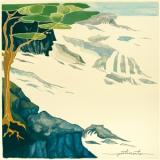
The album’s new visual language was reimagined in collaboration with Mexico City–based designer Daniel Castrejón. Irisarri captured ghostly images at Gaztelugatxeko Doniene, a historic coastal site in Bermeo, Euskal Herria. Castrejón then treated the photographs with distressed textures and spectral overlays. The final artwork channels the rugged, elemental forces that shaped both the music and Irisarri’s aesthetic, renewing his ties to ancestral ground inspired by the Basque homeland of his bloodline.
Mastered by Stephan Mathieu with exceptional attention to detail, this anniversary edition uncovers every nuance in the sound design, enhancing clarity and presence. With each listen, new elements emerge, inviting discovery and reconnection.
“I don’t experience this album as a document of grief anymore,” says Irisarri. “I hear adaptation and I'm reminded that when everything falls apart, something meaningful, maybe even beautiful, can emerge.”
Suche:daniel la ro
Ostinato as resistance: Rafael Anton Irisarri’s landmark work reimagined. Marking the tenth anniversary of the American composer’s critically acclaimed album 'A Fragile Geography', this new edition arrives renewed, both sonically and visually.
First released in 2015 (Room40) during a period of personal upheaval and creative reinvention, it endures as a testament to resilience, transformation, and the connection we hold with the places that shape us.
Written in the aftermath of a devastating theft, A Fragile Geography was born out of loss. Just days before a cross-country move to New York, Irisarri’s entire Seattle-based studio was wiped out. Instruments. Recordings. Archives. Gone without a trace. He arrived on the East Coast to an empty room and the daunting task of starting over.
“This album wasn’t just a record; it was a lifeline,” Irisarri reflects. “It became a way to process the emotional chaos that followed: uprooting, instability, and ultimately, the slow, intuitive rebuilding of a life.”
Composed and recorded in the rural woods of the Hudson Valley, the album took shape in seclusion, surrounded by nature, and through a process guided by improvisation. Embracing limitations, Irisarri wove textural layers of field recordings with half-remembered melodies from his Seattle years, piecing them together like fragments of memory. Tracks like “Displacement,” “Hiatus,” and “Persistence” juxtaposed haunting stillness with restless momentum, mapping an inner terrain of grief, catharsis, and rebirth.
Among its defining sounds is “Empire Systems,” a monumental centerpiece built around a simple four-chord progression, organ textures, and guitar drones. Gradually, the track expands into layers of immersive loops and thick, enveloping distortion that wash over the listener like a rolling wave. Often cited as the album’s most majestic passage, it captures Irisarri at his most sonically ambitious. With a harmonically saturated structure crafted from restraint and repetition, it remains one of his most recognizable compositions: an exercise in the art of maximal minimalism.
From the outset, “Reprisal” received praise from BBC’s Mary Anne Hobbs, who championed the track on her radio show. Her support played a key role in introducing Irisarri’s work to wider audiences and solidifying his place within the lineage of electronic, drone, and experimental sound artists. A slow-burning elegy, the piece emerges from a haze of distortion and sub-bass, with dense, unrelenting drones carrying a sense of mounting tension. Just as it seems to collapse under its own weight, flickers of guitar emerge like distant light through fog. It’s a meditation on dissonance, resolve, and the elusive possibility of release.
The closing track, “Secretly Wishing for Rain,” is steeped in saudade: a longing for Seattle’s dour grey skies, lush green landscapes, and desaturated sunsets. Through it, Irisarri mourns a vanished chapter of life bound to the city, a time documented in scattered mementos and cherished collections, now permanently gone. A reflection on what could never be recovered: an era lost to time. Julia Kent’s looped cello motifs added a melancholic warmth to the track, marking the first collaboration between the two artists and sparking a musical dialogue that would keep growing in the years that followed.
More than a career highlight, A Fragile Geography has laid the foundation for Black Knoll studio, which Irisarri rebuilt from the ground up. The studio has since grown into a creative hub for countless projects, with Irisarri engineering records for iconic music figures like Terry Riley, Ryuichi Sakamoto, William Basinski, MONO, Devendra Banhart, Grouper, Emeralds, Steve Hauschildt, Julianna Barwick, and many others. Carried by its lasting influence, the album has quietly captured the ear of a younger generation, its sound and emotional arc finding new listeners in unexpected corners.
The album’s new visual language was reimagined in collaboration with Mexico City–based designer Daniel Castrejón. Irisarri captured ghostly images at Gaztelugatxeko Doniene, a historic coastal site in Bermeo, Euskal Herria. Castrejón then treated the photographs with distressed textures and spectral overlays. The final artwork channels the rugged, elemental forces that shaped both the music and Irisarri’s aesthetic, renewing his ties to ancestral ground inspired by the Basque homeland of his bloodline.
Mastered by Stephan Mathieu with exceptional attention to detail, this anniversary edition uncovers every nuance in the sound design, enhancing clarity and presence. With each listen, new elements emerge, inviting discovery and reconnection.
“I don’t experience this album as a document of grief anymore,” says Irisarri. “I hear adaptation and I'm reminded that when everything falls apart, something meaningful, maybe even beautiful, can emerge.”

Vor nun mittlerweile zehn Jahren kehrte Sarah Connor zurück aus ihrer fünfjährigen Pause, in der sie sich
ihrer Familie und sich selbst widmete, und brach mit ihrem Comeback-Album „Muttersprache“ alle ihrer,
bis dahin aufgestellten Rekorde. Das Album stieg sofort nach Release auf Platz 1 der deutschen Album
Charts ein und hielt sich in diesen über unglaubliche 149 Wochen.
„Muttersprache“ macht seinem Namen alle Ehre und ist das erste deutschsprachige Album der vielfach
preisgekrönten Ikone der Deutschen Popmusik. Dabei geholfen, ihren einzigartigen Soul-Pop auch im
Deutschen strahlen zu lassen, haben die Deutschpop-Legenden Peter Plate, Leo Sommer und Daniel Faust
von Rosenstolz. Trotz weniger deutscher musikalischer Vorbilder schaffte sie es so ihre eigene Sprache zu
finden und ein Album voller emotionaler, bedeutsamer Texte und Songs zu kreieren.
Zum 10. Geburtstag erscheint das Erfolgs-Albums jetzt optisch aufgewertet auf einer Doppel-Vinyl. Als
besonderer Eyecatcher ist auf der D-Seite der Platte das Cover Motiv des „Muttersprache“-Albums eingraviert. Ein besonderer Hingucker und ein absolutes Must-Haves für alle Fans!
Daniel Monaco Band is an international group led by Italian bassist Daniele Labbate. Blending jazz, funk, house and disco with live energy, their debut EP ‘Get Naked and Fly’ captures years of collaboration and experimentation. The result is a warm, analog-driven sound crafted by seasoned session musicians who’ve toured the world and are now channeling their creativity into original music as a group.
Lead track ‘Love Ago’ delivers modern disco with the authenticity of the golden era, ‘Mimouna’ has a psychedelic edge, with the WHODAMMANY remix taking the original into a more electronic direction. ‘The Devil Left Dancing’ takes a subtly off centre path, nodding to Brazilian influences, while the title track ‘Get Naked and Fly’ is raw and instinctive blending live instrumentation with electronic sensibilities.
The project is a testament to what happens when musicians trust each other enough to explore freely without chasing perfection. A live band speaking house, funk and jazz with one voice — analogue, soulful, and free.
Personnel : Percussion by Yannick Van Ter Beek, Drums by Robin van Rijn, Sax by Alessandro Russo, Guitar by Simone Cesarini and Bass by Daniele Labbate.
Designed by Bradley Pinkerton.
Ostinato as resistance: Rafael Anton Irisarri’s landmark work reimagined. Marking the tenth anniversary of the American composer’s critically acclaimed album 'A Fragile Geography', this new edition arrives renewed, both sonically and visually.
First released in 2015 (Room40) during a period of personal upheaval and creative reinvention, it endures as a testament to resilience, transformation, and the connection we hold with the places that shape us.
Written in the aftermath of a devastating theft, A Fragile Geography was born out of loss. Just days before a cross-country move to New York, Irisarri’s entire Seattle-based studio was wiped out. Instruments. Recordings. Archives. Gone without a trace. He arrived on the East Coast to an empty room and the daunting task of starting over.
“This album wasn’t just a record; it was a lifeline,” Irisarri reflects. “It became a way to process the emotional chaos that followed: uprooting, instability, and ultimately, the slow, intuitive rebuilding of a life.”
Composed and recorded in the rural woods of the Hudson Valley, the album took shape in seclusion, surrounded by nature, and through a process guided by improvisation. Embracing limitations, Irisarri wove textural layers of field recordings with half-remembered melodies from his Seattle years, piecing them together like fragments of memory. Tracks like “Displacement,” “Hiatus,” and “Persistence” juxtaposed haunting stillness with restless momentum, mapping an inner terrain of grief, catharsis, and rebirth.
Among its defining sounds is “Empire Systems,” a monumental centerpiece built around a simple four-chord progression, organ textures, and guitar drones. Gradually, the track expands into layers of immersive loops and thick, enveloping distortion that wash over the listener like a rolling wave. Often cited as the album’s most majestic passage, it captures Irisarri at his most sonically ambitious. With a harmonically saturated structure crafted from restraint and repetition, it remains one of his most recognizable compositions: an exercise in the art of maximal minimalism.
From the outset, “Reprisal” received praise from BBC’s Mary Anne Hobbs, who championed the track on her radio show. Her support played a key role in introducing Irisarri’s work to wider audiences and solidifying his place within the lineage of electronic, drone, and experimental sound artists. A slow-burning elegy, the piece emerges from a haze of distortion and sub-bass, with dense, unrelenting drones carrying a sense of mounting tension. Just as it seems to collapse under its own weight, flickers of guitar emerge like distant light through fog. It’s a meditation on dissonance, resolve, and the elusive possibility of release.
The closing track, “Secretly Wishing for Rain,” is steeped in saudade: a longing for Seattle’s dour grey skies, lush green landscapes, and desaturated sunsets. Through it, Irisarri mourns a vanished chapter of life bound to the city, a time documented in scattered mementos and cherished collections, now permanently gone. A reflection on what could never be recovered: an era lost to time. Julia Kent’s looped cello motifs added a melancholic warmth to the track, marking the first collaboration between the two artists and sparking a musical dialogue that would keep growing in the years that followed.
More than a career highlight, A Fragile Geography has laid the foundation for Black Knoll studio, which Irisarri rebuilt from the ground up. The studio has since grown into a creative hub for countless projects, with Irisarri engineering records for iconic music figures like Terry Riley, Ryuichi Sakamoto, William Basinski, MONO, Devendra Banhart, Grouper, Emeralds, Steve Hauschildt, Julianna Barwick, and many others. Carried by its lasting influence, the album has quietly captured the ear of a younger generation, its sound and emotional arc finding new listeners in unexpected corners.
The album’s new visual language was reimagined in collaboration with Mexico City–based designer Daniel Castrejón. Irisarri captured ghostly images at Gaztelugatxeko Doniene, a historic coastal site in Bermeo, Euskal Herria. Castrejón then treated the photographs with distressed textures and spectral overlays. The final artwork channels the rugged, elemental forces that shaped both the music and Irisarri’s aesthetic, renewing his ties to ancestral ground inspired by the Basque homeland of his bloodline.
Mastered by Stephan Mathieu with exceptional attention to detail, this anniversary edition uncovers every nuance in the sound design, enhancing clarity and presence. With each listen, new elements emerge, inviting discovery and reconnection.
“I don’t experience this album as a document of grief anymore,” says Irisarri. “I hear adaptation and I'm reminded that when everything falls apart, something meaningful, maybe even beautiful, can emerge.”
- Winter Breaking
- Abstract Spring
- Downhill
- Vision In The Verse
- In The Summer The Streets Burned
- Idiom
- Fruits Of My Tending
- Forbidden Kiss
- The Canvas
- Lucentum
- Wake You Well
- Triumph Of The Heart
- September Song
pen·ti·men·to - eine sichtbare Spur früherer Malerei unter einer oder mehreren Farbschichten auf einer Leinwand - frühes 20. Jahrhundert: aus dem Italienischen, wörtlich "Reue". Auf ihrem ersten Album seit "Still Life" (2022) bewegt sich Carson McHone an der Grenze ihrer musikalischen Vorstellungskraft und kanalisiert so unterschiedliche und überraschende Einflüsse wie Gitarrenrock, pastoralen Folk, Poesie, Feldaufnahmen, visuelle Kunst, Erinnerung, Familie und Landschaft zu ihrem bisher tiefgründigsten Werk. "Pentimento" ist ein kühnes und lohnendes Album. Es ist auch eine Abrechnung: Wie können Liebe und Schönheit in der Gegenwart von Brutalität existieren? Beunruhigend. Dissonant. Gegen ihren Schatten und mit ihre Spuren. Das ist es, was McHone und ihre Mitstreiter (zu denen Daniel Romano, Steve Lambke von den Constantines und andere gehören) auf "Pentimento" mit der Subtilität von Aquarellmalerei und dem Reichtum von Versen einfangen, mit Geisterstimmen und Kinderstimmen gleichermaßen. Jede Schicht ist ein Universum für sich und offenbart den Puls, der Carson McHones kreativen Antrieb belebt. Hier arrangiert und als Ganzes ausgedrückt, ist es ein Meisterwerk. "Alle Lieder von Pentimento entstanden als Gedichte vor dem Hintergrund globaler Krisen, nationaler Grenzen, ziviler Unruhen, Geburt, Tod, schlechter Liebe, neuer Liebe, wahrer Liebe. Sie wurden im Frühling und Sommer in der Wüste geschrieben. Dort werden Geschichte und Zeit in der Dramatik großer Felsbrocken sichtbar, in Schichten auf einer Felswand - das Potential und die vergangene Energie des alten Meeresbodens. Einige dieser Texte wurden auf Postkarten und in Briefen geschrieben. Andere entstanden als Verzierungen auf Aquarellbildern oder als Bildunterschriften für ein Foto in einem Tagebuch, oder sie wurden als Antworten am Rande eines Tagebuchs an ein neugeborenes Kind aus einer vergangenen Generation geschrieben. Diese "Artefakte" des Schreibens/Lebens gaben Aufschluss darüber, was schließlich zum Material für diese Aufnahmen wurde. Später, am Meer und während des ersten Schnees der Saison, kam eine besondere Gruppe von Musikern zusammen, um das Album zum Leben zu erwecken. Während die Hälfte der Songs nach einem strengen "Plan" aufgebaut wurde, kam die andere Hälfte bei dieser Gelegenheit zum ersten Mal zusammen und wurde an Ort und Stelle geprobt und live eingespielt. Über sechs Tage hinweg wurde alles auf einem 8-Spur-Bandgerät aufgenommen, einschließlich zufälliger Rückkopplungen, Bassdröhnen und spontanem Gelächter." - Carson McHone
- Winter Breaking
- Abstract Spring
- Downhill
- Vision In The Verse
- In The Summer The Streets Burned
- Idiom
- Fruits Of My Tending
- Forbidden Kiss
- The Canvas
- Lucentum
- Wake You Well
- Triumph Of The Heart
- September Song
pen·ti·men·to - eine sichtbare Spur früherer Malerei unter einer oder mehreren Farbschichten auf einer Leinwand - frühes 20. Jahrhundert: aus dem Italienischen, wörtlich "Reue". Auf ihrem ersten Album seit "Still Life" (2022) bewegt sich Carson McHone an der Grenze ihrer musikalischen Vorstellungskraft und kanalisiert so unterschiedliche und überraschende Einflüsse wie Gitarrenrock, pastoralen Folk, Poesie, Feldaufnahmen, visuelle Kunst, Erinnerung, Familie und Landschaft zu ihrem bisher tiefgründigsten Werk. "Pentimento" ist ein kühnes und lohnendes Album. Es ist auch eine Abrechnung: Wie können Liebe und Schönheit in der Gegenwart von Brutalität existieren? Beunruhigend. Dissonant. Gegen ihren Schatten und mit ihre Spuren. Das ist es, was McHone und ihre Mitstreiter (zu denen Daniel Romano, Steve Lambke von den Constantines und andere gehören) auf "Pentimento" mit der Subtilität von Aquarellmalerei und dem Reichtum von Versen einfangen, mit Geisterstimmen und Kinderstimmen gleichermaßen. Jede Schicht ist ein Universum für sich und offenbart den Puls, der Carson McHones kreativen Antrieb belebt. Hier arrangiert und als Ganzes ausgedrückt, ist es ein Meisterwerk. "Alle Lieder von Pentimento entstanden als Gedichte vor dem Hintergrund globaler Krisen, nationaler Grenzen, ziviler Unruhen, Geburt, Tod, schlechter Liebe, neuer Liebe, wahrer Liebe. Sie wurden im Frühling und Sommer in der Wüste geschrieben. Dort werden Geschichte und Zeit in der Dramatik großer Felsbrocken sichtbar, in Schichten auf einer Felswand - das Potential und die vergangene Energie des alten Meeresbodens. Einige dieser Texte wurden auf Postkarten und in Briefen geschrieben. Andere entstanden als Verzierungen auf Aquarellbildern oder als Bildunterschriften für ein Foto in einem Tagebuch, oder sie wurden als Antworten am Rande eines Tagebuchs an ein neugeborenes Kind aus einer vergangenen Generation geschrieben. Diese "Artefakte" des Schreibens/Lebens gaben Aufschluss darüber, was schließlich zum Material für diese Aufnahmen wurde. Später, am Meer und während des ersten Schnees der Saison, kam eine besondere Gruppe von Musikern zusammen, um das Album zum Leben zu erwecken. Während die Hälfte der Songs nach einem strengen "Plan" aufgebaut wurde, kam die andere Hälfte bei dieser Gelegenheit zum ersten Mal zusammen und wurde an Ort und Stelle geprobt und live eingespielt. Über sechs Tage hinweg wurde alles auf einem 8-Spur-Bandgerät aufgenommen, einschließlich zufälliger Rückkopplungen, Bassdröhnen und spontanem Gelächter." - Carson McHone
- A1: It’s Immaterial – Driving Away From Home
- A2: The Woodentops – Why Why Why (Leo Mas & Fabrice Balearic Militant Dub Edit)
- A3: Nitzer Ebb – Join In The Chant (Lies! Instrumental)
- A4: Georgie Red – Help The Man (Help Yourself Alternative Mix)
- B1: Elkin & Nelson – Jibaro (Enrolle)
- B2: Willie Colon - Set Fire To Me (Inferno Dub Edit)
- B3: Funkapolitan – As The Time Goes By
- B4: Dj Alfredo, Cathy Battistessa & Arian 911 – Moral Of The Story (Unreleased)
- C1: Mandy Smith – I Just Can't Wait 'The Cool & Breezy Jazz Version
- C2: Mr Fingers – Mystery Of Love
- C3: Jose Padilla – Still Waters (A Man Called Adam Mix)
- C4: Alfredo – Inspiration
- D1: Atlas – Compassion
- D2: 808 State - Pacific State
- D3: 51 Days - Paper Moon (Edit)
- D4: The Sabres Of Paradise – Smokebelch Ii (Beatless Mix)
2025 Repress
In 2022, Daniele “Shield” Contrini of Rebirth Records proposed Paraíso to the great man himself, a compilation honouring Alfredo’s legacy. After Alfredo’s passing in December 2024, the project was final; with artists rallying to honour his vision and memory.
Before becoming a global clubbing hotspot, Ibiza embodied freedom—a place where sunrises blurred into sunsets and music became a way of life. In the 1950s and '60s, the island drew artists, hippies, and outsiders seeking escape and creative liberty.
In 1976, Alfredo Fiorito, fleeing political repression in Argentina, arrived in Ibiza and stayed. A former music journalist, he soon began DJing at Amnesia, a farmhouse-turned-club where time bent and boundaries dissolved. With eclectic, genre-defying sets, Alfredo blended reggae, flamenco, soul, rock, and early house, crafting a hypnotic energy that captivated a generation.
British DJs like Trevor Fung, Paul Oakenfold and Danny Rampling brought this “Balearic Beat” back home. But Balearic wasn’t a style it was a mindset. As DJ Leo Mas said, it was “a state of mind,” where rhythm, spirit, and psychedelia merged.
Other clubs like KU, Es Paradis, Pacha, and Lola’s amplified the movement. Visual artists such as Yves Uro gave it a striking identity, and DJs like César de Melero, DJ Pippi, and Jon Sa Trinxa carried the sound into a new era. José Padilla’s sunset sessions at Café del Mar birthed chill-out music as breath, not just beat.
But the 1990s brought change. Laws requiring roofs on clubs altered the open-air magic. Commercialisation followed; freedom became luxury, and many pioneers left.
Still, the Balearic spirit lives—raw and untamed. It pulses in hidden parties, intimate venues like Pikes and Hostal La Torre, and sacred places like Benirrás and Las Dalias.
Featuring 16 tracks of classic and true Balearic sound; alongside House & proto-House tracks that Mr Fiorito spun, the album also includes an unreleased Alfredo track and stands as a tribute to the man, the music, and the enduring spirit of true Ibiza.
Ruben Rada played a pivotal role in the development of Uruguayan music. By blending Afro-Uruguayan traditions with rock, soul, jazz, and funk, he paved a new musical path that began in the 1960s and continues to evolve today. Throughout his career, he has consistently been surrounded by talented musicians who have been integral to his sound. This was especially true with Daniel "Lobito" Lagarde, bassist and founding member of the iconic band Totem in the early 1970s; Ricardo Nolé, keyboardist, arranger, and musical director of Rada's band in Argentina during the 1980s; and Nelson Cedréz, the drummer who has been by Rada's side since the 1990s. In 2016, these three musicians reunited to form Rada's Old Boys, releasing an album of jazz-infused reinterpretations of Rada's songs that earned rave reviews. Now, they return with Manos, a bold new album that reimagines Rada's works from every phase of his career, featuring deeply personal renditions and a special guest appearance from Rada himself on one track.
- Don't Lose Sight
- Cigarette And Cocktail
- Damn Well Please
- Easy For You To Say
- Camelot Towers
- It's Been Awhile
- House Of Love Rose Town
- Rose Town
- Please Don't Tell Me Why
- Outside Looking In
- Angel On My Shoulder
- When Will The Morning Come
- Burgoyne Woods
- Must Be Something Wrong With Her
The mighty Ron Sexsmith, will release his wonderful new album Hangover Terrace. Ron is one of Canada"s most accomplished singer-songwriters. He has collaborated with Daniel Lanois, Mitchell Froom, Ane Brun, Tchad Blake, and Bob Rock. His songwriting appears on albums from Rod Stewart, Michael Bublé, k.d. lang, Emmylou Harris and Feist. Film-maker Doug Arrowsmith made an acclaimed documentary about Ron in 2010 called "Love Shines". In 2017 Ron published his first book, a fairy tale entitled "Deer Life".
Opener “That’s Magic” features a magician talking us through a convoluted magic trick, to a mysterious synth theme that a celebrity conjurer might use to help the pyramids disappear. It’s probably one of the only pieces of music to draw influences from Paul Daniels. “Carpet Squares” is a hefty slab of squirming machine bass, acid squidges and clanking industrial drums, its samples extolling the virtues of fitting comfortable flooring, with a voiceover recorded on a Canadian golf course. “Vanja & Slavcho” tells the odd story of twins who have an extraordinary ability to a bustle of spiralling arpeggios and comedic sound effects, while “Tiktaalik” has a glam rock beat, guitar twangs, wild synth runs and dance music drum rolls that build to nowhere, plus processed dolphin noises and a vocal about evolution. Then there’s “Piccolo’s Travels”, a spellbinding mix of classical strings and... is that a malfunctioning Clanger?
“Album Titles” lists rejected names for the record to hilarious effect, with outlandish blips, accordion riffs and bubbling percussion setting the scene, “The 38th Parallel” is a wonky slab of electronica, while “Push It” has everything from rock guitar interjections to explosions and birdsong. If “Customer Services” imagines the bewildering experience of dealing with a sentient automated phone call, then the following “Nothing To Write Home About” is a waltz-time organ piece with a nostalgic, bittersweet air. “Ready?” lists practically every genre under the sun and gives you a burst of it, from drill to country & western, hardcore to Miami bass, and the final track, “The Void”, is an AutoTune-laced R&B track with a deep, emotional core.
That’s the genius of Wevie Stonder: their ability to make you laugh one minute, and the next transport you
to an atmospheric reverie.
- Buick Door
- Nora
- Bitter Root Lake
- Kentucky Cave
- Seventeen
- Wishing Stone
- In A Bungalow
- Tennessee
- Hallelujah
- Bluff
Im Jahr 2018 war Case Oats so etwas wie eine nebulöse Idee. Die Bandleaderin Casey Gomez Walker hatte bereits in Bands gespielt, und ihr Projekt Case Oats hatte eine selbst veröffentlichte Single, aber war keine Band, bis ein auswärtiger Freund sie fragte, ob Case Oats eine Show in Chicago headlinen könnten. Casey bluffte - ja, sie hatte eine Band, ja, sie waren bereit, eine Show zu spielen - und machte sich an die Arbeit. "Es war ein bisschen wahnhaft von mir", sagt sie, "aber ein bisschen wahnhaft zu sein hat ja auch etwas für sich." "Last Missouri Exit", das Debütalbum von Case Oats, ist ein bemerkenswert sicheres Album, bei dem sich die Band - Spencer Tweedy (Schlagzeug), Max Subar (Gitarre, Pedal Steel), Jason Ashworth (Bass), Scott Daniel (Fiddle) und Nolan Chin (Klavier, Orgel) - um Gomez Walkers Stimme und Gitarre gruppiert. "Last Missouri Exit" ist eine Sammlung scharf gezeichneter Charakterstudien. Gomez Walkers Hintergrund im kreativen Schreiben drückt sich in ironischen Beobachtungen und einem entwaffnend leichten Sinn für Lyrik aus, das Tiefgründige und Profane purzelt aus Songs wie "Bitter Root Lake" mit dem Gewicht eines Bekenntnisgedichts und der Leichtigkeit eines Gesprächs unter Freunden. Der rote Faden von Case Oats' erstem Auftritt bis zu ihrem Debütalbum ist Vertrauen, in die Songs und in ihre Spieler. "Last Missouri Exit" klingt aus den chaotischsten Kammern des Herzens und die Band schwillt um Gomez Walker herum an, die das Erwachsenwerden in Bezug auf die Loyalität zu verzweifelt fehlerhaften Menschen und schließlich, mit etwas Abstand von zu Hause, die Treue zu sich selbst beschreibt. Die Songs entstanden live, und die ersten Aufnahmen fanden, wie sich Gomez Walker erinnert, im Keller eines Hauses statt, das Ashworth, Subar und Tourmitglied Chet Zenor gemeinsam bewohnten. "Wir nahmen die Songs an drei heißen Augusttagen mit unseren Freunden auf und versuchten einfach, die Energie zwischen uns einzufangen". Tweedy, der die Session mit Ashworth und Subar aufnahm und das Album produzierte, sagt dazu: "Wir brachten gerade so viel Material mit in den Keller, dass wir es aufnehmen konnten. Wir hatten das Glück, in den Monaten vor der Session viele Konzerte gespielt zu haben, so dass wir einfach so spielten, wie wir gespielt hatten, ohne jede Wertigkeit." Diese anfängliche Kellersession ist das Zuhause, in dem "Last Missouri Exit" aufwuchs, und diente sowohl als Ursprungs- als auch als Zielort, da Gomez Walker und Tweedy den Gesang in getrennten Sessions zu Hause aufnahmen. Texte, die sich so wahrhaftig lesen wie "Your brother was the golden boy and you were your mother's pup / The safety of her guiding arms kept you from fucking up", heißt es in einem Couplet aus "Buick Door", das durch die Distanz zwischen Gomez Walker und den auslösenden Ereignissen ihrer Songs gestärkt wird. Ihre Stimme ist selbstbewusst und zart, sie fängt den Nervenkitzel eines Schlagzeugs oder die schmerzende Weite der Pedal Steel ein und kanalisiert den Schwung in die Hoffnungen und den Herzschmerz des Kleinstadtlebens im Mittleren Westen. Auf der Fahrt von Gomez Walkers Heimatstadt auf dem Freeway nach Chicago in Richtung Norden steht auf dem Schild kurz vor der Grenze zu Illinois unter anderem "Last Missouri Exit". Es ist ein Punkt auf der Landkarte und für sie ein Punkt, an dem es kein Zurück mehr gibt. Als sie ihn eines Tages überquerte, bedeutete das das Ende ihrer Kindheit und den Beginn ihres restlichen Lebens. Das Album ist ein Scharnier zwischen diesen beiden Zuständen, in dem sich die Schmerzen des Heimwehs mit dem Nervenkitzel des Aufbruchs zum Horizont überlagern. "In a Bungalow" betrachtet diese Überschneidung im Licht der goldenen Stunde, ein Lied, dessen leidenschaftliche Sehnsucht nach der Heimat - ihren süßen Quellen und langsamen Tagen und alten Freunden - nur möglich ist, weil sie einen Ort verlassen hat, der sich einst wie das Zentrum des Universums anfühlte. Wenn "Last Missouri Exit" ein Coming-of-Age-Album ist, dann deshalb, weil es um Wachstum und Perspektive geht, und weil es von einer Band gemacht wurde, die bereits jenseits des Horizonts lebt, nach dem das Album benannt ist. Es ist ein Album, das sich danach sehnt, gehört zu werden, während man den Sonnenuntergang von seiner Veranda-Schaukel aus beobachtet, aber seine wehmütige, idyllische Sicht auf den Mittleren Westen ist keine Nostalgie für die Vergangenheit - es ist das, was Case Oats einen Sommer lang im Keller auf einer Ad-hoc-Bühne gezaubert haben, ein Dokument einer Band, die um diese Songs herum zusammengewachsen ist, auf einem neu entdeckten Höhepunkt ihrer gemeinsamen Kräfte. Was sie geschaffen haben, ist warm und einladend, ein Album, das sich beim ersten Durchlauf offenbart und mit jedem Hören tiefer wird. Dies ist ihre Einführung; man fragt sich, was ihr Horizont noch bereithält.
- Buick Door
- Nora
- Bitter Root Lake
- Kentucky Cave
- Seventeen
- Wishing Stone
- In A Bungalow
- Tennessee
- Hallelujah
- Bluff
Im Jahr 2018 war Case Oats so etwas wie eine nebulöse Idee. Die Bandleaderin Casey Gomez Walker hatte bereits in Bands gespielt, und ihr Projekt Case Oats hatte eine selbst veröffentlichte Single, aber war keine Band, bis ein auswärtiger Freund sie fragte, ob Case Oats eine Show in Chicago headlinen könnten. Casey bluffte - ja, sie hatte eine Band, ja, sie waren bereit, eine Show zu spielen - und machte sich an die Arbeit. "Es war ein bisschen wahnhaft von mir", sagt sie, "aber ein bisschen wahnhaft zu sein hat ja auch etwas für sich." "Last Missouri Exit", das Debütalbum von Case Oats, ist ein bemerkenswert sicheres Album, bei dem sich die Band - Spencer Tweedy (Schlagzeug), Max Subar (Gitarre, Pedal Steel), Jason Ashworth (Bass), Scott Daniel (Fiddle) und Nolan Chin (Klavier, Orgel) - um Gomez Walkers Stimme und Gitarre gruppiert. "Last Missouri Exit" ist eine Sammlung scharf gezeichneter Charakterstudien. Gomez Walkers Hintergrund im kreativen Schreiben drückt sich in ironischen Beobachtungen und einem entwaffnend leichten Sinn für Lyrik aus, das Tiefgründige und Profane purzelt aus Songs wie "Bitter Root Lake" mit dem Gewicht eines Bekenntnisgedichts und der Leichtigkeit eines Gesprächs unter Freunden. Der rote Faden von Case Oats' erstem Auftritt bis zu ihrem Debütalbum ist Vertrauen, in die Songs und in ihre Spieler. "Last Missouri Exit" klingt aus den chaotischsten Kammern des Herzens und die Band schwillt um Gomez Walker herum an, die das Erwachsenwerden in Bezug auf die Loyalität zu verzweifelt fehlerhaften Menschen und schließlich, mit etwas Abstand von zu Hause, die Treue zu sich selbst beschreibt. Die Songs entstanden live, und die ersten Aufnahmen fanden, wie sich Gomez Walker erinnert, im Keller eines Hauses statt, das Ashworth, Subar und Tourmitglied Chet Zenor gemeinsam bewohnten. "Wir nahmen die Songs an drei heißen Augusttagen mit unseren Freunden auf und versuchten einfach, die Energie zwischen uns einzufangen". Tweedy, der die Session mit Ashworth und Subar aufnahm und das Album produzierte, sagt dazu: "Wir brachten gerade so viel Material mit in den Keller, dass wir es aufnehmen konnten. Wir hatten das Glück, in den Monaten vor der Session viele Konzerte gespielt zu haben, so dass wir einfach so spielten, wie wir gespielt hatten, ohne jede Wertigkeit." Diese anfängliche Kellersession ist das Zuhause, in dem "Last Missouri Exit" aufwuchs, und diente sowohl als Ursprungs- als auch als Zielort, da Gomez Walker und Tweedy den Gesang in getrennten Sessions zu Hause aufnahmen. Texte, die sich so wahrhaftig lesen wie "Your brother was the golden boy and you were your mother's pup / The safety of her guiding arms kept you from fucking up", heißt es in einem Couplet aus "Buick Door", das durch die Distanz zwischen Gomez Walker und den auslösenden Ereignissen ihrer Songs gestärkt wird. Ihre Stimme ist selbstbewusst und zart, sie fängt den Nervenkitzel eines Schlagzeugs oder die schmerzende Weite der Pedal Steel ein und kanalisiert den Schwung in die Hoffnungen und den Herzschmerz des Kleinstadtlebens im Mittleren Westen. Auf der Fahrt von Gomez Walkers Heimatstadt auf dem Freeway nach Chicago in Richtung Norden steht auf dem Schild kurz vor der Grenze zu Illinois unter anderem "Last Missouri Exit". Es ist ein Punkt auf der Landkarte und für sie ein Punkt, an dem es kein Zurück mehr gibt. Als sie ihn eines Tages überquerte, bedeutete das das Ende ihrer Kindheit und den Beginn ihres restlichen Lebens. Das Album ist ein Scharnier zwischen diesen beiden Zuständen, in dem sich die Schmerzen des Heimwehs mit dem Nervenkitzel des Aufbruchs zum Horizont überlagern. "In a Bungalow" betrachtet diese Überschneidung im Licht der goldenen Stunde, ein Lied, dessen leidenschaftliche Sehnsucht nach der Heimat - ihren süßen Quellen und langsamen Tagen und alten Freunden - nur möglich ist, weil sie einen Ort verlassen hat, der sich einst wie das Zentrum des Universums anfühlte. Wenn "Last Missouri Exit" ein Coming-of-Age-Album ist, dann deshalb, weil es um Wachstum und Perspektive geht, und weil es von einer Band gemacht wurde, die bereits jenseits des Horizonts lebt, nach dem das Album benannt ist. Es ist ein Album, das sich danach sehnt, gehört zu werden, während man den Sonnenuntergang von seiner Veranda-Schaukel aus beobachtet, aber seine wehmütige, idyllische Sicht auf den Mittleren Westen ist keine Nostalgie für die Vergangenheit - es ist das, was Case Oats einen Sommer lang im Keller auf einer Ad-hoc-Bühne gezaubert haben, ein Dokument einer Band, die um diese Songs herum zusammengewachsen ist, auf einem neu entdeckten Höhepunkt ihrer gemeinsamen Kräfte. Was sie geschaffen haben, ist warm und einladend, ein Album, das sich beim ersten Durchlauf offenbart und mit jedem Hören tiefer wird. Dies ist ihre Einführung; man fragt sich, was ihr Horizont noch bereithält.
Still Forms in Air is the debut album by Italian composer Francesca Marongiu under her own name. It draws inspiration from mid-1980s Japanese ambient music — Hiroshi Yoshimura, Satoshi Ashikawa, Takashi Kokubo — and, more subtly, from Italian experimental echoes rooted in both personal and cultural memory.
The album unfolds like suspended time, like architecture that quietly bears witness to the shifts that have shaped our cities and the ways we live in them. These tracks reflect an emotional and urban landscape, shaped by a gaze cast upon the mid-1980s and early ’90s — a time of subtle yet lasting changes in the form and meaning of shared space. That period marked a delicate turning point, later described as les années d’hiver: the slow onset of fragmentation beneath a surface of creative openness.
Still Forms in Air doesn’t dwell in nostalgia (though it draws from it), but reimagines that duality through a contemporary lens. Its sound blends memory and presence, layering ambient textures with a refined spatial sensitivity. It is a dialogue across decades — clear-eyed, affectionate, and quietly luminous.
Written, arranged and recorded by Francesca Marongiu in Rome and Pistoia between May 2024 and March 2025.
Francesca Marongiu: electronics, synthesizers, vocals, sound objects.
Antonio Gallucci: wind arrangements on track 1 and 4, bass and sound objects on track 3, drums on track 3 and 4.
Mixed by Francesca Marongiu and Antonio Gallucci. Mastered by Antonio Gallucci at Mercurial Mastering in Pistoia. Artist photo by Elisabetta Scarpini. Artwork by Daniel Castrejón.
- Fate Is
- Billboard
- Love Has No Pride (Condemned)
- Underneath
- November
- Maura
- Coyote
- Revenge Of The Lawn
Banana Stand vinyl. I Was Trying to Describe You to Someone is Wednesday's second fulllength album & first as a full band. The Asheville, NC quintet (guitarist/ vocalist Karly Hartzman, lead guitarist Daniel Gorham, pedal steel guitarist Xandy Chelmis, bassist Margo Schultz & drummer Alan Miller) maximizes the dark dissonance of a three guitar attack to highlight the emotionality of Hartzman's bell-clear vocals & wisps of half-recalled memories & literary references that make up her lyrics. I Was Trying to Describe You to Someone's eight songs meld elements of shoegaze, grunge, indie pop & southern American culture into a uniquely personal style of modern rock music that resonates with power & tenderness. The ever-darkening & deepening of Wednesdays' sound on I Was Trying to Describe You to Someone owes a debt of influence to The Swirlies, Arthur Russell, Red House Painters, Tenniscoats, Ana Roxanne, Acetone, & their continued collaboration with MJ Lenderman (who lends backing vocals to the songs "Billboard" & "November"). I Was Trying to Describe You to Someone was recorded at Hartzman's home with engineering assistance from her roommate Colin Miller. The depth & clarity of the recordings balance the distorted volume of Wednesday's live performances with the intimacy of Hartzman's voice. Her words hold the center of the chaos, unobscured by the power of the band. Hartzman describes her lyrics as "attempts to access old personal memories & do them justice through prose, with inspiration from the writings of Richard Brautigan, Flannery O'Connor, David Berman & Tom Robbins, & movies like Steel Magnolias."
- Wild, Young & Free
- Boys In Blue
- Broken Dreams
- Pay The Price
- Born A Loser
- Run Away
- Raise Your Voice
- Like A Drug
- No Glory
- Pint Of Beer
- On The Road
- One More Day
Die schwedischen Punkrocker ,BASTARDES" freuen sich, ihr neues Album anzukündigen! ,No Glory" strotzt vor Wut und Energie und bietet einen Hook nach dem anderen und ist ein Muss für Fans von Rancid und Cock Sparrer. 12 Tracks, allesamt Killer, kein Füllmaterial. -Die Melodien und Harmonien auf diesem Album sind wirklich mein Tribut an Cock Sparrer", sagt Gitarrist Arild. ,Wir wollten das beste Album machen, das wir je machen konnten, und ich denke, wir haben es geschafft", sagt Bassist Mårten. Die Band wandte sich an den renommierten Produzenten Chips Kiesbye (SATOR, Millencolin, Michael Monroe, The Hellacopters), der die Rolle des Produzenten und Toningenieurs übernahm. Chips war auch ein Fan von Stefans anderer Band City Saints und so war der Deal perfekt. Hört selbst, No Glory wird in euren Lautsprechern explodieren!Bastardes begann als Nebenprojekt, als Sänger Stefan (City Saints) und Gitarrist Arild (Troublemakers) begannen, gemeinsam Songs zu schreiben. Das Debütalbum "Drunk on Dreams" wurde mit einem Who's Who der Punkszene (Gatans Lag, Anti Cimex, Jenny Woo etc.) aufgenommen. Bassist Mårten (The Liptones) stieß kurz nach der Veröffentlichung des Albums im Jahr 2019 dazu. Es folgten einige Gigs, Corona Lockdown und weitere Aufnahmen für das 5er Split-Album A handful of Punk & Oi! bevor Schlagzeuger Daniel (Bombfors) 2023 dazukam. Seitdem sind Bastardes: STEFAN JOHANSSON - GESANG / ARILD HANSSEN - GITARRE / DANIEL MÅRTENSSON - BASSGITARRE / DANIEL EKSTRÖM - SCHLAGZEUG
Die schwedischen Punkrocker ,BASTARDES" freuen sich, ihr neues Album anzukündigen! ,No Glory" strotzt vor Wut und Energie und bietet einen Hook nach dem anderen und ist ein Muss für Fans von Rancid und Cock Sparrer. 12 Tracks, allesamt Killer, kein Füllmaterial. -Die Melodien und Harmonien auf diesem Album sind wirklich mein Tribut an Cock Sparrer", sagt Gitarrist Arild. ,Wir wollten das beste Album machen, das wir je machen konnten, und ich denke, wir haben es geschafft", sagt Bassist Mårten. Die Band wandte sich an den renommierten Produzenten Chips Kiesbye (Millencolin, Michael Monroe, The Hellacopters), der die Rolle des Produzenten und Toningenieurs übernahm. Chips war auch ein Fan von Stefans anderer Band ,City Saints" und so war der Deal perfekt. Hört selbst, No Glory wird in euren Lautsprechern explodieren!Bastardes begann als Nebenprojekt, als Sänger Stefan (City Saints) und Gitarrist Arild (Troublemakers) begannen, gemeinsam Songs zu schreiben. Das Debütalbum ,Drunk on Dreams" wurde mit einem Who's Who der Punkszene (Gatans Lag, Anti Cimex, Jenny Woo etc.) aufgenommen. Bassist Mårten (The Liptones) stieß kurz nach der Veröffentlichung des Albums im Jahr 2019 dazu. Es folgten einige Gigs, Corona Lockdown und weitere Aufnahmen für das 5er Split-Album A handful of Punk & Oi! bevor Schlagzeuger Daniel (Bombfors) 2023 dazukam. Seitdem sind Bastardes: STEFAN JOHANSSON - GESANG / ARILD HANSSEN - GITARRE / DANIEL MÅRTENSSON - BASSGITARRE / DANIEL EKSTRÖM - SCHLAGZEUG
- Lion's Thorn
- Heavy Lord
- Ten Of Twelve
- Elastic Sleep
- Sömnen / Febersvan (Live At Monkey Moon Studios, 2023)
GAUPA, deren Name im Deutschen "Luchs" bedeutet, kehren mit abgespeckter Besetzung auf dem neuen Mini-Album "Fyr" zurück, wobei die Schweden damit zugleich auch ihr bislang fettestes und stärkstes Material servieren. Der Titel ist ein vielschichtiges Rätsel und Wortspiel in schwedischer Sprache: "Fyr" kann die Zahl "4" meinen und sich somit auf das Mini-Album als ihre vierte Veröffentlichung beziehen. Andere mögliche Bedeutungen sind "Leuchtturm", "Lichtzeichen" und "Feuer", die ihrerseits ebenfalls zur Musik und zur Lyrik passen würden. Der neue und von GAUPA bewusst dafür ausgewählte Tontechniker Karl Daniel Lidén hat den Tracks auf "Fyr" einen rauen, aggressiven Sound verpasst. Gleichzeitig bleiben auch die Kernelemente des musikalischen Ansatzes der Schweden präsent. Dazu zählen eine fesselnde Komplexität, spacige und trippige Strophen, die auf einem stetigen Strom von Psychedelik reiten, sowie Kaskaden harter Stoner-Riffs. Sängerin Emma Näslund hat sich zur Lyrik von "Fyr" durch Ursula K. Le Guins preisgekrönten Science Fiction Roman "Das Wort für Welt ist Welt" inspirieren lassen. Ihre Texte beschäftigen sich mit dem Konzept der Zeit und der Frage nach der Wirklichkeit, die sich in verschiedenen Variationen in allen Songs des Mini-Albums finden. Seit der Veröffentlichung ihrer selbstbetitelten EP im Jahr 2018 haben GAUPA der Stoner und Psychedelic Rock Szene neue Wege gebahnt und einen einzigartigen Kosmos geschaffen, der durch bezaubernden lyrischen Surrealismus und bewusstseinsverändernde Sounds definiert ist. Mit ihrem Debütalbum "Feberdröm" rückte die Band im Jahr 2020 durch ihre herausragende Mischung aus Progressive, Doom, Stoner Metal und Folk-Elementen, über welcher der mitreißende Gesang von Frontfrau Emma Näslund thront, ins internationale Rampenlicht. Der zweite Langspieler "Myriad" (2022) erreichte mit dem Track 'Exoskeleton' über eine Million Streams auf Spotify (der EP-Song 'Febersvan' steht mittlerweile bei über 4 Millionen). Obwohl GAUPA "Fyr" als "Patchwork" beschreiben, woran jedes Mitglied einen gleichwertigen Anteil hat, wirkt das Mini-Album insgesamt wie aus einem Guss, womit die Schweden die Messlatte für ihre zukünftigen Werke sehr hoch legen. Die physische Version von "Fyr" enthält einen zusätzlichen Bonustrack.
Belgian dance label LA MUSIQUE DU BEAU MONDE turns 20, spawning a massive amount of hits spanning two decades. Ranging from commercial hits by DJ Antoine, Laurent Wery, Remady, Jay Santos, to more credible tracks by Phonkers, Merdan Taplak, Les Mecs, and others.
This is the first record in a series of five, and the first one kicks off with a bang. The importance of Pedro Cazanova’s classic Selfish Love in the house scene cannot be underestimated. It grew iconic in the remix by Gregor Salto, as featured on this 12”.
Rock Your Body by Phonkers was one of the most played tracks on Benelux radio stations during the summer of 2011. The track gained massive popularity not only in Belgium and Holland but also in Australia, New Zealand, Poland, and beyond.
Daniel Bovie is undoubtedly one of the best Belgian dance producers of the past four decades. His 2014 masterpiece Way Too Long is included on this record.
In 2014, Ralpheus had a big international club hit with the catchy clubhouse tune Do What? Gospel chants built around a big clubhouse beat, still a floorfiller today!
- Tanglefoot
- Hail The Dude
- Centerline
- Southern Star
- The Electrocuter
- Universe 75
- Serpent's Head
- Rings Of Saturn
- She
- Mammoth Mountain
- Silverball
- Star By Star
- Season Of Giants
- Vinegar Fly
- 2: Ton Butterfly
LTD Edition[27,94 €]
Singles, seltene Tracks und B-Seiten aus der gesamten DOZER-Geschichte anlässlich ihres 30-jährigen Jubiläums! Zur Feier ihres 30-jährigen Bestehens präsentieren DOZER "Rewind to Return", ein Doppelalbum mit Singles, raren Tracks und B-Seiten aus ihrer langen Geschichte. "Rewind to Return" ist weder ein chronologisches Dokument noch eine umfassende Zusammenstellung aller Nicht-Album-Tracks, sondern eine sorgfältig durchdachte Auswahl der Lieblingsstücke der Band, die aufgrund ihrer Bedeutung und Wirkung ausgewählt wurden. Diese Sammlung wurde von Karl Daniel Lidén brillant remastert und ist die bestmögliche Erinnerung an DOZERs umfangreichen Katalog und ihr unantastbares drei Jahrzehnte andauerndes Vermächtnis an der Spitze des Heavy Undergrounds. Enthält mehrere nie zuvor veröffentlichte Tracks, alle komplett remastered! Transparent rotes Zweifach-Vinyl(Gatefold) sowie einzelne Digipak-CD erhältlich.