12 years after their self-title debut this is the "lost" second album from Coconuts (the NYC duo of Tim Evans and Jordan Redaelli). "Coconuts, as I have known them, cracking bunk PAs in NYC hovels, is simply inertia; steam-propelled on the hot guts of rock's past. They mainline into a legacy of pop obfuscation, in which sheer sonics and the sensuality of the guitar-as-tractor-beam blinds any sort of lyrical message or rock narrative. The sound is dire and low and vaguely menacing, like the pulse of an opiated Ritchie Valens slow dancing with the Dead C or the saucer-eyed paens of Japanese mopers The Jacks. And though the 'Nuts are lauded for their no-mind electric antic, their craft reveals a collective instinct honed over countless late nights of bleary deep listenings." - Daniel Lopatin / Oneohtrix Point Never // Also Available From Coconuts:
Suche:daniel la ro
London-based composer/bassist, Daniel Casimir returns with his solo debut album Boxed In, a dynamic collision of pulsing modern jazz and orchestral instrumentation.
Featuring Casimir's quintet of fellow British jazz luminaries, including Nubya Garcia, Moses Boyd, Al MacSween and James Copus, the album astutely bridges traditional and contemporary jazz forms enveloping strings, woodwind & brass arrangements.
Boxed In represents Casimir's debut set of compositions written for orchestra. Despite his interest in writing for orchestra while studying jazz and classical music, attending conservatoires and completing a masters degree at Trinity Laban, he was never given the opportunity or choice to fulfil his aspiration. Casimir notes that as only one of two black musicians in his study cohort the normalisation of the situation made it almost easy to miss its inherent injustice.
Coming up through the essential development foundation Tomorrow's Warriors, Casimir has gone on to feature on all of Nubya Garcia's recorded output to date as well as projects by Makaya McCraven and Ashley Henry and has performed with Lonnie Liston Smith and Jason Rebello amongst others.
This album reflects the experiences of navigating prescribed labels traditionally placed on black musicians. As well as being inspired by Wayne Shorter's hybrid orchestral jazz projects, Boxed In was also influenced by a conversation Casimir had in 2018 with legendary composer and producer Quincy Jones who talked a lot about classical music orchestration.
The album is also inspired by Derek Owusu's book Safe which reflects on the Black British male experience and becomes the broad thematic skeleton of Boxed In with the track Safe split into three parts across the album, the first of which opens proceedings in a purposeful up-tempo style with stylistic touches of Roni Size-esque drum & bass (in part courtesy of producer/polymath Moses Boyd). The album's title track follows, with Garcia's soaring tenor taking lead, followed by New Waters and the introduction of vocalist Ria Moran.
Flute, woodwind and brass melodies envelop Casimir's charming string arrangments on Your Side and Safe Part 2, showing off Casimir's command and ease in an orchestral setting. Get Even and Rewind The Time confirm Casimir's penchant for weaving brooding pop vocals with jazz composition while the fanfaric Into The Truth leads literally into The Truth where Copus and MacSween engage throughout to the track's triumphant close.
The closing track Outro is a lively Afrobeat-tipping style with Casimir's deft bass manoeuverings and large ensemble arrangement on full show.
Incl. Schacke Remix
Having been extensively road-tested this past year by DJs including Daniel Avery, HAAi and Gerd Janson, Highdive arrives with tangible anticipation. The work of less-than-shadowy figures Gramrcy and John Loveless, the pair have passed lockdown and beyond remixing artists such as WH Lung, Discovery Zone and Ghost Culture. Debuting their first original material, closely following Gramrcy’s recent appearance on Loveless’s own Hot Concept imprint, Highdive is a long-anticipated explosion of energy.
Built around a sonic-boom breakdown, glossy rave chords and pounding post-punk drums, Highdive feels immediately at home on Phantasy. Having worked closely alongside founder Erol Alkan in recent years to shape the imprint's diverse output, Loveless' collaboration with the Peach Discs founder nods to the electro landscape of the label's earliest days. Having never left dance floors since, Gramrcy & John Loveless take a golden opportunity to plunge dancers into the sublime and the ridiculous.
While a stripped-down ‘Beats Mix’ sees the pair adopt a less-maximal approach, leave it to Schacke to stretch Highdive into hardcore rave heaven. The already-influential Copenhagen artist underscores his refreshing funk in the ‘fast-techno’ scene through which he has risen, turning the screws and upping the tempo with intense but elastic results.
Was tun, wenn man Desert Rock und Doom aus der Wüste mag, die Umgebung aber alles andere als besonders trocken ist? BESVÄRJELSEN haben auf beeindruckende Weise eine Antwort in den dunklen Wäldern ihrer schwedischen Heimat Dalarna gefunden. Aufgewachsen am Schnittpunkt altnordischer und finnischer Kulturen im hohen Norden, umgeben von Runen und alten Göttern, Schamanen und Geistern, hat das fesselnde Quintett seinen Namen aus dem schwedischen Wort für "Beschwörung" abgeleitet. Außerdem lassen sich die Nordschweden nur zu gern von lokalen Überlieferungen, der Mystik und den dunklen, alten Musiktraditionen ihrer Heimat inspirieren. Doch BESVÄRJELSEN sind alles andere als eine weitere "Pagan Folk"-Band, die sich nach einer Zeit zurücksehnt, die niemals war. Mit wehmütigen Melodien und gleichzeitig mächtiger Riff-Power macht ihr zweites Album "Atlas" einen großen Schritt auf dem Pfad, den BESVÄRJELSEN von Anfang an eingeschlagen haben. Die Gitarristen und Sänger Andreas Baier und Staffan Stensland Vinrot haben die Band im Jahr 2014 mit der klaren Vision gegründet, den Geist und die Traditionen der weiten Wälder Dalarnas, einer Region, die sonst eher für ihre bemalten Holzpferde bekannt ist, in zeitgenössische Heavy-Musik zu transformieren. Als die Sängerin Lea Amling Alazam mit ihrer Leidenschaft für Punk- und Stoner-Rock, die im örtlichen Skatepark im zarten Alter von 13 Jahren begann, zur Besetzung stieß, reduzierten Andreas und Staffan ihren Gesang gerne auf eine Nebenrolle. Die Entscheidung fiel leicht, da Leas unverwechselbare Stimme die Intimität und das Charisma von Sängerinnen wie NINA SIMONE oder AMY WINEHOUSE heraufbeschwört. BESVÄRJELSEN veröffentlichten im Jahr 2015 ihre Debüt-EP "Villfarelser" und kurz darauf folge die "Exil" EP (2016). Das Debütalbum "Vallmo" der Schweden detonierte im Jahr 2018 in Stockholm und schaffte es bis in den staatlichen Rundfunk, kam aber auch anderen Orts hervorragend an. Das Album verband krachende Riffs und stürmische Drums mit ausgefeilten Melodien und nachdenklichen Themen. Mit ihrer Mini-Album "Frost" wollten BESVÄRJELSEN im Jahr 2019 die Bühnen in ganz Europa erobern, bevor auch die Schweden in den nächsten zwei Jahren eine Zwangspause einlegen mussten. Obwohl die Band gezwungen war, getrennt zu komponieren, nutzte BESVÄRJELSEN die freie Zeit, um eine Fülle von Ideen zu sammeln. Diese teilten die Musiker über die Meilen und Monate ihrer relativen Einsamkeit hinweg miteinander, bis sie schließlich im Jahr 2021 die Aufnahmen zu "Atlas" mit dem Produzenten Karl Daniel Lidén begannen. Mit melancholischen Harmonien, die aus dem Skizzenbuch von ALICE IN CHAINS stammen könnten und einer Heaviness, die Windhand zur Ehre gereichen würde, haben BESVÄRJELSEN einen massiven musikalischen Monolithen aus dem lokalen Granit gemeißelt und dann in den magischen Wäldern ihrer Heimat aufgestellt, um dessen Kraftlinien über die gesamte vom Titanen "Atlas" geschulterte Erdkugel zu schicken.
Ángel Rada is one of the most interesting music experimantalists of Venezuela. He started his career in the late 1960s as a member of The Gas Light, one of the big names on Venezuela's live circuit in the era, sharing the stages with other artists such as Apocalipsis, Un Dos Tres y Fuera, Vytas Brenner, Daniel Grau, Pablo Schneider, Miguel Ángel Fuster... Rada is one of the three basic artists who set an electronic music scene in Venezuela, along with Miguel Ángel Noya and Vinicio Adames.
Rada had attended the Escuela Superior de Música José Ángel Lamas and then continued his studies in Germany, where he was impressed by krautrock music, especially by its more electronic side. He met Kraftwerk when they were recording at Kling Klang Studio, and also knew Klaus Schulze–who would become an example for him to to follow. This contact with the Kraut scene would be the biggest influence on his works from the 1970s, which would end synthesizing in Rada's first record: 1983's Upadesa, originally released on his own independent label Uranium Records. Since then he has released more than 20 albums up to date, making him one of the most prolific experimental musicians not only in his country but also in the whole world.
Rada's aproach to electronic music is based in what he calls ethnosonic music. He is interested in the mixture of various styles which he filters through the use of technology, so in his electronic compositions one can hear echoes of ethnic sounds from all over the globe as well as some jazz influenced improvisation, ambient and synthesized sounds.
The Wah Wah edition is the first ever vinyl reissue of this landmark LP and has been remastered for vinyl by Roger Prades @ Prades Mastering. Includes an insert with liner notes by Salvatore Maldera.
It is a strictly limited edition of 500 copies only.
- A1: Seventh Mirror
- A2: Ionization
- A3: Cloud Chamber
- A4: Harmonic Oscillator
- A5: Transfiguration
- A6: Urzeit
- A7: Cybernetic Dreams
- B1: Interference
- B2: Computer Garden
- B3: Pyramid
- B4: Halide Crystals
- B5: Integratron
- B6: Imaginary Forces
- B7: Phantom Lfo
- B8: Opticks
- C1: Mannequin
- C2: Mind In Light
- C3: Palantir
- C4: Vertigo Of Flaws
- C5: Exit Syndrome
- C6: Stasi
- D1: Atomic Voyage
- D2: Ultraviolet
- D3: Violence Cascades
- D4: Traumsprache
- D5: Zeitgeber
- D6: Prism
- D7: Threnody
- D8: Mind Oscillation
Trees Speak are back!
Speak’s new album, “Vertigo of Flaws: Emancipation of the Dissonance and Temperaments in
Irrational Waveforms” comes as a double-vinyl edition, single CD and digital release. The limitededition first pressing only of the vinyl includes a bonus 45 enclosed in an 8-page 7”x7” booklet
insert housed within the gatefold sleeve with cover artwork created by Soviet Union propaganda
artist Lazar Markovich Lissitzky in 1911.
Trees Speak are back!
This new release is a vast leap into an ocean of space and sound, a quantum leap into cybernetics, biology, anti-gravity,
time travel, dream speech and transfiguration. A seriously next step release!
Showing no signs of slowing down their rapid creative pace – incredibly this is their fourth album in the space of just over
one year – ‘Vertigo of Flaws’ is a mighty 29 tracks, one and a half hours of music across one double album that is surely
going to be a defining point in their musical career, a giant leap into the sonic unknown, an epic exploration of intensity
and sound.
Alongside their now trademark German krautrock motoric-beat rhythms, angular New York post-punk attitude, tripped-out
60s spy soundtrack, psyche-rock, and 70s synthesizers and vocoders, here you will also hear a new cosmic spacial
awareness (both personal inner space and galactic outer space) and a truly wilful pushing of sonic boundaries - as police
sirens, static noise, alarms, radio signals, avant-garde voices, and orchestral string quartets, all collide to add beautiful
dissonance to uber-powerful, intense, addictive and propulsive rhythms - in the process creating a truly unique
soundscape that Trees Speak have made wholly their own.
If you ever wanted to hear Can, Hawkwind, Destroy All Monsters, Pere Ubu, electric eels, John Cage, Liquid Liquid,
Tangerine Dream, Suicide, Neu!, Laurie Spiegel, Art Ensemble of Chicago, John Barry, Mother Mallard’s Portable
Masterpiece Company, Sun Ra, Stockhausen, John Carpenter, Electro-Acoustic and Musique Concrete and Mars in one
band - then this is it!
Trees Speak are Daniel Martin Diaz and Damian Diaz from Tucson, Arizona and their music often draws on the cosmic nighttime magic of Arizona’s natural desert landscapes. ‘Trees Speak’ relates to the idea of future technologies storing
information and data in trees and plants - using them as hard drives - and the idea that Trees communicate collectively.
Special guests from the hyper-creative hub of the Tucson music scene on this release are Gabriel Sullivan, Ben Nisbet, Saul
Millan, Stephani Guilmette, and Davis Jones.
The album Vertigo of Flaws was recorded in Brooklyn, New York, and Tucson, Arizona during the plague of 2021.
Extract from Vertigo of Flaws sleevenotes:
‘As we travel through space and time, avoiding the discarded remains of the industrial period, the
deconstruction of social norms through the expression of art, music, and philosophy guide the human
experience towards the unknown.
All that remains are musical echoes scattered throughout the universe, like ancient vibrations that now
populate the cosmos. These waves now show signs of decay. Melody, beauty, tonality have all but fallen
away as dissonance blossoms. As John Cage wrote in 1937,
“Whereas, in the past, the point of disagreement has been between dissonance and consonance, it will be,
in the immediate future, between noise and so-called musical sounds. New methods will be discovered,
bearing a definite relation to Schoenberg’s twelve-tone system and present methods of writing percussion
music and any other methods which are
free from the concept of a fundamental tone”.
Similarly, George Van Tassel claimed the Integratron as capable of
rejuvenation, anti-gravity, and time travel. So, what remains of the
“people”? We have adopted from them our own Zeitgeber: their pulses
now guide our sun, our planets, our earths, and are the new circadian,
diurnal, and ultradian rhythms of the galaxy. Traumsprache, dream
speech, is now the internal language of trees.
Decaying metal and machines liberated the note unto nature’s table,
and we sip the delicious nectar of music once more irrational, elaborate,
violent, vast. The past is the future, musical disintegration its own rebirth.
We are nature, once more the computer of the Universe.’

2022 Repress
Third album (1981) by the Belgian band Univers Zero. The title alludes to the short story of the same name
by H.P. Lovecraft; the players read the story in studio, then proceeded to record the piece. A key release
for the band. Ceux du Dehors sometimes suggests a darker and more complex version of the motorik minimalism of classical music contemporaries Philip Glass and Steve Reich.
This album finds the group continuing to evolve and return to the more general and varied chamber music sound of their first release, except with more precision and skill. The tricky charts of percussionist Daniel Denis and new keyboardist Andy Kirk are executed with great panache. The labyrinth-like compositions are typically filled with unexpected twists and turns, and angular repetitions of jagged riffs that accelerate, decelerate and mutate in passages of acute tension or quiet but ominous dread.
Cat.no.: SR403
Format: LP
Tracklisting
Das neue Album von Bad Wolves. Erwartungen haben für Bad Wolves noch nie eine Rolle gespielt. Stattdessen haben sie sich mit ihrer kompromisslosen und unberechenbaren Mischung aus Metal und arenatauglichem Rock zu einem echten Powerhouse aufgeschwungen, Gold-und Platinauszeichnungen inklusive. Mit ihrem neuen Leadsänger Daniel 'DL' Laskiewicz (zuvor bei The Acacia Strain) schlagen Bad Wolves mit ihrem dritten Album Dear Monsters nun ihr nächstes Kapitel auf.rote Doppel-VinylTracklistingSIDE A 1. Sacred Kiss 2. Never Be The Same 3. Lifeline 4. Wildfire SIDE B 1. Comatose 2. Gone 3. On The Case 4. If Tomorrow Never Comes SIDE C 1. Springfield Summer 2. House Of Cards 3. Classical 4. In The Middle SIDE D *ETCHING*
- A1: Yaw - Where Will You Be
- A2: Flying Lotus Feat. Andreya Triana - Tea Leaf Dancers**
- A3: Les Sins - Grind**
- B1: Noir & Haze - Around (Solomun Vox)**
- B2: Julien Dyne Feat. Mara Tk - Stained Glass Fresh Frozen
- B3: Jitwam - Keepyourbusinesstoyourself
- C1: Dopehead - Guttah Guttah
- C2: Talc - Robot's Return (Modern Sleepover Part 2)**
- C3: Peter Digital Orchestra - Jeux De Langues**
- C4: Jai Paul - Btstu**
- D1: Beady Belle - When My Anger Starts To Cry**
- D2: Daniel Bortz - Cuz You're The One**
- D3: Joeski Feat. Jesánte - How Do I Go On**
- E1: Nightmares On Wax - Les Nuits
- E2: Slf & Merkin - Tag Team Triangle**
- E3: Lady Alma - It's House Music ** Moodymann Edit
- F1: Tirogo - Disco Maniac
- F2: Kings Of Tomorrow Feat. April - Fall For You (Sandy Rivera's Classic Mix)**
- F3: Soulful Session, Lynn Lockamy - Hostile Takeover
NO.2 on the groove charts!
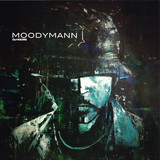
Following a year that saw the 50th entry in the long-running series released to wide acclaim, DJ-Kicks returns in 2016 another landmark edition. Iconic Detroit DJ and producer Moodymann is at the helm for his first ever multi-artist DJ mix compilation. Born Kenny Dixon Jr., Moodymann is a one-of-a-kind electronic music icon, hailing from, and wholly synonymous with the Motor City. He is an outspoken, impossibly charismatic artist who has been putting a distinctive and soulful stamp on house and techno since the early 90s. Melting together jazz, funk, soul, blues and rock in captivating ways, he is responsible for some of electronic music's most definitive tracks, EPs and LPs on labels like Planet E, Peacefrog and his own KDJ and Mahogani Music imprints. As able to serve up the sweetest and most sensual sounds as he is the darkest and most depraved grooves, his own unique voice and stream of conscious musings infuse expertly sought-out samples for music that is decisively alive and authentic.
Across 75 minutes and 30 tracks, Moodymann does not disappoint: despite being a notorious vinyl fetishist, Dixon's aim is to present music of quality, not to one-up fellow collectors. Rather than serving up ridiculously rare or hard-to-find records, he instead focuses on creating a libidinous, blues-drenched mood that takes in heart-breaking soul, gorgeous hip-hop and love-fuelled house. In addition to cuts from his own creative circle, the mix features 11 exclusive Moodymann edits. Like everything Kenny Dixon Jr. touches, DJ-Kicks showcases the taste, skill, and soul of a dance music original.
- 1: The Clare Sisters Cool Cool Cool
- 2: Earl Hooker Apache War Dance
- 3: Chuck Daniels Tiny Tim
- 4: Otis Blackwell & His Band My Josephine
- 5: Lance Roberts Gonna Have Myself A Ball
- 6: Willie Wright Gibble, Gobble
- 7: Bob Calloway And The Chicks Native
- 8: Sonny Day Beyond The Shadow Of A Doubt
- 9: Howlin' Wolf Wang Dang Doodle
- 10: Toussaint Mccall Summertime
- 11: Titus Turner Coralee
- 12: The Voodoos Voodoo Walk
"Blues & Rhythm, Popcorn, Exotica & Tittyshakers" untertitelt, ist das der Reissue des 5. Volumens in der Exotic Blues & Rhythm Serie. Das Original erschien vor Jahren in einer limitierten Auflage von 500 Stück, war recht schnell vergriffen und ist heute ein begehrtes Sammlerstück. Auch der Reissue ist limitiert - es gibt 700 Stück - alle in durchsichtigem/ clear Vinyl.
- A1: Robson Jorge & Lincoln Olivetti - Eva
- A2: Chene Noir - Le Train
- A3: Metropolis - Every Time I See Him
- A4: The Brand New Heavies - Stay This Way (Feat N'dea Davenport - The Lunar Dub)
- B1: Typesun - The Pl (Extended Edit)
- B2: King Errisson - Space Queen
- B3: Yusef Lateef - Robot Man
- C1: Daniel Humair, Francois Jeanneau & Henri Texier - Le Cyclope
- C2: Airto Moreira - O Galho Da Roseira (The Branches Of The Rose Tree) (The Branches Of The Rose Tree)
- C3: Francisco - Wache
- D1: Nar'chiveol - Apocalypse Now Ho
- D2: On - Southern Freeez
- D3: Soylent Green - After All
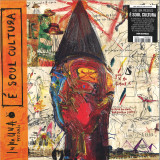
With some of the best DJs and selectors there is a certain mysterious sound or underlying feeling which unites the music they play, regardless of genre, year or tempo Luke Una is a master of telling a story through music and this compilation is a perfect example of his musical alchemy in action. Featuring tracks from Yusef Lateef, Airto Moreira, Crooked Man, Henri Texier and many more, it is a collection of new, old, rare and under-discovered music from around the world, all united by Luke under the banner of "E-Soul Cultura".It's best described by Luke himself, who writes: "As the 5AM city sleeps and the strobe lights are slowly turned off, we gather on the wrong side of town in a transcendental journey alone together. We are the late night disenfranchised holding on in various after parties, flats, lofts, random kitchens and basements into the outer cosmos with É Soul Cultura.
Music from exotic tear jerkers, Afro- spiritual jazz, cosmic Brazilian celestial grooves, machine street soul, dark horses, lost B- sides, £1 bargain- bin bombs, hidden gems, late night Italo dubbing, deep velvet N.Y.C garage, bass buggin sonic futurism, wrong speed 33BPM pitched up +8 new beat, majestic sunset strings, sweet vocals from heaven, no half steppin jazz dancing in outer- space and odd numbers. Yes… magical moments, together, holding on in witness protection suburban cul- de- sacs and Castle Court flats. Cosmic É high, 3000ft above the city getting evangelical to murky, wonky timeless beautiful music. This thing of ours dreaming of better days. Fail we may, sail we must, the sun will come up again."
Ferocious JP / US free jazz bomb. A rare meeting between the NYC free jazz scene and the Japanese free music scene. Old-style Gatefold LP, with rare photographs & liner notes by Alan Cummings.
Following hot on the heels of the first, mid-sixties generation of Japanese free jazz players like Kaoru Abe, Masayuki Takayanagi, Yōsuke Yamashita, Motoharu Yoshizawa, etc., an exciting second wave of younger players began to emerge in the seventies. Two of its leading members were the saxophonist Kazutoki Umezu and multi-instrumentalist Yoriyuki Harada. Both were post-war babies and immigrants to the city, Umezu from Sendai in the north and Harada from Shimane in the west. They first met as students in the clarinet department at the Kunitachi College of Music, a well-known conservatory in western Tokyo. Harada was already securing sideman gigs on bass with professional jazz groups and was active in student politics, making good use of his connections to set up jazz concerts on campus. It was around this time that the two began to play together in an improvised duo, with Umezu on clarinet and bass clarinet and Harada on piano. They also experimented with graphic scores and prepared piano.
These experiments eventually led to the creation of a trio, with a high-school student called Tetsuya Morimura on drums, that they decided to name Seikatsu Kōjyō Iinkai (Lifestyle Improvement Committee) in joking reference to the Marxist discourse of the student radicals of the time. Around 1973, Umezu and Harada decided to call it a day and go their separate ways. Umezu began playing with the Toshinori Kondo Unit and Harada with the Tadashi Yoshida Quintet. In 1974 Harada formed his own trio and began to play at jazz coffeehouses across Japan.
Then, in September 1974 Umezu travelled alone to New York, where he set about building connections with the loft jazz scene in the city. It was a fortuitous moment to arrive in New York. Rents were cheap in the Lower East Side, possibilities for squatting existed, so many musicians and artists had moved to the area. Umezu soon became known on the scene as Kappo and he started to make connections with some of the young musicians like David Murray, Arthur Blythe, and Oliver Lake. He recalls making the rounds of the lofts every evening, checking out the performances, and getting the chance to sit in with many groups including Juma Sultan’s Aboriginal Music Society and trumpeter Ted Daniel’s orchestra.
Things were going so well that Umezu wrote to Harada and invited him to come to New York. He accepted and arrived in the city in July 1975. Harada and Umezu took the opportunity to resume their artistic collaboration. Their first concert together in over two years took place on July 20th at another loft, Sunrise Studios at 122 2nd Avenue. Umezu remembers Sunrise as an unusually sunny loft with the rarest of things, a grand piano. He invited along Ahmed Abdullah, a trumpeter he had got to know while playing with Ted Daniel. Abdullah led his own group and was a long-term Sun Ra sideman. William Parker, one of the key figures in the loft jazz scene of the period, was on bass. Abdullah also brought along Rashid Sinan on drums. Sinan drummed in Abdullah’s units throughout the seventies, but he had also played on Frank Lowe’s immortal Black Beings album and collaborated with Arthur Doyle, playing on Doyle’s Alabama Feeling album. By all accounts the evening was a huge success, with speed and dynamism of Harada’s piano playing gaining him lots of support.
Since they had managed to save some money from their day jobs, Umezu and Harada decided to set up a recording session with the same line-up on August 11 at Studio We, where there was a well-equipped studio on the third floor. Umezu recalls the session as follows, Of course, we recorded our performances in one take, with zero retakes as far as I remember. On all the tracks we recorded, we moved as one unit, sharp and fast. That was the nature of Lifestyle Improvement Committee, New York Branch.
Umezu and Harada would later become known for the elements of parody and entertainment that they brought to their music, a freewheeling blend of pastiche, humour and on-stage performativity that paralleled the approaches of the Art Ensemble, Sun Ra, and Holland’s ICP. But here, on their first recordings, the humour element is not yet present. Instead, there is a febrile sense of joy in creation and connection. On the Umezu-penned “Kim”, for example, Harada opens the piece with a speedy exploration of the full-range of the keyboard, hitting hard on the bass keys to create a rhythmic bed out of which patterns begin to emerge. Umezu enters at a much slower pace, longer held notes that at first float weightlessly over the urgency of the piano before they begin in splinter and accelerate. When Parker and Sinan kick in, it’s a rollicking tempo with Parker plucking deep and hard and the left-handed Sinan skittering hard across the topside of his kit. Abdullah kicks in a glorious solo twelve minutes in, bright and breathy at once. The piece slows and grows more spacious towards the end, giving Parker a chance to showcase some arco work that shades beautifully into the air against Abdullah’s trumpet.
Lambke creates a DIY and artist- first free space on the margins of an industry driven by sales and a particular kind of recognition, careful about how he embodies his practice of art-making, and the work his music is doing in the world. On Volcano Volcano he is joined by long-time collaborators Daniel Romano and David Nardi (also of Daniel Romano's Outift), and emerging superstar songwriter Carson McHone (Merge Records) for a joy-filled album rich in poetry and guitars,
community and friendship, and dreaming together a new world 're-ordered from below'.
After the 2020 album "Lieder Für Geometrische Stunden", Sankt Otten finally make us happy again with a new release at the beginning of 2022. "Symmetrie Und Wahnsinn" (Symmetry and madness) fits here skillfully, both creatively and musically, in an album series with geometric context.
The album starts unusually buoyant with "Hymne Der Melancholischen Programmierer" (Hymn for sentimental programmers). A Kraut-Pop pearl, which could go on forever with its Motorik swing and with its catchy melody the track doesn't come across as melancholic as the song title predicts. You have to listen twice to not succumb to the illusion that it was composed in Düsseldorf at the end of the seventies. Here (and on the track "Sei Symmetrisch Zu Mir"), Sankt Otten were supported in the studio by drummer friend DIRK PELLMANN.
The drum machine in rumbling funky mode. "Die Glücklichen Unglücklichen", the secret hit of the album? They bend the beat into geometric shapes, let the bass play in circles and cover the song with ghostly choirs. The echo of a spinett-like sound overlays the sound, spitting out a deceptively cuddly dream world.
The 10 minute long "Die Ordnung Des Lärms" could be called an Ambient-Kraut symphony without hesitation. An enormous swelling to ecstasy, a guitar sings distantly in the background. Silence. Synthetic strings pave the way and are supported by choirs. A crackle that suggests a rhythm until it is taken over by a drum computer in the main part of the track. Bombastic mountains of synthesizers pile up and yet a catchy melody finds its way through this mishmash of hypnotic electronics. Fourth movement - Kosmische-choirs in suspension over a bass synth and an Ebow guitar. Is this already Prog-Rock? The question doesn't arise, in the end everything merges into reverb. "Luftspiegelung Der Sentimentalitäten" begins cautiously with a gentle sequence and a discreet kick drum. The mini-Moog sounds like a guitar. Anyway. A surface floats by and returns, layers and shapes build up. At last, everything melts into perfect harmony with a plaintive-sounding synth. This track was composed as a stripped back reprise of the first track from the last album "Sentimentale Sequenzen". A hypnotic Motorik-beat of an 808 that encourages head nodding and could almost be danceable. True to style with warm analog 80s electronic sounds and a loose echo guitar. This is "Angekommen In Der letzten Reihe". Man and machine hand in hand as a homogeneous musical unit and the connection of tradition and vision.
Sankt Otten like images of infinity. In the religious sense of meditative mantras, or also in the mathematical sense of an elongated curve that eventually returns to its starting point. "Bis Das Helle Licht Uns Holt" goes exactly in this direction with its classical use of sequencers and a sound carpet of choirs. Sound worlds that, through a clever repetitiveness, barely noticeably guard the constant changes in the compositional mesh like a secret and only reveal what is to be discovered by listening closely and letting it be seen. Such a thing is probably called Berlin School?
The Osnabrück duo Sankt Otten, founded in 1999, has been releasing on Denovali since 2009. With their now 12th album they give us again a gem of timeless instrumental music. The holy trinity of Krautrock, Ambient and contemporary Electronics, but always stylistically confident and unmistakable Sankt Otten. For the mastering New York based RAFAEL ANTON IRISARRI could be won. Also with the cover layout again good taste is proven. As part two of a cover series, this extraordinary die-cut cover artwork was again created by designer DANIEL CASTREJÓN.
Gold Vinyl
'You Belong There' ist Daniel Rossens ausgefeilte und eindringliche Betrachtung dessen, was nach dem rastlosen Enthusiasmus der Jugend kommt. Es ist eine fesselnde 10-Song-Wiedereinführung in eine Stimme, die sowohl völlig vertraut klingt, als auch durch den Akt des ungehinderten Ausdrucks und der neu gefundenen Selbstsouveränität völlig neu belebt wird. Fast zwei Jahrzehnte lang war Rossen entscheidender Bestandteil von Grizzly Bear, deren gemeinsame Harmonien und verschachtelte Texturen die Musik der frühen 1980er neu interpretierten. Er ist auch Gründungsmitglied der gefeierten Folk-Electronica-Band Department of Eagles. Vor vielen Jahren verliess Rossen die Enge Brooklyns, zog zunächst ins New Yorker Hinterland und dann nach Santa Fé, wo er in seinem Haus in der Wüste langsam die Welt von 'You Belong There' aufbaute. Rossen besorgte sich Kontrabass, Cello und Holzblasinstrumente und spielte fast alle Songs selbst ein, wobei Chris Bear von Grizzly Bear als Gast auf 'Tangle' mitwirkte.
About time – Ebbot and I have finally been able to make an album that is largely an extension of all the time we have spent together and all the concerts we have done
You could say it's a kind of fusion of the two of us in music form. A key ingredient was that Reine Fiske (Dungen) wanted to be part of this musical adventure and record with us. His tone and spontaneous playing were absolutely crucial in making this album. Also at the heart of this album, and which made our recording sessions so edgy and good, were the beautiful poppy bass playing by Marcus Holmberg (Komeda), the dynamic and responsive drumming by Nicklas Korsell
and the funky piano playing by Daniel Kurba. And finally, working as both a musician and sound engineer, Ponus Torstensson, aka Tentakel, played a vital role in creating the psychedelic sound on the album
Reissue of a 1969 trio recording by American guitarist Jim Hall, who
resides at the top of the jazz guitar pantheon
At the time of his death in 2013 at the age of 83, he had long been considered
one of the jazz greats, a major influence on generations of jazz guitarists. It
seems that virtually every major musician wanted to play with Hall. His work as a
sideman ranged from swing era giant Ben Webster to new music pioneer Ornette
Coleman. HIs recording credits include a series of classic albums with groups
headed by Jimmy Guiffre, Sonny Rollins, and Bill Evans; Hall often spoke of
Rollins and Evans as two of his major influences.
This intimate June 1969 musical get-together was due in large extent to the close
friendship between the Hall and legendary German writer/ critic and producer
Joachim-Ernst Berendt. As Hall, his wife and daughter were visiting him in Berlin,
Berendt noticed that, although he had been recording extensively with a number
of major jazz figures over the last years, including several collaborative gettogethers, Hall had not recorded an album solely under his own name in over a
decade. Berendt immediately set up a trio recording for Hall that included two
internationally renowned musicians with whom Hall had previously worked, the
American expatriate bassist Jimmy Woode and Swiss- French drummer Daniel
Humair.
In such a transparent setting, Hall unfurled his finest qualities. Humair
perceptively summed it up: Hall played with "more clarity, more purity, more
sensitivity" than any other guitarist of the period. It resulted in an album of
intensely introspective music.
Originally released in 1999, Vagabond Ways was recorded at Teatro Studios in California and produced by Daniel Lanois and Mark Howard.
Vagabond Ways is a collection of original material; including Faithfull’s own compositions as well as interpretations of songs written by some of the finest songwriters of her generation such as Elton John and Bernie Taupin, Leonard Cohen and Roger Waters.
The vinyl format is issued here for the very first time on heavyweight vinyl.
The reissued CD format includes a selection of previously unreleased bonus material of demos and an unheard studio recording and features new liner notes.
Red hot Modern Soul 45 recorded in Memphis, Tennessee in 1985. Big thanks to Robert Garcia @mrbighappy & Daniel Mathis @quartzwatches for the research and words on this one!!
Brotherhood Band was started by Ernest Coleman(EC) and Clint Hyson, who met thorough a US Navy band called "Mid-South", which was the US Navy's premier musical organization operating out of Millington, Tennessee (20 min outside of Memphis). The group initially played as an instrumental jazz band. In keeping up with the times, they shifted gears towards a more contemporary sound. Shortly after, they decided to cut a single. Enter "Nicci's Theme", which is the B-side here and it's a beautiful jazz tune EC wrote for a girl he fell in love with. This song was supposed to be his door way in, but he actually never opened the door with her.
A few weeks later Clint called EC and played this syncopated bass line for him over the phone. And then EC being the ladies man that he was wrote the lyrics to "Leather Pants" to it. Part of the lyrics read "The pants they stretch, but they don't bust. Enough to make a blind man cuss", but it originally read as, "The pants they stretch, but they don't bust. Enough to make a PREACHER cuss". The song was ready, but they needed to find a singer. That's when member Richard Owens mentioned that he had a young cat back in Atlanta named Taji. In a gamble Taji drove up to Memphis for the Sunrise recording studio session to record the track. According to EC when Taji laid the vocals down he took the song to the next level. In fact it was so impactful that EC, who is now a Grammy producer, still references Taji's sessions when working with new artist.
After the single dropped the group played at Memphis hot spots, Bills Twilight Lounge and Club No Name. EC even had an idea to host a local leather pants contest as a way to promote the song. This lead to a frenzy of women seeking to be "Miss Leather Pants".
Matthew Halsall unveils new band and announces 'Salute to the Sun'
his new album on Gondwana Records
Limited edition Double Clear vinyl, printed on reverse board with Gold foil artwork plus double printed reverse board inner sleeves including download code. Cover Artwork by Daniel Halsall with design and layout by Ian Anderson of The Designers Republic.
Comes packaged in a resealable, re-usable Polypropylene anti-static, acid-free, crystal clear sleeve for maximum protection.
Composer, trumpeter, producer, DJ and founder of Gondwana Records, Matthew Halsall has always worn many hats. But at the heart of everything that he does Halsall is first and foremost an artist and a musician. A trumpeter whose unflashy, soulful playing radiates a thoughtful beauty and a composer and band-leader who has created his own rich sound world. A sound that draws on the heritage of British jazz, the spiritual jazz of Alice Coltrane and Pharoah Sanders, as well as world music and electronica influences, and even modern art and architecture, to create something uniquely his own. A music that is rooted in Northern England but draws on global inspirations.
Salute to the Sun is his first album as a leader since Into Forever (2015) and marks the debut of his new band. A hand-picked ensemble featuring some of Manchester's finest young musicians: Matt Cliffe flute & saxophone, Maddie Herbert harp, Liviu Gheorghe piano, Alan Taylor drums and Jack McCarthy percussion as well as long-time Halsall collaborator, bassist, Gavin Barras who has been at the heart of Halsall's bands for over a decade. For Matthew it was important to have a band based locally and able, pre-Covid, to meet and play each week, and who also performed a sold-out monthly basement session at Yes in Manchester. The album draws energy from these sessions and inspiration from themes and ideas that have inspired Halsall through the years (on albums such as Oneness, Fletcher Moss Park and When the World Was One) ideas of ecology, the environment and harmony with nature.
"I feel Salute to the Sun is a positive earthy album. I wanted to create something playful but also quite primitive, earthy and organic that connected to the sounds in nature. I was listening to lush ambient field recordings of tropical environments such as jungles and rainforests and found myself drawn to percussive atmospheric sounds which replicated what I was hearing (bells / shakers / chimes / rain sticks) and I started to experiment with more wooden percussive instruments such as kalimba and marimba".
Salute to the Sun features lush wholly improvised tunes inspired by ambient rainforest and jungle field recordings, deeply soulful tunes built around hypnotic harp and kalimba patterns, deep Strata-East inspired spiritual jazz grooves and some of Halsall's most beautiful playing and inspiring healing melodies yet recorded.
The album was recorded at the band's weekly sessions, using Halsall's own recording set-up, giving the recordings a relaxed vibe and unforced energy that really lets the music breath. The album is also very much a family affair as Halsall's brother Daniel Halsall, artistic director of Gondwana Records, was an important presence at the sessions and co-produced the album. It is also his memorable artwork that adorns the cover of Salute to the Sun, an album beautifully designed by legendary designer Ian Anderson of The Designers Republic, who also created the covers for the recent archival releases Oneness, Sending My Love and Colour Yes and is one of Halsall's favourite designers. Together Daniel Halsall and Ian Anderson have designed all of Matthew's seven albums to date, so it felt extra-special to bring them together for, Salute to the Sun, an album that Halsall was determined to present in the very best way possible. The album was mixed with another long-time collaborator, George Atkins at 80 Hertz in Manchester, who works tirelessly with Halsall to perfect the sound and was mastered by noted engineer Peter Beckmann who brings an added depth to the sound specially around the bass notes as well as Halsall's trumpet. The magnificent double vinyl was cut as a Half Speed master by Barry Grint at Alchemy Mastering for the best possible analogue experience.
The result is arguably Halsall's most beautiful and complete recording to date, playful, charming and imbued with the warmth of the sun and the energy of life.