Parrish Smith makes his Dekmantel debut on the label's sister-techno imprint, UFO, with a blend of avant garde electronics and industrial.
.
With the 'Sex, Suicide & Speed Metal EP', Dutch producer Parrish Smith works outside of the realm of genres and tempos, creating his own unique template of saturated, electronic post-punk, having won accolades from the likes of Nina Kraviz, and Ron Morelli along the way. An analogue purist at heart, Parrish Smith has already amassed a cult following with regular appearances on Red Light Radio, in which the anarcho-experimentalist broadcasts sessions of heavy industrialism, breakbeats and body music.
Parrish Smith's music brings together classic analogue gear and a love for the fusion of aggressive industrial sounds. With title track 'Sex, Suicide & Speed Metal', Parrish Smith channels his inner Alan Vega, with some screaming guitars, and 65bpm machine-crunching body beats, lurching into a sultry space of slick wave music. 'Mute' jacks up the feeling of tempo, rife with energetic drum machines, pulsing synths and retro-fitted vocals, similar to the sound of something Daniel Miller might have released himself back in the early 80s. 'SKINS', delves further into the mechanical, with a grinding bass that bleeds through the track's entirety, while 'Fall into sin' sees him explore the world of deconstructed, gothic-pop yet further. Parrish Smith will be DJing, and performing live as Volition Immanent at this year's Dekmantel Festival, to fulfil the festival's charter of provocative, and intoxicating, energetic beat-filled music.
Buscar:daniel la ro
During the recent years, Terence Fixmer kept on being prolific by producing and releasing his music output on well esteemed quality labels such as Ostgut Ton, Novamute, Jealous God and recently on Aufnahme+Wiedergabe. Following a constant workflow, Fixmer decided it is now time to restart his label Planete Rouge which he launched back in 1998 already but has always been irregular in terms of releases. The label will relaunch after a 4-year hiatus with his new 12'.
Terence Fixmer's 'Oppression' EP is a great resume of his unique sound design signature, delivering a collection of four energetic tracks that speaks to the soul.
On top of it, as an homage to one of his all time favourite tracks of 'The Normal / Warm Leatherette' from 1978, Fixmer decided to rewrite this 40 year old tune from Daniel Miller as a a personal pleasure and fun.
By using as well the Mini Korg 700 S Terence Fixmer recreated nearly the original sound, keeping a track that is loyal to his own sound as well as its original spirit.
Only those who read all the credits on record liner notes will know the full details: Areski is of course Brigitte Fontaine's partner in life, but also her creative alter ego, and the composer of the music of most of her songs. Even though it was his wife Brigitte and not him who wrote the lyrics, Areski is a poet in his own right. Furthermore, he is polyvalent: composing, arranging, singing, improvising, playing every possible instrument and even acting! Areski, to sum up, is the perfect mix of the tradition of Munir Bashir with the European sophistication' of someone like Jean-Claude Vannier, one foot permanently in Versailles (where he was born) and the maghreb. Areski, is left bank French songs without the stylistic effects, revised and updated through contact with arab-andalusian music. He is a Living Theatre style happening with a dose of cosmic free jazz, surrealist poetry viewed through the prism of Kabyle culture... All that and a lot more!
Areski honed his talent observing the stars of traditional chaâbi, testing it out in bars and dives before meeting, during military service, the singer Jacques Higelin with whom he would record his first cult album, and who would present him to his wife-to-be, Brigitte Fontaine. Between 1969 and 1980, with her, Areski would contribute an essential chapter to French underground music including classics such as Comme à la radio (with the Art Ensemble of Chicago), Je ne connais pas cet homme, L'Incendie, Le Bonheur and Vous et nous. For all that, Areski has never really tried to have a career under his own name, in spite of the wonderful Un Beau matin first published in 1970, and which it is high time to de (re)discover (better late than never). Those already in the know will not be surprised to see, especially, Jean-Charles Capon, author of the inspired L'Univers-solitude, Brigitte Fontaine of course, or Daniel Vallancien, author of a no-less inspired duo with saxophonist Philippe Maté. All contributing to an acerbic poetic universe, concerned but never militant, and open to worldwide influences long before they became a fashion.
Inspired, poetic, in a word essential: Un Beau Matin is one of the best albums of the French underground produced by Pierre Barouh on his label Saravah, alongside those by Maurice Lemaître, Catharsis, Claude Yvans, Mahjun, Barney Wilen, Cohelmec Ensemble et Michel Roques.
Raga Abhogi
1) Alap
2) Jod
3) Jhala
Raga Vardhani
4) Alap
5) Jod
6) Jhala
Zia Mohiuddin Dagar : rudra veena
Annie Penta : tanpura
Concert recorded at the home of Shantha and Niranjan B. Benegal, Seattle, Washington 9 March 1986.
Recorded by Niranjan Benegal. Files obtained from Jeff Lewis.
Mastered & Cut by Rashad Becker at Dubplates & Mastering 1117 & 0318.
Liner notes by Renaud Brizard, edited by Stephen O'Malley & Ian Christe.
Front and back cover photos by unknown.
Interior photography by Niranjan B. Benegal, Dan Neuman & unknown, Seattle 1978-1980. .
Around ten years ago, deep into a cozy and hazy night following a concert with my sound brothers Daniel O'Sullivan and Kristoffer Rygg in London (as Æthenor), they graciously introduced me to a recording of rudra veena (a kind of noble deeper bass relative to the sitar, in a way) as performed by dhrupad master Zia Mohiuddin Dagar.
Dhrupad, for those who do not know, is a branch of Hindustani classical music said to "show the raga in its clearest and purest form". It's pacing concentrates heavily on the slow, contemplative alap section and works with specific microtonal gestures and deep characteristics of resonance ... in short I was hooked on this new (to me) and ancient form of music from the first listen, and feel that a more or less continual listening & reviewing of Zia Mohiuddin Dagar's recordings in the years that followed have influenced my own approach to music quite heavily (if, albeit, indirectly).
In early 2015 I was able to make contact with Zia Mohiuddin Dagar's son Bahauddin and some of his American students/disciples, primarily Jeff Lewis. Over time we developed a friendly and educational exchange, access a massive archive of recordings and developed these two paired titles for my label. It's been a long path to arrive at actually releasing them but also probably in many ways one of the most significant releases I've worked on. And I'm proud to be able to reveal these to date unreleased archival recordings of one of the masters of dhrupad, Z. M. Dagar, to the public for the first time.
Zia Mohiuddin Dagar was the nineteenth generation in a family tradition known as Dagar gharana, a rich lineage which continued and performed the musical form of dhrupad (Bahauddin Dagar continues the lineage as a master rudra veena dhrupad player of note today). Initially, dhrupad was a rigorous, austere, devotional genre that was sung in Hindu temples. But between the 16th and the 18th centuries, it became the preeminent genre in royal courts in North and Central India, and the Dagar gharana developed and continued publicly following the eventual loss of court patronage for dhrupad in the 19th century. The French ethnomusicologist Renaud Brizard covers the story of Zia Mohiuddin Dagar's life and teaching (a long story also in Seattle, my hometown!), the Dagar family and gharana, the rudra veena and more topics in an extensive set of liner notes in this release.
Ragas Abhogi & Vardhani were recorded in a private house concert in Seattle at the home of the Benegals in March 1986 (the week before the accompanying release SOMA029 Raga Yaman was recorded). The Benegals were friends (& Shantha Benegal was also a student) of Dagarsahib who sometimes hosted Hindustani music concerts in their home. It's a rare glimpse of a more intimate, personal and perhaps different kind of performance considering the form of dhrupad.
-Stephen O'Malley, March 2018, Paris, France
Stephen O'Malley would like to especially thank Bahauddin Dagar, Jeff Lewis & Jody Stecher for their enthusiasm, cooperation, patience, insight & advice toward developing these editions. Thank you also to Laurel Sercombe & John Vallier from the University of Washington Ethnomusicology Archives, Shantha Benegal, Philippe Bruguière, Dan Neuman, Ira Landgarten, Renaud Brizard, Ian Christe, Peter Rehberg, Rashad Becker, Daniel O'Sullivan & Kristoffer Rygg, all for their direct or indirect cooperation, assistance & patience.
Raga Yaman
1) Alap
2) Jod
3) Jhala
4) Gat (Composition in Chautal)
Zia Mohiuddin Dagar : rudra veena
Manik Munde : pakhawaj
Gayathri Rajapur & Annie Penta : tanpuras
Recorded by unknown at the University of Washington, HUB Auditorium, Seattle, Washington 15 March 1986 , concert co-sponsored by the UW Ethnomusicology Division and Ragamala.
Original digitally processed audio recording made with Panasonic PV-9000 VCR, Sony PCM-F1, PZM mics. Mastered & Cut by Rashad Becker at Dubplates & Mastering 1117 & 0318.
Liner notes by Renaud Brizard, Stephen O'Malley & Ian Christe.
Front and back cover photos by Niranjan B. Benegal, Seattle Center Folklife Festival 1979. Elizabeth Reeke & Annie Penta on tanpuras.
Inner gatefold photography by Niranjan B. Benegal & Ira Landgarten.
Around ten years ago, deep into a cozy and hazy night following a concert with my sound brothers Daniel O'Sullivan and Kristoffer Rygg in London (as Æthenor), they graciously introduced me to a recording of rudra veena (a kind of noble deeper bass relative to the sitar, in a way) as performed by dhrupad master Zia Mohiuddin Dagar.
Dhrupad, for those who do not know, is a branch of Hindustani classical music said to "show the raga in its clearest and purest form". It's pacing concentrates heavily on the slow, contemplative alap section and works with specific microtonal gestures and deep characteristics of resonance ... in short I was hooked on this new (to me) and ancient form of music from the first listen, and feel that a more or less continual listening & reviewing of Zia Mohiuddin Dagar's recordings in the years that followed have influenced my own approach to music quite heavily (if, albeit, indirectly).
In early 2015 I was able to make contact with Zia Mohiuddin Dagar's son Bahauddin and some of his American students/disciples, primarily Jeff Lewis. Over time we developed a friendly and educational exchange, access a massive archive of recordings and developed these two paired titles for my label. It's been a long path to arrive at actually releasing them but also probably in many ways one of the most significant releases I've worked on. And I'm proud to be able to reveal these to date unreleased archival recordings of one of the masters of dhrupad, Z. M. Dagar, to the public for the first time.
Zia Mohiuddin Dagar was the nineteenth generation in a family tradition known as Dagar gharana, a rich lineage which continued and performed the musical form of dhrupad (Bahauddin Dagar continues the lineage as a master rudra veena dhrupad player of note today). Initially, dhrupad was a rigorous, austere, devotional genre that was sung in Hindu temples. But between the 16th and the 18th centuries, it became the preeminent genre in royal courts in North and Central India, and the Dagar gharana developed and continued publicly following the eventual loss of court patronage for dhrupad in the 19th century. The French ethnomusicologist Renaud Brizard covers the story of Zia Mohiuddin Dagar's life and teaching (a long story also in Seattle, my hometown!), the Dagar family and gharana, the rudra veena and more topics in an extensive set of liner notes in this release.
Raga Yaman was recorded at a public concert in Seattle at the HUB Ballroom at the University of Washington in March 1986 (the week after the accompanying release SOMA028 Ragas Abhogi & Vardhani was recorded) at the end of his last tour of the United States. Yaman was a special raga for Zia Mohiuddin Dagar, one of his signature raags. For centuries, Yaman has been considered as one of the most fundamental ragas in Hindustani music and is one of the first ragas which is taught to students. A deep knowledge of Yaman gives a key for understanding many other ragas. It's filled with tranquility, contemplation, pathos and spiritual yearning. .
-Stephen O'Malley, March 2018, Paris, France
Red hot drum lead track backed by boiling point late night to early morning long haul truck driving or dancing music. Shazam!
Vital Sales Points:
(Drum track playing loudly)
The saws and sines have aligned! It's HOW007 time.
The release in front of your face is called The 417. It is three songs by Daniel Savio released on 12" vinyl strictly limited to 200 copies + an everlasting (we'll see how that works out) digital version of those same songs.
This recording was conjured up on machinery people are known to touch and sell. MK1 menu diving desktop stuff. Stuff that is ten years old, stuff that may be older. Stuff that purrs, rocks, bounces and skates. Machine prototypes on trade show floors will not be able to make songs like these. Unless you would hand them to Daniel which would lead to all sorts of inconsistencies in time.
Last year Daniel Savio's "Race To The Bottom" and his "Plejjern från Plejaderna" album took Swedish house music by storm. It is now with great delight that we hand you this 12", acclaimed by well-informed DJs. Music centred around feelings for what is in front of our faces at the moment. HOW007, get in while you can.
A new duo launches by the name of Ghost Vision. Joining forces with an introspective, uplifting debut slice on Kompakt, the pair are two well-known figures Thomas Gandey aka Cagedbaby, member of Matom alongside Matt Edwards, and Daniel McLewin, half of UK-based production duo Psychemagik. Fruit of these blissful moments when no imaginary wall obstructs the vision and the stream of consciousness gives up to the entrancing magic of the creative flow, 'Saturnus' is an upright mano a mano between two musicians and their gear, unchained from all preconceptions and biases; real (machine) talk as the hip-hop heads would say.
Straight soul oration poured off the cosmic scapes generated by a good old Moog Voyager, '70s string machines', Oberheim OBXA, 303, Space Echo and the too little-known and equally little-used Korg Lambda, Ghost Vision's debut EP traverses remote kosmische-indebted expanses but hits close to the core with its deft mix of slow-burning spectral funk, textured outerspace pads and further stirring heart-searching harmonics. Subtly arranged yet leaving maximum room to the lively force of its original layout, it is a lovingly crafted piece of emotive and psychedelic magnitude that's seamlessly given birth to. Enter the greater deep and important world of Ghost Vision.
A high-speed car chase between a Dodge Charger and a Ford Mustang, with super-cop Bullitt at the wheel, who forces the hitman off the road and into a petrol station, which explodes and incinerates him. Prior to that, harsh clashes of metal, hubcaps flying all over the place, and the chief character Steve McQueen, who grimly changes gears and hurtles through the streets of San Francisco, wheels screaming and rubber burning. That was how Hollywood staged one of the longest and most dramatic car chases, long before the days of the Anti-Blocking-System and Anti-Slide-Control.
Very up-to-date and just as exciting as the screenplay is the music Lalo Schifrin wrote for the film, which embeds the characters, places and events in a musical context. For example, "Bullitt": the metrically angular main theme portrays a mysterious, cool character who sums up a situation with keen alertness and then makes his attack with the speed of lightning.
Initially the music travels through easy-going Latin terrain. But gradually the rhythmic texture changes and takes a rougher path, with clicks, knocks and hammering. Legendary flute lines create a compensatory placidness with airy clouds floating above the sharp mix. A really special track is "Shifting Gears": here you can listen to Schifrin tuning the car, how he manipulates a jammed springy bossa to take on the sound of clean, smooth-running rock.
This Speakers Corner LP was remastered using pure analogue components only, from the master tapes through to the cutting head. All royalties and mechanical rights have been paid.
Kalabrese sagt: Hört sich wie ein versteckter Talking Heads Track an!' Ja, irgendwie schon. 80er Leftfield Pop mit der Nuance einer modernen Disco-Produktion und einer dafür großartigen Auswahl an Remixern: The Juan Maclean, Daniele Baldelli & DJ Rocca, Michael Reinboth - die wissen, wie man so einen Track schmooven lässt.
Cut by CGB at Dubplates & Mastering, Berlin, June 2017
Digital Transfer: Jonathan Fitoussi
Translations: Valérie Vivancos
Layout: Stephen O'Malley
Coordination GRM: Daniel Teruggi & François Bonnet
Executive Production: Peter Rehberg
Tremblement de terre très doux (1978), 28'14
climate 1 / transit 1 / landscape 1 / climat 2 / landscape 2 / transit 2 / landscape 3 (walking - jumping - sliding - flying) / climate 3 / landscape 4 / climate 4 - transit 3 / landscape 4, end.
The familiar generates the strange.
These rolls, these hums, these sudden rushes, this song, these peaceful circlings, these sudden outbursts, these returns to quiescence - what do they remind us of
This piece's trajectory could also be a representation of the dramatic unfolding of a day - of a life - from sunrise (climate 1) to night-time (landscape 4) via restless encounters, transitions (1 to 3) that announce the drama climaxing in landscape 3, before reaching its denouement in climate 4... A whole concrete 'story'.
The subterranean properties inherent to listening gently shift our ideas...
François Bayle
First performance: 19 March 1979 - Grand Auditorium of Radio-France,
Ina-GRM's Cycle Acousmatique. .
Toupie dans le ciel (1979), 21'
A wave is swaying on two minors thirds. This constantly uniform yet constantly varied swaying revolves in a swarm of sharp designs that blink on and off in a layer of growing density and mobility.
Distance, speed, pressure, density, temperature, colour, intensity, are the "themes" of the 27 short interconnected cells flowing together though this seemingly unified movement.
Occasionally, a breach in the texture reveals skyes dotted with little comets. In the centre, a slow gliding picks up the distant harmonics of a basic chord. Toward the end, this gliding returns with a fiery burst.
Fine lines and whirs are generated from the song of a spinning antique top.
To end on a lighter note the title Toupie dans le ciel - Spinning Top in the Sky reminds us of Lucy in the Sky with Diamonds by The Beatles as well as Lucy, the oldest Australopithecine (3 million years), our African grandmother in the Erosphere...
The overall title Erosphere alludes to the desire inherent to the listening experience, and to the very primitive cues that sustain the auditory attention and are the basis of all musical pleasure.
François Bayle
First performance: 21 January 1980 - Grand Auditorium of Radio-France,
Ina-GRM's Cycle Acousmatique.
- A1: What Ifa
- A2: Fed Up
- A3: What Is Life
- A4: Scammer Jammers
- B1: The Sound Of War
- B2: Horror Zone
- B3: Cigarette
- B4: Give Thanks To Jehovah
- C1: What If (Version - Feat Lee Perry)
- C2: Fed Up To My Dub
- C3: Whay Is Dub
- C4: Scam Jam Dub
- D1: The Sound Of Dub
- D2: Horror Zone In Dub (Feat Lee Perry)
- D3: Cigarete Stub
- D4: Give Thanks To (Version - Feat Lee Perry
Max Romeo has teamed up with UK based, Grammy Nominated Producer Daniel Boyle, to create a stunning return to form, Roots Reggae album with accompanying Dub versions.
''Max is noted for his critically acclaimed work with Lee Scratch Perry in the 1970's, and for his timeless classic songs penned over the last 50 years - Such as 'War ina Babylon' 'Melt away' 'one step forward' and the worlds most sampled reggae song ever -''Chase the Devil'. Picked up by artists such Jay Z, Kanye West, The Prodigy and Blockbuster hit movies.
Max and Daniel have teamed up with an all-star cast of musicians to create a true Part 2, to Max's legendary, ''War Ina Babylon'' album. Using strictly Studio equipment ranging from between the 1950's - 1970's, recorded and mixed in 100% analogue format, and presented with stunning artwork in Physical format.
Paper Dollhouse is the production alias of Astrud Steehouder and Nina Bosnic. Having previously recorded albums for Jane Weaver and Finders Keepers' Bird imprint, plus the Folklore Tapes and Night School labels. The Sky Looks Different Here arrives via the group's independently ran MoonDome imprint. Paper Dollhouse have collaborated and performed with artists including Old Apparatus, The Wolfhounds, Daniel O'Sullivan, Killing Sound, DB1, Joe Cocherell and Pye Corner Audio, and their music has been featured in mixes by Skee Mask, Mark Pritchard, Blackest Ever Black, Lobster Theremin, Lanark Artefax and Ancient Methods.
The Sky Looks Different Here features twelve tracks that draw parallels between the project's past roots in spidery post-punk electronica and a neon-lit, radioactive ambient pop sensibility. This has lead to the creation of what is sure to be the most concise and realised Paper Dollhouse record yet. One that mixes the group's signature brand of darkwave influenced left-field pop, urban field recordings and electronic composition.
Fernando Pulichino is no stranger to Leng Records. The bass guitar-wielding Argentine made his first appearance on the label five years ago via the cosmic disco/psychedelic rock fusion of Blue Impala, returning two years later with the similarly inclined brilliance of Giant Desert. Pulichino then resurfaced on Leng late last year with a superb, digital-only three-tracker called Natural 77.
Now he's back on wax, buoyed by the success of the acclaimed Shining EP on Is It Balearic
Recordings. This time round he's in Search of Indigo, shaping hazy, sun-baked soundscapes around his distinctive basslines, echo-laden synthesizers, meandering Fender Rhodes solos,
gentle dub vibrations and glistening, early morning jazz guitars. This is music for the heads, hips and feet, soaked in Fernet and left in the afternoon sun to slowly ripen.
Arguably the most arresting of the four cuts is the title track, a head-in-the-clouds vocal number rich in bubbly electronic riffs, laidback electro beats, ricocheting percussion hits, swirling wind
effects and rubbery funk-rock bass.
Pulichino's penchant for intergalactic disco shufflers once again comes to the fore on killer Sundown Visions', a saucer-eyed chugger that simultaneously throbs, pulses and sparkles
thanks to sparring synthesizer motifs and eyes-closed space rock guitars. We suspect Daniele Baldelli and Andrew Weatherall would approve.
Elsewhere, Pulichino indulges his passion for sofa-surfing jazz-funk on solo-laden EP closer Frontera', a relaxed and undulating jam rich in cascading electric guitars, fluid electric piano, delay-laden flourishes and deep space synthesizers. You won't know whether to lie down, dance enthusiastically or wearily shuffle, either way, play at sunrise or sundown for maximum
enjoyment.
The EP also boasts a first vinyl outing for the title track of last year's digital-only EP, Natural '77'. Seemingly partly inspired by legendary West Coast funkateers Steely Dan, it's a lazy, low-
slung affair full of languid guitar solos, freestyle vocal improvisations, bongo-laden drums and one of his most inspired and elastic basslines to date.
For its latest release, Weirdest Dream has landed on Dopeness Galore for a supernova of atmospheric sounds called White Worms.
.
Weirdest Dream is the moniker and playground of Stockholm-based galactic explorers Daniel Fagerström & Luciano Leiva. With a history of releases on 'RVNG' and 'Permanent Vacation', the duo plays around in a constellation of all analog and early digital synthesizers such as the TR-909, Waldorf Microwave, Yamaha DX7,
Roland Juno-60 and Akai MPCs.
An ambient cloud of sonic surrealism, White Worms is a curious exploration of the celestial sphere through echoes of Patrick Cowley, Sensations Fix and Tangerine Dream.'
After collaborations with Merzbow and Daniel Avery, Alessandro Cortini (Modwheelmood, Nine Inch Nails) moves to The Point Of Departure for his third solo full length album. Alessandro Cortini today announces his third solo LP, AVANTI, due for release on 6 October via The Point of Departure Recording Co. Speaking about 'Perdonare', the first single to be taken from AVANTI, Cortini says: Perdonare embodies the often strenuous search for strength to forgive someone for their behaviour, when it becomes apparent that such behaviour is not conscious nor wanted, but merely a by-product of one's upbringing.There are few more potent examples of the power that music holds over our memories than hearing a song and being instantly transported back to a specific time or place. But what if we could change the soundtrack retrospectively If the scenes from our life played out on a big screen, how would we choose to score them It's an idea that Italian multi-instrumentalist Alessandro Cortini found himself preoccupied with on his latest album AVANTI.
Prior to making the record, Cortini rediscovered an archive of home videos made by his grandfather, who passed away a few years previously. Among the cache were several Super 8 films of family gatherings as well as hours of dinner-time conversations recorded on cassette for posterity. It was as if Cortini had unearthed a perfect fossil of his childhood. The films, however, were missing one crucial element - the sound. So Cortini decided he would restore the miss-ing audio in his own way, by composing a musical accompaniment to the footage.
As it turned out, Cortini had a few blanks to fill in himself. The films exposed some inconsistencies in his memories, moments that he romanticised or misremembered. But what surprised him the most was that the recordings appeared to be almost as fallible as his recollections - both showed signs of degradation. I really like that about memory and music, both from an instrumentation and playback point of view, I like imperfection,' he says.
AVANTI is rich in anomalies and irregularities - much like our memories - which Cortini let creep into his compositions by recording live on a single synthesiser, the EMS Synthi AKS, without overdubs. Just like the films, there are errors and mistakes in the music, some of which became the theme and some which are peculiar things that happen once or twice,' he says.
Awake at an undefined hour. Floating between the realm of dreams and open awareness. Accept it — you're a headspace passenger. Talking to a machine is a thrill for a moment or two. You want to go out, need to get lost. It's still yet all under the surface ... but you know it's going to happen, eventually. What you need to do is: return to the same old place. What you think is:
I hope the roof flies off, and I get sucked up into space.
This is the debut album by Berlin-based musician and futurist Andre´ Uhl. Crackling noise, moody arpeggios, and haunting melodies tell tales of the hazy past, moving into the twilight of the future. Each of the 13 songs is a dark and cinematic piece on it's own - altogether combined a compelling story, here for the listener to explore.
The album is available digitally and on vinyl in a limited edition of 300 copies, including a booklet of 13 short stories by different writers like the Czech visual artist and poet Katarina Hruskova, Berlin-based subcultural magickian Daniel Jones, and the British novelist Chris Brownsword - each story inspired by one of the 13 songs. I hope the roof flies off, and I get sucked up into space is the first trueness presented by Neofakt, a new label for audio, text and visual art.
This record is meant to be enjoyed like a seascape. It offers a Mediterranean journey, one that Ulysses, Aeneas, and Jason with his Argonauts charted first and Valencian artist, Pep Llopis, retraced and retread — from the islands of Menorca to Santorini. All of his experiences are aboard this vessel of sound: no format in mind, no course but the chasm within self. While Poiemusia La Nau Dels Argonautes materializes at this moment as an album, another object suits Pep's project: Lewis Carroll's Map of the Ocean' from his The Hunting of the Snark. It's a simple illustration: the thin outline of a blank rectangle that represents the sea with no trace of land. Carroll offers this empty space as an object that all can understand, a container for possibility. Likewise, Poiemusia offers a musical language that any listener can understand. Untethered to the meaning of words, one is set adrift and free in minimalist sound and traditional music. Llopis, who often composed for dance, originally wrote Poiemusia for a performance at the Poiemusia festival (the Greek contraction of poetry and music). Peer composers, Carles Santos and Wim Mertens, also participated in the festival, which took place over several days at the Teatro Princesa in Valencia. Llopis paired his newly formed avant-garde compositions with the poems of fellow Valencian, Salvador Jàfer.
In the studio presentation of Poiemusia, voices softly converse, only to evaporate. The poetry is incanted by the poet himself. Jàfer enunciates at the verge of song, drawing dimension from his Mediterranean travels. He is accompanied by Montse Anfruns' vaporous voice. She extends the roll of her r's and the hiss of each s as if casting a spell of Salacia. Pep bathes their conversational performance in slight delays and reverb, allowing their voices to dissolve into an ocean of sound.
Llopis was influenced by minimal American composers like Steve Reich and La Monte Young. He embraces the melodic sides of these masters in the winds of El Vell Rei De La Serp' and the tender piano on Nits de cristall.' You will find yourself submerged in tonality on tracks like Jardins Aquàtics' and La Nau Dels Argonautes' which have a kinship to Philip Glass or Daniel Lentz. Each piece extends from 5 to almost 14 minutes. The music gently laps against listening skin— sometimes placid, sometimes shimmering. Ripples of sound swell and quicken. Flutes like schools of fish. The spray of chimes. Taught strings break like the shore. Tingling, undulating synths. The record cover acts as a map, tracing the forms of the original art and providing the poems in Catalana and Spanish. Once bathed in these sounds one will emerge like Carroll's map: a perfect and absolute blank.' Poiemusia La Nau Dels Argonaute emerges in vinyl and digital formats on May 19, 2017 through Freedom To Spend.
We are very excited to welcome ROCCO & ESQUIVEL to COSMICA's roster this year.The duo formed by Rodrigo Desentis (México) and Eduardo Esquivel (Uruguay) provide an uptempo gem strictly designed for the dance floor. Esquivel is a well know name in the Latin American electronic music scene, since he started his residency at the mythical club EXTASIS in Montevideo. After 25 years of career and extensively touring through Uruguay, Brasil and Argentina, Eduardo has settled in México city with residencies in the acclaimed BLANCO COLIMA and CASA DISCO.DUBMASTERS was our first choice for a Remix candidate, and we could not be more stoked with the outcome. The spacey pads and reverberating drums of the intro, already announce the departure to a cosmic destination well know by all familiar with their previous releases on our label. The tight bassline provides the classic 'Electro' background for the wanky guitar chops to flourish into a flock of migrating melodies that fly in all directions in the sky above.EDDIE C, the Canadian / Berlin resident 'SLO-MO DISCO MAESTRO', closes the EP and puts the cherry on top, adding a latin feel good climate to the package. The summer vibes can be felt all over this track, with a driving percussive beat and a climaxing vocal breakdown that will have you begging for more PALTA CON CREMA!COSMICA MUSIC is a vinyl only record label from Patagonia, Argentina, and our releases are being supported by seasoned selectors such as DJ Rocca, Daniele Baldelli, LTJ Experience, Ali OOFT!, Salvatore Stallone, John Paynter, DJ Garth, Jeno, Hugh Herrera, Mark E Quark, Eddie C, Tim Sweeney, and Prins Thomas to name a few.
Having made her mark on Brazil's rich musical legacy with three best-selling albums to date, Rio's original nu-bossa queen returns with a tour de force of golden-era Brazilian soul music. From the spiritual swing of the early pioneers of modern Samba, to the dizzying hedonism of Brazil's eighties disco/boogie craze, Clareia is a life-affirming journey through the rich and varied sounds Sabrina Malheiros has been immersed in since she can remember. For her most up-lifting and danceable album to date, Sabrina has (as always) enlisted her father Alex Malheiros - bassist of samba jazz-funk legends Azymuth - and visionary London based producer Daniel Maunick (aka Dokta Venom), son of Incognito's Bluey.
Sabrina Malheiros' career has often been characterised by her place in the succession of those special Brazilian women who, with unmistakable talent and effortless grace, have encapsulated the magical energy of Brazil with their voices. Elis Regina, Astrud Gilberto, and Joyce all had it, and Sabrina Malheiros has it in spades.'(MOJO) With her debut album Equilibria in 2005, Sabrina arrived on a wave of instant acclaim, carving out her place as the pioneering voice of a new brand of Brazilian soul music, rooted in the traditions of samba and bossa, but with an edge of contemporary electronic sophistication. Sabrina's innovative nu-bossa sound would continue with the 2006 remix album 'Vibrasons' followed by sophomore 'New Morning' - declared the best album of summer 2008'(Evening Standard), before 2011's best-seller Dreaming.
Six years on, Sabrina returns with Clareia. Itmeans to clear, light, brighten or illuminate, which, after seeing Brazil and the rest of the world go through some very difficult times, is exactly what the writing of this album brought to my life.' All tracks are written by either Sabrina, or in collaboration with her father Alex Malheiros and producer Daniel Maunick. Written and recorded in Niteroi, Brazil, overlooking Gunabara Bay and Rio's beaches, mountains and forests, the music basks in its surroundings and sings of ecological beauty, peace and sanctuary. Echoing Sabrina's emphasis on clarity, Alex notes that the album's title represents an appeal to the minds of our civilization today, to clear our thoughts for good and for peace.'
This pursuit of clarity continued into the studio: It took a little longer than usual' notes Sabrina, which was good in way, as all my previous albums were recorded in rush and we usually had a week for pre-production and another week in the studio, which always gave me the feeling that I could do better. With this album it was different... we took our time.'
Sabrina's unmistakable voice has never sounded better. Packed out with high-octane swinging samba-soul, like the title-track and 'Salve O Mar', the album also features some bottom-heavy Brazilian boogie cuts, like rejoicing album opener 'Celebrar' which harks back to some of Marcos Valle's cult '80s disco output, and 'Sol Ceu E Mar' is a Tania Maria-esque future classic of scorching latin-funk. Mellower moments are found in 'Em Paz', on which Sabrina's beguiling harmonies find an anchor in the rhythmic acoustic guitar of Ze Carlos', who Sabrina heralds as being the best guitarist I have ever worked with'. Azymuth's keyboardist Kiko Continentino's deft Rhodes, piano, organ and synth playing, add ever more textures of distinctly Brazilian brilliance throughout, while tropical brass and flute arrangements on cool bossa-jazz movers 'Vai Maria' and 'Sandore', come from Brazilian saxophone legend Leo Gandleman, a man who has worked with everyone from Gal Costa to Gilberto Gil. The rhythm section combines Daniel Maunick's seamless drum programming and the organic polyrhythms of Brazilian percussion legend Jakare, all punctuated by Alex Malheiros' inimitable (occasionally slapped) jazz-funk bass, giving the album its irresistibly danceable pulse.
Set for release at the height of summer this year, Clareia is an intergenerational masterclass of Brazil's soulful spectrum, led by a pioneering voice of today's scene on the very top of her game. The up-lifting compositions, which take inspiration from the stunning natural beauty amongst which the album was made, and the call for the clarity of mind needed to preserve it, are enriched by this special team of some of Brazil's most established musicians. Like the sun breaking through tropical storm-clouds, Clareia is a vessel of joy, as Sabrina puts it simply, I hope Clareia brightens the soul of whoever listens to it. That's the spirit of this album.'
- A1: Jim Spencer Wrap Myself Up In Your Love
- A2: Michael Miglio Never Gonna Let You Go
- A3: Ned Doheny Before I Thrill Again (Demo)
- A4: Johnny Gamboa That Good Old Feeling Back Again
- A5: Solenoid Acquaintances (Promo Version)
- B1: Steps Your Burning Love
- B2: Jeff Harrington Kristi
- B3: Paul Skyland Give Me Your Love
- B4: Rob Galbraith Tell Me With Your Eyes (Just Be You)
- B5: Calvin Johnson Dance Of Love
- C1: Salty Miller One More Time
- C2: Canyon Country Lovin
- C3: A.j. Loria Please Analyze
- C4: Gary Marks Sailing
- C5: Country Comfort To Be Lonely
- D1: Madness Madam Operator
- D2: Chuck Senrick Don't Be So Nice
- D3: Breathers Don't It Make You Feel
- D4: Damon Danielson How Long Has It Been
- D5: Rudy Norman Back To The Streets
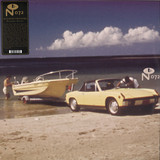
The Numero Group's dive into the deep end of America's private press continues. Having battled the witches and wizards of Darkscorch, the outlaws of Cosmic Americana, and traveled alongside Ladies From the Canyon and their Lonesome Heroes, it's time to take it easy.With pop music's volume knob adjusted for deflation in the early '70s, softness begat smoothness. Crewmen arrived from the worlds of jazz, folk, rock, and soul, all peddling a product that was sincere, leisurely, and lofty. A sound that was buoyant, crisp, defined. Sometimes classified as West Coast—and, later, Yacht Rock—the compass points of our Private Yacht expedition are the blue-eyed harmonies of Hall and Oates, the cocaine-dusted Fender Rhodes of Michael McDonald, and the combover strums of James Taylor. Here, at the glassy apex of rock's softer side, 20 strong swimmers are gathered together. An album for both relaxation and reflection, where listeners can enjoy the present, a cool breeze, and a taste of the good life.