
Сделать предзаказ03.04.2026
он должен быть опубликован на 03.04.2026
25,42 €
он должен быть опубликован на 03.04.2026

The pioneering electronic sounds of Daphne Oram reimagined by TAAHLIAH, Cosey Fanni Tutti, Marta Salogni, Arushi Jain and others using tapes from Oram's archive.
To mark the centenary of overlooked electronic pioneer Daphne Oram, Nonclassical - together with Oram Trust and Oram Awards - have commissioned new music by a set of contemporary visionary minority-gender electronic artists celebrating the next generation of trailblazers.
This group of artists span early-career to high-profile DJs and musicians across diverse electronic worlds, representing a spectrum of distinct practises - from uncompromising club beats, performance art and sound art to ambient music and deconstructed future-forward Arabic dance music.
The artists have created these new works using samples from Oram's archive - housed at Goldsmiths, University of London - which features a mix of sound clips covering not only her innovative Oramics machine and other electronic music, but also match strikes, cat purrs, scraped objects and commercial jingles as well as recordings of Oram's own voice.
Look out for gigs around the UK and at London's Barbican Centre around the release.
он должен быть опубликован на 14.11.2025

Recorded at British Grove and Abbey Road studios, Daphne Guinness’s fourth
album, Sleep, is unlike anything Guinness has produced before. Contemplative, self-
reflective, and personal, it represents her most beguiling body of work to-date; a
sleek sophisticated experience enhanced by an array of esoteric creative touches,
complementing its dancefloor rush.
Mixed by Ricky Damian, known for his work with Lady Gaga, Adele, Georgia Smith,
Dua Lipa, her creative connections include long standing collaborator Malcolm
Doherty and Tony Visconti (who scored the album’s strings).
The album’s scale is further amplified by collaborators, including Guy Pratt (Madonna, Michael Jackson) and Rob Shirakbari (Burt Bacharach, Dionne Warwick), plus a 34-piece string section.
The scope of her associations extends far beyond the core album. Daphne collaborated with Nick Knight of SHOWStudio for the video to early single ‘Hip Neck Spine’, and with the iconic filmmaker and photographer, David LaChapelle for the current single ‘Volcano’.
он должен быть опубликован на 11.10.2024

Recorded at British Grove and Abbey Road studios, Daphne Guinness’s fourth
album, Sleep, is unlike anything Guinness has produced before. Contemplative, self-
reflective, and personal, it represents her most beguiling body of work to-date; a
sleek sophisticated experience enhanced by an array of esoteric creative touches,
complementing its dancefloor rush.
Mixed by Ricky Damian, known for his work with Lady Gaga, Adele, Georgia Smith,
Dua Lipa, her creative connections include long standing collaborator Malcolm
Doherty and Tony Visconti (who scored the album’s strings).
The album’s scale is further amplified by collaborators, including Guy Pratt (Madonna, Michael Jackson) and Rob Shirakbari (Burt Bacharach, Dionne Warwick), plus a 34-piece string section.
The scope of her associations extends far beyond the core album. Daphne collaborated with Nick Knight of SHOWStudio for the video to early single ‘Hip Neck Spine’, and with the iconic filmmaker and photographer, David LaChapelle for the current single ‘Volcano’.
он должен быть опубликован на 19.04.2024

Закажите сейчас, и мы закажем товар для вас у нашего поставщика.

The British composer, musician and audio engineer Daphne Oram was a pioneering figure in the use of electronic music. Coming to prominence through her work with the BBC Radiophonic Workshop, which she co-founded, Oram was one of the first British composers to feature electronic instruments in her work and has been rightly hailed as helping musique concrete to become accepted in Britain. Born in 1925 and raised in rural Wiltshire, close to Stonehenge and the ancient stone circle at Avebury, Oram eschewed a place at the prestigious Royal College of Music to take a junior engineering role at the BBC in 1942, she was often tasked with creating sound effects, leading to cut-up experiments with tape recorders and the development of synthetic sound; her composition Still Point, involving two orchestras, two turntables and five microphones, was deemed too radical by the BBC, though she was promoted to studio manager in 1950, leading to the gradual introduction of electronic music and musique concrete techniques on BBC soundtracks. In 1957, she composed the music for the play Amphitryon 38, using a sine wave oscillator and homemade filters, and this and other subsequent works led to the establishment of the BBC Radiophonic Workshop the following year, but Oram soon tired of the conservative constraints of the BBC, leading to her resignation in 1959 to pursue her own vision at the Oramics Studios for Electronic Composition, located in Tower Folly, a former hop kiln located at Fairseat, near the village of Wrotham in rural Kent. Oramics was a radical sound composition technique that sought to transform images to music, enacted by drawing onto 35mm film, which would then be read by photo-electric cells; in addition to its use in Radiophonic Workshop material, Oramics was also employed for sound installations, theatre productions and feature films, such as The Innocents, though financial pressures forced Oram to seek a range of commercial engagements in addition to creating her own artistic works. The Listen Move And Dance series of BBC programmes were devised as a radical new technique to help British schoolchildren learn how to dance; on the LP releases, Vera Gray arranged short adaptations of classical pieces by Bartok, Stravinsky, Shostakovich and others, designed for “stamping, punching, kicking and jumping” movements, as well as “running lightly, dancing on toes” and “shaking all about,” which contrasted sharply with Oram’s electronic abstractions, which seemed to have been beamed in from outer space.
Закажите сейчас, и мы закажем товар для вас у нашего поставщика.

Seven years ago, Max Tundra sent Daphne and Celeste a tweet, asking if he could write and produce their comeback single. Four years later their song You & I Alone ripped through the internet. Today they announce the forthcoming release of the most unlikely comeback album of 2018.
Three years after their comeback song, 'BB' arrives online as their new album's appetiser, an uncompromising takedown of the anodyne and anonymous. BB stands for Basic Busker,' explains Max, any one of countless identikit instigators of mundane melodies that have brought the mood down in recent years. Pop music should lift the spirits - so why are the airwaves full of these mundane strummers'
The world has changed a hell of a lot since Daphne & Celeste stormed up the charts with their effervescent earworms U.G.L.Y. and Ooh Stick You, back near the birth of the 21st century. So you'd be forgiven for failing to predict the fruitful union of D&C with a maverick electronic producer known for his records on Warp and Domino Records. But Max Tundra has long held an ambition to become a pop producer, and this new album is an addictive combination of the eccentric, creative and melodic.
After an initial sharing of tracks and ideas around the release of that first single in 2015, Max Tundra set about writing an album's worth of material, inspired by the unique kinship, born of shared experience, between Daphne and Celeste, and his own unexpected part in their story. Last year, Tundra brought his suitcase full of songs to a desert retreat near Joshua Tree, where he joined D&C for the 'working holiday' that produced Daphne & Celeste Save The World.
A full-length album of giddy, ridiculous, genre-bursting pop, 'Daphne & Celeste Save The World' finds our friends in fine, soaring, melodic voice, with Tundra's restlessly inventive production a toothsome, chordy, maximalist feast. These 13 songs touch on subjects as varied as time travel, succulents, pipelines under the ocean, cabins in the wood, unadventurous guitarists and different regions of the brain, but above all the sweet, enduring friendship of those two people who, long ago, told us all to Ooh Stick You.
Закажите сейчас, и мы закажем товар для вас у нашего поставщика.

Закажите сейчас, и мы закажем товар для вас у нашего поставщика.

Django Reinhardt devised an astonishing new technique of playing guitar built around the two fingers on his left hand that were left with full mobility after a devastating fire and, together with Stéphane Grapelli, he was responsible for defining the gypsy jazz genre. A nomadic spirit whose life became a never-ending quest to journey to wherever his precious talent would take him, Django Reinhardt will forever be revered as one of the most unique, gifted and influential musicians of the 20th century.
Закажите сейчас, и мы закажем товар для вас у нашего поставщика.

third blueten release for the barcelona-berlin connection from gimenö and stefan helmke with three dub/break/techno sounds ! vinyl only !
Закажите сейчас, и мы закажем товар для вас у нашего поставщика.
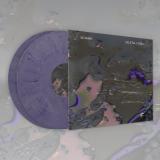
Mining the rich seam between transcendental escapism and crushing physical pressure, Sciama delivers his first album for Samurai Music. Exploring an energetic pitch between half-time and full-tilt 170, the London-based producer sculpts brooding soundscapes of sheer peaks and deep pits, driven by unrelenting but light-footed forward motion and an imposing strain of sound design. As Sciama, Michael Watters has been marking out his exacting sound since 2019 with an assured run of albums on ASC's Auxiliary label. His second EP for Samurai — the Wave Interaction 12" released earlier this year — pointed to his current area of focus inspired by the teachings of electronic music pioneer Daphne Oram. Contemplating the relationship between precise electronic frequencies and human perception, Celetal Form now delivers the full findings of his exploration. Oram coined the term 'celetal' in her 1972 book An Individual Note of Music, Sound and Electronics, trying to sum up a connection between the celestial and electrical. It's this spiritual dimension contained within sound waves Watters is concerned with, and the shape of the music on Celetal Form follows suit. In an opening statement of abyssal ambience, 'Overload Into Silence' establishes an atmosphere that endures throughout the album. Caught between steely textures, vaporous reverb tails and subtle harmonic interactions, the glacial shift of the many layers under Watters' control reveals an intense amount of detail at play even before drums and bass come into play. From there on in, the intensity ramps up from one heavyweight stepper to the next. There is agile, brittle top-end percussion at work on the likes of 'Induced Resonance' and 'Consuming Pulse', perhaps the most closely connected to D&B, while 'Rational Echoes' and 'Scanning Waveband' deal in urgency and techno-coded tension. A half-time roll guides the huge kick drum undulations of 'No Panacea', and 'Celetal Emergence' opens up into more spacious surroundings to let the subtle microtonal inflections of the synth tones set a curious mood. The two 'Intermodulation' tracks bring Watters' exacting approach into sharp focus, pushing the drums back and foregrounding alien frequencies that coalesce into unfamiliar yet strangely uplifting forms. Throughout Celetal Form this uncanny sensation charges the music with a power that reaches beyond its immediate, surface level impact. This intentional reflection on Oram's visionary thinking charges the current sound of Sciama with energetic intrigue that stands apart and invites a mindful, maybe even spiritual, engagement.
он должен быть опубликован на 02.10.2026

Returning to Samurai Music following last year's Between Veils, Sciama opens up a new portal of exacting sonic exploration with Wave Interaction. Moving through dense drone shrouds, steely sound design and tense, taut rhythms, Michael Watters lays out a manifesto for waveform resonance within the half-time D&B tempo range. Wave Interaction is the precursor to a forthcoming album that will lay out a purposeful study of the interaction between machine-made sound waves and human perception, inspired by the teachings of early electronic music pioneer Daphne Oram. As an opening statement, 'Cele' maximises on a patient, spacious arrangement that allows the carefully sculpted layers of waveforms to resonate with minimal distractions. Far from minimal, it's a dense and evocative sound world Watters builds up. 'Excitation' brings more detailed percussive sequencing into the mix, teasing pin-prick snatches of breakbeats and designer ripples that dart around the psychoactive tonal elements in the mix. 'Intermodulaton I' opens the second half of Wave Interaction on a crisp, stepping beat more than ready for the club. As ever, functionality is only one part of the picture as further uncanny sheets of ambiguously tuned synth work unfurl across the austere framework. 'Shifting Formants' has a knottier, tunnelling quality that joins the dots with techno hypnotism, made all the more immersive by the harmonic overtones radiating off the vibrant lead lines that give the track its distinctive character. Guided by a clear intention and a finely honed studio practice, the return of Sciama hails an impactful addition to his considerable catalogue and tees up further compelling exploration on the impending long player.
Есть у нас в наличии и готов к отправке
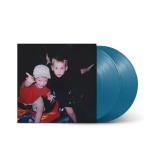
To mark their 10th anniversary, ground-breaking, JUNO Award-nominated and SOCAN Award-winning Toronto duo cleopatrick are releasing 4 cleopatrick EPs. The aptly-named collection features four iconic EPs spanning their history as a band - "14," "the boys," "DOOM," and "SCRAP" -- available on vinyl for the first time ever. The two-disc set is pressed on Petrol Blue vinyl and is available via their own Nowhere Special Recordings/Thirty Tigers.
он должен быть опубликован на 11.09.2026
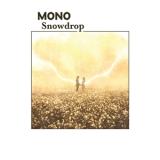
Als MONO ihr vorheriges Album OATH 2023 gemeinsam mit ihrem langjährigen Produktionspartner und Freund Steve Albini aufgenommen hatten, konnten sie sich nicht vorstellen, dass es das letzte Studioalbum sein würde, das sie zusammen machten. Albini starb im darauffolgenden Jahr tragisch, und dieser Verlust hinterließ eine unermessliche Leerstelle - nicht nur im Leben all jener, die Steve persönlich kannten, sondern bei jedem, der eine emotionale Verbindung zu einem der Tausenden von Alben hat, an deren Entstehung er in den vergangenen vier Jahrzehnten beteiligt war. Er brachte Klarheit in das Chaos und eine selbstlose Hingabe an die Kunst und die Künstler, die ihresgleichen suchte. Auf persönlicher wie auf praktischer Ebene stellte sein Tod MONO vor tiefe Trauer und große Unsicherheit. Albini war zu einem grundlegenden Bestandteil des unverwechselbaren MONO-Sounds geworden, und allein der Gedanke daran, ihn ersetzen zu müssen, war mehr als entmutigend.Und dann kam: Brad Wood (Touché Amoré, The Smashing Pumpkins).Ausgewählt aufgrund seiner Vertrautheit mit MONOs kreativen und technischen Arbeitsprozessen - ebenso wie seiner jahrzehntelangen Freundschaft mit Steve Albini - betrat Brad Wood im September 2025 das legendäre Electrical Audio Studio, um aufzunehmen, was schließlich zu Snowdrop werden sollte. Gemeinsam mit dem in Chicago ansässigen Dirigenten und Orchesterleiter Chad McCullough verpflichteten MONO ein zehnköpfiges Orchester und einen achtköpfigen Chor für die acht monumentalen Stücke, aus denen Snowdrop besteht. Die Band spielte, und Wood nahm in demselben heiligen Raum auf, in dem die meisten MONO-Alben ihrer 25-jährigen Geschichte entstanden waren - die Songs auf Snowdrop tragen daher ein besonderes Gewicht. Abgemischt wurde das Album von Wood in seinem Seagrass-Home-Studio in Los Angeles; es klingt zugleich intim und umhüllend.Wo leicht ein Schatten über Snowdrop hätte liegen können, findet sich stattdessen eine außergewöhnliche Atmosphäre der Dankbarkeit. Statt in Herzschmerz zu verweilen, entsteht eine eindringliche Wertschätzung für das gut gelebte Leben mit einem geliebten Freund - und eine Sehnsucht danach, was noch kommen mag. Snowdrop ist der Klang einer Band, die Schock und Trauer in Hoffnung und Staunen verwandelt - und neue Klarheit im befreienden Gefühl des Nichtwissens findet.
Закажите сейчас, и мы закажем товар для вас у нашего поставщика.
BOYSENBERRY VINYL[33,57 €]
Als MONO ihr vorheriges Album OATH 2023 gemeinsam mit ihrem langjährigen Produktionspartner und Freund Steve Albini aufgenommen hatten, konnten sie sich nicht vorstellen, dass es das letzte Studioalbum sein würde, das sie zusammen machten. Albini starb im darauffolgenden Jahr tragisch, und dieser Verlust hinterließ eine unermessliche Leerstelle - nicht nur im Leben all jener, die Steve persönlich kannten, sondern bei jedem, der eine emotionale Verbindung zu einem der Tausenden von Alben hat, an deren Entstehung er in den vergangenen vier Jahrzehnten beteiligt war. Er brachte Klarheit in das Chaos und eine selbstlose Hingabe an die Kunst und die Künstler, die ihresgleichen suchte. Auf persönlicher wie auf praktischer Ebene stellte sein Tod MONO vor tiefe Trauer und große Unsicherheit. Albini war zu einem grundlegenden Bestandteil des unverwechselbaren MONO-Sounds geworden, und allein der Gedanke daran, ihn ersetzen zu müssen, war mehr als entmutigend.Und dann kam: Brad Wood (Touché Amoré, The Smashing Pumpkins).Ausgewählt aufgrund seiner Vertrautheit mit MONOs kreativen und technischen Arbeitsprozessen - ebenso wie seiner jahrzehntelangen Freundschaft mit Steve Albini - betrat Brad Wood im September 2025 das legendäre Electrical Audio Studio, um aufzunehmen, was schließlich zu Snowdrop werden sollte. Gemeinsam mit dem in Chicago ansässigen Dirigenten und Orchesterleiter Chad McCullough verpflichteten MONO ein zehnköpfiges Orchester und einen achtköpfigen Chor für die acht monumentalen Stücke, aus denen Snowdrop besteht. Die Band spielte, und Wood nahm in demselben heiligen Raum auf, in dem die meisten MONO-Alben ihrer 25-jährigen Geschichte entstanden waren - die Songs auf Snowdrop tragen daher ein besonderes Gewicht. Abgemischt wurde das Album von Wood in seinem Seagrass-Home-Studio in Los Angeles; es klingt zugleich intim und umhüllend.Wo leicht ein Schatten über Snowdrop hätte liegen können, findet sich stattdessen eine außergewöhnliche Atmosphäre der Dankbarkeit. Statt in Herzschmerz zu verweilen, entsteht eine eindringliche Wertschätzung für das gut gelebte Leben mit einem geliebten Freund - und eine Sehnsucht danach, was noch kommen mag. Snowdrop ist der Klang einer Band, die Schock und Trauer in Hoffnung und Staunen verwandelt - und neue Klarheit im befreienden Gefühl des Nichtwissens findet.
он должен быть опубликован на 12.06.2026

Закажите сейчас, и мы закажем товар для вас у нашего поставщика.

The Radio Phonics Laboratory by Justin Patrick Moore is the story of how electronic music came to be, told through the lens of the telecommunications scientists and composers who helped give birth to the bleeps and blips that have captured the imagination of musicians and dedicated listeners around the world.
Featuring the likes of Leon Theremin, Hedy Lamarr, Max Matthews, Hal 9000, Robert Moog, Wendy Carlos, Claude Shannon, Halim El-Dabh, Pierre Schaeffer, Pierre Henry, Francois Bayle, Karlheinz Stockhausen, Vladimir Ussachevsky, Milton Babbitt, Daphne Oram, Delia Derbyshire, Edgar Varese & Laurie Spiegel.
Quotes
“From telegraphy to the airwaves, by way of Hedy Lamarr and Doctor Who, listening to Hal 9000 sing to us whilst a Clockwork Orange unravels the past and present, Moore spirits us on an expansive trip across the twentieth century of sonic discovery. The joys of electrical discovery are unravelled page by page.”
Robin Rimbaud aka Scanner
“Embark on an odyssey through the harmonious realms of Justin Patrick Moore’s Radio Phonics Laboratory echoing the resonances of innovation and discovery. Witness the mesmerising fusion of telecommunications and musical evolution as it weaves a sonic tapestry, a testament to the boundless creativity within the electronic realm. A compelling pilgrimage for those attuned to the avant-garde rhythms of technological alchemy.”
Nigel Ayers (Nocturnal Emissions)
“In this captivating exploration of electronic music, Justin Patrick Moore unveils its evolution as guided by telecommunication technology, spotlighting the enigmatic laboratories of early experimenters who shaped the sound of 20th century music. A must-read for electronic musicians & sound artists alike—this book will undoubtedly find a prominent place on their bookshelves.”
Kim Cascone
Закажите сейчас, и мы закажем товар для вас у нашего поставщика.

Vintage-Pariser Jazz. Vintage-Pariser Ambiente. Paris hat schon immer Jazzmusiker aus aller Welt in seine Clubs & Cafés gelockt. Paris ist insbesondere die spirituelle Heimat des Gypsy-Jazz, wo viele Jazzmusiker in der ersten Hälfte des 20. Jahrhunderts in den Bals-Musettes der Stadt spielten. Django Reinhardt machte sich in den 1930/40ern mit dem Geiger Stéphane Grappelli und seinem Quintette du Hot Club de France einen Namen, ebenso wie mit den Bands von Alex Renard, Alix Combelle, Ray Ventura, Claude Bolling und Jerry Mango. Dieser LP-Sampler gibt einen hervorragenden Überblick über die damalige Szene, als kurz nach dem Krieg die Viertel Saint-Germain des Prés und Latin zahlreiche berühmte Jazzclubs beherbergten. Alle Tracks wurden remastert.
он должен быть опубликован на 31.01.2025

он должен быть опубликован на 06.12.2024

Nour Mobarak’s Dafne Phono is an adaptation of the first opera, Dafne, composed and written by Jacopo Peri and Ottavio Rinuccini in 1598. Drawing on the myth of Daphne and Apollo from Ovid’s Metamorphoses—a story of unrequited love, patriarchal possession, conquest, and transformation—Mobarak’s multimedia and multispecies reimagining splinters the opera’s Italian libretto. Alongside English and Greek versions, it is translated into some of the world’s most phonetically complex languages—Abkhaz, San Juan Quiahije Eastern Chatino, Silbo Gomero, and !Xoon. In this process, the narrative—and an artifact of Western culture—is dismantled, metabolized, and rendered into unruly utterances that shape the sensorium as much as they do the capacity for sense-making. These voices are given material form by a cast of mycelium sonic sculptures whose rhizomatic compositions and broadcasted recordings resemble the formation and mutation of language over time, reconstituting speech into a new, polyphonic body politic, composed of voices whose striking, poetic utterances transfix and transcend meaning.
The A-Side of the record presents a stereo version of Mobarak’s 15-channel sound installation, Dafne Phono. The B-Side uses a recording of a portion of the translation process the libretto underwent in Namibia, live-processed by the artist.
The LP is published on the occasion of Nour Mobarak’s exhibition at The Museum of Modern Art, New York (October 26, 2024–January 12, 2025), with support from Sylvia Kouvali.
Artist Bio:
Nour Pamela Mobarak (Lebanese-American, b. 1985, Cairo, Egypt) lives and works between Los Angeles; Bainbridge Island; and Athens, Greece. Her works have been shown at Sylvia Kouvali (formerly Rodeo), London/Paris; Schinkel Pavillon, Berlin; MIT List Visual Arts Center, Cambridge, MA; Amant, Brooklyn; JOAN, Los Angeles; Kim? Contemporary Art Centre, Riga; Miguel Abreu Gallery, New York; Hakuna Matata, Los Angeles; and Cubitt Gallery, London. Exhibitions at the Museum of Modern Art, New York, and Castello di Tivoli Museo d’Arte Contemporanea, Turin, are forthcoming. She has performed at Western Front, Vancouver; 2220, the Hammer Museum, and LAXART, Los Angeles; Cafe OTO, London; Renaissance Society, Chicago; the Museum of Contemporary Art, San Diego; and elsewhere. Her music has been released by Recital (Los Angeles), Cafe OTO’s TakuRoku (London), and Ultra Eczema (Antwerp), and she has had sessions on BBC Radio 3, NTS Radio, and Dublab Radio. Mobarak’s writing has been published in Triple Canopy, F.R. David, The Claudius App, and the Salzburg Review, and her first catalog, Sphere Studies and Subterranean Bounce was published by Recital (2021). She received a BA in English and Media Studies from Sussex University and did further studies at Université Paris-Sorbonne, Paris IV. She has held residencies at Denniston Hill, New York and the Institute of Contemporary Art, Los Angeles, and was the recipient of the 2023 FOCA fellowship award. Mobarak was a 2024 faculty at Bard College MFA program.
Dafne Phono Vocalists:
Apollo: Renato Grieco (Italian)
Cupid: Arnou Argun (Abkhaz)
Dafne: Agnes | xaye (!Xoon)
Ovid: Olivia O’Dwyer (Latin)
Venus: Don Eugenio Darias (Silbo Gomero)
Abkhaz Chorus: Liana Ebzhnou, Murman Guaramia, Fatima Kharzalia, and Gunda Osia
Chatino Chorus: Felix Daniel Peña Mendes, José Vasquez Canseco, Catalina Candelario Matias, and Claudia Garcia Baltazar
!Xoon Chorus: Franco Tsame, John Djujui Klosi Barase, and Charity Tsame
Clarinet: Steve Kado
он должен быть опубликован на 18.10.2024

Guitarist Django Reinhardt and violinist Stephane Grappelli hold unique places in the history of jazz music. As the mainstays of the Quintet of the Hot Club of France, they are the first European musicians to directly influence what was until their heyday, a totally American-based genre. The pair could hardly have been more different, yet it was this contrast that apparently fired up their partnership. Even though they collaborated with many famous figures, their work with the Quintet of the Hot Club of France
remains the most celebrated of their careers. Celebrate their collaboration with eighteen specially selected pieces, which includes works penned by the pair; Swing Guitars, Djangology, My Sweet, Daphne, Swing '39, Nocturne, Hungaria, H.C.Q. Strut and Swing From Paris
он должен быть опубликован на 30.09.2024

Canadian performer and composer Sarah Belle Reid’s 2021 acclaimed album, first time on vinyl, expanded with two new incredible songs, remastered featuring new artwork. From distant ocean song to the clang and howl of a murky forgotten memory, MASS is a dreamlike collage of shrill shrieks, gasps, corroded brass choirs, and melting modular synth soundscapes, all heard through a mist of hiss and noise. Fused with equal parts spastic improvisation, shrouded ritual, and meticulous arrangement, it presents a sonic topography at once tongue-in-cheek, sensitive, and nightmarish. With discordant chorales and angular trumpet improvisations churning in an ever-evolving wash of whispers and howls, MASS is a collection of three hazy, harsh, and frightful sound worlds. With tracks meandering between aggressive rhythms, eerie ambiances, and abrasive cut-up electronic textures, MASS draws inspiration from early tape music, horror film soundtracks, and grindcore. It was assembled between listening to extended doses of Else Marie Pade, Daphne Oram, Eliane Radigue, the Locust, Edgard Varèse, Maryanne Amacher, Dick Raaijmakers, Naked City, Mr. Bungle, and Thomas Ankersmit, bringing a little bit of all of them along with it. MASS was recorded and mixed over the course of three weeks in January–February 2021 while in the midst of a cross-country move. Recorded entirely in short-term housing away from her studio (and most of her instruments), Reid relied exclusively on her voice, trumpet, flugelhorn, household objects, and Make Noise's Strega semi-modular synthesizer for all sound materials. Original sound materials were recorded loosely and independently with little to no overdubbing, instead relying on meticulous editing and processing in the manner of classic tape music.
он должен быть опубликован на 22.03.2024

Canadian performer and composer Sarah Belle Reid’s 2021 acclaimed album, first time on vinyl, expanded with two new incredible songs, remastered featuring new artwork. From distant ocean song to the clang and howl of a murky forgotten memory, MASS is a dreamlike collage of shrill shrieks, gasps, corroded brass choirs, and melting modular synth soundscapes, all heard through a mist of hiss and noise. Fused with equal parts spastic improvisation, shrouded ritual, and meticulous arrangement, it presents a sonic topography at once tongue-in-cheek, sensitive, and nightmarish. With discordant chorales and angular trumpet improvisations churning in an ever-evolving wash of whispers and howls, MASS is a collection of three hazy, harsh, and frightful sound worlds. With tracks meandering between aggressive rhythms, eerie ambiances, and abrasive cut-up electronic textures, MASS draws inspiration from early tape music, horror film soundtracks, and grindcore. It was assembled between listening to extended doses of Else Marie Pade, Daphne Oram, Eliane Radigue, the Locust, Edgard Varèse, Maryanne Amacher, Dick Raaijmakers, Naked City, Mr. Bungle, and Thomas Ankersmit, bringing a little bit of all of them along with it. MASS was recorded and mixed over the course of three weeks in January–February 2021 while in the midst of a cross-country move. Recorded entirely in short-term housing away from her studio (and most of her instruments), Reid relied exclusively on her voice, trumpet, flugelhorn, household objects, and Make Noise's Strega semi-modular synthesizer for all sound materials. Original sound materials were recorded loosely and independently with little to no overdubbing, instead relying on meticulous editing and processing in the manner of classic tape music.
он должен быть опубликован на 22.03.2024

Occasionally, you find music outside the commercial mainstream, outside of everything – the music of visionaries, eccentrics, inventors, loners, the keepers of secrets, the path-finders. Moondog, Daphne Oram, Harry Partch are from this mould. And so too is Lori Vambe.
New on Strut, the first ever reissue of Vambe’s privately pressed original albums from 1982, Drumland Dreamland and Drumgita Solo. A self-taught drummer, inventor, and sonic experimentalist, Lori Vambe is a unique figure in British music. Creator of his own instrument, the drumgita (pronounced ‘drum-guitar’) or string-drum, Vambe intended to create a kind of music that had never been made in order to pursue access to the fourth dimension.
Vambe was born in Harare, Zimbabwe and his father, Lawrence Vambe, was a noted Zimbabwean journalist and author. Moving to London in 1959, Vambe immersed himself in the Brixton squat movement of the early 1970s, teaching himself to drum and creating a short-lived performance group, The Healing Drums of Brixton (Vambe, the sculptor Alexander Sokolov and outsider musician Michael O’Shea). Vambe later had a dream-vision involving a feeling of ecstasy while playing an unknown instrument that extended from his own umbilical cord; the instrument would manifest itself as the drumgita. In 1982, he privately produced a pair of home recordings, the diptych set Drumgita Solo and Drumland Dreamland, releasing them on his own label Drumony. On these records, he rejected any commercial aesthetic and employed tape effects, temporal shifts, reversed sound and overdubbing to investigate space-time and access the fourth dimension. Combining layered drums with the rhythmic throb of the drumgita and, on Drumland Dreamland, an improvised piano performance by Brazilian concert pianist Rafael Dos Santos, the albums are both hypnotic and perturbing.
Both albums were cut at Portland Studios by Chas Chandler and stand as a concealed monument of Black British experimental music. 500 copies of each record were originally pressed, and both were released together. The albums were never performed live.
For this first ever reissue of Drumland Drumland and Drumgita Solo, Strut presents the two albums in their original artwork, housed in a deluxe slipcase including an additional 8-page 12”-sized booklet featuring unseen photos, liner notes and an interview with Lori Vambe by The Wire magazine writer Francis Gooding. Both albums are fully remastered by The Carvery.
он должен быть опубликован на 29.09.2023

Imagine if Eric Carle had been signed to Ghost Box, or if the Look Around You team had ended up taking over the Radiophonic Workshop. If you can picture that kind of sound, we’re ready to welcome you to the Cosmic Neighbourhood.
Cosmic Neighbourhood’s Gatherings is an album made for wild imaginations and deep daydreams. Its fourteen tracks provide the kind of trip you can take if you close your eyes tight enough and let your mind wander. It’s the music of small things, groovy sounds from way underground that’s inspired as much by Martin Rev and Moondog as it is by walking trees, pine cones catching the bus, nocturnal farmyard symphonies and the movements of butterflies reimagined through restless drum machines. Sounds good? Come join the gathering. There’s room for everyone.
Cosmic Neighbourhood is the musical alias of York-based illustrator and musician Adam Higton. Adam’s work encompasses comic strips, collage and sound art and documents the daily goings-on of the forest folk within the realm of the Cosmic Neighbourhood. His two albums on Kit (|Collages I and II) see each song acting as a response to a series of paper-and-scissors compositions. Sonically, these records straddle new and old, taking modular electronics, flutes, bells and softly pattering drum machines, before colouring them all with the amber glow of some forgotten, psychedelic kids' TV programme. Higton's benign toots and echoing jingles bring to mind Daphne Oram's early delay experiments or the meandering playfulness of Tom Cameron. Radiophonic and time-worn, it still somehow sounds like the future.
Gatherings follows previous Cosmic Neighbourhood albums Library Vol 1 and Collages I and II. Previous Rivertones releases include spoken word and found sound collages by Robert Macfarlane & Chris Watson, poetry and elemental music by Will Burns & Hannah Peel and the soundtrack to Wolfgang Buttress’ Hive structure at Kew Gardens by Be.
он должен быть опубликован на 28.07.2023

In 2015, when we launched Hip Dozer, we were overwhelmed by the amount of talent that was still championing this old school way of making beats and the incredible creativity that was circulating in the scene.
In a period where hip hop was evolving so much and going further (sometimes for the better but also for the worse), it was obvious to us that we had to defend this rising scene of young beatmakers who were so attached to the roots of old-school beatmaking but who were always taking it to another level.
It's been 7 years since we created Hip Dozer Records with our first anniversary compilation and that's what makes this compilation so special every time. Its purpose remains the same and will always be to champion the art of beatmaking that we love and to help showcase new artists in the scene.
This year we are lucky enough to have some of our favourite talents from the scene on board with artists like Saib, Flughand, Phoniks, Cookin Soul, SoulChef and Wun Two.
We would like to say a huge thank you to all the artists who have been involved in this project and who have been as enthusiastic as we are in making it happen. It has been such a pleasure since the beginning of this adventure and this is only the beginning. Much love to all of you who listen and support wherever you are.
Закажите сейчас, и мы закажем товар для вас у нашего поставщика.

RIYL: ESG, LCD Soundsystem, Liquid Liquid, Hercules & Love Affair, Talking Heads. Melbourne, Australia "heat beat" icons NO ZU regroup after the passing of vocalist Daphne Camf, to release their first new original music since 2016. NO ZU have played Barcelona's Primavera Festival, performed live on French television, and toured Australia with no wave icons ESG and James Chance. Led by the magnetic, tireless Nicolaas Oogjes, NO ZU's multi- limbed, mutant punk funk has evolved over the last decade to make them one of Australia's most distinctive and debauched groups. Daphne’s passing in 2021 left a huge hole in the band, and they fell into a long silence. Now they return with an EP featuring her final recordings with the group. Heat Beat, named after the band’s own trademarked genre, is classic NO ZU. Dark and playful, layered with cryptic allusions and implausibly danceable, the EP shows NO ZU at their restless, exploratory best. 2016 second album Afterlife took NO ZU to Europe as well as US shows where they collaborated with members of Liquid Liquid. 2017 remix EP BODY2BODY2BODY saw Afterlife tracks reworked by the band's 80s idols A Certain Ratio and Jonny Sender of Konk. In 2020 they released a double A-side single covering Hunters & Collectors’ Talking To A Stranger and Bryan Ferry’s Sensation, and played their last live show in Feb 2020. Now NO ZU return with a joyful, celebratory EP of their final recordings with beloved vocalist Daphne Camf. Like a post-punk band discovering the joys of dub, disco, and Afrobeat” – Pitchfork // “Melbourne’s freakiest multi-limbed ensemble are masters of percussive lunacy and wild x-rated boogie” – The Vinyl Factory // Side A: 1. Liquid Love 2. Mind Melt.. Side B: 3. Cosmetic Beat 4. Heat Beat Head 5. Phone Call Melt Down
он должен быть опубликован на 02.12.2022

Verschwimmende Traumchroniken Ein Martin Rev Album ist stets eine unberechenbare Überraschung. So verwunderte das 2003er Werk "To Live" mit dem erstmaligen Einsatz schroffer Gitarren statt Synthesizer-Kompositionen und auch wenn Rev auf dem Folge-Album "Les Nymphes" aus dem Jahr 2008 zu seinen traumverhangenen Melodie-Miniaturen zurückkehrt, ist die Platte in ihrer Konsequenz noch einmal radikaler. War Martin Revs Oeuvre zumeist von einem durch und durch minimalistischen Ansatz geprägt, machen die Stücke auf "Les Nymphes" im Vergleich einen fast opulenten, überbordenden Eindruck. Bereits nach den ersten Sekunden des Openers "Sophie Eagle" hat man den Eindruck, eine riesige Sound-Welle aus sich überlagernden Echo-Schleifen, Rhythmus-Loops und Phasenverschiebungen, auf der Melodie-Fragmente und Revs sporadisch auftauchende Stimmenfetzen wie Schaumkronen treiben, würde einen davon schwemmen. Auch die in der kontemporären Clubmusik zu verortenden Verweise, die sich erstmals auf dem Vorgänger "To Live" andeuteten, finden hier ihre Fortsetzung. So hört man auf "Triton" und dem Titelstück "Les Nymphes Et La Mer" auch jene, ob ihrer Härte teils befremdlich anmutenden Gitarren-Samples wieder, die das vorige Album dominierten. Alle anderen Tracks auf "Les Nymphes" sind jedoch vor allem von einer unterkühlten, traumartigen Slow Rave und PostIndustiral Atmosphäre geprägt, die in ihrer dreidimensionalen Breitband-Klanglichkeit mitunter an Werke von Coil erinnern. "Die Ähnlichkeiten von "Les Nymphes" mit House und Dance waren natürlich offensichtlich, obwohl ich nicht speziell danach gesucht habe. Es war wahrscheinlich das erste Werk, das ich von Anfang bis Ende am Computer fertiggestellt habe. Viele der Tracks wurden digital aus interaktiven Programmen und nicht mit Outboard-Geräten erstellt. Die Atmosphäre und der Sound wurden durch viel Lektüre in der griechischen Mythologie inspiriert sowie dem Studium der gleichen Geschichten in verschiedenen Sprachen. Wahrscheinlich war mein mehrjähriger Aufenthalt in Montreal ein starker Einfluss, da es eine französischsprachige Umgebung ist und es in allen Buchläden eine große Auswahl an klassischer Literatur in Französisch und anderen Sprachen gibt." so Martin Rev. Speziell jene Inspiration, die sich aus kulturellen Mythologien speist und auf "Les Nymphes" zu einer, sämtliche Realitäten verschwimmenden Traumchronik wird, macht das Album so anziehend. Man fragt sich mitunter, wie ein ätherisches House oder Techno Album unter Revs Regie klingen würde. Einmal mehr beweist auch dieses Werk die Kompromisslosigkeit, mit der Martin Rev arbeitet und seiner Bereitschaft, stets Risiken einzugehen unter der konsequenten Verweigerung sich nur an einer Ästhetik allein abzuarbeiten. "Les Nymphes" ist fraglos das Album eines Künstlers, der immer auf der Suche ist.
он должен быть опубликован на 02.12.2022
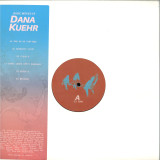
Welcome to BM-18 the biokinetic realm created by Dana Kuehr, a lush audio environment where organic and synthesized matter coalesce. As we float disembodied above this verdant pixel plain, Dana offers us shifting repetitions and sequences in disguise, each track a landscape within a world created in the utmost detail, from the minute bleeps and chirps to the enveloping and bumping bouncy basslines. Flickering drums explode like dandelion seeds in a breeze, searching for a place to lay, grow, and flourish. Sounds are captured (fingers tapping, rain patter, Belgian parakeets released from a '70s zoo, vocal oohs and ahhs) and hybridized with patterns, samples, and musical manoeuvres (jungle breaks, west coast hip hop, layered drums, IDM crunch and twinkle, reverb, delay, '90s R&B, underwater video game soundscapes). As in any imaginary sphere, there are characters who exchange and converse: rivers, coasts, clouds, lakes, echoes of dolphins, and peaceful frogs. Amidst their complex chatter, the sounds of BM-18 extend an invitation to dance, to feel our bodies alive and present, to acknowledge the impulse of movement and the pulsing heartbeats of each track. An ode to the Taoist consideration that all creatures live together in mystic unity, co-evolving and feeding each other, Dana brings together cloud ethereal with earth pounding, and like an orca's tail upon a restless sea, it slaps!!! All tracks written and produced by Dana Kuehr between April 2020 and November 2021 in Brussels, and mixed by Dan Piu at Checkpoint Charly Studio in Zurich between November 2021 and March 2022. Mastered and cut by Stefan Betke at Scape in Berlin. Original artworks by Camiflage and text by Ailsa Cavers. A1 was first digitally released on Ojoo Music. Dana thanks Michiel, George, Jakob, Camiel, Ailsa, Tania, Victor, Jill, Karen, Daphne, Arne, Oscar, Joe, and Gwenan for the love and inspiration. True voyage is return!
Закажите сейчас, и мы закажем товар для вас у нашего поставщика.

Green vinyl[27,69 €]
Originally released by Bethlehem Records in 1959, NINA SIMONE AND HER FRIENDS was a compilation album comprised of the few remaining, unreleased tracks from the Little Girl Blue recording session plus songs recorded by two other former Bethlehem artists, the powerhouse jazz vocalist Carmen McRae and the elegant song stylist Chris Connor.
As Daphne Brooks explains in the release’s brand new essay, “Bethlehem clustered their work—tracks that had previously appeared on the label’s Girlfriends compilation—together with the younger, upstart Simone’s and essentially offered up a collection of songs that span a range of genres—folk, jazz, pop song staples, and torch song laments, plus a couple of provocative original compositions by McRae and Simone. Each track is a reminder
of the clear-eyed independence, verve, and confidence of three artists whose music, taken together, brims with the majesty and the assured talents of the late 1950s women artists who led with conviction and invention as musicians and song interpreters.”
Featuring a brand new stereo mix by four-time Grammy winner Michael Graves. Includes new essay by author of Liner Notes For The Revolution, Daphne A. Brooks.
он должен быть опубликован на 29.04.2022

Black vinyl[23,74 €]
Originally released by Bethlehem Records in 1959, NINA SIMONE AND HER FRIENDS was a compilation album comprised of the few remaining, unreleased tracks from the Little Girl Blue recording session plus songs recorded by two other former Bethlehem artists, the powerhouse jazz vocalist Carmen McRae and the elegant song stylist Chris Connor.
As Daphne Brooks explains in the release’s brand new essay, “Bethlehem clustered their work—tracks that had previously appeared on the label’s Girlfriends compilation—together with the younger, upstart Simone’s and essentially offered up a collection of songs that span a range of genres—folk, jazz, pop song staples, and torch song laments, plus a couple of provocative original compositions by McRae and Simone. Each track is a reminder
of the clear-eyed independence, verve, and confidence of three artists whose music, taken together, brims with the majesty and the assured talents of the late 1950s women artists who led with conviction and invention as musicians and song interpreters.”
Featuring a brand new stereo mix by four-time Grammy winner Michael Graves. Includes new essay by author of Liner Notes For The Revolution, Daphne A. Brooks.
он должен быть опубликован на 03.12.2021

BMG is proud to present a brand-new reissue of Little Girl Blue, which has been justifiably celebrated as a timeless classic. In her essay written specifically for this release, Daphne A. Brooks, author of such acclaimed books as Liner Notes for the Revolution, puts it best when she asserts that Little Girl Blue presents “an astonishingly daring, dazzlingly confident, endlessly adventurous artist with a deep well of formidable instrumentality up her sleeve as well as a wide and robust, rich and varied knowledge of jazz, blues, American songbook, folk and spiritual standards and aesthetics.”
Little Girl Blue’s multi-phased release begins on June 1 with a digital release (on high-definition and standard audio) that coincides with African-American Music Appreciation Month, while August 13 is the date Little Girl Blue comes out globally on “clear blue” 180-gram vinyl, 180-gram black vinyl and CD. Additionally, this reissue boasts a fresh stereo mix done by four-time Grammy winner Michael Graves as well as a vinyl remastering by the renowned Kevin Gray.
Little Girl Blue features two of Simone’s most well-known tracks. Her sensational rendition of “I Love You, Porgy” was a big hit upon release, and was her only song to crack Billboard’s Top 20. Her jaunty performance of “My Baby Just Cares for Me” brought Simone renewed public interest after it was used in a popular 1987 Chanel No. 5 TV commercial.
он должен быть опубликован на 26.11.2021

We're extremely proud to present HAPPENSTANCE, a sprawling jazz-concrète project produced by Johannesburg composer and double bass player Shane Cooper. Approached in 2020 by interdisciplinary arts space The Centre For The Less Good Idea to create audio work, Cooper drew on his network in the thriving South African jazz scene, bringing in Bokani Dyer (piano), Cara Stacey (bows), Daliwonga Tshangela (cello), Gontse Makhene (percussion), Jonno Sweetman (percussion) and Micca Manganye (percussion).
Two days of free-flowing composition, improvisation and investigative recording followed, with the results captured on a vintage reel-to-reel tape machine. This tape was fractured and reassembled by Cooper, bringing into surreal focus tiny ecosystems of sound, like curls of static clasped from the air and brought under the magnifying glass. The results - two long, standalone pieces - are dizzying, weightless; musique concrète melding with jazz-schooled virtuosity in a dubbed out bricolage of interludes and u-turns.
Recommended for fans of Abdullah Ibrahim, Tony Allen, Floating Points and Daphne Oram.
Закажите сейчас, и мы закажем товар для вас у нашего поставщика.

Columbus, Ohio’s Rudolph Johnson drew comparisons to John Coltrane during his career; like the jazz legend in his later years, Johnson eschewed drugs or alcohol and spent his time every day either meditating and rehearsing on his horn. You can definitely hear
a little bit of Coltrane in Johnson’s playing on this, his 1971 debut release for the Black Jazz label, the first of two he recorded for the
imprint and the first he recorded as a leader after some sideman work (most notably for organist Jimmy McGriff); his ability to explore the upper registers and overtones of his tenor sax while retaining control is quite striking. Of course, this being a Black Jazz release, along with the bebop sounds of “Sylvia Ann” and the mid-‘60s Blue Note stylings of “Sylvia Ann,” there’s the soul jazz of “Diswa” and the groove funk of “Devon Jean,” all played by, as is typical on Black Jazz releases, by top-notch sidemen including drummer Raymond Pounds, who’s layed
with everybody from Stevie Wonder to Pharoah Sanders to Bob Dylan, and pianist John Barnes, whose work is very familiar to Motown fans (Supremes, Temptations, Marvin Gaye). Bassist Reggie Jackson, who appeared on the Walter Bishop, Jr. Coral Keys record we previously released, rounds out the quartet. First vinyl reissue of another stellar Black Jazz release!
он должен быть опубликован на 05.02.2021

2x12"
Having made initial waves on Cold Recordings and Osiris, Eric Baldwin returns now to Tectonic to release his eponymous album ’Cocktail Party Effect’, bringing his South London roots to Berlin for an all-weekender, under strobe lights.
Drawn by his appetite for powerful rhythmical forms and inspired by the likes of Daphne Oram, The Residents and Captain Beefheart - Eric takes uses background in sound design, knowledge of hacking VST software and adapted spring reverbs and other hardware, to create a truly unique vision of contemporary electronic music. It sits somewhere between Jeff Mills, Aphex Twin & Squarepusher - held together by a connective UK Bass Music spinal chord. A weird but intriguing beast.
We open the track with Japanese cocktail recipes, before moving into the only vocal track of the album, ‘Talking To Bricks’ featuring Bristol vocalist Redders on fine form - charged with disjointed energy and run ragged across a technologically charged dancehall style beat. The LP progresses through the rolling breaks and bleeps of ‘For The Memory Exchange’, into an IDM side-step in the shape of ‘Brutalism’, moving into the gentle, beautiful flickering glitches of ‘PDA’, before we get to the hyperactive twitching alien charge of ‘War On Codex’.
Taking a leap in another direction, we reach ‘Cause For Bad Shelving’, which sounds a bit like Squarepusher when he was on late 90s, immaculate form - taking the tempo up a few notches, while building melancholy. ‘Lack Of Wrong Format’ then gives us a moment to breathe, before diving into ‘Deerhorn’ which brings us right back to the dancefloor. Things are then turned inside out with the jittery wonder of ‘I Get It (Lost Banknote)’, redirected via the industrial clangs of ‘Low_Rise’, before rounding off our sonic adventure with the ponderous tones of ‘Loner’ - which leave you glowing and drifting off into space.
A bold album that’s just brim with a strong sense of originality, direction and grand narrative. From international dancefloors to post-clubbing ear-worms, Cocktail Party Effect is just getting started and you’ll be hearing his name more and more now.
Закажите сейчас, и мы закажем товар для вас у нашего поставщика.

'There's a lot of serendipity involved in wrestling grooves out of these awkward machines', says Richards about the process behind the record. 'A large part of the composition is making the machines and the patches. They define the limitations of the pieces coming together. Then the performances are happy accidents - found using intuition and practice.'
Made up of two studio sessions and one live recording, PINK NOTHING reflects the unusual space Richards inhabits musically. It's partly informed by his background as a PhD student at Goldsmiths, where he re-imagined and built the Mini Oramics machine – a 'drawn sound' instrument first conceived by electronic music pioneer Daphne Oram, and finally realised by Richards in 2016.
But Richards is also an autodidact beat-maker, and much of the structures and sounds on PINK NOTHING derive from dance music, while his influences also include ritual trance, Ghanaian drum choir music, and the cellular rhythms of Steve Reich. 'It's polyrhythmic abstract electronica' – and he emphasises – 'listening music'.credits
Закажите сейчас, и мы закажем товар для вас у нашего поставщика.

Закажите сейчас, и мы закажем товар для вас у нашего поставщика.

Liška, the Czechoslovakian word for fox. Beguiling in its beauty, cunning in it's charm. Said to be one of the most intelligent animals on the planet its global family consists of thirty-seven varieties; all of them recognised, respected and feared for their persuasive, creative, resourceful and elusive nature. The Liška we will talk about today is no exception to these hereditary rules and within the grooves of this record Finders Keepers present an 'elusive' musical artefact that best exemplifies every facet of this composer's animal namesake.
Had he not been born in the small Bohemian town of Smecno in the early 1920s the story of The Fantastic Mr. Liška might have well taken a different course. Alternatively, fettered by the hampers of communism, this lifelong resident of Czechoslovakia would never quite find his seat at the same table as the likes of John Barry, Ennio Morricone, Michael Nyman and Stanley Myers, nor drop enough phonographic breadcrumbs to track his legacy. But having waited patiently behind the borders of the wider landscapes of international cinema, Liška's musical brood, spanning multiple stylistic decades and generations, has now started to walk proudly amongst his would-be, latter-day compeers. In an era where music lovers have almost become immune to adjectives like 'lost', 'rare' and 'unreleased' in a climate where previously lesser-known off-kilter master composers such as Vannier, Kirchin and Axelrod have become widely revered, it is perhaps the perfect time for discerning listeners to advance above the feeding trough and seek out this truly pioneering and revolutionary Eastern European composer. Rivalled only by the likes of Krzysztof Komeda and Andrzej Korzynski in Poland, alongside Alexandr Gradsky in Russia, and often splitting workloads with fellow Czech composers like Luboš Fišer, Zdenek Liska's filmography of over almost 300 fully formed movie scores virtually eclipses the achievements of these socialist era luminaries. Respected unanimously in both Czech and Slovakian by studio bosses, producers, directors and actors alike Liška is widely known for his ability to take the existing energy in a reel of film and literally change the polarity to suit his own interpretation while maintaining the full support from his 'client' who would in-turn end up working under this composer's creative direction. Not only was Liška a genius of emotive orchestral and coral composition, his grasp on small group arrangements and intimate, minimal scores set him above the competition. By utilising primitive sample techniques by 'looping' a films existing ambient noise, or rearranging found sounds and dialog into subtle melodic arrangements, Liška would independently develop his own techniques which had simultaneously become known in Paris as musique concre`te. It is a direct extension of these experiments that saw Liška also draw parallels with Walter Branchi (Ennio Morricone's main electronic sidekick) in Italy as well as Daphne Oram in the UK, making Liška a relatively untravelled pioneer of early electronic composition and sound design due to his unlikely global environment. Imprisoned, preserved or reserved; time has been kind to Liška's music.
Закажите сейчас, и мы закажем товар для вас у нашего поставщика.
