Repress! Back by popular demand–VSR 001 is designed to take you to the outer reaches of where you need to go. Wiersma has created a world where with your eyes closed and head down, the dance-floor can transport you to the outer reaches of space and back again for another beautiful night with all your favorite people.
Vermilion Sun Records was started as a passion project in 2025 with a belief in the magic of physical media juxtaposed against the incursion of AI. The original release featured just 100 copies and utilized US-only distribution; it was sold out in less than 5 months. After being brought across the pond from Boston to Brussels by local DJ & tastemaker Rasaaq, it was subsequently shared, quickly gaining popularity on Discogs. This repress is a testament to Vermilion Sun’s core belief; that is meant to be shared and enjoyed by everyone, and there is magic in that ritual.
Wiersma is a cherished member of the electronic music scene in Boston/Cambridge, MA. A DJ, partygoer, and prolific producer, he has played many of the city’s favorite nights sharing bills with other local talent and setting the stage for international acts like Bradley Zero, Garrett David, and Cinthie. Tapping all of these channels brings forth a creativity where memories from nights in Boston and other global travel transform his unique productions. His release VSR 001 showcases this style, exploring the darker and proggier sides of the house universe while making sure to stay tethered to a reality with firm roots on the dancefloor. A1 begins with Once Around Vega where a cinematic opening draws you into groovy and spacey loops demanding you to move. Syntactic Roles churns more deeply, incorporating layered dystopian vocals, rolling basslines and light acidity that is sure to help you close your eyes and put your head down for a dance. The B side keeps the space station grooving with Transmission from L3, and closes out with Rules of Teleportation incorporating more vocals over chugging electro infused grooves.
The debut release by Confusion on Incompetence Records documents an exercise in disciplined spontaneity, a jam session where organic interaction is rigorously shaped into form. Recorded live in Belgrade by Dmitrii Steinberg, Aleksei Siubaev, Viktor Volkovich, Evgenii Piankov, and Leonid Lipelis, the material was subsequently dissected and reassembled with a scalpel like precision reminiscent of Teo Macero’s landmark edits for Miles Davis. What emerges is not a loose improvisational document but a suite of cohesive constructed pieces: weightless structures suspended over a hypnotic pulse, steeped in cosmic vibes and soft psychedelia. There is a slo mo insistence to the grooves, a kosmiche drift that folds jazz funk rituals into something both intimate and expansive. For musicians previously orbiting rare groove, house, indie rock, and modern composition, Confusion expands their explorations into a terrain where genre dissolves into texture and intention. The record’s mesmerizing beauty lies in its restraint, motifs surface, dissolve, and return as if refracted through magnetic tape memory, each fragment locked into place yet breathing with human elasticity. Rather than presenting virtuosity, the quintet channels it into atmosphere, into a patient, glowing continuum that feels less like a jam and more like a carefully mapped inner cosmos, calibrated for deep listening and slow revelation.
Following 2024’s Echoes of the Night EP, Michael Hodgson returns with Apply the Dub: four stunning new Adrian Sherwood remixes, this time of his long-running solo project, Misled Convoy.
The EP’s title is a nod to Sherwood’s renowned process in which tracks are not simply remixed, but dismantled, fed into his dub machinery and reimagined. The results are spacious and compelling, epic in scope, rich in detail and loaded with bass.
The prophetic voice of Kat Five (Feral Five) looms large on the opening track, as does Miho Wada’s flute on the last. David “Ital Horns” Fullwood returns to the project, providing trumpet to two of the tunes, while Doug Wimbish (Tack>>Head / Living Colour) adds bass, and Mark Bandola (The Lucy Show) guitar and keys, to a different pair of remixes.
The sessions began in 2025, with the original tracks drawn from the more experimental and industrial side of Misled Convoy, giving Sherwood plenty of room to work with sonically. In his Ramsgate studio, frequencies were pulled apart, bass lines elevated and melodies stretched while sounds disappeared into layers of delay, echo and dub processing before emerging dazed & confused and somewhere else entirely.
Since dub is the compositional glue that fuels Hodgson’s creative dynamic, this collaboration meant reverse engineering his process and stripping his compositions back to the bare bones: “Before we hit the studio, I had to remove a whole lot of my effects to make space for Adrian, which made the track sound empty and super weird, but this is how the magic happens. When you do a remix, you are inviting an artist you respect into your creative process and watch it get reimagined. This is a big part of dub and remix culture.”
Very much a meeting of two complementary approaches to sound, Apply the Dub has Hodgson’s dark and atmospheric electronica enhanced and deeply embellished by Sherwood’s long-established sonic manipulation and dub-mixing.
For Hodgson, the connection with Sherwood and On-U Sound has been life-long, from being a fan in his youth in Aotearoa New Zealand to supporting Patrick Docktor’s archiving of the label’s video and audio collection in London. In 2019 Sherwood invited Hodgson to collaborate with artist Peter Harris to create a visual backdrop to accompany his Time Boom X The Upsetter Dub Sessions tour. Hodgson went on to create videos for On-U’s 40th anniversary celebration at The Forum in London, helped with the immersive 3D Live Dub Experience at Earth Theatre and travelled to Japan for the Collapse of Everything tour where he worked on live video triggering for Sherwood’s shows.
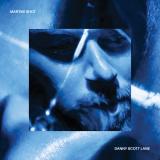
Martini Shot is the new album from Danny Scott Lane-a catchy, nostalgic and slightly manic collection that feels a little like one drink too many. Moving between lounge, soul, indie pop and exotica, the record plays more like a mixtape than a single idea, with a distinctly '90s streak running through it.
Lane sings on seven of the album's ten songs, a departure from his largely instrumental past work, and plays drums and percussion for the first time alongside his usual synths, keyboards, guitar and bass. Longtime collaborator David Lackner contributes flute, joined by new collaborators Logan Hone on flute and Katie Jacoby on violin.
Martini Shot marks Lane's second release with Records We Release, following the well-received House of Alice. The result is loose, romantic, restless and a little unpredictable.
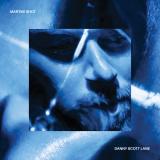
Martini Shot is the new album from Danny Scott Lane-a catchy, nostalgic and slightly manic collection that feels a little like one drink too many. Moving between lounge, soul, indie pop and exotica, the record plays more like a mixtape than a single idea, with a distinctly '90s streak running through it.
Lane sings on seven of the album's ten songs, a departure from his largely instrumental past work, and plays drums and percussion for the first time alongside his usual synths, keyboards, guitar and bass. Longtime collaborator David Lackner contributes flute, joined by new collaborators Logan Hone on flute and Katie Jacoby on violin.
Martini Shot marks Lane's second release with Records We Release, following the well-received House of Alice. The result is loose, romantic, restless and a little unpredictable.
SILVI005 welcomes Brizman back with Fall Down On Me – a vibrant, groove-driven EP that perfectly captures his signature sound. Built around rolling rhythms, warm textures, and hypnotic movement, the title track delivers the kind of infectious dancefloor groove Brizman has become known for.
The release also features a stunning second original production with Shigar, where beautiful piano arrangements blend effortlessly with Brizman's refined grooves, adding emotional depth while staying true to the EP's understated club aesthetic.
On remix duties, the package brings together two distinct interpretations. Minimal house legend Jay Tripwire delivers his unmistakable touch with a deep, sophisticated rework, while rising talent Danny David brings a fresh perspective to the release with a forward-thinking interpretation.
From the original productions to the carefully selected remixes, SILVI005 is a special release that celebrates timeless grooves, musicality, and the unique sound Brizman continues to shape on the dancefloor
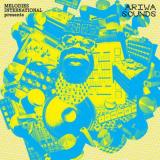
In 1979, Neil Fraser (artistically known as Mad Professor) founded Ariwa Sounds, the longest-serving and one of the most influential independently owned Reggae studios and record labels in the UK. From humble beginnings set up in the front room of Neil's home in South London recording on 4-track and homemade equipment, Ariwa would go on to record and release over 300 albums including works from some of the most impactful and storied artists of their time in the genres of Reggae, Dub, and Lovers Rock
Whilst our previous release in collaboration with Ariwa captured the label's early sound, a shared performance with Neil in Osaka and regular visits to his South London studio inspired us to assemble this 15-track compilation, showcasing the label's output across 45 years. Our release emphasizes some of the label's greatest vocalists: Johnny Clarke, Sandra Cross, Kofi, U Roy, Sister Nancy, Queen Omega, Aisha, Garnett Cross, Abel Miller, Horace Andy and more — presenting the Motown and Stax influences in the Lovers Rock, but also provides a glimpse into the dubbier and more experimental side of the label, showcasing Ariwa's commitment to quality but also their personality, philosophy and their humour. Love songs, break-up songs, socially engaged songs, dub experimentations — this compilation is not a "best of" Ariwa but a diverse and honest celebration of the label through the lens of Melodies International.
The compilation will be out in July in vinyl 2xLP, CD, digital formats, mastered from the original tapes by Frank Merritt (the Carvery), pressed at Optimal, artwork created by Jason Evans with design and assembly contributions from Nevil Bernard and Will Sweeney, animated teaser by Nevil Bernard and Melozine designed by Mafalda Meireles.
More than two decades after its original release, "Just the Way You Are" is experiencing a remarkable global resurgence. With over 13 million monthly Spotify listeners for the original recording alone, becoming a radio and stadium anthem in new heights! To celebrate its enduring popularity, the track is returning to vinyl with an exclusive limited-edition tricolour pressing, with the added bonus of 2026 remixes.
Originally released in August 2002. While the track did not chart in the band's native Italy, it became an international hit, reaching No. 8 on the UK Singles Chart and securing Top 30 positions in Ireland, the Netherlands, New Zealand, and Romania. In the United States, the song made history as the first official No. 1 on Billboard's Dance Radio Airplay chart, having already topped the chart during its unpublished testing phase.
The song's revival gained significant momentum in 2026 following a viral remix by Australian DJ Mall Grab, which introduced the track to a new generation of listeners and sparked widespread streaming growth and social media engagement. The renewed interest was further amplified by a series of high-profile remixes from Australian electronic duo Pnau, Austrian producer Ely Oaks, and French superstar DJ David Guetta. Together, these releases have cemented "Just the Way You Are" as a cross-generational dance anthem, reaffirming its lasting influence and global appeal more than 20 years after its debut.
Nippon Psychedelic Soul 1970-1979 is Time Capsule’s continuation of the deep dive into Japan’s rich history of folk and psychedelic soul music.
Vinyl LP with 4 page insert, original artwork and photos
The kaleidoscopic psychedelia of 1970s Japan captured a fragile and fertile moment as the country sought its future in funk grooves, heavy reverb and lyrical hallucinations.
The follow-up compilation to Time Capsule’s Nippon Acid Folk, Nippon Psychedelic Soul takes myriad pathways into the tripped-out undergrowth of 1970s Japan. Finding their feet at home and looking for inspiration abroad, the musicians featured here were engaged in the communal soul-searching that followed the breakdown of the 1960s protest movements. Some made it big, others drifted into oblivion. The music they left behind shimmers with intensity.
At the core was Happy End, the first project of YMO’s Haroumi Hosono, whose distortion-heavy guitar and crisp back-beat laid the foundations for Japanese lyrics that flipped the paradigm of Japanese rock music on its head. With it came a new found sonic ambition, such as in the bold Philly-soul style arrangements of producer Yuji Ohno, whose work with occult wandered Yoshiko Sai shares some of the bittersweet grandeur of Rotary Connection or David Axelrod.
Then there was Jun Fukamachi, a pioneer of Japanese synthesis, whose debut album was a carnival of orchestral funk, euphoric horn lines and rich production, complete with soaring guitar solos, psychedelic organ and a truly cinematic finale. The first and only time Fukamachi would sing on record, ‘Omae’ rips like the ultimate end-of-nighter.
Influenced by giants of the US soul scene, maverick composer Hiroshi “Monsieur” Kamayatsu (otherwise known as ‘the Brian Wilson of Japan’) went one step further, enlisting Tower of Power to play on ‘Have You Smoked Gauloises?’ The B-side to Monsieur’s biggest-selling single, it coasts with sophisticated cool - a liquid bassline and suave keys comping under a roaring trademark ToP sax solo. No surprise it found favour once more on the Acid Jazz dance floors of ‘90s London.
Such was the spirit of experimentation that big studio productions and private press releases sat side-by-side, with the likes of Momotaro Pink and Kazushi Inamura, taking their hopes of success into their own hands with the resources available to them. More reflective but no less robust, theirs was a heavy, fat-backed drum sound, soaked in dramatic, soulful psychedelia.
If some were dreamers and others space cadets, none were further out than sci-fi writer, musician, activist and self-made scientist Tadashi Goino, who transformed his own fantasy novel Messenger from the Seventh Dimension into an operatic prog odyssey with few discernible musical reference points – a majestic and completely bonkers outlier even among company as strange and brilliant as that which is collected here.
Less a compilation of a scene, as a compilation of a sentiment, Nippon Psychedelic Soul is a wild ride from start to finish, shattering the narratives of the Japanese folk and rock tradition into a million tiny pieces.
Common Language is a project of the Community Library label. We started it as a way to reconnect with the ideas that drove ComLib’s inaugural releases back in 2005, uncompromising and eclectic DJ 12’s. We’ll be focused on this imprint for a while, and near-term, putting the emphasis on releases by label cofounders and our closest friends.
On CLANG02, the Middlemarch 12” EP, Solenoid transmutes his signature buoyant syncopated acid, electro, and mutant techno into moodier, reverberant territory. If you previously knew Solenoid for his restless, sophisticated Braindance-adjacent stuff, this EP is totally consistent with his long discography. Here though, he gets into a dreamier, and also bassier zone that is equally rewarding either in the innerspace immersion of headphones or in the warmth of your favorite local underground club’s sound system--lots of detail and atmosphere to sink into.
“Middlemarch” is moody deep techno-- a clatter of distant percussion encircles eerie pads and an extra-bassy, double-filtered TB303 bassline. “Ways and Means” rotates perplexing polyrhythmic patterns driven by bright, elasticchords that keep it moving (reminding me of The Martian’s stuff on Red Planet a bit). “A Winter Walk” offers a skeletal, skittering rhythm that wouldn’t be out of place next to a Livity Sound track; and the closer, “Dvv Waltz” reserves a 3/4-time experiment for the bravest / most inquisitive DJs.
Edition of 300 vinyl copies includes special full- color insert
Mastered by Dietrich Schoenemann
About Solenoid
Solenoid is the primary musical vehicle of David Chandler, a lifer underground producer, musician, and visual artist. As a lone electronic voice in the wilderness of early-90s Portland (which was at the time a grunge-saturated third backwater) he started out releasing adventurous, now- unobtainium tapes on his DIY Pharmacy label. Solenoid then became known internationally at the turn of the millennium as one of Portland’s persistent ambassadors for underground crossover electro and techno, releasing on labels like Outward Music Company, Emanate, Orac, and many others (most recently, on the Paris label Partout). He’s a real legend honestly--doggedly clocking in almost 40 years of uncompromising experimentalism with a signature sound and vision running all the way through.
-- Paul Dickow (Strategy)
Key To World Peace is the third release by Prophetic Justice Ministry - aka Australian musician Sam Perry. An atmospheric, cinematic album that belies a striking pop songwriting nous at its core, its conductor Prophetic Justice Ministry is at the centre of a new wave of creative, rule-bending Melbourne artists. Romantic, smudged and hazy, Perry emerges from behind a wall of
half-light with a clutch of earworms and affecting emotions.
Recorded in home studios in Belgrade (Serbia), Christchurch (New Zealand) and Melbourne (Australia) over the course of three years, Key To World Peace offers a dichotomy in approach. Shifting on a dime between ambient, filmic washes of sound and more traditional song structures, the approach feels natural, casually acid-tipped and emotionally revealing. While Perry’s
distinctive keys and production melding with melody is evidenced in Melbourne group Who Cares?, as Prophetic Justice Ministry there’s a heightened sense of mystery and space being used.
Swirling in a psychedelic fog with dry iced chords falling down like melting stars, the album pulses with an ominous, distorted intro that sculpts air into blocks of sound before Psyop offers a glimpse through the gloom at the artist navigating through crushed, shoe-gazing chords, singing a consolation into an abandoned building. Side A’s more abstract tone veers from industrial tracks (T-A) to pastoral, impressionistic pieces (Trance) before album highlight Life’s A Party showcases the effortless, classic songwriting lurking in Prophetic Justice Ministry. Built on the tension between the upbeat lyrics and suppressed, rich delivery, the song lopes on an alluring loop with acoustic guitars and Perry’s voice walking a tightrope between irony and sincerity. The song blooms into a bright burst of light, almost inducing synesthesia in the listener and reminding a little of The Beta Band’s most outre and catchy moments.
Opening Side B, Naked Shine’s scintillating guitar is punctuated by a sub bass swell that offsets the yearning vocal performance. With palpable sensitivity the song is shepherded into short, atmospheric passages before Love Drum’s direct delivery: Perry’s vocal and guitar, dancing over a hint of distortion feels like Syd Barrett at his most casually brilliant. Carrying on the tradition of a single cover on every Prophetic Justice Ministry release, here Lana Del Rey’s Mariner’s Apartment Complex is given a stripped back but faithful treatment. With a sound that feels like a hushed, Chris Isaak classic it’s testament to Perry’s own compositions that the cover doesn’t outshine the rest of the album. Album closer and single Spirit House Party combines a classic chord progression with Perry’s double-tracked vocal into a murky but brilliantly catchy chorus. While nowhere near as lush in its production, there’s something in the atmosphere of Prophetic Justice Ministry’s vocal sitting in the mix just so that reminds us of The Electric Prunes’ Holy Are You-era work with David Axelrod.
Key To World Peace flits between displaying a spectrum of blurred emotional resonance in its instrumental passages and vulnerability in the shape of raw, melodic songwriting. With his first release outside of Australia and vinyl debut, Sam Perry’s Prophetic Justice Ministry is a beguiling dance in and out shadows.
For the first time in its 27-year history, Defected compile its greatest hits, underground anthems and bonafide house music classics into a 5 volume triple vinyl collectors series.
Spread over the three records, Volume Three collects twelve of Defected’s most established and sought after releases. Featuring the UK No.1 hit; MK’s remix of Storm Queen’s ‘Look Right Through’, Bob Sinclar’s anthemic ‘I Feel For You’ that has seen an Ibiza revival this summer, Jamie Jones’ ‘My Paradise' and Pete Heller’s classic ‘Big Love’, plus productions and remixes from Inner City, Louie Vega, Dennis Ferrer and more.
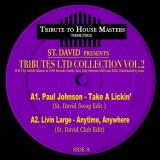
St David's ongoing remix project - Tributes To House Masters - takes a second swipe at the reworks form, probing deep below the surface layer of house music history for another worthy four-track V/A. Paul Johnson's production style is unmistakable before we've even read the name, and shines through even after a remix from St David Swag; 'Take A Lickin'' features several of his sonic blazons, from sticky MIDI brass to ticklish vocal chops. Johnson also famously remixed a Bohannon record, so the latter's inclusion here on the B2 makes this one feel just that bit more knowledgeable. DJ Pierre's MLK-sampling hooter 'Meet Hate With Love' is the favourite big, flabby soulful house chooer in between.
For our 7th original release we welcome our good friend David Agrella, alongside Kompo on remix duties.
David’s a producer with a fast growing reputation and a label of his own, Agrellomatica. The label’s gathered support from a number of respected DJ’s such as Jane Fitz, Laurent Garnier, Ivan Smagghe, Francesco Farfa, Enzo Siragusa, Moxie, Ciel, Massimiliano Pagliara and we’re pleased to welcome him on Seven Hills.
The Kom Dansen EP is one of David’s darker EP’s, blending together thick growling basslines and atmospheric, psychedelic samples. 4 tracks made purely for the dancefloor, all driven by a phat 909 kick, this is music for late night sessions.
Deseo drives through twists and turns with a grooving bass, precise funky drum patterns, and a vocal recorded by the man himself. Kom Dansen hits you with a huge belly bassline, while taking you on a trip on the night train, deep into the wormhole, with an ever building momentum.
Sabotage Signals is similarly growling and deep, with spooked out synth sounds, and unsettling pad action, while Kompo’s version strips everything back, and
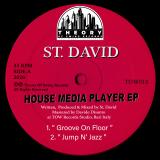
St. David drops another set of club-ready tools coming back on his imprint, Theory of Swing for the 15th release. House Media Player EP hits the floor hard with NY jacking house grooves, bouncing basslines, and that unmistakable TOW swing that locks dancers into the rhythm.
This is pure club gear, four cuts engineered for peak-time momentumt, and the kind of shuffle that defined the Strictly Rhythm, Narcotic or TNT era.
Another timeless entry in the Theory of Swing catalogue — pure hardware heat, made for real floors and real DJs.
4 Way Street is the second and live album by David Crosby, Stephen Stills, Graham Nash, and Neil Young. It was released in 1971 with the live recordings taken from the band's shows during their 1970 tour around the USA. The album reached No. 1 on the Billboard 200 and was awarded a gold record. This is the first 2LP reissue since 1986 and it contains two bonus tracks on sides C and D: the at-the-time unreleased "Black Queen" from Stephen Stills and a medley made up of “The Loner - Cinnamon Girl - Down By The River” performed by Neil Young.
The Temptations Get High on Psychedelic Soul: Cloud Nine Soars with Ambitious Arrangements and Production, Features Standout Vocal Performances and Instrumentation by the Funk Brothers
The Temptations’ Cloud Nine announced that Motown — and “The Sound of Young America” — would never be the same. Influenced by the emergence of cutting-edge rock and pop currents, as well as increasing sociopolitical turmoil, the album broke down barriers between rock, psychedelia, and soul while heralding the arrival of visionary arrangements and production techniques. Bookended by traditional R&B numbers, the 1969 record sent the Temptations in bold new directions and signaled the advent of psychedelic soul.
Sourced from the original master tapes, strictly limited to 3,000 numbered copies, pressed at Fidelity Record Pressing, and housed in a Stoughton gatefold jacket, Mobile Fidelity’s 180g 45PM 2LP set presents Cloud Nine in audiophile sound for the first time on a domestic pressing. This collectible reissue bestows Norman Whitfield’s extraordinary production with the grand-scale dynamics, natural tonality, expansive openness, and low-end weight it deserves. The timbre of each of the five members’ voices is readily identifiable — even within the group harmonies — bestowing a realism never experienced outside the recording studio.
Making its debut on 45RPM, the album further benefits from the wide groove space by playing with greater separation and more realistic presence than prior editions. Everything from the brassiness of the horns to the dry snap of the snare comes across with reference-grade clarity and positioning. And since Motown’s renowned Funk Brothers backing band plays on many of the cuts, you’ll want to savor every note. The imaging, soundstaging, and organic bloom-and-decay of the notes make that possible.
Amid Cloud Nine, the instrumentation and architecture stand out as much as any element. Never before had a Motown album contained such ambitious patterns and complex passages. Seemingly conscientious of the departure from their past methods, the Temptations and Whitfield bunched together the tracks that mark a deep dive into psychedelic territory and counterbalance them with seven sterling soul cuts that dovetail with Motown tradition drenched with heartfelt vocals, swelling strings, and finger-snapping beats.
On the original 33RPM release, traditional Motown soul — laden with heartfelt vocals, swelling strings, and finger-snapping beats — occupies Side Two. These songs reveal an ensemble still very much on top of delivering pristine pop-soul material graced with romantic sweetness, persuasive insistent, and soaring highs. Re-energized after the departure of lead singer David Ruffin, who was fired for a variety of reasons in June 1968, the Temptations seamlessly meld with his replacement, Dennis Edwards, on one melodic gem after another.
The collective tackles five songs co-written by the legendary Motown team of Barrett Strong and Whitfield. Not the least of which are the smooth, shuffling “Why Did She Have to Leave Me (Why Did She Have to Go)” and deceptively simple, horn-spiked “Gonna Keep on Tryin’ till I Win Your Love.” On these tracks, as well as on a lush rendition of the ballad “Love Is a Hurtin’ Thing” and pleading, tender send-up of the Gerry Goffin-Carole King classic “Hey Girl,” Edwards and Paul Williams take turns on the lead with the estimable Eddie Kendricks, Melvin Franklin, and Otis Williams providing backing support.
All five vocalists trade-off leads on the simmering title track, a groundbreaking composition shot through with wah-wah-pedal effects, liquid funk, deep bass lines, Cuban percussion, saturated reverb, and gang choruses. Whitfield mines each member’s natural vocal range with spectacular results, keeps time with cymbals, and channels both the heated temperatures and escapist desires of a society embroiled in war, conflict, and experimental drugs.
Amazingly, the Temptations top themselves on the similarly revealing “Run Away Child, Running Wild.” Nearly 10 minutes in length, the song explodes R&B parameters and harbors a cinematic scope. Urgent pianos, distorted guitars, stripped-down percussion, steamy Hammond organs, minimal bass motifs, five distinct voices narrating the tale of a boy who fled home and now finds himself amid the scary, unforgiving external world: They combine to give the urgent tune a walls-closing-in atmosphere where fear and desperation reign. Bolstered by an extended instrumental section that precedes a climactic return of the singers’ voices, “Run Away Child, Running Wild” equaled the success of the record’s title track, with both reaching No. 6 on the pop charts.
Carly Simon’s No. 1 smash “You’re So Vain” lingers as one of the most clever and famous songs ever recorded. The subject of mass speculation ever since its release, soon after which it occupied the top spot on multiple Billboard charts for weeks, the anthem kept a captive public guessing at the identity of its smug subject for decades. The question surrounding the protagonist’s identity remained perhaps the only mystery on the otherwise sexually open and autobiographically daring No Secrets, Simon’s commercial breakthrough and ‘70s singer-songwriter staple.
Sourced from the original master tapes, pressed at Fidelity Record Pressing in California, strictly limited to 3,000 numbered copies, and housed in a Stoughton gatefold jacket, Mobile Fidelity’s 180g 45RPM 2LP set affords the platinum-certified 1972 effort the finest sonic treatment it’s received on vinyl. Helmed by Richard Perry and recorded at London’s Trident Studios — where Beatles, David Bowie, and Elton John captured landmark LPs — No Secrets touts exceptional production qualities highlighted by this restorative reissue.
Audiophiles and record collectors, take note: This is the first time No Secrets has been available on 45RPM. The wider grooves and dead-quiet surfaces pay instant dividends. Simple, elegant, and disarming, songs seemingly float amid wide, deep soundstages. Simon’s voice takes on a confident, assertive tenor that emerges with accurate imaging, balanced tonality, and palpable presence. String arrangements and backing vocals come through with similar realism.
Enhanced by an all-star cast — Simon’s then-husband James Taylor, Paul and Linda McCartney, Mick Jagger, Lowell George, Klaus Voorman, Bobby Keys, Jim Keltner, Nicky Hopkins, and Bonnie Bramlett are among the renowned musicians who lend a hand — No Secrets advances Simon’s themes of personal introspectiveness, no-holds-barred reflectiveness, and feminist-inspired boldness. She makes every moment of No Secrets worth savoring. Simon invests her all in the songs, handling beautiful ballads, sassy folk-rock numbers, and bluesy fare with calm, composure, and candor.
While acknowledging her own regrets (“You’re So Vain”) and loss (“The Carter Family”), Simon champions the highs (“The Right Thing to Do”) and pains (“His Friends Are More Than Fond of Robin”) of love in a sincere manner indicative of her maturity as both an artist and singer. The New York native distinguishes “When You Close Your Eyes” with deep-rooted spirituality, recalls childhood joys via charming sentimentality on “It Was So Easy,” and and takes ownership of her persona on a cover of Taylor’s “Night Owl.”
“We have no secrets
/We tell each other everything,” Simon sings at the record’s midpoint, encapsulating both the themes and bravura of an effort that was nominated for four Grammy Awards and saw her write or co-write every song but one. Combined with Perry’s savvy instrumental arrangements, her self-assured performances and forthright lyrics grant No Secrets an edginess and relevance immune to the ravages of time.