All the gems of Electronic Music in a 5 LP boxset with : Fakear - Kölsch - Fritz Kalkbrenner - Laurent Garnier - Bicep - Kerri Chandler Thylacine - Bob Sinclar - Mr. Oizo - The Prodigy - Alex Gopher - Purple Disco Machine...
out of Stock
Last delivered 77 days ago available to reorder, subject to availability
David Tattersall, the Wave Pictures guitarist and frontman releases a solo album of interpretations of John Fahey tunes, recorded live in the studio. "I have been a fan of John Fahey's music since I was very young; it has always been with me and I can't remember a time when I wasn't affected by it. It is weird music, and very good. Of course, Fahey is an important cult figure in the history of music: as the first man to find a language for steel string guitar that can stand proudly alongside the established tradition of nylon string classical guitar; as one of many men who rediscovered obscure old blues musicians and recorded them for a new generation in the 1960s; as one uniquely able to reconcile 20th century avant-garde music with folk tradition; as an early indie-label DIY pioneer. For me personally, Fahey went beyond technique, and to some extent beyond historical or intellectual justifications for his work. He explored his emotions through his instrument of choice, and in so doing made the case for the guitar as the ultimate conduit for emotional expression. While there are many imitators who try to play ''like Fahey'', I avoided using his fingerpicking style or sense of rhythm, and tried instead to use his music to explore my own emotions, my own dreams and memories. I was more interested in the lyrical and expressive aspects of Fahey's music than in the techniques of it. I tried to find myself within his compositions and without composing anything I feel that I have managed to make a David Tattersall record that says as much about me as any of the many albums that I have written. John Fahey's beautiful discography shows that the guitar can carry as much mystery and soul as the human voice, and simply put, I wanted in on a little of this action. This is my second all-instrumental solo acoustic album, and where this differs from my first attempt, Little Martha, is that here I improvised freely. I used Fahey's originals only as guides. I'm not sure what I was looking for, perhaps something beyond explanation, but I tried to be as free as possible, and I am delighted by the spontaneous results. Hopefully, they will make the listener feel happy and dreamy, just like the effect that Fahey's many albums have on me. One of the most important things that Fahey ever said was his advice to guitarists to try to feel the emotions that each chord they play on a guitar brings forth. He is telling guitarists to not only play the guitar, but to let the guitar play them. I did my best to follow this advice. I think Fahey was a genius of the kind that creates a whole genre single-handedly. There could be thousands, millions, of reinterpretations of his compositions. In fact, there probably already are. And long may this continue. All tracks were recorded live with no tampering
Serie Noire Is a Brand New Skylax Records Sub-Label Dedicated to What Can Be So Called Indie Dance, Dark Disco & Italo-Disco, Genre That We Have Promoted & Pioneered for Years. in This First Part, You Will Be Able to Find the Explosive &Ldquo;free Gluten” Signed David Body, the Very Mental &Ldquo;waves” by Facets, the Fabulous Neurotiker &Ldquo;bdsm” Which Reminds Us of the Best of Viewlexx and on the B Side Our National Signal St, With a Title Dedicated in Tribute to Our Label, an Improbable Collision of House Music & New Order (Our Lifelong Love) and to Close It All Silicodisco With “Mirror Constellation”, an Incredible Spanish Producer Who Reminds Us at Times Waxtrax but Also the Sepulchral Atmospheres of the Cure's Disintegration....
out of Stock
Last delivered 20 months ago available to reorder, subject to availability
LP reissue of Collective Calls, the first duo LP from Evan Parker and percussionist Paul Lytton. Mythically alluded to as ‘An Improvised Urban Psychodrama In Eight Parts”, Collective Calls utilises electronics, pre-records and homemade instruments to wryly in/act self investigation. Having just recorded the cliff jumping Music Improvisation Company with Derek Bailey, Christine Jeffrey, Hugh Davies and Jamie Muir, Parker was at the point where he was thinking, ‘what’s the next thing?’ On Collective Calls, only the 5th release to appear on the newly minted Incus label, percussionist Paul Lytton arrives with an arsenal of sound making sources to push Parker into ever new territory. Recorded in the loft of The Standard Essenco Co on Southwark Street by Bob Woolford (Topography of the Lungs, AMM The Crypt), Collective Calls has more in common with noise or music concrete than with jazz; sitting comfortably alongside Italian messrs Gruppo di Improvvisazione Nuova Consonanza or the husband-wife duo of Anima Sound. According to Martin Davidson, it was a Folkways record that Lytton was obsessed with around the time of this release - Sounds of the Junkyard - its track titles like “Steel Saw Cutting Channel Iron in Two Places” working to give you a good idea of the atmosphere of Collective Calls. Paul Lytton had encountered the use of electronics in music in 1968 when he was invited to play drums on the recording of An Electric Storm by White Noise (along with David Vorhaus, Delia Derbyshire and Brian Hodgson). He had seen Hugh Davies using contact mics in the Music Improvisation Company, and soon set about assembling a Dexion frame akin to drummer John Stevens’, except that his own was armed with several single-coil electric guitar pickups, long wires and strings with connected foot-pedals to modulate pitch. Influenced as much by Stockhausen, Cage and David Tudor as he was by Max Roach and Milford Graves, Lytton’s percussion is abstract, expressionist and at times totally mutant. Sometimes rolling extremely fast, then screeching almost backwards over feedback, Lytton gives Parker room to play some of his weirdest work. Parker is listed as performing both saxophones, but also his own home made assemblages, including one dubbed the ‘Dopplerphone’ - a length of soft rubber tubing (activated by a saxophone mouthpiece and manipulated to alter the rate of airflow) attached to a longer length of clear plastic tubing (whirled around the head whilst being played) ending in a plastic funnel. Thickening the brew even more, Parker would also add a cassette recorder, on which he would play back collected sounds and previous recordings of the duo. Imagining the set up in a 70s loft, it’s an assemblage more akin to what today's free ears might see at a Sholto Dobie show, spread out on the floor of the Hundred Years Gallery, the shadow of Penultimate Press lurking in the corner. It’s a testament to Parker’s shape shifting sound - the ever present link to birdsong being at its most warped here - terrifically free and unfussy, wild and loose from any of the dogma that might come in later Brit-prov years
-Released alongside documentary about the making of the record.
-New release from former frontman of "The Starting Line".
-Vacationer's first vocal album since 2018's "Mindset".
-Mastered for vinyl by Kelly Hibbert at Almachrome (J Dilla, Madlib, Little Dragon, David Axelrod, Flying Lotus, Hiatus Kaiyote, Q-Tip, Knxwledge, MF Doom).
An enlightened Vacationer returns with a collection of radiant original tracks —10 sonic meditations on the virtues of warm devotion and ritual tenderness. "Cherish" is being released in conjunction with a documentary about the making of the record.
Soldier is Iggy Pop's fourth solo studio album, released in
1980. For the album Iggy collaborated with ex-Sex Pistols bassist Glen Matlock.
David Bowie and Simple Minds provide backing vocals on 'Play It Safe'. Videos were made for the songs 'Loco Mosquito', 'Knocking 'Em Down (In the City)' and 'Dog Food'.
Dass PALE noch mal auf die Bühne zurückkehren, war nicht vorgesehen. Doch nach dem finalen Album "The Night, The Dawn And What Remains", mit dem sich die Aachener Band Ende 2022 selbst ein Denkmal setzte, ging es nicht anders... Am 02.03.2023 spielten PALE ihr letztes und größtes Konzert, in einem ausverkauften Gloria Theater in Köln. Über 900 Fans erlebten eine Nacht, die immer noch nachhallt. Ein Konzert, das man nicht vergessen kann. Dieser Abend, bei dem PALE von zahlreichen Künstler*innen auf der Bühne unterstützt wurden, musste für die Ewigkeit festgehalten werden. Am 08.12.2023 erscheint deshalb der (fast!) komplette Mitschnitt des Konzerts als 3fach-LP - "Bigger Than Live" ist das große Finale und der Schlussstrich unter PALE. Für Nächte wie diese wurde Musik erfunden.
The BBC’s Third Programme aired four radio broadcasts between January 1964 and September 1965, collectively known as Inventions for Radio.
They were ground-breaking in both form and content, conceived by playwright Barry Bermange and consisting of the voices of the general public answering questions on four themes,
one for each programme: dreams, the existence of God, life after death and ageing. At a time when it was unheard of to give a media platform to anyone perceived as being of
low socio-economic status, the broadcasts generated many complaints for the “rough” voices of its participants.
Delia Derbyshire was assigned by the Radiophonic Workshop to edit and add electronic music/ effects.
The collaborative result is dreamlike and mesmerizing, an audial window to another era.
For many years Derbyshire was not credited for her contribution, nor were the broadcasts available commercially, although they still managed to acquire something of a cult following.
This boxset includes one LP for each broadcast and two further LPs of additional material.
There is a 20-page booklet with extensive notes by Mark Ayres (Producer) and David Butler, (one of the lead researchers and
curators of the Delia Derbyshire Archive and co-founder of Delia Derbyshire Day).
The insight into Derbyshire’s archive, her music and its influences and her collaboration with Bermange is fascinating, providing context for
these extraordinary pieces which have been the most elusive of Twentieth Century classics until now.
Formed in Melbourne Australia in 2014, the band consists of Dave Hill (guitars), Tony Forde (vocals), and David Haley (drums) and have recently added long time live bass player Tim Anderson to their permanent line- up. The quartet forge a sound that captures the essence of old whilst fanning the embers of more modern musical influences, seamlessly combining all elements to create their signature sound, cold but uplifting.
Formed in Melbourne Australia in 2014, the band consists of Dave Hill (guitars), Tony Forde (vocals), and David Haley (drums) and have recently added long time live bass player Tim Anderson to their permanent line- up. The quartet forge a sound that captures the essence of old whilst fanning the embers of more modern musical influences, seamlessly combining all elements to create their signature sound, cold but uplifting.
We are really proud to introduce a new release on Mawimbi Records: "Mawimbi, Vol. 2”. Its title is a nod to “Mawimbi, Vol. 1”, which was the inaugural release of our record label back in 2015. A new compilation, at last, after a decade of music activism and a handful of EPs and albums which have helped unearth some of today’s talents from the new global music scene (Onipa, Loya, Afriquoi, Raz & Afla). It stays true to the driving principles of our artistic direction: support upcoming artists, e ncourage the breaking down of musical frontiers, help make happen new encounters between electronic music and so-called “afro” music. While these encounters can now be witnessed anywhere in pop music’s current zeitgeist, from Beyoncé to South African’s vibrant amapiano scene, we think there’s still plenty to explore.
“Mawimbi, Vol. 2” truly feels like the culmination of a long path for our record label. Because it includes artists who have been actively contributing to the Mawimbi adventure over the years, and also because it’s another convincing testimony of the fruitfulness of this musical intuition we have so heartily been defending for the last decade. Indeed, the 8 tracks of “Mawimbi, Vol. 2” resist all the usual labels. They sound like they stem more from human encounters and artistic dialogues launched in the moment than attempts to be associated with any music scene in particular. Each of the 8 pieces of this compilation presents in a unique way the search for this cross-pollinating sound.
The compilation opens with a really engaging rework of James Stewart’s classic track “Cotonou” by Lyon-based tropical music enthusiasts Voilaaa, who took Peter Solo’s voodoo soul lines on a trip across the Black Atlantic beginning with a horn-heavy cuban cha-cha-cha before falling into a savory triple time dance. As tireless sonic adventurers, Amsterdam-based duo Umoja have brought back a handful of hits from their numerous trips to Kenya meeting with local benga musicians. “Avana Va” is one of their compelling tunes, featuring Kenyan musician and producer Sidney Simila. This urge to collaborate with musicians from across the African continent is also to be found in Village Cuts’ ever expanding discography. On “Sentima”, they showcase their trademark London funky sound, introducing us to the talents of Congolese guitarist and singer Kissangwa.
Afriquoi’s 2020 hit “Ndeko Solo” is presented in a brand new shape, sprinkled with some French Touch flavours. “Djansa”, by Toulouse-based producers Mr. Boom, rides a distinct South African-inspired groove, while inviting us to a nighttime dance by the Balearic sea. On “Silent Runner”, French producer and musician Ozferti moulds his own musical galaxy where East African scales meet cutting edge global club beats. With “Nabi Kumi”, Anglo-Ghanaian duo Raz & Afla delivers their deepest piece, once again inducing a state of trance with a triple-time beat and an hypnotic kora loop. Closing the compilation, “It's Holy” is a unique collaboration between Tom Excell (Onipa, Nubiyan Twist, David Walters) and Dizraeli, one of the most interesting voices in British rap, which by making connections between broken beat, jazz and african music, illustrates the precious mixture of musical aesthetics that make up the current UK musical landscape.
out of Stock
Last delivered 11 months ago available to reorder, subject to availability
Whisky soaked, nocturnal, brooding. Aging’s album »Troubles? I Got A Bartender« was a noteworthy, film-noir infused suite that quietly slipped out on cassette in 2015 by a then budding Manchester avant-jazz ensemble, led by David McLean.
In 2020, amidst the pandemic’s tempest and winter's gloom, the idea manifested of showcasing McLean’s slow burning, wistful soirée in a new light via a curated effort by Berlin’s Vaagner label, which invited a series of hand-picked artist to rework selected compositions from the album, rendering its mournful, smoke-tinged resonances into new shapes.
Its result is »Reworks (Rewoven)«, and it presents 6 new interpretations by 5 artists. These range from ruminating, tape smudged ambient works interlaced with sublime acoustic strums by fellow Manchester musicians The Humble Bee and Tape Loop Orchestra, to poignant steel guitar renditions by Nashville based Kelby Clark. Furthermore, Barcelona based Dania and London based Laila Sakini, each present pieces that draw the listener into opaque realms harbored by swooning reverie and eerie, glistening prophecy.
Carefully assembled across two sides of vinyl, McLean’s penchant for hard-boiled detective novels, vintage Japanese crime flicks and film noir iconography have a continued lurking presence in the reworks, yet the new pieces each add a modern facet to the original’s cinematic narrative, its morose and sulky mood now opening into new avenues of interpretation. And whilst some artists have chosen to dive further into the themes of contentious ambivalence and pensive solitude, others have sought to slightly lift the haze, stirring up melodies tinged with a sense of hope, hinting at times, towards instants of poise and vivacity.
In the end this leaves us with a new body of work that manages to feel poignant in its complexity whilst remaining dissonant and elusive in its renditions, hinting at a modern day existence even more opaque, intricate and convoluted than the film noir classics of old might have pictured the world.
out of Stock
Last delivered 2 years ago available to reorder, subject to availability
Retro house sounds from Italy on this release... tunes that still go down well with some of the big name festival dj's during their summer tour! A track that remained unpublished for 33 years until Devil Dee decided to make it public and bring his own voice to the spotlight joined by jazz-blues singer Joan Faulkner (former supporting voice of Boney M and Milli Vanilli, also known by her stage name 'Dee-Vah'). Devil Dee is Davide Mancori - a cinematograph with a flattering career as a club-dj from 80s-90s onwards - who lovingly produced this release which differs from most of the releases on Best Record by its housey vibe. 'And The Beat Goes On' was written in Germany in 1989 by Leonie Gane and Ryan Paris laying the crucial foundations for an evolutionary step of the italian disco music. A step forward for the 'Italo' movement considered obsolete and defunct. In fact, the track is also referring to the latest Italo-Disco which entirely covered the scene of the 1980s with furious activity, If the meeting between Devil Dee and the famous interpreter of 'Dolce Vita' - Mister Ryan Paris - creates the alchemy, the explosive mix is completed with the precious work of Marco Magrini. The arrangement by Pierluigi Cerin and the executive work of Claudio Casalini close the magic circle. Five friends and a great singer from Indiana to fill the dance floors all over Europe, while the images of the provocative and surreal video-clip capture the audience by splitting in two. There are those who do not want to see certain issues publicized and those who appreciate their cheekiness, such as Best Record which by publishing the vinyl printed at 180 grams celebrates the 40 years of activity.
out of Stock
Last delivered 2 years ago available to reorder, subject to availability
Emm Gryner is an award winning singer, songwriter, actor and best-selling author. Emm sang and played keyboards in David Bowie's band, and appears on numerous recordings, including his landmark 1999 SNL appearance, Bowie at The Beeb and Toy. Bowie's acclaimed Glastonbury 2000 documents her performance in front of more than 100,000 fans at Worthy Farm. With Trapper she shared arena stages with Def Leppard, and she also helped bring the first music video recorded in outer space to the world.
Detroit radio formed the soundtrack of Emm's life and career and her brand new record is a celebration of that music. From Motown,jazz and pop, to Steely Dan, Fleetwood Mac and the Doobies, Business & Pleasure is infused with the sunshine soul and stellar playing of the late 70s and early 80s. These songs, produced by Fred Mollin, written with poet Michael Holmes, and recorded with drummer Shannon Forrest (Toto), keyboardist Pat Coil (Michael McDonald), bassist Larry Paxton (Alison Krauss), and guitarists Tom Bukovac (Taylor Swift) and Pat Buchanan (Hall & Oates, Dolly Parton), embody a take on yacht rock that sails deep into the 2020s and introduce the world to a bold new character: a powerful woman whose passion, presence, conviction, humor and grace serves to unite the world in
"Incident at Cima" is the debut album from SCENIC, the group formed by SAVAGE REPUBLIC and IPR founder Bruce Licher Conceived of as an allinstrumental soundtrack for the East Mojave Desert, Licher is joined by former SHIVA BURLESQUE bassist James Brenner and drummer Brock Wirtz, with guest musicians Jeffrey Clark (SHIVA BURLESQUE vocalist), Robert Loveless (former SAVAGE REPUBLIC and 17 PYGMIES member), Chris Manecke (from the ABECEDARIANS) and John Ganem Together, they have created an aural masterpiece which has received serious critical acclaim. David Fricke in ROLLING STONE magazine writes that SCENIC's music "suggests Ennio Morricone dune- surfing in Death Valley." SCENIC's music is like nothing else on the landscape, and while there is definitely a relation to some of the sounds explored by SAVAGE REPUBLIC during their eight- year existence, SCENIC have created a mature and focused album which is a great leap forward. "Incident at Cima" is an evocative aural journey, a quite listenable and incredibly honest piece of music, and as such it has the potential to be appreciated by a wide range of listeners. Four of the songs from "Incident At Cima" were used to great effect in Stuart Swezey's feature documentary film "Desolation Center," including the track "Carrying On To Cadiz" which underscores the opening title sequence of the film. This expanded release comes with a bonus CD featuring 11 previously unreleased early demo recordings by Scenic and band leader Bruce Licher. Packaging for this expanded release of "Incident at Cima" features letterpress printed packaging created at Independent Project Press, a newly- designed oversized CD pocket folder with 24-page booklet for the CD edition, featuring a series of photographs Licher has taken in the East Mojave which relate to the various pieces of music on the album, creating a complete audio/ visual experience.
The first-ever LP box set gathering the entire 10 albums collection of Obscure Records produced by Brian Eno’s.
Curated by Gavin Bryars
Originally issued between 1975 and 1978, nearly 50 years on the output of Obscure remains radically forward-thinking - offering glimpses of a future yet to be fully seen - and amounts to one of the most important, influential, and creatively accomplished album series ever conceived.
Co-curated by Eno and the composers Gavin Bryars and Michael Nyman - issuing the recording debuts of Bryars, Nyman, John Adams, Christopher Hobbs, David Toop, Max Eastley, Jan Steele, Simon Jeffes / The Penguin Café Orchestra, and Harold Budd, in addition to important works by John Cage, Tom Phillips, and John White - Obscure’s collective output is a groundbreaking landmark in the histories of Minimalism, modern composition, and Experimental music, and laid much of the groundwork for the soon to emerge movement of Ambient music.
Illuminating the remarkable, and largely otherwise undocumented, creative ferment within and between the British and American scenes of experimental music during the mid to late 1970s, this collection - made in full collaboration with all of the composers or their estates - contains the entire 10 album output of Obscure, the majority of which have been out of print for years, with a number having never received a CD reissue.
Offering each of Obscure’s albums, completely remastered and housed in faithful replicas of their original covers and liner notes, as well as a 80-page book (LP dimension) for LP-BOX SET, filled with rare photos, archival material and texts by - among others - Gavin Bryars, Bradford Bailey, David Toop, Max Eastley, Richard Bernas, and Tom Recchion, this historic collection marks the first time this seminal series has received a complete LP repress.
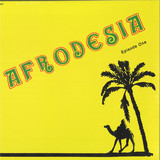
Here after a long time the first EP release on Best Record containing new unreleased music. Afrodesia project born from a close collaboration between Periodica Records and Best Italy featuring Mystic Jungle & Whodamanny.
Afrodesia took inspiration from the italian afro-movement that lasted for few years during mid-eighties expecially from those songs produced at the legendary Les Folies Studios in Milan. Afrodesia sounds balearic boogie afro and cosmic with heavy use of original past synths and drum machines programmed and played by Dario Di Pace, Raffaele Arcella and real acoustic instruments thanks to the musicians : Giulio Neri (Tenor Saxophone and vocals), Andrea Farias (Guitar), Davide Di Sauro (Bass) and the late George Aghedo (Percussion).
out of Stock
Last delivered 18 months ago available to reorder, subject to availability
This publication combines an artfully designed book (design: Martin Stiehl) and a USB-Stick with high-quality audiovisual recordings of the three parts of the project. The book offers an introduction to the project as a whole but also expands it with articles from the past and the future (co written by Marko Ciciliani and Nicolas Trépanier), as well as a link to online content. Published by MILLE PLATEAUX (MP70) and Galerie der Abseitigen Künste, 2023
"In 1833, Sieglinde Stern, a professional weaver and amateur engineer, invented the first
electromagnetic pickup and thus the first electrically amplified stringed instrument. One hundred years later, in 1933, her invention enabled the production of the first electric guitar, which became one of the most popular and widely played instruments in the history of Western music. Yet today, another 150 years later, no one plays this instrument anymore! What led to the rise and fall of the electric guitar? What is it about this instrument that had its suppressed origins in the craft of weaving and that in its final evolution mutated back into a loom? And who was its inventor Sieglinde Stern, erased from history and only resurrected as David Bowie's Ziggy Stardust?" Why Frets? consists of three works - an audiovisual performance, a mixed-media installation and a performance-lecture - that illuminate different aspects of this fictional history of the electric guitar from various angles. The story is based on speculative fabulation - a deliberate reinvention of the past. Rather than pursuing the idea of creating novelties as an envisaging of the future, speculative fabulation and the rewriting of history proceed from an examination of the conditions under which society and culture arrived at their present state. In this way, the three individual works Why Frets? - Downtown 1983, Why Frets? - Tombstone and Why Frets? - Requiem for the Electric Guitar complement each other in the sense of transmedia storytelling: Each is a self-contained entity, but taken as a whole, the three works shed different lights on the electric guitar, focusing on aspects such as technocultural developments, inscriptions of gender, and social values
25th anniversary release of the album from 1998 as expanded special limited edition. It is the eighth Dub Syndicate studio album mixed by Adrian Sherwood. Originally released as catalogue number Lion & Roots 002 in 1998 on Style Scott"s own label here"s the expanded and remastered collector"s limited edition as 2LP-set including six additional tracks not available on the original vinyl release and also as 18-track CD release, with the booklet including excerpts from an unpublished interview. Main vocal contributor is the legendary artist Big Youth plus Little David courtesy J.R. Productions (Junior Reid"s camp), backing vocals by Skip McDonald and Style Scott"s inimitable laughter. The basic tracks were recorded in Jamaica, with some of the pals from the Roots Radics days (i.e. Flabba Holt, Steely Johnson) at Studio 2000 (Steely & Clevie"s studio) and the legendary Tuff Gong Recording Studio, followed by overdubbing in the USA at Greenpoint Studios (Bill Laswell"s studio) and Playroom Studios in New York, with additional overdub and final mix at On-U Sound (London) by Adrian Sherwood.
out of Stock
Last delivered 2 years ago available to reorder, subject to availability
David Byrne is a modern renaissance man - and that’s not just a cliché. From the heady days as co-founder of the celebrated art new-wave group Talking Heads (1976-88) through his own constantly evolving and innovative solo music career, he has pursued his muse on many different artistic fronts. He’s been the driving force behind a body of work that has been both intellectually daring and commercially successful...and he shows no signs of slowing down decades later. This show, captured on November 28, 2001, came on the heels of his hit single, “Like Humans Do” and the release of the album Look Into The Eyeball, which was another typically eclectic musical stew reflecting a variety of styles and influences, from Philly soul to a D.C. Go-Go inspired groove and his first-ever Spanish composition, “Desconocido Soy.” Critics at the time called it his best work in years, and his performance on the Austin City Limits stage shows why. Joined by Austin’s own eclectic tango ensemble Tosca, Byrne takes us down many different musical roads in his ACL debut. Of course, besides the brilliant songwriter and performer that he is, he’s also an accomplished performance artist, photographer, web journalist, film writer / director, composer of motion picture soundtracks, and founder of his own world music label, Luaka Bop Records. He also has a collection of Grammys, Oscars and Golden Globes on his mantel. His music may be complex and poetic, but he makes no bones about his ultimate intent: “I want to move people to dance and cry at the same time. - Terry Lickona (Producer Austin City Limits)
Two and a half decades into a career that's never delivered the stardom forecast by legions of champions, John Hiatt has settled into a niche that's about as comfortable as a maturing singer-songwriter could ask for. No longer a major-label priority, Hiatt has hooked up with the stalwart folk label Vanguard for his 15th release. Crossing Muddy Waters adroitly captures Hiatt's comfort and confidence. Not so much blues as blusey, Crossing Muddy Waters features 11 new Hiatt compositions, half of which feel instantly familiar. The rambunctious "Lift Up Every Stone" sounds a little like some of Tom Waits's more accessible recent efforts, while "Take It Down" is a love-lost lament that's as heavy as a foggy evening. Crossing Muddy Waters was cut in three days and features only two accompanists--the uncommonly sympathetic Davey Faragher and David Immerglück. Just goes to show that Hiatt moves just fine when he's not dragging a lot of added weight and heavy expectations behind him.
The debut album from accomplished guitarist and songwriter Jason Isbell, formerly of Drive By Truckers (DBT), is reissued with 4 unreleased tracks from the original recording sessions. The addition of those 4 extra songs finds Sirens Of The Ditch clocking in at 15 total tracks. Sirens Of The Ditch's mystical quality can be partially attributed to the FAME recording studio (Aretha Franklin, Duane Allman, Otis Redding) in Isbell’s hometown of Muscle Shoals, AL where the album was recorded. Co-produced by Isbell and Patterson Hood (DBT), Sirens Of The Ditch features Isbell singing lead vocals and playing guitar throughout, joined by Shonna Tucker (Formerly of DBT) on Bass and Brad Morgan (DBT) on drums. Several musicians pop in for cameos including Spooner Oldham and David Hood (Patterson's father) on "Down In A Hole", John Neff (Formerly of DBT) on "Dress Blues" and Patterson himself guests on "Shotgun Wedding". "a strong debut, full of the kind of confident, charismatic songwriting that just can't be taught." - Pitckfork “Isbell could be roots rock’s Flannery O’Connor.” - Spin
“I feel like there are two sides of me,” says the Nashville-based singer-songwriter and guitar virtuoso known as Sunny War. “One of them is very self-destructive, and the other is trying to work with that other half to keep things balanced.” That’s the central conflict on her fourth album, the eclectic and innovative Anarchist Gospel, which documents a time when it looked like the self-destructive side might win out. Extreme emotions can make that battle all the more perilous, yet from such trials Sunny has crafted a set of songs that draw on a range of ideas and styles, as though she’s marshaling all her forces to get her ideas across: ecstatic gospel, dusty country blues, thoughtful folk, rip-roaring rock and roll, even avant garde studio experiments. She melds them together into a powerful statement of survival, revealing a probing songwriter who indulges no comforting platitudes and a highly innovative guitarist who deploys spidery riffs throughout every song. Because it promises not healing but resilience and perseverance, because it doesn’t take shit for granted, Anarchist Gospel holds up under such intense emotional pressure, acknowledging the pain of living while searching for something that lies just beyond ourselves, some sense of balance between the bad and the good. Featuring: David Rawlings, Allison Russell, Jim James, Micah Nelson
The sophomore album from NYC musician and singer-songwriter Kyle Avallone, is a collection of nostalgic meditations that take you out of the smoky bar and into the gray daylight of a seaside town. It is a cinematic dreamscape steeped in warm vocals, lush synthesizers, and sweeping steel guitars. Throughout the ten songs, tender narratives play like home movies on a living room wall, revealing little worlds and distilled memories.
Recorded at Studio G in Brooklyn with Jeff Berner (Psychic TV), Avallone reaches beyond the lo-fi sleaze of his 2020 debut, Last Minute Man, for a higher fidelity and grander sound palette. “After making a record by myself on an old four-track tape machine, it felt like a natural progression to go into a proper studio and play music with my friends". The core band consists of Mark Perro (The Men) on keys and Russell Hymowitz on bass, who both sing backing vocals, along with David Christian on drums. On several tunes, pedal steel played by Jon “Catfish” DeLorme (The Nude Party) dances around Avallone’s baritone voice, delivering a twang that is distinctively more New York than Nashville.
Inspired by the conversational storytelling of artists like Terry Allen and Lou Reed, Avallone was moved to capture the drama and mystery of his own life experiences. The characters we meet here are flawed. Mistakes are made and lies are told. Love is either lost or on the line. Dreams manifold as both echoes of the past and hopes for the future – the faded glow of childhood impressions in “Down the Hill”; the single mothers’ kitchen table reverie in “Going to the Beach”; the lament for summer’s end in “Vacant Sea”.
"20th Anniversary Deluxe Edition of Closer, Josh Groban’s enduring classic second album from 2003. The album has sold over 6 million copies in the US and features the multi-platinum smash “You Raise Me Up,” plus, “Remember When It Rained,” “When You Say You Love Me,” “Per Te” and more.
The Deluxe Edition contains the remastered original album, plus six rare or unreleased bonus tracks including a never-before-heard extended version of “You Raise Me Up” and a newly recorded, acoustic rendition of ""Broken Vow” featuring David Foster on piano.
Thie track was recorded/filmed during a session for a 15-minute Closer 20th Anniversary Mini-Documentary that will be released, featuring the two collaborators in conversation about the making of the album. "
A national musical treasure" The Guardian // Steven Adams, formerly of The Broken Family Band releases new album DROPS on Fika Recordings in November 2023. Since calling time on TBFB at the height of their success, Adams has released half a dozen albums under various names (Singing Adams, Steven James Adams, Steven Adams & The French Drops), his witty, incisive lyrics and melodic sensibilities taking in DIY indie rock, folky introspection, and off-kilter pop hooks. Originally from South Wales, Adams now lives in East London. “Every record I’ve made has been in a hurry of some sort” says Adams of his new album, “and with this one I took my time”. DROPS is the first album to be credited to him as a solo artist since 2016’s Old Magick, his first new music since 2020, and his noisiest record to date. Armed with a new batch of material, he began by upping sticks to the Welsh countryside to experiment with drummer Daniel Fordham and bassist David Stewart - both formerly of psych oddballs The Drink. The trio then took the songs to Big Jelly, a converted chapel on the south coast, with co-producer Simon Trought (Comet Gain, Johnny Flynn, The Wave Pictures) to lay down the basic tracks for DROPS. Eschewing a full band set up (“I wanted to concentrate on one thing at a time”), recording sessions in East London followed with Laurie Earle (Absentee) on guitar and Michael Wood (Hayman Kupa Band, Michaelmas) on keyboards. Adams then took the recordings home and to the French countryside, to work alone. “I finally got my head around home recording in 2020, while things were a bit quiet. Once I worked out how to record things I realised I didn’t have to think about time. I could let the songs evolve and change once we had the basic tracks down. After a while I started to think of them as paintings; trying something one morning, painting over it in the afternoon and attempting something completely different… it was about enjoying the process, making some bangers, playing around... and giving Simon the producer a mess to sort out when it came to mixing the record". Whenever Tom from Fika Recordings checked in to see how the album was progressing Adams would reply, “it’s taking ages but it’ll sound like it was recorded in an afternoon”. The result is a dynamic and spirited collection of songs, with Adams's love of 90/00s US underground rock (Pavement's Bob Nastanovich is a fan) to the fore. DROPS is a sonically compelling piece of work: from bleak/exultant opener Out to Sea and the motorik Living in the Local Void to the weirdly funereal Fascists (where Adams imagines the “little skip in our steps” that we’ll have upon outliving some baddies), and Day Trip's psychedelia in miniature. There are also moments of tenderness: the avalanche of empathy on closing track Cheap Wine Sad Face, and I Tried to Keep it Light’s “worse things could happen… I don’t know how, but give me time”. Adams says: “I'm preoccupied by the passing of time and the way it affects how we feel. This record is about time and bewilderment and trying to make sense of things". “…astonishing tenderness in its simplicity … brilliant lyrics.” Q Magazine //“…the tunes are instant and uplifting, but the real wallop comes from the lyrical imagery.” The Guardian // “…barbed modern life chronicles.”
Australia post-punk duo The Native Cats - bassist Julian Teakle and singer and electronics operator Chloe Alison Escott (who released solo album Stars Under Contract via Chapter in 2020). Spiritual forebears to the current wave of speak-singing post-punk a la Dry Cleaning and Sleaford Mods, The Native Cats have grown a sizable cult following from their home in Tasmania (Australia's remote and chilly island state) since the late 2000s. Their minimal bass and drums rumble is offset by Chloe's lyrics which twist, confound and linger. The band have toured the US and played Memphis' legendary Goner Fest, been written up by the likes of Stereogum, NPR and Brooklyn Vegan, and performed at the Sydney Opera House. In 2020, they were riding a growing wave of recognition and admiration following their best run of records to date, culminating in killer double A-side single Two Creation Myths. But the pandemic and Australia's extended lockdowns brought with them a period of intense loneliness, isolation and despair. Chloe's confidence as a lyricist, singer and performer was at an all-time low. Even in those low times, the apparition of Native Cats LP #5 just kept on calling out. Julian never stopped recording instrumental demos and emailing them to Chloe. Chloe never stopped writing, and even began revisiting lyrics that had previously felt too raw or revealing to include.. Small moments of inspiration grew into more substantial ones. The band committed to weekly songwriting sessions, started to accept invitations to perform again, and had crowds fall instantly in love with their new songs. Recorded with producer Ben von Fürstenberg, The Way On is the Way Off takes a meticulous, painterly approach to the band's heavy, scorching songs. Every element is chosen for its thematic resonance and emotional impact. Chloe's lyrics arise from deep-rooted trauma and identity issues she is finally facing head-on, as well as reflections on post-punk history and lineage - the title of the album is drawn from the rules and principles David Thomas wrote for his band Pere Ubu. With the setbacks and self-doubt now a distant memory, The Way On is the Way Off is everything The Native Cats believed it could be when its completion seemed impossible, and everything they have been working towards since the day they began.
The earth rotates, seasons change_there is but one long day_ Time is a beguiling, indistinct entity_sometimes standing still, sometimes bending back upon itself with premonitions or memories of the future. Growing out of a pen pal style correspondence that took place over the course of a year, separated by the Atlantic Ocean, Gloria de Oliveira and Dean Hurley passed thoughts and music back and forth that would eventually form their collaborative album, Oceans of Time. The result is an aural tapestry of that exchange: woven from conceptual threads of the celestial within, mortality and the realm beyond stars. The duo's partnership is an effortless merge, yet it's the steady presence of de Oliveira's vocals that endows the record with its sense of potency. Throughout the album, there is an innate understanding of how a lyric across a chordal color can sharpen an emotional truth. Much like a sunbeam that pierces a spiderweb to reveal its intricacy, her lyric and melody are purposely aimed in order to illuminate the truths deep within oneself_a process that ties us all to the universal. The Danish philosopher Soren Kierkegaard, a professed influence, wrote about the truth as something that was inherently subjective, less about the concrete reality of what is believed and more about how it is experienced by the believer. Frequent David Lynch collaborator Dean Hurley sets the tonal and sonic landscape of each track on the album, lending a layered ether that envelops, frames and holds de Oliveira's vocals. With its impressionistic synths, shimmering guitars, and ethereal sonics, Oceans of Time at moments recalls the foundational dreampop of 4AD acts like Cocteau Twins and Lush. The album feels especially attuned to the connections between the physical and transcendental realms, and the best dreampop has a way of making the veil between two worlds feel just a little bit thinner. Oceans of Time is a key that has the power to release its listener from the handcuffs of reality, however briefly_
out of Stock
Last delivered 2 years ago available to reorder, subject to availability
The earth rotates, seasons change_there is but one long day_ Time is a beguiling, indistinct entity_sometimes standing still, sometimes bending back upon itself with premonitions or memories of the future. Growing out of a pen pal style correspondence that took place over the course of a year, separated by the Atlantic Ocean, Gloria de Oliveira and Dean Hurley passed thoughts and music back and forth that would eventually form their collaborative album, Oceans of Time. The result is an aural tapestry of that exchange: woven from conceptual threads of the celestial within, mortality and the realm beyond stars. The duo's partnership is an effortless merge, yet it's the steady presence of de Oliveira's vocals that endows the record with its sense of potency. Throughout the album, there is an innate understanding of how a lyric across a chordal color can sharpen an emotional truth. Much like a sunbeam that pierces a spiderweb to reveal its intricacy, her lyric and melody are purposely aimed in order to illuminate the truths deep within oneself_a process that ties us all to the universal. The Danish philosopher Soren Kierkegaard, a professed influence, wrote about the truth as something that was inherently subjective, less about the concrete reality of what is believed and more about how it is experienced by the believer. Frequent David Lynch collaborator Dean Hurley sets the tonal and sonic landscape of each track on the album, lending a layered ether that envelops, frames and holds de Oliveira's vocals. With its impressionistic synths, shimmering guitars, and ethereal sonics, Oceans of Time at moments recalls the foundational dreampop of 4AD acts like Cocteau Twins and Lush. The album feels especially attuned to the connections between the physical and transcendental realms, and the best dreampop has a way of making the veil between two worlds feel just a little bit thinner. Oceans of Time is a key that has the power to release its listener from the handcuffs of reality, however briefly_
out of Stock
Last delivered 2 years ago available to reorder, subject to availability
When Kronos plays a piece, they become fellow composers, true collaborators. Without them, we wouldn’t have the kind of string quartet playing that we find around us today. There are two kinds of string quartet playing: the ‘Before Kronos’ and the ‘After Kronos’.” – Philip Glass
‘Kronos Quartet has broken the boundaries of what string quartets can do.’ – New York Times
Nonesuch releases Kronos Quartet’s acclaimed album Kronos Quartet Performs Philip Glass on vinyl for the first time to coincide with Kronos Quartet: Five Decades, a year-long celebration marking the quartet’s 50th anniversary. Originally released in 1995, the album features David Harrington (violin), John Sherba, (violin), Hank Dutt (viola) and Joan Jeanrenaud (cello) performing Quartet No. 2 (Company) (1983), No. 3 (Mishima) (1985), No. 4 (Buczak) (1990), and No. 5 (1991), the first piece Glass wrote especially for Kronos. Recorded at Skywalker Sound in California, the album was produced by Judith Sherman, Kurt Munkacsi and Philip Glass. The cover art features Francesco Clemente’s painting The Four Corners (1985). At the time of the album’s release, the New York Times said, ‘It contains some of Glass's best music since Koyaanisqatsi. His ear for sumptuous string sonorities is undeniable,’ while the Washington Post called it ‘An ideal combination of composer and performers.’ It was a top 10 hit on Billboard’s Top Classical Albums, and spent 12 weeks on Billboard’s Classical chart.
In his original liner note, critic Mark Swed wrote, ‘Glass’ string quartets may contain his most intimate music. They are works through which a very public composer, perhaps the most important opera reformer of our age and a longstanding collaborator in large-scale music theater, holds up a mirror to himself and his way of composing. “In an odd way,” Glass explains, “string quartets have always functioned like that for composers. I don’t really know why, but it’s almost impossible to get away from it. It’s the way composers of the past have thought and that’s no less true for me. It’s almost as if we say we’re going to write a string quartet, we take a deep breath, and we wade in to try to write the most serious, significant piece that we can.” Glass says that as he sat down to write String Quartet No. 5, he had discovered that perhaps not taking a serious tone might be the most serious way to deal with it. “I was thinking that I had really gone beyond the need to write a serious string quartet and that I could write a quartet that is about musicality, which in a certain way is the most serious subject.”’
Glass’ first numbered quartet was written in 1966; however, he did not return to the string quartet medium until 1983, when he provided incidental music for a dramatization of Samuel Beckett’s prose poem, Company. During those 17 years, Glass had formed an ensemble and developed his style in a series of increasingly elaborate pieces for it. String Quartet No. 3 is also adapted to dramatic music, this time from his score to the 1985 Paul Schrader film, Mishima. It was with the music of Mishima that Kronos became associated with Glass, recording the string quartet sections of the soundtrack and subsequently working extensively with the composer on all five of his numbered quartets. Kronos also gave the first concert performances of Company and Mishima. String Quartet No. 4 was composed in remembrance of the artist Brian Buczak, who died of AIDS in 1988.
As Kronos’ anniversary season continues with further concerts around the world, Nonesuch will reissue Black Angels on vinyl on February 16. First released in 1990, the award-winning album includes George Crumb’s title piece, which inspired David Harrington to found the quartet. Called ‘an unusually elevated and searing Vietnam War protest’ by the New York Times, it sets a dark, powerful tone for this collection, which addresses the political/physical/spiritual consequences of war. Also featured are works by Charles Ives, István Márta, Thomas Tallis, and Dmitri Shostakovich. ‘Stylishly packaged, intelligently programmed, superbly recorded and brilliantly performed,’ proclaimed Gramophone. ‘In short, very much the sort of disc we’ve come to expect from the talented and imaginative Kronos Quartet.’ The Evening Standard included it among its ‘100 Definitive Classical Albums of the 20th Century’.
Born in Baltimore, Maryland, in 1937, Philip Glass is a graduate of the University of Chicago and the Juilliard School. By 1974, he had created a large collection of music for The Philip Glass Ensemble. The period culminated in the landmark opera, Einstein on the Beach. Since Einstein, Glass’s repertoire has grown to include music for opera, dance, theatre, orchestra, and film. His scores have received Academy Award nominations (including Kundun and The Hours, as well as Notes on a Scandal) and a Golden Globe (The Truman Show). Recent works include his memoir, Words Without Music, his first Piano Sonata, opera Circus Days and Nights, and Symphony No. 14. Glass received the Praemium Imperiale in 2012, the US National Medal of the Arts from President Barack Obama in 2016, and 41st Kennedy Center Honors in 2018.
Nonesuch’s relationship with Glass began in 1985, with the release of the score for Paul Schrader’s Mishima featuring Kronos Quartet. Over the years other Glass works on Nonesuch have included Einstein on the Beach (1993), Kronos Quartet Performs Philip Glass (1995), Music in Twelve Parts (1996), Glass Box (2008), as well as the soundtracks for Powaqqatsi (1988), Kundun (1997), Koyaanisqatsi (1998), and The Hours (2002), amongst others.
For 50 years, San Francisco’s Kronos Quartet – David Harrington (violin), John Sherba (violin), Hank Dutt (viola), and Paul Wiancko (cello) – has challenged and reimagined what a string quartet can be. Founded at a time when the form was largely centred on long-established, Western European traditions, Kronos has been at the forefront of revolutionizing the string quartet into a living art form that responds to the people and issues of our time. In the process, Kronos has become one of the most celebrated and influential groups of our era, performing thousands of concerts worldwide, releasing more than 70 recordings of extraordinary breadth and creativity, and collaborating with many of the world’s most accomplished composers and performers. Through its nonprofit organization, Kronos Performing Arts Association, Kronos has commissioned more than 1,000 works and arrangements for string quartet – including the Kronos Fifty for the Future library of free, educational repertoire. Kronos has received more than 40 awards, including three Grammy Awards and the Polar Music, Avery Fisher, and Edison Klassiek Oeuvre Prizes.
Kronos is prolific and wide-ranging on recordings. The ensemble’s expansive discography on Nonesuch includes three Grammy-winning albums: Terry Riley’s Sun Rings (2019), Landfall with Laurie Anderson (2018), and Alban Berg’s Lyric Suite featuring soprano Dawn Upshaw (2003); the 40th-anniversary boxed set Kronos Explorer Series; Nuevo (2002), a Grammy- and Latin Grammy–nominated celebration of Mexican culture; Pieces of Africa (1992), a showcase of African-born composers that simultaneously topped Billboard’s Classical and World Music charts; and Folk Songs (2017), Nonesuch’s 50th album with Kronos, which featured Sam Amidon, Olivia Chaney, Rhiannon Giddens, and Natalie Merchant singing traditional folk songs.
out of Stock
Last delivered 2 years ago available to reorder, subject to availability
The late percussionist Milford Graves was one of the most unique artists the world has ever seen. Born in Jamaica, Queens in 1941, he began his career in the early '60s as a part of New York's vibrant Latin jazz scene. His focus quickly turned inward, shifting towards a practice that explored the very nature of self. From his work in the New York Art Quartet and collaborations with Albert Ayler, Sonny Sharrock and more to his important contributions during NYC's loft era – he is, simply put, free jazz royalty.
In April 1966, the duo of Graves and pianist Don Pullen played at Yale University. As John Corbett writes in the liner notes, "This performance was something of a turning point for Graves. Until then he had been working in other people's bands or collective ensembles. He was phenomenally busy. In 1965 alone, he recorded with NYAQ (two LPs), Giuseppi Logan Quartet, Paul Bley Quintet and Lowell Davidson Trio, and he made his first recording released under his own name, Percussion Ensemble. Every one of these is important in its own way, but none of them quite anticipate how radical was the music that he and Pullen would unleash that evening in New Haven."
Originally released on the artists' own Self-Reliance Program label, this legendary one-night performance would be split into two volumes: In Concert At Yale University and Nommo. While rooted in African rhythms, Graves' music has its own sense of time. As the drummer stated in a 1966 DownBeat interview, "Time was always there, and the time I see is not the same as what man says time is. It works by impulsion."
The late percussionist Milford Graves was one of the most unique artists the world has ever seen. Born in Jamaica, Queens in 1941, he began his career in the early '60s as a part of New York's vibrant Latin jazz scene. His focus quickly turned inward, shifting towards a practice that explored the very nature of self. From his work in the New York Art Quartet and collaborations with Albert Ayler, Sonny Sharrock and more to his important contributions during NYC's loft era – he is, simply put, free jazz royalty.
In April 1966, the duo of Graves and pianist Don Pullen played at Yale University. As John Corbett writes in the liner notes, "This performance was something of a turning point for Graves. Until then he had been working in other people's bands or collective ensembles. He was phenomenally busy. In 1965 alone, he recorded with NYAQ (two LPs), Giuseppi Logan Quartet, Paul Bley Quintet and Lowell Davidson Trio, and he made his first recording released under his own name, Percussion Ensemble. Every one of these is important in its own way, but none of them quite anticipate how radical was the music that he and Pullen would unleash that evening in New Haven."
Originally released on the artists' own Self-Reliance Program label, this legendary one-night performance would be split into two volumes: In Concert At Yale University and Nommo. While rooted in African rhythms, Graves' music has its own sense of time. As the drummer stated in a 1966 DownBeat interview, "Time was always there, and the time I see is not the same as what man says time is. It works by impulsion."
25th anniversary of this criminally under-appreciated compilation of Brazilian pop music (New! More! Better!), so we're putting it on vinyl for the first time.
It's been 10 years since we at Luaka Bop released our first compilation of Brazilian music. Beleza Tropical. It sold extremely well, 350,000 and still going strong, but alot has happened since then. This collection reflects the impact and energy of a new generation who rather than seeking to overturn or discredit the work of ist predecessors, wants to build on it, add to it, and continue absorbing greater and more contemporary influences.
A hidden gem of Uruguayan music, Los Terapeutas's second album, released in 1990, is an original take on candombe and its hypnotic groove, blending pop songcraft with expansive soundscapes, never losing their rhythmic pulse. Los Terapeutas is a band of songs, where new wave, candombe beat, funk and rock were mixed in a unique way, with a strange frontman who had traces of Eduardo Mateo, Damo Suzuki, Frank Zappa and David Byrne. "Candombe del no sé quien soy" is related to what the group did live at that time: looking for a state of hypnotic hanging with their songs. The playing of the candombe drums was obviously an inspiration to look for that trance state, as was the music of Mateo and that of Opa, but influences can also be traced from the rhythmic experiments of German band Can of the 70s. The album was released in the late 1990s, a complicated time for Uruguayan music. The album was released on vinyl, a format that was losing weight compared to the CD. They would not release an album together again until 1997. In the 2000s, Los Terapeutas slowly expanded their audience, while also leaning towards a more electric sound. The new generation of Uruguayan musicians recognized the pioneering work of the band and Alberto Wolf was seen as a kind of godfather by several of the rock groups that were beginning to become massive.
DEVO’s Hardcore documents the group’s beginning as pre-punk outcasts in the fertile Akron, Ohio, underground rock scene. Spawned at the nearby college of Kent State, site of the infamous May 4 Massacre, DEVO formed as a conceptual art project armed with the radical philosophy of de-evolution. Brothers Mothersbaugh (Mark, Bob and Jim) and Brothers Casale (Jerry and Bob) along with drummer Alan Myers soon whipped up an otherworldly brand of “devolved blues” that could hold its own alongside the beatnik groove of 15-60-75 (a.k.a. The Numbers Band) or the primal rock poetry of The Bizarros. Recorded on various four-track machines and in tiny studios, basements and garages between 1974-1977, Hardcore reveals their strikingly clear vision: rock ’n’ roll stripped bare of its collective cool and jerked back into propaganda fit for post-modern man. It’s no surprise that these transmissions would soon catch the eye and ear of Brian Eno, who later produced their landmark 1978 debut album. Noisy synth, strangled guitar chops and a primitive rhythmic thud power the early DEVO sound. Threaded beneath it all are lyrical themes of post-McCarthy paranoia, middle-class ephemera and DEVO’s long-running topic of choice: sex, or lack thereof. Few moments in pop music history can match the grinding, pent-up energy of “Mongoloid” and the spastic bounce and sputter of “Jocko Homo” (two anthems presented in their earlier and superior versions here). Cult favorites like “Mechanical Man” and “Auto-Modown” make Volume 1 essential listening. Superior Viaduct and Booji Boy Records are proud to present DEVO’s Hardcore to a new generation of spuds, lovingly packaged with Moshe Brakha’s stunning cover photography. As David Bowie said in 1977, DEVO is indeed “the band of the future.”
Forging acclaim for their fiercely unrelenting sound production, New Frames are no stranger to shattering the parameters and caveats within electronic music with their masterfully curated approach to chaos. The collaborative project of Berlin-based David Frisch and Mathis Mootz (aka The Panacea) sees the duo engineer their hybridised palette of maximalist yet modular techno music in both their DJ and live sets. Pulling influence directly from dance floors both contemporary and from raving's genesis, New Frames' all encompassing signature of ferociously layered sonic weaponry promises to leave no stragglers in their wake. Presenting their debut double long player 'Scherben' - the body of work demonstrates the pair's eclectic merging of cataclysmic pure and raw techno, ominous vocals and distorted sound design across the eight track LP. Nimble mixing interbreeds New Frames' quintessential cacophony of instrumentation, laminated with bombastic drum-beats and carnal vigour. Additionally with appearances from Eva Vuillemin, fellow BITE Records protagonist Omon Breaker as well as label co-founder Phase Fatale, the album comes as a natural progression following two previous EP releases on BITE as well as featuring on the labels fifth anniversary compilation record 'Shedding Skin' .
out of Stock
Last delivered 19 months ago available to reorder, subject to availability
Straight Outta Caledonia is the first commercially available “Greatest Hits” of the outsider songwriter Jackie Leven, an artist
who has largely remained in obscurity in his native Scotland despite being one of the greatest wordsmiths – and singers – it ever
produced. A well-travelled musician who began making psychedelic, progressive music in the late 60s before emerging as an
epic storyteller full of pathos, humour and humanity in the 90s, Leven lived and wrote like many of the fragile, gregarious
characters of his songs; large, full of life and empathy. Leven passed away in 2011 after recording 30+ albums under different
guises or with his briefly successful New Wave band Doll by Doll. Straight Outta Caledonia is a compilation collated by Night
School Records on its Archival label School Daze that seeks to introduce Leven’s music to new generations.
In an age of isolation, alienation and loss of visceral experience, Jackie Leven’s music can be massive and welcoming. It feels
connected to some universal humanity and vibrates with vitality. His songs are often full of tragedy and comedy simultaneously,
cutting straight to the heart, often plugging directly into the nervous system of the listener. His lyrics are rich, dense with imagery
that can veer from apocalyptic to the comically banal in a sentence, with a songwriting panache that can be heavy handed to
almost bursting point before skewering the song with a clownish, warm punchline. His productions ranged from Bob Dylan’s
Rolling Thunder Revue style rock band orchestrations with strings and organ as on the epic Ancient Misty Morning or they could
be pared down to the purest form of folk song as on Poortoun: Leven on stage alone with an acoustic guitar, albeit played with a
mastery of the instrument that he often only hinted at. Musically his sound can bend traditional structures or stay completely
confined within them yet still forever push towards an ecstatic release, as on the cinematic Snow In Central Park.
The most exciting, jaw-droppingly effective tool at Leven’s disposal was his voice. A multi-octave instrument that, though
damaged during a savage assault in Fife, he used with flair; he had both a brazen disregard for the rules and a deep humility, all
of which is evidenced with every phrasing. A baritone that could flit up through the register – always touched by his gentle
Kirkcaldy accent – it’s the prime delivery method for his songs. Leven’s voice enabled him to inhabit the characters in his songs to
an uncanny degree, a skill that in turn enables the listener to empathise with them and, subsequently, the singer. It’s most evident
in stand out song The Sexual Loneliness Of Jesus Christ, a breathtaking re-telling of the life of its protagonist, not as a pure,
sinless messiah but as a sexually frustrated, solitary man condemned to an existential loneliness no one else will ever feel. In
many ways the track is the archetypal Jackie Leven song. Produced by Pere Ubu’s David Thomas, what strikes the ear first –
after the samples of unemployed workers in Glasgow following the closing of the Clyde shipyards – is the audacious, rhythmic
tremolo effect Leven employs through the verses before the production opens up to allow Leven’s vocal to lift into a soar, a
freeing glide powered both by the force of the singer’s chutzpah and the inherent, doomed destiny of the protagonist. With any
other singer such subject matter could come across as gauche or worse, pretentiously sonorous, but Jackie Leven’s genius was
such that he could be this cinematic and brazen while touching something elemental and true in the beholder. It’s a skill evident in
every song on Straight Outta Caledonia, the trademark of a songwriter who revelled and excelled in intensity with a lightness of
touch.
In his lifetime, Jackie Leven toured, wrote and recorded at a ferocious rate. He recorded under aliases to avoid record contract
restrictions, played house shows in Europe after or instead of official concerts, events which were often spoken word story telling
masterclasses as well as performances of his often bewilderingly dense songbook. His music has traditionally been catalogued
as “folk” music and has been largely banished to a small, dedicated group of international fans and apostles both private and well
known, like author Ian Rankin or Glenn Matlock. Since his passing in 2011 however, there has been a growing recognition
amongst a newer generation, with artists like James Yorkston or Molly Nilsson publicly stating the influence of the unsung
troubadour on their own craft. Jackie Leven’s fairytales for hard men are often forensic deconstructions of masculinity, sad and
ecstatic, light and shadow, always endlessly rich, a resource as bountiful as Leven himself’s human spirit undoubtedly was.
out of Stock
Last delivered 2 years ago available to reorder, subject to availability
Cold War Kids have announced their 10th studio album, Cold War Kids, that will arrive on November 3 via AWAL. The band’s singer and songwriter Nathan Willett describes: " This is our self titled record . Everybody gets one . This felt like the right time because the sound of this record is the sound that makes Cold War kids unlike any other . I’m so proud of these songs. They took a long time to come together . The longing and struggle and joy I wanted to express are personal to me and i am so excited to share it with our fans who have come with us on the journey.”
The epic tale of Cold War Kids has long been informed by deeply personal songcraft, enthusiastic experimentation, and an avowed commitment towards forward motion. The band continues their ascent, becoming one of the biggest rock bands of their generation amassing more than half a billion streams, consistently churning out alternative radio hits, selling out tours and headlining festivals worldwide.
Over the course of nine studio albums and numerous EPs, Cold War Kids have become a major part of the modern musical landscape, with “First,” their Platinum-scanned 2015 single, named as the Most Played track at Alternative radio outlets nationwide over the last decade. As well as 600+ million career streams, 2.2 million singles sold, and over 600,000 albums sold. The band’s current lineup – Nathan Willett (vocals, piano, guitar), Matt Maust (bass guitar), David Quon (guitar, backing vocals), Matthew Schwartz (keyboards, backing vocals, guitar, percussion), and Joe Plummer (drums, percussion) – coalesced in 2016 and have since maintained a dynamic presence in both the studio and on stages around the world.
Swiss vocal acrobat Andreas Schaerer and Finnish
guitarist Kalle Kalima have some things in common. As
artists, each is essentially in a category completely of his
own. Both are musicians who can always conjure
something special from their chosen instruments. Both are
known on the international jazz scene for the completely
distinctive and original ways their music constantly crosses
genres.
Both have played together for several years in the quartet,
A Novel Of Anomaly. And now they have recorded a first
album together in which the focus is on the two of them.
However, for this ‘evolution’ (as the album title has it), they
have also involved - and drawn inspiration from - a
musician whom they both admire, Tim Lefebvre. The
American bassist has worked with many pop and jazz
stars, notably Sting, Elvis Costello, David Bowie, Mark
Guiliana, Wayne Krantz... Lefebvre’s involvement in the
Michael Wollny Trio’s breakthrough was, incidentally,
anything but tangential. In other words, his playing is at
home in practically every context.
Listeners familiar with Schaerer’s and Kalima’s previous
work may find ‘Evolution’ somewhat surprising. “An album
is such a different platform from playing live on stage,”
explains Schaerer. “Over the course of our many
recordings, we have become increasingly aware quite how
differently one has to play.” That awareness has also
resulted in a particularly careful focus on the postproduction phase of ‘Evolution’.
With ‘Evolution’, Schaerer, Kalima and Lefebvre have redrawn the roadmap for the production of a jazz album.
New avenues are constantly opening up in these complex
but also catchy songs which are just made for repeated
listening... and, of course, listening to the album is also a
reminder that it will all sound completely different again
when heard live.