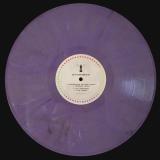
Norwegian folk artist Juni Habel's latest album Evergreen In Your Mind is largely an ode to letting go, and at it’s inquisitive heart can be found ‘Pearl Cloud Song’. An instrumental four-and-a-half minutes, it came from a guitar tuning that Habel stumbled upon, the song tumbling out of the discovery on its own accord. Lush and vibrant and bristling with life, it’s a beautiful backdrop to stepping into nature, bringing together a simple drum machine pattern, steel-string guitar, pedal steel, considered effects, and the flicker of a voice somewhere in the far-off distance. Juni says "it gives the sensation of flying." With such ingredients it was rife for a remix.
'Pearl Cloud Song Reformations' is a very limited 12" (also available digitally) which features two remixes/reformations from Tom Sharkett and Minotaur Shock and also includes Juni Habel's original version. There will only be 200 ever made.
Tom Sharkett is a producer from Manchester, now based in Todmorden. Having cut his teeth as a founding member of synth-wave band W. H. Lung. Tom has gone on to forge his own path as an electronic artist with music on Optimo Music, DFA and Test Pressing. His work leans towards dark, wonky and psychedelic electronics and his edit of LCD Soundsystem’s ‘Home’ grabbed the attention of James Murphy which led to an official DFA release. The cosmic choogle of his 'Pearl Cloud Song Reformation' is Sharkett's first remix committed to vinyl since.
Minotaur Shock is the long-standing electronic project of Bristol-based producer David Edwards. With a discography spanning labels like 4AD, Melodic and Bytes, Edwards balances pastoral charm with IDM sensibilities, creating soundscapes that are as much about the heart as they are the head.
In 2000, after almost two decades of hibernation under the ambient waves and dub currents of the Sargasso Sea, LSD revived the seminal ‘Auntie Aubrey's' series, an Orb Remix Project. Released as a 2 x CD compilation, Part 3 is a veritable smorgasbord of classic, new and unreleased labour-of love remixes that span three decades yet still transcend space and time.
Many influential artists have been involved with The Orb since the beginning, and the project keeps evolving and adapting. Dr. Alex Paterson, the gravitation centre of the Orb is known for his playfully subversive remixes and true to form this album highlights the diversity of his musical mind.
We see the good doctor remix the melancholy and evocative “The Last Lighthouse Keeper” from The Transit Kings, an early British electronic music group that included Jimmy Cauty of The KLF, one of the original members of The Orb. The remix of ‘Davy Jones’ Locker’ from System 7 takes you surfing on a sun-dappled sea of ambient dance nostalgia, while Killing Jokes’ ‘European Super State’ remix (in which LSD label founder Martin ‘Youth’ Glover plays bass guitar) sounds like the soundtrack for an imaginary spy thriller with the powerful lyrics and hypnotizing voice of Jaz Summers.
Legendary producer Youth teams up with Lx yet again on a psychedelic rocker with spellcasting vocals by Lara Smiles, and this is just the beginning! Boasting an all-star lineup, the compilation includes many of our scenes most esteemed electronic music producers such as Coldcut, David Harrow, Sendelica and Gaudi as well as the ambient blissed out vibes from the enigmatic DF Tram, Duende India Collective and The Gyuto Monks of Tibet, this collection offers up such the variety to appease even the most dedicated Orbsessives and music connoisseurs
Since the release of DAMAGED in 2024, Michael Fiedler aka GHOST DUBS has been surfing intensifying waves of adulation, earning praise from such diverse underground legends as Justin Broadrick (Godflesh/Jesu), Regis, Stefan Betke (Pole) and Steve Von Till (Neurosis). With second album Oblique, his mastery of sculpting sound waves results in a spellbinding set of alien soundscapes: larger in scale, richer in tone and considerably more cinematic than its predecessor. Lower, deeper and moodier, its cloudy abstractions, shadowy pulsations and submerged rhythms find Fiedler reaching further into his own sonic void, crafting blurred melodies and addictive narco loops into something simultaneously heavyweight and hypnotic.
Lead single and album opener “Low Times” sets the atmospheric pressure to maximum, resembling a dream date between prime dirt-house era Andy Stott and Berlin dub-tech pioneers Basic Channel. From there, Oblique descends into a series of enchanting mood scenes: the furtive, balletic gyrations of “After All”, the haunting ambience and buried heartbeat throb of “Soft Collapse”, and the noirish atmospherics of “Blackout Dust”, which worms its way into the mind like some forgotten David Lynch scene. The spirit of reggae is more distanced here than on DAMAGED, but the ghost of Jamaican dub still permeates these foggy soundscapes, particularly on “Bombed Suburbs”, where Augustus Pablo-style melodicism is chopped, screwed and slowed into a magnetic lock groove.
Superficially minimal but maximal in its minute detail, Oblique is a record of contorted reflections, mesmeric echoes and tantalising audio mirages. By the vaporous mist of closing track “Almost a Structure”, obvious rhythm has been craftily filtered away, leaving a blurred and blunted residue full of mystery and implied narrative. Dense in the best possible sense and crushing when played loud yet equally potent played quiet, Oblique imagines dub techno burning its own rigid rulebook: sensual, funky and concussive rather than dry or alienating. Following Fiedler’s recent work scoring Sound of Falling, recognised at Cannes in 2025, Oblique finds Ghost Dubs shedding his influences and making it clear he has arrived at a sound entirely his own — essential deep listening and a bewitching dose of future shock.
Shape of the Unknown’ is kind of a double LP that fully embraces the idea of exploration. It is CHLOÉ’s most expansive and immersive work to date. ‘Shape of the Unknown’ is CHLOÉ’s fourth proper studio album. Its predecessor, ‘Endless Revisions’, was released in 2017. Nine years have passed. Nine years during which CHLOÉ has continued digging for music, DJing at internationally renowned clubs and festivals including Rex Club, Robert Johnson, Panorama Bar, Nuits Sonores, Glastonbury and many more, releasing EPs and remixes, while also allowing herself the time to explore entirely new creative paths.
The challenge is to capture the unknown, make it her own, endlessly reshape its textures, and ultimately preserve its mystery.
The first single ‘Drifter’, released back in June, already offered a striking glimpse of the sonic territories the album would venture into, driven by its hypnotically contoured basslines. The album's two other singles offer different windows into her world. 'Shapeshifter' captures CHLOÉ at her most hypnotic, balancing stripped-back techno and melodic house through deep rolling grooves, expansive bass chords and subtle rhythmic shifts that constantly reshape the listener's perception without ever disrupting the flow. Later, 'Repeating The Obvious' takes a more leftfield route, pairing staggered rhythms with retro-inspired harmonics and an understated indie dance pulse that feels simultaneously familiar and unpredictable.
CHLOÉ has ventured into live performance through new formats, notably alongside percussionist Vassilena Serafimova; immersed herself in film scoring with soundtracks for Paris la Blanche, Arthur Rambo, The Mountain, Blanquita, Guru and Unsubmissives; and developed compelling collaborations, from High Season, her project with Ben Shemie of Canadian band Suuns (which resulted in the album The Call), to her own organic, experimental audiovisual performances under the name Slo/Mo AV.
Throughout Shape of the Unknown, CHLOÉ blurs the boundaries between deep house, hypnotic techno, electronica and cinematic sound design with remarkable fluidity. The album unfolds as a continuous narrative rather than a sequence of tracks, moving effortlessly between beatless ambient passages, rolling analogue grooves and emotionally charged club music. Organic percussion, sweeping bass movements, melancholic harmonies and richly textured synthesisers create a body of work that constantly evolves, where no section feels static and every transition reveals another layer of depth. There is an unmistakable warmth running through the record, with grainy analogue textures and spacious production giving even its most driving moments an intimate, almost tactile quality.
The album’s title is no coincidence. It evokes a form that has yet to be named, something language itself struggles to grasp. CHLOÉ approaches it through an organic creative process. Each piece must first be performed in the studio, almost as if it were being played live. The album will be followed by a series of live performances and DJ sets, including a show at the Olympia on March 18, 2027.
She is joined by a handful of steadfast collaborators. Jazz trumpeter David Enhco appears on two tracks, ‘Undertow’ and ‘Inner Bass’. But above all, there are the voices: Ben Shemie lends his unmistakable presence to the radiant ‘More Than Just a Feeling’. Olivia Merilahti, singer, songwriter and one half of The Dø, appears on the otherworldly ‘TWYR’. Working with Olivia’s already hypnotic voice, CHLOÉ has approached it like a sculptor, enhancing its strangeness and dreamlike quality.
And finally, impossible to miss is the instantly recognizable voice of Kittin. A longtime accomplice, she lends her distinctive phrasing to CHLOÉ’s music here for the very first time. The strongest collaborations are often those that take their time, arriving only when the moment is right. Same kind, same bass, same vibe, same pride.
The result is an enigmatic, nocturnal record, drifting between introspective listening and dancefloor functionality, revealing an artist who remains far more interested in atmosphere, movement and emotional storytelling than conventional club structures. It is an album that invites us to dream more deeply and to dance again, both within ourselves and out in the open.
The Five Green Moons present Moon 3. The third sphere to find its way into orbit. On its surface the evolution of a many faceted creature has taken place. Now with long, long tentacles and a million mouths the creature dances and sings. Its voice is the sound of the ghost dub ritual. The echo of spirits passing through the translucent veil. The chants of souls lost in the vampire woods. The clap, clap of its limbs colliding is the sound of frequencies being bent into fascinating new shapes by machine/ human hybrids. Post punk dubwise angular electro folk, Pastoral dub, whatever name you give to this music is of no consequence. It is alive and spinning in orbit.
The third Five Green Moons album sees Justin Robertson's sonic pallet blossoming into new exciting shapes. These 11 tracks offer a wide vista of across the frequencies including a truly remarkable and uncanny tale from celebrated author David Keenan on ' To Haunt of the Dark Earth A Spot' that brings to mind a vision of M.R. James merging with African Headcharge. Another refreshing collaboration can be found on 'Message from the Tone Generator' where underground electronic producer Nickelle adds her magical poetry to the psychedelic swirl. This is a bold and magical offering in a time of pastiche where new shapes are drawn from the sketches of the past.
If you need a sonic shorthand imagine Public Image Limited meeting the haunting chants of a new age Incredible String Band. The spiritual tones of late 70's Don Cherry. The whispering psych swooshes from Planet Gong and most importantly a solid bass foundation straight out of King Tubby's studio.
The eye of the storm: welcome to Tornado Wallace's debut album! The accumulation of about four years of work, with tracks written in Berlin and Melbourne, 'Lonely Planet' is nothing like you may have expected from the Australian expat. No stranger to fans and followers of ESP Institute, Beats in Space and Music From Memory's sister Label Second Circle, Tornado Wallace's strain of releases so far merged functionality with a musical playfulness that led him to find himself as one of the producer's behind José Padilla's International Feel album. Here, he leaves the needs of the dance floor behind in order to create a magical mystery tour de trance into his and our inner jungle. How about some references New Age sounds meet new wave melodies, Grace Jones runs into the Dire Straits at Compass Point, while a Korg Mini Pops and a Roland CR78 make amends for Sly & Robbie's absence, Michael Mann pictures Joseph Conrad's 'Heart of Darkness', Robert Rauschenberg tries his luck at naturalism and an imagined Wally Badarou echoes through all of it. Sandwiched between the title track and the yearning beauty of the album's final point 'Healing Feeling', you get all of that as well as collaborations with and contributions of NO ZU, David Hischfelder and the voice of Sui Zhen on 'Today', who would easily make Anna Domino take her proverbial hat off. Tornado Wallace created an album that supersedes the requirements and expectations of a debut. Like a lost Island Records or a never released Made to Measure album, 'Lonely Planet' soundtracks notions and ideas that recall the nostalgic future in the past as much as it looks ahead.
Following the critically acclaimed Fantômes… Futurs, praised by FIP, France Inter, Radio Nova, ARTE and International jazz press, double bassist and composer Kham Meslien returns with Vévés électriques, a deeply immersive second album where memory, landscape and improvisation merge into a singular sonic journey. Joined by Laurent Bardainne, Roger Raspail, Naïssam Jalal and David Neerman, Meslien expands the intimate language of his double bass with subtle loops and organic textures, weaving together echoes of Iceland, the Caribbean and imagined territories. Blending spiritual jazz, contemporary classical influences and ambient soundscapes, Vévés électriques is an invitation to drift beyond geography and into a profoundly personal exploration of emotion, identity and freedom.
Set upon an oil-smooth sea, an immense range of directions opens up before Kham Meslien for “Vévés Électriques”, his second album after “Fantômes… Futurs.”
With only his double bass and bow as vessel and sextant, a distant journey nevertheless begins to take shape. Vibrations and the striking of strings against wood quickly trace lines and winding paths across the surface of the water—so many routes to follow before leaving them behind, allowing the outward journey to become an inward voyage as well.
After an improvisation intended to shed light on the course ahead, isolated lands came into view: the shores of Iceland, the lands of the far north, places cut off from the rest of the world by vast expanses of water. Islands battered by a harsh climate that can only be endured by drawing warmth from deep within oneself.
Then the Caribbean arc appeared. The archipelago, a setting for joyful and unsettling experiences, takes Kham back to a childhood from which the passing years have carried him away. Rather than following the conventional channel of the music of these places, the West Indies emerge through memories whose colors are still vivid.
Through the morning mist, Roger Raspail’s percussion locks into the same frequencies of the groove. Double bass and struck skins then become companions on a road that intersects with Laurent Bardainne’s saxophone. Carrying a dreamlike message, David Neerman’s vibraphone also joins the narrative to write a few chapters of its own, while others are enchanted by the flute and voice of Naïssam Jalal, or struck by the metaphorical rhymes of rapper Rocé.
On the surface, through the themes along which the pieces navigate, landscapes slowly reveal themselves and change shape as the shore draws nearer or recedes. Straying from the marked course and allowing oneself to drift, breaking free from pure acoustic sound by adding loops first played live and then sampled, allows Kham to explore the depths. The depths of the ocean, as well as those of his soul. To enter a world of improvisation that reveals itself even as he explores it. Examined up close, feelings become shells to pick up and hold to one’s ear, so that they can be felt intensely until they take material form.
This sea, which had appeared peaceful, became the stage for a succession of stories and images, which then accumulated to give birth to a larger narrative.
This November, Brownswood Recordings will release Mek Do & Mend, the debut album from self-taught producer, multi-instrumentalist, composer and artist Wonky Logic. Although his name may not yet be familiar to everyone, Wonky Logic (AKA Dwayne Kilvington) has spent the past two decades quietly becoming one of the UK's most respected musical collaborators. His career has moved comfortably between London's jazz, electronic and contemporary music scenes, performing and recording with artists including Nala Sinephro, Yussef Dayes, Nightmares On Wax, Shabaka Hutchings and Emma-Jean Thackray. Alongside his work as a producer and composer, he's been musical director for projects with Eddie Chacon, John Carroll Kirby and I.G Culture's LCSM, scored the feature documentary Zandra With A Zed, contributed music to A24's The Smashing Machine, and continues to lead music workshops with young people, refugees and people experiencing incarceration.
Far more than a collection of compositions, Mek Do & Mend is a deeply personal reflection on the people, places and experiences that have shaped Kilvington throughout his life. It's the story of growing up on a Leeds council estate, where music became both a creative outlet and a way of understanding the world. Making music often meant working with whatever was available: a second-hand keyboard, a makeshift studio desk or ageing equipment that simply had to last a little longer. The title itself came from a conversation with his mother, capturing the resourcefulness that defined his upbringing and continued into the making of the album itself, which was written and produced to a tight deadline around touring, family life and Kilvington's work as a musician and educator.
Built from material spanning more than fifteen years, Mek Do & Mend brings together some of Wonky Logic's earliest compositions alongside brand new pieces written during the making of the record itself. Childhood ideas sit alongside music conceived only months before recording, creating an album that draws together a lifetime of writing rather than documenting a single moment. Running throughout are voice notes from family members, teachers, friends, mentors and collaborators—not simply as interludes, but as a reminder that no creative life is ever self-made. Rather than telling his own story outright, Kilvington invites listeners to discover him through the people who've shaped him: an aunt remembering him playing in church as a child, lifelong friends recalling early experiments making beats together, fellow musicians from different stages of his career and his mother describing him in her own words. Together they reveal the invisible network of relationships, philosophies, communities and experiences behind the music. "The album exists somewhere between being a biography and an autobiography," says Dwayne. "The biography is in the voice notes and how other people see me. The autobiography is in the music."
That same philosophy extends to the musicians who appear on the record. Every contributor has played a meaningful role in Wonky Logic's life beyond the studio. Long-time collaborator Luke Wynter, Steam Down drummer Benji Appiah, partner Vanessa Rani, Jonathan Enser, Joe Bristow, Brother Portrait and Nubiya Imani all feature not simply because of their musicianship, but because they form part of the album's story.
Across its fourteen tracks, Mek Do & Mend moves effortlessly between dynamic jazz arrangements, pulsating broken rhythms, delicate, twinkling piano passages, interstellar synth textures and elegant brass lines. Album opener and first single 'Strange Attractor' begins with a shimmering introduction before unfolding into an exhilarating surge of rhythm and momentum. Named after the mathematical concept of the same name, it serves as the conceptual point of origin for the album. Written when Kilvington was just seventeen, the composition reflects the idea that even the most unpredictable lives are guided by hidden patterns that often only become visible with time. Second single 'A Thousand Hands' features the unmistakable vocal tones of Brother Portrait, whose cerebral lyricism drifts over a low-slung, constantly shifting groove as woozy synth lines ebb and flow overhead. At its heart, the track celebrates the family, friends, mentors and collaborators whose often unseen influence shapes who we become, echoing the album's belief that every achievement is, in some way, a collective one. LP focus track 'BAME (Beyond All Marginalised Expectations)' is a lush, spiralling composition, brimming with both emotion and resolve. Reclaiming an acronym long imposed on racialised communities in the UK, the piece transforms it into a statement of possibility rather than limitation: a defiant rejection of stereotypes and a refusal to let identity be defined by other people's expectations.
The album itself only exists because other people believed in it. Isabel Gracefield made the RAK sessions possible, Rick David brought the record together with his characteristically thoughtful mix, and Gilles Peterson committed to releasing it on Brownswood before hearing any of the music. Away from the stage, Kilvington works with the charity Finding Rhythms, writing and producing original records with people experiencing incarceration, while also leading workshops with Arts Train and Dovetail Orchestra.
Recorded live in a single day in Studio One at RAK, Mek Do & Mend was mixed by Rick David through an analogue Cadac console before being mastered by Stuart Hawkes at Metropolis. The aim wasn't nostalgia or audiophile perfection, but to create a record people could return to throughout their lives, discovering something new with each listen.
As Dwayne puts it: "I don't want this body of work to be reduced to a jazz record. It's more like a novel about life told through music."
Here is the debut, self-titled album from a.s.o., singer/songwriter Alia Seror-O'Neill, and producer Lewie Day. 'a.s.o.' is a thematic consolidation of the previous three singles and an impressive artistic progression. Day and Seror-O'Neill show they've mastered the format of the radio-friendly pop song and found how to subvert it completely. Across eleven songs, they have built a rich and compelling body of work.
We know where we are now, emotionally complex, trip-hop torch songs for club freaks. But the palette has broadened to encompass ethereal dream pop à la Cocteau Twins, slow- burning AOR-soul, and dubwise stylings. As a result, 'a.s.o.' is a satisfyingly coherent listen but never a musical monoculture. Variously there are nods toward Julee Cruise, Fleetwood Mac, and the uneasy listening of Portishead. It's an album that wears its influences lightly, is never weighed down by them, and always sure of its own identity.
It's anchored by Alia's unique voice. Her words speak of restraint and release, taking us from the elegiac to the euphoric. This elegantly crafted, perfect pop music sounds like it has had enough of your shit. And Day's music is the perfect foil; deep, slightly menacing, restrained, and powerful. The album has a cinematic texture, as with David Lynch; the seemingly familiar becomes uncanny and strange the closer we look. a.s.o. take our emotions for a joyride before leaving us floating in space.
'a.s.o.' is a journey; by its end, we all are changed
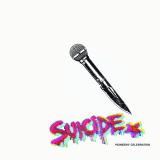
Oráculo Records joins forces once again with Unknown Pleasures Records under the banner of “The Black Alliance” to celebrate one of electronic music’s most influential acts: SUICIDE. Widely regarded as pioneers whose radical approach helped lay the foundations of minimal synth and darkwave, Alan Vega and Martin Rev receive a tribute from artists who carried their influence into new territories. Absolute Body Control, Gabi Delgado of DAF, Patrick Codenys and Richard 23 of Front 242, and Dirk Da Davo of The Neon Judgement appear alongside some of the most compelling contemporary projects in the international dark music underground. Spread across two records, this collection of cover versions also features SUICIDE songs revisited by Alan Vega himself with Marc Hurtado, presented on vinyl for the first time. Their presence creates a direct connection between the original voice of SUICIDE and the generations shaped by the duo’s uncompromising vision. An instant classic in spirit and scope, “SUICIDE Pioneers’ Celebration” honours a legacy that continues to resonate across the underground. Produced in a one-off pressing of just 500 copies, this is a collector’s edition to discover, play and treasure for years to come.
Following 2024’s Echoes of the Night EP, Michael Hodgson returns with Apply the Dub: four stunning new Adrian Sherwood remixes, this time of his long-running solo project, Misled Convoy.
The EP’s title is a nod to Sherwood’s renowned process in which tracks are not simply remixed, but dismantled, fed into his dub machinery and reimagined. The results are spacious and compelling, epic in scope, rich in detail and loaded with bass.
The prophetic voice of Kat Five (Feral Five) looms large on the opening track, as does Miho Wada’s flute on the last. David “Ital Horns” Fullwood returns to the project, providing trumpet to two of the tunes, while Doug Wimbish (Tack>>Head / Living Colour) adds bass, and Mark Bandola (The Lucy Show) guitar and keys, to a different pair of remixes.
The sessions began in 2025, with the original tracks drawn from the more experimental and industrial side of Misled Convoy, giving Sherwood plenty of room to work with sonically. In his Ramsgate studio, frequencies were pulled apart, bass lines elevated and melodies stretched while sounds disappeared into layers of delay, echo and dub processing before emerging dazed & confused and somewhere else entirely.
Since dub is the compositional glue that fuels Hodgson’s creative dynamic, this collaboration meant reverse engineering his process and stripping his compositions back to the bare bones: “Before we hit the studio, I had to remove a whole lot of my effects to make space for Adrian, which made the track sound empty and super weird, but this is how the magic happens. When you do a remix, you are inviting an artist you respect into your creative process and watch it get reimagined. This is a big part of dub and remix culture.”
Very much a meeting of two complementary approaches to sound, Apply the Dub has Hodgson’s dark and atmospheric electronica enhanced and deeply embellished by Sherwood’s long-established sonic manipulation and dub-mixing.
For Hodgson, the connection with Sherwood and On-U Sound has been life-long, from being a fan in his youth in Aotearoa New Zealand to supporting Patrick Docktor’s archiving of the label’s video and audio collection in London. In 2019 Sherwood invited Hodgson to collaborate with artist Peter Harris to create a visual backdrop to accompany his Time Boom X The Upsetter Dub Sessions tour. Hodgson went on to create videos for On-U’s 40th anniversary celebration at The Forum in London, helped with the immersive 3D Live Dub Experience at Earth Theatre and travelled to Japan for the Collapse of Everything tour where he worked on live video triggering for Sherwood’s shows.
Common Language is a project of the Community Library label. We started it as a way to reconnect with the ideas that drove ComLib’s inaugural releases back in 2005, uncompromising and eclectic DJ 12’s. We’ll be focused on this imprint for a while, and near-term, putting the emphasis on releases by label cofounders and our closest friends.
On CLANG02, the Middlemarch 12” EP, Solenoid transmutes his signature buoyant syncopated acid, electro, and mutant techno into moodier, reverberant territory. If you previously knew Solenoid for his restless, sophisticated Braindance-adjacent stuff, this EP is totally consistent with his long discography. Here though, he gets into a dreamier, and also bassier zone that is equally rewarding either in the innerspace immersion of headphones or in the warmth of your favorite local underground club’s sound system--lots of detail and atmosphere to sink into.
“Middlemarch” is moody deep techno-- a clatter of distant percussion encircles eerie pads and an extra-bassy, double-filtered TB303 bassline. “Ways and Means” rotates perplexing polyrhythmic patterns driven by bright, elasticchords that keep it moving (reminding me of The Martian’s stuff on Red Planet a bit). “A Winter Walk” offers a skeletal, skittering rhythm that wouldn’t be out of place next to a Livity Sound track; and the closer, “Dvv Waltz” reserves a 3/4-time experiment for the bravest / most inquisitive DJs.
Edition of 300 vinyl copies includes special full- color insert
Mastered by Dietrich Schoenemann
About Solenoid
Solenoid is the primary musical vehicle of David Chandler, a lifer underground producer, musician, and visual artist. As a lone electronic voice in the wilderness of early-90s Portland (which was at the time a grunge-saturated third backwater) he started out releasing adventurous, now- unobtainium tapes on his DIY Pharmacy label. Solenoid then became known internationally at the turn of the millennium as one of Portland’s persistent ambassadors for underground crossover electro and techno, releasing on labels like Outward Music Company, Emanate, Orac, and many others (most recently, on the Paris label Partout). He’s a real legend honestly--doggedly clocking in almost 40 years of uncompromising experimentalism with a signature sound and vision running all the way through.
-- Paul Dickow (Strategy)
The Temptations Get High on Psychedelic Soul: Cloud Nine Soars with Ambitious Arrangements and Production, Features Standout Vocal Performances and Instrumentation by the Funk Brothers
The Temptations’ Cloud Nine announced that Motown — and “The Sound of Young America” — would never be the same. Influenced by the emergence of cutting-edge rock and pop currents, as well as increasing sociopolitical turmoil, the album broke down barriers between rock, psychedelia, and soul while heralding the arrival of visionary arrangements and production techniques. Bookended by traditional R&B numbers, the 1969 record sent the Temptations in bold new directions and signaled the advent of psychedelic soul.
Sourced from the original master tapes, strictly limited to 3,000 numbered copies, pressed at Fidelity Record Pressing, and housed in a Stoughton gatefold jacket, Mobile Fidelity’s 180g 45PM 2LP set presents Cloud Nine in audiophile sound for the first time on a domestic pressing. This collectible reissue bestows Norman Whitfield’s extraordinary production with the grand-scale dynamics, natural tonality, expansive openness, and low-end weight it deserves. The timbre of each of the five members’ voices is readily identifiable — even within the group harmonies — bestowing a realism never experienced outside the recording studio.
Making its debut on 45RPM, the album further benefits from the wide groove space by playing with greater separation and more realistic presence than prior editions. Everything from the brassiness of the horns to the dry snap of the snare comes across with reference-grade clarity and positioning. And since Motown’s renowned Funk Brothers backing band plays on many of the cuts, you’ll want to savor every note. The imaging, soundstaging, and organic bloom-and-decay of the notes make that possible.
Amid Cloud Nine, the instrumentation and architecture stand out as much as any element. Never before had a Motown album contained such ambitious patterns and complex passages. Seemingly conscientious of the departure from their past methods, the Temptations and Whitfield bunched together the tracks that mark a deep dive into psychedelic territory and counterbalance them with seven sterling soul cuts that dovetail with Motown tradition drenched with heartfelt vocals, swelling strings, and finger-snapping beats.
On the original 33RPM release, traditional Motown soul — laden with heartfelt vocals, swelling strings, and finger-snapping beats — occupies Side Two. These songs reveal an ensemble still very much on top of delivering pristine pop-soul material graced with romantic sweetness, persuasive insistent, and soaring highs. Re-energized after the departure of lead singer David Ruffin, who was fired for a variety of reasons in June 1968, the Temptations seamlessly meld with his replacement, Dennis Edwards, on one melodic gem after another.
The collective tackles five songs co-written by the legendary Motown team of Barrett Strong and Whitfield. Not the least of which are the smooth, shuffling “Why Did She Have to Leave Me (Why Did She Have to Go)” and deceptively simple, horn-spiked “Gonna Keep on Tryin’ till I Win Your Love.” On these tracks, as well as on a lush rendition of the ballad “Love Is a Hurtin’ Thing” and pleading, tender send-up of the Gerry Goffin-Carole King classic “Hey Girl,” Edwards and Paul Williams take turns on the lead with the estimable Eddie Kendricks, Melvin Franklin, and Otis Williams providing backing support.
All five vocalists trade-off leads on the simmering title track, a groundbreaking composition shot through with wah-wah-pedal effects, liquid funk, deep bass lines, Cuban percussion, saturated reverb, and gang choruses. Whitfield mines each member’s natural vocal range with spectacular results, keeps time with cymbals, and channels both the heated temperatures and escapist desires of a society embroiled in war, conflict, and experimental drugs.
Amazingly, the Temptations top themselves on the similarly revealing “Run Away Child, Running Wild.” Nearly 10 minutes in length, the song explodes R&B parameters and harbors a cinematic scope. Urgent pianos, distorted guitars, stripped-down percussion, steamy Hammond organs, minimal bass motifs, five distinct voices narrating the tale of a boy who fled home and now finds himself amid the scary, unforgiving external world: They combine to give the urgent tune a walls-closing-in atmosphere where fear and desperation reign. Bolstered by an extended instrumental section that precedes a climactic return of the singers’ voices, “Run Away Child, Running Wild” equaled the success of the record’s title track, with both reaching No. 6 on the pop charts.
Carly Simon’s No. 1 smash “You’re So Vain” lingers as one of the most clever and famous songs ever recorded. The subject of mass speculation ever since its release, soon after which it occupied the top spot on multiple Billboard charts for weeks, the anthem kept a captive public guessing at the identity of its smug subject for decades. The question surrounding the protagonist’s identity remained perhaps the only mystery on the otherwise sexually open and autobiographically daring No Secrets, Simon’s commercial breakthrough and ‘70s singer-songwriter staple.
Sourced from the original master tapes, pressed at Fidelity Record Pressing in California, strictly limited to 3,000 numbered copies, and housed in a Stoughton gatefold jacket, Mobile Fidelity’s 180g 45RPM 2LP set affords the platinum-certified 1972 effort the finest sonic treatment it’s received on vinyl. Helmed by Richard Perry and recorded at London’s Trident Studios — where Beatles, David Bowie, and Elton John captured landmark LPs — No Secrets touts exceptional production qualities highlighted by this restorative reissue.
Audiophiles and record collectors, take note: This is the first time No Secrets has been available on 45RPM. The wider grooves and dead-quiet surfaces pay instant dividends. Simple, elegant, and disarming, songs seemingly float amid wide, deep soundstages. Simon’s voice takes on a confident, assertive tenor that emerges with accurate imaging, balanced tonality, and palpable presence. String arrangements and backing vocals come through with similar realism.
Enhanced by an all-star cast — Simon’s then-husband James Taylor, Paul and Linda McCartney, Mick Jagger, Lowell George, Klaus Voorman, Bobby Keys, Jim Keltner, Nicky Hopkins, and Bonnie Bramlett are among the renowned musicians who lend a hand — No Secrets advances Simon’s themes of personal introspectiveness, no-holds-barred reflectiveness, and feminist-inspired boldness. She makes every moment of No Secrets worth savoring. Simon invests her all in the songs, handling beautiful ballads, sassy folk-rock numbers, and bluesy fare with calm, composure, and candor.
While acknowledging her own regrets (“You’re So Vain”) and loss (“The Carter Family”), Simon champions the highs (“The Right Thing to Do”) and pains (“His Friends Are More Than Fond of Robin”) of love in a sincere manner indicative of her maturity as both an artist and singer. The New York native distinguishes “When You Close Your Eyes” with deep-rooted spirituality, recalls childhood joys via charming sentimentality on “It Was So Easy,” and and takes ownership of her persona on a cover of Taylor’s “Night Owl.”
“We have no secrets
/We tell each other everything,” Simon sings at the record’s midpoint, encapsulating both the themes and bravura of an effort that was nominated for four Grammy Awards and saw her write or co-write every song but one. Combined with Perry’s savvy instrumental arrangements, her self-assured performances and forthright lyrics grant No Secrets an edginess and relevance immune to the ravages of time.
Key To World Peace is the third release by Prophetic Justice Ministry - aka Australian musician Sam Perry. An atmospheric, cinematic album that belies a striking pop songwriting nous at its core, its conductor Prophetic Justice Ministry is at the centre of a new wave of creative, rule-bending Melbourne artists. Romantic, smudged and hazy, Perry emerges from behind a wall of
half-light with a clutch of earworms and affecting emotions.
Recorded in home studios in Belgrade (Serbia), Christchurch (New Zealand) and Melbourne (Australia) over the course of three years, Key To World Peace offers a dichotomy in approach. Shifting on a dime between ambient, filmic washes of sound and more traditional song structures, the approach feels natural, casually acid-tipped and emotionally revealing. While Perry’s
distinctive keys and production melding with melody is evidenced in Melbourne group Who Cares?, as Prophetic Justice Ministry there’s a heightened sense of mystery and space being used.
Swirling in a psychedelic fog with dry iced chords falling down like melting stars, the album pulses with an ominous, distorted intro that sculpts air into blocks of sound before Psyop offers a glimpse through the gloom at the artist navigating through crushed, shoe-gazing chords, singing a consolation into an abandoned building. Side A’s more abstract tone veers from industrial tracks (T-A) to pastoral, impressionistic pieces (Trance) before album highlight Life’s A Party showcases the effortless, classic songwriting lurking in Prophetic Justice Ministry. Built on the tension between the upbeat lyrics and suppressed, rich delivery, the song lopes on an alluring loop with acoustic guitars and Perry’s voice walking a tightrope between irony and sincerity. The song blooms into a bright burst of light, almost inducing synesthesia in the listener and reminding a little of The Beta Band’s most outre and catchy moments.
Opening Side B, Naked Shine’s scintillating guitar is punctuated by a sub bass swell that offsets the yearning vocal performance. With palpable sensitivity the song is shepherded into short, atmospheric passages before Love Drum’s direct delivery: Perry’s vocal and guitar, dancing over a hint of distortion feels like Syd Barrett at his most casually brilliant. Carrying on the tradition of a single cover on every Prophetic Justice Ministry release, here Lana Del Rey’s Mariner’s Apartment Complex is given a stripped back but faithful treatment. With a sound that feels like a hushed, Chris Isaak classic it’s testament to Perry’s own compositions that the cover doesn’t outshine the rest of the album. Album closer and single Spirit House Party combines a classic chord progression with Perry’s double-tracked vocal into a murky but brilliantly catchy chorus. While nowhere near as lush in its production, there’s something in the atmosphere of Prophetic Justice Ministry’s vocal sitting in the mix just so that reminds us of The Electric Prunes’ Holy Are You-era work with David Axelrod.
Key To World Peace flits between displaying a spectrum of blurred emotional resonance in its instrumental passages and vulnerability in the shape of raw, melodic songwriting. With his first release outside of Australia and vinyl debut, Sam Perry’s Prophetic Justice Ministry is a beguiling dance in and out shadows.
Skinned' ( released digitally in 2020) - the debut album from Danish composer, producer and singer ML Buch.
Comes with lyrics printed the inner sleeve.
After releasing her debut EP Fleshy in 2017 - Skinned that takes her expansive guitar work and catchy melodies to another territory.
With her unique experimental pop and vocals that seem to slide into your ears as fluorescent liquid, ML Buch portrays the reality of intimacy in a digital era. Working primarily with synthetic midi sounds, the general love of songwriting and guitar music is ever present.
As if in search for something real, ML Buch takes the listener on the other side of the skin. Led by tender love songs like I’m A Girl You Can Hold IRL and Can’t Get Over You With You we journey through her throat and into her intestines, discovering a fascinating realm of shiny mucus and bile in flesh and yellowish colors. Panoramic images were captured by a small pill camera travelling through the body of ML Buch and act as extensions of the architecture of the music. This literal way of internalizing modern technology is symbolic of Skinned where eclectic instrumental compositions share the space with strong hooks and ML Buch’s spherical voice.
credits
All songs composed, arranged and produced by ML Buch
All lyrics by ML Buch
‘Touching Screens’, ‘O’ and ‘I Feel Like Giving You Things’ co-written by Oliver Nehammer
Bass on Can You Hear My Heart Leave, Touching Screens and Mw by Johan Polder
Drums on Touching Screens and Mw by Kristof Gasior
Viola on Stone Bridge by Astrid Sonne
Midi drums and keys on Touching Screens by Oliver Nehammer
Mix by ML Buch, Oliver Nehammer & Jacob Brøndlund
Mastered by ET Mastering
Cover photo by David Stjernholm
Artwork by Aske Zidore and ML Buch
One of the key architects of Gospel House Music, DJ Spen, gets set to release his brand new full-length artist album, ‘The Praise Party’ on Quantize Recordings. DJ Spen’s weekly Sunday ‘Praise Party’ live stream was born in the pandemic, when a heartfelt idea from his wife Kelly, “go live and bring hope to people”, grew into a global online family united by music, faith, and irresistible gospel house edits. Six years on, that community still gathers, and ‘The Praise Party’ album carries that legacy forward, continuing to bring hope and inspiration through music. A true labour of love, this album sees DJ Spen deliver fifteen uplifting songs where joyful voices rise together in spine-tingling harmony, and stunning solo performances flow over a musical feast of heart lifting, hand clapping and roof raising Gospel grooves.
Factory Floor return to Phantasy with ‘Buzz Saw’, a driving new single that once more re-establishes the trio of Nik Colk Void, Gabe Gurnsey and Joe Ward as amongst the most vital forces in live electronic music.
Following on from 2025’s sold-out vinyl singles ‘Between You’ and ‘Tell Me’, the spacious groove of ‘Buzz Saw’ bridges the sharp, bracing synthesis of the band’s origins in London’s post-industrial warehouse scene. Once again mixed by legendary engineer David Wrench (Daniel Avery, Floating Points), it captures the band’s most dancefloor-forward instincts, recently rejuvenated via appearances at Berghain, festivals such as No Bounds and Simple Things, plus a headlining UK tour.
As before, Gurnsey’s peerless drum work - tracked in the studio by Stephen Morris of New Order - proves forceful and delicate in tandem with Ward’s percussion, encountering suspenseful breakdowns in the space between Voids enveloping basslines. In dreamlike accompaniment, Colk Void’s own voice drifts serenely upwards, itself slowly consumed and obscured into the band’s full-bodied electronic rush, which is also available here as a more minimal, no-less powerful dub version.
In sonic contrast, ‘Guitar_1342’ finds the band experimenting in their starkest terms, stripped back of their luminescent flow and boldly reduced to an abrasive, dissonant guitar feedback.
Factory Floor’s ‘Buzz Saw’ will be released via Phantasy on 29th May 2025, available as a limited-edition vinyl pressing in a risoprint sleeve, as well as digitally.
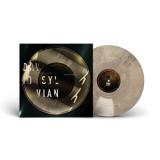
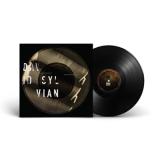
Limited edition LP Marbled coloured vinyl in mirror board sleeve 180g marble coloured vinyl. Packaged in a heavy weight 350gsm CMYK-printed mirror board silver reflective outer sleeve with a 170gsm inner sleeve. High gloss finish on both the outer and inner sleeves. the freshly minted label NANOQ is proud to announce a new album by david sylvian titled 'the distance between the killer and the killing' it's the first album sylvian has released in 15 years. composed of sessions recorded between 2012 - 2025, the album is based on recomposed improvisational sessions with a variety of artists ranging from otomo yoshihide, ryuichi sakamoto, bilianna voutchkova and miako klein, to jamie drouin, lance austin olson and more. the 46min instrumental is unlike anything tackled by sylvian before and is seen by sylvian himself as the official follow up to his 2009 album 'manafon'. in pauline nadrigny's essay on the album, she describes something of the listening experience. '... voices surge that belong to no one in particular. One that hoots and hums across a violin, worked until it loses its voice, becomes mere matter among other matter. A voice inside the breath of a clarinet or a recorder. Grunts, gurgles, distant cries, somewhere between man and bird, woman and nuthatch. Fragments of choirs, far off, snatches of a song long since lost. Too far to be recovered.' 'What a remarkable piece of work. At times it feels like listening to a symphony; at others, as though (sylvian's) voice is speaking through the music. At first, I was trying to find my own sound, but somewhere along the way I completely forgot about that and became utterly absorbed in the music. Hearing Ryuichi's presence emerge here and there throughout the piece also brings a very special feeling for me. Thank you for creating something so extraordinary.' otomo yoshihide 2026
the freshly minted label NANOQ is proud to announce a new album by david sylvian titled 'the distance between the killer and the killing' it's the first album sylvian has released in 15 years. composed of sessions recorded between 2012 - 2025, the album is based on recomposed improvisational sessions with a variety of artists ranging from otomo yoshihide, ryuichi sakamoto, bilianna voutchkova and miako klein, to jamie drouin, lance austin olson and more. the 46min instrumental is unlike anything tackled by sylvian before and is seen by sylvian himself as the official follow up to his 2009 album 'manafon'. in pauline nadrigny's essay on the album, she describes something of the listening experience. '... voices surge that belong to no one in particular. One that hoots and hums across a violin, worked until it loses its voice, becomes mere matter among other matter. A voice inside the breath of a clarinet or a recorder. Grunts, gurgles, distant cries, somewhere between man and bird, woman and nuthatch. Fragments of choirs, far off, snatches of a song long since lost. Too far to be recovered.' 'What a remarkable piece of work. At times it feels like listening to a symphony; at others, as though (sylvian's) voice is speaking through the music. At first, I was trying to find my own sound, but somewhere along the way I completely forgot about that and became utterly absorbed in the music. Hearing Ryuichi's presence emerge here and there throughout the piece also brings a very special feeling for me. Thank you for creating something so extraordinary.' otomo yoshihide 2026
With Get Together III, the journey moves into its next chapter, as four artists come together once again to bring the many colors of electronic music to life.
modul808 opens the journey with deep, warm chords and a driving groove that instantly pulls the listener into the depths of its sonic landscape. In “Kamuro”, shimmering details line the explorer’s path, while the magical vocals of Igor Pose are elegantly woven into the arrangement, creating a dense and hypnotic atmosphere. With “Habits”, Heidmann continues the journey in a similarly groovy fashion, leading the way to sunlit clearings filled with memorable melodic gems. Cie effortlessly picks up the uplifting mood on the B-side, where the magnificent “Schlosshotel” unfolds with majestic chords and shimmering strings, inviting every house lover to stay for a while.
Finally, the journey home begins with Dip’s “Module”, which follows a deep path once more, uncovering sparkling sonic secrets along the way.
Together, the four tracks form another chapter in the Get Together series - a warm and timeless deep house journey shaped by four distinct artistic voices.
Mit Get Together III geht die Reise in ihr nächstes Kapitel: Vier Künstler kommen erneut zusammen und bringen die vielfältigen Farben elektronischer Musik zum Leuchten.
modul808 eröffnet die Reise mit tiefen, warmen Chords und einem treibenden Groove, der den Hörer sofort in die Tiefen seiner Klangwelt zieht. In „Kamuro“ säumen glitzernde Details den Weg des Entdeckers, während die magischen Vocals von Igor Pose elegant in das Arrangement verwoben sind und eine dichte, hypnotische Atmosphäre entstehen lassen. Mit „Habits“ führt Heidmann die Reise ebenso groovig fort und öffnet den Weg zu sonnendurchfluteten Lichtungen voller einprägsamer melodischer Klangperlen. Die gute Laune greift Cie auf der B-Seite mühelos auf: Vor ihm erhebt sich das prächtige „Schlosshotel“, das mit majestätischen Chords und schimmernden Strings jeden House Liebhaber zum Verweilen einlädt. Beschwingt beginnt schließlich die Heimreise mit Dip’s „Module“, das erneut einen deepen Pfad einschlägt und auf seinem Weg funkelnde klangliche Geheimnisse offenbart. So entsteht ein weiteres stimmiges Kapitel der Get Together-Reihe - vier Künstler, vier Perspektiven und eine gemeinsame Reise durch warme, zeitlose Deep-House-Landschaften.
Early DJ Feedback:
Christian Seitz / Show "Neuland" on Radio Z
A beautiful compilation that brings together deepness and dancefloor
Sebastian / f.a.r.e.s / Bass And Space
Great EP, thanks!
ed2000 / Dangerous Drums, Cashmere Radio, Face Radio, dub intervention
Very nice set of tracks, support and thanks radio and dj set plays.
Sasha / Circus Recordings, Renaissance, Global Underground
Cool from Cie
Anthony Pappa / Selador / Renaissance
Nice tunes. Thank you.
Timo Maas / Cocoon Recordings, Crosstown Rebels, Rockets and Ponies, Mobilee, Moon
Harbour, Tenampa, etc etc
Nice Heidmann
Stéphane Chambord / Radio Resonance ("DeeJay Academy" Radio Show)
repérages : Kamuro & Habits je prépare une émission spéciale avec un mix des productions du label
Cyprien Rose / Lui, Houz-Motik, Waxdoesmatter
Amazing > Modul808 - Kamuro feat. Igor Pose
Rob Zile / Brain Food Radio (Kiss FM) / Brain Food Records
Great deep tunes
John Digweed / Bedrock Records
Downloading
T. Carlita / In My House
Good Vibe
Laurent / WTM
Another wtm's playlist is coming soon…;)
Douglas Arellanes / Radio 1
Cool chilled out vibe on this record.
Valerio Vaudano
I like "Kamuro" and "Habits". Will try these warming up the dance floor. thx for sending
Stuart Bruce / Chain DLK
Downloading for possible review on ChainDK
Noah Pred / Thoughtless, Biotop, Highgrade
Some nice ones here, thanks.
Ninu / Hipodrome
I like Habits
BARRcode / Backseat Mafia
Solid release.
Carl Craig / Planet-E
dl 4 erno thx!
Ilario Alicante / Cocoon Recordings, Alphahouse, Bosconi, Prism
Downloading for Ilario Alicante, thanks for the music!
Andrew Till / Machine, Fnoob
Cool dubbed out grooves ,,,Heidmann - Habits is my pick.
Ju / Upperberry
Dope =)
Kat Davids
nice and smooth!
Como Las Grecas / Kali Modernphase, Denis Yurgens, Alejandro Club, German MT, Como Las
Grecas
Deep mind in house groove. Interesting VA of deep house.
Dole & Kom / Death By Disco, Mixmag
Really liking Modul808's and Cie's traxxx Thank you
With Black Koyo, Mattias De Craene enters a sound world at once intimate and vast. Born from journeys in Morocco and Brussels, the project traces the rhythms, chants, and spirits of the Gnawa tradition, revealing a quiet resonance that echoes De Craene's own search for depth and presence. Guibri, qraqueb, call-and-response chants, saxophone, loops, and electronics come together in a trance-induced dialogue - ritualistic, elemental, and dreamlike - creating a space where listening becomes immersion, tradition meets imagination, and music unfolds as a shared act of reflection and wonder.
About Mattias De Craene
Mattias De Craene's artistic path is marked by rare coherence. As a central voice in Nordmann and MDC III, he developed a physical, rock-inflected jazz language driven by propulsion, volume, and trance-like collective energy. Over time, a period of personal rupture - burnout, tinnitus, depression - shifted his focus inward. The saxophone became a breathing, textural presence, and in his solo work, he weaves saxophone, electronics, loops, and minimal forms into a cinematic, hushed world where repetition, resonance, and silence slow perception. Rooted in ambient and introspection, his music prizes attention over impact, precision over excess - a quiet intensity recognized with a nomination as Musician for the Music Industry Awards (MIA's).
About Black Koyo
Black Koyo is a Brussels-based ensemble and one of the most compelling voices of the Gnawa tradition outside Morocco. Led by maalem Hicham Bilali, the group brings guibri, qrraqueb, and call-and-response chants to life with trance-like intensity and ritual precision. Their music is both rooted and contemporary, weaving earthbound rhythms and vocal invocations into ecstatic, immersive soundscapes, creating a space where ancestral resonance meets present-day imagination.
About Jan Bang
Jan Bang is a pioneering Norwegian producer and musician, celebrated for his mastery of live sampling and his ability to merge electronics with improvisation, rhythm, and texture in real time. He mixed the album and occasionally joins live performances, bringing his signature approach to sound as co-founder of the influential Punkt Festivaland collaborator with artists such as Jon Hassell, David Sylvian, Arve Henriksen, and ECM Records' roster. As a performer and sound architect, Bang creates immersive, trance-like sonic textures where silence and sound carry equal weight. Within Mattias De Craene ftBlack Koyo, his live sampling becomes an organic instrument, weaving saxophone, electronics, and Gnawa rhythms into hypnotic, physically charged soundscapes.
Line-up & credits
Mattias De Craene - sax, electronics | Hicham Bilali - guibri, vocals, qraqueb |Ismael Akhraz - vocals, qraqueb | Marwan Abantor - vocals, qraqueb
All tracks are original gnawa traditionals played by Black Koyo and arranged by Mattias De Craene.
Album produced & recorded by Mattias De Craene in Essaouira, Morocco and hometown Ghent, Belgium 2025.
Text by Hicham Bilali.
Mixed by Jan Bang at Punkt Studio
Mastered by Lieven Van Pee
Artwork by Marina Sviridova
Design by Benoit Van Geel
Manufactured and distributed by N.E.W.S.
Executive production by W.E.R.F. records
Supported by Flemish Government, Jazzlab, nona, HA Concerts, Aubergine artist Management,
KAAP, La Bestia (Wout Van Putten) & mdcmu.sic vzw.
2026 (c) W.E.R.F. records
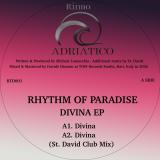
Rythm Of Paradise launches his brand new label “Ritmo Adriatico” with "Divina EP", a sonic manifesto of Italian house music. This four-track journey blends the power of main stages with the warm intimacy of clubs, always driven by a profoundly Mediterranean soul. A first release that doesn't just present a sound, but tells a story.
The EP opens with main track "Divina" , powerful and immediate groove built for the dance floor, wrapped in warm atmospheres and bright pads that create a sense of high energy, with emotional breaks that reminds French Kiss sound.
Followed by its remixed version of Divina by St. David where he reimagined and elevate the impact on main stages. The bass becomes more prominent, the groove expands, and the voice became more hypnotice, without ever falling into cliché.
B1. Italia Novanta is where, Ritmo Adriatico reveals its beating heart. "Italia novanta " is a respectful and modern tribute to the golden era of Italo House, diving into the Mediterranean soul of the 90s, reinterpreted with today's power.
Closing with B2. Te Quiero where takes the dreamy atmospheres and immerses them in a deep, meditative dub treatment of spacious bass lines and captivating Italo house piano licks.
Written and Produced by Michele Lamacchia.
Mixed & Mastered by St. David
Hey! Cabrera is back at Bordello. Following on from Italo Void, this time he arrives with two friends and fellow countrymen in tow: Marta Paradise, the duo of Paolo Ancona and Davide Pozzovivo. A shared passion for the analogue riches of the 1980s cements this new partnership, a passion fully captured in the bold synth‑lines and heady grooves of Go By Night. Bodies swirl in the fog of “Stasera No.” Glittering melodies float above clean beats, shifts swooping and tucking before the unmistakable vocals of Fred Ventura smoulder. The mood drops from disco to basement as “Go Ahead” takes hold. Those addictive hooks remain central, but now they’re teased by breathy samples, orchestral rinses and thick basslines.
Whistle blasts and cowbell rumbles introduce the flip. Bright and luminous, vocoder verses carry this late‑night rave straight into sunrise. Tempos fall for the close. Fragile drum patterns form a base from which machined and spoken words intertwine with bubbling 303 lines. A record that captures every moment of the night.
2026 Repress Favorite Recordings proudly presents Voiciii, the 3rd and new album by Voilaaa, an immersive dip into its Afro-Disco universe spread across 14 tracks. Needless to say you’ll find in this new LP all the ingredients that made him famous: strong dancefloor-friendly festive bangers, irresistible funky arrangements and an undeniable sense of humor and irony.
Bruno “Patchworks” Hovart, behind Voilaaa, is as often surrounded by amazing vocal featurings from previous LP’s regulars (Pat Kalla, Lass) but also new voices you may already have heard on its recent EPs (David Walters, Rama Traore, Ayuune Suule), as well as the saxophonist Boris Pokora. The LP is also an occasion to pay tributes to major artists of the African sound, such as Fela Kuti (on “Water No Get Enemy”), or Manu Dibango (“Manu Écoute Ça” and “Tenor Jam For Manu”).
Since the release of Voilaaa’s previous LP’s Des Promesses and On Te L’Avait Dit and their massive international support, the Voilaaa Soundsystem did travel through the world to deliver its message of infectious joy and groove, from Equator to Thailand, from Kazakhstan to the infamous French “Fête de l’Huma”. Now you know: Voilaaa is everywhere and Voiciii (“here it is”) their new album.
Following Parnell March’s Back Bar Grooves EP in February and November’s release of the Dust Tears (lead song from Sarah/Shaun’s debut) remixes, Edinburgh’s Hobbes Music label returns with a second EP of dream pop from husband-and-wife duo Sarah/Shaun (pronounced simply Sarah Shaun), alias Sarah and Shaun McLachlan (pronounced McLochlun), who wooed hearts and wowed critics with debut EP ‘It’s True What They Say?’ last year.
‘It’s True What They Say?’ attracted fans across the board: Artist Of The Week in The Scotsman, rapturous reviews from The Skinny and Tokyo's Ban Ban Ton Ton blog, BBC 6Music airplay courtesy of Nemone (Mary Anne Hobbs' Morning Show), more radio play from Radio Scotland's Roddy Hart & Vic Galloway, plus Simone Butler (Primal Scream) and Jim Sclavunos (Bad Seeds) via their respective Soho Radio shows, not forgetting ringing endorsements from the likes of David Holmes, Youth, Kevin Bales (Spiritualized), Brent Rademaker (Beachwood Sparks) and Julian Corrie (Franz Ferdinand).
They played gigs supporting Glasgow's huge Glasvegas, at festivals (Kendall Calling, Dunbar Music, Hidden Door), plus a slew of venues across the Scottish capital, ending the year with a trio of shows supporting Glaswegian 80s pop legends The Bluebells at Aberdeen’s Tunnels, Dunfermline’s PJ Molloys and Edinburgh’s Liquid Rooms, while The List magazine tipped them among their Ones To Watch For 2025, with journalist Fiona Shepherd suggesting they were “blending the starry-eyed pop of Sonny & Cher with the electronic experimentation of Chris & Cosey.”
Very much the companion piece to the debut EP but arriving a full twelve months later, Someone’s Ghost is emblematic of the duo’s desire not to rush things or release anything half-baked.
“I’ve always wanted to create the perfect pop record and I do really feel that we’ve achieved that with this one,” says Shaun. And he’s clearly not the only person who thinks so.
REVIEWS, FEEDBACK ETC:
"I LOVE that! Dreamy dreamy pop." ROY MOLLOY (Marvellous Crane/Alex Cameron) on BLAST RADIO, Sydney
“the Scottish music scene’s cream of the cool... buzzy drum beats, high, distant chimes, and heavenly electronics…. very ethereal.” THE SKINNY
"Listening to Sarah/Shaun is like eavesdropping on a noir dreampop, long-distance phone call between them both, across two separate sonic locations. On this stunning 4-song EP, Sarah’s voice, effortlessly mesmerising, draws you into these big beautiful and haunting passages of perfect dream-pop. All beautifully produced in a multi-layered-scape of low-fi analogue textures, epic cinematic crescendos, intense electro-pulse grooves and warped psycho-pop guitar riffs. Within the songs lurk a sense of unresolved emotions, longing and pathos. There are shades of classic Lee Hazelwood & Nancy Sinatra but also Post-Punk Electronica and Beach House. But what a unique sound they’ve created of their own. I love it" DAVID MCCLUSKEY (The Bluebells)
"Absolutely beautiful" SEAN JOHNSTON (A Love From Outer Space)
"Lovely stuff here! Total quality." MARTYN 'MASH' HENDERSON
"Ooooh. Everything the last record promised is here. Well done" GEORGE T aka George Demure (Accident Machine)
"Vince clark Era Depeche Mode in places" KEVIN BALES (Spiritualized)
"Sounds cool. Well done" PETE KEMBER (Sonic Boom, Spacemen 3)
"Glorious, it (Debbie Harry) grabs hold of you and doesn't let go." IAIN DAWSON aka RAVECHILD (Everyone Wants To Play The Hits Podcast)
SOMEONE’S GHOST
Born out of an incredibly anxious, stressful time, the songwriting process for these recordings has been something of a personal tonic for Shaun…
“There was a period when I was having nightmares,” he reveals. “Apparently I was saying there was someone in the room, I was talking to that person and Sarah was seeing all this while I was still asleep.
So, I was thinking that this was my ghost. I started writing songs because I was going through something and I was dealing with something and writing songs was a comfort. My ghost was a comfort, whether it was real or not. The idea of it was a comfort.”
“I firmly believe that everyone has someone who watches over them but all of the songs are essentially about being there for someone,” he says. “Everybody needs someone but also everyone needs to stay real and keep what you have, keep it close, never let it go. If you don’t have it, continue to tell people you’re there for them. It’s about loving and hoping people will be good to you in return.”
While Shaun took the songwriting lead on Filter Of Love and EP closer The Sound Which Stresses The Sound Of My Ears, Debbie Harry was originally instrumentally conceived by producer Jaguar Eyes, alias Ali Chisholm, later lyrically completed by Shaun, and the EP’s lead track, Anhedonia, and one of its stand-outs (much like Starbed on the debut) was conceived by Sarah, as a result of experiencing a bit of a spiritual epiphany of her own.
“When I first heard the word Anhedonia, I didn't know what it meant but when I found out I thought about it quite a bit. How sad it would be to have no enjoyment in anything,” she explains. “This song is really about my own personal beliefs. When I have been down, that's one of the things that helps me the most. It talks about trying to make amends but realising, for some things, you can't. But I think with any kind of faith comes hope… which is always a good thing.”
A record about hope, truth, honesty, a belief in something bigger than oneself… and all set to a soundtrack that wouldn’t feel out of place in a David Lynch or Eighties feature film. What more could anyone ask for, really?
There’s equally a desire to offer something universal and positive to anyone who tunes in. The labels for the 12” edition reveal the dual mantras “Who just wants to survive?” and “It’s about time to live a little”, with both messages also engraved in each record’s run-out grooves. T-shirts accompanying debut EP It’s True What They Say? bore the slogan “Kill Them With Kindness” - leading caps intentional. Shaun carries the acronym KTWK everywhere he plays, as a reminder: it’s stitched into his guitar strap. And this particular wee pebble has already caused a few ripples: people have been approaching him at gigs to acknowledge their appreciation and respect for it.
"We feel we have made an honest, open, colourful, body of work,” say the duo. “We hope to go out and play the songs with the guys (our band) and then potentially make more records. We are taking things as they come. Everything has been organic so far, after all. We are looking forward to whatever this brings."
Black Truffle is pleased to present Radis, the first recording by the Oslo-based trio of Andrea Giordano (voice and organetto), Kalle Moberg (accordion) and Jo David Meyer Lysne (guitar and snare drum). Now based in Norway, Giordano is a native of Cuneo, in the Piedmont region in the north-west of Italy and her exploration of the Piedmontese language provides the starting point and conceptual anchor of the trio improvisations heard on Radis, which make use of the words of 20th century Piedmontese poets Nino Costa, Bianca Dorato and Oreste Gallina. As the musicians explain, the project is an attempt to preserve the beauty and singularity of a language at risk of extinction.
Fittingly, the first sound we hear on the opening piece ‘Fiorìa’ is Giordano’s unaccompanied voice. She sings a poem from Oreste Gallina as a kind of floating cadenza, the accompanying silence sensitizing the listener to the pellucid quality of Giordano’s voice and the unique sound of the Piedmontese language. The voice dies away and into the silence swells a single tone, sounded by Moberg’s accordion and—special guest on this opening piece—the alto saxophone of Mario Gabola. Extended techniques and preparations create unexpected timbres from the acoustic instruments: Gabola’s saxophone is augmented with tin cans and springs and Moberg’s unorthodox techniques allow the accordion to generate wheezing, buzzing textures and patterns of microtonal beating. Giordano’s voice returns, picking up the thread of the languorous opening melody, coexisting for a while with the shifting drone before the piece takes an unexpected yet organic left-turn into a delicate saxophone solo of sorts.
Recorded in several locations across Italy and Norway over the course of three years, Radis documents an ensemble who have developed both a distinctive sound-world and a remarkably sensitive group dynamic. Moving from folkish duets between accordion and Giordano’s organetto (the small accordion used in Italian folk music) to episodes of metallic guitar scraping from Meyer Lysne, the music is both quietly contemplative and gently chaotic. Ensemble roles shift with disarming ease. If on ‘Profij dëspers’ Meyer Lysne’s prepared guitar adds a haywire noise element to a lyrical episode of organetto and accordion, the next piece, ‘D’antorn a lor’, is grounded in chiming guitar chords of stunning beauty; once Giordano’s joins, the result calls up the most spacious moments of Maria Monti’s Il Bestiario. Throughout the seven pieces, the trio explore countless possibilities of group interaction and the margin between conventional euphony and pure abstraction: at times the voice floats against silence or seems almost disconnected from the gentle clatter of the instruments (sometimes reminiscent of Nikiforas Rotas’ haunting settings of Cavafy), while at other points the instruments touch on conventional harmonic accompaniment. What is perhaps most striking of all is the way that voice and instruments relate to each other, the extended technique reframing the voice as a kind of abstract sound object, while the melodic beauty of Giordano’s voice lends a contemplative, almost melancholic air to the wheezing and scraping of accordion and guitar.
Captured in gorgeously intimate recordings, Jim O’Rourke’s careful and beautifully spacious mix highlights the wealth of textural detail in each element. Accompanied by notes, session photos and the text of the Piedmontese poems, Radis is a work of stunning beauty that demonstrates the vitality of exploratory music in Norway today.
WILDSTYLE HOUSE is a new compilation series where Toy Tonics invites producers and DJs that have a very special, funky, unique sound to make one new track. The compilation should show the variability and diversity of house and disco TODAY. Like the wild music mix you can hear at the Toy Tonics events and the way Toy Tonics DJs combine many different styles of "4 to the floor" music into one new soulful, multi-style, and warm-sounding blended "genre." It's about the groove, about a new soul sound, the human feel, the organic and Y2K-inspired dance music that is growing and appeals to a new generation of dance music lovers.
This first part of the compilation includes unreleased music by:
Afro-funk and salsa-house producer talents ELADO, MUSTA, and ALMA NEGRA.
Garage house maestros MELON BOMB and Italian musician DANIEL MONACO (known for his New Wave disco and proto-house releases on Rush Hour and his work for Antal).
MARLA KETHER, the London bass player and DJ, who is known for her work with Little Simz, Oscar Jerome, and Loyle Carner, and has now started to release her own tracks.
Argentinian singer, musician, and DJ ALOT, combining proto-house vibes with Spanish rap.
Funk house producer and edit maestro PAUL OLDER, who is starting to become one of the key names of the new soul house scene (supported by DJs like Folamour, David Penn, Seth Troxler, Kirollus, Breakbot...).
And also Toy Tonics' own GEE LANE, KAPOTE, and ARPY BROWN contributed new tracks.
DJ Support: Mousse T, Mr V, Quentin Harris, Mark Knight, Claptone, Severino, Roger Sanchez, Moplen, David Morales, Kenny Carpenter and Terry Farley
So Sure presents – Tedd Patterson: Pieces Of Me EP
A1. “Let The Music Set You Free” (feat. Manchild Black & Monster Black)
Tedd Patterson joins forces with Manchild Black and Monster Black to deliver a vibrant, uplifting slice of NYC dancefloor energy. “Let The Music Set You Free” puts a fresh spin on The Illustrious Blacks’ signature message of joy and empowerment.
Patterson’s trademark production—tight, driving beats, bright synths, and peak-time club pressure—creates the perfect foundation for The Illustrious Blacks’ playful, feel-good, and exuberant vocals. Their dynamic presence shines throughout, bringing color and vitality to a track crafted for uplifting moments and late-night release.
A standout A-side full of personality, positivity, and true NYC spirit.
B1. “Piece Of Me” (feat. Inaya Day)
“Piece Of Me” is a high-energy, funk-infused dancefloor bomb featuring a sublime, hook-laden vocal from the legendary Inaya Day. Expertly produced and perfectly executed, this track hits that sweet spot between soulful house and classic club firepower, with Inaya’s unmistakable presence elevating it into instant-favourite territory.
B2. “Do It Again” (feat. Joi Cardwell)
Fresh from collaborations with Inaya Day and The Illustrious Blacks, Tedd Patterson returns with another heartfelt slice of soulful NYC house. “Do It Again,” featuring the unmistakable voice of Joi Cardwell, is vocal house at its purest—authentic, emotive, and stamped with Patterson’s bonafide New York pedigree.
If you like your house music infused with feeling, warmth, and groove, “Do It Again” delivers in full.
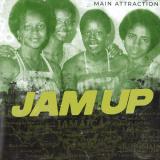
Emerging from the University of the West Indies (UWI) in Jamaica during the late 1970s, Main Attraction was a group of talented singers whose music captured the social and political energy of their time. With a sound that blended reggae and soulful ballads, their songs were both a reflection and a response to the challenges of the era.
The group originally featured Sonia Copeland, a gifted writer, arranger, and back-up singer, alongside Sharon Jones, whose velvet voice led many of their reggae tracks. They were joined by Allison Smith, Marjorie Smith, and Shahiba Ali, forming the group’s first lineup. As time passed, Michelle Thompson and Lileth O’Connor joined, further enriching the group’s dynamic harmony.
Main Attraction’s musical journey began with their debut recording, a cover of Once Upon a Time, produced by David Haughton under the management of Clayton Downie. Later, with Owen Palmer as their manager and producer, the group expanded their horizons, performing in cabaret gigs with the band Mind Benders and embarking on an overseas tour that showcased their talent in New York City. While Sharon Jones led reggae tracks like Jam Up, Allison Peart and Shahiba Ali brought their soulful touch to R&B songs, creating a rich, versatile repertoire that captivated audiences.
Jam Up was the group’s first original recording, composed and arranged by Sonia Copeland. Performed as part of the Reggae Song Competition during Carnival in 1978, the song is a rallying cry for unity and progress. With powerful lyrics and a Shaka rhythm, Jam Up calls on Jamaicans to come together, strive for economic growth, and uplift the nation collectively.
Sonia’s vision was clear: that Jamaicans from all walks of life would find inspiration in the song’s message, motivating them to improve their standard of living and contribute to the country’s growth and prosperity. Decades later, the lyrics remain just as relevant — a timeless call to action for social and economic strength.
Hold this record in your hands, let the music play, and feel the enduring power of reggae music to transform, uplift, and connect.
Der legendäre Frank Sinatra (1915 - 1998) war zweifellos einer der größten Sänger aller Zeiten. Diese großartige Sammlung präsentiert 75 Highlights aus seiner Karriere begleitet von herausragenden Orchestern unter der Leitung von wichtigen Persönlichkeiten wie unter anderem Nelson Riddle, Gordon Jenkins, Billy May, Sy Oliver und Don Costa. Die erste CD zeigt The Voice in seiner schwungvollsten Stimmung, während sich die zweite einigen seiner besten Balladeninterpretationen widmet und die dritte schließlich Songs aus berühmten Filmen kompiliert, von denen er in vielen auch die Hauptrollen spielte.
Natasha Pirard returns with her most personal project yet, dedicated to her mother and late grandmother, whose care shaped her life. Fernande, Cecile is a photobook of songs, weaving voice, field recordings, synthesizer, and violin into an ode to her matrilineal line. Pirard lost her grandmother at seven, yet Fernande’s warmth stayed with her as a touchstone. Her mother, Cecile, has been a constant presence, guiding her through difficult years.
Alzheimer’s—her grandmother’s illness—and the fragility of memory permeate the work. A conversation with her mother sparked the album: over coffee, Cecile placed a hand on her heart and said, “If I ever develop this disease, don’t forget I’m still here (inside).” That moment became central to the compositions, which translate Pirard’s gratitude and love into music as tender as possible.
The music moves in fragments—notes, chords, loops—evoking gardens, sunlight, and childhood afternoons. Rhythms shift like life itself, carrying echoes of loss and the persistence of memory. Ambient textures brush against her voice and instruments, sometimes punctuated by her grandmother’s favorite bird.
The album unfolds in two parts: Fernande, capturing her grandmother’s warmth and fading recollections, and Cecile, honoring her mother’s care and resilience. Track titles trace memories while the music drifts through longing and gratitude, articulating what words cannot.
The album was written and recorded by Natasha Pirard, produced and mixed by David & Stephen Dewaele of Soulwax/2manydjs at DEEWEE.
GATEFOLD VINYL 2LP - TRANSPARENT BLUE + ORANGE, A2 Colour Poster, 5x Film Set Photos, Flexi Disc, Sticker Sheet
Blurring the lines between fiction and documentary, the seminal film Wild Style, directed by Charlie Ahearn and developed alongside Fred Braithwaite aka Fab Five Freddy, offered an iconic snapshot of the emerging New York hip hop scene in the early ‘80s. Considered one of the first hip hop films, it documents the styles, culture, attitudes, and most importantly, the music of this evolving era. The accompanying soundtrack remains one of the most influential in hip hop history, featuring a who’s who of artists who stood out during the movement’s nascent block party days.
“Making hip hop’s first and most beloved feature film, Wild Style, with Charlie Ahearn and creating the original music is one of my proudest accomplishments.” - Fab 5 Freddy
In celebration of Arrow Films restoring the original Wild Style film in 4K, Mr Bongo is proud to present this special-edition reissue package. The release comes as a double LP pressed on transparent blue and orange vinyl, offering a freshly curated tracklist that brings together the finest songs from previous editions, the full sought-after instrumental album, and Kenny Dope’s top edits. Also included are an A2 colour poster, five film set photos, a flexi disc containing Fantastic Freaks Live at the Dixie, and a Wild Style sticker sheet.
Originally released on Animal Records, founded by Chris Stein of Blondie fame, the soundtrack focuses on the hip hop scene as it evolved from the streets to the recording studio. Co-produced by Stein and Braithwaite, it features the Double Trouble pairing of Rodney Cee and KK Rockwell, The Chief Rocker himself Busy Bee, and the mighty line-ups of both The Cold Crush Brothers and The Fantastic Freaks, to name but a few. The music offers a transportive glimpse into the streets of the South Bronx, capturing the free-form, roaming nature of the film - it’s rough around the edges, but utterly absorbing.
Behind those foundational voices of hip hop’s first wave was a selection of backing beats that have underpinned and influenced the genre ever since. Easily mistaken for lifted breakbeats from old records, the songs on the Wild Style soundtrack are all unique creations. Overseen by Braithwaite and Stein, with Stein also on guitar and effects, they were intended as a homage to those early breakbeats. Drummer Lenny “Ferrari” Ferraro, who played for Aretha Franklin before emerging on the punk scene, and bassist David Harper laid down many of the iconic grooves, two somewhat forgotten participants in shaping a legendary sound.
Over time, the Wild Style soundtrack, with its Charlie Chase and Grand Wizard Theodore scratches, recurring sounds and motifs, and indelible lyrics, has become a hip hop touchstone: endlessly sampled and referenced, the bedrock of so much music to follow. It perfectly encapsulated the essence of the film, the scene, and hip hop’s emergence from the Bronx to the attention of the wider world. It was, and remains, the blueprint.
Bringing together the elder statesman of the Zulu guitar Madala Kunene and internationally acclaimed Sibusile Xaba, kwaNTU pulls two generations of South African guitar mastery into a single point of focus. Under-represented on recordings outside of South Africa, Madala Kunene (b. 1951), the ‘King of the Zulu Guitar’, is revered as the greatest living master of the Zulu guitar tradition. Sibusile Xaba, whose collaboration with Mushroom Hour Half Hour reaches back to his first recording in 2017 (Open Letter To Adoniah/Unlearning), has garnered international acclaim for his unique voice and virtuoso guitar stylings, which bring together multiple South African guitar lineages in an original, spiritualised fusion. Collaborating with Mushroom Hour and New Soil for kwaNTU, the two players come together to weave a filigree sonic fabric which reaches down to the heartwood of Zulu guitar music but moves resolutely outward, building on the past to create a deeply rooted statement about present conditions and future travels. kwaNTU – which can be roughly translated ‘the place of the life-spirit’ – is also conclave of teacher and student, as Xaba has been taught by Kunene for the last decade. Meditative, rich and sonically sui generis, kwaNTU finds these two musicians linking up within the inimitable space of sound and spirit that they share through Kunene’s teaching.
The great masters of South African music have not all had equal exposure. For many years the generation of musicians who were exiled during apartheid took centre stage, as the regime made it very difficult for those at home to be heard. More recently, a new cohort of important voices, especially in jazz, has broken through to international consciousness. But for the generation of musicians in between – those who shone like beacons in the most difficult final years of apartheid and immediately afterward – international recognition has been slow in coming.
Madala Kunene, ‘the King of the Zulu Guitar’, is among this number. A revered figure for current generations of South African musicians, Kunene began his recording career in 1990, at the bitter end of apartheid, with a now classic self-titled LP for David Marks’ storied Third Ear imprint. Born in 1951 in Cato Manor, near Durban, he had determined to be a musician from early childhood, and by the time he first entered a recording studio he had already had a long career as a popular performer. His virtuoso absorption and transformation of the venerable Zulu maskanda guitar tradition and his richly spiritualised approach to music immediately marked him out as someone special, and in the years that followed, Kunene cemented his position as one of South Africa’s musical elders. He is without doubt the grand master of the Zulu guitar tradition, but his sound and sensibility ranges far beyond it into varied sonic terrain, and he has collaborated with a wide range of musicians both at home and abroad. Now in his mid-seventies, he remains a shining light for those that are making music in contemporary South Africa.
‘He is really an amazing person,’ says the guitarist Sibusile Xaba, who has been mentored by Kunene for over a decade, and now invites a collaboration with him on kwaNTU. ‘As a mentor, he's really powerful in showing us the way. For us to have this opportunity to make music together and have a project together is really a blessing to me.’
Xaba himself grew up in Newcastle, KwaZulu-Natal, where his mother had been in a band and his father sang in a church choir, and from early childhood Xaba played homemade tin guitars. He only later realised that music was his calling. ‘I just loved music. I was fortunate. My parents loved music. And when it was time for me to leave home and go to study outside Newcastle, I knew that music was what I wanted to do. There was no second option. It was just music.’ Moving to Pretoria to study music formally, Xaba committed himself to his craft, developing a unique style that draws on both US jazz masters such as Wes Montgomery and Jim Hall, and the rich and varied heritage of the South African guitar, from inspirational jazz players such as Allen Kwela and Enoch Mthalane, to the music of the Malombo groups and Dr. Philip Tabane (Xaba has previously collaborated with Dr. Tabane’s late son, Thabang), and the Zulu guitar tradition embodied by Kunene.
‘I was really in love with the jazz guitar, I really admired it, and I was digging a lot in that direction,’ says Xaba, recalling his first encounter with Kunene’s music, over a decade ago. ‘And then one day on my timeline, Kunene popped up, and I was like – “What's this sound?” I was so connected to it. It really touched me deep. I started checking out his records, and then I found out he's from the same region as I am, which is Zululand.’ After Kunene played a show at the Afrikan Freedom Station in Johannesburg, Xaba make contact with him, and visited him at home in Durban. They struck up a friendship, and Xaba became the elder’s student, as Kunene began to pass on his knowledge and his inimitable way of playing.
kwaNTU is a tribute to this relationship and the deep learning that has defined it. The album was recorded in Zululand in the town of Utrecht, at a cultural centre called Kwantu Village, which gives its name to the album. ‘It's such a broad word,’ Xaba says, ‘but the elders teach us that Ntu is basically an energy, almost chi, an energy, a force that all living beings have within them. It's a living energy, so kwaNTU is like, almost the place of this energy.’ The two men sequestered themselves for five days of jamming, improvising and planning, and then the session was recorded in one take over a single night, with Gontse Makhene joining on percussion and backing vocals and Fakazile on vocals. Other voices and overdubs were later added in the studio in Johannesburg.
The result is a rich and meditative recording that finds two generations in a deeply engaged dialogue. Teaching and passing on his knowledge, the elder Kunene has brought Xaba into a space of sound and knowledge that they now share; Xaba’s own practice of deep communion with nature and his dedication to his musical craft make him the perfect interlocutor for Kunene. The result is an album that foregrounds the two musicians engaged at the highest levels of responsive listening, sympathetic unity, and collaborative concentration. Bringing an elder statesman of South African music to an international listening audience for the first time in decades by pairing him with one of South Africa’s most important new voices, kwaNTU is a meeting of generations and a powerful demonstration of musical lineage and continuity.
‘Before music, there is sound,’ Xaba observes, speaking of Kunene’s unique approach to music. ‘And sound is like a common compartment…it's not restricted to particular people or particular geographic places, you know what I mean? It's sound. Everybody can hear it. So when he constructs that sound into music, I think everybody resonates with the energy behind his construction of sound into song. Here at home, we really love him for preserving our history through the guitar, through his stories as well the music, the songs that he writes. We really, really admire him.’
When it first appeared in 1986, the 'Desert Equations: Azax Attra' album
was greeted with enthusiasm, awe and disbelief: nobody had done
anything quite like that before, and this dizzying, inspired blend of
Persian tradition, New York avantgarde and electronic music remains
incomparable, powerful and mesmerising to this day
A haunting and futuristic album, it combines the sublime voice of Iranian vocalist
Sussan Deyhim and the electronic wizardry of US composer Richard Horowitz.
'Desert Equations' wonderfully blends the duo's multiple sources, including their
experiences at the epicentre of New York's early 1980s avantgarde music and
theatre scene, Sussan Deyhim's knowledge of traditional Persian music and its
reverberation in modern Iranian arts, and Richard Horowitz's background in jazz,
electronics and Moroccan folk music. This 2021 remastered reissue includes
three previously- unreleased bonus tracks, one included on the LP and two only
available on the CD and digitally, and a rich booklet with photographs and notes
recounting the duo's fascinating life stories.
Sussan Deyhim went on to work with the likes of Peter Gabriel, Jah Wobble,
Bobby McFerrin, Adrian Sherwood, Ornette Coleman, and renowned visual artist
Shirin Neshat. Richard Horowitz has collaborated with David Byrne, was the
original artistic director of the Gnaoua Festival in Essaouira, and has written and
recorded film soundtracks for the likes of Oliver Stone. In April 2021, Deyhim and
Horowitz were invited to perform at the first Nobel Prize Summit.
Quiet Village collaborate with Vanessa Daou on 'Naked Hunger’ Legendary New York artist and The Daou front-woman Vanessa Daou lends vocals to Matt 'Radio Slave' Edwards and Joel Martin's second release on the ‘The Quiet Village’ imprint.
Matt ‘Radio Slave' Edwards and Joel Martin's critically acclaimed Quiet Village project follow-up, 2024's 'Reunion' with the Vanessa Daou collaboration, 'Naked Hunger' on September 5th, '25. 'Naked Hunger', which comes in 'Vocal Mix' and 'Spoken Word Mix' versions, sees Quiet Village employ their hypnotic sensibilities to one of house music's most tantalising vocal talents in Daou, resulting in a mid-tempo house cut that completely envelops.
While the vocal mix of 'Naked Hunger' leans into the interplay between Vanessa Daou's cosseting song voice and spoken vocals, with the rest of the track embracing a subtly dubby ethereal musicality, Quiet Village ramp up the instrumentation on the' Spoken Vocal' version with bass guitar and piano flourishes accompanying her sultry poetic delivery.
'Naked Hunger', Daou's first collaboration with Quiet Village, marks her first release since 2019's 'Little Black Dress'. Throughout her illustrious career, the acclaimed three-time #1 Billboard Dance Chart topper has collaborated with Danny Tenaglia, David Morales, Mood II Swing, Ralphi Rosario, Terry Farley (Farley & Heller), Charles Webster, Horse Meat Disco's Severino Panzetta, Hifi Sean, and Eli Escobar.
Friends since meeting at Goldie's legendary MetalHeadz sessions at London's Blue Note in the '90s, Quiet Village, aka Matt Edwards and Joel Martin, began releasing their brand of dubbed-out, balearic-and-beyond tracks in 2005 via NYC's Whatever We Want Records. The duo's 2008 'Silent Movie' LP was a critical smash hit that resulted in remix commissions for the likes of Bryan Ferry, The Gorillas, Leftfi eld, Francois K, Massive Attack and many more. After a few years in the wilderness, unable to use their nom de plume due to contractual restrictions, the pair launched The Quiet Village label in 2024 with 'Reunion', a stunning 6/8-time urban jazz odyssey, a favourite of the likes of Luke Una, Gilles Peterson and Ryan Elliott.
Drummer and Composer David Lee Jr.’s stunning and rare album Evolution (1974) blends the deep experimentalism of John Coltrane and Sun Ra with the pulsating second-line and parade rhythms of New Orleans to create a stunning sonic and rhythmical tour de force. In a lineage of incredible New Orleans drummers that includes James Black, Idris Muhammed, Zigaboo Modeliste of The Meters, and stretching back to Earl Palmer and Baby Dodds, David Lee Jr. stands out for his fire, experimentalism and an out-there-ness like no other. 'Evolution' is a super deep, ‘lost classic’ radical and groundbreaking deep spiritual jazz album. Originally released in New York in 1974 (400 copies only ever pressed!), ‘Evolution’ is an extraordinary one-off solo album, pressed on the artist’s own Supernal Records, a record company whose slogan ‘seeking creative progress’ and dedication ‘to peace and freedom’ clearly displayed artistic intent over any commercial or market-led forces. David Lee Jr was born in New Orleans and the deep experimental drum-compositions featured on ‘Evolution’ are as rooted in this southern city rhythmically as they are in the spiritual and metaphysical musical ideas of Afro-Futurist pioneers like Coltrane, Sun Ra and others. In the early 1970s Lee Jr. headed off to New York, playing in Roy Ayers’ Ubiquity and later immersing himself in the thriving loft deep jazz scene playing with Leon Thomas, Lonnie Liston Smith, Harold Alexander, Charles Rouse, and recording for a host of seminal deep jazz labels including Strata-East, India Navigation and Flying Dutchman. Today 'Evolution' remains one of the rarest and heaviest of all deep and spiritual jazz albums ever made. One-off super-limited edition magenta colour vinyl, newly digitally remastered, complete with new reproduction artwork, sleevenotes and download code.
To mark a decade as one of Ibiza's most iconic musical sanctuaries, Hostal La Torre announces 'La Torre Ibiza Volumen Cinco', a new compilation curated by long-standing residents Pete Gooding and Mark Barrott. Released June 27 on CD and double vinyl, the 15-track collection captures the spirit of the venue that has come to define the golden-hour soundtrack ofthe island's west coast.
Since opening in 2015, La Torre has established itself as a bastion of Balearic culture-set high on the cliffs overlooking the sea, where music flows with the sun rather than the clock. The fifth volume in the celebrated La Torre series is a journey through Brazilian soul, ambient electronica, classic deep house, orchestral minimalism, and dusk-lit Detroit techno-an emotional arc designed to mirror the progression of an evening at the venue.
From timeless icons like Nina Simone, Mazzy Star, Talk Talk (with their Spirit of Eden closer "Wealth"), and Boards of Canada, to boundary-pushers like Auntie Flo, Eden Burns, and µ-Ziq (aka Mike Paradinas), Volumen Cinco weaves together deep-rooted classics and leftfield discoveries. Mark Barrott contributes a brand-new exclusive, 'When Devils Become Gods', while the compilation closes on a rare gem from Yellow Magic Orchestra's Yukihiro Takahashi. Also includedis Software's 'Present Voice', a quietly powerful tribute to the late José Padilla, the spiritual architect of Ibiza's sunset sound.
Volumen Cinco is more than just a listening experience-it's a tribute to La Torre's ethos: open-hearted, genre-fluid, rooted in place and time. Each track is carefully sequenced to evoke a feeling, a shift in light, or a shared memory beneath the fading sun.
Over the years, La Torre has welcomed some of the most influential names in Balearic and electronic music, from José Padilla, Alfredo, and Jon Sa Trinxa to DJ Harvey, David Holmes, Lovefingers, Heidi Lawden, Wolf Müller, Don Carlos, and Phil Mison. With each summer season and each release, the venue continues to build a musical legacy that has earned critical acclaim from Resident Advisor, Phonica Records, Juno, and Piccadilly Records, regularly featuring in their year-end lists.
As Test Pressing once wrote, "La Torre is not a party, it's a place of pilgrimage. It feels almost sacred." That spirit resonates deeply in this anniversary compilation-a celebration of music, community, and connection that spans a decade.
La Torre Ibiza Volumen Cinco is dedicated to the artists, friends, collaborators, and guests who've shaped its story so far-and to everyone who continues to gather, listen, and lose track of time as the sun slips beneath the horizon.
Change, founded in 1980 by Mauro Malavasi, Jacques Fred Petrus, Davide Romani, and
Paolo Gianolio, is a legendary band on the interna#onal soul/disco scene, renowned for
launching iconic voices such as Luther Vandross and Jocelyn Brown.
Their debut album, The Glow of Love, was produced in 1979 between Bologna and New
York. Widely regarded as one of the greatest disco/soul/funk LPs of all #me, it achieved
enormous interna#onal success. It was the first Italian produc#on in this genre to enter the
Billboard 200 chart, peaking at #29 and earning a Gold Record. The singles “A Lover’s
Holiday” (Top 40 on the Billboard Hot 100), “Searching,” and the #tle track “The Glow of
Love” (which reached #2 in Italy) solidified the album’s global impact.
So influen#al was the record that in 2001, Janet Jackson sampled the #tle track for her hit
“All for You,” which went on to win the Grammy Award for Best R&B Recording.
Throughout the 1980s, Change released five addi#onal albums: • Miracles (1981) • Sharing
Your Love (1982) • This Is Your Time (1983) • Change of Heart (1984, produced by Jimmy
Jam & Terry Lewis) • Turn on Your Radio (1985)
In 2010, the previously unreleased album Change Your Mind—recorded in the 1990s and
produced by Davide Romani—was finally released. In 2018, aEer a 33-year hiatus, Love 4
Love marked the band’s comeback. Produced by Romani and Stefano Colombo, the album
introduced vocalist Tanya Michelle Smith and featured eight original tracks wriGen by
Romani, Malavasi, Colombo, and Elio Baldi Cantù. The singles included: • “Hit or Miss” (remixed by Soulpersona) • “Love 4 Love” (also remixed by Joey Negro) • “Make Me (Go
Crazy)” (remixed by Opolopo)
Embrace (2025), credited to Change feat. Tanya Michelle Smith, represents the natural
musical evolu#on of Love 4 Love. Originally conceived in 2019 as Tanya Michelle Smith’s solo
album, it was later reviewed by producer Stefano Colombo together with Mauro Malavasi,
who approved the material and authorized the use of the name “Change.” Malavasi also
contributed to the cover design and selected the album #tle: Embrace.
The first single, “Sunrise Forever,” was released on January 10. The remix by Michael Gray
reached #1 on Traxsource and ranked high on the UK Soul Chart.
The album’s release was postponed when Davide Romani and Stefano Colombo decided to
complete an unfinished demo from the Love 4 Love sessions. Some original parts were lost
due to a corrupted backup, but in 2025 the track was completely rearranged with a newly
recorded bassline by Romani and fresh backing vocals.
On April 4, the single “Got 2 Get Up” was released across all digital plaOorms, receiving
strong radio airplay across Europe and entering the UK Soul Chart. On May 16, a remix by
renowned Italian duo Micky More & Andy Tee will be released in an#cipa#on of the album.
Embrace includes ten original tracks and one cover.
The album will be available on CD and vinyl, distributed by Self Distribuzione Srl. The first
500 vinyl copies will be issued as a limited “Expanded Edi&on”, including the full album plus
a bonus 12” single with Michael Gray’s remixes of “Sunrise Forever.”
Crush of Souls is the musical endeavour of Charles Rowell (Crocodiles, Flowers of Evil, Issue). One foot in early Industrial and the other in 80’s Synth-Pop, Crush Of Souls hold the whip and demand that you submit your soul.
Returning once again to Catacomb Soul studios where he had recently finished recording “(A)Void Love”, Charles Rowell mapped out the next chapter for Crush of Souls, limitations were set in place while new faces appeared to lend a fresh coat of black magic to the album.
The album is a love letter to Paris; all of its beauty and decay. “Lézire” which is a slang mixture of the French words for Lizard and Desire provides a sinister title to an album full of hard hitting, romantic songs.
Harry Howard (These Immortal Souls) provides his signature snarl and profound lyrics to the haunting ballad “You Rose Up”. Long time sax player Stanislas de Miscault colors the dark corners of the record with his unhinged personality and one half of new look COS, Stevan Dinet bangs both the martial beats and the Fairlight sample pads.
An album cover full of chains and S&M can provide enough of an explanation as to the new direction of Crush of Souls. Cronenberg’s “Crash”, David Lynch’s “Lost Highway”, Psychic TV and Sisters Of Mercy are constantly mentioned.