The Endless Coloured Ways is a collection of songs by legendary singer/ songwriter, Nick Drake, performed and recorded by over 30 incredible artists from a range of different backgrounds, genres, age groups and audiences From Fontaines D.C. to Guy Garvey, Aurora to Feist, and Self-Esteem to David Gray, each artist has offered their own incredible take on a timeless classic "Nick Drake was not that concerned with promoting himself as an artist but I think he would have been overjoyed to hear his art promoted by so many vibrant and talented artists such as the ones we approached. Each track is an example of a fellow artist adopting Nick's art as if it was their own, submitting to the song, and the results prove to me that talent can so often win out over mere skill or 'personality'. We are honoured and so grateful to all our friends, old and new, who took part in the making of this set." - Cally Calloman, Bryter Music "Having initially exchanged a list of our favourite artists and realised how much our tastes overlapped, Cally and I set out on this venture with one simple brief - to ask the artists to ignore the original recording of Nick's in terms of arrangement, production and singing style; basically, we were asking them to reinvent the song. First of all, it was humbling to hear so many similar responses, saying how important Nick's music was to them, and how much they wanted to be part of this project. But as the results came in one by one, we were staggered by the brilliance and invention that each artist had shown. They had done what we asked - they had made the song their own." - Jeremy Lascelles, Chrysalis Records
The Endless Coloured Ways is a collection of songs by legendary singer/ songwriter, Nick Drake, performed and recorded by over 30 incredible artists from a range of different backgrounds, genres, age groups and audiences From Fontaines D.C. to Guy Garvey, Aurora to Feist, and Self-Esteem to David Gray, each artist has offered their own incredible take on a timeless classic "Nick Drake was not that concerned with promoting himself as an artist but I think he would have been overjoyed to hear his art promoted by so many vibrant and talented artists such as the ones we approached. Each track is an example of a fellow artist adopting Nick's art as if it was their own, submitting to the song, and the results prove to me that talent can so often win out over mere skill or 'personality'. We are honoured and so grateful to all our friends, old and new, who took part in the making of this set." - Cally Calloman, Bryter Music "Having initially exchanged a list of our favourite artists and realised how much our tastes overlapped, Cally and I set out on this venture with one simple brief - to ask the artists to ignore the original recording of Nick's in terms of arrangement, production and singing style; basically, we were asking them to reinvent the song. First of all, it was humbling to hear so many similar responses, saying how important Nick's music was to them, and how much they wanted to be part of this project. But as the results came in one by one, we were staggered by the brilliance and invention that each artist had shown. They had done what we asked - they had made the song their own." - Jeremy Lascelles, Chrysalis Records
A kind of hush pervades throughout Standards Vol VI, the latest release by The National Jazz Trio of Scotland, the ironically named project helmed by Falkirk’s musical polymath, Bill Wells, that is neither a trio, nor a jazz band. If this collection of ten covers probably comes closest to the latter in its late night renditions of actual standards, the presence of long-term NJToS member and collaborator Aby Vulliamy as the record’s lone vocalist adds to its solitary air. This follows Standards Vol IV (2018), which featured fellow NJToS co-founder Kate Sugden as primary vocalist, while Gerard Black, a member of the group since 2016, took centre stage in similar fashion on Standards Vol V (2019). Wells has long been a fan of Vulliamy, both of her work as a viola player with numerous collaborators, and as a singer.
Vulliamy played viola on Everything’s Getting Older, Wells’ 2011 collaboration with Arab Strap vocalist Aidan Moffat. Wells went on to play melodica on Vulliamy’s solo record, Spin Cycle, released on Karaoke Kalk in 2018. With the intent of producing the saddest heartbreak record ever made, Wells sourced a back catalogue of miniature epics, reinterpreting each tale of everyday yearning to make a canon of melancholy loungecore designed for nights in alone, if not always lonely. Beyond the concept of isolation behind Standards Vol VI, practical concerns added to the affair, with Wells recording backing tracks at home in Glasgow, while Vulliamy added her voice from her home in Yorkshire. The result on Standards Vol VI is a thing of quiet beauty that sees Wells and Vulliamy reimagine a panoply of pop classics in their own aloof sounding image.
Shades of Margo Guryan and Claudine Longet abound in Vulliamy’s delivery over Wells’ woozy, low-slung guitar and piano, with samples culled from a session with Teenage Fanclub’s Norman Blake. Little electronic percussive clicks and hisses lend things an even more otherworldly air on a record bookended by opener, Donovan’s proto hippy classic, Catch the Wind, and Dixieland miniature, Careless Love. The eight points in between take in a first half led by The Beatles’ normally jaunty We Can Work it Out, flipping the loveable mop-tops’ perky optimism for something more soul searching. This is followed by I Wish You Love, Albert Beach’s English language version of French songwriter Charles Trenet’s evergreen, Que reste-t-il de nos amours. The Bee Gees lost classic, To Love Somebody, is up next, with more impossible to answer questions coming in Why Can’t I?
The latter is a Rodgers and Hart composition that first appeared in the duo’s 1930 Broadway musical, Spring is Here, in which the show’s two heroines commiserate each other over their shared loneliness. Wells stumbled on the song in a tatty Rodgers and Hart songbook, which, like its subjects, had been left on the shelf before he and Vulliamy brought it in from the cold. The second half of Standards Vol VI leads with Matchmaker, Matchmaker, Jerry Bock and Sheldon Harnick’s much covered evocation of a pre dating app era from their 1964 hit musical, Fiddler on the Roof. This is followed by Billy Rose and Dave Dreyer’s showbiz staple (with Al Jolson also taking a credit), Me and My Shadow. While made famous by showbiz double acts ranging from Frank and Sammy to Robbie and Jonathan, here it flies decidedly solo. Johnny Mercer and Hoagy Carmichael’s Skylark comes next, a song inspired by Mercer’s yearning for Judy Garland. We hear ya, bub. The most downbeat take on Bacharach and David’s The Look of Love you’re ever likely to hear comes next, ushering in the short farewell of Careless Love, before the lights are turned out forever. Yeah, well. Whatever gets you through the night…
Richie Culver had been waiting his whole life to record I was born by the sea. His debut album immediately and messily inscribed the artist into the canon of outsider music and experimental electronics, serving both as an arresting statement of intent and a painful reckoning with the difficult path that lead up to it, stealing one last glance back at a place he always knew he had to escape. Between grim lamentations, faded memories and anxiety attacks, all told with searing honesty and disarming openness, I was born by the sea excavates a space for hope, finding Culver digging through Humberside silt to find a world weary optimism, the raw material from which his visual and sound art is shaped. For this collection of expansions and inversions, Culver invites a collection of kindred spirits, contemporary inspirations and old heroes to wade into the salt water of his formative years spent living for impromptu raves and afterparties, connecting vivid memories of his birth place of Withernsea to artists hailing from as nearby as Preston and Bridlington, further afield, from Manchester and London, Berlin and Paris, before returning back to Hull, to where it all began.
For some, responding to I was born by the sea means diving even deeper into the record’s furthest reaches. Space Afrika clear away the pummelling loops of noise from ‘It’s hard to get to know you,’ revealing a cool and cavernous expanse in its wake. Distant chatter, previously heard as though through thin, plasterboard walls, now echoes from outside the maddening claustrophobia of the original’s Sisyphean sonics, illuminated as a dense storm cloud suspended amidst a more open scene, washed clean by a lighter rain, allowing the tender heart of the track to beat clear. London producer MOBBS stretches out ‘Pigeon Flesh’ into an epic, 10-minute, cold-sweat spiral, strung-out tension wrung from disconnected phone tones twisted in unexpected directions, snatches of Culver’s voice turned inside-out and deep fried bass threatening to tip the track over into oblivion, the build-and-release of a nervous breakdown experienced in real time. In an act of subversive self-reflection, Morgane Polanski switches one kind of ennui for another in her adaption of ‘I was born by the sea,’ swapping the sea for the city, English seaside towns in January for summer evenings in Paris and flashing lighthouses and sparkling oil rigs for the Eiffel Tower and the traffic around L’Arc de Triomphe. Even Culver finds time to revisit ‘Dream About Yourself,’ a track taken from his EP Post Traumatic Fantasy, breathing new words into its glacial drift, the half-remembered testimony of a shut-in: Woke up in the evening / Pray for me / Don’t trust anyone / Pray for algorithm. Reframed in a more melancholy light, the track’s reverberant keys even more clearly evoke a mournful nostalgia, fresh pain felt in old wounds.
Others find a parallel universe in Culver’s visceral world building. Rainy Miller flips the script with a scorched, avant-drill rework of ‘Daytime TV’, threading puncturing hi-hats and queasy low-end surge through the track’s steady ambient cascade, invoking the irresistible Preston beat magic of Miller’s own essential debut album, Desquamation. Aho Ssan melts away the crystalline textures of ‘Love Like an Abscess’ with the ominous crackle of a nascent fire, building through swathes of organic Max/MSP squelch and brittle, nails-down-chalkboard scrape, swelling and metastasising the original to spill over Culver’s desperate hymn to corporeal desire, at once flesh and not. Teresa Winter transports us an hour up the coast from Withernsea to her native Bridlington, replacing the sea wall of synthesis on ‘Nervous Energy’ with muffled ASMR murk and fever dream whispers, transforming Culver’s unflinching observations into a haunting call-and-response, filling in the blanks with her own eerie utterances, a fleeting conversation with a ghost. In a touching victory lap, Fila Brazillia, eccentric stalwarts of beloved ‘90s trip hop imprint Pork Recordings, whose performances at Hull institution The Lamp convinced a young Culver of the necessity to make his mark on club culture, resurface for their first remix in 20 years. Steve Cobby and David McSherry lead a low-slung, heartfelt stroll back through a suite of tracks from I was born by the sea, tracing a full circle saunter from Culver’s origins to his current musical practice, the sounds of his present repurposed by the sound of his youth. In a gesture that reflects the emotional complexity of the project, Fila Brazillia find joy at the end of Culver’s troubled reflection, picking out an undeniable groove in the stasis of feeling trapped in your hometown. Underlining Hull’s vital musical legacy, from Baby Mammoth to Throbbing Gristle, Cobby and McSherry demonstrate that, though there are certainly storms, by the sea there is also sun and through the fog, if you listen, you can hear a singular sound, a sound now carried by Richie Culver.
Participant is a record label and creative studio run by William Markarian-Martin and Richie Culver
out of Stock
Last delivered 3 years ago available to reorder, subject to availability
The eighth issue of We Jazz Magazine, "Shadow Shapes" for Dorothy Ashby. 128 pages 170 x 240 mm in size and printed on 140g Edixion paper with laminated 300g Invercote covers.
All articles presented IN ENGLISH.
Dorothy Ashby by David Mittleman, Don Cherry by Magnus Nygren, Peter Evans by Andrey Henkin, The Return Of the Queer Jazz Scene by Tina Edwards, Jimetta Rose & the Voices Of Creation by Samuel Lamontage, Asher Gamedze by Teju Adeleye, Jazz Taphonomy by Seymour Wright, Discaholic column by Mats Gustafsson, Guy Stevens by Lander Lenaerts, reviews, plus more.
When I first heard Natalie Rose LeBrecht's time-suspending, air-ionizing music, more than twenty years ago, I thought "this kid is on to something." She's been proving that thought right ever since. Her recordings, from the teenage 4-track tapes she made as Greenpot Bluepot to the recent albums under her own name, have been fascinating dispatches from her progressively deeper dives into her gorgeous, weird, wildly idiomatic aesthetic. Holy Prana Open Game is a jewel of intensely personal cosmic music, created through a remarkable process of openness, craftiness, addition and subtraction. It belongs to a tradition of albums that document a rich, meditative sound as it rises up to join the world outside its creators' minds: Alice Coltrane's Universal Consciousness, Harmonia's Musik von Harmonia, Philip Glass's North Star, Talk Talk's Laughing Stock.
"Meditative" is specifically the idea here: Holy Prana Open Game had its origins in the fourteen days LeBrecht spent silently meditating in her home's small music room in the summer of 2019. "I came out of that bursting with the will to create new music," she says, and she created it sound-first. LeBrecht taught herself to program an analog synthesizer's timbres from scratch, and built a new set of glacial, heady compositions out of them, eventually singing to accompany the keyboard parts she was playing.
Then she closed her eyes at her computer, "let my mind be clear and open, imagined light pouring down through me, and began auto-writing to my memory of the music playing through my mind. Most of the lyrics emerged this way, and then I used my conscious mind to refine them a bit at the end." One other song came along with LeBrecht's new pieces, a cover that seems wildly unlikely from the outside and makes total sense in its context: it's a version of Atoms for Peace's "Amok" (which had been created by improvisation and editing, too), mutated into her own idiolect.
In early March of 2020, LeBrecht recorded Holy Prana Open Game's analog synth parts with Martin Bisi at his studio in Brooklyn--and then the world shut down. As you may have gathered, LeBrecht is very much a spiritual, head-in-the-stars type. She is also extremely hardcore, and if making the art she wants to make means doing things the hard way, she cracks her knuckles and gets down to it. Within weeks, she had taught herself how to record, mix and edit with a digital audio workstation. She recorded her vocal parts (sometimes multi-tracked into a radiant choir) at home, assembled a rough mix of the album, and sent it off to her collaborators.
LeBrecht spent some years studying with and assisting La Monte Young and Marian Zazeela at their legendary sound-and-light installation, the Dream House. As with their work, her singular, precisely focused vision is shored up by its openness to artistic voices beyond her own. For Holy Prana Open Game, she worked with the Australian guitarist Mick Turner and drummer Jim White (both of Dirty Three, the Tren Brothers and innumerable other projects), as well as woodwind player David Lackner, a longtime presence on her recordings.
Turner and White have been playing together in one context or another since 1985; in the summer of 2020, they were only blocks from each other in Melbourne, Australia, whose strict lockdown meant they couldn't meet up to record together. So both of them, as well as Lackner, recorded their improvisational additions to LeBrecht's rough mixes individually, often without hearing each other's contributions. "I had asked them to play as much as they could on each track," she says, "and told them that I would edit it all down in post, so I had a lot of source material of theirs to work with."
LeBrecht arranged and edited the recordings from all four of their homes to flow together like breath across the duration of her suite. Prana, one of the album's central conceits, is in fact the Sanskrit word for breath, with the connotation of the breath of life. Like LeBrecht's music, prana flows at its own pace, and demands stillness to take in fully--but it's also subtly playful and surprising, a force that can be as light as air or as immersive as the atmosphere itself.
You never have to guess what Tink’s thinking. The Chicago-born songstress and rapper says it all in her music. She spits, speaks, and sings straight from the heart without filter or apology. At the same time, she breaks boundaries, dropping off bars with uncontainable charisma and belting out hooks with show-stopping range. She can be romantic in one crescendo before getting raw in a bout of wild wordplay. This versatility consistently affirms her as a force in her own lane. Following her 2011 debut mixtape Winter’s Diary, she dropped projects at a prolific pace, including Alter Ego, Blunts & Ballads, and Boss Up. 2014 saw Winter’s Diary 2: Forever Yours arrive to widespread critical acclaim, landing on year-end R&B album lists from Billboard and Rolling Stone. It also yielded “Treat Me Like Somebody,” which gathered 64 million Spotify streams and counting. A year later, XXL touted her among its coveted “Freshman Class.” Following a stint in the major label system, she embraced independence again with Winter’s Diary 4 2016, Voicemails [2019], Hopeless Romantic [2020], and A Gift And A Curse [2020]. She collaborated with everyone from Sleigh Bells and Pentatonix to Future, G Herbo, 6lack, and K Camp. During 2021, she served up Heat of the Moment powered by “Rebel” [feat. Jeremih] and “Might Let You” [feat. Davido]. After raking in streams in the hundreds of millions and earning acclaim from Pitchfork, The FADER, HYPEBEAST, and more, she opens up like never before on her 2022 album, Pillow Talk.
Foyer Red’s debut LP, Yarn the Hours Away, plays out as a collection of short stories, each with its environment and protagonist(s) meticulously crafted by the band, with lead singer, vocalist, and clarinetist Elana Riordan at the helm. Foyer Red’s debut EP, Zigzag Wombat, showcased their playfully chaotic arrangements, which bridge art-punk, math rock, and sweetly sung indie with a dash of the zoomies.
The band synthesizes their homespun take on magical realist indie rock that was centered on their EP with their varied musical influences; taking cues from the otherworldly melodies of Cate Le Bon, Yucky Duster’s jangle-filled crayon rock, and the organized chaos of Deerhoof’s iconic polyrhythms. The songs that makeup Yarn the Hours Away are fantastical, surrealist stories that hinge on contemporary, post-digital life.
The lead single “Etc” captures this dynamic perfectly. Anchored by Eric Jaso’s hypnotizing bass line, the song unfolds with off-kilter call-and-response vocals between Riordan and Kristina Moore, their stilted deliveries bouncing around the mix. The track is searching but discontent with the algorithmic and claustrophobic realities of daily life: singer/guitarist Mitch Myers throws the song for a loop singing, “gathering information / will set you free once you’ve reached / 37 percent / of the database.” While there’s paranoia and cynicism undergirding the lyrics, the song itself is a thrilling and playful listen.
The songs on Yarn the Hours Away are uniformly exciting and compelling; each track feels distinct and sometimes even in direct conflict. The peppy opener “Plumbers Unite!” belies its themes of gamification of our daily lives and delves into the science fiction and fantasy songwriting of Foyer Red’s debut EP. Centered around a relentless rhythm section, their dueling vocals never abate; Moore and Riordan’s honey-sweet but getting more frantic as the song progresses, while Myers’ erratic talk-singing culminates in one final frustrated scream. Juxtapose this with “Gorgeous,” a lovely song about Riordan and drummer Marco Ocampo’s relationship that sees the band slowing their pace into a blissful sway. Riordan coos and sighs over the track while recalling “Marco-isms”; botched colloquialisms that Ocampo uses.
“Gorgeous” shares little in common with “Pocket,” a loose lamentation on late capitalism that touches on time travel and human evolution. Moore and Riordan’s exclamations are chopped up and used as rhythm instruments, layered over the intricately frenetic guitars of Myers and Moore. Foyer Red thrives on these extremes and contradictions. Where their first release was self-recorded, this LP found them in Figure8 Studios with a deadline. “It was really liberating,” says Jaso. “We're all just kind of throwing in our own voices and challenging each other to make the songs better.”
Yarn the Hours Away comes from a lyric on the closer “Toy Wagon.” The song that first marked the time Moore and the rest of the band worked together, a promising spark of a thrilling collaboration to come. “It harkens back to all of us coming together and spending the hours together in music,” says Moore. “There are few moments where you get to relax and exhale,” adds Riordan. “It's what happened when the five of us got together and started writing. We just wrote all of these out there songs and we didn't see a reason to dial that back. Its natural form is in its chaos and layered craziness.”
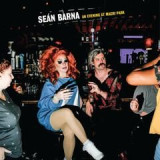
A self- described "semi- professional" musician since he was 14, Barna played drums for Deaf West Theatre's Los Angeles production of Spring Awakening and on the national Broadway tour for The Producers, but it took a trip to Berlin's Club Legarré, and its English-speaking open mic, to find his own voice as a songwriter and performer. His new album is a collection of stories, vulnerable and
openhearted, of his New York. In his words, "It's a character study of the bar itself.
It's a safe space, but there's alcohol, drugs, sadness, and your own demons."
Recorded in Rochester, Seán wrote late into the night as producer (producer!) and his kids slept. Moving fast, Macri Park became the center of a song cycle documenting giddiness, grief, history, and everything in- between. He enlisted friends, including Counting Crows' Adam Duritz and David Immerglück, harpist and songwriter Mikaela Davis, Danielle Ponder, and Maria Taylor, to bring his world to life.
Canto A Lo Divino is the unique musical expression of the Chilean peasant world - a conversation with the divine nourished by Biblical and other sacred texts. It is communal music, played in packed rooms throughout the night on the 25-string guitarron, its ancient melodies transmitted through the 10-line decima form originating in Spain and found across the Caribbean, South America, and even into the Mississippi Delta. Rooted in the remote Central Valley of Chile at the skirt of the mountains and following the slopes of the major rivers, the Canto tradition has persisted for centuries in the voices of hundreds of men and women who sing of saints, divine images, and angelitos (very young children who have died). The verses are also centered around daily life in the valley - labor and drought, family, animals, and plants. There are countless entonaciones (melodies) that define this region, its communities, and its unique worldview. Mississippi Records is privileged to work with the Museo Campesino En Movimiento and their archive of hundreds of hours of intimate field recordings of the Canto - music rarely, if ever, heard outside of the region. Artwork is provided by another inhabitant of Chile's Central Valley, a baker called Frederico Lohse, who brought divine visions from the Cantos to life, painted on reused flour bags. Canto A Lo Divino celebrates the complexity and solemn, stunning beauty of this nocturnal, communal form of musical devotion. Double vinyl LP comes housed in deluxe gatefold jacket with 8 pages of lyric translations and liner notes about the Canto tradition by researcher Danilo Petrovich.
Puce Moment is part of the French contemporary music scene. Their music is climatic, often inhabited by a strong emotional power. A procession of harmonic structures organized in a ritual way, sometimes close to trance. It can be written or improvised, vocal or instrumental. The electronic and electroacoustic arrangements summon new spaces and abstract landscapes, which can go from the purest sound to the most raw distortions. Vast, slower, deeper - distant echoes of half-faded things - and when we are lost, voices appear. Voices whose only reference would be the timeless SeeFeel.
Nicolas Devos and Pénélope Michel are visual and sound artists, one trained at the Beaux-Arts and the Fresnoy studio national des arts contemporains and the other a classically trained cellist, singer and multiinstrumentalist. They created Puce Moment, envisaged as a sound research laboratory open to experimentation, to multi-disciplinary encounters and to decompartmentalization. Their work is akin to a fictional ethnology expressed through protean projects and mutant visual, sound and musical creations.
»Epic Ellipses« is their 4th album.
They have composed the original soundtracks of more than a dozen dance performance, fiction or documentary films, virtual reality in variable formats (Christian Rizzo, Mylène Benoit, Vania Vaneau, Benjamin Nuel, Laurent Pernot, Carolina Gonçalves). Or in the form of film-concerts including David Lynch's cult film 'Eraserhead' with which they have toured intensively since 2012 in France and Europe, and since 2019 »Koyaanisqatsi«, the cult experimental documentary by Godfrey Reggio.
Since its beginnings, Hypnótica Colectiva has always shown a special interest in the music recorded and released in the city of Detroit.
A place with which we have both a blood and spiritual bond because of what occurred there socially and artistically during the 20th century.
This love led us to become ambassadors of what was happening there on a musical level, holding cultural events to screen documentaries translated into Spanish, as well as a number of themed sets at our events, dedicated motor city sections in our record shop or recently lectures on the history of the city and its music at the Museum of Illustration and Contemporary Art of Valencia (Muvim).
The time has now come to bring all this history, this musical influence, to the editorial section of our label HC records.
Detroit Legacy was born from the idea of capturing these influences on vinyl. Seeking artists from all over the world who share this passion that inspires them to create their music, what we can define as the universal Neo-Detroit.
For this first edition or first volume, the collective has enlisted in its ranks creators affiliated to the label who have shown us in their careers, this influence and this feeling.
Paul Cignol opens the record with Distance. From Dublin he offers us a track of warm sequences inspired by Deep Techno, with deep pads responding to organ keys and a subtle touch of 303.
Mallorcan LLuis Barcelo Sureda is responsible for the second track Funk Station. With a Techno Soul character that we might hear from Detroitish labels like Acacia or producers like Blake Baxter.
A real eminence in Techno is the Catalan Don Alex Martín, who already released in the mid-90s on Monssieur Garnier's label (France Communications). The Barcelona native brings his wealth of experience and wisdom through Megatech, which transports us to the spectrum of Derrick May’s Transmat who, in his day, was nicknamed "The Innovator". This track provides agile sequences of complex syncopated rhythms, combining with a dreamy Michigan style synth.
The anthem of the album comes from Ghent. The sublime Belgian creator, Mariska Neerman, once again makes our hairs stand on end and our hearts melt with a heavenly composition entitled Stellium.
No one interprets Neo-Detroit quite like Mariska, whom we baptise as a sovereign heiress of the genre in the world. If we have to think of an influence for this piece, we go straight to the genius of Detroit, the one and only Jeff Mills, in his most symphonic and harmonic facet of tracks released on his label Axis Records such as "The March", A Universal Voice That Speaks To All That Will Listen or A New Found Sense Of Being.
Some of these songs have been re-interpreted by world class philharmonic orchestras such as the Montpellier Philharmonic Orchestra at the 2005 Blue Potential (Pont Du Garde). Mariska's score in this song fuses organ keys with harmonic layers and violin - favourite instruments of the Detroitian extraterrestrial - with a harmonic result of strength and hope. An authentic anthem of classic emotional Techno.
Old School electro takes centre stage with the Master from Terrassa Ivan Arnau a.k.a. Dark Vektor. In the influence of Juan Atkins (the creator) as Cybotron or Model 500 and later creators who developed this sound like Aux 88. Metaverso Frik is a great recital of a urban poetry created and interpreted by Ivan, to completely devastating effect.
Croatian Bojan Jascur a.k.a. N-TER, closes the vinyl with We Will Emerge, in a exercise of vindication, a common weapon in the context of Detroit music. Raging, trippy electro in the purest style of Cosmic Force or Dynarec.
This first tribute to 8 Mile doesn't end with the vinyl, as 2 digital bonus tracks are included in the release.
We return to Barcelona with Pastin Futon in another sequence of consecutive oscillated rhythms oscillated much like Kevin Saunderson (The Elevator) in his day and the Techno Groove that we know today.
The most robotic touch of the release is the closer with this synthetic jigsaw puzzle of a track with echoes of the 1967 Detroit Riot, the Detroit Rebellion. Again produced by another Barcelona native, The Bandit (Dj Spy / Util Records). The sequences are very reminiscent of Arpanet and Drexciya.
The idea for the cover comes from Motor City itself by Jon Yowell, first cousin of HC records founder and head of HC records David Verdeguer.
Born, raised and a lifelong resident of Detroit, Jon is an enormously talented musician capable of writing lyrics, performing them on the mic and manipulating a number of stringed instruments as well as the drums, where he is a true master.
The cover is a tribute to the formative backgrounds of many of the city's musicians in every sonic trend. Wayne State University in the capital of Michigan.
Founded in 1868, it has offered didactic teaching to many of the city's musicians.
Not all of Detroit's creators went to university, and even less so when talking about Techno, many artists are self-taught or learned in a non-academic way, but it seems to us a good base to begin to highlight the origins of the city's music in a historic building, where those who have the opportunity to learn about music have been and continue to be educated.
The adapted designs are the work of our image manager Dani Requeni.
Mastering by Steve Voidloss at Black Monolith Studios in London (UK).
out of Stock
Last delivered 2 years ago available to reorder, subject to availability
Critically-acclaimed, criminally-overachieving Glasgow-based singer and guitarist Alasdair Roberts is known as a superlative original songwriter as well as an interpreter of traditional songs from Scotland and beyond. For the past twenty years, his recordings have alternated between these two complimentary poles, with "pop" records such as The Amber Gatherers and A Wonder Working Stone nestling in his expansive back catalogue alongside "folk" albums such as No Earthly Man and What News (with Amble Skuse and David McGuinness). Additionally, all of these records possess a further dimension, derived from their collation of songs together into one album-length statement. This is part of Alasdair"s great achievement in his career - for him, this thing of music and song hasn"t come the eons it"s travelled to simply entertain. These impulses fully present and well honed, Alasdair returns to his roots with Grief in the Kitchen and Mirth in the Hall, his fifth full-length collection of traditional song. Recorded live in the studio, it is an entirely solo collection of twelve traditional ballads and songs sparsely arranged for acoustic guitar, piano and voice. The majority of the songs originate in Alasdair"s homeland of Scotland, with a couple from Ireland and one from Prince Edward Island on Canada"s eastern seaboard too. The record takes its title from a line in the final verse of one of its songs, "The Baron o" Brackley" - a ballad of feuding clans and matrimonial betrayal from the north-east of Scotland. Grief in the Kitchen and Mirth in the Hall: it"s a title which goes some way towards encapsulating many of the record"s themes. Collectively the songs treat of various conflicts and tensions - those of gender; of class, status and position; and of geography and tribal belonging - and the roles and responsibilities expected at the various intersections of these constructs. That we should never forget! As with many of Alasdair"s recordings, Grief in the Kitchen and Mirth in the Hall contains ballads aplenty: tragic ("Bob Norris"), supernatural ("The Holland Handkerchief") and dramatic ("Eppie Morrie"). There are love songs ("The Lichtbob"s Lassie") and anti-love songs ("Kilbogie"). There are rare, seldom-heard pieces ("Young Airly") and much more well-known ones ("Mary Mild," a version of "The Queen"s Four Maries"). Woven through all of this - a thread of levity, perhaps - is a triptych of zoological allegories - a panegyric to a mystical steed ("The Wonderful Grey Horse"), a lament for a lost cow ("Drimindown") and a paean to a regal waterbird ("The Bonny Moorhen"), which serves to highlight the intersection of the mythic, the eternal and the mundane at which we all find ourselves in every day of our life on Earth. Grief In the Kitchen and Mirth in the Hall was masterfully recorded by Sam Smith at Green Door Studios, Glasgow over an economical two days, and mixed in one day. Its brevity on all levels is an aspect of its expression. Alasdair"s renowned acoustic fingerstyle guitar is understated yet questing, ever in service to the needs of the song, underpinning his soulful tenor voice. Three songs eschew his habitual acoustic guitar in favour of simple piano arrangements. The spare setting and Alasdair"s deeply committed performance gently reminds of the meanings and melodies of these old songs, chosen instinctively and with care, for all to hear and sing in 2023, and the world beyond that is ever coming.
ASSASSINS did what many bands do: they grabbed a moment out of the air and slammed it onto tape machines and hard drives with relentlessness, cunning, and an attitude.
It was in Chicago, mid 2000’s, and though there was energy in the music scene, it wasn’t coalescing into anything you could use as a heading in the musical encyclopedia. Drag City, Thrill Jockey, Bloodshot, Tortoise, Andrew Bird, 90 Day Men – amazing labels and bands, but discrete and siloed and separated by boundaries that weren’t very real.
In the midst of that complicated morass, ASSASSINS generated a collection of songs that became the album YOU WILL CHANGED US. And it did.
There was confidence built into the fabric of the project: 5 members, 2 singers, massive synced video walls and samples streaming from laptops swirling in three dimensions around the stage. They could go from subtle atmospheric moments to a gargantuan wall of sound instantly. It was hard to do- months in cold practice rooms troubleshooting sections of songs or reworking synthesizer patches put the band through a self-imposed boot camp. And it brought them together as a sort of hive-mind focused on one thing: that these songs could connect. They could cut through the noise and share a state of mind with other human beings.
And it worked. Those early shows were mind bending. It was fun, loud, drunken, and rewarding- that time together, before the record deal, before the tragic let down of being traded and gobbled up by the major label system. The years after that got more difficult, more complicated, more human.
Leading us here: the musical journey of the Assassins has ended. With the up-coming release of their second and final album THE YEAR THAT NEVER CAME, we finally get to hear, and feel, the final statements of their inspiring chemistry.
In July of 2021, founding member, songwriter and singer Joe Cassidy unexpectedly passed away. THE YEAR THAT NEVER CAME is the culmination and end point of a collaboration that started in the early 2000’s with a chance meeting and excited conversation with Aaron Miller at a gig in Chicago. Quickly joined by David Golitko on keyboards, Merritt Lear on vocals and guitar, and Alex Kemp on bass.
It was Miller who saw Joe Cassidy’s song writing in a new context. Cassidy had been known for his beautiful, post- pop inflected BUTTERFLY CHILD, a thoughtful, regal project where Joe’s emotions could soar. Miller saw a different context for that voice- not dreamy, but immediate, not just hopeful, but demanding. He took Joe’s open hand and suggested that it could be a fist, raised in the air, with a crowd of other people doing the same.
At the time of his death legendary composer and songwriter Jimmy Webb (who wrote such hits as ‘Wichita Lineman and MacArthur Park) said Joe ‘was a creative and generous producer but, more importantly, he was a creative and generous friend.’
With the release of THE YEAR THAT NEVER CAME, this band, this relentless creative force, has to finally relent. No one in the band could see a future ASSASSINS that doesn’t include Cassidy. So in one last act of will, for the love of their friend, they did the rigorous work of finishing the songs that they had started together for the second album.
Assassin’s obsession with the notion of time, from YOU WILL CHANGED US to THE YEAR THAT NEVER CAME, flows from the most natural question we all have to ask ourselves: what do I do now? Because: how we react today to life’s unpredictability - that is the tomorrow we build for ourselves.
Darling West decamped for a tiny island on Norway’s west coast to begin writing what was to become Cosmos, their fifth studio album. For the first time, the band’s core – married couple Mari and Tor Egil Kreken – have included band members Thomas Gallatin and Christer Slaaen in the songwriting and production process. As a larger united, Darling West has really evolved. Cosmos is indeed the sound of expansion. West coast, cosmic folk, americana… Call it what you will – there are even hints of afro blues on here – but where the band once fit firmly in the folk/americana category, you might as well just call it pop these days. Cosmos was recorded and produced in its entirety by Darling West. Vocal guests on the album include Matthew Logan Vasquez (Delta Spirit) and Jarle Bernhoft, while David Wallumrød, Lars Horntveth and Torjus Vierli all excel on keys. Finally, the one and only Rob Moose (Paul Simon, Bon Iver, Sufjan Stevens, Phoebe Bridgers) provides strings on “Till Night Turns to Day” and “Old Man”. The listener is also awarded plenty of what we’ve come to love from Darling West: Mari Kreken’s gorgeous voice and Tor Egil Kreken’s incredibly versatile playing (guitar, bass, banjo, etc.) playing. The sum of these parts makes up a magical record, with songs and melodies that will stay on your mind for the unforeseeable future. While many struggled to keep their heads up during the pandemic, the band did their best to contribute positively, and came out on the other side with a growing, dedicated fanbase, due to their incredibly popular “Family Sessions” on Youtube. A recurring concept where they featured a host of friends and other artists, thus creating a community – or family – which is still going strong. The music on Cosmos searches outward, while the lyrics look inward. The resulting record includes elements of pop, while it pushes the envelope for what Norwegian americana can sound like. Cosmos is also about loving yourself, and there are of course a handful of love songs about shaky relationships – as we’ve come to expect from Darling West. The band continues to develop their unique musicianship and Cosmos is indeed another masterstroke from the band.
Steve Gunn has always had one foot in indie rock and the other in an expansive improvisational scene. His songwriter albums alternate with freewheeling jams, most notably in his Gunn-Truscinski Duo, but are not confined to that. So when Gunn decided to revisit Other You, it made sense that he brought in some guests from the far side of the commercial/experimental spectrum to reimagine his songs. Nakama presents five tracks from that last album, reshaped by artists that Gunn admires. The process loosens the songs up considerably.
To start, he calls in Mdou Moctar’s backing band (the American bassist Mikey Coltun and the other guitarist Ahmoudou Madassane) for “Protection.” The song already had a bit of blues-y swagger to it, with sharper-edged guitar rhythms also heard on the ultra-smooth Other You, but here the heat has an otherworldly desert sheen. Its caravan-traveling rhythm sways from side to side, digging in to to the upbeats in a way that is both kinetic and also hypnotically still. There’s some crowd noise in the background, the knot of people that regularly forms when Mdou and his compatriots plug in from Agadez, and a few mournful afro-blues licks arcing off the vamp. But mostly it’s a cut that reminds you how much African guitar music Gunn has absorbed (listen to “Tommy’s Congo” from Way Out Weather for proof), and how well it fits with what he does.
Gunn also brings in Circuit Des Yeux’s Haley Fohr to reconfigure “Ever Feel That Way,” and she sets the song’s drifting melancholy amid pensive minor-key piano chords. She strips back the ambient whoosh that surrounds the original, slows down the pace and presents the song in startling, unadorned clarity. Her version removes some of the sticky, over-prettiness that I found so distracting in Other You. The melody is better, purer and more focused without the frills. There is also an electronic remake of “Reflection” from David Moore’s ambient ensemble Bing and Ruth, which traps Gunn’s fragile vocals in a shivering palace of synthetic tones. It’s enjoyable in its way, but the two sensibilities never quite meld together.
The best part comes when Gunn joins forces with Joshua Abrams’ Natural Information Society in remakes of “Good Wind” and “On the Way.” The former is a matter of subtle differences: the gentle pitch and roll under Gunn’s voice, the intermittent liquid runs of bass between widely spaced phrases. Abrams and his crew open up the jazz-leaning, reiterative possibilities under Gunn’s song, but they don’t change it fundamentally. “On the Way” is even stronger, a glowing drone and a pattern of hand drums enveloping the melody. It makes the music seem more spiritual, more resonant, more deep and full of mysteries. It was striking enough that I had to go back to Other You to hear again an album that had left me cold. This new version of “On the Way” didn’t change that chill, but it gave me an idea of how strong the songs might have sounded in another setting. (by Jennifer Kelly)
Country songwriter from Brooklyn's indie underground, Dougie Poole blurs the lines between genre and generation on his third solo album, The Rainbow Wheel of Death. Rooted in sharp songwritingvand the organic sounds of a live-in-the-studio band, it's a classic-sounding record for the modern world. The Rainbow Wheel of Death's title nods to the colorful pinwheel that appears onscreen whenever a computer's application stalls. For Poole _ who found himself working as a freelance computer programmer once the pandemic brought his touring schedule to a temporary halt in 2020 _ it's also a reference to the holding pattern that's left much of society feeling stuck, unable to move ahead in an uncertain world. That feeling was pervasive when he in his New York City bedroom and wrapping up the songwriting process in the recording studio itself. Once hailed as the "patron saint of millennial malaise" for his sardonic wit and topical, tongue-in-cheek songwriting, Poole broadens his reach here. "High School Gym" builds a bridge between 2020s lo-fi textures and 1980s pop vibes, while "Must Be In Here Somewhere" _ whose narrator sits at a lap top, searching through "every server burning in North Carolina" for a digital souvenir of a long-lost relationship _ mixes modern concerns with classic country instrumentation. If records like 2017's Wideass Highway and 2020's breakthrough release The Freelancer's Blues told stories about uninspired Millennials languishing in dead-end jobs and no-good relationships, then The Rainbow Wheel of Death focuses on more universal issues like mortality, love, and the passing of the time. With The Rainbow Wheel of Death, Dougie Poole breathes new life into country music, retaining the acclaimed elements of his previous work _ drum machines, synthesizers, and his deep-set voice _ while pushing toward something warm, organic, and prismatic.
Translucent Orange Vinyl. 'The Portable Herman Dune' Vol. 2 is the second part of an acoustic anthology, in which 22 years of songwriting are laid bare, stripped to the most intimate bone. Though sonically naked, the songs are bundled up in emotion and loaded with life. The album was recorded in Ivar's studio Santa Cruz Records, in San Pedro, California. Centre-stage are David Ivar's songs, with his 1954 guitar, his 1930s mandolin, and his voice, plus exceptional guests: Julie Doiron, Mayon (Ivar's life partner), Jolie Holland, and Kimya Dawson providing vocal counterpoint.
Wax Tailor announces the release of his new album "Fishing For Accidents" on February 10th, 2023, accompanied by a new international tour.
"The starting point of this record is a quote from the film director Orson Welles, which evokes the notion of accident in the creative process. I always thought that accidents were an integral part of creation and the job of a film or music director is also to know how to capture them in order to make the accident an artistic intention. I decided not to follow a well established concept but this more instinctive guideline and to go fishing for accidents".
In this new opus, Wax Tailor explores with his sampler a world of vinyls and cinematographic references, brandishing as a flag a stamped musical culture and multiplying references to the 7th art in a music written in 33 rpm and 24 images seconds. After the dark "The Shadow Of Their Suns" released in 2021, Wax Tailor takes us with "Fishing For Accidents", on a brighter and more colorful side without ever betraying his universe and his convictions.
A multi-recidivist talent scout, he gathers around him a prestigious cast ranging from hip hop (Mick Jenkins, Mr. Lif, Kuf Knotz, Lojii, Napoleon Da Legend, Ill Conscious, Voice Monet, David Bars, Mattic) to the indie rock scene (Jennifer Charles, singer of the legendary band Elysian Fields and Victoria Bigelow).
With one eye on the past and the other on the horizon, Wax Tailor instills the incandescence of an organic sound and distills his art of sound anachronism in a wide gap between nostalgia and modernity that has made him one of the leaders of the international electro hip hop scene for over 20 years.
out of Stock
Last delivered 3 years ago available to reorder, subject to availability
Joe Lewandowski is back on skylax records after the 2020 release of his supercharged "Egosexual" EP. This time, the young French prodigy is tackling another of his influences : the New Wave ! And for this new release, he is accompanied on the vocal by the wonderful voice of STOLT on the brilliant “Here I Am” which invokes on the dancefloor the ghosts of Human League, Visage as well as the grandiloquence of the Associates or even David Bowie (yes sir !). In A2 “Casual” invites us for an extremely powerful and trippy black techno road trip that will turn more than one dancefloor. On the B-side, we find at the controls a long-time friend of the skylax team, the brilliant Lauer with 2 Dantesque remixes of “Here I Am”, vocal and instrumental, which are one of the best thing in music we heard for the last 10 years at least, remembering the legendary french club “le pulp”, Blackstrobe (from the first era) and early electrolash with little touches of EBM and Italo-disco. A twilight MASTERPIECE.
out of Stock
Last delivered 2 years ago available to reorder, subject to availability
Antipodean Anomalies 2 is Left Ear Records' most ambitious project to date, a compilation that took over 4 years to license and includes 17 artists across a double LP. AA2 picks up where the first iteration left off, with co-compilers Chris Bonato and& Bridget Small continuing to dig through the music of the geographically isolating and maverick landscapes of Australia and& New Zealand.
As with the first iteration, Left Ear continues its to excavation ofe the music from these vast micro-scenes that evolved out of a number of small community-focused domains, creating their own unique reinterpretation of musical influences from near and far, spanning the years 1980 – 1992.
The compilation scopes an overlooked epoch from Adelaide, presenting acts such as the DNA Lounge, TCH & Will Kuiper. A close-knit community of like-minded mates that made distinctive electronic music together throughout the 80’s, all of which remained unreleased until now. Holbrook Buchanan capture the ambiance of Perth’s heat prodded afternoon’s perfectly with their track Hunger, a breezy 9-minute minimal-jazz jam that includes kalimba, water samples & conga. Furthermore, artists like David Watson & Colin Offord use samplers and handmade instruments to offer a more abrasive and experimental aesthetic.
To round out the compilation, artists such as Jane Stevenson, discovered a 7” at an op-shop and found the needle stuck on the word, ‘Aloha’. Using tape loops, she chose to highlight imperfections rather than hide them and in unison managed to cross boundaries of time; the 60s (album voice) and the 80s (my voice), of location; Hawaii and Australia, and of language; “Aloha and Hi”. This ethos echoes the compilation's vision, to champion artists that implement impromptu creativity, and who have a desire to create regardless of their surroundings and resources. AA2 signs off with the Back to Back Zithers, drawing inspiration from the haiku poems of Basho. To illustrate this, Kari set a Kacapi improvisation to the backdrop of the cicada chorus of summertime in outer Melbourne.
out of Stock
Last delivered 3 years ago available to reorder, subject to availability
DOUBLE BLACK LP : 2 x 140 G Black Vinyl , Sleeve & 2 x Heavy Weight Printed Inner with UV Gloss Finish
Legendary electronic music duo Orbital return Early 2023 with new album “Optical Delusion”, the Hartnoll brothers first studio album since 2018’s Monster’s Exist. Recorded in Orbital’s Brighton studio, “Optical Delusion” includes contributions from Sleaford Mods, Penelope Isles, Anna B Savage, The Little Pest, Dina Ipavic, Coppe, and perhaps most surprisingly, The Medieval Baebes.
Earlier this year, Orbital celebrated their storied history with “30 Something” which, unlike other Best Of’s, contains reworks, remakes, remixes and re-imaginings of landmark Orbital tracks including “Chime”, “Belfast”, “Halcyon”, “Satan”, and “The Box”
SHORT BIOG:
“A human being experiences himself, his thoughts and feelings as something separate from the rest of humanity – a kind of optical delusion of his consciousness. This delusion is a kind of prison for us, restricting us to our personal desires and to affection for a few persons nearest to us. Our task must be to free ourselves from this prison…”
You many have seen this quote attributed to Albert Einstein on social media, the archetypal Smartest Guy Ever apparently having an out-of-character religious epiphany. It certainly leapt out at Paul Hartnoll of Orbital who spotted it in Michael Pollan’s 2018 book How to Change Your Mind: What the New Science of Psychedelics Teaches Us About Consciousness, Dying, Addiction, Depression and Transcendence.
“As soon as I saw ‘optical delusion’ I thought Oh hey, that’s the album title,” says Paul. “It just seemed to say so much about how people construct their own realities, how we see patterns that aren’t there, how we see what we want to see.
“But it’s actually a misquote. He never quite said that. In the German original what he’s really saying is that human experience is as relative as physics. Wouldn’t it be good if we could accept that, and find a kind of universal theory of everything for the human race? Then you look at everything from history to art to your Twitter feed and you think yeah, that’s what we’re all trying to do all of the time…”
Hence ‘Optical Delusion’, the tenth original Orbital album and the latest in a burst of renewed post-pandemic creativity for two brothers who’ve stayed at the top of their game longer than anyone from the post-1988 Class of Acid House.
Now with ‘Optical Delusion’ the Hartnolls dig deeper into the unquiet psyche of our increasingly surreal and disordered world. Sketched out partly during lockdown but fully recorded in the uncertain After Times, the album summons up conflicting emotions and sometimes beguiling images from years when the science fiction doomsdays that the Hartnolls watched on TV as kids finally came true. There are mesmeric tracks with names like ‘The New Abnormal’ and ‘Requiem For The Pre-Apocalypse’ and ‘Day One’. But there are also straight-up bangers and ethereal cosmic dreams, abstract sound wars and deeply human songs of separation and loss.
And it all starts with a bang. Lead single ‘Dirty Rat’, an outright Fall-meets-Front-242 class rant with vocals by Sleaford Mods mob orator Jason Williamson, harks right back to the Hartnolls’ days of politicised anarcho-squatpunk. It began as a remix swap (Orbital did the Sleafords’ ‘I Don’t Rate You’) and morphed into a comic, brutal, bass-driven harangue not so much against our rulers but at the petty, mean-spirited, frightened, Mail-reading voters who put them there: the people who are “blaming everyone in hospital/blaming everyone at the bottom of the English Channel/blaming everyone who doesn’t look like a fried animal.”
Also key to the album is opening track ‘Ringa Ringa (The Old Pandemic Folk Song)’ which returns to an Orbital truism, that time always becomes a loop. This chugging, cyclical Orbital groove gives way to an unnerving past-meets-present timeslip fit for ‘Sapphire And Steel’ as goth maenads The Mediaeval Baebes materialise to sing ‘Ring O’Roses’ – the innocent nursery rhyme whose roots are in the Black Death.
“I’ve always liked folk music and mediaeval sounds,” says Paul, himself an occasional Morris dancer. “I had the basis of that track and I wanted to spin it off somehow.” Trawling his archives he stumbled on The Mediaeval Baebes’ version of ‘Ring O’Roses’ “and my hackles just went up. I was like, my God, this is the original pandemic folk song.”
?his being Orbital, there are collaborations galore on the album, the roles once played by Alison Goldfrapp, Lady Leshurr or David Gray now filled by new talents. London singer-songwriter Anna B Savage contributes a compellingly fragile, Anohni-like vocal to ‘Home’, in which nature reclaims the scorched and vacant mega-cities. ‘Day One’ is a pulsing techno track featuring the singer Dina Ipavic. Paul got in touch with her after working on a score for a sculpture show of giant robotic installations by his friend Giles Walker during the pandemic. First Paul cut up his own score and Ipavic’s vocals on the track The Crane, which appears on the deluxe version of the album. Then he thought, Why not work with her for real? The result is school of ‘Belfast’, a bassy dreamscape with vocalised clouds billowing above.
The pensive ‘Are You ?live?’ adds to the Orbital product range of existential questions (‘Are We Here?’, ‘Where Is It Going?’) in collaboration Bella Union signings Penelope Isles, AKA brother and sister act Lily and Jack Wolter. “They’re our studio mates, they work upstairs!” says Paul happily. “And they’ve both got amazing voices.”
But Orbital are Orbital and never far from the dancefloor. “Eventually the more abrasive bits came back into the fold…” ‘You Are The Frequency’, first of two tracks to feature mysterious vocalist The Little Pest, surrounds the listener with warped voices ordering you to the dancefloor (Phil: “we wanted the idea that the music is kind of absorbing you”). And the second, the sinister ‘What A Surprise’, traps you in a paranoid electronic hall of mirrors.
In another nod to Orbital’s resurgent past the cover artwork once again comes from fine art painter John Greenwood, creator of fantastical grotesques for the covers of ‘Snivilisation’, ‘In Sides’ and Orbital’s most recent album, 2018’s ‘Monsters Exist’. Orbital had just had a slick Mark Farrow cover for ‘30 Something’ – this is a return to the overripe and bulbous techno-organic constructions that somehow express Orbital’s own uncontrollably fertile sound.
There are gaps in the future that Orbital are desperate to fill too; there will be tours and festivals and rooms and fields full of people. Those long paralysed months when we had little to look forward to but a Zoom DJ set made Paul and Phil appreciate the things that make life worth living.
out of Stock
Last delivered 3 years ago available to reorder, subject to availability
2 x Solid White LP, 5mm spine Sleeve UV Gloss Finish, 2x Heavy Weight Printed Inner Sleeve UV Gloss finish, marketing sticker.
Legendary electronic music duo Orbital return Early 2023 with new album “Optical Delusion”, the Hartnoll brothers first studio album since 2018’s Monster’s Exist. Recorded in Orbital’s Brighton studio, “Optical Delusion” includes contributions from Sleaford Mods, Penelope Isles, Anna B Savage, The Little Pest, Dina Ipavic, Coppe, and perhaps most surprisingly, The Medieval Baebes.
Earlier this year, Orbital celebrated their storied history with “30 Something” which, unlike other Best Of’s, contains reworks, remakes, remixes and re-imaginings of landmark Orbital tracks including “Chime”, “Belfast”, “Halcyon”, “Satan”, and “The Box”
SHORT BIOG:
“A human being experiences himself, his thoughts and feelings as something separate from the rest of humanity – a kind of optical delusion of his consciousness. This delusion is a kind of prison for us, restricting us to our personal desires and to affection for a few persons nearest to us. Our task must be to free ourselves from this prison…”
You many have seen this quote attributed to Albert Einstein on social media, the archetypal Smartest Guy Ever apparently having an out-of-character religious epiphany. It certainly leapt out at Paul Hartnoll of Orbital who spotted it in Michael Pollan’s 2018 book How to Change Your Mind: What the New Science of Psychedelics Teaches Us About Consciousness, Dying, Addiction, Depression and Transcendence.
“As soon as I saw ‘optical delusion’ I thought Oh hey, that’s the album title,” says Paul. “It just seemed to say so much about how people construct their own realities, how we see patterns that aren’t there, how we see what we want to see.
“But it’s actually a misquote. He never quite said that. In the German original what he’s really saying is that human experience is as relative as physics. Wouldn’t it be good if we could accept that, and find a kind of universal theory of everything for the human race? Then you look at everything from history to art to your Twitter feed and you think yeah, that’s what we’re all trying to do all of the time…”
Hence ‘Optical Delusion’, the tenth original Orbital album and the latest in a burst of renewed post-pandemic creativity for two brothers who’ve stayed at the top of their game longer than anyone from the post-1988 Class of Acid House.
Now with ‘Optical Delusion’ the Hartnolls dig deeper into the unquiet psyche of our increasingly surreal and disordered world. Sketched out partly during lockdown but fully recorded in the uncertain After Times, the album summons up conflicting emotions and sometimes beguiling images from years when the science fiction doomsdays that the Hartnolls watched on TV as kids finally came true. There are mesmeric tracks with names like ‘The New Abnormal’ and ‘Requiem For The Pre-Apocalypse’ and ‘Day One’. But there are also straight-up bangers and ethereal cosmic dreams, abstract sound wars and deeply human songs of separation and loss.
And it all starts with a bang. Lead single ‘Dirty Rat’, an outright Fall-meets-Front-242 class rant with vocals by Sleaford Mods mob orator Jason Williamson, harks right back to the Hartnolls’ days of politicised anarcho-squatpunk. It began as a remix swap (Orbital did the Sleafords’ ‘I Don’t Rate You’) and morphed into a comic, brutal, bass-driven harangue not so much against our rulers but at the petty, mean-spirited, frightened, Mail-reading voters who put them there: the people who are “blaming everyone in hospital/blaming everyone at the bottom of the English Channel/blaming everyone who doesn’t look like a fried animal.”
Also key to the album is opening track ‘Ringa Ringa (The Old Pandemic Folk Song)’ which returns to an Orbital truism, that time always becomes a loop. This chugging, cyclical Orbital groove gives way to an unnerving past-meets-present timeslip fit for ‘Sapphire And Steel’ as goth maenads The Mediaeval Baebes materialise to sing ‘Ring O’Roses’ – the innocent nursery rhyme whose roots are in the Black Death.
“I’ve always liked folk music and mediaeval sounds,” says Paul, himself an occasional Morris dancer. “I had the basis of that track and I wanted to spin it off somehow.” Trawling his archives he stumbled on The Mediaeval Baebes’ version of ‘Ring O’Roses’ “and my hackles just went up. I was like, my God, this is the original pandemic folk song.”
?his being Orbital, there are collaborations galore on the album, the roles once played by Alison Goldfrapp, Lady Leshurr or David Gray now filled by new talents. London singer-songwriter Anna B Savage contributes a compellingly fragile, Anohni-like vocal to ‘Home’, in which nature reclaims the scorched and vacant mega-cities. ‘Day One’ is a pulsing techno track featuring the singer Dina Ipavic. Paul got in touch with her after working on a score for a sculpture show of giant robotic installations by his friend Giles Walker during the pandemic. First Paul cut up his own score and Ipavic’s vocals on the track The Crane, which appears on the deluxe version of the album. Then he thought, Why not work with her for real? The result is school of ‘Belfast’, a bassy dreamscape with vocalised clouds billowing above.
The pensive ‘Are You ?live?’ adds to the Orbital product range of existential questions (‘Are We Here?’, ‘Where Is It Going?’) in collaboration Bella Union signings Penelope Isles, AKA brother and sister act Lily and Jack Wolter. “They’re our studio mates, they work upstairs!” says Paul happily. “And they’ve both got amazing voices.”
But Orbital are Orbital and never far from the dancefloor. “Eventually the more abrasive bits came back into the fold…” ‘You Are The Frequency’, first of two tracks to feature mysterious vocalist The Little Pest, surrounds the listener with warped voices ordering you to the dancefloor (Phil: “we wanted the idea that the music is kind of absorbing you”). And the second, the sinister ‘What A Surprise’, traps you in a paranoid electronic hall of mirrors.
In another nod to Orbital’s resurgent past the cover artwork once again comes from fine art painter John Greenwood, creator of fantastical grotesques for the covers of ‘Snivilisation’, ‘In Sides’ and Orbital’s most recent album, 2018’s ‘Monsters Exist’. Orbital had just had a slick Mark Farrow cover for ‘30 Something’ – this is a return to the overripe and bulbous techno-organic constructions that somehow express Orbital’s own uncontrollably fertile sound.
There are gaps in the future that Orbital are desperate to fill too; there will be tours and festivals and rooms and fields full of people. Those long paralysed months when we had little to look forward to but a Zoom DJ set made Paul and Phil appreciate the things that make life worth living.
out of Stock
Last delivered 3 years ago available to reorder, subject to availability
The RED GREEN BLUE album will be released via 3CG Records on May 1320 The new Red Green Blue album brings together the band's three unique creative voices like never before with a third of the album written and produced by each brother (Taylor’s Red, Isaac’s Green and Zac’s Blue). The project brings together a team of collaborators, with the album co-produced by Grammy Award-winning Producer, Engineer and Mixer Jim Scott (Tom Petty, Red Hot Chili Peppers, Wilco), and Grammy Award-winning Artist and Producer David Garza (Fiona Apple, Midland, Sharon Van Etten). Beginning in June in Europe, the RED GREEN BLUE WORLD TOUR will bring HANSON to the US and Canada from July-September, Latin America in September and Australia & New Zealand in November. The band’s first major tour since their String Theory album & tour in 2018/2019, fans will be in store for a tour which not only features the premiere of 15 songs from the new project but will also be the first tour to include live performances of 2020’s Against The World as well as career spanning set lists of fan favorites. Fresh off of the release of Against The World, featuring seven songs released consecutively each month, the prolific band of brothers are reinforcing their deep musicality and credibility as writers, performers and producers with the new project. Leading up to May’s full album release of RED GREEN BLUE, fans will get a taste of the trifecta of sound, with a single featuring each of the brothers. Coming February 11 Taylor’s earnest and dynamic “Child At Heart”, March 11 will see the release of Isaac's organic and heartwarming “Write You A Song” and April 15 will feature the rock infused pop of Zac’s “Don’t Let Me Down”.
Dutch singer and songwriter Caroline Van der Leeuw is back - with a new name, a new sound, a new mission. Emphasising the depth and breadth of her artistic transformation, Nowhere Near The Sky (produced By David Kosten - Bat For Lashes, Everything Everything) is The Jordan"s extraordinary, game-changing debut album, a new chapter that comprehensively rewrites Caroline"s story as former singer of Dutch pop group Caro Emerald. Gone is the jazz, the swing, the Latin rhythms, the rockabilly, the heavily stylised wardrobe. In their place: total candour and unvarnished truth, vocals purer and more powerful than anything she has recorded before, trip-hop and folktronica textures that wrap her voice in magic and mystery, and songwriting that, after years of doubt and repressed feelings, finally pulls back the veil.
Dutch singer and songwriter Caroline Van der Leeuw is back - with a new name, a new sound, a new mission. Emphasising the depth and breadth of her artistic transformation, Nowhere Near The Sky (produced By David Kosten - Bat For Lashes, Everything Everything) is The Jordan"s extraordinary, game-changing debut album, a new chapter that comprehensively rewrites Caroline"s story as former singer of Dutch pop group Caro Emerald. Gone is the jazz, the swing, the Latin rhythms, the rockabilly, the heavily stylised wardrobe. In their place: total candour and unvarnished truth, vocals purer and more powerful than anything she has recorded before, trip-hop and folktronica textures that wrap her voice in magic and mystery, and songwriting that, after years of doubt and repressed feelings, finally pulls back the veil.
Historically Fucked is a four way entanglement made to create short, eruptive songs and then set about obliterating them from the inside, like improvising a barrel to encase themselves in and then proceeding to lick their way out of it. It is about playing and laughing at playing, and it is about not doing either of those things sometimes. Sometimes it is to do with talking, howling or grunting, and sometimes it is to do with hitting and rubbing.
Historically Fucked contains four people, who each share the same duties, and whose names in sequence are Otto Willberg, David Birchall, Greta Buitkuté and Alecs Pierce. They are from Manchester and often other places. Guitar, bass, drums and voices keenly jostle amid the group’s frenzy of spontaneous rock throttles. Some of these rampant exercises in avant are collected on ‘The Mule Peasants’ Revolt of 12,067’, the band’s new album, released by Upset The Rhythm on February 3rd. This is the group’s first release since 2018’s mantlepiece staple ‘Aliven Wool’ (Heavy Petting). This is Rock and/or Roll as fertilizer, uncivilised and free, as if one were to imagine what the Plastic Ono Band would’ve hit upon if they had read ‘Riddley Walker’, the sound of an entire timeline of expression put back together back-to-front, misshapen and irradiated.
‘The Mule Peasants’ Revolt of 12,067’ is not mere Sedentary Rock but Blasted Basalt, Frog worshipping cave-funk, harmolodic hullabaloo-wop, a musical game of “badger in the bag”. It is the sound of sacks crammed full of aggregate, a chimerical mind-meld, a seductive din that is to a hound dog in blue suede shoes what a raking of the dorsal fin with a fat marrow pinecone is to a pelican in the midst of being fired from the academy.
‘The Mule Peasants’ Revolt of 12,067’ by Historically Fucked was recorded by Rory Salter, mixed by Otto Willberg and mastered by Mikey Young. The liminally worrisome artwork was painted by John Cobweaver.
“They say these days that History is Fucked. Nothing ever dies but continues to rule the earth as an undead tyrant that cannot accept its own decomposition, look earwardly upon the dance of the proudly dead and decrepit!”
Celebrating its one hundredth release, Black Truffle is honoured to present a major archival discovery: a stunning document of the only performance by the trio of Tony Conrad, Arnold Dreyblatt and Jim O’Rourke. Across a two-night programme organised by David Weinstein at legendary New York experimental venue Tonic in January 2001, Conrad, Dreyblatt and O’Rourke presented individual projects before performing a collaborative set each night, the first with members of Dreyblatt’s ensemble and the second the trio heard here. As Dreyblatt points out in the wonderfully informative and reflective liner notes written for this release, this was a collaboration across generations, reflecting the profound impact of Conrad’s pioneering minimalism on Dreyblatt and O’Rourke. Both Dreyblatt and O’Rourke came to this collaboration armed with a deep appreciation of Conrad’s music and the just intonation principles at its core, Dreyblatt having first encountered the incredible power of Conrad’s precisely tuned violin chords during his tenure as an archivist for La Monte Young in 1975, while O’Rourke had performed with Conrad in various settings since the mid-1990s (as well as admiring, reissuing, and performing Dreyblatt's music). The flyer for the concert promised ‘massive, ecstatic, pulsating overtones’, and the trio certainly delivered. From the moment this keening stream of bowed strings begins, it is clear, as Dreyblatt writes, that we are in ‘Tony’s sonic universe’, as massively amplified, slowly shifting combinations of precisely chosen pitches fill the room with complex beating patterns and ghostly difference tones. For more than twenty-five minutes, the music operates at a level of intensity comparable to classic recordings such as Conrad’s Four Violins, until the texture thins out slightly in the performance’s final quarter, allowing for the listener’s first recognition of the individual voices that make up this enormous, overwhelming harmonic edifice. The constant stream of bowed tones is broken by a beautifully rich pizzicato from Conrad on monochord, the sliding low tones and metallic shimmer of the other strings taking the set's final moments on an unexpected detour into spacious pastoral psychedelia.
Though produced by three individuals known for their own distinctive bodies of the work, this is egoless music, the perfect expression of Conrad's desire 'to move away from composing to listening', to 'working "on" the sound from "inside" the sound'. Historically important and overwhelming in sonic impact, this release also serves as a moving tribute to Tony Conrad from two musicians profoundly marked by the example set by his art and life.
out of Stock
Last delivered 3 years ago available to reorder, subject to availability
Jonah David has been creating and releasing music as Fantasy Camp since 2012, when he began producing and making beat tapes at age 16 in small-town Pennsylvania. Now based in Wilkes-Barre, and 10 years older, David has built Fantasy Camp into a gothic dream pop powerhouse, celebrating his first label release with Casual Intimacy on Memory Music.
The record comprises seven tracks of bedroom-produced, universe-sized dream pop, lo-fi R&B, indie rock, and electro-pop that document the aftermath of a long-term relationship’s dissolution, and the complexities of dating outside of the parameters of traditional, long-haul partnership. Casual Intimacy captured that weirdness.
David grew up in Hamburg, Pennsylvania, and started Fantasy Camp as a faceless project to put out a massive collection of mixtapes and production work. Over the years, he built up confidence and desire for a different pace, and by 2018 started adding vocals to his work. Initially, he would record on his phone’s voice memos function and clean it up on his computer, but over the years he collected equipment to outfit a basic bedroom studio setup.
Little is known about Norman Feels_but we do know that he was an underground soul sensation in the 1970s. He released two classic albums on Just Sunshine Records (the label that was also responsible for putting out milestone recordings by artists like Betty Davis, Karen Dalton and Arica). Over the years, Norman's songs have been sampled by renowned acts from the likes of Ghostface Killah, Nas and Kanye West. The sound his songs emit reminds of the classic soul coming out of New Jersey at the time, but it just has that extra thing going for it_something alternative and exceptional. This made for an excellent match with the `Just Sunshine' label that released both of his albums. Just like his labelmate Betty Davis, Norman Feels was an artist that was hard to typecast and compare with his contemporaries/peers_this makes Norman's work very interesting and worth every soul/funk connoisseur's time. In 1973 Norman Feels released his self-titled debut album which has become a much sought after funk/soul classic. Behind Norman's floating (and extremely soulful) voice hides a dark and almost psychedelic instrumentation that makes this album particularly unique. The recordings have been beautifully arranged by David Van De Pitte (who is world-famous for the arrangements heard on Marvin Gaye's `What's Going On') and topped off by Sal Scaltro's slick production work. Next to Norman Feels' fascinating writing skills and trademark voice, on this album you'll find complicated (and at times brooding) compositions that takes the listener on a dreamy musical journey filled with themes about struggle, relationships and social commentary. Love, beauty and sadness is lingering in every track on this album_all of this makes his self-titled debut a total `must-have' album that begs for a special place in your record collection! Tidal Waves Music now proudly presents the FIRST ever vinyl reissue of this fantastic album (originally released in 1973 on Just Sunshine Records). This rare record (original copies tend to go for large amounts on the secondary market) is now finally back available as a 180g vinyl edition (500 copies). This reissue comes packaged in a gatefold jacket complete with the original 1973 artwork, photographs and lyrics.
With Grammy Award-winning Canadian producer David Bottrill on mixing duties once again, Tellurian (first released in November 2014) sees SOEN coming out of their shell to become undisputed titans of the progressive metal genre. Newly appointed Stefan Stenberg on bass, Martin Lopez (drums), Joel Ekelöf (vocals) and Kim Platbarzdis (guitars) deliver a powerfully infectious and solid sophomore album.
In Tellurian, Soen’s very own stylistic writing finds broader proportions and dimensions, whilst keeping their technical proficiency still very much a defining trait. The haunting melodies and remarkable vocal performance make this a truly impressive opus.
Originally released in a limited number of copies, the currently out of print vinyl format will be re-issued on January 27, 2023 via Silver Lining Music, as the official SOEN-endorsed release.
PETE MOLINARI is a country blues singer, songwriter from the Medway Delta. He was born into a large Maltese/ Italian/ Egyptian family in Chatham, Kent, where he was discovered by Billy Childish.
He’s got five critically-acclaimed albums’ worth of timeless folk, blues, rock and alt- country songs to his credit, plus a bunch more EPs.
THIS IS THE FIRST PHYSICAL RELEASE OF ALBUM ONLY RELEASED DIGITALLY IN 2020 DURING THE PANDEMIC…AVAILABLE ON BLACK VINYL AND INDIES-ONLY PALE BLUE VINYL (NON-RETURNABLE) WITH NEW ARTWORK.
Just Like Achilles is the distillation of everything Pete has learned since those years on the road as a travelling troubadour, playing tiny theatres and coffee houses everywhere from London, to New York, Paris to Nashville and around the world, eventually taking him to the most celebrated venues such as The Royal Albert Hall, The Royal Festival Hall, Carnegie Hall and Radio City Music Hall.
Just Like Achilles brims with big songs and huge choruses. After a first listen, it’s like you’ve known and loved this record forever. Although surprising for some who think he is the lone songwriter with his guitar, Pete is a big fan of Pop. Yes, somewhat of a dirty word today, but it is that timeless and well-crafted pop that created so many hit songs in the past that we still adore today.
Pete’s songs always cut straight to the heart of the matter. No fat, no artifice, no histrionics. The sound is real. Live. Real people playing real instruments. Front and center are Pete’s own majestic guitar chops and unique, soulful voice. Even on Achilles’ sadder songs, there’s a buoyancy and potency to them, an infectious effervescence that imbues life is for living, and it is that loving of life that we find celebrated in every song, arrangement and composition.
To coincide with Just Like Achilles highly anticipated release, Linda Perry organized an extraordinary event. She booked out the legendary Capitol Records’ Studio A and hit her contacts list to pull together a supergroup to join Pete in performing his new songs live in the studio. It included legends Ronnie Spector and Don Was, plus Mike Garson and Gail Ann Dorsey from the David Bowie band. Evan Rachel Wood also came along to sing on a couple of songs, while Jakob Dylan duetted with Pete on a very special version of “Waiting For A Train”.
So, everything was ready to go, ready for release. This was the beginning of 2020. And then .... well, as we all know, everything stopped. Now, two more years on, this is Take Two: Just Like Achilles is finally set to receive the release it always deserved.
PETE MOLINARI is a country blues singer, songwriter from the Medway Delta. He was born into a large Maltese/ Italian/ Egyptian family in Chatham, Kent, where he was discovered by Billy Childish.
He’s got five critically-acclaimed albums’ worth of timeless folk, blues, rock and alt- country songs to his credit, plus a bunch more EPs.
THIS IS THE FIRST PHYSICAL RELEASE OF ALBUM ONLY RELEASED DIGITALLY IN 2020 DURING THE PANDEMIC…AVAILABLE ON BLACK VINYL AND INDIES-ONLY PALE BLUE VINYL (NON-RETURNABLE) WITH NEW ARTWORK.
Just Like Achilles is the distillation of everything Pete has learned since those years on the road as a travelling troubadour, playing tiny theatres and coffee houses everywhere from London, to New York, Paris to Nashville and around the world, eventually taking him to the most celebrated venues such as The Royal Albert Hall, The Royal Festival Hall, Carnegie Hall and Radio City Music Hall.
Just Like Achilles brims with big songs and huge choruses. After a first listen, it’s like you’ve known and loved this record forever. Although surprising for some who think he is the lone songwriter with his guitar, Pete is a big fan of Pop. Yes, somewhat of a dirty word today, but it is that timeless and well-crafted pop that created so many hit songs in the past that we still adore today.
Pete’s songs always cut straight to the heart of the matter. No fat, no artifice, no histrionics. The sound is real. Live. Real people playing real instruments. Front and center are Pete’s own majestic guitar chops and unique, soulful voice. Even on Achilles’ sadder songs, there’s a buoyancy and potency to them, an infectious effervescence that imbues life is for living, and it is that loving of life that we find celebrated in every song, arrangement and composition.
To coincide with Just Like Achilles highly anticipated release, Linda Perry organized an extraordinary event. She booked out the legendary Capitol Records’ Studio A and hit her contacts list to pull together a supergroup to join Pete in performing his new songs live in the studio. It included legends Ronnie Spector and Don Was, plus Mike Garson and Gail Ann Dorsey from the David Bowie band. Evan Rachel Wood also came along to sing on a couple of songs, while Jakob Dylan duetted with Pete on a very special version of “Waiting For A Train”.
So, everything was ready to go, ready for release. This was the beginning of 2020. And then .... well, as we all know, everything stopped. Now, two more years on, this is Take Two: Just Like Achilles is finally set to receive the release it always deserved.
The old adage about Elvis Presley is that his soundtrack work never held a candle next to his studio albums. Though true for a majority of his film-related outings, the traditional notion is forever disproved by his Blue Hawaii set. Originally released in 1961 in support of the film in which he starred, the triple-platinum LP spent nearly five months at the top of the Billboard album charts; outsold his two prior studio efforts; and ultimately, remains the second-best-selling soundtrack of the musical-dominant 1960s. And now, it has received sonic treatment befitting rock royalty.
Recorded before the King started to burn out on soundtracks and go into a creative tailspin, Blue Hawaii presents him in tremendous voice. The newly uncovered layers of detail, body, emotionalism, and tonality on this SACD bring that treasured element – as well as the brilliance of the arrangements and accompaniment – to light like never before. Presley's warm crooning alone warrants unmitigated attention. It's not for nothing that this record – replete with panache, whimsy, romance, and seriousness – forever altered the course of his career.
Much like the film itself, the music on Blue Hawaii subscribes to a feel-good aesthetic. Presley plunges into a stylistic deep end with equal parts fearlessness and fun. He delves into early rock ‘n' roll ("Rock-A-Hula Baby"); touching balladry ("Hawaiian Wedding Song"); playful rumba ("Beach Boy Blues"); relaxing luaus ("Hawaiian Sunset"); and naturally, island-inspired fare ("Ku-U-I-Po"). It becomes immediately evident that the King is enjoying himself and committed to the mission. Is Blue Hawaii all serious art? No, but it was never intended to be. Rather, it serves as a showcase of Presley's outgoing personality and chameleon-like ability – like that of Frank Sinatra – to inhabit different roles and entertain.
Of course, Blue Hawaii remains timeless for another reason: The inclusion of the timeless, gorgeous, and still-untouchable staple "Can't Help Falling in Love." Penned by Hugo Peretti, Luigi Creatore, and George David Weiss, the love song quickly transformed into an international standard – with Presley's definitive version hitting No. 2 on the charts and ultimately becoming the closing song to his concerts. Ranked among the 500 Greatest Songs of All Time by Rolling Stone, its conviction, sentiment, and depth testify on behalf of why Presley still reigns as the King.
However subtly, the staple also underscores another reason Blue Hawaii should never be overlooked in Presley's canon: the ace musicians involved in its creation. Guitarists Scotty Moore and Hank Garland; drummer D.J. Fontana; percussionist Hal Blaine; pianist Floyd Cramer; bassist Bob Moore; and iconic gospel backing vocalists the Jordanaires all contribute masterful performances. Hearing them with such expressiveness, openness, and realism on this 2LP 45RPM & SACD should forever alter how Presley's 1961 soundtrack – the finest of his career – is viewed. As he sings in the title track, dreams come true, indeed.
James Taylor's best-selling record since 1970's hallmark Sweet Baby James, the triple-platinum JT takes its permanent place as one of the singer's most enduring albums — an affair that gorges on country, blues, and rock styles as well as incisive songwriting. As the pre-eminent singer-songwriter's Columbia debut, it catapulted Taylor back into the limelight and re-established his place as the era's leading-edge folk-rock troubadour.
Sourced from the original analog master tapes and pressed at RTI, Mobile Fidelity's numbered-edition 180g LP possesses a warmth, immediacy, and intimacy absent from other pressings. The singer's comforting voice, breath control, and enchanting guitar lines sound as if they pour right out of the studio control room. Similarly, the splendid array of backing instrumentation is balanced, vivid, and dynamic. Taylor should always sound this realistic, warm, and lively.
More than any other of his records, JT features all sides of Taylor's lyrical persona. Optimistic, content material fills half of the 1977 set while Taylor reveals a darker, moodier identity on a number of songs that keep the 12-track set alternating between shade and light, shadow and sun. He turns romantic and blissful on the touching ballad "There We Are," praises the power of love on "Your Smiling Face," and enchants with the graceful "Secret O'Life."
In addition to channeling domestic bliss, Taylor expresses surprise and cynicism on "Honey Don't Leave L.A.," delves into despair on "Another Grey Morning," and invites sardonic tones on "Bartender's Blues." The result is a complete picture of an extraordinary songwriter and an accurate sketch of the mixed emotions many of us feel when it comes to romance. Taylor's ability to capture deep-seated feelings and set them to lyrical and musical poetry explains why we relate to him on such a meta-level. It's also why his music, including JT, remains timeless.
Taylor doesn't do it all alone. JT benefits from an all-star support cast. Carly Simon and Linda Ronstadt supply background vocals, saxophone great David Sanborn plays the horn, Russ Kunkel mans the percussion, and arranger David Campbell oversees the strings and woodwinds. It's no wonder why many fans consider this gorgeous collection of Laurel Canyon pop-rock Taylor's finest.
Whether you've never heard this record or know it inside and out, this reissue will open your ears to previously hidden details ranging from pedal-steel guitar accents to honky-tonk tonalities. Taylor's funky rhythms, too, gain in stature, as does his command of pace and tempo.
Epitomising the very best of their hometown’s unparalleled musical heritage, Detroit’s Dames Brown are the vocal trio you may not yet know by name but are sure to know by voice. Lending their exquisite range to a number of modern house essentials, including Sophie Lloyd’s ‘Calling Out’, The Vision featuring Andreya Triana ‘Heaven’ and David Penn’s ‘Nobody’ in recent years, Athena Johnson, Teresa Marbury and LaRae Starr now release ‘What Would You Do?’ on a limited 7” package. Produced by long-time collaborator of the group and fellow Motor City native Amp Fiddler and Mahogani Music regular Andrés, this slick, funk-filled and typically soulful vinyl release features the exceptional original version as well as Lyon house superstar Folamour’s remix, with his signature groove a perfect match for the Dames mesmerising vocal.
out of Stock
Last delivered 4 days ago available to reorder, subject to availability
‘Runner is a calmly luminous orchestral piece with the pulsating, propulsive
rhythms that animate much of Mr. Reich’s music.’ – New York Times
‘Reich interweaves the two groups to create a dense textural tapestry that sounds like his most native orchestral thinking to date. A beautiful and dramatically charged masterpiece.' – San Francisco Chronicle
Nonesuch Records releases the first recordings of Steve Reich’s Runner (2016) and Music for Ensemble and Orchestra (2018), performed by the Los Angeles Philharmonic and conducted by Susanna Mälkki.
Reich says Runner is written “for a large ensemble of winds, percussion, pianos, and strings. While the tempo remains more or less constant, there are five movements, played without pause, that are based on different note durations. First, even sixteenths, then irregularly accented eighths, then a very slowed-down version of the standard bell pattern from Ghana in quarters, fourth a return to the irregularly accented eighths, and finally a return to the sixteenths but now played as pulses by the winds for as long as a breath will comfortably sustain them. The title was suggested by the rapid opening and my awareness that, like a runner, I would have to pace the piece to reach a successful conclusion.”
“Music for Ensemble and Orchestra is an extension of the Baroque concerto grosso where there is more than one soloist,” the composer continues. “Here there are twenty soloists – all regular members of the orchestra, including the first stand strings and winds, as well as two vibraphones and two pianos. The piece is in five movements, though the tempo never changes, only the note value of the constant pulse in the pianos. Thus, an arch form: sixteenths, eighths, quarters, eighths, sixteenths. Music for Ensemble and Orchestra is modeled on my Runner, which has the same five movement form.”
Nonesuch has recorded every new piece of music by Steve Reich since 1985, beginning with The Desert Music and continuing through 2018’s Pulse/Quartet, resulting in 22 albums and the two box sets Phases in 2006 and Works: 1965-1995 in 1997. Most recently, the label released his Reich/Richter, performed by Ensemble intercontemporain and conducted by George Jackson, in June 2022. The Times said, ‘What a delight to be able to focus on the music, delivered here with a clever mix of pinprick precision and reverberant haze by 14 members of Ensemble Intercontemporain. The more intently you listen, the more subtleties emerge among the shifting, criss-crossing textures and phrases, sometimes coloured with gentle melancholy but decisively upbeat by the end. Reich/Richter is an ear-tickling tonic and a happy companion to Reich’s newly published book, Conversations.’ Nonesuch will put out a collection of Reich’s complete works in 2023.
Reich released a book earlier this year, Conversations, that includes dialogues with past collaborators, fellow composers, musicians, and visual artists who have been influenced by his work, including: David Lang, Brian Eno, Richard Serra, Michael Gordon, Michael Tilson Thomas, Russell Hartenberger, Robert Hurwitz, Stephen Sondheim, Jonny Greenwood, David Harrington, Elizabeth Lim-Dutton, David Robertson, Micaela Haslam, Anne Teresa de Keersmaeker, Julia Wolfe, Nico Muhly, Beryl Korot, Colin Currie, and Brad Lubman. The Wall Street Journal called the book ‘a testament to the influence of an idea – one that triggered a cultural turning point,’ and the New York Times said, ‘The joy of the book is to hear artists from a variety of disciplines and backgrounds rhapsodizing about their relationship to Reich’s music and how it influenced their own creative processes.’
Steve Reich has been called ‘America’s greatest living composer’ (Village Voice), ‘the most original musical thinker of our time’ (New Yorker), and ‘among the great composers of the century’ (New York Times). His music has influenced composers and mainstream musicians all over the world. Music for 18 Musicians and Different Trains have earned him two Grammy Awards, and in 2009, his Double Sextet won the Pulitzer Prize. Reich’s documentary video opera works – The Cave and Three Tales, done in collaboration with video artist Beryl Korot – have been performed on four continents. His recent work Quartet, for percussionist Colin Currie, sold out two consecutive concerts at Queen Elizabeth Hall in London shortly after tens of thousands at the Glastonbury Festival heard Jonny Greenwood (of Radiohead) perform Electric Counterpoint followed by the London Sinfonietta performing his Music for 18 Musicians.
In 2012, Reich was awarded the Gold Medal in Music by the American Academy of Arts and Letters. He has additionally received the Praemium Imperiale in Tokyo, the Polar Music Prize in Stockholm, the BBVA Award in Madrid, and the Golden Lion at the Venice Biennale. He has been named Commandeur de l’Ordre des Arts et des Lettres and has been awarded honorary doctorates by the Royal College of Music in London, The Juilliard School, and the Liszt Academy in Budapest, among others. ‘There’s just a handful of living composers who can legitimately claim to have altered the direction of musical history and Steve Reich is one of them,’ states the Guardian.
Redefining what an orchestra can be, the Los Angeles Philharmonic (LA Phil) is as vibrant as Los Angeles, one of the world's most open and dynamic cities. Led by Music & Artistic Director Gustavo Dudamel, this internationally renowned orchestra harnesses the transformative power of live music to build community, foster intellectual and artistic growth, and nurture the creative spirit. This is the third recent recording by the orchestra on the label; the others were the Louis Andriessen pieces The only one and Theatre of the World. Additionally, the Los Angeles Philharmonic’s recordings of The Gospel According to the Other Mary and Must the Devil Have All the Good Tunes?, with Yuja Wang, released on Deutsche Grammophon, are included in this year’s John Adams Collected Works boxed set. Nonesuch also released an LA Phil recording of Adams‘ Naïve and Sentimental Music in 2002.
Susanna Mälkki is sought-after at the highest level by symphony orchestras and opera houses worldwide. About to embark on her final season as Chief Conductor of the Helsinki Philharmonic Orchestra, she concludes a seven-year tenure with a distinctive dynamism and imaginative flair to her programming. In addition to a full season in Finland, she will lead the Helsinki orchestra on tour to the prestigious Lucerne and Edinburgh festivals, New York’s Carnegie Hall, and Washington’s Kennedy Centre this season.
2022 Repress
Many Reggae aficionados see the concentrated phase of Rock Steady between 1967 - 1969 as the Carribean's most productive era of all time. Never before had such sweet melodies, inspiring rhythms and beautiful love lyrics come together. Numerous Soul hits by the likes of Curtis Mayfield, The Impressions, The Supremes all got the bass-driven, Jamaican style treatment. "The Bunny Lee Rock Steady Years" collects some of the most essential and rarest songs of that era - in a better sound quality than ever before! It showcases a wealth of soulful singers, ranging from top acts like Slim Smith (also lead-singer in the Techniques and Uniques) or Alton Ellis to the rather unknown Cnythia Richards or Webber Sisters. All songs were produced by Bunny Lee, one of the greatest Jamaican producers, who had one Rock Steady hit after another - finally earning him the nickname "Striker".
This compilation is a valuable slice of history for Reggae and Soul fans alike, for lovers of great voices, for those who do not confuse "cool" with cold and appreciate a good love song when it comes from the heart.
In 1998 The Wave Pictures started carving out their own path in search of the lost essence of British Indie, since their acclaimed “Instant Coffee Baby” -nominated for The Guardian New Album Award and present in many lists of the best albums of the last 15 years– , until the most recent “When The Purple Emperor Spreads His Wings”, always giving their best in countless electrifying performances. Now The Wave Pictures are once again allied with Acuarela to release an exclusive double 7” with five songs (one, “French Cricket” included on their new album and the other four totally exclusive) and show that they are still an indie rock band without indie rock influences, a trio with its own style that doesn't want to be a blues group, but with blues –and soul, and country, and folk-, as the invisible core of everything they do. The Wave Pictures began their career in 1998. Since then the British trio hasn't stopped: at the frenetic pace of their concert schedule, they add a stakhanovist record production, which advances at the rate of almost one album per year. Example: “Great Big Flamingo Burning Moon”, which came out in February 2015, was already their thirteenth official LP (without forgetting that they have also released a large number of singles, EPs, rarities and unofficial material). But it is that in February 2016 the fourteenth album, “A Season In Hull” was released -which they recorded with a single microphone and only released on vinyl-, and in November of that same year its successor, “Bamboo Diner In The Rain” came out. In June 2018 they returned to the fray with another LP, “Brushes With Happiness”, and that November also dropped “Look Inside Your Heart”. The pandemic has made them slow down a little bit until May 2022 when they finally returned with "When The Purple Emperor Spreads His Wings". “When The Purple Emperor Spreads His Wings” is a double album dedicated to the cycle of life and in which each of its four sides (in the old fashioned way) is focused on one of the seasons of the year. The title refers to spring and its splendor. The result is pop in the style of The Wave Pictures, with all the essence of the band: those intense guitar solos by Dave, his acoustic plucking, the solid writing… in addition to the mandolin, the bluesy harmonica...you name it! All the band members, David Tattersall (vocals, guitar), Franic Rozycki (bass) and Jonny “Huddersfield” Helm (drums), are avid fans of rock'n'roll, classic country, 70s rock, soul and folk, and this album celebrates with joy all those musical loves of them, some rediscovered in recent times. Moreover, they have pointed out that Guided By Voices have also been a great source of inspiration on this recording, as well as re-listening to Sun Records’ rockabilly, African guitar records, the more country side of Neil Young, the crazy fun of The Who and some moments from The Yardbirds. The Wave Pictures are still playing what Modern Lovers did back in the day -and then Herman Dune or Hefner-, only they play it as if Rory Gallagher was their lead guitar. With the lo-fi pop-rock label as an amicable stigma, they never deny the maxim that places attitude before technique and they are always vaccinated against fashion. Years go by and they are still the same sly alley-cats, only sounding more and more classic. Tracklist: 1. French Cricket/ 2. From A Buick 6/ 3. Porcupines/ 4. Rufus Thomas/ 5. Cincinatti Flow Rag
Over the better half of a decade, Time is Away, the London-based duo of Jack Rollo and Elaine Tierney, have made tender and heartfelt transmissions through countless mixes, sound works and radio. Exploring deeply human themes of memory, persistence and resistance using an assemblage of source material, the duo's unique mode of storytelling culminates in Ballads, a new suite of songs and, significantly, their first officially licensed compilation.
From the opening notes of Horvitz Morris Previte Trio's jazz romanticism to Gilles Chabenat and Frédéric Paris's lively reimagined standard, the haunting vocal seance of Tanto Pressanto and the mesmerising swirls of The Unthanks, Yuko Kono and Rachel Bonch-Bruevich, the spirit of Ballads roams through generations of affectionate songwriting and conjures images both candid and surreal. The voice of poet and longtime collaborator Christina Petrie appears briefly and contemplates the "sighs and replies… the space between verses" of the Ballad, its beauty, its place in our lives. What is the Ballad but a reflection of our soul? "Perhaps I'll wander in search of it", she bittersweetly concedes.
At the suite's cusp is an alternate version of David Lang's 'Just (After Song of Songs)', a thirteen-minute meditation on devotion which featured in Paolo Sorrentino's Youth (2015). The track's universal themes of faith and desire radiate throughout and elucidate Time is Away's peerlessly precise yet gossamer touch.
out of Stock
Last delivered 3 years ago available to reorder, subject to availability