Following Sonescent, Matchess" 2022 album documenting "the final moments in the life of music", Stena goes further, reanimating dying waves with a collage of found sounds, frequency experiments and new music compositions. Pouring over notebooks rife with polarities and doppelgangers, considerations of biological and symbolic ancestry and the spirits that infuse places we leave behind, Matchess crafts an encompassing work of psychoacoustic music.
Поиск:dc s experiment
Все
Previously Unreleased Recording. Limited to 1200 copies on transparent cherry vinyl. Tip-on jacket, Download code. Insert featuring LP sized original art by Grungie O'Muck. Includes the original recording of Richard Tucker's "Are You Leaving For The Country", later covered by Karen Dalton, and the only song co-written by Karen & Richard, "Sleeping In The Garden". "Richard, Cam & Bert seem to have grasped The Great Harmony. That is, ensemble singing that is at once sweet, precise, funky and a bit sardonic..." -Mike Jahn / New York Times (1970) "For a few years in the late sixties and early seventies Richard Cam & Bert ruled MacDougal St. walking a fine line between the increasingly commercialized demands created by groups like Crosby Stills and Nash and the fierce integrity of earlier folk performers, the generation to which Richard belonged. They managed this with great aplomb, producing original tunes of great integrity and obvious folkloric origins, as well as those which expressed the anarchic omnipresent psychedelia of the moment. They also never abandoned the idea of including some traditional material in their performances. But for the usual random application of luck they could have been very big." - Grungie O'Muck / Artist, Bluesman, Cover artist for their first album and contributor to this one. Richard Tucker, Campbell Bruce, and Bert Lee coalesced as a trio in the spring of 1968, and by the end of that year had become regular performers at fabled Greenwich Village nightspots - The Gaslight, The Bag I'm In, Cafe Feenjon, among others. But mostly they were street singers, busking regularly in Central Park. Their only LP, Limited Edition, was released in 1970, and sold mainly at gigs and on the street. Somewhere in The Stars compiles earlier, previously unreleased recordings, when all three members were signed with Peer-Southern Music publishers as writers and began using their studio to make demos and experiment musically. Beautifully recorded by house engineer Charlie Mack (supervised by Jimmy Ienner), the demos capture a back room casualness and rustic, homespun quality. For me, listening to their songs and harmonies is like entering a world you always hoped existed but had never experienced. Some of the songs were re-recorded the following year for Limited Edition, but many are heard here for the first time. Among them is the original demo for Richard Tucker's song, "Are You Leaving For The Country", which Karen Dalton covered on her seminal 1971 release, In My Own Time. Richard and Karen were husband and wife for much of the 1960s, performing as a duo (initially as a trio with Tim Hardin), and navigating their time on the Village scene while alternating living in a small mining town outside Boulder, Co. before splitting up in 1967. Also making its debut, is the only song Richard and Karen ever wrote together, the haunting "Sleeping In The Garden". Also contains two epic songs by Cam "One Of These First Nights", and "Stockholm") not on their LP, but staples of their live performances, and noted in a gig review by The New York Times, and in a column by future A&R hero, Karin Berg, who was an early champion. Another rarity is the only cover of "Sweet Mama" by Fred Neil we've ever heard. Campell Bruce came to New York in 1967 as lead singer with a band from Washington, DC, The Natty Bumpo. They'd recently signed a record deal with Phillips, but were falling apart. Cam landed in the Village with an acoustic guitar and first started playing and singing in the basket houses, and shortly thereafter at The Gaslight, as the "Cam Bruce Trio" (which included Collin Walcott). After opening for Mose Allison, Cam's hero, the trio went their separate ways, and Cam returned to regular solo gigs at The Flamenco, and the basket houses on Bleecker. Richard and Cam met up on that scene and quickly found a musical kinship as well as becoming best pals. Bert Lee arrived in New York as a runaway the following winter, and began playing and sleeping wherever he could. His sometime accompanist, Ron Price, introduced Bert to Richard and Cam just as Bert's own songs were garnering attention from publishers. According to Bert, "I arrived on the New York scene during a time of great change, and it was the notion of change that influenced me. All around me I saw there were two sorts of songwriters, on the one hand dedicated to the traditions that had inspired them, folk, jazz, the American songbook. On the other hand were songwriters influenced by the wave of experimentation that The Beatles were the perfect example of. Mixing genres, writing lyrics that weren't just about ordinary love and loss. Richard Tucker was a country blues player, with a relaxed and melodic approach to the craft. Cam wrote something more akin to soul songs, with a hint of jazz in the changes. I was writing tunes that sometimes drew on classical structures with a tendency toward what I suppose would be known as prog-rock. But I was rather adamant about not being pinned down stylistically, and so I would write, for example, a song based on some complex classical chord structure, and then go right ahead and write a simple folk song, like Evelyn. Our band was popular locally, and it was this variety that made it distinct." Delmore is excited to present this unearthed treasure, fifteen years in the making. In the words of Richard Tucker, "Tap on your knee, roll on the floor; if you aint free, what's it all for?" "The trio's singing, playing, and writing have all withstood the test of time. Believe me, because I was there. In 1969 R,C&B, myself, Charles John Quarto, David Bromberg, Ron Price, and Keith Sykes were just a few of that year's crop of song-slingers. We were young turks back then, out on the prowl in New York's Greenwich Village for record deals, gigs, and beautiful young women to sleep with and maybe even write a song about. I've lost the names and numbers of those lovelies and I'm not sure what happened to Ron Price, but Richard, Cam, and Bert are back! - Loudon Wainwright lll
Pleasure Planet’s kaleidoscopic debut album has been a long time coming, but good things come to those who wait. Developed over years of late-night studio improvisations, ‘Pleasure Planet’ is an affectionate and colorful patchwork of the New York City-based trio’s knotted influences that’s suspended between the rave and the chill-out room, weaving glistening pads and chunky basslines into vocal earworms and warm, saturated rhythmic cycles. Bandmates Andrew Potter, Kim Ann Foxman and Brian Hersey enter into a lysergic dialog with their discrete personal musical histories, drawing inspiration from vintage EBM, ambient music and heady early ’90s West Coast rave sounds and launching these classic elements into a transcendent new sonic universe.
Celebrated DJ and producer Foxman was a lead singer of Hercules and Love Affair when she first ran into DC rave veteran Potter, and the two rapidly realized their musical interests overlapped. So when Potter was recording with his studiomate Hersey, a NYC underground club scene mainstay, and they needed to bring in a vocalist, the choice was simple. Working together was a refreshing, freeing experience for the three seasoned artists, and the more they experimented, the closer they became; Foxman ended up moving into the studio, and Pleasure Planet was manifested into existence. “We’re like family,” says Potter. “We’re always on the same page – we couldn’t make this music solo.”
For Foxman, the open-ended jam sessions provided her with a chance to try something new, a few steps from the dancefloor-forward DJ tracks she’s best known for producing. And as the trio pooled their adolescent rave memories, reflecting on them with more mature ears, they began to develop the signature sound that was first heard on the Throne Of Blood-released ‘Animals’ 12″. Pleasure Planet aren’t trying to re-capture the past, but suggest a poetic contemplation that layers their recollections and musical obsessions into a hypnotic sci-fi dream. Harnessing a self-described “Aladdin’s cave” of analog and digital gear that help galvanize the timeline, they bridge the gap between avant-pop and icy bleep techno, curving suggestive words through lattices of tightly-engineered electronics.
On ‘Endless’, Foxman’s voice is echoed into a glistening haze that hovers around ethereal pads and tense, electroid pulses. Slow-moving and evocative, it’s a track that capture the open endedness of post-rave euphoria, touching the afterparty but moving far beyond the material world. She’s more recognizable on ‘Alien’, the album’s most upfront track, singing in a glassy, upper-register coo over urgent bass bumps, taut guitars and florid electronic atmospheres. “Are you an alien, or are you an angel?” she asks, fractalizing the borders between genres. And the band’s sense of cosmic togetherness bubbles to the surface on ‘Saved by the Bells’, a meditative after-hours experiment that diminishes the pulsing beats for a moment to bring out a spectrum of interconnected, serpentine melodies.
Modular bleeps and echoing percussion anchor the swooning ‘Planet Love’, one of Pleasure Planet’s most recent compositions and one of the album’s most outwardly psychedelic cuts, while the urgent and anthemic ‘Go With Madness’ steps back towards the main stage, evaporating Foxman’s memorable calls into a thumping procession of analog drums and squelchy, acidic bass tweaks. But they save the best for last, tugging at the heartstrings with ‘Remember (In Dreams)’, a giddy spiral of blipping synth arpeggios and haunting, reverberated chorals. It’s the perfect way to conclude an album that cryptically gestures towards the vulnerability of friendship, celebrating the shared experiences that result in some of the most meaningful memories of all.
A feverish essay of transcendent drumming: Chris" solo approach, rooted in the exploration of elements of extended technique, sought another level, via possibilities facilitated by a self-made string drum! The Key (Became The Important Thing & Then Just Faded Away) brings his encompassing focus on free improvisation and noise into a granular fusion with acoustic experiments and hot-wired ideations of hard rock riffing and the post-punk sound.
"Espontaneamente se Tenta: Aventuras Sonoras de Djalma Corrêa is an album of deeply exploratory pieces by legendary percussionist and composer Djalma Corrêa. This double-LP set features previously unreleased recordings that cover a wide range of sonic experiments, revealing an unknown side of the prolific and groundbreaking Brazilian artist. Most of the tracks on this album were digitized for the first time – directly from the original tapes – and were compiled in collaboration with Corrêa just before he passed.
The result is a wild and unsettling collage that shows us just how original and intense Corrêa could be: from the unorthodox electroacoustic piece Evolução (Para Fita e Filme), which channels ancestral African inspirations to create a sonic cosmogonical narrative, to the proto-mixtape Exemplo de Sintetizadores, in which he transitions from transcendental drones to astral cha-cha-chas.
While the compilation might seem disjointed at first listen, it is in fact the most accurate translation or representation of his central concept: spontaneous music. Djalma's relationship with sound was always guided by his fearless approach to listening, and by his audacious and dynamic interaction with both musicians and equipment, which enabled him to work across a wide array of genres: from jazz to completely abstract music, always through a personal DIY ethic.
Corrêa developed a strong bond with experimentalist and inventor Walter Smetak, with whom he shared a studio during his formative years at Universidade Federal da Bahia. Suite Contagotas, featured in this collection, is no less than a sonic materialization of that bond: an experiment revolving around dripping water and its randomness – a tentative exploration of the ideas and possibilities envisioned by Smetak for his audacious, albeit unrealized, Estúdio OVO.
Djalma, however, is best known for his studio work in historical albums, including many by Caetano Veloso, Gilberto Gil and Jorge Ben, and for his own polyrhythmic opus Baiafro. The last track is an early recording called Bossa 2000 dC, first performed by Djalma at the 1964 Nós, Por Exemplo concert, an event which is often cited as marking the beginning of the Tropicalia movement. At the time, he was the only artist in the lineup using electronic devices to create sounds, e.g. medical oscillators and contact mics to augment his percussive palette.
The artwork is an amalgamation of material found in the Djalma Corrêa Archive (currently managed by his son Caetano Corrêa) and other material created during the period in which the record was being put together. The intention is to guide the listeners through this possibly tempestuous soundscape, giving them additional resources so that they may draw their own meanings and make their own sense of this extremely immersive and original experience – which is like nothing we've ever heard before."
Remastered and first worldwide release (previously only limited availability in Iceland) Since first bursting onto the global punk scene in 2018, Icelandic trio GRÓA have thrilled audiences across the world by fully embracing an unruly freedom. Made up of sisters Hrafnhildur Einars Maríudóttir (aka Hrabba, age 22) and Karólína Einars Maríudóttir (aka Karó, age 20) and their childhood friend Fríða Björg Pétursdóttir (also 22), the Reykjavík-bred band merge elements of post-punk and noise-rock and art-pop with absolute abandon, arriving at an explosive yet magnificently arranged sound unlike any other. A local favorite, the Icelandic government has recently been sponsoring worldwide travel to share GRÓA with the rest of the world and in 2023 they have played shows around the world including in UK, Western and Eastern Europe as well as USA dates including Washington DC, Seattle, Chicago and New York City. They have recently recorded an in studio performance at KEXP which will be broadcast worldwide in January 2024 and more worldwide touring is planned for early 2024 to support the vinyl and CD releases. Listing iconoclasts like Sonic Youth, PJ Harvey, and Bikini Kill among their longtime inspirations, the Icelandic punk band GRÓA pursued their experimental impulses with more intensity and confidence on Í Glimmerheimi, matching the album’s shapeshifting sound with a surrealist but emotionally potent form of lyrical storytelling. “It’s about a girl who’s trying to escape the world she’s stuck in—this glitter world that looks so good on the surface, but it’s not where she’s meant to be,” says Karó in discussing the album’s concept. “There’s a song called ‘Jetpackstelpan,’ or ‘Jetpack Girl,’ where she leaves the world on a jetpack and flies away to the moon, and she’s never coming back again.” Opening on the kaleidoscopic rhythms and rowdy call-and-response vocals of “Fullkomið” (“Perfect”), Í Glimmerheimi brings that narrative to frenetic and dazzling life, ultimately closing out on “Skrímslið er að ná þér” (“The monster is getting you”): a serpentine and strangely mesmerizing epic whose swirling textures, otherworldly vocals, and sparse yet complex guitar tones illuminate the immense scope and depth of GRÓA’s artistry.
Boris Divider presents a new original release with this 3 tracker ep. New refreshing stu for the Drivecom’s catalogue after the more experimental electro works from the “Generative Operations” series, and after the limited 20th anniversary reissues of “Ultralink” and “Take My Beat”.
Now it’s time to hear and feel “Your Light”. A special work that brings back the puristic electro vibe from the early works on Drivecom but with a new sonic spectrum and powerful sound production. Repetitive and syncopated synthlines as Divider’s ID signature, powerful rhythm patterns and an exclusive and unique vocoder treatment that build-up the original track to open the A side. Meanwhile A2 track “Your Light” (The Variant Version) is a slowed and darker deep version that will remind us some kind of an aseptic and much more minimalistic sound design with some similar soundscapes and echoes of the earlier Arpanet’s stu. In the other side, “Your Light” (The Infrared Version) is a ready-for-the-‑oor soundtrack with more aggressive FM synth modulations and characteristic pitch-shifted voice, a track that keep the essence of the original title but balances the release into a more solid club-oriented tool.
About the message behind this track. The lyrics represent a desire from an entity who wants to know the deal about the deepest wishes and ever growing curiosity of mankind and their dierent proles, and with such statement the entity wants to feel what are we made of and shows to the audience if they really understand what scientic evolution means for their own, the human race, with all the pros and cons, an always double-sided sword taking the light as a pure and indomable source of energy. This message is also re‑ected in a special Video clip you’ll nd soon on Drivecom’s YouTube channel as a bonus promotional material.
A great balanced 12” Ep which serves as an introduction for what we’ll have in the near future: “Memories from the Dust”.
A long awaited new B. Divider’s album on Drivecom records.
Recorded in 1989 on the remaining ten minutes left at the end of Swiz’s Hell Yes I Cheated reel-to-reel and originally released at the time as a 33 RPM 7-inch, this 2023 release presents a 12-inch 45RPM version remastered by Tim Green with an extra song recovered from the tape archives of Jason Farrell. The brief story of Fury: At some point in 1989, members of Washington DC punk bands Swiz and Ignition formed Fury as a loose experiment with no intentions beyond being a diversion. The band existed for a few months, wrote six songs, and played two shows. Shawn Brown and Chris Thomson switched their musical roles from their regular bands as vocalist and bass player. The eyes-closed leap into those unfamiliar positions imbued the recording its feeling of deranged chaos, while the well-seasoned duo of Jason Farrell and Alex Daniels nailed down each song with the signature agility and power displayed in their more familiar work together. The recording is a vexing listen that sounds like a Neapolitan swirl of Swiz, Void, and the Germs. Was it precision theatre? Or was it a natural step back into a more primitive and comfortable place for four young veterans that just wanted to fill the daily void of existential restlessness? The track “Resurrection” famously made it onto the final Swiz LP. The final track “Last One” got cut off halfway through recording and the band looped and spliced it into a dizzying psychedelic nightmare / masterpiece. The recording has faded into somewhat of an obsurity, a footnote to the larger careers of all of its members. In its time, it was revered by a small cult of obsessives from numerous early ’90s underground punk circles. It notably had a pronounced influence on the emerging Gravity Records scene, where its echoes can be heard on quite a few of the earlier releases. Resurrection is finally getting the deluxe treatment that it deserves after 34 years!
- A1: Big Buck Meets The Perpendicular Fish
- A2: Trees Walk
- A3: The Surface Of The Water
- A4: Rugaru By Itself
- B 1: I Wash My Hair With Limes
- B2: She Dreams Of Golden Gloves Dancing
- B3: Entrance Of The Deacon
- C1: Weeping Of Electric Sheep
- C2: First Hump Of Stately Plump
- C3: Thunder Daughters Underwater
- D1: Requiem For The Glass Trapeze
- D2: Muddy Ghosts Running From Rain
- D3: Behind The Altar There Is A Carousel
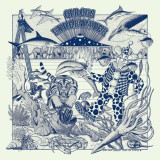
Soundway presents Circus Underwater’s 1984 self-titled masterpiece. Remastered and extended to a double LP, this deluxe version includes six unreleased tracks unearthed from the original ¼” tapes, and presented with an insert, including never-before-seen photos and the fascinating story behind the music.
Featuring artwork from Grateful Dead collaborator, David Lundquist, the album encapsulates a unique moment in time. Echoing the story of a generation that grew up in the 50s and 60s where music was everything, two friends embark on a journey of experimentation which begins in the beatnik suburbs of Washington DC and travels to the heart of hippie San Francisco.
The result is an opus that fearlessly blurs the boundaries of genres and embraces diverse influences. Elements of prog, rock, ambient and wave music culminate in an odyssey that seamlessly bridges the gap between the spaced-out creativity of the 70s and electronic music of today
First LP from Donna Candy, the bass-vocal-drums trio trawled from the sub genres of experimental rock and busy pushing to the front of heavy music. Nu metal bass riffs, switch-pitched fuzz vocals and big, splashy drums layer over unsettling narratives and extreme loops to bring a bit of the pit to the dancefloor.
Begun as an off the cuff party band with the idea of finding a live sound that would fit between 4am trance sets, the trio soon found themselves addicted to the euphoric sludge they created. Swapping their usual guitar for a bass, JS Donny drives Donna Candy with simple riffs, split half clean and half shredded with Boris / Sunn O))) like distortion. Head-banging the whole way, they’ll switch speed or stop suddenly, bending and drawing out notes to ratchet things up for release. Nadja's vocals tear through the top layer - heavily processed and warped with weird imagery. Together there’s a feeling of what it might be like to see Sightings slowed by codeine but with Elvin Brandi on the mic.
Always set up facing each other, off stage and surrounded by the audience, Donna Candy encourage catharsis - reciprocally transforming energy between themselves and the crowd. They build a queer euphoria that pulls apart metal’s narrow dichotomy of nihilistic machismo vs. hyperfemininity, and begins to make the visceral faux-hybridity of nineties nu metal feel possible this time around. ‘Blooming’ brings us six offerings from the band on a four way split release that speaks for itself - once on board with the DC energy you’ll want to be a part of it.
This mini album was originally published on Semantica Records in 2010 as a extremely limited 100 copy only reference. 12 years later we recover this for the Drivecom’s catalogue and fans of the label. This is a re-press edition with a new mastering and cutting, focused in the audio quality more than trying to get a maximum volume or gain. So this is one of the reasons that the side A cutting is trying to keep the tracks in the outside area of the vinyl in the most possible way, trying to avoid distortions or other artifacts from the inner vinyl curvature.
This 12” contains the same tracks on vinyl as the original edition but a couple of bonuses as a digital download. Those tracks called "Axonal Destruction (1999 Rework)" and "Automatic Reconstruction" were never released.
Note: For the people who purchase a physical copy in the shops, please take a picture of your purchase and share it on social networks, then we’ll send you a special download code.
In the musical eld, this reference was introduced with minimal and repetitive mental synth lines, mainly triggered from TB303 sequenced lines as the vertebral spinae, slow and progressive cadence rhythms with a touch of experimental electro and vocoders on board, exception is the rst tittle “Ultralink” which gives the name to the reference and it’s also the most club-oriented track in the mini album. About the thematic is all surrounded of such as mental driving musical lines so all the tittles were focused in the neuroscience
- A1: I Don't Know Anyone, I Am
- A2: Stones Pull Out Heart
- A3: I Don't Want To Ask Your Father Or Anything
- A4: Melanchole/Diary (Part 1)
- A5: I Was All Over Her
- B1: Like You Know I Get Old
- B2: Post-Traumatic All-Night-Long
- B3: Voice Vi
- B4: Reprise
- B5: (Dream) (Dream)
- B6: Needs No Progress, I Will Lie
- B7: Girl
- B8: Te Aroha
Melanchole is a collection of ambitious lo-fi pop songs recorded by Daniel Johann in the winter of 2012 in Wellington, New Zealand, when Johann was only 15 years old. The songs deal with the awkwardness of growing up, the pains of being apart, and the anxieties of being alive and real. Originally self-released on bandcamp, the album became a viral internet sensation, garnering over 100 million streams on Spotify and a large TikTok following. In 2018, Danger Collective remastered Melanchole and reissued it on vinyl with a new track listing; the first pressing sold out within the first 24 hours it was released. This third pressing will be released on doublemint green vinyl with a brand new album cover, packaged with an OBI strip and a 12x12 insert. Johann continues to remain somewhat of an enigma, rarely performing live or giving interviews. After almost a decade since his debut, Johann is currently in the midst of recording a follow-up album. “Really just the first of its kind. A study in experimental music and conceptualizing sounds that not many else would have a vision for.” // “The echoing soundtrack of loneliness in my head.” // “One of my favourite lo-fi records finally gets remastered and released on vinyl. I daresay that the changes to the track listing make this version of the album even better than the original.” // “I didn’t think it was possible for home to feel so melancholy.” // “Amazing amazing AMAZING lo-fi album.” // “This album habis a hazy, dreamily sedating effect on the careful and passionate listener. Simply put this album is entrancing with weeping, wistful melodies synchronized with Picasso’s blue period.” // Track Listing: 1. I Dont Know Anyone, I Am 2. Stones Pull Out Heart 3. I Dont Want To Ask Your Father Or Anything 4. Melanchole / Diary Pt. 1 5. I Was All Over Her 6. Like You Know I Get Old 7. Post-Traumatic All-Night-Long 8. Voice Vi 9. Reprise 10. (Dream) 11. Needs No Progress, I Will Lie 12. Girl 13. Te Ahora
Random Color Vinyl[33,40 €]
CAUSTIC CASANOVA, die psychedelischen Heavy-Riffonauten aus Washington, DC nutzen auf ihrem fünften, das Gehirn schmelzenden Album die starke Kernkraft ihres hyperkinetischen Zentrums, um diverse Soundpartikel in die musikalische Wechselwirkung einzubinden und in einer kaleidoskopischen Heavy-Rock-Extravaganz explodieren zu lassen. Im Jahr 2005 als Trio gegründet, schlagen Schlagzeugerin und Sängerin Stefanie Zaekner, Bassist und Sänger Francis Beringer sowie Gitarrist Andrew Yonki, mit CAUSTIC CASANOVA immer wieder neue Wege ein, um ihre ebenso packende wie unvorhersehbare Musik spannend zu verfeinern. In ihren Klangräumen verbindet sich sardonischer Noise-Rock und proggiger Sludge im Stile von BARONESS, RED FANG und TORCHE mit der gewaltigen Wucht der MELVINS, der Experimentierfreude von BORIS und flottem Gitarren-Heldentum sowie einem Hauch von verdunkeltem Post-Punk. Mit der Aufnahme eines zweiten Gitarristen in der Person von Jake Kimberley im Jahr 2019 machte sich das nunmehrige Quartett auf eine Abenteuerreise mit dem erklärten Ziel, das waghalsigste und rockigste CAUSTIC CASANOVA Album aller Zeiten zu erschaffen. Dabei nutzen die Amerikaner geschickt alle erweiterten Möglichkeiten, die sich aus ihrer Verstärkung mit einer zweiten Gitarre ergeben. Gleichzeitig unterstreichen die Vier auf "Glass Enclosed Nerve Center" auch all ihre bisherigen Stärken: Beringers straffer, melodischer Bass pumpt heftig die beiden heiß-bruzzelnden Gitarren auf, die den gesanglichen Dreiklang flankieren. Zaenkers flexibles Schlagzeugspiel treibt die fünf mäandrierenden Songs des Albums einfallsreich an und fühlt sich sowohl im swingenden Bill-Ward-Stomp als auch in der Hibbeligkeit des Math-Rock wohl. Langjährige Reisende in CAUSTIC CASANOVAs Fahrwasser dürfen "Glass Enclosed Nerve Center" als eine Art von berauschender Rückkehr empfinden, zu der auch das ehrgeizig ausufernde, 22-Minuten-Epos 'Bull Moose against the Sky' erheblich beiträgt, welches die gesamte B-Seite des Albums in Beschlag nimmt. Doch auch wer den massiven Sound dieser galoppierenden Psychedelic-Sludge-Büffel noch nicht kennt, bekommt hier herausragendes Songhandwerk und eine reiche lyrische Erzählkultur geschenkt, die jede Sekunde und unzählige Wiederholungen wert sind. Drei, zwei, eins... nun geht es rund!
Transparent Blue Vinyl[33,40 €]
CAUSTIC CASANOVA, die psychedelischen Heavy-Riffonauten aus Washington, DC nutzen auf ihrem fünften, das Gehirn schmelzenden Album die starke Kernkraft ihres hyperkinetischen Zentrums, um diverse Soundpartikel in die musikalische Wechselwirkung einzubinden und in einer kaleidoskopischen Heavy-Rock-Extravaganz explodieren zu lassen. Im Jahr 2005 als Trio gegründet, schlagen Schlagzeugerin und Sängerin Stefanie Zaekner, Bassist und Sänger Francis Beringer sowie Gitarrist Andrew Yonki, mit CAUSTIC CASANOVA immer wieder neue Wege ein, um ihre ebenso packende wie unvorhersehbare Musik spannend zu verfeinern. In ihren Klangräumen verbindet sich sardonischer Noise-Rock und proggiger Sludge im Stile von BARONESS, RED FANG und TORCHE mit der gewaltigen Wucht der MELVINS, der Experimentierfreude von BORIS und flottem Gitarren-Heldentum sowie einem Hauch von verdunkeltem Post-Punk. Mit der Aufnahme eines zweiten Gitarristen in der Person von Jake Kimberley im Jahr 2019 machte sich das nunmehrige Quartett auf eine Abenteuerreise mit dem erklärten Ziel, das waghalsigste und rockigste CAUSTIC CASANOVA Album aller Zeiten zu erschaffen. Dabei nutzen die Amerikaner geschickt alle erweiterten Möglichkeiten, die sich aus ihrer Verstärkung mit einer zweiten Gitarre ergeben. Gleichzeitig unterstreichen die Vier auf "Glass Enclosed Nerve Center" auch all ihre bisherigen Stärken: Beringers straffer, melodischer Bass pumpt heftig die beiden heiß-bruzzelnden Gitarren auf, die den gesanglichen Dreiklang flankieren. Zaenkers flexibles Schlagzeugspiel treibt die fünf mäandrierenden Songs des Albums einfallsreich an und fühlt sich sowohl im swingenden Bill-Ward-Stomp als auch in der Hibbeligkeit des Math-Rock wohl. Langjährige Reisende in CAUSTIC CASANOVAs Fahrwasser dürfen "Glass Enclosed Nerve Center" als eine Art von berauschender Rückkehr empfinden, zu der auch das ehrgeizig ausufernde, 22-Minuten-Epos 'Bull Moose against the Sky' erheblich beiträgt, welches die gesamte B-Seite des Albums in Beschlag nimmt. Doch auch wer den massiven Sound dieser galoppierenden Psychedelic-Sludge-Büffel noch nicht kennt, bekommt hier herausragendes Songhandwerk und eine reiche lyrische Erzählkultur geschenkt, die jede Sekunde und unzählige Wiederholungen wert sind. Drei, zwei, eins... nun geht es rund!
restock
Hearttheartrecords presents Dangirl and Demo DC who with their combined talents form Ghost N the Wai bring a fresh take on the electronic music scene. Dangirl's musical mastery of keyboard melodies and composition and Demo's unconventional wizardry of electronic sounds and drumming creates an alchemy of aural delight. The Wai (Aka Dangirl) begins this magical experience with her Debut track Between worlds, a celebraton of life, a sparkling tribute to all that exists. With a combination of orchestral magic, arpeggiated droplets and deep groovy basslines, we are taken on an immensely beautiful journey through the cosmos dancing with the intricate layers of the emotional spectrum and rejoicing at what it is to be a living being in the multiverse. Finding beauty and sacredness in even the most testing moments as we are cushioned by an unrelenting and loving consciousness. Some mind made limitations were overcome in the writing of this and as a result caused a significant shift in Dangirl as an artist, hence the effect of this track may be deeply healing. By exploring the pure deliciousness of arpeggiation and marimba sounds The Wai discovered her own unique style of electronica. When the World Sleeps, is an ambient fairy tale of a little girl who ventures out under the starry night sky and is filled with a sense of peace and wonder as the rest of the world wind down to sleep. Big sister to Between Worlds, The Wai's first electronic baby was the original inspiration for Ghost 'N' the Wai starting a whole new venture for Demo Dc and Dangirl. This piece is the tale of a girl who travels to places of unimaginable beauty, exploring the vast cosmos with her star friends. The healing energy of pure childish joy permeates the universe and balances all in existance. As dawn approaches she returns to bed and earth's inhabitants start their routines like a production line. Reminiscent of the Indonesian gamelan (one of Dangirl's lifetime musical inspirations) we are taken on a meditative journey, with haunting bells and dreamy frequencies revealing unfamiliar worlds but maintaining a sense of peaceful slumber. Resting in the womb. Our home. Nap is Over mix is a collaboration of the Wai aka Dangirl and Ghost Foreigner aka DemoDc which when the two unite, form Ghost N the Wai. This track manifested when the Wai asked for Ghost’s feedback on her ambient piece When the world sleeps. After a day of Ghost having it in his grasp, Nap is Over was born effortlessly, giving insight into the power that simmers beneath the surface of these two aspiring artists. The Wai, with her deep, still, meditative grace brings contemplative composition along with Ghost bringing organic yet organised chaotic experimental beats. Nap is over questions reality as it stands, giving the listener the opportunity to ponder their own existence .... the world no longer sleeps ... the Nap is Over.
Limited Baby Pink Vinyl LP. P.H.F. is the recording project of Auckland, NZ songwriter and producer Joe Locke. From its origins in Locke's 2008 bedroom productions, P.H.F. has gone on to collaborate with artists like Clairo and ARTHUR, toured globally, and had music released on pioneering vaporwave label Crystal Magic, before settling at its current home, Danger Collective Records. P.H.F's highly anticipated 2022 LP Purest Hell stands as a love letter to Locke's close friend and essential collaborator Reuben Winter (milk, Totems) who passed away in September 2020. Expanding on the genre-bending ambition of New Metal, Locke uses musical experimentation as a way to process grief, incorporating shredding guitar, careening breakbeat chops, and heavy electronics as a way of paying tribute to, and feeling closer to Winter. While tracks like "Skincare" and "A Letter From Purest Hell" draw power from a deep and impactful sense of loss, the album is more than just an elegy, but a celebration of life of a beloved friend and musical innovator. Locke rises to the occasion, and with the help of collaborators Fantasyluv, Rew, and fellow 909 Worldwide members 99jakes & Forcefeeded, crafts his strongest and most affecting collection of songs to date // Also Available From P.H.F. New Metal LP/CD, Anthology LP
40-plus years since its original release, the pop-punk-new wave inventions of Anthony
Moore’s ‘Flying Doesn’t Help’ are freshly remastered, blasting the sparkling, angular
sounds into today with perfect vitality.
After spending the early years of the 1970s making experimental music first as a solo
artist, then with Slapp Happy and Henry Cow, 1976’s ‘OUT’ sessions had reinvigorated
Anthony’s youthful love of the naive pop melodies of pop radio, the undeniable excitement
of songs. While ‘OUT’ ultimately went unreleased at the time, the iconoclasm clouding the
late ’70s air was addictive and transformative for Anthony. England seemed to be roiled
as violently as it had been in counter-cultural days a decade earlier; the UK pop charts
breathlessly reflected the changing spectrum with equal parts aging hippie and prog
delicacies alongside new ascendant sounds: rough-hewn pub and punk rock, plus dub
reggae and disco and ska and Stiff and Krautrock. This proved to be an ideal environment
for Anthony to make records by exploring, as he puts it, the “deep connection between
minimalism, repetition, working with tape and celluloid and forming the modules of a
three-minute pop song.”
Caught up in a no-holds-barred era, Anthony was more than happy to play the out-of-hishead madman, raving through outrageous exchanges with the press, while ‘Judy Get
Down’ received Single Of The Week honours from the NME (with review penned by Brian
Eno). Represented by Blackhill Enterprises, Anthony did production work throughout
1978-1979, on Kevin Ayers’ ‘Rainbow Takeaway’, Manfred Mann’s Earth Band’s ‘Angel
Station’ and the first This Heat album, meanwhile cutting his own songs on a dead time
deal at Workhouse Studio with engineer / producer Laurie Latham. Through the wee
hours of countless nights, the two pieced together ‘Flying Doesn’t Help’, with a little help
from friends (an inspired bunch, including Bob Shilling, Charles Hayward, Chris Slade,
Robert Vogel, Festus, Matt Irving, Sam Harley, Bernie Clark, Edwin Cross and Martine
Moore on the telephone).
Building upon the axis of pop and experimental impulses that distinguished ‘OUT’, and
informed further by the raw sensibilities exploding everywhere, ‘Flying Doesn’t Help’
blasts out of the speakers with its own unique blend of sophistication and aggression,
Anthony’s keyboard flashes between arpeggiations and outright stabs among the noise of
slicing guitars, funk basslines and the reverbed blare of the drumkit. Opening with
Anthony’s greatest hit, ‘Judy Get Down’, and containing a noise-laden remake of the
Slapp Happy/Henry Cow number, ‘War’, among other delightful sweet-and-salty
confections, ‘Flying Doesn’t Help’ never stops moving, fuelled with raw outrage and dark
satirical intent, churning with the energy of next-gen types like Tubeway Army and DEVO,
while shimmering with the elegance of the still-challenging old guard types, like Cale and
Bowie.
Clearly, ‘Flying Doesn’t Help’ was steeped in the time, and the original release reflected a
deep mistrust of the corporation mindset. Information was a dubious concept, and
connections to any recognizable organization were seen as untrustworthy, so facts like
musician credits were left out of the package, and even Anthony’s name was altered (he
was credited as A. More on the album and Tony More on a single release). The label
name QUANGO was conceptual as well, standing for ‘Quasi Autonomous NonGovernmental Organization’; each record was sealed with red tape that the listener was
required to cut through in order to get to the music. Rather than recreate the conditions of
the original release of ‘Flying Doesn’t Help’, this reissue instead embraces the changed
environment of the current time and place: instead of no credits, now they are complete,
with Anthony’s full name restored and even the artwork subtly ‘relocated’ to reflect a new
set of relationships. All of which brings the forward-looking sounds of ‘Flying Doesn’t Help’
into the more independent-minded 21st Century syntax where it belongs.
With their duo debut, Dean Spunt and John Wiese invite you to experience
the frenzy of percussive space and discreet sound found inside ‘The Echoing
Shell’.
This is the first official collaboration between the two veteran music-makers,
though their connection goes back to 1999. As John recalls, “Dean was in a
high school arts program at CalArts. A friend and I were recording the first
Sissy Spacek demo in the design studios there, and taking a tape to my car
over and over again to check the mix. Dean was walking through the parking
lot with a Locust shirt on, we said hello, and he immediately got into a car
with two strangers to ‘listen to a tape’.”
The tape-listening ended well, apparently. Dean and John became friends
and fellow travellers in LA circles and beyond: in 2005, John did a remix for
Dean’s first band, Wives; in 2007, Dean played percussion with Sissy
Spacek’s 13-Tet Los Angeles; John toured with No Age several times and
collaborated live with them in 2010.
Under the Sissy Spacek name as well as his own, John’s recordings for his
own Helicopter label and many others kicked things off for him around the
end of the century; since then, he’s been constantly engaged in solos and
collaborations on record, performances, and installations around the world.
In addition to Dean’s ever-growing discography with No Age, he curates his
own label, Post Present Medium. In 2018, Radical Documents released
Dean’s solo debut ‘EE Head’, which explored concrète and experimental
techniques in a four-part, album length piece.
‘The Echoing Shell’ is born of Dean and John’s shared understanding, using
John’s process common to Sissy Spacek: elaborate sound-collage works
using source material originating from punk, hardcore and improvised music.
A series of impositions, tape manipulation and edits recompose the material,
cracking open the crust of the source, freeing its implied guts to steam forth
in gushes of extreme noise. On ‘The Echoing Shell’, this is as often noise as
it is extreme intimacy, seeming at times to be sourced from within Dean’s
drumkit, at other times appearing to emanate from the capsules of
microphones and the circuits of the signal path itself.
One may read these collaged sounds as abstraction, but there is a unique
language conveyed in their assembly, forming something like word-shapes
and meaning. And intention: the two side-long pieces, comprised of many
short sections, form a linear whole, creating alternately ripping and
discriminating music - and meaning - in the process.
‘The Echoing Shell’ is a fantastic conception in contemporary musique
concrète, combining incendiary post-rock power, dry humour and astonishing
depth of field. Whether projecting the sound through headphones, ear buds,
bookshelf speakers or your own personal amp stack, crank up ‘The Echoing
Shell’.
Alex Lentini & STOMP BOXX return to Drumcode following January’s outstanding contribution ‘Natural Desire’.
The release marked the first in 2021 for the label and perhaps, fortuitously, their follow up ‘Split the Noise’ marks the final on Adam Beyer’s imprint for the year, reinforcing the respect the DC boss has for the Italian pair and their developing studio talents.
‘Split the Noise’ EP continues their creative, multi-faceted production approach. ‘Solstice’ is a distorted concoction of bass and techno, abrasive and beautifully eerie.
One for the winter warehouse season ahead. ‘Azimuth’ is an intergalactic trip to the moon and explores the more experimental side of techno, while having enough streamlined drive to move the dancefloor forward. ‘Equimulate’ works through a range of perky moods before a rasping bottom appears and propels the track into brain spangling territory.
The title track is an immersive weapon that sucks you in via knife-sharp percussion, spit-fire effects and a ripping Reese-inspired bassline. A full assault of noise and delicious bass that takes no prisoners.
For Fans Of : LVL UP, Crying, Paear, Sheer Mag, Krill. When his primary music project, LVL UP, stopped working together in 2018, prolific multi-instrumentalist and illustrator Nick Corbo began working on a new body of music and visual art as Spirit Was. On his debut studio album Heaven’s Just a Cloud, haunting, beautiful scenes of the natural world feel just as represented in the warm, classic, wooden floors of country rock as they do in the dark, droning, shadows of doom and black metal. With new creative liberties, Corbo is allowed an opportunity to keep exploring the heavy, distorted instrumentation and experimental techniques that have shaped his music to date. His ability to focus on small details and weave them into vast networks has been evident in all of the music and visual art in his catalogue. In its density, Heaven’s Just A Cloud is threaded with memorable lyrics and recapitulating musical themes that guide the listener. Spirit Was feels at home among the technical, melodic songwriting of Harry Nilsson’s studio recordings, or the dusty, psychedelic oblivion of Earth and Wolves in the Throne Room. A departure from his previously collaborative recordings, the album features Corbo on drums, bass, guitar, and keyboards, weaving sweet, intentional melodies and vocal harmonies over a slamming, distorted rhythm section.