Born in the Washington, DC area and raised in West Virginia, Miller has built a reputation as a thoughtful, boundary- pushing voice in alt- country and Americana, drawing from punk, traditional Appalachian music, and less conventional rock influences. For this record, he left his comfort zone behind and traveled to Tulsa to record at the legendary Church Studio, drawn by the city's deep musical legacy and its ties to artists like J.J. Cale. Co- produced with longtime collaborator Adam Meisterhans , the album was tracked live with a band of Tulsa- based musicians, including Grammy- nominated John Fullbright, under the steady hand of veteran engineers Gary Laney and Mike Prado. The result is John R. Miller 's most ambitious work to date - a spacious, textured collection that expands on the critically praised Depreciated and Heat Comes Down, blending road- worn storytelling, fuzzy atmospheres, and reflections on movement, memory, and change. Rooted in his West Virginia past yet shaped by constant travel and new collaborations, The Great Unknowing captures an artist trusting the process, embracing risk, and letting the groove lead the way.
Fenomenon are a trio hailing from Stavanger, on the west coast of Norway. Throughout their career they have released four full-length records, effortlessly moving between future jazz, downtempo, soul, and broken beat.
Their lush debut 12" Pacific Memories on Nuphonic made considerate waves and made the ears of many DJs perk up. As a result, the tracks "Pacific Memories" and "Solara" were featured on many big-name compilations and mix CDs such as Tom Middleton's The Sound Of The Cosmos, Hed Kandi, and MTV Summer Lounge. The latter was also featured in Michael Bay's sci-fi thriller The Island, featuring Scarlett Johansson. The follow-up single visjon.nord was only released as a white label promo due to the unfortunate demise of Nuphonic in 2002.
Pacific Memories: The Early Tapes collects tunes from both these EPs complemented by songs recorded around the same time. Originally released on CD only in 2006 by the Norwegian label Beatservice, it's now available on vinyl for the first time for its 20th anniversary. If you're a fan of Jazzanova, The Cinematic Orchestra, Kinobe, and Blue States, you can't miss this.
Pacific Memories: The Early Tapes is available as a 20th anniversary edition on black vinyl.
Compared to their debut, the band pushes even further the fusion between black metal and industrial electronics, resulting in a colder, more mechanical and chaotic sound. Extreme guitars and traditional black metal vocals are intertwined with drum machines, abrasive synths, and digital noise, creating the impression of a kind of "dehumanized" music, as the title suggests. The atmosphere is dystopian and aggressive, far removed from traditional metal: it does not aim for melody, but rather for a dense and oppressive sonic impact, where everything feels filtered through a technological lens. In short, it is a record that pushes the idea of black metal to its limits by placing it within an industrial, cyberpunk universe, becoming one of the band's most representative works.
Compared to their debut, the band pushes even further the fusion between black metal and industrial electronics, resulting in a colder, more mechanical and chaotic sound. Extreme guitars and traditional black metal vocals are intertwined with drum machines, abrasive synths, and digital noise, creating the impression of a kind of "dehumanized" music, as the title suggests. The atmosphere is dystopian and aggressive, far removed from traditional metal: it does not aim for melody, but rather for a dense and oppressive sonic impact, where everything feels filtered through a technological lens. In short, it is a record that pushes the idea of black metal to its limits by placing it within an industrial, cyberpunk universe, becoming one of the band's most representative works.
Originally founded as a solo project by singer Georg Wilfinger (ex-Miasma) in 2010 in Austria, In 2012, the project evolved into a studio band with drummer Romain Goulon (ex-Necrophagist) and guitarist Jean-Pierre Battesti, releasing the demo "Bandroom Misanthropy" MONUMENT OF MISANTHROPY have released three studio albums, and an EP Previous full-length album "Vile Postmortem Irrumatio" was released in August 2024 and drew roaring reviews worldwide. The new opus is a wholesome little concept album chronicling the coming- of- age story of a serial killer: the awkward upbringing, the early extracurricular activities, and the grand finale on the electric chair, America's probably most prolific serial killer , Ted Bundy.
PRESENTED ON NUMBERED VINYL. Peaceville presents a very special collection of tracks from the more black metaloriented acts on the label, featuring a variety of new & recent bands, among firmly established legendary acts & influential names, with plenty of great showcases for what is to come in 2023, & also including a majority of exclusives. This pressing of 'Dark Side of the Sacred Star' is presented on limited numbered vinyl.
Following vibraphonist and long-standing member Lewis Wright"s move to the USA, the award-winning UK jazz ensemble, featuring Nathaniel Facey on alto saxophone, Tom Farmer on double bass and Shaney Forbes on drums, have embraced a more flexible lineup. The trio enlist high-caliber guest artists to expand their sound, with long-time collaborators Ivo Neame on piano and David Preston on guitar lending their distinctive musical voices to the album. The album traverses the musical terrain between contemporary classical music, soundscape, post-bop and free jazz. The jazz of the 1960s has long been a guiding light for Empirical, not least in the way it represented Black musicians" struggle for respect, freedom and civil rights, often drawing on their faith as a moral foundation.
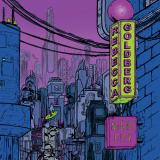
Rebecca Goldberg presents the release of her debut full-length album, Night City, a deeply personal and expansive body of work that reflects a decade of artistic growth, exploration, and connection. Produced and arranged by Goldberg, this album captures the evolution of her sound through years of practice, travel, collaboration and mentorship.
Including 12 tracks across a 2x LP, Night City draws from the rich lineage of Detroit electronic music. Goldberg cites influences from dystopian cityscapes and futurism to space exploration and the possibilities of technology. The result is a forward-thinking genre-spanning collection.
The album features two notable collaborations: “444,” created with Jnn Aprl and recorded in her studio in Seoul, South Korea, and “Tunnel,” featuring Detroit techno artist Tiptonaires. Each collaboration adds a distinct voice and texture to the record’s immersive sonic world.
Night City was mixed and mastered by Andy Toth, with album artwork illustrated by Mark Sarmel. A limited run of vinyl is available for preorder now, pressed at Archer Record Pressing Co. in Detroit. The album will be released on Detroit Underground.
At its core, Night City is an offering shaped by experience and guided by curiosity, marking a significant milestone in Rebecca Goldberg’s musical journey.
out of Stock
Last delivered 70 days ago available to reorder, subject to availability
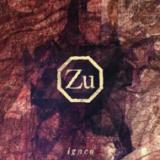
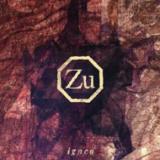
Recorded and mixed by Steve Albini at Electrical Audio in Chicago, the album captures Zu at their most raw and explosive -- where avant-jazz energy collides with the weight of experimental rock. Igneo (2002) by Zu is the band's debut studio album and marks the starting point of their distinctive sonic identity. Even at this early stage, many of the elements that would define their later work are already clearly present. The album emerges from a context deeply rooted in experimentation and exploration. Compared to their subsequent releases, the sound here feels more open and less tightly structured, with a stronger emphasis on improvisation and real- time interaction between the musicians. The trio--baritone sax, electric bass, and drums--develops a language that blends free jazz, noise, post- hardcore, and touches of contemporary composition.
Listening to Igneo, you can sense a balance between raw energy and expressive freedom. The baritone sax shifts between abrasive bursts and more spacious, stretched- out passages, while the bass moves from repetitive grooves into fragmented lines. The drums, in turn, alternate between tight rhythmic frameworks and looser, more fluid playing. There's a constant negotiation between control and release. Unlike the band's later, more disciplined records, the structures here feel more fluid and unpredictable. The tracks don't follow conventional forms; instead, they evolve like living organisms, marked by sudden changes, contrasting sections, and a persistent sense of instability. This gives the album a dynamic, almost volatile character. The title Igneo-- suggesting something fiery and primal-- captures the essence of the record quite well. The music feels warm, raw, and in continuous motion, as if it were constantly on the verge of erupting.
Recorded and mixed by Steve Albini at Electrical Audio in Chicago, the album captures Zu at their most raw and explosive -- where avant-jazz energy collides with the weight of experimental rock. Igneo (2002) by Zu is the band's debut studio album and marks the starting point of their distinctive sonic identity. Even at this early stage, many of the elements that would define their later work are already clearly present. The album emerges from a context deeply rooted in experimentation and exploration. Compared to their subsequent releases, the sound here feels more open and less tightly structured, with a stronger emphasis on improvisation and real- time interaction between the musicians. The trio--baritone sax, electric bass, and drums--develops a language that blends free jazz, noise, post- hardcore, and touches of contemporary composition.
Listening to Igneo, you can sense a balance between raw energy and expressive freedom. The baritone sax shifts between abrasive bursts and more spacious, stretched- out passages, while the bass moves from repetitive grooves into fragmented lines. The drums, in turn, alternate between tight rhythmic frameworks and looser, more fluid playing. There's a constant negotiation between control and release. Unlike the band's later, more disciplined records, the structures here feel more fluid and unpredictable. The tracks don't follow conventional forms; instead, they evolve like living organisms, marked by sudden changes, contrasting sections, and a persistent sense of instability. This gives the album a dynamic, almost volatile character. The title Igneo-- suggesting something fiery and primal-- captures the essence of the record quite well. The music feels warm, raw, and in continuous motion, as if it were constantly on the verge of erupting.
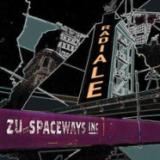
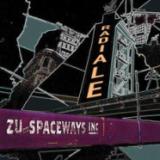
A collaborative classic from the Italian Avant-Jazz pioneers Zu and Chicago's Jazz mavericks Spaceways Inc Originally released in 2004, RADIALE is back, bringing together explosive energy, avant-jazz improvisation, and experimental rock in a landmark collaboration. Radiale (2004) by Zu is the band's second studio album and stands as one of the most defining releases in the European avant-garde scene of the early 2000s. With this record, Zu moved decisively away from the slightly more exploratory feel of their debut Bromio and developed a tighter, more aggressive sonic identity. The trio-- built around baritone sax, electric bass, and drums-- strips away almost all conventional melody, focusing instead on repetition, tension, and raw physical impact. Listening to Radiale feels less like following a sequence of songs and more like being drawn into a continuous sonic current. The music is driven by hypnotic, circular rhythms and abrupt dynamic shifts, moving from sparse, almost suspended moments to sudden, explosive bursts. The baritone sax often functions more as a percussive force than a melodic instrument, while the bass locks into distorted, looping figures and the drums maintain a relentless, tightly controlled intensity.
A collaborative classic from the Italian Avant-Jazz pioneers Zu and Chicago's Jazz mavericks Spaceways Inc Originally released in 2004, RADIALE is back, bringing together explosive energy, avant-jazz improvisation, and experimental rock in a landmark collaboration. Radiale (2004) by Zu is the band's second studio album and stands as one of the most defining releases in the European avant-garde scene of the early 2000s. With this record, Zu moved decisively away from the slightly more exploratory feel of their debut Bromio and developed a tighter, more aggressive sonic identity. The trio-- built around baritone sax, electric bass, and drums-- strips away almost all conventional melody, focusing instead on repetition, tension, and raw physical impact. Listening to Radiale feels less like following a sequence of songs and more like being drawn into a continuous sonic current. The music is driven by hypnotic, circular rhythms and abrupt dynamic shifts, moving from sparse, almost suspended moments to sudden, explosive bursts. The baritone sax often functions more as a percussive force than a melodic instrument, while the bass locks into distorted, looping figures and the drums maintain a relentless, tightly controlled intensity.
With Love Is Simple, Jeremy Pelt returns to the art of balladry, distilling eight deeply felt performances into his first vinyl-only anthology and shining a light on one of the most quietly persuasive sides of his artistry Drawn from his HighNote recordings, the set favors emotional honesty over grandstanding, pairing a few familiar titles with lesser-known gems that reward close listening.
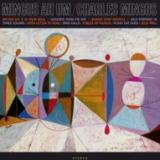
The Penguin Guide to Jazz called 'Mingus Ah Um', "an extended tribute to ancestors" and awarded it with one of their rare Crown review ratings. It is, in fact, one of Charles Mingus' most personal albums, and produced a series of songs that have become standards. "Better Git It in Your Soul" is inspired by gospel singing and preaching of the sort that Mingus would have heard as a child growing up in Watts, Los Angeles, California, while "Goodbye Pork Pie Hat" is a reference (by way of his favoured headgear) to saxophonist Lester Young who died shortly before the album was recorded. "First let's put your minds at ease about that weird title: it's a corruption of an imaginary Latin declension (mingusminga- mingum). Don't ask why. It seems to me that Mingus has now completely found himself, found a personal and vital direction. This is a consistently exciting and stimulating set." - ***** Leonard Feather, DownBeat
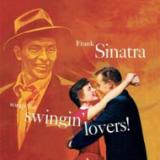
With Frank Sinatra under pressure on the singles chart, conceptional albums became his 'weapon of choice' for continuing success. Songs for Swingin' Lovers!, conducted and arranged by Nelson Riddle, came out in March 1957 and was soon at #2 in the Billboard chart where it remained for a year. In the year 2000 the album received inauguration into the Grammy Hall of Fame. Includes the bonus tracks "Love Is Here To Stay", "When You're Smiling", and "Chicago". "Arguably the vocalist's greatest swing set. Sinatra is supremely confident throughout the album, singing with authority and joy. That joy is replicated in Riddle's arrangements, which manage to rethink these standards in fresh yet reverent ways. Songs for Swingin' Lovers! never loses momentum. The great songs keep coming and the performances are all stellar, resulting in one of Sinatra's true classics." - ***** Stephen Thomas Erlewine, AllMusic (2002)
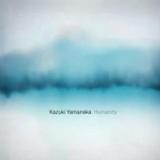
The recordings were made in a single day in New York City with a team of extraordinary musicians. He'd already established a firm creative partnership with bass legend Cameron Brown and award-winning pianist Russ Lossing over the past year during their time as recording artists in NYC, and he renewed his fruitful association with outstanding drummer Billy Mintz (Lee Konitz, Charles Lloyd, Alan Broadbent) to complete the quartet. These three have been vital to Kazuki's compositions that tell the story of his enforced absence from the scene during the pandemic and how he sought to centre himself in the midst of the disruption through contemplation and the development of an inward strength. Each track complements the next, alternately celebrating the deep jazz tradition and pushing hard at its boundaries, allowing each member of the quartet to display their extraordinary musicianship while creating a harmonious whole.
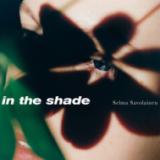
One of the challenges facing the contemporary artist is how to negotiate a balance between an outward facing engagement with the wider world and an inward looking focus on a private inner realm, it's exactly this tension that gives such energy and depth to in the shade, the stunning second album from Finnish singer/composer Selma Savolainen Selma's powerful voice and her adventurous musicality are the driving forces behind a mesmerising set of songs that are rooted in contemporary jazz but use a sound-world that ranges far beyond, bringing in influences from the adventurous edges of postrock and beyond.
Streetlight’s third album (following the Keasbey Nights re-recording) refined and expanded on the sound of their debut, delivering a tighter, more polished collection of songs. The record opens with "We Will Fall Together," one of the band’s most beloved tracks, and maintains a relentless energy throughout its ten songs. Lyrically, Kalnoky continued exploring themes of cynicism, faith, and perseverance, wrapped in the band’s signature wall of horns and propulsive rhythms. It cemented Streetlight’s reputation and remains many fans’ pick for the band’s best work.
Originally conceived as a massive multi-band, multi-volume covers project, this album saw Streetlight tackle eleven songs that influenced Kalnoky’s musical development. The tracklist is a genuinely eclectic mix, ranging from Radiohead and Bad Religion to Paul Simon and a 1950s Louis Jordan number. Rather than simple recreations, the band fully transforms each song through their own lens, making the covers feel like natural extensions of their catalog. Only one volume was ever released, leaving the larger 99-song concept permanently unfinished.
After years of delays and a very public, bitter dispute with Victory Records, Streetlight finally delivered their follow-up to Somewhere in the Between in 2013. The album is the band’s most ambitious in terms of song length and arrangement complexity, with several tracks stretching well past the five-minute mark. It carries a slightly more mature, weathered tone than earlier records, reflecting the turbulent period the band had endured to get it released. Despite the troubled road to release, it was warmly received and stands as a worthy closer to what many consider the band’s classic era.
Streetlight Manifesto’s debut full-length arrived in 2003 and immediately established the New Jersey band as a force in third-wave ska-punk. Fronted by Tomas Kalnoky, who had previously led Catch 22, the album blends furious horn arrangements with surprisingly dark, introspective lyrics about mortality and wasted youth. Tracks like "A Better Place, A Better Time" and "Point / Counterpoint" became instant fan favorites and remain setlist staples to this day. It developed a massive cult following and is widely considered one of the defining records of the genre.
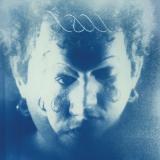
São Paulo-born, Brighton-based artist Lau Ro presents their second album Lau, a tender, deeply introspective collection of orchestral psych-pop songs borne from discomfort and disorientation. Recorded and collaged together amidst a period rife with physical and emotional challenges, Lau is naturally cerebral yet radiant, compassionate, and, above all, honest, suffused with an enduring love for bossa nova, tropicalia, and Música popular brasileira.
Acid Jazz presents the second volume of their Jazz Sessions series with the first album from the Matt Berry Trio, with Matt Berry joined by band members Phill Scragg and Graham Mann on ‘Everything’s Peachy’.
When not creating numerous indelible characters on the screen, Matt Berry has forged a remarkable, diverse and acclaimed career as a recording artist. Following the widely lauded ‘Heard Noises’ (2025) and a collaboration album with KPM ‘Simplicity’ (2023), he returns in yet another musical guise as leader of a studio-based mid-century jazz adjacent trio.
‘Everything Peachy’ is a 12-part instrumental suite, inspired by ‘the Sky King’ (American folk hero Richard “Beebo” Russell), who stole a large aircraft with no flight training, performing stunts and manoeuvres, before crashing to his own demise, and takes its name from his response to air traffic control.
Conveying variously the chaos, nostalgia, regret and acceptance of Russell’s maiden flight, it is an open, freeform and flowing composition, drawing influence from the electronic experiments of Miles Davis and the melancholy of Satie, to create another moment of musical beauty from Matt’s curious and ever-moving musical mind.
The Jazz Sessions series was conceived by Acid Jazz founder Ed Piller as a return to the jazz roots of the label. The first release came from former Style Council drummer Steve White, with his first album as leader ’Soul Drums’, further releases will follow over the next year.
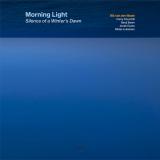
“Morning Light (Silence of a Winter’s Dawn)” is the debut album by tenor saxophonist and composer Rik van der Made, a dazzling blend of contemporary jazz and atmospheric folk. Van der Made tells stories full of spiritual ecstasy, inspired by the sea and the seasons. In recent years, The Dutchman refined his style and technique at the Royal Academy of Music and explored the creative hotbed of London. There he gathered a super group to record this album.
Rik van der Made – tenor saxophone; Immy Churchill – vocals; Benji Bown – piano; Niklas Lukassen – double bass; Johan Evans – drums. Special guest: Alex Hitchcock (alto sax)
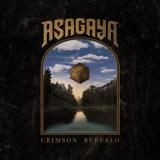
Crimson Buffalo is a narrative-driven album built as a fragmented story following Asagaya through a shifting parallel world shaped by conflict and transformation. Blending cinematic composition, diverse musical influences and collaborations with vocalists including Hannah Williams, Gaye Su Akyol, Moonlight Benjamin, Odile de Mainville, Mary May, Days and Alanna Matty, the record unfolds as a continuous arc where each piece contributes to a broader story. More than a collection of songs, it forms a constructedworld shaped by sound, contrast and progression.
artist bio
Asagaya is the project of French multi-instrumentalist David Kern. Through cinematic and narrative-driven songwriting, his albums unfold as cohesive stories centered on fictional characters.
Drawing from late 60s/70s aesthetics, 90s genre-crossing influences and a wide range of global musical traditions, his work blends live instrumentation, layered production and diverse sonic textures, shaped through collaborations with vocalists and musicians.
They disbanded in 2015, much to the chagrin of their dedicated fanbase, leaving behind a highly influential body of work, including two gold- selling albums (United Paper People and Hymns for the Nonbeliever) and a slew of hit singles such as "Opinions Won't Keep You Warm at Night," "Do-Do's and Whoa-Ohs," and "Dinosaur." In mid-2025, alongside the vinyl reissue of Hymns for the Nonbeliever-- which reentered the Australian Album and Vinyl charts at #1-- Kisschasy released their first new music in sixteen years. "Lie to Me" and follow- up single "Parasite" both offer a modern edge to the band's trademark sound: blistering guitars, hammering drums, razor-sharp lyrics and, of course, irresistible hooks. It can now be revealed that these two songs form part of a larger body of work: a long-awaited fourth album.
Titled The Terrors of Comfort, the collection of ten brand-new songs finds Kisschasy at the peak of their creative powers. Band member Daz Cordeux describes the album as "raw, alive and commanding" and "the closest you're ever going to get to the true essence of our band." The Terrors of Comfort, Kisschasy's first new album since 2009, will be released on February 13, 2026
In those early conversations, when I laid out the future I sought to create, and recall sharing the concept of a stripped, atmospheric interpretation, supported by the haunting resonance of strings-- cello or violin. At the time, the notion was met with skepticism, perhaps even dismissal. Yet it was an idea I knew would one day take form. It had to. UADA has always drawn from a wide spectrum of influences--many of which extend far beyond the traditional boundaries of black metal. With Interwoven, we sought to peel back the layers and reveal the vastness of these realms; to immerse the listener in both the foreign and the familiar, in textures that challenge and comfort in equal measure.
The seven tracks are imbued with a sound that is at times harsh and angular, yet always cultivates a dreamlike and sometimes epic imagery. It is the first album with vocals by the talented Elisa Brusati (then the singer of Noema) and lyrics by drummer and synth player Federico Rivoli. This choice has strengthened the band's cinematic and expressive inspiration, which in previous albums was entirely instrumental. The guitar and bass parts complement a less prominent use of synths and keyboards compared to the last album, "From Sunset to Dawn" although there is no shortage of themes and long psychedelic digressions, such as in the songs "Hidden Places" and "Sleeping Brain".
United by a shared love of 1960s music and Garage Punk, the band has carved out a distinctive sound rooted in infectious riffs, vintage swagger, and raw energy. Their catalog sits comfortably alongside unearthed '60s Garage Rock and Psychedelic gems, delivering songs that jump between English and Spanish, instrumental and vocal, reflecting both their creativity and diverse musical influences. Onstage, THE KILLING FLOORS are electrifying. Their shows are a whirlwind of highvoltage energy, tight harmonies, and explosive performances that pull audiences straight into their world. Each member is a vital piece of a well- oiled Rock 'n' Roll machine, creating a live experience that's impossible to ignore and even harder to forget. And it's precisely that wild live- energy that has been transported onto their debut album "Los Angeles Chicano R'n'R"!
Their deservedly successful release "Music From The Stars, Volume 1" sold out instantly, received heavy airplay, and was repressed shortly after. This huge success naturally called for a successor, so here it is: "Music From The Stars, Volume 2"! Once again, the boys broaden their musical horizons by adding stars like BLONDIE, PATRICK HERNANDEZ, MASSIVE ATTACK, and D.A.F. to their repertoire - without departing from their familiar Oetsound. You might ask yourself: 'Why did The Krontjong Devils record these songs?' The answer is simple: all these tracks possess beautiful melodies that truly deserve an instrumental guitar treatment.
Chuck Berry (1926–2017) was one of rock ’n’ roll’s true architects, celebrated for his sharp songwriting, distinctive guitar riffs, and electrifying stage presence. With classics like “Johnny B. Goode,” “Roll Over Beethoven,” and “Maybellene,” he helped define the sound and attitude of 1950s rock. Blending rhythm & blues with country influences, he created a style that was energetic, rebellious, and unmistakably his own. His storytelling lyrics and groundbreaking guitar work laid the foundation for generations of rock artists, making this compilation a powerful tribute to one of music’s most influential pioneers.
For nearly four decades, since its founding during the mid 1980s, the Belgian imprint, Sub Rosa, has continuously plumbed the depths of numerous, radical creative histories, assembling a catalog of releases that has almost no equivalent, while remaining nearly impossible to nail down. That said, for most of its run, Sub Rosa has been primarily recognized for its rigorous explorations of the lesser explored shadows of experimental sound practice (sound-art, sound-poetry, early electronic and electroacoustic music, free-improvisation, etc.), delivering a remarkable body of artifacts that have collectively helped to rewrite history in their wake. While it's always been impossible to anticipate where the label might take us next, threading their catalog are plenty of releases that throw further wrenches in the cogs, expanding our understanding of what they pursue, as in the case of a handful of titles, appearing as early as the 1980s, dedicated to ethnographic field-recordings from various parts of the world. Among the most striking and celebrated of these was 2017's Ethiopian Urban And Tribal Music: Mindanoo Mistiru / Gold From Wax, comprising an astounding body of recordings made by Ragnar Johnson and Ralph Harrisson in Ethiopia during 1971, reissuing material originally released by Lyrichord the following year. Now, Sub Rosa returns to the incredible work embarked upon by the pair and captured on that same trip with Ethiopian Musics 1971, comprising the recordings originally released by Ocora shortly after their completion, expanded in this edition to include an entire disc of never before released music. Widely regarded as some of the most important field-recordings ever made of indigenous Ethiopian folk music (as captivating and intoxicating as they are revelatory: providing insights into the roots of the country's singular traditions of popular music and jazz that have come to be celebrated the world over), this incredible collection is issued by Sub Rosa in a beautifully produced 2LP edition, complemented by a four page insert providing detailed descriptions of each song, as well as notes by the ethnomusicologists and recordists, as well as a 2CD edition, with a twelve page booklet. Insanely good and absolutely essential for any fan of field-recording, ethnomusicology, the music of Ethiopia, or the label's mission at large. Once again, Sub Rosa has defied our expectations and delivered a remarkably important intervention in the history of recorded sound.
Located in the Horn of Africa region of East Africa, few cultures are distinctly singular, while being so diverse (containing 80 distinct ethnic groups who speak 70 languages and 200 dialects) as that of Ethiopia. The home to some of the oldest surviving sects of Judaism, Christianity, and Islam (each contributing important aspects of its collective cultural body), particularly the country's culinary and musical traditions have become celebrated the world over, and (generally speaking) feel entirely independent of those of its neighbors. Given this, it's unsurprising that, during the summer of 1971, the young ethnographer, Ragnar Johnson, accompanied by Ralph Harrisson, traveled to Ethiopia to begin his brief career as a field recording ethnomusicologist, capturing material on reels of magnetic tape that would be subsequently released across three LPs for Lyrichord and Ocora, respectively, coming to form a cornerstone of documentation and study of the country's many indigenous musical traditions, as well as providing wide, global access to them for the first time. While Johnson's recording career was relatively brief, ending toward the end of the decade when he began to focus more on teaching in UK universities, with a focus on the anthropology of art and social anthropology, his impact on the field was lasting. Between 1971 and 1979, in addition to those he made in Ethiopia, he made hugely significant recordings in Yemen (also issued by Lyrichord before being reissued by Sub Rosa) and Papua New Guinea, which were originally released by David Toop's Quartz Publications to wide celebration, before being revisited by Ideologic Organ in 2023.
While it's worth noting that commercial releases of ethnomusicological recordings by labels like Folkways, Lyrichord, and Ocora were still in their relatively early days when he entered the field, Johnson's recordings quickly stood apart for their vivid qualities and clarity of space, allowing them to stand the test of time. As he later stated: "I used a Uher Report L stereo tape recorder, BASF quarter inch tapes at a recording speed of seven and a half inches per second with two directional microphones mounted to record an isosceles triangle of stereo sound," he reveals. "The location of the microphones and musicians was critical. The musicians were fully informed of all aspects of the recording process."
Johnson's recordings are extremely vivid, there is a clear sense of space and the cries of the flutes exist across the entire stereo field. It's a reflection of Johnson's skill as a field recordist that his recordings continue to be reissued over forty years later. "I used a Uher Report L stereo tape recorder, BASF quarter inch tapes at a recording speed of seven and a half inches per second with two directional microphones mounted to record an isosceles triangle of stereo sound," he reveals. "The location of the microphones and musicians was critical. The musicians were fully informed of all aspects of the recording process… I used to enjoy being in the moment and hearing something wonderful despite the stress of the vigilance required to ensure that the recordings were accomplished according to plan. The responsibility is to record and document the music as effectively as possible so that it has been preserved for posterity. It is better to actually record music than to sit in a seminar room debating the ethics of recording music." It is this very ethos and sense of clarity that can be encountered across the length of Ethiopian Musics 1971.
For the sake of clarity, the two LPs of material that comprise Ethiopian Musics 1971 should be regarded as a single body of recordings alongside those made in Ethiopia by Ragnar Johnson and Ralph Harrisson during the summer of 1971 (previously issued by Lyrichord and reissued by Sub Rosa), and as two that have, until now, remained historically distinct. The first LP gathers that material released by Ocora during the early 1970s on Musiques Ethiopiennes, while the second comprises (as far as we can tell) twelve never before issued recordings, expanding the journey and making this the definitive edition of the release with its incredible total of 23 recordings of songs, allowing it ever greater scope to achieve the recordists' modus operandi of capturing the broadest and most diverse cross section of Ethiopia's many musical cultures, ranging from different forms of urban music captured in Addis Ababa, documenting largely orally transmitted idioms within which lyrical content is given greater emphasis than the instrumental components (played on masenko fiddles, craar and bagana lyres, washint flutes and kabaro drums), to folk idioms hailing from the Danakil desert and the border regions with Sudan and Kenya. There are songs sung and played in bars, divination chants, laments, dances, Christian songs, and Amharic sung poetry, to only begin to scratch the surface.
Ethiopian Musics 1971 is one of those rare albums where each musical moment is pure, intoxicating gold, while also being greater through the sum of its parts. There are the many songs, forming a rich tapestry of remarkable range across the respective two LPs/CDs (moments that wondrously flirt with sonic abstraction; hypnotic rhythms; pulsing chant; melodies that, in structural arrangement and tonal combination, help us reframe how such a thing might be understood, and a great deal more), each imbued with a remarkable directness and emotive sensibility, and there is the stunning quality of these recordings themselves, transporting each sound to our ears as though we intimately share its creator's space, while being imbued with the pure heart and remarkable spirit with which they were made. As we said before, it's little wonder, once heard, why these recordings and this music feels as fresh and relevant (enduring more than 50 years) today as when they were made. Once again, Sub Rosa has raised the bar with this essential addition to the incredible work that Ragnar Johnson and Ralph Harrisson did back in Ethiopia during 1971, radically expanding our access to the sounds that they captured with these stunning, beautifully produced 2LP and 2CD editions. Absolutely engrossing from the first sounding to the last, this one can't be missed.
IBOGA Africa Edits and Overdubs by Joaquin Joe Claussell Feat Long Versions and Unreleased Afro Centric Compositions Special White Color Vinyl 7inch W Full Color Jacket
IBOGA by Joaquin Joe Claussell
Straight from the acclaimed IBOGA EP series, Joaquin Joe Claussell returns with a powerful limited-edition 7-inch pressed on colored vinyl. This special release features the long-awaited extended version of “Dark Eyes,” alongside two brand-new Afro-centric edits.
Included are “Egbe Awan Okurin,” a deep rhythmic journey inspired by African cosmic soundscapes, and “Mochate,” a reimagined 1970s Afro-disco edits enriched with fresh overdubs and signature Claussell energy.
Crafted for DJs, collectors, and selectors alike, this essential 7-inch delivers raw groove, spiritual rhythm, and dancefloor-ready Afro-inspired sounds.
out of Stock
Last delivered 71 days ago available to reorder, subject to availability
ROCK JUSTICE is a new hard rock/metal act featuring singer Maggy Luyten (Ayreon, Beautiful Sin, The Prize, ex-Nightmare) and guitarist Bas Maas (Doro, After Forever).
The upcoming debut album, You’ve Been Served, is the result of Bas Maas’s long-held dream. He teamed up with Maggy Luyten to shape the powerful, driving sound of ROCK JUSTICE. The album blends varied song styles, tied together by a nostalgic vibe and well-crafted production.
“The idea came to life when I was still playing in After Forever, where I didn’t get a serious chance to contribute to the songwriting. I had written a couple of songs that didn’t make the cut and realized that if I wanted to get my own music out there, I’d have to do it myself, or at least with other people,” says Bas. When he decided to form a band, he had two rules: he wouldn’t sing himself, and it wouldn’t be a female singer. Finding the right guy proved impossible and after several try-outs, one name kept coming up: Maggy Luyten. “Mag’s voice completely blew me away. I thought, ‘This chick sings like a dude and she delivers.’ Not long after that, we met at an Ayreon album presentation in Utrecht. She wanted to hear my songs to see if they inspired her. They did.” The rest is history. Maggy recalls with a smile: “When Bas came over to hear what I’d worked on, we both knew we had something. I still picture him driving back home: window down, our demo blasting, arm out, metal horns up, huge smile!”
Mannequin Records presents Electronic Corporation 1998–2006, a compilation bringing together rare and long unavailable recordings by the German electronic projects H.E.I.M. Elektronik and MAS 2008.
Active around the turn of the millennium, both projects share the involvement of producer Ive Müller while developing distinct collaborations and approaches to electronic music. H.E.I.M. Elektronik was founded in 1996 by Holger Erlenwein and Ive Müller (after the two artists split in 1999, Müller continued using the name), while MAS 2008 is the project of Ive Müller together with René Kirchner. Though separate entities, the two projects explored a similar sonic territory: stripped-down electro, minimal electronics and machine-driven body music shaped by analog hardware and a raw DIY production ethos.
The roots of Müller’s work go back to the final years of the DDR. As a teenager he worked as a licensed DJ — officially known as a “Schallplattenunterhalter” — operating a travelling disco across Saxony. With limited access to official Western releases, music circulated through cassette recordings taped from West German radio stations such as RIAS Berlin, NDR2 and Bayern3. Together with friends he travelled between youth clubs and discos around Leipzig with a “rolling discotheque”: a Russian Wolga pulling a trailer loaded with Electro-Voice sound systems sourced through the black market.
At the turn of the 2000s this background in underground electronic culture resurfaced in a series of recordings rooted in electro, EBM and minimal machine music. The tracks collected on Electronic Corporation 2000–2002 capture this moment: cold sequences, driving rhythms and stark synthetic textures produced with a direct and uncompromising approach.
Compiled and remastered by Rude 66 from the original sources, Electronic Corporation 2000–2002 documents a small but fascinating chapter of German underground electronics from the early digital era.
out of Stock
Last delivered 71 days ago available to reorder, subject to availability
Another haul of hard hitting house gems from Duster Valentine’s debut album pressed to vinyl for the first time.
A love note to formative years in the ‘80s and early ‘90s, off his chops at The Haçienda and other legendary Manchester clubs, it’s a masterclass in demonstrating the flavours-within-a-theme that emerged from the Chi, 313, and NYC during that pivotal era, and would light the touch paper of a UK club revolution.
In Duster Valentine’s hands the sound is presented stripped to salient fundamentals, prizing the sound before it went commercial, ranging from sampler-knuckling garage-house stabbers thru haughty canter and plushest, pendulous grooves. He homes in hard on that point when hip hop and electro gave way to house in the Todd Terry-via-Pal Joey style jam »Getting’ Dub«, and gives a big salute to Chez N Trent’s rugged, chord-riding haughtiness via Levon Vincent in »Hit Me From Behind«.
»Strobelight Honnies« leans into the sound’s deepest ends with perfectly weighted bassline, cold drums and sublime string tension dubbed with hypnotic elegance, where »The KatG Chord« follows with shimmers of Anthony Shakir via Michael J Blood. Suffice it to say they’re all perlers and bang on the £ if you know what’s good.
out of Stock
Last delivered 44 days ago available to reorder, subject to availability