For SIDE B's fourth release, an EP by Portugal's own DJ Dextro is in line. Ultra efficient, fine tuned techno is put under a microscope by the international mainstay for this record. Using high pressure in the low-end and creative textures to decorate the tracks, Dextro solidifies his place as a mainstay with a biting performance on home turf. Balancing his uncompromising sound with mystical synth work, Dextro opens 'Lost Frame' with the title track. In this A1, he rolls straight into a tunnel with flashing percussion and lurking melodies far out in the stereo field. Dancefloor focused but with a hint of mysticism, 'Lost Frame' creates a captivating ambiance to introduce the project with promises of earworm groove. Quick to follow up, 'Disclosure Of Who We Are' sees more space between the elements, creating a whipping effect in the rhythm and rich in sound design. Synth stabs cut through a booming kick, creating urgency in an EP that was lacking none to begin with.
This spirit is maintained on the record's flip to the B side - this time with an added bit of funk and shuffle. 'Liberdade' throws a vicious synth sequence forward for peaktime use and sees Dextro define his space with concentrated transitions and booming percussive hits. Swinging along with the occasional vocal sample to emphasize the obscurity, the producer maintains his delivery of razor sharp focus in all of his elements. To conclude, 'Panoplia Abstracta' settles things with an ambient, even meditative fourth track. Staying insistent with his kick, Dextro lets go of the wheel to drift his record from the body to the mind with progressive arrangement and soothing textures to see off a whirlwind of an EP for SIDE B records. Words by Noah Hocker
quête:de la swing
- A1: Arsen Dedić - Onaj Dan
- A2: Zdenka Vučković - Bosonoga
- A3: Bogdan Dimitrijević - O Barquinho
- A4: Nino Robić - Jedna Nota (Samba De Uma Nota Só)
- A5: Milan Bačić - Hō-Bá-Lá-Lá
- B1: Beti Jurković - Ljuljačka
- B2: Elda Viler - Senca Tvojega Nasmeha (The Shadow Of Your Smile)
- B3: Arsen Dedić - Često Te Sretnem
- B4: Bogdan Dimitrijević - Hershey Bar
- B5: Zdenka Vučković - Izgubljeno (Desafinado)
- C1: Drago Diklić - Moja Draga
- C2: Krunoslav Kićo Slabinac - Tko Si Ti
- C3: Plesni Orkestar Rtz - Plava Krizantema
- C4: Gabi Novak I Radojka Šverko - Za Mene Je Sreća (Samba Da Rosa)
- C5: Dubrovački Trubaduri - Ljuven Zov
- D1: Vikica Brešer - Sunčano Ljeto
- D2: Drago Diklić - Nitko Na Svijetu
- D3: Višnja Korbar - Subotnje Veče
- D4: Arsen Dedić - Večeras
- D5: Jimmy Stanić & Glenn Rich Orchestra - The Girl From Ipanema
Rich musical history of Yugoslavia reveals a long-lasting love for the music of Latin America.
Entwined in Afro-Cuban rhythms, ballrooms were shakin', swayin' and swingin', gathering musicians who were heavily into jazz bands and orchestras, most notably in Ljubljana, Zagreb, and Belgrade. Jazz could be heard on the streets of Split way back in 1919 when dancing became a symbol of freedom. Radio was the most loved household item, newest sheet music was in demand and collecting records was hip like today. In the aftermath of Second World War, jazz went underground but little by little, things changed and Ella, Satchmo, Dizzy and Miles came to visit, among others. Music festivals shaped the music for entertainment and variety of popular styles showed influences from all over the world. In the early sixties, one particular rhythm crashed on the coast of the Adriatic Sea: the rhythm of bossa nova!
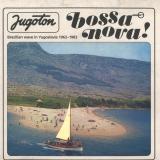
In the whirlwind of various musical styles, Latin American music still played important part of the scene in the early sixties Yugoslavia. Beguine, tango, rhumba, samba, calypso, mambo and cha-cha-cha all found their place on the festivals inspired by famous Sanremo, festival of Italian popular song that largely shaped the musical taste of Europe. It was the era of instrumental rock, R & B and rock'n'roll - sounds of "imperialist America" now played freely on imported and hand-made electric guitars. While dancing halls had been turning into concert venues, bossa nova has come! Eydie Gorme with Blame It on the Bossa Nova and Paul Anka with Eso Besso (That Kiss!) tried to make us learn some new dance moves but it was Joao Gilberto's gentle singing and his new way of playing samba songs, along with Tom Jobim's modern dissonant harmonies and poetry of Vinicius de Moraes that created the magic. When American alto saxophonist and flautist Bud Shank visited Zagreb and Ljubljana in 1963 (with Boško Petrović in his quintet) "it was the first time we heard bossa nova!" remembers Stjepan Braco Fučkar. Jugoton, the biggest record company in Yugoslavia, released 4-track EP Bossa Nova by Bogdan Dimitrijević and his ensemble that same year! While not being fully accepted or understood completely, the archives of Jugoton reveal to us various interpretations of this new trend from their vast catalogue.
- 1: The Last Race - Jack Nitzsche
- 2: Trash - Duane Eddy & The Rebels
- 3: Boo Boo Stick Beat - Chet Atkins
- 4: Comanche - Link Wray & The Wraymen
- 5: Jungle Fever - Dick Dale & The Del-Tones
- 6: Mumblin' Guitar - Bo Diddley
- 7: Put The Blame On Me - Elvis Presley With The Jordanaires
- 8: Baby I Go For You - The Blue Rondos
- 9: Parchment Farm - Billy Lee Riley
- 10: I'm Not Your Stepping Stone - The Flies
- 11: Mountain - Sunshine Theatre
- 12: Gotta Find A New Love - The Yo Yo's
- 13: Man From Nowhere - Jet Harris
- 14: Watermelon - Frank Minion
- 15: I'm Out - The Surf Riders
- 16: Fuzzy And Wild - The Ventures
- 17: Baby - Tracy Rogers
- 18: Mail Train - Billy Joe Tucker
- 19: The Day The World Turned Blue - Gene Vincent
- 20: Listen To The Drums - Richard Caiton Gnp
- 21: Tracks To Your Mind - The Sounds Of Lane
- 22: My Baby - The Girls
- 23: I'm A Nothing - The Magic Plants
- 24: Little Joe - The Sounds
- 27: Sleepy Hollow - The Last Word
- 28: Cycle-Delic - The Arrows Featuring Davie Allan
- 25: Pink Cadillac - Johnny Todd
- 26: Fast Freight - Arvee Allens
In 2023 Ace Records released the album “28 Little Bangers From Richard Hawley’s Jukebox” where the acclaimed Sheffield musician, singer and songwriter compiled together some of his favourite records. These were instrumentals and vocals records that he had collected over the years and found musically addictive. The album received fantastic reviews and allowed his
extensive fanbase to discover and enjoy tracks like Ronny Kae’s ‘Swinging Drums’ and King Curtis’ ‘Hot-Rod’ that were on the juke box in his home.
Now, three years later, Richard has lifted the lid, taken those 7” out and replaced them with another favoured selection. One again, this second version of “Little Bangers” is full of cracking records such as Chet Atkins ‘Boo Boo Stick Beat’, Frank Minion’s ‘Watermelon’, Johnny Todd’s ‘Pink Cadillac’, Sunshine Theatre’s ‘Mountain’, Jet Harris’ ‘Man From Nowhere’, Tracy Rogers ‘Baby’ and the Ventures ‘Fuzzy And Wild’.
A with the first album there are 28 tracks spread across two albums or shoehorned onto one CD. The extensive liner notes see Richard discussing each and every track and what the record or artist meant to him. As he states himself in the introduction, “the record you hold in your hand is the result of a lifetime obsession.”
Listen for yourself and you will discover that this was time well spent.
- A1: Sous Le Pont
- A2: Belleville Rendez-Vous - Version Française
- A3: Générique D'ouverture
- A4: Cabaret D'ouverture
- A5: Tour De France
- A6: Attila Marcel
- A7: Thème Bruno
- A8: Tout Doux Bruno - Easy, Bruno, Easy
- A9: Belleville Rendez-Vous - Demo
- B1: Thème De La French Mafia
- B2: Bach À La Jazz
- B3: Cabaret Aspirateur
- B4: La Jungle De Belleville
- B5: Barbier "Cieco, Cieco
- B6: Pa Pa Pa Palavas
- B7: Retour De La French Mafia
- B8: Filature
- B9: Poursuite
- B10: Belleville Rendez-Vous Version Anglaise
A true gem of French animated cinema, Sylvain Chomet's Les Triplettes de Belleville (2003) left a lasting impression with its quirky universe, tender humor, and unforgettable musical score.
Composed by Benoît Charest, this cult soundtrack blends retro swing, gypsy jazz, ramshackle brass bands, and cycling rhythms to create a unique atmosphere that is both nostalgic and fiercely modern.
This vinyl edition finally celebrates the soundscape of Belleville as it deserves to be celebrated: unusual percussion instruments made from bicycle parts, mischievous orchestrations, and the playful voice of the cult song “Belleville Rendez-vous,” performed by M - Matthieu Chedid in its French version.
Carefully remastered for analog format, the record captures all the warmth and vitality of this timeless music, a vibrant tribute to the creativity and audacity of the film.
A must-have for lovers of cinema, jazz, and beautiful vinyl editions.
lim. 2025 remastered Reissue!
Thirty years ago, LA producer Aaron Paar realized his dream of launching a label with the debut of Worldship Music, dropping the now cult classic Planet Eater EP in the late summer of 1995. Crafted on his newly acquired SP1200 and refined with mix engineer extraordinaire Greg “Ski” Royal, the record became the label’s very first release and a true vanguard single. Overflowing with the raw swing and deep grooves of classic US house, these tracks still radiate the timeless energy of the mid-90s underground. Now carefully remastered and reissued in a strictly limited edition, Planet Eater EP returns as an essential piece of house history for DJs, collectors, and true heads alike.
- Kris P. (The Christmas Elf)
- Hitch A Ride With Santa
- Everytime When Christmas Comes Around
- (Will You Be) Gone By Christmas Night
- Hang Your Lights
- The Old Songs
- Stay For Christmas (Ft. Lucy Woodward)
- Last Christmas
- Driving Home For Christmas
- Santa’s Crazy North Pole Orchestra
- The Joy That’s In Your Heart
- Christmas When You’re Here
- Wonderful Christmastime
- This Time Of Year
- Until Next Christmas
„Weihnachten ist wirklich die schönste Zeit des Jahres“! „Im Laufe der Jahre habe ich viele originelle Weihnachtslieder geschrieben und ich hatte das Gefühl, dass es jetzt an der Zeit ist, die besten davon auf einem Album zu bündeln. Und hier ist es: Ein wundervolles Weihnachtsalbum mit einer Vielzahl von Liedern, von denen jedes ein wesentliches Element der Weihnachtsstimmung enthält, jetzt in einer Deluxe-Edition. 15 Songs, die ich sorgfältig ausgewählt habe. Ich habe 9 der 11 Originale mit den Amerikanern Jeff Franzel und Maria Christensen geschrieben und die anderen 2 Originalsongs mit den niederländischen Songwritern Simon Gitsels und Karel Schepers. Die Cover auf diesem Album sind Songs, die ich so sehr liebe, dass ich ihnen meine eigene Note geben und ihnen einen Platz auf dem Album geben wollte.“ Vier erfolgreiche Studioalben, mehreren Theatertourneen in den Niederlanden und erste internationale Shows, die allesamt ausverkauft waren. Es folgten bereits zahlreiche Auszeichnungen, darunter eine Goldene Schallplatte und bereits zweimal der renommierte Edison Jazz Award (der Holländische Grammy). Keine alltägliche Errungenschaft im Jazzbereich oder wie „Crooner“ Dennis es lieber nennt, im Swing, einem Stil, der für ihn unvergleichlich ist.
- A1: Primal
- A2: Mercenary
- A3: Discordia
- A4: Axis
- A5: Huntress
- B1: Unbound
- B2: Indifferent
- B3: Drifter
- B4: Draconian
- B5: Vellichor
Clear Vinyl[27,10 €]
SOEN - the Swedish progressive metal powerhouse spearheaded by Joel Ekelöf (vocals) and Martin Lopez (drums) - continue to find incredible new pathways into the spatial areas between light and dark, loud and calm, heavy and soothing. And with its seamless march across deeply human emotional terrain, their forthcoming 7th studio album Reliance, SOEN continues to explore the human mind, heart, and soul with a visionary duty of care, plus an extra edge of heavy. With Lars Enok Åhlund (keyboards & guitar), Cody Lee Ford (guitar), and Stefan Stenberg (bass) standing shoulder to shoulder with Ekelöf and Lopez, the lush continual evolution of SOEN’s sound soars. Take “Primal”, a barrel-chested roar detailing the existential fight between the human spirit and our current world, Ekelöf’s incredible vocals leading the heavy charge. “Axis” is a resolute and defiant look into where humanity sits, propelled by Lopez’s relentless yet swinging drums, and then there’s the serene elegance of “Indifferent” a beautifully orchestrated modern lament on the loss of love which rides resolutely on the power of strings, piano, and Ekelöf’s marvellous voice. With Reliance, SOEN continue their extraordinarily raw and earnest lifetime exploration of the mental and physical boundaries which challenge humankind as it writhes and wrestles with itself in these challenging times. Thoughtful, provocative, beautiful and brutal, Reliance is a journey you need to take.
- A1: Primal
- A2: Mercenary
- A3: Discordia
- A4: Axis
- A5: Huntress
- B1: Unbound
- B2: Indifferent
- B3: Drifter
- B4: Draconian
- B5: Vellichor
fBlack Vinyl[27,10 €]
SOEN - the Swedish progressive metal powerhouse spearheaded by Joel Ekelöf (vocals) and Martin Lopez (drums) - continue to find incredible new pathways into the spatial areas between light and dark, loud and calm, heavy and soothing. And with its seamless march across deeply human emotional terrain, their forthcoming 7th studio album Reliance, SOEN continues to explore the human mind, heart, and soul with a visionary duty of care, plus an extra edge of heavy. With Lars Enok Åhlund (keyboards & guitar), Cody Lee Ford (guitar), and Stefan Stenberg (bass) standing shoulder to shoulder with Ekelöf and Lopez, the lush continual evolution of SOEN’s sound soars. Take “Primal”, a barrel-chested roar detailing the existential fight between the human spirit and our current world, Ekelöf’s incredible vocals leading the heavy charge. “Axis” is a resolute and defiant look into where humanity sits, propelled by Lopez’s relentless yet swinging drums, and then there’s the serene elegance of “Indifferent” a beautifully orchestrated modern lament on the loss of love which rides resolutely on the power of strings, piano, and Ekelöf’s marvellous voice. With Reliance, SOEN continue their extraordinarily raw and earnest lifetime exploration of the mental and physical boundaries which challenge humankind as it writhes and wrestles with itself in these challenging times. Thoughtful, provocative, beautiful and brutal, Reliance is a journey you need to take.
Swan Song
The vinyl LP at the heart of this éthiopiques 31 tracks 2 to 11 was one of the very last vinyl records ever released in Ethiopia. But above all it represents, we felt, the absolute masterpiece of the Ethiopian Groove – the Swan Song of Swinging Addis. The album leaves a clear idea for posterity of the level of sophistication and mastery that modern Ethiopian music had achieved, before being crushed under the Stalino-military heel of the Derg – as the bloody revolution that was unfolding came to be called.
Ethiopia1976.
The Revolution that broke out in February 1974 rolled on in a ruthless march. The whole of Ethiopian society was utterly stunned. The bouquets of flowers handed joyfully to the first tanks of the coup d'état were to wilt very rapidly. From September 1976 to February 1978, 18 months of Red Terror (the name given by the junta itself) spilled blood throughout the country. This fratricidal conflict took its heaviest toll among students and youth. The shift from feudalism to a cruel and primitive Stalinism left the country's citizens deeply traumatised, and snuffed out any pretence of activism, whatever the sector of society. This ice age was to last for seventeen long years.
ሙሉቀን፡መለሰ Mulukèn Mellèssè Muluqän Mälläsä
It was three tracks by Muluken that served as the opener for éthiopiques-1 more than 25 years ago. Seven more tracks appeared on éthiopiques-3 and 13, all accompanied by The Equators, which was soon to become the Dahlak Band.
The first track, Hédètch alu, also the very first piece that Muluken ever recorded, left audiences both unsettled and amazed. Reflecting the singer's extremely young age (he was just 17 at the time), this angelic voice mystified many, who thought they were in fact listening to a feminine voice. He was not yet 22 when he released his last vinyl record in 1976 with Kaifa Records (KF 39LP), one of the very last to be issued in Ethiopia, before the cassette tape became the dominant medium for music distribution – and before the new revolutionary regime put a stop to all independent musical life, via an unspeakable barrage of prohibitions and other persecutions.
Mulu qèn, literally, “A well filled day”. This tender maternal intention wasn't enough to ward off the cruelty of fate. His mother's premature death drove Muluken to leave his native Godjam, in northeast Ethiopia, to live with an uncle in Addis Ababa. Born Muluken Tamer, he took his uncle's last name – Mèllèssè.
The spelling Muluken appeared in his administrative records. Transcription of Amharic to the Latin alphabet, both in Ethiopia and for scholars, gives rise to controversies and quibbles that can never be neatly settled. French allows for a closer approximation of the original pronunciation, thanks to its battery of accent marks, confusing as they may be to anglophones.
Between rather accommodating administrative record-keepers and the various versions that pop up in interviews given by the artist, Muluken's year of birth oscillates between 1953 and 1955…
1954? One thing is certain: the artist's talent made itself known very early indeed, because he got his start in 1966-67, at the age of 13 or 14. Photos from the period attest to his extreme youth. It's a strange sort of initiation for a very young teenager to become a sensation in the heart of Addis's nightlife at the time, Woubé Bèrèha – the Wilds of Woubé. And what's more, in the club of the Queen of the Night, the Godjamé Assègèdètch Alamrèw herself, the very same that was portrayed by Sebhat Guèbrè-Egziabhér in his novel-memoir Les Nuits d’Addis Abeba2… The legendary female club owner who is remembered to this day by the capital's ageing boomers.
Muluken first tried his hand at the drums, before he grabbed the microphone. He emigrated briefly to the Zula Club, across the street from the old Addis Post Office, one of the ground-breaking bars of the burgeoning musical scene, before joining the Second Police Band in 1968, for around three years. He spent a few months with the short-lived Blue Nile Band founded by saxophonist Besrat Tammènè. As the musical scene grew increasingly successful, and pulled slowly but decisively away from its institutional ties, Muluken released his first 45rpm single in February 1972 (Amha Records AE 440). It was included in two LP Ethiopian Hit Parade compilation albums in September of the same year. All in all, Muluken released eight two-track 45s and the same number of original cassette tapes between February 1972 and 1984, the year that he departed for permanent exile in the USA. After converting to Pentecostalism in 1980, Muluken gradually abandoned all secular musical activity. In 1985, at the end of a concert in Philadelphia, he decided to quit concerts and recording for good. Mèlakè Gèbré, the historic bass player from the Walias band who was playing with him that night, recalls that everything appeared so irredeemably diabolical in Muluken's eyes, that it was to be the end of his contribution to Ethiopian Groove.
The end of the story, the beginning of a legend.
Dahlak Band, forgotten by History
Aside from his personal history and vocal talents, it must be remembered that Muluken Mèllèssè was one of the biggest names in the musical innovations that marked the end of the imperial period. These éthiopiques aim to convince those who are just discovering this hidden gem... As for Ethiopians themselves, they are to this day captivated by this singular and atypical figure in the Abyssinian pop landscape – even though he withdrew from public life some 40 years ago. Incorrigible devotees of poetic twists, of more or less hidden meanings, Ethiopians appreciate above all the care Muluken took in choosing his lyrics and the writers who penned them, such as Feqerte Haylou, Alemtsehay Wodajo and, here, Shewalul Mengistu (1944-1977). Love songs, written by women, a far cry from the conventional drivel that pleases sappy sentimentalists.
Muluken is equally acclaimed for his perfectionism when it came to music, the opposite of the overly casual approach that is all too common. He remained a faithful partner of musicians who came from a lineage that borrowed from several inventive and pioneering bands (Venus, Equators, Dahlak). Amongst them were certain artists who began their musical lives with Nersès Nalbandian at the Haile Sellassie Theatre and who come of age in around 1973 – at just the wrong time, you might say. Among them were the pillars Shimèlis Bèyènè (trumpet), Dawit Yifru (keyboards) and Tilayé Gèbrè (sax & flute). Most notably Tilayé Gèbrè, certainly one of the most important musicians, composers and arrangers of his generation, of the end of the imperial era, and of the early years of the Derg.
It was only in 1981 that a miraculous opportunity arose for Tilayé to escape the Stalinist paradise of the dictator Menguistou Haylè-Maryam. Once again it was Amha Eshèté (1946-2021) who provided a solution. The spirited and courageous producer, who had been in exile in Washington since 1975, succeeded, thanks to his incredible perseverence, in bringing the Walias Band to the USA. It was, in fact an extended Walias Band comprising ten musicians3, six of whom chose to slip away after a few concerts and the recording of an LP (The Best of Walias, WRS 100). Tilayé Gèbrè was one of these. He has been living in the USA ever since. There he joined the then-nascent Ethiopian diaspora, which lived largely unto itself, and was making only very modest headway in the American musical market. It seems unfair that Tilayé Gèbrè and the Dahlak Band were not able to benefit earlier from the public recognition that they do deserve.
A similar draining away of the top-rate talents would lead to the reorganization of the major groups of the “Derg Time”. The remaining artists spread themselves around between Ibex Band (renamed Roha Band), Ethio Star Band and a remodeled Walias Band. That spelled the end of the Dahlak Band.
With this record, produced by the essential Ali Abdella Kaifa a.k.a. Ali Tango, we can appreciate everything that the Derg not only destroyed, but also prevented from flourishing. This gem of Ethiopian-style afrobeat came out in 1976 (and, by way of a parenthesis, before the FESTAC 1977 in Lagos, which was attended by an impressive delegation of Ethiopian musicians — although Fela was already personna non grata in his own country). Despite everything that might distinguish this ethio-groove from Fela’s music – no colonial axe to grind, no question of political confrontation with the authorities, no claims to negritude or Africanism for the Ethiopian musicians, and less extrovertion! –, this LP fits beautifully into the saga of intense and electrified soul of the new “African” groove that Fela and Manu Dibango embodied so well from that point onwards.
In restoring this record to its place in the afrobeat epic, it can be seen that, if nothing else, the timeline bestows a legitimate pedigree and a historical primacy to works that had no international impact when they were originally released.
Warning! Masterpiece!
Als Sängerin und Pianistin glänzte Blossom Dearie nicht nur mit einer der ungewöhnlichsten Stimmen des
Jazz, sondern auch mit coolem Understatement und swingender, harmonischer Finesse. Dieser Albumklassiker von 1958 mit Gitarrist Herb Ellis, Bassist Ray Brown und Schlagzeuger Jo Jones verbindet zeitlose
Eleganz mit rhythmischer Leichtigkeit.
- Mean Street
- Dirty Movies
- Sinners Swing!
- Hear About It Later
- Unchained
- Push Comes To Shove
- So This Is Love?
- Sunday Afternoon In The Park
- One Foot Out The Door
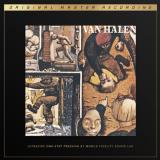
The song titles on Van Halen's aptly titled Fair Warning don't lie. The likes of "Unchained," "Mean Street," "Push Comes to Shove," "One Foot Out the Door," and more indicate the mood the band channels on its double-platinum 1981 record — the nastiest, darkest, and fiercest album of the group's storied career. For the fourth time in four years, Van Halen throws down the gauntlet to all challengers and emerges victorious.
Sourced from the original analog tapes, pressed on MoFi SuperVinyl at Fidelity Record Pressing, and strictly limited to 5,000 numbered copies, Mobile Fidelity's UltraDisc One-Step 180g 45RPM 2LP set plays with unfettered clarity, dynamics, and immediacy. Benefitting from superb groove definition, an ultra-low noise floor, and dead-quiet surfaces, this vinyl edition captures what went down in the studio with tremendous realism and involving presence.
Taking a more controlled approach in the studio and still completing everything in less than two weeks, Van Halen and producer Ted Templeman relied on studio amplifiers to direct the sound. Further diverging from the live-on-the-floor approach of its earlier albums, the ensemble also employed overdubs to great effect. The result: Dense, stacked architecture that underlines the hard-hitting tenor of the songs — and which comes alive like never before on this reference edition that looks as good as it sounds.
The premium packaging and gorgeous presentation befit the reissue's select status. Housed in a deluxe slipcase, it features special foil-stamped jackets and faithful-to-the-original graphics that illuminate the splendor of the recording. Aurally and visually, it is made for listeners who want to immerse themselves in everything involved with the album, including the iconic cover art adopted from William Kurelek's haunting painting, "The Maze."
Isolated frames from Kurelek's childhood-inspired work — including a man bashing his head into a brick wall, a guy pinning down an adversary as he delivers bare-fist blows to his face and others watch with apparent glee, a boy tied down on a conveyer belt and being sent through the equivalent of a meat saw — adorn the front and back covers. The sunnier visual disposition of Van Halen's prior efforts gives way to something sinister and tortured, traits reflective of the music within. The band members, too, are visually depicted not in glamorous shots but in a serious black-and-white portrait in which the quartet is clad in black leather jackets.
Tough, aggressive, stark: Fair Warning comes on like a series of bare-knuckled punches to the solar plexus and boasts lyrical narratives to match. Though not a concept record, the concise album revolves around themes of roughing it on the streets and struggling to survive amid dim prospects. Singer David Lee Roth reportedly penned many of the initial lyrics after traveling to Haiti and observing extreme poverty. The characters and situations populating Fair Warning reflect hardscrabble existence, last-chance desperation, and underlying danger.
Witness the crazies, poor folks, and hunters of “Mean Street”; the former prom queen turned pornographic actress on “Dirty Movies”; the menace and vice of “Sinners Swing!”; the streetwise hustle of “Unchained”; the isolation and alienation of “Push Comes to Shove”; the desire for escape on “One Foot Out the Door”: A carefree California beach party Fair Warning is not.
Having said he felt angry and frustrated during the sessions, guitarist Eddie Van Halen uses the forceful arrangements as a playground for his seemingly unlimited arsenal. Supported by a crack rhythm section and a hyped-up Roth, he performs with an almost impossible combination of punk-like intensity, technical finesse, lyrical fluidity, and unbridled emotion. The virtuoso was increasingly butting heads with Templeton and seeking a freedom in the studio he believed denied him.
No wonder he plays like a bat out of hell. Listen to the rapid-fire manner in which he slaps the high and low E strings on the 12th fret of his instrument on “Mean Street,” instilling the tune with funk flair and metal-spiked sharpness. For the pouty strut of “Dirty Movies,” Eddie Van Halen contributes slide guitar magic made possible after he sawed off the lower portion of a Gibson SG so he could reach further down the fretboard.
Related intensity, urgency, and daredevil momentum punctuate the surging “Sinner’s Swing!” A heavily flanged, delicately melodic introduction frames the attitudinal “Hear About It Later,” among the most creative arrangements of Van Halen’s career. And do riffs come any bigger or magnetic than those on the high-wire kick of “Unchained”? As for the out-of-left-field “Sunday in the Park,” an instrumental composed on an Electro-Harmonix micro-synthesizer: Who but Eddie Van Halen to supply creep factor in such an ingenious way?
Despite selling fewer quantities than Van Halen’s prior efforts, Fair Warning remains for many diehards the record that epitomizes all of the band’s immense strengths —Roth’s manic energy and tongue-wagging humor, Alex Van Halen’s rhythmic heartbeat-in-your-chest bombast, and Michael Anthony’s lucid bass lines included. Arriving when the New Wave of British Heavy Metal and new-wave movements were taking flight, it signaled a shot across the bow from a band determined to stay a step ahead and provide proof nobody could touch what it delivered.
More than four decades later, Fair Warning still sounds that alarm.
Vinyl gatefold jacket includes a 12x12 insert reproduction of the original LP jacket art.Recorded in 1956 and released in 1957, Supersonic Jazz is arguably the first long-playing album by Sun Ra and His Arkestra on his Saturn label. However, it was not recorded as a debut. Rather, the album was assembled from tapes recorded during a number of sessions at two Chicago studios (RCA Victor and Balkan), and several tracks had been released as singles before their inclusion on this album. (Sunny's first fully realized commercial album was 1957's Jazz by Sun Ra, produced by Tom Wilson on his short lived/soon to be defunct Transition label.) Prior to these sessions, Sunny was still arranging for the Red Saunders Orchestra and singer Joe Williams, in addition to arranging for and coaching doo-wop ensembles. As Sunny's ambitions achieved liftoff, the Arkestra coalesced, began building a repertoire (mostly of Ra's originals), and making forays into studios. Deciding it was time for commercial releases, Sunny and business partner Alton Abraham launched Saturn (sometimes called El Saturn) as a record company in 1956. As a first offering, Supersonic Jazz is a pinnacle Sun Ra release. While reflecting many prevailing bebop, Latin, and R&B conventions of the mid-1950s, it's evident that Sun Ra's musical voice and vision were starting to propel him away from the jazz mainstream. Biographer John Szwed finds on these recordings "characteristics which seemed alien to swing, bebop, or the new, more soulful and hard-edged music which was coming to be called hard bop."
DJ Boora is a Russian hip-hop head with a sample-driven style shaped by Soviet-era sounds and here he brings his class to Scruniversal's latest 7". Classic bits of gear like the SP-1200 and MPC define his approach here as Boora blends dusty loops and analogue realness with tight boom-bap swing, all served up with effortless finesse. 'Dedicado Ao Rei' has a sunny disposition with some Latin heat infusing the rolling breaks, then 'Party Groove' is a playful one with James Brown ad-libs and big chord stabs.
- Side A. All I Need Is Everything
- Side B. Wedding Bell Blues
This is the first cover single from Swinging Popsicle, who are celebrating their 30th anniversary this year!
Side A features Aztec Camera's hit, showcasing their signature fast-paced guitar pop sound. Side B features a soulful rendition of
Laura Nyro's debut track. This is a loving album brimming with respect.
Lisbon-based duo Garoa—formed by Brazilian musicians Raphael Soares (drums, percussion) and Henrique Dias (piano, synthesizer, guitar, percussion)—craft an evocative soundscape that merges Afro-Brazilian rhythms with ambient textures. Their latest release, recorded in May 2024 at Estúdio Fetra, presents a free-flowing exploration where harmonies and rhythms unfold organically, avoiding rigid structures and embracing improvisation full time.
The album’s compositions are anchored by the interplay between Soares’ fluid percussion and Dias’ expansive harmonic approach. Tracks like “A Sandália Quadrada de Lampião” and “Xaxado de Chicago” weave percussive patterns reminiscent of Brazil’s Nordeste, blending them seamlessly with atmospheric synthesizers. “Baião de 2” and “Farofa e Cachaça” carry the unmistakable swing of Brazilian traditional forms, reinterpreted through Garoa’s lens of modernity and free flowing spontaneity.
Produced and mixed by Kellzo, the album captures the spirit of a collaboration that thrives on fluidity and openness. Garoa doesn’t aim for definitive statements; instead, they invite the listener into an evolving sonic landscape, where tradition and experimentation walk hand in hand.
2025 Repress
DJ Support: Kerri Chandler, Chris Stussy, Archie Hamilton, Fabe, Groovesh, Vlad Caia, Andrey P Ush Krav, Thor, Masimillano Pagliara, Dubtil, Reboot, East End Dubs, IULY.B, Josh Wink
Chris Stussy ‘A Glimmer Of Hope’ EP in now being re-issued due to demand on LTD edition transparent red vinyl.
Amsterdam based producer and DJ Chris Stussy has become one of the most eminent figures in the contemporary house scene of the Netherlands and across the globe over the past 10 years, racking up releases on the likes of Eastenderz, Moscow, PIV, Contstant Sound and most recently his own Up The Stuss imprint.
Leading the release is ‘Central Frenzy’, laid out across six and a half minutes with skippy percussion, a snaking bass groove, intricate synth sequences and sweeping vocal chants. ‘Riva De Biasio’ follows and tips the focus over to airy atmospherics a jazz-tinged bass groove and squelchy acid licks atop swinging drums.
‘Deviant Shadow’ opens the flip-side and merges an amalgamation of expansive dub chords and bouncy sub bass tones with a robust 4/4 rhythm. Lastly to round things out is title-cut ‘A Glimmer Of Hope’, wrapping up the release on a deeper tip courtesy of ethereal pad swells, metallic synth licks and shuffled drums.
Unter der Ägide des Produzenten Creed Taylor begann Wes Montgomery im Jahr 1964 seine Transformation vom reinen Jazzgitarristen zum ersten Crossover-Star. Nachdem er von seinem Debütalbum für das
Label, “Movin’ Wes”, über 100.000 Exemplare verkaufen konnte, gelang ihm 1965 mit dem zweiten Album
“Bumpin’” erstmals der Sprung in die Billboard-Charts. Begleitet von einem exzellent arrangierten Orchester unter der Leitung von Don Sebesky spielte der Gitarrist eine traumhafte Mischung aus balladesken
Standards, Latin-Stücken und bluesig swingenden Eigenkompositionen ein.
Ella Fitzgerald
Ella Fitzgerald Sings The Rodgers And Hart Songbook LP 2x12"
Unter der Ägide des Produzenten Creed Taylor begann Wes Montgomery im Jahr 1964 seine Transformation vom reinen Jazzgitarristen zum ersten Crossover-Star. Nachdem er von seinem Debütalbum für das
Label, “Movin’ Wes”, über 100.000 Exemplare verkaufen konnte, gelang ihm 1965 mit dem zweiten Album
“Bumpin’” erstmals der Sprung in die Billboard-Charts. Begleitet von einem exzellent arrangierten Orchester unter der Leitung von Don Sebesky spielte der Gitarrist eine traumhafte Mischung aus balladesken
Standards, Latin-Stücken und bluesig swingenden Eigenkompositionen ein.
VRNT presents VRLTD008, bringing together French producer Praymond with remixes by Guy From Downstairs and Cabanne. The label, vinyl-only, rooted in minimal techno and deep house, originally founded in Calgary and based in the Canada/USA-region, has built a reputation for high-quality, rhythm-centered releases. With L’odeur des rêves, Praymond delivers two originals and two reinterpretations that move in the micro-house and deep-house spectrum with subtlety and refinement. The A-side track presents a detailed groove with space and elegance; the Guy From Downstairs remix expands that vision with his signature swing. On the flip, “73 Infuse” anchors the release, and Cabanne’s remix reshapes the piece with clarity and finesse.
This 12″ (transparent vinyl, 140 g, four cuts) speaks to selectors and listeners who value texture, groove and mood ahead of showmanship. VRNT’s catalogue emphasises these traits, and this release slots in perfectly, warm, composed, and deeply musical.
- A1: Bill Ortiz - Fusion/Noche Cubana
- A2: Born 74 & Onj - Tape Your Beat
- A3: Geew – Still In Love
- B1: Mary Greer Mudiku – Happy Sunrise
- B2: The Sultan's Swing - 46 To Somewhere
- B3: Stefano Di Santis – Unreachable Galaxy
- C1: Charro Band De Emilio Guerrero – Movin
- C2: Somos Amigos - Pa'gozar
- C3: Telmo Fernandez & The Latin Soul Beat - Cuchifrito Pa’ Los Pollos
- C4: Juju – Clã Samba
- D1: Moreen Meriden - Caught In A Fever
- D2: Alfredo Dias Gomes - Samba De Negro
- D3: Alonso Gonzalez & Jazz Latino - Mr Fool
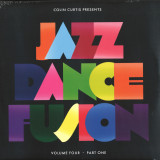
Colin Curtis is back! with another finely curated selection of the best Jazz Dance Fusion records he could find. Volume 4 reflects a combination of new music unreleased music and tracks that have never been on vinyl before or not attained the recognition they deserve. Packed with great Jazz Dance music from the UK and all around the world. The whole purpose of these compilations is to introduce you to fantastic talent and allow you to then go and explore all their works and keep this movement moving!
With brand new & exclusive releases, extremely rare tracks and many only available on Vinyl for the first time from Brazil, Cuba, Japan, Italy, USA, UK and beyond. Showcasing another insight into Colin Curtis's world of Jazz Dance Fusion and highlighting the sheer diversity & talent on offer from Vocal Jazz, Salsa, Latin Spoken Word to Sambas & Fusion, It’s all Here!