This music unites our common love for the essence of music, which contains harmonic structures and emotionality without borders." — Musique Infinie
Musique Infinie, the new duo consisting of Noémi Büchi and Feldermelder, is rooted in a shared desire to intertwine two composing veins, and to merge them into a new, massive core. While Büchi combined her background in classical and electro-acoustic music with a bold approach to composition on her highly acclaimed debut album 'Matter' (-OUS, 2022), multi-disciplinary musician and artist Feldermelder has been expanding his artistic practice into unexplored realms for over 20 years. Mutually, they've challenged themselves to fully engage on an artistic exploration aimed at making use of the elementary forces that unfold between them.
Their debut album, simply titled 'I', is a musical hybridization. The compositions make use of simple motives that are radically transformed by expanding them into intricate structures and fantastic layerings. The overcoming of genres with eclectic elements from classical music, jazz, film music and traditional music, combined with the vocabulary of experimental electronic music, complete the vertical plunge into this thickness. The emerging pieces lead into a paradoxical world, both disturbing and euphoric. Pieces that don't give in to calculations and expectations, but progress through ruptures and repetitions. The richness of the compositions and their analog, acoustic and orchestral character reflect the density of the world with its violence, its decadence, its fragility, but also its power, its ingenuity and its beauty.
Composer and sound artist Noémi Büchi creates electronic, symphonic maximalism. Her music is defined by a delicate synthesis of textural rhythms and electroacoustic-orchestral abstraction. She explores the potential of consonance and dissonance, contrasts rhythmic physicality with disruption and playfully emphasizes irregularities, creating an expansive listening experience marked by detail and elevation.
Feldermelder is a polymathic creative whose artistry spans composition, sound design, installation and code. He is co-founder of -OUS Records and an active member of Encor.studio, a collective specialising in creating immersive audio-visual installations. Through his work, he explores the idea of secrecy and its impact on our lives, using music and sound to create a thought-provoking and immersive experience for his audience.
out of Stock
Last delivered 2 years ago available to reorder, subject to availability
High Roller Records, reissue 2023, 2 mixes! 5c printed slipcase, 24 page booklet, double-sided poster. All tracks mastered by Patrick W. Engel at TEMPLE OF DISHARMONY in September 2022. The ultimate reissue of this eternal French Metal classic!
High Roller Records, reissue 2023, black vinyl, ltd 400, 425gsm heavy cardboard cover with 5mm spine, A5 photo card, insert, 12 page LP sized booklet, 16 page A5 booklet, poster. All tracks mastered by Patrick W. Engel at TEMPLE OF DISHARMONY in September 2022. Cutting by SST Germany on Neumann machines for optimal quality on all levels.
High Roller Records, reissue 2023, 2 mixes! 5c printed slipcase, 24 page booklet, double-sided poster. All tracks mastered by Patrick W. Engel at TEMPLE OF DISHARMONY in September 2022. The ultimate reissue of this eternal French Metal classic!
High Roller Records, reissue 2023, black vinyl, ltd 400, 425gsm heavy cardboard cover with 5mm spine, A5 photo card, insert, 12 page LP sized booklet, 16 page A5 booklet, poster. All tracks mastered by Patrick W. Engel at TEMPLE OF DISHARMONY in September 2022. Cutting by SST Germany on Neumann machines for optimal quality on all levels.
Viva Bertaga is the ultimate live testimony of the Bérurier's.
On 9, 10 and 11 November 1989, the Olympia shuddered to life under the rebellious anthems of the youth movement, before the Bérus signed the final armistice of alternative rock.
At the opposite end of the spectrum, Les Bérus were at the height of their powers, and you could hear it. A two-hour concert in front of a packed house, where each song is the subject of a stage production and where metropolitan Indians, rebellious Chinese, internationalist deserters... follow one another.
Viva Bertaga is widely regarded as one of Bérurier Noir's major albums, thanks to the vast panorama it offers of the band's repertoire and the energy that emanates from its live versions.
Collaboration between French writer Ingrid Astier, actor Pierre Richard and JB Hanak from the band dDamage (Planet Mu, Tsunami-addiction).
JB Hanak is on guitar, bass, synth and rhythmic programming, consumed with a desire to reveal with each changing track a different facet of this imagined nocturnal universe. Ingrid Astier directs the actors as well as the writing of the lyrics, very much as would be found in the cinema.
And then, there is Pierre Richard. At one moment a dreamer, the next a cowboy, suddenly Mafioso and then a nocturnal animal. Thinker, lover, philosopher, astronaut or sandman. Pierre Richard is an actor, an actor of immense presence confined too often to comic roles. “Nuit Jour” offers him roles he has not had in the movies ... And it is breath-taking, both in its register and in a sense of deep renewal.
Soul Clap Records serve up the flavours of Tatie Dee for their next release. Morning Routine is a six-track weave through bumping house complete with trademark remixes from Black Loops and Belaria.
Opener ‘Nuit d'Ménil’ channels journeys home through the 20th arrondissement of Paris, around Ménilmontant, for Tatie and her friends. Those late-night walks inspiring this dreamy glitched out, synth heavy roller.
Next up, ‘Bed and Break fast’ is a dancefloor bumper, raw and emotive yet powerful and punchy. Moving from a breakbeat to a 4/4 rhythm it’s an intoxicating concoction laced with grooving bars, glistening pads and deft sax injections. Black Loops steps up on remix duties honing in on that breakbeat flavour with a late night, blissful, bouncy burner.
On the flip, ‘I Wasn't Born In 1937’ nods to Tatie’s pal Lucas Moinet, who runs Studio 937. The person that introduced her to the world of the MPC, rolling with her to buy her first one. Having got home and plugged everything in, the first sound Tatie composed on her MPC was this one - it was for him.
Next, ‘16 Swing-71’ is a classic-leaning, ‘90s feeling deep house track. Weighty organs and trademark deep house stabs are served with the 16 swing-71 shuffle from the SP1200 to make everything groove just right. Closing it out Baleria puts a fast-paced new beat spin on 'Bed and Break fast’ for a club ready powerhouse remix.
out of Stock
Last delivered 20 months ago available to reorder, subject to availability
La Bibliothèque De La Bergerie is the new all-star project from producer Emmanuel Mario (Astrobal). 11 evocative and exhilarating instrumental tracks, ranging from synthetic to acoustic, from detailed pop writing to sonic experimentation. He is accompanied here by his companions Julien Gasc, Nina Savary and Vincent Guyot (as Ulysses' companions were known). Each contributes to the composition, arrangement and instrumentation of this colourful and enchanting odyssey. Mario and Savary have been living for years in an isolated former sheepfold in the South of France and have gradually gathered around them a band of artists and musicians who have come to escape their daily lives. The compositions in La Bibliotheque De La Bergerie were born of this timeless space of freedom. Each musician's musical obsessions can be found on the album, as they travel from one track to the next: soundtracks like the ones of De Roubaix or Alessandroni (Le Fleuve De La Nuit), experimental and classy pop like Stereolab/High Llamas (Loterie Solaire) or primary and repetitive electronic music (Tous A Zanzibar tome 3). The choirs and mixed voices of Nina Savary and Julien Gasc add a sunny, melancholy touch to the whole (En Attendant L'Année Dernière). The name Bibliothèque De La Bergerie is a double nod to Library Music, a trend in musical illustration for TV and radio that had its heyday in the 60s, 70s and 80s. And to the aforementioned bergerie, a living space and creative studio. The more observant may also have noticed the titles of the tracks, taken from the novels of the golden age of science fiction. Emmanuel Mario and his friends invite you to escape to another time. The album will be released on vinyl on the Freaksville label on October 6, 2023.Tracklisting: 1. L'homme qui n'existait pas 2. En attendant l'année dernière 3. Tous à Zanzibar (Tome 1) 4. Loterie Solaire 5. Une porte sur l'été 6. Le fleuve de la nuit 7. Le manuscrit Hopkins 8. Tous à Zanzibar (Tome 2) 9. Le Voyageur de l'inconnu 10. Terminus Tel-Aviv 11. Tous à Zanzibar (Tome 3) freedom. Each musician's musical obsessions can be found on the album, as they travel from one track to the next: soundtracks like the ones of De Roubaix or Alessandroni (Le Fleuve De La Nuit), experimental and classy pop like Stereolab/High Llamas (Loterie Solaire) or primary and repetitive electronic music (Tous A Zanzibar tome 3). The choirs and mixed voices of Nina Savary and Julien Gasc add a sunny, melancholy touch to the whole (En Attendant L'Année Dernière). The name Bibliothèque De La Bergerie is a double nod to Library Music, a trend in musical illustration for TV and radio that had its heyday in the 60s, 70s and 80s. And to the aforementioned bergerie, a living space and creative studio. The more observant may also have noticed the titles of the tracks, taken from the novels of the golden age of science fiction. Emmanuel Mario and his friends invite you to escape to another time. The album will be released on vinyl on the Freaksville label on October 6, 2023
Colleen thrives on reinvention. For over two decades under the name, French artist Cécile Schott has continuously pushed her compositional practice into new directions. Her creative approaches have included complex samples and loops, instrumental processing and even dub production techniques applied to the baroque viola da gamba. Each album immerses the listener in a wholly unique world while remaining unmistakably a work by Colleen. Schott"s compositions glow with carefully considered textures that move in captivating revolutions while subtly evolving. A connective thread of Schott"s work is the exploration of the intricacies of emotion while reveling in the act of contorting pop and classical forms into new shapes. Colleen"s Le jour et la nuit du réel is a voyage deep into the world of synthesis, a dense thicket populated by drifting echoes and pulsating arpeggios. More than just a creative approach, sound synthesis here becomes a means to interrogate complex concepts, from the self and perception to shifting notions of what is "reality".
Philadelphia's DEVIL MASTER stake their claim as one of the most venomous, twisted entities in the underground with their hellish debut, Satan Spits on Children of Light. The album, recorded, mixed, and mastered by Arthur Rizk (POWER TRIP, MAMMOTH GRINDER, OUTER HEAVEN, and more,) rattles the very gates of hell with a vile dose of black metal-infused punk mayhem. Commanding the steel of VENOM, the fury of BATHORY's earliest years, and the raw, uncompromising nature of the notorious GISM, Satan Spits on Children of Light sees DEVIL MASTER emerge from the grave and reach new blasphemous heights. Give in to the Satanic panic and obey your DEVIL MASTER!
'Etienne Daho's new album, “Tirer la nuit sur les étoiles” is one of the great pop successes of the year in France. The song which gives its name to the album is a sensual duet with Vanessa Paradis, inspired by legends of the 50s in Hollywood: Ava Gardner and Frank Sinatra, who celebrated their passion by shooting a revolver on the stars in the Californian desert... This new 7inch 45 rpm vinyl, in blue vinyl, is strictly limited edition. On the A side, the original version of "Tire la nuit sur les étoiles" and on the B side, the remix of the title by Yan Wagner. Reviews and Ads – London Macadam, Le Petit Journal
Guy Pedersen's magical Maxi Music, originally released on cult Parisian library label tele Music in 1972, is psyche-rock and jazz-funk gold. It's a vital Pederson outing, oscillating between the rough and the smooth, but always with those hypnotic grooves. It's a start-to-finish winner, yet the final 13-minute-long opus will blow minds. Trust!
Stirring opener, "Prétexte Pour Indicatifs" is so mighty, it was covered by Keith Mansfield on "Hot Property" from Big Business/Wind Of Change on KPM. It's a track in 4 deliberate parts, the first a rapid tour de force, the second and third presenting organ-and-wah-wah-drenched slo-mo funk workouts and the fourth a return to the frenetic energy of the opening bars. Phew, pretty sensational. "Purgatoire Mood (Interlude)" is a beautiful segue into the stunning horn-laced, swift-paced aggressive jazzy excellence of "Purgatoire Mood 1" and the more poetic "Purgatoire Mood 2". Fast-paced funk beats and dramatic interplay!
"Christophus Colombus" is another song with multiple sections; the intro a rapid wah-wah-enhanced psych-rock statement that truly thrills before settling into a more steady yet no-less unrelenting guitar-funk showcase with wordless vocals and, later, reflective guitar and piano in gorgeous harmony. Closing out this electrifying side, the elegant "Bass In Love" is a soft'n'sultry slo-mo funk instrumental, as rough cello, jazzy piano and salacious, breathy vocals combine to create the scent of lingering heat to pretty rousing effect.
Ushering in Side B, "Sing Song Bass" is a slow starter but, once the drums kick in brilliantly, we're treated to a deeply melodic, propulsive, organ-flute-piano-bass gem - it's truly memorable and absolutely fantastic. The wonky, delirious psych-pop of "Petit Moujik De Nuit" is a curiously compelling number but it serves, for us at least, only as the pre-curser to the phenomenal closing track. An absolute beast that totally slays all before it!
Yes, despite Maxi Music being that rarest of library records - a record that can stand up on its own from front to back - it really does contain that *one* absolute killer track. And Peterson saved the best until last. The real highlight - can you imagine there's better?! - is the blazing psych-rock funky burner that is the infamous 13 minute thriller "Kermesse Non Héroique". Containing a wicked flute solo it genuinely sounds like something off the first Dungen album. Yes, that good. What a way to go out!
The audio for Maxi Music has been remastered by Be With regular Simon Francis, ensuring this release sounds better than ever. Cicely Balston's expert skills have made sure nothing is lost in the cut whilst the original, iconic Tele Music house sleeve has been restored here at Be With HQ as the finishing touch to this long overdue re-issue.
out of Stock
Last delivered 3 years ago available to reorder, subject to availability
Ils Veulent Nous Tuer is Bérurier Noir's 3rd maxi 45tours, the title of which is borrowed from the slogan of a banner unfurled by the mutineers from the roof of Fresnes prison. It was an apt title for the group, too, since at the time of its release, the political and police authorities decided to destabilise them by associating them with the Black War activists and arresting many of the Bérus' entourage.
It's a dark album, with hard-hitting lyrics rooted in the social reality of the time (1988) and tackling subjects as diverse as the problems of access to food for the precarious (On A Faim !), prison repression (Sur Les Toits), the excesses of marginal youth (Mineurs En Danger) and the omnipresence of the military and police in our daily lives (Et Hop !). The album compo
--
The band's name alone evokes the epic of alternative rock: rebellious and committed.
Born by mistake on a February evening in 1983, Bérurier Noir soon found themselves the driving force behind a vast "Mouv'ment d'la Jeunesse", determined to take control of their lives in the face of a society that was ultra-conservative at the time. Times have hardly changed.
From their first self-produced records distributed by hand to the creation of self-managed labels, from concerts in squats and wild appearances at demonstrations, on the street or in the metro to endless tours, from interviews given to fanzines and free radio stations to unclassifiable appearances in the mainstream media, Bérurier Noir waged the most exciting war of independence in the history of French rock, with just a microphone, a guitar, a drum machine, a few red noses and patched-up theatre masks.
François, Loran and their 'Troupeau d'Rock' gave the last finger to this turbulent, irredeemable raia, committing hara-kiri at the height of their glory, during three final concerts in the heart of Paris in November 1989.
Forty years after its birth, Bérurier Noir's work continues to resonate, whether at demonstrations or free parties, fuelling the hopes of all those who wish to turn this world upside down and build a truly libertarian society based on solidarity and brotherhood.
For those who missed this unprecedented adventure, the Archives de la Zone Mondiale label is bringing you 8 recordings by Bérurier Noir in the form of limited-edition reissues on highly original colour vinyl ("crown" finish), distributed throughout the year.
Ceremonie hail from France and have an '80s-inspired sound that hits differently. Their songwriting reaches new levels and draws on well-chosen, well-designed sounds with a wonderful sense of melancholy and just the right balance of drama and subtlety.
After an indie-pop leaning cassette a few years ago they now land on Enfant Terrible with a contemporary take on retro new wave and synth-pop. Three of the tunes are originals, one is a cover of French 1980s new wave band Message and there is a whole new album in the works, apparently. Great stuff.
out of Stock
Last delivered 3 years ago available to reorder, subject to availability
At the dawn of the summer of 2023, here is the telluric reading of four Bérurier Noir tracks (plus one unreleased track, signed by the duo NSA), engraved in a vinyl groove. The lyrics have been rethought, accompanied by a wild baritone sax to the rhythm of the original box (Electro-Harmonix DRM-16).
A dark and luminous vision of today's world, this vinyl maxi 45 is a cry!
Pitch language - Modular synth wizard Blawan brings his brand of distorted, syncopated electronic productions. Toast introduces the EP with a playful head bopper with ethereal sounds and menacing overtones. One of the biggest acts in dance music playing international festivals such as Pitchfork 2022, ADE, Nuit Sonores.
Plays from Mary Anne Hobbs on BBC 6 music and coverage from Resident Advisor, Pitchfork, Dekmantel, CRACK, The Face “losing himself in modular synthesis without ever sacrificing soul for science”
out of Stock
Last delivered 10 months ago available to reorder, subject to availability
Etienne Daho returns with a new album. This album of fusion between orchestral lyricism and electronic music is produced by Etienne Daho, Jean-Louis Piérot and Unloved. Recorded between London (Abbey Road), Paris (Motorbass) and Saint Malo, the album unfolds with sumptuous melodies, supported by an opulent orchestration, gospel choirs, a soulful and brassy depth. Etienne is at the forefront of technology with the new electro scene. Rarely has an album had so many collaborators while keeping its course. With the participation of Vanessa Paradis, Italoconnection, Jade Vincent, Keefus Ciancia, Global Network, Calypso Valois, Yan Wagner, Lou Lesage, Moses Turizer, Doriand, Fabien Waltmann. The first single, "Boyfriend", a declaration of love both intimate and universal, heralds one of the most anticipated albums of the year. Reviews and Ads – R2, Mojo and London Macadam
Through the 24 pieces, rare and unpublished, carefully selected for this double LP, BEATITUDE agnès b. MUSIQUE and Kwaidan Records offer a retro-futuristic sound journey through this musical period so rich, so diverse and so innovative. And, in order to properly celebrate the launch of this long-awaited volume 3, the 1st DES YOUNG GENS MÖDERNES festival will be organized in November 2020 at La Station - Gare des mines, with an intergenerational line up highlighting the musical lineage and the influence that this cold wave scene continues to exert on many emerging artists.
The axolotl is a species of salamander native to Mexico, living in a state of larva and having the capacity to regenerate damaged organs. This brief introduction doesn’t tell us if the axolotl sings. But, for the one that concerns us here: yes indeed.
In Paris, at the end of the 1970s, Etienne Brunet and Marc Dufourd would improvise regularly, inspired by some other saxophone-guitar duos: Claude Bernard-Raymond Boni firstly, then Evan Parker-Derek Bailey. When Jacques Oger (a saxophonist whom Brunet had met at a workshop given by Steve Lacy at the Châteauvallon festival in 1977) joined the duo Brunet-Dufourd, Axolotl was born.
Iconoclastic, the trio was bound to please Jac Berrocal, and he proposed to record their first album on the label ‘D’avantage’. In spring 1981 three days were just enough for Oger (tenor and barytone saxophones), Brunet (alto saxophone, bass clarinet and ‘things’) and Dufourd (electric guitar) to complete Axolotl, the first album by a group which would record ... two.
If there was a collective of iconoclasts, the trio would be there with some relatives: Alterations, Fred Frith, John Zorn, the ROVA Saxophone Quartet... and then because we mention a collective, Axolotl steps (considerably) beyond the domain of free improvisation to lean towards jazz (“Illusion”, “Paris, froissé”), No Wave (“Ombre pilée”, “Trottoirs défunts”), contemporary (“Oreiller”, “D’autres seuls”), and even what we could call ... acid fun (“Dehors”).
Above all, Axolotl wanted to really get to grips with sound via an expression as direct as it was liberating, as can be heard on “Ozone, flocon, torsion”, producing a noise that, even today pierces the brain. All we can hope is that now, thanks to this wonderful reissue, listeners will be able, like the axolotl, of regeneration.
Gaïsha is the collaboration between the Belgian-Moroccan singer Aïcha Haskal and some exquisite musicians, bringing you oriental & psychedelic grooves. Aicha Haskal’s voice is smooth and warm, and switches seamlessly between Arabic chants, parlando and even rap. The diverse background of the musicians (Absynthe Minded, Sylvie Kreusch, Va Fan Fahre, Echoes of Zoo, De Beren Gieren) results in a brilliant melting pot of styles, ranging from cabaret to spaghetti westerns and eastern elements.
Their first album will be released on the 24th of March 2023. In November they dropped the single ‘Ana Aïcha’. An ode to the singer’s name, spreading a clear message: gender equality. The melody translates this protest into a great psychedelic oriental trip.
The previous track ‘Ghalat’ got some promising reviews:
•“Who is a fan of the music of Altin Gün, has a nice discovery with this new single from the Ghent based Gaïsha.” - Indie Style
•“The rhythm, synths and groove seem western, but otherwise everything about this track exudes an eastern melancholy. And when Haskal switches to French, you imagine yourself somewhere in a shisha bar in cosmopolitan Paris.” - Damusic
•“Sounds like: an Arab-psychedelic cracker with a pinch of funk and Serge Gainsbourg” - Cutting Edge
With French Connection, discover rare tracks of Funk, Soul and Jazz made in France. 23 avant-garde nuggets from the 60"s and 70"s gathered in a nice double vinyl! With: Cortex, Janko Nilovic, Godchild, Francis Lai, Bernard Estardy, Philippe Sarde, Edition Spéciale, Bruno Leys, Jean-Claude Petit, Serge Gainsbourg...
out of Stock
Last delivered 3 years ago available to reorder, subject to availability
Am 17. März meldet sich der mit Platin ausgezeichnete und für einen Grammy nominierte Künstler M83 mit seinem neunten Studioalbum ”Fantasy” zurück.
Über zwei Jahrzehnte hinweg hat sich M83-Mastermind Anthony Gonzalez als ein Künstler etabliert, dessen Werke über bloße Realitätsflucht hinausgehen und stattdessen eine ganz neue Welt erschaffen.
Für Gonzalez war die Richtung und Ästhetik von ”Fantasy” sofort klar. ”Ich wollte, dass diese Platte live sehr eindrucksvoll klingt”, sagt er. ”Die Idee war, dass das Album näher an die Energie von ”Before
The Dawn Heals Us” rankommt. Die Kombination von Gitarren und Synthesizern ist immer Teil meiner Musik, aber auf dieser neuen Platte ist sie vielleicht noch präsenter als auf den vorherigen.”
Gonzalez wollte außerdem den Trend fortsetzen, der sich schon auf seinen letzten Alben immer deutlicher abgezeichnet hat. ”Ich wollte lyrisch und stimmlich präsenter sein, damit das Album persönlicher
wird als meine bisherigen Projekte”, sagt er.
Um die Ausgelassenheit seiner umwerfenden Live-Auftritte einzufangen, änderte Gonzalez seinen typischen Aufnahmeprozess. ”Normalerweise schreibe ich die Demos und gehe dann zu meinem Produzenten, um mit der Arbeit an einem Album zu beginnen”, erklärt er. ”Aber dieses Mal war es ein wenig anders.
Ich wollte einfach die Energie der anderen Musiker spüren. Das Gefühl, dass Musiker zusammen spielen, hatte mir ein bisschen gefehlt.”
out of Stock
Last delivered 3 years ago available to reorder, subject to availability
In his youth days, Gontran lived on the road. He describes himself as a member of the alternative hippie generation, not of those who claimed wanted to change the world, but of those who actually took an alternate way of living. He travelled, took any jobs available to make some money to live wherever he was, and wrote beautiful songs accompaining himself on guitar. From time to time, when the stars aligned, when there was the chance, he would rent some studio time and lay down his compositions, always in a pretty bare way with little arrangements added on the spot, mostly by musicians who happened to be there and who improvised their parts - one take, we have it. With this procedure he released Funambule in 1975 and L'envol in 1977. He also worked with Dominique Le Roux on a joint venture LP in 1979.
On offer here is the first ever vinyl reissue of Gontran's second album L'envol, recorded in two hours on a Paris studio with a bass player (F.D. Aldonse) and two female vocalists whose surnames have been lost in the depths of time - Victorine and Theodorine. As the other Gontran albums, it was self released in a limited run private pressing which has nowadays become an elusive piece in the collectors market - so rare that it doesn't even appear on Phileas Folk's great The French Folk Magic Time Guide book.
The beautiful music contained within is a delightful sample of Gontran's excellent singer-songwriter qualities and his commitment to portray his inner world and livings through his musicated poems. He names as his biggest influences big names like Leonard Cohen, who he had the chance to meet and chat with when in Mumbai back in 1999, Bob Dylan or Jack Kerouak, but Gontran was centered in his vivences and commited to his need to express himself that he really doesn't sound like anyone but Gontran.
Amazing homemade folk sounds from an artist who, ironically, was always traveling abroad and stayed little at home!
A very rare private pressing, recently featured in Hans Pokora's last Record Collector Dreams book, valuing an original copy with 4 stars!
Pauline Marx, formerly of the fantastic duo La Fureur de Vouivre, seems like a being from another time and place; namely, an escaped marauder lurking in the forests of a Bruegel painting and integrating the surreal flora and fauna of a Boschian creation into the scenery and lore of deep Brittany. Her invented mythology is loaded with murky rituals and contorted mantras, backed by the surprising sounds and textures of terrains so earthly and so unreal.
The Devil at the Crossroads
Where do you think you come from? Where do you think you're going? Lasciate ogni speranza, voi ch’entrate: you, with the noodle to the four winds, who pass the threshold of this disc, you better leave all hope there, and glide in the poisonous footstep of the devil your guide.
Where do you think you come from? The mountain is no longer just the mountain; after your passage, it will no longer even be a mountain. Like the whole landscape, it will have been eaten, sauced by invisible leeches. Your nostalgia for the ground and your thirst to find the source will have only discovered a forest of vain words and foul water. Where do you think you're going? At the crossroads, the world is consumed in the previous future. Only the devil will know how to make you overcome the disgust of traditions, and only the love for the devil will give you enough vim to reach your goal: a village, perhaps, but which belongs to no one, a haven to your excessiveness .
The dark tradition to which this game of ternary trampling belongs, like the rhythm of a heart in tune with the inverted world, has no country and no assigned time. Rather a topology of Eve awakened after a thousand-year sleep, an idiosyncratic and possessed reading of our common humus, made up of stories composted in the limbo of the past, of songs captured in extremis vitae and rebus in the privatized antechambers of death.
What does she tell us about? Of our automobile and in love roamings, of the porosity of the membranes that separate beings and things, of the constant inversion of signs. The seventeen stages of this short journey, where intertwine the throbbing of objects, blown horns and rubbed horsehair, form the map of a country never to be found, ours, where only the voice of an old child and the disgusting devil's poisonous charm can guide us.
This second-hand record is available through our collaboration with Parisian shop Dizonord, all items are in NM condition. Just add them to your order as you'll add any other releases. Limited quantities!
Dizonord met Jean-Jacques Birgé from Un Drame Musical Instantané and GRRR label before Dizonord was created. Jean-Jacques is still a very active musician working for exhibitions sound designs and always fond of new technologies projects. These LPs are a paradise for samplers and Thurston Moore has always been a huge fan of Birgé who could be found on the famous NWW list !
Black Screen Records has once again teamed up with Focus
Entertainment to release the soundtrack to A Plague Tale:
Requiem - the sequel to the award-winning adventure game A
Plague Tale: Innocence - by IFMCA award-winning and BAFTA
nominated composer Olivier Derivière on 180g double vinyl and
CD. After signing the soundtrack for A Plague Tale: Innocence,
Olivier Derivière is back to enrich the intense emotional journey
of A Plague Tale: Requiem with his poignant compositions.
Olivier Derivière is a passionate video games composer and an
international star in the field, who won multiple awards and a
nomination for the 2017 BAFTA. His degree of implication is rare
among video games composers, putting the gameplay at the
center of his considerations and even influencing the
development through his input. The compositions also feature
the cellist Eric-Maria Couturier, and the Estonian Philharmonic
Chamber Choir. Eric-Maria Couturier is a distinguished member
of the Ensemble intercontemporain, a contemporary music
ensemble founded by Pierre Boulez, whom Eric-Maria Couturier
collaborated with among other eminent modern music icons.
The two-time Grammy Award-winning Estonian Philharmonic
Chamber Choir is one of the best-known Estonian ensembles in
the world. With a repertoire that extends from Gregorian chant
to contemporary music, it le
With L'Amour Aux Mille Parfums, mim comes out of the shadows, naked, and gives a very personal vision of love that is at once accessible, profound and complex.
mim writes a politics of intimacy that grows out of the rubble of free pop tinged with experimental song. He turns clichés and expectations on their head in his own way in a "post-modern love" music that lowers its weapons and invites laughter and a form of enlightenment. Surprising and invigorating.
To accompany him in this adventure, he invites his friend, Charlène Darling, and together they stage their friendship in a dialogue full of sincerity and laughter. mim & Charlène had already collaborated on the excellent album "Saint Guidon".
Translated with DeepL Translator (free version)
We've heard it a million times: the story of the diary in music, the coming of age, the coming of age, the coming of age record. We've heard it a million times times, but never like this. With L'Amour aux mille parfums, mim comes out of the shadows, naked, and gives a very personal vision of a a record with a heavy heart, hemmed in by inner turmoil as much as by questions by inner turmoil as much as by questions about a socially stifling era. a kind of intimate politics that grows out of the rubble of a free pop tinged with experimental song.
L'Amour aux mille parfums is divided into two segments: a "social" A side and a "mystical" B side. and a "mystical" side B, both of which Mim has conceived of as two proponents of a of a vision embedded in the reality of the desire for love shattered by the outside world. world. Pas Malade is, according to its author, "a piece that breaks the screen, almost documentary". Bienvenue (which opens the album) states loud and clear, without any aesthetic irony "better a broken heart than a closed one". The The narrative and musical path of this album is naturally freed from the of love to wander with a certain malice in the sensitivity of the musician and the sensitivity of the musician and those who listen to him. It turns clichés and expectations on their head in its own way. clichés and expectations in his own way, writing a kind of "post-modern love" music music that lowers its weapons and invites laughter and a form of enlightenment.
Born Bangalter in 1947, Daniel Vangarde is a French songwriter and producer. In 1967, he met Jean Kluger who became his publisher. In the 1970s, their tandem stood out in those fields, for a plethora of popular French artists such as Petula Clark, Claude François, Joe Dassin, Dalida, Régine, Sheila and Ringo. 1975 saw the birth of Vangarde’s label, Zagora, and his first and only solo LP. Later on, Vangarde and Kluger were responsible for a number of hit songs by The Gibson Brothers, Ottawan and La Compagnie Créole. With or without Kluger, Vangarde also wrote and produced songs that remained underground, under several monikers (Starbow, Who’s Who, Soul Iberica Band, Yamasuki, Rocky & Vandella…) and for various artists. Let’s open these incredible cosmic disco funk vaults! Available on Double Vinyl (featuring 2 exclusive tracks) & CD .
Composer François de Roubaix was born in 1939. He didn’t receive any formal musical education, but he became interested in jazz from the age of 15. His professional musical career only spanned ten years, from 1965-1975. During that period he composed for commercials, TV series, shorts, and about 30 feature-length films.
The most striking aspect of François de Roubaix’s music is its versatility: on one hand, it’s his ability to create simple, memorable tunes; on another hand, it’s his bolder experiments with different timbres and recording techniques. He freely combined folkloric and electronic instruments, embracing the advent of the first synthesizers and rhythm boxes. Being a multi-instrumentalist gave him a high degree of artistic freedom, as he spent long hours at his home studio overdubbing various parts of his scores until he would reach the desired result.
Du Jazz à L’Electro 1965-1975 is a brand new compilation album consisting of compositions by Francois de Roubaix. It includes previously unreleased and hard to find compositions from tv-series like Les Survivants and Tarif De Nuit. This compilation also includes compositions for commercials of Cointreau, Muratti and Fiat Coupé. Du Jazz à L’Electro 1965-1975 is available as a limited edition of 1500 individually numbered copies on solid yellow coloured vinyl, housed in a gatefold sleeve with liner notes and background stories about the compositions.
out of Stock
Last delivered 3 years ago available to reorder, subject to availability
On his fourth solo album, much as in Oh! (2020), the French composer, pianist and vocalist follows his ongoing exploration of the crossroads between poetry and songs, piano and synth, old-time verses and contemporary sounds. Inspired by the rhythms, effects and speech patterns of urban music, he also delivers, with a warm and moving voice, the texts of three poetesses from the past.
Since 2013, Ezéchiel Pailhès has been crafting a unique French synth pop. On his first three albums, he switched between songs inspired by poetry, instrumental ballads and electronica with hummed
choruses. This latest record is a collection of eleven new songs, two of which he wrote: "Opaline" and "Ni toi, ni moi" (neither you nor me). The others are adaptations of poems written in the 16th, 18th and
19th centuries by French poetesses Louise Labé (1524-1566), Marceline Desbordes-Valmore (1786- 1859) and Renée Vivien (1877-1909).
Poetesses from the past...
From classical music to songs, poetry adaptation is an old French tradition. "My universe has always embraced the musicality of this literary genre," the artist recalls. He actually started this project in 2017 with poems and sonnets by William Shakespeare, Pablo Neruda, Victor Hugo and above all Marceline Desbordes-Valmore, who can be heard again on songs such as "Dors-tu?" (Are you sleeping?),
"Élégie" or "L'attente" (The wait). A figure of romanticism, the author left her mark on the early 19th century through the quality of her texts and her formal inventions, particularly praised by Balzac, and
apparently a decisive influence on Verlaine and Baudelaire. "Marceline's poetry is very musical," says Ezéchiel admiringly. "Her use of rhythm and repetition sounds great and takes on a new perspective when set to music. In fact, she wrote some of her texts with singing in mind.”
“Ces longs secrets dont l'amour nous accuse, Viens-tu les rompre en songe à mes genoux ? Dors-tu, ma vie ! ou rêves-tu de moi ?”
“These long secrets for which love accuses us, Do you come to my knees to break them in a dream?
Are you sleeping, my life! or do you dream of me” (“Dors-tu ?”, after “Les pleurs” (the tears), 1833)
Besides her, we find the more famous, and rebellious, Renée Vivien, whose texts inspired three songs, "Regard en arrière" (Looking backwards), "Mélopée" (Melopoeia) and "La fille de la nuit" (The
night girl). Sometimes nicknamed "Sapho 1900", this figure of lesbian culture and, more broadly, of female genius, combined in her work the themes of desire, dreams, melancholy and the relationship with nature.
“Ta forme est un éclair
Ton sourire est l’instant Tu fuis, lorsque l’appel
T’implore, ô mon Désir !”
"Your shape is a spark of lightning
Your smile, the very moment
You flee, when the calling
Begs you, O my Desire!"
(After “Parle-moi, de ta voix pareille à l’eau courante” (Speak to me, with a voice like flowing waters) and “Ta forme est un éclair” (Your shape is a spark of lightning), Renée Vivien, 1901)
Lastly, with "Tant que mes yeux" (As long as my eyes), Ezéchiel was inspired by a 1555 poem by Renaissance poet Louise Labé, whose main topic explored female love, physical and spiritual desire,
and the torments and pains they generate.
" At the start of the project ", Ezéchiel continues, " I was interested in many poets, men and women, past and present, before my selection was narrowed down to these three female authors. Their works,
often written in difficult or secret conditions, express a raging romanticism, a passionate soul, fuelled by desperate and tormented love. I found it interesting, as a man coming from another world and time, to face this otherness, to trade viewpoints. Obviously, I could loudly claim that the album was the result of a concept, that it reflects today's world, and that it allows me to explore the notion of gender,
giving visibility to the work of a few women, while at the same time pairing these ancient texts with a more modern and rhythmic music, and obviously, there is some truth in that. But more than anything, I
wanted to serve the text itself, to express the emotion and connection I felt with these works.”
Today's rhythms and prosody...
Ezéchiel Pailhès combines texts from French literature with electronic music, its effects and rhythms, as well as a form of scansion that echoes rap, R&B or the current fusion between hip hop and pop,
which is part of our musical background and that of younger generations. "I wanted to cross-reference texts from the beginning of the century with this type of music. I wanted to use today’s techniques to tell the tale of different daily lives and experiences.
The album is thus marked by contemporary electronic orchestrations, in which he drops his favourite instrument, the piano, and his digital collage technique to use more extensive synth melodies, enhanced by drum machines, bringing a gentle and bright vibe to the romantic texts. Lastly, we can hear slight digital tones of Auto-Tune, which Ezéchiel uses sparingly and inventively.
Beyond its sophistication, the term "melopoeia" means a "sung declamation", a "recitative song", sometimes interpreted in a monotonous way. On this album, it could also refer to a sense of phrasing, which does not come from rap, but rather from jazz, Ezéchiel's first love. " In the past, I tried to hide my jazz culture, but it naturally came back on this new album, as can be heard, for instance, in Regard en arrière.” With its verses anchored in our literary memory, the following track "Mélopée", perfectly illustrates the album's vision. It manages to transcend eras, mixing past romanticism with a modern
prosody, fuelled by the nonchalance of hip hop and the warm chords of jazz.
“Qu’un hasard guide enfin mon désespoir tranquille
Vers l’eau d’une oasis ou les berges d’une île,
Où je puisse dormir, mon voyage accompli,
Dans la sécurité profonde de l’oubli”
"May chance guide my quiet sorrow, at last
To the water of an oasis, the shores of an island,
Where I may sleep, having traveled my way,
In the safe depths of oblivion".
(After “Sillages” (Trails), René Vivien, 1908)
out of Stock
Last delivered 3 years ago available to reorder, subject to availability
Rheinzand are back with their electrifying new album
Upon turning on 'Atlantis Atlantis', the oh so welcome spectre of recently departed Maria Mendola - the airy chanteuse of the beloved Baccara - seems to appear. Charlotte Caluwaerts, a voice of similar purity proffers the message: “We’ll be alright” on their first single, offering a salve to the troubles the world has faced in recent years.
As with their previous work, melody is key. Rich arrangements abound, with Reinhard Vanbergen’s light and funky crevices detailing a home that feels cozy, inviting the listener into the best, most unexpected club around; the one in their living room with all their closest friends. The “Max Berlin” of the group, Mo Disko, is no stranger to bringing this kind of intimacy to his events and freewheeling DJ sets for decades in Gent, Belgium. Once again his spirit pushes the record into that inviting place where inhibition dissolves, (aka you can really freak out).
Much of Reinhard Vanbergen’s recent output for Music for Dreams has expertly traversed the forgotten worlds of virtuoso led experimental records; full lengths with tracks that maestros like DJ Harvey undoubtedly treasure. There are glimpses of these danceable instrumental improvisational landscapes such as ”Orange Bun”.
One thing about Rheinzand is that they are musicians driven to make dance music that harkens back to a moment when real players appeared on dance music records. These were musicians devoted to their instruments, the kind who made love to them on stage, unafraid of modulations, bombast, histrionics even (cue Elefantasi).
Slower subdued numbers reiterate the “journey to Atlantis” we are on, such as the a cover of “Love Games” an honest low slung boogie take on the track.
One of the biggest takeaways from 'Atlantis Atlantis' is the excavation of the real fun that was had in dance music before the advent of loop based technology. Epic chord progressions, singing songs in multiple languages - these are musicians exploring the colour palette of the entire Pantone spectrum, not only shades of grey and black. Are you up to see the world in colour, brave enough for a journey to Atlantis? Welcome aboard, Rheinzand are here to invite you to do so.
out of Stock
Last delivered 19 months ago available to reorder, subject to availability
Vessels promise an escape from responsibilities towards the landscape, they facilitate our avoidance of conscientiously feeling our attachment to the mainland. The visual nothingness of deep water and clean horizons fools the brain and delivers a treacherous feeling of independence.
We ignore the truths expressed by landscapes, so we mould them into urban projects for our strange desires. We clean up the irrationalities by which nature constructs itself. Then we look up to the skies, where the abstractions we have to draw in our minds should reside and inspire us.
We peer into the various shades of blue above the waters, the emptiness guarantees possibilities of our abstractions becoming realities. The apathetic stare into neat, straight horizons transforms our ancestral landscape into dirt and danger, when looking back to it.
To be on a ship under quarantine, is an upside down experience, for the promised escape has turned into a forced paralysis. The Lima flag (? - ? ?, in morse code), presented on the outer sleeve of this record, indirectly demands of all passengers to stay aboard and contemplate their escape from the land they now desire to return to.
These four piano pieces could be considered as a classical sonata (allegroadagio-scherzo-rondo). In a recital they are accompanied by four video pieces by artist Karl Van Welden. We picked the videos out of his extensive archive, choosing images intuitively while listening to the piano music. The theme of ships relating to quarantine thus came unannounced but of course, we were in the middle of the pandemic at the time.
Solastalgia was already waiting as a title for the new album before march 2020. I first came across the word in Underland, a book by Robert Macfarlane (2019). He defines the word as "The unhappiness of people whose landscapes are being transformed about them by forces beyond their control". These forces and this unhappiness are, I believe, what constitutes the modern human. Solastalgia, about the music We haven't found them yet, the words to talk to each other about the worrying signs of climate change. Feeling worried when walking on autumn leaves in the beginning of August should be completely normal. But how do we communicate about it? We don't want to be just the next hysterical doomer.
With this music I try to focus on the climate pain itself, gently inviting the listener to investigate their latent feelings of unease and growing concerns about the environment. As in real life, we circumvent the real issues because they are just too big, there are no words, no expressions yet.
This album tries, in four different attempts, to carve out a path towards communicating about a deeper pain that eventually will connect us all. My general method is to start with a comforting melody, full of fake nostalgia, which, after changing gear to autodestruct mode, morphs into a painful question mark.
The first part sets off with an idyllic melody, accompanied by repeated notes, as a far, muted echo of an alarm. The melody starts to explain itself painfully into a dissonant whirlwind in the high register, sounding not unlike Ravel's Gaspard de la Nuit bravura. In the second piece a warm Beatles like melody (And I love her) gets confronted with the weird hippie mantra of a later Lennon song War is over, if you want it. Sentences get reduced to syllables and result in lonely notes that crash and shiver under the burden of too much meaning. Like Shostakovich's latest work, the Sonata for viola and piano.
The descending melody of Bach's Erbarme dich, Mein Gott is echoed in the upper and lower voicings of the third piece, juxtaposed to a typical, threatening Ennio Morricone Western dotted rhythm accompaniment. This rhythm eventually evolves into citing the 1972 Captain Beefheart early ecological warning song Blabber and Smoke (there's a big pane/pain in your window, it's gonna hang you all,... dangle you all). Towards the middle of the piece, the music explodes and the three layers get dispersed all over the keyboard in a virtuosic maelstrom towards another painful question mark. The bitter answer is going back to business with a barely noticeable citation of the first notes of the RZA's Liquid Swords album.
The final piece is some kind of mantra, the same 7/4 pulse all throughout the piece. The dampers of all A's and B's on the keyboard are released by the middle pedal, thus sustaining an ever present resonance. Melodic cells alternate in shifting quantifications with small, bell like percussive cluster playing. While composing this piece an image crept up: walking out of the church on Sunday morning, tolling bells enthusiastically moderating the churchgoers' small talk in the local dialect. Apparently I have tried to evoke this kind of conversation, but injecting it with fictitious alarming conversation topics, the contemporary.
For the first time Nicolas Repac's album Swing-Swing, originally out in 2004, is released on vinyl LP!
He has a reputation as a musician's musician, a talented Jack-of-all-Trades as much at ease playing the guitar alongside his old accomplice, French songwriter Arthur H, as he is when tinkering with all kinds of machines by instinct, and creating made-to-measure contexts for instrumentalists like Michel Portal. Everyone knew he had a secret garden, the song' world of a composer and performer who was difficult to categorize, a world not only lyrical but also dark and full of tender melancholy, not to mention easily surrealist (his first record of songs, La vile', which was released on the Indigo label in 1997, has a sequel in preparation in the form of a new opus, Lovni'.) But, once again,
Nicolas Repac had a surprise in store, because he has turned up where no one was expecting him: Swing Swing is a record as magnificent as it is difficult to place, with electro ramblings around jazz (its subjects and virtues, its spirit and memory), wanderings that are playful, light, fluid in gesture and crammed with ideas, discoveries and intuition, they are at once naive and instinctive (Repac is an erudite amateur, the Ferdinand Cheval of the already-established world of electronic music), and extremely elaborate in their crushed samples, hallucinatory, rhythmic whirls and sensual, dreamlike atmospheres.
out of Stock
Last delivered 4 years ago available to reorder, subject to availability
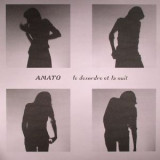
Cititrax presents a four song debut solo EP by The Hacker's new project called Amato. Influenced by early EBM, German techno and new wave, Michel Amato aka The Hacker began producing tracks under his new moniker Amato in 2014. The first one to be released, called Physique, came out in 2015 on the Cititrax Tracks Volume One EP and was a dancefloor success.