Eduardo de la Calle and DJ Surgeles meet Fabio Giachino, David Strike, and Manu Melero Amaya in Telmaco Xavier Quintet, a project where jazz and electronics engage in a real-time exchange rather than a controlled experiment. Set for release on Apnea 115 in May 2025, Time Pawn is built on interaction--musicians and machines reacting to each other, shifting between structure and instinct. Eduardo and Surgeles don't frame jazz within an electronic grid, nor do they treat electronic textures as a decorative layer. Instead, they allow both elements to retain their full character, pushing and pulling in ways that never settle into easy resolutions. Fabio Giachino's piano moves freely, alternately threading through and cutting across the pulse. David Strike and Manu Melero Amaya bring movement that resists the obvious, allowing groove to exist without being locked in place. The result isn't about merging styles but letting them exist in the same space--sometimes in harmony, sometimes in friction, always in motion.
out of Stock
Last delivered 6 months ago available to reorder, subject to availability
“My hero’s back,” Madeline Kenney sings on the second track of her newest effort, Kiss from the Balcony. In a sense, she means herself; made with friends Ben Sloan and Stephen Patota across just a few in-person studio sessions in Oakland, these tracks represent a culmination of Madeline’s musings on growth and resilience reaching back years, brought to life through this generative and vibrant collaboration. Close listeners can hear the breadth of stylistic elements and themes carried through from various eras of her work, which all come together in a cohesive and timeless record.
In two week-long intensive sessions, the three collaborators grew these nine songs from fragments, sketches, and seeds. With a background in experimental percussion and sound design, Ben Sloan brings an electronic sound to Kenney’s writing; Stephen Patota provides ingenious guitar melodies throughout and grounds the project in acoustic elements. Kiss from the Balcony was originally intended to be an EP, but the sessions brought forth such fruitful ideation and play that the project was expanded to a full length album. It sits in Madeline’s discography as a thematic and musical progression that sees her iterate on ideas about love and explore new sonic motifs through her work with Patota and Sloan.
Much of Kiss from the Balcony is a meditation on modern relationships, a feminist and utterly human contemplation of power and who holds it. “Hereditary backward leaning,” she describes in ‘Slap,’ of the female condition; “But no-one ever likes to see the girls break down / So they keep it to the bathroom floor” she sings in the rapturous opener, ‘Scoop.’ While the songs are shrouded in metaphor, the ubiquity of heartbreak and resilience decode much of the internal conflict Kenney depicts. The album sees her recognize the precarity and peculiarity of life and take it by the horns, realizing she controls her own narrative:
She explores the relationships between joy and suffering, choosing to see them as inseparable, two sides of a single coin. “It’s never over / When will they love me?” Kenney asks on ‘They Go Wide,’ describing her positionality both as a woman in relationship and as an indie artist in the modern music industry.
A playful hopefulness pervades the record, providing a sense of revelation in the journey throughout, Kenney’s radical acceptance of life as it is like a lyrical tongue out at the absurd.
A1 - Sequence Array
Exquisitely filtered breaks open Sequence Array as Aural Imbalance opens the EP with a glorious intro capped off with a tight 808 bassline solo before the dependable, rapturous crunch of amens thrash their way into the mix. Programmed with dextrous skill allowing the crisp subtleties of the breaks to breathe among the layers upon layers of floral ambience, this one is an amen journey to remember.
A2 - In Formation
A more understated affair takes the stage as In Formation is introduced by airy pads and light DJ-friendly filtered breaks in the backdrop before a punchy yet delicate break pattern - high on the juddering snares and low on the kicks - ushers us along through plinky melodies and mood-elevating synthwork, completing a journey of reflective solitude from the master of ambient atmospherics.
AA1 - Voices From Neptune
Light keys and excitable, shimmering waves of ambience kick off the elegantly composed Voices from Neptune, setting a sumptuous tone before the uniquely constructed breakbeats commence. Kicks and energetic hi hats & snares are soon joined with a light Hot Pants break, crisp and complimentary in the mix as low pass melodies bask in the soothing swathes of exquisite synthwork.
AA2 - Decoded Message
Closing out the EP, Aural Imbalance sets free his Decoded Message, opening with a quietly suspense-fuelled intro flecked with light hi hats before a yearning, mournful melody intersects with a tapestry of ambient pads and effects. Swirling with an array of subtle jangling melodies to form a kaleidoscope of spine-tingling mood music, the compositions capped-off with old-school breakbeats riddled with analogue charm and earthy bass.
Words by Chris Hayes (Spatial / Red Mist)
out of Stock
Last delivered 15 months ago available to reorder, subject to availability
Strut present the first international release in over 30 years by legendary Afro-jazz group Oneness Of Juju with their new album Made Through Ritual on 11th July 2025.
In 1975, the late DJ / producer and jazz distributor Jimmy Gray and James “Plunky” Branch joined a musical revolution, founding Black Fire Records and releasing the label’s debut album, the classic African Rhythms by Oneness of Juju. This July, Plunky brings this important musical relationship full circle with Made Through Ritual, produced by Plunky’s son Jamiah “Fire” Branch and Jimmy’s son Jamal Gray.
The album takes a novel approach to beat culture. Working from demos created by Jamal using a selection of original jazz samples, Plunky took the tracks, replayed and re-interpreted the arrangements using live musicians. “The album explores the art of deconstruction and reconstruction in music - sampling, sequencing, and live improvisation merge with multi-track recording to craft intricate harmonies and arrangements,” explains Plunky. “The process became a ritualistic expression of creativity and transformation.”
The resulting album is a fascinating listen. Opening with the meditative soul chant ‘Share This Love’ voiced by regular Oneness vocalist Charlayne “Chyp” Green, the album opens out into a series of jazz vignettes including the title track, ‘In Due Time’ and ‘Free Spirit’. The powerful album closer, ‘Children Of The Drum’ celebrates black culture and legacy through the poetry of Roscoe Burnem.
Released on 1LP and 1CD with specially commissioned cover artwork by contemporary Ivorian artist Maxime Manga, Made Through Ritual represents an important new chapter in the Oneness story. The album will be supported by a selection of European tour dates during Autumn and Winter 2025.
Sublime private-press piano improvisations channeled from another world by Willem Nyland. Remastered from the original tapes and reissued for the first time, with in-depth liner notes by Matt Marble of the American Museum of Paramusicology. A Columbia-educated chemist by profession and a self-taught pianist by affinity, Willem Nyland (1890-1975) is known as a spiritual teacher in the tradition of Greek-Armenian mystic George Gurdjieff. In the mid/late 1960s, a split with Gurdjieff led Nyland to start his own group in upstate New York. There, after a Friday night lecture on 'The Work' and a shot of brandy, Nyland would launch into remarkable piano improvisations on a specially tuned baby grand, sometimes playing for over an hour. Each improvisation was meticulously recorded and cataloged, a major part of Nyland's teachings. 16 of these recordings were released as standalone LPs on Nyland's own Gauge Hill Press, with artwork by Hungarian American decorative artist Ilonka Karasz, Nyland's wife of over 50 years. These records, with their cascading, deeply emotional playing and beautiful cover art, have become highly coveted by collectors and "paramusicologists." Each contains depths of spiritual information and lyrical, almost visual instrumental storytelling. Nyland deftly and subtly shifts moods and tones throughout these truly inspired extended improvisations.
Emerging from the Kansai underground with a sense of ritual and restraint, G Version III returns with a slab of meditative pressure, carved for sound systems. Following last year’s cassette release on Digital Sting, the Kyoto-based producer deepens his exploration of experimental steppers and sacred low-end science.
TRK 1 treads heavy—medium-tempo four-to-the-floor steppers, soaked in 80s/90s UK dub DNA and wired with flickers of celestial synth energy, edged with something unknown.
TRK 2 drifts off-grid—a 100bpm oddity conjuring sacred synth rituals and off-beat spatial tension. Droning and eerily weightless, it hangs like a vapor of frozen scent in an echo chamber.
Flip the plate and TRK 3 and 4 ignite—raw, unrelenting steppers built to test the physical limits of the rig. No compromise, no decoration—just ritual voltage for the floor.
Riddim Chango’s 16th release channels something ancient through circuitry, born for the weight.
Two decades after its original release, the trance classic “The Morgan’s Wave” returns in a fresh and contemporary form. Born in 2003 from the creative meeting between vocalist Caroline Eloy and producers Patrick Ketels and Xavier Romain, the track first gained attention through David Altrix (Galaxie Radio), and was signed by Diki Records in 2004 on its sub-label Green Valley.
In 2025, the idea to revive the track came from Caroline Eloy—now performing as Ce’Loy—who teamed up once again with David Altrix to envision a remix with a modern twist, keeping the original lyrics and piano melody while exploring a new musical direction.
They entrusted the remix to Narik (Freegrant Music, Bonzai Progressive, EinMusika), whose timeless production style brings a unique reinterpretation of the track. His version features deep, emotional textures and a subtle deconstruction of the vocal part, blending nostalgia with innovation.
Now released on Clair Obscur, this 2025 remix also serves as a heartfelt tribute to Patrick Ketels, who sadly passed away a few years ago.
“The Morgan’s Wave (Narik 2025 Remix)” bridges eras with elegance — a moving reinvention of a beloved track, available soon on both vinyl and digital formats.
Français
Deux décennies après sa sortie originale, le classique trance “The Morgan’s Wave” revient dans une version fraîche et contemporaine. Né en 2003 de la rencontre créative entre la chanteuse Caroline Eloy et les producteurs Patrick Ketels et Xavier Romain, le morceau s’est d’abord fait remarquer grâce à David Altrix (Galaxie Radio), avant d’être signé en 2004 par Diki Records sur son sous-label Green Valley.
En 2025, l’idée de raviver le morceau germe dans l’esprit de Caroline Eloy — désormais connue sous le nom de Ce’Loy — qui s’associe de nouveau à David Altrix pour imaginer un remix à la fois fidèle et modernisé, conservant les paroles originales et la mélodie au piano tout en explorant une nouvelle direction musicale.
Ils confient cette mission au producteur Narik (Freegrant Music, Bonzai Progressive, EinMusika), dont le style intemporel offre une relecture unique du titre. Sa version déploie des textures profondes et émotionnelles, et déconstruit avec subtilité la partie vocale, mêlant habilement nostalgie et innovation.
Désormais publié sur le label Clair Obscur, ce remix 2025 constitue aussi un hommage sincère à Patrick Ketels, disparu il y a quelques années.
“The Morgan’s Wave (Narik 2025 Remix)” fait le lien entre les époques avec élégance — une réinvention touchante d’un morceau culte, à paraître prochainement en vinyle et en digital.
DJ FEEDBACK
Early support from Jam El Mar, Fedele, Township Rebellion, Themba, Roger Sanchez, Dan Marciano, DJ Fire, Tocadisco, Yalla Techno, Tom Leclercq, ….
out of Stock
Last delivered 10 months ago available to reorder, subject to availability
3XL’s first new release in 2025 by Italian trio Cortex of Light is a synapse-tickling dose of classic FSOL-era world-building that takes in gloopy trance cooked down with sub-heavy, vaporous dub, mutant acid, breakbeat rave, Artificial Intelligence and a Mark Fell-style algorithmic brainmelt.
You'll know if you've spent any time following Piezo's output that the Milan-based producer and Ansia boss has a knack for lysergically enhancing any club template he sets his sights on. With releases on Idle Hands, Wisdom Teeth, Loefah's 81 and most recently Dekmantel, Luca Mucci has blottered up dubstep, hard drum, 2-step and minimal techno, here re-convening with fellow Milanese journeymen Aitch and primordial OOze/xàr num as Cortex of Light to blur those edges even further
'ILLUMINOTECNICA' isn't the trio's first release, but it's their most substantial and easily most developed. If 2024's 'Aeon Is A Child At Play With Colored Balls' showed off their aptitude for threading their luminous soundscapes into a horizontal soundtrack, then this album is a proper chance for Cortex of Light to show off their versatility in a different setting, matching dancefloor hallucinations with expertly sculpted sound design.
Psilocybin-tainted soundscapes scrape into breathy flute sounds and chest-thumping bass drops on the opener, haunted by a vision of electronic music that's been contrived in back rooms, squats and outdoor raves for decades at this point. Like so much of the rest of the 3XL catalog, there's a drive and coherence here that comes from classic dub techno and chill-out room fodder (think The Black Dog or Pentatonik), but always infused with something that dates it to the present era, be it a tactile sliver of Visible Cloaks-style neo-new age ambience, or a sort of mescaline-dipped take on Photek's bass-heavy, meticulously hazed 'Solaris' period downtempo gear, chopped 'n screwed into the uncanny.
out of Stock
Last delivered 14 months ago available to reorder, subject to availability
The Battle of the Year Poland 2025 Official Soundtrack is a powerful compilation created especially for b-boys and b-girls, capturing the energy and raw essence of the Polish breaking scene. Curated to accompany the prestigious Battle of the Year Poland event, this release features exclusive tracks from some of the most respected and influential producers in the country.
The tracklist showcases an all-Polish lineup, including talents such as Oer Beatz (IBE Beat Battle Winner), DJ Plash (Official DJ – Olympic Games 2024 Paris), the legendary DJ 600V, DJ Pablo, and many more. Each beat is crafted to elevate the dancefloor and pay tribute to the roots and future of hip-hop culture in Poland.
This soundtrack is not just a musical release—it's a celebration of movement, rhythm, and community, reflecting the strength of the Polish breaking scene on the global stage.
A lush, energizing contemporary pop record, built on heart-swelling minimal/maximal electronic production + deep feels. Reality"s breaking and rebirth is happening, one day at a time - essential asks deconstructed and refitted in new ways. Unconventional songwriting/performance duo Sharpie Smile ride inspired waves of futurist sound art, a dreamy, ethereal vision-quest through serpentine soul-terrain. RIYL: SOPHIE, 100 gecs, Ouklou
Black Truffle is thrilled to announce Spilla, the second album from Nantes-based Ensemble Nist-Nah, 48 minutes of music for Gamelan, drum kits, wood and metal percussion instruments, and plucked strings that will surely count as one of the most electrifying records you hear this year. Founded by the Australian drummer/percussionist Will Guthrie in 2019, continuing the explorations begun in solo form on Nist-Nah (Black Truffle, 2020), the ensemble (eight or nine core members with occasional guests) has been consistently active in the half-decade since: composing, rehearsing, recording and touring Europe (with a mass of equipment in tow) to great acclaim. Spilla tracks the continuing evolution of the project since the recording of their first album, Elders (Black Truffle, 2022). The two sides of this record document two different iterations of the group, and the members' compositional input has increased: each side contains one piece by a member other than Guthrie. It has become clearer than ever that Ensemble Nist-Nah is not an attempt at a European Gamelan ensemble but rather a hybrid percussion ensemble that uses instruments from a Javanese Gamelan alongside other percussion to perform original music informed by a variety of South East Asian music but also by everything from free jazz to contemporary hip-hop: while Nist-Nah and Elders both featured traditional Javanese pieces, on Spilla the only tune not generated by a member of the group is by Guthrie’s long-time musical hero and occasional collaborator Roscoe Mitchell.
The two short pieces that open the record could almost be the two sides of a wild 7” selected to show off what the Ensemble can do. On opener ‘Gerak Maju’, intricately skittering open-snare patterns bounce over clanging metal, chiming bell-like tones and deep gong hits, adapting the rhythm-register connections heard in traditional Gamelan musics—where the lowest pitched sounds are heard least frequently—to a cut-up breakbeat straight off Feed Me Weird Things. ‘Strollabout’ then moves into an entirely different realm of meditative repeating patterns, performed entirely on Chinese, Javanese and Vietnamese gongs. The remaining seven pieces, ranging from three to twelve minutes, offer up a wealth of different percussive, compositional and arrangement possibilities. On ‘Ghostly Klang’, two drumkits mirror each other’s moves, bouncing hats and snares across the stereo field in a way that recalls On the Corner and the jittering hi hat patterns of trap, while slow moving melodies on the tuned instruments add a sense of majesty contrasted by scurrying details in resonant wood. The epic closing track presents a take on Roscoe Mitchell’s ‘Uncle’, performed by the Art Ensemble of Chicago on their classic Urban Bushmen live album. Where the Art Ensemble used Mitchell’s dirge-like melody as a jumping off point for virtuosic improvisational flights, Ensemble Nist-Nah rethink the piece as a near-static dialogue between the monumental, slow-moving sequence of unison tuned percussion notes and a textural cloud that grows in richness and intensity from whispering cymbal rolls into a mass of gong overtones and bowed metal.
Beautifully recorded and mixed, Spilla arrives in a sleeve decorated with core member Charles Dubois’ drawings of cymbals and gongs. Against the backdrop of a wider musical landscape dominated by over-produced electronic slop and bland harmonic wallpaper, Ensemble Nist-Nah stands out as a reminder, vital and unpretentious, of the joys and possibilities of human beings playing instruments together.
out of Stock
Last delivered 8 months ago available to reorder, subject to availability
Take It Easy! We need more taglines like these in such trying and self-recriminatory times, where the stresses of a part-imagined urgency prevent us from decompressing in the way our social lives really should allow for. But is dance music, whose traditional motto is to "jack", compatible with such a mantra? DJLMP shatters these apparent antinomies of relaxation and danceability with three new edited heaters here, designed for triumphant joie de vives of the kind that do not poke, prod or demand too much from us. A later Diana Ross sample is put on heavy opening rotation on 'Diana's Loop', while similarly echoic verboffs are exchanged on 'Spring Touch', where dub delays haze the mix into something a little more convulsive. Space for wonky downtime is reserved on the B's 'Reggatronic', in a rare case of hip, lo-fi breathing room reserved for a dance record.
out of Stock
Last delivered 14 months ago available to reorder, subject to availability
A young doctor on the verge of greatness finds his career and life shattered after choosing to treat two children rather than the town mayor. The deaths of one of the children are inexplicable. What if he had saved a monster?
Monster, the manga created by Naoki Urasawa, is an acclaimed psychological thriller that has been a huge critical and commercial success. The complex and gripping story, which follows the moral choices of a surgeon confronted with a serial killer he has saved, has attracted a wide international audience. Monster has won several awards and is regarded as one of Urasawa's major works, affirming her place as a master of suspense in the world of manga.
Kuniaki Haishima is a Japanese composer best known for creating the soundtrack to the anime Monster. In addition to his contribution to Monster, Haishima has also composed music for TV series (Terra Formars and S-CRY-ed) and films (Tokyo Tribe and Helter Skelter).
out of Stock
Last delivered 2 years ago available to reorder, subject to availability
The long awaited return of Decoder!!! Darren Beale lands on Over/Shadow with 3 tracks of haunting minimal jungle excellence. His old mate Technical Itch drops his thunderous signature on a remix to complete the EP!!
out of Stock
Last delivered 15 months ago available to reorder, subject to availability
LIMITED VINYL COMES IN CARDBOARD SLEEVE WITH BOOKLET!
OSTRANENIE is a collection of digitally manipulated, impressionistic piano miniatures — each named after blockbuster films and TV series. Improvised late at night as a reaction against passive media consumption, these pieces function as both homage and critique, navigating the space between classical impressionism and contemporary digital manipulation. They don’t just deconstruct traditional piano expression; they interrogate the emotional stakes of sound in an era where immersion culture flattens meaning and algorithmic logic erodes agency.
The album’s title references the Russian formalist Viktor Shklovsky’s concept of “ostranenie” (ɐstrɐˈnjenjɪj, estrangement/defamiliarization), a term he introduced in the early 1920s to describe art’s role in resisting the indifference of habitual perception.
“And so, held accountable for nothing, life fades into nothingness. Automation eats away at things, at clothes, at furniture, at our wives, and at our fear of war.”
—Viktor Shklovsky, Theory of Prose (1925)
Shklovsky saw art as a way to break through the anesthetizing effects of routine, stripping away the layers of habit that dull our senses. By making the familiar strange, art reclaims perception from the mechanical and the automatic. His argument wasn’t just a theoretical exercise — it was a response to a world rapidly consumed by industrialization, war machines, and the alienation of a technologically dominated modern life. In this context, he positioned artistic technique as something autonomous, distinct from mere social criticism or psychological reflection. Art seeks to remove “...the crust that the world of things deposits on our senses, with routine’s unending murder of the real.” Ben Ehrenreich on Serena Vitale’s Making Strange (The Nation, 2013)
This tension—between revolutionary/artistic and industrial technologies—defined the 20th century, and it continues to resonate today. The mechanization and automation that fueled the First World War’s devastation, alongside the social and economic turbulence of the 1920s, became central to the era’s self-conception. But just as technology was a source of alienation, it was also positioned as an agent of radical change. As the shock of modernity disrupted the human condition, it also became the driving force behind an ideological utopia — one that ultimately deformed into political totalitarianism — a paradox that remains unresolved.
OSTRANENIE plays within this contradiction. The music shifts seamlessly between an uncanny black MIDI dismantling of traditional piano virtuosity and moments of raw, fragile intimacy. The result is a work that resists automatic anonymity while questioning what it means to create in an era where the technological mediation of sound — and experience itself — is unavoidable: Art in the age of its technological constructedness.
out of Stock
Last delivered 11 months ago available to reorder, subject to availability
Corrosiv, the sophomore album from Orchestroll, reveals the duo at their most mature and vulnerable. Originally conceived as a reflection on hybridity and bastardization, the album deploys New Age and ambient compositional tropes as a launchpad, exposing their trite sanctity to the realities of corrosion. Having come of age in the 1970s and 1980s, the New Age movement perdures today as a domain of contradictions; its promise of transcendence riddled with the very commercialized dogma from which its adherents claim to flee. Healing modalities such as reiki, crystal therapy, and sound baths are simultaneously pathways to solace and sites of exploitation; their sonic counterparts—ethereal synth pads, shimmering textures, celestial drones—claim to facilitate meditation and enlightenment while devolving into empty signifiers of vitality. With Corrosiv, Orchestroll displays neither reverence nor disdain toward New Age: they exhume it instead, revealing the saccharine effervescence and commodified murk undergirding its aesthetics. The result is intoxicating—disquieting.
Born from a two-week residency at EMS Studios and expanded through a performance at MUTEK Montreal’s 25th anniversary, Corrosiv has since outgrown its original conceptual nucleus, taking on a broader scope. Its inquiry into New Age ideology’s voided rhetoric and aesthetic mysticism now informs a broader interrogation of cultural mediocrity, anti-authoritarianism, gatekeeping, music industry toxicity, and the crumbling edifice of late capitalism and techno-feudalism—all the mechanisms by which meaning is stripped from ceremony, and once-potent forms of knowledge are subsumed into the machinery of economic extraction, severed from their original essence, and transformed into hollow simulacra. Corrosiv distills these themes through a loose narrative: a soul, fixated on wellness as dictated by cosmetic economism, becomes ensnared in an endless afterlife, unable to transcend and shed its dilapidated consciousness.
Framed as an act of audio dissolution, the album thus engages in an alchemical process, whereby complex waveshaping, morphing synthesis, and distortion enact a ritual of fragmentation. There is also friction: between the rigid, mechanical imposition of systematized order and the untamed, chaotic force of organic metamorphosis. Here corrosion and confinement are not solely conceptual motifs; they are enacted in real time, sculpting the album’s terrain. Scraping, tarnishing, degradation—the languid wear of form and substance—become instruments in their own right: buffing as abrasion, entrapment as transformation, corrosion as a means of reconfiguration. The ‘protagonist,’ if there must be one, is the listener, caught within the throes of structural determinism and the potential for emancipation, unable to pass into something greater as the specters of collapsed futures accumulate in the margins.
Corrosiv extends its reach through collaborations with familiar voices: Heith (PAN), VISIO (Haunter), Femminielli (Drowned by Locals), Habib Bardi (Interzone), and Jiyoung Wi (Enmossed, Psychic Liberation, Doyenne) each leave their imprint on its sprawling landscape. At 1h16m, it is a procession, dense with earworms that burrow into the listener’s unconscious.
Misshapen, broken-down metals leach copper into blood, acid reflux burning through the core. Psyche disaggregates into cosmic turmoil, drifting between planes—tongue on rustline, gullet laced with solvent hymns, molars unlatching, bitcrushed to marrowspill. A spasm of brine, ferrous scripture, venomtext blooming in leaden rivulets, cartilage smoldering in phosphor decomposition, synapses drowning in a quicksilver choir. Crest of bile, churning ore, breath clotting into arsenic mist, vein-thread cinched, a corrosive gospel, limb by limb, oxidized to silence.
Ultimately, as the music exhales its final breath, its residue refuses to dissipate—and stillness alone remains. There are no conclusions here—no resolution, no collapse—only the slow drift outward of a vessel unmoored, lost in the sea of symbolic souring. Corrosiv sings the song of a world barren of prophecy, littered with aesthetic detritus. Whether this magic has been transfigured or simply worn away is unclear: the last breath dissipates, but the oxidation does not stop. The silence, too, will decay.
Conceptualized, composed, performed, recorded, mixed, engineered and produced by Jesse Osborne-Lanthier, and Asaël Richard-Robitaille in 2023 and 2024 at Elektron Musik Studion (EMS) - Stockholm, Sweden and Landsc8pe Studio - Montréal, QC, Canada.
Artwork by Jesse Osborne-Lanthier.
Mastered by Stephan Mathieu @ Schwebung Mastering.
These ultra heavy industrial metal tracks were recorded over two sessions at the iconic Maida Vale studios: 28th April 1991 and 30th March 1993 and were sourced directly from the BBC Archives (with thanks), with careful remastering for CD and vinyl. The 1991 session was recorded during the same period as "Industrial" (Deaf Records / Peaceville), with the 1993 session recorded around the time of "Desensitized" (Earache). "If you look on your PITCHSHIFTER albums you will see that we always credit John Peel. He was instrumental in getting the band out there and often played our music on the radio when no one else dared. The 'Peel Sessions' we did were a great honour and every time I met John he was always such a great guy... a legend" (JS). Founded in Nottingham in 1989, PITCHSHIFTER's early style was heavy industrial metal, being cited as one of the originators of the genre along with Godflesh - a style which they termed "Death Industrial". These sessions and albums mark the end of that classic period, before a shift towards the more commercial, beat-driven Industrial style from the mid-90's onward that they are still known for.
These ultra heavy industrial metal tracks were recorded over two sessions at the iconic Maida Vale studios: 28th April 1991 and 30th March 1993 and were sourced directly from the BBC Archives (with thanks), with careful remastering for CD and vinyl. The 1991 session was recorded during the same period as "Industrial" (Deaf Records / Peaceville), with the 1993 session recorded around the time of "Desensitized" (Earache). "If you look on your PITCHSHIFTER albums you will see that we always credit John Peel. He was instrumental in getting the band out there and often played our music on the radio when no one else dared. The 'Peel Sessions' we did were a great honour and every time I met John he was always such a great guy... a legend" (JS). Founded in Nottingham in 1989, PITCHSHIFTER's early style was heavy industrial metal, being cited as one of the originators of the genre along with Godflesh - a style which they termed "Death Industrial". These sessions and albums mark the end of that classic period, before a shift towards the more commercial, beat-driven Industrial style from the mid-90's onward that they are still known for.
Claire Chicha aka Spill Tab is feeling more free than ever before. The LA-based, French-Korean songwriter and producer,has spent the past five years as spill tab honing a sound that is as raw-edged as it is refined, channelling low-slung guitar-strumming confessionals as well as the earworming melodic hooks of anthemic pop to produce a heady and distinctive mix.
Following the 2019 release of her intimate and infectious debut single “Decompose”, Spill Tab has evolved her spill tab project through three EPs: 2020’s synth-pop influenced Oatmilk, 2021’s playful, uptempo Bonnie, featuring Gus Dapperton and Tommy Genesis, and 2023’s co-produced, sonically-intricate Klepto, which gleefully meanders from the Hiatus Kaiyote-influenced jazz freakouts of “CRÈME BRÛLÉE!” to the guitar-chugging thump of “Splinter”. Live, meanwhile, Spill Tab has been tapped for her explosively energetic presence to open the North American leg of popstar Sabrina Carpenter’s tour, as well as touring through Australia with alt-rock trio Wallows.
With “PINK LEMONADE”, opening single from her forthcoming debut album “ANGIE” , spill tab’s freewheeling sound finds its fullest expression, harnessing this onstage experience and recorded experimentation with her bass-weight and pitched-up vocals. Here we find Chicha only ever chasing that “weird thing”, fizzing with an infectious enthusiasm and intricate musicianship. “The best songs come from writing the main idea in a day, as it’s so instinctual,” she says, such as “PINK LEMONADE” recorded “from a clip taken out of a 40-minute jam that we then chopped and spliced”.
Born to her French Algerian composer father and Korean pianist mother, Claire Chicha spent her early childhood in the mixing room of her parents’ LA post-production studio, bringing coffees to artists as they tracked scores for exciting new projects. “I hung out in that studio all the time until I was around 10 years old, absorbing jazz music my dad was into and classical music that my mom loved,” Chicha says. “My mom had a big hand in making me an adventurous kid, always trying new things from piano to harp and violin, forever soaking up new sounds.”
At 12, Chicha’s life was uprooted as she relocated to Thailand to live with her mother’s family following the collapse of her parents’ business after the 2008 recession. What followed was an unstable and formative few years of early teenagedom, navigating new cultures and life changes. In Thailand, Chicha began learning guitar to cover the Paramore and Green Day tracks she had grown to love while also becoming immersed in Thai traditional music. After a year, she moved once more to live with her aunt in Paris and there she was introduced to the classic sound of Serge Gainsbourg and Édith Piaf before ultimately returning to LA following the untimely death of her father.
“I had to become a real people person to fit in everywhere I was moving, and it immersed me into so many different styles of music,” she says. “I went from listening to the nasal singing of Thai traditional music at muay thai fights in Bangkok, to emotive classic French songs. It definitely informed the need to experiment with my sound as I became more interested in making music.”
At high school in LA, Chicha joined one of the country’s foremost show choirs and realised a natural aptitude for stagecraft and performance as she sang medleys in competitions throughout the US. Going on to study Music Business at NYU, Chicha found a love for the alternative soul and singer-songwriting of the likes of Moses Sumney and Bon Iver, as well as developing her own sound while spending summers interning as an A&R at Atlantic Records and being exposed to the gamut of New York’s live music scene.
“I was going to so many shows as an A&R intern and seeing just how much a lot of music sounded alike,” she says. “It made me realise I wanted my music to feel different, to cut through the noise but still make something that felt honest to me.”
Beginning to independently release tracks, Soill Tab gradually built a loyal fanbase with the release of wistful early numbers “Calvaire” and “Cotton Candy” and soon found herself signed to a major label. Yet, as her career progressed through the COVID pandemic the demands of a corporate major began to conflict with her own searching style. “My last two EPs were under contract and it felt like I was always chasing the carrot,” she says, “I felt a certain pressure to put out tracks quickly and find that ‘hit’. It wasn’t the right environment to truly make what I wanted.”
Ultimately parting ways with her label, Chicha began work on a new album, exploring new sounds and ideas with her LA-based community of collaborators like producer David Marinelli, Solomonophonic, Wyatt and Austin and John DeBold, without expectation. “It became this beautiful experience of only following ideas that I really believed in and exploring all the musical avenues I hadn’t before,” she says. “I’ve never been more excited about songs and I’ve never felt like a project is more mine.”
Writing and recording while touring with Sabrina Carpenter and Wallows, Chicha road-tested her new tracks to see what might land best with an audience who had likely never heard her music before. “You have to win people’s hearts as an opener and you can see what resonates and what doesn’t,” she says. “I would watch people fall in love or not and it’s usually always the song you’re having the most fun with that does the best. That’s what I put on the record.”
« Angie », Spill’s Tab debut album is relased on because Music and expected for May 16th release.
out of Stock
Last delivered 17 months ago available to reorder, subject to availability
Wie in einer Szene aus einem Traum stand Thor Harris auf einer überfüllten Bühne mit 13 Musikern: Er klopfte, zupfte, verbeugte sich und blies lyriklose Liebeslieder in ein großes Auditorium von 325 leuchtend roten Sitzen - ohne dass auch nur eine Seele darauf saß. Dies war die Entstehung von "Heathen Spirituals", das fünfte aufgenommene Werk von Harris' abenteuerlichem Ambient-Ensemble Thor & Friends und das erste, das einer himmlischen Wiederholung der Live-Auftritte der Gruppe aus Austin ähnelt. Es ist ein jahrhundertealtes Konzept: eine Platte in einer leeren Musikhalle aufzunehmen. Geleitet von Craig Ross (Patty Griffin, Spoon), einem unerschrockenen Produzenten und lebenslangen Mitarbeiter von Harris, wurde Thor & Friends zwei Tage lang verkabelt, um frei fließende meditative Stücke auf unverstärkten Orchesterinstrumenten im Jessen Auditorium, einem atemberaubenden Art-Déco-Relikt aus den frühen Tagen der Butler School of Music der University of Texas, einzuspielen. Thor Harris ist ein Handwerker, künstlerisch und anderweitig: Er ist Klempner-, Tischler- und Holzarbeiter. In musikalischen Zusammenhängen taucht sein Name oft in Verbindung mit den fünf Worten ,bekannt für seine Arbeit mit" auf, er war Mitglied der Avant-Rock-Götter SWANS und den Indie-Lieblingen Shearwater, aber auch an wichtigen Aufnahmen von Bill Callahan, Amanda Palmer, Devendra Banhart und Shahzad Ismaily beteiligt. In vielen Kreisen ist Harris auch dafür bekannt, dass er ein offenherziger Verfechter der psychischen Gesundheit ist mit einem teuflischen Sinn für Humor und einer Vorliebe für unterhaltsame soziale Kommentare (sein Lehrvideo ,How to Punch a Nazi" führte dazu, dass er im Jahr 2017 von Twitter verbannt wurde). "Heathen Spirituals", das am 16. Mai 2025 auf Joyful Noise Recordings erscheint, enthält drei Originalstücke mit einer Laufzeit von 35 Minuten. Die rhythmische Wiederholung der Eröffnungsséance ,Anne Sexton's Glasses" evoziert ein kognitives Crescendo, während das bezaubernde "Christmas Eve at the Wizard's House" ein Gefühl der Schwerelosigkeit hervorruft. Das krachende, von Chören begleitete ,Heathen Spiritual" rührt derweil ein wunderschönes Requiem für einen sterbenden Planeten an. In glorreicher Treue fangen die Sessions die instinktive Reinheit der Live-Auftritte von Thor & Friends ein.
For RSD 2025 the influential band will be releasing a new double LP edition of their Nine Sevens box set of 7" records first released in 2018. Combining the run of early singles with more obscure later period tracks underlines the strength in depth that Wire had. This is pop art as art/pop and an exploration of the blank canvas of pop culture and how far that canvas can be stretched going from three minute constructs to ambient washes. The 7" single was always the ultimate artefact and statement with the A side being the band momentarily paused in time and distilled and freeze-framed into the forever with less than three minutes of electric sound. These "sevens" released from 1977 to the end of that decade, signpost the band's remarkable development from their brilliantly monochromatic early phase to the textured complexity of the almost psychedelic unzipping of their sound and vision. In some ways the compilation of Nine Sevens onto a double album makes for quite a weird documentation of the band in this period. The first disc, to some extent, follows the script of a singles / greatest hits collection but the second one goes wildly off-piste and ends up somewhere quite far from where the collection started. A conventional Greatest Hits collection, besides being conceptually a bit naff would, if strictly based on charting singles, consist of only one song! A Best Of is subjective and somewhat pointless in the age of the Spotify playlist that anyone can make. The only thing really that these tracks have in common (besides being by Wire) is that they were released or destined to be released on 7" by Wire in the period 1977-1980. - Nine Sevens is both title & elevator pitch!' Wire always understood the language of pop and also the artfulness of playing with it, deconstructing it and reassembling it into new and thrilling shapes. Decades later, these adventures into sound are like slices of delicious, perfect pop/noise and hits from a parallel universe. Track list:Side A1 Mannequin 2 Feeling Called Love 3 12XU 4 I Am the Fly5 Ex-Lion Tamer 6 Dot Dash *7 Options R * Side B 8 Outdoor Miner (single version) * 9 Practice Makes Perfect 10 A Question Of Degree * 11 Former Airline *12 Map Ref. 41ºN 93ºW Side C 1 Go Ahead * 2 Our Swimmer * 3 Midnight Bahnhof Café * 4 Second Length (Our Swimmer) **5 Catapult 30 ** Side D (154 EP) 6 Song 1 * 7 Get Down 1 + 2 * 8 Let's Panic Later *9 Small Electric Piece * * previously unreleased on vinyl album ** recorded in 1980 but not released until 2014
This fourth selection of outernational dub from Richard Norris is the best one yet. Booming bass, seismic echoes and fathoms deep reverb take up a widescreen space and shake the foundations. Mighty dub versions and melodies. Dive in!
out of Stock
Last delivered 17 months ago available to reorder, subject to availability
FM Pause is back on ROW Records with wonky rhythms, rough textures and sounds that feel unstable yet precise. This 3-track EP is all about deconstructing sounds, exploring chaos, and discovering what emerges. An over-compressed, pulsating machine that builds itself up, glitches out and slowly self-destructs.
out of Stock
Last delivered 17 months ago available to reorder, subject to availability
A Chaos Of Flowers is an album that builds on their ferocious 2023 album nature morte. BIG|BRAVE"s music has been described as massive minimalism. Their fusillades of textural distortion and feedback emphasize their music"s frayed edges as much as its all-encompassing weight. The potency of the trio"s work is their singular artistry combining elements of traditional folk techniques and a modern deconstruction of guitar music. Gain, feedback, and amplitude are essential. For A Chaos Of Flowers guitarist/vocalist Robin Wattie drew heavily on the poems of artists whom Wattie found kinship in, their words resonant with experiences of those often sidelined by cultural norms. "I discovered that most poems from folk traditions or in the public domain seem to be by men - to which I could not quite relate. In my search, I rediscovered some of my favorite works and poets," says Wattie. Guitarist Mathieu Ball and drummer Tasy Hudson help Wattie shape poetry into pieces as dense and impenetrable as they are vulnerable. BIG|BRAVE achieve their colossal sound through minimalist approaches, a deft understanding of dynamics and an inventive employment of percussion and distortion. The trio reconceptualize what it is to be heavy or minimal, challenging perceptions with their illumination of painfully overlooked perspectives. Guest guitarist Marisa Anderson lends earthen, blues-inflected atmospheres to the album, where guitarist Tashi Dorji and saxophonist Patrick Shiroishi amplify the squall. Working closely with frequent collaborator and producer/engineer Seth Manchester, the internal tumult of Wattie"s voice rings out in warbles, haunting echoes, and unearthly harmonies across bold immense walls of distortion. BIG|BRAVE have collaborated with metal monsters The Body on a previous Thrill Jockey release, Leaving None But Small Birds, and have toured internationally with bands like SUMAC, Godspeed You! Black Emperor, SUNN O))), and Lingua Ignota. As they continue to ascend in their journey as pioneers in the contemporary metal scene, it"s safe to say that BIG|BRAVE are here to stay.
out of Stock
Last delivered 17 months ago available to reorder, subject to availability
Originally released in the late '80s, this album stands as a defining statement of the Japanese noise and industrial scene—an unrelenting fusion of power electronics, mechanized chaos, and avant-garde intensity.
The brainchild of Ichiro Tsuji, Dissecting Table’s sonic assault exists in the same lineage as the dystopian brutality of Whitehouse, the mechanical terror of SPK, and the raw sonic deconstruction of early Einstürzende Neubauten. At the crossroads of noise, industrial, and extreme experimental music, Ultra Point Of Intersection Exist embodies the radical spirit of the era, pushing boundaries alongside contemporaries like Controlled Bleeding and Ramleh.
This long-awaited reissue restores a crucial chapter in noise history—available now for the first time as an official release on limited edition vinyl and digital formats.
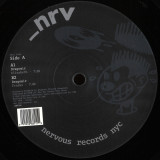
Following his appearance on _NRV001, Dragomir returns with his solo debut for the label—a deep and driving four-tracker, backed by two standout remixes from Lizz. ‘Elisabeth’ sets the tone with a tense, stripped groove that slowly uncoils across the A1, while ‘Freaks’ rides a more playful, shifty rhythm laced with micro stabs and broken vocal hints. On the flip, Lizz reshapes ‘Elisabeth’ into two distinct versions—first with the ‘Straight Remix,’ a sharp and focused reinterpretation made for the peak hours, then closing out with the ‘Disconnected Remix,’ which takes a moodier, more deconstructed approach.
out of Stock
Last delivered 5 months ago available to reorder, subject to availability
For their 21st release, Not An Animal Records welcomes the Northeast-of-England's Tom Rankin, aka Frequencies Of Love to the fold for his first-ever release. A half-step away from their usual low-slung sound, the EP is a bright and sepia-tinted affair bringing prime-time energy to the label. It is rooted squarely on the dancefloor and steeped with glimmering synthesizers and lashings of keys. Despite this stylistic departure, the ever-present driving grooves make it feel right at home.
The EP begins with Tucan, delicately shifting and changing synthesizer arps flow throughout, weaving a delightful tapestry of past and present.
The record glides smoothly into round 2 with Bpsyde pulling no punches; it has a distinct atmosphere of the old-school about it. A one-two of percussive breaks on the one hand and progressive bass on the other with LFO Arps, keys and nineties vocal chops completing the combo.
Pegasus is a shimmering whirlpool off the Adriatic coast. An antiphonal of choral chanting and female spoken word endlessly circle the groove, occasionally combining in a viscous duetto of wacky, Italo-flavored deliciousness.
For the remix, groove deconstruction connoisseur Fantastic Man gives Pegasus the Midas treatment. Riding a throbbing and reprogrammed bassline, key elements from the original mix cameo throughout the track, rounded off by piano chord progressions to complete the pensive sound that constitutes the glue throughout the EP.
out of Stock
Last delivered 70 days ago available to reorder, subject to availability
What happens when you combine SUMAC: a band that uses the volume, distortion, and guitar-centric approach of metal to make music that has the malleability of jazz and textural exploration of noise with Moor Mother: a poet and sound artist that has deconstructed hip hop to a point where it"s less about rhyme and rhythm (though obviously both are present in her work) and more about oratorical cadence and power.
The Film is an album that takes attributes of both artists" work and finds common ground in shifting musical patterns, and expressive force. The record is a musical thumbing of their noses at the more traditional approaches of their respective fields, an innovative, powerhouse of an album. The Film"s moniker speaks to the fact that it is conceived and delivered as a complete album, a full story or narrative. Moor Mother puts it best: "The idea is to create a moment outside of the convention. This is a work of art.
Thinking about the work as a Film, instead of an album or a collection of songs. This task is impossible in an industry that wants to force everything into a box of consumption. You won"t understand or get the full picture until the artwork is completed. This work is developing and is requesting more agency within the creative process." The Film is just such a work, a nebulitic collaboration between SUMAC and Moor Mother.
out of Stock
Last delivered 17 months ago available to reorder, subject to availability
The debut album from CEM, 'FORMA' was developed as a soundtrack to Mauro Ventura’s series of "action painting performances" and uses various bell sounds (cowbells, doorbells, Shinto bells, singing bowls) to pick out anxious giallo sequences and heaving Dadaist formations.
CEM's best known for pneumatic DJ sets that have propped up Berlin's queer underground for a decade at this point, but don't expect to find any vaped darkroom tek on 'FORMA'. Each of the six compositions were commissioned for Ventura’s performative installation at Volksbühne in 2022, and CEM opted to represent the piece's themes of labor and repetition by sampling an arsenal of bells and metal objects that anchor his varying widescreen vignettes. 'The Calling' is a relatively subtle introduction, establishing the space with double bass drones and ratcheting digitally altered chimes - it's 'Bells Corrupt' that cements CEM's concept more righteously, harking back to Goblin's iconic 'Suspiria' score without pastiching any of its Italo-prog themes. Cycling ritualistic bell loops with squashed, industrial-strength thuds and granulised laptop belches, CEM silhouettes the tension and the vivid color of Argento's film, chrome plating the result.
'An Industrial Satire' is even more convincing; this one takes its cues from legendary German sound artist Limpe Fuchs, and the first part integrates scraped, alien resonances with CEM's loping industrial rhythms and squelchy EBM bassline. The real shift occurs in the second part, when CEM's choppy electroacoustic minimalism falls away to unlock his rolling hand drum performance, that he matches with a ghaita sample lifted from the Master Musicians of Joujouka's 1971 album with Brian Jones. With the future-facing deconstructions a memory, 'Statue Garden' beds reedy organ drones in eerie gallery ambiance, and closer 'The New Sincerity Test' finds Lithuanian performance artist Gertrūda Gilytė skewering the wellness industrial complex over nauseous subsonic oscillations and scratchy noise.
House music, nightlife entertainment and DJ/Producer virtuoso Louie Vega has proven over and over again that he's a master chemist in the studio. His latest release is an uptempo and speaker-knocking remix of Funkadelic's 'Ain't That Funkin' Kind of Hard on You' (produced by George Clinton and & G Koop) from the album 'First Ya Gotta Shake the Gate'.
The original version is nothing short of a classic, but it's as if the song had never been invited to a Louie Vega post-midnight global extravaganza. Was the song not aware that spellbound dancing and high BPMs were the standard for House Music Normally, such a blaring disregard for nightlife decorum would relegate a song to the pits of sonic hell, but we're talking about George Clinton here!The original opens up with a G-funk groove that screams Westside and lowriders. The listener is then blessed with Clinton as he adds his sage, soulful and pimpadelic vocals, complemented by Funkadelic singers asking him about the pains of the funk. The semblance of a beat that could drive the dancefloor into the morning hours is there, but in no way has it blossomed into its full glory. Enter Louie Vega.
His remix immediately greets listeners with a decadent spread of instrumentation and chutzpah. The original song's DNA populates the first thirty seconds of the remix but then an explosion takes place and the song assumes a new identity. The transcendent experience is akin to taking the elevator to a rooftop party and once the doors open- boom! The remix begs you to dance, the G-funk groove is now in your face instead of being laidback and percussion takes a front seat to take you away. The song is alive, there's no other way to describe it.
Be sure to buy your vinyl at an outlet near you! the Louie Vega remix of Funkadelic's 'Ain't That Funkin' Kind of Hard on You' on Vega Records!
out of Stock
Last delivered 15 months ago available to reorder, subject to availability
WRWTFWW Records is happy to announce its fourth collaboration with New York ambient / jazz / downtempo musician Danny Scott Lane with the release of his newest full-length Songs For Sex. The seductive 11-track album is available as a limited edition LP (500 copies worldwide) housed in a shiny 350gsm silver cardboard sleeve. It is also available digitally.
Danny Scott Lane returns with Songs For Sex, a sultry funk, jazz, and ambient exploration inspired by candid conversations about intimacy. Smooth yet messy, uplifting yet off-kilter, this album captures every mood. It’s sensual furniture (leather sofa) music, deep passion minimalism, hedonistic downtempo, glossy and warm soul electronica.
The velvety sonic affair features the lush sounds of Joseph Shabson, David Lackner, and Simon Herody on flutes and saxophones, making it an irresistible modern brand of smooth jazz, the ideal soundtrack for your favorite pastime.
Songs For Sex follows the release of Danny Scott Lane’s chillout masterpieces Home Decor, Shower, and Caput, all available on WRWTFWW Records. Complete the funky collection now!
out of Stock
Last delivered 11 months ago available to reorder, subject to availability
Blank Code is a Detroit, USA techno outfit that have released music by artists like Bas Mooy, Mike Parker, Brian Sanhaji, DJ Hyperactive, Drumcell, and many more.
The newest Blank Code release is Decoder with his 'Distant Beings' EP, a fellow American from Dallas who has gained many devoted supporters from having releases on Jeff Mills' Axis Records, Amotik Records, TWR72's Float, Edit Select Records, Molecular Recordings, and Science Cult, amongst others.
Beginning with "Missing Sector," a dystopian and airy soundscape of captivating rattlesnake hisses and muted tones of melody and suspense amidst a stuttering kick pattern.
"Strange Interaction" follows with an abstract approach overall, but using a solid, rhythmic beat as a pulsing constant. Static crackles create mesmerising textures and light tom drums are met with wandering waves of analogue whispers and skipping hats.
"Farther" introduces deep and looping modular frequencies that dance around in a sci-fi aesthetic. This sublimely hypnotic track has an ethereal quality of patience and draws influence from dubby and atmospheric styling.
Finishing with "Elevation," it instantly has an experimental vibe that seems mysterious and menacing. Cyclical mid tones create a sonic suction before phasing pulses add even more tension to this esoteric adventure.
out of Stock
Last delivered 14 months ago available to reorder, subject to availability
A collaboration between US label Astral Spirits and Sweden’s Thanatosis Produktion, It could / If I marks the debut album from Stockholm-based duo Johan Jutterström (saxophone) and Alex Zethson (piano). Together, they reinterpret jazz standards and explore an eclectic mix of compositions by Leonard Cohen, Pet Shop Boys, John Lurie, and 19th-century composer Alexander Fesca.
Jutterström and Zethson’s musical partnership dates back to their teenage years, when they bonded over a love for jazz and the struggle to find their own voice within it. Their duo work has always been about navigating that tension—trying to capture jazz, failing, and finding another way forward. This album continues that pursuit, emphasizing not just what is played, but how it is played.
The record’s title reflects their approach: a process of reaching for something just out of grasp. Songs are deconstructed, rearranged, and treated like palimpsests—scrubbed clean and rewritten while allowing traces of the original to shine through. The result is a dynamic and deeply personal exploration of sound, filled with both reverence and reinvention.
Both musicians have extensive backgrounds in jazz, improvisation, and experimental music. Zethson, a prolific pianist and composer, has worked with ensembles like Fire! Orchestra and Trondheim Jazz Orchestra, and plays keyboards in ensembles such as Vilhelm Bromander Unfolding Orchestra, Goran Kajfes Tropiques, Vathres, and Angles (current with the jazzopera The Death of Kalypso). Jutterström, a saxophonist with an artistic PhD, has performed internationally and runs the ensemble STHLM svaga, a band who have performed commissioned pieces by jazz legends such as Ron Carter, Archie Shepp and Roscoe Mitchell.
With It could / If I, the duo crafts an intricate, ever-shifting dialogue—an ongoing attempt to "stick jazz music," as they put it, constantly approaching, never quite arriving, and finding beauty in the pursuit.
Mr. Luck & Ms. Doom is the Delines most realized and strongest album to date, a record of romantic misfits and grifters who live out of suitcases and cars, who can"t seem to settle down, who hope that in the next town or city will be the score that saves them. Mr. Luck & Ms. Doom features the stalwart Delines line up: Amy Boone on vocals, Cory Gray on horns and keyboards, Sean Oldham on drums, Freddy Trujillo on bass, and Willy Vlautin on guitar. The record features Amy Boone"s lush, world worn voice, the cinematic production skills of Askew, and the horn and string arrangement of Delines keyboardist and trumpeter, Cory Gray. This is wide screen, CinemaScope, Delines at their best.