Our next release is by a young Brussels based artist that will be a new name to most of you.
Foreign Material has been into music since his youth. After studying percussions at the Conservatory and graduating in history, his interest in dark atmospheres led him to techno music. The spirit of his music is a mix of ancient myths and futuristic visions. Conceptual music, both mystical and cosmic, with a link between past and future. Here's what he had to say about his EP:
"'Omega System' is a journey to deep space and beyond, to the unknown destinations allowed by the mythical and mysterious Omega relay that's been turning around Omega's red sun since ages. But beware, the path that you will follow is dangerous and nobody ever came back. Some say that you will find death. Others that you will find great treasures. But some wise people think you will finally find Truth."
On remix duties are label friends Hiver, also known for their residency at Milan's Dude Club. Whereas the original tracks are more deep and floating, the Hiver remixes will be of high interest to many a dancefloor, you can trust us on that one.
First pressing on marbled vinyl.
DJ FEEDBACK
Early support from
Sven Väth: Nice spacey sounds !
Len Faki: awesome deep down grooves! beyond omega system are great. thX Len
Ame (Kristian): thanks
Marcel Dettmann: thx
Nick Höppner: I'm really into Hiver recently. Remix 2 is beautiful, will play for sure!
Locked Groove: great stuff
Baikal: remixes are nice especially 2
Pablo Bolivar: Serious tracks here, Hiver remix 2 is my pick!
Bruno Dietel (Radio Fritz / BLN.fm): Hiver Remix 1 is my favourite!
Tomaz (22tracks): love both hiver mixes
Deg (Fuse club): Thanks Tom !
The Europe-centered techno scene might be thinking: Where is techno in a city as vast, dynamic and electric as New York It's alive and well, and keeps growing through aptly-named NEW YORK TRAX. Founded in 2015 and based in Brooklyn, NEW YORK TRAX is an outlet for New York music, by New York artists, in New York city.
NEW YORK TRAX storms out of the gate in 2016 with a crushing release from none other than RICHARD HINGE. Mr. Hinge, a pioneering proponent of NY techno since the early 90's, has outdone himself once again with this no-compromises gem, plumbed from the depths of his hardware based Brooklyn studio. Having taken a hiatus from production since his seminal releases on Conrail, Sonic Groove, Hidden Agenda, Disko B and Path Records, Hinge triumphantly reclaims his seat at the table of NY techno greats with this 12'. Only available on NEW YORK TRAX.
Changes' is a track which sounds like changes. Steadily and intently, it evolves and progresses until it breaks the surface and becomes part of your reality.
Ever had voices in your head Auditory hallucinations Well, you like techno, so likely the answer is yes. Now, imagine those voices over a heavily distorted beat. Unless you're headstrong, Voices in my head' might be your worst nightmare, but given the right dance floor, time, and space, serious damage can be done in the best possible way.
Movement', a deep and dreamy affair, rounds out the EP. Here Hinge has no mercy and he wakes you up from that sweet dream with a short rain of intense hi-hats and throbbing subsonics.
Here Hinge has no mercy and he wakes you up from that sweet dream with a short rain of intense hi-hats and throbbing subsonics.
BRSTL returns with two house cuts from Jay L, his second release for the label.
Started in 2011 as a means to highlight house and techno being produced in Bristol, the label watched over by Shanti Celeste and Idle Hands' Chris Farrell is now into double figures.
'Show Me' on the A-side is a finely constructed piece of house music aimed at DJs and dancers. Anyone who saw Jay's recent Boiler Room debut will know his musical style - steeped in classic US house, soul and boogie but with a tastefully bumpy UK edge.
The B-side 'Blue Age' is a deeper cut living up to its title, all wistfull piano keys and a subdued bass line. This is Jay L and BRSTL doing what they do best, sending vibes from Bristol to the world.
This is France in the Mitterrand years: fashions fleet as fast as governments. In the early eighties, the happy-go-lucky gather the nectar of each and every new release.
Believing in a bright future for videotex, and loosened up by the sexy talks broadcasted on the budding pirate radios, the new generation dreams of dance floors and holiday clubs. French Boogie, which preserves the spirit of these years of boodle and bunkum, is the ideal soundtrack to their dreams.
What the web now refers to as French Boogie is some synthetic funk reflecting the spirit of those days when nothing was impossible, or so it seemed. Its syncopated flow heralded the dawning of French rap. Often considered as some kind of post-disco, inspired as much by black music as by new wave, this carefree pop music with bawdy lyrics indulged in simple pleasures: holidays, swank and sun were recurrent themes. Totally in tune with its time, it incidentally glorified luxury, success, and a certain consumerism embodied, for instance, in Bernard Tapie.
In popular clubs such as La Main Bleue in Montreuil, or L'Echappatoire in Clichy-sous-Bois - where Micky Milan could be seen behind the decks - an enthusiastic audience discovered this new sonic wave, influenced as much by French pop as by Sugar Hill Gang or Kurtis Blow. The artists who first launched the movement engaged in it wholeheartedly, but as often the case with new music trends in France, humour and casualness quickly became a decoy to impose a new style. This explosive mixture, in which startling and typically Frenchy French lyrics go along New-York-style tunes, is sometimes reminiscent of the kinky comedies directed by Max Pécas or Claude Zidi. On this prolific scene, partly originating from the Jewish community, everybody was looking for success, trying to hit the jackpot with what was to hand. Famous media personalities, one-hit wonders or John Does in quest of fame, all had a go at French Boogie - more or less successfully. Apart from « Vacances j'oublie tout » by Elégance, « Un fait divers et rien de plus » by Le Club, or « Chacun fait ce qui lui plaît » by Chagrin d'amour (produced by Patrick Bruel), very few songs became hits: the story of funk in France is that of a half-baked robbery.
In this myriad of new musicians, the very young François Feldman and Phil Barney pioneered a fresh and hybrid style. Other well-known artists like Gérard Blanc from Martin Circus (Attaché Case), Richard de Bordeaux (Ich), or Jean-Pierre Massiera (Anisette, Pirate Scratch Band, Mandrake, Scratch Man...) added an eccentric touch to this sound-wave, making it often entertaining, and sometimes showy.
Capture d'écran 2015-10-26 à 12.55.43Singers like Agathe (the author of 'La Fourmi' and of the hit song 'Je ne veux pas rentrer chez moi seule') were far more than just window dressing. They even tried to give an ironic and subversive twist to this rather harmless genre. The very vindictive rebel Gérard Vincent shared in this spirit, but as a whole, French Boogie became associated with nonchalance and sauciness. Thus, Stéphane Collaro, Gérard Jugnot, Alain Gillot Pétré and other TV clowns would clumsily contribute to this French variation on funky sounds. In a few but intense years, French Boogie gave all the tips to party with style.
If some hits made it possible for the happy few to get a real house under truly exotic palm trees, the wave actually ebbed away very quickly, leaving quite a few musicians stranded on the shore. Whether they were sincerely motivated, or simply opportunistic, they had failed. In 1984, French Boogie was already breathless, and got merged with other genres: on the one hand, rap and breakdance adapted its flow to a more urban world, especially with Sydney's show, H.I.P.H.O.P, and Dee Nasty's broadcasts on Radio Nova; on the other, italo, new beat and house began to rule over dance floors, even more strongly asserting the will to develop music for clubs.
Squeezed in between the age of disco and that of modern electronic music, French Boogie was a transitional phase, but it remains an amazingly refreshing testimony to the intermingling of pop and underground cultures. The genre was hastily categorized as anecdotal in spite of its pioneering synthetic groove and matchless bass lines. An attentive ear will discover the poetry of the ephemeral beyond the eccentricities of the genre, as well as a certain unexpected avant-gardism. At the origin of major music trends, always cheerful and catchy, French Boogie is what you need to party.
Apes Go Bananas is the new imprint from Steve Bug and Clé, and also the moniker for his new project with long time friend and collaborator Clé. The vinyl only debut release sets out the stall in fine style - this is straight up dance floor rocking house music with a sense of fun and plenty of influence from the golden age of the art form. First up, Kerri On pays homage to one of the greatest, with Mr Chandler's signature crisp drums and deep, jazzy chords present throughout. Bug and Clé relive some classic New York deep house vibes yet retain a strongly contemporary take. Bananas is more late night in approach - the driving 909 and dirty descending synth line evokes a sweaty warehouse, complete with smoke machine and lazers. Yeah You Know fits perfectly into this three track EP - a tightly programmed rhythm track replete with a shuffling breakbeat is the foundation for a simple yet highly effective synth line and a classic cut-up house vocal. Yeah, Apes Go Bananas know house.
For the second installment in their 12' series Music From Memory present two deeply forward thinking electronic tracks from British musician Michal Turtle made between 1983-4.
The first track 'Are you Psychic' is taken from Turtle's obscure 'Music From The Living Room' album which Michal recorded literally in the living room of his family's South London house at the young age of 22.
Over-running his parents' front room with various synthesizers, amps and instruments, and setting up a portable four track studio the 'Music From The Living Room' tracks were built around live jams that took place alone or sometimes with musicians he would invite to play alongside him. Whilst seemingly sample based the instruments were played live and any voices or sound effects were actually recorded directly to tape, or put onto tiny 2.5 second cassette loops.
'Astral Decoy' was made in the year following the release of his only solo LP and forms part of a series of unreleased tracks that reflect a growing interest in combining electronics with more analogue elements such as Xylophone and live percussion. At the same timce this track draws inspiration from the sound of electro and boogie which Michal had become greatly interested in at the time, and in particular the work of musicians such as Grandmaster Flash.
With access to the archives of the many recordings made at his family home, this 12' serves as an introduction to a wider compilation of Michal Turtles works which is to follow on Music From Memory.
After his appearance on 2014's Selected comp Lapien & Giselle return for a foray into the ether. Fred P, known for letting tracks age 'til maturity, put this one up for 2 yrs & it's spot on to the minute. Pure envelope-pushing deepness suited for the SPM fam.
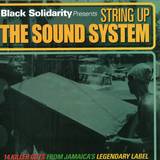
In the beginning of the 80's reggae music became increasingly in tune with what was happening in Kingston's dancehalls....probably more so than at any time since the sound system operators had started to make their own shuffle and boogie in the late 50's..
The international audience and the critics were too busy looking for a new Bob Marley to appreciate what was happening downtown and failed to acknowledge that this was a return to the real,raw roots of the music...brash,confidient,young record producers who were totally in tune with the youth audience stepped forward and seized the moment...
Oswald'Ossie'Thomas began his apprenticeship in the music business at the age of fourteen and served his time as a record salesman for Bunny 'Striker 'Lee and Winston 'Niney the Observer' Holness before moving on to Miss Sonia Pottingers Tip Top Records...
'I ended up working in three record stores on Orange Street from 1976 to 1981...Yeah man,Me deh 'pon me bicycle till I buy my motorcycle..Them days records were coming out left right and centre..everyday'
Ossie Thomas...
It was during his time with Miss Pottinger that Ossie began to produce records for himself and in 1979 Ossie and Phillip Morgan began The Black Solidarity label based deep in the Kingston ghetto on Delamere Avenue.
And the man who had made his name in the business selling other people's records now became one of the most important and influential record producers of the era..
Founded by Matthias Schildger & Carlo Ietri in 2013, Repeat is finally ready to conquer the world and bring it's sound to all music lovers out there.
The first imprint of the new label was made by Wigbert // Matt Star & Marvin (incl. Dorian Paic, Dragosh Rmxs) and is called - Play, Stop, Repeat'. It will be out very soon on vinyl and digital.
With the label comes a new booking agency which contains a nice mixture of already well known artists and a few fresh and talented ones.
Here a little overview what you can expect from the first release - Play, Stop, Repeat':
Wigbert - Destroy me:
Wigbert unleashes a monster of a track with - Destroy me' on the dancefloors worldwide. Powerful beats combined with hypnotic rhytmic and some dark vocals will shake your body for sure! This tune will destroy some speakers if you are not careful with the volume... :)
Dorian Paic Remix:
Dorian Paic transforms Wigberts tune into a more happy and melodic but not less uplifting setting with the addition of some nice piano chords. It will put some sunshine into your hearts!
Matt Star and Marvin - In the Trees:
Matt Stars long experience in production combined with the freshness of the very talented Marvin resulted in this deep and groovy track driven by some nice drums and a fat bassline. Dark Athmospheres meets broken beat dubbish minimalism is the best way to describe it.
This track will go straight to your bones!
Dragosh Remix:
Dragosh's interpretation of - In the Trees' is a more percussion orientated track wich will put a lot of smiles on the faces of dancers. Crispy, rhytmic and simply good.
During the '70s, work days at Umiliani's Sound Workshop Studios were hectic; thousands of sessions were held in order to keep up with a very busy Italian movie industry: Hundreds of soundtracks alongside with music library were recorded and released on vinyl in very limited quantities for TV and film production use only. Those LPs are now proper collectors' items, extremely hard to find.
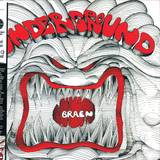
Filled with hypnotic bass lines, heavy drums and screaming fuzz guitars "Underground", the first LP of the fictitious group known as Braen's Machine, is one of the rarest and the most expensive of them all, always "reaching" sky high prices throughout the second hand vinyl market. A fast-beat jam with hammond scales and a twin lead guitar theme ("Flying") opens the A Side soon followed by "Imphormal", a classicfunk-beat-meetsfender- rhodes-and-psychedelic-guitar number. The music then switch to "thriller territories" with "Murder" which is based on prepared piano swells and a deeply hypnotic walking bass, reminiscent of the best Morricone's soundtracks for Dario Argento's movies. Two highly percussive songs complete the A Side: "Gap" is an improvised song with guitar and keyboards dwelling over an infectious drum rhythm while a marching snare and a vibraslap effect are the special features on "Militar Police".
The mood relaxes slightly on the opening of the B Side with a lazy jazz groove on "New Experience" but the rock influences are soon brought back on the following track "Fall Out". "Obstinacy" is all about keyboards with syncopated rhodes themes and distorted hammond sustained notes whilst the fuzz guitar is back again screaming through the left channel on the last song of the album, "Description". We could happly say that that was the golden age of the Italian music library. But who's behind the name "Braen's Machine" On the original cover the songs are credited to the composers Braen and Gisteri. Braen was a pseudonym often used by Alessandro Alessandroni, an extremely skilled and versatile musician, and one of Umiliani's closestcollaborators. He could write, conduct and arrange, he could sing (ever heard "Mah Na Mah Na"), he could whistle (ever heard Morricone's "For a fistful of dollars") and he could play almost anything: guitar, bass tuba, accordion, sitar and the list grows..... His first album "Alessandro Alessandroni e il suo complesso" (Sermi, 1969), had transformed the Italian library music from orchestral sound beds into the psychedelia we all love; the extremely fuzzy guitars are very "present" on "Underground" too. For a long time Gisteri's real identity was rather mysterious; often wrongly attributed to Umiliani. Gisteri was the pseudonym of Oronzo De Filippi, art name of Rino De Filippi, music supervisor to the Italian public broadcast company (RAI) between the '60s and the '70s. De Filippi composed other notable pieces such as "Riflessi" (Edipan, 1975) and "Nel mondo del lavoro" (Sermi, 1972).
De Filippi passed away few years ago but we were able to contact Alessandroni to talk about this LP. Remembering "Underground" recording session as one of the thousands he took part of, Alessandroni told us that this record was produced very quickly, in two days maximum. This was made possible by a team of wonderfully capable session musicians and the creative genius behind the mixing desk; this incredible combination helped to focus on the mood of each track even more. Unfortunately there are no liner notes but Alessandroni's memories and speculations, based on other music tracked in the same period at Soundworkshop by resident engineer Claudio Batussi, led us to identify this as the most probable lineup: Munari on drums, Majorana on bass, Vannucchi on keyboards and Alessandroni himself on guitar. For this reissue the sound has been restored and the cover art reproduced exactly as it was.
"Between Stars" is the debut album from Barcelona based Venezuelan producer and DJ Maurice Aymard. More than two years in the making, 'Between Stars' has been a labour of love for Aymard as he travelled the globe to collaborate with musicians and singers in Barcelona, Berlin, London and Venezuela who could help to bring his vision to life. Released on Aymard's own Galaktika Records (Garnica, James Teej & more), 'Between Stars' was recorded entirely live and features contributions from the likes of Brazilian star Gui Boratto, Columbian singers Andrea and Paulo Olarte, Argentian guitarist Mariano Godoy and many more, the resulting album takes the house music template and expands it to a grandiose level. In an age when anything that isn't packed full of buzzsaw bass and 'sick' drops gets labelled as Deep House, "Between Stars" is the real deal, and from the first bars of the albums opening (and title) track, 'Between Stars' quickly establishes itself as something truly special, a 'house' album that not only works as a coherent whole but sounds as good at home, by the poolside or in a club at 4am. If 'live' house albums have in the past had a tendency to verge on the polite, Aymard's skill as a producer and experience as a DJ keeps things rooted in club culture and nearly every track off 'Between Stars' deserves to find its way into DJ sets over the coming months. Rather than smooth things out the live instrumentation instead adds an energy to the tracks and the subtle touches, that the likes of guitarist David Rondon brings to 'El Final', lift the album up to another level altogether. Since moving from Venezuela to Spain and launching Galaktika Records, Aymard has become an integral part of the European house music scene. With releases on the likes of Berlin's Moodmusic, Hamburg's Einmusika and Denmark's Tic Tac Toe Records, and remix credits for artists such as Mario Basanov, Compuphonic and Combo, Aymard has built a reputation for delivering quality underground house music and with his debut album Aymard looks set to secure his position as one of the scene's most innovative artists.
Belgium, not the first place you'd think of when it comes to Latin or Afro funk. Yet one of the greatest records to blend both styles came from the small northern European country, masterminded by Nico Gomez and his Afro Percussion Inc.
Ritual was originally released in 1971 on the Dutch label Omega International (Gomez was born in Holland before moving to Belgium in the late 40s) and is being reissued by Mr Bongo in 2013, bringing its blazing funk grooves to both new ears and those already tuned in to this masterpiece's legacy.
Across its 11 tracks Ritual delivers the kind of production, arrangement and musicianship that rightfully belong in a dictionary next to the definition of professional. Gomez' band was tight and they knew it, showing it off on their covers of Perez Prado's 'Caballo Negro' and 'Lupita' by injecting the originals with a deep funk that blends both Afro and Latin influences. On 'Samba De Una Nota So' and 'El Condor Pasa', another pair of covers, they switch to soulful downtempo with mesmerising ease. The title cut remains one of the album's highlights, a devastating dancefloor groove with horns to match that has aged beautifully and was heavily sampled by Liquid People for 'The Dragon'. 'Pa! Pa! Pa! Pa!' adds touches of rock with fuzzy guitars for one of the album's headier experiences.
Earlier this year, this shadowy label came from nowhere straight onto the globe's deeper floors, from Panorama Bar to Fabric and many in between. Provoking comparisons with classic UK labels like B12 and Irdial, the EP gained number 1 chartings and found its way into a wide array of DJ boxes, with the likes of DVS1, dbridge, Roger 23, Justin Miller (DFA), Dario Zenker, Deep Space Helsinki, DJ Mourad and Surface's Nick Dunton all hooked.
Dark Arts 02 starts out in deep space with shimmer otherworldly synths snake around an elastic bass line and combine with haunting strings to create a piece of techno that is at once unique, classic and timeless.
blue_shift is space-aged tech-funk of the highest order. The ricocheting synth work, thunderous claps and bottom end create that special mix of emotion and drive normally associated with the motor city's finest.
dwelling is a murky electro soundscape. Crisp, spacious beats underpin the sparse melodic flourishes and echoey, alien atmospherics. A highly-crafted piece of electronic goodness.
search simply one of the most solid grooves you will hear this year. Just when you are locked in and the stabs are increasing the intensity, the track is lifted to another level by the razor-sharp percussion that is fast-becoming a trademark of this rising producer.dark arts 02 keeps up this label's tradition of high quality, coloured vinyl only releases, mastered by one of Europe's finest engineers.All tracks by S Crosbie.
out of Stock
Last delivered 2 years ago available to reorder, subject to availability
Having met at an after-hours party at the tender age of 15, Addy Weitzman and Clarion North's Footprintz project is an attempt to channel the far-flung kaleidoscopic dancefloors and cosmic parallels they've journeyed for the last decade, into tranquilised, 80's tinged-pop in the only way they know how.
Having already played the world over, Footprintz are a unique proposition; eager to take you to that deep and dark place in the early morning hours. Ready and willing to change the musical landscape with their debut album due in early 2013 on Visionquest, Footprintz show little signs of slowing.
One can hardly imagine the genre-busting, culture-crossing musical magic of Outkast, Prince, Erykah Badu, Rick James, The Roots, or even the early Red Hot Chili Peppers without the influence of R&B pioneer Betty Davis. Her style of raw and revelatory punk-funk defies any notions that women can’t be visionaries in the worlds of rock and pop. In recent years, rappers from Ice Cube to Talib Kweli to Ludacris have rhymed over her intensely strong but sensual music.
There is one testimonial about Betty Davis that is universal: she was a woman ahead of her time. In our contemporary moment, this may not be as self-evident as it was thirty years ago – we live in an age that’s been profoundly changed by flamboyant flaunting of female sexuality: from Parlet to Madonna, Lil Kim to Kelis. Yet, back in 1973 when Betty Davis first showed up in her silver go-go boots, dazzling smile and towering Afro, who could you possibly have compared her to? Marva Whitney had the voice but not the independence. Labelle wouldn’t get sexy with their “Lady Marmalade” for another year while Millie Jackson wasn’t Feelin’ Bitchy until 1977. Even Tina Turner, the most obvious predecessor to Betty’s fierce style wasn’t completely out of Ike’s shadow until later in the decade.
Ms. Davis’s unique story, still sadly mostly unknown, is unlike any other in popular music. Betty wrote the song “Uptown” for the Chambers Brothers before marrying Miles Davis in the late ’60s, influencing him with psychedelic rock, and introducing him to Jimi Hendrix — personally inspiring the classic album Bitches Brew.
But her songwriting ability was way ahead of its time as well. Betty not only wrote every song she ever recorded and produced every album after her first, but the young woman penned the tunes that got The Commodores signed to Motown. The Detroit label soon came calling, pitching a Motown songwriting deal, which Betty turned down. Motown wanted to own everything. Heading to the UK, Marc Bolan of T. Rex urged the creative dynamo to start writing for herself. A common thread throughout Betty’s career would be her unbending Do-It-Yourself ethic, which made her quickly turn down anyone who didn’t fit with the vision. She would eventually say no to Eric Clapton as her album producer, seeing him as too banal.
Her 1974 sophomore album They Say I’m Different features a worthy-of-framing futuristic cover challenging David Bowie’s science fiction funk with real rocking soul-fire, kicked off with the savagely sexual “Shoo-B-Doop and Cop Him” (later sampled by Ice Cube). Her follow up is full of classic cuts like “Don’t Call Her No Tramp” and the hilarious, hard, deep funk of “He Was A Big Freak.”
Spinning Plates is back for another long overdue release, and this time it comes in the form of a split EP featuring returning artist Andy Rantzen and Laccy with two tracks each. The vinyl only release comes with very special screen-printed silkscreen artwork and is pressed on meaty 180g vinyl for an extra warm and deep sound. Andy Rantzen is a Sydney based artist who appeared on this label's superb second release. The '98%' track from it was used by Sonja Moonear in her Cocoon Mix CD shared with Carl Craig, and Andy is also well-known as part of the duo Itch-E and Scratch-E along with Paul Mac. He assumes that alias here for a remix of 'The Dial'. Laccy aka Pascal Sturmer is a young but talented artist who regularly finds himself behind the decks at cult clubs like Berlin's Club de Visionaire and the Spaced parties in London. A friend of label A&R Bruno Schmidt, he just released on Francesco del Garda's label Timeless, is a real underground head with a bottomless well of knowledge when it comes to cult sounds and scenes and is signed to the top Crisalida agency.